

Automatic Root Cause Analysis via Large Language Models for Cloud Incidents
Open accessThe DOI matches its Crossref record; 55 of the 55 references it cites were found in a registry or an index.
Abstract
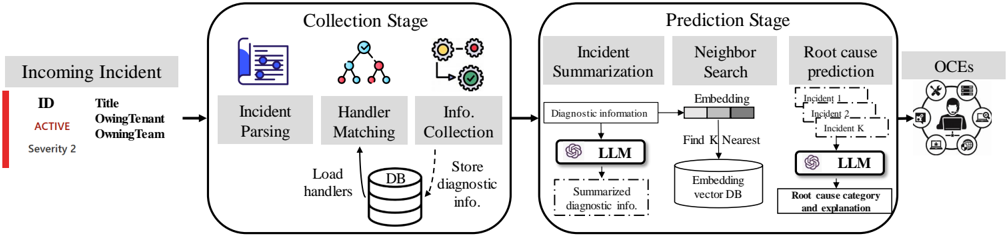
Ensuring the reliability and availability of cloud services necessitates efficient root cause analysis (RCA) for cloud incidents. Traditional RCA methods, which rely on manual investigations of data sources such as logs and traces, are often laborious, error-prone, and challenging for on-call engineers. In this paper, we introduce RCACopilot, an innovative on-call system empowered by the large language model for automating RCA of cloud incidents. RCACopilot matches incoming incidents to corresponding incident handlers based on their alert types, aggregates the critical runtime diagnostic information, predicts the incident's root cause category, and provides an explanatory narrative. We evaluate RCACopilot using a real-world dataset consisting of a year's worth of incidents from Microsoft. Our evaluation demonstrates that RCACopilot achieves RCA accuracy up to 0.766. Furthermore, the diagnostic information collection component of RCACopilot has been successfully in use at Microsoft for over four years.
Overview
The claims and statistics of this paper haven’t been checked yet.
Free: it reads the open-access text and checks the first 5 claims that cite a source we can check. Create a free account to check every claim.
Integrity signals
Registry
Cites
Statistics
Figures
Verification
Claims the paper makes
The claims and statistics of this paper haven’t been checked yet.
Free: it reads the open-access text and checks the first 5 claims that cite a source we can check. Create a free account to check every claim.
Claims other papers make about this one
Each is checked against this paper’s own text: does it say what the citing paper says it does?
The source backs part of the claim, not all of it — or backs it for a different population, condition or comparison.
In the citing paper
“However, these models are not aware of the workflow of cloud RCA, leaving them simply analytical tools.”
From RCAgent: Cloud Root Cause Analysis by Autonomous Agents with Tool-Augmented Large Language Models (2024) · cites this paper as [10]
Experimental — accuracy not yet measuredIn the citing paper
“In incident management, this helps in developing systems capable of recommending investigative queries, summarising monitoring signals, and identifying potential root causes [7], [8], [10].”
From Large language models for agentic NetOps and AIOps: Architectures, evaluation, and safety (2027) · cites this paper as [10]
In the citing paper
“This boundary matters because security and governance depend on the tools an agent can invoke, the permissions attached to those tools, and the checks enforced before action [18], [8], [10].”
From Large language models for agentic NetOps and AIOps: Architectures, evaluation, and safety (2027) · cites this paper as [10]
In the citing paper
“There is a latent system state x t (network and service state), operators and automation observe it only through tool-mediated observations o t (logs, metrics, traces, reachability checks), and they apply actions a t (changes, mitigations) that alter future state [1], [10], [8], [18].”
From Large language models for agentic NetOps and AIOps: Architectures, evaluation, and safety (2027) · cites this paper as [10]
In the citing paper
“Recent operational assistants therefore collect and structure diagnostic artefacts before asking the model to draw conclusions [10], [8], [9], [7], [86].”
From Large language models for agentic NetOps and AIOps: Architectures, evaluation, and safety (2027) · cites this paper as [10]
12 more claims about this paper
Create a free account to see every claim other papers make about this one.
Self-check
Percentages, sums and reported differences re-computed from the paper’s own numbers.
The self-check needs the paper’s full text.
Citations
Cites
Language Models are Few-Shot Learners
Brown, T. B., Mann, B., Ryder, N., Subbiah, M., Kaplan, J., Dhariwal, P., Neelakantan, A., Shyam, P., Sastry, G., Askell, A., et al. (2020) · arXiv · doi:10.48550/arxiv.2005.14165 · Cited by 23,372
Chain-Of-Thought Prompting Elicits Reasoning in Large Language Models
Wei, J., Wang, X., Schuurmans, D., Bosma, M., Ichter, B., Xia, F., Chi, E., Le, Q. V., & Zhou, D. (2022) · Advances in Neural Information Processing Systems 35 · doi:10.52202/068431-1800 · Cited by 4,505
Chain-of-Thought Prompting Elicits Reasoning in Large Language Models
Wei, J., Wang, X., Schuurmans, D., Bosma, M., Ichter, B., Xia, F., Chi, E., Le, Q., & Zhou, D. (2022) · arXiv · doi:10.48550/arxiv.2201.11903 · Cited by 4,263 · cited 1×
“The recent advent and success of large language models (LLMs) in performing complex tasks [21, 28, 46], suggests a promising avenue for enhancing RCA.”
BackgroundIEEE Transactions on Knowledge and Data Engineering
(2023) · IEEE Transactions on Knowledge and Data Engineering · doi:10.1109/tkde.69 · Cited by 1,671
Evaluating Large Language Models Trained on Code
Chen, M., Tworek, J., Jun, H., Yuan, Q., Pinto, H. P. D. O., Kaplan, J., Edwards, H., Burda, Y., Joseph, N., Brockman, G., et al. (2021) · arXiv · doi:10.48550/arxiv.2107.03374 · Cited by 1,436 · cited 1×
“The rapid advancements in natural language processing and machine learning have led to the development of powerful LLMs, which are reported to be effective at various down-stream tasks with zero-shot and few-shot learning [5, 11, 28].”
Background2020 IEEE Symposium on Security and Privacy (SP)
(2020) · doi:10.1109/sp40000.2020 · Cited by 423
SHADEWATCHER: Recommendation-guided Cyber Threat Analysis using System Audit Records
Zengy, J., Wang, X., Liu, J., Chen, Y., Liang, Z., Chua, T.-S., & Chua, Z. L. (2022) · 2022 IEEE Symposium on Security and Privacy (SP) · doi:10.1109/sp46214.2022.9833669 · Cited by 288 · cited 1×
“A typical incident life-cycle consists of four stages: (1) Detection [37, 51, 52]: When an anomalous system behavior is observed, an alert is raised by monitors or users of the service (internal engineers or exter-nal customers).”
BackgroundSelf-citationStudying the Usage of Text-To-Text Transfer Transformer to Support Code-Related Tasks
Mastropaolo, A., Scalabrino, S., Cooper, N., Nader Palacio, D., Poshyvanyk, D., Oliveto, R., & Bavota, G. (2021) · 2021 IEEE/ACM 43rd International Conference on Software Engineering (ICSE) · doi:10.1109/icse43902.2021.00041 · Cited by 247 · cited 3×
“LLMs have shown potential for automatic summarization [40].”
BackgroundVulRepair: a T5-based automated software vulnerability repair
Fu, M., Tantithamthavorn, C., Le, T., Nguyen, V., & Phung, D. (2022) · Proceedings of the 30th ACM Joint European Software Engineering Conference and Symposium on the Foundations of Software Engineering · doi:10.1145/3540250.3549098 · Cited by 207 · cited 2×
“VulRepair [13] also fine-tune T5 on vulnerability repairs datasets to automatically propose vulnerability fixes.”
BackgroundMicroHECL: High-Efficient Root Cause Localization in Large-Scale Microservice Systems
Liu, D., He, C., Peng, X., Lin, F., Zhang, C., Gong, S., Li, Z., Ou, J., & Wu, Z. (2021) · 2021 IEEE/ACM 43rd International Conference on Software Engineering: Software Engineering in Practice (ICSE-SEIP) · doi:10.1109/icse-seip52600.2021.00043 · Cited by 192 · cited 1×
“Moreover, some techniques utilize trace to locate the faulty service [26, 29, 48, 54].”
Self-citation
Research works printed but not linked: 9
- Chen, Y., Sun, X., Nath, S., Yang, Z., and Xu, T. Push-Button Re- liability Testing for Cloud-Backed Applications with Rainmaker. In Proceedings of the 20th USENIX Symposium on Networked Systems De- sign and Implementation (NSDI'23) (2023).
- Lou, C., Chen, C., Huang, P., Dang, Y., Qin, S., Yang, X., Li, X., Lin, Q., and Chintalapati, M. RESIN: A holistic service for dealing with mem- ory leaks in production cloud infrastructure. In Proceedings of the 16th USENIX Symposium on Operating Systems Design and Implementation (OSDI'22) (2022).
- Lou, C., Huang, P., and Smith, S. Understanding, detecting and local- izing partial failures in large system software. In Proceedings of the 17th USENIX Symposium on Networked Systems Design and Implementation (NSDI'20) (2020).
- Ma, M., Zhang, S., Chen, J., Xu, J., Li, H., Lin, Y., Nie, X., Zhou, B., Wang, Y., and Pei, D. Jump-starting multivariate time series anomaly detection for online service systems. In 2021 USENIX Annual Technical Conference (ATC'21) (2021).
- Sun, X., Cheng, R., Chen, J., Ang, E., Legunsen, O., and Xu, T. Testing Configuration Changes in Context to Prevent Production Failures. In Proceedings of the 14th USENIX Symposium on Operating Systems Design and Implementation (OSDI'20) (2020).
- Sun, X., Luo, W., Gu, J. T., Ganesan, A., Alagappan, R., Gasch, M., Suresh, L., and Xu, T. Automatic Reliability Testing for Cluster Management Controllers. In Proceedings of the 16th USENIX Symposium on Operating Systems Design and Implementation (OSDI'22) (2022).
- Wu, Y., Chen, A., Haeberlen, A., Zhou, W., and Loo, B. T. Automated bug removal for software-defined networks. In Proceedings of the 14th USENIX Symposium on Networked Systems Design and Implementation (NSDI'17) (2017).
- Yuan, D., Luo, Y., Zhuang, X., Rodrigues, G. R., Zhao, X., Zhang, Y., Jain, P., and Stumm, M. Simple testing can prevent most critical failures: An analysis of production failures in distributed data-intensive systems. In Proceedings of the 12th USENIX Symposium on Operating Systems Design and Implementation (OSDI'14) (2014).
- Zeng, Z., Zhang, Y., Xu, Y., Ma, M., Qiao, B., Zou, W., Chen, Q., Zhang, M., Zhang, X., Zhang, H., Gao, X., Fan, H., Rajmohan, S., Lin, Q., and Zhang, D. Traceark: Towards actionable performance anomaly alerting for online service systems. In To appear in Proc. of ICSE (2023). · DOI · Paper page
Cited by
Items 101–200 of 442
Leveraging multi-agent framework for root cause analysis
Fu, F., Ding, H., Qin, Y., Yu, J., & Xu, D. (2025) · Complex & Intelligent Systems · doi:10.1007/s40747-025-02096-0 · Cited by 14
Xiao, Z., Liu, X., Ma, W., Li, X., & Liu, Z. (2026) · International Conference on Computer Information Science and Application Technology (CISAT) · doi:10.1109/cisat71030.2026.11682084 · Cited by 12
“Recent works deploy large language models reasoning agents for incident diagnosis [13][14].”
AI for science: Progress, challenges, and perspectives
Xu, Y., Shao, Z., Liu, X., Li, Y., An, Z., Fu, C., Huang, C., Zhang, L., Gao, F., Li, J., et al. (2026) · The Innovation · doi:10.1016/j.xinn.2026.101530 · Cited by 15
Self-citationCAIP: Detecting Router Misconfigurations with Context-Aware Iterative Prompting of LLMsPreprint
Jiang, X., Gember-Jacobson, A., & Feamster, N. (2024) · arXiv (Cornell University) · doi:10.48550/arxiv.2411.14283 · Cited by 12
Understanding Misunderstandings: Evaluating LLMs on Networking Questions
Anwar, M., & Caesar, M. (2024) · ACM SIGCOMM Computer Communication Review · doi:10.1145/3717512.3717515 · Cited by 11
Liang, S., Chen, P., Tian, B., Tan, G., Xu, M., Qu, Y., Zhao, Y., Shang, Y., & Tan, C. (2026) · Proceedings of the ACM on software engineering. · doi:10.1145/3797069 · Cited by 11
SAFE-HealCloud: Safety-Aware, Agentic Self-Healing for Cloud Infrastructure
Ponduru, P. S., Nandanavanam, P. P. V., & Ponduru, S. K. K. (2026) · International Journal of Scientific Research in Computer Science Engineering and Information Technology · doi:10.32628/cseit26124220 · Cited by 11
Goyal, M. K., & Chaturvedi, R. (2025) · Journal of Electrical Systems · doi:10.52783/jes.7882 · Cited by 11
The Multi-Agent Fault Localization System Based on Monte Carlo Tree Search ApproachPreprint
Ren, R. (2025) · arXiv (Cornell University) · doi:10.48550/arxiv.2507.22800 · Cited by 11
“…existing research have focused on utilizing LLMs to accomplish fault localization and anomaly detection, such as monitorAssistant [20], RCACopilot [21], RCAgent [22] and mABC [23]. monitorAssistant aims to use LLMs for tasks like alert ranking and generating detection reports, while RCACopilot…”
Large language models for agentic NetOps and AIOps: Architectures, evaluation, and safety
Bilal, M., Crowcroft, J., Wang, R., Xu, X., & Dustdar, S. (2027) · Computer Science Review · doi:10.1016/j.cosrev.2026.101075 · Cited by 10
“Recent operational assistants therefore collect and structure diagnostic artefacts before asking the model to draw conclusions [10], [8], [9], [7], [86].”
InfluentialCRISP: Cloud resilient infrastructure for self-healing platforms in dynamic adaptation
Rawas, S., Samala, A. D., & Fortuna, A. (2024) · International Journal of Information Technology · doi:10.1007/s41870-024-02265-3 · Cited by 10
Yang, L., Ye, A., Liu, Y., Lu, W., & Huang, C. (2025) · Future Generation Computer Systems · doi:10.1016/j.future.2025.108315 · Cited by 10
Praxis: Integrating Program Analysis with Observability for Root-Cause Analysis
Cui, S., Krishna, R., Jha, S., & Iyer, R. K. (2026) · International Conference on Dependable Systems & Networks/Proceedings · doi:10.1109/dsn69566.2026.00021 · Cited by 12
“Recent work has employed LLMs for incident querying, understanding, and classification [53], [67]–[72], typically leveraging prior knowledge (e.g., TSGs, SOPs) and requiring SRE supervision.”
Evidence-Verified LLM Agents for Safe Backend Incident Remediation
Zheng, Y., Zhou, J., Hu, R., & Fang, R. (2026) · International Conference on Image Processing and Artificial Intelligence (ICIPAI) · doi:10.1109/icipai70034.2026.11605740 · Cited by 11
“Traditional approaches rely heavily on human on-call engineers who manually inspect logs, metrics, and traces—a process that is slow, error-prone, and increasingly unsustainable as system complexity grows [2].”
Retrieval Augmented Generation-Based Incident Resolution Recommendation System for IT SupportPreprint
Isaza, P. T., Nidd, M., Zheutlin, N., Ahn, J., Bhatt, C., Deng, Y., Mahindru, R., Franz, M., Florian, H., & Roukos, S. (2024) · arXiv (Cornell University) · doi:10.48550/arxiv.2409.13707 · Cited by 10
A Goal-Driven Survey on Root Cause AnalysisPreprint
Fang, A., Yang, H., Dong, H., Qisheng, L., Xu, J., & He, P. (2025) · arXiv (Cornell University) · doi:10.48550/arxiv.2510.19593 · Cited by 10
eARCO: Efficient Automated Root Cause Analysis with Prompt Optimization
Goel, D., Magazine, R., Ghosh, S., Nambi, A. U., Deshpande, P., Zhang, X., Bansal, C., & Rajmohan, S. (2026) · IEEE/ACM International Conference on Automated Software Engineering (ASE) · doi:10.1145/3832783.3834477 · Cited by 10
Self-citationEvidence-Verified Root Cause Localization for Microservice Incidents under Tool and Telemetry Noise
Ren, L., Tang, Y., Chen, B., Tao, J., & Chen, F. (2026) · International Conference on Machine Learning and Intelligent Systems Engineering (MLISE) · doi:10.1109/mlise70044.2026.11607508 · Cited by 9
“RCACopilot [3] aggregates diagnostic information and uses LLMs to classify root cause categories.”
Between Promise and Pain: The Reality of Automating Failure Analysis in Microservices with LLMs
Cornacchia, A., Alabdulaal, I., Saghier, I., Mirdad, A., Fayoumi, O., & Canini, M. (2025) · ACM SIGOPS Asia-Pacific Workshop on Systems (APSys) · doi:10.1145/3725783.3764388 · Cited by 10
FAA Framework: A Large Language Model-Based Approach for Credit Card Fraud InvestigationsPreprint
Shuster, S., Zaloof, E., Shabtai, A., & Puzis, R. (2025) · arXiv (Cornell University) · doi:10.48550/arxiv.2506.11635 · Cited by 9
“The state-of-the-art solutions in RCA use LLMs agents as their core idea [14], [15].”
A Multi-Dataset Benchmark for Evaluating LLM Agents in Microservice Failure DiagnosisPreprint
Cai, Y., Nie, X., Yin, K., Pei, C., Sun, Y., Zhang, S., Liu, H., Liu, G., Wen, X., Situ, F., et al. (2026) · arXiv (Cornell University) · doi:10.48550/arxiv.2606.29193 · Cited by 11
LLM-Powered Multi-Agent Collaboration for Intelligent Industrial On-Call Automation
Fu, R., Zhang, Y., Che, Z., Wu, X., Zhong, Z., Ren, Z., Zhang, S., Wang, F., Sun, Y., Liu, X., et al. (2025) · IEEE/ACM International Conference on Automated Software Engineering (ASE) · doi:10.1109/ase63991.2025.00184 · Cited by 8
“In the realm of cloud system incident management, LLMs have been widely applied to improve various aspects of incident handling [4], [32], [42]–[48].”
Fact-Aligned and Template-Constrained Static Analyzer Rule Enhancement with LLMs
Jiang, Z., Wen, M., Wen, G., & Jin, H. (2025) · IEEE/ACM International Conference on Automated Software Engineering (ASE) · doi:10.1109/ase63991.2025.00138 · Cited by 8
“More recently, Large Language Models (LLMs) have demonstrated promising perforamnce in various software engineering tasks leveraging their strong code comprehension capabilities [33]– [38].”
Self-citationShen, J., Peiyue, Y., Ghosh, A., Mai, Y., & Dahlmeier, D. (2026) · Conference of the European Chapter of the Association for Computational Linguistics · doi:10.18653/v1/2026.eacl-industry.28 · Cited by 10
“To systematically diagnose errors in document information extraction, we adopt a hierarchical error analysis framework inspired by Chen et al. (2024).”
Zhang, L., Zhai, Y., Jia, T., He, M., Duan, C., Liu, Z., Ding, B., & Yang, Y. (2026) · ACM Joint European Software Engineering Conference and Symposium on the Foundations of Software Engineering (ESEC/FSE) · doi:10.1145/3803437.3805206 · Cited by 8
Can We Trust the Metrics? Safe Remediation under Adversarial and Noisy Observability
Chen, B., Chen, F., Zhan, Y., Ren, L., & Tang, Y. (2026) · International Conference on Image Processing and Artificial Intelligence (ICIPAI) · doi:10.1109/icipai70034.2026.11605678 · Cited by 8
“To manage this complexity, the AIOps paradigm has emerged, leveraging machine learning and large language models (LLMs) to automate incident detection, root cause analysis, and remediation [2-4].”
NSync: Automated Cloud Infrastructure-as-Code Reconciliation with AI Agents
Yang, Z., Guan, H., Nicolet, V., Paulsen, B., Dodds, J., Kroening, D., & Chen, A. (2026) · Proceedings of the ACM on software engineering. · doi:10.1145/3832121 · Cited by 10
Dependency Aware Incident Linking in Large Cloud Systems
Ghosh, S., Grover, K., Wong, J., Bansal, C., Namineni, R., Verma, M., & Rajmohan, S. (2024) · International World Wide Web Conference (WWW) · doi:10.1145/3589335.3648311 · Cited by 8
Self-citationDeoxys: A Causal Inference Engine for Unhealthy Node Mitigation in Large-scale Cloud Infrastructure
Zhang, C., Yao, R., Qin, S., Li, Z., Agrawal, S. S., Mishra, B. R., Tran, T. M., Ma, M., Lin, Q., Chintalapati, M., et al. (2024) · ACM Symposium on Cloud Computing (SoCC) · doi:10.1145/3698038.3698534 · Cited by 8
Self-citationCan We Trust Auto-Mitigation? Improving Cloud Failure Prediction with Uncertain Positive Learning
Li, H., Ma, M., Liu, Y., Zhao, P., Li, S., Li, Z., Chintalapati, M., Dang, Y., Bansal, C., Rajmohan, S., et al. (2024) · Proceedings/Proceedings - International Symposium on Software Reliability Engineering · doi:10.1109/issre62328.2024.00054 · Cited by 8
Self-citationUsing LLMs as Incident Prevention Copilots in Cloud Infrastructure
Veluru, S. P., & Manchala, M. K. (2024) · International Journal of AI BigData Computational and Management Studies · doi:10.63282/3050-9416.ijaibdcms-v5i4p106 · Cited by 8
Zhang, C., Zhang, B., Yang, D., Peng, X., Chen, M., Xie, S., Chen, G., Bi, W., & Li, W. (2026) · ACM Transactions on Software Engineering and Methodology · doi:10.1145/3797910 · Cited by 8
“LLMs for AIOps To date, many efforts have been dedicated to LLM-based AIOps, including AIOps Q&A [37, 51], root cause localization [1, 9, 64], log parsing [27, 57], and incident mitigation [3].”
InfluentialSelf-citationProbabilistic Inference Layer Integration in Mistral LLM for Accurate Information RetrievalPreprint
Wang, B., Wang, S., & Ouyang, Q. (2024) · Research Square · doi:10.21203/rs.3.rs-3828707/v1 · Cited by 8
Hu, R., Peng, C., Ren, J., Jiang, B., Meng, X., Wu, Q., Gao, P., Wang, X., & Gao, C. (2024) · arXiv (Cornell University) · doi:10.48550/arxiv.2411.18019 · Cited by 8
“For example, models such as Codex [4] and GPT-4 have demonstrated impressive abilities in solving programming problems with high accuracy, including code summarization [1, 11], bug detection and localisation [7, 30], software testing [21, 34, 40], root cause analysis [5] and program repair [22, 37].”
Enabling Autonomic Microservice Management through Self-Learning AgentsPreprint
Yu, F., Yang, F., Qin, X., Zhang, Z., Zhang, J., Lin, Q., Zhang, H., Dang, Y., Rajmohan, S., Zhang, D., et al. (2025) · arXiv (Cornell University) · doi:10.48550/arxiv.2501.19056 · Cited by 8
Self-citationZhang, H., Shao, S., Li, S., Zhong, Z., Liu, Y., & Qin, Z. (2025) · arXiv (Cornell University) · doi:10.48550/arxiv.2506.16981 · Cited by 8
“Additionally, RCACopilot [69] uses GPT-4 to summarize log information and cluster it, based on the premise that GPT-4 itself has a large corpus of log data.”
R-Log: Incentivizing Log Analysis Capability in LLMs via Reasoning-based Reinforcement LearningPreprint
Liu, Y., Chen, Z., Xu, S., He, M., Tao, S., Meng, W., Xie, Y., Han, T., Zhao, C., Du, J., et al. (2025) · arXiv (Cornell University) · doi:10.48550/arxiv.2509.25987 · Cited by 9
Braberman, V. A., Bonomo, F., Charalambous, Y., Colonna, J. G., Cordeiro, L. C., & de Freitas, R. (2025) · SSRN Electronic Journal · doi:10.2139/ssrn.5624902 · Cited by 8
MeshAgent: enabling reliable network management with large language models
Zhou, Y., Hsieh, K., Mani, S. K., Kandula, S., & Liu, Z. (2025) · Proceedings of the ACM on Measurement and Analysis of Computing Systems · doi:10.1145/3771567 · Cited by 7
LogUpdater : Automated Detection and Repair of Specific Defects in Logging Statements
Zhong, R., Li, Y., Kuang, J., Gu, W., Huo, Y., & Lyu, M. R. (2026) · ACM Transactions on Software Engineering and Methodology · doi:10.1145/3731754 · Cited by 7
LogLAA: an adaptive integrated log anomaly analysis framework
Gao, Y., Luo, T., Huang, K., Tang, J., & Li, X. (2026) · Cybersecurity · doi:10.1186/s42400-026-00573-8 · Cited by 7
Zhong, Z., Fu, R., Ma, M., Zhang, S., Sun, Y., Bansal, C., & Pei, D. (2026) · IEEE Transactions on Services Computing · doi:10.1109/tsc.2026.3676262 · Cited by 8
Self-citationVitale, M., Youssef, A., Mishra, P., Shetty, S., Sharma, M., Vanzo, G., Veneri, G., Vieri, L., & Bettini, A. (2024) · ADIPEC · doi:10.2118/222033-ms · Cited by 4
The Dual Role of Large Language Models in Network Security: Survey and Research Trends
Liu, H., Xue, J., Zhao, S., Liu, Y., & Lu, Z. (2025) · ACM Workshop on Wireless Security and Machine Learning (WiseML) · doi:10.1145/3733965.3733972 · Cited by 7
Explainable Anomaly Detection in Network Traffic Using LLM
Jeřábek, K., Koumar, J., Setinský, J., & Pešek, J. (2025) · IEEE/IFIP Network Operations and Management Symposium (NOMS) · doi:10.1109/noms57970.2025.11073574 · Cited by 7
Tan, T., Tang, F., Luo, L., Li, Y., Zhao, M., & Kato, N. (2026) · IEEE Transactions on Communications · doi:10.1109/tcomm.2026.3729747 · Cited by 7
“Similarly, RACopilot [13] adopts an event-driven workflow that leverages LLMs for automated diagnostics and semantic-based root-cause prediction.”
Graph-Free Root Cause AnalysisPreprint
Pham, L. (2026) · arXiv (Cornell University) · doi:10.48550/arxiv.2601.21359 · Cited by 7
“Chen et al. (2024a) further demonstrate LLM effectiveness for cloud incident diagnosis through automated reasoning pipelines.”
A Survey of Program Analysis for Distributed Software Systems
Cai, H. (2025) · ACM Computing Surveys · doi:10.1145/3742900 · Cited by 6
“…for dynamic analysis techniques/tools supporting the security of distributed software, he or she only needs to identify the articles with the item "Dynamic" of the attribute "Analysis Modality" within the aspect "Approach" and the item "Security Support" within the aspect "Application", and so on.”
LLM-Augmented Ticket Aggregation for Low-cost Mobile OS Defect Resolution
Sun, Y., Hao, B., Wang, X., Zhao, C., Zhao, Y., Shi, B., Zhang, S., Ge, Q., Li, W., Wei, H., et al. (2025) · ACM Joint European Software Engineering Conference and Symposium on the Foundations of Software Engineering (ESEC/FSE) · doi:10.1145/3696630.3728547 · Cited by 6
SCNOC-Agentic: A Network Operation and Control Agentic for Satellite Communication Systems
Sun, W., Sun, C., Zhang, Y., Yin, Z., & Kang, Z. (2025) · Electronics · doi:10.3390/electronics14163320 · Cited by 7
Multi-agent Framework for AI-Supported Collaborative Root Cause Analysis in Quality Assurance
Bocanet, V. I., Muntean, M. H., & Fleșeriu, C. (2025) · IFIP advances in information and communication technology · doi:10.1007/978-3-032-03538-7_15 · Cited by 6
GALR: Graph-Based Root Cause Localization and LLM-Assisted Recovery for Microservice Systems
Zhang, W., Yang, Z., Peng, F., Zhang, L., Chen, Y., & Chen, R. (2026) · Electronics · doi:10.3390/electronics15010243 · Cited by 9
Self-citationSADE: Symptom-Aware Diagnostic Escalation for LLM-Based Network Troubleshooting
Tseng, K.-H., Bogahawatta, N., Ginige, Y., Dakic, K., Sivanathan, A., & Seneviratne, S. (2026) · Conference on Local Computer Networks · doi:10.1109/lcn67947.2026.11660797 · Cited by 6
VerifyRCA: LLM-Guided but Evidence-Verified Root Cause Analysis for Microservice Backends
Ma, W., Yang, K., Liu, Z., Jiang, R., & Jiang, Y. (2026) · International Conference on Electronic Technology and Information Science (ICETIS) · doi:10.1109/icetis70504.2026.11633469 · Cited by 6
“When failures occur, on-call engineers must sift through heterogeneous telemetry—metrics, logs, and distributed traces—to identify root causes under tight time constraints [2].”
Tool-Making and Self-Evolving LLM Agents in Low-Latency Systems
Kujanpää, K., Liu, N., Alam, S., Sura, Y. R., Yang, T., Klinkner, K. L., & Malmasi, S. (2026) · Conference on Empirical Methods in Natural Language Processing (EMNLP) · doi:10.18653/2026.emnlp-industry.154 · Cited by 6
Early Bird: Ensuring Reliability of Cloud Systems Through Early Failure Prediction
Liu, Y., Ma, M., Zhao, P., Li, T., Qiao, B., Li, S., Li, Z., Chintalapati, M., Dang, Y., Bansal, C., et al. (2024) · IEEE International Symposium on Software Reliability Engineering Workshops (ISSREW) · doi:10.1109/issrew63542.2024.00046 · Cited by 6
“Similarly, root cause analysis helps in diagnosing the underlying issues that trigger these anomalies, enabling more accurate and actionable predictions [33]–[35].”
Self-citationENCO: Deploying Production-Scale Engineering Copilots
Zhu, Y., Demarne, M. B., Deng, K. Y., Wang, W., Sahoo, N., Lerner, H., Bhavan, A., Vermareddy, D., Lu, Y., Bararia, S., et al. (2026) · ACM SIGKDD Conference on Knowledge Discovery and Data Mining (KDD) · doi:10.1145/3770854.3783949 · Cited by 6
MarsCode Agent: AI-native Automated Bug Fixing
Liu, Y., Gao, P., Wang, X., Liu, J., Shi, Y., Zhang, Z., & Peng, C. (2024) · arXiv · doi:10.48550/arxiv.2409.00899 · Cited by 5
“Researchers and developers have applied LLMs to several software engineering tasks, such as program synthesis [22, 53, 34, 37, 36], code translation [47, 46], program repair [21, 10, 42], fault detection and localization [7, 31], incident analysis [6, 3], code summarization [9] and testing [32].”
MethodLogPilot: Intent-aware and Scalable Alert Diagnosis for Large-scale Online Service Systems
Jiang, Z., Liu, J., Li, Y., Huang, H., He, X., Zhang, T., Chen, J., Li, Y., Shi, R., & Lyu, M. R. (2025) · IEEE/ACM International Conference on Automated Software Engineering (ASE) · doi:10.1109/ase63991.2025.00272 · Cited by 5
“• RCACopilot [19]: This approach uses alert information, corresponding log data, and retrieved historical SOPs to perform RCA.”
InfluentialXiao, Z., Liu, H., Zhou, X., Cong, S., & Ju, Y. (2026) · Expert Systems with Applications · doi:10.1016/j.eswa.2026.131965 · Cited by 5
AI-Driven Log Analysis: Advances and Challenges
Wang, Y., Gan, W., & Yu, P. S. (2025) · IEEE International Conference on Big Data (BigData) · doi:10.1109/bigdata66926.2025.11401507 · Cited by 5
“RCACopilot [82] proposes an LLM-based RCA method that first summarizes alert information, then uses pre-trained fast text embedding models for vector search of historical faults, providing both summaries and historical fault classifications and descriptions in the final prompt, with LLMs…”
RCAFlow: A Workflow-Informed Hierarchical Planning Multi-Agent System for Root Cause Analysis
Gao, Y., Cai, Z., & Yang, B. (2026) · Proceedings of the AAAI Conference on Artificial Intelligence · doi:10.1609/aaai.v40i1.36991 · Cited by 5
“The development of LLMs has enabled agents to invoke tools and perform RCA tasks in complex environments autonomously (Ahmed et al. 2023b; Chen et al. 2024; Roy et al. 2024; Wang et al. 2024).”
Energy-Aware LLMs: A step towards sustainable AI for downstream applications
Tran, N. P., Jaumard, B., & Delgado, O. E. (2025) · International Conference on Electrical, Computer and Energy Technologies (ICECET) · doi:10.1109/icecet63943.2025.11472481 · Cited by 5
“Their downstream applications could be root cause analysis (RCA) [2], question and answer system [3], etc.”
LLM4Log: A Systematic Review of Large Language Model-based Log Analysis
Ma, Z., Yang, J., & Chen, T.-H. P. (2026) · ACM Transactions on Software Engineering and Methodology · doi:10.1145/3842759 · Cited by 6
“Chen et al. [17] perform automatic RCA for cloud incidents by consuming multiple incident signals (e.g., error logs, stack traces, socket metrics) and outputting both explanations and categories, evaluated with F1.”
Debugging the Debuggers: Failure-Anchored Structured Recovery for Software Engineering Agents
Zhao, C., Zhang, S., Lin, Y., Gu, W., Chen, Z., Sun, Y., Pei, D., Bansal, C., Rajmohan, S., & Ma, M. (2026) · IEEE/ACM International Conference on Automated Software Engineering (ASE) · doi:10.1145/3832783.3834492 · Cited by 7
Self-citationJinna, K. R., & Bandari, U. (2025) · International Journal of Research and Applied Innovations · doi:10.15662/ijrai.2025.0803015 · Cited by 5
Jha, S., Arora, R., Bhavya, Zheutlin, N., Isaza, P. T., Shwartz, L., Deng, Y., Sow, D., Mahindru, R., & Puri, R. (2026) · arXiv (Cornell University) · doi:10.48550/arxiv.2601.17915 · Cited by 6
“These systems follow a reason-retrieve-synthesize loop and have been applied to software diagnosis (Roy et al., 2024; Xu et al., 2025), cloud operations (Chen et al., 2024a; Tian et al., 2025), and graph-augmented QA (Sun et al., 2024; Luo et al., 2024).”
The Effectiveness of Compact Fine-Tuned LLMs in Log Parsing
Mehrabi, M., Hamou-Lhadj, A., & Moosavi, H. (2024) · 2024 IEEE International Conference on Software Maintenance and Evolution (ICSME) · doi:10.1109/icsme58944.2024.00047 · Cited by 4
Wang, T., & Qi, G. (2024) · arXiv · doi:10.48550/arxiv.2408.00803 · Cited by 4
“[ 20, 80, 107] explore LLM agents for root cause analysis.”
TSGuard: Automated User-Centric Incident Diagnosis for AI Workloads in the Cloud
Yang, Y., Deng, Y., Xiong, Y., Li, B., Xu, H. L., & Cheng, P. (2026) · Proceedings of the ACM on software engineering. · doi:10.1145/3797149 · Cited by 7
CIRCA: A Framework for Collaborative Identification of Root Cause Analysis in IoT Microservices
Jiang, X., Luo, H., Sun, Y., & Das, S. K. (2025) · IEEE Transactions on Services Computing · doi:10.1109/tsc.2025.3631804 · Cited by 4
“RCACopilot [36] designs an automated system that classifies events and generates diagnostic explanations.”
Cloud Uptime Archive: Open-Access Availability Data of Web, Cloud, and Gaming Services
Talluri, S., Niewenhuis, D., Chu, X., Kyselica, J., Cetin, M. B., Balgavy, A., & Iosup, A. (2026) · IEEE Transactions on Parallel and Distributed Systems · doi:10.1109/tpds.2026.3673519 · Cited by 4
“Existing work [27, 28] studies failures reported by their cloud operator.”
DML–LLM Hybrid Architecture for Fault Detection and Diagnosis in Sensor-Rich Industrial Systems
Hu, Y.-S., Marandi, S., & Modarres, M. (2026) · Sensors · doi:10.3390/s26062008 · Cited by 5
Toward In-Depth Root Cause Localization for Microservices With Multi-Agent Recursion-of-Thought
Zhang, L., Jia, T., Wang, K., Duan, C., He, M., Wang, R., Peng, X., Wang, M., Zhang, G., Chen, R., et al. (2026) · IEEE Transactions on Dependable and Secure Computing · doi:10.1109/tdsc.2026.3706572 · Cited by 4
“…been proposed to address various aspects of failure management, including anomaly detection, failure diagnosis, and automated mitigation [47], [48], [49], [75], [76], [77], [78], [79], [80], [81], [82], [83], [84], [85], [86], [87], [88], [89], [90], [91], [92], [93], [94], [95], [96], [97], [98].”
When LLMs Listen to Experts: Accurate Failure Diagnosis in Operating Systems
Zhao, Y., Zhang, S., Sun, Y., Gu, W., Sun, Y., Wang, L., Shi, L., Huang, C., Yang, G., Zhang, L., et al. (2026) · IEEE/ACM International Conference on Software Engineering: Software Engineering in Practice (ICSE-SEIP) · doi:10.1145/3786583.3786852 · Cited by 4
Self-citationBudgetSRE: Budget-Aware Multi-Agent Incident Response for Backend Operations
Yang, Q., Feng, G., Wang, Y., Chen, J., & Zhiwei, L. (2026) · International Conference on Image Processing, Multimedia Technology and Machine Learning (IPMML) · doi:10.1109/ipmml71439.2026.11682590 · Cited by 4
“Recent systems including RCACopilot [3], FLASH [4], and mABC [5] demonstrate that agents equipped with reasoning and tool-use capabilities [6] can meaningfully outperform rule-based approaches on tasks such as log-metric correlation and service-dependency traversal.”
GALA: Graph-Augmented LLM Agents for Root Cause Analysis and Incident Response in Microservices
Tian, Y., Liu, Y., Chong, Z., Huang, Z., Li, Y., & Jacobsen, H. (2026) · IEEE/ACM International Conference on Automated Software Engineering (ASE) · doi:10.1145/3832783.3834335 · Cited by 4
Intent-based System Design and Operation
Anand, V., Li, Y., Kumbhare, A. G., Irvene, C., Bansal, C., Somashekar, G., Mace, J., Las-Casas, P., Bianchini, R., & Fonseca, R. (2025) · Workshop on Practical Adoption Challenges of ML for Systems (PACMI) · doi:10.1145/3766882.3767182 · Cited by 5
An Empirical Study of Production Incidents in Generative AI Cloud Services
Yan, H., Chen, Y., Ma, M., Wen, M., Lu, S., Zhang, S., Xu, T., Wang, R., Bansal, C., Rajmohan, S., et al. (2025) · Proceedings/Proceedings - International Symposium on Software Reliability Engineering · doi:10.1109/issre66568.2025.00044 · Cited by 5
“…services have been well-studied for issues like deployment challenges, fault taxonomy, and bug characteristics [12, 24, 25], while extensive research has similarly examined incident management practices, root causes, and triage procedures in conventional cloud services [7, 10, 14, 18, 20, 32, 44].”
Self-citationChu, X., Ilager, S., Zang, Y., Talluri, S., & Iosup, A. (2026) · ACM/SPEC International Conference on Performance Engineering (ICPE) · doi:10.1145/3777911.3801103 · Cited by 4
Cao, H., & Long, L. (2026) · Journal of Advanced Computing Systems · doi:10.69987/jacs.2026.60402 · Cited by 4
An Empirical Study of Production Incidents in Generative AI Cloud ServicesPreprint
Yan, H., Chen, Y., Ma, M., Wen, M., Lu, S., Zhang, S., Xu, T., Wang, R., Bansal, C., Rajmohan, S., et al. (2025) · arXiv (Cornell University) · doi:10.48550/arxiv.2504.08865 · Cited by 4
“…services have been well-studied for issues like deployment challenges, fault taxonomy, and bug characteristics [12, 24, 25], while extensive research has similarly examined incident management practices, root causes, and triage procedures in conventional cloud services [7, 10, 14, 18, 20, 32, 44].”
Self-citationTxRay: Agentic Postmortem of Live Blockchain AttacksPreprint
Wang, Z., Yu, J., Qin, K., Song, D. X., Gervais, A., & Zhou, L. (2026) · arXiv (Cornell University) · doi:10.48550/arxiv.2602.01317 · Cited by 4
“Incident Investigation / Root Cause Analysis Prior work uses LLMs for incident investigation in cloud operations [12, 13] and DFIR/SOC workflows [14–17], motivating verification to mitigate hallucinations [18–20].”
Towards Robust LLM Post-Training: Automatic Failure Management for Reinforcement Fine-TuningPreprint
Zhang, L., Jia, T., Zhai, Y., Fang, L., Zheng, K., Liu, H., Huang, X., Yu, P. S., & Li, Y. (2026) · arXiv (Cornell University) · doi:10.48550/arxiv.2605.04431 · Cited by 5
Agentic Root Cause Analysis through Evidence-Grounded ReasoningPreprint
Wei, A., & Fink, O. (2026) · arXiv (Cornell University) · doi:10.48550/arxiv.2607.22385 · Cited by 4
AIOpsLab: a holistic framework to evaluate AI agents for enabling autonomous clouds
Chen, Y., Shetty, M., Somashekar, G., Ma, M., Simmhan, Y., Mace, J., Bansal, C., Wang, R., & Rajmohan, S. (2025) · arXiv · doi:10.48550/arxiv.2501.06706 · Cited by 3
“2023; He et al., 2022; Ma et al., 2018; Zhang et al., 2018; Ganatra et al., 2023; Somashekar et al., 2024; Zhang et al., 2024a; Chen et al., 2024).”
Self-citationSmall Language Model Agent for the Operations of Continuously Updating ICT Systems
Fukuda, N., Nozue, H., & Oishi, H. (2025) · IEEE Access · doi:10.1109/access.2025.3544637 · Cited by 4
“Due to the confidential nature of the operational procedure in the ICT system, the use of Application Programming Interface (API)-based proprietary LLMs, as assumed in most existing reports [13], [15], [16], [17], [18], is restricted.”
ALM: A Two-Stage Traffic Anomaly Detection and Analysis System via the Large Language Model
Wu, S., Dong, E., He, H., Wang, Z., Han, D., Hu, H., & Yang, J. (2025) · IEEE/IFIP Network Operations and Management Symposium (NOMS) · doi:10.1109/noms57970.2025.11073622 · Cited by 3
“Since well-trained LLMs have proven effective in areas like network operations [5], [21] and database processing [41], we customize the LLM for the AnomalyAnalyzer.”
NeSy-Edge: Neuro-Symbolic Trustworthy Self-Healing in the Computing Continuum
Ye, P., Lapkovskis, A., Saleh, A., Zhang, Q., & Donta, P. K. (2026) · IEEE International Conference on Edge Computing and Communications (EDGE) · doi:10.1109/edge72783.2026.00013 · Cited by 3
CausalRCA: Causal Graph-Augmented Retrieval for Root Cause Analysis in Microservice Systems
Kou, J., Qing, Z., Wei, R., Xue, F., Huang, W., & Zhuang, H. (2026) · International Conference on Electronic Information Engineering, Big Data and Computer Technology (EIBDCT) · doi:10.1109/eibdct69742.2026.11566729 · Cited by 4
“Concurrently, LLM-based agents have been applied to cloud incident triage [5], root cause recommendation [6], and multi-agent fault reasoning [7].”
KRCA: An Efficient Root Cause Analysis System in Hyper-scale Microservice Systems via Agentic AI
Jiang, J., Feng, J., Luo, Y., Zhang, Q., Su, Y. W., Gu, W., Zhang, S., Cui, T., Wu, Y., Huang, J., et al. (2026) · IEEE/ACM International Conference on Automated Software Engineering (ASE) · doi:10.1145/3832783.3834468 · Cited by 4
Ren, Y.-Y., Lin, X., Wang, C., Chen, L., Wang, S., Gao, K., Li, D., Bai, Y., Tian, C., Zhang, X., et al. (2026) · ACM SIGCOMM Conference (SIGCOMM) · doi:10.1145/3789240.3829145 · Cited by 4
Self-citationNetEventCause: Event-Driven Root Cause Analysis for Large Network System Without Topology
Yuan, Z., Ma, L., Wei, W., Zhu, X., Sun, M., Chen, D., & Ban, X. (2025) · IEEE Transactions on Neural Networks and Learning Systems · doi:10.1109/tnnls.2025.3574316 · Cited by 3
“For instance, the alarm logs, expressed in text, can be employed to generate event embeddings through the application of language encoders, such as BERT [34], [35].”
An LLM-based Cross-Domain Fault Localization in Carrier Networks
Ma, J., Han, S., Wang, G., Wang, Z., Fan, F., & Ye, S. (2024) · International Conference on Artificial Intelligence, Robotics, and Communication (ICAIRC) · doi:10.1109/icairc64177.2024.10900110 · Cited by 3
“By accurately identifying the underlying issues and preventing their recurrence, RCA not only restores service availability swiftly but also strengthens the overall resilience of communication networks [3].”
InfluentialFu, R., Zhang, Y., Zhang, S., Wu, X., Gu, W., Wang, F., Che, Z., Liu, X., Sun, Y., & Zhang, Y. (2026) · ACM Transactions on Software Engineering and Methodology · doi:10.1145/3820774 · Cited by 3
“Existing approaches [8] have attempted to leverage general-purpose language models without fine-tuning to generate summaries.”
No Size Fits All: The Perils and Pitfalls of Leveraging LLMs Vary with Company SizePreprint
Urlana, A., Kumar, C. V., Garlapati, B. M., Singh, A. K., & Mishra, R. (2024) · arXiv (Cornell University) · doi:10.48550/arxiv.2408.01444 · Cited by 3
Porcelli, L. (2025) · arXiv (Cornell University) · doi:10.48550/arxiv.2510.21710 · Cited by 4
“LLM-powered on-call systems can automatically match incidents to handlers, aggregate diagnostic information, predict root causes, and provide explanatory narratives [29].”
Patel, D. (2026) · arXiv (Cornell University) · doi:10.48550/arxiv.2604.12218 · Cited by 4
“Recent work has explored using LLMs for log parsing [6], anomaly detection [7], and root cause analysis [8], showing promising results.”
Metadata
- Authors
- Chen, Y., Xie, H., Ma, M., Kang, Y., Gao, X., Shi, L., Cao, Y., Gao, X., Fan, H., Wen, M., Zeng, J., Ghosh, S., Zhang, X., Zhang, C., Lin, Q., Rajmohan, S., Zhang, D., & Xu, T.
- Affiliations
- Huazhong University of Science and Technology (CN)
- Peking University (CN)
- National University of Singapore (SG)
- Microsoft (United States) (US)
- University of Illinois Urbana-Champaign (US)
- ORCID
- Venue
- Proceedings of the Nineteenth European Conference on Computer Systems
- Publisher
- ACM
- Published
- 2024-04-22
- Pages
- 674-688
- OpenAlex
- W4394946189
- Cited by
- 190
- References
- 48
- Citations by year
- 2026: 89 · 2025: 59 · 2024: 41
- FWCI
- 82.63
- Type
- conference paper
- Language
- en
- Open access
- green
- arxiv.org
- Locations
- European Conference on Computer Systems (publishedVersion)
- arXiv (Cornell University) (submittedVersion, cc-by)
- arXiv (Cornell University) (cc-by)
- Topics
- Physical Sciences › Computer Science › Computer Networks and Communications › Software System Performance and Reliability
- Physical Sciences › Computer Science › Information Systems › Cloud Computing and Resource Management
- Physical Sciences › Computer Science › Information Systems › Software Engineering Research
- Keywords
- root cause analysis, large language models, incident diagnosis, cloud reliability
About these checks
Registry, retraction, Cites and statistics results are computed, not judged, with one exception: a printed reference that no index lists is read once by a model before it counts as a citation error. Claims are extracted by a model and kept only when their quote appears verbatim in the text; each cited source is then checked, with a model’s help, for whether it says what the claim relies on. Those verdicts can be wrong — read the claim’s quote and the cited source before relying on one.
Statistics and arithmetic are recomputed, not judged.
Confidence bands are shown only for fields calibrated on our annotated test set. None is calibrated yet, so no band is shown.
What counts as a claim ›How we measure confidence ›How we check this ›
Are you an author, or do you see a problem with this page? Request a review
Data sources
Bibliographic data: Semantic Scholar, OpenAlex, Crossref.
Contains information from the Semantic Scholar Academic Graph Datasets, made available under the ODC Attribution License (ODC-BY 1.0).
Semantic Scholar’s data is described in: Kinney, R., et al. (2023). The Semantic Scholar Open Data Platform. arXiv:2301.10140.
