

Treatment selection in depression.
Open accessThe DOI matches its Crossref record; 181 of the 181 references it cites were found in a registry or an index.
Abstract
Mental health researchers and clinicians have long sought answers to the question “What works for whom?” The goal of precision medicine is to provide evidence-based answers to this question. Treatment selection in depression aims to help each individual receive the treatment, among the available options, that is most likely to lead to a positive outcome for them. Although patient variables that are predictive of response to treatment have been identified, this knowledge has not yet translated into real-world treatment recommendations. The Personalized Advantage Index (PAI) and related approaches combine information obtained prior to the initiation of treatment into multivariable prediction models that can generate individualized predictions to help clinicians and patients select the right treatment. With increasing availability of advanced statistical modeling approaches, as well as novel predictive variables and big data, treatment selection models promise to contribute to improved outcomes in depression.
Overview
The claims and statistics of this paper haven’t been checked yet.
Free: it reads the open-access text and checks the first 5 claims that cite a source we can check. Create a free account to check every claim.
Integrity signals
Registry
Cites
Statistics
Figures
Verification
Claims the paper makes
The claims and statistics of this paper haven’t been checked yet.
Free: it reads the open-access text and checks the first 5 claims that cite a source we can check. Create a free account to check every claim.
Claims other papers make about this one
Each is checked against this paper’s own text: does it say what the citing paper says it does?
The source backs part of the claim, not all of it — or backs it for a different population, condition or comparison.
In the citing paper
“Innovative machine learning approaches might predict trajectories of change based on these data, which can inform pre-treatment and in-session decisions of mental healthcare practices (Cohen and DeRubeis, 2018; Goldberg et al., 2020; Rubel et al., 2020).”
From More Light? Opportunities and Pitfalls in Digitalized Psychotherapy Process Research (2021) · cites this paper as Cohen and DeRubeis, 2018
Experimental — accuracy not yet measuredThe source backs part of the claim, not all of it — or backs it for a different population, condition or comparison.
In the citing paper
“Additionally, CDSS can estimate personalised predictions about the optimal treatment, treatment strategy or dropout risk, which can significantly improve CFs (Cohen & DeRubeis, 2018).”
From Data-Informed Case Formulation with the Trier Treatment Navigator (2022) · cites this paper as Cohen & DeRubeis, 2018
Experimental — accuracy not yet measuredThe cited source says what the claim attributes to it.
In the citing paper
“Knowledge regarding active elements, mechanisms of change, and individual differences in response can lay the groundwork for improved treatment selection (Cohen & DeRubeis, 2018) and matching procedures (Cohen, Delgadillo, & DeRubeis, 2021).”
From Measuring the active elements of cognitive-behavioral therapies (2023) · cites this paper as Cohen & DeRubeis, 2018
Self-check
Percentages, sums and reported differences re-computed from the paper’s own numbers.
The self-check needs the paper’s full text.
Citations
Cites
Baron, R. M., & Kenny, D. A. (1986) · Journal of Personality and Social Psychology · doi:10.1037/0022-3514.51.6.1173 · Cited by 91,532 · cited 1×
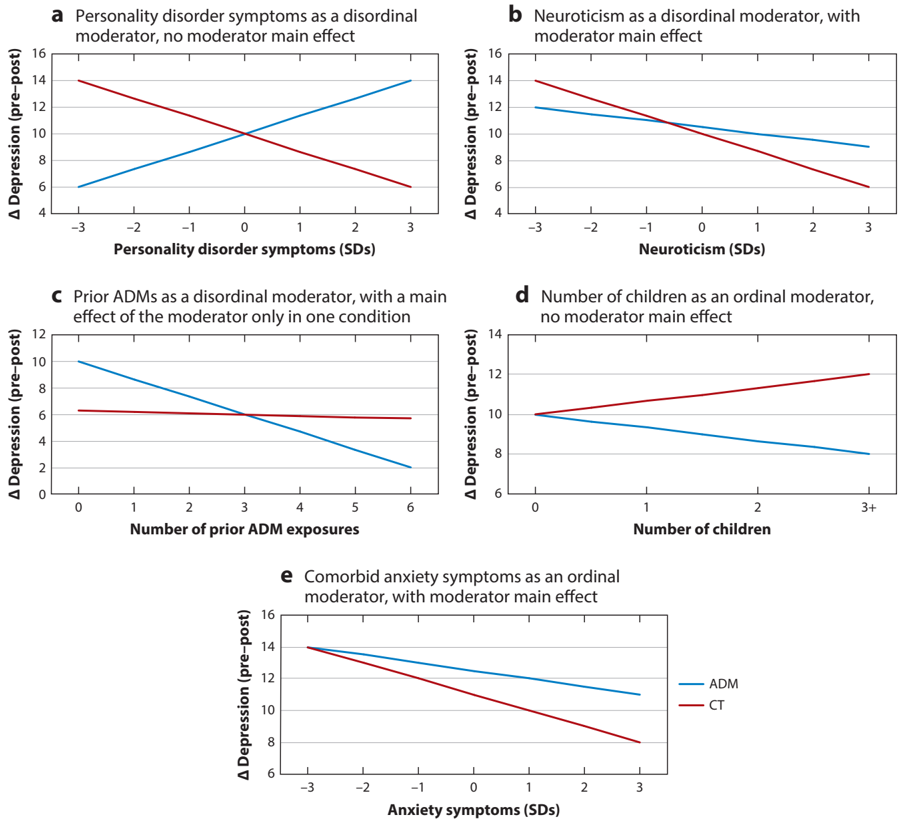
“Prescriptive variables, often referred to as moderators, affect the direction or strength of the differences in outcome between two or more treatments (Baron & Kenny 1986), and thus can help predict whether a patient will benefit more from one treatment relative to another.”
BackgroundRegression shrinkage and selection via the lasso
Tibshirani, R. (1996) · Journal of the Royal Statistical Society Series B: Statistical Methodology · doi:10.1111/j.2517-6161.1996.tb02080.x · Cited by 51,482 · cited 1×
“A subset of these approaches includes penalties that aim to create parsimonious models by limiting the number of variables selected (Tibshirani 1996).”
BackgroundThe Elements of Statistical Learning
Hastie, T., Tibshirani, R., & Friedman, J. (2009) · Springer Series in Statistics · doi:10.1007/978-0-387-84858-7 · Cited by 25,970
Regularization and Variable Selection Via the Elastic Net
Zou, H., & Hastie, T. (2005) · Journal of the Royal Statistical Society Series B: Statistical Methodology · doi:10.1111/j.1467-9868.2005.00503.x · Cited by 20,957
An Introduction to Statistical Learning
James, G., Witten, D., Hastie, T., & Tibshirani, R. (2013) · Springer Texts in Statistics · doi:10.1007/978-1-4614-7138-7 · Cited by 12,106
Why Most Published Research Findings Are False
Ioannidis, J. P. A. (2005) · PLoS Medicine · doi:10.1371/journal.pmed.0020124 · Cited by 10,505
EGFR Mutations in Lung Cancer: Correlation with Clinical Response to Gefitinib Therapy
Paez, J. G., Jänne, P. A., Lee, J. C., Tracy, S., Greulich, H., Gabriel, S., Herman, P., Kaye, F. J., Lindeman, N., Boggon, T. J., et al. (2004) · Science · doi:10.1126/science.1099314 · Cited by 9,368
Estimating the reproducibility of psychological science
Open Science Collaboration (2015) · Science · doi:10.1126/science.aac4716 · Cited by 8,515
Kuhn, M., & Johnson, K. (2013) · doi:10.1007/978-1-4614-6849-3 · Cited by 6,788
The ASA Statement on p -Values: Context, Process, and Purpose
Wasserstein, R. L., & Lazar, N. A. (2016) · The American Statistician · doi:10.1080/00031305.2016.1154108 · Cited by 6,306 · cited 1×
“Reliance on tests of significance can result in misleading impressions about the importance of predictive variables (Nuzzo 2014, Wasserstein & Lazar 2016).”
Background
Research works printed but not linked: 8
- Bossuyt PM, Parvin T. 2015. Evaluating biomarkers for guiding treatment decisions. EJIFCC 26:63-70
- Gordon E, 2015, Neuropsychiatr. Dis. Treat., 11, 517
- Howland RH, 2014, J. Psychosoc. Nurs. Ment. Health Serv., 52, 13
- Klerman GL, Weissman MM. 1994. Interpersonal Psychotherapy of Depression: A Brief, Focused, Specific Strategy.
- Lorenzo-Luaces L, DeRubeis RJ, Bennett IM. 2015. Primary care physicians' selection of low-intensity treat- ments for patients with depression. Fam. Med. 47:511-16
- National Health Service. 2016. Psychological Therapies, Annual Report on the Use of IAPT Services: England 2015-16. London, UK: Health Soc. Care Inf. Cent. National Institute for Health and Clinical Excellence. 2009. Depression: Treatment and Management of Depression in Adults. London: Br. Psychol. Soc. Report summarizing recent progress in precision medicine, including compelling examples of treatment selection in cancer. National Research Council. 2011. Toward Precision Medicine: Building a Knowledge Network for Biomedical Research and a New Taxonomy of Disease. Washington, DC: Natl. Acad. Press
- National Institute for Health and Clinical Excellence, 2009, Depression: Treatment and Management of Depression in Adults
- National Research Council., 2011, Toward Precision Medicine: Building a Knowledge Network for Biomedical Research and a New Taxonomy of Disease
Cited by
Items 301–400 of 469
Hierarchical taxonomy of psychopathology and personalized mental health treatment selection
Argyriou, E., Prestigiacomo, C. J., Samuel, D. B., Stewart, J. C., Wu, W., & Cyders, M. A. (2025) · Frontiers in Psychiatry · doi:10.3389/fpsyt.2025.1597879 · Cited by 4
Predicting Depression Treatment Outcome Using Daily Step Count Sensory Data
Hossain, M. Z., Sahoo, S., Shende, C., Patel, P., Morillo, R., Pan, Z., Wang, X., Bi, J., Kamath, J., Russell, A. C., et al. (2026) · ACM Transactions on Computing for Healthcare · doi:10.1145/3777480 · Cited by 4
“Few clinical characteristics, biomarkers, or genetic variations have been discovered that can consistently predict the effectiveness of a specific depression treatment on an individual [4–6].”
Predicting Adolescent Response to School-Based Mindfulness: A Secondary Analysis of the MYRIAD Trial
Webb, C. A., Ren, B., Hinze, V., Dalgleish, T., Ford, T. J., Greenberg, M. T., Montero-Marin, J., & Kuyken, W. (2026) · JAMA Psychiatry · doi:10.1001/jamapsychiatry.2025.4638 · Cited by 3
Gyles, T. M., Parise, E. M., Estill, M. S., Parise, L. F., Browne, C. J., Shen, L., Nestler, E. J., & Torres‐Berrío, A. (2026) · Neuropsychopharmacology · doi:10.1038/s41386-026-02366-6 · Cited by 3
“These agents remain the fi rst-line choice for pharmacotherapy and are typically selected through trial-and-error given the lack of reliable predictors of antidepressant ef fi cacy [9, 11, 12].”
van Bronswijk, S. C., Howard, J., & Lorenzo‐Luaces, L. (2024) · Journal of Affective Disorders · doi:10.1016/j.jad.2024.04.015 · Cited by 5
Song, J., Freedman, G., Li, L., & Persons, J. B. (2024) · British Journal of Clinical Psychology · doi:10.1111/bjc.12470 · Cited by 3
Blaß, J., Iffland, B., Herzog, P., Kaiser, T., Elbert, T. R., & Steuwe, C. (2025) · European Journal of Psychotraumatology · doi:10.1080/20008066.2025.2497161 · Cited by 4
“Thereafter, the models could be used to inform personalized treatment decisions by recommending the treatment to an individual patient for which the patient has the most beneficial prognosis (Cohen & DeRubeis, 2018).”
InfluentialBollmann, S., Köhler, S., Guhn, A., Schamong, I., Sterzer, P., & Brakemeier, E. (2021) · Verhaltenstherapie · doi:10.1159/000511640 · Cited by 3
PSYKOTERAPIFORSKNING GENNEM 100 ÅR – HVOR LANGT ER VI NÅET?
Hougaard, E. (2021) · Psyke & Logos · doi:10.7146/pl.v42i1.128765 · Cited by 3
“PAI, udregnet på lignende måder som hos DeRubeis et al. (2014), er blevet anvendt til valg mellem andre behandlingsformer i en række projekter (Cohen & DeRubeis, 2018).”
BackgroundXie, W., Ji, M., Zhao, M., Qian, X., Chow, C.-Y., Lam, K.-Y., & Hao, T. (2021) · Computational Intelligence and Neuroscience · doi:10.1155/2021/1011197 · Cited by 3
Blood lactate as a biomarker of depression: a comparative study between runners and sedentary people
Pereira, R., de Picoli, R. M. D. M., Valenti, L., & Shiguemoto, G. E. (2022) · Motriz Revista de Educação Física · doi:10.1590/s1980-657420220019521 · Cited by 3
“However, there is little evidence to support the prescription of antidepressant drugs in general, except for severely depressed patients or when alternative treatments, such as Cognitive Behavioral Therapy (CBT), have not provided desired benefits 5 .”
Terman, J. M., Rohan, K. J., Stickle, T. R., & Wernhoff, A. (2022) · Behavior Therapy · doi:10.1016/j.beth.2022.10.002 · Cited by 3
Chapter 12. Toward Precision Cognitive-Behavioral Therapy Via Reinforcement Learning Theory
Niv, Y., Hitchcock, P., Berwian, I. M., & Schoen, G. (2021) · American Psychiatric Association Publishing eBooks · doi:10.1176/appi.books.9781615379118.lg12 · Cited by 5
Big Data Guided Interventions: Predicting Treatment Response
Kautzky, A., Lanzenberger, R. R., & Kasper, S. F. (2019) · Springer eBooks · doi:10.1007/978-3-030-03553-2_4 · Cited by 3
Nonprecsion (Standard) Psychosocial Interventions for the Treatment of Mental Disorders
Kazdin, A. E. (2022) · International Journal of Mental Health Promotion · doi:10.32604/ijmhp.2022.022522 · Cited by 23
Keefe, J. R., Stirman, S. W., Cohen, Z. D., DeRubeis, R. J., Smith, B. N., & Resick, P. A. (2017) · PsyArXiv (OSF Preprints) · doi:10.31234/osf.io/pq9m6 · Cited by 3
Self-citationAnti-stigmatizing: a collaborative autoethnography on recovery from depression
Zhu, D., & Lyu, K. (2024) · Frontiers in Psychiatry · doi:10.3389/fpsyt.2024.1360967 · Cited by 2
“The goal of these treatments is to correct the presumed underlying biological dysfunctions, thereby reducing symptoms and improving a patient ’ s quality of life (29).”
Serbanescu, I., Schramm, E., Walter, H., Schnell, K., Zobel, I., Drost, S., Fangmeier, T., Normann, C., & Schoepf, D. (2023) · European Archives of Psychiatry and Clinical Neuroscience · doi:10.1007/s00406-023-01672-0 · Cited by 2
“To date, there is little empirical evidence guiding clinicians to select the most effective treatment option for an individual patient with PDD [12, 13], and it is likely that the lack of personally selected and tailored treatment strategies is one of the main contributors to the overall low…”
BackgroundSerbetci, D., Koh, Z. H., Murray, G., & Tremain, H. (2024) · Bipolar Disorders · doi:10.1111/bdi.13464 · Cited by 3
“Individuals differ in terms of their response to psychotherapies; therefore psychotherapy research has become increasingly focused on ‘which therapy might work best for whom’, 19 often through investigating moderators.”
Wyant, K., Sant'Ana, S. J. K., Punturieri, C., Yu, J., Fronk, G. E., Maggard, C. M., Janssen, C., Wanta, S. E., Kornfield, R., Swol, L. M. V., et al. (2025) · JMIR Research Protocols · doi:10.2196/81697 · Cited by 2
Cross-platform Prediction of Depression Treatment Outcome Using Location Sensory Data on Smartphones
Sahoo, S., Hossain, M. Z., Shende, C., Patel, P., Niu, Y., Morillo, R., Wang, X., Ware, S., Bi, J., Kamath, J., et al. (2026) · ACM Transactions on Intelligent Systems and Technology · doi:10.1145/3773897 · Cited by 4
“We then uniformly upsampled the Android dataset by a factor of 1.4 (again by duplication) to increase it to 447 samples.”
InfluentialZainal, N. H., & Newman, M. G. (2025) · Journal of Affective Disorders · doi:10.1016/j.jad.2025.120963 · Cited by 2
Toyomoto, R., Furukawa, T. A., Noma, H., Tajika, A., Watanabe, M., Honda, Y., Banno, C., Ogasawara, S., Kitaori, T., Sugiura‐Ogasawara, M., et al. (2026) · BMJ Open · doi:10.1136/bmjopen-2025-099326 · Cited by 2
“Although factors such as the severity of depressive symptoms, gender, personality traits and age have been proposed as potential effect modifiers, 7 8 the evidence remains inconsistent.”
Wibbelink, C. J. M., Kamphuis, J. H., Sinnaeve, R., Grasman, R. P. P. P., Alberts, J., Alkema, M., Dek, E. C. P., Hupkes, M., James, C., Koppeschaar, A. M., et al. (2026) · JAMA Psychiatry · doi:10.1001/jamapsychiatry.2026.0418 · Cited by 3
Precision psychiatry in depression via mechanism based stratification and therapy
Wang, M., Jiang, Y., Wu, C., Liao, J., Zhou, B., Yuan, Y., & Sun, J. (2026) · Targetome · doi:10.48130/targetome-0026-0014 · Cited by 3
Kaiser, T., & Roth, M. (2022) · F1000Research · doi:10.12688/f1000research.123136.1 · Cited by 4
“Research on personalized psychotherapy makes it its mission to find out whether it is possible to determine the best treatment alternative for each patient.(19) At the level of selecting different treatment packages (such as cognitive behavioral therapy, psychodynamic therapy, or antidepressant medication), various st…”
BackgroundNădășan, I., & Hancu, G. (2023) · Acta Marisiensis. Seria Medica · doi:10.2478/amma-2023-0042 · Cited by 2
Integrating exploration and prediction in computational psychotherapy science: proof of concept
Fisher, H., Stone, S. J., Zilcha‐Mano, S., Goldstein, P., & Anderson, T. (2024) · Frontiers in Psychiatry · doi:10.3389/fpsyt.2023.1274764 · Cited by 2
“Machine learning approaches provide a robust solution to these problems by looking at data insights, developing a predictive model, and finally, applying self-validation procedures (22, 23).”
MethodSilverstein, S. M., Demmin, D. L., & Fradkin, S. I. (2021) · American Psychiatric Association Publishing eBooks · doi:10.1176/appi.books.9781615379118.lg05 · Cited by 2
Lutz, W., Clausen, S. A., Bennemann, B., Zimmermann, D., Prinz, J. N., Rubel, J. A., & Deisenhofer, A. (2019) · Verhaltenstherapie · doi:10.1159/000501026 · Cited by 2
Depression and people with a learning disability: a way forward
Jahoda, A. J. (2020) · Tizard Learning Disability Review · doi:10.1108/tldr-03-2019-0010 · Cited by 2
Grant Report on SCH: Personalized Depression Treatment Supported by Mobile Sensor Analytics
Kamath, J., Bi, J., Russell, A. C., & Wang, B. (2020) · Journal of Psychiatry and Brain Science · doi:10.20900/jpbs.20200010 · Cited by 2
Huibers, M. J. H., van Bronswijk, S. C., Peeters, F. P. M. L., & Lemmens, L. H. J. M. (2022) · Psychotherapy Research · doi:10.1080/10503307.2022.2064251 · Cited by 2
“While the latter might inform us about what works for whom and thus can guide treatment selection (Cohen & DeRubeis, 2018), the former provides insight into (individual) process changes in the course of therapy that are associated with favorable outcomes afterwards, which bears great relevance for…”
BackgroundWhat Is Second Wave Behavior Therapy?
Strunk, D. R., Whelen, M. L., & Bailey, B. (2022) · Springer eBooks · doi:10.1007/978-3-031-11677-3_5 · Cited by 2
Andrews, E. S., Grilli, M. D., Bethard, S. J., Mehl, M. R., Allen, J. J. B., Arch, J. J., & Andrews‐Hanna, J. R. (2024) · PsyArXiv (OSF Preprints) · doi:10.31234/osf.io/9vwkt · Cited by 2
Marceau, E. M., Holmes, G., Mullaney, L., & Grenyer, B. F. S. (2023) · International Journal of Mental Health and Addiction · doi:10.1007/s11469-023-01152-5 · Cited by 1
“An overarching aim is to match the most beneficial treatment to a particular individual (e.g. in the treat-ment of depression: Cohen & DeRubeis, 2018).”
Wilhelm, M., Moessner, M., Jost, S., Okon, E., Malinowski, V., Schinke, K., Sommerfeld, S., & Bauer, S. (2024) · Scientific Reports · doi:10.1038/s41598-024-52803-z · Cited by 2
Yue, L., Huang, H., & Lin, W. (2024) · Angewandte Chemie · doi:10.1002/ange.202407308 · Cited by 1
Chapter 9. Translational Neurobiological Approaches to Precision Medicine for Fear and PTSD
Harnett, N. G., Seligowski, A. V., Pine, D. S., & Ressler, K. J. (2021) · American Psychiatric Association Publishing eBooks · doi:10.1176/appi.books.9781615379118.lg09 · Cited by 2
Geoghegan, E. M., Hagenauer, M. H., Hernandez, E., Espinoza, S., Flandreau, E. I., Nguyen, P. T., Santiago, A. N., Bhuiyan, M. R., Mensch, S., Watson, S. J., et al. (2026) · Journal of Neurochemistry · doi:10.1111/jnc.70502 · Cited by 1
Schwartz, B., Vehlen, A., Eberhardt, S. T., & Lutz, W. (2025) · CBT: science into practice · doi:10.1007/978-3-031-90428-8_13 · Cited by 1
Targeted Learning for Optimal Patient Assignment to Psychotherapy
Malkki, V. K., Saarni, S. E., Lutz, W., & Rosenström, T. H. (2025) · Psychotherapy Research · doi:10.1080/10503307.2025.2517567 · Cited by 1
“…offer a flexible and data-driven approach to predict outcomes for individual patients and have thus gained significant traction in psychotherapy research (Aafjes-van Doorn et al., 2021; Chekroud et al., 2021), particularly in the area of personalized treatment selection (Cohen & DeRubeis, 2018).”
Norris, L. A., Stanojević, M., Skriner, L. C., Chu, B. C., Aalberg, M., Silverman, W. K., Bodden, D. H. M., Piacentini, J. C., Obradovic, Z., & Kendall, P. C. (2025) · Child Psychiatry & Human Development · doi:10.1007/s10578-025-01873-9 · Cited by 2
“Future work should develop theoretical justifications for testing potential prescriptive predictors in youth anxiety treatment trials (e.g., [81, 82 ]), which would serve to enhance find - ing clarity [30, 83].”
Nguyen, T. T. T., Xian, Y., Gibb, A. J., Zheng, Y.-N., Lv, M., Wang, Y.-W., Lin, Z., Yuan, M., & Xu, H. (2025) · World Journal of Traditional Chinese Medicine · doi:10.4103/wjtcm.wjtcm_45_25 · Cited by 1
Psychiatry at the turn of the century and a vision for future developments
Oquendo, M. A., Barrigón, M. L., & Baca‐García, E. (2025) · International Review of Psychiatry · doi:10.1080/09540261.2025.2591200 · Cited by 2
“Initial research shows that cognitive-behavioral versus interpersonal therapy produce differential outcomes depending on patient features, and that matching improves outcomes (Cohen & DeRubeis, 2018).”
Bomhof, C., Löffler, J. P., Brugman, S., Lodder, P., van den End, A., van Dijk, M. K., van Westen, M., van Dam, L., Wielaard, I., Mensink, W., et al. (2025) · BMC Psychiatry · doi:10.1186/s12888-025-07550-4 · Cited by 1
“Furthermore, several studies have demonstrated that incorporating multiple patient characteristics into a model simultaneously yields more accurate and robust predictions of differential treatment response than relying on a single variable [36, 43].”
Application of user profiling in mental health management: a scoping review
Fu, C., Zhang, Y., Huang, X., Zhou, J., & Hu, Y. J. (2025) · BMC Psychology · doi:10.1186/s40359-025-03800-y · Cited by 1
“…face significant limitations including non-personalized approaches yielding heterogeneous outcomes, inequitable resource allocation restricting accessibility, static assessment protocols inadequate for capturing dynamic patient states, and sub-optimal adherence compromising effectiveness [6, 7].”
Oswald, L. R., Jamieson, J. P., Dvorak, F., Heinrichs, M., & Schiller, B. (2026) · Anxiety Stress & Coping · doi:10.1080/10615806.2026.2615347 · Cited by 1
“…it is essential to know which type of interventions works for whom and under which conditions, an endeavor now one of the most intensely researched issue in the fields of clinical psychology, psychotherapy, and medicine in general (e.g., Cohen & DeRubeis, 2018; Cuijpers et al., 2020; Tolin, 2010).”
Predictors of the Effectiveness of Psychedelics in Treating Depression—A Scoping Review
Chmiel, J., & Rybakowski, F. (2026) · International Journal of Molecular Sciences · doi:10.3390/ijms27052202 · Cited by 2
“For instance, in psychiatry and psychology, research into therapy outcomes increasingly focuses on predictors to determine which patients will do better with a particular type of psychotherapy or medication [40,41].”
Pozuelo, J. R., Kessler, R. C., Patel, V., Lahiri, A., Parashar, Y., Herzallah, M. M., Khanduri, M., O’Neill, K., Martinez, A., Bhan, A., et al. (2026) · Journal of Affective Disorders · doi:10.1016/j.jad.2026.121674 · Cited by 1
Torgersen, K. S., Dammen, T., Klungsøyr, O., Wilberg, T., Bringager, C. B., Evensen, J. H., Løvgren, A., Malkomsen, A., Osnes, K., Ulberg, R., et al. (2026) · Nordic Journal of Psychiatry · doi:10.1080/08039488.2026.2648291 · Cited by 1
“Previous research has emphasized the need for precision-based approaches to treatment optimization [48].”
Lees, J., & Delgadillo, J. (2026) · Behaviour Research and Therapy · doi:10.1016/j.brat.2026.105024 · Cited by 1
Johansson, R., & Lilliengren, P. (2026) · Frontiers in Psychiatry · doi:10.3389/fpsyt.2026.1815946 · Cited by 1
“Modern precision medicine approaches in psychotherapy emphasize such moderation effects (53, 54), recognizing that “ one size fi ts all ” models fail to capture the complexity of therapeutic change.”
Asselmann, E., Allemand, M., Baumgardt, S., Bleidorn, W., Buecker, S., Brüggmann, L., Casali, N., Denissen, J. J. A., Flückiger, C., Gander, F., et al. (2026) · Social and Personality Psychology Compass · doi:10.1111/spc3.70147 · Cited by 1
Inteligencia Artificial Aplicada a la Psicología: El Ejemplo de Psypilot Como Copiloto Terapéutico
Roca, P., Sanchez-Pedreño, M., Rodriguez-Fernandez, G., del Valle, E. P. G., & Zangri, R. M. (2026) · APUNTES DE PSICOLOGÍA · doi:10.70478/apuntes.psi.2026.44.09 · Cited by 1
The role of critical thinking and research in psychoanalytic education
Eagle, M. N. (2020) · Routledge eBooks · doi:10.4324/9780429281112-21 · Cited by 1
Comprehensive Treatment of Depression: As Simple as the A-B-C’S
Overholser, J. C., & Peak, N. J. (2020) · Journal of Contemporary Psychotherapy · doi:10.1007/s10879-020-09458-4 · Cited by 1
Methods of Clinical Psychology
Rubel, J. A., Hall, M., & Lutz, W. (2021) · Elsevier eBooks · doi:10.1016/b978-0-12-818697-8.00076-5 · Cited by 2
Variation, selection and retention: the evolution of process of change
Hollon, S. D. (2021) · World Psychiatry · doi:10.1002/wps.20886 · Cited by 1
Ezawa, I. D., Murphy, S. T., Whelen, M. L., & Strunk, D. R. (2021) · International Journal of Cognitive Therapy · doi:10.1007/s41811-021-00117-7 · Cited by 1
Muit, J. J., van Eijndhoven, P., Cipriani, A., Dalhuisen, I., van Bronswijk, S. C., Furukawa, T. A., & Ruhé, H. G. (2022) · BMJ Open · doi:10.1136/bmjopen-2021-056777 · Cited by 2
Thege, B. K., Emmanuel, T., Callanan, J., & Askland, K. D. (2023) · Frontiers in Public Health · doi:10.3389/fpubh.2023.1102434 · Cited by 1
“While the necessity of a more personalized psychotherapeutic treatment selection has likely been evident for numerous clinicians and researchers for some time (32), the large number of potential moderators compared to the relatively low number of study participants involved in efficacy and effectiveness research signi…”
BackgroundBruijniks, S. J. E., Frank, U., Tuschen‐Caffier, B., Werthmann, J., & Renner, F. (2023) · Clinical Psychology in Europe · doi:10.32872/cpe.8475 · Cited by 2
“In addition, by performing an experiment that informs us about which therapeutic procedure works best for whom, the proposed study taps into the field of personalized medicine (i.e., optimizing the effects of treatment by matching the treatment to the patient (Cohen & DeRubeis, 2018)).”
Fulfilling the promise: Commentary on Schleider et al. (2023)
Cooper, Z., & Shafran, R. (2023) · International Journal of Eating Disorders · doi:10.1002/eat.23946 · Cited by 1
“One focus has been on making better use of existing treatments by developing more efficient methods of treatment selection or treatment matching (Cohen & Derubeis, 2018; Weisz et al., 2021), while another has been on developing novel treatment targets and interventions to improve outcomes.”
MethodPerspectiva de la salud integral como principio para comprender la salud mental
Khalil, S. R. M., & Barrero, M. J. O. (2021) · Universidad Nacional Abierta y a Distancia eBooks · doi:10.22490/9789586517775.1.4 · Cited by 1
Steuwe, C., Blaß, J., Herpertz, S. C., & Drießen, M. (2023) · Der Nervenarzt · doi:10.1007/s00115-023-01549-6 · Cited by 1
Chapter 2. The Future Of Precision Transcranial Magnetic Stimulation In Psychiatry
Philip, N. S., Zandvakili, A., & Berlow, Y. A. (2021) · American Psychiatric Association Publishing eBooks · doi:10.1176/appi.books.9781615379118.lg02 · Cited by 2
Bergemann, N., Bruhn, K., Loscheider, K., Vogt, D., Böhnke, J. R., & Gerhards, F. (2019) · Psychoneuroendocrinology · doi:10.1016/j.psyneuen.2019.03.010 · Cited by 1
Fundamentos de neurofisiología
Schmidt, R. F., Schreiber, A. D. B., Meckelburger, A. M., Rubio, J. L. B., & Dudél, J. (1980) · Dialnet (Universidad de la Rioja) · Cited by 1
Mayer, A., Zimmermann, J., Hoyer, J., Salzer, S., Wiltink, J., Leibing, E., & Leichsenring, F. (2019) · PsyArXiv (OSF Preprints) · doi:10.31234/osf.io/sthm6 · Cited by 1
Rauwenhoff, J. C. C. (2022) · Research Publications (Maastricht University) · doi:10.26481/dis.20221130jr · Cited by 1
Zeifman, R. J. (2024) · doi:10.32920/26052859.v1 · Cited by 1
Argyriou, E. (2024) · IUScholarWorks (Indiana University) · doi:10.25394/pgs.26253998 · Cited by 1
Keefe, J. R. (2018) · ScholarlyCommons (University of Pennsylvania)
Gmeinwieser, S. (2020) · eDiss (Georg-August-Universität Göttingen) · doi:10.53846/goediss-7805
Symington, I. (2019) · Cited by 2
Rost, N., Frank, E., Gaffron, S., Maier, D., Lucae, S., Ising, M., Binder, E. B., & Brückl, T. M. (2020) · European Neuropsychopharmacology · doi:10.1016/j.euroneuro.2019.12.084
Gut Microbiome and Depression: Bidirectional Communication and Implications for Treatment
Winter, G., Hart, R. A. D. J., Charlesworth, R. P. G., & Sharpley, C. F. (2020) · Oxford University Press eBooks · doi:10.1093/oxfordhb/9780190931544.013.6
Personalized treatment strategies for depression
van Bronswijk, S. C. (2020) · Research Publications (Maastricht University) · doi:10.26481/dis.20201211sb
Preference Effects in the Treatment of Panic Disorder
Svensson, M. (2021) · Lund University Publications (Lund University) · Cited by 1
Carnovale, M. (2020) · TSpace (University of Toronto)
SKILT study protocolPreprint
Bruijniks, S. J. E., Werthmann, J., & Renner, F. (2021) · PsyArXiv (OSF Preprints) · doi:10.31234/osf.io/tr73e
Münder, T., Geisshüsler, A., Krieger, T., Zimmermann, J., Wolf, M., Berger, T., & Watzke, B. (2021) · OSF Preprints (OSF Preprints) · doi:10.31219/osf.io/5s6ap
Climate Change and Mental Health
Clark, T., & Zolnikov, T. R. (2020) · Springer eBooks · doi:10.1007/978-3-030-32811-5_2-2
General Analytic Considerations
Wright, A. G. C., & Hallquist, M. N. (2020) · Cambridge University Press eBooks · doi:10.1017/9781316995808.034
Digital interventions for emotion regulation in emotional disorders
Kirszman, J. F. (2021) · Tesis Doctorals en Xarxa (Consorci de Serveis Universitaris de Catalunya) · doi:10.6035/14109.2021.679918 · Cited by 2
Precision therapeutics—personalizing psychological therapy for depression in adolescents
Aitken, M., Durber, C. M., & Goodyer, I. M. (2022) · Elsevier eBooks · doi:10.1016/b978-0-323-91709-4.00006-8
Chandran, A., Haberlen, S., Ware, D. P., Meanley, S., Brennan‐Ing, M., Brown, A. L., Teplin, L. A., Egan, J. E., Mimiaga, M. J., Friedman, M. R., et al. (2024) · Psychology of Sexual Orientation and Gender Diversity · doi:10.1037/sgd0000605
Horák, M., & Verter, N. (2022) · Springer eBooks · doi:10.1007/978-3-031-16459-0_15
A Review on Effects of Positive Psychology Interventions on Depression
Ye, C. (2022) · Advances in Social Science, Education and Humanities Research/Advances in social science, education and humanities research · doi:10.2991/978-2-494069-89-3_201 · Cited by 1
Fuhr, K., Brockmann, A.-L., Pfeiffer, L., & Batra, A. (2023) · SSRN Electronic Journal · doi:10.2139/ssrn.4448833
Impact of messaging on views of depression treatment options: Examining credibility and expectations
Gonzalez, A. R., & Strunk, D. R. (2023) · Journal of Clinical Psychology · doi:10.1002/jclp.23548
Dépression résistante aux traitements
Vlaicu, M. B. ̆., & Vlaicu, A. (2023) · Elsevier eBooks · doi:10.1016/b978-2-294-77862-9.00005-0
The Exposome of Major Depressive Disorder in an Egyptian Sample: A Pilot StudyPreprint
Deif, R., & Salama, M. (2024) · Research Square · doi:10.21203/rs.3.rs-3851554/v1
Insights in Public Mental Health: 2022
Rössler, W. (2024) · Frontiers research topics · doi:10.3389/978-2-8325-4490-7
Study on the Intervention Effect of Frisbee Exercise on College Students with Depression
Hu, Z., & Zhou, K. (2024) · Academic journal of management and social sciences · doi:10.54097/vnxmrs97
“The preferred intervention for depression is currently medication, which can relieve symptoms in a relatively short period [3].”
BackgroundHamzehpour, R., Hamidia, A., Ramezani, A., Abrotan, S., Shirafkan, H., Moallem, H. H., Tavakoli, N., & Ziaie, N. (2024) · Annals of Medicine and Surgery · doi:10.1097/ms9.0000000000002574
Chapter 10. Latent Variable–Based Predictive And Explanatory Disease Models
Paulus, M. P. (2021) · American Psychiatric Association Publishing eBooks · doi:10.1176/appi.books.9781615379118.lg10
(2021) · American Psychiatric Association Publishing eBooks · doi:10.1176/appi.books.9781615379118.bm01
Da, C. M., Ribeiro, F., Felger, J. C., Treadway, M. T., Goldsmith, D. R., Haroon, E., & Miller, A. H. (2021) · American Psychiatric Association Publishing eBooks · doi:10.1176/appi.books.9781615379118.lg06
Metadata
- Authors
- Cohen, Z. D., & DeRubeis, R. J.
- Affiliations
- University of Pennsylvania (US)
- Corresponding author
- Cohen, Zachary D.
- Venue
- Annual Review of Clinical Psychology
- Publisher
- Annual Reviews
- Published
- 2018-05-07
- Volume
- 14
- Issue
- 1
- Pages
- 209-236
- ISSN
- 1548-5943 (ISSN-L)
- 1548-5951
- OpenAlex
- W2789343869
- Semantic Scholar
- d5f0f27bc3b423107caf8217f85fcc6b591b99f5
- Cited by
- 435
- References
- 178
- Citations by year
- 2026: 32 · 2025: 40 · 2024: 43 · 2023: 51 · 2022: 61 · 2021: 88 · 2020: 57 · 2019: 46 · 2018: 15
- FWCI
- 6.01
- Type
- journal article
- Language
- en
- Open access
- hybrid
- doi.org
- Licence
- cc-by-nc-sa
- Locations
- Annual Review of Clinical Psychology (publishedVersion, cc-by-nc-sa)
- PubMed (publishedVersion)
- Funders
- MQ: Transforming Mental Health (MQ14PM27)
- Topics
- Health Sciences › Medicine › Pharmacology (medical) › Treatment of Major Depression
- Social Sciences › Psychology › Experimental and Cognitive Psychology › Anxiety, Depression, Psychometrics, Treatment, Cognitive Processes
- Social Sciences › Psychology › Clinical Psychology › Psychotherapy Techniques and Applications
- Keywords
- depression, treatment selection, precision medicine, treatment response prediction, multivariable prediction models, individualized treatment recommendations, predictive biomarkers, big data
- MeSH terms
- Depressive Disorder, Humans, Models, Statistical, Outcome Assessment, Health Care, Precision Medicine, Patient-Specific Modeling
About these checks
Registry, retraction, Cites and statistics results are computed, not judged, with one exception: a printed reference that no index lists is read once by a model before it counts as a citation error. Claims are extracted by a model and kept only when their quote appears verbatim in the text; each cited source is then checked, with a model’s help, for whether it says what the claim relies on. Those verdicts can be wrong — read the claim’s quote and the cited source before relying on one.
Statistics and arithmetic are recomputed, not judged.
Confidence bands are shown only for fields calibrated on our annotated test set. None is calibrated yet, so no band is shown.
What counts as a claim ›How we measure confidence ›How we check this ›
Are you an author, or do you see a problem with this page? Request a review
Data sources
Bibliographic data: Semantic Scholar, OpenAlex, Crossref.
Contains information from the Semantic Scholar Academic Graph Datasets, made available under the ODC Attribution License (ODC-BY 1.0).
Semantic Scholar’s data is described in: Kinney, R., et al. (2023). The Semantic Scholar Open Data Platform. arXiv:2301.10140.
