

Treatment selection in depression.
Open accessThe DOI matches its Crossref record; 181 of the 181 references it cites were found in a registry or an index.
Abstract
Mental health researchers and clinicians have long sought answers to the question “What works for whom?” The goal of precision medicine is to provide evidence-based answers to this question. Treatment selection in depression aims to help each individual receive the treatment, among the available options, that is most likely to lead to a positive outcome for them. Although patient variables that are predictive of response to treatment have been identified, this knowledge has not yet translated into real-world treatment recommendations. The Personalized Advantage Index (PAI) and related approaches combine information obtained prior to the initiation of treatment into multivariable prediction models that can generate individualized predictions to help clinicians and patients select the right treatment. With increasing availability of advanced statistical modeling approaches, as well as novel predictive variables and big data, treatment selection models promise to contribute to improved outcomes in depression.
Overview
The claims and statistics of this paper haven’t been checked yet.
Free: it reads the open-access text and checks the first 5 claims that cite a source we can check. Create a free account to check every claim.
Integrity signals
Registry
Cites
Statistics
Figures
Verification
Claims the paper makes
The claims and statistics of this paper haven’t been checked yet.
Free: it reads the open-access text and checks the first 5 claims that cite a source we can check. Create a free account to check every claim.
Claims other papers make about this one
Each is checked against this paper’s own text: does it say what the citing paper says it does?
The source backs part of the claim, not all of it — or backs it for a different population, condition or comparison.
In the citing paper
“Innovative machine learning approaches might predict trajectories of change based on these data, which can inform pre-treatment and in-session decisions of mental healthcare practices (Cohen and DeRubeis, 2018; Goldberg et al., 2020; Rubel et al., 2020).”
From More Light? Opportunities and Pitfalls in Digitalized Psychotherapy Process Research (2021) · cites this paper as Cohen and DeRubeis, 2018
Experimental — accuracy not yet measuredThe source backs part of the claim, not all of it — or backs it for a different population, condition or comparison.
In the citing paper
“Additionally, CDSS can estimate personalised predictions about the optimal treatment, treatment strategy or dropout risk, which can significantly improve CFs (Cohen & DeRubeis, 2018).”
From Data-Informed Case Formulation with the Trier Treatment Navigator (2022) · cites this paper as Cohen & DeRubeis, 2018
Experimental — accuracy not yet measuredThe cited source says what the claim attributes to it.
In the citing paper
“Knowledge regarding active elements, mechanisms of change, and individual differences in response can lay the groundwork for improved treatment selection (Cohen & DeRubeis, 2018) and matching procedures (Cohen, Delgadillo, & DeRubeis, 2021).”
From Measuring the active elements of cognitive-behavioral therapies (2023) · cites this paper as Cohen & DeRubeis, 2018
Self-check
Percentages, sums and reported differences re-computed from the paper’s own numbers.
The self-check needs the paper’s full text.
Citations
Cites
Baron, R. M., & Kenny, D. A. (1986) · Journal of Personality and Social Psychology · doi:10.1037/0022-3514.51.6.1173 · Cited by 91,532 · cited 1×
“Prescriptive variables, often referred to as moderators, affect the direction or strength of the differences in outcome between two or more treatments (Baron & Kenny 1986), and thus can help predict whether a patient will benefit more from one treatment relative to another.”
BackgroundRegression shrinkage and selection via the lasso
Tibshirani, R. (1996) · Journal of the Royal Statistical Society Series B: Statistical Methodology · doi:10.1111/j.2517-6161.1996.tb02080.x · Cited by 51,482 · cited 1×
“A subset of these approaches includes penalties that aim to create parsimonious models by limiting the number of variables selected (Tibshirani 1996).”
BackgroundThe Elements of Statistical Learning
Hastie, T., Tibshirani, R., & Friedman, J. (2009) · Springer Series in Statistics · doi:10.1007/978-0-387-84858-7 · Cited by 25,970
Regularization and Variable Selection Via the Elastic Net
Zou, H., & Hastie, T. (2005) · Journal of the Royal Statistical Society Series B: Statistical Methodology · doi:10.1111/j.1467-9868.2005.00503.x · Cited by 20,957
An Introduction to Statistical Learning
James, G., Witten, D., Hastie, T., & Tibshirani, R. (2013) · Springer Texts in Statistics · doi:10.1007/978-1-4614-7138-7 · Cited by 12,106
Why Most Published Research Findings Are False
Ioannidis, J. P. A. (2005) · PLoS Medicine · doi:10.1371/journal.pmed.0020124 · Cited by 10,505
EGFR Mutations in Lung Cancer: Correlation with Clinical Response to Gefitinib Therapy
Paez, J. G., Jänne, P. A., Lee, J. C., Tracy, S., Greulich, H., Gabriel, S., Herman, P., Kaye, F. J., Lindeman, N., Boggon, T. J., et al. (2004) · Science · doi:10.1126/science.1099314 · Cited by 9,368
Estimating the reproducibility of psychological science
Open Science Collaboration (2015) · Science · doi:10.1126/science.aac4716 · Cited by 8,515
Kuhn, M., & Johnson, K. (2013) · doi:10.1007/978-1-4614-6849-3 · Cited by 6,788
The ASA Statement on p -Values: Context, Process, and Purpose
Wasserstein, R. L., & Lazar, N. A. (2016) · The American Statistician · doi:10.1080/00031305.2016.1154108 · Cited by 6,306 · cited 1×
“Reliance on tests of significance can result in misleading impressions about the importance of predictive variables (Nuzzo 2014, Wasserstein & Lazar 2016).”
BackgroundMacKinnon, D. P., Fairchild, A. J., & Fritz, M. S. (2007) · Annual Review of Psychology · doi:10.1146/annurev.psych.58.110405.085542 · Cited by 5,688 · cited 1×
“…to predict treatment response can provide clues about treatment mechanisms (typically identified in efforts to find variables that mediate a treatment effect) (MacKinnon et al. 2007), and thus can help distinguish between compensation and capitalization models of the effects of psychotherapies.”
BackgroundRosell, R., Carcereny, E., Gervais, R., Vergnenegre, A., Massuti, B., Felip, E., Palmero, R., Garcia-Gomez, R., Pallares, C., Sanchez, J. M., et al. (2012) · The Lancet Oncology · doi:10.1016/s1470-2045(11)70393-x · Cited by 5,489 · cited 1×
“However, recent clinical trials have found significantly improved outcomes for these drugs, relative to chemotherapy, in a specific subset of NSCLC patients with tumor mutations linked to the mechanisms of action of erlotinib and gefitinib (Paez et al. 2004, Rosell et al. 2012).”
BackgroundWhy Most Published Research Findings Are False
Ioannidis, J. P. A. (2005) · CHANCE · doi:10.1080/09332480.2005.10722754 · Cited by 4,702 · cited 1×
“…the same dataset is used both to generate the model and to test its utility, special care must be taken to avoid a situation in which the model is fit specifically to the sample and is therefore unlikely to generalize in an independent application (Ioannidis 2005, Open Science Collaboration 2015).”
MethodCognitive Therapy of Depression
HOLLON, S. D., & BECK, A. T. (1979) · Cognitive-Behavioral Interventions · doi:10.1016/b978-0-12-404480-7.50012-5 · Cited by 4,685
Deep Brain Stimulation for Treatment-Resistant Depression
Mayberg, H. S., Lozano, A. M., Voon, V., McNeely, H. E., Seminowicz, D., Hamani, C., Schwalb, J. M., & Kennedy, S. H. (2005) · Neuron · doi:10.1016/j.neuron.2005.02.014 · Cited by 4,059 · cited 1×
“The pursuit of novel neurological (e.g., deep brain stimulation; Mayberg et al. 2005), pharmacological (e.g., ketamine; McGirr et al. 2015), and psychological (e.g., positive affect treatment; Craske et al. 2016) treatments is one avenue through which researchers are attempting to improve treatment…”
BackgroundPurposeful selection of variables in logistic regression
Bursac, Z., Gauss, C. H., Williams, D. K., & Hosmer, D. W. (2008) · Source Code for Biology and Medicine · doi:10.1186/1751-0473-3-17 · Cited by 4,035 · cited 1×
“For example, if a variable selection approach relies on p-values (often with p < 0.05 as a threshold) to assess statistical significance, a variable could miss a predetermined cut-off by a small margin, leading to a report that the variable is not predictive (Bursac et al. 2008).”
BackgroundInfluentialExtensional versus intuitive reasoning: The conjunction fallacy in probability judgment.
Tversky, A., & Kahneman, D. (1983) · Psychological Review · doi:10.1037/0033-295x.90.4.293 · Cited by 3,991 · cited 1×
“Unfortunately, the lack of standardization that defines artisanal medicine limits the validity and utility of such approaches for decision making (Dawes 1979, 2005; Dawes et al. 1989; Tversky & Kahneman 1983).”
BackgroundTrivedi, M. H., Rush, A. J., Wisniewski, S. R., Nierenberg, A. A., Warden, D., Ritz, L., Norquist, G., Howland, R. H., Lebowitz, B., McGrath, P. J., et al. (2006) · American Journal of Psychiatry · doi:10.1176/appi.ajp.163.1.28 · Cited by 3,879 · cited 1×
“For example, Chekroud et al. (2016) used archival data from the Sequenced Treatment Alternatives to Relieve Depression (STAR∗D) study (Trivedi et al. 2006) to identify predictors of response to acute selective serotonin reuptake inhibitor (SSRI) treatment of depression.”
MethodDefining empirically supported therapies.
Chambless, D. L., & Hollon, S. D. (1998) · Journal of Consulting and Clinical Psychology · doi:10.1037/0022-006x.66.1.7 · Cited by 3,067
The two disciplines of scientific psychology.
Cronbach, L. J. (1957) · American Psychologist · doi:10.1037/h0043943 · Cited by 2,523
Kirsch, I., Deacon, B. J., Huedo-Medina, T. B., Scoboria, A., Moore, T. J., & Johnson, B. T. (2008) · PLoS Medicine · doi:10.1371/journal.pmed.0050045 · Cited by 2,442 · cited 1×
“…to predict differential response to ADMs versus placebos, with ADMs evidencing superiority over placebo for moderate to high severity, and little to no differences seen at the lower end of the severity spectrum (Barbui et al. 2011, Fournier et al. 2010, Khan et al. 2002, Kirsch et al. 2008).”
BackgroundTHE IMPACT OF CONFOUNDER SELECTION CRITERIA ON EFFECT ESTIMATION
MICKEY, R. M., & GREENLAND, S. (1989) · American Journal of Epidemiology · doi:10.1093/oxfordjournals.aje.a115101 · Cited by 2,362 · cited 1×
“However, the difference in the predictive utility of an excluded variable that “just missed” (e.g., p = 0.06) and an identified predictor that is “barely” significant (e.g., p = 0.04) is, of course, trivial (Mickey & Greenland 1989).”
BackgroundInfluentialElkin, I. (1989) · Archives of General Psychiatry · doi:10.1001/archpsyc.1989.01810110013002 · Cited by 2,300 · cited 2×
“The role of avoidance and obsessiveness in matching patients to cognitive and interpersonal psychotherapy: empirical findings from the Treatment for Depression Collaborative Research Program.”
Method“Clinical versus Actuarial Judgment.”
Dawes, R. M., Faust, D., & Meehl, P. E. (1989) · Science · doi:10.1126/science.2648573 · Cited by 2,298
Clinical versus statistical prediction: A theoretical analysis and a review of the evidence.
Meehl, P. E. (1954) · University of Minnesota Press eBooks · doi:10.1037/11281-000 · Cited by 2,171
Resting-state connectivity biomarkers define neurophysiological subtypes of depression
Drysdale, A. T., Grosenick, L., Downar, J., Dunlop, K., Mansouri, F., Meng, Y., Fetcho, R. N., Zebley, B., Oathes, D. J., Etkin, A., et al. (2017) · Nature Medicine · doi:10.1038/nm.4246 · Cited by 2,170
Antidepressant Drug Effects and Depression Severity: A Patient-Level Meta-analysis
Fournier, J. C., DeRubeis, R. J., Hollon, S. D., Dimidjian, S., Amsterdam, J. D., Shelton, R. C., & Fawcett, J. (2010) · JAMA · doi:10.1001/jama.2009.1943 · Cited by 2,009 · cited 3×
“The status of baseline severity as a prescriptive variable has been supported primarily in comparisons of an active treatment with a control (Driessen et al. 2010, Fournier et al. 2010), but not in comparisons of two active treatments (Vittengl et al. 2016, Weitz et al. 2015).”
BackgroundSelf-citationThe Path to Personalized Medicine
Hamburg, M. A., & Collins, F. S. (2010) · New England Journal of Medicine · doi:10.1056/nejmp1006304 · Cited by 1,970
The robust beauty of improper linear models in decision making.
Dawes, R. M. (1979) · American Psychologist · doi:10.1037/0003-066x.34.7.571 · Cited by 1,966
Meehl, P. E. (1978) · Journal of Consulting and Clinical Psychology · doi:10.1037/0022-006x.46.4.806 · Cited by 1,947 · cited 1×
“Finally, statistically significant results are not necessarily clinically significant, if effect sizes are small (Meehl 1978).”
BackgroundChoosing Prediction Over Explanation in Psychology: Lessons From Machine Learning
Yarkoni, T., & Westfall, J. (2017) · Perspectives on Psychological Science · doi:10.1177/1745691617693393 · Cited by 1,916
(1997) · Journal of Studies on Alcohol · doi:10.15288/jsa.1997.58.7 · Cited by 1,905
Clinical versus mechanical prediction: a meta-analysis
Grove, W. M., Zald, D. H., Lebow, B. S., Snitz, B. E., & Nelson, C. (2000) · Psychological Assessment · doi:10.1037/1040-3590.12.1.19 · Cited by 1,640 · cited 1×
“Grove et al. (2000) detail the ways in which actuarial approaches to decision making can overcome limitations and biases prevalent in human judgment (Dawes et al. 1989, Pauker & Kassirer 1980).”
BackgroundScientific method: Statistical errors
Nuzzo, R. (2014) · Nature · doi:10.1038/506150a · Cited by 1,536 · cited 1×
“Reliance on tests of significance can result in misleading impressions about the importance of predictive variables (Nuzzo 2014, Wasserstein & Lazar 2016).”
BackgroundGrove, W. M., & Meehl, P. E. (1996) · Psychology, Public Policy, and Law · doi:10.1037/1076-8971.2.2.293 · Cited by 1,457
The Threshold Approach to Clinical Decision Making
Pauker, S. G., & Kassirer, J. P. (1980) · New England Journal of Medicine · doi:10.1056/nejm198005153022003 · Cited by 1,358
Strategy of outcome research in psychotherapy.
Paul, G. L. (1967) · Journal of Consulting Psychology · doi:10.1037/h0024436 · Cited by 1,026
Cognitive Therapy vs Medications in the Treatment of Moderate to Severe Depression
DeRubeis, R. J., Hollon, S. D., Amsterdam, J. D., Shelton, R. C., Young, P. R., Salomon, R. M., O’Reardon, J. P., Lovett, M. L., Gladis, M. M., Brown, L. L., et al. (2005) · Archives of General Psychiatry · doi:10.1001/archpsyc.62.4.409 · Cited by 989
Self-citationFrontocingulate Dysfunction in Depression: Toward Biomarkers of Treatment Response
Pizzagalli, D. A. (2011) · Neuropsychopharmacology · doi:10.1038/npp.2010.166 · Cited by 945
Nemeroff, C. B., Heim, C. M., Thase, M. E., Klein, D. N., Rush, A. J., Schatzberg, A. F., Ninan, P. T., McCullough, J. P., Weiss, P. M., Dunner, D. L., et al. (2003) · Proceedings of the National Academy of Sciences · doi:10.1073/pnas.2336126100 · Cited by 829 · cited 1×
“…CT to ADM suggested that chronicity is prognostic, in that it was associated with similarly lower response rates in both treatments (Fournier et al. 2009), and an RCT comparing CBASP to ADM in individuals with chronic depression found no difference in response rates (Nemeroff et al. 2003).”
ResultMcHugh, R. K., Whitton, S. W., Peckham, A. D., Welge, J. A., & Otto, M. W. (2013) · The Journal of Clinical Psychiatry · doi:10.4088/jcp.12r07757 · Cited by 800 · cited 2×
“…positive (Kocsis et al. 2009, Mergl et al. 2011, Swift & Callahan 2009, Swift et al. 2011), mixed (Dunlop et al. 2017, Preference Collaborative Review Group 2008, McHugh et al. 2013), and negative (Dunlop et al. 2012b, Leykin et al. 2007b, Renjilian et al. 2001, Winter & Barber 2013) findings.”
BackgroundCross-trial prediction of treatment outcome in depression: a machine learning approach
Chekroud, A. M., Zotti, R. J., Shehzad, Z., Gueorguieva, R., Johnson, M. K., Trivedi, M. H., Cannon, T. D., Krystal, J. H., & Corlett, P. R. (2016) · The Lancet Psychiatry · doi:10.1016/s2215-0366(15)00471-x · Cited by 676 · cited 2×
“For example, Chekroud et al. (2016) used archival data from the Sequenced Treatment Alternatives to Relieve Depression (STAR∗D) study (Trivedi et al. 2006) to identify predictors of response to acute selective serotonin reuptake inhibitor (SSRI) treatment of depression.”
BackgroundMethodTesting for Qualitative Interactions between Treatment Effects and Patient Subsets
Gail, M., & Simon, R. (1985) · Biometrics · doi:10.2307/2530862 · Cited by 651 · cited 1×
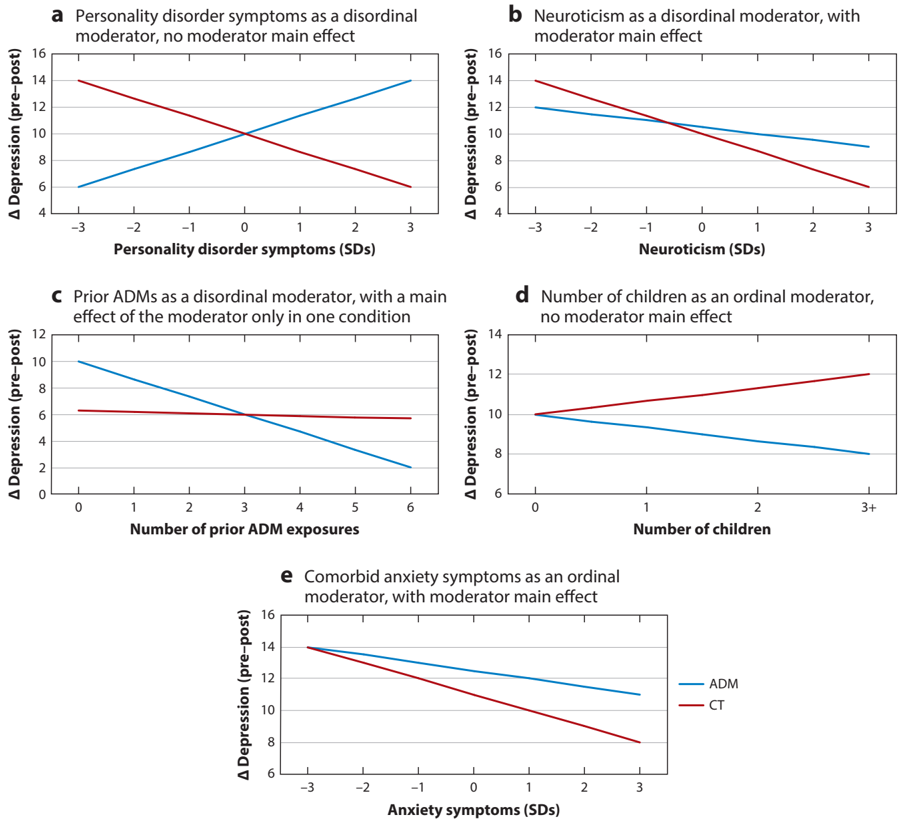
“Figure 1 displays a variety of types of prescriptive relationships, which can be ordinal (sometimes called quantitative interactions) or disordinal (sometimes called qualitative interactions; involving a full crossover) (Gail & Simon 1985, Gunter et al. 2011a, Wellek 1997, Widaman et al. 2012).”
BackgroundPao, W., & Miller, V. A. (2005) · Journal of Clinical Oncology · doi:10.1200/jco.2005.07.799 · Cited by 631
Bootstrap Methods for Developing Predictive Models
Austin, P. C., & Tu, J. V. (2004) · The American Statistician · doi:10.1198/0003130043277 · Cited by 622 · cited 2×
“F or p er so na l u se o nl y. interactions (Bleich et al. 2014) but excluded by a second that cannot (Austin & Tu 2004) if that variable’s predictive relationship to outcome involves a three-way or nonlinear interaction.”
BackgroundMethodClinical Prediction Models—a Practical Approach to Development, Validation and Updating
Bedogni, G. (2009) · Journal of the Royal Statistical Society Series A: Statistics in Society · doi:10.1111/j.1467-985x.2009.00614_16.x · Cited by 581
Toward a Neuroimaging Treatment Selection Biomarker for Major Depressive Disorder
McGrath, C. L., Kelley, M. E., Holtzheimer, P. E., Dunlop, B. W., Craighead, W. E., Franco, A. R., Craddock, R. C., & Mayberg, H. S. (2013) · JAMA Psychiatry · doi:10.1001/jamapsychiatry.2013.143 · Cited by 561 · cited 1×
“For example, McGrath et al. (2013) measured pretreatment brain activity using positron emission tomography in a depression RCT and identified right-anterior-insula metabolism as a disordinal moderator: Insula-hypometabolism was associated with better outcomes in CT and worse outcomes with ADM,…”
MethodPrediction as a Humanitarian and Pragmatic Contribution from Human Cognitive Neuroscience
Gabrieli, J. D. E., Ghosh, S. S., & Whitfield-Gabrieli, S. (2015) · Neuron · doi:10.1016/j.neuron.2014.10.047 · Cited by 535 · cited 1×
“A recent emphasis on neurobiological variables (Gabrieli et al. 2015, Jollans & Whelan 2016, Leuchter et al. 2009, Pizzagalli 2011, Stephan et al. 2017) has begun to reveal the potential of the inclusion of neurocognitive (Gordon et al. 2015) and biomarker-based assessments as predictors (Uher et…”
BackgroundTreatment and prevention of depression
Hollon, S. D., Thase, M. E., & Markowitz, J. C. (2002) · Psychological Science in the Public Interest · doi:10.1111/1529-1006.00008 · Cited by 511
Prognosis research strategy (PROGRESS) 4: Stratified medicine research
Hingorani, A. D., Windt, D. A. V. D., Riley, R. D., Abrams, K., Moons, K. G. M., Steyerberg, E. W., Schroter, S., Sauerbrei, W., Altman, D. G., Hemingway, H., et al. (2013) · BMJ · doi:10.1136/bmj.e5793 · Cited by 510
DeRubeis, R. J., Cohen, Z. D., Forand, N. R., Fournier, J. C., Gelfand, L. A., & Lorenzo-Luaces, L. (2014) · PLoS ONE · doi:10.1371/journal.pone.0083875 · Cited by 509
Self-citationCentring in regression analyses: a strategy to prevent errors in statistical inference
Kraemer, H. C., & Blasey, C. M. (2004) · International Journal of Methods in Psychiatric Research · doi:10.1002/mpr.170 · Cited by 501 · cited 2×
“Finally, centering variables can help avoid inferential errors and increase stability when using regression-based approaches (Kraemer & Blasey 2004).”
BackgroundMethodImpact of Precision Medicine in Diverse Cancers: A Meta-Analysis of Phase II Clinical Trials
Schwaederle, M., Zhao, M., Lee, J. J., Eggermont, A. M., Schilsky, R. L., Mendelsohn, J., Lazar, V., & Kurzrock, R. (2015) · Journal of Clinical Oncology · doi:10.1200/jco.2015.61.5997 · Cited by 494 · cited 1×
“Precision medicine1 has afforded major advances in cancer treatment (National Research Council 2011, Schwaederle et al. 2015).”
BackgroundEstimating treatment effect heterogeneity in randomized program evaluation
Imai, K., & Ratkovic, M. (2013) · The Annals of Applied Statistics · doi:10.1214/12-aoas593 · Cited by 480
Treatment for chronic depression: Cognitive behavioral analysis system of psychotherapy (CBASP).
McCullough, J. P. (2003) · Journal of Psychotherapy Integration · doi:10.1037/1053-0479.13.3-4.241 · Cited by 460
Khan, A., Leventhal, R. M., Khan, S. R., & Brown, W. A. (2002) · Journal of Clinical Psychopharmacology · doi:10.1097/00004714-200202000-00007 · Cited by 456 · cited 1×
“…to predict differential response to ADMs versus placebos, with ADMs evidencing superiority over placebo for moderate to high severity, and little to no differences seen at the lower end of the severity spectrum (Barbui et al. 2011, Fournier et al. 2010, Khan et al. 2002, Kirsch et al. 2008).”
BackgroundUher, R., Perlis, R. H., Henigsberg, N., Zobel, A., Rietschel, M., Mors, O., Hauser, J., Dernovsek, M. Z., Souery, D., Bajs, M., et al. (2012) · Psychological Medicine · doi:10.1017/s0033291711001905 · Cited by 420 · cited 2×
“Using data from the Genome-Based Therapeutic Drugs for Depression study (Uher et al. 2009), they tested the prognostic and prescriptive utility of three symptom clusters (factors) and the six symptom dimensions that made up the factors (Uher et al. 2012).”
MethodUher, R., Tansey, K. E., Dew, T., Maier, W., Mors, O., Hauser, J., Dernovsek, M. Z., Henigsberg, N., Souery, D., Farmer, A., et al. (2014) · American Journal of Psychiatry · doi:10.1176/appi.ajp.2014.14010094 · Cited by 418 · cited 1×
“…emphasis on neurobiological variables (Gabrieli et al. 2015, Jollans & Whelan 2016, Leuchter et al. 2009, Pizzagalli 2011, Stephan et al. 2017) has begun to reveal the potential of the inclusion of neurocognitive (Gordon et al. 2015) and biomarker-based assessments as predictors (Uher et al. 2014).”
BackgroundThe impact of client treatment preferences on outcome: a meta‐analysis
Swift, J. K., & Callahan, J. L. (2009) · Journal of Clinical Psychology · doi:10.1002/jclp.20553 · Cited by 397 · cited 1×
“However, studies of the predictive utility of client preference include positive (Kocsis et al. 2009, Mergl et al. 2011, Swift & Callahan 2009, Swift et al. 2011), mixed (Dunlop et al. 2017, Preference Collaborative Review Group 2008, McHugh et al. 2013), and negative (Dunlop et al. 2012b, Leykin…”
BackgroundCraske, M. G., Meuret, A. E., Ritz, T., Treanor, M., & Dour, H. J. (2016) · Depression and Anxiety · doi:10.1002/da.22490 · Cited by 387
McGirr, A., Berlim, M. T., Bond, D. J., Fleck, M. P., Yatham, L. N., & Lam, R. W. (2015) · Psychological Medicine · doi:10.1017/s0033291714001603 · Cited by 373 · cited 1×
“The pursuit of novel neurological (e.g., deep brain stimulation; Mayberg et al. 2005), pharmacological (e.g., ketamine; McGirr et al. 2015), and psychological (e.g., positive affect treatment; Craske et al. 2016) treatments is one avenue through which researchers are attempting to improve treatment…”
BackgroundRush, A. J., Trivedi, M. H., Stewart, J. W., Nierenberg, A. A., Fava, M., Kurian, B. T., Warden, D., Morris, D. W., Luther, J. F., Husain, M. M., et al. (2011) · American Journal of Psychiatry · doi:10.1176/appi.ajp.2011.10111645 · Cited by 372 · cited 1×
“They validated their model in an external sample from a separate study, the Combining Medications to Enhance Depression Outcomes trial (Rush et al. 2011).”
MethodPersonalized Medicine for Depression: Can We Match Patients With Treatments?
Simon, G. E., & Perlis, R. H. (2010) · American Journal of Psychiatry · doi:10.1176/appi.ajp.2010.09111680 · Cited by 365 · cited 3×
“Given the observed heterogeneity in the presentation, history, and prognosis of depression, it is unlikely that any single variable in isolation will have clinically useful predictive utility (Simon & Perlis 2010).”
BackgroundFournier, J. C., DeRubeis, R. J., Shelton, R. C., Hollon, S. D., Amsterdam, J. D., & Gallop, R. (2009) · Journal of Consulting and Clinical Psychology · doi:10.1037/a0015401 · Cited by 340 · cited 4×
“…RCT comparing CT to ADM suggested that chronicity is prognostic, in that it was associated with similarly lower response rates in both treatments (Fournier et al. 2009), and an RCT comparing CBASP to ADM in individuals with chronic depression found no difference in response rates (Nemeroff et…”
BackgroundMethodResultInfluentialSelf-citationWhat is personalized medicine: sharpening a vague term based on a systematic literature review
Schleidgen, S., Klingler, C., Bertram, T., Rogowski, W. H., & Marckmann, G. (2013) · BMC Medical Ethics · doi:10.1186/1472-6939-14-55 · Cited by 336 · cited 1×
“F or p er so na l u se o nl y. treatments is called precision medicine (Hamburg & Collins 2010), which has largely replaced the term personalized medicine (Katsnelson 2013, Schleidgen et al. 2013).”
BackgroundEvidence-based pharmacotherapy of obsessive-compulsive disorder
Fineberg, N. A., Brown, A., Reghunandanan, S., & Pampaloni, I. (2012) · The International Journal of Neuropsychopharmacology · doi:10.1017/s1461145711001829 · Cited by 336
Chakraborty, B., & Moodie, E. E. M. (2013) · Statistics for Biology and Health · doi:10.1007/978-1-4614-7428-9 · Cited by 335
Machine learning, statistical learning and the future of biological research in psychiatry
Iniesta, R., Stahl, D., & McGuffin, P. (2016) · Psychological Medicine · doi:10.1017/s0033291716001367 · Cited by 328 · cited 3×
“In 2011, we, along with other members of our research team, began to explore the possibility that machine learning6 (Iniesta et al. 2016b, Passos et al. 2016) or multivariable regression modeling approaches could be brought to bear on problems in precision mental health.”
BackgroundMethodRenjilian, D. A., Perri, M. G., Nezu, A. M., McKelvey, W. F., Shermer, R. L., & Anton, S. D. (2001) · Journal of Consulting and Clinical Psychology · doi:10.1037//0022-006x.69.4.717 · Cited by 327
Patients' preferences within randomised trials: systematic review and patient level meta-analysis
Preference Collaborative Review Group (2008) · BMJ · doi:10.1136/bmj.a1864 · Cited by 301
Why significant variables aren’t automatically good predictors
Lo, A., Chernoff, H., Zheng, T., & Lo, S.-H. (2015) · Proceedings of the National Academy of Sciences · doi:10.1073/pnas.1518285112 · Cited by 301 · cited 1×
“However, statistically significant variables are not always good predictors (Lo et al. 2015).”
BackgroundTrivedi, M. H., McGrath, P. J., Fava, M., Parsey, R. V., Kurian, B. T., Phillips, M. L., Oquendo, M. A., Bruder, G., Pizzagalli, D., Toups, M., et al. (2016) · Journal of Psychiatric Research · doi:10.1016/j.jpsychires.2016.03.001 · Cited by 286 · cited 1×
“Two such trials are the Establishing Moderators and Biosignatures of Antidepressant Response in Clinical Care study (Trivedi et al. 2016), which focuses on two antidepressants (sertraline and bupropion) in the context of early-onset, recurrent MDD, and the recently completed Predictors of Remission…”
BackgroundChekroud, A. M., Gueorguieva, R., Krumholz, H. M., Trivedi, M. H., Krystal, J. H., & McCarthy, G. (2017) · JAMA Psychiatry · doi:10.1001/jamapsychiatry.2017.0025 · Cited by 276 · cited 1×
“Recent multivariable modeling efforts (Chekroud et al. 2017) highlight the potential for these advanced approaches to improve prognostic prediction in mental health (see Gillan & Whelan 2017 for an extensive review).”
BackgroundbartMachine: Machine Learning with Bayesian Additive Regression Trees
Kapelner, A., & Bleich, J. (2016) · Journal of Statistical Software · doi:10.18637/jss.v070.i04 · Cited by 270
Kessler, R. C., van Loo, H. M., Wardenaar, K. J., Bossarte, R. M., Brenner, L. A., Cai, T., Ebert, D. D., Hwang, I., Li, J., de Jonge, P., et al. (2016) · Molecular Psychiatry · doi:10.1038/mp.2015.198 · Cited by 254 · cited 1×
“Prognostic information can be used to provide realistic expectations to the treating clinician, as well as the client and their family (Kessler et al. 2016).”
BackgroundBeutler, L. E., Engle, D., Mohr, D., & Daldrup, R. J. (1991) · Journal of Consulting and Clinical Psychology · doi:10.1037//0022-006x.59.2.333 · Cited by 245 · cited 1×
“For example, on the basis of positive findings in RCTs, CT (Beck et al. 1979) and interpersonal therapy (IPT; Klerman & Weissman 1994) are each considered evidence-based psychotherapies for MDD. Similarly, among the psychoactive medications, specific classes of drugs have been studied under the…”
BackgroundJamshidian, M., & Jalal, S. (2010) · Psychometrika · doi:10.1007/s11336-010-9175-3 · Cited by 244
Cost-benefit analysis of psychological therapy
Layard, R., Clark, D., Knapp, M., & Mayraz, G. (2007) · National Institute Economic Review · doi:10.1177/0027950107086171 · Cited by 229
Genetic predictors of response to antidepressants in the GENDEP project
Uher, R., Huezo-Diaz, P., Perroud, N., Smith, R., Rietschel, M., Mors, O., Hauser, J., Maier, W., Kozel, D., Henigsberg, N., et al. (2009) · The Pharmacogenomics Journal · doi:10.1038/tpj.2009.12 · Cited by 226 · cited 1×
“Using data from the Genome-Based Therapeutic Drugs for Depression study (Uher et al. 2009), they tested the prognostic and prescriptive utility of three symptom clusters (factors) and the six symptom dimensions that made up the factors (Uher et al. 2012).”
MethodSimple versus complex forecasting: The evidence
Green, K. C., & Armstrong, J. S. (2015) · Journal of Business Research · doi:10.1016/j.jbusres.2015.03.026 · Cited by 223
Jamshardian, M., & Jalal, S. (2010) · eScholarship (California Digital Library) · Cited by 222
King, M., Walker, C., Levy, G., Bottomley, C., Royston, P., Weich, S., Bellón-Saameño, J. Á., Moreno, B., Švab, I., Rotar, D., et al. (2008) · Archives of General Psychiatry · doi:10.1001/archpsyc.65.12.1368 · Cited by 221 · cited 1×
“Similarly, models predicting the onset of major depressive episodes in European primary care (King et al. 2008) have not generalized to the US general population (Nigatu et al. 2016).”
BackgroundBarbui, C., Cipriani, A., Patel, V., Ayuso-Mateos, J. L., & van Ommeren, M. (2011) · British Journal of Psychiatry · doi:10.1192/bjp.bp.109.076448 · Cited by 218 · cited 1×
“…to predict differential response to ADMs versus placebos, with ADMs evidencing superiority over placebo for moderate to high severity, and little to no differences seen at the lower end of the severity spectrum (Barbui et al. 2011, Fournier et al. 2010, Khan et al. 2002, Kirsch et al. 2008).”
BackgroundDistinguishing ordinal and disordinal interactions.
Widaman, K. F., Helm, J. L., Castro-Schilo, L., Pluess, M., Stallings, M. C., & Belsky, J. (2012) · Psychological Methods · doi:10.1037/a0030003 · Cited by 217 · cited 1×
“Figure 1 displays a variety of types of prescriptive relationships, which can be ordinal (sometimes called quantitative interactions) or disordinal (sometimes called qualitative interactions; involving a full crossover) (Gail & Simon 1985, Gunter et al. 2011a, Wellek 1997, Widaman et al. 2012).”
Huibers, M. J. H., Cohen, Z. D., Lemmens, L. H. J. M., Arntz, A., Peeters, F. P. M. L., Cuijpers, P., & DeRubeis, R. J. (2015) · PLOS ONE · doi:10.1371/journal.pone.0140771 · Cited by 215
Self-citationPsychological treatments: A call for mental-health science
Holmes, E. A., Craske, M. G., & Graybiel, A. M. (2014) · Nature · doi:10.1038/511287a · Cited by 214
Driessen, E., Cuijpers, P., Hollon, S. D., & Dekker, J. J. M. (2010) · Journal of Consulting and Clinical Psychology · doi:10.1037/a0020570 · Cited by 208
Enhancing the Personalization of Psychotherapy With Dynamic Assessment and Modeling
Fisher, A. J., & Boswell, J. F. (2016) · Assessment · doi:10.1177/1073191116638735 · Cited by 204
Barber, J. P., & Muenz, L. R. (1996) · Journal of Consulting and Clinical Psychology · doi:10.1037//0022-006x.64.5.951 · Cited by 198 · cited 1×
“Capitalization models, which propose that therapies work best when they build on clients’ strengths, have received some support (Barber & Muenz 1996, Cheavens et al. 2012).”
BackgroundVariable selection for BART: An application to gene regulation
Bleich, J., Kapelner, A. D., George, E. I., & Jensen, S. T. (2014) · The Annals of Applied Statistics · doi:10.1214/14-aoas755 · Cited by 195 · cited 2×
“F or p er so na l u se o nl y. interactions (Bleich et al. 2014) but excluded by a second that cannot (Austin & Tu 2004) if that variable’s predictive relationship to outcome involves a three-way or nonlinear interaction.”
BackgroundPerlis, R. H., Iosifescu, D. V., Castro, V. M., Murphy, S. N., Gainer, V. S., Minnier, J., Cai, T., Goryachev, S., Zeng, Q., Gallagher, P. J., et al. (2012) · Psychological Medicine · doi:10.1017/s0033291711000997 · Cited by 193
Williams, L. M., Rush, A. J., Koslow, S. H., Wisniewski, S. R., Cooper, N. J., Nemeroff, C. B., Schatzberg, A. F., & Gordon, E. (2011) · Trials · doi:10.1186/1745-6215-12-4 · Cited by 192 · cited 1×
“There are several ongoing studies, designed specifically to generate knowledge relevant to outcome prediction in depression treatment, that feature potential biomarkers, including information from neuroimaging and genetic testing (Brunoni et al. 2015, Lam et al. 2016, Williams et al. 2011).”
BackgroundCheavens, J. S., Strunk, D. R., Lazarus, S. A., & Goldstein, L. A. (2012) · Behaviour Research and Therapy · doi:10.1016/j.brat.2012.08.002 · Cited by 191 · cited 1×
“Capitalization models, which propose that therapies work best when they build on clients’ strengths, have received some support (Barber & Muenz 1996, Cheavens et al. 2012).”
BackgroundUsing patient self-reports to study heterogeneity of treatment effects in major depressive disorder
Kessler, R. C., van Loo, H. M., Wardenaar, K. J., Bossarte, R. M., Brenner, L. A., Ebert, D. D., de Jonge, P., Nierenberg, A. A., Rosellini, A. J., Sampson, N. A., et al. (2017) · Epidemiology and Psychiatric Sciences · doi:10.1017/s2045796016000020 · Cited by 191 · cited 3×
“…by identifying individuals for whom more than a 10-point advantage of the stronger treatment would be expected, as well as individuals for whom the weaker treatment might be equally, or even more, effective (Kessler et al. 2017). www.annualreviews.org • Treatment Selection in Depression 213 A nn u.”
BackgroundInfluentialBrain Mechanisms of the Placebo Effect: An Affective Appraisal Account
Ashar, Y. K., Chang, L. J., & Wager, T. D. (2017) · Annual Review of Clinical Psychology · doi:10.1146/annurev-clinpsy-021815-093015 · Cited by 191 · cited 1×
“However, in comparisons of medication to placebo (Ashar et al. 2017) or of psychotherapies to control conditions, higher baseline severity predicts a larger advantage of the active treatment over the control, making severity prescriptive in these contexts (Driessen et al. 2010, Fournier et al.…”
BackgroundWeitz, E. S., Hollon, S. D., Twisk, J., van Straten, A., Huibers, M. J. H., David, D., DeRubeis, R. J., Dimidjian, S., Dunlop, B. W., Cristea, I. A., et al. (2015) · JAMA Psychiatry · doi:10.1001/jamapsychiatry.2015.1516 · Cited by 187 · cited 2×
“In comparisons of medication to CT, baseline severity is prognostic because it has the same relationship to outcome in both treatments (Weitz et al. 2015).”
BackgroundSelf-citationCombining clinical variables to optimize prediction of antidepressant treatment outcomes
Iniesta, R., Malki, K., Maier, W., Rietschel, M., Mors, O., Hauser, J., Henigsberg, N., Dernovsek, M. Z., Souery, D., Stahl, D., et al. (2016) · Journal of Psychiatric Research · doi:10.1016/j.jpsychires.2016.03.016 · Cited by 179 · cited 3×
“In 2011, we, along with other members of our research team, began to explore the possibility that machine learning6 (Iniesta et al. 2016b, Passos et al. 2016) or multivariable regression modeling approaches could be brought to bear on problems in precision mental health.”
BackgroundMethodKocsis, J. H., Leon, A. C., Markowitz, J. C., Manber, R., Arnow, B., Klein, D. N., & Thase, M. E. (2009) · The Journal of Clinical Psychiatry · doi:10.4088/jcp.08m04371 · Cited by 173 · cited 1×
“However, studies of the predictive utility of client preference include positive (Kocsis et al. 2009, Mergl et al. 2011, Swift & Callahan 2009, Swift et al. 2011), mixed (Dunlop et al. 2017, Preference Collaborative Review Group 2008, McHugh et al. 2013), and negative (Dunlop et al. 2012b, Leykin…”
BackgroundSwift, J. K., Callahan, J. L., & Vollmer, B. M. (2011) · Journal of Clinical Psychology · doi:10.1002/jclp.20759 · Cited by 170
A Clinical Risk Stratification Tool for Predicting Treatment Resistance in Major Depressive Disorder
Perlis, R. H. (2013) · Biological Psychiatry · doi:10.1016/j.biopsych.2012.12.007 · Cited by 169
Wallace, M. L., Frank, E., & Kraemer, H. C. (2013) · JAMA Psychiatry · doi:10.1001/jamapsychiatry.2013.1960 · Cited by 166 · cited 28×
“F or p er so na l u se o nl y. ADM CT c Prior ADMs as a disordinal moderator, with a main effect of the moderator only in one condition 0 2 4 6 8 10 12 0 1 2 3 4 5 6 Number of prior ADM exposures Δ D ep re ss io n (p re –p os t) Δ D ep re ss io n (p re –p os t) 6 8 10 12 14 16 –3 –2 –1 0 1 2 3 Anxiety symptoms (SDs) e…”
MethodInfluentialComputational neuroimaging strategies for single patient predictions
Stephan, K. E., Schlagenhauf, F., Huys, Q. J. M., Raman, S., Aponte, E. A., Brodersen, K. H., Rigoux, L., Moran, R. J., Daunizeau, J., Dolan, R. J., et al. (2017) · NeuroImage · doi:10.1016/j.neuroimage.2016.06.038 · Cited by 166
Detecting moderator effects using subgroup analyses
Wang, R., & Ware, J. H. (2013) · Prevention Science · doi:10.1007/s11121-011-0221-x · Cited by 165 · cited 1×
“Cronbach (1957) described prescriptive relationships as “aptitude-by-treatment” interactions, which have typically been explored through subgroup or subset analysis (Doove et al. 2014, Wang & Ware 2013).”
MethodKraemer, H. C. (2013) · Statistics in Medicine · doi:10.1002/sim.5734 · Cited by 163 · cited 4×
“We followed the structure used by Kraemer (2013) and Schneider et al. (2015) in creating these figures. www.annualreviews.org • Treatment Selection in Depression 215 Supplemental Material A nn u.”
MethodInfluentialDelgadillo, J., Moreea, O., & Lutz, W. (2016) · Behaviour Research and Therapy · doi:10.1016/j.brat.2016.02.003 · Cited by 162
Measuring the Performance of Markers for Guiding Treatment Decisions
Janes, H., PEPE, M. S., Bossuyt, P. M., & Barlow, W. E. (2011) · Annals of Internal Medicine · doi:10.7326/0003-4819-154-4-201102150-00006 · Cited by 157 · cited 1×
“For example, Janes et al. (2011) developed a statistical method for evaluating treatment selection markers that went beyond the classic approach of testing for a statistical interaction between a predictor and treatment to answer four important questions: “1) Does the marker help patients choose…”
MethodLoss of Antidepressant Efficacy During Maintenance Therapy: Possible Mechanisms and Treatments
Byrne, S. E., & Rothschild, A. J. (1998) · The Journal of Clinical Psychiatry · doi:10.4088/jcp.v59n0602 · Cited by 149 · cited 1×
“Prior exposure to ADMs and history of nonresponse to ADMs have each been found consistently to predict poor response to future courses of antidepressants (Amsterdam et al. 2009, 2016; Amsterdam & Shults 2009; Byrne & Rothschild 1998).”
Backgroundon behalf of the CAN-BIND Investigator Team, Lam, R. W., Milev, R., Rotzinger, S., Andreazza, A. C., Blier, P., Brenner, C., Daskalakis, Z. J., Dharsee, M., Downar, J., et al. (2016) · BMC Psychiatry · doi:10.1186/s12888-016-0785-x · Cited by 148
Momentum grows to make 'personalized' medicine more 'precise'
Katsnelson, A. (2013) · Nature Medicine · doi:10.1038/nm0313-249 · Cited by 143 · cited 1×
“F or p er so na l u se o nl y. treatments is called precision medicine (Hamburg & Collins 2010), which has largely replaced the term personalized medicine (Katsnelson 2013, Schleidgen et al. 2013).”
BackgroundWeisz, J. R., Krumholz, L. S., Santucci, L., Thomassin, K., & Ng, M. Y. (2015) · Annual Review of Clinical Psychology · doi:10.1146/annurev-clinpsy-032814-112820 · Cited by 139 · cited 1×
“A striking feature of efforts in this area is the heterogeneity of the statistical approaches that are employed (Petkova et al. 2017, Weisz et al. 2015).”
MethodDunlop, B. W., Kelley, M. E., Aponte-Rivera, V., Mletzko-Crowe, T., Kinkead, B., Ritchie, J. C., Nemeroff, C. B., Craighead, W. E., Mayberg, H. S., & for the PReDICT Team (2017) · American Journal of Psychiatry · doi:10.1176/appi.ajp.2016.16050517 · Cited by 139
Dunlop, B. W., Binder, E. B., Cubells, J. F., Goodman, M. M., Kelley, M. E., Kinkead, B., Kutner, M., Nemeroff, C. B., Newport, D. J., Owens, M. J., et al. (2012) · Trials · doi:10.1186/1745-6215-13-106 · Cited by 136
Schneider, R. L., Arch, J. J., & Wolitzky-Taylor, K. B. (2015) · Clinical Psychology Review · doi:10.1016/j.cpr.2015.02.004 · Cited by 135 · cited 1×
“We followed the structure used by Kraemer (2013) and Schneider et al. (2015) in creating these figures. www.annualreviews.org • Treatment Selection in Depression 215 Supplemental Material A nn u.”
MethodTaking Psychiatry Research Online
Gillan, C. M., & Daw, N. D. (2016) · Neuron · doi:10.1016/j.neuron.2016.06.002 · Cited by 135 · cited 1×
“To date, most attempts to build prescriptive models for treatment selection have utilized data from RCTs. Future efforts, exemplified by the ongoing work of Gillan et al. to collect mental health treatment outcome data online (Gillan & Daw 2016), will likely also rely on nonrandomized data.”
BackgroundBig data analytics and machine learning: 2015 and beyond
Passos, I. C., Mwangi, B., & Kapczinski, F. P. (2016) · The Lancet Psychiatry · doi:10.1016/s2215-0366(15)00549-0 · Cited by 133
What big data can do for treatment in psychiatry
Gillan, C. M., & Whelan, R. (2017) · Current Opinion in Behavioral Sciences · doi:10.1016/j.cobeha.2017.07.003 · Cited by 131
Fournier, J. C., DeRubeis, R. J., Shelton, R. C., Gallop, R., Amsterdam, J. D., & Hollon, S. D. (2008) · British Journal of Psychiatry · doi:10.1192/bjp.bp.107.037234 · Cited by 128
Self-citationMergl, R., Henkel, V., Allgaier, A.-K., Kramer, D., Hautzinger, M., Kohnen, R., Coyne, J., & Hegerl, U. (2011) · Psychotherapy and Psychosomatics · doi:10.1159/000318772 · Cited by 126 · cited 1×
“However, studies of the predictive utility of client preference include positive (Kocsis et al. 2009, Mergl et al. 2011, Swift & Callahan 2009, Swift et al. 2011), mixed (Dunlop et al. 2017, Preference Collaborative Review Group 2008, McHugh et al. 2013), and negative (Dunlop et al. 2012b, Leykin…”
BackgroundLutz, W., Hofmann, S. G., Rubel, J., Boswell, J. F., Shear, M. K., Gorman, J. M., Woods, S. W., & Barlow, D. H. (2014) · Journal of Consulting and Clinical Psychology · doi:10.1037/a0035535 · Cited by 122 · cited 1×
“This includes expectations concerning the rapidity and extent of response to the treatment that will be provided, as well as whether special attention should be paid to the client’s progress (Hunter et al. 2011, Lutz et al. 2014).”
BackgroundRandom forest methodology for model-based recursive partitioning: the mobForest package for R
Garge, N. R., Bobashev, G., & Eggleston, B. (2013) · BMC Bioinformatics · doi:10.1186/1471-2105-14-125 · Cited by 118 · cited 1×
“Others employ bootstrapping procedures or shrinkage parameters that seek to maximize the stability and generalizability of the models (Austin & Tu 2004, Garge et al. 2013, Zou & Hastie 2005).”
MethodLeuchter, A., Cook, I., Gilmer, W., Marangell, L., Burgoyne, K., Howland, R., Trivedi, M., Zisook, S., Jain, R., Fava, M., et al. (2009) · Psychiatry Research · doi:10.1016/j.psychres.2009.04.004 · Cited by 117
Super-Learning of an Optimal Dynamic Treatment Rule
Luedtke, A. R., & van der Laan, M. J. (2016) · The International Journal of Biostatistics · doi:10.1515/ijb-2015-0052 · Cited by 115
Lorenzo‐Luaces, L., DeRubeis, R. J., van Straten, A., & Tiemens, B. G. (2017) · Journal of Affective Disorders · doi:10.1016/j.jad.2017.02.010 · Cited by 110 · cited 1×
“Lorenzo-Luaces et al. (2017) implemented such an approach as a proof of concept, with data from a randomized comparison of a high-intensity treatment (CT) with two lower-intensity treatments.”
MethodSelf-citationCase complexity as a guide for psychological treatment selection.
Delgadillo, J., Huey, D., Bennett, H., & McMillan, D. (2017) · Journal of Consulting and Clinical Psychology · doi:10.1037/ccp0000231 · Cited by 105
Kessler, R. C. (2018) · Current Opinion in Psychiatry · doi:10.1097/yco.0000000000000377 · Cited by 103
Development of Clinical Practice Guidelines
Hollon, S. D., Areán, P. A., Craske, M. G., Crawford, K. A., Kivlahan, D. R., Magnavita, J. J., Ollendick, T. H., Sexton, T. L., Spring, B., Bufka, L. F., et al. (2014) · Annual Review of Clinical Psychology · doi:10.1146/annurev-clinpsy-050212-185529 · Cited by 97
Divergent outcomes in cognitive-behavioral therapy and pharmacotherapy for adult depression
Vittengl, J. R., Jarrett, R. B., Weitz, E., Hollon, S. D., Twisk, J., Cristea, I., David, D., DeRubeis, R. J., Dimidjian, S., Dunlop, B. W., et al. (2016) · American Journal of Psychiatry · doi:10.1176/appi.ajp.2015.15040492 · Cited by 97
Self-citationPerlis, R. H., Fijal, B. A., Dharia, S., Heinloth, A. N., & Houston, J. (2010) · Biological Psychiatry · doi:10.1016/j.biopsych.2009.12.010 · Cited by 96 · cited 1×
“There are many examples of predictive algorithms built using data from a sample of clients treated with one antidepressant that have failed to generalize to a different antidepressant (Chekroud et al. 2016, Iniesta et al. 2016a, Perlis et al. 2010).”
BackgroundAssessing apparent treatment—covariate interactions in randomized clinical trials
Byar, D. P. (1985) · Statistics in Medicine · doi:10.1002/sim.4780040304 · Cited by 95 · cited 1×
“Byar (1985) later applied this general approach to the differential prediction of survival in response to two dosage levels of chemotherapy for prostate cancer.”
BackgroundThe Relation of Patients’ Treatment Preferences to Outcome in a Randomized Clinical Trial
Leykin, Y., DeRubeis, R. J., Gallop, R., Amsterdam, J. D., Shelton, R. C., & Hollon, S. D. (2007) · Behavior Therapy · doi:10.1016/j.beth.2006.08.002 · Cited by 93 · cited 2×
“…positive (Kocsis et al. 2009, Mergl et al. 2011, Swift & Callahan 2009, Swift et al. 2011), mixed (Dunlop et al. 2017, Preference Collaborative Review Group 2008, McHugh et al. 2013), and negative (Dunlop et al. 2012b, Leykin et al. 2007b, Renjilian et al. 2001, Winter & Barber 2013) findings.”
BackgroundSelf-citationSelecting optimal treatment in clinical trials using covariate information
Byar, D. P., & Corle, D. K. (1977) · Journal of Chronic Diseases · doi:10.1016/0021-9681(77)90037-6 · Cited by 89 · cited 1×
“Byar & Corle (1977) published an early example of a multivariable treatment selection model in medicine.”
BackgroundModeling in Medical Decision Making: a Bayesian Approach
Ravi, S. (2003) · Journal of the Royal Statistical Society Series D (The Statistician) · doi:10.1111/1467-9884.t01-5-00356 · Cited by 85
DeRubeis, R. J., Gelfand, L. A., German, R. E., Fournier, J. C., & Forand, N. R. (2014) · Psychotherapy Research · doi:10.1080/10503307.2013.838654 · Cited by 84
Self-citationPerlis, R. H., Patrick, A., Smoller, J. W., & Wang, P. S. (2009) · Neuropsychopharmacology · doi:10.1038/npp.2009.50 · Cited by 83
Leykin, Y., Amsterdam, J. D., DeRubeis, R. J., Gallop, R., Shelton, R. C., & Hollon, S. D. (2007) · Journal of Consulting and Clinical Psychology · doi:10.1037/0022-006x.75.2.267 · Cited by 82 · cited 2×
“…positive (Kocsis et al. 2009, Mergl et al. 2011, Swift & Callahan 2009, Swift et al. 2011), mixed (Dunlop et al. 2017, Preference Collaborative Review Group 2008, McHugh et al. 2013), and negative (Dunlop et al. 2012b, Leykin et al. 2007b, Renjilian et al. 2001, Winter & Barber 2013) findings.”
BackgroundSelf-citationDunlop, B. W., Kelley, M. E., Mletzko, T. C., Velasquez, C. M., Craighead, W. E., & Mayberg, H. S. (2012) · Journal of Psychiatric Research · doi:10.1016/j.jpsychires.2011.11.003 · Cited by 80
Stepped care vs. matched care for mood and anxiety disorders: a randomized trial in routine practice
Van Straten, A., Tiemens, B., Hakkaart, L., Nolen, W. A., & Donker, M. C. H. (2006) · Acta Psychiatrica Scandinavica · doi:10.1111/j.1600-0447.2005.00731.x · Cited by 78 · cited 1×
“On average, as described in the main outcome paper from the trial, the differences between CT and each of the two comparison conditions were small (van Straten et al. 2006).”
MethodZimmerman, M. A., Clark, H., Multach, M. D., Walsh, E. K., Rosenstein, L. K., & Gazarian, D. (2015) · Mayo Clinic Proceedings · doi:10.1016/j.mayocp.2015.06.016 · Cited by 77 · cited 1×
“However, for most trials, entry criteria include moderate or greater symptom severity (Zimmerman et al. 2015, 2016), thus restricting the range of severity that can be investigated, and constraining the applicability of many positive moderator findings to a subset of the population of patients with…”
BackgroundVariable selection for qualitative interactions
Gunter, L., Zhu, J., & Murphy, S. A. (2011) · Statistical Methodology · doi:10.1016/j.stamet.2009.05.003 · Cited by 77
Abandoning personalization to get to precision in the pharmacotherapy of depression
Perlis, R. H. (2016) · World Psychiatry · doi:10.1002/wps.20345 · Cited by 77
Should treatment for depression be based more on patient preference?
Winter, S., & Barber, J. (2013) · Patient Preference and Adherence · doi:10.2147/ppa.s52746 · Cited by 73 · cited 1×
“…positive (Kocsis et al. 2009, Mergl et al. 2011, Swift & Callahan 2009, Swift et al. 2011), mixed (Dunlop et al. 2017, Preference Collaborative Review Group 2008, McHugh et al. 2013), and negative (Dunlop et al. 2012b, Leykin et al. 2007b, Renjilian et al. 2001, Winter & Barber 2013) findings.”
BackgroundLutz, W., Saunders, S. M., Leon, S. C., Martinovich, Z., Kosfelder, J., Schulte, D., Grawe, K., & Tholen, S. (2006) · Psychological Assessment · doi:10.1037/1040-3590.18.2.133 · Cited by 68 · cited 1×
“Lutz et al. (2006) employed a statistical technique called “nearest-neighbors” to predict differential outcomes between two variations of CT.”
MethodDevelopment and initial implementation of the Dynamic Assessment Treatment Algorithm (DATA)
Fernandez, K. C., Fisher, A. J., & Chi, C. (2017) · PLOS ONE · doi:10.1371/journal.pone.0178806 · Cited by 68
Doove, L. L., Dusseldorp, E., Deun, K. V., & Mechelen, I. V. (2013) · Advances in Data Analysis and Classification · doi:10.1007/s11634-013-0159-x · Cited by 67
Assessing Treatment‐Selection Markers using a Potential Outcomes Framework
Huang, Y., Gilbert, P. B., & Janes, H. (2012) · Biometrics · doi:10.1111/j.1541-0420.2011.01722.x · Cited by 66 · cited 1×
“Further examination of the size of this benefit in the context of other relevant factors (e.g., cost of administering the required assessments) would inform a judgment concerning the clinical utility of a model (Huang et al. 2012, 2015).”
BackgroundBrunoni, A. R., Sampaio-Junior, B., Moffa, A. H., Borrione, L., Nogueira, B. S., Aparício, L. V. M., Veronezi, B., Moreno, M., Fernandes, R. A., Tavares, D., et al. (2015) · Sao Paulo Medical Journal · doi:10.1590/1516-3180.2014.00351712 · Cited by 57 · cited 1×
“There are several ongoing studies, designed specifically to generate knowledge relevant to outcome prediction in depression treatment, that feature potential biomarkers, including information from neuroimaging and genetic testing (Brunoni et al. 2015, Lam et al. 2016, Williams et al. 2011).”
BackgroundZilcha-Mano, S., Keefe, J. R., Chui, H., Rubin, A., Barrett, M. S., & Barber, J. P. (2016) · The Journal of Clinical Psychiatry · doi:10.4088/jcp.15m10081 · Cited by 55
Saunders, R., Cape, J., Fearon, P., & Pilling, S. (2016) · Journal of Affective Disorders · doi:10.1016/j.jad.2016.03.011 · Cited by 53
Watkins, E., Newbold, A., Tester-Jones, M., Javaid, M., Cadman, J., Collins, L. M., Graham, J., & Mostazir, M. (2016) · BMC Psychiatry · doi:10.1186/s12888-016-1054-8 · Cited by 51 · cited 1×
“Modular psychotherapies that can be accessed online are fertile grounds for future efforts to personalize treatment for depression (Watkins et al. 2016).”
BackgroundCloitre, M., Petkova, E., Su, Z., & Weiss, B. J. (2016) · BJPsych Open · doi:10.1192/bjpo.bp.115.000745 · Cited by 49 · cited 1×
“Other groups have used variants of the methods already described to address treatment selection questions (Cloitre et al. 2016, Westover et al. 2015).”
MethodDawes, R. M. (2005) · Journal of Clinical Psychology · doi:10.1002/jclp.20180 · Cited by 48
Rubenstein, L. V., Rayburn, N. R., Keeler, E. B., Ford, D. E., Rost, K. M., & Sherbourne, C. D. (2007) · Psychiatric Services · doi:10.1176/appi.ps.58.8.1049 · Cited by 48
The Clinical Added Value of Imaging: A Perspective From Outcome Prediction
Jollans, L., & Whelan, R. (2016) · Biological Psychiatry Cognitive Neuroscience and Neuroimaging · doi:10.1016/j.bpsc.2016.04.005 · Cited by 45 · cited 1×
“A recent emphasis on neurobiological variables (Gabrieli et al. 2015, Jollans & Whelan 2016, Leuchter et al. 2009, Pizzagalli 2011, Stephan et al. 2017) has begun to reveal the potential of the inclusion of neurocognitive (Gordon et al. 2015) and biomarker-based assessments as predictors (Uher et…”
BackgroundKingslake, J., Dias, R., Dawson, G. R., Simon, J., Goodwin, G. M., Harmer, C. J., Morriss, R., Brown, S., Guo, B., Dourish, C. T., et al. (2017) · Trials · doi:10.1186/s13063-017-2247-2 · Cited by 42 · cited 1×
“To realize the promise of precision mental health, existing models as well as those that are being developed will need to be validated prospectively against standard allocation schemes (Kingslake et al. 2017).”
MethodGunter, L., Zhu, J., & Murphy, S. (2011) · Journal of Biopharmaceutical Statistics · doi:10.1080/10543406.2011.608052 · Cited by 41
Amsterdam, J. D., Williams, D., Michelson, D., Adler, L. A., Dunner, D. L., Nierenberg, A. A., Reimherr, F. W., & Schatzberg, A. F. (2009) · Neuropsychobiology · doi:10.1159/000226611 · Cited by 39 · cited 1×
“Prior exposure to ADMs and history of nonresponse to ADMs have each been found consistently to predict poor response to future courses of antidepressants (Amsterdam et al. 2009, 2016; Amsterdam & Shults 2009; Byrne & Rothschild 1998).”
BackgroundLutz, W., Zimmermann, D., Müller, V. N. L. S., Deisenhofer, A.-K., & Rubel, J. A. (2017) · BMC Psychiatry · doi:10.1186/s12888-017-1464-2 · Cited by 38 · cited 1×
“Lutz et al. (2017) recently initiated an RCT that tests personalized psychotherapy prediction and adaptation tools in a real-world clinic.”
BackgroundSmagula, S. F., Wallace, M. L., Anderson, S., Karp, J. F., Lenze, E. J., Mulsant, B. H., Butters, M. A., Blumberger, D. M., Diniz, B. S., Lotrich, F. E., et al. (2016) · Journal of Psychiatric Research · doi:10.1016/j.jpsychires.2016.07.005 · Cited by 37 · cited 1×
“…the M∗ approach has been used to analyze data from a comparison between aripiprazole augmentation and placebo augmentation for ADM-treatment-resistant latelife depression (Smagula et al. 2016), and between two psychological treatments for clients with anxiety disorders (Niles et al. 2017a,b).”
MethodNiles, A. N., Loerinc, A. G., Krull, J. L., Roy-Byrne, P., Sullivan, G., Sherbourne, C. D., Bystritsky, A., & Craske, M. G. (2017) · Behavior Therapy · doi:10.1016/j.beth.2017.02.001 · Cited by 37
Hunter, A. M., Cook, I. A., Greenwald, S. D., Tran, M. L., Miyamoto, K. N., & Leuchter, A. F. (2011) · Journal of Clinical Neurophysiology · doi:10.1097/wnp.0b013e318230da8a · Cited by 33
Pharmacotherapy for Depression and Treatment-Resistant Depression
Papakostas, G. I., & D, M. F. M. (2010) · WORLD SCIENTIFIC eBooks · doi:10.1142/9789814287593 · Cited by 32
Amsterdam, J. D., & Shults, J. (2008) · Journal of Affective Disorders · doi:10.1016/j.jad.2008.07.007 · Cited by 29 · cited 1×
“Prior exposure to ADMs and history of nonresponse to ADMs have each been found consistently to predict poor response to future courses of antidepressants (Amsterdam et al. 2009, 2016; Amsterdam & Shults 2009; Byrne & Rothschild 1998).”
BackgroundThe Need for Research on Treatments of Chronic Depression
Cuijpers, P. J., Huibers, M. J. H., & Furukawa, T. A. (2017) · JAMA Psychiatry · doi:10.1001/jamapsychiatry.2016.4070 · Cited by 29
Niles, A. N., Wolitzky-Taylor, K. B., Arch, J. J., & Craske, M. G. (2017) · Behaviour Research and Therapy · doi:10.1016/j.brat.2017.01.001 · Cited by 26
Gunn, J. M., Wachtler, C., Fletcher, S. L., Davidson, S. K., Mihalopoulos, C., Palmer, V. J., Hegarty, K. L., Coe, A., Murray, E., Dowrick, C. F., et al. (2017) · Trials · doi:10.1186/s13063-017-2089-y · Cited by 26
Petkova, E., Ogden, R. T., Tarpey, T., Ciarleglio, A., Jiang, B., Su, Z., Carmody, T., Adams, P., Kraemer, H. C., Grannemann, B. D., et al. (2017) · Contemporary Clinical Trials Communications · doi:10.1016/j.conctc.2017.02.007 · Cited by 23
Characterizing expected benefits of biomarkers in treatment selection
Huang, Y., Laber, E. B., & Janes, H. (2014) · Biostatistics · doi:10.1093/biostatistics/kxu039 · Cited by 21
Bayesian Predictive Modeling for Genomic Based Personalized Treatment Selection
Ma, J., Stingo, F. C., & Hobbs, B. P. (2015) · Biometrics · doi:10.1111/biom.12448 · Cited by 21
Raza, G. T., & Holohan, D. R. (2015) · Psychological Trauma Theory Research Practice and Policy · doi:10.1037/tra0000059 · Cited by 21
Nigatu, Y. T., Liu, Y., & Wang, J. (2016) · BMC Psychiatry · doi:10.1186/s12888-016-0971-x · Cited by 18 · cited 1×
“Similarly, models predicting the onset of major depressive episodes in European primary care (King et al. 2008) have not generalized to the US general population (Nigatu et al. 2016).”
BackgroundAmsterdam, J. D., Lorenzo‐Luaces, L., & DeRubeis, R. J. (2016) · Bipolar Disorders · doi:10.1111/bdi.12442 · Cited by 18 · cited 1×
“Prior exposure to ADMs and history of nonresponse to ADMs have each been found consistently to predict poor response to future courses of antidepressants (Amsterdam et al. 2009, 2016; Amsterdam & Shults 2009; Byrne & Rothschild 1998).”
BackgroundSelf-citationA systematic approach to subgroup analyses in a smoking cessation trial
Westover, A. N., Kashner, T. M., Winhusen, T. M., Golden, R. M., Nakonezny, P. A., Adinoff, B. H., & Henley, S. S. (2015) · The American Journal of Drug and Alcohol Abuse · doi:10.3109/00952990.2015.1044605 · Cited by 16 · cited 1×
“Other groups have used variants of the methods already described to address treatment selection questions (Cloitre et al. 2016, Westover et al. 2015).”
MethodForand, N. R., Huibers, M. J. H., & DeRubeis, R. J. (2017) · Journal of Consulting and Clinical Psychology · doi:10.1037/ccp0000182 · Cited by 16
Self-citationZimmerman, M., Clark, H. L., Multach, M. D., Walsh, E., Rosenstein, L. K., & Gazarian, D. (2016) · Journal of Clinical Psychopharmacology · doi:10.1097/jcp.0000000000000466 · Cited by 15 · cited 1×
“However, for most trials, entry criteria include moderate or greater symptom severity (Zimmerman et al. 2015, 2016), thus restricting the range of severity that can be investigated, and constraining the applicability of many positive moderator findings to a subset of the population of patients with…”
BackgroundTesting for Absence of Qualitative Interactions Between Risk Factors and Treatment Effects
Wellek, S. (1997) · Biometrical Journal · doi:10.1002/bimj.4710390708 · Cited by 13 · cited 1×
“Figure 1 displays a variety of types of prescriptive relationships, which can be ordinal (sometimes called quantitative interactions) or disordinal (sometimes called qualitative interactions; involving a full crossover) (Gail & Simon 1985, Gunter et al. 2011a, Wellek 1997, Widaman et al. 2012).”
BackgroundVittengl, J. R., Clark, L. A., Thase, M. E., & Jarrett, R. B. (2017) · Psychiatry Research · doi:10.1016/j.psychres.2017.03.032 · Cited by 13 · cited 1×
“…(DeRubeis et al. 2014a), which has since been featured in work both internal and external to our lab (Cohen et al. 2017, Huibers et al. 2015, Keefe et al. 2018, Vittengl et al. 2017, Zilcha-Mano et al. 2016; also see C. Webb, M. Trivedi, Z. Cohen, D. Dillon & J. Fournier, manuscript under review).”
BackgroundTiemens, B. G., Böcker, K. B. E., & Kloos, M. (2016) · European Journal for Person Centered Healthcare · doi:10.5750/ejpch.v4i1.1044 · Cited by 8 · cited 1×
“To further complicate matters, it may be important not only to consider multiple variables simultaneously, but also to consider potential interactions among multiple variables (Tiemens et al. 2016).”
BackgroundThe choice of cancer treatment based on covariate information
Yakovlev, A. Y., Goot, R. E., & Osipova, T. T. (1994) · Statistics in Medicine · doi:10.1002/sim.4780131508 · Cited by 6
Keefe, J. R., Stirman, S. W., Cohen, Z. D., DeRubeis, R. J., Smith, B. N., & Resick, P. A. (2017) · PsyArXiv (OSF Preprints) · doi:10.31234/osf.io/pq9m6 · Cited by 3
Self-citationD’Agostino (1998) · doi:10.1002/(sici)1097-0258(19981015)17:19<2265::aid-sim918>3.0.co;2-b
Pharmacotherapy for Depression and Treatment-Resistant Depression
Papakostas, G. I., & Fava, M. (2010) · WORLD SCIENTIFIC eBooks · doi:10.1142/7468
Research works printed but not linked: 8
- Bossuyt PM, Parvin T. 2015. Evaluating biomarkers for guiding treatment decisions. EJIFCC 26:63-70
- Gordon E, 2015, Neuropsychiatr. Dis. Treat., 11, 517
- Howland RH, 2014, J. Psychosoc. Nurs. Ment. Health Serv., 52, 13
- Klerman GL, Weissman MM. 1994. Interpersonal Psychotherapy of Depression: A Brief, Focused, Specific Strategy.
- Lorenzo-Luaces L, DeRubeis RJ, Bennett IM. 2015. Primary care physicians' selection of low-intensity treat- ments for patients with depression. Fam. Med. 47:511-16
- National Health Service. 2016. Psychological Therapies, Annual Report on the Use of IAPT Services: England 2015-16. London, UK: Health Soc. Care Inf. Cent. National Institute for Health and Clinical Excellence. 2009. Depression: Treatment and Management of Depression in Adults. London: Br. Psychol. Soc. Report summarizing recent progress in precision medicine, including compelling examples of treatment selection in cancer. National Research Council. 2011. Toward Precision Medicine: Building a Knowledge Network for Biomedical Research and a New Taxonomy of Disease. Washington, DC: Natl. Acad. Press
- National Institute for Health and Clinical Excellence, 2009, Depression: Treatment and Management of Depression in Adults
- National Research Council., 2011, Toward Precision Medicine: Building a Knowledge Network for Biomedical Research and a New Taxonomy of Disease
Cited by
Transdiagnostic approaches to mental health problems: Current status and future directions.
Dalgleish, T., Black, M., Johnston, D., & Bevan, A. (2020) · Journal of Consulting and Clinical Psychology · doi:10.1037/ccp0000482 · Cited by 883
“Allan, N. P., Albanese, B. J., Judah, M. R., & Schmidt, N. B. (2020). A multi-method investigation of the impact of attentional control on a brief intervention for anxiety and depression.”
BackgroundThe promise of machine learning in predicting treatment outcomes in psychiatry
Chekroud, A. M., Bondar, J., Delgadillo, J., Doherty, G., Wasil, A., Fokkema, M., Cohen, Z., Belgrave, D., DeRubeis, R., Iniesta, R., et al. (2021) · World Psychiatry · doi:10.1002/wps.20882 · Cited by 531
“We also avoid a distinction between moderators versus mediators of treatment outcomes, or whether a model predicts outcomes specifically for a treatment versus others or predicts outcomes more generically for multiple treatments 8 .”
BackgroundSelf-citationHarrer, M., Adam, S. H., Baumeister, H., Cuijpers, P., Karyotaki, E., Auerbach, R. P., Kessler, R. C., Bruffaerts, R., Berking, M., & Ebert, D. D. (2019) · International Journal of Methods in Psychiatric Research · doi:10.1002/mpr.1759 · Cited by 445
“…range of patient characteristics (e.g., childhood experiences, personality, coping style, symptom profiles and comorbidity, exposure to chronic stressors, and access to supportive social networks; Cohen & DeRubeis, 2018; Kessler et al., 2017; Lutz, Zimmermann, Müller, Deisenhofer, & Rubel, 2017).”
BackgroundFuture Directions in Single-Session Youth Mental Health Interventions
Schleider, J. L., Dobias, M. L., Sung, J. Y., & Mullarkey, M. C. (2020) · Journal of Clinical Child & Adolescent Psychology · doi:10.1080/15374416.2019.1683852 · Cited by 335
“Capitalize on Within- and Between-person Data to Improve Prediction of SSI Response Prediction-focused approaches that explicitly seek to identify “best-responders” to a particular SSI could also facilitate effective treatment-matching (Cohen & DeRubeis, 2018; Dwyer, Falkai, & Koutsouleris, 2018).”
MethodPersonalized Models of Psychopathology
Wright, A. G. C., & Woods, W. C. (2020) · Annual Review of Clinical Psychology · doi:10.1146/annurev-clinpsy-102419-125032 · Cited by 264
Metadata
- Authors
- Cohen, Z. D., & DeRubeis, R. J.
- Affiliations
- University of Pennsylvania (US)
- Corresponding author
- Cohen, Zachary D.
- Venue
- Annual Review of Clinical Psychology
- Publisher
- Annual Reviews
- Published
- 2018-05-07
- Volume
- 14
- Issue
- 1
- Pages
- 209-236
- ISSN
- 1548-5943 (ISSN-L)
- 1548-5951
- OpenAlex
- W2789343869
- Semantic Scholar
- d5f0f27bc3b423107caf8217f85fcc6b591b99f5
- Cited by
- 435
- References
- 178
- Citations by year
- 2026: 32 · 2025: 40 · 2024: 43 · 2023: 51 · 2022: 61 · 2021: 88 · 2020: 57 · 2019: 46 · 2018: 15
- FWCI
- 6.01
- Type
- journal article
- Language
- en
- Open access
- hybrid
- doi.org
- Licence
- cc-by-nc-sa
- Locations
- Annual Review of Clinical Psychology (publishedVersion, cc-by-nc-sa)
- PubMed (publishedVersion)
- Funders
- MQ: Transforming Mental Health (MQ14PM27)
- Topics
- Health Sciences › Medicine › Pharmacology (medical) › Treatment of Major Depression
- Social Sciences › Psychology › Experimental and Cognitive Psychology › Anxiety, Depression, Psychometrics, Treatment, Cognitive Processes
- Social Sciences › Psychology › Clinical Psychology › Psychotherapy Techniques and Applications
- Keywords
- depression, treatment selection, precision medicine, treatment response prediction, multivariable prediction models, individualized treatment recommendations, predictive biomarkers, big data
- MeSH terms
- Depressive Disorder, Humans, Models, Statistical, Outcome Assessment, Health Care, Precision Medicine, Patient-Specific Modeling
About these checks
Registry, retraction, Cites and statistics results are computed, not judged, with one exception: a printed reference that no index lists is read once by a model before it counts as a citation error. Claims are extracted by a model and kept only when their quote appears verbatim in the text; each cited source is then checked, with a model’s help, for whether it says what the claim relies on. Those verdicts can be wrong — read the claim’s quote and the cited source before relying on one.
Statistics and arithmetic are recomputed, not judged.
Confidence bands are shown only for fields calibrated on our annotated test set. None is calibrated yet, so no band is shown.
What counts as a claim ›How we measure confidence ›How we check this ›
Are you an author, or do you see a problem with this page? Request a review
Data sources
Bibliographic data: Semantic Scholar, OpenAlex, Crossref.
Contains information from the Semantic Scholar Academic Graph Datasets, made available under the ODC Attribution License (ODC-BY 1.0).
Semantic Scholar’s data is described in: Kinney, R., et al. (2023). The Semantic Scholar Open Data Platform. arXiv:2301.10140.
