

The General Factor of Psychopathology
Open accessPublished version of a preprint
The DOI matches its Crossref record; 120 of the 120 references it cites were found in a registry or an index.
Abstract
An important advance in understanding and defining mental disorders has been the development of empirical approaches to mapping dimensions of dysfunction and their interrelatedness. Such empirical approaches have consistently observed intercorrelations among the many forms of psychopathology, leading to the identification of a general factor of psychopathology (the p factor). In this article, we review empirical support for p, including evidence for the stability and criterion validity of p. Further, we discuss the strong relationship between p and both the general factor of personality and the general factor of personality disorder, substantive interpretations of p, and the potential clinical utility of p. We posit that proposed substantive interpretations of p do not explain the full range of symptomatology typically included in p. The most plausible explanation is that p represents an index of impairment that has the potential to inform the duration and intensity of a client's mental health treatment.
Overview
The claims and statistics of this paper haven’t been checked yet.
Free: it reads the open-access text and checks the first 5 claims that cite a source we can check. Create a free account to check every claim.
Integrity signals
Registry
Cites
Statistics
Figures
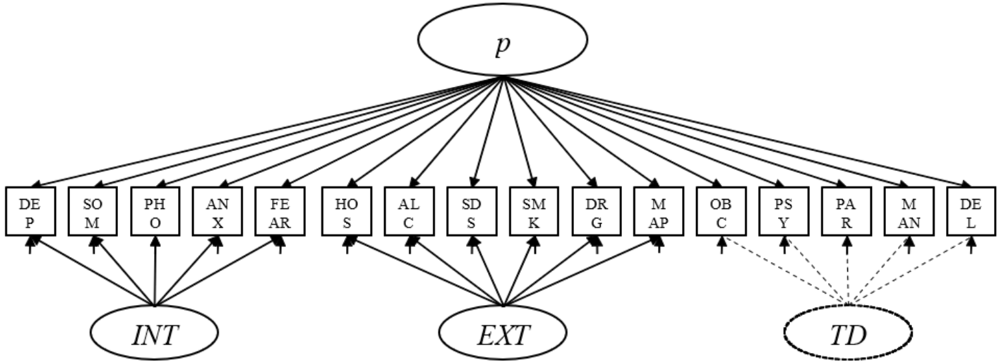
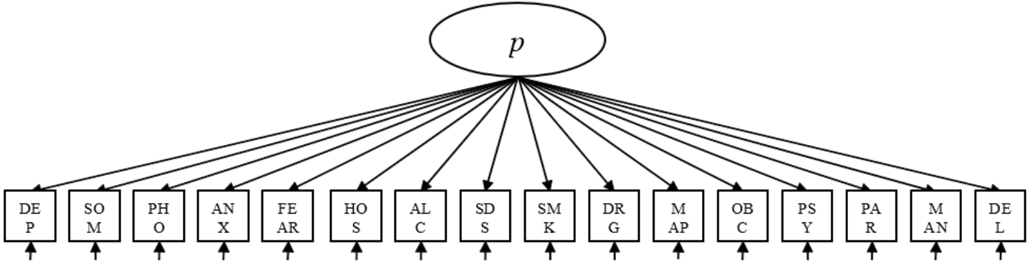
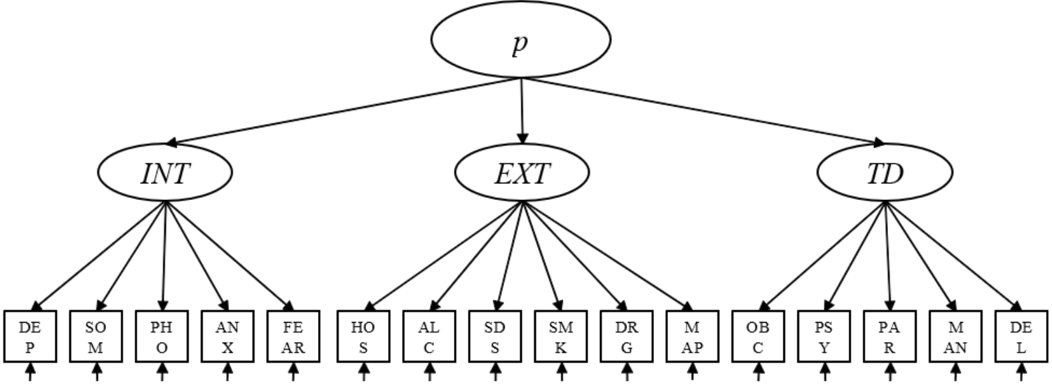
Verification
Claims the paper makes
The claims and statistics of this paper haven’t been checked yet.
Free: it reads the open-access text and checks the first 5 claims that cite a source we can check. Create a free account to check every claim.
Claims other papers make about this one
Each is checked against this paper’s own text: does it say what the citing paper says it does?
The source backs part of the claim, not all of it — or backs it for a different population, condition or comparison.
In the citing paper
“The dominant approach in contemporary medical science views depression through the lens of a biological model, focusing on physiological factors such as neurochemical imbalances, genetic predispositions, and brain-structure anomalies; common interventions include medication (6, 7), positive-thinking activities (8), and social support (6, 8, 9).”
From Anti-stigmatizing: a collaborative autoethnography on recovery from depression (2024) · cites this paper as [7]
Experimental — accuracy not yet measured
Self-check
Percentages, sums and reported differences re-computed from the paper’s own numbers.
The self-check needs the paper’s full text.
Citations
Cites
Kessler, R. C., Chiu, W. T., Demler, O., & Walters, E. E. (2005) · Archives of General Psychiatry · doi:10.1001/archpsyc.62.6.617 · Cited by 12,052
Handbook of Personality: Theory and Research
Krueger, R. F., & Johnson, W. (2008) · Cited by 7,884
Negative affectivity: the disposition to experience aversive emotional states
Watson, D., & Clark, L. A. (1984) · Psychological Bulletin · doi:10.1037/0033-2909.96.3.465 · Cited by 4,636 · cited 1×
“The tendency to experience negative affect and distress is a stable and robust personality disposition (Watson & Clark 1984), and dispositional negative emotionality is implicated in a large portion of psychiatric disorders (Lahey 2009, Meijer et al. 2011).”
BackgroundKotov, R., Krueger, R. F., Watson, D., Achenbach, T. M., Althoff, R. R., Bagby, R. M., Brown, T. A., Carpenter, W. T., Caspi, A., Clark, L. A., et al. (2017) · Journal of Abnormal Psychology · doi:10.1037/abn0000258 · Cited by 3,335 · cited 2×
“…factors of psychopathology were then examined across 10 mental disorders and adapted to fit their manifestation in adults, with internalizing largely similar to how the dimension is defined for adolescents and externalizing including antisocial behavior and substance use problems (Krueger 1999).”
BackgroundMethodInfluentialArcelus, J., Mitchell, A. J., Wales, J., & Nielsen, S. (2011) · Archives of General Psychiatry · doi:10.1001/archgenpsychiatry.2011.74 · Cited by 2,864 · cited 1×
“Her eating disorder is more complex given her history of being underweight and meeting criteria for AN, which has the highest mortality rate of any mental illness (Arcelus et al. 2011).”
BackgroundThe p Factor: One General Psychopathology Factor in the Structure of Psychiatric Disorders?
Caspi, A., Houts, R. M., Belsky, D. W., Goldman-Mellor, S. J., Harrington, H., Israel, S., Meier, M. H., Ramrakha, S., Shalev, I., Poulton, R., et al. (2014) · Clinical Psychological Science · doi:10.1177/2167702613497473 · Cited by 2,449
Roberts, B. W., Kuncel, N. R., Shiner, R., Caspi, A., & Goldberg, L. R. (2007) · Perspectives on Psychological Science · doi:10.1111/j.1745-6916.2007.00047.x · Cited by 2,361 · cited 1×
“…of functioning, including physical health, psychological health, mortality, marital outcomes, interpersonal functioning, educational and occupational attainment, life happiness, engagement in substance abuse, and psychopathology (Costa &McCrae 1996, Ozer & Benet-Martínez 2006, Roberts et al. 2007).”
BackgroundPersonality and the Prediction of Consequential Outcomes
Ozer, D. J., & Benet-Martínez, V. (2006) · Annual Review of Psychology · doi:10.1146/annurev.psych.57.102904.190127 · Cited by 2,170
Empirically supported psychological interventions: Controversies and evidence
Chambless, D. L., & Ollendick, T. H. (2001) · Annual Review of Psychology · doi:10.1146/annurev.psych.52.1.685 · Cited by 2,097
Public health significance of neuroticism
Lahey, B. B. (2009) · American Psychologist · doi:10.1037/a0015309 · Cited by 1,901 · cited 2×
“Research has also shown that, across samples and cultures, negative emotionality is one of the primary factors extracted from individual difference measures of personality ( John et al. 2008, Lahey 2009, Markon et al. 2005).”
Background
Research works printed but not linked: 4
- Krueger RF, Markon KE. 2011. A dimensional-spectrum model of psychopathology: Progress and opportunities. Arch. Gen. Psychiat. 68(1):10-11.
- Kupfer DJ, First MB, Regier DA. 2002. A research agenda for DSM-V. Arlington VA: American Psychiatric Association The General Factor of Psychopathology 43
- Riley EN, Atkinson EA, Smith GT. June 2019. Alcohol consumption as part of the p factor of general psychopathology. Poster presented at the 42 nd annual meeting of the Research Society on Alcoholism. Minneapolis MN.
- Widiger TA, 2008, Handbook of Personality: Theory and Research, 743
Cited by
Items 101–195 of 195
Deschênes, M., Gamache, D., Vaillancourt‐Morel, M., Mayrand, K., Nolin, M.-C., Berthelot, N., Mercerat, C., & Savard, C. (2024) · Journal of Sex & Marital Therapy · doi:10.1080/0092623x.2024.2391340 · Cited by 6
“This result is in line with current knowledge about how facets from the Detachment domain are linked with difficulties in intimate relationships, namely with dyadic adjustment (Decuyper et al., 2018; Ingram & South, 2021; Savard et al., 2023; Sexton et al., 2019; Smith et al., 2020a).”
InfluentialFacal, F., & Costas, J. (2024) · Progress in Neuro-Psychopharmacology and Biological Psychiatry · doi:10.1016/j.pnpbp.2024.111183 · Cited by 6
Hoy, N., Lynch, S. J., Waszczuk, M. A., Reppermund, S., & Mewton, L. R. (2022) · Frontiers in Psychiatry · doi:10.3389/fpsyt.2022.1036794 · Cited by 5
“Researchers have advanced several theories as to the substantive meaning of general psychopathology, including that it reflects negative emotionality (21), impaired emotional regulation (22), disordered thought processes (17), and functional impairment (23).”
BackgroundHawes, M. T., Klein, D. N., Olino, T. M., & Kotov, R. (2023) · Journal of Research in Personality · doi:10.1016/j.jrp.2023.104375 · Cited by 4
Mitrović, D., Mihić, L., Sadiković, S., & Smederevac, S. (2023) · Journal of Personality · doi:10.1111/jopy.12878 · Cited by 5
Bierling, A. L., Doering, S., Weidner, K., Pape, M., Kessler, H., Hofmann, T., Rose, M., Imbierowicz, K., Geiser, F., Rademacher, J., et al. (2024) · Comprehensive Psychiatry · doi:10.1016/j.comppsych.2024.152532 · Cited by 5
Allen, J. D., Elliott, M., Ronold, E. H., Rajgopal, N. A., Hammar, Å., & Johnson, S. L. (2025) · Frontiers in Psychiatry · doi:10.3389/fpsyt.2025.1456691 · Cited by 6
Shields, A. N., Oltmanns, T. F., Boudreaux, M. J., Paul, S. E., Bogdan, R., & Tackett, J. L. (2021) · Clinical Psychological Science · doi:10.1177/2167702621989665 · Cited by 6
Jones, J. D., Boyd, R. C., Sandro, A. D., Calkins, M. E., Reyes, A. D. L., Barzilay, R., Young, J. F., Benton, T. D., Gur, R. C., Moore, T. M., et al. (2024) · Research on Child and Adolescent Psychopathology · doi:10.1007/s10802-024-01223-8 · Cited by 4
“Some researchers have proposed that the p factor captures impair - ment, rather than severity of psychopathology (Smith et al., 2020; Watts et al., 2020 ).”
Cervin, M., Højgaard, D. R. M. A., Jensen, S. S., Torp, N. C., Skarphéðinsson, G., Nissen, J. B., Melin, K., Borrelli, D. F., Hybel, K. A., Thomsen, P. H., et al. (2024) · Journal of the American Academy of Child & Adolescent Psychiatry · doi:10.1016/j.jaac.2024.06.003 · Cited by 6
Gudarzi, T., & Cervin, M. (2024) · Journal of Contextual Behavioral Science · doi:10.1016/j.jcbs.2024.100847 · Cited by 8
Kurt, Y., & Çakır, Z. (2025) · Personality and Individual Differences · doi:10.1016/j.paid.2025.113218 · Cited by 5
“…with categorical classification systems in psychopathology — due to low diagnostic reliability, high comorbidity, and their tendency to group together individuals who present with different symptom profiles — has led to increased interest in dimensional approaches (Smith et al., 2020).”
Profiles in Criminal Psychopathology: A Multiple Case Report Study of the p Factor
Drury, A. J., Elbert, M. J., & DeLisi, M. (2022) · International Journal of Environmental Research and Public Health · doi:10.3390/ijerph19126960 · Cited by 5
Thompson, E. L., O’Connor, K. E., & Farrell, A. D. (2021) · Development and Psychopathology · doi:10.1017/s0954579421001383 · Cited by 6
“An important advancement in understanding the etiology of mental disorders has been higher order and general latent factor analyses aimed to better account for the shared variance across psychiatric domains (e.g., the “p” factor; for a review, see Smith et al., 2020).”
BackgroundMethodInvestigating general and specific psychopathology factors with nuance‐level personality traits
Hang, Y., Speyer, L. G., Haring, L., Murray, A. L., & Mõttus, R. (2022) · Personality and Mental Health · doi:10.1002/pmh.1561 · Cited by 11
Hofmans, J., Vergauwe, J., & Clercq, B. J. D. (2023) · Personality Disorders Theory Research and Treatment · doi:10.1037/per0000597 · Cited by 4
“The first perspective is known as the common cause model , which assumes that comorbidity results from a group of transdiagnostic liabilities affecting multiple disorders (Goh, 2021; Smith et al., 2020).”
BackgroundNeurobiological Clusters Are Associated With Trajectories of Overall Psychopathology in Youth
Wang, C. K., Hayes, R. A., Roeder, K., & Jalbrzikowski, M. (2023) · Biological Psychiatry Cognitive Neuroscience and Neuroimaging · doi:10.1016/j.bpsc.2023.04.007 · Cited by 9
Stevanović, D., Ćirović, N., Cortese, S., Knez, R., & Kerekes, N. (2024) · European Child & Adolescent Psychiatry · doi:10.1007/s00787-024-02488-6 · Cited by 4
“Empirical methods for delineating dimensions of psychological dysfunction consistently reveal correlations among various manifestations of psychopathology, reflected in an overarching psychopathological factor known as the p factor [4, 5].”
InfluentialLangwerden, R. J., van der Heijden, P. T., Claassen, T., Derksen, J. J. L., & Egger, J. I. M. (2022) · Frontiers in Psychiatry · doi:10.3389/fpsyt.2022.1026900 · Cited by 5
“Additionally, the results of the present study fit with the bifactor model as described in the literature (54, 55).”
BackgroundResultInfluentialIntergenerational transmission of mental health during the first 1,000 days of life
MacBeth, A. M., Morales, M. F., & Golds, L. (2026) · Nature Reviews Psychology · doi:10.1038/s44159-025-00521-2 · Cited by 9
Banellis, L., Nikolova, N. E., Ehmsen, J. F., Courtin, A. S., Vejlø, M., Tyrer, A., Böhme, R. A., Bavato, F., Hoogervorst, K., Fardo, F., et al. (2026) · Nature Mental Health · doi:10.1038/s44220-026-00688-4 · Cited by 5
“…of psychopathology, including ‘the p factor’ (that is, general factor of psychopathology), offer a powerful alternative to traditional diagnosis by capturing shared variance across diverse symptoms such as depression, anxiety, obsessive–compulsive disorder and schizophrenic symptoms 31,43,44 .”
Conservatism as a general factor of social attitudes
Međedović, J. M. (2022) · Psihologija · doi:10.2298/psi210512012m · Cited by 3
Kurt, Y. (2025) · Personality and Mental Health · doi:10.1002/pmh.70006 · Cited by 4
“However, the strong association between these factors prompted further investigation into a broader factor of psychopathology (Smith et al. 2020).”
Genetic variance in conscientiousness relates to youth psychopathology beyond executive functions.
Shields, A. N., Malanchini, M., Vinnik, L., Tucker–Drob, E. M., Harden, K. P., & Tackett, J. L. (2022) · Journal of Psychopathology and Clinical Science · doi:10.1037/abn0000781 · Cited by 6
Opportunities of measuring hierarchical models of psychopathology
Pettersson, E. (2023) · JCPP Advances · doi:10.1002/jcv2.12187 · Cited by 3
“A second non ‐ empirical argument for rotating solutions toward a hierarchical model is that “items loading positively on p may have different and at times opposite meanings” (pp. 6.13; Smith et al., 2020).”
BackgroundInfluentialJavelle, F., Schlagheck, M. L., Broos, H. C., Timpano, K. R., Joormann, J., Zimmer, P., & Johnson, S. L. (2023) · Journal of Clinical Psychology · doi:10.1002/jclp.23608 · Cited by 4
Steffen, P. R., & Olsen, J. A. (2024) · Oxford University Press eBooks · doi:10.1093/oso/9780198888727.003.0009 · Cited by 3
A psychospiritual theory of general factor p
Kelley, T. M., Bowers, J., Savard, D. M., Pettit, W. F., & Pransky, J. B. (2024) · Journal for the Study of Spirituality · doi:10.1080/20440243.2024.2426127 · Cited by 4
“An alternative theory is that p represents an index of life impairment that relates with the severity of psycho-pathology (e.g. Oltmanns et al. 2018; Smith et al. 2020).”
Coping and Co-creation: One Attempt and One Route to Well-Being. Part 1. Conceptual Framework
Andringa, T., & Denham, F. C. (2021) · Psychology in Russia State of Art · doi:10.11621/pir.2021.0210 · Cited by 6
Sripada, C., Angstadt, M., Rutherford, S., Taxali, A., Greathouse, T., Clark, D. A., Hyde, L., Weigard, A., Brislin, S., Hicks, B. M., et al. (2020) · bioRxiv · doi:10.1101/2020.08.21.260927 · Cited by 4
Anti-stigmatizing: a collaborative autoethnography on recovery from depression
Zhu, D., & Lyu, K. (2024) · Frontiers in Psychiatry · doi:10.3389/fpsyt.2024.1360967 · Cited by 2
The structure of adolescent mental health problems: The role of effortful control and school safety
Валентиновна, Р. Е., Slobodskaya, H. R., & Semenova, N. B. (2023) · Journal of Adolescence · doi:10.1002/jad.12166 · Cited by 5
Longitudinal Comorbidity of Anxiety and Depressive Symptoms: The Risk of Cyber Sexual Harassment
Lawrence, T. I., Wojciechowski, T. W., Lee, K. C., & Amador, B. (2025) · Child Psychiatry & Human Development · doi:10.1007/s10578-025-01820-8 · Cited by 2
Gilbert, W., Tremblay, M.-J., Bureau, J. S., & Guay, F. (2026) · Journal of Affective Disorders · doi:10.1016/j.jad.2026.121456 · Cited by 2
Yang, Y., Zhu, X., Auyeung, B., Obsuth, I., & Murray, A. L. (2023) · Research on Child and Adolescent Psychopathology · doi:10.1007/s10802-023-01136-y · Cited by 6
“A popular method for examining the relations between a candidate transdiagnostic risk orpromo-tive factor and mental health outcomes is the use of a bi-factor structural equation model (e.g., Noordhof et al., 2015; Smith et al., 2020 ).”
MethodSimms, L. J., Wright, A. G. C., Cicero, D. C., Kotov, R., Mullins‐Sweatt, S. N., Sellbom, M., Watson, D., Widiger, T. A., & Zimmermann, J. (2023) · Oxford University Press eBooks · doi:10.1093/oxfordhb/9780190092689.013.4 · Cited by 3
Groen, R. N., Wigman, J. T. W., Vos, M., Schreuder, M. J., Wichers, M., & Hartman, C. A. (2024) · Journal of Child Psychology and Psychiatry · doi:10.1111/jcpp.13953 · Cited by 2
Blais, M. A., Kelley, S. E., Ruchensky, J. R., Richardson, L. A., Massey, C. N., & Stein, M. B. (2024) · Clinical Psychology & Psychotherapy · doi:10.1002/cpp.2967 · Cited by 3
Cai, Y., She, X., Singh, M. K., Wang, H., Wang, M., Abbey, C., Rozelle, S., & Tong, L. (2024) · Journal of Affective Disorders · doi:10.1016/j.jad.2024.05.149 · Cited by 2
“Our research also found that individuals with higher “ p ” factor scores typically exhibit increased psycho-social dysfunction, aligning with previous suggestions that the “ p ” factor may represent a functional deficit (Smith et al., 2020).”
Contexts of urgency may go beyond emotion
Elliott, M., John, O. P., Allen, J. D., & Johnson, S. L. (2024) · Frontiers in Psychiatry · doi:10.3389/fpsyt.2024.1412001 · Cited by 2
Elliott, M., Hsu, M., Uddin, L. Q., Modavi, K., & Johnson, S. L. (2025) · Clinical Psychological Science · doi:10.1177/21677026241305377 · Cited by 2
“Introducing the Glutamate-Amplifies-Noradrenergic-Effects (GANE) Model to the Neurocognitive Study of Emotion-Related Impulsivity metric (Carver et al., 2017; Pearlstein et al., 2024; G. T. Smith et al., 2020).”
Ringwald, W. R., Edershile, E. A., Hale, J., Williams, T. F., Simms, L. J., Creswell, K. G., Bachrach, R. L., & Wright, A. G. C. (2021) · Personality Disorders Theory Research and Treatment · doi:10.1037/per0000540 · Cited by 2
Shu, Y., Ao, N., Wen, X., Cui, Z., Qu, D., & Chen, R. (2024) · European Psychiatry · doi:10.1192/j.eurpsy.2024.18 · Cited by 1
“Further research is warranted to delve deeper into the mechanisms underlying the influence of the specific psychopathology factors, especially given that the total variance of the p factor has been accounted for (Smith et al., 2020).”
BackgroundPark, Y., Guimond, A., Crosswell, A. D., & Kubzansky, L. D. (2024) · Applied Psychology Health and Well-Being · doi:10.1111/aphw.12576 · Cited by 1
“…the long-running debates regarding the presence of a general factor (the “ p-fac-tor ” ) underlying multiple forms of disorders in the field of psychopathology (Smith et al., 2020), investigators have debated the structure of PPWB and how different facets of PPWB may be related to each other.”
BackgroundScalco, M. D., Kotelnikova, Y., Evans, M., Harshaw, C., Webre, N. M., Lengua, L. J., & Colder, C. R. (2025) · Development and Psychopathology · doi:10.1017/s095457942400107x · Cited by 1
Chen, T., Ramos, A. M., MAES, H. H. M., Maggs, J. L., & Neiderhiser, J. M. (2025) · Behavior Genetics · doi:10.1007/s10519-025-10218-0 · Cited by 1
“Instead, our findings suggest the general psychopathology factor shared between internalizing and externalizing problems (Caspi et al. 2014; Lahey et al. 2017; Smith et al. 2020) is important to alcohol initiation.”
Andringa, T. (2025) · Behavioral Sciences · doi:10.3390/bs15060797 · Cited by 3
“High noise sensitivity may, therefore, indicate a coping trap and a high score on the psychopathology dimension p (Lahey et al., 2012; Smith et al., 2020).”
Scaini, S., Francesco, S. D., Giani, L., Battaglia, M., Medda, E., & Fagnani, C. (2025) · Methods and Protocols · doi:10.3390/mps8040094 · Cited by 1
“CDS symptoms emerge in early childhood [12] and predict relatively specific functional outcomes, including poor future academic functioning and social difficulties [1,4,9,13,14].”
Development and preliminary validation of mental health check-up questionnaire in Korea
Choi, J. Y., & Lee, J. (2025) · BMC Psychology · doi:10.1186/s40359-025-03608-w · Cited by 2
“Furthermore, given the strong negative correlations between psychopathology domains (e.g., depression) and the positivity domain, it was necessary to test whether a single general distress factor could account for the covariance among domains [40, 41].”
Preti, E., Sarno, M. D., Fanti, E., Felici, C., Madeddu, F., & Pierro, R. D. (2026) · Journal of Personality Assessment · doi:10.1080/00223891.2025.2606011 · Cited by 1
“…disorders (Williams et al., 2018), and—more broadly—of psychopathology (Caspi et al., 2024) have been previously identified and interpreted as indices of global functional impairment (Oltmanns et al., 2018; Smith et al., 2020), which is in line with the concept of personality organization in ORT.”
Cavicchioli, M., Masoumi, S., Maffei, C., Galli, F., Scaini, S., & Scalabrini, A. (2026) · Journal of Affective Disorders · doi:10.1016/j.jad.2025.121148 · Cited by 1
Yalch, M. M., & Gallagher, A. R. (2026) · European Journal of Trauma & Dissociation · doi:10.1016/j.ejtd.2026.100640 · Cited by 1
Baskin-sommers, A. R., Gearing, D., Ramduny, J., Zhang, Z., Townsend, N., Dupree, C., Fink, C., Horenkamp, L., Karcher, N. R., Patel, H., et al. (2026) · Developmental Cognitive Neuroscience · doi:10.1016/j.dcn.2026.101686 · Cited by 3
“In this context, it is useful to think about constructs such as the “ p-factor ” (Smith et al., 2020; Clark et al., 2021; Caspi et al., 2014) which has been identified as a potential general factor of psychopathology, analogous to the “ g-factor ” , which is thought to be a general intelligence…”
Carvalho, L. D. F., Sette, C. P., & Pianowski, G. (2024) · Revista Colombiana de Psiquiatría · doi:10.1016/j.rcp.2024.03.004 · Cited by 1
Dissociative and Psychotic Features
Cavelti, M., Thomson, M., & Kaess, M. (2025) · Oxford University Press eBooks · doi:10.1093/9780191964343.003.0013 · Cited by 1
Lavín, V., Torrecilla, P., Kwapil, T. R., & Barrantes-Vidal, N. (2025) · Frontiers in Psychology · doi:10.3389/fpsyg.2025.1655172 · Cited by 1
Gender Differences in ADHD Comorbidity During Adolescence: An Understudied Area in Need of Attention
Goh, P. K., Eng, A. G., Elkins, A. R., & Martel, M. M. (2021) · The ADHD Report · doi:10.1521/adhd.2021.29.7.1 · Cited by 2
Harris, J. L., Swanson, B., & Petersen, I. T. (2023) · doi:10.31234/osf.io/nbqx7 · Cited by 1
INFLUENCES AMONG AFFECT BASED RISK FACTORS AND PROBLEM DRINKING IN COLLEGE STUDENTS
Atkinson, E. A. (2020) · UKnowledge (University of Kentucky) · doi:10.13023/etd.2020.260
Self-citationConstruct Validation of Personality Measures
Smith, G. T., & Atkinson, E. A. (2021) · Oxford University Press eBooks · doi:10.1093/oxfordhb/9780190092689.013.8
Self-citationGuyon‐Harris, K. L., Plamondon, A., Humphreys, K. L., Wade, M., Gleason, M. M., Tibu, F., Nelson, C. A., Fox, N. A., & Zeanah, C. H. (2023) · JAACAP Open · doi:10.1016/j.jaacop.2023.06.004
“49 Future work comparing the bifactor structure to more traditional measures of psychopathology in regard to outcomes will be helpful in understanding the utility of bifactor models for clinical practice.”
BackgroundHierarchical Models of Behaviour Differences
Stevenson, J. (2023) · Springer eBooks · doi:10.1007/978-3-031-45787-6_6
Williams, A. L., Conway, C., Olino, T. M., Revelle, W., Zinbarg, R. E., & Workgroup, H. U. (2024) · Clinical Psychological Science · doi:10.1177/21677026231225414 · Cited by 2
“The general factor of psychopathology (also called the “p factor”; for a review, see Smith et al., 2020) at the apex of the HiTOP model has been a popular research target in recent years.”
Soodla, H. L., Lehto, K., Kõiv, K., Vainik, U., Akkermann, K., & Mõttus, R. (2024) · doi:10.31219/osf.io/ak6vx
Uma abordagem dimensional da psicopatologia na infância e adolescência: o fator p
Ramires, V. R. R., & Severo, B. D. O. (2024) · Psicologia Argumento · doi:10.7213/psicolargum.42.117.ao08
Stevanović, D., & Ćirović, N. (2024) · Journal of Psychosomatic Research · doi:10.1016/j.jpsychores.2024.111926
Co-development of general psychopathology and high-risk personality traits during adolescence
Lynch, S. J., Chapman, C., Newton, N. C., Teesson, M., & Sunderland, M. (2024) · Development and Psychopathology · doi:10.1017/s0954579424001871
Levin-Aspenson, H. F., Watson, D., Clark, L. A., & Smith, D. A. (2025) · Clinical Psychological Science · doi:10.1177/21677026241308861
“Some researchers speculate that the p factor reflects this downstream impairment rather than a substantive liability (Smith et al., 2020; Watts et al., 2020).”
Midgley, N., Calderón, A., Cirasola, A., & Fiorini, G. (2025) · Child and Adolescent Psychiatric Clinics of North America · doi:10.1016/j.chc.2025.03.001
Ipatyuk, O. V., & Kozunova, G. L. (2025) · S S Korsakov Journal of Neurology and Psychiatry · doi:10.17116/jnevro20251250517
Méndez, J. H. M., Sánchez, M. M. R., Maldonado-Avendaño, N., Suárez, A. M. S., Belmonte, J. V., Hernández, J. A. F., Minutti, S. T., & Hernández, R. C. L. (2025) · International Journal of Environmental Research and Public Health · doi:10.3390/ijerph22060932
Алфимова, М. В. (2025) · Consortium Psychiatricum · doi:10.17816/cp15629
“Second, it has been previously suggested that psychosis vulnerability scores may be an expression of both a specific psychotic factor and a general (transdiagnostic) psychopathological factor p [2, 58].”
Heilbronner, M., Hendrian, L., Navarro‐Flores, A., Budde, M., Kohshour, M. O., Papiol, S., Reich‐Erkelenz, D., Schulte, E. C., Senner, F., Adorjan, K., et al. (2025) · Research Square · doi:10.21203/rs.3.rs-6843541/v1
On the psychometric properties and genomic etiology of the general factor of psychopathology
Pettersson, E. (2025) · Molecular Psychiatry · doi:10.1038/s41380-025-03151-5 · Cited by 6
“…if the general factor of psychopathology purportedly were to quantify a trait-like process (when it is typically labeled p), there are several suggestions for what it might measure, including distress and impairment, psychotic or irrational thinking, and dispositional impulsivity [13, 79, 80].”
Banellis, L., Nikolova, N. E., Ehmsen, J. F., Courtin, A. S., Vejlø, M., Tyrer, A., Böhme, R. A., Bavato, F., Hoogervorst, K., Fardo, F., et al. (2025) · medRxiv · doi:10.1101/2025.08.25.25334366 · Cited by 6
“Dimensional models of psychopathology, including ʻthe p factorʼ (i.e., general factor of psychopathology), offer a powerful alternative to traditional diagnosis by capturing shared variance across diverse symptoms such as depression, anxiety, OCD, and schizophrenic symptoms 38–40 .”
Davidson, I. J. (2025) · Theory & Psychology · doi:10.1177/09593543251355470 · Cited by 2
“Interestingly, Rushton’s work on the GFP is sometimes cited in recent research on what has been dubbed the general factor of psychopathology (e.g., Smith et al., 2020).”
de la Fuente, J. (2025) · INFORMACIO PSICOLOGICA · doi:10.70478/ipsic.2008
Carvalho, L. D. F., Sette, C. P., & Pianowski, G. (2025) · Revista Colombiana de Psiquiatría (English ed ) · doi:10.1016/j.rcpeng.2025.11.002
Incorporating wellbeing into general factor models: A more complete mental state?
Chokhani, R., Lereya, S. T., & Deighton, J. (2025) · PLoS ONE · doi:10.1371/journal.pone.0335657
Jabal, P., & Fox, J. T. (2025) · Adversity and Resilience Science · doi:10.1007/s42844-025-00187-y · Cited by 1
Yeung, M. K.-C., Chung, H. C. W., & Han, Y. M. Y. (2025) · Journal of Psychiatric Research · doi:10.1016/j.jpsychires.2025.11.036
Ogilvie, J., Tzoumakis, S., Thompson, C., Allard, T. J., Dennison, S. M., Kisely, S. R., & Stewart, A. (2023) · Figshare · doi:10.6084/m9.figshare.23118967
Kojima, H., Soda, T., & Yamashita, Y. (2025) · Psychiatry and Clinical Neurosciences · doi:10.1111/pcn.70010 · Cited by 1
“12,13 Some researchers attribute the p-factor to genetic in fl uences, whereas others contend that it may represent an artifact of social desirability bias — that is, individuals responding to assessments in ways that align with socially acceptable norms rather than accurately re fl ecting their…”
Gell, M., Hoffmann, M. S., Moore, T. M., Nikolaidis, A., Gur, R. C., Salum, G. A., Milham, M. P., Langner, R., Müller, V. I., Eickhoff, S. B., et al. (2025) · bioRxiv (Cold Spring Harbor Laboratory) · doi:10.64898/2025.12.21.695029
“While not without criticism (Watts et al., 2020, 2024), bifactor models have been widely used to examine how common and unique features across symptoms relate to external outcomes like academic performance or cognition (Caspi & Moffitt, 2018; Smith et al., 2020).”
The meaning of a measure: p as a general measure of psychopathology
Plutynski, A. (2026) · Philosophical Psychology · doi:10.1080/09515089.2025.2611430
“…et al. (2020) words, “low cognitive or intellectual functioning,” such as are associated with one worse performance “on tests of attention, concentration, processing speed, and visual – motor coordination compared with those with lower levels of p (Martel et al. 2017)” (Smith et al., 2020, p. 85).”
Influentialde la Fuente, J., & Ollero, A. (2025) · Revista de Psicología y Educación - Journal of Psychology and Education · doi:10.70478/rpye.2026.21.04
Fitzgerald, M., & Esplin, J. A. (2026) · The Family Journal · doi:10.1177/10664807261438051
“…which speci fi c forms of mental health symptom clusters extend (e.g., anxiety, depression) explaining the covariation among symptom cluster (see Smith et al., 2020 for review) Due to gender differences in prevalence rates of physical and sexual abuse, and the mother – daughter and mother – son…”
Beyond DSM Categories: Criteria for Biologically Valid Disease Axes in Psychiatry
Szarpak, Ł., Rybczynski, B., Pruc, M., Maj, B. W., Maslyk, M. M., Niewiadomska, I., & Cubała, W. J. (2026) · Journal of Clinical Medicine · doi:10.3390/jcm15124830
“Caspi and colleagues showed that internalizing, externalizing and thought disorder could themselves be summarized by a general psychopathology factor associated with persistence, impairment, adverse developmental histories and broad burden [26,36–40].”
InfluentialJassal, A., & Ferro, M. A. (2026) · Journal of Psychosomatic Research · doi:10.1016/j.jpsychores.2026.112943
Mapping Multilevel Correlates of Adolescent Mental Health: Evidence from an Ecological Network Study
Li, Y., Gong, S., & Li, H. (2026) · Child Psychiatry & Human Development · doi:10.1007/s10578-026-02085-5
Zhao, J., Ni, J., Xu, Y., Qi, H., & Fang, Y. (2026) · Journal of Affective Disorders · doi:10.1016/j.jad.2026.122563
Gauthier, A., Lussier, P., & Proulx, J. (2026) · Journal of Criminal Justice · doi:10.1016/j.jcrimjus.2026.102750
Watts, A. L., Rosen, A. F. G., Greene, A. L., King, K. M., Meyer, F. A. C., Trull, T. J., Sher, K. J., & Joyner, K. J. (2026) · Nature Mental Health · doi:10.1038/s44220-026-00727-0 · Cited by 1
Chiang, S., Ting, S., & Chen, W. C. (2026) · Development and Psychopathology · doi:10.1017/s0954579426101953
Multidimensional transdiagnostic inventory of psychopathology: development and initial validation
Blais, M. A., Cai, H., Adam, T. J., & Correll, C. U. (2026) · Frontiers in Psychology · doi:10.3389/fpsyg.2026.1917064
Metadata
- Authors
- Smith, G. T., Atkinson, E. A., Davis, H. A., Riley, E. N., & Oltmanns, J. R.
- Affiliations
- University of Kentucky (US)
- Venue
- Annual Review of Clinical Psychology
- Publisher
- Annual Reviews
- Published
- 2020-05-07
- Volume
- 16
- Issue
- 1
- Pages
- 75-98
- ISSN
- 1548-5943 (ISSN-L)
- 1548-5951
- OpenAlex
- W3005443371
- Cited by
- 195
- References
- 120
- Citations by year
- 2026: 18 · 2025: 32 · 2024: 37 · 2023: 32 · 2022: 29 · 2021: 36 · 2020: 10
- FWCI
- 3.89
- Type
- journal article
- Language
- en
- Open access
- green
- doi.org
- Licence
- cc-by
- Locations
- Annual Review of Clinical Psychology (publishedVersion)
- PubMed (publishedVersion)
- PsyArXiv (OSF Preprints) (submittedVersion)
- PsyArXiv (OSF Preprints) (submittedVersion, cc-by)
- Topics
- Social Sciences › Psychology › Experimental and Cognitive Psychology › Mental Health Research Topics
- Social Sciences › Psychology › Clinical Psychology › Personality Disorders and Psychopathology
- Social Sciences › Psychology › Experimental and Cognitive Psychology › Anxiety, Depression, Psychometrics, Treatment, Cognitive Processes
- Keywords
- general psychopathology factor, p-factor, psychopathology dimensions, general factor of personality, criterion validity
- MeSH terms
- Mental Disorders, Humans, Personality, Personality Disorders
About these checks
Registry, retraction, Cites and statistics results are computed, not judged, with one exception: a printed reference that no index lists is read once by a model before it counts as a citation error. Claims are extracted by a model and kept only when their quote appears verbatim in the text; each cited source is then checked, with a model’s help, for whether it says what the claim relies on. Those verdicts can be wrong — read the claim’s quote and the cited source before relying on one.
Statistics and arithmetic are recomputed, not judged.
Confidence bands are shown only for fields calibrated on our annotated test set. None is calibrated yet, so no band is shown.
What counts as a claim ›How we measure confidence ›How we check this ›
Are you an author, or do you see a problem with this page? Request a review
Data sources
Bibliographic data: Semantic Scholar, OpenAlex, Crossref.
Contains information from the Semantic Scholar Academic Graph Datasets, made available under the ODC Attribution License (ODC-BY 1.0).
Semantic Scholar’s data is described in: Kinney, R., et al. (2023). The Semantic Scholar Open Data Platform. arXiv:2301.10140.
