

The General Factor of Psychopathology
Open accessPublished version of a preprint
The DOI matches its Crossref record; 120 of the 120 references it cites were found in a registry or an index.
Abstract
An important advance in understanding and defining mental disorders has been the development of empirical approaches to mapping dimensions of dysfunction and their interrelatedness. Such empirical approaches have consistently observed intercorrelations among the many forms of psychopathology, leading to the identification of a general factor of psychopathology (the p factor). In this article, we review empirical support for p, including evidence for the stability and criterion validity of p. Further, we discuss the strong relationship between p and both the general factor of personality and the general factor of personality disorder, substantive interpretations of p, and the potential clinical utility of p. We posit that proposed substantive interpretations of p do not explain the full range of symptomatology typically included in p. The most plausible explanation is that p represents an index of impairment that has the potential to inform the duration and intensity of a client's mental health treatment.
Overview
The claims and statistics of this paper haven’t been checked yet.
Free: it reads the open-access text and checks the first 5 claims that cite a source we can check. Create a free account to check every claim.
Integrity signals
Registry
Cites
Statistics
Figures
Verification
Claims the paper makes
The claims and statistics of this paper haven’t been checked yet.
Free: it reads the open-access text and checks the first 5 claims that cite a source we can check. Create a free account to check every claim.
Claims other papers make about this one
Each is checked against this paper’s own text: does it say what the citing paper says it does?
The source backs part of the claim, not all of it — or backs it for a different population, condition or comparison.
In the citing paper
“The dominant approach in contemporary medical science views depression through the lens of a biological model, focusing on physiological factors such as neurochemical imbalances, genetic predispositions, and brain-structure anomalies; common interventions include medication (6, 7), positive-thinking activities (8), and social support (6, 8, 9).”
From Anti-stigmatizing: a collaborative autoethnography on recovery from depression (2024) · cites this paper as [7]
Experimental — accuracy not yet measured
Self-check
Percentages, sums and reported differences re-computed from the paper’s own numbers.
The self-check needs the paper’s full text.
Citations
Cites
Kessler, R. C., Chiu, W. T., Demler, O., & Walters, E. E. (2005) · Archives of General Psychiatry · doi:10.1001/archpsyc.62.6.617 · Cited by 12,052
Handbook of Personality: Theory and Research
Krueger, R. F., & Johnson, W. (2008) · Cited by 7,884
Negative affectivity: the disposition to experience aversive emotional states
Watson, D., & Clark, L. A. (1984) · Psychological Bulletin · doi:10.1037/0033-2909.96.3.465 · Cited by 4,636 · cited 1×
“The tendency to experience negative affect and distress is a stable and robust personality disposition (Watson & Clark 1984), and dispositional negative emotionality is implicated in a large portion of psychiatric disorders (Lahey 2009, Meijer et al. 2011).”
BackgroundKotov, R., Krueger, R. F., Watson, D., Achenbach, T. M., Althoff, R. R., Bagby, R. M., Brown, T. A., Carpenter, W. T., Caspi, A., Clark, L. A., et al. (2017) · Journal of Abnormal Psychology · doi:10.1037/abn0000258 · Cited by 3,335 · cited 2×
“…factors of psychopathology were then examined across 10 mental disorders and adapted to fit their manifestation in adults, with internalizing largely similar to how the dimension is defined for adolescents and externalizing including antisocial behavior and substance use problems (Krueger 1999).”
BackgroundMethodInfluentialArcelus, J., Mitchell, A. J., Wales, J., & Nielsen, S. (2011) · Archives of General Psychiatry · doi:10.1001/archgenpsychiatry.2011.74 · Cited by 2,864 · cited 1×
“Her eating disorder is more complex given her history of being underweight and meeting criteria for AN, which has the highest mortality rate of any mental illness (Arcelus et al. 2011).”
BackgroundThe p Factor: One General Psychopathology Factor in the Structure of Psychiatric Disorders?
Caspi, A., Houts, R. M., Belsky, D. W., Goldman-Mellor, S. J., Harrington, H., Israel, S., Meier, M. H., Ramrakha, S., Shalev, I., Poulton, R., et al. (2014) · Clinical Psychological Science · doi:10.1177/2167702613497473 · Cited by 2,449
Roberts, B. W., Kuncel, N. R., Shiner, R., Caspi, A., & Goldberg, L. R. (2007) · Perspectives on Psychological Science · doi:10.1111/j.1745-6916.2007.00047.x · Cited by 2,361 · cited 1×
“…of functioning, including physical health, psychological health, mortality, marital outcomes, interpersonal functioning, educational and occupational attainment, life happiness, engagement in substance abuse, and psychopathology (Costa &McCrae 1996, Ozer & Benet-Martínez 2006, Roberts et al. 2007).”
BackgroundPersonality and the Prediction of Consequential Outcomes
Ozer, D. J., & Benet-Martínez, V. (2006) · Annual Review of Psychology · doi:10.1146/annurev.psych.57.102904.190127 · Cited by 2,170
Empirically supported psychological interventions: Controversies and evidence
Chambless, D. L., & Ollendick, T. H. (2001) · Annual Review of Psychology · doi:10.1146/annurev.psych.52.1.685 · Cited by 2,097
Public health significance of neuroticism
Lahey, B. B. (2009) · American Psychologist · doi:10.1037/a0015309 · Cited by 1,901 · cited 2×
“Research has also shown that, across samples and cultures, negative emotionality is one of the primary factors extracted from individual difference measures of personality ( John et al. 2008, Lahey 2009, Markon et al. 2005).”
BackgroundThe Structure of Common Mental Disorders
Krueger, R. F. (1999) · Archives of General Psychiatry · doi:10.1001/archpsyc.56.10.921 · Cited by 1,881 · cited 1×
“…empirical evidence for the existence of categories of mental dysfunction [such evidence does not exist for any DSM disorder (Kotov et al. 2017, Kupfer et al. 2002)], category cutoff points that determine who does and who does not receive treatment lack validity and thus may have a negative…”
BackgroundHigher-order factors of the Big Five.
Digman, J. M. (1997) · Journal of Personality and Social Psychology · doi:10.1037//0022-3514.73.6.1246 · Cited by 1,839
Dimidjian, S., Hollon, S. D., Dobson, K. S., Schmaling, K. B., Kohlenberg, R. J., Addis, M. E., Gallop, R., McGlinchey, J. B., Markley, D. K., Gollan, J. K., et al. (2006) · Journal of Consulting and Clinical Psychology · doi:10.1037/0022-006x.74.4.658 · Cited by 1,607
US Department of Health and Human Services; Substance Abuse and Mental Health Services Administration (2001) · PsycEXTRA Dataset · doi:10.1037/e415842005-001 · Cited by 1,291
Delineating the Structure of Normal and Abnormal Personality: An Integrative Hierarchical Approach.
Markon, K. E., Krueger, R. F., & Watson, D. (2005) · Journal of Personality and Social Psychology · doi:10.1037/0022-3514.88.1.139 · Cited by 1,187
Emotion-based dispositions to rash action: positive and negative urgency
Cyders, M. A., & Smith, G. T. (2008) · Psychological Bulletin · doi:10.1037/a0013341 · Cited by 1,136
Self-citationNeurocognition in first-episode schizophrenia: a meta-analytic review.
Mesholam-Gately, R. I., Giuliano, A. J., Goff, K. P., Faraone, S. V., & Seidman, L. J. (2009) · Neuropsychology · doi:10.1037/a0014708 · Cited by 1,130 · cited 1×
“Deficits in response inhibition have also been observed in thought disorders such as OCD, bipolar disorder, and schizophrenia (Abramovitch et al. 2013, Bora et al. 2009, Mesholam-Gately et al. 2009).”
BackgroundConnelly, B. S., & Ones, D. S. (2010) · Psychological Bulletin · doi:10.1037/a0021212 · Cited by 1,059
Bora, E., Yucel, M., & Pantelis, C. (2009) · Journal of Affective Disorders · doi:10.1016/j.jad.2008.06.009 · Cited by 1,022 · cited 1×
“Deficits in response inhibition have also been observed in thought disorders such as OCD, bipolar disorder, and schizophrenia (Abramovitch et al. 2013, Bora et al. 2009, Mesholam-Gately et al. 2009).”
BackgroundPlate tectonics in the classification of personality disorder: Shifting to a dimensional model.
Widiger, T. A., & Trull, T. J. (2007) · American Psychologist · doi:10.1037/0003-066x.62.2.71 · Cited by 957
All for One and One for All: Mental Disorders in One Dimension
Caspi, A., & Moffitt, T. E. (2018) · American Journal of Psychiatry · doi:10.1176/appi.ajp.2018.17121383 · Cited by 918
The classification of children's psychiatric symptoms: A factor-analytic study.
Achenbach, T. M. (1966) · Psychological Monographs: General and Applied · doi:10.1037/h0093906 · Cited by 885 · cited 1×
“Achenbach (1966) first extracted higher-order “internalizing” and “externalizing” factors from indicators of mental disorder in adolescents.”
MethodFairburn, C. G., Cooper, Z., Doll, H. A., O’Connor, M. E., Bohn, K., Hawker, D. M., Wales, J. A., & Palmer, R. L. (2009) · American Journal of Psychiatry · doi:10.1176/appi.ajp.2008.08040608 · Cited by 829 · cited 1×
“They used self-reported symptom counts for 14 dimensions of psychopathology in their model, given that symptoms of psychopathology are related to distress and impairment regardless of whether a diagnostic threshold is met (Copeland et al. 2015, Fergusson et al. 2005, Roberts et al. 2015).”
MethodConstruct Validity: Advances in Theory and Methodology
Strauss, M. E., & Smith, G. T. (2009) · Annual Review of Clinical Psychology · doi:10.1146/annurev.clinpsy.032408.153639 · Cited by 803 · cited 1×
“To understand the clinical utility of p as an index of overall impairment, we argue that the presence of p must be understood along with other findings that support focusing on lower-level, homogeneous constructs (McGrath 2005, Smith et al. 2003, Smith & McCarthy 1995, Strauss & Smith 2009).”
Self-citationSubthreshold Depression in Adolescence and Mental Health Outcomes in Adulthood
Fergusson, D. M., Horwood, L. J., Ridder, E. M., & Beautrais, A. L. (2005) · Archives of General Psychiatry · doi:10.1001/archpsyc.62.1.66 · Cited by 792 · cited 1×
“…actions and both internalizing and externalizing psychopathology (Berg et al. 2015, Carver et al. 2013, Cyders & Smith 2008a, Cyders et al. 2009, Fischer et al. 2008, Johnson et al. 2013, Pearson et al. 2015, Peterson et al. 2018, Riley et al. 2015, Settles et al. 2010, Smith et al. 2013,…”
BackgroundWidiger, T. A., & Samuel, D. B. (2005) · Journal of Abnormal Psychology · doi:10.1037/0021-843x.114.4.494 · Cited by 752 · cited 1×
“This approach is at odds with a vast body of empirical work providing compelling evidence that psychological dysfunction exists along continua (Kotov et al. 2017, Widiger & Samuel 2005, Wright et al. 2013).”
BackgroundSocial desirability scales: More substance than style.
McCrae, R. R., & Costa, P. T. (1983) · Journal of Consulting and Clinical Psychology · doi:10.1037//0022-006x.51.6.882 · Cited by 748 · cited 1×
“Indeed, measures of social desirability typically contain more substantive personality traits than evaluation bias (McCrae & Costa 1983, Kurtz et al. 2008).”
BackgroundHigher-order factors of the Big Five predict conformity: Are there neuroses of health?
DeYoung, C. G., Peterson, J. B., & Higgins, D. M. (2002) · Personality and Individual Differences · doi:10.1016/s0191-8869(01)00171-4 · Cited by 726
A general factor of personality: Evidence for the Big One in the five-factor model
Musek, J. (2007) · Journal of Research in Personality · doi:10.1016/j.jrp.2007.02.003 · Cited by 709
Is there a general factor of prevalent psychopathology during adulthood?
Lahey, B. B., Applegate, B., Hakes, J. K., Zald, D. H., Hariri, A. R., & Rathouz, P. J. (2012) · Journal of Abnormal Psychology · doi:10.1037/a0028355 · Cited by 641 · cited 5×
“Noting the shared variance between internalizing and externalizing factors, Lahey et al. (2012) tested the empirical viability of one general factor of psychopathology.”
BackgroundResultInfluentialBerg, J. M., Latzman, R. D., Bliwise, N. G., & Lilienfeld, S. O. (2015) · Psychological Assessment · doi:10.1037/pas0000111 · Cited by 572 · cited 1×
“…positive association between self-report measures of emotion-based impulsive actions and both internalizing and externalizing psychopathology (Berg et al. 2015, Carver et al. 2013, Cyders & Smith 2008a, Cyders et al. 2009, Fischer et al. 2008, Johnson et al. 2013, Pearson et al. 2015,…”
BackgroundThe structure of personality pathology: Both general (‘g’) and specific (‘s’) factors?
Sharp, C., Wright, A. G. C., Fowler, J. C., Frueh, B. C., Allen, J. G., Oldham, J., & Clark, L. A. (2015) · Journal of Abnormal Psychology · doi:10.1037/abn0000033 · Cited by 515 · cited 3×
“A g-PD has also been extracted frommeasures of DSM-IV personality disorder andDSM-5 alternativemodel of personality disordermaladaptive personality traits ( Jahng et al. 2011,Oltmanns et al. 2018, Sharp et al. 2015, Wright et al. 2016).”
BackgroundMethodResultChildhood IQ and Adult Mental Disorders: A Test of the Cognitive Reserve Hypothesis
Koenen, K. C., Moffitt, T. E., Roberts, A. L., Martin, L. T., Kubzansky, L., Harrington, H., Poulton, R., & Caspi, A. (2009) · American Journal of Psychiatry · doi:10.1176/appi.ajp.2008.08030343 · Cited by 512
Carver, C. S., Johnson, S. L., & Joormann, J. (2008) · Psychological Bulletin · doi:10.1037/a0013740 · Cited by 484 · cited 1×
“Beyond broad behavioral disinhibition, a substantial body of evidence suggests that emotionbased impulsive action is related to various forms of psychopathology (Carver et al. 2008,Cyders& Smith 2008b , Smith&Cyders 2016).”
BackgroundCopeland, W. E., Wolke, D., Shanahan, L., & Costello, E. J. (2015) · JAMA Psychiatry · doi:10.1001/jamapsychiatry.2015.0730 · Cited by 466 · cited 1×
“They used self-reported symptom counts for 14 dimensions of psychopathology in their model, given that symptoms of psychopathology are related to distress and impairment regardless of whether a diagnostic threshold is met (Copeland et al. 2015, Fergusson et al. 2005, Roberts et al. 2015).”
MethodThe neuropsychology of adult obsessive–compulsive disorder: A meta-analysis
Abramovitch, A., Abramowitz, J. S., & Mittelman, A. (2013) · Clinical Psychology Review · doi:10.1016/j.cpr.2013.09.004 · Cited by 444 · cited 1×
“Deficits in response inhibition have also been observed in thought disorders such as OCD, bipolar disorder, and schizophrenia (Abramovitch et al. 2013, Bora et al. 2009, Mesholam-Gately et al. 2009).”
BackgroundA hierarchical causal taxonomy of psychopathology across the life span.
Lahey, B. B., Krueger, R. F., Rathouz, P. J., Waldman, I. D., & Zald, D. H. (2017) · Psychological Bulletin · doi:10.1037/bul0000069 · Cited by 443 · cited 13×
“Further, Lahey et al. (2017) conducted a series of analyses in which each first-order dimension of psychopathology was removed from the best-fitting model.”
BackgroundMethodResultInfluentialPsychiatric Comorbidities of Female Inpatients With Eating Disorders
Blinder, B. J., Cumella, E. J., & Sanathara, V. A. (2006) · Psychosomatic Medicine · doi:10.1097/01.psy.0000221254.77675.f5 · Cited by 423 · cited 1×
“In terms of outcomes, psychiatric comorbidity is thought to increase disorder severity, contribute to a chronic course of illness, and be associated with less successful treatment (Blinder et al. 2006, Milos et al. 2013).”
BackgroundFLORY, K., LYNAM, D., MILICH, R., LEUKEFELD, C., & CLAYTON, R. (2004) · Development and Psychopathology · doi:10.1017/s0954579404044475 · Cited by 376 · cited 1×
“…documented that individuals vary in their experiences of distress over time: Depression and anxiety symptoms increase and decrease, as do rates of substance use, delinquent behavior, and most disorders (Brook et al. 2013, Evans et al. 2016, Flory et al. 2004, Keel et al. 2007, Xiang & Cheng 2019).”
BackgroundBäckström, M., Björklund, F., & Larsson, M. R. (2009) · Journal of Research in Personality · doi:10.1016/j.jrp.2008.12.013 · Cited by 364 · cited 1×
“Third, the GFP is reduced when evaluative content is removed from the items assessing it (Bäckström et al. 2009).”
BackgroundTackett, J. L., Lahey, B. B., van Hulle, C., Waldman, I., Krueger, R. F., & Rathouz, P. J. (2013) · Journal of Abnormal Psychology · doi:10.1037/a0034151 · Cited by 360 · cited 5×
“Convincing studies have indicated that the p factor overlaps with these dispositions and impairments (Caspi & Moffitt 2018, Lahey et al. 2017, Smith & Cyders 2016, Tackett et al. 2013).”
BackgroundInfluentialThe role of personality dispositions to risky behavior in predicting first-year college drinking
Cyders, M. A., Flory, K., Rainer, S., & Smith, G. T. (2009) · Addiction · doi:10.1111/j.1360-0443.2008.02434.x · Cited by 360 · cited 1×
“…impulsive actions and both internalizing and externalizing psychopathology (Berg et al. 2015, Carver et al. 2013, Cyders & Smith 2008a, Cyders et al. 2009, Fischer et al. 2008, Johnson et al. 2013, Pearson et al. 2015, Peterson et al. 2018, Riley et al. 2015, Settles et al. 2010,…”
BackgroundSelf-citationResponse inhibition and psychopathology: A meta-analysis of go/no-go task performance
Wright, L., Lipszyc, J., Dupuis, A., Thayapararajah, S. W., & Schachar, R. (2014) · Journal of Abnormal Psychology · doi:10.1037/a0036295 · Cited by 360 · cited 2×
“One meta-analysis revealed that deficits in response inhibition observed in individuals with thought disorders were as large or larger than deficits associated with internalizing or externalizing psychopathology (Wright et al. 2014).”
BackgroundUlfvebrand, S., Birgegård, A., Norring, C., Högdahl, L., & von Hausswolff-Juhlin, Y. (2015) · Psychiatry Research · doi:10.1016/j.psychres.2015.09.008 · Cited by 352 · cited 1×
“This distress may manifest as psychiatric comorbidity from the DSM perspective, which is quite common (Ulfvebrand et al. 2015).”
BackgroundThe structure of psychopathology: Toward an expanded quantitative empirical model.
Wright, A. G. C., Krueger, R. F., Hobbs, M. J., Markon, K. E., Eaton, N. R., & Slade, T. (2013) · Journal of Abnormal Psychology · doi:10.1037/a0030133 · Cited by 347 · cited 1×
“This approach is at odds with a vast body of empirical work providing compelling evidence that psychological dysfunction exists along continua (Kotov et al. 2017, Widiger & Samuel 2005, Wright et al. 2013).”
BackgroundFischer, S., Smith, G. T., & Cyders, M. A. (2008) · Clinical Psychology Review · doi:10.1016/j.cpr.2008.09.001 · Cited by 343 · cited 1×
“…documented that individuals vary in their experiences of distress over time: Depression and anxiety symptoms increase and decrease, as do rates of substance use, delinquent behavior, and most disorders (Brook et al. 2013, Evans et al. 2016, Flory et al. 2004, Keel et al. 2007, Xiang & Cheng 2019).”
BackgroundSelf-citationLahey, B. B., Van Hulle, C. A., Singh, A. L., Waldman, I. D., & Rathouz, P. J. (2011) · Archives of General Psychiatry · doi:10.1001/archgenpsychiatry.2010.192 · Cited by 341 · cited 3×
“Recognizing this reality is important both theoretically, as one considers underlying causes of psychopathology (Lahey et al. 2011), and clinically.”
BackgroundIntegrating affect and impulsivity: The role of positive and negative urgency in substance use risk
Smith, G. T., & Cyders, M. A. (2016) · Drug and Alcohol Dependence · doi:10.1016/j.drugalcdep.2015.08.038 · Cited by 323 · cited 1×
“Convincing studies have indicated that the p factor overlaps with these dispositions and impairments (Caspi & Moffitt 2018, Lahey et al. 2017, Smith & Cyders 2016, Tackett et al. 2013).”
BackgroundSelf-citationMethodological considerations in the refinement of clinical assessment instruments.
Smith, G. T., & McCarthy, D. M. (1995) · Psychological Assessment · doi:10.1037//1040-3590.7.3.300 · Cited by 311 · cited 1×
“To understand the clinical utility of p as an index of overall impairment, we argue that the presence of p must be understood along with other findings that support focusing on lower-level, homogeneous constructs (McGrath 2005, Smith et al. 2003, Smith & McCarthy 1995, Strauss & Smith 2009).”
Self-citationA 20-year longitudinal study of body weight, dieting, and eating disorder symptoms.
Keel, P. K., Baxter, M. G., Heatherton, T. F., & Joiner, T. E. (2007) · Journal of Abnormal Psychology · doi:10.1037/0021-843x.116.2.422 · Cited by 309
The structure of psychopathology in adolescence and its common personality and cognitive correlates.
Castellanos-Ryan, N., The IMAGEN Consortium, Brière, F. N., O'Leary-Barrett, M., Banaschewski, T., Bokde, A., Bromberg, U., Büchel, C., Flor, H., Frouin, V., et al. (2016) · Journal of Abnormal Psychology · doi:10.1037/abn0000193 · Cited by 299
Structure and Etiology of Co-Occurring Internalizing and Externalizing Disorders in Adolescents
Cosgrove, V. E., Rhee, S. H., Gelhorn, H. L., Boeldt, D., Corley, R. C., Ehringer, M. A., Young, S. E., & Hewitt, J. K. (2011) · Journal of Abnormal Child Psychology · doi:10.1007/s10802-010-9444-8 · Cited by 296
Laceulle, O. M., Vollebergh, W. A. M., & Ormel, J. (2015) · Clinical Psychological Science · doi:10.1177/2167702614560750 · Cited by 289
Positive urgency predicts illegal drug use and risky sexual behavior.
Zapolski, T. C. B., Cyders, M. A., & Smith, G. T. (2009) · Psychology of Addictive Behaviors · doi:10.1037/a0014684 · Cited by 280
Self-citationThe Structure of Child and Adolescent Psychopathology: Generating New Hypotheses.
Lahey, B. B., Applegate, B., Waldman, I. D., Loft, J. D., Hankin, B. L., & Rick, J. (2004) · Journal of Abnormal Psychology · doi:10.1037/0021-843x.113.3.358 · Cited by 269 · cited 1×
“Correlation coefficients for the two were r = 0.51 in adults (Krueger 1999), r = 0.72 in adolescents (Cosgrove et al. 2011), and r = 0.66 in children (Lahey et al. 2004).”
MethodInfluentialUsing a General Model of Personality to Identify the Basic Elements of Psychopathy
Lynam, D. R., & Widiger, T. A. (2007) · Journal of Personality Disorders · doi:10.1521/pedi.2007.21.2.160 · Cited by 269
Martel, M. M., Pan, P. M., Hoffmann, M. S., Gadelha, A., do Rosário, M. C., Mari, J. J., Manfro, G. G., Miguel, E. C., Paus, T., Bressan, R. A., et al. (2017) · Journal of Abnormal Psychology · doi:10.1037/abn0000205 · Cited by 268 · cited 5×
“Internalizing is sometimes split into separate fear and distress factors (Greene & Eaton 2017, Lahey et al. 2012, Martel et al. 2017).”
BackgroundMethodInfluentialThe general factor of personality: A general critique
Revelle, W., & Wilt, J. (2013) · Journal of Research in Personality · doi:10.1016/j.jrp.2013.04.012 · Cited by 254 · cited 1×
“There is significant debate within the personality literature about whether the GFP is composed of variance that is substantive or nonsubstantive (Irwing 2013, Revelle & Wilt 2013).”
BackgroundToward a Functional View of the p Factor in Psychopathology
Carver, C. S., Johnson, S. L., & Timpano, K. R. (2017) · Clinical Psychological Science · doi:10.1177/2167702617710037 · Cited by 246 · cited 2×
“…that may account for p: nonspecific causal factors (Lahey et al. 2017), dispositional negative affectivity (Tackett et al. 2013), impulsive responsivity to emotion (Carver et al. 2017), thought dysfunction (Caspi & Moffitt 2018), and impairment (Oltmanns et al. 2018, Widiger & Oltmanns 2017).”
BackgroundLongitudinal validation of general and specific structural features of personality pathology.
Wright, A. G. C., Hopwood, C. J., Skodol, A. E., & Morey, L. C. (2016) · Journal of Abnormal Psychology · doi:10.1037/abn0000165 · Cited by 238 · cited 2×
“A g-PD has also been extracted frommeasures of DSM-IV personality disorder andDSM-5 alternativemodel of personality disordermaladaptive personality traits ( Jahng et al. 2011,Oltmanns et al. 2018, Sharp et al. 2015, Wright et al. 2016).”
BackgroundMethodThe severity of psychiatric disorders
Zimmerman, M., Morgan, T. A., & Stanton, K. (2018) · World Psychiatry · doi:10.1002/wps.20569 · Cited by 227
Psychopathology: Foundations for a Contemporary Understanding
Maddux, J. E., & Winstead, B. A. (2015) · ODU Digital Commons (Old Dominion University) · Cited by 222
Pettersson, E., Larsson, H., & Lichtenstein, P. (2016) · Molecular Psychiatry · doi:10.1038/mp.2015.116 · Cited by 215 · cited 2×
“Second, the GFP correlates r = 0.86 with a factor of items reflecting evaluation [positive loadings on happy, cooperative, and rational; negative loadings on sluggish, manic, and grim (Pettersson et al. 2012)].”
BackgroundInfluentialIncremental Validity Principles in Test Construction.
Smith, G. T., Fischer, S., & Fister, S. M. (2003) · Psychological Assessment · doi:10.1037/1040-3590.15.4.467 · Cited by 205 · cited 1×
“To understand the clinical utility of p as an index of overall impairment, we argue that the presence of p must be understood along with other findings that support focusing on lower-level, homogeneous constructs (McGrath 2005, Smith et al. 2003, Smith & McCarthy 1995, Strauss & Smith 2009).”
Self-citationJohnson, S. L., Carver, C. S., & Joormann, J. (2013) · Journal of Affective Disorders · doi:10.1016/j.jad.2013.05.004 · Cited by 202
A risk and maintenance model for bulimia nervosa: From impulsive action to compulsive behavior.
Pearson, C. M., Wonderlich, S. A., & Smith, G. T. (2015) · Psychological Review · doi:10.1037/a0039268 · Cited by 202
Self-citationMurray, A. L., Eisner, M., & Ribeaud, D. (2016) · Journal of Abnormal Child Psychology · doi:10.1007/s10802-016-0132-1 · Cited by 192 · cited 1×
“It should be noted that Murray et al. (2016) found much lower stability estimates across eight waves from childhood to adolescence (values ranged from 0.10 to 0.33).”
BackgroundInfluentialLongitudinal validation of the acquired preparedness model of drinking risk.
Settles, R. F., Cyders, M., & Smith, G. T. (2010) · Psychology of Addictive Behaviors · doi:10.1037/a0017631 · Cited by 189
Self-citationSnyder, H. R., Young, J. F., & Hankin, B. L. (2017) · Clinical Psychological Science · doi:10.1177/2167702616651076 · Cited by 189 · cited 1×
“Stability in adolescents over a period of 18 months to 2 years ranged from 0.73 to 0.86 (Castellanos-Ryan et al. 2016, Snyder et al. 2017); among adults across a 3- to 4-year interval, a stability coefficient of 0.65 was reported (Greene & Eaton 2017).”
BackgroundInfluentialClarifying the role of personality dispositions in risk for increased gambling behavior
Cyders, M. A., & Smith, G. T. (2008) · Personality and Individual Differences · doi:10.1016/j.paid.2008.06.002 · Cited by 185
Self-citationORMEL, J., OLDEHINKEL, A. J., FERDINAND, R. F., HARTMAN, C. A., De WINTER, A. F., VEENSTRA, R., VOLLEBERGH, W., MINDERAA, R. B., BUITELAAR, J. K., & VERHULST, F. C. (2005) · Psychological Medicine · doi:10.1017/s0033291705005829 · Cited by 185
Psychosocial functioning in the context of diagnosis: Assessment and theoretical issues.
Ro, E., & Clark, L. A. (2009) · Psychological Assessment · doi:10.1037/a0016611 · Cited by 182 · cited 1×
“Ro & Clark (2009) addressed the measurement of impaired functioning in interesting ways.”
BackgroundWaldman, I. D., Poore, H. E., van Hulle, C., Rathouz, P. J., & Lahey, B. B. (2016) · Journal of Abnormal Psychology · doi:10.1037/abn0000183 · Cited by 170 · cited 2×
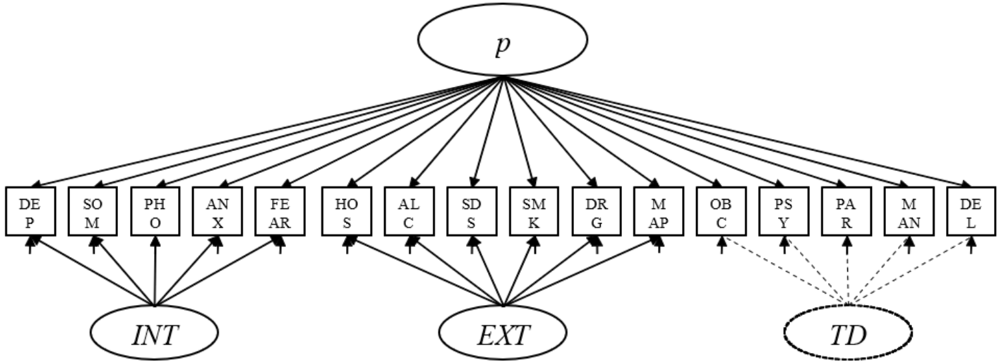
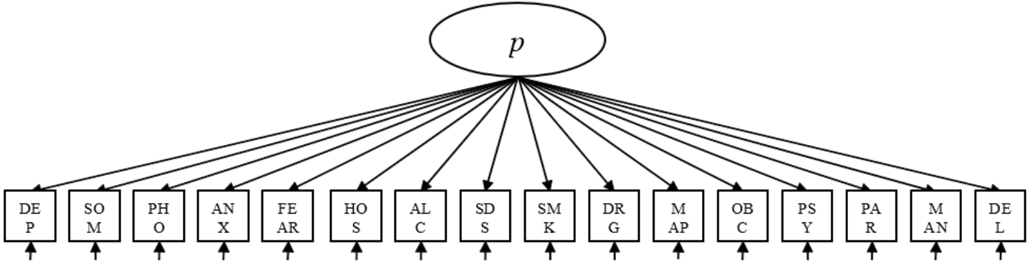
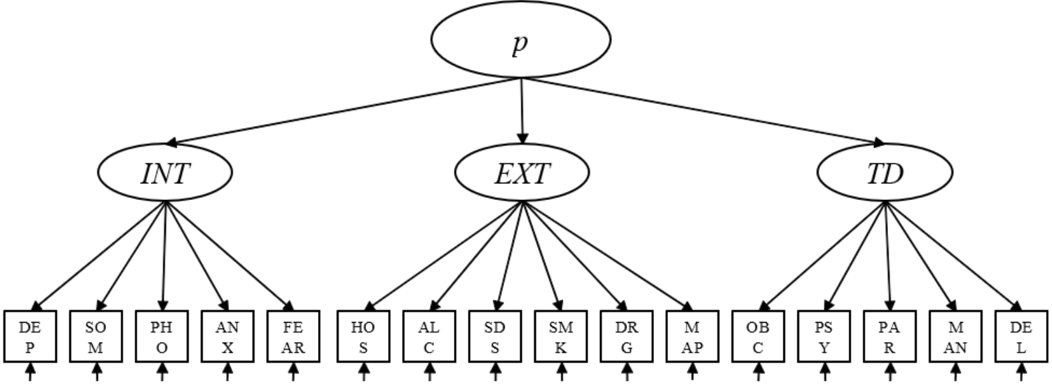
“…used different statistical approaches to modeling p, including bifactor models (Figure 1), single-factor (unidimensional) models (Figure 2), and, to a lesser extent, higher-order factor models (Figure 3) (Castellanos-Ryan et al. 2016, Conway et al. 2019, Martel et al. 2017, Waldman et al. 2016).”
BackgroundMethodA polygenic p factor for major psychiatric disorders
Selzam, S., Coleman, J. R. I., Caspi, A., Moffitt, T. E., & Plomin, R. (2018) · Translational Psychiatry · doi:10.1038/s41398-018-0217-4 · Cited by 168
Addressing neuroticism in psychological treatment.
Sauer-Zavala, S., Wilner, J. G., & Barlow, D. H. (2017) · Personality Disorders: Theory, Research, and Treatment · doi:10.1037/per0000224 · Cited by 162 · cited 1×
“F or p er so na l u se o nl y. of subjective distress (Sauer-Zavala et al. 2017).”
BackgroundMood, anxiety and psychotic phenomena measure a common psychopathological factor
Stochl, J., Khandaker, G. M., Lewis, G., Perez, J., Goodyer, I. M., Zammit, S., Sullivan, S., Croudace, T. J., & Jones, P. B. (2015) · Psychological Medicine · doi:10.1017/s003329171400261x · Cited by 153 · cited 1×
“For example, Stochl et al. (2015) found support for a bifactor model with a general factor, a psychotic experiences–specific factor, and a composite depression/anxietyspecific factor.”
BackgroundHoptman, M. J., Antonius, D., Mauro, C. J., Parker, E. M., & Javitt, D. C. (2014) · American Journal of Psychiatry · doi:10.1176/appi.ajp.2014.13111553 · Cited by 152 · cited 1×
“Research also indicates preliminary support for associations between emotion-based impulsive actions and bipolar disorder (Muhtadie et al. 2014), schizophrenia (Hoptman et al. 2014), and OCD (Cougle et al. 2012).”
ResultRiley, E. N., Combs, J. L., Jordan, C. E., & Smith, G. T. (2015) · Behavior Therapy · doi:10.1016/j.beth.2015.03.002 · Cited by 148 · cited 1×
“…internalizing and externalizing psychopathology (Berg et al. 2015, Carver et al. 2013, Cyders & Smith 2008a, Cyders et al. 2009, Fischer et al. 2008, Johnson et al. 2013, Pearson et al. 2015, Peterson et al. 2018, Riley et al. 2015, Settles et al. 2010, Smith et al. 2013, Zapolski et al. 2009).”
BackgroundSelf-citationThe General Factor of Personality: Normal and Abnormal
Rushton, J. P., & Irwing, P. (2011) · The Wiley‐Blackwell Handbook of Individual Differences · doi:10.1002/9781444343120.ch5 · Cited by 144 · cited 1×
“Models including a GFP displayed satisfactory confirmatory fit indices and exploratory factor structure across the samples and across most popular measures and models of personality (Rushton & Irwing 2011).”
MethodGeneral Factors of Psychopathology, Personality, and Personality Disorder: Across Domain Comparisons
Oltmanns, J. R., Smith, G. T., Oltmanns, T. F., & Widiger, T. A. (2018) · Clinical Psychological Science · doi:10.1177/2167702617750150 · Cited by 142
Self-citationConceptual Complexity and Construct Validity
McGrath, R. E. (2005) · Journal of Personality Assessment · doi:10.1207/s15327752jpa8502_02 · Cited by 137 · cited 1×
“To understand the clinical utility of p as an index of overall impairment, we argue that the presence of p must be understood along with other findings that support focusing on lower-level, homogeneous constructs (McGrath 2005, Smith et al. 2003, Smith & McCarthy 1995, Strauss & Smith 2009).”
Different neurodevelopmental symptoms have a common genetic etiology
Pettersson, E., Anckarsäter, H., Gillberg, C., & Lichtenstein, P. (2013) · Journal of Child Psychology and Psychiatry · doi:10.1111/jcpp.12113 · Cited by 135 · cited 1×
“…of p. Longitudinally, a general factor of psychopathology (assessed in children, whether via parent report or using multiple informants) predicted adverse mental health outcomes later in adolescence above other latent factors included in the model (Pettersson et al. 2018, Sallis et al. 2019).”
BackgroundA Comparison of Two Models of Urgency: Urgency Predicts Both Rash Action and Depression in Youth
Smith, G. T., Guller, L., & Zapolski, T. C. B. (2013) · Clinical Psychological Science · doi:10.1177/2167702612470647 · Cited by 135 · cited 2×
“…internalizing and externalizing psychopathology (Berg et al. 2015, Carver et al. 2013, Cyders & Smith 2008a, Cyders et al. 2009, Fischer et al. 2008, Johnson et al. 2013, Pearson et al. 2015, Peterson et al. 2018, Riley et al. 2015, Settles et al. 2010, Smith et al. 2013, Zapolski et al. 2009).”
BackgroundSelf-citationMcElroy, E., Belsky, J., Carragher, N., Fearon, P., & Patalay, P. (2018) · Journal of Child Psychology and Psychiatry · doi:10.1111/jcpp.12849 · Cited by 129 · cited 1×
“In one study, over eight intervals from age 2 to 14, stability coefficients ranged from 0.52 to 0.76 (McElroy et al. 2018).”
BackgroundInfluentialCarver, C. S., Johnson, S. L., & Joormann, J. (2013) · British Journal of Clinical Psychology · doi:10.1111/bjc.12014 · Cited by 127 · cited 1×
“…between self-report measures of emotion-based impulsive actions and both internalizing and externalizing psychopathology (Berg et al. 2015, Carver et al. 2013, Cyders & Smith 2008a, Cyders et al. 2009, Fischer et al. 2008, Johnson et al. 2013, Pearson et al. 2015, Peterson et al. 2018,…”
BackgroundHasin, D., & Kilcoyne, B. (2012) · Current Opinion in Psychiatry · doi:10.1097/yco.0b013e3283523dcc · Cited by 125 · cited 1×
“Fourth, comorbidity among supposedly distinct categorical diagnoses is the norm rather than the exception (Hasin & Kilcoyne 2012, Kessler et al. 2005).”
BackgroundThe General Factor of Personality and Evaluation
Pettersson, E., Turkheimer, E., Horn, E. E., & Menatti, A. R. (2012) · European Journal of Personality · doi:10.1002/per.839 · Cited by 125 · cited 2×
“Second, the GFP correlates r = 0.86 with a factor of items reflecting evaluation [positive loadings on happy, cooperative, and rational; negative loadings on sluggish, manic, and grim (Pettersson et al. 2012)].”
BackgroundInfluentialSingle Nucleotide Polymorphism Heritability of a General Psychopathology Factor in Children
Neumann, A., Pappa, I., Lahey, B. B., Verhulst, F. C., Medina-Gomez, C., Jaddoe, V. W., Bakermans-Kranenburg, M. J., Moffitt, T. E., van IJzendoorn, M. H., & Tiemeier, H. (2016) · Journal of the American Academy of Child & Adolescent Psychiatry · doi:10.1016/j.jaac.2016.09.498 · Cited by 121
Ethnicity/race, paranoia, and psychiatric diagnoses: Clinician bias versus sociocultural differences
Whaley, A. L. (1997) · Journal of Psychopathology and Behavioral Assessment · doi:10.1007/bf02263226 · Cited by 119 · cited 1×
“For example, clinicians tend to be unaware of, or insensitive to, cultural differences in behaviors that may or may not be symptoms of dysfunction (López & Guarnaccia 2005, Moleiro 2018,Whaley 1997).”
BackgroundHealth‐related quality of life and eating disorders: A review and update
Engel, S. G., Adair, C. E., Hayas, C. L., & Abraham, S. (2009) · International Journal of Eating Disorders · doi:10.1002/eat.20602 · Cited by 117
Posttraumatic stress disorder and the genetic structure of comorbidity.
Wolf, E. J., Miller, M. W., Krueger, R. F., Lyons, M. J., Tsuang, M. T., & Koenen, K. C. (2010) · Journal of Abnormal Psychology · doi:10.1037/a0019035 · Cited by 116 · cited 1×
“…which assume that genetic influences on specific psychopathology operate through meaningful higher-order factors, have found that much of the overlap between internalizing and externalizing factors is due to common genetic influences (Cosgrove et al. 2011, Lahey et al. 2017,Wolf et al. 2010).”
BackgroundFactors that Influence Trajectories of Delinquency Throughout Adolescence
Evans, S. Z., Simons, L. G., & Simons, R. L. (2014) · Journal of Youth and Adolescence · doi:10.1007/s10964-014-0197-5 · Cited by 116
The General Factor of Personality (GFP) as social effectiveness: Review of the literature
van der Linden, D., Dunkel, C. S., & Petrides, K. V. (2016) · Personality and Individual Differences · doi:10.1016/j.paid.2016.05.020 · Cited by 116 · cited 1×
“One of the most prominent substantive interpretations of the GFP is as an individual differences continuum of social effectiveness (van der Linden et al. 2016).”
BackgroundMoleiro, C. (2018) · Frontiers in Psychiatry · doi:10.3389/fpsyt.2018.00366 · Cited by 111
A profile approach to impulsivity in bipolar disorder: the key role of strong emotions
Muhtadie, L., Johnson, S. L., Carver, C. S., Gotlib, I. H., & Ketter, T. A. (2014) · Acta Psychiatrica Scandinavica · doi:10.1111/acps.12136 · Cited by 110
Meijer, R. R., de Vries, R. M., & van Bruggen, V. (2011) · Psychological Assessment · doi:10.1037/a0021292 · Cited by 106 · cited 1×
“The tendency to experience negative affect and distress is a stable and robust personality disposition (Watson & Clark 1984), and dispositional negative emotionality is implicated in a large portion of psychiatric disorders (Lahey 2009, Meijer et al. 2011).”
BackgroundAlnæs, D., Kaufmann, T., Doan, N. T., Córdova-Palomera, A., Wang, Y., Bettella, F., Moberget, T., Andreassen, O. A., & Westlye, L. T. (2018) · JAMA Psychiatry · doi:10.1001/jamapsychiatry.2017.4277 · Cited by 106 · cited 1×
“Further, low cognitive ability reduces mental health literacy and is related to increased exposure and vulnerability to life stressors (Alnaes et al. 2018, Koenen et al. 2009).”
BackgroundMood and personality in Adulthood
Costa, P. T., & McCrae, R. R. (1996) · Elsevier eBooks · doi:10.1016/b978-012464995-8/50021-2 · Cited by 90
Brook, J. S., Lee, J. Y., Finch, S. J., Seltzer, N., & Brook, D. W. (2013) · Substance Abuse · doi:10.1080/08897077.2013.775092 · Cited by 90 · cited 1×
“…documented that individuals vary in their experiences of distress over time: Depression and anxiety symptoms increase and decrease, as do rates of substance use, delinquent behavior, and most disorders (Brook et al. 2013, Evans et al. 2016, Flory et al. 2004, Keel et al. 2007, Xiang & Cheng 2019).”
BackgroundExploring the unique and interactive roles of distress tolerance and negative urgency in obsessions
Cougle, J. R., Timpano, K. R., & Goetz, A. R. (2012) · Personality and Individual Differences · doi:10.1016/j.paid.2011.11.017 · Cited by 83
Sallis, H., Szekely, E., Neumann, A., Jolicoeur‐Martineau, A., van IJzendoorn, M., Hillegers, M., Greenwood, C. M. T., Meaney, M. J., Steiner, M., Tiemeier, H., et al. (2019) · Journal of Child Psychology and Psychiatry · doi:10.1111/jcpp.13067 · Cited by 79
Jahng, S., Trull, T. J., Wood, P. K., Tragesser, S. L., Tomko, R., Grant, J. D., Bucholz, K. K., & Sher, K. J. (2011) · Journal of Abnormal Psychology · doi:10.1037/a0023539 · Cited by 78
Association of Fetal Growth With General and Specific Mental Health Conditions
Pettersson, E., Larsson, H., D'Onofrio, B. M., Almqvist, C., & Lichtenstein, P. (2019) · JAMA Psychiatry · doi:10.1001/jamapsychiatry.2018.4342 · Cited by 78
Davies, S. E., Connelly, B. S., Ones, D. S., & Birkland, A. S. (2015) · Personality and Individual Differences · doi:10.1016/j.paid.2015.01.006 · Cited by 77 · cited 1×
“First, the saturation of the general factor is significantly reduced when it is modeled with multimethod assessments (Davies et al. 2015).”
BackgroundMikolajewski, A. J., Allan, N. P., Hart, S. A., Lonigan, C. J., & Taylor, J. (2013) · Journal of Abnormal Child Psychology · doi:10.1007/s10802-012-9681-0 · Cited by 75 · cited 1×
“Further, studies suggest that negative emotionality shares a significant amount of genetic influence with other forms of psychopathology (Mikolajewski et al. 2013, Ormel et al. 2005).”
BackgroundA General Population Twin Study of the CBCL/6-18 DSM-Oriented Scales
Spatola, C. A. M., Fagnani, C., Pesenti‐Gritti, P., Ogliari, A. L., Stazi, M., & Battaglia, M. (2007) · Journal of the American Academy of Child & Adolescent Psychiatry · doi:10.1097/chi.0b013e3180335b12 · Cited by 74
Socially desirable responding in personality assessment: Still more substance than style
Kurtz, J. E., Tarquini, S. J., & Iobst, E. A. (2008) · Personality and Individual Differences · doi:10.1016/j.paid.2008.02.012 · Cited by 69 · cited 1×
“Indeed, measures of social desirability typically contain more substantive personality traits than evaluation bias (McCrae & Costa 1983, Kurtz et al. 2008).”
Backgrounddu Pont, A., Rhee, S. H., Corley, R. P., Hewitt, J. K., & Friedman, N. P. (2018) · Clinical Psychological Science · doi:10.1177/2167702617720747 · Cited by 67
Trajectories of major depression in middle‐aged and older adults: A population‐based study
Xiang, X., & Cheng, J. (2019) · International Journal of Geriatric Psychiatry · doi:10.1002/gps.5161 · Cited by 67 · cited 1×
“…documented that individuals vary in their experiences of distress over time: Depression and anxiety symptoms increase and decrease, as do rates of substance use, delinquent behavior, and most disorders (Brook et al. 2013, Evans et al. 2016, Flory et al. 2004, Keel et al. 2007, Xiang & Cheng 2019).”
BackgroundPettersson, E., Lahey, B. B., Larsson, H., & Lichtenstein, P. (2018) · Journal of the American Academy of Child & Adolescent Psychiatry · doi:10.1016/j.jaac.2017.12.016 · Cited by 65
Estimating the burden of psychiatric disorders in adolescence: the impact of subthreshold disorders
Roberts, R. E., Fisher, P. W., Blake Turner, J., & Tang, M. (2015) · Social Psychiatry and Psychiatric Epidemiology · doi:10.1007/s00127-014-0972-3 · Cited by 59 · cited 1×
“They used self-reported symptom counts for 14 dimensions of psychopathology in their model, given that symptoms of psychopathology are related to distress and impairment regardless of whether a diagnostic threshold is met (Copeland et al. 2015, Fergusson et al. 2005, Roberts et al. 2015).”
MethodThe general factor of personality: Substance or artefact?
Irwing, P. (2013) · Personality and Individual Differences · doi:10.1016/j.paid.2013.03.002 · Cited by 55
Greene, A. L., & Eaton, N. R. (2016) · Comprehensive Psychiatry · doi:10.1016/j.comppsych.2016.09.010 · Cited by 55 · cited 2×
“Internalizing is sometimes split into separate fear and distress factors (Greene & Eaton 2017, Lahey et al. 2012, Martel et al. 2017).”
BackgroundInfluentialThe General Factor of Psychopathology and Personality
Widiger, T. A., & Oltmanns, J. R. (2017) · Clinical Psychological Science · doi:10.1177/2167702616657042 · Cited by 46 · cited 2×
“…that may account for p: nonspecific causal factors (Lahey et al. 2017), dispositional negative affectivity (Tackett et al. 2013), impulsive responsivity to emotion (Carver et al. 2017), thought dysfunction (Caspi & Moffitt 2018), and impairment (Oltmanns et al. 2018, Widiger & Oltmanns 2017).”
BackgroundSelf-citationThe Symptom Checklist-90-R (SCL-90-R)
Derogatis, L. R. (1975) · Cited by 45
Conway, C., Mansolf, M. A., & Reise, S. P. (2019) · Psychological Assessment · doi:10.1037/pas0000695 · Cited by 41 · cited 6×
“Conway et al. (2019) provided enlightening information about the differences between higher-order and bifactor models of p in a large data set of students who had sought treatment for mental health (N= 25,002).”
BackgroundMethodInfluentialWeiss, N. H., Tull, M. T., Davis, L. T., Searcy, J., Williams, I., & Gratz, K. L. (2015) · Behaviour Change · doi:10.1017/bec.2015.5 · Cited by 38
Personality and learning predictors of adolescent alcohol consumption trajectories.
Peterson, S. J., Davis, H. A., & Smith, G. T. (2018) · Journal of Abnormal Psychology · doi:10.1037/abn0000351 · Cited by 35 · cited 2×
“Indeed, a general genetic factor influencing all dimensions of psychopathology was identified in four of these studies (Lahey et al. 2011; Pettersson et al. 2013, 2016; Spatola et al. 2007).”
BackgroundSelf-citationAxis-I comorbidity is linked to prospective instability of diagnoses within eating disorders
Milos, G. F., Baur, V., Muehlebach, S., & Spindler, A. (2013) · BMC Psychiatry · doi:10.1186/1471-244x-13-295 · Cited by 24 · cited 1×
“In terms of outcomes, psychiatric comorbidity is thought to increase disorder severity, contribute to a chronic course of illness, and be associated with less successful treatment (Blinder et al. 2006, Milos et al. 2013).”
BackgroundWechsler, D. (2007) · Williams & Wilkins eBooks · doi:10.1037/11329-001 · Cited by 11
Research works printed but not linked: 4
- Krueger RF, Markon KE. 2011. A dimensional-spectrum model of psychopathology: Progress and opportunities. Arch. Gen. Psychiat. 68(1):10-11.
- Kupfer DJ, First MB, Regier DA. 2002. A research agenda for DSM-V. Arlington VA: American Psychiatric Association The General Factor of Psychopathology 43
- Riley EN, Atkinson EA, Smith GT. June 2019. Alcohol consumption as part of the p factor of general psychopathology. Poster presented at the 42 nd annual meeting of the Research Society on Alcoholism. Minneapolis MN.
- Widiger TA, 2008, Handbook of Personality: Theory and Research, 743
Cited by
Lynch, S. J., Sunderland, M., Newton, N. C., & Chapman, C. (2021) · Clinical Psychology Review · doi:10.1016/j.cpr.2021.102036 · Cited by 194
Parental sensitivity and child behavioral problems: A meta-analytic review
Cooke, J. E., Deneault, A.-A., Devereux, C., Eirich, R., Fearon, R. M. P., & Madigan, S. (2022) · Child Development · doi:10.1111/cdev.13764 · Cited by 173
A review of approaches and models in psychopathology conceptualization research
Eaton, N. R., Bringmann, L. F., Elmer, T., Fried, E. I., Forbes, M. K., Greene, A. L., Krueger, R. F., Kotov, R., McGorry, P. D., Mei, C., et al. (2023) · Nature Reviews Psychology · doi:10.1038/s44159-023-00218-4 · Cited by 198
“For instance, there are many interpretations of the p -factor, including as a representation of general liability for psychopathology or of overall psychopathology severity 27,51,53 .”
BackgroundForbes, M. K., Sunderland, M., Rapee, R. M., Batterham, P. J., Calear, A. L., Carragher, N., Ruggero, C. J., Zimmerman, M. A., Baillie, A., Lynch, S. J., et al. (2021) · Clinical Psychological Science · doi:10.1177/2167702620954799 · Cited by 121
Culture and psychopathology: An attempt at reconsidering the role of social learning
Fonagy, P., Campbell, C., Constantinou, M., Higgitt, A., Allison, E., & Luyten, P. (2021) · Development and Psychopathology · doi:10.1017/s0954579421000092 · Cited by 141
Metadata
- Authors
- Smith, G. T., Atkinson, E. A., Davis, H. A., Riley, E. N., & Oltmanns, J. R.
- Affiliations
- University of Kentucky (US)
- Venue
- Annual Review of Clinical Psychology
- Publisher
- Annual Reviews
- Published
- 2020-05-07
- Volume
- 16
- Issue
- 1
- Pages
- 75-98
- ISSN
- 1548-5943 (ISSN-L)
- 1548-5951
- OpenAlex
- W3005443371
- Semantic Scholar
- 4fae161ec2d5b55f16b3b20b2b9dd71c93411915
- Cited by
- 195
- References
- 120
- Citations by year
- 2026: 18 · 2025: 32 · 2024: 37 · 2023: 32 · 2022: 29 · 2021: 36 · 2020: 10
- FWCI
- 3.89
- Type
- journal article
- Language
- en
- Open access
- green
- doi.org
- Licence
- cc-by
- Locations
- Annual Review of Clinical Psychology (publishedVersion)
- PubMed (publishedVersion)
- PsyArXiv (OSF Preprints) (submittedVersion)
- PsyArXiv (OSF Preprints) (submittedVersion, cc-by)
- Topics
- Social Sciences › Psychology › Experimental and Cognitive Psychology › Mental Health Research Topics
- Social Sciences › Psychology › Clinical Psychology › Personality Disorders and Psychopathology
- Social Sciences › Psychology › Experimental and Cognitive Psychology › Anxiety, Depression, Psychometrics, Treatment, Cognitive Processes
- Keywords
- general psychopathology factor, p-factor, psychopathology dimensions, general factor of personality, criterion validity
- MeSH terms
- Mental Disorders, Humans, Personality, Personality Disorders
About these checks
Registry, retraction, Cites and statistics results are computed, not judged, with one exception: a printed reference that no index lists is read once by a model before it counts as a citation error. Claims are extracted by a model and kept only when their quote appears verbatim in the text; each cited source is then checked, with a model’s help, for whether it says what the claim relies on. Those verdicts can be wrong — read the claim’s quote and the cited source before relying on one.
Statistics and arithmetic are recomputed, not judged.
Confidence bands are shown only for fields calibrated on our annotated test set. None is calibrated yet, so no band is shown.
What counts as a claim ›How we measure confidence ›How we check this ›
Are you an author, or do you see a problem with this page? Request a review
Data sources
Bibliographic data: Semantic Scholar, OpenAlex, Crossref.
Contains information from the Semantic Scholar Academic Graph Datasets, made available under the ODC Attribution License (ODC-BY 1.0).
Semantic Scholar’s data is described in: Kinney, R., et al. (2023). The Semantic Scholar Open Data Platform. arXiv:2301.10140.
