

The General Factor of Psychopathology
Open accessPublished version of a preprint
The DOI matches its Crossref record; 120 of the 120 references it cites were found in a registry or an index.
Abstract
An important advance in understanding and defining mental disorders has been the development of empirical approaches to mapping dimensions of dysfunction and their interrelatedness. Such empirical approaches have consistently observed intercorrelations among the many forms of psychopathology, leading to the identification of a general factor of psychopathology (the p factor). In this article, we review empirical support for p, including evidence for the stability and criterion validity of p. Further, we discuss the strong relationship between p and both the general factor of personality and the general factor of personality disorder, substantive interpretations of p, and the potential clinical utility of p. We posit that proposed substantive interpretations of p do not explain the full range of symptomatology typically included in p. The most plausible explanation is that p represents an index of impairment that has the potential to inform the duration and intensity of a client's mental health treatment.
Overview
The claims and statistics of this paper haven’t been checked yet.
Free: it reads the open-access text and checks the first 5 claims that cite a source we can check. Create a free account to check every claim.
Integrity signals
Registry
Cites
Statistics
Figures
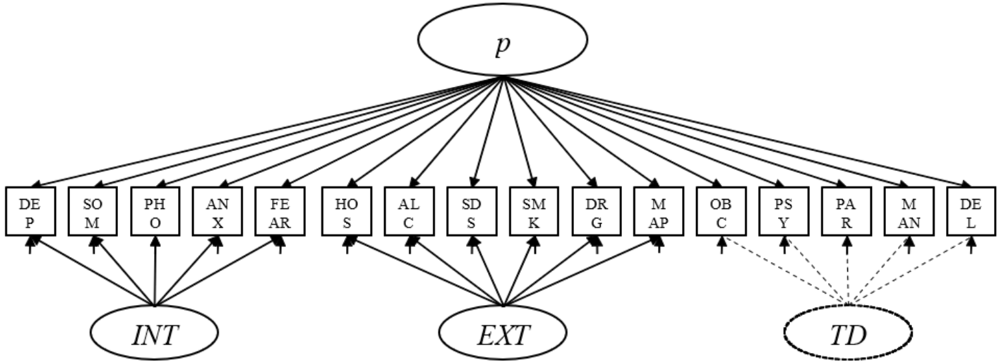
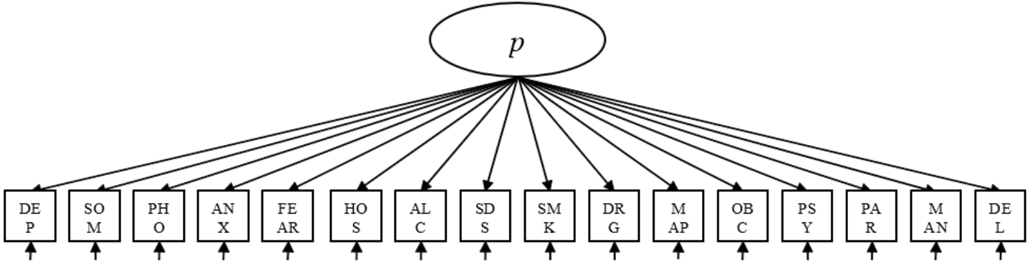
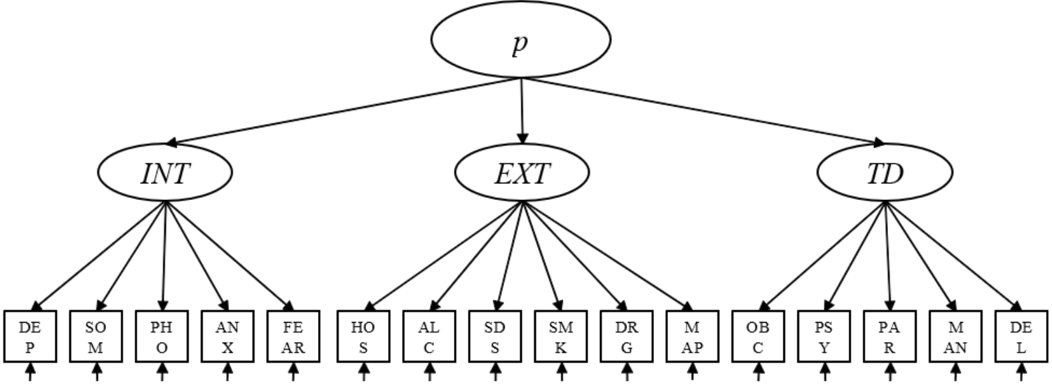
Verification
Claims the paper makes
The claims and statistics of this paper haven’t been checked yet.
Free: it reads the open-access text and checks the first 5 claims that cite a source we can check. Create a free account to check every claim.
Claims other papers make about this one
Each is checked against this paper’s own text: does it say what the citing paper says it does?
The source backs part of the claim, not all of it — or backs it for a different population, condition or comparison.
In the citing paper
“The dominant approach in contemporary medical science views depression through the lens of a biological model, focusing on physiological factors such as neurochemical imbalances, genetic predispositions, and brain-structure anomalies; common interventions include medication (6, 7), positive-thinking activities (8), and social support (6, 8, 9).”
From Anti-stigmatizing: a collaborative autoethnography on recovery from depression (2024) · cites this paper as [7]
Experimental — accuracy not yet measured
Self-check
Percentages, sums and reported differences re-computed from the paper’s own numbers.
The self-check needs the paper’s full text.
Citations
Cites
Kessler, R. C., Chiu, W. T., Demler, O., & Walters, E. E. (2005) · Archives of General Psychiatry · doi:10.1001/archpsyc.62.6.617 · Cited by 12,052
Handbook of Personality: Theory and Research
Krueger, R. F., & Johnson, W. (2008) · Cited by 7,884
Negative affectivity: the disposition to experience aversive emotional states
Watson, D., & Clark, L. A. (1984) · Psychological Bulletin · doi:10.1037/0033-2909.96.3.465 · Cited by 4,636 · cited 1×
“The tendency to experience negative affect and distress is a stable and robust personality disposition (Watson & Clark 1984), and dispositional negative emotionality is implicated in a large portion of psychiatric disorders (Lahey 2009, Meijer et al. 2011).”
BackgroundKotov, R., Krueger, R. F., Watson, D., Achenbach, T. M., Althoff, R. R., Bagby, R. M., Brown, T. A., Carpenter, W. T., Caspi, A., Clark, L. A., et al. (2017) · Journal of Abnormal Psychology · doi:10.1037/abn0000258 · Cited by 3,335 · cited 2×
“…factors of psychopathology were then examined across 10 mental disorders and adapted to fit their manifestation in adults, with internalizing largely similar to how the dimension is defined for adolescents and externalizing including antisocial behavior and substance use problems (Krueger 1999).”
BackgroundMethodInfluentialArcelus, J., Mitchell, A. J., Wales, J., & Nielsen, S. (2011) · Archives of General Psychiatry · doi:10.1001/archgenpsychiatry.2011.74 · Cited by 2,864 · cited 1×
“Her eating disorder is more complex given her history of being underweight and meeting criteria for AN, which has the highest mortality rate of any mental illness (Arcelus et al. 2011).”
BackgroundThe p Factor: One General Psychopathology Factor in the Structure of Psychiatric Disorders?
Caspi, A., Houts, R. M., Belsky, D. W., Goldman-Mellor, S. J., Harrington, H., Israel, S., Meier, M. H., Ramrakha, S., Shalev, I., Poulton, R., et al. (2014) · Clinical Psychological Science · doi:10.1177/2167702613497473 · Cited by 2,449
Roberts, B. W., Kuncel, N. R., Shiner, R., Caspi, A., & Goldberg, L. R. (2007) · Perspectives on Psychological Science · doi:10.1111/j.1745-6916.2007.00047.x · Cited by 2,361 · cited 1×
“…of functioning, including physical health, psychological health, mortality, marital outcomes, interpersonal functioning, educational and occupational attainment, life happiness, engagement in substance abuse, and psychopathology (Costa &McCrae 1996, Ozer & Benet-Martínez 2006, Roberts et al. 2007).”
BackgroundPersonality and the Prediction of Consequential Outcomes
Ozer, D. J., & Benet-Martínez, V. (2006) · Annual Review of Psychology · doi:10.1146/annurev.psych.57.102904.190127 · Cited by 2,170
Empirically supported psychological interventions: Controversies and evidence
Chambless, D. L., & Ollendick, T. H. (2001) · Annual Review of Psychology · doi:10.1146/annurev.psych.52.1.685 · Cited by 2,097
Public health significance of neuroticism
Lahey, B. B. (2009) · American Psychologist · doi:10.1037/a0015309 · Cited by 1,901 · cited 2×
“Research has also shown that, across samples and cultures, negative emotionality is one of the primary factors extracted from individual difference measures of personality ( John et al. 2008, Lahey 2009, Markon et al. 2005).”
Background
Research works printed but not linked: 4
- Krueger RF, Markon KE. 2011. A dimensional-spectrum model of psychopathology: Progress and opportunities. Arch. Gen. Psychiat. 68(1):10-11.
- Kupfer DJ, First MB, Regier DA. 2002. A research agenda for DSM-V. Arlington VA: American Psychiatric Association The General Factor of Psychopathology 43
- Riley EN, Atkinson EA, Smith GT. June 2019. Alcohol consumption as part of the p factor of general psychopathology. Poster presented at the 42 nd annual meeting of the Research Society on Alcoholism. Minneapolis MN.
- Widiger TA, 2008, Handbook of Personality: Theory and Research, 743
Cited by
Lynch, S. J., Sunderland, M., Newton, N. C., & Chapman, C. (2021) · Clinical Psychology Review · doi:10.1016/j.cpr.2021.102036 · Cited by 194
Parental sensitivity and child behavioral problems: A meta-analytic review
Cooke, J. E., Deneault, A.-A., Devereux, C., Eirich, R., Fearon, R. M. P., & Madigan, S. (2022) · Child Development · doi:10.1111/cdev.13764 · Cited by 173
A review of approaches and models in psychopathology conceptualization research
Eaton, N. R., Bringmann, L. F., Elmer, T., Fried, E. I., Forbes, M. K., Greene, A. L., Krueger, R. F., Kotov, R., McGorry, P. D., Mei, C., et al. (2023) · Nature Reviews Psychology · doi:10.1038/s44159-023-00218-4 · Cited by 198
“For instance, there are many interpretations of the p -factor, including as a representation of general liability for psychopathology or of overall psychopathology severity 27,51,53 .”
BackgroundForbes, M. K., Sunderland, M., Rapee, R. M., Batterham, P. J., Calear, A. L., Carragher, N., Ruggero, C. J., Zimmerman, M. A., Baillie, A., Lynch, S. J., et al. (2021) · Clinical Psychological Science · doi:10.1177/2167702620954799 · Cited by 121
Culture and psychopathology: An attempt at reconsidering the role of social learning
Fonagy, P., Campbell, C., Constantinou, M., Higgitt, A., Allison, E., & Luyten, P. (2021) · Development and Psychopathology · doi:10.1017/s0954579421000092 · Cited by 141
Simms, L. J., Wright, A. G. C., Cicero, D. C., Kotov, R., Mullins‐Sweatt, S. N., Sellbom, M., Watson, D., Widiger, T. A., & Zimmermann, J. (2021) · Assessment · doi:10.1177/10731911211015309 · Cited by 121
“, little specificity), but the meaning of such superspectra remains a matter of substantial debate (e.g., LevinAspenson et al., 2020; Smith et al., 2020).”
BackgroundForbes, M. K., Greene, A. L., Levin-Aspenson, H. F., Watts, A. L., Hallquist, M., Lahey, B. B., Markon, K. E., Patrick, C. J., Tackett, J. L., Waldman, I. D., et al. (2021) · Journal of Abnormal Psychology · doi:10.1037/abn0000533 · Cited by 89
Utility and validity of the Brief Psychiatric Rating Scale (BPRS) as a transdiagnostic scale
Hofmann, A. B., Schmid, H. M., Jabat, M., Brackmann, N., Noboa, V., Bobes, J., García‐Portilla, M. P., Seifritz, E., Vetter, S., & Egger, S. (2022) · Psychiatry Research · doi:10.1016/j.psychres.2022.114659 · Cited by 107
“Our results reinforce the notion that psychiatric disorders affect thought processes (and thus language and communication) (Aristodemou and Fried, 2020; Caspi et al., 2014; Smith et al., 2020).”
Building Theories on Top of, and Not Independent of, Statistical Models: The Case of the p-factor
Watts, A. L., Lane, S. P., Bonifay, W. E., Steinley, D., & Meyer, F. A. C. (2020) · Psychological Inquiry · doi:10.1080/1047840x.2020.1853476 · Cited by 95
Brislin, S. J., Martz, M. E., Joshi, S. A., Duval, E. R., Gard, A. M., Clark, D. A., Hyde, L. W., Hicks, B. M., Taxali, A., Angstadt, M., et al. (2021) · Psychological Medicine · doi:10.1017/s0033291720005103 · Cited by 85
The General Factor of Psychopathology (p): Choosing Among Competing Models and Interpreting p
Caspi, A., Houts, R., Fisher, H. L., Danese, A., & Moffitt, T. E. (2023) · Clinical Psychological Science · doi:10.1177/21677026221147872 · Cited by 105
“Moreover, despite the assumptions of factor models, it is important to recognize that extracting common variance cannot even differentiate between whether p is a shared cause or a shared consequence of different mental disorders (Smith et al., 2020).”
BackgroundA critical evaluation of the p-factor literature
Watts, A. L., Greene, A. L., Bonifay, W. E., & Fried, E. I. (2023) · Nature Reviews Psychology · doi:10.1038/s44159-023-00260-2 · Cited by 118
“…is directly relevant to p -factor theories, in which substantive, causal interpretations are presumably supported by extracting a single-factor model, but an equivalent structural representation of the indicators supports an opposing perspective: that the p -factor reflects impairment 5,27 .”
InfluentialDimensional models of personality disorders: Challenges and opportunities
Monaghan, C., & Bizumić, B. (2023) · Frontiers in Psychiatry · doi:10.3389/fpsyt.2023.1098452 · Cited by 82
Heinrich, M., Geiser, C., Zagorscak, P., Burns, G. L., Bohn, J., Becker, S. P., Eid, M., Beauchaine, T. P., & Knaevelsrud, C. (2021) · Assessment · doi:10.1177/10731911211060298 · Cited by 71
“…including internalizing, externalizing, and thought problems through failures in top-down cortical inhibition of subcortical neural systems (see Beauchaine & Zisner, 2017, and Carver et al., 2017, for related interpretations and see Smith et al., 2020 for alternative conceptualizations).”
BackgroundInfluentialMacina, C., Bendel, R., Walter, M., & Wrege, J. S. (2021) · Journal of Psychosomatic Research · doi:10.1016/j.jpsychores.2021.110646 · Cited by 59
Greene, A. L., Watts, A. L., Forbes, M. K., Kotov, R., Krueger, R. F., & Eaton, N. R. (2023) · Psychological Methods · doi:10.1037/met0000465 · Cited by 49
Defining the p -factor: an empirical test of five leading theories
Southward, M. W., Cheavens, J. S., & Coccaro, E. F. (2022) · Psychological Medicine · doi:10.1017/s0033291722001635 · Cited by 62
“These results suggest a model of p that extends Barlow et al. ’ s (2014) model of emotional disorders and synthesizes it with Smith et al. ’ s (2020) nonspecific impairment interpretation of the p -factor.”
InfluentialWatts, A. L., Makol, B. A., Palumbo, I. M., Reyes, A. D. L., Olino, T. M., Latzman, R. D., DeYoung, C. G., Wood, P. K., & Sher, K. J. (2021) · Clinical Psychological Science · doi:10.1177/21677026211055170 · Cited by 83
Goetschius, L. G., McLoyd, V. C., Hein, T. C., Mitchell, C., Hyde, L. W., & Monk, C. S. (2021) · Development and Psychopathology · doi:10.1017/s0954579421001140 · Cited by 61
Emotion‐related impulsivity across transdiagnostic dimensions of psychopathology
Pearlstein, J. G., Johnson, S. L., Timpano, K. R., Stamatis, C. A., Robison, M., & Carver, C. S. (2023) · Journal of Personality · doi:10.1111/jopy.12825 · Cited by 41
Reliability and validity of bifactor models of dimensional psychopathology in youth.
Hoffmann, M. S., Moore, T. M., Axelrud, L. K., Tottenham, N., Zuo, X., Rohde, L. A., Milham, M. P., Satterthwaite, T. D., & Salum, G. A. (2022) · Journal of Psychopathology and Clinical Science · doi:10.1037/abn0000749 · Cited by 41
Strus, W., Łakuta, P., & Cieciuch, J. (2021) · Frontiers in Psychiatry · doi:10.3389/fpsyt.2021.648386 · Cited by 45
“psychopathology, with Gamma-Minus/Disharmony being the counterpart of the general factors of psychopathology (p factor) and general factor of personality disorder [g-PD; (45, 46)].”
BackgroundThe General Factor of Personality as Ego-Resiliency
Dunkel, C. S., van der Linden, D., Kawamoto, T., & Oshio, A. (2021) · Frontiers in Psychology · doi:10.3389/fpsyg.2021.741462 · Cited by 39
Ringwald, W. R., Hopwood, C. J., Pilkonis, P. A., & Wright, A. G. C. (2021) · Personality Disorders Theory Research and Treatment · doi:10.1037/per0000469 · Cited by 43
Watts, A. L., Makol, B. A., Palumbo, I. M., Reyes, A. D. L., Olino, T. M., Latzman, R. D., DeYoung, C. G., Wood, P. K., & Sher, K. J. (2021) · doi:10.31234/osf.io/5uw63 · Cited by 33
Karalunas, S. L., Antovich, D. M., Goh, P. K., Martel, M. M., Tipsord, J. M., Nousen, E. K., & Nigg, J. T. (2021) · Development and Psychopathology · doi:10.1017/s0954579421000900 · Cited by 41
The ‘L-factor’: Language as a transdiagnostic dimension in psychopathology
Hinzen, W., & Palaniyappan, L. K. (2024) · Progress in Neuro-Psychopharmacology and Biological Psychiatry · doi:10.1016/j.pnpbp.2024.110952 · Cited by 40
“…for the p -factor (shared distress, shared intellectual [ c -factor], impulsive behavioral or functional impairment) have been put forth (Smith et al., 2020), the challenge has been to obtain representative measurements of these substrates that are not circularly derived from the same…”
BackgroundSperry, S. H., Sharpe, B. M., & Wright, A. G. C. (2021) · Journal of Abnormal Psychology · doi:10.1037/abn0000720 · Cited by 34
Wendt, L. P., Jankowsky, K., Schroeders, U., Nolte, T., Fonagy, P., Montague, P. R., Zimmermann, J., & Olaru, G. (2022) · Personality and Mental Health · doi:10.1002/pmh.1566 · Cited by 38
Severity in the ICD-11 personality disorder model: Evaluation in a Spanish mixed sample
Gutiérrez, F., Aluja, A., Rodríguez, C., Gárriz, M., Peri, J. M., Gallart, S., Calvo, N., Ferrer, M., Gutiérrez‐Zotes, A., Soler, J., et al. (2023) · Frontiers in Psychiatry · doi:10.3389/fpsyt.2022.1015489 · Cited by 35
Littlefield, A. K., Lane, S. P., Gette, J. A., Watts, A. L., & Sher, K. J. (2021) · Personality Disorders Theory Research and Treatment · doi:10.1037/per0000457 · Cited by 31
“Notably, Smith et al. (2020) highlighted the importance of considering the application of higher order factors, suggesting that the p factor may be best interpreted as a general marker of distress and that its clinical utility occurs in relation to other lower order homogenous factors (e.g.,…”
BackgroundInfluentialQuattrone, D., Reininghaus, U., Richards, A. L., Tripoli, G., Ferraro, L., Quattrone, A., Marino, P., Rodríguez, V., Spinazzola, E., Gayer-Anderson, C. E., et al. (2021) · Translational Psychiatry · doi:10.1038/s41398-021-01526-0 · Cited by 31
Choate, A. M., Bornovalova, M. A., Hipwell, A. E., Chung, T. A., & Stepp, S. D. (2022) · Development and Psychopathology · doi:10.1017/s0954579422000463 · Cited by 35
“…and age groups (e.g., Brandes et al., 2019; Gomez et al., 2019; Greene & Eaton, 2017; Laceulle et al., 2015; Lahey et al., 2012, 2015; Tackett et al., 2013; Watts et al., 2019), extensive debate has persisted surrounding the interpretability and utility of p (see Smith et al., 2020 for a review).”
Greene, A. L., Eaton, N. R., Forbes, M. K., Fried, E. I., Watts, A. L., Kotov, R., & Krueger, R. F. (2022) · Journal of Psychopathology and Clinical Science · doi:10.1037/abn0000770 · Cited by 32
“Thus, numerous, potentially sample-speci fi c, p -factor theories have been developed (for a review of competing p -factor de fi nitions see Caspi & Mof fi tt, 2018; Smith et al., 2020).”
BackgroundHoy, N., Lynch, S. J., Waszczuk, M. A., Reppermund, S., & Mewton, L. R. (2023) · Neuroscience & Biobehavioral Reviews · doi:10.1016/j.neubiorev.2023.105431 · Cited by 35
“…regulation of emotion) and impaired cognitive functioning (e.g., cognitive deficits, disordered thought processes), which aligns with a more parsimonious and all-encompassing interpretation offered for general psychopathology i.e., that it reflects general impairment ( Smith et al., 2020 ) .”
BackgroundParenting in the Context of the Child: Genetic and Social Processes
Reiss, D., Ganiban, J. M., Leve, L. D., Neiderhiser, J. M., Shaw, D. S., & Natsuaki, M. N. (2022) · Monographs of the Society for Research in Child Development · doi:10.1111/mono.12460 · Cited by 41
The alliance–outcome association in the treatment of adolescent depression.
Cirasola, A., Midgley, N., Fonagy, P., & Martin, P. (2021) · Psychotherapy · doi:10.1037/pst0000366 · Cited by 31
Haywood, D., Baughman, F. D., Mullan, B. A., & Heslop, K. (2021) · Psychiatry International · doi:10.3390/psychiatryint2030018 · Cited by 23
“For example, research has evidenced neuroticism as the primary driver of the p-factor [30], and other research has offered that p represents functional impairment [31], impulsive responsivity to emotion [32], or disordered thought [33].”
BackgroundJewell, T., Apostolidou, E., Sadikovic, K., Tahta‐Wraith, K., Liston, S., Simic, M., Eisler, I., Fonagy, P., & Yorke, I. (2023) · International Journal of Eating Disorders · doi:10.1002/eat.23922 · Cited by 30
“While best practice in the measurement of p has yet to be established, researchers should include both broad measures of psychopathology and measures of (impaired) functioning (Smith et al., 2020).”
Phillips, E. M., Brock, R. L., James, T. D., Nelson, J. M., Espy, K. A., & Nelson, T. D. (2022) · Journal of Psychopathology and Clinical Science · doi:10.1037/abn0000777 · Cited by 25
Recommendations for Adjudicating Among Alternative Structural Models of Psychopathology
Waldman, I. D., King, C. D., Poore, H. E., Luningham, J. M., Zinbarg, R. E., Krueger, R. F., Markon, K. E., Bornovalova, M. A., Chmielewski, M. S., Conway, C., et al. (2023) · Clinical Psychological Science · doi:10.1177/21677026221144256 · Cited by 31
“As an example, the general factor of psychopathology and the bifactor model from which it typically emerges have shown a sharp rise in usage and popularity among psychopathology researchers (Bornovalova et al., 2020; Greene et al., 2019; Levin-Aspenson et al., 2021; Smith et al., 2020).”
BackgroundThe complexity of treatment-resistant depression: A data-driven approach
Rost, F., Booker, T., Gonsard, A., de Felice, G., Asseburg, L., Castillo, J. M., Koutoufa, I., Ridsdale, H., Johnson, R., Taylor, D., et al. (2024) · Journal of Affective Disorders · doi:10.1016/j.jad.2024.04.093 · Cited by 26
“The p factor potentially encapsulates a general predisposition toward any psychopathology (Caspi and Moffitt, 2018) or an aggregate severity index (Smith et al., 2020).”
Proteomic insights into mental health status: plasma markers in young adults
Afonin, A. М., Piironen, A., Maciel, I. D. S., Ivanova, M., Alatalo, A., Whipp, A. M., Pulkkinen, L., Rose, R. J., KAMP, I. V., Kaprio, J. A., et al. (2024) · Translational Psychiatry · doi:10.1038/s41398-024-02751-z · Cited by 26
“Although different mental disorders may have unique symptoms, they have been shown to share commonalities in terms of underlying biological, psychological, and social factors [4].”
BackgroundPersonality Disorders: Current Conceptualizations and Challenges
Widiger, T. A., & Smith, M. M. (2025) · Annual Review of Clinical Psychology · doi:10.1146/annurev-clinpsy-081423-030513 · Cited by 27
Stolarski, M., Czajkowska-Łukasiewicz, K., Styła, R., & Zajenkowska, A. M. (2024) · Current Opinion in Psychiatry · doi:10.1097/yco.0000000000000942 · Cited by 24
“Specific effects of particular time perspective dimensions (e.g., Present-Fatalistic on thought disturbances or Past-Negative onanxiety/depression) were also reported.”
Backgroundde la Fuente, J., Pachón-Basallo, M., Vicente, J. M. M., Sánchez, F. J. P., Garzón-Umerenkova, A., & Sander, P. (2022) · Frontiers in Psychology · doi:10.3389/fpsyg.2022.922633 · Cited by 24
“Recently, studies have considered the dysfunctional level of selfregulation (dys-regulation) as a transdiagnostic variable (p factor) underlying numerous psychiatric psychopathologies (Duncan et al., 1996; Choi and Abbott, 2020; Huffhines et al., 2020; Smith et al., 2020; Levin-Aspenson et al., 2021; Romer et al., 202…”
BackgroundHaywood, D., Baughman, F. D., Mullan, B. A., & Heslop, K. (2021) · International Journal of Environmental Research and Public Health · doi:10.3390/ijerph18137108 · Cited by 19
“For example, it has been suggested that p may primarily represent functional impairment [7], neuroticism [8], cognitive abilities (see [1]), impulsive responsivity to emotion [9], and disordered thought [5].”
BackgroundNeuroanatomical Correlates of Emotion-Related Impulsivity
Elliott, M., Esmail, S. A. S., Weiner, K. S., & Johnson, S. L. (2022) · Biological Psychiatry · doi:10.1016/j.biopsych.2022.07.018 · Cited by 20
Marshall, K., & Venta, A. C. (2021) · Psychiatry Research · doi:10.1016/j.psychres.2021.113954 · Cited by 16
Ogilvie, J., Tzoumakis, S., Thompson, C., Allard, T. J., Dennison, S. M., Kisely, S. R., & Stewart, A. (2023) · BMC Psychiatry · doi:10.1186/s12888-023-04839-0 · Cited by 19
“The general factor of psychopathology (p factor) framework [43] appears useful in this context.”
BackgroundFuture directions in personality pathology
Fonagy, P., & Campbell, C. (2021) · Current Opinion in Psychology · doi:10.1016/j.copsyc.2021.01.001 · Cited by 19
Lloyd, M., Winton‐Brown, T., Hew, A., Rayner, G., Foster, E., Rychkova, M., Ali, R., Velakoulis, D., O'Brien, T. J., Kwan, P., et al. (2022) · Epilepsy & Behavior · doi:10.1016/j.yebeh.2022.108878 · Cited by 16
Time in treatment: Examining mental illness trajectories across inpatient psychiatric treatment
Oh, H., Lee, J., Kim, S., Rufino, K. A., Fonagy, P., Oldham, J. M., Schanzer, B., & Patriquin, M. A. (2020) · Journal of Psychiatric Research · doi:10.1016/j.jpsychires.2020.07.001 · Cited by 15
Fiorini, G., Saunders, R., Fonagy, P., The Impact Consortium, & Midgley, N. (2022) · Psychotherapy Research · doi:10.1080/10503307.2022.2040751 · Cited by 19
“It addresses mental suffering as a developmental phenomenon, providing a more holistic, naturalistic, and reliable view than the narrow-band perspectives (Aitken et al., 2020; Smith et al., 2020).”
InfluentialRek, K., Kerber, A., Kemper, C. J., & Zimmermann, J. (2021) · PsyArXiv (OSF Preprints) · doi:10.31234/osf.io/5hm43 · Cited by 18
Genetic and environmental risk structure of internalizing psychopathology in youth
Hettema, J. M., Bourdon, J. L., Sawyers, C. K., Verhulst, B., Brotman, M. A., Leibenluft, E., Pine, D. S., & Roberson‐Nay, R. (2020) · Depression and Anxiety · doi:10.1002/da.23024 · Cited by 17
Personality (Dys)Function and General Instability
Ringwald, W. R., Hallquist, M. N., Dombrovski, A. Y., & Wright, A. G. C. (2022) · Clinical Psychological Science · doi:10.1177/21677026221083859 · Cited by 26
“…Antagonism and withdrawal in Detachment) could not logically share a substantive commonality; rather, according to this view, the general factor of personality pathology must represent overall impairment resulting from distinct, yet unrelated, mechanisms (Oltmanns et al., 2018; Smith et al., 2020).”
BackgroundCommon and specific aspects of anxiety and depression and the metabolic syndrome
Hoffmann, M. S., Brunoni, A. R., Stringaris, A. K., Viana, M. C., Lotufo, P. A., Benseñor, I. M., & Salum, G. A. (2021) · Journal of Psychiatric Research · doi:10.1016/j.jpsychires.2021.02.052 · Cited by 15
Hoffmann, M. S., Evans-Lacko, S. E., Collishaw, S., Knapp, M. R. J., Pickles, A. R., Shearer, C., & Maughan, B. (2022) · Journal of Child Psychology and Psychiatry · doi:10.1111/jcpp.13707 · Cited by 14
“Given this pattern of associations, it is possible that the GPF might be related with aspects of symptomatology above and beyond the symptoms themselves, such as impairment (Smith, Atkinson, Davis, Riley, & Oltmanns, 2020).”
BackgroundHaywood, D., Baughman, F. D., Mullan, B. A., & Heslop, K. (2021) · International Journal of Environmental Research and Public Health · doi:10.3390/ijerph18147413 · Cited by 13
“For example, the p-factor has been claimed to reflect neuroticism [6], disordered thought [7], functional impairment [8], and impulsive responsivity to emotion [9].”
BackgroundThompson, E. L., Lever, N. A., Connors, K. M., Cloak, C. C., Reeves, G. M., & Chang, L. (2022) · Journal of Traumatic Stress · doi:10.1002/jts.22793 · Cited by 13
Cavicchioli, M., Scalabrini, A., Vai, B., Palumbo, I., Benedetti, F., Galli, F., & Maffei, C. (2024) · Journal of Affective Disorders · doi:10.1016/j.jad.2024.08.236 · Cited by 12
Tsotsi, S., Yew, S. G. K., Coplan, R. J., Bølstad, E., Czajkowski, N. O., Smajlagić, D., & Bekkhus, M. (2023) · International Journal of Behavioral Development · doi:10.1177/01650254231187902 · Cited by 12
“Both the p factor and Dysregulation Profile may contribute to explaining comorbidity and are considered targets of transdiagnostic interventions (Aitken et al., 2019; Smith et al., 2020).”
BackgroundExternal correlates of the SPECTRA: Indices of psychopathology (SPECTRA) in a clinical sample
Blais, M. A., Sinclair, S. J., Richardson, L. A., Massey, C. N., & Stein, M. B. (2021) · Clinical Psychology & Psychotherapy · doi:10.1002/cpp.2546 · Cited by 10
DeLisi, M., Drury, A. J., & Elbert, M. J. (2022) · International Journal of Law and Psychiatry · doi:10.1016/j.ijlp.2021.101773 · Cited by 12
Petersen, I. T. (2024) · Developmental Psychology · doi:10.1037/dev0001657 · Cited by 15
Die „neue“ Borderline-Persönlichkeitsstörung: Dimensionale Klassifikation im DSM-5 und ICD-11
Mitmansgruber, H. (2020) · Psychotherapie Forum · doi:10.1007/s00729-020-00151-4 · Cited by 13
Spurious empirical support for the p-factor arises with the inclusion of undiagnosed casesPreprint
Watts, A. L., Meyer, F. A. C., Greene, A. L., Wood, P. K., Trull, T. J., Steinley, D., & Sher, K. J. (2021) · PsyArXiv (OSF Preprints) · doi:10.31234/osf.io/4tazx · Cited by 11
Sun, H. J., Zhang, W., Cao, H., Sun, H., Dai, J., Li, S., Zeng, J., Xia, W., Tang, B., Gong, Q., et al. (2022) · Psychoradiology · doi:10.1093/psyrad/kkac006 · Cited by 10
“…et al. , 2019), while recent trans-diagnostic studies on schizophrenia (C. H. Xia et al. , 2018) and other mental illness (Caspi et al. , 2014; Smith et al. , 2020) have identified a general factor of psychopathology that accounted for shared risk among internalizing, externalizing, and…”
BackgroundTaking stock to move forward: Where the field of developmental psychopathology might be heading
Fonagy, P., Luyten, P., Allison, E., & Campbell, C. (2024) · Development and Psychopathology · doi:10.1017/s0954579424000312 · Cited by 11
“…on intelligence, explains the covariance between higher-order factors of psycho-pathology such as internalizing, externalizing, and thought disorder features and specific symptom domains (Caspi et al., 2014; Caspi & Moffitt, 2018; Choate et al., 2023; Lahey et al., 2021; Smith et al., 2020).”
Stevanović, D., Ćirović, N., & Knez, R. (2024) · Middle East Current Psychiatry · doi:10.1186/s43045-024-00471-0 · Cited by 14
“hierarchically within higher-order externalizing and internalizing dimensions [7] and, more recently, when the p-factor was introduced [5, 8, 9].”
BackgroundLynch, S. J., Chapman, C., Sunderland, M., Slade, T. N., Teesson, M., Conrod, P., & Newton, N. C. (2023) · Preventive Medicine · doi:10.1016/j.ypmed.2023.107595 · Cited by 10
On the nature, predictors, and outcomes of undergraduate students' psychological distress profiles
Gilbert, W., Demanins, S. A., Bureau, J. S., Guay, F., & Morin, A. J. S. (2023) · Learning and Individual Differences · doi:10.1016/j.lindif.2023.102378 · Cited by 16
“…reflecting the unique nature of each distress dimension along with a global factor (also called the general psychopathology factor, or P-factor) that unites these dimensions and reflects overarching levels of psychopathology severity (Caspi et al., 2014; Forbes et al., 2021; Smith et al., 2020).”
BackgroundMethodWade, M., Sheridan, M. A., Drury, S. S., Tibu, F., Zeanah, C. H., Fox, N. A., Nelson, C. A., & McLaughlin, K. A. (2024) · Nature Mental Health · doi:10.1038/s44220-024-00249-7 · Cited by 12
“One of the key transdiagnostic features of the P factor is difficulties with emotion regulation 22 , and blunted cortisol reactivity is associated with less adaptive forms of emotion regulation (for example, suppression) during childhood 23 .”
Atkinson, E. A., Ortiz, A. M. L., & Smith, G. T. (2019) · Current Drug Research Reviews · doi:10.2174/2589977511666191021105154 · Cited by 12
Self-citationOn the Meaning of the General Factor of Psychopathology (“P-Factor”) in Symmetrical Bifactor ModelsPreprint
Heinrich, M., Geiser, C., Zagorscak, P., Burns, G. L., Bohn, J., Becker, S. P., Eid, M., Beauchaine, T. P., & Knaevelsrud, C. (2020) · doi:10.31234/osf.io/syj9k · Cited by 9
A critical evaluation of the p-factor literaturePreprint
Watts, A. L., Greene, A. L., Bonifay, W. E., & Fried, E. I. (2023) · doi:10.31234/osf.io/7yrnp · Cited by 10
Wong, D. R., & Anderson, K. G. (2024) · Child Maltreatment · doi:10.1177/10775595241270076 · Cited by 9
“…(2014) suggested that p might serve a similar function, re fl ecting various dimensions of psychopathology. p is thought to be clinically useful as an index of overall impairment, which can support treatment planning and goal setting (Martel et al., 2017; Patalay et al., 2015; Smith et al., 2020).”
Emotion-related impulsivity is related to orbitofrontal cortical sulcation
Hastings, W. L., Willbrand, E. H., Kelly, J. P., Washington, S. T., Tameilau, P., Sathishkumar, R. N., Maboudian, S. A., Parker, B. J., Elliott, M., Johnson, S. L., et al. (2024) · Cortex · doi:10.1016/j.cortex.2024.08.009 · Cited by 12
“…has been well-explored and accepted as a transdiagnostic phenotype in clinical literature (Carver, Johnson, & Timpano, 2017; Caspi & Moffitt, 2018; Smith, Atkinson, Davis, Riley, & Oltmanns, 2020), explorations of OFC anatomy and psychopathology appears to be less explored, with few studies…”
Isolating transdiagnostic effects reveals specific genetic profiles in psychiatric disorders
Keser, E., Liao, W., Allegrini, A. G., Rimfeld, K., Eley, T. C., Plomin, R. J., & Malanchini, M. (2026) · JCPP Advances · doi:10.1002/jcv2.70129 · Cited by 6
“…enrichment analyses showed that 10 brain regions were enriched, with the substantia nigra showing the strongest signal if compared to four brain regions before accounting for transdiagnostic genetic effects (Supporting Information S1: Figure S22, and Supporting Information S2: Tables S44, S46).”
Choate, A. M., Bornovalova, M. A., Hipwell, A. E., Chung, T. A., & Stepp, S. D. (2023) · Journal of Psychopathology and Clinical Science · doi:10.1037/abn0000800 · Cited by 8
Revisiting the vulnerable dark triad hypothesis using a bifactor model
Gamache, D., Maheux‐Caron, V., Théberge, D., Côté, A., Rancourt, M., Hétu, S., & Savard, C. (2023) · Scandinavian Journal of Psychology · doi:10.1111/sjop.12921 · Cited by 11
Benzi, I. M. A., Fontana, A., Carone, N., Sideli, L., Locati, F., Parolin, L. A. L., & Ensink, K. (2024) · Journal of Adolescence · doi:10.1002/jad.12449 · Cited by 9
“Another interesting perspective is the theory, which views the p ‐ factor as an index of functional impairment, explaining how seemingly different symptom presentations result in significant dysfunction (Smith et al. 2020).”
Zheng, H., & Zheng, Y. (2024) · Assessment · doi:10.1177/10731911241283908 · Cited by 8
“Moreover, during the transition to adulthood, it is necessary to expand the item pool to include a wider range of psychopathology symptoms, especially those related to thought disorders (Smith et al., 2020).”
InfluentialVariable Presence of an Evolutionarily New Brain Structure Is Related to Trait Impulsivity
Willbrand, E. H., Maboudian, S. A., Elliott, M., Kellerman, G. M., Johnson, S. L., & Weiner, K. S. (2024) · Biological Psychiatry Cognitive Neuroscience and Neuroimaging · doi:10.1016/j.bpsc.2024.11.015 · Cited by 10
“Impulsivity dimensions characterized by losses of self-control during elevated emotional states, such as the Feelings Trigger Actions (FTA) and Perva-sive In fl uence of Feelings (PIF) dimensions, are often highlighted for their transdiagnostic associations with psychopathology (9 – 11).”
Watrin, L., Nordin, S., Szemerszky, R., Wilhelm, O., Witthöft, M., & Köteles, F. G. (2021) · Environmental Research · doi:10.1016/j.envres.2021.111774 · Cited by 11
Etkin, P., Caluwé, E. D., Ibáñez, M. I., Ortet, G., & Mezquita, L. (2022) · Journal of Research in Personality · doi:10.1016/j.jrp.2022.104205 · Cited by 12
Petot, D., Petot, J., & Chahed, M. (2022) · Journal of Psychopathology and Behavioral Assessment · doi:10.1007/s10862-022-10004-w · Cited by 9
“…which is thought to underlie all disorders, is receiving increasing support (Carver et al., 2017; Caspi et al., 2014; Caspi et Moffit, 2018; Forbes et al., 2021; Harden et al., 2020; Lahey et al., 2017; LevinAspenson et al., 2021; Pettersson et al., 2020; Selzam et al., 2018; Smith et al., 2020).”
BackgroundInfluentialHoffmann, M. S., Moore, T. M., Axelrud, L. K., Tottenham, N., Rohde, L. A., Milham, M. P., Satterthwaite, T. D., & Salum, G. A. (2023) · International Journal of Methods in Psychiatric Research · doi:10.1002/mpr.1959 · Cited by 11
“(Caspi & Moffitt, 2018; Heinrich et al., 2020; Smith et al., 2020) which could depend on instrument and sample that are being used for modeling (Fernández de la Cruz et al.”
Mapping established psychopathology scales onto the Hierarchical Taxonomy of Psychopathology (HiTOP)Preprint
Wendt, L. P., Jankowsky, K., Schroeders, U., Nolte, T., Fonagy, P., Montague, P. R., Zimmermann, J., & Olaru, G. (2021) · doi:10.31234/osf.io/j4gp8 · Cited by 7
Beyond DSM and ICD: a comprehensive look at alternative approaches to understanding PTSD
Velasco, J., Sanmartín, F. J., Cuadrado, F., Gálvez‐Lara, M., & Moriana, J. A. (2025) · Current Psychology · doi:10.1007/s12144-025-07787-y · Cited by 8
“This reliance has been associated with low reliability (Smith et al., 2020 ), with studies report - ing that approximately 40% of diagnoses fail to meet the minimum standards for inter-rater reliability (Regier et al., more precise and objective measurement instruments could be developed,…”
Harris, J. L., Swanson, B., & Petersen, I. T. (2023) · Clinical Child and Family Psychology Review · doi:10.1007/s10567-023-00464-1 · Cited by 14
“Studies have shown relative stability in individual differences in the p factor, even when different measurements of psychopathology are used to assess symptoms and diagnoses, suggesting that p factor is relevant and meaningful across development (Smith et al., 2020).”
InfluentialThe structure of psychiatric comorbidity without selection and assortative mating
Ayorech, Z., Torvik, F. A., Cheesman, R., Eilertsen, E. M., Valstad, M., Bjørndal, L. D., Røysamb, E., Havdahl, A., & Ystrøm, E. (2024) · Translational Psychiatry · doi:10.1038/s41398-024-02768-4 · Cited by 5
Kaminski, A., You, X., Flaharty, K. G., Jeppsen, C., Li, S., Merchant, J. S., Berl, M. M., Kenworthy, L. E., & Vaidya, C. J. (2022) · Biological Psychiatry Cognitive Neuroscience and Neuroimaging · doi:10.1016/j.bpsc.2022.07.003 · Cited by 6
Psychometrics, interpretation and clinical implications of hierarchical models of psychopathology
Pettersson, E., Larsson, H., & Lichtenstein, P. (2021) · World Psychiatry · doi:10.1002/wps.20813 · Cited by 8
Brain Connectivity Patterns in Children Linked to Neurocognitive AbilitiesPreprint
Sripada, C., Angstadt, M., Rutherford, S. E., Taxali, A., Clark, D. A., Greathouse, T., Weigard, A., Hyde, L. W., & Heitzeg, M. M. (2020) · bioRxiv (Cold Spring Harbor Laboratory) · doi:10.1101/2020.09.10.291500 · Cited by 5
Defining the p-Factor: An Empirical Test of Five Leading TheoriesPreprint
Southward, M. W., Cheavens, J. S., & Coccaro, E. F. (2022) · PsyArXiv (OSF Preprints) · doi:10.31234/osf.io/bszt4 · Cited by 6
Gorgol, J., Ponikiewska, K., & Strus, W. (2025) · Journal of Research in Personality · doi:10.1016/j.jrp.2025.104654 · Cited by 6
Blais, M. A., Stein, M. B., Sinclair, S. J., & Ruchensky, J. R. (2021) · Personality and Individual Differences · doi:10.1016/j.paid.2021.110946 · Cited by 7
Ormel, J., Vos, M., Laceulle, O. M., Vrijen, C., van der Laan, C. M., Nolte, I. M., & Hartman, C. A. (2024) · Journal of Child Psychology and Psychiatry · doi:10.1111/jcpp.13979 · Cited by 8
Metadata
- Authors
- Smith, G. T., Atkinson, E. A., Davis, H. A., Riley, E. N., & Oltmanns, J. R.
- Affiliations
- University of Kentucky (US)
- Venue
- Annual Review of Clinical Psychology
- Publisher
- Annual Reviews
- Published
- 2020-05-07
- Volume
- 16
- Issue
- 1
- Pages
- 75-98
- ISSN
- 1548-5943 (ISSN-L)
- 1548-5951
- OpenAlex
- W3005443371
- Cited by
- 195
- References
- 120
- Citations by year
- 2026: 18 · 2025: 32 · 2024: 37 · 2023: 32 · 2022: 29 · 2021: 36 · 2020: 10
- FWCI
- 3.89
- Type
- journal article
- Language
- en
- Open access
- green
- doi.org
- Licence
- cc-by
- Locations
- Annual Review of Clinical Psychology (publishedVersion)
- PubMed (publishedVersion)
- PsyArXiv (OSF Preprints) (submittedVersion)
- PsyArXiv (OSF Preprints) (submittedVersion, cc-by)
- Topics
- Social Sciences › Psychology › Experimental and Cognitive Psychology › Mental Health Research Topics
- Social Sciences › Psychology › Clinical Psychology › Personality Disorders and Psychopathology
- Social Sciences › Psychology › Experimental and Cognitive Psychology › Anxiety, Depression, Psychometrics, Treatment, Cognitive Processes
- Keywords
- general psychopathology factor, p-factor, psychopathology dimensions, general factor of personality, criterion validity
- MeSH terms
- Mental Disorders, Humans, Personality, Personality Disorders
About these checks
Registry, retraction, Cites and statistics results are computed, not judged, with one exception: a printed reference that no index lists is read once by a model before it counts as a citation error. Claims are extracted by a model and kept only when their quote appears verbatim in the text; each cited source is then checked, with a model’s help, for whether it says what the claim relies on. Those verdicts can be wrong — read the claim’s quote and the cited source before relying on one.
Statistics and arithmetic are recomputed, not judged.
Confidence bands are shown only for fields calibrated on our annotated test set. None is calibrated yet, so no band is shown.
What counts as a claim ›How we measure confidence ›How we check this ›
Are you an author, or do you see a problem with this page? Request a review
Data sources
Bibliographic data: Semantic Scholar, OpenAlex, Crossref.
Contains information from the Semantic Scholar Academic Graph Datasets, made available under the ODC Attribution License (ODC-BY 1.0).
Semantic Scholar’s data is described in: Kinney, R., et al. (2023). The Semantic Scholar Open Data Platform. arXiv:2301.10140.
