

Astrocyte Endfeet in Brain Function and Pathology: Open Questions
Open accessThe DOI matches its Crossref record; 180 of the 180 references it cites were found in a registry or an index.
Abstract
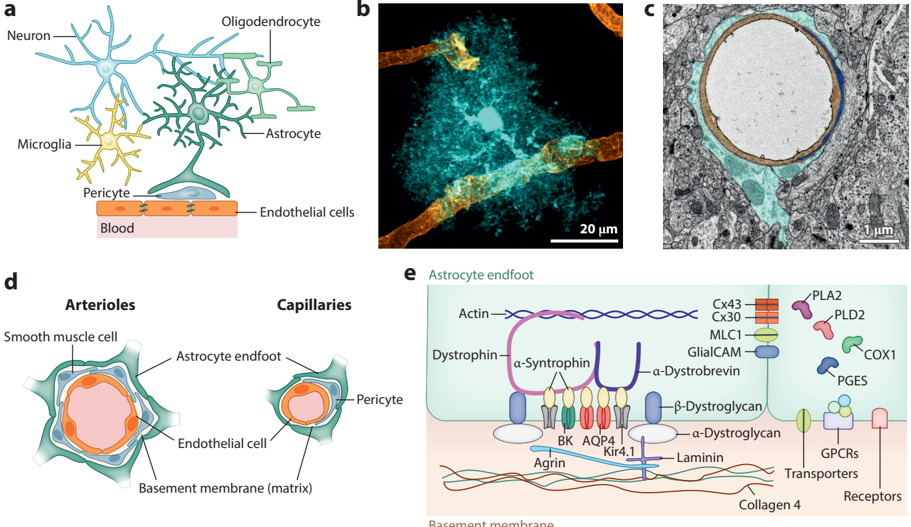
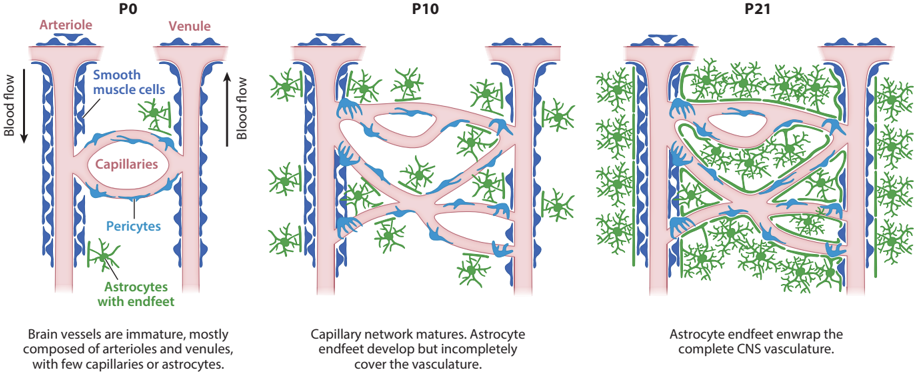
Astrocyte endfeet enwrap the entire vascular tree within the central nervous system, where they perform important functions in regulating the blood-brain barrier (BBB), cerebral blood flow, nutrient uptake, and waste clearance. Accordingly, astrocyte endfeet contain specialized organelles and proteins, including local protein translation machinery and highly organized scaffold proteins, which anchor channels, transporters, receptors, and enzymes critical for astrocyte-vascular interactions. Many neurological diseases are characterized by the loss of polarization of specific endfoot proteins, vascular dysregulation, BBB disruption, altered waste clearance, or, in extreme cases, loss of endfoot coverage. A role for astrocyte endfeet has been demonstrated or postulated in many of these conditions. This review provides an overview of the development, composition, function, and pathological changes of astrocyte endfeet and highlights the gaps in our knowledge that future research should address.
Overview
The claims and statistics of this paper haven’t been checked yet.
Free: it reads the open-access text and checks the first 5 claims that cite a source we can check. Create a free account to check every claim.
Integrity signals
Registry
Cites
Statistics
Figures
Verification
Claims the paper makes
The claims and statistics of this paper haven’t been checked yet.
Free: it reads the open-access text and checks the first 5 claims that cite a source we can check. Create a free account to check every claim.
Claims other papers make about this one
Each is checked against this paper’s own text: does it say what the citing paper says it does?
The cited source says what the claim attributes to it.
In the citing paper
“we first performed immunostaining for AQP4, a water channel at astrocytic endfeet,20 and discovered a significant reduction of AQP4 in high-titer AAV treated mice (Figures 2C and 2G).”
From High-titer AAV disrupts cerebrovascular integrity and induces lymphocyte infiltration in adult mouse brain (2023) · cites this paper as [20]
Self-check
Percentages, sums and reported differences re-computed from the paper’s own numbers.
The self-check needs the paper’s full text.
Citations
Cites
Iliff, J. J., Wang, M., Liao, Y., Plogg, B. A., Peng, W., Gundersen, G. A., Benveniste, H., Vates, G. E., Deane, R., Goldman, S. A., et al. (2012) · Science Translational Medicine · doi:10.1126/scitranslmed.3003748 · Cited by 5,824
Sleep Drives Metabolite Clearance from the Adult Brain
Xie, L., Kang, H., Xu, Q., Chen, M. J., Liao, Y., Thiyagarajan, M., O’Donnell, J., Christensen, D. J., Nicholson, C., Iliff, J. J., et al. (2013) · Science · doi:10.1126/science.1241224 · Cited by 5,411
Pericytes regulate the blood–brain barrier
Armulik, A., Genové, G., Mäe, M., Nisancioglu, M. H., Wallgard, E., Niaudet, C., He, L., Norlin, J., Lindblom, P., Strittmatter, K., et al. (2010) · Nature · doi:10.1038/nature09522 · Cited by 2,843
Thomas, A. C., & Campbell, J. H. (2000) · Cited by 2,800
Reactive astrocyte nomenclature, definitions, and future directions
Escartin, C., Galea, E., Lakatos, A., O’Callaghan, J. P., Petzold, G. C., Serrano-Pozo, A., Steinhäuser, C., Volterra, A., Carmignoto, G., Agarwal, A., et al. (2021) · Nature Neuroscience · doi:10.1038/s41593-020-00783-4 · Cited by 2,513
Self-citationThe Neurovascular Unit Coming of Age: A Journey through Neurovascular Coupling in Health and Disease
Iadecola, C. (2017) · Neuron · doi:10.1016/j.neuron.2017.07.030 · Cited by 2,480
Genomic analysis of reactive astrogliosis
Zamanian, J. L., Xu, L., Foo, L. C., Nouri, N., Zhou, L., Giffard, R. G., & Barres, B. A. (2012) · The Journal of Neuroscience · doi:10.1523/jneurosci.6221-11.2012 · Cited by 2,404
Blood-Brain Barrier: From Physiology to Disease and Back
Sweeney, M. D., Zhao, Z., Montagne, A., Nelson, A. R., & Zlokovic, B. V. (2019) · Physiological Reviews · doi:10.1152/physrev.00050.2017 · Cited by 2,312
Pericytes are required for blood–brain barrier integrity during embryogenesis
Daneman, R., Zhou, L., Kebede, A. A., & Barres, B. A. (2010) · Nature · doi:10.1038/nature09513 · Cited by 2,128
The glymphatic system: a beginner's guide
Jessen, N. A., Munk, A. S. F., Lundgaard, I., & Nedergaard, M. (2015) · Neurochemical Research · doi:10.1007/s11064-015-1581-6 · Cited by 2,075
Research works printed but not linked: 5
- Gebremedhin D, Ma YH, Falck JR, Roman RJ, VanRollins M, Harder DR. 1992. Mechanism of action of cerebral epoxyeicosatrienoic acids on cerebral arterial smooth muscle. Am. J. Physiol. 263(2):H519-25
- Mugnaini E, Walberg F. 1965. The perivascular elements in the central nervous system. An electron microscopical study. Acta Neurol. Scand. Suppl. 13(Pt. 2):629-36
- Ramón y Cajal S. 1895. Algunas conjeturas sobre el mecanismo anatómico de la ideación, asociación y atención. Rev. Med. Cir. Pract. 36:497-508
- Ramón y Cajal S. 1913. Sobre un nuevo proceder de impregnación de la neuroglia y sus resultados en los centros nerviosos del hombre y animales. Trab. Lab. Investig. Biol. Univ. Madrid 11:219-37
- Streeter GL. 1918. The developmental alterations in the vascular system of the brain of the human embryo. Contrib. Embryol. 8:5-38
Cited by
Neuroinflammation: An astrocyte perspective
Lee, H.-G., Lee, J.-H., Flausino, L. E., & Quintana, F. J. (2023) · Science Translational Medicine · doi:10.1126/scitranslmed.adi7828 · Cited by 231
“Importantly, more than 97% of astrocyte end feet contact at least one blood vessel ( 51 ), enabling astrocyte membrane channels, transporters, and receptors to sense and react not only to CNS intrinsic cues but also to molecules in the circulation ( 52 ).”
BackgroundBaldwin, K. T., Murai, K. K., & Khakh, B. S. (2024) · Trends in Cell Biology · doi:10.1016/j.tcb.2023.09.006 · Cited by 221
Chen, T., Dai, Y., Hu, C., Lin, Z., Wang, S., Yang, J., Zeng, L., Li, S., & Li, W. (2024) · Fluids and Barriers of the CNS · doi:10.1186/s12987-024-00557-1 · Cited by 189
“Perivascular astrocytic end-feet cover approximately 70–100% of the vascular perimeter [49].”
BackgroundInvolvement of Astrocytes in the Formation, Maintenance, and Function of the Blood–Brain Barrier
Schiera, G., Liegro, C. M. D., Schirò, G., Sorbello, G., & Liegro, I. D. (2024) · Cells · doi:10.3390/cells13020150 · Cited by 138
“Astrocytic endfeet are very important structures that contain, among other organelles, microtubules, mitochondria, and intermediate filaments composed of glial fibrillary acidic protein (GFAP) [73].”
BackgroundMauricio, D., Gratacòs, M., & Franch‐Nadal, J. (2023) · Cardiovascular Diabetology · doi:10.1186/s12933-023-02056-3 · Cited by 132
“Astrocyte endfeet around microvessels play a critical role in facilitating neurovascular communication [35].”
BackgroundA conceptual framework for astrocyte function
Murphy‐Royal, C., Ching, S., & Papouin, T. (2023) · Nature Neuroscience · doi:10.1038/s41593-023-01448-8 · Cited by 126
“A second is that astrocytes also dynamically shape the physical and biochemical properties of the extracellular milieu (or ‘active milieu’ 13 ), from diffusivity of signaling molecules to energy availability, ion concentration and functional connectivity 7,14–18 .”
BackgroundLiu, S., Jin, X., Ge, Y., Dong, J., Liu, X., Pei, X., Wang, P., Wang, B., Chang, Y., & Yu, X. (2025) · Journal of Nanobiotechnology · doi:10.1186/s12951-025-03415-w · Cited by 127
“…i d ) ‑ b a s e d p o l y m e r i c n a n o p a r t i c l e s E d a r a v o n e A m y o t r o p h i c l a t e r a l s c l e r o s i s [ 129 ] T a b l e P a r k i n s o n ’ s d i s e a s e [ 145 ] and transport functions of endothelial cells through the secretion of various signaling molecules [32].”
Neuron-astrocyte coupling in lateral habenula mediates depressive-like behaviors
Xin, Q., Wang, J., Zheng, J., Tan, Y. J., Jia, X., Ni, Z., Xu, Z., Feng, J., Wu, Z., Li, Y., et al. (2025) · Cell · doi:10.1016/j.cell.2025.04.010 · Cited by 101
The Blood–Brain Barrier: Composition, Properties, and Roles in Brain Health
Lacoste, B., Prat, A., Andrade, M. F., & Gu, C. (2024) · Cold Spring Harbor Perspectives in Biology · doi:10.1101/cshperspect.a041422 · Cited by 97
Astrocyte‐mediated mechanisms contribute to traumatic brain injury pathology
Muñoz‐Ballester, C., & Robel, S. (2023) · WIREs Mechanisms of Disease · doi:10.1002/wsbm.1622 · Cited by 72
Self-citationRehman, S., Nadeem, A., Akram, U., Sarwar, A., Quraishi, A., Siddiqui, H., Malik, M. A. J., Nabi, M., Haq, I. U., Cho, A., et al. (2024) · Biomedicines · doi:10.3390/biomedicines12040812 · Cited by 71
Crosstalk Among Glial Cells in the Blood–Brain Barrier Injury After Ischemic Stroke
Lu, W., & Wen, J. (2024) · Molecular Neurobiology · doi:10.1007/s12035-024-03939-6 · Cited by 57
Huang, N., Huang, Y., Deng, Z., Qi, S., Zhang, W., Liu, Y., & Tan, G. (2025) · International Journal of Molecular Medicine · doi:10.3892/ijmm.2025.5577 · Cited by 54
“…are the most abundant glial cells in the brain (34), regulate ion transport, blood flow and nutrient supply through ion channels and aquaporins (35,36); they secrete cytokines, including ANGPT‑1 and sonic hedgehog (SHH), strengthening BBB integrity by upregulating TJ proteins and modulating BMEc…”
Guo, Y., Chen, J., Ji, W., Xu, L., Xie, Y., He, S., Lai, C., Hou, K., Li, Z., Chen, G., et al. (2023) · Molecular Therapy Methods & Clinical Development · doi:10.1016/j.omtm.2023.08.021 · Cited by 47
Astroglial Hmgb1 regulates postnatal astrocyte morphogenesis and cerebrovascular maturation
Andrade, M. F., Comin, C. H., Dyken, P. C. V., Ouellette, J., Raman‐Nair, J., Blakeley, N., Liu, Q. Y., Leclerc, S., Pan, Y., Liu, Z., et al. (2023) · Nature Communications · doi:10.1038/s41467-023-40682-3 · Cited by 49
“Yet, the fundamental principles guiding end-foot placement around brain blood vessels remain elusive 20 .”
Sun, B., Li, L., Harris, O. A., & Luo, J. (2025) · Translational Neurodegeneration · doi:10.1186/s40035-025-00478-5 · Cited by 46
“BBB dysfunction can persist long-term into the chronic stage following TBI [26], which is a potential driving force for TBI-associated chronic neurodegeneration [14, 31].”
Glial Cells as Key Regulators in Neuroinflammatory Mechanisms Associated with Multiple Sclerosis
Theophanous, S., Sargiannidou, I., & Kleopa, K. A. (2024) · International Journal of Molecular Sciences · doi:10.3390/ijms25179588 · Cited by 38
“There, they assist in the blood flow regulation and nutrient absorption through the water channel aquaporin 4 (AQP4) [131,132], potassium (K + ) channels [133], and Cx43, which are expressed on the astrocyte end-feet.”
BackgroundQiu, Q., Yang, M., Gong, D., Liang, H., & Chen, T. (2024) · Neural Regeneration Research · doi:10.4103/nrr.nrr-d-23-01766 · Cited by 39
NIR‐II AIEgens for High‐Contrast Intravital Fluorescence Angiography: Recent Advances and Prospects
Zhang, Z., Li, X., Yang, H., You, C., Ren, K., Yang, Z., Kang, M., Wang, D., & Tang, B. Z. (2025) · Aggregate · doi:10.1002/agt2.70102 · Cited by 40
Zhu, B., Cao, A., Chen, C., Zhou, W., Luo, W., Gui, Y., Wang, Q., Xu, Z., & Wang, J. (2023) · International Immunopharmacology · doi:10.1016/j.intimp.2023.111215 · Cited by 39
Jiang, H., Zhang, C., Lin, M., Yin, Y., Deng, S., Liu, W., Zhuo, B., Tian, G., Du, Y., & Meng, Z. (2024) · Ageing Research Reviews · doi:10.1016/j.arr.2024.102536 · Cited by 37
Liu, R., Collier, J. M., Abdul‐Rahman, N., Capuk, O., Zhang, Z., & Begum, G. (2024) · Aging and Disease · doi:10.14336/ad.2023.1201 · Cited by 44
“Astrocytic endfeet are highly enriched with ion channels/ transporters, glucose transporters and G-protein coupled receptors [36].”
BackgroundAstrocyte regulation of extracellular space parameters across the sleep-wake cycle
Sriram, S., Carstens, K., Dewing, W., & Fiacco, T. A. (2024) · Frontiers in Cellular Neuroscience · doi:10.3389/fncel.2024.1401698 · Cited by 33
“As the brain cells that interact most closely with endothelial cells, astrocytes are uniquely positioned to influence the extravasation of solutes from brain vasculature into brain parenchyma (Abbott et al., 2006; Díaz-Castro et al., 2023; Verkhratsky and Pivori¯unas, 2023).”
BackgroundLuo, L., & Qiao, S. (2026) · European journal of medical research · doi:10.1186/s40001-026-03840-z · Cited by 29
“…protein translation and highly organized scaffold proteins that anchor channels, transporters, receptors, and enzymes, ensheath the entire vascular network of the central nervous system, playing a pivotal role in regulating the BBB, cerebral blood flow, nutrient uptake, and waste clearance [16].”
Blood–Brain Barrier: Structure, Function, Diseases, and Drug Delivery Systems
He, Y., Qu, M., Yu, L., He, L., Lu, Y., Hong, J., Sun, M., Yang, H., Mi, W., Guo, H., et al. (2026) · MedComm · doi:10.1002/mco2.70712 · Cited by 33
“Astrocytes extend specialized processes called end-feet that ensheath approximately 99% of the cerebral microvasculature, forming the outermost layer of the BBB [ 40, 41 ].”
Astrocyte heterogeneity in ischemic stroke: Molecular mechanisms and therapeutic targets
Li, D., Huo, X., Shen, L., Qian, M., Wang, J., Mao, S., Chen, W., Li, R. Q., Zhu, T., Zhang, B., et al. (2025) · Neurobiology of Disease · doi:10.1016/j.nbd.2025.106885 · Cited by 30
Jing, D., Hou, X., Guo, X., Zhao, X., Zhang, K., Zhang, J., Kan, C., Han, F., Liu, J., & Sun, X. (2023) · Cellular and Molecular Neurobiology · doi:10.1007/s10571-023-01386-w · Cited by 30
“As the glial originating in the neuroectoderm and neuroepithelium, astrocytes extend their fine branching processes to cover all cellular components of the CNS, including neuronal soma, axons, dendrites, and synaptic terminals (Khakh and Sofroniew 2015; Allen and Eroglu 2017; Brandebura et al. 2023; Diaz-Castro et al.…”
BackgroundBernardino, P. N., Luo, A., Andrew, P. M., Crowe, C. M., González, M. I., Gelli, A., & Lein, P. J. (2023) · Journal of Pharmacology and Experimental Therapeutics · doi:10.1124/jpet.123.001836 · Cited by 30
Chemotherapy-induced cognitive impairment and glia: A new take on chemobrain?
Barbosa-Azevedo, M., Dias-Carvalho, A., Carvalho, F. D., & Costa, V. M. (2024) · Toxicology and Applied Pharmacology · doi:10.1016/j.taap.2024.117085 · Cited by 27
Molecular Motors in Blood–Brain Barrier Maintenance by Astrocytes
Sobral, A. F., Costa, I. D., Teixeira, V., Silva, R. V. D. S., & Barbosa, D. J. (2025) · Brain Sciences · doi:10.3390/brainsci15030279 · Cited by 26
“In astrocytes, the directional movement of vesicles containing glutamate or other neuroactive substances toward the end-feet for exocytosis has been associated with kinesin motor activity [202,204,205].”
Therapeutic effects of orexin-A in sepsis-associated encephalopathy in mice
Guo, J., Kong, Z., Yang, S., Da, J., Chu, L., Han, G., Liu, J., Tan, Y. C., & Zhang, J. (2024) · Journal of Neuroinflammation · doi:10.1186/s12974-024-03111-w · Cited by 26
“The role of astrocyte endfeet has been demonstrated in many of these conditions [65].”
BackgroundThe Neurovascular Unit as a Locus of Injury in Low-Level Blast-Induced Neurotrauma
Elder, G. A., Sosa, M. A. G., Gasperi, R. D., Garcia, G. S. P., Perez, G. M., Abutarboush, R., Kawoos, U., Zhu, C. W., Janssen, W. G. M., Stone, J. R., et al. (2024) · International Journal of Molecular Sciences · doi:10.3390/ijms25021150 · Cited by 26
“Astrocytic endfeet have their own unique molecular composition, including scaffold proteins, anchor channels, transporters, receptors, and enzymes that regulate how astrocytes interact with blood vessels [60].”
BackgroundInfluentialNeurological glycogen storage diseases and emerging therapeutics
Colpaert, M. G., Singh, P. K., Donohue, K. J., Pires, N. T., Fuller, D. D., Corti, M., Byrne, B. J., Sun, R. C., Kooi, C. W. V., & Gentry, M. S. (2024) · Neurotherapeutics · doi:10.1016/j.neurot.2024.e00446 · Cited by 28
“For example, astrocytic glycogen is not uniformly distributed within the cell, but it is highly accumulated in the perivascular endfeet and in the processes interacting with presynaptic terminals [68,69].”
Blood-brain barrier biomarkers
Zapata-Acevedo, J. F., Mantilla-Galindo, A., Vargas-Sánchez, K., & González-Reyes, R. E. (2024) · Advances in clinical chemistry · doi:10.1016/bs.acc.2024.04.004 · Cited by 29
On astrocyte-neuron interactions: broad insights from the striatum
Khakh, B. S. (2025) · Neuron · doi:10.1016/j.neuron.2025.08.009 · Cited by 23
Astrocytic crosstalk with brain and immune cells in healthy and diseased conditions
Lee, S. Y., & Chung, W. (2024) · Current Opinion in Neurobiology · doi:10.1016/j.conb.2024.102840 · Cited by 25
“Astrocytic endfeet, specialized processes extending from astrocytes, establish close physical associations with blood vessels, playing essential roles in maintaining vascular integrity and supporting brain function [38].”
Neuroinflammation and iron metabolism after intracerebral hemorrhage: a glial cell perspective
Ju, J.-J., & Hang, L. (2025) · Frontiers in Neurology · doi:10.3389/fneur.2024.1510039 · Cited by 32
Progranulin deficiency in the brain: the interplay between neuronal and non-neuronal cells
Gawęda-Walerych, K., Aragona, V., Lodato, S., Sitek, E. J., Narożańska, E., & Buratti, E. (2025) · Translational Neurodegeneration · doi:10.1186/s40035-025-00475-8 · Cited by 23
“They also play a vital role in the glymphatic system and are functionally and structurally interconnected with the BBB [264, 265].”
Zhao, H., Sun, M., Zhang, Y., Kong, W., Fan, L., Wang, K., Xu, Q., Chen, B., Dong, J., Shi, Y., et al. (2023) · Aging and Disease · doi:10.14336/ad.2023.0516 · Cited by 24
“The astrocyte endfeet are special subcellular structures emanating from astrocytes, which are distributed with a large amount of aquaporin-4 [59].”
Targeting glutamine metabolism crosstalk with tumor immune response
Dong, C., Zhao, Y., Han, Y., Li, M., & Wang, G. (2025) · Biochimica et Biophysica Acta (BBA) - Reviews on Cancer · doi:10.1016/j.bbcan.2024.189257 · Cited by 26
Autophagy in alzheimer disease pathogenesis and its therapeutic values
Angst, G., Jia, N., Esqueda, L. T., Fan, Y., Cai, Q., & Wang, C. (2025) · Autophagy Reports · doi:10.1080/27694127.2025.2471677 · Cited by 27
Cerebral glymphatic system: Structure, regulation, ageing, and mechanisms of encephalopathy
Zhao, D., Wang, J., Zhang, F., Wang, Q., Zang, M., Niu, H., & Tong, Z. (2025) · Ageing Research Reviews · doi:10.1016/j.arr.2025.102986 · Cited by 23
Wawrzyniak, A., Krawczyk-Marć, I., Żuryń, A., Walocha, J. A., & Balawender, K. (2025) · International Journal of Molecular Sciences · doi:10.3390/ijms26189080 · Cited by 21
“Synaptic activation triggers intracellular Ca 2+ transients in astrocytic endfeet, which stimulate the release of vasoactive mediators, including prostaglandins (e.g., PGE 2 ), nitric oxide (NO), and epoxyeicosatrienoic acids (EETs) [24].”
Molecular profiling of brain endothelial cell to astrocyte endfoot communication in mouse and human
Hill, S. A., Bravo‐Ferrer, I., Čiulkinytė, A., Ramos, N. P., Rossetti, I., Colvin, C., Beltran-Lobo, P., Parra-Pérez, C., Emelianova, K., Dando, O., et al. (2025) · Nature Communications · doi:10.1038/s41467-025-65487-4 · Cited by 21
“Astrocytes enwrap ~90% of the brain ’ s vasculature surface through sub-cellular structures called astrocyte endfeet 4,5 (referred to as endfoot/ endfeet hereon) while their cell body and thousands of lea fl ets in the brain parenchyma interact with neural cells 6 – 9 .”
Brain macrophages in vascular health and dysfunction
Bijnen, M., Sridhar, S., Keller, A., & Greter, M. (2024) · Trends in Immunology · doi:10.1016/j.it.2024.11.012 · Cited by 23
The Dual Role of Astrocytes in CNS Homeostasis and Dysfunction
Tiwari, A., Rout, S., Deep, P., Sahu, C., & Samal, P. K. (2025) · Neuroglia · doi:10.3390/neuroglia6040038 · Cited by 22
Chaudhuri, S., Cho, M., Stumpff, J., Bice, P. J., İş, Ö., Ertekin‐Taner, N., Saykin, A. J., & Nho, K. T. (2025) · Molecular Neurodegeneration · doi:10.1186/s13024-025-00798-0 · Cited by 22
“This signaling has been deemed crucial to limit inflammatory pathophysiology in the brain and peripheral immune cells [136, 137].”
Role of astrocytes in the pathogenesis of perinatal brain injury
Li, L., Cui, X., Zhu, B., Zhou, L., Guo, Y., Liu, T., & Shi, Y. (2025) · Molecular Medicine · doi:10.1186/s10020-025-01328-w · Cited by 18
“For instance, preterm infants born before the completion of astrocyte maturation (typically around 24–32 weeks of gestation) may exhibit impaired astrocyte migration and differentiation, leading to abnormal cortical organization and disrupted BBB formation (Díaz-Castro et al. 2023).”
Novorolsky, R. J., Kasheke, G. D. S., Hakim, A. M., Földvári, M., Dorighello, G. G., Sekler, I., Vuligonda, V., Sanders, M. E., Renden, R., Wilson, J. J., et al. (2023) · Frontiers in Cellular Neuroscience · doi:10.3389/fncel.2023.1226630 · Cited by 20
“These processes display high levels of aquaporin4, a water channel that is thought to enable waste clearance by the glymphatic system (Díaz-Castro et al., 2023).”
BackgroundHeterogeneity of perivascular astrocyte endfeet depending on vascular regions in the mouse brain
Kameyama, T., Miyata, M., Shiotani, H., Adachi, J., Kakuta, S., Uchiyama, Y., Mizutani, K., & Takai, Y. (2023) · iScience · doi:10.1016/j.isci.2023.108010 · Cited by 19
“Proteolytic digestion at these high concentrations and long incubation periods for PV-AEF dissociation might affect the degradation of cell surface proteins, and it is not well understood whether astrocyte cell surface antigen-2 is expressed in all PV-AEF, although the MACS system is a valuable way to isolate PV-AEF.”
BackgroundInfluentialSleep loss impairs blood-brain barrier function: Cellular and molecular mechanisms
Avilez-Avilez, J. J., Flores, M. F. M., & Gómez‐González, B. (2024) · Vitamins and hormones · doi:10.1016/bs.vh.2024.02.003 · Cited by 19
Understanding the Role of Endothelial Cells in Glioblastoma: Mechanisms and Novel Treatments
Hovis, G. E. A., Chandra, N. V., Kejriwal, N., Hsieh, K. J.-Y., Chu, A., Yang, I., & Wadehra, M. (2024) · International Journal of Molecular Sciences · doi:10.3390/ijms25116118 · Cited by 23
Astrocyte–microglia crosstalk in subarachnoid hemorrhage: mechanisms and treatments
Yu, K., Wang, D., & Yu, W. (2025) · Frontiers in Immunology · doi:10.3389/fimmu.2025.1547858 · Cited by 21
Astrocytes and Alcohol Throughout the Lifespan
Guizzetti, M., Mangieri, R. A., Ezerskiy, L. A., Hashimoto, J. G., Bajo, M., Farris, S. P., Homanics, G. E., Lasek, A. W., Mayfield, R. D., Messing, R. O., et al. (2025) · Biological Psychiatry · doi:10.1016/j.biopsych.2025.04.013 · Cited by 19
Development of perivascular astrocyte processes
Cohen‐Salmon, M., Guille, N., & Boulay, A.-C. (2025) · Frontiers in Neuroscience · doi:10.3389/fnins.2025.1585340 · Cited by 19
The Role of Aquaporins in Epileptogenesis—A Systematic Review
Bonosi, L., Benigno, U. E., Musso, S., Giardina, K., Gerardi, R. M., Brunasso, L., Costanzo, R., Paolini, F., Buscemi, F., Avallone, C., et al. (2023) · International Journal of Molecular Sciences · doi:10.3390/ijms241511923 · Cited by 17
Lin, S., Guo, M., Liang, Q., Lin, X., Chen, S., Li, Y., Chen, P., & Qiu, Y. (2024) · Annals of Neurology · doi:10.1002/ana.27047 · Cited by 16
“4,60 Interestingly, we found that preterm birth (whether the GA was >37 weeks or not) had a signi fi cant moderating effect on the relationship between glymphatic system development and PMA.”
The heart-brain crosstalk in age related cardiovascular and neurodegenerative diseases
Fahim, M. A., Yao, Y., Tipparaju, S. M., & Xuan, W. (2025) · Fluids and Barriers of the CNS · doi:10.1186/s12987-025-00700-6 · Cited by 18
“These structures play vital roles in the regulation of BBB integrity and cerebral blood flow [40].”
Hayden, M. R. (2024) · Biomedicines · doi:10.3390/biomedicines12010096 · Cited by 17
Geng, Z., Deng, G., Wang, Z., Xu, X., Yin, X., Zhang, S., Shao, J., & Wen, J. (2025) · International Immunopharmacology · doi:10.1016/j.intimp.2025.114338 · Cited by 16
Zhang, Z., Li, S., Xu, L., Xiao, S., Li, Y., Huang, J., Huang, J., Zuo, Y., Wen, W., Dai, Q., et al. (2026) · Nature Neuroscience · doi:10.1038/s41593-026-02261-9 · Cited by 15
“Similar to mPFC, two-photon imaging also revealed further compromise blood−brain barrier homeostasis and cerebral perfusion 5,6 .”
Bridging regional neurovascular unit heterogeneity and cognitive function: a review
Tsintzou, A., Poirier, R., Harati, R., Kustubayeva, A., Disdier, C., Hamoudi, R., & Mabondzo, A. M. (2025) · Fluids and Barriers of the CNS · doi:10.1186/s12987-025-00697-y · Cited by 17
“Astrocytes are star-shaped cells that enwrap the brain capillaries with subcellular structures called endfeet that help maintain ionic homeostasis, provide metabolic support and regulate neurotransmitters [40, 41].”
Cullen, P., Gammerdinger, W., Sui, S. J. H., Mazumder, A. G., & Sun, D. (2024) · Glia · doi:10.1002/glia.24571 · Cited by 14
Mitochondrial dynamics reveal potential to facilitate axonal regeneration after spinal cord injury
Wang, K., Chen, X., Liu, M., Li, Y., Zhu, Y., Zhou, T., Tao, W., Ma, Y., Guo, Y., Wang, L., et al. (2025) · Journal of Translational Medicine · doi:10.1186/s12967-025-06611-2 · Cited by 15
Interactions between astrocytes and cerebral endothelial cells in central nervous system diseases
Sun, J., & He, Z. (2025) · Biomedicine & Pharmacotherapy · doi:10.1016/j.biopha.2025.118516 · Cited by 14
Zhou, Z., Jiang, W., Wang, Y., Si, J., Zeng, X.-S., & Li, L. (2024) · The Science of The Total Environment · doi:10.1016/j.scitotenv.2024.175879 · Cited by 13
Pathogenesis of Preterm Intraventricular Haemorrhage
Piscopo, B. R., Sutherland, A. E., Malhotra, A. K., Allison, B. J., & Miller, S. (2025) · Developmental Neuroscience · doi:10.1159/000546607 · Cited by 15
“Following proliferation, astrocytes differentiate and develop into their mature phenotype, establishing connections to the cerebrovasculature via end-feet attachments [61].”
Nanocarriers based therapy and diagnosis of brain diseases: cross the blood-brain barrier
An, L., Zhang, J., Wang, X., Ge, Y., Sun, K., Dong, J., Wang, P., Li, W., Li, M., Hu, X., et al. (2025) · Science and Technology of Advanced Materials · doi:10.1080/14686996.2025.2554048 · Cited by 14
“They preserve the structural and functional integrity of the BBB, due to these interact with endothelial cells and basement membrane via their end-feet [60].”
Tan, R., Hong, R., Sui, C., Yang, D., Tian, H., Zhu, T., & Yang, Y. (2023) · Frontiers in Cellular Neuroscience · doi:10.3389/fncel.2023.1233762 · Cited by 13
“Astrocytes adjust cerebral blood flow based on neuronal activity (Díaz-Castro et al., 2023).”
BackgroundUnveiling the hidden pathways: Exploring astrocytes as a key target for depression therapy
Liu, Y., Chen, L., Lin, L., Xu, C., Xiong, Y., Qiu, H., Li, X., Li, S., & Cao, H. (2024) · Journal of Psychiatric Research · doi:10.1016/j.jpsychires.2024.04.003 · Cited by 13
Zhao, X., Zhang, M., Zou, W., Li, C., Zhang, S., Lv, Y., Su, L., Ji, F., Jiao, J., & Gao, Y. (2025) · Cell Proliferation · doi:10.1111/cpr.70015 · Cited by 12
“Previous studies have shown that changes in astrocyte morphology and function can lead to reduced endfoot coverage and disruption of the BBB in various neurological conditions [26].”
Cellular and signalling mechanisms that regulate the blood–brain barrier
Amick, J., Gordon, L., & Gu, C. (2026) · Nature Reviews Molecular Cell Biology · doi:10.1038/s41580-026-01000-z · Cited by 13
Guarino, V., Perrone, E., Luca, E. D., Rainer, A., Cesaria, M., Zizzari, A. T., Bianco, M., Gigli, G., Moroni, L., & Arima, V. (2025) · Advanced Healthcare Materials · doi:10.1002/adhm.202401804 · Cited by 11
Calcium Signaling in Astrocytes and Its Role in the Central Nervous System Injury
Li, X., Ding, L., Nie, H., & Deng, D. Y. B. (2025) · Molecular Neurobiology · doi:10.1007/s12035-025-05055-5 · Cited by 11
Microfluidics for brain endothelial cell-astrocyte interactions
Sanapathi, J., Vipparthi, P., Mishra, S., Sosnik, A., & Kumarasamy, M. (2023) · Organs-on-a-Chip · doi:10.1016/j.ooc.2023.100033 · Cited by 11
Wang, Y., Xie, D., Ma, S., Shao, N., Zhang, X., & Wang, X. (2024) · Frontiers in Immunology · doi:10.3389/fimmu.2024.1347415 · Cited by 13
Jian-fen, W., Wu, H., Zhou, F., Wang, Y., Wang, C., & Ji, J. (2025) · Cancer Gene Therapy · doi:10.1038/s41417-025-00916-6 · Cited by 10
“Dysfunction of astrocytic endfeet or loss of endfeet coverage is associated with many CNS pathologies, such as aging, injury and disease [58].”
Development and diversity of astrocytes
Williamson, M. R., Murali, S., & Deneen, B. (2025) · Development · doi:10.1242/dev.204705 · Cited by 10
Gleichman, A. J., Kawaguchi, R., Rathbun, E. M., Sofroniew, M. V., & Carmichael, S. T. (2025) · Neuron · doi:10.1016/j.neuron.2025.09.023 · Cited by 10
Astrocytes as Therapeutic Targets in Neurodegenerative Disorders
Salas, I. H., Alfonso-Triguero, M., Castro, B. D., Elazar, N., Escartin, C., Akl, C. F., Hill, S. A., Quintana, F. J., & Arranz, A. M. (2025) · Journal of Neuroscience · doi:10.1523/jneurosci.1379-25.2025 · Cited by 10
Dik, D., Halliday, G. M., Sytnyk, V., & Shepherd, C. E. (2025) · Brain · doi:10.1093/brain/awaf305 · Cited by 11
Temporal regulation of human reactive astrocytes reveals their capacity for antigen presentation
Hill, E., Sojka, C., Sampson, M. M., Kebede, N., Wang, H. V., Showrin, S., King, A. T., Sing, A., Chang, J., Faúndez, V., et al. (2026) · Neuron · doi:10.1016/j.neuron.2026.02.025 · Cited by 11
Zhang, P., Song, C., Shi, J., Wei, Z., Wang, J., Huang, W., Zhang, R., Wang, J., Yang, X., Wang, G., et al. (2025) · Molecular Neurodegeneration · doi:10.1186/s13024-025-00875-4 · Cited by 10
“In NVU, much attention has been put on the effects of astrocytes on vascular function such as repairing and remodeling [53–55], while fewer studies have focused on the role of vascular-derived molecules on astrocytic function.”
Interplay between gut Microbiome and glymphatic system in cognitive function and memory regulation
Alavian, F., & Hajimohammadi, A. (2025) · Molecular Biology Reports · doi:10.1007/s11033-025-11129-3 · Cited by 10
Neuroimmune dysregulation in Alzheimer's disease: Mechanisms and therapeutic strategies
He, H., Zhu, S., Zhang, C., Wang, H., Li, Y., & Qian, H. (2026) · Ageing Research Reviews · doi:10.1016/j.arr.2026.103055 · Cited by 12
Curing the brain: in search for new astrocyte-specific therapies
Verkhratsky, A., Lee, C. J., Chun, H., Göritz, C., Harkany, T., Lee, J., Lee, S., Lindskog, M., Koh, W., Mulder, J., et al. (2026) · Experimental & Molecular Medicine · doi:10.1038/s12276-026-01712-4 · Cited by 9
“Atrophy of astrocytic endfeet leads to the loss of perivascular coverage and compromises the blood – brain barrier 136 .”
Iron toxicity, ferroptosis and microbiota in Parkinson’s disease: Implications for novel targets
Carvalho, F. V., Landis, H. E., Getachew, B., da Silva, V. D. A., ribeiro, P. R. R., Aschner, M., & Tizabi, Y. (2024) · Advances in neurotoxicology · doi:10.1016/bs.ant.2024.02.001 · Cited by 10
Guan, Z., Liu, Q., Wang, Y., Xiao, F., & Zhao, G. (2024) · Medicine Plus · doi:10.1016/j.medp.2024.100047 · Cited by 9
Su, Y., & Yuan, Q. (2024) · Brain Research · doi:10.1016/j.brainres.2024.149424 · Cited by 9
Functional abnormalities of the glymphatic system in cognitive disorders
Shentu, W., Kong, Q., Zhang, Y., Li, W., Chen, Q., Yan, S., Wang, J., Lai, Q., Qi, X., & Qiao, S. (2025) · Neural Regeneration Research · doi:10.4103/nrr.nrr-d-24-01049 · Cited by 9
“Among a variety of pathologic changes, astrocyte endfoot degeneration is an important lesion leading to abnormal function of the glymphatic system and has previously been reported in several studies in association with cognitive disorders (Price et al., 2018; Díaz-Castro et al., 2023).”
Neurovascular Relationships in AGEs-Based Models of Proliferative Diabetic Retinopathy
Peña, J. S., Ramanujam, R. K., Risman, R. A., Tutwiler, V. J., Francois Berthiaume, B., & Vázquez, M. (2024) · Bioengineering · doi:10.3390/bioengineering11010063 · Cited by 9
Chen, C., Zhu, B., Luo, W., Cao, A., Zhou, W., Weng, Y., & Wang, J. (2025) · Molecular Neurobiology · doi:10.1007/s12035-025-05072-4 · Cited by 8
“Astrocyte endfeet, processes that wrap around blood vessels, form part of the blood–brain barrier (BBB), maintain the brain-water balance [6], and facilitate waste clearance through regulation of blood flow and perivascular drainage [7, 8].”
Mulkey, D. K., Moreira, T. S., Takakura, A. C. T., Jahanbani, S., & Olsen, M. L. (2025) · Trends in Neurosciences · doi:10.1016/j.tins.2025.07.006 · Cited by 8
Stringer, C. A., Miyasato, H., Camey, K., Ghadia, K. A., Andrews, E. J., Ngo, P. T., Pascual, J. R., Wright, S. T., Silva, J. A., Gawronski, B., et al. (2025) · Neurobiology of Disease · doi:10.1016/j.nbd.2025.107114 · Cited by 11
Santana, L. F., & Earley, S. (2026) · The Journal of Physiology · doi:10.1113/jp289492 · Cited by 8
“Astrocytic endfeet ensheathe arterioles and modulate Ca 2+ waves, which fine-tune dilatation (Diaz-Castro et al., 2023; Gordon et al., 2008), whereas pericytes enwrapping capillaries either constrict or relax segments to steer RBC flux toward the most active synapses (Longden & Isaacs, 2025).”
Neurovascular dysfunction in the development and progression of neuroinflammatory diseases
Gowdy, J., Ahn, J. J., Miller, R. H., & Islam, Y. (2026) · Frontiers in Cellular Neuroscience · doi:10.3389/fncel.2026.1741928 · Cited by 10
Central Nicotinic and Muscarinic Receptors in Health and Disease
Tizabi, Y., Getachew, B., Tsytsarev, V., Csoka, A. B., Copeland, R., & Heinbockel, T. (2023) · IntechOpen eBooks · doi:10.5772/intechopen.112447 · Cited by 11
Zheng, X., Zhang, H., Song, W., Zhang, Y., Ding, Z., Huang, Z., Li, H., Yao, M., & Liu, J. (2024) · Frontiers in Pharmacology · doi:10.3389/fphar.2024.1472100 · Cited by 8
Wang, C., Sun, C., Ding, Z., Wu, X., Liu, K., & Cao, J. (2024) · International Journal of Nanomedicine · doi:10.2147/ijn.s493987 · Cited by 8
Yin, R., Jing, G., Tian, Y., Ma, M., & Zhang, M. (2025) · Biochimica et Biophysica Acta (BBA) - Molecular Basis of Disease · doi:10.1016/j.bbadis.2025.167749 · Cited by 8
Metadata
- Authors
- Díaz-Castro, B., Robel, S., & Mishra, A.
- Affiliations
- UK Dementia Research Institute and Centre for Discovery Brain Sciences, University of Edinburgh, Edinburgh, Scotland, UK;
- University of Alabama at Birmingham (US)
- Oregon Health & Science University (US)
- Corresponding author
- Robel, Stefanie
- Mishra, Anusha
- Venue
- Annual Review of Neuroscience
- Publisher
- Annual Reviews
- Published
- 2023-07-10
- Volume
- 46
- Issue
- 1
- Pages
- 101-121
- ISSN
- 0147-006X (ISSN-L)
- 1545-4126
- OpenAlex
- W4322604190
- Semantic Scholar
- 9ad13992e7e6c682e0c5d607210908e800f36d3b
- Cited by
- 238
- References
- 180
- Citations by year
- 2026: 80 · 2025: 85 · 2024: 46 · 2023: 27
- FWCI
- 6.21
- Type
- journal article
- Language
- en
- Open access
- hybrid
- doi.org
- Locations
- Annual Review of Neuroscience (publishedVersion, cc-by)
- PubMed (publishedVersion)
- Edinburgh Research Explorer (University of Edinburgh) (publishedVersion, cc-by)
- Funders
- UK Dementia Research Institute
- National Institutes of Health
- National Institute on Aging (P30AG066518)
- National Institute of Neurological Disorders and Stroke (R01NS105807, R01NS110690, R01NS121145)
- Topics
- Life Sciences › Neuroscience › Neurology › Barrier Structure and Function Studies
- Health Sciences › Medicine › Clinical Neurology › Cerebrospinal fluid and hydrocephalus
- Life Sciences › Biochemistry, Genetics and Molecular Biology › Molecular Biology › Ion Transport and Channel Regulation
- Keywords
- astrocyte endfeet, blood-brain barrier, cerebral autoregulation, waste clearance, astrocyte polarization, neurovascular unit, neurological disorders
- MeSH terms
- Astrocytes, Blood-Brain Barrier, Brain, Central Nervous System, Protein Biosynthesis
About these checks
Registry, retraction, Cites and statistics results are computed, not judged, with one exception: a printed reference that no index lists is read once by a model before it counts as a citation error. Claims are extracted by a model and kept only when their quote appears verbatim in the text; each cited source is then checked, with a model’s help, for whether it says what the claim relies on. Those verdicts can be wrong — read the claim’s quote and the cited source before relying on one.
Statistics and arithmetic are recomputed, not judged.
Confidence bands are shown only for fields calibrated on our annotated test set. None is calibrated yet, so no band is shown.
What counts as a claim ›How we measure confidence ›How we check this ›
Are you an author, or do you see a problem with this page? Request a review
Data sources
Bibliographic data: Semantic Scholar, OpenAlex, Crossref.
Contains information from the Semantic Scholar Academic Graph Datasets, made available under the ODC Attribution License (ODC-BY 1.0).
Semantic Scholar’s data is described in: Kinney, R., et al. (2023). The Semantic Scholar Open Data Platform. arXiv:2301.10140.
