

Astrocyte Endfeet in Brain Function and Pathology: Open Questions
Open accessThe DOI matches its Crossref record; 180 of the 180 references it cites were found in a registry or an index.
Abstract
Astrocyte endfeet enwrap the entire vascular tree within the central nervous system, where they perform important functions in regulating the blood-brain barrier (BBB), cerebral blood flow, nutrient uptake, and waste clearance. Accordingly, astrocyte endfeet contain specialized organelles and proteins, including local protein translation machinery and highly organized scaffold proteins, which anchor channels, transporters, receptors, and enzymes critical for astrocyte-vascular interactions. Many neurological diseases are characterized by the loss of polarization of specific endfoot proteins, vascular dysregulation, BBB disruption, altered waste clearance, or, in extreme cases, loss of endfoot coverage. A role for astrocyte endfeet has been demonstrated or postulated in many of these conditions. This review provides an overview of the development, composition, function, and pathological changes of astrocyte endfeet and highlights the gaps in our knowledge that future research should address.
Overview
The claims and statistics of this paper haven’t been checked yet.
Free: it reads the open-access text and checks the first 5 claims that cite a source we can check. Create a free account to check every claim.
Integrity signals
Registry
Cites
Statistics
Figures
Verification
Claims the paper makes
The claims and statistics of this paper haven’t been checked yet.
Free: it reads the open-access text and checks the first 5 claims that cite a source we can check. Create a free account to check every claim.
Claims other papers make about this one
Each is checked against this paper’s own text: does it say what the citing paper says it does?
The cited source says what the claim attributes to it.
In the citing paper
“we first performed immunostaining for AQP4, a water channel at astrocytic endfeet,20 and discovered a significant reduction of AQP4 in high-titer AAV treated mice (Figures 2C and 2G).”
From High-titer AAV disrupts cerebrovascular integrity and induces lymphocyte infiltration in adult mouse brain (2023) · cites this paper as [20]
Self-check
Percentages, sums and reported differences re-computed from the paper’s own numbers.
The self-check needs the paper’s full text.
Citations
Cites
Iliff, J. J., Wang, M., Liao, Y., Plogg, B. A., Peng, W., Gundersen, G. A., Benveniste, H., Vates, G. E., Deane, R., Goldman, S. A., et al. (2012) · Science Translational Medicine · doi:10.1126/scitranslmed.3003748 · Cited by 5,824
Sleep Drives Metabolite Clearance from the Adult Brain
Xie, L., Kang, H., Xu, Q., Chen, M. J., Liao, Y., Thiyagarajan, M., O’Donnell, J., Christensen, D. J., Nicholson, C., Iliff, J. J., et al. (2013) · Science · doi:10.1126/science.1241224 · Cited by 5,411
Pericytes regulate the blood–brain barrier
Armulik, A., Genové, G., Mäe, M., Nisancioglu, M. H., Wallgard, E., Niaudet, C., He, L., Norlin, J., Lindblom, P., Strittmatter, K., et al. (2010) · Nature · doi:10.1038/nature09522 · Cited by 2,843
Thomas, A. C., & Campbell, J. H. (2000) · Cited by 2,800
Reactive astrocyte nomenclature, definitions, and future directions
Escartin, C., Galea, E., Lakatos, A., O’Callaghan, J. P., Petzold, G. C., Serrano-Pozo, A., Steinhäuser, C., Volterra, A., Carmignoto, G., Agarwal, A., et al. (2021) · Nature Neuroscience · doi:10.1038/s41593-020-00783-4 · Cited by 2,513
Self-citationThe Neurovascular Unit Coming of Age: A Journey through Neurovascular Coupling in Health and Disease
Iadecola, C. (2017) · Neuron · doi:10.1016/j.neuron.2017.07.030 · Cited by 2,480
Genomic analysis of reactive astrogliosis
Zamanian, J. L., Xu, L., Foo, L. C., Nouri, N., Zhou, L., Giffard, R. G., & Barres, B. A. (2012) · The Journal of Neuroscience · doi:10.1523/jneurosci.6221-11.2012 · Cited by 2,404
Blood-Brain Barrier: From Physiology to Disease and Back
Sweeney, M. D., Zhao, Z., Montagne, A., Nelson, A. R., & Zlokovic, B. V. (2019) · Physiological Reviews · doi:10.1152/physrev.00050.2017 · Cited by 2,312
Pericytes are required for blood–brain barrier integrity during embryogenesis
Daneman, R., Zhou, L., Kebede, A. A., & Barres, B. A. (2010) · Nature · doi:10.1038/nature09513 · Cited by 2,128
The glymphatic system: a beginner's guide
Jessen, N. A., Munk, A. S. F., Lundgaard, I., & Nedergaard, M. (2015) · Neurochemical Research · doi:10.1007/s11064-015-1581-6 · Cited by 2,075
Research works printed but not linked: 5
- Gebremedhin D, Ma YH, Falck JR, Roman RJ, VanRollins M, Harder DR. 1992. Mechanism of action of cerebral epoxyeicosatrienoic acids on cerebral arterial smooth muscle. Am. J. Physiol. 263(2):H519-25
- Mugnaini E, Walberg F. 1965. The perivascular elements in the central nervous system. An electron microscopical study. Acta Neurol. Scand. Suppl. 13(Pt. 2):629-36
- Ramón y Cajal S. 1895. Algunas conjeturas sobre el mecanismo anatómico de la ideación, asociación y atención. Rev. Med. Cir. Pract. 36:497-508
- Ramón y Cajal S. 1913. Sobre un nuevo proceder de impregnación de la neuroglia y sus resultados en los centros nerviosos del hombre y animales. Trab. Lab. Investig. Biol. Univ. Madrid 11:219-37
- Streeter GL. 1918. The developmental alterations in the vascular system of the brain of the human embryo. Contrib. Embryol. 8:5-38
Cited by
Items 101–200 of 261
Endothelial PD‐1 Regulates Vascular Homeostasis and Oligodendrogenesis during Brain Development
He, T., Zhang, M., Qin, J., Wang, Y., Li, S., Du, C., Jiao, J., & Ji, F. (2025) · Advanced Science · doi:10.1002/advs.202417410 · Cited by 11
Gut–brain–immune axis implications for mental health and disease
Nasiri, H., Valedkarimi, Z., & Akbari, M. (2025) · Molecular and Cellular Biochemistry · doi:10.1007/s11010-025-05325-9 · Cited by 7
Chen, J., Lin, R., Jiang, C., Chen, F., Li, W., Wang, L., Pan, K., Zhang, J., Yin, Z., & Huang, Y. (2025) · Acta Pharmaceutica Sinica B · doi:10.1016/j.apsb.2025.09.028 · Cited by 7
Astrocyte response in Alzheimer’s disease: Good or bad?
Ismail, A., Al-Kuraishy, H. M., Al-Gareeb, A. I., Albuhadily, A. K., Yassen, A. S. A., Alexiou, A. T., Papadakis, M., & Batiha, G. E. (2025) · Brain Research · doi:10.1016/j.brainres.2025.149971 · Cited by 7
Ouyang, Q., Yang, Y., Wang, J., Liang, A., Wang, K., Yuan, Y., Liu, Z., Wang, L., Zhang, Q., Zhang, L., et al. (2025) · International Journal of Surgery · doi:10.1097/js9.0000000000003867 · Cited by 8
Duan, C., Wu, S., Li, Y., Zhang, K., Lin, C., Yao, Y., Wang, T., & Wang, Y. (2025) · The Journal of Headache and Pain · doi:10.1186/s10194-025-02194-x · Cited by 7
“…AQP4 expression at astrocytic endfeet, thereby reducing CSF flow within PVS [48, 49]; and (2) neurovascular coupling, which serves as the driving force of CSF movement in PVS, is compromised when astrocyte-mediated vascular responses are impaired, leading to reduced glym-phatic clearance [50, 51].”
The Phenotype Changes of Astrocyte During Different Ischemia Conditions
Meng, F., Cui, J., Wang, P., Wang, J., Sun, J., & Li, L. (2024) · Brain Sciences · doi:10.3390/brainsci14121256 · Cited by 7
“As one part of the BBB, astrocyte and astrocyte-derived factors were proposed to drive BBB formation and maintenance, and also could regulate blood flow in and out of the CNS [6].”
Shim, B., Ciryam, P., Tosun, Ç., Serra, R., Tsymbalyuk, N., Keledjian, K. M., Gerzanich, V., & Simard, J. M. (2025) · International Journal of Molecular Sciences · doi:10.3390/ijms26010309 · Cited by 7
“In particular, astrocytes are responsible for maintaining BBB integrity [9], regulating cerebral blood flow [10], and locally transporting ions and metabolites [11,12].”
Tu, T., Peng, Z., Zhang, L., Yang, J., Guo, K., Tang, X., Ye, J., Zhang, F., Huang, A., Yu, J., et al. (2025) · Journal of Neuroinflammation · doi:10.1186/s12974-025-03442-2 · Cited by 7
“It is well known that astrocytic end-feet play a crucial role in supporting the cerebral vascular barrier, regulating vascular permeability and facilitating neurovascular coupling [33–35].”
Correlation between metabolism and neuroinflammation of astrocytes in drug-resistant epilepsy
Yu, X., Xu, D., Chen, S., Liu, Q., Wang, H., & Li, M. (2025) · Journal of Neurology · doi:10.1007/s00415-025-13241-7 · Cited by 6
Zhu, Q., Song, Y., Qian, Y., Zhang, R., Xue, J., & Hou, Y. (2025) · Ageing and Neurodegenerative Diseases · doi:10.20517/and.2025.25 · Cited by 11
Habib, K., Sultan, M. T., Jahan, I., Rahman, M. S., Kundu, S. K., Sarker, B., Islam, R., Ahmed, T., Mendez, I. A., Cao, G., et al. (2025) · Acta Neuropathologica Communications · doi:10.1186/s40478-025-02137-2 · Cited by 6
The Impact of Lifestyle on Brain Health
Potashkin, J. A., Vidyadhara, D. J., & Hunsberger, H. C. (2025) · American Journal of Lifestyle Medicine · doi:10.1177/15598276251411888 · Cited by 7
Histone and non-histone (de)acetylation impact on the blood-brain barrier
Melo, M., Fortuna, A. C., Laranjinha, J. A. N., & Bicker, J. (2026) · Fluids and Barriers of the CNS · doi:10.1186/s12987-026-00763-z · Cited by 6
Yonza, A. K. I., Tao, L., Zhang, X., Postnov, D. D., Kucharz, K., Lind, B. L., Asiminas, A., Han, A., Sonego, V., Kim, K., et al. (2025) · Brain stimulation · doi:10.1016/j.brs.2025.04.015 · Cited by 6
“Astrocytes are important regulators of NVC as their endfeet both enwrap vessels and communicate with VMCs [81].”
Zhang, H., Xing, N., Wang, J., Zhang, J., Jia, C., Li, Y., Fan, H., Liu, Y., Dialameh, F., Cheng, N., et al. (2025) · Ageing Research Reviews · doi:10.1016/j.arr.2025.102846 · Cited by 7
Bravo‐Ferrer, I., Gaasdal-Bech, K., Colvin, C., Vaughan, H. J., Moss, J., Williams, A., & Castro, B. D. (2025) · Brain Communications · doi:10.1093/braincomms/fcaf332 · Cited by 7
“19,41 Although there was no change in these proteins with age in the prefrontal cortex or corpus callosum (Supplementary Fig.”
Astrocytes at the intersection of ageing, obesity, and neurodegeneration
Firth, W., Pye, K. R., & Potter, P. G. W. (2024) · Clinical Science · doi:10.1042/cs20230148 · Cited by 6
“Along with epithelial cells, glia form the blood-brain-barrier (BBB) 12–15 which facilitates the compartmentalisation of the CNS from the periphery.”
Tashima, T. (2023) · Future Pharmacology · doi:10.3390/futurepharmacol3040046 · Cited by 6
Spatially patterned cytoskeletal organization shapes astrocyte branch complexityPreprint
Wynne, M. E., Barclay, W. E., Gopal, D., Jahan, N., Bergstrom, J. J. D., Ho, L. T., Nogales, E., Nogales, E., & Fu, M. (2025) · bioRxiv (Cold Spring Harbor Laboratory) · doi:10.1101/2025.10.10.681734 · Cited by 6
Ali, S. H., Ali, H., Shafi, M., & Malik, A. M. (2025) · 3 Biotech · doi:10.1007/s13205-025-04378-3 · Cited by 5
Distribution and morphological features of astrocytes and Purkinje cells in the human cerebellum
Hercher, C., Ellerbeck, K., Toutée, L., Ye, X., Mpai, R., Belliveau, C., Davoli, M. A., Farmer, W. T., Watt, A. J., Murai, K. K., et al. (2025) · Frontiers in Neuroanatomy · doi:10.3389/fnana.2025.1592671 · Cited by 7
“A hallmark of astrocytes is their complex morphology comprised of intricate fine processes which interact with a host of crucial biological functions (Mayorquin et al., 2018; Díaz-Castro et al., 2023; Stogsdill et al., 2023).”
Zhao, X., & He, Z. (2025) · Neuroscience Research · doi:10.1016/j.neures.2025.104979 · Cited by 5
Emerging roles of astrocytes in autonomic control of blood pressure and hypertension
Verma, H., & Feng, Y. (2025) · American Journal of Physiology-Cell Physiology · doi:10.1152/ajpcell.00587.2025 · Cited by 5
Rewiring Brain Recovery: Astrocyte–Neuron Metabolic Cooperation in Stroke
Lu, W., Jiang, Z., & Wen, J. (2026) · Antioxidants and Redox Signaling · doi:10.1177/15230864251411183 · Cited by 7
“Astrocyte endfeet enwrap the entire vascular tree within the CNS, where they perform important functions in regulating the CBF and the BBB (Diaz-Castro et al., 2023).”
InfluentialKumar, S., Malviya, R., Sridhar, S. B., Wadhwa, T., & Shareef, J. (2026) · Journal of Neuroscience Methods · doi:10.1016/j.jneumeth.2026.110695 · Cited by 6
Asteroid impact: the potential of astrocytes to modulate human neural networks within organoids
Lavekar, S. S., Patel, M. D., Parra, M. D. M., & Krencik, R. (2023) · Frontiers in Neuroscience · doi:10.3389/fnins.2023.1305921 · Cited by 5
Role of Exercise on Neuropathic Pain in Preclinical Models: Perspectives for Neuroglia
Zhu, C., Zheng, Y.-L., Gong, C., Chen, B., & Guo, J. (2024) · Molecular Neurobiology · doi:10.1007/s12035-024-04511-y · Cited by 5
Sabetta, Z., Krishna, G., Curry, T., Lopez, M., Adelson, P. D., & Thomas, T. C. (2024) · Frontiers in Physiology · doi:10.3389/fphys.2024.1469073 · Cited by 5
“Temporal pro fi les of astrocyte-vessel interactions after DAI are needed to address these gaps for a comprehensive understanding of astrocytic roles in TBI and their contributions to accelerated brain aging (Badaut and Bix, 2014; Díaz-Castro et al., 2023).”
BackgroundMethodGut microbiome and glial cell dialog: Role of TCM in the treatment of depression
Zhang, X., Chen, X., Ruan, S., Wang, H., Xu, Y., Fu, H., Lin, S., Efferth, T., Tian, Y., Li, C., et al. (2025) · Phytomedicine · doi:10.1016/j.phymed.2025.157196 · Cited by 4
The multiple scales of astrocytic functional units
Oliveira, J. F., Agarwal, A., Beckervordersandforth, R., Curreli, S., Denizot, A., Dulla, C. G., Enger, R., Goda, Y., Goshen, I., Holt, M. G., et al. (2026) · Nature Neuroscience · doi:10.1038/s41593-026-02308-x · Cited by 5
“For example, astrocyte endfeet and their contribution to neurovascular coupling are believed to be important in regulating brain energy supply and higher brain functions 1,2 .”
Lorin, C., Guiet, R., Chiaruttini, N., Ambrosini, G., Boci, E., Abdellah, M., Markram, H., & Keller, D. X. (2024) · Glia · doi:10.1002/glia.24594 · Cited by 4
“Nevertheless, further investigations with advanced technologies are needed to better understand the functional dynamics of Ef, especially in Hipp (Alonso-Gardón et al., 2021; Baldwin et al., 2023; Díaz-Castro et al., 2023; Stokum et al., 2021).”
Dopamine and noradrenaline activate spinal astrocyte endfeet via D1‐like receptors
Montalant, A., Kiehn, O., & Perrier, J. (2023) · European Journal of Neuroscience · doi:10.1111/ejn.16205 · Cited by 4
“…a role in aspects of astrocyte endfeet physiology such as the regulation of cerebrospinal blood flow, the blood – brain/spinal cord barrier, nutrient uptake and waste clearance (Díaz-Castro et al., 2023), or the modulation of synaptic transmission in the vicinity of endfeet (Boulay et al., 2017).”
BackgroundAugustin, E., Vinasco‐Sandoval, T., Riquelme‐Perez, M., Plassard, D., Gaudin, M., Aurégan, G., Mitja, J., Bernier, S., Joséphine, C., Petit, F., et al. (2025) · Glia · doi:10.1002/glia.70019 · Cited by 6
Yuan, H., Li, Z., Wang, X., Zeng, S., Jin, C., Chen, J., Wang, X., Yang, P., & Qin, L. (2025) · Brain Behavior and Immunity · doi:10.1016/j.bbi.2025.06.042 · Cited by 4
Harris, N., & Zou, M. (2025) · Advanced Healthcare Materials · doi:10.1002/adhm.202501355 · Cited by 4
Settsu, R., Obara, A., Tarui, T., Hasegawa‐Ishii, S., & Shimada, A. (2025) · Journal of Neuroinflammation · doi:10.1186/s12974-025-03559-4 · Cited by 3
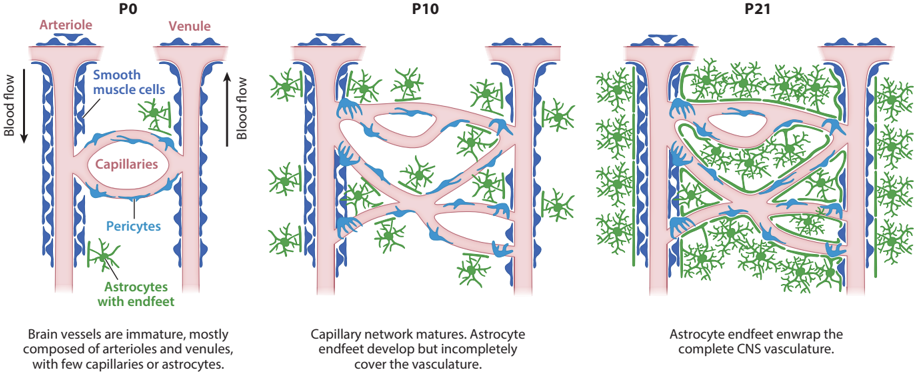
“The formation of most of the capillary bed occurs between P8 and P10, but the astrocytic end-feet incompletely cover the vasculature before P10 and enwrap the entire brain vasculature by P21 [21].”
Promoting the nuclear retention of HMGB1 attenuates astrocyte senescence
Zhang, N., Yang, F., Shi, J., Tang, X., Fan, A., Li, W., Zhang, F., Chai, S., Chen, Q., Wang, C., et al. (2026) · Journal of Neuroinflammation · doi:10.1186/s12974-025-03684-0 · Cited by 3
“…cell types in CNS [10], astrocytes provide structural support, maintain the physical integrity of the brain, and participate in numerous essential processes for maintaining complex brain functions, including neurotransmitter metabolism, neuronal nutrition, and intracerebral homeostasis [11–13].”
Puech, C., Sadanand, A., Coleman, N., Ikhane, M., Badran, M., Wang, R., Gozal, D., & Parent, A. (2026) · Alzheimer s & Dementia · doi:10.1002/alz.71134 · Cited by 3
Stoll, A. C., & Harms, A. S. (2026) · Frontiers in Aging Neuroscience · doi:10.3389/fnagi.2026.1765195 · Cited by 3
Dissecting the aberrant vasculature of glioblastoma: mechanisms and therapeutic targets
Li, Y., Du, Y., Guan, F., Li, X., Cui, S., Gao, W., Long, X., & Wu, M. (2026) · Cancer and Metastasis Reviews · doi:10.1007/s10555-026-10319-0 · Cited by 4
Role of the WNT signalling pathway in physiological and pathological blood-brain barrier
Yang, F., Wang, F., Jiang, Y., Qian, D., & Chen, L. (2026) · Annals of Medicine · doi:10.1080/07853890.2026.2657638 · Cited by 4
“For decades, astrocytes have been recognized as key contributors to the trophic maintenance of BBB physiology through the secretion of regulatory factors [35,36].”
Human brain matters: Navigating the neuropathology of COVID ‐19
Nieuwland, J. M., Scaramuzza, A., Bugiani, M., van de Berg, W. D. J., & Middeldorp, J. (2026) · Brain Pathology · doi:10.1111/bpa.70101 · Cited by 3
“These BBB properties of endothelial cells are sustained by astrocytic endfeet that cover most of the BBB surface, also regulating vessel dilation and constriction [140 – 142].”
Wang, C., Zhang, Y., Li, L., Zhang, L., Dong, X., Zhang, T., Zhang, C., 王智森, Li, J., Zhou, M., et al. (2026) · Phytomedicine · doi:10.1016/j.phymed.2026.158247 · Cited by 3
Acetylcholine - Recent Advances and New Perspectives
Heinbockel, T. (2023) · IntechOpen eBooks · doi:10.5772/intechopen.106304 · Cited by 5
Qiu, J., Peng, S., Qu, R., Wu, L., Xing, L., Zhang, L., & Sun, J. (2024) · Clinical Science · doi:10.1042/cs20241658 · Cited by 3
Cao, M., Chen, J., Chen, G., Ouyang, W., & Tong, J. (2024) · Anesthesia & Analgesia · doi:10.1213/ane.0000000000007330 · Cited by 3
Dai, Y., Bi, M., Jiao, Q., Du, X., Chen, X., Yan, C., & Jiang, H. F. (2025) · Movement Disorders · doi:10.1002/mds.30294 · Cited by 4
“…neurotrophic factor – mediated DAergic support and the cystine/glutamate exchanger (xCT)-dependent glutathione synthesis to combat oxidative stress, 26-28 and they orchestrate neuronal energy metabolism via the astrocyte – neuron lactate shuttle to provide glycolytic precursors under physiological…”
Selective Deletion of NBCe1 in Reactive Astrocytes Attenuates Ischemic Stroke Brain Damage
Capuk, O., Berthold, E., Kaliyappan, K., Avunoori, M., Muduganti, R., Krishna, S., Metwally, S. A. H., McFarland, M., Song, S., Fiesler, V. M., et al. (2025) · Glia · doi:10.1002/glia.70075 · Cited by 2
Glial-mediated pathogenesis and intervention strategies in neuromyelitis optica spectrum disorder
Zhang, Z., Li, F., Li, X., & Wei, H. (2025) · Multiple Sclerosis and Related Disorders · doi:10.1016/j.msard.2025.106666 · Cited by 2
Material considerations for delivering therapeutics across the blood–brain barrier
Zoba, A. N., & Tringides, C. M. (2025) · APL Materials · doi:10.1063/5.0284305 · Cited by 2
Cui, J., Liu, J., Cui, Y. R., & Xie, K. (2025) · Shock · doi:10.1097/shk.0000000000002709 · Cited by 3
Karri, S., & Babu, P. P. (2025) · Molecular Neurobiology · doi:10.1007/s12035-025-05315-4 · Cited by 2
Stage-Dependent Function of Astrocytes in Alzheimer’s Disease: A Review
Azari, H. B., Babaei, P., & Nakhjiri, M. T. (2026) · Neuroscience Insights · doi:10.1177/26331055261422166 · Cited by 2
“17 By creating the glia limitans, astrocytes not only offer structural support to the CNS but also actively engage in regulating the BBB.”
Wei, L. C. S. (2026) · iMed · doi:10.70322/imed.2026.10002 · Cited by 2
The Impact of Antigen Presentation on BBB Disruption and Neuroinflammation
Maynes, M. A., & Johnson, A. J. (2026) · Physiology · doi:10.1152/physiol.00041.2025 · Cited by 2
Yang, H., Yang, Y., Yang, L., Li, Z., Lyu, L., & Zhang, X. (2026) · Ecotoxicology and Environmental Safety · doi:10.1016/j.ecoenv.2026.120120 · Cited by 2
GABAB receptors in glial cells: from physiological regulation to pathological implications
Wang, J., Xu, L., Shen, Q., & Tang, Y. (2026) · Brain · doi:10.1093/brain/awag141 · Cited by 2
Zaman, W., Ayaz, A., & Ullah, A. (2026) · Biochemical Pharmacology · doi:10.1016/j.bcp.2026.118275 · Cited by 3
The Rise of Pluripotent Stem Cell-Derived Glia Models of Neuroinflammation
Kala, S., Strutz, A. G., & Katt, M. E. (2025) · Neurology International · doi:10.3390/neurolint17010006 · Cited by 2
“Astrocytes are the most abundant, pleiotropic, and homeostatic cells in the brain with various roles ranging from development, metabolism, blood–brain barrier (BBB) maintenance, waste and monoamine clearance, and immune functions in the CNS [66].”
Tyurikova, O. (2024) · Regenerative medicine reports . · doi:10.4103/regenmed.regenmed-d-24-00003 · Cited by 2
Elroy‐Stein, O. (2024) · Neural Regeneration Research · doi:10.4103/nrr.nrr-d-24-00204 · Cited by 1
“Some examples include the utilization of astrocytes-specific TRAP for the isolation of translating ribosomes within peri-synaptic and peri-vascular astrocyte processes, and characterization of the locally translated mRNAs in both brain compartments (Sapkota et al., 2022; Diaz-Castro et al., 2023).”
MethodC-Reactive Protein, the Gliovascular Unit, and Alzheimer’s Disease
Straistă, M., & SLEVIN, M. A. (2024) · Cureus · doi:10.7759/cureus.67969 · Cited by 1
“These structures have multiple functions such as preserving BBB integrity, controlling blood flow, brain waste clearance, and nutrient uptake [9].”
BackgroundAvila‐Gutierrez, K., Monnet, H., Mailly, P., Boulay, A.-C., & Cohen‐Salmon, M. (2025) · Methods in molecular biology · doi:10.1007/978-1-0716-4366-2_8 · Cited by 1
Shin, M. C., Lee, T.-K., Kim, D. W., Park, J. H., Won, M., Lee, C. H., & Ahn, J. H. (2025) · Biocell · doi:10.32604/biocell.2025.065506 · Cited by 1
“After cerebral IR injury, astrocytes and AEF undergo rapid and pronounced changes [15], and the dysfunction of AEF can disrupt astrocyte-neuron communication, exacerbating neuronal damage and contributing to the pathological process of IR injury [16,17].”
Dual adeno-associated virus system for selective and sparse labeling of astrocytes
Li, M., Liu, Z., Chen, R., Zhao, Z., Zhou, Q., Zheng, N., Wang, J., & Wang, H. (2025) · Neural Regeneration Research · doi:10.4103/nrr.nrr-d-24-01607 · Cited by 1
“…nutrient transport, neurotransmitter regulation, ion balance maintenance, neurovascular coupling, neurogenesis, synaptic remodeling, inflammatory responses, and neural circuit modulation (Giovannoni and Quintana, 2020; Oliveira and Araque, 2022; Díaz-Castro et al., 2023; Murphy-Royal et al., 2023).”
Unveiling the Role of LncRNA in Sepsis-Associated Encephalopathy
Shi, X.-Y., Zhong, H., Shang, Y., Zhang, D., & Pan, S. (2025) · Current Medical Science · doi:10.1007/s11596-025-00122-3 · Cited by 1
“They play a critical role in maintaining the BBB, clearing brain wastes, and regulating cerebral blood circulation and nutrient uptake [49, 50].”
Metabolic dysregulation in cerebral small vessel disease: pathogenesis and therapeutic targets
Si, Z., Xiao, B., & Zhang, M. (2026) · Neuroscience · doi:10.1016/j.neuroscience.2026.02.021 · Cited by 2
Uncovering the silent invaders: Dormant tumour cells in the brain microenvironment
Ze, Y., Dai, R., Zhang, Y., Xi, Z., & Xu, H. (2026) · Critical Reviews in Oncology/Hematology · doi:10.1016/j.critrevonc.2026.105213 · Cited by 1
Yao, Y., Cannava, I., Tazebay, R., Samuels, S., Silverstein, E., & Silver, R. (2026) · eNeuro · doi:10.1523/eneuro.0401-25.2026 · Cited by 1
“The activity of astrocyte end feet in regulating components of the BBB is also highly regional and dynamic (Segarra et al., 2021; Díaz-Castro et al., 2023; Pociu¯te ˙ et al., 2024).”
Crabtree, A., McEvoy, C., Omer, M., Rodriguez, J., Charles, T., Murray, D. R., Ivory, R. A., Agoston, D. V., & Meabon, J. S. (2026) · Neurotrauma Reports · doi:10.1177/2689288x261425942 · Cited by 1
Pîrșcoveanu, D. F. V., Pluta, I. D., Vlădulescu, C., Popescu, C., Trașcă, D.-M., Radivojević, K., Varut, R. M., Vintilescu, Ş. B., Stepan, M. D., & Stoica, G. A. (2026) · Pharmaceutics · doi:10.3390/pharmaceutics18040451 · Cited by 1
Uti, D. E., Alum, E. U., Okpe, J. M., Egbung, J. E., & Mbah, J. O. (2026) · Tissue and Cell · doi:10.1016/j.tice.2026.103524 · Cited by 1
Melnikova, A., Egorchev, A. A., Rosin, A. A., Faritovich, N. L., Lipachev, N., Vedischeva, D. S., V.Derzhavin, D., Perepechenov, S., Sukhodolova, E. А., V.Shabernev, G., et al. (2026) · International Journal of Molecular Sciences · doi:10.3390/ijms27083524 · Cited by 1
Astrocyte Functional Heterogeneity in Multiple Sclerosis
Hong, S., Kim, K. G.-H., Quintana, F. J., & Lee, H. (2026) · Journal of Clinical Neurology · doi:10.3988/jcn.2026.0100 · Cited by 1
“22,24,25 26-29 Lineage-tracing studies have demonstrated that astrocytes arising from distinct developmental compartments already exhibit molecularly defined profiles at early stages.”
Friend or foe? Glial–vascular interactions in health and neurodegenerative disease
McQuaid, C., Sewell, M. D. E., & Montagne, A. (2026) · Pharmacological Reviews · doi:10.1016/j.pharmr.2026.100143 · Cited by 2
“52,53 Astrocytic endfeet are thought to contribute to waste clearance, although the exact mechanisms remain incompletely understood.”
Valero-Cedeño, N., Durán, A., & Mosquera, J. A. (2026) · Reviews in Medical Virology · doi:10.1002/rmv.70165 · Cited by 1
“Astrocytes have multiple functions such as preserving BBB integrity, controlling blood flow, brain waste clearance, and nutrient uptake [118]. mCRP can alter astrocytes in Alzheimer's disease (AD) inducing gliovascular unit dysfunction, and leading to progressive neuronal degeneration and…”
Xu, X., Wang, Z., Falan, H., Wang, L., Guo, B., Li, Z., Chen, J., & Wen, J. (2026) · APOPTOSIS · doi:10.1007/s10495-026-02343-w · Cited by 1
星形胶质细胞在自闭症谱系障碍及相关综合征中的参与:证据,动物模型,机制以及治疗潜能
Cui, K., Jian, M., Yun-Wu, Z., & 厦门大学医学院神经科学研究所福建省神经退行性疾病及衰老研究重点实验室, 福. 厦. (2026) · 动物学研究 · doi:10.24272/j.issn.2095-8137.2026.086 · Cited by 1
Mechanisms of transport across the blood–brain barrier
Das, N. G., & Das, S. K. (2026) · Elsevier eBooks · doi:10.1016/b978-0-443-33623-2.00019-2 · Cited by 1
Abedin, M. J., Lee, Y. F., Zhang, M., Russ, A., Gerashchenko, D., Bacskai, B. J., & Kastanenka, K. V. (2026) · Journal of Alzheimer s Disease · doi:10.1177/13872877261464208 · Cited by 1
“35 Therefore, different regions of the astrocytes play distinct roles in maintaining cellular function in a healthy brain.”
Ma, X., Wang, Y., Chen, X., Pan, Z., Li, Y., 任凯夕, Zhao, D., 李宏增, & Guo, J. (2026) · Journal of Neuroinflammation · doi:10.1186/s12974-026-03959-0 · Cited by 1
“Given the essential role of astrocytes in maintaining BBB integrity [15], astrocyte loss and dysfunction in NMOSD may further exacerbate BBB compromise.”
Fraer, A., Saleh, S., Tasabehji, D., Sharma, D. S., & Mokadem, M. (2026) · Frontiers in Human Neuroscience · doi:10.3389/fnhum.2026.1857087 · Cited by 1
Ke, X., Du, X., & Wang, X. (2026) · Molecular Psychiatry · doi:10.1038/s41380-026-03816-9 · Cited by 1
Li, Y., Li, Q., Wang, Y., Wang, X., Di, G., Niu, M., Xu, Z., & Huang, Y. (2026) · Journal of Physiology and Biochemistry · doi:10.1007/s13105-026-01218-7 · Cited by 1
“Moreover, increasing evidence demonstrates that astrocytes are crucial for the integrity and function of the BBB [15].”
Motoyoshi, M., & Nagai, J. (2026) · Neuroscience Research · doi:10.1016/j.neures.2026.105103 · Cited by 1
Salvianolic acid A promotes angiogenesis after stroke by targeting AKT to alleviate oxidative stress
Wang, L., Zhang, S., Liu, C., Zhao, Z., Sun, W., Du, G., & Kong, L. (2026) · Brain Research Bulletin · doi:10.1016/j.brainresbull.2026.112112 · Cited by 1
Chen, Y., Ma, H., Long, Q., Fang, X., Li, X., Xiao, W., Deng, X., Du, F., Tan, Y., Wang, Y., et al. (2026) · CNS Neuroscience & Therapeutics · doi:10.1002/cns.71168 · Cited by 1
“Astrocytes recruited at a later stage further assist endothelium in acquiring BBB characteristics, barrier properties, and CNS immune quiescence [25].”
Hercher, C., Ellerbeck, K., Toutée, L., Ye, X., Mpai, R., Davoli, M. A., Watt, A. J., Murai, K. K., Turecki, G., & Mechawar, N. (2024) · bioRxiv (Cold Spring Harbor Laboratory) · doi:10.1101/2024.08.13.607849 · Cited by 1
Neck, S. D., Penrice-Randal, R., Neves, L. X., Seehusen, F., Sharma, P., Helminger, B., Kirby, A., Mega, D., Erdmann, M., Zanella, M., et al. (2025) · bioRxiv (Cold Spring Harbor Laboratory) · doi:10.1101/2025.02.07.637145 · Cited by 2
Liu, S., Bradley, K., Tang, J. J., Kim, Y. A., Milosevic, A., & Shaham, S. (2025) · bioRxiv (Cold Spring Harbor Laboratory) · doi:10.1101/2025.10.17.682973 · Cited by 1
Deciphering the impact of astrocytic insulin receptor depletion on Alzheimer's disease pathology
Ezkurdia, A. (2024) · Depósito Académico Digital Universidad de Navarra (University of Navarra) · doi:10.15581/10171/70017
Super-resolution Analysis of Astrocyte Morphology Using Expansion Microscopy
Seifert, G., Sommer, E., Passlick, S., & Henneberger, C. (2025) · Methods in molecular biology · doi:10.1007/978-1-0716-4366-2_12
Toxicology of the Brain Barrier System in Brain’s Health and Diseases
Liu, L. L., & Zheng, W. (2025) · Elsevier eBooks · doi:10.1016/b978-0-323-95488-4.00225-4
Górecki, D. C., Patel, A. M., Pomeroy, J., & Verkhratsky, A. (2025) · Neurochemical Research · doi:10.1007/s11064-025-04464-1
“In the astrocytic endfeet, the DAPC has been shown to be centred around dystrophin Dp71, where it anchors AQP4 water channels and inward rectifier K + channels K ir 4.1, thus establishing their functional cooperation [170, 171].”
InfluentialJeannelle, F., de la Maza, M. M., Schreiner, S., Hammer, G. P., Mirault, D., Mechawar, N., Brainbank Neuro-CEB Neuropathology Network, Bank, N. B., Mittelbronn, M. G. A., & Bouvier, D. S. (2025) · bioRxiv (Cold Spring Harbor Laboratory) · doi:10.1101/2025.08.19.671074
Additional file 2 of Therapeutic effects of orexin-A in sepsis-associated encephalopathy in mice
Guo, J., Kong, Z., Yang, S., 达静静, Chu, L., Han, G., Liu, J., Tan, Y., & Zhang, J. (2024) · Figshare · doi:10.6084/m9.figshare.26722239
Additional file 1 of Therapeutic effects of orexin-A in sepsis-associated encephalopathy in mice
Guo, J., Kong, Z., Yang, S., Da, J., Chu, L., Han, G., Liu, J., Tan, Y., & Zhang, J. (2024) · Figshare · doi:10.6084/m9.figshare.26722236
Metadata
- Authors
- Díaz-Castro, B., Robel, S., & Mishra, A.
- Affiliations
- UK Dementia Research Institute and Centre for Discovery Brain Sciences, University of Edinburgh, Edinburgh, Scotland, UK;
- University of Alabama at Birmingham (US)
- Oregon Health & Science University (US)
- Corresponding author
- Robel, Stefanie
- Mishra, Anusha
- Venue
- Annual Review of Neuroscience
- Publisher
- Annual Reviews
- Published
- 2023-07-10
- Volume
- 46
- Issue
- 1
- Pages
- 101-121
- ISSN
- 0147-006X (ISSN-L)
- 1545-4126
- OpenAlex
- W4322604190
- Semantic Scholar
- 9ad13992e7e6c682e0c5d607210908e800f36d3b
- Cited by
- 238
- References
- 180
- Citations by year
- 2026: 80 · 2025: 85 · 2024: 46 · 2023: 27
- FWCI
- 6.21
- Type
- journal article
- Language
- en
- Open access
- hybrid
- doi.org
- Locations
- Annual Review of Neuroscience (publishedVersion, cc-by)
- PubMed (publishedVersion)
- Edinburgh Research Explorer (University of Edinburgh) (publishedVersion, cc-by)
- Funders
- UK Dementia Research Institute
- National Institutes of Health
- National Institute on Aging (P30AG066518)
- National Institute of Neurological Disorders and Stroke (R01NS105807, R01NS110690, R01NS121145)
- Topics
- Life Sciences › Neuroscience › Neurology › Barrier Structure and Function Studies
- Health Sciences › Medicine › Clinical Neurology › Cerebrospinal fluid and hydrocephalus
- Life Sciences › Biochemistry, Genetics and Molecular Biology › Molecular Biology › Ion Transport and Channel Regulation
- Keywords
- astrocyte endfeet, blood-brain barrier, cerebral autoregulation, waste clearance, astrocyte polarization, neurovascular unit, neurological disorders
- MeSH terms
- Astrocytes, Blood-Brain Barrier, Brain, Central Nervous System, Protein Biosynthesis
About these checks
Registry, retraction, Cites and statistics results are computed, not judged, with one exception: a printed reference that no index lists is read once by a model before it counts as a citation error. Claims are extracted by a model and kept only when their quote appears verbatim in the text; each cited source is then checked, with a model’s help, for whether it says what the claim relies on. Those verdicts can be wrong — read the claim’s quote and the cited source before relying on one.
Statistics and arithmetic are recomputed, not judged.
Confidence bands are shown only for fields calibrated on our annotated test set. None is calibrated yet, so no band is shown.
What counts as a claim ›How we measure confidence ›How we check this ›
Are you an author, or do you see a problem with this page? Request a review
Data sources
Bibliographic data: Semantic Scholar, OpenAlex, Crossref.
Contains information from the Semantic Scholar Academic Graph Datasets, made available under the ODC Attribution License (ODC-BY 1.0).
Semantic Scholar’s data is described in: Kinney, R., et al. (2023). The Semantic Scholar Open Data Platform. arXiv:2301.10140.
