

Stress Management Interventions to Facilitate Psychological and Physiological Adaptation and Optimal Health Outcomes in Cancer Patients and Survivors
Open accessThe DOI matches its Crossref record; 166 of the 169 references it cites were found in a registry or an index.
Abstract
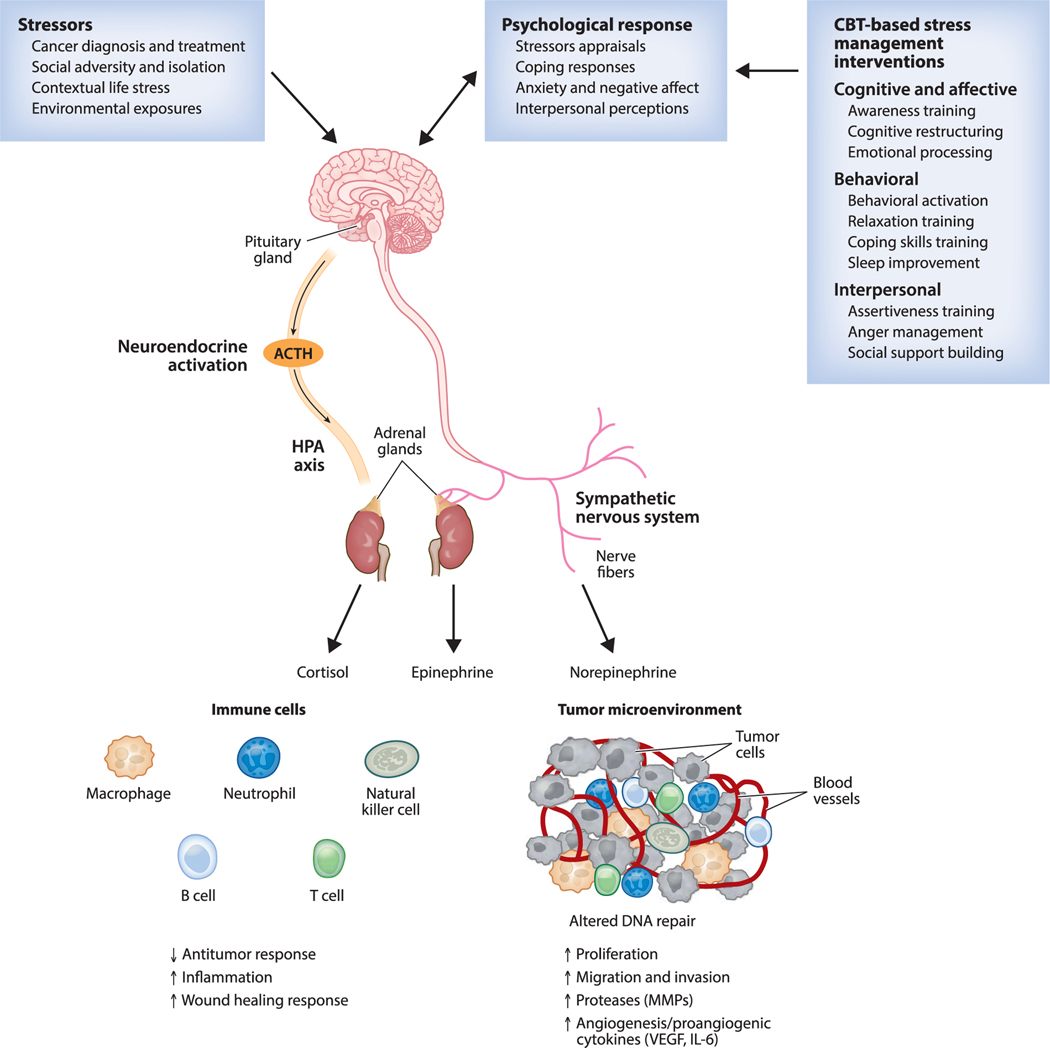
Cancer diagnosis and treatment constitute profoundly stressful experiences involving unique and common challenges that generate uncertainty, fear, and emotional distress. Individuals with cancer must cope with multiple stressors, from the point of diagnosis through surgical and adjuvant treatments and into survivorship, that require substantial psychological and physiological adaptation. This can take a toll on quality of life and well-being and may also promote cellular and molecular changes that can exacerbate physical symptoms and facilitate tumor growth and metastasis, thereby contributing to negative long-term health outcomes. Since modifying responses tostressors might improve psychological and physiological adaptation, quality of life, and clinical health outcomes, several randomized controlled trials have tested interventions that aim to facilitate stress management. We review evidence for the effects of stress management interventions on psychological and physiological adaptation and health outcomes in cancer patients and survivors and summarize emerging research in the field to address unanswered questions.
Overview
The claims and statistics of this paper haven’t been checked yet.
Free: it reads the open-access text and checks the first 5 claims that cite a source we can check. Create a free account to check every claim.
Integrity signals
Registry
Cites
Statistics
Figures
Verification
Claims the paper makes
The claims and statistics of this paper haven’t been checked yet.
Free: it reads the open-access text and checks the first 5 claims that cite a source we can check. Create a free account to check every claim.
Claims other papers make about this one
Each is checked against this paper’s own text: does it say what the citing paper says it does?
The cited source says what the claim attributes to it.
In the citing paper
“There is also evidence that psychological in terventions can influence cortisol levels in patients with cancer, psy chiatric conditions and other health issues (e.g., Antoni et al., 2023, Saban et al., 2022).”
From Effectiveness of stress management interventions to change cortisol levels: a systematic review and meta-analysis. (2024) · cites this paper as Antoni et al., 2023
Self-check
Percentages, sums and reported differences re-computed from the paper’s own numbers.
The self-check needs the paper’s full text.
Citations
Cites
Early Palliative Care for Patients with Metastatic Non–Small-Cell Lung Cancer
Temel, J. S., Greer, J. A., Muzikansky, A., Gallagher, E. R., Admane, S., Jackson, V. A., Dahlin, C. M., Blinderman, C. D., Jacobsen, J., Pirl, W. F., et al. (2010) · New England Journal of Medicine · doi:10.1056/nejmoa1000678 · Cited by 7,482 · cited 1×
“…supportive expressive therapy (SET) (Spiegel et al. 1989) targeting existential issues; palliative care interventions targeting symptom and pain management (Temel et al. 2010); and physical exercise interventions targeting physical activity, strength, and aerobic fitness (McNeely et al. 2006).”
BackgroundTARGET ARTICLE: "Posttraumatic Growth: Conceptual Foundations and Empirical Evidence"
Tedeschi, R. G., & Calhoun, L. G. (2004) · Psychological Inquiry · doi:10.1207/s15327965pli1501_01 · Cited by 7,154
Factors associated with COVID-19-related death using OpenSAFELY
Williamson, E. J., Walker, A. J., Bhaskaran, K., Bacon, S., Bates, C., Morton, C. E., Curtis, H. J., Mehrkar, A., Evans, D., Inglesby, P., et al. (2020) · Nature · doi:10.1038/s41586-020-2521-4 · Cited by 6,674 · cited 1×
“In fact, cancer-specific and all-cause mortality may even be affected by COVID-19 experiences and stress via risk behaviors (e.g., lack of physical activity, changes in lifestyle behaviors including poor sleep and nutrition, and poor treatment adherence/follow-up) (Williamson et al. 2020).”
BackgroundThe socio-economic implications of the coronavirus pandemic (COVID-19): a review
Nicola, M., Alsafi, Z., Sohrabi, C., Kerwan, A., Al-Jabir, A., Iosifidis, C., Agha, M., & Agha, R. (2020) · International Journal of Surgery · doi:10.1016/j.ijsu.2020.04.018 · Cited by 6,351 · cited 1×
“…leisure activities, financial strain, and fears and concerns over the physical health status of an already compromised population synergistically contribute to greater levels of psychosocial distress in cancer survivors (Kuderer et al. 2020, McGinty et al. 2020, Nicola et al. 2020, U.S. Census Bur.”
BackgroundCancer treatment and survivorship statistics, 2019
Miller, K. D., Nogueira, L., Mariotto, A. B., Rowland, J. H., Yabroff, K. R., Alfano, C. M., Jemal, A., Kramer, J. L., & Siegel, R. L. (2019) · CA: A Cancer Journal for Clinicians · doi:10.3322/caac.21565 · Cited by 4,226 · cited 1×
“Advances in cancer prevention, screening, and treatment have led to a significant increase in the number of individuals who live beyond a cancer diagnosis and the completion of curative-intent treatment (Miller et al. 2019).”
BackgroundThe Efficacy of Cognitive Behavioral Therapy: A Review of Meta-analyses
Hofmann, S. G., Asnaani, A., Vonk, I. J. J., Sawyer, A. T., & Fang, A. (2012) · Cognitive Therapy and Research · doi:10.1007/s10608-012-9476-1 · Cited by 3,445 · cited 2×
“CBT is one of the most widely studied intervention approaches and has strong evidence for effectiveness in several disorders and symptom clusters that are common in the cancer context, including anxiety, depression, and overall psychological distress and stress (Hofmann et al. 2012).”
BackgroundMitchell, A. J., Chan, M., Bhatti, H., Halton, M., Grassi, L., Johansen, C., & Meader, N. (2011) · The Lancet Oncology · doi:10.1016/s1470-2045(11)70002-x · Cited by 2,449 · cited 1×
“About 30–40% of individuals with cancer meet diagnostic criteria for anxiety and other mood disorders (Mitchell et al. 2011); however, subclinical elevations in symptoms and other forms of cancer-related distress still negatively impact QoL and should be addressed.”
BackgroundEFFECT OF PSYCHOSOCIAL TREATMENT ON SURVIVAL OF PATIENTS WITH METASTATIC BREAST CANCER
Spiegel, D., Kraemer, H., Bloom, J., & Gottheil, E. (1989) · The Lancet · doi:10.1016/s0140-6736(89)91551-1 · Cited by 2,353
A meta-analytic review of benefit finding and growth.
Helgeson, V. S., Reynolds, K. A., & Tomich, P. L. (2006) · Journal of Consulting and Clinical Psychology · doi:10.1037/0022-006x.74.5.797 · Cited by 1,864 · cited 1×
“…life appreciation, improved social relationships, and a deepened sense of self and meaning that individuals attribute to stressful life experiences like cancer, have been referred to as benefit finding, post-traumatic growth, and personal growth (Helgeson et al. 2006, Tedeschi & Calhoun 2004).”
BackgroundClinical impact of COVID-19 on patients with cancer (CCC19): a cohort study
Kuderer, N. M., Choueiri, T. K., Shah, D. P., Shyr, Y., Rubinstein, S. M., Rivera, D. R., Shete, S., Hsu, C.-Y., Desai, A., de Lima Lopes, G., et al. (2020) · The Lancet · doi:10.1016/s0140-6736(20)31187-9 · Cited by 1,726 · cited 1×
“…leisure activities, financial strain, and fears and concerns over the physical health status of an already compromised population synergistically contribute to greater levels of psychosocial distress in cancer survivors (Kuderer et al. 2020, McGinty et al. 2020, Nicola et al. 2020, U.S. Census Bur.”
Background
Research works printed but not linked: 8
- Am. Cancer Soc. 2020b. Understanding advanced and metastatic cancer. American Cancer Society. https://www.cancer.org/treatment/understanding-your-diagnosis/advanced-cancer/what-is.html
- Am. Soc. Clin. Oncol. 2019. Long-term side effects of cancer treatment. Cancer. Net. https://www.cancer.net/survivorship/long-term-side-effects-cancer-treatment
- Antoni MH. 2003b. Stress Management Intervention for Women with Breast Cancer: Training Manual & Participant’s Workbook. Washington, DC: Am. Psychol. Assoc. · DOI · Paper page
- Antoni MH, Taub CJ, Ream M, Fisher HM, Nahin ER, 2021. Video-conferenced Stress Management and Relaxation Training (VSMART) for older women undergoing treatment for breast cancer. Int. J.Behav. Med 28(Suppl. 1): S71
- Key RG, Liebling D, Malhotra VT, Passik SD, Moryl N, Breitbart WS. 2021. Cancer-related pain. In PsychoOncology,ed. Breitbart W, Butow P, Jacobsen P, Lam W, Lazenby M, Loscalzo M, pp. 235– 54. New York: Oxford Univ. Press. 4th ed.
- McFarland DC, Bjerre-Real C, Alici Y, Breitbart WS. 2021. Cancer-related fatigue. In Psycho-Oncology, ed. Breitbart W, Butow P, Jacobsen P, Lam W, Lazenby M, Loscalzo M, pp. 265– 75. New York: Oxford Univ. Press. 4th ed.
- Selye H. 1956. The Stress of Life. New York: McGraw-Hill
- Stanton AL, Bower JE, Low CA. 2006. Posttraumatic growth after cancer. In Handbook of Posttraumatic Growth: Research & Practice, ed. Calhoun LG, Tedeschi RG, pp. 138– 75. Mahwah, NJ: Lawrence Erlbaum
Cited by
Rogerson, O., Wilding, S., Prudenzi, A., & O’Connor, D. B. (2024) · Psychoneuroendocrinology · doi:10.1016/j.psyneuen.2023.106415 · Cited by 87
The Role of Behavioral Factors on Chronic Diseases—Practice and Knowledge Gaps
Rahelić, V., Perković, T., Romić, L., Perković, P., Majanović, S. K., Pavić, E., & Rahelić, D. (2024) · Healthcare · doi:10.3390/healthcare12242520 · Cited by 90
Psychosocial and Integrative Oncology: Interventions Across the Disease Trajectory.
Carlson, L. E. (2023) · Annual Review of Psychology · doi:10.1146/annurev-psych-032620-031757 · Cited by 56
Jiang, X., Sun, J., Song, R., Wang, Y., Li, J., & Shi, R. (2024) · Frontiers in Psychology · doi:10.3389/fpsyg.2023.1253266 · Cited by 43
A Review of the Impact of Maternal Prenatal Stress on Offspring Microbiota and Metabolites
Yeramilli, V. A., Cheddadi, R., Shah, J., Brawner, K. M., & Martin, C. A. (2023) · Metabolites · doi:10.3390/metabo13040535 · Cited by 40
Stabellini, N., Cullen, J., Bittencourt, M. S., Moore, J. X., Sutton, A. L., Nain, P., Hamerschlak, N., Weintraub, N. L., Dent, S. F., Tsai, M., et al. (2024) · Journal of the American Heart Association · doi:10.1161/jaha.123.033295 · Cited by 34
“38 In LC, estimated to cause 234 580 cases and 125 070 deaths in the United States in 2024, CVD is a leading cause of morbidity and mortality.”
BackgroundGoel, N., Hernandez, A. E., & Cole, S. W. (2024) · Journal of Clinical Oncology · doi:10.1200/jco.23.02780 · Cited by 36
Mandelblatt, J. S., Antoni, M. H., Bethea, T. N., Cole, S. W., Hudson, B. I., Penedo, F. J., Ramírez, A. G., Rebeck, G. W., Sarkar, S., Schwartz, A. G., et al. (2024) · JNCI Journal of the National Cancer Institute · doi:10.1093/jnci/djae211 · Cited by 29
Self-citationSun, R., Jiao, D., Yuan, W., Wang, H., Ren, L., Fu, Z., Zhang, J., Yue, X., Wu, Z., Li, C., et al. (2026) · Nature Metabolism · doi:10.1038/s42255-025-01430-7 · Cited by 27
Çıkrıkçı, N. (2024) · Current Psychology · doi:10.1007/s12144-024-06250-8 · Cited by 21
“These intense demands and expectations can also manifest themselves more intensely in the changes in the life or in situations that require adaptation (Antoni et al., 2023).”
Shahin, M., Chen, F. F., Hosseinzadeh, A., & Maghanaki, M. (2024) · Informatics in Medicine Unlocked · doi:10.1016/j.imu.2024.101494 · Cited by 23
Psychological Distress in Bladder Cancer Patients: A Systematic Review
Thomas, K. R., Joshua, C., & Ibilibor, C. (2024) · Cancer Medicine · doi:10.1002/cam4.70345 · Cited by 20
Cancer and Stress: Understanding the Connections and Interventions
D’Andre, S. D., Ellsworth, L. L., Kirsch, J. L., Montane, H. N., Kruger, M. B., Donovan, K. A., Bronars, C. A., Markovic, S. N., & Ehlers, S. L. (2024) · American Journal of Lifestyle Medicine · doi:10.1177/15598276241304373 · Cited by 19
The impact of daily affective touch on cortisol levels in institutionalized & fostered children
Nikolaeva, E. I., Александровна, Д. Е., Mayorova, L. A., & Portnova, G. V. (2024) · Physiology & Behavior · doi:10.1016/j.physbeh.2024.114479 · Cited by 16
Al-Azri, M. H., AL-Kiyumi, Z., Al-Bimani, K., & Al-Awaisi, H. S. (2024) · Current Oncology · doi:10.3390/curroncol31120589 · Cited by 15
Goel, N., Hernandez, A. E., Ream, M. E., Saez-Flores, E., Blomberg, B. B., Cole, S. W., & Antoni, M. H. (2023) · Breast Cancer Research and Treatment · doi:10.1007/s10549-023-07050-7 · Cited by 16
“At baseline, women provided a late afternoon to evening-time serum cortisol sample (between 4 pm and 6:30 pm) (PM cortisol) and were administered a structured clinical interview of anxiety symptoms (Hamilton Anxiety Rating Scale; HAM-A) [22].”
BackgroundMethodSelf-citationZhao, F.-J., Huo, R., Li, F.-R., & You, X.-M. (2024) · Supportive Care in Cancer · doi:10.1007/s00520-024-08790-y · Cited by 12
Włodarczyk, J. (2025) · International Journal of Molecular Sciences · doi:10.3390/ijms26157242 · Cited by 14
“Cognitive behavioral therapy (CBT), stress management training, and motivational psychological nursing have demonstrated efficacy in reducing psychological distress, thereby increasing engagement with exercise, nutrition, and physical therapy components of prehabilitation [159].”
Reis, J. C., Travado, L., & Antoni, M. H. (2025) · International Journal of Clinical and Health Psychology · doi:10.1016/j.ijchp.2025.100615 · Cited by 11
“This may explain the confluence of cancer, its treatments and chronic stress on accelerated biological aging (Antoni et al., 2023; Guida et al., 2019) and the development of co-morbidities such as cardiovascular disease (Mehta et al., 2018).”
InfluentialSelf-citationFleszar‐Pavlović, S. E., Esquives, B. S. N., Lovan, P., Brito, A. E., Sia, A. M., Kauffman, M. A., Lopes, M., Moreno, P. I., Koru‐Sengul, T., Gong, R., et al. (2025) · JMIR Formative Research · doi:10.2196/65188 · Cited by 9
“…interventions, including mindfulness-based stress reduction (MBSR) and mindfulness meditation (MM) yield promising results in enhancing both psychosocial outcomes (eg, reducing anxiety and depression) and physiological adaptation (eg, decreasing inflammation) in cancer patients [18-21].”
Self-citationSvendsen, K., Nes, L. S., Leithe, S., Meland, A., Gjelsvik, Y. M., Børøsund, E., Larsson, I. M., Myklebust, T. Å., Balto, A., Rygg, C. M., et al. (2025) · Scientific Reports · doi:10.1038/s41598-025-22889-0 · Cited by 8
“It is also possible the CABC interventions could have been more effective if used during active cancer treatment 3,69 .”
Self-citationUser Stress Detection Using Social Media Text: A Novel Machine Learning Approach
Wan, X., & Li, T. (2024) · International Journal of Computers Communications & Control · doi:10.15837/ijccc.2024.5.6772 · Cited by 8
Ream, M. E., Plotke, R. L., Taub, C. J., Borowsky, P. A., Hernandez, A. E., Blomberg, B. B., Goel, N., & Antoni, M. H. (2025) · Breast Cancer Research and Treatment · doi:10.1007/s10549-025-07631-8 · Cited by 8
Self-citationWalsh, E. A., Safren, S. A., Penedo, F. J., & Antoni, M. H. (2023) · Clinical Psychology Review · doi:10.1016/j.cpr.2023.102374 · Cited by 9
Self-citationWang, Z., Zhang, F., Zhou, B., Sun, L., Liu, B., Liu, M., Wang, S., Xu, L., Liu, H., & Dong, B. (2025) · Biomaterials · doi:10.1016/j.biomaterials.2025.123398 · Cited by 8
Balat, K. Z., Laftah, S. A., & Radhi, M. M. (2025) · National Journal of Community Medicine · doi:10.55489/njcm.160120254716 · Cited by 7
Al‐Beltagi, M., Saeed, N. K., Bediwy, A. S., Bediwy, E. A., & Elbeltagi, R. M. (2025) · World Journal of Clinical Pediatrics · doi:10.5409/wjcp.v14.i3.105290 · Cited by 10
Alzahrani, F., Madkhali, O. A. A., Hijri, A. M., Alaqil, M. A., Khardali, A., Alolayan, S. O., Thaqfan, S. S. A., Harbi, A. M. A., Aljabri, B. K., Almikhlafi, M. A., et al. (2025) · BMC Psychology · doi:10.1186/s40359-025-03074-4 · Cited by 7
“These psychological challenges significantly impact treatment outcomes and quality of life [8–10].”
Li, D., Li, Z., Zhou, Y.-F., Jin, L., Liang, W., Xu, W., Luo, X., Xiao, G.-D., Chen, Q.-J., Xie, T., et al. (2025) · Chinese Medicine · doi:10.1186/s13020-025-01168-0 · Cited by 9
“Psychological stress is often perceived as a burden [1, 2] and has been linked to suppressed immunity, increasing cancer risk [3, 4].”
Kanemitsu, K., Hassan, B. D., Mdivnishvili, M., & Abbas, N. (2024) · Cureus · doi:10.7759/cureus.76585 · Cited by 8
“Psychosocially, interventions that incorporate stress management, counseling, or support groups address mental health factors like anxiety and depression, which are known to exacerbate cardiac risk and affect lifestyle adherence [22].”
Network analysis of core symptom changes in lung cancer survivors: a longitudinal study
Zhang, J., Zhao, X., Zhang, G., Wu, J., Guan, Q., Tian, Z., & Zeng, Y. (2025) · Journal of Cancer Survivorship · doi:10.1007/s11764-025-01844-y · Cited by 6
“Combined with significant psychological stress, these factors can impact treatment outcomes and, in some cases, even lead survivors to abandon treatment, hindering their recovery [4, 5].”
Almutairi, M., Almutairi, A. A., & Alodhialah, A. M. (2025) · Cancer Management and Research · doi:10.2147/cmar.s515781 · Cited by 6
“43 Quantitative data demonstrated significant associations between psychological health scores and SDH, particularly financial instability and lack of social support.”
Piazzon, N., Cortet, M., Vérot, E., & Carrouel, F. (2024) · Critical Reviews in Oncology/Hematology · doi:10.1016/j.critrevonc.2024.104548 · Cited by 7
Harris, C., Conley, Y. P., Rosenzweig, M. Q., Erickson, K. I., Cooper, B. A., & Bender, C. M. (2024) · Cancer Nursing · doi:10.1097/ncc.0000000000001423 · Cited by 6
Lin, X., Teng, X., Lan, J., Lu, L., Pan, Q., & Ren, Z. (2025) · Supportive Care in Cancer · doi:10.1007/s00520-025-09485-8 · Cited by 6
Walsh, E. A., Popok, P., Ream, M. E., Bainter, S. A., Perdomo, D. M., Taub, C. J., Saez-Flores, E., Kesmodel, S. B., Blomberg, B. B., & Antoni, M. H. (2023) · Supportive Care in Cancer · doi:10.1007/s00520-023-07939-5 · Cited by 5
“Cognitive behavioral stress management (CBSM) is a specific type of manualized treatment delivered across 10, weekly group sessions to improve distress, regulate stress, promote relaxation skills, and improve health outcomes across a range of populations [4, 5].”
BackgroundSelf-citationAn integrated intervention on well-being: A qualitative study on relationships and emotions
Sebri, V., Durosini, I., & Pravettoni, G. (2024) · Acta Psychologica · doi:10.1016/j.actpsy.2024.104276 · Cited by 6
Derry, H. M., Khoudary, A., Billini, O. M., Prigerson, H. G., Schwartz, M. D., Cohen, J., Griffin, C., Gutiérrez, M., Lichtenthal, W. G., & Carter‐Harris, L. (2025) · Psycho-Oncology · doi:10.1002/pon.70048 · Cited by 5
“Stress management programs are effective for coping with other aspects of the cancer experience [13], and could equip patients with skills for managing scanxiety.”
Bridging the gap: Advancing occupational therapy in cancer recovery for better outcomes
Pereira, A. D. S., Miller, A., & Akinyemi, A. O. (2025) · Journal of Medicine Surgery and Public Health · doi:10.1016/j.glmedi.2025.100196 · Cited by 6
Kim, E. Y., Kim, M. J., & Kim, Y. M. (2025) · Asia-Pacific Journal of Oncology Nursing · doi:10.1016/j.apjon.2025.100787 · Cited by 4
“42,43 Nurses should utilize validated and condition-specific assessment tools to assess the impact of bowel dysfunction on patients ’ psycho-social well-being.”
Liel, F. A., Salameh, B. S., Ayed, A., & Aqtam, I. F. (2026) · SAGE Open Nursing · doi:10.1177/23779608261418588 · Cited by 5
“Cancer patients commonly report multiple stressors throughout their disease trajectory, with chronic stress potentially impeding healing processes and contributing to poor prognostic outcomes (Antoni et al., 2023; Da Costa et al., 2023).”
Xiang, L., Gou, H., Yang, J., Hu, C., Zhu, D. H., & Xu, B. (2026) · Frontiers in Public Health · doi:10.3389/fpubh.2026.1744350 · Cited by 5
“Conceptually, this sparsification may indicate an adaptive reorganization of the psychological-behavioural system, in which only the most robust and stable connections persist while weaker or context-dependent links fade (53).”
Kubatka, P., Kapinová, A., Bojková, B., Joseph, V., Horňák, S., Kajo, K., Büsselberg, D., Šmejkal, K., Goncharenko, V., Mrazova, B., et al. (2026) · The EPMA Journal · doi:10.1007/s13167-026-00447-6 · Cited by 7
Breast Cancer Follow-Up and Surveillance After Primary Treatment: ASCO Guideline Update
Nahleh, Z. A., Alfano, C. M., Somerfield, M. R., Lee, J. M., Hieken, T. J., Magnuson, A. M., Rao, R. D., Chew, H. K., Chia, S., Harvey, B. E., et al. (2026) · Journal of Clinical Oncology · doi:10.1200/jco-26-01700 · Cited by 5
Yanez, B. R., Czech, K. A., Buitrago, D., Smith, J. D., Schueller, S. M., Taub, C. J., Kircher, S. M., Garcia, S. F., Bass, M., Mercer, A. M., et al. (2023) · Contemporary Clinical Trials · doi:10.1016/j.cct.2023.107121 · Cited by 4
Self-citationFinkelstein‐Fox, L., Bliss, C. C., Rasmussen, A. W., Hall, D. L., El-Jawahri, A. R., Perez, G. K., Traeger, L. N., Comander, A. H., Peppercorn, J. M., Anctil, R., et al. (2023) · Supportive Care in Cancer · doi:10.1007/s00520-023-08062-1 · Cited by 5
“This aligns with previous reports that patients with chronic metastatic cancer report relatively greater unmet need for survivorship care, compared to patients treated with curative intent [14, 18].”
BackgroundResultHernandez, A. E., Borowsky, P. A., Nahodyl, L., Pinheiro, P. S., Kobetz, E. N., Antoni, M. H., & Goel, N. (2025) · Cancer Epidemiology Biomarkers & Prevention · doi:10.1158/1055-9965.epi-24-1242 · Cited by 5
Self-citationChen, J., Zhang, Y., Fang, C., Xie, J., Zhang, K., & Hu, D. (2023) · Frontiers in Psychology · doi:10.3389/fpsyg.2023.1073995 · Cited by 4
“The shock of diagnosis and subsequent treatment may cause psychological and physical distress, affecting the quality of life and even the will to live (Antoni et al., 2022; Ma et al., 2022).”
BackgroundSmith, T. W., & Cundiff, J. M. (2024) · Oxford University Press eBooks · doi:10.1093/oso/9780198888727.003.0012 · Cited by 4
Bøhn, S., Svendsen, K., Balto, A., Gjelsvik, Y. M., Myklebust, T. Å., Børøsund, E., Eriksen, H. R., Meland, A., Østby, K. A., Nes, L. S., et al. (2024) · Journal of Patient-Reported Outcomes · doi:10.1186/s41687-024-00781-1 · Cited by 5
Liu, H., Zhang, X., Qiu, J., Lu, Z., & Chen, C. (2025) · Asia-Pacific Journal of Oncology Nursing · doi:10.1016/j.apjon.2025.100710 · Cited by 3
Xiong, C., Zhang, L., Li, Z., Chen, J., & Qian, H. (2025) · Health and Quality of Life Outcomes · doi:10.1186/s12955-025-02413-8 · Cited by 3
“It has been demonstrated that stress management interventions can enhance quality of life and health outcomes [38].”
Ali, I., Shoaib, M., Wei, L., Naqvi, S. S. Z. H., Mehmood, A., Abbas, M., & Shah, W. (2025) · Journal of Cardiovascular Translational Research · doi:10.1007/s12265-025-10691-2 · Cited by 3
“However, this struggle becomes a catalyst for change, propelling the character on a journey towards resilience and self-discovery [13].”
Al-Dmour, Y. (2025) · Architecture · doi:10.3390/architecture5040122 · Cited by 3
“It is important to note that approximately 30–35 percent of patients experience difficulties with their mental health while they are undergoing treatment for cancer [32,35].”
Chen, J. M., Mark, S., Mackin, L. A., Paul, S. M., Cooper, B. A., Hammer, M. J., Conley, Y. P., Levine, J. D., & Miaskowski, C. A. (2024) · Seminars in Oncology Nursing · doi:10.1016/j.soncn.2023.151577 · Cited by 4
Bonsra, E. A., Morrison, L. K., Anderson, H. O., Ananga, M. K., & Amu, H. (2025) · PLOS mental health. · doi:10.1371/journal.pmen.0000310 · Cited by 3
Barbos, V., Feciche, B., Bratosin, F., Tummala, D., Shetty, U. S. A., Latcu, S. C., Croitor, A., Dema, V., Bardan, R. T., & Cumpănaş, A. A. (2023) · Journal of Personalized Medicine · doi:10.3390/jpm13111547 · Cited by 3
Reis, J. C., Travado, L., Heller, A. S., Oliveira, F. P. M., Almeida, S. D., Sousa, B., Costa, D. C., & Antoni, M. H. (2023) · Brain Imaging and Behavior · doi:10.1007/s11682-023-00821-2 · Cited by 6
“This suggests that interventions providing training in CBT-based stress management techniques developed for breast cancer patients (Antoni et al., 2023) may help to improve psychological status in this population while activating key brain regions necessary for optimal stress management, which…”
BackgroundInfluentialSelf-citationAnyadike, N., Ogiri, H. K., Agbo, S. U., Bessong, N. O., Bessong, C. D., Ozurumba, I. G., Nkemjika, O., Onyinye, E., Onyeodiri, I. C., Okengwu, M. C., et al. (2024) · Medicine · doi:10.1097/md.0000000000036825 · Cited by 3
“[38] As part of the CBA intervention, participants were taught rational thinking, stress-resolution skills, logical reasoning, appreciation, objective assessment of situations, fact evaluation, blending, reflection, recreation, distending, and mental reshuffle techniques.”
BackgroundTalking Cancer—Cancer Talking: A Linguistic and Thematic Analysis of Patient Narratives
Kaptein, A. A., van der Meer, P. B., Fisher, F. L., van Laarhoven, H. W. M., Pennebaker, J. W., & Vingerhoets, A. J. J. M. (2024) · Journal of Patient Experience · doi:10.1177/23743735241309472 · Cited by 3
Kim, Y., Carver, C. S., Tsai, T. C., Ting, A., & Spiegel, D. (2025) · Annals of Behavioral Medicine · doi:10.1093/abm/kaaf005 · Cited by 3
Quantifying Suicide Risk in Prostate Cancer: A SEER-Based Predictive Model
Du, J., Zhang, F., Zheng, W., Lu, X., Yu, H., Zeng, J., & Chen, S. (2025) · Journal of Epidemiology and Global Health · doi:10.1007/s44197-025-00384-z · Cited by 3
Esquives, B. S. N., Natori, A., Antoni, M. H., Otto, A. K., Prinsloo, S., Wagner, R. W., Gomez, T. I., Hathaway, C. A., Ulrich, C. M., Peoples, A. R., et al. (2024) · Frontiers in Psychology · doi:10.3389/fpsyg.2024.1423106 · Cited by 2
Self-citationYan, Z., Wang, N., Wang, B., Guan, R., Xue, H., Li, X., & Wang, Y. (2025) · Psychology Health & Medicine · doi:10.1080/13548506.2025.2524863 · Cited by 2
“…therapy and stress management, which effectively alleviates individuals’ mental disorders through reconstructing individuals’ cognitive, correcting individuals’ maladaptive behaviors and developing individuals’ ability to manage stress (Antoni et al., 2023; Urbanowicz et al., 2023).”
Evaluation and Management of Lung Cancer and Treatment-Related Side Effects and Symptoms
Pallas, C. R., & Mileham, K. F. (2025) · Springer eBooks · doi:10.1007/978-3-032-02200-4_18 · Cited by 2
Wang, W., Wu, D., Xie, Y.-L., Wang, J., Fan, X., & Li, S. (2025) · World Journal of Psychiatry · doi:10.5498/wjp.v15.i12.111320 · Cited by 2
Li, Y., Li, Y., Zhang, W., & Li, J. (2026) · Worldviews on Evidence-Based Nursing · doi:10.1111/wvn.70117 · Cited by 3
The effectiveness of pretreatment video-based psychoeducation for patients with breast cancer
Sato, T., Seto, M., Sangai, T., Sengoku, N., Nishimiya, H., Kikuchi, M., Shimizu, A., & Iwamitsu, Y. (2023) · Palliative & Supportive Care · doi:10.1017/s1478951523001372 · Cited by 3
Gong, R., Heller, A. S., Moreno, P. I., Yanez, B. R., & Penedo, F. J. (2024) · International Journal of Behavioral Medicine · doi:10.1007/s12529-024-10270-w · Cited by 4
“CBSM integrates aspects of cognitive behavioral therapy (CBT) (e.g., cognitive restructuring, behavioral, and interpersonal skills) with relaxation skills training (e.g., deep breathing) to manage stress, improve health-related quality of life (HRQOL), and reduce symptoms [12].”
Self-citationMcKinney, C. H., Clark, M. F., Antoni, M. H., Kumar, M., & Kumar, A. M. (2025) · Nordic Journal of Music Therapy · doi:10.1080/08098131.2025.2497803 · Cited by 3
“As Antoni et al. (2023) have noted in reference to psychosocial interventions in cancer care, future GIM studies need to examine effects on more recently discovered biological processes that have been shown to promote tumor growth and metastasis and that are affected by stress.”
Self-citationUsta, D., Acampora, M., & Graffigna, G. (2025) · Journal of Behavioral Medicine · doi:10.1007/s10865-025-00591-w · Cited by 3
Han, C. J., Ning, X., Burd, C. E., Tounkara, F., Kalady, M. F., Noonan, A. M., & Ah, D. M. V. (2024) · International Journal of Environmental Research and Public Health · doi:10.3390/ijerph21121694 · Cited by 1
Zhou, K., Ning, F., Wang, W., & Zhao, F. (2025) · Supportive Care in Cancer · doi:10.1007/s00520-025-09457-y · Cited by 1
Psycho-Oncology as a Tool of Palliative Care in Cancer: A Systematic Review
Dadhich, M., Singh, R., Pandey, R. P., & Khanduri, S. (2025) · IGI Global eBooks · doi:10.4018/979-8-3693-5400-1.ch017 · Cited by 1
Hu, X., Duan, Z., Li, X., Cao, H., Zhao, H., & Zhang, Y. (2025) · BMC Cancer · doi:10.1186/s12885-025-14256-z · Cited by 2
“…“SOA2 (My neighbors and friends all care about my illness.)”. c(15,16) represents the edge weight between node “PAI1 (I moan because of pain.)” and node “PAI2 (I can’t concentrate on things because of pain.)” behavioral therapy (CBT) protocols can help patients alleviate emotional distress [60].”
Fox, R. S., Badger, T. A., Moya, S., Gudenkauf, L. M., Nelson, M. A., O’Neill, R. M., Leete, J. J., Friedman, S. E., Katsanis, E., Victorson, D. E., et al. (2025) · Psycho-Oncology · doi:10.1002/pon.70234 · Cited by 1
Self-citationMatak, S. B., Askari, E., & Motamed, S. (2025) · Computational Biology and Chemistry · doi:10.1016/j.compbiolchem.2025.108676 · Cited by 1
Zhang, L., Fang, H., Su, X., Zhang, Y., Bo, C., Liu, J., Li, H., Zhang, J., Yan, Y., Xu, Z., et al. (2025) · Applied Nursing Research · doi:10.1016/j.apnr.2025.152013 · Cited by 1
Sharmila, B., Oburadha, J., Noordeen, A. M., P, S. A., Reeba Rose, L., & Akila, G. (2025) · International Conference on Sustainable Communication Networks and Application (ICSCNA) · doi:10.1109/icscn67106.2025.11308649 · Cited by 1
“Mindfulness interventions were also reviewed - Journal of Psychiatric Research [21] revealed evidence for mindfulness-based stress reduction benefits and the Annual Review of Psychology [22] synthesized the impact of stress management programmers as it related to adaptation for cancer patients.”
Shi, M., Xia, C., & Ye, Y. (2026) · Frontiers in Public Health · doi:10.3389/fpubh.2025.1735804 · Cited by 1
Varsi, C., Børøsund, E., Ehlers, S. L., Clark, M. M., Andrykowski, M. A., & Nes, L. S. (2026) · Frontiers in Psychology · doi:10.3389/fpsyg.2025.1703540 · Cited by 1
Dubuy, Y., Blanchin, M., Perrot, B., Bourdon, M., & Sebille, V. (2026) · BMC Medical Research Methodology · doi:10.1186/s12874-025-02756-2 · Cited by 1
Preaubert, A., Dupret‐Bories, A., Chabrillac, E., Sordes, F., & Raynal, P. (2026) · Behavioral Sciences · doi:10.3390/bs16020293 · Cited by 1
“In oncology populations, where stress and treatment-related side effects can exacerbate smoking urges, coping planning may thus represent an especially valuable psychological resource (Antoni et al., 2023; Macía et al., 2020).”
Ferretti, M., BrinzenhofeSzoc, K., Taylor, T. R., Grant, T. D., Varikkodan, S., Sedaghatshoar, S., O’Neil, K. A., Raja, N., Miller, M. F., Acquati, C., et al. (2026) · Psycho-Oncology · doi:10.1002/pon.70523 · Cited by 1
“CBT, ACT, and mindfulness‐based interventions are each evidence‐based approaches for improving psychosocial outcomes among patients with cancer and survivors [24–27].”
Hou, T., Cheung, D. S. T., Ho, M., Wang, T., & Lin, C. (2026) · Nursing and Health Sciences · doi:10.1111/nhs.70406 · Cited by 1
Pereira, A., Lourenço, T. M. G., Santos, B. U. S., Albacar-Riobóo, N., & Sequeira, C. (2026) · Journal of research in nursing · doi:10.1177/17449871261471772 · Cited by 1
Psychological resilience as a resource for adaptation of the civilian population to sustained stress
Супрун, В., HLAVINSKA, O., RUDIUK, O., ARTEMOV, V., & Yevtyshenko, V. (2026) · Minerva Psychiatry · doi:10.23736/s2724-6612.26.02700-4 · Cited by 1
Seperak-Viera, R., Flores, S. R. N., Herrera, S. P., & Domínguez-Lara, S. (2024) · Psicooncología · doi:10.5209/psic.98171 · Cited by 1
Zhou, K., Wang, X., Wang, Y., & Liu, A. (2025) · Quality of Life Research · doi:10.1007/s11136-025-03959-2 · Cited by 1
“Therefore, it is crucial to maintain healthy functioning for the long-term survival of this population [5].”
Guo, Y., Lan, J., & He, H. (2025) · Systematic Reviews · doi:10.1186/s13643-025-02945-6 · Cited by 2
“Different diagnostic groups encounter distinct types of stress (e.g., treatment-related uncertainty in families dealing with cancer versus chronic behavioral management stress in families with autism), necessitating that CBT strategies be tailored accordingly [59, 60].”
Dubuy, Y., Blanchin, M., Perrot, B., Bourdon, M., & Sebille, V. (2024) · Research Square · doi:10.21203/rs.3.rs-3951329/v1 · Cited by 1
Psycho-oncology for adult and pediatric patients. Essential approaches
Niţă, E., Licu, M., & Mititelu, M. (2024) · Farmacist ro · doi:10.26416/farm.219.4.2024.10196
Hegde, M. M., Lakshman, K., & Handral, M. (2025) · Journal of Microbiology Biotechnology and Food Sciences · doi:10.55251/jmbfs.11663
Harris, C., Cooper, B. A., Oppegaard, K. R., Shin, J., Morse, L. M., Paul, S. M., Hammer, M. J., Levine, J. D., Conley, Y. P., & Miaskowski, C. A. (2025) · European Journal of Cancer Care · doi:10.1155/ecc/9954939
“For example, cognitive behavioral therapy-based interventions provide patients with the skills to adjust to stressful experiences through cognitive restructuring, behavioral activation, and relaxation [31].”
InfluentialChen, S. (2025) · Formosan Journal of Surgery · doi:10.1097/fs9.0000000000000219
Öztürk, K., & Erken, E. (2025) · Gazi Sağlık Bilimleri Dergisi · doi:10.52881/gsbdergi.1573666
Clinical effectiveness of best-evidence cancer distress management in a real-world practice setting
Ehlers, S. L., Kirsch, J. L., Kacel, E. L., Gudenkauf, L. M., Hanna, S. M., Morrison, E. J. P., Snuggerud, J., Staab, J. P., Price, K. A. R., Hendrickson, A. E. W., et al. (2025) · Translational Behavioral Medicine · doi:10.1093/tbm/ibaf030
Housheimi, A. E., Varela, S. T., & Kuhn, W. C. (2025) · Oncology Research and Treatment · doi:10.1159/000547282
“It also focuses on enhancing the patient’s quality of life, addressing various aspects such as stress reduction [18], sexual health [19], and overall well-being.”
Cho, M., Hyun, I., & Lee, J. (2025) · Asian Oncology Nursing · doi:10.5388/aon.2025.25.2.75
Perioperative prevention of postmastectomy pain syndrome: a review
Murtazin, A. A., Gafarova, A. M., Ильдусович, Л. И., Abdrakhimova, A. I., Khanova, A. R., Yusupov, R. R., Bairamov, S., Streltsov, K. A., & Iskandarova, K. S. (2025) · Regional Anesthesia and Acute Pain Management · doi:10.17816/ra678422
Metadata
- Authors
- Antoni, M. H., Moreno, P. I., & Penedo, F. J.
- Affiliations
- University of Miami (US)
- Venue
- Annual Review of Psychology
- Publisher
- Annual Reviews
- Published
- 2023-01-18
- Volume
- 74
- Issue
- 1
- Pages
- 423-455
- ISSN
- 0066-4308 (ISSN-L)
- 1545-2085
- PMC
- PMC10358426
- OpenAlex
- W4290932450
- Semantic Scholar
- 1ccd3a0bd8c27e3f1ad088a6fc4911738e8b6038
- Cited by
- 132
- References
- 169
- Citations by year
- 2026: 41 · 2025: 49 · 2024: 30 · 2023: 11
- FWCI
- 2.78
- Type
- journal article
- Language
- en
- Open access
- hybrid
- doi.org
- Locations
- Annual Review of Psychology (publishedVersion, cc-by)
- PubMed (publishedVersion)
- PubMed Central (acceptedVersion, cc-by)
- Funders
- Sylvester Comprehensive Cancer Center, University of Miami Health Systems (1P30CA240139)
- National Institutes of Health
- National Cancer Institute (R01CA064710, R01CA196953, UG3CA260317, R01CA206456, P30CA008748, K01CA258955, P30CA240139, R37CA255875)
- Topics
- Health Sciences › Medicine › Oncology › Cancer survivorship and care
- Life Sciences › Biochemistry, Genetics and Molecular Biology › Cancer Research › Cancer, Stress, Anesthesia, and Immune Response
- Social Sciences › Psychology › Clinical Psychology › Mindfulness and Compassion Interventions
- Keywords
- stress management interventions, cancer patients, cancer survivors, psychological adjustment, physiological adaptation, quality of life, emotional distress, tumor growth and metastasis, health outcomes, randomized controlled trials
- MeSH terms
- Adaptation, Physiological, Adaptation, Psychological, Humans, Neoplasms, Quality of Life, Stress, Psychological, Outcome Assessment, Health Care, Survivors
About these checks
Registry, retraction, Cites and statistics results are computed, not judged, with one exception: a printed reference that no index lists is read once by a model before it counts as a citation error. Claims are extracted by a model and kept only when their quote appears verbatim in the text; each cited source is then checked, with a model’s help, for whether it says what the claim relies on. Those verdicts can be wrong — read the claim’s quote and the cited source before relying on one.
Statistics and arithmetic are recomputed, not judged.
Confidence bands are shown only for fields calibrated on our annotated test set. None is calibrated yet, so no band is shown.
What counts as a claim ›How we measure confidence ›How we check this ›
Are you an author, or do you see a problem with this page? Request a review
Data sources
Bibliographic data: Semantic Scholar, OpenAlex, Crossref.
Contains information from the Semantic Scholar Academic Graph Datasets, made available under the ODC Attribution License (ODC-BY 1.0).
Semantic Scholar’s data is described in: Kinney, R., et al. (2023). The Semantic Scholar Open Data Platform. arXiv:2301.10140.
