

Stress Management Interventions to Facilitate Psychological and Physiological Adaptation and Optimal Health Outcomes in Cancer Patients and Survivors
Open accessThe DOI matches its Crossref record; 166 of the 169 references it cites were found in a registry or an index.
Abstract
Cancer diagnosis and treatment constitute profoundly stressful experiences involving unique and common challenges that generate uncertainty, fear, and emotional distress. Individuals with cancer must cope with multiple stressors, from the point of diagnosis through surgical and adjuvant treatments and into survivorship, that require substantial psychological and physiological adaptation. This can take a toll on quality of life and well-being and may also promote cellular and molecular changes that can exacerbate physical symptoms and facilitate tumor growth and metastasis, thereby contributing to negative long-term health outcomes. Since modifying responses tostressors might improve psychological and physiological adaptation, quality of life, and clinical health outcomes, several randomized controlled trials have tested interventions that aim to facilitate stress management. We review evidence for the effects of stress management interventions on psychological and physiological adaptation and health outcomes in cancer patients and survivors and summarize emerging research in the field to address unanswered questions.
Overview
The claims and statistics of this paper haven’t been checked yet.
Free: it reads the open-access text and checks the first 5 claims that cite a source we can check. Create a free account to check every claim.
Integrity signals
Registry
Cites
Statistics
Figures
Verification
Claims the paper makes
The claims and statistics of this paper haven’t been checked yet.
Free: it reads the open-access text and checks the first 5 claims that cite a source we can check. Create a free account to check every claim.
Claims other papers make about this one
Each is checked against this paper’s own text: does it say what the citing paper says it does?
The cited source says what the claim attributes to it.
In the citing paper
“There is also evidence that psychological in terventions can influence cortisol levels in patients with cancer, psy chiatric conditions and other health issues (e.g., Antoni et al., 2023, Saban et al., 2022).”
From Effectiveness of stress management interventions to change cortisol levels: a systematic review and meta-analysis. (2024) · cites this paper as Antoni et al., 2023
Self-check
Percentages, sums and reported differences re-computed from the paper’s own numbers.
The self-check needs the paper’s full text.
Citations
Cites
Early Palliative Care for Patients with Metastatic Non–Small-Cell Lung Cancer
Temel, J. S., Greer, J. A., Muzikansky, A., Gallagher, E. R., Admane, S., Jackson, V. A., Dahlin, C. M., Blinderman, C. D., Jacobsen, J., Pirl, W. F., et al. (2010) · New England Journal of Medicine · doi:10.1056/nejmoa1000678 · Cited by 7,482 · cited 1×
“…supportive expressive therapy (SET) (Spiegel et al. 1989) targeting existential issues; palliative care interventions targeting symptom and pain management (Temel et al. 2010); and physical exercise interventions targeting physical activity, strength, and aerobic fitness (McNeely et al. 2006).”
BackgroundTARGET ARTICLE: "Posttraumatic Growth: Conceptual Foundations and Empirical Evidence"
Tedeschi, R. G., & Calhoun, L. G. (2004) · Psychological Inquiry · doi:10.1207/s15327965pli1501_01 · Cited by 7,154
Factors associated with COVID-19-related death using OpenSAFELY
Williamson, E. J., Walker, A. J., Bhaskaran, K., Bacon, S., Bates, C., Morton, C. E., Curtis, H. J., Mehrkar, A., Evans, D., Inglesby, P., et al. (2020) · Nature · doi:10.1038/s41586-020-2521-4 · Cited by 6,674 · cited 1×
“In fact, cancer-specific and all-cause mortality may even be affected by COVID-19 experiences and stress via risk behaviors (e.g., lack of physical activity, changes in lifestyle behaviors including poor sleep and nutrition, and poor treatment adherence/follow-up) (Williamson et al. 2020).”
BackgroundThe socio-economic implications of the coronavirus pandemic (COVID-19): a review
Nicola, M., Alsafi, Z., Sohrabi, C., Kerwan, A., Al-Jabir, A., Iosifidis, C., Agha, M., & Agha, R. (2020) · International Journal of Surgery · doi:10.1016/j.ijsu.2020.04.018 · Cited by 6,351 · cited 1×
“…leisure activities, financial strain, and fears and concerns over the physical health status of an already compromised population synergistically contribute to greater levels of psychosocial distress in cancer survivors (Kuderer et al. 2020, McGinty et al. 2020, Nicola et al. 2020, U.S. Census Bur.”
BackgroundCancer treatment and survivorship statistics, 2019
Miller, K. D., Nogueira, L., Mariotto, A. B., Rowland, J. H., Yabroff, K. R., Alfano, C. M., Jemal, A., Kramer, J. L., & Siegel, R. L. (2019) · CA: A Cancer Journal for Clinicians · doi:10.3322/caac.21565 · Cited by 4,226 · cited 1×
“Advances in cancer prevention, screening, and treatment have led to a significant increase in the number of individuals who live beyond a cancer diagnosis and the completion of curative-intent treatment (Miller et al. 2019).”
BackgroundThe Efficacy of Cognitive Behavioral Therapy: A Review of Meta-analyses
Hofmann, S. G., Asnaani, A., Vonk, I. J. J., Sawyer, A. T., & Fang, A. (2012) · Cognitive Therapy and Research · doi:10.1007/s10608-012-9476-1 · Cited by 3,445 · cited 2×
“CBT is one of the most widely studied intervention approaches and has strong evidence for effectiveness in several disorders and symptom clusters that are common in the cancer context, including anxiety, depression, and overall psychological distress and stress (Hofmann et al. 2012).”
BackgroundMitchell, A. J., Chan, M., Bhatti, H., Halton, M., Grassi, L., Johansen, C., & Meader, N. (2011) · The Lancet Oncology · doi:10.1016/s1470-2045(11)70002-x · Cited by 2,449 · cited 1×
“About 30–40% of individuals with cancer meet diagnostic criteria for anxiety and other mood disorders (Mitchell et al. 2011); however, subclinical elevations in symptoms and other forms of cancer-related distress still negatively impact QoL and should be addressed.”
BackgroundEFFECT OF PSYCHOSOCIAL TREATMENT ON SURVIVAL OF PATIENTS WITH METASTATIC BREAST CANCER
Spiegel, D., Kraemer, H., Bloom, J., & Gottheil, E. (1989) · The Lancet · doi:10.1016/s0140-6736(89)91551-1 · Cited by 2,353
A meta-analytic review of benefit finding and growth.
Helgeson, V. S., Reynolds, K. A., & Tomich, P. L. (2006) · Journal of Consulting and Clinical Psychology · doi:10.1037/0022-006x.74.5.797 · Cited by 1,864 · cited 1×
“…life appreciation, improved social relationships, and a deepened sense of self and meaning that individuals attribute to stressful life experiences like cancer, have been referred to as benefit finding, post-traumatic growth, and personal growth (Helgeson et al. 2006, Tedeschi & Calhoun 2004).”
BackgroundClinical impact of COVID-19 on patients with cancer (CCC19): a cohort study
Kuderer, N. M., Choueiri, T. K., Shah, D. P., Shyr, Y., Rubinstein, S. M., Rivera, D. R., Shete, S., Hsu, C.-Y., Desai, A., de Lima Lopes, G., et al. (2020) · The Lancet · doi:10.1016/s0140-6736(20)31187-9 · Cited by 1,726 · cited 1×
“…leisure activities, financial strain, and fears and concerns over the physical health status of an already compromised population synergistically contribute to greater levels of psychosocial distress in cancer survivors (Kuderer et al. 2020, McGinty et al. 2020, Nicola et al. 2020, U.S. Census Bur.”
BackgroundHow Structural Racism Works — Racist Policies as a Root Cause of U.S. Racial Health Inequities
Bailey, Z. D., Feldman, J. M., & Bassett, M. T. (2021) · New England Journal of Medicine · doi:10.1056/nejmms2025396 · Cited by 1,598 · cited 1×
“…uses geo-epidemiological methods is identifying how entrenched features in the neighborhoods and living conditions of racial/ ethnic minority cancer patients in the United States (i.e., structural racism; Bailey et al. 2021) appear linked to poorer breast cancer survival rates (Goel et al. 2022).”
MethodFear of cancer recurrence in adult cancer survivors: a systematic review of quantitative studies
Simard, S., Thewes, B., Humphris, G., Dixon, M., Hayden, C., Mireskandari, S., & Ozakinci, G. (2013) · Journal of Cancer Survivorship · doi:10.1007/s11764-013-0272-z · Cited by 1,217 · cited 2×
“Fear of cancer progression or recurrence and scanxiety are distressing and are associated with significantly worse QoL (Bui et al. 2021, Koch et al. 2013, Simard et al. 2013).”
BackgroundChan, D. S. M., Vieira, A. R., Aune, D., Bandera, E. V., Greenwood, D. C., McTiernan, A., Navarro Rosenblatt, D., Thune, I., Vieira, R., & Norat, T. (2014) · Annals of Oncology · doi:10.1093/annonc/mdu042 · Cited by 1,165
Collins, L. M., Murphy, S. A., & Strecher, V. (2007) · American Journal of Preventive Medicine · doi:10.1016/j.amepre.2007.01.022 · Cited by 1,082 · cited 4×
“Video-conferenced Stress Management and Relaxation Training (VSMART) for older women undergoing treatment for breast cancer.”
MethodInfluentialDiurnal Cortisol Rhythm as a Predictor of Breast Cancer Survival
Sephton, S. E. (2000) · Journal of the National Cancer Institute · doi:10.1093/jnci/92.12.994 · Cited by 1,082
Effects of exercise on breast cancer patients and survivors: a systematic review and meta-analysis
McNeely, M. L. (2006) · Canadian Medical Association Journal · doi:10.1503/cmaj.051073 · Cited by 1,078 · cited 1×
“…supportive expressive therapy (SET) (Spiegel et al. 1989) targeting existential issues; palliative care interventions targeting symptom and pain management (Temel et al. 2010); and physical exercise interventions targeting physical activity, strength, and aerobic fitness (McNeely et al. 2006).”
BackgroundDo stress-related psychosocial factors contribute to cancer incidence and survival?
Chida, Y., Hamer, M., Wardle, J., & Steptoe, A. (2008) · Nature Clinical Practice Oncology · doi:10.1038/ncponc1134 · Cited by 1,072 · cited 1×
“Psychological and Physiological Adaptation and Clinical Course of Cancer There is growing evidence that adverse psychosocial factors (depression, distress, low social support, low SES) are associated with shorter survival time for a wide number of different cancers (Chida et al. 2008).”
BackgroundFawzy, F. I. (1993) · Archives of General Psychiatry · doi:10.1001/archpsyc.1993.01820210015002 · Cited by 1,028 · cited 2×
“…group intervention showed improved coping and mood (Fawzy et al.1990a), increases in NKCC (Fawzy et al. 1990b), and longer survival and lower odds of recurrence over a 6-year follow-up (Fawzy et al. 1993), but these effects on survival were no longer significant at 10 years (Fawzy et al. 2003).”
BackgroundAntoni, M. H., Lehman, J. M., Kilbourn, K. M., Boyers, A. E., Culver, J. L., Alferi, S. M., Yount, S. E., McGregor, B. A., Arena, P. L., Harris, S. D., et al. (2001) · Health Psychology · doi:10.1037/0278-6133.20.1.20 · Cited by 1,011 · cited 23×
“Glossary QoL quality of life SNS sympathetic nervous system NE norepinephrine β-AR beta-adrenergic receptor HPA hypothalamicpituitary-adrenal VEGF vascular endothelial growth factor IL interleukin IFN interferon TNF tumor necrosis factor CTRA conserved transcriptional response to adversity SMI stress management interv…”
BackgroundInfluentialSelf-citationThe influence of bio-behavioural factors on tumour biology: pathways and mechanisms
Antoni, M. H., Lutgendorf, S. K., Cole, S. W., Dhabhar, F. S., Sephton, S. E., McDonald, P. G., Stefanek, M., & Sood, A. K. (2006) · Nature Reviews Cancer · doi:10.1038/nrc1820 · Cited by 981 · cited 28×
“Glossary QoL quality of life SNS sympathetic nervous system NE norepinephrine β-AR beta-adrenergic receptor HPA hypothalamicpituitary-adrenal VEGF vascular endothelial growth factor IL interleukin IFN interferon TNF tumor necrosis factor CTRA conserved transcriptional response to adversity SMI stress management interv…”
BackgroundInfluentialSelf-citationPsychological distress and loneliness reported by US adults in 2018 and April 2020
McGinty, E. E., Presskreischer, R., Han, H., & Barry, C. L. (2020) · JAMA · doi:10.1001/jama.2020.9740 · Cited by 978 · cited 1×
“…leisure activities, financial strain, and fears and concerns over the physical health status of an already compromised population synergistically contribute to greater levels of psychosocial distress in cancer survivors (Kuderer et al. 2020, McGinty et al. 2020, Nicola et al. 2020, U.S. Census Bur.”
BackgroundEffect of obesity on survival of women with breast cancer: systematic review and meta-analysis
Protani, M., Coory, M., & Martin, J. H. (2010) · Breast Cancer Research and Treatment · doi:10.1007/s10549-010-0990-0 · Cited by 962 · cited 1×
“…et al. 2021), with pre- and postmenopausal overweight and obese women having a greater likelihood of recurrence and mortality (Chan et al. 2014, Protani et al. 2010) and of developing a secondary cancer in the unaffected breast or at a separate primary site (Majed et al. 2011); these effects…”
BackgroundThe sympathetic nervous system induces a metastatic switch in primary breast cancer
Sloan, E. K., Priceman, S. J., Cox, B. F., Yu, S., Pimentel, M. A., Tangkanangnukul, V., Arevalo, J. M. G., Morizono, K., Karanikolas, B. D. W., Wu, L., et al. (2010) · Cancer Research · doi:10.1158/0008-5472.can-10-0522 · Cited by 930
What are the unmet supportive care needs of people with cancer? A systematic review
Harrison, J. D., Young, J. M., Price, M. A., Butow, P. N., & Solomon, M. J. (2009) · Supportive Care in Cancer · doi:10.1007/s00520-009-0615-5 · Cited by 905 · cited 1×
“Furthermore, uncertainty about the future and concern for close others are two supportive care needs that individuals often report have not been adequately addressed by their care team (Armes et al. 2009, Harrison et al. 2009).”
BackgroundThe Effect of Group Psychosocial Support on Survival in Metastatic Breast Cancer
Goodwin, P. J., Leszcz, M., Ennis, M., Koopmans, J., Vincent, L., Guther, H., Drysdale, E., Hundleby, M., Chochinov, H. M., Navarro, M., et al. (2001) · New England Journal of Medicine · doi:10.1056/nejmoa011871 · Cited by 891 · cited 1×
“…these effects in metastatic breast cancer patients have been unsuccessful to date in larger samples using the same SET intervention protocol (Goodwin et al. 2001, Spiegel et al. 2007), though subgroups of patients with a poorer prognosis (those with estrogen receptor–negative disease) have…”
MethodCarrera, P. M., Kantarjian, H. M., & Blinder, V. S. (2018) · CA: A Cancer Journal for Clinicians · doi:10.3322/caac.21443 · Cited by 876 · cited 2×
“This economic challenge, known as financial toxicity, is highly prevalent among individuals with cancer (Carrera et al. 2018, Lentz et al. 2019) and 1Readers may consult the National Cancer Institute’s Dictionary of Cancer Terms at https://www.cancer.gov/publications/dictionaries/ cancer-terms/.”
BackgroundMehta, L. S., Watson, K. E., Barac, A., Beckie, T. M., Bittner, V., Cruz-Flores, S., Dent, S., Kondapalli, L., Ky, B., Okwuosa, T., et al. (2018) · Circulation · doi:10.1161/cir.0000000000000556 · Cited by 848 · cited 3×
“The American Heart Association notes that CVD and associated risk factors (obesity and dyslipidemia) are increasing in breast cancer survivors (Mehta et al. 2018).”
BackgroundMiller, G. E., Chen, E., Fok, A. K., Walker, H., Lim, A., Nicholls, E. F., Cole, S., & Kobor, M. S. (2009) · Proceedings of the National Academy of Sciences · doi:10.1073/pnas.0902971106 · Cited by 822 · cited 1×
“This provides compelling neuroimmune evidence that CBSM may reverse stress-induced GR desensitization (Miller et al. 2008), which could subsequently act to reduce inflammatory signaling (Miller et al. 2009).”
BackgroundPhysical and psychological long-term and late effects of cancer
Stein, K. D., Syrjala, K. L., & Andrykowski, M. A. (2008) · Cancer · doi:10.1002/cncr.23448 · Cited by 764 · cited 1×
“The most common symptoms individuals experience are pain, fatigue, and impairments in physical functioning; however, sexual and urinary/bowel dysfunction, cognitive impairment, and sleep disturbance are also frequently reported (Kent et al. 2015, Stanton et al. 2015, Stein et al. 2008).”
BackgroundSex, stress and the hippocampus: allostasis, allostatic load and the aging process
MCEWEN, B. (2002) · Neurobiology of Aging · doi:10.1016/s0197-4580(02)00027-1 · Cited by 753 · cited 2×
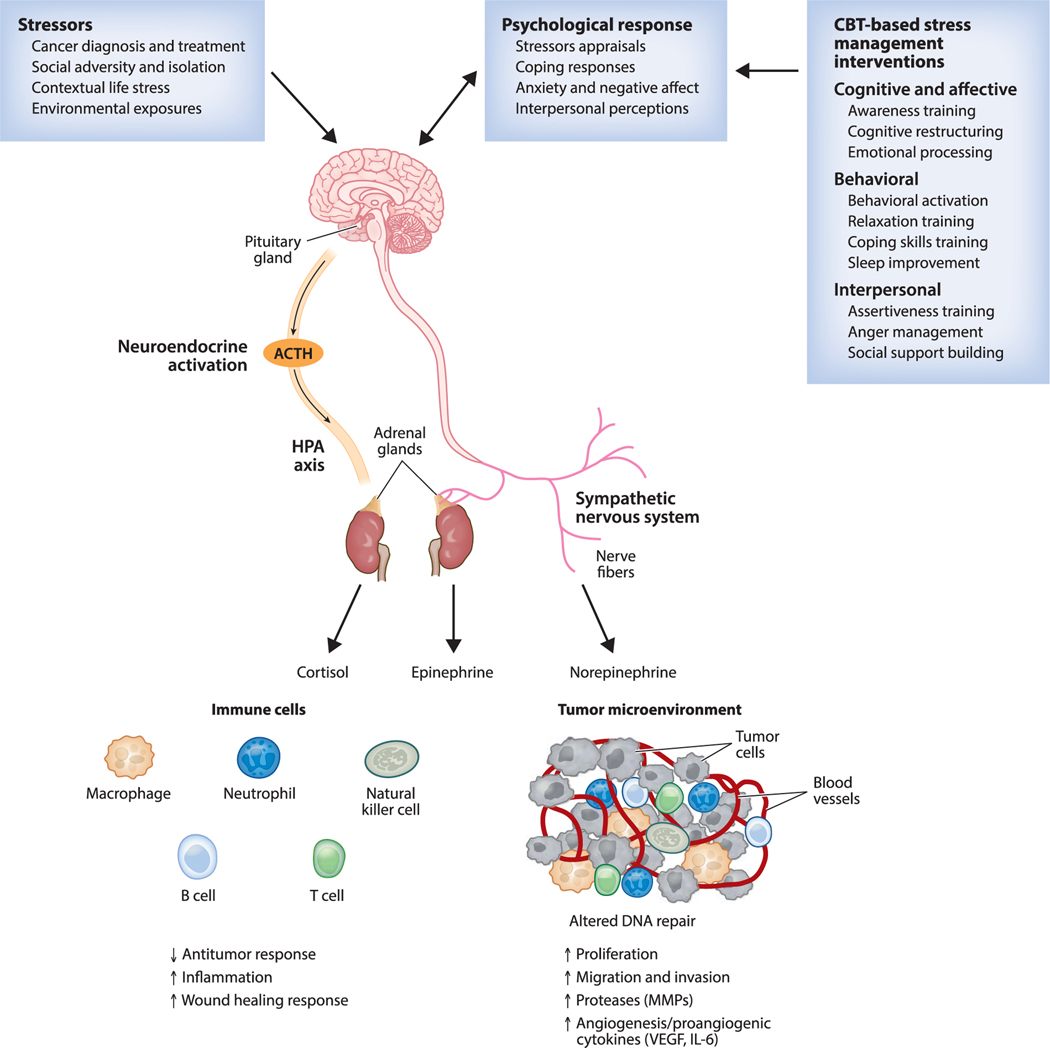
“…regions of the central nervous system, the hypothalamus produces corticotrophin releasing hormone (CRH), which in turn signals the pituitary to release adrenocorticotrophic hormone (ACTH) into the circulation, which signals the adrenal cortex to produce the glucocorticoid cortisol (McEwen 2002).”
BackgroundUse of Telehealth During the COVID-19 Pandemic: Scoping Review
Doraiswamy, S., Abraham, A., Mamtani, R., & Cheema, S. (2020) · Journal of Medical Internet Research · doi:10.2196/24087 · Cited by 698 · cited 1×
“The potential value for remote delivery solutions has been accelerated by the coronavirus disease 2019 (COVID-19) pandemic, which has hastened the development, acceptance, and integration of tele-medicine and tele-health into the medical treatment settings (Doraiswamy et al. 2020).”
BackgroundMicrorandomized trials: An experimental design for developing just-in-time adaptive interventions.
Klasnja, P., Hekler, E. B., Shiffman, S., Boruvka, A., Almirall, D., Tewari, A., & Murphy, S. A. (2015) · Health Psychology · doi:10.1037/hea0000305 · Cited by 671 · cited 1×
“…intervention (JITAI), multiphase optimization strategy (MOST), and sequential multiple assignment randomized trial (SMART) (Collins et al. 2007, Klasnja et al. 2015), as well as advancements in measurement and assessment such as computer adaptive tests (CATs) and ecological momentary…”
BackgroundFawzy, F. I. (1990) · Archives of General Psychiatry · doi:10.1001/archpsyc.1990.01810200028004 · Cited by 645 · cited 8×
“Moreover, those who experienced a distal recurrence had weaker cellular immune responses (LPR, NKCC) and greater elevations in WBC compared to those experiencing only a local recurrence (Thornton et al. 2008).”
BackgroundInfluentialAdverse Symptom Event Reporting by Patients vs Clinicians: Relationships With Clinical Outcomes
Basch, E., Jia, X., Heller, G., Barz, A., Sit, L., Fruscione, M., Appawu, M., Iasonos, A., Atkinson, T., Goldfarb, S., et al. (2009) · JNCI: Journal of the National Cancer Institute · doi:10.1093/jnci/djp386 · Cited by 624 · cited 1×
“…side effects or toxicities, such as pain, nausea, fatigue, and neuropathy, can significantly reduce the tolerability of cancer treatments (a patient’s capacity to adhere to therapy) and therefore have a negative impact on QoL and psychosocial adjustment (Basch et al. 2009, Pearman et al. 2018).”
BackgroundOsborn, R. L., Demoncada, A. C., & Feuerstein, M. (2006) · The International Journal of Psychiatry in Medicine · doi:10.2190/eufn-rv1k-y3tr-fk0l · Cited by 621 · cited 2×
“Observed effect sizes range from small to large (Cobeanu & David 2018, Osborn et al. 2006, O’Toole et al. 2017), and there are null findings for pain, physical functioning, overall QoL, and targets of intervention such as coping skills and self-efficacy (Osborn et al. 2006, O’Toole et al. 2017).”
BackgroundPowell, N. D., Sloan, E. K., Bailey, M. T., Arevalo, J. M. G., Miller, G. E., Chen, E., Kobor, M. S., Reader, B. F., Sheridan, J. F., & Cole, S. W. (2013) · Proceedings of the National Academy of Sciences · doi:10.1073/pnas.1310655110 · Cited by 588 · cited 1×
“…growth and metastasis via direct interactions with nerves in tumors, neurohormonal modulation of immune cell presence via SNS-mediated efflux of myeloid cells from the bone marrow (Powell et al. 2013), and up-regulated tumor cell activity (and immune-tumor cross-talk) in the tumor microenvironment.”
BackgroundArmes, J., Crowe, M., Colbourne, L., Morgan, H., Murrells, T., Oakley, C., Palmer, N., Ream, E., Young, A., & Richardson, A. (2009) · Journal of Clinical Oncology · doi:10.1200/jco.2009.22.5151 · Cited by 587 · cited 1×
“Furthermore, uncertainty about the future and concern for close others are two supportive care needs that individuals often report have not been adequately addressed by their care team (Armes et al. 2009, Harrison et al. 2009).”
BackgroundSympathetic nervous system regulation of the tumour microenvironment
Cole, S. W., Nagaraja, A. S., Lutgendorf, S. K., Green, P. A., & Sood, A. K. (2015) · Nature Reviews Cancer · doi:10.1038/nrc3978 · Cited by 576 · cited 4×
“…organs, including the heart, as well as with immune-related lymphoid organs such as the lymph nodes, bone marrow, and gut-associated lymphoid tissue (GALT), which produce or house different types of immune cells that bear beta-adrenergic receptors (β-ARs) on their cell membranes (Cole et al. 2015).”
BackgroundInfluentialMiller, G. E., Chen, E., Sze, J., Marin, T., Arevalo, J. M. G., Doll, R., Ma, R., & Cole, S. W. (2008) · Biological Psychiatry · doi:10.1016/j.biopsych.2008.03.017 · Cited by 552 · cited 2×
“Finally, chronic elevations in cortisol have been proposed to downregulate glucocorticoid receptors (GRs) in immune cells, effectively dampening anti-inflammatory control after immune responses and resulting in increased systemic inflammation (Miller et al. 2008).”
BackgroundSheard, T., & Maguire, P. (1999) · British Journal of Cancer · doi:10.1038/sj.bjc.6690596 · Cited by 533 · cited 1×
“…studies select for cancer patients and survivors with baseline elevations in distress and symptom burden, despite growing meta-analytic evidence suggesting that these individuals benefit most from psychological interventions (Heron-Speirs et al. 2012, Schneider et al. 2009, Sheard & Maguire 1999).”
BackgroundThe Emerging Field of Human Social Genomics
Slavich, G. M., & Cole, S. W. (2013) · Clinical Psychological Science · doi:10.1177/2167702613478594 · Cited by 523 · cited 16×
“With growing interest in the effects of stress factors on transcriptional (gene expression) changes in cancer and immune cells, molecular work has related stress-related variables to a comprehensive gene expression profile termed the conserved transcriptional response to adversity (CTRA) (Slavich & Cole 2013).”
BackgroundInfluentialHandbook of cognitive-behavioral therapies
(2010) · Choice Reviews Online · doi:10.5860/choice.48-1760 · Cited by 513
A functional genomic perspective on human well-being
Fredrickson, B. L., Grewen, K. M., Coffey, K. A., Algoe, S. B., Firestine, A. M., Arevalo, J. M. G., Ma, J., & Cole, S. W. (2013) · Proceedings of the National Academy of Sciences · doi:10.1073/pnas.1305419110 · Cited by 512 · cited 2×
“To do so, they used the previously described CTRA gene expression composite (Fredrickson et al. 2013) at baseline, 6 months, and 12 months.”
BackgroundMethodKoch, L., Jansen, L., Brenner, H., & Arndt, V. (2013) · Psycho-Oncology · doi:10.1002/pon.3022 · Cited by 511 · cited 2×
“Fear of cancer progression or recurrence and scanxiety are distressing and are associated with significantly worse QoL (Bui et al. 2021, Koch et al. 2013, Simard et al. 2013).”
BackgroundSavard, J., Simard, S., Ivers, H., & Morin, C. M. (2005) · Journal of Clinical Oncology · doi:10.1200/jco.2005.09.548 · Cited by 505 · cited 1×
“…of physical symptoms during cancer treatment, some CBT-based SMIs have been associated with reductions in sleep disruption (Lechner et al. 2014, Savard et al. 2005), fatigue severity and fatigue-related disruption (McFarlandet al. 2021, Vargas et al. 2014), and pain (Key et al. 2021) and…”
BackgroundFawzy, F. I. (1990) · Archives of General Psychiatry · doi:10.1001/archpsyc.1990.01810200037005 · Cited by 503 · cited 8×
“Moreover, those who experienced a distal recurrence had weaker cellular immune responses (LPR, NKCC) and greater elevations in WBC compared to those experiencing only a local recurrence (Thornton et al. 2008).”
BackgroundInfluentialPsychologic intervention improves survival for breast cancer patients: A randomized clinical trial
Andersen, B. L., Yang, H., Farrar, W. B., Golden‐Kreutz, D. M., Emery, C. F., Thornton, L. M., Young, D. C., & Carson, W. E. (2008) · Cancer · doi:10.1002/cncr.23969 · Cited by 493
Bower, J. E., Ganz, P. A., Irwin, M. R., Kwan, L., Breen, E. C., & Cole, S. W. (2011) · Journal of Clinical Oncology · doi:10.1200/jco.2011.36.1154 · Cited by 486 · cited 1×
“…greater serum IL-1β, IL-6, TNF-α, IL-1 receptor antagonist (IL-1RA), and TNF receptor II (TNF-RII) levels (Blomberg et al. 2009, Bouchard et al. 2016, Bower et al. 2011); greater s100A8/A9 levels (Taub et al. 2019); greater leukocyte nuclear NFκB DNA binding (Diaz et al. 2021); and greater…”
BackgroundGiese-Davis, J., Collie, K., Rancourt, K. M. S., Neri, E., Kraemer, H. C., & Spiegel, D. (2011) · Journal of Clinical Oncology · doi:10.1200/jco.2010.28.4455 · Cited by 458 · cited 1×
“For instance, greater depressive symptoms predict shorter overall survival in patients treated for nonmetastatic (Antoni et al. 2017) and metastatic (Giese-Davis et al. 2011) breast cancer and in patients with RCC (Cohen et al. 2012).”
BackgroundPsychological, behavioral, and immune changes after a psychological intervention: a clinical trial
Andersen, B. L., Farrar, W. B., Golden-Kreutz, D. M., Glaser, R., Emery, C. F., Crespin, T. R., Shapiro, C. L., & Carson, W. E. (2004) · Journal of Clinical Oncology · doi:10.1200/jco.2004.06.030 · Cited by 416 · cited 3×
“CBSM effects on LPR in one trial (McGregor et al. 2004) mirror those found in the prior 12-month CBT-based SMI by Andersen et al. (2004).”
BackgroundResultPsychosocial concerns and interventions for cancer survivors
Stanton, A. L. (2006) · Journal of Clinical Oncology · doi:10.1200/jco.2006.06.8775 · Cited by 409 · cited 1×
“A uthor M anuscript A uthor M anuscript STRESSORS AND CHALLENGES AMONG CANCER PATIENTS AND SURVIVORS Receiving a cancer diagnosis is a profoundly stressful experience involving unique and common challenges that often introduces uncertainty, fear, and emotional distress (Singer 2018, Stanton 2006).”
BackgroundStress and Immune Responses After Surgical Treatment for Regional Breast Cancer
Andersen, B. L., Farrar, W. B., Golden-Kreutz, D., Kutz, L. A., MacCallum, R., Courtney, M. E., & Glaser, R. (1998) · JNCI: Journal of the National Cancer Institute · doi:10.1093/jnci/90.1.30 · Cited by 398 · cited 1×
“…cellular immune function indicators such aslymphocyte proliferative responses (LPR), Tlymphocytehelpertype 1 (Th1) cytokine [interleukin-2 (IL-2) and interferon-gamma (IFNγ)] production, and natural killer cell cytotoxicity (NKCC) in breast cancer patients (Andersen et al. 1998, Levy et al. 1987).”
BackgroundThe impact of psychosocial stress and stress management on immune responses in patients with cancer
Antoni, M. H., & Dhabhar, F. S. (2019) · Cancer · doi:10.1002/cncr.31943 · Cited by 394 · cited 21×
“…and because inflammatory processes, which increase with age, stress, negative affect, and cancer treatment, diminish the vaccine response (Antoni & Dhabhar 2019), another needed application of SMI work is in the context of preventing opportunistic infections that occur during or after…”
InfluentialSelf-citationPark, C. L., Edmondson, D., Fenster, J. R., & Blank, T. O. (2008) · Journal of Consulting and Clinical Psychology · doi:10.1037/a0013348 · Cited by 376 · cited 1×
“Facing cancer can lead to opportunities for positive change as individuals engage in efforts to find meaning in their experience (Algoe & Stanton 2009, Park et al. 2008, Stanton et al. 2006).”
BackgroundKissane, D. W., Grabsch, B., Clarke, D. M., Smith, G. C., Love, A. W., Bloch, S., Snyder, R. D., & Li, Y. (2007) · Psycho-Oncology · doi:10.1002/pon.1185 · Cited by 376 · cited 1×
“However, other trials testing CBTbased and SET-based interventions in patients with metastatic breast cancer have also failed to show effects on overall survival (Kissane et al. 2007).”
BackgroundJohnson, J. A., Rash, J. A., Campbell, T. S., Savard, J., Gehrman, P. R., Perlis, M., Carlson, L. E., & Garland, S. N. (2016) · Sleep Medicine Reviews · doi:10.1016/j.smrv.2015.07.001 · Cited by 371 · cited 1×
“With respect to symptom burden, CBT interventions reduce pain, sleep disturbance, fatigue, and treatment side effects like nausea and vomiting (Cobeanu & David 2018, Getu et al. 2021, Johnson et al. 2016, Sheinfeld Gorin et al. 2012, Tatrow & Montgomery 2006).”
BackgroundTatrow, K., & Montgomery, G. H. (2006) · Journal of Behavioral Medicine · doi:10.1007/s10865-005-9036-1 · Cited by 349 · cited 4×
“Some evidence suggests that women and younger individuals may benefit more from CBT interventions (O’Toole et al. 2017) and individual-based interventions may be superior to group-based interventions (Cobeanu & David 2018, Tatrow & Montgomery 2006).”
BackgroundInfluentialStress and cancer: mechanisms, significance and future directions
Eckerling, A., Ricon-Becker, I., Sorski, L., Sandbank, E., & Ben-Eliyahu, S. (2021) · Nature Reviews Cancer · doi:10.1038/s41568-021-00395-5 · Cited by 348 · cited 12×
“…interventions among patients with nonmetastatic breast cancer (N = 5), metastatic breast cancer (N = 7), malignant melanoma (N = 2), and several other cancer types (N = 8) including lymphoma; esophageal, lung, and gastrointestinal cancer; and samples of mixed cancer types (Eckerling et al. 2021).”
BackgroundMethodResultInfluentialHow stress management improves quality of life after treatment for breast cancer.
Antoni, M. H., Lechner, S. C., Kazi, A., Wimberly, S. R., Sifre, T., Urcuyo, K. R., Phillips, K., Glück, S., & Carver, C. S. (2006) · Journal of Consulting and Clinical Psychology · doi:10.1037/0022-006x.74.6.1143 · Cited by 345 · cited 28×
“Glossary QoL quality of life SNS sympathetic nervous system NE norepinephrine β-AR beta-adrenergic receptor HPA hypothalamicpituitary-adrenal VEGF vascular endothelial growth factor IL interleukin IFN interferon TNF tumor necrosis factor CTRA conserved transcriptional response to adversity SMI stress management interv…”
BackgroundInfluentialSelf-citationFinancial toxicity in cancer care: Prevalence, causes, consequences, and reduction strategies
Lentz, R., Benson, A. B., & Kircher, S. (2019) · Journal of Surgical Oncology · doi:10.1002/jso.25374 · Cited by 336 · cited 3×
“This economic challenge, known as financial toxicity, is highly prevalent among individuals with cancer (Carrera et al. 2018, Lentz et al. 2019) and 1Readers may consult the National Cancer Institute’s Dictionary of Cancer Terms at https://www.cancer.gov/publications/dictionaries/ cancer-terms/.”
BackgroundDiurnal cortisol rhythm as a predictor of lung cancer survival
Sephton, S. E., Lush, E., Dedert, E. A., Floyd, A. R., Rebholz, W. N., Dhabhar, F. S., Spiegel, D., & Salmon, P. (2013) · Brain, Behavior, and Immunity · doi:10.1016/j.bbi.2012.07.019 · Cited by 309 · cited 2×
“…cortisol slopes (due partly to higher PM levels) have been associated with several cancer-promoting processes noted previously (Chang et al. 2022) and with decreased survival in breast cancer (Sephton et al. 2000), nonsmall cell lung cancer (Sephton et al. 2013), and RCC (Cohen et al. 2012).”
BackgroundCruess, D. G., Antoni, M. H., McGregor, B. A., Kilbourn, K. M., Boyers, A. E., Alferi, S. M., Carver, C. S., & Kumar, M. (2000) · Psychosomatic Medicine · doi:10.1097/00006842-200005000-00002 · Cited by 298 · cited 1×
“This is one of the only SMIs showing reductions in serum cortisol in two separate trials (Cruess et al. 2000, Phillips et al. 2008).”
MethodSelf-citationSocial stress induces glucocorticoid resistance in macrophages
Stark, J. L., Avitsur, R., Padgett, D. A., Campbell, K. A., Beck, F. M., & Sheridan, J. F. (2001) · American Journal of Physiology-Regulatory, Integrative and Comparative Physiology · doi:10.1152/ajpregu.2001.280.6.r1799 · Cited by 295 · cited 1×
“…reported by women in CBSM. Bioinformatic analysis of this pattern of gene expression change inferred decreased NFκB/Rel and globin transcription factor (GATA) family activity and increased IFN response factors, all of which were linked to SNS signaling in prior work (Stark et al. 2001).”
BackgroundMeta-Analysis of Psychosocial Interventions to Reduce Pain in Patients With Cancer
Sheinfeld Gorin, S., Krebs, P., Badr, H., Janke, E. A., Jim, H. S. L., Spring, B., Mohr, D. C., Berendsen, M. A., & Jacobsen, P. B. (2012) · Journal of Clinical Oncology · doi:10.1200/jco.2011.37.0437 · Cited by 292
Spiegel, D., Butler, L. D., Giese‐Davis, J., Koopman, C., Miller, E., DiMiceli, S., Classen, C. C., Fobair, P., Carlson, R. W., & Kraemer, H. C. (2007) · Cancer · doi:10.1002/cncr.22890 · Cited by 290 · cited 8×
“These include supportive expressive therapy (SET) (Spiegel et al. 1989) targeting existential issues; palliative care interventions targeting symptom and pain management (Temel et al. 2010); and physical exercise interventions targeting physical activity, strength, and aerobic fitness (McNeely et al. 2006).”
MethodInfluentialLevy, S., Herberman, R., Lippman, M., & d'Angelo, T. (1987) · Journal of Clinical Oncology · doi:10.1200/jco.1987.5.3.348 · Cited by 278 · cited 1×
“…cellular immune function indicators such aslymphocyte proliferative responses (LPR), Tlymphocytehelpertype 1 (Th1) cytokine [interleukin-2 (IL-2) and interferon-gamma (IFNγ)] production, and natural killer cell cytotoxicity (NKCC) in breast cancer patients (Andersen et al. 1998, Levy et al. 1987).”
BackgroundLintz, K., Moynihan, C., Steginga, S., Norman, A., Eeles, R., Huddart, R., Dearnaley, D., & Watson, M. (2003) · Psycho-Oncology · doi:10.1002/pon.702 · Cited by 272 · cited 1×
“A uthor M anuscript A uthor M anuscript A uthor M anuscript A uthor M anuscript decreased QoL, and threats to masculine identity (Bennett & Badger 2005, Lintz et al. 2003).”
BackgroundMcGregor, B. A., Antoni, M. H., Boyers, A., Alferi, S. M., Blomberg, B. B., & Carver, C. S. (2004) · Journal of Psychosomatic Research · doi:10.1016/s0022-3999(03)00036-9 · Cited by 266 · cited 2×
“…was shown not only to improve cancerspecific distress, mood, social adversity, and QoL (Antoni et al. 2001, 2006a,c) but also to decrease afternoon-evening (PM) serum cortisol levels (Phillips et al. 2008) and increase LPR and IL-2 and IFN-γ production (Antoni et al. 2009, McGregor et al. 2004).”
BackgroundResultSelf-citationCasellas‐Grau, A., Ochoa, C., & Ruini, C. (2017) · Psycho-Oncology · doi:10.1002/pon.4426 · Cited by 261 · cited 1×
“…et al. 2006), which is generally associated with better psychological adaptation, including lower anxiety and depressive symptoms as well as better QoL and increases in optimism, hope, and positive affect (Algoe & Stanton 2009, Casellas-Grau et al. 2017, Rajandram et al. 2011, Stanton et al. 2006).”
BackgroundThe increasing value of eHealth in the delivery of patient-centred cancer care
Penedo, F. J., Oswald, L. B., Kronenfeld, J. P., Garcia, S. F., Cella, D., & Yanez, B. (2020) · The Lancet Oncology · doi:10.1016/s1470-2045(20)30021-8 · Cited by 252 · cited 3×
“…Reach of Research on Stress Management Interventions to Underserved Cancer Populations A fourth area involves extending the reach of SMIs to the underserved through the use of culturally adapted interventions (Lechner et al. 2014, Penedo et al. 2018) and remote technologies (Penedo et al. 2020b).”
BackgroundSelf-citationCognitive-Behavioral Stress Management Reverses Anxiety-Related Leukocyte Transcriptional Dynamics
Antoni, M. H., Lutgendorf, S. K., Blomberg, B., Carver, C. S., Lechner, S., Diaz, A., Stagl, J., Arevalo, J. M. G., & Cole, S. W. (2012) · Biological Psychiatry · doi:10.1016/j.biopsych.2011.10.007 · Cited by 251 · cited 4×
“…greater leukocyte nuclear NFκB DNA binding (Diaz et al. 2021); and greater leukocyte IL1A, IL1B, IL6, and TNFA gene expression as well as increased expression of several chemokine, COX2 (prostaglandin-E, or PGE), and prometastatic (e.g., MMP-9) genes (Antoni et al. 2012, Jutagir et al. 2017).”
BackgroundInfluentialSelf-citationAntoni, M. H., Lechner, S., Diaz, A., Vargas, S., Holley, H., Phillips, K., McGregor, B., Carver, C. S., & Blomberg, B. (2009) · Brain, Behavior, and Immunity · doi:10.1016/j.bbi.2008.09.005 · Cited by 247 · cited 3×
“…was shown not only to improve cancerspecific distress, mood, social adversity, and QoL (Antoni et al. 2001, 2006a,c) but also to decrease afternoon-evening (PM) serum cortisol levels (Phillips et al. 2008) and increase LPR and IL-2 and IFN-γ production (Antoni et al. 2009, McGregor et al. 2004).”
BackgroundSelf-citationAntoni, M. H., Wimberly, S. R., Lechner, S. C., Kazi, A., Sifre, T., Urcuyo, K. R., Phillips, K., Smith, R. G., Petronis, V. M., Guellati, S., et al. (2006) · American Journal of Psychiatry · doi:10.1176/ajp.2006.163.10.1791 · Cited by 237 · cited 28×
“Glossary QoL quality of life SNS sympathetic nervous system NE norepinephrine β-AR beta-adrenergic receptor HPA hypothalamicpituitary-adrenal VEGF vascular endothelial growth factor IL interleukin IFN interferon TNF tumor necrosis factor CTRA conserved transcriptional response to adversity SMI stress management interv…”
BackgroundInfluentialSelf-citationHost Factors and Cancer Progression: Biobehavioral Signaling Pathways and Interventions
Lutgendorf, S. K., Sood, A. K., & Antoni, M. H. (2010) · Journal of Clinical Oncology · doi:10.1200/jco.2009.26.9357 · Cited by 237 · cited 2×
“A uthor M anuscript A uthor M anuscript A uthor M anuscript A uthor M anuscript relate to cancer incidence, progression, and metastasis across different cancers (Falcinelli et al. 2021, Lutgendorf et al. 2010).”
BackgroundSelf-citationPosttraumatic Stress and Posttraumatic Growth in Cancer Survivorship: A Review
Jim, H. S. L., & Jacobsen, P. B. (2008) · The Cancer Journal · doi:10.1097/ppo.0b013e31818d8963 · Cited by 235
McGregor, B. A., & Antoni, M. H. (2009) · Brain, Behavior, and Immunity · doi:10.1016/j.bbi.2008.08.002 · Cited by 231 · cited 1×
“Generally, studies showing intervention effects on physiological adaptation in cancer patients also showed parallel effects on psychological adaptation (McGregor & Antoni 2009).”
BackgroundSelf-citationHenoch, I., & Danielson, E. (2009) · Psycho-Oncology · doi:10.1002/pon.1424 · Cited by 227 · cited 1×
“These treatment decisions occur while experiencing significant disruptions to patients’ daily lives and the social/occupational roles that often define their identity (Henoch & Danielson 2009).”
BackgroundPenedo, F. J., Molton, I., Dahn, J. R., Shen, B.-J., Kinsinger, D., Traeger, L., Siegel, S., Schneiderman, N., & Antoni, M. (2006) · Annals of Behavioral Medicine · doi:10.1207/s15324796abm3103_8 · Cited by 223 · cited 2×
“…men treated for early-stage prostate cancer, a 10-week CBSM (versus a 1-day PE control) improved QoL (Penedo et al. 2004) and sexual functioning pre/post intervention (Molton et al. 2008), and CBSM effects on QoL were mediated by improved perceived stress management skills (Penedo et al. 2006).”
BackgroundSelf-citationMeasuring Aging and Identifying Aging Phenotypes in Cancer Survivors
Guida, J. L., Ahles, T. A., Belsky, D., Campisi, J., Cohen, H. J., DeGregori, J., Fuldner, R., Ferrucci, L., Gallicchio, L., Gavrilov, L., et al. (2019) · JNCI: Journal of the National Cancer Institute · doi:10.1093/jnci/djz136 · Cited by 216 · cited 1×
“CAA is defined as the combined effects of cancer diagnosis, treatment, and their sequelae on the physiological aging process (Guida et al. 2019).”
BackgroundStanton, A. L., Rowland, J. H., & Ganz, P. A. (2015) · American Psychologist · doi:10.1037/a0037875 · Cited by 214 · cited 2×
“The most common symptoms individuals experience are pain, fatigue, and impairments in physical functioning; however, sexual and urinary/bowel dysfunction, cognitive impairment, and sleep disturbance are also frequently reported (Kent et al. 2015, Stanton et al. 2015, Stein et al. 2008).”
BackgroundReactivation of dormant tumor cells by modified lipids derived from stress-activated neutrophils
Perego, M., Tyurin, V. A., Tyurina, Y. Y., Yellets, J., Nacarelli, T., Lin, C., Nefedova, Y., Kossenkov, A., Liu, Q., Sreedhar, S., et al. (2020) · Science Translational Medicine · doi:10.1126/scitranslmed.abb5817 · Cited by 209 · cited 1×
“…activating β-ARs can stimulate release of s100A8/A9 ligands from neutrophils, which promotes activation of the receptor for advanced glycation end (RAGE) products, causing release of oxidized lipids that activate dormant cancer cells via a fibroblast growth factor pathway (Perego et al. 2020).”
BackgroundHart, S. L., Hoyt, M. A., Diefenbach, M., Anderson, D. R., Kilbourn, K. M., Craft, L. L., Steel, J. L., Cuijpers, P., Mohr, D. C., Berendsen, M., et al. (2012) · JNCI: Journal of the National Cancer Institute · doi:10.1093/jnci/djs256 · Cited by 206 · cited 2×
“…demonstrated that CBT decreases symptoms of depression among individuals with cancer who had elevated symptoms at baseline with effect sizes that were significantly larger than those of problem-solving therapy and marginally larger than those of pharmacologic interventions (Hart et al. 2012).”
BackgroundKissane, D., & Li, Y. (2008) · Cancer · doi:10.1002/cncr.23179 · Cited by 197
Cohen, L., Cole, S. W., Sood, A. K., Prinsloo, S., Kirschbaum, C., Arevalo, J. M. G., Jennings, N. B., Scott, S., Vence, L., Wei, Q., et al. (2012) · PLoS ONE · doi:10.1371/journal.pone.0042324 · Cited by 197 · cited 9×
“…I and type II), and antibody (e.g., lower Ig) genes, researchers have related greater leukocyte CTRA expression to psychosocial adversity conditions such as greater negative affect, depressive symptoms, and lower socioeconomic status (SES) (Cohen et al. 2012, Knight et al. 2016) in cancer patients.”
BackgroundInfluentialAndersen, B. L., Farrar, W. B., Golden-Kreutz, D., Emery, C. F., Glaser, R., Crespin, T., & Carson, W. E. (2007) · Brain, Behavior, and Immunity · doi:10.1016/j.bbi.2007.03.005 · Cited by 195 · cited 2×
“For instance, stage 2–3 breast cancer patients undergoing treatment assigned to a 12-month CBT-based SMI showed better health status based on staff ratings at 12-month follow-up, and initial reductions in distress at 4 months predicted better health status at 12 months (Andersen et al. 2007a).”
BackgroundSocial influences on clinical outcomes of patients with ovarian cancer
Lutgendorf, S. K., De Geest, K., Bender, D., Ahmed, A., Goodheart, M. J., Dahmoush, L., Zimmerman, M. B., Penedo, F. J., Lucci, J. A., Ganjei-Azar, P., et al. (2012) · Journal of Clinical Oncology · doi:10.1200/jco.2011.39.4411 · Cited by 177 · cited 1×
“Lower SES predicts shorter leukemiafree survival (Knight et al. 2016), and lower social support predicts shorter survival in patients with ovarian cancer (Lutgendorf et al. 2012).”
BackgroundSelf-citationStagl, J. M., Bouchard, L. C., Lechner, S. C., Blomberg, B. B., Gudenkauf, L. M., Jutagir, D. R., Glück, S., Derhagopian, R. P., Carver, C. S., & Antoni, M. H. (2015) · Cancer · doi:10.1002/cncr.29076 · Cited by 174 · cited 8×
“In terms of clinical significance, these two trials yielded number needed to treat (NNT) values of 1.53 (Stagl et al. 2015b) and 2.92 (Andersen et al. 2008), with NNT ≤ 3 considered a large effect (Citrome 2008).”
BackgroundMethodInfluentialSelf-citationFawzy, F. I., Canada, A. L., & Fawzy, N. W. (2003) · Archives of General Psychiatry · doi:10.1001/archpsyc.60.1.100 · Cited by 173 · cited 1×
“…group intervention showed improved coping and mood (Fawzy et al.1990a), increases in NKCC (Fawzy et al. 1990b), and longer survival and lower odds of recurrence over a 6-year follow-up (Fawzy et al. 1993), but these effects on survival were no longer significant at 10 years (Fawzy et al. 2003).”
BackgroundAntoni, M. H. (2013) · Brain, Behavior, and Immunity · doi:10.1016/j.bbi.2012.05.009 · Cited by 173 · cited 1×
“A uthor M anuscript A uthor M anuscript A uthor M anuscript A uthor M anuscript in multiple qualitative and quantitative reviews (and at least 8 meta-analyses) in the past 10 years (Antoni 2013, Eckerling et al. 2021, Mirosevic et al. 2019, Oh et al. 2016).”
MethodSelf-citationPenedo, F. J., Dahn, J. R., Molton, I., Gonzalez, J. S., Kinsinger, D., Roos, B. A., Carver, C. S., Schneiderman, N., & Antoni, M. H. (2004) · Cancer · doi:10.1002/cncr.11894 · Cited by 169 · cited 23×
“Among men treated for early-stage prostate cancer, a 10-week CBSM (versus a 1-day PE control) improved QoL (Penedo et al. 2004) and sexual functioning pre/post intervention (Molton et al. 2008), and CBSM effects on QoL were mediated by improved perceived stress management skills (Penedo et al.…”
BackgroundInfluentialSelf-citationSchneider, S., Moyer, A., Knapp-Oliver, S., Sohl, S., Cannella, D., & Targhetta, V. (2010) · Journal of Behavioral Medicine · doi:10.1007/s10865-009-9227-2 · Cited by 169 · cited 2×
“…studies select for cancer patients and survivors with baseline elevations in distress and symptom burden, despite growing meta-analytic evidence suggesting that these individuals benefit most from psychological interventions (Heron-Speirs et al. 2012, Schneider et al. 2009, Sheard & Maguire 1999).”
BackgroundKent, E. E., Ambs, A., Mitchell, S. A., Clauser, S. B., Smith, A. W., & Hays, R. D. (2015) · Cancer · doi:10.1002/cncr.29119 · Cited by 163 · cited 1×
“The most common symptoms individuals experience are pain, fatigue, and impairments in physical functioning; however, sexual and urinary/bowel dysfunction, cognitive impairment, and sleep disturbance are also frequently reported (Kent et al. 2015, Stanton et al. 2015, Stein et al. 2008).”
BackgroundLate effects of cancer and its treatment
Ganz, P. A. (2001) · Seminars in Oncology Nursing · doi:10.1053/sonu.2001.27914 · Cited by 159 · cited 1×
“Receiving cancer treatment can also increase the risk for subsequent cancers (known as second primary cancers), and toxicities can adversely impact the cardiovascular and reproductive systems (Demoor-Goldschmidt & de Vathaire 2019, Ganz 2001).”
BackgroundAndersen, B. L., Thornton, L. M., Shapiro, C. L., Farrar, W. B., Mundy, B. L., Yang, H.-C., & Carson, W. E. (2010) · Clinical Cancer Research · doi:10.1158/1078-0432.ccr-10-0278 · Cited by 158 · cited 1×
“Finally, women who had received the intervention previously had a lower risk of death over the subsequent 80 months postrecurrence compared to controls (Andersen et al. 2010).”
BackgroundOut-of-Pocket Costs, Financial Distress, and Underinsurance in Cancer Care
Chino, F. L., Peppercorn, J. M., Rushing, C. N., Kamal, A. H., Altomare, I. P., Samsa, G., & Zafar, S. Y. (2017) · JAMA Oncology · doi:10.1001/jamaoncol.2017.2148 · Cited by 157 · cited 1×
“Patients who are more recently diagnosed and those who receive adjuvant therapies are more likely to experience financial toxicity (Chino et al. 2017).”
BackgroundCompelling or irrelevant? Using number needed to treat can help decide
Citrome, L. (2008) · Acta Psychiatrica Scandinavica · doi:10.1111/j.1600-0447.2008.01194.x · Cited by 156 · cited 1×
“In terms of clinical significance, these two trials yielded number needed to treat (NNT) values of 1.53 (Stagl et al. 2015b) and 2.92 (Andersen et al. 2008), with NNT ≤ 3 considered a large effect (Citrome 2008).”
BackgroundInfluentialStress management intervention for women with breast cancer.
Antoni, M. H. (2003) · doi:10.1037/10488-000 · Cited by 148
Self-citationPhillips, K. M., Antoni, M. H., Lechner, S. C., Blomberg, B. B., Llabre, M. M., Avisar, E., Glück, S., DerHagopian, R., & Carver, C. S. (2008) · Psychosomatic Medicine · doi:10.1097/psy.0b013e318186fb27 · Cited by 142 · cited 3×
“…was shown not only to improve cancerspecific distress, mood, social adversity, and QoL (Antoni et al. 2001, 2006a,c) but also to decrease afternoon-evening (PM) serum cortisol levels (Phillips et al. 2008) and increase LPR and IL-2 and IFN-γ production (Antoni et al. 2009, McGregor et al. 2004).”
BackgroundMethodSelf-citationStagl, J. M., Lechner, S. C., Carver, C. S., Bouchard, L. C., Gudenkauf, L. M., Jutagir, D. R., Diaz, A., Yu, Q., Blomberg, B. B., Ironson, G., et al. (2015) · Breast Cancer Research and Treatment · doi:10.1007/s10549-015-3626-6 · Cited by 141 · cited 8×
“In terms of clinical significance, these two trials yielded number needed to treat (NNT) values of 1.53 (Stagl et al. 2015b) and 2.92 (Andersen et al. 2008), with NNT ≤ 3 considered a large effect (Citrome 2008).”
BackgroundMethodInfluentialSelf-citationTargeting of RAGE-ligand signaling impairs breast cancer cell invasion and metastasis
Kwak, T., Drews‐Elger, K., Ergonul, A. B., Miller, P. C., Braley, A. E., Hwang, G. H., Zhao, D., Besser, A., Yamamoto, Y., Yamamoto, H., et al. (2016) · Oncogene · doi:10.1038/onc.2016.324 · Cited by 139 · cited 1×
“These findings may be clinically relevant, since s100A8/A9 levels have been shown to predict breast cancer metastasis (Kwak et al. 2017), and greater NFκB nuclear binding may enhance inflammatory gene expression underlying the CTRA pattern, which was shown to predict disease-free survival in breast…”
BackgroundReview of risk factors of secondary cancers among cancer survivors
Goldschmidt, C. D., & de Vathaire, F. (2018) · British Journal of Radiology · doi:10.1259/bjr.20180390 · Cited by 130
Scanxiety: a scoping review about scan-associated anxiety
Bui, K. T., Liang, R., Kiely, B. E., Brown, C. S. B., Dhillon, H. M., & Blinman, P. L. (2021) · BMJ Open · doi:10.1136/bmjopen-2020-043215 · Cited by 127 · cited 22×
“Glossary QoL quality of life SNS sympathetic nervous system NE norepinephrine β-AR beta-adrenergic receptor HPA hypothalamicpituitary-adrenal VEGF vascular endothelial growth factor IL interleukin IFN interferon TNF tumor necrosis factor CTRA conserved transcriptional response to adversity SMI stress management interv…”
BackgroundInfluentialThornton, L. M., Andersen, B. L., Schuler, T. A., & Carson, W. E. (2009) · Psychosomatic Medicine · doi:10.1097/psy.0b013e3181b0545c · Cited by 122 · cited 2×
“In a subgroup of depressed women in this cohort monitored over this follow-up period, those receiving the intervention showed decreases in total white blood cells (WBC) and neutrophils (changes consistent with less systemic inflammatory signaling) compared to controls (Thornton et al. 2009).”
BackgroundCoping processes relevant to posttraumatic growth: an evidence-based review
Rajandram, R. K., Jenewein, J., McGrath, C., & Zwahlen, R. A. (2011) · Supportive Care in Cancer · doi:10.1007/s00520-011-1105-0 · Cited by 119 · cited 1×
“…et al. 2006), which is generally associated with better psychological adaptation, including lower anxiety and depressive symptoms as well as better QoL and increases in optimism, hope, and positive affect (Algoe & Stanton 2009, Casellas-Grau et al. 2017, Rajandram et al. 2011, Stanton et al. 2006).”
BackgroundPenedo, F. J., Traeger, L., Dahn, J., Molton, I., Gonzalez, J. S., Schneiderman, N., & Antoni, M. H. (2007) · International Journal of Behavioral Medicine · doi:10.1007/bf03000188 · Cited by 115 · cited 1×
“A Spanish-language version of CBSM with some attention to cultural factors (e.g., family interdependence) improved sexual function and physical, emotional, and total well-being in monolingual Hispanic men treated for prostate cancer (Penedo et al. 2007).”
BackgroundSelf-citationJacobsen, P. B., & Andrykowski, M. A. (2015) · American Psychologist · doi:10.1037/a0036513 · Cited by 108 · cited 1×
“Anxiety and depressed mood are two of the most common emotional reactions among individuals who are undergoing cancer treatment (Jacobsen & Andrykowski 2015) or have completed treatment (Stanton et al. 2015).”
BackgroundGudenkauf, L. M., Antoni, M. H., Stagl, J. M., Lechner, S. C., Jutagir, D. R., Bouchard, L. C., Blomberg, B. B., Glück, S., Derhagopian, R. P., Giron, G. L., et al. (2015) · Journal of Consulting and Clinical Psychology · doi:10.1037/ccp0000020 · Cited by 108 · cited 1×
“Those assigned to either relaxation training or CBT showed improved mood and emotional well-being compared to those in health education, with similar effects in CBT and relaxation training conditions (Gudenkauf et al. 2015).”
MethodSelf-citationNerve Fibers in Breast Cancer Tissues Indicate Aggressive Tumor Progression
Huang, D., Su, S., Cui, X., Shen, X., Zeng, Y., Wu, W., Chen, J., Chen, F., He, C., Liu, J., et al. (2014) · Medicine · doi:10.1097/md.0000000000000172 · Cited by 105 · cited 1×
“We now know that tumors also have nerves and β-ARs (Huang et al. 2014).”
BackgroundPearman, T. P., Beaumont, J. L., Mroczek, D. K., O'Connor, M. L., & Cella, D. F. (2017) · Cancer · doi:10.1002/cncr.31133 · Cited by 104 · cited 1×
“…side effects or toxicities, such as pain, nausea, fatigue, and neuropathy, can significantly reduce the tolerability of cancer treatments (a patient’s capacity to adhere to therapy) and therefore have a negative impact on QoL and psychosocial adjustment (Basch et al. 2009, Pearman et al. 2018).”
BackgroundScan-associated distress in lung cancer: Quantifying the impact of “scanxiety”
Bauml, J. M., Troxel, A. B., Epperson, C. N., Cohen, R. B., Schmitz, K. H., Stricker, C. T., Shulman, L. N., Bradbury, A. R., Mao, J. J. J., & Langer, C. J. (2016) · Lung Cancer · doi:10.1016/j.lungcan.2016.08.002 · Cited by 102 · cited 1×
“…these patients experience a high degree of uncertainty and anxiety tied to multiple repeated diagnostic procedures as care teams must continuously evaluate how their cancer is responding to treatment and whether their treatment plan needs to be changed (Bauml et al. 2016, Dunn et al. 2017).”
BackgroundMolton, I. R., Siegel, S. D., Penedo, F. J., Dahn, J. R., Kinsinger, D. P., Traeger, L. N., Carver, C. S., Shen, B., Kumar, M., Schneiderman, N., et al. (2008) · Journal of Psychosomatic Research · doi:10.1016/j.jpsychores.2008.01.004 · Cited by 95 · cited 2×
“…CBT-based SMIs have been associated with reductions in sleep disruption (Lechner et al. 2014, Savard et al. 2005), fatigue severity and fatigue-related disruption (McFarlandet al. 2021, Vargas et al. 2014), and pain (Key et al. 2021) and improved sexual and urinary functioning (Molton et al. 2008).”
BackgroundSelf-citationGetu, M. A., Chen, C., Panpan, W., Mboineki, J. F., Dhakal, K., & Du, R. (2020) · Quality of Life Research · doi:10.1007/s11136-020-02665-5 · Cited by 90
Antoni, M. H., Bouchard, L. C., Jacobs, J. M., Lechner, S. C., Jutagir, D. R., Gudenkauf, L. M., Carver, C. S., Lutgendorf, S., Cole, S. W., Lippman, M., et al. (2016) · Psychoneuroendocrinology · doi:10.1016/j.psyneuen.2016.09.012 · Cited by 89 · cited 10×
“These intervention effects on s100A8/A9 and NFκB DNA binding mirror a similar pattern observed in leukocyte proinflammatory gene expression in women with breast cancer participating in the trial of 10-week CBSM, who showed mitigation of the rise in CTRA (which includes five genes relevant for NFκB binding: NFKB1, NFKB…”
BackgroundMethodInfluentialSelf-citationTime to Study Metastatic-Cancer Survivorship
Langbaum, T. S., & Smith, T. J. (2019) · New England Journal of Medicine · doi:10.1056/nejmp1901103 · Cited by 87 · cited 1×
“…cumulative effects of cancer treatment on symptomatic side effects and toxicities, which underlines the importance of patient-centered care and ongoing discussion with care providers regarding the goals of care and the possible benefits and side effects of cancer treatments (Langbaum & Smith 2019).”
BackgroundO'Toole, M. S., Zachariae, R., Renna, M. E., Mennin, D. S., & Applebaum, A. (2017) · Psycho-Oncology · doi:10.1002/pon.4144 · Cited by 86 · cited 5×
“Some evidence suggests that women and younger individuals may benefit more from CBT interventions (O’Toole et al. 2017) and individual-based interventions may be superior to group-based interventions (Cobeanu & David 2018, Tatrow & Montgomery 2006).”
BackgroundInfluentialKnight, J. M., Rizzo, J. D., Logan, B. R., Wang, T., Arevalo, J. M. G., Ma, J., & Cole, S. W. (2016) · Clinical Cancer Research · doi:10.1158/1078-0432.ccr-15-1344 · Cited by 86 · cited 3×
“Lower SES predicts shorter leukemiafree survival (Knight et al. 2016), and lower social support predicts shorter survival in patients with ovarian cancer (Lutgendorf et al. 2012).”
BackgroundSinger, S. (2017) · Recent results in cancer research/Recent Results in Cancer Research · doi:10.1007/978-3-319-64310-6_1 · Cited by 84
Yanez, B., McGinty, H. L., Mohr, D. C., Begale, M. J., Dahn, J. R., Flury, S. C., Perry, K. T., & Penedo, F. J. (2015) · Cancer · doi:10.1002/cncr.29658 · Cited by 83 · cited 1×
“Recently completed RCTs have shown that web-based CBSM platforms can improve psychological adaptation in men with prostate cancer (Penedo et al. 2020a, Yanez et al. 2015).”
BackgroundSelf-citationMiller, J. W., Smith, J. L., Ryerson, A. B., Tucker, T. C., & Allemani, C. (2017) · Cancer · doi:10.1002/cncr.30988 · Cited by 81 · cited 1×
“As in the case of health care more broadly, there exist huge and entrenched cultural, ethnic, and racial disparities in cancer morbidity and mortality rates (Miller et al. 2017).”
BackgroundStress and cancer. Part I: Mechanisms mediating the effect of stressors on cancer
Mravec, B., Tibensky, M., & Horvathova, L. (2020) · Journal of Neuroimmunology · doi:10.1016/j.jneuroim.2020.577311 · Cited by 81 · cited 2×
“We refer the interested reader to recent comprehensive reviews of this work (Chang et al. 2022, Eckerling et al. 2021, Falcinelli et al. 2021, Mravec et al. 2020).”
BackgroundMethodRCT of a psychological intervention for patients with cancer: I. Mechanisms of change.
Andersen, B. L., Shelby, R. A., & Golden-Kreutz, D. M. (2007) · Journal of Consulting and Clinical Psychology · doi:10.1037/0022-006x.75.6.927 · Cited by 76 · cited 2×
“For instance, stage 2–3 breast cancer patients undergoing treatment assigned to a 12-month CBT-based SMI showed better health status based on staff ratings at 12-month follow-up, and initial reductions in distress at 4 months predicted better health status at 12 months (Andersen et al. 2007a).”
BackgroundSystematic review of psychosocial outcomes for patients with advanced melanoma
Dunn, J., Watson, M., Aitken, J. F., & Hyde, M. K. (2017) · Psycho-Oncology · doi:10.1002/pon.4290 · Cited by 76 · cited 1×
“…these patients experience a high degree of uncertainty and anxiety tied to multiple repeated diagnostic procedures as care teams must continuously evaluate how their cancer is responding to treatment and whether their treatment plan needs to be changed (Bauml et al. 2016, Dunn et al. 2017).”
BackgroundDepression in Men With Prostate Cancer
Bennett, G., & Badger, T. A. (2005) · Oncology Nursing Forum · doi:10.1188/05.onf.545-556 · Cited by 75 · cited 1×
“A uthor M anuscript A uthor M anuscript A uthor M anuscript A uthor M anuscript decreased QoL, and threats to masculine identity (Bennett & Badger 2005, Lintz et al. 2003).”
BackgroundBlomberg, B. B., Alvarez, J. P., Diaz, A., Romero, M. G., Lechner, S. C., Carver, C. S., Holley, H., & Antoni, M. H. (2009) · Journal of Psychosomatic Research · doi:10.1016/j.jpsychores.2009.05.016 · Cited by 72 · cited 1×
“…and low social support have been related to greater serum IL-1β, IL-6, TNF-α, IL-1 receptor antagonist (IL-1RA), and TNF receptor II (TNF-RII) levels (Blomberg et al. 2009, Bouchard et al. 2016, Bower et al. 2011); greater s100A8/A9 levels (Taub et al. 2019); greater leukocyte nuclear NFκB DNA…”
BackgroundSelf-citationFalcinelli, M., Thaker, P. H., Lutgendorf, S. K., Conzen, S. D., Flaherty, R. L., & Flint, M. S. (2021) · Cancer Research · doi:10.1158/0008-5472.can-21-0684 · Cited by 70 · cited 4×
“A uthor M anuscript A uthor M anuscript A uthor M anuscript A uthor M anuscript relate to cancer incidence, progression, and metastasis across different cancers (Falcinelli et al. 2021, Lutgendorf et al. 2010).”
BackgroundMethodInfluentialObesity and endocrine therapy resistance in breast cancer: Mechanistic insights and perspectives
Barone, I., Caruso, A., Gelsomino, L., Giordano, C., Bonofiglio, D., Catalano, S., & Andò, S. (2021) · Obesity Reviews · doi:10.1111/obr.13358 · Cited by 69 · cited 1×
“Excessive weight is also associated with worse prognosis for breast cancer itself (Barone et al. 2021), with pre- and postmenopausal overweight and obese women having a greater likelihood of recurrence and mortality (Chan et al. 2014, Protani et al. 2010) and of developing a secondary cancer in the…”
BackgroundPsychosocial group intervention for patients with primary breast cancer: a randomised trial
Boesen, E. H., Karlsen, R., Christensen, J., Paaschburg, B., Nielsen, D., Bloch, I. S., Christiansen, B., Jacobsen, K., & Johansen, C. (2011) · European Journal of Cancer · doi:10.1016/j.ejca.2011.01.002 · Cited by 66 · cited 1×
“Among interventions for malignant melanoma, CBT-based SMIs showed survival effects in one trial over a 6-year follow-up (Fawzy et al. 1993) but not in another trial with a 4- to 6-year follow-up (Boesen et al. 2011).”
Bouchard, L. C., Antoni, M. H., Blomberg, B. B., Stagl, J. M., Gudenkauf, L. M., Jutagir, D. R., Diaz, A., Lechner, S., Glück, S., Derhagopian, R. P., et al. (2016) · Psychosomatic Medicine · doi:10.1097/psy.0000000000000261 · Cited by 66 · cited 1×
“…have been related to greater serum IL-1β, IL-6, TNF-α, IL-1 receptor antagonist (IL-1RA), and TNF receptor II (TNF-RII) levels (Blomberg et al. 2009, Bouchard et al. 2016, Bower et al. 2011); greater s100A8/A9 levels (Taub et al. 2019); greater leukocyte nuclear NFκB DNA binding (Diaz et al.…”
BackgroundSelf-citationBiobehavioral Pathways and Cancer Progression: Insights for Improving Well-Being and Cancer Outcomes
Chang, A., Sloan, E. K., Antoni, M. H., Knight, J. M., Telles, R., & Lutgendorf, S. K. (2022) · Integrative Cancer Therapies · doi:10.1177/15347354221096081 · Cited by 65
Self-citationVargas, S., Antoni, M. H., Carver, C. S., Lechner, S. C., Wohlgemuth, W., Llabre, M., Blomberg, B. B., Glück, S., & DerHagopian, R. P. (2014) · International Journal of Behavioral Medicine · doi:10.1007/s12529-013-9374-2 · Cited by 64 · cited 2×
“…assigned to a 10-week CBSM intervention reported improved fatigue-related daily dysfunction and sleep quality, less difficulty falling asleep, and reductions in onset insomnia over 12 months, with sleep latency effects mediated by increased perceived stress management skills (Vargas et al. 2014).”
BackgroundSelf-citationMirosevic, S., Jo, B., Kraemer, H. C., Ershadi, M., Neri, E., & Spiegel, D. (2019) · Cancer Medicine · doi:10.1002/cam4.1895 · Cited by 60 · cited 9×
“Based upon recent meta-analyses, it appears that CBT-based SMI approaches are particularly effective, but more so in patients with earlier, nonmetastatic disease, in particular breast cancer (Mirosevic et al. 2019).”
BackgroundMethodResultInfluentialThe salience of existential concerns across the cancer control continuum
Lee, V., & Loiselle, C. G. (2012) · Palliative and Supportive Care · doi:10.1017/s1478951511000745 · Cited by 58 · cited 1×
“A diagnosis of cancer also frequently brings salient awareness of one’s own mortality and vulnerability and a degree of uncertainty that can further exacerbate negative emotional reactions (Lee & Loiselle 2012).”
BackgroundImmune, endocrine, and behavioral precursors to breast cancer recurrence: a case-control analysis
Thornton, L. M., Andersen, B. L., & Carson, W. E. (2008) · Cancer Immunology Immunotherapy · doi:10.1007/s00262-008-0485-6 · Cited by 58 · cited 3×
“Moreover, those who experienced a distal recurrence had weaker cellular immune responses (LPR, NKCC) and greater elevations in WBC compared to those experiencing only a local recurrence (Thornton et al. 2008).”
BackgroundGoel, N., Westrick, A. C., Bailey, Z., Hernandez, A. E., Balise, R. R., Goldfinger, E., Antoni, M. H., Stoler, J. B., Kesmodel, S. B., & Kobetz, E. N. (2022) · PubMed · doi:10.1097/sla.0000000000005375 · Cited by 58
Self-citationMosher, C. E., Lepore, S. J., Wu, L., Austin, J., Valdimarsdottir, H., Rowley, S., Isola, L., Redd, W. H., & Rini, C. (2012) · Journal of Health Psychology · doi:10.1177/1359105311432490 · Cited by 56 · cited 1×
“…into adjuvant therapy settings such as preparation for radiation treatment (simulation visits) and the chemotherapy infusion suite, where patients are attending multiple treatment sessions and are often isolated from their family and social support system (Biagioli et al. 2017, Mosher et al. 2012).”
BackgroundPsychosocial and Integrative Oncology: Interventions Across the Disease Trajectory.
Carlson, L. E. (2023) · Annual Review of Psychology · doi:10.1146/annurev-psych-032620-031757 · Cited by 56
Penedo, F. J., Fox, R. S., Oswald, L. B., Moreno, P. I., Boland, C. L., Estabrook, R., McGinty, H. L., Mohr, D. C., Begale, M. J., Dahn, J. R., et al. (2020) · International Journal of Behavioral Medicine · doi:10.1007/s12529-019-09839-7 · Cited by 54 · cited 3×
“…Reach of Research on Stress Management Interventions to Underserved Cancer Populations A fourth area involves extending the reach of SMIs to the underserved through the use of culturally adapted interventions (Lechner et al. 2014, Penedo et al. 2018) and remote technologies (Penedo et al. 2020b).”
BackgroundSelf-citationLechner, S. C., Whitehead, N. E., Vargas, S., Annane, D. W., Robertson, B. R., Carver, C. S., Kobetz, E., & Antoni, M. H. (2014) · JNCI Monographs · doi:10.1093/jncimonographs/lgu032 · Cited by 51 · cited 2×
“Among studies of physical symptoms during cancer treatment, some CBT-based SMIs have been associated with reductions in sleep disruption (Lechner et al. 2014, Savard et al. 2005), fatigue severity and fatigue-related disruption (McFarlandet al. 2021, Vargas et al. 2014), and pain (Key et al. 2021)…”
BackgroundSelf-citationTang, M., Liu, X., Wu, Q., & Shi, Y. (2020) · Cancer Nursing · doi:10.1097/ncc.0000000000000804 · Cited by 51
Personal Growth During the Experience of Advanced Cancer: A Systematic Review
Moreno, P. I., & Stanton, A. L. (2013) · The Cancer Journal · doi:10.1097/ppo.0b013e3182a5bbe7 · Cited by 50 · cited 2×
“Individuals with advanced or metastatic cancer also cite finding meaning at the end of life as important and perceive positive consequences as a result of their experience (Moreno & Stanton 2013).”
BackgroundSelf-citationWang, A. W.-T., Bouchard, L. C., Gudenkauf, L. M., Jutagir, D. R., Fisher, H. M., Jacobs, J. M., Blomberg, B. B., Lechner, S. C., Carver, C. S., & Antoni, M. H. (2018) · Journal of Psychosomatic Research · doi:10.1016/j.jpsychores.2018.07.011 · Cited by 47
Self-citationAntoni, M. H., Jacobs, J. M., Bouchard, L. C., Lechner, S. C., Jutagir, D. R., Gudenkauf, L. M., Blomberg, B. B., Glück, S., & Carver, C. S. (2017) · General Hospital Psychiatry · doi:10.1016/j.genhosppsych.2016.10.002 · Cited by 46 · cited 1×
“For instance, greater depressive symptoms predict shorter overall survival in patients treated for nonmetastatic (Antoni et al. 2017) and metastatic (Giese-Davis et al. 2011) breast cancer and in patients with RCC (Cohen et al. 2012).”
BackgroundSelf-citationDignani, M. C., Costantini, P., Salgueira, C., Jordán, R., Guerrini, G., Valledor, A., Herrera, F., Nenna, A., Mora, C. A. R., Roccia-Rossi, I., et al. (2014) · F1000Research · doi:10.12688/f1000research.5251.2 · Cited by 44 · cited 2×
“Two areas of CAA in cancer survivorship include the role of the diminished immunoregulation in infectious disease (Dignani et al. 2014, Shehata & Annu Rev Psychol.”
BackgroundReis, J. C., Antoni, M. H., & Travado, L. (2020) · CNS Spectrums · doi:10.1017/s1092852918001621 · Cited by 44 · cited 5×
“Greater distress/negative affect has been associated with less activity in cortical and subcortical regions that are important to stressor processing, including the anterior insula, thalamus, hypothalamus, ventromedial prefrontal cortex (PFC), and lateral PFC (Reis et al. 2020).”
BackgroundInfluentialSelf-citationInfluenza Vaccination in Cancer Patients Undergoing Systemic Therapy
Shehata, M., & Karim, N. A. (2014) · Clinical Medicine Insights Oncology · doi:10.4137/cmo.s13774 · Cited by 41 · cited 1×
“For example, immune responses to influenza vaccination in cancer patients receiving treatment are weakened (Shehata & Karim 2014), and influenza A is associated with a 66% greater incidence of pneumonia and an 18% mortality rate at 30 days in cancer patients (Dignani et al. 2014).”
National Cancer Institute (2020) · Definitions · doi:10.32388/w3jpuc · Cited by 37
Majed, B., Dozol, A., Ribassin-Majed, L., Senouci, K., & Asselain, B. J. R. (2010) · Breast Cancer Research and Treatment · doi:10.1007/s10549-010-1153-z · Cited by 36 · cited 1×
“…a greater likelihood of recurrence and mortality (Chan et al. 2014, Protani et al. 2010) and of developing a secondary cancer in the unaffected breast or at a separate primary site (Majed et al. 2011); these effects are all believed to be mediated, in part, by heightened inflammatory signaling.”
BackgroundDignani, M. C., Costantini, P., Salgueira, C., Jordán, R., Guerrini, G., Valledor, A., Herrera, F., Nenna, A., Mora, C. A. R., Roccia-Rossi, I., et al. (2014) · F1000Research · doi:10.12688/f1000research.5251.1 · Cited by 36
The patient perspective in the era of personalized medicine: What about scanxiety?
Custers, J. A. E., Davis, L., Messiou, C., Prins, J. B., & van der Graaf, W. T. A. (2021) · Cancer Medicine · doi:10.1002/cam4.3889 · Cited by 35
Meta-analysis of psychosocial interventions on survival time in patients with cancer
Oh, P. J., Shin, S. R., Ahn, H. S., & Kim, H. J. (2016) · Psychology & Health · doi:10.1080/08870446.2015.1111370 · Cited by 34 · cited 3×
“A meta-analysis of 15 RCTs completed prior to 2015 and meeting Cochrane criteria for methodological quality involved nearly 3,000 cancer patients (Oh et al. 2016).”
BackgroundMethodPhillips, K. M., Antoni, M. H., Carver, C. S., Lechner, S. C., Penedo, F. J., McCullough, M. E., Glück, S., Derhagopian, R. P., & Blomberg, B. B. (2011) · Cognitive Therapy and Research · doi:10.1007/s10608-011-9398-3 · Cited by 34 · cited 1×
“A deeper look at each trial reveals that reported distress and/or cortisol decreases were related to either increased frequency of relaxation practice or increased confidence in using SMI skills such as relaxation and cognitive restructuring (Andersen et al. 2007b, Phillips et al. 2011).”
BackgroundSelf-citationTaub, C. J., Lippman, M. E., Hudson, B. I., Blomberg, B. B., Diaz, A., Fisher, H. M., Nahin, E. R., Lechner, S. C., Kwak, T., Hwang, G. H., et al. (2019) · Cancer · doi:10.1002/cncr.31965 · Cited by 32 · cited 4×
“A uthor M anuscript A uthor M anuscript A uthor M anuscript A uthor M anuscript levels across the period of cancer treatment, while those in relaxation training or CBT showed slight declines (Taub et al. 2019).”
InfluentialSelf-citationJutagir, D. R., Blomberg, B. B., Carver, C. S., Lechner, S. C., Timpano, K. R., Bouchard, L. C., Gudenkauf, L. M., Jacobs, J. M., Diaz, A., Lutgendorf, S. K., et al. (2017) · Breast Cancer Research and Treatment · doi:10.1007/s10549-017-4316-3 · Cited by 30 · cited 1×
“…greater leukocyte nuclear NFκB DNA binding (Diaz et al. 2021); and greater leukocyte IL1A, IL1B, IL6, and TNFA gene expression as well as increased expression of several chemokine, COX2 (prostaglandin-E, or PGE), and prometastatic (e.g., MMP-9) genes (Antoni et al. 2012, Jutagir et al. 2017).”
BackgroundSelf-citationCobeanu, O., & David, D. (2018) · Journal of Clinical Psychology in Medical Settings · doi:10.1007/s10880-017-9526-7 · Cited by 30 · cited 6×
“Some evidence suggests that women and younger individuals may benefit more from CBT interventions (O’Toole et al. 2017) and individual-based interventions may be superior to group-based interventions (Cobeanu & David 2018, Tatrow & Montgomery 2006).”
BackgroundInfluentialAddison, S., Shirima, D., Aboagye-Mensah, E. B., Dunovan, S. G., Pascal, E. Y., Lustberg, M. B., Arthur, E. K., & Nolan, T. S. (2021) · Journal of Cancer Survivorship · doi:10.1007/s11764-021-01094-8 · Cited by 30
Cognitive-Behavioral Stress Management for Prostate Cancer Recovery: Facilitator Guide
Penedo, F. J., Antoni, M. H., & Schneiderman, N. (2008) · doi:10.1093/med:psych/9780195336979.001.0001 · Cited by 29 · cited 1×
“…is a 10-week CBT-based SMI that incorporates cognitive, behavioral, and interpersonal skills training and relaxation training through in-session didactic and role-playing activities as well as homework and daily practice to help improve QoL and reduce symptoms (Antoni 2003a, Penedo et al. 2008).”
BackgroundSelf-citation(2021) · doi:10.1093/med/9780190097653.001.0001 · Cited by 29
Stanton, A. L. (2005) · Journal of Clinical Oncology · doi:10.1200/jco.2005.01.913 · Cited by 28 · cited 1×
“It is difficult to demonstrate the benefit of CBT in individuals with low levels of baseline distress or symptom burden as outcomes of interest have little room for improvement (Stanton 2005).”
BackgroundIs benefit finding good for individuals with chronic disease?
Algoe, S. B., & Stanton, A. L. (2009) · Medical illness and positive life change: Can crisis lead to personal transformation? · doi:10.1037/11854-010 · Cited by 27
Biagioli, V., Piredda, M., Annibali, O., Iacorossi, L., D’Angelo, D., Matarese, M., Alvaro, R., & Marinis, M. G. D. (2017) · Journal of Clinical Nursing · doi:10.1111/jocn.13777 · Cited by 26 · cited 1×
“…into adjuvant therapy settings such as preparation for radiation treatment (simulation visits) and the chemotherapy infusion suite, where patients are attending multiple treatment sessions and are often isolated from their family and social support system (Biagioli et al. 2017, Mosher et al. 2012).”
BackgroundDiaz, A., Taub, C. J., Lippman, M. E., Antoni, M. H., & Blomberg, B. B. (2021) · Psychoneuroendocrinology · doi:10.1016/j.psyneuen.2021.105163 · Cited by 25 · cited 6×
“Again, women in health education revealed significant increases in nuclear NFκB DNA binding over 12 months, while those in CBT or relaxation training revealed small decreases over the same period (Diaz et al. 2021).”
BackgroundResultInfluentialSelf-citationPenedo, F. J., Antoni, M. H., Moreno, P. I., Traeger, L. N., Perdomo, D. M., Dahn, J. R., Miller, G. E., Cole, S. W., Orjuela, J., Pizarro, E., et al. (2018) · Contemporary Clinical Trials · doi:10.1016/j.cct.2018.06.010 · Cited by 24 · cited 2×
“…Reach of Research on Stress Management Interventions to Underserved Cancer Populations A fourth area involves extending the reach of SMIs to the underserved through the use of culturally adapted interventions (Lechner et al. 2014, Penedo et al. 2018) and remote technologies (Penedo et al. 2020b).”
BackgroundSelf-citationSurveillance of the adult cancer survivor.
Wilbur, J. (2015) · PubMed · Cited by 18
Heron‐Speirs, H. A., Harvey, S. T., & Baken, D. (2012) · Clinical Psychology Science and Practice · doi:10.1111/j.1468-2850.2012.01274.x · Cited by 13 · cited 1×
“…studies select for cancer patients and survivors with baseline elevations in distress and symptom burden, despite growing meta-analytic evidence suggesting that these individuals benefit most from psychological interventions (Heron-Speirs et al. 2012, Schneider et al. 2009, Sheard & Maguire 1999).”
BackgroundReam, M. E., Saez-Flores, E., Taub, C. J., Diaz, A., Frasca, D., Blomberg, B. B., & Antoni, M. H. (2022) · Frontiers in Bioscience-Landmark · doi:10.31083/j.fbl2705148 · Cited by 11
Self-citationTaub, C. J., Diaz, A., Blomberg, B. B., Jutagir, D. R., Fisher, H. M., Gudenkauf, L. M., Lippman, M. E., Hudson, B. I., & Antoni, M. H. (2022) · Psychosomatic Medicine · doi:10.1097/psy.0000000000001109 · Cited by 10
Self-citation
Research works printed but not linked: 8
- Am. Cancer Soc. 2020b. Understanding advanced and metastatic cancer. American Cancer Society. https://www.cancer.org/treatment/understanding-your-diagnosis/advanced-cancer/what-is.html
- Am. Soc. Clin. Oncol. 2019. Long-term side effects of cancer treatment. Cancer. Net. https://www.cancer.net/survivorship/long-term-side-effects-cancer-treatment
- Antoni MH. 2003b. Stress Management Intervention for Women with Breast Cancer: Training Manual & Participant’s Workbook. Washington, DC: Am. Psychol. Assoc. · DOI · Paper page
- Antoni MH, Taub CJ, Ream M, Fisher HM, Nahin ER, 2021. Video-conferenced Stress Management and Relaxation Training (VSMART) for older women undergoing treatment for breast cancer. Int. J.Behav. Med 28(Suppl. 1): S71
- Key RG, Liebling D, Malhotra VT, Passik SD, Moryl N, Breitbart WS. 2021. Cancer-related pain. In PsychoOncology,ed. Breitbart W, Butow P, Jacobsen P, Lam W, Lazenby M, Loscalzo M, pp. 235– 54. New York: Oxford Univ. Press. 4th ed.
- McFarland DC, Bjerre-Real C, Alici Y, Breitbart WS. 2021. Cancer-related fatigue. In Psycho-Oncology, ed. Breitbart W, Butow P, Jacobsen P, Lam W, Lazenby M, Loscalzo M, pp. 265– 75. New York: Oxford Univ. Press. 4th ed.
- Selye H. 1956. The Stress of Life. New York: McGraw-Hill
- Stanton AL, Bower JE, Low CA. 2006. Posttraumatic growth after cancer. In Handbook of Posttraumatic Growth: Research & Practice, ed. Calhoun LG, Tedeschi RG, pp. 138– 75. Mahwah, NJ: Lawrence Erlbaum
Cited by
Rogerson, O., Wilding, S., Prudenzi, A., & O’Connor, D. B. (2024) · Psychoneuroendocrinology · doi:10.1016/j.psyneuen.2023.106415 · Cited by 87
The Role of Behavioral Factors on Chronic Diseases—Practice and Knowledge Gaps
Rahelić, V., Perković, T., Romić, L., Perković, P., Majanović, S. K., Pavić, E., & Rahelić, D. (2024) · Healthcare · doi:10.3390/healthcare12242520 · Cited by 90
Psychosocial and Integrative Oncology: Interventions Across the Disease Trajectory.
Carlson, L. E. (2023) · Annual Review of Psychology · doi:10.1146/annurev-psych-032620-031757 · Cited by 56
Jiang, X., Sun, J., Song, R., Wang, Y., Li, J., & Shi, R. (2024) · Frontiers in Psychology · doi:10.3389/fpsyg.2023.1253266 · Cited by 43
A Review of the Impact of Maternal Prenatal Stress on Offspring Microbiota and Metabolites
Yeramilli, V. A., Cheddadi, R., Shah, J., Brawner, K. M., & Martin, C. A. (2023) · Metabolites · doi:10.3390/metabo13040535 · Cited by 40
Metadata
- Authors
- Antoni, M. H., Moreno, P. I., & Penedo, F. J.
- Affiliations
- University of Miami (US)
- Venue
- Annual Review of Psychology
- Publisher
- Annual Reviews
- Published
- 2023-01-18
- Volume
- 74
- Issue
- 1
- Pages
- 423-455
- ISSN
- 0066-4308 (ISSN-L)
- 1545-2085
- PMC
- PMC10358426
- OpenAlex
- W4290932450
- Semantic Scholar
- 1ccd3a0bd8c27e3f1ad088a6fc4911738e8b6038
- Cited by
- 132
- References
- 169
- Citations by year
- 2026: 41 · 2025: 49 · 2024: 30 · 2023: 11
- FWCI
- 2.78
- Type
- journal article
- Language
- en
- Open access
- hybrid
- doi.org
- Locations
- Annual Review of Psychology (publishedVersion, cc-by)
- PubMed (publishedVersion)
- PubMed Central (acceptedVersion, cc-by)
- Funders
- Sylvester Comprehensive Cancer Center, University of Miami Health Systems (1P30CA240139)
- National Institutes of Health
- National Cancer Institute (R01CA064710, R01CA196953, UG3CA260317, R01CA206456, P30CA008748, K01CA258955, P30CA240139, R37CA255875)
- Topics
- Health Sciences › Medicine › Oncology › Cancer survivorship and care
- Life Sciences › Biochemistry, Genetics and Molecular Biology › Cancer Research › Cancer, Stress, Anesthesia, and Immune Response
- Social Sciences › Psychology › Clinical Psychology › Mindfulness and Compassion Interventions
- Keywords
- stress management interventions, cancer patients, cancer survivors, psychological adjustment, physiological adaptation, quality of life, emotional distress, tumor growth and metastasis, health outcomes, randomized controlled trials
- MeSH terms
- Adaptation, Physiological, Adaptation, Psychological, Humans, Neoplasms, Quality of Life, Stress, Psychological, Outcome Assessment, Health Care, Survivors
About these checks
Registry, retraction, Cites and statistics results are computed, not judged, with one exception: a printed reference that no index lists is read once by a model before it counts as a citation error. Claims are extracted by a model and kept only when their quote appears verbatim in the text; each cited source is then checked, with a model’s help, for whether it says what the claim relies on. Those verdicts can be wrong — read the claim’s quote and the cited source before relying on one.
Statistics and arithmetic are recomputed, not judged.
Confidence bands are shown only for fields calibrated on our annotated test set. None is calibrated yet, so no band is shown.
What counts as a claim ›How we measure confidence ›How we check this ›
Are you an author, or do you see a problem with this page? Request a review
Data sources
Bibliographic data: Semantic Scholar, OpenAlex, Crossref.
Contains information from the Semantic Scholar Academic Graph Datasets, made available under the ODC Attribution License (ODC-BY 1.0).
Semantic Scholar’s data is described in: Kinney, R., et al. (2023). The Semantic Scholar Open Data Platform. arXiv:2301.10140.
