

Stress Management Interventions to Facilitate Psychological and Physiological Adaptation and Optimal Health Outcomes in Cancer Patients and Survivors
Open accessThe DOI matches its Crossref record; 166 of the 169 references it cites were found in a registry or an index.
Abstract
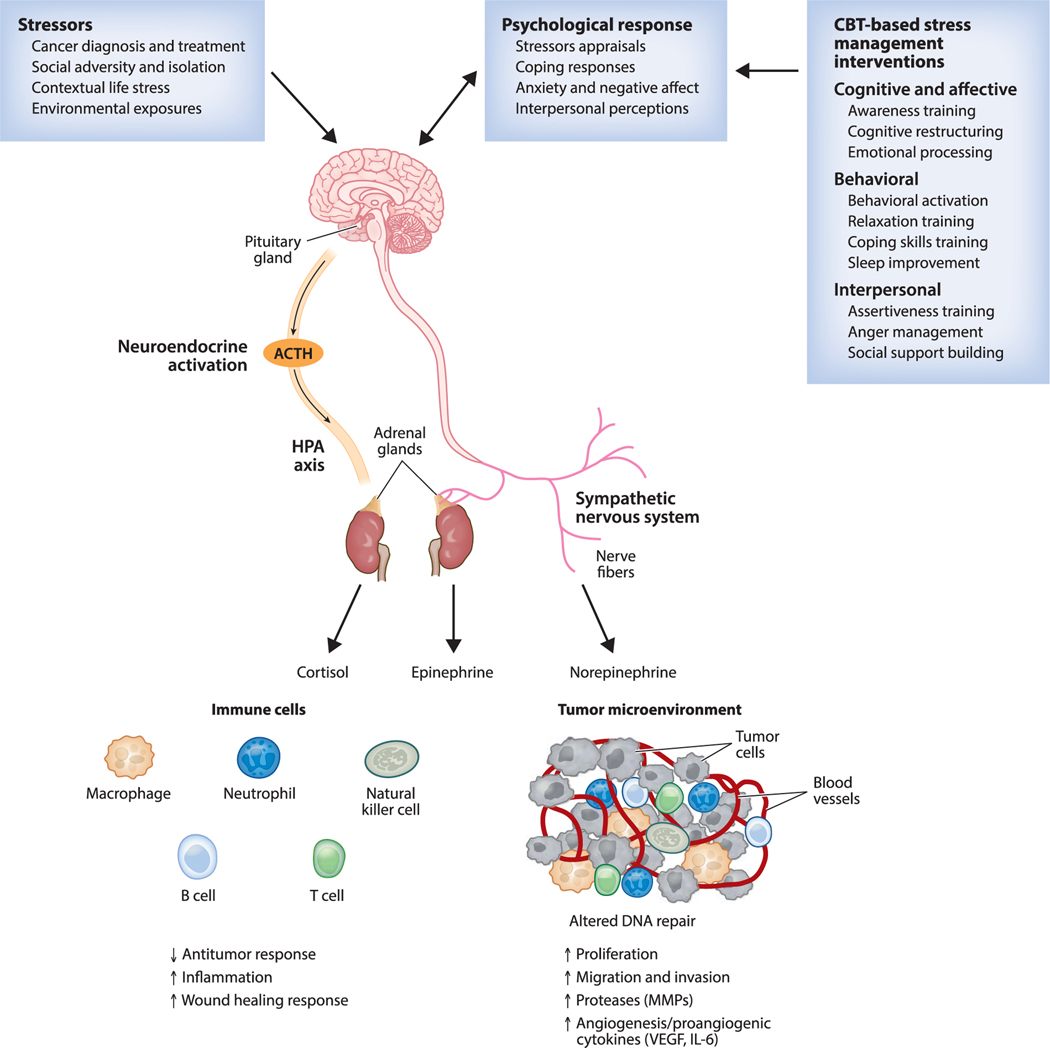
Cancer diagnosis and treatment constitute profoundly stressful experiences involving unique and common challenges that generate uncertainty, fear, and emotional distress. Individuals with cancer must cope with multiple stressors, from the point of diagnosis through surgical and adjuvant treatments and into survivorship, that require substantial psychological and physiological adaptation. This can take a toll on quality of life and well-being and may also promote cellular and molecular changes that can exacerbate physical symptoms and facilitate tumor growth and metastasis, thereby contributing to negative long-term health outcomes. Since modifying responses tostressors might improve psychological and physiological adaptation, quality of life, and clinical health outcomes, several randomized controlled trials have tested interventions that aim to facilitate stress management. We review evidence for the effects of stress management interventions on psychological and physiological adaptation and health outcomes in cancer patients and survivors and summarize emerging research in the field to address unanswered questions.
Overview
The claims and statistics of this paper haven’t been checked yet.
Free: it reads the open-access text and checks the first 5 claims that cite a source we can check. Create a free account to check every claim.
Integrity signals
Registry
Cites
Statistics
Figures
Verification
Claims the paper makes
The claims and statistics of this paper haven’t been checked yet.
Free: it reads the open-access text and checks the first 5 claims that cite a source we can check. Create a free account to check every claim.
Claims other papers make about this one
Each is checked against this paper’s own text: does it say what the citing paper says it does?
The cited source says what the claim attributes to it.
In the citing paper
“There is also evidence that psychological in terventions can influence cortisol levels in patients with cancer, psy chiatric conditions and other health issues (e.g., Antoni et al., 2023, Saban et al., 2022).”
From Effectiveness of stress management interventions to change cortisol levels: a systematic review and meta-analysis. (2024) · cites this paper as Antoni et al., 2023
Self-check
Percentages, sums and reported differences re-computed from the paper’s own numbers.
The self-check needs the paper’s full text.
Citations
Cites
Early Palliative Care for Patients with Metastatic Non–Small-Cell Lung Cancer
Temel, J. S., Greer, J. A., Muzikansky, A., Gallagher, E. R., Admane, S., Jackson, V. A., Dahlin, C. M., Blinderman, C. D., Jacobsen, J., Pirl, W. F., et al. (2010) · New England Journal of Medicine · doi:10.1056/nejmoa1000678 · Cited by 7,482 · cited 1×
“…supportive expressive therapy (SET) (Spiegel et al. 1989) targeting existential issues; palliative care interventions targeting symptom and pain management (Temel et al. 2010); and physical exercise interventions targeting physical activity, strength, and aerobic fitness (McNeely et al. 2006).”
BackgroundTARGET ARTICLE: "Posttraumatic Growth: Conceptual Foundations and Empirical Evidence"
Tedeschi, R. G., & Calhoun, L. G. (2004) · Psychological Inquiry · doi:10.1207/s15327965pli1501_01 · Cited by 7,154
Factors associated with COVID-19-related death using OpenSAFELY
Williamson, E. J., Walker, A. J., Bhaskaran, K., Bacon, S., Bates, C., Morton, C. E., Curtis, H. J., Mehrkar, A., Evans, D., Inglesby, P., et al. (2020) · Nature · doi:10.1038/s41586-020-2521-4 · Cited by 6,674 · cited 1×
“In fact, cancer-specific and all-cause mortality may even be affected by COVID-19 experiences and stress via risk behaviors (e.g., lack of physical activity, changes in lifestyle behaviors including poor sleep and nutrition, and poor treatment adherence/follow-up) (Williamson et al. 2020).”
BackgroundThe socio-economic implications of the coronavirus pandemic (COVID-19): a review
Nicola, M., Alsafi, Z., Sohrabi, C., Kerwan, A., Al-Jabir, A., Iosifidis, C., Agha, M., & Agha, R. (2020) · International Journal of Surgery · doi:10.1016/j.ijsu.2020.04.018 · Cited by 6,351 · cited 1×
“…leisure activities, financial strain, and fears and concerns over the physical health status of an already compromised population synergistically contribute to greater levels of psychosocial distress in cancer survivors (Kuderer et al. 2020, McGinty et al. 2020, Nicola et al. 2020, U.S. Census Bur.”
BackgroundCancer treatment and survivorship statistics, 2019
Miller, K. D., Nogueira, L., Mariotto, A. B., Rowland, J. H., Yabroff, K. R., Alfano, C. M., Jemal, A., Kramer, J. L., & Siegel, R. L. (2019) · CA: A Cancer Journal for Clinicians · doi:10.3322/caac.21565 · Cited by 4,226 · cited 1×
“Advances in cancer prevention, screening, and treatment have led to a significant increase in the number of individuals who live beyond a cancer diagnosis and the completion of curative-intent treatment (Miller et al. 2019).”
BackgroundThe Efficacy of Cognitive Behavioral Therapy: A Review of Meta-analyses
Hofmann, S. G., Asnaani, A., Vonk, I. J. J., Sawyer, A. T., & Fang, A. (2012) · Cognitive Therapy and Research · doi:10.1007/s10608-012-9476-1 · Cited by 3,445 · cited 2×
“CBT is one of the most widely studied intervention approaches and has strong evidence for effectiveness in several disorders and symptom clusters that are common in the cancer context, including anxiety, depression, and overall psychological distress and stress (Hofmann et al. 2012).”
BackgroundMitchell, A. J., Chan, M., Bhatti, H., Halton, M., Grassi, L., Johansen, C., & Meader, N. (2011) · The Lancet Oncology · doi:10.1016/s1470-2045(11)70002-x · Cited by 2,449 · cited 1×
“About 30–40% of individuals with cancer meet diagnostic criteria for anxiety and other mood disorders (Mitchell et al. 2011); however, subclinical elevations in symptoms and other forms of cancer-related distress still negatively impact QoL and should be addressed.”
BackgroundEFFECT OF PSYCHOSOCIAL TREATMENT ON SURVIVAL OF PATIENTS WITH METASTATIC BREAST CANCER
Spiegel, D., Kraemer, H., Bloom, J., & Gottheil, E. (1989) · The Lancet · doi:10.1016/s0140-6736(89)91551-1 · Cited by 2,353
A meta-analytic review of benefit finding and growth.
Helgeson, V. S., Reynolds, K. A., & Tomich, P. L. (2006) · Journal of Consulting and Clinical Psychology · doi:10.1037/0022-006x.74.5.797 · Cited by 1,864 · cited 1×
“…life appreciation, improved social relationships, and a deepened sense of self and meaning that individuals attribute to stressful life experiences like cancer, have been referred to as benefit finding, post-traumatic growth, and personal growth (Helgeson et al. 2006, Tedeschi & Calhoun 2004).”
BackgroundClinical impact of COVID-19 on patients with cancer (CCC19): a cohort study
Kuderer, N. M., Choueiri, T. K., Shah, D. P., Shyr, Y., Rubinstein, S. M., Rivera, D. R., Shete, S., Hsu, C.-Y., Desai, A., de Lima Lopes, G., et al. (2020) · The Lancet · doi:10.1016/s0140-6736(20)31187-9 · Cited by 1,726 · cited 1×
“…leisure activities, financial strain, and fears and concerns over the physical health status of an already compromised population synergistically contribute to greater levels of psychosocial distress in cancer survivors (Kuderer et al. 2020, McGinty et al. 2020, Nicola et al. 2020, U.S. Census Bur.”
Background
Research works printed but not linked: 8
- Am. Cancer Soc. 2020b. Understanding advanced and metastatic cancer. American Cancer Society. https://www.cancer.org/treatment/understanding-your-diagnosis/advanced-cancer/what-is.html
- Am. Soc. Clin. Oncol. 2019. Long-term side effects of cancer treatment. Cancer. Net. https://www.cancer.net/survivorship/long-term-side-effects-cancer-treatment
- Antoni MH. 2003b. Stress Management Intervention for Women with Breast Cancer: Training Manual & Participant’s Workbook. Washington, DC: Am. Psychol. Assoc. · DOI · Paper page
- Antoni MH, Taub CJ, Ream M, Fisher HM, Nahin ER, 2021. Video-conferenced Stress Management and Relaxation Training (VSMART) for older women undergoing treatment for breast cancer. Int. J.Behav. Med 28(Suppl. 1): S71
- Key RG, Liebling D, Malhotra VT, Passik SD, Moryl N, Breitbart WS. 2021. Cancer-related pain. In PsychoOncology,ed. Breitbart W, Butow P, Jacobsen P, Lam W, Lazenby M, Loscalzo M, pp. 235– 54. New York: Oxford Univ. Press. 4th ed.
- McFarland DC, Bjerre-Real C, Alici Y, Breitbart WS. 2021. Cancer-related fatigue. In Psycho-Oncology, ed. Breitbart W, Butow P, Jacobsen P, Lam W, Lazenby M, Loscalzo M, pp. 265– 75. New York: Oxford Univ. Press. 4th ed.
- Selye H. 1956. The Stress of Life. New York: McGraw-Hill
- Stanton AL, Bower JE, Low CA. 2006. Posttraumatic growth after cancer. In Handbook of Posttraumatic Growth: Research & Practice, ed. Calhoun LG, Tedeschi RG, pp. 138– 75. Mahwah, NJ: Lawrence Erlbaum
Cited by
Items 101–145 of 145
Zahran, M. M. A. A., Mohamed, H. N. A. E.-A., & Ibrahim, S. M. E. (2025) · Mansoura Nursing Journal · doi:10.21608/mnj.2025.355796.1483
Gireesh, G. R., & Leena, K. C. (2025) · Journal of Education and Health Promotion · doi:10.4103/jehp.jehp_342_25
Gong, R., Moreno, P. I., Yanez, B. R., & Penedo, F. J. (2025) · Journal of Behavioral Medicine · doi:10.1007/s10865-025-00612-8 · Cited by 1
“Strong evidence supports that CBSM enhances psychological adaptation in cancer survivors, leading to improved overall quality of life and reduced emotional distress (Addison et al., 2022; Antoni et al., 2023 ; Penedo et al., 2006; Tang et al., 2020 ).”
Self-citationLiow, K. X., Cheong, A. I., Yap, S. Y., Seah, B., Wu, X. V., & Ooi, M. G. M. (2025) · European Journal of Oncology Nursing · doi:10.1016/j.ejon.2025.103023
A atuação da psicologia hospitalar no manejo de doenças crônicas durante a hospitalização
de Sousa, T. C., Rocha, A. S., Holanda, R. R., & Rodrigues, H. M. P. (2025) · Revista da SBPH · doi:10.57167/rev-sbph.2025.v28.868
Bøhn, S. K. H., Svendsen, K., Balto, A., Gjelsvik, Y. M., Myklebust, T. Å., Børøsund, E., Eriksen, H. R., Meland, A., Østby, K. A., Nes, L. S., et al. (2024) · Figshare · doi:10.6084/m9.figshare.27071779
Rogerson, O. (2024) · White Rose eTheses Online (University of Leeds, The University of Sheffield, University of York)
Supplements Jubilee Joint Forum 35 IMAB & 15 SEEC - Section Health Management
(2026) · Journal of IMAB - Annual Proceeding (Scientific Papers) · doi:10.5272/jimab.2025v31supplement-hm
Pan, H., Wu, L., & Sheng, S. (2026) · Frontiers in Cellular and Infection Microbiology · doi:10.3389/fcimb.2026.1771312 · Cited by 1
Mikaeil, A., Nasiri-Amiri, F., Shafizadeh, F., Behmanesh, F., Hamzehpour, R., Bijani, A., Delavar, M. A., & Afshar, Z. M. (2026) · BMJ Open · doi:10.1136/bmjopen-2025-111648
“A 11–13 One of the common problems that women with HPV face after diagnosis is sexual problems; HPV infection can have a negative impact on women’s sexual function.”
ВЗАЄМОЗВ’ЯЗОК ФУНКЦІОНАЛЬНОГО СТАНУ НЕРВОВОЇ СИСТЕМИ ТА ПСИХОЛОГІЧНИХ СТРАТЕГІЙ ПОДОЛАННЯ ХВОРОБИ
Кравченко, Т., & Kopiyka, G. K. (2026) · Наукові перспективи (Naukovì perspektivi) · doi:10.52058/2708-7530-2026-1(67)-1813-1825
Shvalbo, B. B., Scarlat, S., Sakis, N., Trachtenberg, E., Sandbank, E., Weil, M., Eckerling, A., Cole, S. W., & Ben‐Eliyahu, S. (2026) · Brain Behavior & Immunity - Health · doi:10.1016/j.bbih.2026.101228 · Cited by 1
Kyprakis, I., Skaramagkas, V., Karanasiou, G. S., Bouratzis, V., Papakonstantinou, A., Stefanovski, D., Keramida, K., Simatou, A., Mazzocco, K., Constantinidou, A., et al. (2026) · arXiv (Cornell University) · doi:10.48550/arxiv.2604.06990
“Stress also affects crucial health behaviors, such as sleep, physical activity, and adherence to prescribed therapies, which are vital during cancer treatments that may harm the heart [8].”
Kim, H., Kim, J., Xu, H., Jung, J., Kang, S., & Jang, S. J. (2026) · Digital Health · doi:10.1177/20552076261435838
Yang, X., Yan, H., Tang, C., Peng, L., Huang, Y., & Zhou, Q. (2026) · Scientific Reports · doi:10.1038/s41598-026-49357-7
“Patients who fully understood their disease and care options demonstrated greater confidence and adaptability, consistent with findings in other oncology studies 15,16 .”
Liu, J., (12837), Y. W., & Wang, R.-H. (2026) · World Journal of Psychiatry · doi:10.5498/wjp.v16.i5.116272
Bahrami, M., Musarezaie, A., & Alidousti, F. (2026) · Iranian Journal of Nursing and Midwifery Research · doi:10.4103/ijnmr.ijnmr_399_24
Amenah, D. B., Afaya, R. A., Mohammuda, A. W., Daniels-Donkor, S. S., Avane, M. A., Daliri, D. B., Konlan, K. D., Salia, S. M., & Afaya, A. (2026) · Research Square · doi:10.21203/rs.3.rs-8847550/v1
Joint latent profiles of death anxiety and treatment adherence in HCC patients
Sheng, S., Bai, L., Yundan, Z., Chen, H., ZhaXi, B., Duoji, L., Shu, Y., & Cao, X. (2026) · Frontiers in Psychiatry · doi:10.3389/fpsyt.2026.1792371
“Time since diagnosis and disease duration may in fl uence emotional states and behavioral responses through processes of psychological adaptation (47, 48); prior studies suggest that psychological stress responses are most intense shortly after diagnosis and gradually shift toward adaptation over…”
Applying Lifestyle Medicine to Enhance Cancer Survivorship and Patient Well-being
Hundal, J., Hardacre, M., & Comander, A. H. (2026) · American Journal of Lifestyle Medicine · doi:10.1177/15598276261454630 · Cited by 1
“20 A recommended strategy by NCI Tobacco Control Monograph is to establish evidence-based standards of smoking cessation across the cancer clinical delivery systems, measure and report the delivery of smoking treatment as a performance metric, develop resources that enable universal implementation…”
Stress Intervention Trials for Immigrant Parents in the United States: A Scoping Review
Morelli, P., Park, I. Y., Williams, A., Wang, Y., Jung, E., Lo, H. W. H., & Lo, B. K. (2026) · Journal of Immigrant and Minority Health · doi:10.1007/s10903-026-01938-4
Özel, A., & Tekin, G. (2026) · Evidence-Based Nursing · doi:10.1136/ebnurs-2025-104506
Effects of different types of physical exercise on postoperative mental health in cancer patients
Zhang, X., Wang, H., Wang, Z., Li, X., & Liu, X. (2026) · Psychology Health & Medicine · doi:10.1080/13548506.2026.2680330
Uher, I., Kalanin, P. M., Cholewa, J., & Küchelová¹, Z. (2026) · Research Square · doi:10.21203/rs.3.rs-8411102/v1
Yang, Y., & Chen, J. (2026) · Psycho-Oncologie · doi:10.18282/po5685
Psychosocial support and dietary regulations in cancer care
Pelamkulangara, N. T. (2026) · Elsevier eBooks · doi:10.1016/b978-0-443-44181-3.00001-1
Khezerzadeh, S., Malakouti, J., Mehrabi, E., Nourizadeh, R., & Heshmati, R. (2026) · Journal of Education and Health Promotion · doi:10.4103/jehp.jehp_704_25
“[38] In line with this, the present study’s findings demonstrated that the combined effect of health-awareness counseling and stress management techniques significantly improved women’s reproductive and sexual self‑care practices.”
Luo, Q., Xu, J., Luo, G., & Luo, T. (2026) · Psycho-Oncologie · doi:10.18282/po5865
Telesford, L., Theodore, K., Edan, C., Nedd, K., Green, T., & Assani, K. (2026) · Palliative Care and Social Practice · doi:10.1177/26323524261465680
“36 These findings support psychosocial care as an affordable priority for low-resource African and Caribbean nations.”
Liu, B., Peng, H.-Y., & Yang, Q.-W. (2026) · Frontiers in Psychology · doi:10.3389/fpsyg.2026.1904502
“…have suggested that adaptive stress management is associated with lower levels of maladaptive cognitive responses and better mental health outcomes (Holton et al., 2016; Antoni et al., 2023), whereas brooding has been consistently linked to elevated psychological distress (Kokonyei et al., 2016).”
Brunet, J., Hussien, J., Pitman, A., Wurz, A. J., Conte, E., Herry, C. L., Polskaia, N., SEELY, A. J. E., & Seely, D. (2026) · BioPsychoSocial Medicine · doi:10.1186/s13030-026-00367-x
“…diagnosed with cancer who have undergone curative-intent treatment experience physical (e.g., physiological effects of surgery and treatment) and psychological (e.g., perceived threats, fear, worries, intrusive thoughts) stimuli that can disrupt homeostasis and trigger a stress response [1, 2].”
Gong, R., Alfonso, N., van Mossel, A. M., Ordosgoitia, M. N., Montano, J. M., Jacques, A., Traeger, L. N., Heller, A. S., Antoni, M. H., Crane, T. E., et al. (2026) · Psycho-Oncology · doi:10.1002/pon.70569
Self-citationTuckey, N., Iasiello, M. P., Cantley, M. D., van Agteren, J. E., Beer, H., Fassnacht, D. B., Ramsey, I., Edney, L. C., Moussa, R., Grundy, L., et al. (2026) · Supportive Care in Cancer · doi:10.1007/s00520-026-11163-2 · Cited by 1
Ma, G., Deng, C., Zhang, Z., Ding, Q., & Gu, C. (2026) · Journal of Medical Internet Research · doi:10.2196/87506
Beyond Return: Reframing Disengagement in Charity Sport Events
Snelgrove, R., Wood, L., & Potwarka, L. R. (2026) · Journal of Sport Management · doi:10.1123/jsm.2025-0227
Chiba, R., Kasahara, K., Funakoshi, A., & Miyamoto, Y. (2026) · International Journal of Group Psychotherapy · doi:10.1080/00207284.2026.2727602
“As supported by many empirical studies (Vrontaras et al., 2023), CBSM theoretically enhances cognitive reappraisal, optimism, and eventual better psychological adaptation (Antoni et al., 2023).”
Lifestyle medicine in the prevention and management of cancer: a state-of-the-art narrative review
Stevens, J., Forster, B. A., & Manger, S. (2026) · Lifestyle Medicine Advances · doi:10.1136/lma-2026-000022
Living Well With Metastatic Breast Cancer: The Next Frontier for the Chronic Care Model?
Prasath, V., Sanft, T. B., & Davenport, A. P. (2026) · Current Breast Cancer Reports · doi:10.1007/s12609-026-00674-w
“Over the last decade, studies have shown that a balanced diet, exercise, and stress reduction can improve overall well-being and symptom management following a cancer diagnosis [37 – 39].”
AKPOGUME, E. M., & Anifowose, M. O. (2025) · UNIABUJA Journal of Engineering and Technology
Suhail, N. (2026) · Current Epidemiology Reports · doi:10.1007/s40471-026-00407-8
Between hope and hardship: Lived experiences and quality of life among cancer patients in Kashmir
Sheikh, S. H. S., Nazir, D., Raj, R., Bashir, K., Wani, Z. A., & Nabi, M. G. (2026) · Journal of Psychosocial Oncology · doi:10.1080/07347332.2026.2744881
Tavares, V. D. D. O., Schuch, F. B., Skinner, G., Baker, T., France‐Ratcliffe, M., de Sousa, G. M., Quan, M. L., Cuthbert, C. A., & Teychenne, M. J. (2026) · Journal of Psychosocial Oncology · doi:10.1080/07347332.2026.2747658
Ostendorf, F., Hintze, E., Schütze, L., Keinki, C., Łubgan, D., von Weikersthal, L. F., Stoll, C., Ciarlo, G., Buentzel, J., & Hübner, J. (2026) · Journal of Cancer Research and Clinical Oncology · doi:10.1007/s00432-026-06653-z
“A cancer diagnosis can represent a profound psychological and emotional challenge and may be accompanied by shock, fear, helplessness, and uncertainty (Antoni et al. 2023 ; Krieger et al. 2023).”
Svendsen, K., Nes, L. S., Leithe, S., Meland, A., Gjelsvik, Y. M., Børøsund, E., Myklebust, T. Å., Balto, A., Hoksnes, C. M. R., Kiserud, C. E., et al. (2026) · Breast Cancer Research and Treatment · doi:10.1007/s10549-026-08117-x
Self-citationFerretti, M., Acquati, C., Taylor, T. R., Grant, T. D., O’Neil, K. A., Sedaghatshoar, S., Raja, N., Varikkodan, S., Miller, M. F., BrintzenhofeSzoc, K., et al. (2026) · Journal of Psychosocial Oncology · doi:10.1080/07347332.2026.2736300
Metadata
- Authors
- Antoni, M. H., Moreno, P. I., & Penedo, F. J.
- Affiliations
- University of Miami (US)
- Venue
- Annual Review of Psychology
- Publisher
- Annual Reviews
- Published
- 2023-01-18
- Volume
- 74
- Issue
- 1
- Pages
- 423-455
- ISSN
- 0066-4308 (ISSN-L)
- 1545-2085
- PMC
- PMC10358426
- OpenAlex
- W4290932450
- Cited by
- 132
- References
- 169
- Citations by year
- 2026: 41 · 2025: 49 · 2024: 30 · 2023: 11
- FWCI
- 2.78
- Type
- journal article
- Language
- en
- Open access
- hybrid
- doi.org
- Locations
- Annual Review of Psychology (publishedVersion, cc-by)
- PubMed (publishedVersion)
- PubMed Central (acceptedVersion, cc-by)
- Funders
- Sylvester Comprehensive Cancer Center, University of Miami Health Systems (1P30CA240139)
- National Institutes of Health
- National Cancer Institute (R01CA064710, R01CA196953, UG3CA260317, R01CA206456, P30CA008748, K01CA258955, P30CA240139, R37CA255875)
- Topics
- Health Sciences › Medicine › Oncology › Cancer survivorship and care
- Life Sciences › Biochemistry, Genetics and Molecular Biology › Cancer Research › Cancer, Stress, Anesthesia, and Immune Response
- Social Sciences › Psychology › Clinical Psychology › Mindfulness and Compassion Interventions
- Keywords
- stress management interventions, cancer patients, cancer survivors, psychological adjustment, physiological adaptation, quality of life, emotional distress, tumor growth and metastasis, health outcomes, randomized controlled trials
- MeSH terms
- Adaptation, Physiological, Adaptation, Psychological, Humans, Neoplasms, Quality of Life, Stress, Psychological, Outcome Assessment, Health Care, Survivors
About these checks
Registry, retraction, Cites and statistics results are computed, not judged, with one exception: a printed reference that no index lists is read once by a model before it counts as a citation error. Claims are extracted by a model and kept only when their quote appears verbatim in the text; each cited source is then checked, with a model’s help, for whether it says what the claim relies on. Those verdicts can be wrong — read the claim’s quote and the cited source before relying on one.
Statistics and arithmetic are recomputed, not judged.
Confidence bands are shown only for fields calibrated on our annotated test set. None is calibrated yet, so no band is shown.
What counts as a claim ›How we measure confidence ›How we check this ›
Are you an author, or do you see a problem with this page? Request a review
Data sources
Bibliographic data: Semantic Scholar, OpenAlex, Crossref.
Contains information from the Semantic Scholar Academic Graph Datasets, made available under the ODC Attribution License (ODC-BY 1.0).
Semantic Scholar’s data is described in: Kinney, R., et al. (2023). The Semantic Scholar Open Data Platform. arXiv:2301.10140.
