

Curriculum-Based Measurement: A Brief History of Nearly Everything from the 1970s to the Present
Open accessThe DOI matches its Crossref record; 190 of the 190 references it cites were found in a registry or an index; 3 of the 165 sources its claims cite were checked for support.
Abstract
This paper provides a description of 30 years of research conducted on curriculum-based measurement. Nevertheless, little of this research has moved from a measurement paradigm to one focused on training in data use and decision making paradigm.
Overview
CoChat Summary
TL;DR
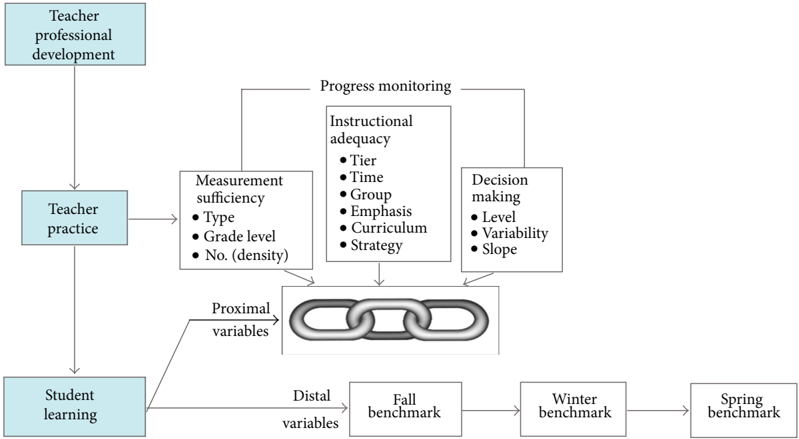
This paper reviews 30 years of curriculum-based measurement (CBM) research across reading, early literacy, writing, mathematics, and secondary content, arguing that technical adequacy is well established but that CBM has not sufficiently moved into training for data use and decision making. It proposes a next-30-year research agenda organized around measurement sufficiency, instructional adequacy, and decision making.
Key findings
- CBM was coined in the mid-1970s by Deno and Mirkin, distinguishing mastery monitoring from general outcome measurement; the University of Minnesota IRLD produced 23 monographs and 144 technical reports, including six monographs and 62 research reports on CBM.
- Oral reading fluency growth was documented by Fuchs et al. at 1.5 and 2.0 words correct per minute per week in first and second grades, 1.0 and 1.5 in third, 0.85 and 1.1 in fourth, 0.5 and 0.8 in fifth, and 0.3 and 0.63 in sixth; Deno et al. studied nearly 3,000 students and reported 2.0 WCPM/week until 30 WRCM, then at least 1.0 WCPM/week for general education students.
- Mathematics CBM is underrepresented: of 578 reports, only 32 were in mathematics, 28 at early/elementary levels and only 4 at middle school. In one ORF reliability study, Poncy et al. found 81% of score variation attributable to person, 10% to item/probe, and 9% to unaccounted error, with dependability from .81 (SEM 18 WCPM) with one passage to .97 (SEM 6 WCPM) with nine passages.
- In easyCBM 2010–2011 data with approximately 10,000 K–5 students, teachers made few instructional changes: 355 students (65%) received one intervention, 138 (25%) two, 25 (4.6%) three, and 29 (5.3%) four or more; most changes targeted curriculum (50%) or intensity/duration (19%).
Methods
- Historical and narrative review synthesizing 30 years of CBM research, organized by subject areas and by measurement and decision-making issues.
- Draws on published studies, IRLD reports, and reviews; when literature was absent, the analysis uses easyCBM 2010–2011 progress monitoring data with approximately 10,000 students in kindergarten through grade five.
- Main analysis is conceptual and empirical synthesis, concluding with proposed warrants for future research: measurement sufficiency, instructional adequacy, and decision making.
Limitations
- The paper states that little CBM research has moved from a “measurement paradigm” to a “training in data use and decision making paradigm”; few researchers have directly investigated training systems, and no information exists on the effectiveness of such training.
- The paper states that most decision rules are conceptually rather than empirically based, with methodological problems including the assumption of linear growth, use of gain scores, and difficulty combining statistical and graphic data; research is also concentrated on oral reading fluency and often uses benchmark rather than progress measures.
- Evident from the text: the supplied full text is fragmented and out of order, with some sections empty, so not all claims can be verified from a continuous manuscript.
Model-written summary. Check it against the paper before relying on it.
Integrity signals
Registry
Cites
Statistics
Figures

Verification
Claims the paper makes
3 Valid · 25 Not valid · 133 Not checked · 87 Own results and interpretations
The sources with a verdict support this claim; the rest weren’t checked yet, have no full text we could read, or their verdicts aren’t rated yet.
In the paper
“A concept-based approach also provides an explicit link to instruction through the use of semantic maps [179] or the verbal interactions between teachers and students during instruction [180,181].”
§ Curriculum-Based Measurement: A Brief History of Nearly Everything from the 1970s to the Present > 7.2.1. General Description of CBA.
What the sources say
- Not matchedcites [179] 179. F. P. Hunkins, Teaching Thinking Through Effective Questioning, Christopher-Gordon Publisher, Boston, Mass, USA, 1989.
We searched by its title and found no matching paper.
- Not checked — no full text of the sourcecites [180] 180. G. Tindal and V. Nolet, "Serving students in middle school content classes: a heuristic study of critical variables linking instruction and assessment, " The Journal of Special Education, vol. 29, no. 4, pp. 414-432, 1996. source
- Supportedcites [181] 181. V. Nolet and G. Tindal, "Curriculum-based collaboration, " Focus on Exceptional Children, vol. 27, no. 3, pp. 1-12, 1994. source
The paper’s discussion of reviewing instruction (under Figure 3, page unavailable) gives a direct example of a teacher asking students to state a concept’s examples and attributes. It also describes students participating in class discussions about concepts. Those passages support the cited point about teacher–student verbal interaction during concept-based instruction; the separate semantic-maps citation is not assessed here. (LLM, conf=0.86)
plainstates an association- Asserted: passes — The authors put it forward as true.
- Checkable: passes — It can be checked against evidence.
- Load-bearing: unclear — It is unclear whether the paper’s conclusions depend on it.
- Based: passes — The paper gives a reason why it holds.
- Not matched
A result the paper reports from its own data — it cites no other source for it, so there is none to check. The quote shows it is in the paper.
In the paper
“Again, our initial analyses of progress monitoring indicate considerable variation in the grade level of the measures used to monitor progress (from 1st to 8th grade).”
§ Curriculum-Based Measurement: A Brief History of Nearly Everything from the 1970s to the Present > 9.1.2. What Grade Level to Measure?
hedged- Asserted: passes — The authors put it forward as true.
- Checkable: passes — It can be checked against evidence.
- Load-bearing: unclear — It is unclear whether the paper’s conclusions depend on it.
- Based: passes — The paper gives a reason why it holds.
A result the paper states — it cites no source for it, so there is none to check. The quote shows it is in the paper.
In the paper
“In 3rd to 5th grade, teachers generally (most frequently) monitored progress with gradelevel passages or passages that were one grade level below.”
§ Curriculum-Based Measurement: A Brief History of Nearly Everything from the 1970s to the Present > 9.1.2. What Grade Level to Measure?
plain- Asserted: passes — The authors put it forward as true.
- Checkable: passes — It can be checked against evidence.
- Load-bearing: unclear — It is unclear whether the paper’s conclusions depend on it.
- Based: passes — The paper gives a reason why it holds.
A result the paper reports from its own data — it cites no other source for it, so there is none to check. The quote shows it is in the paper.
In the paper
“In grades three to five, teachers sometimes measured passage reading fluency one week and then either word reading fluency or reading comprehension a few weeks later, followed by word reading fluency.”
§ Curriculum-Based Measurement: A Brief History of Nearly Everything from the 1970s to the Present > 9.1.1. What (Domain) to Measure?
hedged- Asserted: passes — The authors put it forward as true.
- Checkable: passes — It can be checked against evidence.
- Load-bearing: unclear — It is unclear whether the paper’s conclusions depend on it.
- Based: passes — The paper gives a reason why it holds.
In the paper
“In our initial analysis of progress monitoring, we have found considerable variation in the type of reading measure administered over time; see Tindal et al. [206].”
§ Curriculum-Based Measurement: A Brief History of Nearly Everything from the 1970s to the Present > 9.1.1. What (Domain) to Measure?
What the sources say
- Not checked — no full text of the sourcecites [206] 206. R. Gersten and J. A. Dimino, "RTI (Response to Intervention): rethinking special education for students with reading difficul- ties (yet again), " Reading Research Quarterly, vol. 41, no. 1, pp. 99-108, 2006. source
plainstates an association- Asserted: passes — The authors put it forward as true.
- Checkable: passes — It can be checked against evidence.
- Load-bearing: unclear — It is unclear whether the paper’s conclusions depend on it.
- Based: passes — The paper gives a reason why it holds.
69 more claims
Create a free account to see all 248 claims and to verify the 3 references still open.
- Probably not a substantial claim. 115
- It may state two separate claims as one. 111
Self-check
Percentages, sums and reported differences re-computed from the paper’s own numbers.
Each contradiction between two passages listed here was confirmed by an independent check.
Rated minor: it would not touch a result — a value no result rests on, a p-value that stays on the same side of the significance level, or a conflict that is clerical, resolved elsewhere in the paper, or outside its own findings.
In the paper
§ Curriculum-Based Measurement: A Brief History of Nearly Everything from the 1970s to the Present > 2.1. Institute for Research on Learning Disabilities with Curriculum-Based Measurement.
“Curriculum-based measurement (CBM) was originally coined in the mid-1970s by Deno and Mirkin [5]”
§ Curriculum-Based Measurement: A Brief History of Nearly Everything from the 1970s to the Present > References
“5. G. Tindal and J. F. T. Nese, "Applications of curriculum-based measures in making multiple decisions with multiple reference points, " in Assessment and Intervention: Advances in Learning and Behavioral Disabilities, M. M. T. Scruggs, Ed., vol. 24, pp. 31-58, Emerald, Bingley, UK, 2011.”
Rated minor: it would not touch a result — a value no result rests on, a p-value that stays on the same side of the significance level, or a conflict that is clerical, resolved elsewhere in the paper, or outside its own findings.
In the paper
§ Curriculum-Based Measurement: A Brief History of Nearly Everything from the 1970s to the Present > 1. Introduction
“Finally, Section 7 presents a program of research needed to guide future development”
§ Curriculum-Based Measurement: A Brief History of Nearly Everything from the 1970s to the Present > 7. Secondary Content CBM
“## 7. Secondary Content CBM”
Rated minor: it would not touch a result — a value no result rests on, a p-value that stays on the same side of the significance level, or a conflict that is clerical, resolved elsewhere in the paper, or outside its own findings.
In the paper
§ Curriculum-Based Measurement: A Brief History of Nearly Everything from the 1970s to the Present > 4.3. Summary and Reflection on Skill Relations in CBM.
“then phoneme segmentation, followed by phoneme blending”
§ Curriculum-Based Measurement: A Brief History of Nearly Everything from the 1970s to the Present > 4.3. Summary and Reflection on Skill Relations in CBM.
“finally phoneme segmentation as the most difficult task.”
Citations
Cites
Hierarchical Linear Models: Applications and Data Analysis Methods.
Longford, N. T., Bryk, A. S., & Raudenbush, S. W. (1993) · Contemporary Sociology · doi:10.2307/2075823 · Cited by 18,724 · cited 1×
“In the more recent research, hierarchical linear modeling (HLM) is being used [78] for making growth estimates conditioned on (nested in) various levels [79].”
Method(1996) · Institutional Research Information System University of Turin (University of Turin) · doi:10.1111/j · Cited by 5,486
Beginning to Read: Thinking and Learning about Print
Cairns, C., & Adams, M. J. (1991) · Language · doi:10.2307/415121 · Cited by 4,376
(2000) · Cited by 4,106
Toward a theory of automatic information processing in reading
LaBerge, D., & Samuels, S. J. (1974) · Cognitive Psychology · doi:10.1016/0010-0285(74)90015-2 · Cited by 3,841 · cited 1×
“Generally, authors invoke the logic of Laberge and Samuels [102] in that automaticity is important from an information processing view.”
BackgroundThe Use of Single-Subject Research to Identify Evidence-Based Practice in Special Education
Horner, R. H., Carr, E. G., Halle, J., McGee, G., Odom, S., & Wolery, M. (2005) · Exceptional Children · doi:10.1177/001440290507100203 · Cited by 3,368
Learning to read and write: A longitudinal study of 54 children from first through fourth grades.
Juel, C. (1988) · Journal of Educational Psychology · doi:10.1037/0022-0663.80.4.437 · Cited by 1,925 · cited 1×
“These findings on the importance of fluency in the basic skills of reading (sublexical features) help explain a finding over 20 years ago: word decoding skills in first grade accounts for 44% of first grade and 12% of fourth grade reading comprehension variance [116].”
BackgroundEhri, L. C., Nunes, S. R., Willows, D. M., Schuster, B. V., Yaghoub‐Zadeh, Z., & Shanahan, T. (2001) · Reading Research Quarterly · doi:10.1598/rrq.36.3.2 · Cited by 1,493
Brennan, R. L. (2001) · doi:10.1007/978-1-4757-3456-0 · Cited by 1,121
(1985) · Cited by 1,060
Research works printed but not linked: 17
- 2. M. Kane, "Validation, " in Educational Measurement, R. Bren- nan, Ed., pp. 17-64, American Council on Education and Prae- ger, Westport, Conn, USA, 4th edition, 2006.
- 5. G. Tindal and J. F. T. Nese, "Applications of curriculum-based measures in making multiple decisions with multiple reference points, " in Assessment and Intervention: Advances in Learning and Behavioral Disabilities, M. M. T. Scruggs, Ed., vol. 24, pp. 31-58, Emerald, Bingley, UK, 2011.
- 58. P. K. Mirkin, L. S. Fuchs, and S. L. Deno, Consideration for De- signing a Continuous Evaluation : An Interpretive Review, Mono- graph, Institute for Research on Learning Disabilities (IRLD), University of Minnesota, Minneapolis, Minn, USA, 1982.
- 60. M. R. Shinn, Advanced Applications of Curriculum-Based Mea- surement, Guilford Press, New York, NY, USA, 1998.
- 66. C. A. Espin, K. L. McMaster, S. Rose, and M. M. Wayman, A Measure of Success: How Curriculum-Based Measurement has Influenced Education and Learning, University of Minnesota Press, Minneapolis, Minn, USA, 2012.
- 67. G. Tindal and J. F. T. Nese, "Within year achievement growth using curriculum based measurement, " in Proceedings of the National Council on Measurement in Education, Vancouver, Canada, April 2012.
- 93. No Child Left Behind, Committee on Education and Labor, Government Printing Office, Washington, DC, USA, 1st edition, 2001.
- 103. R. H. Good, J. Gruba, and R. A. Kaminski, "Best practices in using Dynamic Indicators of Basic Early Literacy Skills (DIBELS) in an outcomes-driven model, " in Best Practices in School Psychology IV, A. Thomas and J. Grimes, Eds., pp. 679- 700, National Association of School Psychologists, Washington, DC, USA, 2001.
- 117. M. Twain, "Simplified spelling, " in Letters from the Earth: Uncensored Writings, B. DeVoto, Ed., HarperCollins, New York, NY, USA, 1942.
- 95. L. S. Fuchs, D. Fuchs, and D. L. Compton, "Monitoring early reading development in first grade: word identification fluency versus nonsense word fluency, " Exceptional Children, vol. 71, no. 1, pp. 7-21, 2004. · DOI · Paper page
- 139. T. Christ, S. Sculin, A. Tolbize, and C. Jiban, "Implication of recent research: curriculum-based measurement of math com- putation, " Assessment for Effective Intervention, vol. 33, pp. 198- 205, 2008.
- 156. L. S. Fuchs, C. L. Hamlett, and D. Fuchs, Monitoring Basic Skills Progress: Basic Math Computation, 2nd edition, 1998.
- 192. S. Messick, "Validity, " in Educational Measurement, R. Linn, Ed., pp. 13-103, Macmillan Publishing Company, New York, NY, USA, 3rd edition, 1989.
- 205. G. Tindal, J. Alonzo, J. F. T. Nese, and L. Saez, "Validating progress monitoring in the context of RTI, " in Pacific Coast Research Conference (PCRC), Coronado, Calif, USA, February 2012.
- 213. E. R. O'Connor and P. Vadasy, The Handbook of Reading Inter- ventions, Guilford Press, New York, NY, USA, 2011.
- 215. L. Saez, "Instructional responsiveness: what are teachers doing?" in Proceedings of the Pacific Coast Research Conference, Coronado, Calif, USA, Februrary 2012.
- 226. J. B. Willet, "Measuring change more effectively by modeling individual change over time, " in The International Encyclopedia of Education, T. Husen and T. N. Postlethwaite, Eds., Pergamon Press, Elmsford, NY, USA, 2nd edition, 1994.
Cited by
Universal screening in middle and high schools: Who falls through the cracks?
Margherio, S. M., Evans, S. W., & Owens, J. S. (2019) · School Psychology · doi:10.1037/spq0000337 · Cited by 29
“However, currently available CBMs have limited research support for use in secondary schools, and CBMs designed for secondary school use are difficult to create, implement, administer, and score (for a review, see Tindal, 2013), diminishing the feasibility of their use.”
BackgroundNorman, E. R. V., & Parker, D. C. (2017) · Assessment for Effective Intervention · doi:10.1177/1534508417728695 · Cited by 25
“Educators monitor student progress by administering probes across time, often one to two times per week, plotting collected observations on time series graphs, and evaluating the resulting trajectory in comparison with a set goal, to determine whether an instructional change should be made (Deno, 1985, 1986); Initiall…”
MethodTindal, G. A., Nese, J. F. T., Stevens, J. J., & Alonzo, J. (2015) · Remedial and Special Education · doi:10.1177/0741932515590234 · Cited by 24
“…the easyCBM ORF measures has been extensively documented, including instrument development (Alonzo & Tindal, 2007, 2008), reliability (Alonzo, Lai, Anderson, Park, & Tindal, 2012; Alonzo & Tindal, 2009), criterion validity (Sáez et al., 2010), and construct validity (Alonzo, Park, & Tindal, 2013).”
BackgroundSelf-citationGross, T. J., Farmer, R. L., & Ochs, S. (2018) · Contemporary School Psychology · doi:10.1007/s40688-018-0186-x · Cited by 15
“…measures include a broad range of related mathematics problems, such as grade level skills, and may be a more robust predictor of future performance; however, the range of problems sampled limits identification of discrete skills for targeted intervention (Foegen et al. 2007; Tindal 2013).”
BackgroundMethodInfluentialValidity and Diagnostic Accuracy of Early Written Expression Screeners in Kindergarten
Keller‐Margulis, M. A., Ochs, S., Reid, E. K., Faith, E. L., & Schanding, G. T. (2018) · Journal of Psychoeducational Assessment · doi:10.1177/0734282918769978 · Cited by 15
Misquitta, R., & Ghosh, A. (2021) · International Journal of Disability Development and Education · doi:10.1080/1034912x.2021.1901861 · Cited by 13
“One such method devised by Stanley Deno and colleagues (Deno, 1985, 2003) is now considered ‘best practice’ in the field (Espin, McMaster, Rose, & Wayman, 2012; Tindal, 2013).”
MethodKurz, A., Elliott, S. N., & Roach, A. T. (2015) · Remedial and Special Education · doi:10.1177/0741932514567365 · Cited by 17
“” Of course, like measurement and technical work with CBM over the past several decades (Tindal, 2013), there is substantial work ahead to (a) scale up the sound use of OTL measures by teachers, (b) train educational leaders or other school personnel to use OTL frameworks to structure observations for purposes of reli…”
BackgroundThe magnitude and precision of estimates of change in formative teacher assessment.
Lekwa, A. J., Reddy, L. A., & Shernoff, E. S. (2020) · School Psychology · doi:10.1037/spq0000355 · Cited by 13
Al-Shehhi, S. A., Emam, M. M., Otaiba, S. A., Ibrahim, M. M., & Almehrizi, R. S. (2018) · School Psychology International · doi:10.1177/0143034318817078 · Cited by 8
Anderson, S., Sommerhoff, D., Schurig, M., Ufer, S., & Gebhardt, M. (2022) · Journal for Educational Research Online / Journal für Bildungsforschung Online · doi:10.31244/jero.2022.01.06 · Cited by 11
Nese, J. F. T., Kamata, A., & Tindal, G. A. (2017) · Journal of School Psychology · doi:10.1016/j.jsp.2016.12.001 · Cited by 11
Self-citationContinuous norming in learning progress monitoring—An example for a test in spelling from grade 2–4
Schurig, M., Blumenthal, Y., & Gebhardt, M. (2022) · Frontiers in Psychology · doi:10.3389/fpsyg.2022.943581 · Cited by 13
“The idea of PM is to provide feedback on the effect of instructional support and interventions over time using repeated short, but reliable standardized tests (Tindal, 2013; Schurig et al., 2021).”
MethodA Comparison of CBM-WE Scoring Metrics and Progress Monitoring Frequency Among Second-Grade Students
Hier, B. O., January, S. A., & Norman, E. R. V. (2020) · School Psychology Review · doi:10.1080/2372966x.2020.1763758 · Cited by 6
Mercer, S. H., & Keller‐Margulis, M. A. (2015) · Psychology in the Schools · doi:10.1002/pits.21823 · Cited by 6
Anderson, S., Schurig, M., Sommerhoff, D., & Gebhardt, M. (2022) · Frontiers in Psychology · doi:10.3389/fpsyg.2022.944702 · Cited by 10
“A variety of LPM tools for computation and mental computation have been developed in the past decades, especially in the United States (for an overview, e.g., Christ et al., 2008; Tindal, 2013).”
BackgroundInfluentialO’Keeffe, B. V., Bundock, K., Kladis, K., Yan, R., & Nelson, K. (2017) · Remedial and Special Education · doi:10.1177/0741932517713310 · Cited by 11
“Since its inception from research in the 1970s, CBM has been adopted widely, studied extensively, and greatly improved in technical adequacy (Tindal, 2013).”
BackgroundInfluentialMisquitta, R., & Ghosh, A. (2019) · ICERI proceedings · doi:10.21125/iceri.2019.1535 · Cited by 5
Misquitta, R., Shenoy, S., Ghosh, A., & Kotwal, N. (2022) · Asia Pacific Education Review · doi:10.1007/s12564-022-09751-y · Cited by 6
“ORF is highly correlated with reading comprehension (Abbott et al., 2012; Deno, 1985, 2003; Shinn et al., 1992; Tindal, 2013) and therefore considered an appropriate proxy measure for reading comprehension.”
BackgroundNorman, E. R. V., & Parker, D. C. (2017) · Journal of Psychoeducational Assessment · doi:10.1177/0734282917696936 · Cited by 7
“CBM of oral reading (CBM-R) is the most commonly used and researched form of CBM (Tindal, 2013).”
BackgroundMethodUsing Curriculum-Based Measurement Fluency Data for Initial Screening Decisions
Lembke, E. S., Carlisle, A., & Poch, A. L. (2015) · Springer eBooks · doi:10.1007/978-1-4939-2803-3_4 · Cited by 8
Norman, E. R. V., & Forcht, E. R. (2024) · Journal of School Psychology · doi:10.1016/j.jsp.2024.101319 · Cited by 5
Diggs, C., & Christ, T. J. (2018) · Contemporary School Psychology · doi:10.1007/s40688-018-0194-x · Cited by 4
Predicting kindergarten writing achievement using early written expression and behavior screening
Reid, E. K., Keller‐Margulis, M. A., Schanding, G. T., & Tolar, T. D. (2019) · Journal of Applied School Psychology · doi:10.1080/15377903.2019.1568333 · Cited by 4
“Curriculum-based measurement (CBM) is a widely used and wellresearched tool that involves the use of brief, timed samples of academic skill to screen for risk, progress-monitor student performance, and aid instructional decision making (McMaster, Parker, & Jung, 2012; Shapiro, 2011; Tindal, 2013).”
MethodNese, J. F. T. (2022) · AERA Open · doi:10.1177/23328584211071112 · Cited by 8
“, 2007) because it functions as a robust indicator of reading proficiency (e.g., Fuchs et al., 2001; Schilling et al., 2007; Tindal, 2013), as measured by reading comprehension and year-end state reading tests (e.”
BackgroundMethodKlapproth, F., Holzhüte, L., & Jungmann, T. (2022) · Journal for Educational Research Online / Journal für Bildungsforschung Online · doi:10.31244/jero.2022.01.02 · Cited by 6
A Systematic Review of Early Writing Assessment Tools
Buchanan, K. L., Keller‐Margulis, M. A., Hut, A., Fan, W., Mire, S. S., & Schanding, G. T. (2024) · Early Childhood Education Journal · doi:10.1007/s10643-024-01697-7 · Cited by 5
“Sources were limited to publications between 1990 and 2022 (upper bound on EBSCOhost), as research into early literacy assessment and instruction burgeoned in the late 1990s and early 2000s (Tindal, 2013).”
Modeling Growth in Reading With Curriculum-Based Measurement Versus Computer-Adaptive Tests
Norman, E. R. V., & Forcht, E. R. (2024) · Assessment for Effective Intervention · doi:10.1177/15345084241292731 · Cited by 5
Initial Pilot of a Progress Monitor for Reading Comprehension Based on Sentence Ordering
Lekwa, A. J., Deegan, J., & Mathews, C. (2025) · Assessment for Effective Intervention · doi:10.1177/15345084251324849 · Cited by 2
“Researchers and test developers have made less progress in the design and validation of measures useful for monitoring change in reading comprehension (e.g., Shinn et al., 1992; Tindal, 2013).”
Nese, J. F. T., Farley, D., & Anderson, D. (2019) · Learning Disabilities Research and Practice · doi:10.1111/ldrp.12191 · Cited by 4
Rodgers, D. B., King, S. A., Martin, G., & Lemons, C. J. (2023) · The Journal of Special Education · doi:10.1177/00224669231166915 · Cited by 4
“…measures or mastery measures developed by instructors, CBMs are tests of discrete academic skills (e.g., reading fluency and number identification) designed to be administered repeatedly to assess long-term student performance and guide instructional decisions (King et al., 2022; Tindal, 2013).”
BackgroundA Gender Bias in Curriculum-Based Measurement across Content Domains: Insights from a German Study
Klapproth, F., & von der Lippe, H. (2024) · Education Sciences · doi:10.3390/educsci14010076 · Cited by 5
“The invention of CBM was followed by a 5-year program of research conducted at the Institute for Research on Learning Disabilities at the University of Minnesota [24].”
MethodThe Need, Use, and Future of Cognitive Diagnostic Assessments in Classroom Practice
Seipel, B., Biancarosa, G., Carlson, S. E., & Davison, M. L. (2017) · Advances in educational technologies and instructional design book series · doi:10.4018/978-1-5225-3132-6.ch001 · Cited by 2
Introduction to Coal Bed Methane (CBM)
Sharma, S., Saxena, A., & Saxena, N. (2019) · SpringerBriefs in petroleum geoscience & engineering · doi:10.1007/978-3-030-21414-2_1 · Cited by 2
Accuracy of Automated Written Expression Curriculum-Based Measurement Scoring
Mercer, S. H., Cannon, J. E., Squires, B., Guo, Y., & Pinco, E. (2021) · Canadian Journal of School Psychology · doi:10.1177/0829573520987753 · Cited by 6
“Compared to reading CBM, research on written expression CBM (WE-CBM) is less well developed (Tindal, 2013) despite the importance of writing skills for students’ academic and occupational success (National Commission on Writing, 2004).”
MethodMisquitta, R. (2022) · International Journal of Special Education (IJSE) · doi:10.52291/ijse.2022.37.36 · Cited by 1
Commentary on new metrics, measures, and uses for fluency data
Christ, T. J., & Ardoin, S. P. (2014) · Reading and Writing · doi:10.1007/s11145-014-9513-4 · Cited by 3
“A careful reading of the literature or even of the many literature reviews (Ardoin et al., 2013a, b, c; Deno, 2003; Reschly, Busch, Betts, Deno, & Long, 2009; Tindal, 2013), provide substantial evidence that much is to be done.”
MethodNorman, E. R. V., Klingbeil, D. A., Truman, K. J., Nelson, P. M., & Parker, D. C. (2023) · Remedial and Special Education · doi:10.1177/07419325231190812 · Cited by 2
“The most widely used type of CBM is oral reading (CBM of reading [CBM-R]) in which students read connected text for 1 min (Tindal, 2013).”
MethodStereotype in der Lernverlaufsdiagnostik
Klapproth, F. (2022) · Springer eBooks · doi:10.1007/978-3-658-37262-0_2 · Cited by 1
A Program Evaluation Study for Measurement and Evaluation Course in Distance Education
Akıncı, M., & Köse, E. (2024) · Kuramsal Eğitimbilim · doi:10.30831/akukeg.1303190 · Cited by 1
The Endrew F. Decision and the Future of IEPs and FAPE
Chovanes, J., Papalia, A. O., Bateman, D. F., & Yell, M. L. (2021) · Emerald Group Publishing Limited eBooks · doi:10.1108/s0735-004x20210000031002 · Cited by 3
UNDERSTANDING TEACHERS’ CONCURRENT KNOWLEDGE OF ASSESSMENT LITERACY AND CURRICULUM-BASED MEASUREMENT
Hamilton, P. (2014) · Digital Commons - URI (University of Rhode Island) · doi:10.23860/thesis-hamilton-paige-2014 · Cited by 1
“(For a detailed review of the available literature on CBM since its’ conception in the 1970s, the reader is referred to Tindal (2013). Current research has increasingly focused on examining the appropriate and”
BackgroundMethodInfluentialLastrapes, R. E. (2015) · Louisiana State University · doi:10.31390/gradschool_dissertations.1232 · Cited by 1
“Research has shown that growth from the beginning of the year to middle of the year has been documented, with less growth from the middle to the end of the year (Ardoin & Christ, 2008; Graney, Missall, Martinez & Bergstrom, 2009; Tindal, 2013).”
BackgroundAssessment to Inform Teaching and LearningPreprint
Brookhart, S. M., & DePascale, C. A. (2024) · doi:10.35542/osf.io/6ub2z · Cited by 1
EXAMINING SECONDARY WRITING: CURRICULUM-BASED MEASURES AND SIX TRAITS
Havlin, P. J. (2013) · Scholars' Bank (University of Oregon)
O'Shea, L. M. (2014) · Scholars' Bank (University of Oregon) · Cited by 1
Haxhiraj, B. (2014) · Scholars' Bank (University of Oregon)
Park, B. J. (2016) · Scholars' Bank (University of Oregon) · Cited by 27
Technology-Based Assessment and Problem Analysis
Tindal, G. A., & Alonzo, J. (2015) · Springer eBooks · doi:10.1007/978-1-4899-7568-3_28 · Cited by 1
Self-citationEffects of Progress Monitoring Feedback on Early Literacy Student Achievement.
Lopuch, J. (2016) · ProQuest LLC eBooks
Soltz, S. D. (2016) · Scholars' Bank (University of Oregon)
An Evaluation of the Word Triad Method for Monitoring Spelling Progress
Frisby, C. L., & Wang, Z. (2017) · Journal of Applied School Psychology · doi:10.1080/15377903.2017.1381660
“Reading and math academic areas have received much more attention in applied CBM research than spelling (e.g., Jimerson, Burns, & VanDerHeyden, 2016; Tindal, 2013; Wayman, Wallace, Wiley, Tichá, & Espin, 2007).”
BackgroundAl-Uraimi, R. S. H., Emam, M. M., & Shindy, Y. A. A. (2019) · Journal of Educational Sciences – Qatar University · doi:10.29117/jes.2019.0012
L’évolution de l’approche d’évaluation fondée sur le programme pour soutenir l’éducation inclusive
Carvajal, M. D. C. G., & Trépanier, N. S. (2023) · Enfance en difficulté · doi:10.7202/1108077ar · Cited by 3
Teacher evaluation of the FABLe literacy application in the Indian context
Shenoy, S., & Misquitta, R. (2024) · Journal of Research on Technology in Education · doi:10.1080/15391523.2024.2312279
“…(a) construct validity of oral reading fluency as being highly correlated with comprehension and having a strong evidence base (Abbott et al., 2012, Tindal, 2013); (b) content validity was established by having four experts in the field rate the appropriateness of the app for the Indian context;…”
Training paraprofessionals to collect reading fluency data with accuracy
Zarate, K., Kang, V. Y., & Maggin, D. M. (2024) · Preventing School Failure Alternative Education for Children and Youth · doi:10.1080/1045988x.2024.2353021 · Cited by 1
“Previous literature on CBM and CBM-R have mixed findings; some studies show that CBM can be administered successfully by a wide range of individuals, including students (Dufrene et al., 2010), teachers (Tindal, 2013), and paraprofessionals (Levy & Begeny, 2020; Mercer et al., 2000).”
Urrutia-Jorde, M. (2025) · Frontiers in Education · doi:10.3389/feduc.2025.1556993
Rice, V. (2021) · Scholars Archive - University at Albany (University at Albany, State University of New York) · doi:10.54014/njjw-cr7c · Cited by 1
Metadata
- Authors
- Tindal, G.
- Affiliations
- University of Oregon (US)
- Corresponding author
- Tindal, Gerald
- ORCID
- Tindal, Gerald
- Venue
- ISRN Education
- Publisher
- Hindawi Limited
- Published
- 2013-02-14
- Volume
- 2013
- Pages
- 1-29
- ISSN
- 2090-8652 (ISSN-L)
- OpenAlex
- W1967076235
- Cited by
- 59
- References
- 188
- Citations by year
- 2025: 2 · 2024: 7 · 2023: 3 · 2022: 9 · 2021: 4 · 2020: 2 · 2019: 6 · 2018: 4 · 2017: 6 · 2016: 4 · 2015: 6 · 2014: 5 · 2013: 1
- FWCI
- 11.69
- Type
- journal article
- Language
- en
- Open access
- hybrid
- doi.org
- Locations
- ISRN Education (publishedVersion, cc-by)
- Topics
- Social Sciences › Education › Educational Assessment and Improvement
- Social Sciences › Psychology › Developmental and Educational Psychology › Behavioral and Psychological Studies
- Social Sciences › Education › Educational Assessment and Pedagogy
- Keywords
- curriculum-based measurement, student assessment, student progress monitoring, reading assessment, writing assessment, mathematics assessment, research agenda
About these checks
Registry, retraction, Cites and statistics results are computed, not judged, with one exception: a printed reference that no index lists is read once by a model before it counts as a citation error. Claims are extracted by a model and kept only when their quote appears verbatim in the text; each cited source is then checked, with a model’s help, for whether it says what the claim relies on. Those verdicts can be wrong — read the claim’s quote and the cited source before relying on one.
The claim verdicts this report counts are experimental: their accuracy is not yet measured.
A language model drew the claims from the paper on 2026-10-11, under version 3 of the claim definition (model deepseek-v4.1-flash, prompt extract-v3).
A second model labelled each claim on 2026-10-11 (model jev-1.13-20260917, definition revision gold-guideline-v0.2).
Cited sources are checked with a language model’s help (gpt-6-sol).
Statistics and arithmetic are recomputed, not judged.
Confidence bands are shown only for fields calibrated on our annotated test set. None is calibrated yet, so no band is shown.
What counts as a claim ›How we measure confidence ›How we check this ›
Are you an author, or do you see a problem with this page? Request a review
Data sources
Bibliographic data: Semantic Scholar, OpenAlex, Crossref.
Contains information from the Semantic Scholar Academic Graph Datasets, made available under the ODC Attribution License (ODC-BY 1.0).
Semantic Scholar’s data is described in: Kinney, R., et al. (2023). The Semantic Scholar Open Data Platform. arXiv:2301.10140.
