

Neutrophilic Lung Inflammation Suppressed by Picroside II Is Associated with TGF-β Signaling
Open accessThe DOI matches its Crossref record; 44 of the 45 references it cites were found in a registry or an index; 8 of the 18 sources its claims cite were checked for support.
Abstract
Although acute lung injury (ALI) is a leading cause of death in intensive care unit, effective pharmacologic means to treat ALI patients are lacking. The rhizome of Picrorhiza scrophulariiflora used in a traditional herbal medicine in Asian countries has been shown to have anti-inflammatory function, and picroside II (PIC II) is known as a major constituent in the plant. Here, we examined whether PIC II has an anti-inflammatory activity, which is applicable for treating ALI. We found that although it is not significantly effective in suppressing proinflammatory factor NF-κ B or in activating anti-inflammatory factor Nrf2, PIC II induced the phosphorylation of Smad 2, with concomitant increase of luciferase activity from SBE luciferase reporter in RAW 264.7 cells. H&E staining of lung, differential counting of cells in bronchoalveolar lavage fluid, and semiquantitative RT-PCR analyses of lung tissues show that an intratracheal (i.t.) spraying of PIC II suppressed neutrophilic inflammation and the expression of proinflammatory cytokine genes in the lung, which were elicited by an i.t. LPS instillation to the lung. In addition, PIC II treatment increased the phosphorylation of Smad 2 in the lung tissue. Together, our results suggest that PIC II plays a role as an anti-inflammatory constituent in P. scrophulariiflora, whose activity is associated at least in part with TGF-β signaling.
Overview
CoChat Summary
TL;DR
Picroside II (PIC II) suppressed neutrophilic lung inflammation in an LPS-induced acute lung injury mouse model, and this effect was associated at least in part with TGF-β/Smad2 signaling. PIC II did not significantly suppress NF-κB or activate Nrf2 in RAW 264.7 cells.
Key findings
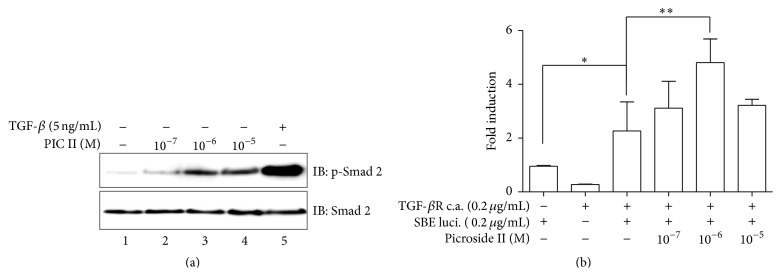
- In RAW 264.7 cells, PIC II induced Smad2 phosphorylation as low as 10⁻⁷ M and significantly at 10⁻⁶ M, though less effectively than TGF-β1; it also increased SBE-driven luciferase activity when cells were cotransfected with constitutively active TGF-βR1.
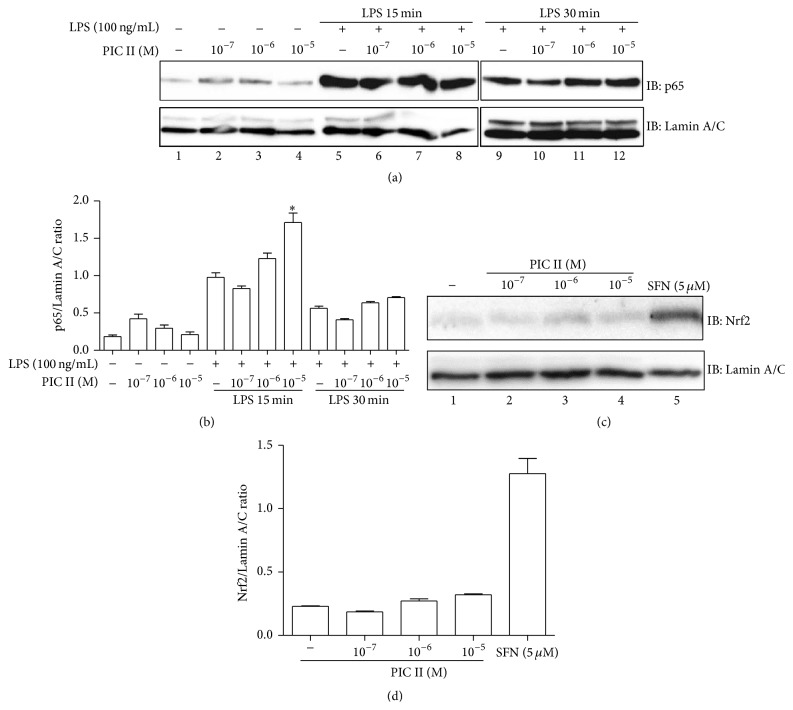
- PIC II was not effective in suppressing NF-κB nuclear p65 RelA localization or activating Nrf2 in RAW 264.7 cells, unlike the Nrf2 activator sulforaphane.
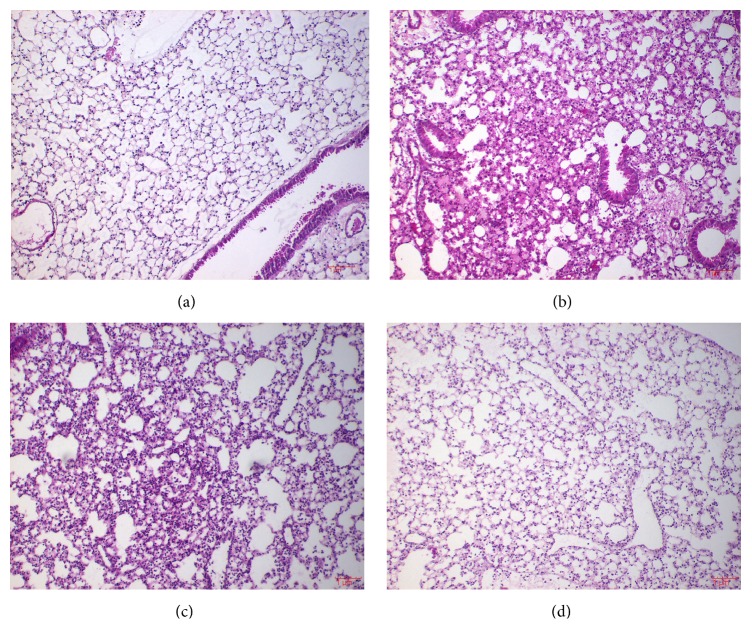
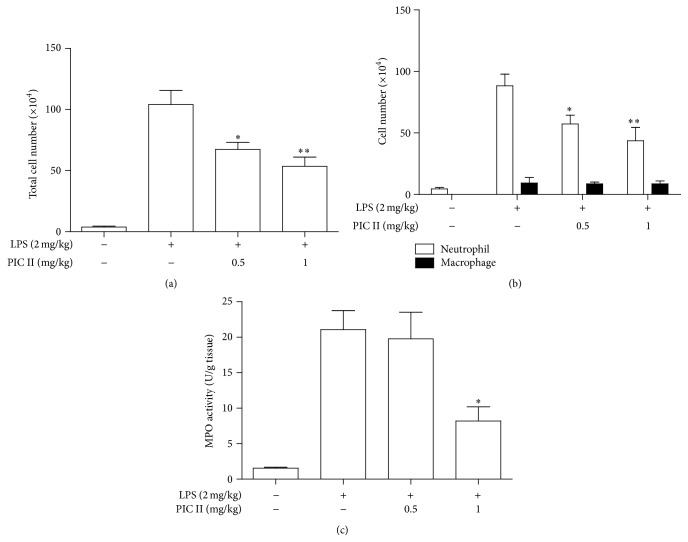
- In LPS-induced ALI mice (C57BL/6, n = 5/group; LPS 2 mg/kg i.t.), PIC II (0.5 or 1 mg/kg i.t. at 2 h) reduced lung inflammation, BAL cellular infiltration—mostly neutrophils—and myeloperoxidase activity; 1 mg/kg was more potent histologically.
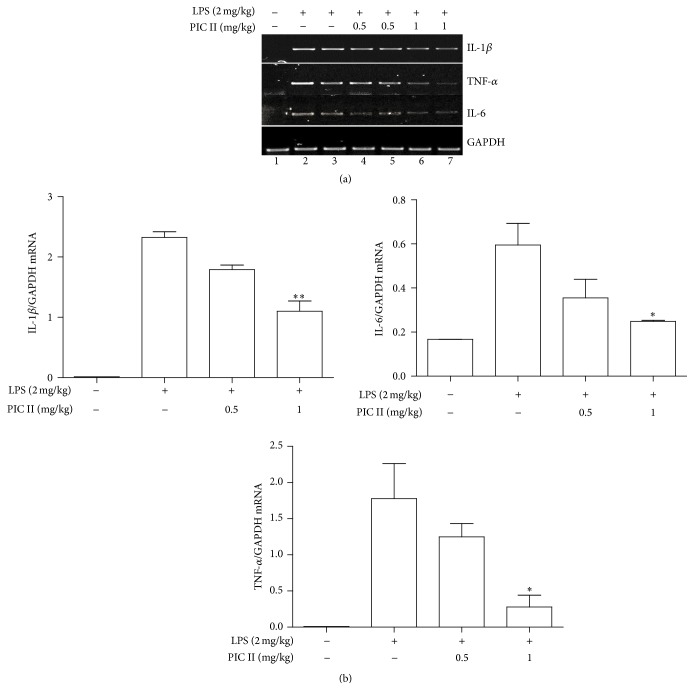
- PIC II suppressed LPS-induced lung expression of IL-1β, TNF-α, and IL-6 and increased Smad2 phosphorylation in lung tissue.
Methods
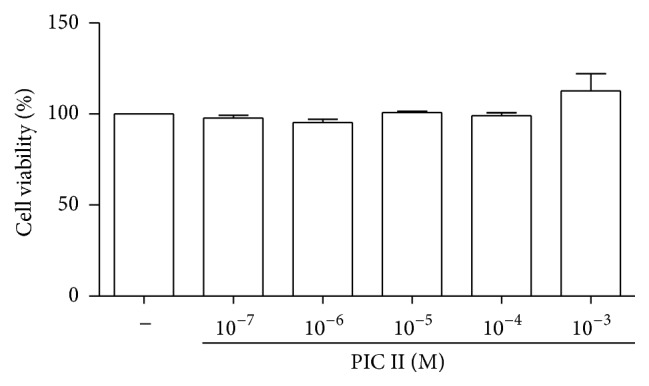
- In vitro: RAW 264.7 cells were treated with PIC II (0.1–10 μM after MTT testing up to 1 mM), with LPS for NF-κB p65 Western blotting, with sulforaphane for Nrf2 Western blotting, and with PIC II ± TGF-β1 for Smad2 phosphorylation; SBE luciferase reporter assays used cotransfection with constitutively active TGF-βR1 and tk-Renilla.
- In vivo: male C57BL/6 mice received intratracheal LPS (2 mg/kg) followed 2 h later by intratracheal PIC II (0.5 or 1 mg/kg) or PBS, and were sacrificed 24 h after LPS for H&E lung histology, BAL total and differential cell counts, MPO activity, semiquantitative RT-PCR for IL-1β/TNF-α/IL-6, and Western blotting for phosphorylated Smad2.
- Statistics: data presented as mean ± SEM from at least three separate experiments; paired/unpaired t-tests and one-way ANOVA, with P < 0.05 considered significant.
Limitations
- Stated: the authors could not exclude that PIC II suppresses NF-κB activated via receptors other than TLR4, because they measured only TLR4-activated NF-κB.
- Stated: PIC II alone was insufficient to induce SBE-driven luciferase activity; the paper concludes PIC II requires other signaling events to fully activate TGF-β signaling, and the precise anti-inflammatory mechanism remains incomplete.
- Evident: in vitro work used only RAW 264.7 cells; in vivo work used only male C57BL/6 mice, a single LPS-induced ALI model, and n = 5/group, with no TGF-β/Smad blockade or loss-of-function experiment to establish causality and no survival or lung-function endpoints.
Model-written summary. Check it against the paper before relying on it.
Integrity signals
Registry
Cites
Statistics
Figures
Verification
Claims the paper makes
7 Valid · 0 Not valid · 4 Not checked · 27 Own results and interpretations
The cited sources support only part of this claim — read each source’s verdict below.
In the paper
“the consensus is that TGF-β plays a key role in resolving neutrophilic lung inflammation.”
§ Neutrophilic Lung Inflammation Suppressed by Picroside II Is Associated with TGF-β Signaling > 4. Discussion
What the sources say
- Not checked — no full text of the sourcecites [40] D'Alessio F. R. Tsushima K. Aggarwal N. R. CD4+CD25+Foxp3+ Tregs resolve experimental lung injury in mice and are present in humans with acute lung injury Journal of Clinical Investigation 2009 119 10 2898 2913 10.1172/jci36498 2-s2.0-70349687102 19770521 PMC2752062 source
- Partly supportedcites [41] Ganeshan K. Johnston L. K. Bryce P. J. TGF-beta1 limits the onset of innate lung inflammation by promoting mast cell-derived IL-6 Journal of Immunology 2013 190 11 5731 5738 10.4049/jimmunol.1203362 2-s2.0-84878101825 PMC3725733 23630359 sourceExperimental — accuracy not yet measured
The Results and Discussion report that TGF-β1 promotes neutrophil apoptosis and clearance during the onset of LPS-induced lung injury. The paper distinguishes this early effect from the later resolution phase, so it does not establish the broader claim that TGF-β plays a key role in resolving neutrophilic lung inflammation. (LLM, conf=0.84)
boostedstates a cause- Asserted: passes — The authors put it forward as true.
- Checkable: passes — It can be checked against evidence.
- Load-bearing: passes — The paper’s conclusions depend on it.
- Based: passes — The paper gives a reason why it holds.
A result the paper reports from its own data — it cites no other source for it, so there is none to check. The quote shows it is in the paper.
In the paper
“These results suggest that PIC II is not effective in suppressing NF-κB activity.”
- Also stated in: § Abstract · plain
“although it is not significantly effective in suppressing proinflammatory factor NF-κB”
§ Neutrophilic Lung Inflammation Suppressed by Picroside II Is Associated with TGF-β Signaling > 3. Results > 3.1. PIC II Was Not Effective in Suppressing NF-κB Activity in RAW 264.7 Cells
plain- Asserted: passes — The authors put it forward as true.
- Checkable: passes — It can be checked against evidence.
- Load-bearing: passes — The paper’s conclusions depend on it.
- Based: passes — The paper gives a reason why it holds.
- Also stated in: § Abstract · plain
A result the paper reports from its own data — it cites no other source for it, so there is none to check. The quote shows it is in the paper.
In the paper
“LPS treatment for 15 min induced nuclear localization of p65 RelA (lane 5), as opposed to the untreated control (lane 1).”
§ Neutrophilic Lung Inflammation Suppressed by Picroside II Is Associated with TGF-β Signaling > 3. Results > 3.1. PIC II Was Not Effective in Suppressing NF-κB Activity in RAW 264.7 Cells
plainstates a cause- Asserted: passes — The authors put it forward as true.
- Checkable: passes — It can be checked against evidence.
- Load-bearing: passes — The paper’s conclusions depend on it.
- Based: passes — The paper gives a reason why it holds.
A result the paper reports from its own data — it cites no other source for it, so there is none to check. The quote shows it is in the paper.
In the paper
“PIC II treatment significantly reduced the cellular infiltration (2nd, 3rd, and 4th columns).”
§ Neutrophilic Lung Inflammation Suppressed by Picroside II Is Associated with TGF-β Signaling > 3. Results > 3.4. PIC II Suppresses Neutrophilic Lung Inflammation in LPS-Induced ALI Mice Model
plainstates a causen = 5- Asserted: passes — The authors put it forward as true.
- Checkable: passes — It can be checked against evidence.
- Load-bearing: passes — The paper’s conclusions depend on it.
- Based: passes — The paper gives a reason why it holds.
A result the paper reports from its own data — it cites no other source for it, so there is none to check. The quote shows it is in the paper.
In the paper
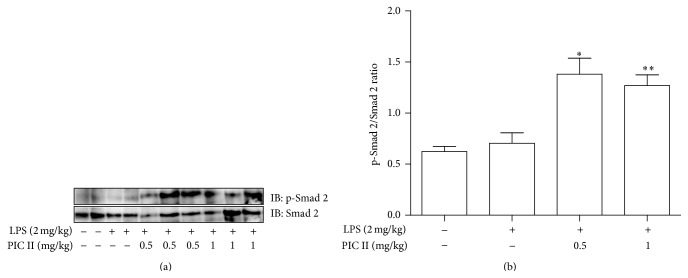
“PIC II treatment induced phosphorylation of Smad 2, which was statistically significant (Figure 7(b)).”
- Also stated in: § Abstract · plain
“PIC II treatment increased the phosphorylation of Smad 2 in the lung tissue.”
§ Neutrophilic Lung Inflammation Suppressed by Picroside II Is Associated with TGF-β Signaling > 3. Results > 3.5. PIC II Induces the Phosphorylation of Smad 2 in Mouse Lungs
plainstates a cause- Asserted: passes — The authors put it forward as true.
- Checkable: passes — It can be checked against evidence.
- Load-bearing: passes — The paper’s conclusions depend on it.
- Based: passes — The paper gives a reason why it holds.
- Also stated in: § Abstract · plain
19 more claims
Create a free account to see all 38 claims and every source verdict.
- Probably not a substantial claim. 9
- It may state two separate claims as one. 9
- The quote only partly states this claim. 1
Claims other papers make about this one
Each is checked against this paper’s own text: does it say what the citing paper says it does?
The source backs part of the claim, not all of it — or backs it for a different population, condition or comparison.
In the citing paper
“Several studies have revealed that PII can stimulate anti-inflammatory, antioxidant, and anti-apoptotic mechanisms in major organ injuries throughout the body (Li et al., 2016; Noh et al., 2015; Piao et al., 2017, 2020; Wang et al., 2015);”
From Picroside II Alleviates the Progression of Alzheimer’s Disease via the NLRP3/Caspase-1/GSDMD Pathway (2025) · cites this paper as Noh et al., 2015
Experimental — accuracy not yet measured
Self-check
Percentages, sums and reported differences re-computed from the paper’s own numbers.
Each contradiction between two passages listed here was confirmed by an independent check.
Rated minor: it would not touch a result — a value no result rests on, a p-value that stays on the same side of the significance level, or a conflict that is clerical, resolved elsewhere in the paper, or outside its own findings.
In the paper
§ Neutrophilic Lung Inflammation Suppressed by Picroside II Is Associated with TGF-β Signaling > 2. Materials and Methods > 2.1. Reagents
“TLR4-specific LPS (Escherichia coli O55:B5) was purchased from Alexis Biochemical (San Diego, CA, USA).”
§ Neutrophilic Lung Inflammation Suppressed by Picroside II Is Associated with TGF-β Signaling > 2. Materials and Methods > 2.3. Animal Model for Acute Lung Injury and PIC II Administration
“2 mg LPS (Escherichia coli O55:B5, Sigma, St. Louis, MO, USA)/kg body weight”
Citations
Cites
Chen, Y., Wang, L., Kang, Q., Zhang, X., Yu, G., Wan, X., Wang, J., & Zhu, K. (2017) · Cellular Physiology and Biochemistry · doi:10.1159/000477308 · Cited by 10,679
Oxidative stress, inflammation, and cancer: How are they linked?
Reuter, S., Gupta, S. C., Chaturvedi, M. M., & Aggarwal, B. B. (2010) · Free Radical Biology and Medicine · doi:10.1016/j.freeradbiomed.2010.09.006 · Cited by 5,441
The Acute Respiratory Distress Syndrome
Matthay, M. A. (1996) · New England Journal of Medicine · doi:10.1056/nejm199605303342209 · Cited by 4,923
The Acute Respiratory Distress Syndrome
Ware, L. B., & Matthay, M. A. (2000) · New England Journal of Medicine · doi:10.1056/nejm200005043421806 · Cited by 4,666
TGF-β signalling from cell membrane to nucleus through SMAD proteins
Heldin, C.-H., Miyazono, K., & ten Dijke, P. (1997) · Nature · doi:10.1038/37284 · Cited by 3,696
Incidence and Outcomes of Acute Lung Injury
Rubenfeld, G. D., Caldwell, E., Peabody, E., Weaver, J., Martin, D. P., Neff, M., Stern, E. J., & Hudson, L. D. (2005) · New England Journal of Medicine · doi:10.1056/nejmoa050333 · Cited by 3,684 · cited 2×
“Major cause of ALI is bacterial sepsis, and Gramnegative bacteria are frequent culprits [1].”
BackgroundMissing Pieces in the NF-κB Puzzle
Ghosh, S., & Karin, M. (2002) · Cell · doi:10.1016/s0092-8674(02)00703-1 · Cited by 3,638 · cited 2×
“This work was supported by KRIBB Research Initiative Program (GM1221521).”
BackgroundMethodTargeting the KEAP1-NRF2 system to prevent kidney disease progression
Nezu, M., Suzuki, N., & Yamamoto, M. (2017) · American Journal of Nephrology · doi:10.1159/000475890 · Cited by 3,447
Mechanism of activation of the TGF-β receptor
Wrana, J. L., Attisano, L., Wieser, R., Ventura, F., & Massagué, J. (1994) · Nature · doi:10.1038/370341a0 · Cited by 2,337
Nrf2, a Cap'n'Collar Transcription Factor, Regulates Induction of the Heme Oxygenase-1 Gene
Alam, J., Stewart, D., Touchard, C., Boinapally, S., Choi, A. M. K., & Cook, J. L. (1999) · Journal of Biological Chemistry · doi:10.1074/jbc.274.37.26071 · Cited by 1,285 · cited 1×
“ROS in turn activate nuclear erythroid 2related factor 2 (Nrf2) [7], a key redox-sensitive transcription factor that regulates the expression of antioxidant, xenobiotic detoxification enzymes [8, 9].”
Background
Cited by
Mazini, L., Rochette, L., Admou, B., Amal, S., & Malka, G. (2020) · International Journal of Molecular Sciences · doi:10.3390/ijms21041306 · Cited by 505
Evidences of Herbal Medicine-Derived Natural Products Effects in Inflammatory Lung Diseases
Santana, F. P. R., Pinheiro, N. M., Bittencourt-Mernak, M. I., Righetti, R. F., Martins, M. A., Lago, J. H. G., Lopes, F. D. T. Q. D. S., Tibério, I. D. F. L. C., & Prado, C. M. (2016) · Mediators of Inflammation · doi:10.1155/2016/2348968 · Cited by 88
“…of inflammatory cells, such as macrophages, lymphocytes, neutrophils, and eosinophils, which is a source of different kinds of inflammatory mediators such as histamine, tumor necrosis factor (TNF-𝛼), interleukins, IL-1𝛽, IL-4, IL-5, and IL-6, prostaglandins, leukotrienes, and nitric oxide.”
BackgroundPharmacologic Activities of Plant‐Derived Natural Products on Respiratory Diseases and Inflammations
Timalsina, D., Pokhrel, K. P., & Bhusal, D. (2021) · BioMed Research International · doi:10.1155/2021/1636816 · Cited by 64
Therapeutic Potential of Medicinal Plants and Their Constituents on Lung Inflammatory Disorders
Kim, H. P., Lim, H. A., & Kwon, Y. S. (2016) · Biomolecules & Therapeutics · doi:10.4062/biomolther.2016.187 · Cited by 46
Picroside II protects against sepsis via suppressing inflammation in mice.
(2016) · PubMed Central · Cited by 19
Metadata
- Authors
- Noh, S., Ahn, K.-S., Oh, S.-R., Kim, K. H., & Joo, M.
- Affiliations
- Pusan National University (KR)
- Korea Research Institute of Bioscience and Biotechnology (KR)
- Corresponding author
- Kim, Kyun Ha
- Joo, Myungsoo
- Venue
- Evidence-Based Complementary and Alternative Medicine
- Publisher
- Wiley
- Published
- 2015
- Volume
- 2015
- Pages
- 1-11
- ISSN
- 1741-427X (ISSN-L)
- 1741-4288
- PMC
- PMC4651649
- OpenAlex
- W2106943607
- Semantic Scholar
- bb4959d97e22c1cb88fe81fc400a8ca3a676e74c
- Cited by
- 13
- References
- 45
- Citations by year
- 2026: 1 · 2025: 2 · 2024: 1 · 2022: 1 · 2021: 1 · 2020: 2 · 2017: 1 · 2016: 4
- FWCI
- 3.09
- Type
- journal article
- Language
- en
- Open access
- hybrid
- doi.org
- Locations
- Evidence-based Complementary and Alternative Medicine (publishedVersion, cc-by)
- Europe PMC (PubMed Central) (publishedVersion, cc-by)
- PubMed (publishedVersion)
- PubMed Central (publishedVersion, cc-by)
- KRIBB Repository (submittedVersion)
- Funders
- Korea Research Institute of Bioscience and Biotechnology
- Topics
- Health Sciences › Medicine › Complementary and alternative medicine › Natural Compounds in Disease Treatment
- Life Sciences › Agricultural and Biological Sciences › Plant Science › Phytochemistry and Biological Activities
- Health Sciences › Medicine › Complementary and alternative medicine › Traditional Chinese Medicine Analysis
- Keywords
- picroside II, Picrorhiza scrophulariiflora, acute lung injury, TGF-beta signaling, Smad2 phosphorylation, anti-inflammatory activity, inflammatory cytokines, lipopolysaccharide-induced lung injury, herbal medicine constituents
About these checks
Registry, retraction, Cites and statistics results are computed, not judged, with one exception: a printed reference that no index lists is read once by a model before it counts as a citation error. Claims are extracted by a model and kept only when their quote appears verbatim in the text; each cited source is then checked, with a model’s help, for whether it says what the claim relies on. Those verdicts can be wrong — read the claim’s quote and the cited source before relying on one.
The claim verdicts this report counts are experimental: their accuracy is not yet measured.
A language model drew the claims from the paper on 2026-10-13, under version 3 of the claim definition (model deepseek-v4.1-flash, prompt extract-v3).
A second model labelled each claim on 2026-10-13 (model jev-1.13-20260917, definition revision gold-guideline-v0.2).
Cited sources are checked with a language model’s help (gpt-6-sol).
Statistics and arithmetic are recomputed, not judged.
Confidence bands are shown only for fields calibrated on our annotated test set. None is calibrated yet, so no band is shown.
What counts as a claim ›How we measure confidence ›How we check this ›
Are you an author, or do you see a problem with this page? Request a review
Data sources
Bibliographic data: Semantic Scholar, OpenAlex, Crossref.
Contains information from the Semantic Scholar Academic Graph Datasets, made available under the ODC Attribution License (ODC-BY 1.0).
Semantic Scholar’s data is described in: Kinney, R., et al. (2023). The Semantic Scholar Open Data Platform. arXiv:2301.10140.
