

The DOI matches its Crossref record; 383 of the 383 references it cites were found in a registry or an index.
Circadian Rhythm Disturbances in Mood Disorders: Insights into the Role of the Suprachiasmatic Nucleus
Open accessAbstract
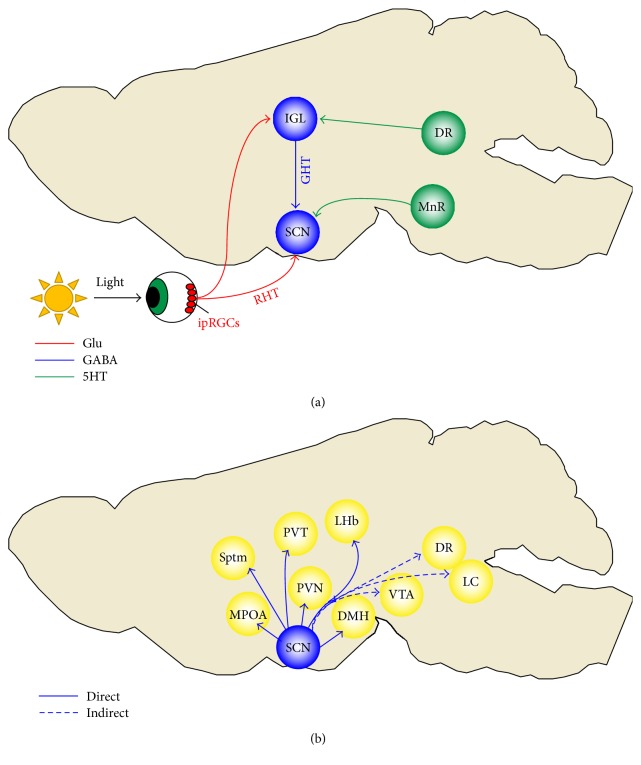
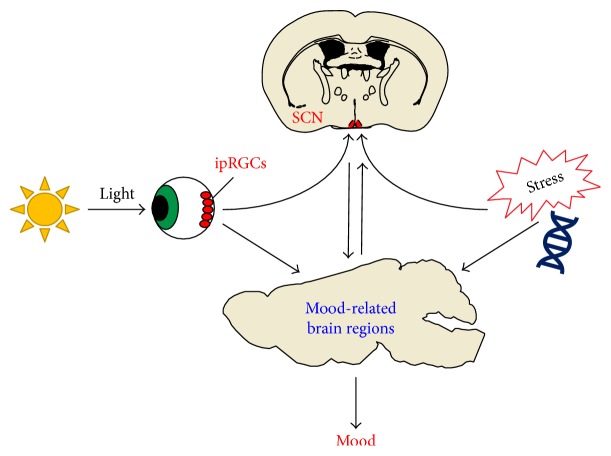
Circadian rhythm disturbances are a common symptom among individuals with mood disorders. The suprachiasmatic nucleus (SCN), in the ventral part of the anterior hypothalamus, orchestrates physiological and behavioral circadian rhythms. The SCN consists of self-sustaining oscillators and receives photic and nonphotic cues, which entrain the SCN to the external environment. In turn, through synaptic and hormonal mechanisms, the SCN can drive and synchronize circadian rhythms in extra-SCN brain regions and peripheral tissues. Thus, genetic or environmental perturbations of SCN rhythms could disrupt brain regions more closely related to mood regulation and cause mood disturbances. Here, we review clinical and preclinical studies that provide evidence both for and against a causal role for the SCN in mood disorders.
Overview
The claims and statistics of this paper haven’t been checked yet.
Run the check — free, no account needed. It reads the open-access text and checks the sources it cites.
Integrity signals
Registry
Cites
Statistics
Figures
Verification
Claims the paper makes
The claims and statistics of this paper haven’t been checked yet.
Run the check — free, no account needed. It reads the open-access text and checks the sources it cites.
Claims other papers make about this one
Each is checked against this paper’s own text: does it say what the citing paper says it does?
The cited source says what the claim attributes to it.
In the citing paper
“Mood disorders are often associated with disrupted circadian clock-controlled responses, such as sleep and cortisol secretion”
From Circadian rhythm disruption and mental health (2020) · cites this paper as [81]
Self-check
Percentages, sums and reported differences re-computed from the paper’s own numbers.
The self-check needs the paper’s full text.
Citations
Cites
Selective Cortical Undercutting As a Means of Modifying and Studying Frontal Lobe Function in Man
Scoville, W. B. (1949) · Journal of neurosurgery · doi:10.3171/jns.1949.6.1.0065 · Cited by 7,374
Rush, A. J., Trivedi, M. H., Wisniewski, S. R., Nierenberg, A. A., Stewart, J. W., Warden, D., Niederehe, G., Thase, M. E., Lavori, P. W., Lebowitz, B. D., et al. (2006) · American Journal of Psychiatry · doi:10.1176/ajp.2006.163.11.1905 · Cited by 5,643
Rosenthal, N. E. (1984) · Archives of General Psychiatry · doi:10.1001/archpsyc.1984.01790120076010 · Cited by 2,385
Adverse childhood experiences and the risk of depressive disorders in adulthood
Chapman, D. P., Whitfield, C. L., Felitti, V. J., Dube, S. R., Edwards, V. J., & Anda, R. F. (2004) · Journal of Affective Disorders · doi:10.1016/j.jad.2003.12.013 · Cited by 2,267
Preitner, N., Damiola, F., Luis-Lopez-Molina, Zakany, J., Duboule, D., Albrecht, U., & Schibler, U. (2002) · Cell · doi:10.1016/s0092-8674(02)00825-5 · Cited by 2,198
Resetting central and peripheral circadian oscillators in transgenic rats
Yamazaki, S., Numano, R., Abe, M., Hida, A., Takahashi, R.-I., Ueda, M., Block, G. D., Sakaki, Y., Menaker, M., & Tei, H. (2000) · Science · doi:10.1126/science.288.5466.682 · Cited by 1,907
Mutagenesis and Mapping of a Mouse Gene, Clock , Essential for Circadian Behavior
Vitaterna, M. H., King, D. P., Chang, A.-M., Kornhauser, J. M., Lowrey, P. L., McDonald, J. D., Dove, W. F., Pinto, L. H., Turek, F. W., & Takahashi, J. S. (1994) · Science · doi:10.1126/science.8171325 · Cited by 1,632
Welsh, D. K., Logothetis, D. E., Meister, M., & Reppert, S. M. (1995) · Neuron · doi:10.1016/0896-6273(95)90214-7 · Cited by 1,481
An h Per2 Phosphorylation Site Mutation in Familial Advanced Sleep Phase Syndrome
Toh, K. L., Jones, C. R., He, Y., Eide, E. J., Hinz, W. A., Virshup, D. M., Ptáček, L. J., & Fu, Y.-H. (2001) · Science · doi:10.1126/science.1057499 · Cited by 1,460
Molecular architecture of the mammalian circadian clock
Partch, C. L., Green, C. B., & Takahashi, J. S. (2014) · Trends in Cell Biology · doi:10.1016/j.tcb.2013.07.002 · Cited by 1,449
Research works printed but not linked: 12
- 1997, Circadian rhythms and depression: clinical and experimental models, 457
- 1997, International Journal of Occupational and Environmental Health, 3, S2
- 1981, Circadian systems: entrainment
- 1983, International Journal of Chronobiology, 8, 129
- 1978, Biological Psychiatry, 13, 335
- 1984, Biological Psychiatry, 19, 1215
- 1997, American Journal of Physiology, 272, 4 part 2, R1178
- 1999, American Journal of Physiology, 277, R812
- 1987, Psychopharmacology Bulletin, 23, 349
- 2000, Journal of Psychiatry and Neuroscience, 25, 469
- 1996, American Journal of Physiology, 271, R881
- 2007, Neuroendocrinology Letters, 28, 846
Cited by
Sorted by citations
Circadian rhythm disruption and mental health
Walker, W. H., Walton, J. C., DeVries, A. C., & Nelson, R. J. (2020) · Translational Psychiatry · doi:10.1038/s41398-020-0694-0 · Cited by 1,030
The Microbiota–Gut–Brain Axis in Psychiatric Disorders
Góralczyk-Bińkowska, A., Szmajda‐Krygier, D., & Kozłowska, E. (2022) · International Journal of Molecular Sciences · doi:10.3390/ijms231911245 · Cited by 569
Circadian rhythms and disorders of the timing of sleep
Meyer, N., Harvey, A. G., Lockley, S. W., & Dijk, D.-J. (2022) · The Lancet · doi:10.1016/s0140-6736(22)00877-7 · Cited by 346
Circadian rhythm in bipolar disorder: A review of the literature
Takaesu, Y. (2018) · Psychiatry and Clinical Neurosciences · doi:10.1111/pcn.12688 · Cited by 239
Poor Sleep Quality and Its Consequences on Mental Health During the COVID-19 Lockdown in Italy
Franceschini, C., Musetti, A., Zenesini, C., Palagini, L., Scarpelli, S., Quattropani, M. C. A., Lenzo, V., Freda, M. F., Lemmo, D., Vegni, E. A. M., et al. (2020) · Frontiers in Psychology · doi:10.3389/fpsyg.2020.574475 · Cited by 229
Metadata
- Authors
- Vadnie, C. A., & McClung, C. A.
- Affiliations
- University of Pittsburgh (US)
- Corresponding author
- Vadnie, Chelsea A.
- Venue
- Neural Plasticity
- Publisher
- Wiley
- Published
- 2017
- Volume
- 2017
- Pages
- 1-28
- ISSN
- 1687-5443 (ISSN-L)
- 2090-5904
- PMC
- PMC5694588
- OpenAlex
- W2767056255
- Cited by
- 199
- References
- 383
- Citations by year
- 2026: 13 · 2025: 20 · 2024: 25 · 2023: 23 · 2022: 31 · 2021: 29 · 2020: 29 · 2019: 13 · 2018: 15 · 2017: 1
- FWCI
- 1.92
- Type
- journal article
- Language
- en
- Open access
- gold
- doi.org
- Locations
- Neural Plasticity (publishedVersion, cc-by)
- PubMed Central (publishedVersion, cc-by)
- PubMed (publishedVersion)
- DOAJ (DOAJ: Directory of Open Access Journals) (submittedVersion, cc-by-sa)
- Funders
- National Institutes of Health (DA039865, DA023988, DA037636, MH106460, MH082876)
- Pfizer (DA039865, DA023988, DA037636, MH106460, MH082876)
- McKnight Foundation for Neuroscience (DA039865, DA023988, DA037636, MH106460, MH082876)
- International Mental Health Research Organization (DA039865, DA023988, DA037636, MH106460, MH082876)
- The Brain and Behavior Foundation (NARSAD) (DA039865, DA023988, DA037636, MH106460, MH082876)
- National Institute on Drug Abuse (DA039865, DA023988, DA037636, MH106460, MH082876)
- National Institute of Mental Health (DA039865, DA023988, DA037636, MH106460, MH082876)
- Topics
- Life Sciences › Neuroscience › Endocrine and Autonomic Systems › Circadian rhythm and melatonin
- Life Sciences › Neuroscience › Cognitive Neuroscience › Sleep and Wakefulness Research
- Social Sciences › Psychology › Experimental and Cognitive Psychology › Sleep and related disorders
- Keywords
- circadian rhythm disruption, mood disorders, suprachiasmatic nucleus, circadian rhythm, mood regulation, circadian clock, hypothalamus
- MeSH terms
- Animals, Circadian Rhythm, Humans, Neural Pathways, Suprachiasmatic Nucleus, Mood Disorders
About these checks
Registry, retraction, Cites and statistics results are computed, not judged, with one exception: a printed reference that no index lists is read once by a model before it counts as a citation error. Claims are extracted by a model and kept only when their quote appears verbatim in the text; each cited source is then checked, with a model’s help, for whether it says what the claim relies on. Those verdicts can be wrong — read the claim’s quote and the cited source before relying on one.
Statistics and arithmetic are recomputed, not judged.
Confidence bands are shown only for fields calibrated on our annotated test set. None is calibrated yet, so no band is shown.
What counts as a claim ›How we measure confidence ›How we check this ›
Are you an author, or do you see a problem with this page? Request a review
