

The DOI matches its Crossref record; 150 of the 150 references it cites were found in a registry or an index.
Circular RNAs: Biogenesis, Function, and a Role as Possible Cancer Biomarkers
Open accessAbstract
Circular RNAs (circRNAs) are a class of noncoding RNAs (ncRNAs) that form covalently closed continuous loop structures, lacking the terminal 5 ′ and 3 ′ ends. CircRNAs are generated in the process of back-splicing and can originate from different genomic regions. Their unique circular structure makes circRNAs more stable than linear RNAs. In addition, they also display insensitivity to ribonuclease activity. Generally, circRNAs function as microRNA (miRNA) sponges and have a regulatory role in transcription and translation. They may be also translated in a cap-independent manner in vivo, to generate specific proteins. In the last decade, next-generation sequencing techniques, especially RNA-seq, have revealed great abundance and also dysregulation of many circRNAs in various diseases, suggesting their involvement in disease development and progression. Regarding their high stability and relatively specific differential expression patterns in tissues and extracellular environment (e.g., body fluids), they are regarded as promising novel biomarkers in cancer. Therefore, we focus this review on describing circRNA biogenesis, function, and involvement in human cancer development and address the potential of circRNAs to be effectively used as novel cancer diagnostic and prognostic biomarkers.
Overview
The claims and statistics of this paper haven’t been checked yet.
Run the check — free, no account needed. It reads the open-access text and checks the sources it cites.
Integrity signals
Registry
Cites
Statistics
Figures
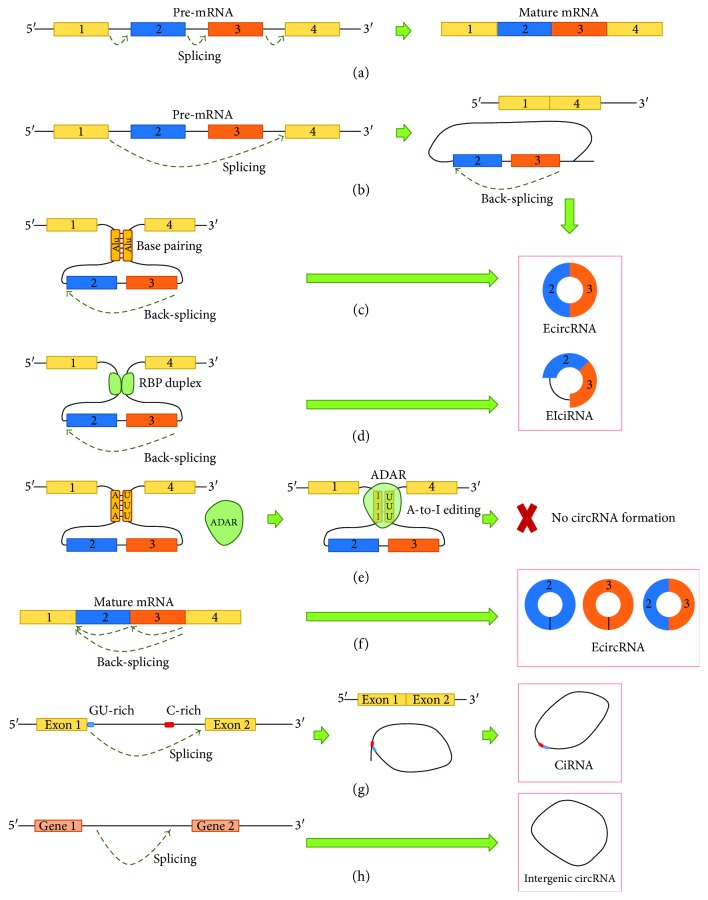
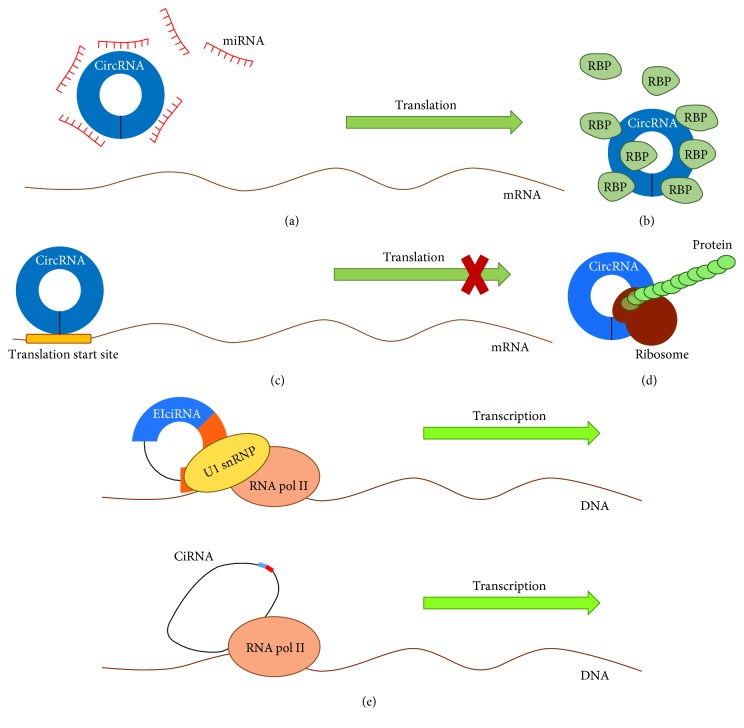
Verification
Claims the paper makes
The claims and statistics of this paper haven’t been checked yet.
Run the check — free, no account needed. It reads the open-access text and checks the sources it cites.
Claims other papers make about this one
Each is checked against this paper’s own text: does it say what the citing paper says it does?
In the citing paper
“Originating from various genomic regions, circRNAs are synthesized by the back-splicing of protein-coding precursor mRNAs (primarily in eukaryotes) [25,26].”
From Circular RNAs in depression: Biogenesis, function, expression, and therapeutic potential (2021) · cites this paper as [26]
Self-check
Percentages, sums and reported differences re-computed from the paper’s own numbers.
The self-check needs the paper’s full text.
Citations
Cites
6 retracted
circRNA_100290 plays a role in oral cancer by functioning as a sponge of the miR-29 family
Chen, L., Zhang, S., Wu, J., Cui, J., Zhong, L., Zeng, L., & Ge, S. (2017) · Oncogene · doi:10.1038/onc.2017.89 · Cited by 391
RetractedYu, L., Gong, X., Sun, L., Zhou, Q., Lu, B., & Zhū, L. (2016) · PLoS ONE · doi:10.1371/journal.pone.0158347 · Cited by 359 · cited 3×
“In addition, knockdown of ciRS-7 in HCC cell lines suppressed cell invasion and proliferation through miR-7 targeting [91].”
BackgroundInfluentialRetractedRETRACTED ARTICLE: Circular RNA 0000096 affects cell growth and migration in gastric cancer
Li, P., Chen, H., Chen, S., Mo, X., Li, T., Xiao, B., Yu, R., & Guo, J. (2017) · British Journal of Cancer · doi:10.1038/bjc.2016.451 · Cited by 228
RetractedTumor suppressor role of miR-217 in human epithelial ovarian cancer by targeting IGF1R
Li, J., Li, D., & Zhang, W. (2015) · Oncology Reports · doi:10.3892/or.2015.4498 · Cited by 43
RetractedThe MicroRNA-217 Functions as a Potential Tumor Suppressor in Gastric Cancer by Targeting GPC5
Wang, H., Dong, X., Gu, X., Qin, R., Jia, H., & Gao, J. (2015) · PLoS ONE · doi:10.1371/journal.pone.0125474 · Cited by 40
RetractedCircular RNA hsa_circ_0001564 facilitates tumorigenesis of osteosarcoma via sponging miR-29c-3p
Li, J., & Song, Y.-Z. (2017) · Tumor Biology · doi:10.1177/1010428317709989 · Cited by 10 · cited 1×
“Hsa_circ_0001564 CANX Osteosarcoma Up NA Sponge: miR-29c-3p [114]”
BackgroundRetractedBartel (2004) · doi:10.1016/s0092-8674(04)00045-5 · Cited by 34,714
MicroRNAs: Target Recognition and Regulatory Functions
Bartel, D. P. (2009) · Cell · doi:10.1016/j.cell.2009.01.002 · Cited by 20,068 · cited 1×
“miRNAs are approximately 22nt long ncRNAs, involved in posttranscriptional regulation of gene expression, which act by direct binding to specific target sites within UTRs of mRNAs [40, 41].”
Circular RNAs are a large class of animal RNAs with regulatory potency
Memczak, S., Jens, M., Elefsinioti, A., Torti, F., Krueger, J., Rybak, A., Maier, L., Mackowiak, S. D., Gregersen, L. H., Munschauer, M., et al. (2013) · Nature · doi:10.1038/nature11928 · Cited by 7,990 · cited 9×
“However, they may be also formed from intronic, noncoding, antisense, 3′ UTR, 5′ UTR, or intergenic genomic regions [9, 17].”
BackgroundInfluentialNatural RNA circles function as efficient microRNA sponges
Hansen, T. B., Jensen, T. I., Clausen, B. H., Bramsen, J. B., Finsen, B., Damgaard, C. K., & Kjems, J. (2013) · Nature · doi:10.1038/nature11993 · Cited by 7,985
Research works printed but not linked: 6
- 2017, American Journal of Cancer Research, 7, 1566
- 2017, International Journal of Clinical and Experimental Pathology, 10, 2997
- 2014, International Journal of Clinical and Experimental Pathology, 7, 2283
- 2015, International Journal of Clinical and Experimental Pathology, 8, 16020
- 2016, American Journal of Translational Research, 8, 932
- 2016, American Journal of Cancer Research, 6, 1167
Cited by
Sorted by citations
Zheng, X., Huang, M., Xing, L., Yang, R., Wang, X., Jiang, R., Zhang, L., & Chen, J. (2020) · Molecular Cancer · doi:10.1186/s12943-020-01183-9 · Cited by 456
Dave, V. P., Ngo, T. A., Pernestig, A.-K., Tilevik, D., Kant, K., Nguyen, T., Wolff, A., & Bang, D. D. (2019) · Laboratory Investigation · doi:10.1038/s41374-018-0143-3 · Cited by 248
Noncoding RNAs in Extracellular Fluids as Cancer Biomarkers: The New Frontier of Liquid Biopsies
Pardini, B., Sabo, A. A., Birolo, G., & Calin, G. A. (2019) · Cancers · doi:10.3390/cancers11081170 · Cited by 204
“cell lines, with a wide range of data reported (as reviewed by [448]).”
BackgroundLi, T., Sun, X.-Z., & Chen, L. (2019) · Journal of Cellular Biochemistry · doi:10.1002/jcb.28239 · Cited by 141
“CircRNAs play multiple physiological and pathological roles in cancer.(5-7) In our study, by circRNA array, it was found that circ_0044516 expression was upregulated in the blood exosomes of prostate cancer and the exosomes of the prostate cancer cells.”
BackgroundXu, Q., Zhou, L., Yang, G., Meng, F., Wan, Y., Wang, L., & Zhang, L. (2020) · Cell Biology International · doi:10.1002/cbin.11444 · Cited by 134
Circular RNAs in Cancer – Lessons Learned From microRNAs
Dragomir, M. P., & Călin, G. A. (2018) · Frontiers in Oncology · doi:10.3389/fonc.2018.00179 · Cited by 136
Chi, Y., Luo, Q., Song, Y., Yang, F., Wang, Y., Jin, M., & Zhang, D. (2019) · Journal of Cellular Biochemistry · doi:10.1002/jcb.29225 · Cited by 98
circRNAs Are Involved in the Rice-Magnaporthe oryzae Interaction
Fan, J., Quan, W., Li, G., Hu, X., Wang, Q., Wang, H., Li, X., Luo, X., Feng, Q., Hu, Z.-J., et al. (2019) · PLANT PHYSIOLOGY · doi:10.1104/pp.19.00716 · Cited by 97
“LOC_Os11g11890 was annotated as an ortholog of the disease-resistance gene RPG1 in barley (Brueggeman et al., 2002), suggesting IR25 might deploy circRNAs for blast resistance.”
BackgroundZhu, K., Zhang, C., Jian-Ping, H., & Zhang, L. (2018) · International Journal of Biological Sciences · doi:10.7150/ijbs.27523 · Cited by 91
“Increasing evidence has shown that circRNAs could play an essential role in various cellular pathological and physiological processes, including carcinogenesis [13] and circRNA could be a promising and technically suitable biomarker for the cancer diagnosis and treatment [14, 15].”
BackgroundEmerging Role of Circular RNAs in Hepatocellular Carcinoma Immunotherapy
Abaza, T., El‐Aziz, M. K. A., Daniel, K. A., Karousi, P., Papatsirou, M., Fahmy, S. A., Hamdy, N. Μ., Kontos, C. K., & Youness, R. A. (2023) · International Journal of Molecular Sciences · doi:10.3390/ijms242216484 · Cited by 91
“CircRNAs are primarily categorized into four types [60,61] based on the origin of their genomic regions: exonic circRNAs (EcircRNAs), retained-intron or exonic-intronic circRNAs (EIcircRNAs), intronic circRNAs (ciRNAs), and tRNA intronic circRNAs (tri-cRNAs) [62].”
BackgroundCircRNAs and lung cancer: Biomarkers and master regulators
Di, X., Jin, X., Li, R., Zhao, M., & Wang, K. (2019) · Life Sciences · doi:10.1016/j.lfs.2019.01.055 · Cited by 89
Chi, B. J., Zhao, D.-X., Liu, L., Yin, X., Wang, F. F., Bi, S., Gui, S.-L., Zhou, S., Qin, W. B., Wu, D., et al. (2018) · Neoplasma · doi:10.4149/neo_2018_180318n185 · Cited by 86
“In addition, circRNAs signatures may be used as prognostic and predictive factors for cancers, thus offering a potential clinical tool for assessing disease state and predicting treatment response and clinical outcome [7].”
BackgroundElkhouly, A. M., Youness, R. A., & Gad, M. Z. (2020) · Non-coding RNA Research · doi:10.1016/j.ncrna.2020.01.001 · Cited by 87
Epigenetic regulation of cancer stem cell formation and maintenance
French, R., & Pauklin, S. (2020) · International Journal of Cancer · doi:10.1002/ijc.33398 · Cited by 87
“urine and saliva, all of which facilitate diagnostic testing and many have been identified as potential biomarkers.(147,148) Biomarkers have”
BackgroundHow are circRNAs translated by non-canonical initiation mechanisms?
Diallo, L. H., Tatin, F., David, F., Godet, A.-C., Zamora, A., Prats, A., Garmy-Susini, B. H., & Lacazette, É. (2019) · Biochimie · doi:10.1016/j.biochi.2019.06.015 · Cited by 84
Zhao, R., Ni, J., Si, L., Jiang, S., You, L., Liu, H., Shou, J., Zhai, C., Zhang, W., Shao, S., et al. (2019) · Aging · doi:10.18632/aging.102334 · Cited by 81
“Circular RNAs (circRNAs) are a novel class of endogenous small non-coding RNAs that form covalently closed-loop structures and lack a 5′ cap or 3′ poly-A tail [7].”
BackgroundCircular RNAs—The Road Less Traveled
Guria, A., Sharma, P., Natesan, S., & Pandi, G. (2020) · Frontiers in Molecular Biosciences · doi:10.3389/fmolb.2019.00146 · Cited by 79
Youness, R. A., Hassan, H. A., Abaza, T., Hady, A. A., Magdoub, H. M. E., Ali, M. K., Vogel, J., Thiersch, M., Gassmann, M., Hamdy, N. Μ., et al. (2024) · Cells · doi:10.3390/cells13151245 · Cited by 76
“As mentioned earlier, circRNAs are sub-classified into three categories, EcircRNA, ciRNA, and EIcircRNA, as illustrated in Figure 2 [29,30].”
BackgroundWhich long noncoding RNAs and circular RNAs contribute to inflammatory bowel disease?
Lin, L., Zhou, G., Chen, P., Wang, Y., Han, J., Chen, M., He, Y., & Zhang, S. (2020) · Cell Death and Disease · doi:10.1038/s41419-020-2657-z · Cited by 68
Tran, A. M., Chalbatani, G. M., Berland, L., Santos, M. C. D. L., Raj, P. S., Jalali, S. A., Gharagouzloo, E., Ivan, C., Dragomir, M. P., & Călin, G. A. (2020) · Frontiers in Cell and Developmental Biology · doi:10.3389/fcell.2020.00050 · Cited by 66
Circular RNAs in Sepsis: Biogenesis, Function, and Clinical Significance
Beltrán-García, J., Osca-Verdegal, R., Nácher-Sendra, E., Pallardó, F. V., & García‐Giménez, J. L. (2020) · Cells · doi:10.3390/cells9061544 · Cited by 66
“CircRNAs are produced mainly by the transcription of protein-coding gene’ exons by RNA polymerase II (RNA-pol II) [22,43], but they can also contain introns [44,45].”
BackgroundWang, W., Wang, J., Zhang, X., & Liu, G. (2019) · OncoTargets and Therapy · doi:10.2147/ott.s220700 · Cited by 64
“The unique circular structure makes circRNAs insensitive to ribonucleases and enables them to exist intact in various tissues and body fluids.(35,36) These unique characteristics make circRNAs ideal candidates as noninvasive biomarkers for cancer diagnosis, prognosis, and treatment.”
BackgroundXie, B., Zhao, Z., Liu, Q., Wang, X., Ma, Z., & Li, H. (2018) · Gene · doi:10.1016/j.gene.2018.10.043 · Cited by 60
Ma, H., Lu, L., Xia, H., Xiang, Q., Sun, J., Xue, J., Xiao, T., Cheng, C., Liu, Q., & Shi, A. (2020) · The Science of The Total Environment · doi:10.1016/j.scitotenv.2020.141181 · Cited by 58
Protein-Related Circular RNAs in Human Pathologies
Wawrzyniak, O., Zarębska, Ż., Kuczyński, K., Gotz‐Więckowska, A., & Rolle, K. (2020) · Cells · doi:10.3390/cells9081841 · Cited by 58
The regulatory functions of circular RNAs in osteosarcoma
Soghli, N., Qujeq, D., Yousefi, T., & Soghli, N. (2020) · Genomics · doi:10.1016/j.ygeno.2020.03.024 · Cited by 55
Circular RNA in Lung Cancer Research: Biogenesis, Functions, and Roles
Zhang, C., Ma, L., Niu, Y., Wang, Z., Xu, X., Li, Y., & Yu, Y. (2020) · International Journal of Biological Sciences · doi:10.7150/ijbs.39212 · Cited by 53
“Among these, ecircRNAs are the most abundant type, accounting for the majority of identified circRNAs[11].”
BackgroundCircular RNA CircVAPA Regulates Breast Cancer Cell Migration and Invasion Via Sponging miR-130a-5p
Zhou, S., Chen, W., Yang, S., Li, J., Zhang, J., Zhang, H.-D., Zhong, S., & Tang, J. (2020) · Epigenomics · doi:10.2217/epi-2019-0124 · Cited by 51
Circ_0027599/PHDLA1 suppresses gastric cancer progression by sponging miR-101-3p.1
Wang, L., Shen, J., & Jiang, Y. (2018) · Cell & Bioscience · doi:10.1186/s13578-018-0252-0 · Cited by 48
The emerging role of circular RNAs in breast cancer
Zhou, S., Chen, W., Yang, S., Xu, Z., Hu, J.-H., Zhang, H.-D., Zhong, S., & Tang, J. (2019) · Bioscience Reports · doi:10.1042/bsr20190621 · Cited by 47
Circular RNA expression profile in blood according to ischemic stroke etiology
Ostolaza, A., Blanco‐Luquin, I., Urdánoz‐Casado, A., Rubio, I., Labarga, A., Zandio, B., Roldán, M., Martínez-Cascales, J., Mayor, S., Herrera, M., et al. (2020) · Cell & Bioscience · doi:10.1186/s13578-020-00394-3 · Cited by 47
Huang, Y., Dai, Y., Wen, C., He, S., Shi, J., Zhao, D., Wu, L., & Zhou, H. (2020) · Molecular Therapy — Nucleic Acids · doi:10.1016/j.omtn.2020.07.027 · Cited by 43
“11 The unique circular structure makes circRNAs more stable and resistant to exonucleases (e.g., RNase R).”
Urdánoz‐Casado, A., de Gordoa, J. S., Robles, M., Acha, B., Roldán, M., Zelaya, M. V., Blanco‐Luquin, I., & Mendióroz, M. (2021) · International Journal of Molecular Sciences · doi:10.3390/ijms22179205 · Cited by 42
Circular RNAs in depression: Biogenesis, function, expression, and therapeutic potential
Gan, H., Lei, Y., Yuan, N., Tang, K., Hao, W., Ma, Q., Wu, M., Zhou, X., Li, X., Huang, J., et al. (2021) · Biomedicine & Pharmacotherapy · doi:10.1016/j.biopha.2021.111244 · Cited by 41
Wang, Z., Zhu, Z., Wang, H., Qin, B., Liu, J., Yao, X., Li, W., & Kuisheng, C. (2019) · Journal of Cellular Physiology · doi:10.1002/jcp.28403 · Cited by 40
Research progress of circular RNAs in lung cancer
Ma, Y., Zhang, X., Wang, Y., Tian, H., & Xu, S. (2018) · Cancer Biology & Therapy · doi:10.1080/15384047.2018.1523848 · Cited by 41
Circular RNA hsa_circ_0075828 Promotes Bladder Cancer Cell Proliferation Through Activation of CREB1
Zhuang, C., Huang, X., Yu, J., & Gui, Y. (2020) · BMB Reports · doi:10.5483/bmbrep.2020.53.2.059 · Cited by 38
“circCASC15 directly bound to miR-1224-5p and CREB1 was a target of miR-1224-5p Studies have shown that circRNAs may function as sponges to bind to miRNAs when mainly located in cytoplasm (14).”
BackgroundNepotchatykh, E., Elremaly, W., Caraus, I., Godbout, C., Leveau, C., Chalder, L., Beaudin, C., Kanamaru, E., Kosovskaia, R., Lauzon, S., et al. (2020) · Scientific Reports · doi:10.1038/s41598-020-76438-y · Cited by 38
Critical Roles of Circular RNA in Tumor Metastasis via Acting as a Sponge of miRNA/isomiR
Guo, L., Jia, L., Luo, L., Xu, X., Xiang, Y., Ren, Y., Ren, D., Shen, L., & Liang, T. (2022) · International Journal of Molecular Sciences · doi:10.3390/ijms23137024 · Cited by 39
Su, W., Sun, S., Wang, F., Shen, Y., & Yang, H. (2019) · Journal of Translational Medicine · doi:10.1186/s12967-019-1830-6 · Cited by 37
RetractedXu, X., Wu, Z., Qiu, H., & Wu, J. (2021) · Neuropsychiatric Disease and Treatment · doi:10.2147/ndt.s288669 · Cited by 33
Circ_0056618 and CXCR4 act as competing endogenous in gastric cancer by regulating miR‐206
Li, H., Yao, G., Feng, B. C., Lu, X., & Fan, Y. (2018) · Journal of Cellular Biochemistry · doi:10.1002/jcb.27271 · Cited by 31
“Given their vital role as regulators, circRNAs can be a potential biomarker for disease diagnosis because of its organization‐specific and disease‐specific.(3,4) Many studies confirmed that circRNA is implicated in the progression and development of gastric cancer through sponging miRNA to affect targeted gene.”
BackgroundLiu, S., Wang, Y., Wang, T., Shi, K., Fan, S., Li, C., Chen, R., Wang, J., Jiang, W., Zhang, Y., et al. (2024) · Molecular Cancer · doi:10.1186/s12943-024-01950-y · Cited by 31
“CircRNAs are a type of ncRNAs characterized by their closed circular structure, contributing to enhanced stability compared to linear RNA [22].”
BackgroundDuan, X., Li, L., Gan, J., Peng, C., Wang, X., Chen, W., & Peng, D. (2019) · Gene · doi:10.1016/j.gene.2019.03.053 · Cited by 29
Circular RNAs in stem cells: from basic research to clinical implications
Lu, H., Li, J., Yang, G., Yi, C., Zhang, D., Yu, F., & Ma, Z. (2021) · Bioscience Reports · doi:10.1042/bsr20212510 · Cited by 29
“Based on the source of the generation, circRNAs can be categorized into four types: exonic 62 circRNAs, circular intronic circRNAs, exonic-intronic circRNAs, and circRNAs produced from tRNAs [4,23].”
BackgroundProtein arginine methyltransferase 1, a major regulator of biological processes
Sudhakar, S. R. N., Khan, S. N., Clark, A. M., Hendrickson-Rebizant, T., Patel, S., Lakowski, T. M., & Davie, J. (2023) · Biochemistry and Cell Biology · doi:10.1139/bcb-2023-0212 · Cited by 32
Circular RNAs in nasopharyngeal carcinoma
Yang, M., & Huang, W. (2020) · Clinica Chimica Acta · doi:10.1016/j.cca.2020.05.029 · Cited by 27
Sun, D., & Zhu, D. (2020) · Cell Cycle · doi:10.1080/15384101.2020.1814026 · Cited by 28
Biogenesis, cellular effects, and biomarker value of circHIPK3
Fu, Y., & Sun, H. (2021) · Cancer Cell International · doi:10.1186/s12935-021-01956-2 · Cited by 28
“Main text CircRNA (circRNA) is a class of endogenous non-coding RNA molecules lacking 5′ and 3′ terminals [5].”
BackgroundWang, S., Li, W., Yang, L., Yuan, J., Wang, L., Li, N., & Zhao, H. (2022) · Functional & Integrative Genomics · doi:10.1007/s10142-022-00865-5 · Cited by 28
“Substantial studies have confirmed that circRNAs participate in the occurrence and development of cancer by mediating various biological processes (Tang and Hann 2020; Bolha et al. 2017).”
BackgroundZhang, Z., Zhou, Q., Luo, F., Zhou, R., Xu, J., Xiao, J., Dai, F., & Song, L. (2021) · Human Cell · doi:10.1007/s13577-021-00564-6 · Cited by 27
Shafaghat, Z., Radmehr, S., Saharkhiz, S., Khosrozadeh, A., Feiz, K., Alkhathami, A. G., Taheripak, G., Farani, M. R., Rahmati, R., Zarimeidani, F., et al. (2025) · Topics in Current Chemistry · doi:10.1007/s41061-025-00505-z · Cited by 29
“It is believed that EIcircRNAs may be able to leave the nucleus during mitosis [34].”
Altered expression of circular RNA in primary Sjögren’s syndrome
Su, L., Xu, W., Liu, X.-Y., Fu, L., & Huang, A. (2019) · Clinical Rheumatology · doi:10.1007/s10067-019-04728-6 · Cited by 26
Liu, W., Yin, C., & Liu, Y. (2020) · Cancer Biotherapy and Radiopharmaceuticals · doi:10.1089/cbr.2019.3472 · Cited by 26
“8,9 Mounting evidence demonstrated that circRNAs performed crucial parts in the progression of many diseases, including cancers, 10,11 such as colorectal cancer 12 and colon cancer.”
Non-Coding RNAs and Brain Tumors: Insights Into Their Roles in Apoptosis
Tamtaji, O. R., Derakhshan, M., Noshabad, F. Z. R., Razaviyan, J., Hadavi, R., Jafarpour, H., Jafari, A., Rajabi, A., Hamblin, M. R., Mahabady, M. K., et al. (2022) · Frontiers in Cell and Developmental Biology · doi:10.3389/fcell.2021.792185 · Cited by 26
“Various circularization mechanisms regulate circRNA biogenesis, out of which ecircRNA is abundantly found so that it includes most of specified circRNAs (Bolha et al., 2017).”
BackgroundApproaches for identification and analysis of plant circular RNAs and their role in stress responses
Kalwan, G., Gill, S. S., Priyadarshini, P., Gill, R., Yadava, Y. K., Yadav, S., Baruah, P. M., Agarwala, N., Gaikwad, K., & Jain, P. K. (2022) · Environmental and Experimental Botany · doi:10.1016/j.envexpbot.2022.105099 · Cited by 24
Therapeutic and diagnostic applications of exosomal circRNAs in breast cancer
Gopikrishnan, M., Hephzibah Cathryn, R., Ramanathan, G., Ashour, H. M., Pintus, G., Hammad, M., Kashyap, M. K., Doss, C. G. P., & Zayed, H. (2023) · Functional & Integrative Genomics · doi:10.1007/s10142-023-01083-3 · Cited by 27
“Most circRNAs originate from the 1–5 exons of protein-coding genes (Bolha et al. 2017).”
BackgroundRegulation of the Key Epithelial Cancer Suppressor miR-124 Function by Competing Endogenous RNAs
Александровна, Б. Э., Fridman, M. V., Burdennyy, A. M., Филиппова, Е. А., Loginov, V. I., Валерьевна, П. И., Dmitriev, A. A., & Кушлинский, Н. Е. (2022) · International Journal of Molecular Sciences · doi:10.3390/ijms232113620 · Cited by 24
“For this reason, circRNAs are considered highly effective biomarkers for various cancer types [108].”
BackgroundMa, Q., Huai, B., Liu, Y., Jia, Z., & Zhao, Q. (2021) · Cancer Management and Research · doi:10.2147/cmar.s278913 · Cited by 24
“miRNA levels as the sponges for miRNAs or alter gene transcription by binding to the RNA-binding proteins.(5,6) In recent years, circRNAs are reported to be closely related to many diseases, including cancer,(7) diabetes,(8) and cardiovascular disease.”
BackgroundCastro, J., Daniels, M. H., Brennan, D., Johnston, B., Gotur, D., Lee, Y., Knockenhauer, K. E., Lu, C., Wu, J., Nayak, S. P., et al. (2024) · Cancer Research · doi:10.1158/0008-5472.can-24-0397 · Cited by 23
“circRNAs are noncoding RNA structures that are formed by alternative splicing of two complementary intronic sequences that cir-cularize by covalent bond formation (22).”
Liang, C., Yang, Q., Hu, C., Yu, Q., Hao, S., & Li, D. (2019) · Medical Science Monitor · doi:10.12659/msm.916697 · Cited by 23
“Circular RNAs (circRNAs) are endogenous non-coding RNAs, which consist of a closed-loop structure, without a 5’ cap and a 3’ poly-A tail [7].”
BackgroundCerina: systematic circRNA functional annotation based on integrative analysis of ceRNA interactions
Cardenas, J., Balaji, U., & Gu, J. (2020) · Scientific Reports · doi:10.1038/s41598-020-78469-x · Cited by 21
Dai, Y., Zhu, Y., & Xu, H. (2022) · Journal of Clinical Laboratory Analysis · doi:10.1002/jcla.24486 · Cited by 22
Zhang, D., Ma, Y., Naz, M., Ahmed, N., Zhang, L., Zhou, J., Ding, Y., & Chen, Z. (2024) · Genes · doi:10.3390/genes15070958 · Cited by 23
“The knockdown of ciRNAs decreases the expression of their parental genes, particularly at medical region [30].”
BackgroundYan, X., Wang, T., & Wang, J. (2020) · Cancer Biotherapy and Radiopharmaceuticals · doi:10.1089/cbr.2020.3621 · Cited by 21
“25 In the case of NSCLC, circFADS2 and circ_0067934 promoted cell proliferation and invasion, 26,27 while circPTK2 hampered epithelial-mesenchymal transition and metastasis of NSCLC cells.”
The Prognostic and Predictive Significance of circRNA CDR1as in Tumor Progression
Jian, F., Yangyang, R., Xu, W., Jiadan, X., Na, L., Peng, Y., Maohong, B., Guoping, N., & Pan, Z. (2021) · Frontiers in Oncology · doi:10.3389/fonc.2020.549982 · Cited by 21
“It regulates the biological function of tumors in two main ways (1): binding to the miRNA as a competing endogenous RNA through the base complementary pairing principle (2); regulating gene expression at the transcriptional and post-transcriptional level (2, 13, 15, 37).”
BackgroundCircular RNAs in Hepatocellular Carcinoma: Emerging Functions to Clinical Significances
Zhang, Y., & Wang, Y. (2021) · Frontiers in Oncology · doi:10.3389/fonc.2021.667428 · Cited by 21
Dysregulation of the miR‐30c/DLL4 axis by circHIPK3 is essential for KSHV lytic replication
Harper, K. L., Mottram, T. J., Anene, C. A., Foster, B., Patterson, M. R., McDonnell, E., Macdonald, A., Westhead, D. R., & Whitehouse, A. (2022) · EMBO Reports · doi:10.15252/embr.202154117 · Cited by 20
“…have shown circRNAs are highly abundant and play key roles in gene regulation (Taylor, 2014; Qu et al , 2018). circRNAs are mostly formed through a unique backsplicing mechanism, where a downstream splice donor is joined to an upstream splice acceptor forming a closed circle (Bolha et al , 2017).”
Circular RNAs in inflammatory bowel disease
Lun, J., Guo, J., Yu, M., Zhang, H., & Fang, J. S. (2023) · Frontiers in Immunology · doi:10.3389/fimmu.2023.1307985 · Cited by 22
Circ-HIPK3 plays an active role in regulating myoblast differentiation
Yao, R., Yao, Y., Li, C., Li, X., Ni, W., Quan, R., Liu, L., Li, H., Xu, Y., Zhang, M., et al. (2019) · International Journal of Biological Macromolecules · doi:10.1016/j.ijbiomac.2019.11.119 · Cited by 19
Qu, Y., Li, Q., Hao, L., & Zhu, J. (2021) · Oncology Letters · doi:10.3892/ol.2021.12649 · Cited by 19
Non-coding RNAs in gynecologic cancer
Solati, A., Taghvimi, S., Khatami, S. H., Shabaninejad, Z., Malekzadegan, Y., Alizadeh, M., Mousavi, P., Taheri‐Anganeh, M., Razmjoue, D., Bahmyari, S., et al. (2023) · Clinica Chimica Acta · doi:10.1016/j.cca.2023.117618 · Cited by 18
MetaDE-Based Analysis of circRNA Expression Profiles Involved in Gastric Cancer
Ding, H.-X., Xu, Q., Wang, B., Lv, Z., & Yuan, Y. (2020) · Digestive Diseases and Sciences · doi:10.1007/s10620-019-06014-6 · Cited by 18
Shu, X., Cheng, L., Dong, Z., & Shu, S. (2019) · Journal of Cellular Biochemistry · doi:10.1002/jcb.28888 · Cited by 17
“are not in complete accord.(19,44) Therefore, we systematically analyzed RNA‐seq and miRNA‐seq data, miRNA‐target mRNA interactions, and significantly coexpressed gene pairs between control and ATRA‐ treated mice.”
BackgroundCirc_0001686 Promotes Prostate Cancer Progression by Up-Regulating SMAD3/TGFBR2 via miR-411-5p
Pan, J., Liu, Z., Yang, Z., Liang, E., Cheng, F., Zhang, D., Zhou, X., Niu, Y., Xin, Z., Chen, Y., et al. (2021) · The World Journal of Men s Health · doi:10.5534/wjmh.200204 · Cited by 17
“The circular RNAs (circRNAs), having characteristics covalently closed-loop structures, are the new class of non-coding RNAs (ncRNAs) that do not code for the proteins [5,6].”
BackgroundMa, S., Xu, Y., Qin, X., Tao, M., Gu, X., Shen, L., Chen, Y., Zheng, M., Qin, S., Wu, G., et al. (2024) · Cellular & Molecular Biology Letters · doi:10.1186/s11658-024-00610-9 · Cited by 16
“As new members of the competitive endogenous RNA family and regulators of miRNA activity, circRNAs may exert a significant role in gene expression regulation in cancer and other diseases [43, 44].”
BackgroundLiu, J., Zhang, M., Li, D., Li, M., Kong, L., Cao, M., Wang, Y., Song, C., Fang, X., Chen, H., et al. (2020) · Genes · doi:10.3390/genes11030336 · Cited by 16
“Most circRNAs are more than 200 nt and diverse in length [26].”
BackgroundGao, F., Jia, L., Han, J., Wang, Y., Luo, W., & Zeng, Y. (2020) · Anti-Cancer Drugs · doi:10.1097/cad.0000000000001014 · Cited by 16
Circ_0005576 Promotes Malignant Progression Through miR-874/CDK8 Axis in Colorectal Cancer
Chen, Y., Li, S., & Hu, X. (2020) · OncoTargets and Therapy · doi:10.2147/ott.s249494 · Cited by 15
“High stability and specific expression in tissues and diseases make circRNAs potential biomarkers for disease diagnosis and prognosis.(10) Circ_0005576 is a recently discovered circRNA, which has been found to facilitate cervical cancer progression by acting on the miR-153/KIF20A axis.”
BackgroundRetractedDanac, J. M. C., & Garcia, R. L. (2021) · Scientific Reports · doi:10.1038/s41598-021-88539-3 · Cited by 15
Li, H., Liu, X., Sun, N., Wang, T., Zhu, J., Yang, S., Song, X., Wang, R., Wang, X., Zhao, Y., et al. (2021) · Frontiers in Cardiovascular Medicine · doi:10.3389/fcvm.2021.657544 · Cited by 15
“Specifically, circRNAs can act as microRNA sponges, competitively inhibiting complementary microRNAs through the ceRNA mechanism and influencing the function of related mRNAs (24).”
BackgroundNovel Insights in the Regulatory Mechanisms of Ferroptosis in Hepatocellular Carcinoma
Ma, S., Adzavon, Y. M., Wen, X., Zhao, P., Xie, F., Liu, M., & Ma, X. (2022) · Frontiers in Cell and Developmental Biology · doi:10.3389/fcell.2022.873029 · Cited by 15
Liu, X., Zhang, L., Wang, J.-H., Zeng, H., Zou, J., Tan, W., Zhao, H., He, Y., Shi, J., Yoshida, S., et al. (2020) · Current Eye Research · doi:10.1080/02713683.2020.1722179 · Cited by 14
Li, W., Liu, R., Wei, D., Zhang, W., Zhang, H., Huang, W., & Hao, L. (2020) · BioMed Research International · doi:10.1155/2020/3501451 · Cited by 14
“circRNAs are characterized by a closed-loop structure with limited protein coding capacity [10, 11] and have been found to function as oncogenes or cancer suppressor genes in a wide variety of human cancers [12, 13].”
BackgroundLong Non-Coding RNAs as Epigenetic Regulators of Immune Checkpoints in Cancer Immunity
Saadi, W., Fatmi, A., Pallardó, F. V., García‐Giménez, J. L., & Mena, S. (2022) · Cancers · doi:10.3390/cancers15010184 · Cited by 15
“Based on their genomic location regarding protein-coding genes (PCG), lncRNAs can be classified as follows: sense lncRNAs when they are on the same strand of PCG, antisense lncRNAs on the opposite strand of PCG, intronic lncRNAs if located entirely in intronic regions of a PCG, intergenic lncRNAs (lincRNAs) when they…”
BackgroundInfluentialSheng, J., Liu, L., Dong, T., & Wu, X. (2021) · Journal of Chemotherapy · doi:10.1080/1120009x.2021.2009991 · Cited by 13
“Circular RNA (circRNA) is a widespread noncoding RNA that forms a covalently closed loop structure [6].”
BackgroundUrdánoz‐Casado, A., de Gordoa, J. S., Robles, M., Roldán, M., Zelaya, M. V., Blanco‐Luquin, I., & Mendióroz, M. (2022) · International Journal of Molecular Sciences · doi:10.3390/ijms23147682 · Cited by 13
Lei, X., Yang, M., Xiao, Z., Zhang, H., & Tan, S. (2021) · Open Life Sciences · doi:10.1515/biol-2021-0041 · Cited by 12
“Accumulating evidence has certified that dysregulation of circRNAs is extensively implicated in the development of various diseases, including cancer [19].”
BackgroundLi, Y., Shi, R., Zhu, G., Chen, C., Huang, H., Gao, M., Xu, S., Cao, P., Zhang, Z., Wu, D., et al. (2021) · Thoracic Cancer · doi:10.1111/1759-7714.14226 · Cited by 12
“Circular RNA (circRNA) is a newly discovered type of non-coding RNA (ncRNA) and ubiquitously exists in many species.(4) An increasing number of studies demonstrate that circRNAs can function as molecular sponges for (microRNA) miRNAs and RNA-binding proteins (RBPs) and play important roles in various biological proces…”
BackgroundYan, D., Liu, W., Liu, Y., & Zhu, X. (2022) · Journal of Gastroenterology and Hepatology · doi:10.1111/jgh.15862 · Cited by 11
Liu, Y., Yang, Y., Li, M., Fu, X., He, X., Li, X., Cho, J. Y., Li, P., & Yu, T. (2024) · iScience · doi:10.1016/j.isci.2024.109502 · Cited by 11
RetractedProgress of research into circular RNAs in urinary neoplasms
Wan, B., Лю, Б., & Lv, C. (2020) · PeerJ · doi:10.7717/peerj.8666 · Cited by 10
Zheng, L., Yan, B., Jin, G., Han, W., Wang, H., Wang, Z., Ma, Y., Nian, Y., Meng, X., & Jiang, Z. (2022) · Journal of Molecular Histology · doi:10.1007/s10735-021-10044-8 · Cited by 12
“Thus, circRNAs harbor higher stability relative to linear molecules (Bolha et al. 2017).”
BackgroundCirc_TNFRSF21 promotes cSCC metastasis and M2 macrophage polarization via miR-214-3p/CHI3L1
Ma, J., Huang, L., Gao, Y., Li, M., Chen, L., & Yang, L. (2023) · Journal of Dermatological Science · doi:10.1016/j.jdermsci.2023.06.001 · Cited by 10
Zhang, J., Chu, G., Zheng, L., Liu, J., & He, J. (2023) · Journal of Applied Genetics · doi:10.1007/s13353-023-00772-w · Cited by 10
“In recent years, many studies have illustrated that circRNAs play an important role in the whole metabolic process of tumors and are promising as biomarkers and therapeutic targets for cancer diagnosis and therapy (Bolha et al. 2017).”
BackgroundYu, B., Li, M., Han, S., Yu, Z., & Zhu, J. (2021) · Molecular Medicine Reports · doi:10.3892/mmr.2021.12501 · Cited by 10
Wu, B., Xia, L., Zhang, S., Jin, K., Li, L., Sun, C., Xia, T., & Chen, G. (2023) · PubMed · doi:10.14670/hh-18-587 · Cited by 9
MicroRNAs in Tumor Endothelial Cells: Regulation, Function and Therapeutic Applications
Gu, Y. J., Becker, M. A., Müller, L., Reuss, K., Umlauf, F., Tang, T., Menger, M. D., & Laschke, M. W. (2023) · Cells · doi:10.3390/cells12131692 · Cited by 9
Circulating non-coding RNAs as a tool for liquid biopsy in solid tumors
Dogan, B. K., Yılmaz, S. S., Izgi, G. N., & Özen, M. (2025) · Epigenomics · doi:10.1080/17501911.2025.2467021 · Cited by 8
Roles of Circular RNAs And Their Interactions With MicroRNAs in Human Disorders
Sun, J. (2018) · Clinical surgery research communications · doi:10.31491/csrc.2018.6.012 · Cited by 8
Metadata
- Authors
- Bolha, L., Ravnik-Glavač, M., & Glavač, D.
- Affiliations
- University of Ljubljana (SI)
- Department of Molecular Genetics, Institute of Pathology, Faculty of Medicine, University of Ljubljana, Ljubljana, Slovenia
- Corresponding author
- Glavač, Damjan
- Venue
- International Journal of Genomics
- Publisher
- Wiley
- Published
- 2017
- Volume
- 2017
- Pages
- 1-19
- ISSN
- 2314-436X (ISSN-L)
- 2314-4378
- PMC
- PMC5733622
- OpenAlex
- W2771561127
- Cited by
- 166
- References
- 150
- Citations by year
- 2026: 2 · 2025: 10 · 2024: 22 · 2023: 17 · 2022: 21 · 2021: 21 · 2020: 38 · 2019: 20 · 2018: 15
- FWCI
- 1.89
- Type
- journal article
- Language
- en
- Open access
- gold
- doi.org
- Locations
- International Journal of Genomics (publishedVersion, cc-by)
- PubMed Central (publishedVersion, cc-by)
- PubMed (publishedVersion)
- DOAJ (DOAJ: Directory of Open Access Journals) (submittedVersion, cc-by-sa)
- Topics
- Life Sciences › Biochemistry, Genetics and Molecular Biology › Molecular Biology › Circular RNAs in diseases
- Life Sciences › Biochemistry, Genetics and Molecular Biology › Cancer Research › Cancer-related molecular mechanisms research
- Life Sciences › Biochemistry, Genetics and Molecular Biology › Molecular Biology › RNA Research and Splicing
- Keywords
- circular RNA, circRNA biogenesis, back-splicing, non-coding RNA, microRNA sponge, cap-independent translation, circRNA stability, tumor markers, cancer diagnosis, cancer prognosis
About these checks
Registry, retraction, Cites and statistics results are computed, not judged, with one exception: a printed reference that no index lists is read once by a model before it counts as a citation error. Claims are extracted by a model and kept only when their quote appears verbatim in the text; each cited source is then checked, with a model’s help, for whether it says what the claim relies on. Those verdicts can be wrong — read the claim’s quote and the cited source before relying on one.
Statistics and arithmetic are recomputed, not judged.
Confidence bands are shown only for fields calibrated on our annotated test set. None is calibrated yet, so no band is shown.
What counts as a claim ›How we measure confidence ›How we check this ›
Are you an author, or do you see a problem with this page? Request a review
