

The DOI matches its Crossref record; 150 of the 150 references it cites were found in a registry or an index.
Circular RNAs: Biogenesis, Function, and a Role as Possible Cancer Biomarkers
Open accessAbstract
Circular RNAs (circRNAs) are a class of noncoding RNAs (ncRNAs) that form covalently closed continuous loop structures, lacking the terminal 5 ′ and 3 ′ ends. CircRNAs are generated in the process of back-splicing and can originate from different genomic regions. Their unique circular structure makes circRNAs more stable than linear RNAs. In addition, they also display insensitivity to ribonuclease activity. Generally, circRNAs function as microRNA (miRNA) sponges and have a regulatory role in transcription and translation. They may be also translated in a cap-independent manner in vivo, to generate specific proteins. In the last decade, next-generation sequencing techniques, especially RNA-seq, have revealed great abundance and also dysregulation of many circRNAs in various diseases, suggesting their involvement in disease development and progression. Regarding their high stability and relatively specific differential expression patterns in tissues and extracellular environment (e.g., body fluids), they are regarded as promising novel biomarkers in cancer. Therefore, we focus this review on describing circRNA biogenesis, function, and involvement in human cancer development and address the potential of circRNAs to be effectively used as novel cancer diagnostic and prognostic biomarkers.
Overview
The claims and statistics of this paper haven’t been checked yet.
Run the check — free, no account needed. It reads the open-access text and checks the sources it cites.
Integrity signals
Registry
Cites
Statistics
Figures
Verification
Claims the paper makes
The claims and statistics of this paper haven’t been checked yet.
Run the check — free, no account needed. It reads the open-access text and checks the sources it cites.
Claims other papers make about this one
Each is checked against this paper’s own text: does it say what the citing paper says it does?
In the citing paper
“Originating from various genomic regions, circRNAs are synthesized by the back-splicing of protein-coding precursor mRNAs (primarily in eukaryotes) [25,26].”
From Circular RNAs in depression: Biogenesis, function, expression, and therapeutic potential (2021) · cites this paper as [26]
Self-check
Percentages, sums and reported differences re-computed from the paper’s own numbers.
The self-check needs the paper’s full text.
Citations
Cites
6 retracted
circRNA_100290 plays a role in oral cancer by functioning as a sponge of the miR-29 family
Chen, L., Zhang, S., Wu, J., Cui, J., Zhong, L., Zeng, L., & Ge, S. (2017) · Oncogene · doi:10.1038/onc.2017.89 · Cited by 391
RetractedYu, L., Gong, X., Sun, L., Zhou, Q., Lu, B., & Zhū, L. (2016) · PLoS ONE · doi:10.1371/journal.pone.0158347 · Cited by 359 · cited 3×
“In addition, knockdown of ciRS-7 in HCC cell lines suppressed cell invasion and proliferation through miR-7 targeting [91].”
BackgroundInfluentialRetractedRETRACTED ARTICLE: Circular RNA 0000096 affects cell growth and migration in gastric cancer
Li, P., Chen, H., Chen, S., Mo, X., Li, T., Xiao, B., Yu, R., & Guo, J. (2017) · British Journal of Cancer · doi:10.1038/bjc.2016.451 · Cited by 228
RetractedTumor suppressor role of miR-217 in human epithelial ovarian cancer by targeting IGF1R
Li, J., Li, D., & Zhang, W. (2015) · Oncology Reports · doi:10.3892/or.2015.4498 · Cited by 43
RetractedThe MicroRNA-217 Functions as a Potential Tumor Suppressor in Gastric Cancer by Targeting GPC5
Wang, H., Dong, X., Gu, X., Qin, R., Jia, H., & Gao, J. (2015) · PLoS ONE · doi:10.1371/journal.pone.0125474 · Cited by 40
RetractedCircular RNA hsa_circ_0001564 facilitates tumorigenesis of osteosarcoma via sponging miR-29c-3p
Li, J., & Song, Y.-Z. (2017) · Tumor Biology · doi:10.1177/1010428317709989 · Cited by 10 · cited 1×
“Hsa_circ_0001564 CANX Osteosarcoma Up NA Sponge: miR-29c-3p [114]”
BackgroundRetractedBartel (2004) · doi:10.1016/s0092-8674(04)00045-5 · Cited by 34,714
MicroRNAs: Target Recognition and Regulatory Functions
Bartel, D. P. (2009) · Cell · doi:10.1016/j.cell.2009.01.002 · Cited by 20,068 · cited 1×
“miRNAs are approximately 22nt long ncRNAs, involved in posttranscriptional regulation of gene expression, which act by direct binding to specific target sites within UTRs of mRNAs [40, 41].”
Circular RNAs are a large class of animal RNAs with regulatory potency
Memczak, S., Jens, M., Elefsinioti, A., Torti, F., Krueger, J., Rybak, A., Maier, L., Mackowiak, S. D., Gregersen, L. H., Munschauer, M., et al. (2013) · Nature · doi:10.1038/nature11928 · Cited by 7,990 · cited 9×
“However, they may be also formed from intronic, noncoding, antisense, 3′ UTR, 5′ UTR, or intergenic genomic regions [9, 17].”
BackgroundInfluentialNatural RNA circles function as efficient microRNA sponges
Hansen, T. B., Jensen, T. I., Clausen, B. H., Bramsen, J. B., Finsen, B., Damgaard, C. K., & Kjems, J. (2013) · Nature · doi:10.1038/nature11993 · Cited by 7,985
Research works printed but not linked: 6
- 2017, American Journal of Cancer Research, 7, 1566
- 2017, International Journal of Clinical and Experimental Pathology, 10, 2997
- 2014, International Journal of Clinical and Experimental Pathology, 7, 2283
- 2015, International Journal of Clinical and Experimental Pathology, 8, 16020
- 2016, American Journal of Translational Research, 8, 932
- 2016, American Journal of Cancer Research, 6, 1167
Cited by
Sorted by citations
Items 101–170 of 170
Use of Circular RNAs in Diagnosis, Prognosis and Therapeutics of Renal Cell Carcinoma
Osca-Verdegal, R., Beltrán-García, J., Górriz, J. L., Jabaloyas, J. M. M., Pallardó, F. V., & García‐Giménez, J. L. (2022) · Frontiers in Cell and Developmental Biology · doi:10.3389/fcell.2022.879814 · Cited by 8
Chen, H., Wang, K., Pei, D., & Xu, H. (2020) · Journal of Clinical Laboratory Analysis · doi:10.1002/jcla.23303 · Cited by 8
Skullcapflavone I has a potent anti‐pancreatic cancer activity by targeting miR‐23a
Cui, J., Li, H., Wang, Y., Tian, T., Liu, C., Wang, Y., Sun, S., & Feng, B. (2020) · BioFactors · doi:10.1002/biof.1621 · Cited by 8
Oświęcimska, J. M., Dawidziuk, M., Gambin, T., Ziora, K. T., Marek, M., Rzońca, S., Guilbride, D. L., Jhangiani, S. N., Obuchowicz, A. K., Sikora, A., et al. (2019) · Journal of Clinical Research in Pediatric Endocrinology · doi:10.4274/jcrpe.galenos.2018.2018.0227 · Cited by 7
“Recent elucidation of fundamental functions for circRNA in eukaryotic gene expression programs (19) has highlighted the potential for future investigations into defective RNA processing during foetal development as a possible contributor to genetic disorders.”
BackgroundGong, Z., Rong, X., Li, X., Wang, H., Liu, D., He, L., Pan, J., Shen, Q., & Peng, Y. (2022) · The American Journal of Drug and Alcohol Abuse · doi:10.1080/00952990.2022.2073449 · Cited by 7
“Currently, circRNAs are considered as potential biomarkers for several types of cancer (51,52), autoimmune diseases (53,54), and cerebrovascular diseases (55,56).”
BackgroundCircular RNA PVT1 promotes progression of thyroid cancer by competitively binding miR‑384
Hua, T., & Luo, Y. (2022) · Experimental and Therapeutic Medicine · doi:10.3892/etm.2022.11566 · Cited by 7
A comprehensive landscape of transcription profiles and data resources for human leukemia
Luo, M., Miao, Y., Ke, Y., Guo, A., & Zhang, Q. (2023) · Blood Advances · doi:10.1182/bloodadvances.2022008410 · Cited by 7
The Intricate Role of Non-Coding RNAs in Sepsis-Associated Disseminated Intravascular Coagulation
Cánovas‐Cervera, I., Nácher-Sendra, E., Osca-Verdegal, R., Dolz-Andrés, E., Beltrán-García, J., Rodríguez, M. D. P., Ferrando-Sánchez, C., Carbonell, N., & García‐Giménez, J. L. (2023) · International Journal of Molecular Sciences · doi:10.3390/ijms24032582 · Cited by 7
circKLHL24 Blocks Breast Cancer Development by Regulating the miR-1204/ ALX4 Network
Yi, G., Wang, D., Han, J., Li, J., Liu, X., & He, J. (2021) · Cancer Biotherapy and Radiopharmaceuticals · doi:10.1089/cbr.2020.3992 · Cited by 7
“12 For example, circAGFG1 sponged miR-195-5p to mediate the expression of CCNE1 , thereby affecting tumorigenesis and aggravation of breast cancer.”
Non-coding RNAs in Neonatal Necrotizing Enterocolitis
Donda, K., Torres, B. A., & Maheshwari, A. (2022) · Newborn · doi:10.5005/jp-journals-11002-0012 · Cited by 6
Advances in liquid biopsy–based markers in NSCLC
Ren, X., Su, N., Sun, X.-G., Li, W., Li, J., Li, B., Li, R.-X., Lv, J., Xu, Q.-Y., Kong, W.-L., et al. (2023) · Advances in clinical chemistry · doi:10.1016/bs.acc.2023.02.004 · Cited by 6
circ_WASF2 regulates ferroptosis by miR-634/ GPX4 signaling in pancreatic cancer
Liu, T., Xie, X.-M., He, Y.-P., Zhang, J., & Mou, J. (2024) · Discover Oncology · doi:10.1007/s12672-024-01001-4 · Cited by 6
Role of non-coding RNAs in cardiotoxicity of chemotherapy
Song, L., Qiao, G., Xu, Y., Ma, L., & Jiang, W. (2018) · Surgical Oncology · doi:10.1016/j.suronc.2018.06.003 · Cited by 6
Cao, J., Yu, U., Li, L., Yuan, X., Chen, S., Xu, H., Meng, Y., & Liu, S. (2022) · Oncology Reports · doi:10.3892/or.2022.8286 · Cited by 6
“Although originally thought to be useless products of mRNA pre‐splicing, these unique ncRNAs with circular structures are currently recognized as relatively well‐established biomarkers in cancer diagnosis (30).”
BackgroundOświęcimska, J. M., Dawidziuk, M., Gambin, T., Ziora, K. T., Marek, M., Rzońca, S., Guilbride, D. L., Jhangiani, S. N., Obuchowicz, A. K., Sikora, A., et al. (2018) · Journal of Clinical Research in Pediatric Endocrinology · doi:10.4274/jcrpe.0227 · Cited by 6
Alimohammadi, M., Kahkesh, S., Cho, W. C. S., Farahani, N., Khoozani, M. F., Zare, A., Nejadheidari, A., Farani, M. R., Parizi, A. K., Asgharzadeh, F., et al. (2025) · APOPTOSIS · doi:10.1007/s10495-025-02127-8 · Cited by 5
“Because of their tissue and tumor selectivity, circRNAs are anticipated to develop into brand-new LC tumor indicators [117].”
A Review on Circular RNA Translation and Its Implications in Disease
Wei, H. Y., Fan, X., & Mao, M. (2024) · Methods in molecular biology · doi:10.1007/978-1-0716-4290-0_5 · Cited by 6
Jiang, P., & Xia, B. (2023) · Cellular and Molecular Biology · doi:10.14715/cmb/2023.69.12.18 · Cited by 5
“…RNAs (circRNAs) are a special type of long-chain non-coding RNA, containing at least hundreds of nucleotides, a closed-loop structure majorly formed by exon and intron sequences, without 5' cap and 3' tail, thus it is not sensitive to ribonuclease and its expression is relatively stable (4).”
BackgroundThe Role of Circular RNAs in Male Infertility and Reproductive Cancers: A Narrative Review.
Derakhshan, Z., Bahmanpour, S., Alaee, S., Fallahi, J., & Tabei, K. (2023) · PubMed Central · doi:10.30476/ijms.2022.95302.2661 · Cited by 5
Aghayan, A. H., Mirazimi, Y., Hosseini, Z. S., & Rafiee, M. (2025) · Journal of Research in Medical Sciences · doi:10.4103/jrms.jrms_287_24 · Cited by 4
Long, B. Y. (2024) · American Journal of Cancer Research · doi:10.62347/kmwb5164 · Cited by 4
Anderson, C. M., Laeremans, A., Wang, X.-M. M., Wu, X., Zhang, B., Doolittle, E., Kim, J., Li, N., Pimentel, H. X. Y., Park, E., et al. (2018) · Journal of Visualized Experiments · doi:10.3791/58097 · Cited by 4
Proulex, G. C. R., Meade, M. J., Manoylov, K. M., & Cahoon, A. B. (2021) · Plants · doi:10.3390/plants10030576 · Cited by 4
“RNA circularization among nuclear genes occurs by way of an intron-exon back-splicing mechanism involving protein factors and conserved cis-elements [79,80], and perhaps a similar mechanism involving repeated elements occurs in mitochondria.”
BackgroundFunctional Role of Circular RNA in Regenerative Medicine
Cao, R. Y., Dai, Q., Li, Q. X., & Yang, J. (2018) · Advances in experimental medicine and biology · doi:10.1007/978-981-13-1426-1_24 · Cited by 4
Editorial comments for the circular RNA circPRKCI promotion of tumor growth in lung adenocarcinoma
Ravnik‐Glavač, M., & Glavač, D. (2019) · Journal of Thoracic Disease · doi:10.21037/jtd.2019.03.71 · Cited by 3
Transcription-wide impact by RESCUE-induced off-target single-nucleotide variants in mammalian cells
Li, G., Zhu, X., Wang, Y., Ma, H., Wang, Y., Wu, H., Li, X., Wang, Y., Gao, J., Chen, X., et al. (2023) · Journal of Molecular Cell Biology · doi:10.1093/jmcb/mjad011 · Cited by 2
Androgen Receptor and Non-Coding RNAs’ Interaction in Renal Cell Carcinoma
Hussain, M. A., Elemam, N. M., & Talaat, I. M. (2024) · Non-Coding RNA · doi:10.3390/ncrna10060056 · Cited by 2
Mei, Z., Huang, L., & Rao, W. (2022) · Neurological Research · doi:10.1080/01616412.2022.2123172 · Cited by 2
Circ_0001686 Promotes Prostate Cancer Progression by Up-Regulating SMAD3/TGFBR2 via miR-411-5pPreprint
Cai, Q., Pan, J., Liang, E., Zhang, D., Fang, C., Yang, Z., Zhou, X., Quan, C., Xin, Z., Chen, Y., et al. (2020) · doi:10.21203/rs.3.rs-42527/v1 · Cited by 2
Circular RNAs as Biomarkers in the Diagnosis of Human Diseases
Özdemir, S. (2025) · Advances in experimental medicine and biology · doi:10.1007/978-981-96-9428-0_14 · Cited by 1
Wang, S., Wang, M., Wang, X., & Chen, J. (2025) · Journal of Integrative Agriculture · doi:10.1016/j.jia.2025.03.026 · Cited by 1
WITHDRAWN: Skullcapflavone I has a potent anti-pancreatic cancer activity by targeting miR-23a
Cui, J., Li, H., Wang, Y., Tian, T., Liu, C., Wang, Y., Sun, S., & Feng, B. (2019) · Life Sciences · doi:10.1016/j.lfs.2019.05.025 · Cited by 1
RetractedGenetics and Epigenetics of Mesothelioma
Aspesi, A., Sculco, M., Guarrera, S., Casalone, E., Moro, L., Magnani, C., Matullo, G., & Dianzani, I. (2019) · Springer eBooks · doi:10.1007/978-3-030-16884-1_4 · Cited by 1
circAPLP2 promotes colorectal cancer progression by upregulating HELLS by targeting miR-335-5p
Xiang, R. H., Feng, M., Zhou, X., Ma, L., & Dong, N. (2021) · Open Medicine · doi:10.1515/med-2021-0229 · Cited by 1
Construction and analysis of a survival-associated competing endogenous RNA network in breast cancer
Chen, G., Li, Y., Cao, J., Dai, Y., Cong, Y., & Qiao, G. (2023) · Frontiers in Surgery · doi:10.3389/fsurg.2022.1021195 · Cited by 1
Role of the circular RNA regulatory network in the pathogenesis of biliary atresia
Liu, D., Dong, Y., Gao, J., Wu, Z., Zhang, L., & Wang, B. (2024) · Experimental and Therapeutic Medicine · doi:10.3892/etm.2024.12383 · Cited by 1
“As circRNA molecules have a closed ring structure, they are not affected by RNA exonucleases in cells, they are not easy to degrade and their expression is more stable (10,11).”
BackgroundFang, Z., Wang, D., Sun, F., Chang, J. K., Yuan, D., Lin, S., & Teng, J. (2024) · Biochemical Genetics · doi:10.1007/s10528-024-10694-9 · Cited by 1
“The wide expression of circRNAs in tissues or extracellular environments (such as exosomes, urine, and serum) makes them promising biomarkers in disease diagnosis and prognosis (Bolha et al. 2017).”
Liu, J., Du, Q., & Yang, Y. (2023) · Archives of Medical Science · doi:10.5114/aoms/163530 · Cited by 1
Liu, Q., Ma, H., Lu, L., Xiang, Q., Xia, H., Sun, J., Xue, J., Xiao, T., Cheng, C., & Shi, A. (2020) · doi:10.21203/rs.3.rs-15783/v1 · Cited by 1
“CircRNA is stably expressed and is not easily degraded by RNA exonucleases [14, 15].”
BackgroundA TREM2 -derived circRNA is upregulated in the entorhinal cortex of Alzheimer’s disease patientsPreprint
Urdánoz‐Casado, A., de Gordoa, J. S., Robles, M., Roldán, M., Zelaya, M. V., Blanco‐Luquin, I., & Mendióroz, M. (2021) · bioRxiv (Cold Spring Harbor Laboratory) · doi:10.1101/2021.06.23.449571
Anderson, C. M., Laeremans, A., Wang, X.-M. M., Wu, X., Zhang, B., Doolittle, E., Kim, J., Li, N., Pimentel, H. X. Y., Park, E., et al. (2018) · Journal of Visualized Experiments · doi:10.3791/58097-v
Identificación de circRNAs como biomarcadores epigenéticos candidatos en la enfermedad de Alzheimer
Urdánoz‐Casado, A. (2022) · Academica-e (Universidad Pública de Navarra) · doi:10.48035/tesis/2454/43427
Circrna Expression Pattern and Cerna Network in a Hepatitis B Virus-Producing Cellular ModelPreprint
Zhu, M., Pan, J., Zhang, X., Tong, X., Zhang, Y., Liang, Z., Xue, R., Cao, G., Hu, X., & Gong, C. (2022) · SSRN Electronic Journal · doi:10.2139/ssrn.4075486
Mozdarani, H., & Mashkdouz, Z. K. (2022) · Journal of cancer research updates · doi:10.30683/1929-2279.2022.11.04
“Circular RNAs (circRNAss) are an emerging type of ncRNA which are generated by joining free 3'-end to 5'-end of RNA backbones and consequent formation of the circular structures [8].”
BackgroundZheng, X., Huang, M., Xing, L., Yang, R., Wang, X., Jiang, R., Zhang, L., & Chen, J. (2020) · Figshare · doi:10.6084/m9.figshare.12096582
Cui, Y., Tao, Y., Lv, X., Zheng, W., Xu, T., & Sun, Y. (2025) · Comparative Immunology Reports · doi:10.1016/j.cirep.2025.200199
RetractedAn In-Depth Study of Circular RNAs Related to Breast Cancer Treatment and their Implications
Akram, F., Rana, Z. N., Shabbir, I., Fatima, T., & Haq, I. U. (2025) · Current Protein and Peptide Science · doi:10.2174/0113892037378439250718193539
Li, F., Xu, T., Sun, R., He, Y., Lin, J., Chen, H., Wang, J., Chen, J., Chen, P., Guo, Q., et al. (2025) · Discover Oncology · doi:10.1007/s12672-025-03888-z
“These exonic circRNAs tend to localize and function predominantly in the cytoplasm, where they can influence translational processes though competitive endogenous RNA (ceRNA) mechanism or interact directly with proteins to modulate protein localization and function [12, 19, 20].”
Cui, Y., Tao, Y., Xu, T., & Sun, Y. (2025) · Developmental & Comparative Immunology · doi:10.1016/j.dci.2025.105537
Zheng, X., Huang, M., Xing, L., Yang, R., Wang, X., Jiang, R., Zhang, L., & Chen, J. (2020) · Figshare · doi:10.6084/m9.figshare.12096573
Liu, S., Wang, Y., Wang, T., Shi, K., Fan, S., Li, C., Chen, R., Wang, J., Jiang, W., Zhang, Y., et al. (2024) · Figshare · doi:10.6084/m9.figshare.26682031
Liu, S., Wang, Y., Wang, T., Shi, K., Fan, S., Li, C., Chen, R., Wang, J., Jiang, W., Zhang, Y., et al. (2024) · Figshare · doi:10.6084/m9.figshare.26682037
Liu, S., Wang, Y., Wang, T., Shi, K., Fan, S., Li, C., Chen, R., Wang, J., Jiang, W., Zhang, Y., et al. (2024) · Figshare · doi:10.6084/m9.figshare.25237457
Liu, S., Wang, Y., Wang, T., Shi, K., Fan, S., Li, C., Chen, R., Wang, J., Jiang, W., Zhang, Y., et al. (2024) · Figshare · doi:10.6084/m9.figshare.25237287
Additional file 1 of Circular RNA expression profile in blood according to ischemic stroke etiology
Ostolaza, A., Blanco‐Luquin, I., Urdánoz‐Casado, A., Rubio, I., Labarga, A., Zandio, B., Roldán, M., Martínez-Cascales, J., Mayor, S., Herrera, M., et al. (2020) · Figshare · doi:10.6084/m9.figshare.11967198
Liu, S., Wang, Y., Wang, T., Shi, K., Fan, S., Li, C., Chen, R., Wang, J., Jiang, W., Zhang, Y., et al. (2024) · Figshare · doi:10.6084/m9.figshare.26682055
Liu, S., Wang, Y., Wang, T., Shi, K., Fan, S., Li, C., Chen, R., Wang, J., Jiang, W., Zhang, Y., et al. (2024) · Figshare · doi:10.6084/m9.figshare.26682034
Ma, S., Xu, Y., Qin, X., Tao, M., Gu, X., Shen, L., Chen, Y., Zheng, M., Qin, S., Wu, G., et al. (2024) · Figshare · doi:10.6084/m9.figshare.26157269
Liu, S., Wang, Y., Wang, T., Shi, K., Fan, S., Li, C., Chen, R., Wang, J., Jiang, W., Zhang, Y., et al. (2024) · Figshare · doi:10.6084/m9.figshare.26682040
Liu, S., Wang, Y., Wang, T., Shi, K., Fan, S., Li, C., Chen, R., Wang, J., Jiang, W., Zhang, Y., et al. (2024) · Figshare · doi:10.6084/m9.figshare.26682049
Liu, S., Wang, Y., Wang, T., Shi, K., Fan, S., Li, C., Chen, R., Wang, J., Jiang, W., Zhang, Y., et al. (2024) · Figshare · doi:10.6084/m9.figshare.26682052
Liu, S., Wang, Y., Wang, T., Shi, K., Fan, S., Li, C., Chen, R., Wang, J., Jiang, W., Zhang, Y., et al. (2024) · Figshare · doi:10.6084/m9.figshare.26682043
Additional file 2 of Circular RNA expression profile in blood according to ischemic stroke etiology
Ostolaza, A., Blanco‐Luquin, I., Urdánoz‐Casado, A., Rubio, I., Labarga, A., Zandio, B., Roldán, M., Martínez-Cascales, J., Mayor, S., Herrera, M., et al. (2020) · Figshare · doi:10.6084/m9.figshare.11967207
Liu, S., Wang, Y., Wang, T., Shi, K., Fan, S., Li, C., Chen, R., Wang, J., Jiang, W., Zhang, Y., et al. (2024) · Figshare · doi:10.6084/m9.figshare.26682046
Liu, S., Wang, Y., Wang, T., Shi, K., Fan, S., Li, C., Chen, R., Wang, J., Jiang, W., Zhang, Y., et al. (2024) · Figshare · doi:10.6084/m9.figshare.26682028
Non-Coding RNAs in breast cancer bone metastasis: Regulators and novel therapeutic targets
Yang, Y., Li, X., & Yin, Y. (2026) · Cancer Treatment and Research Communications · doi:10.1016/j.ctarc.2026.101100
Circular RNAs at the crossroads of oxidative stress: novel targets for precision therapeutics
Singh, V., Sinha, R., Das, J., Islam, A., Sridhar, S. B., Panigrahy, U. P., Mantry, S., Shahin, H., Adhikary, K., Pal, R., et al. (2026) · Genome Instability & Disease · doi:10.1007/s42764-026-00190-2
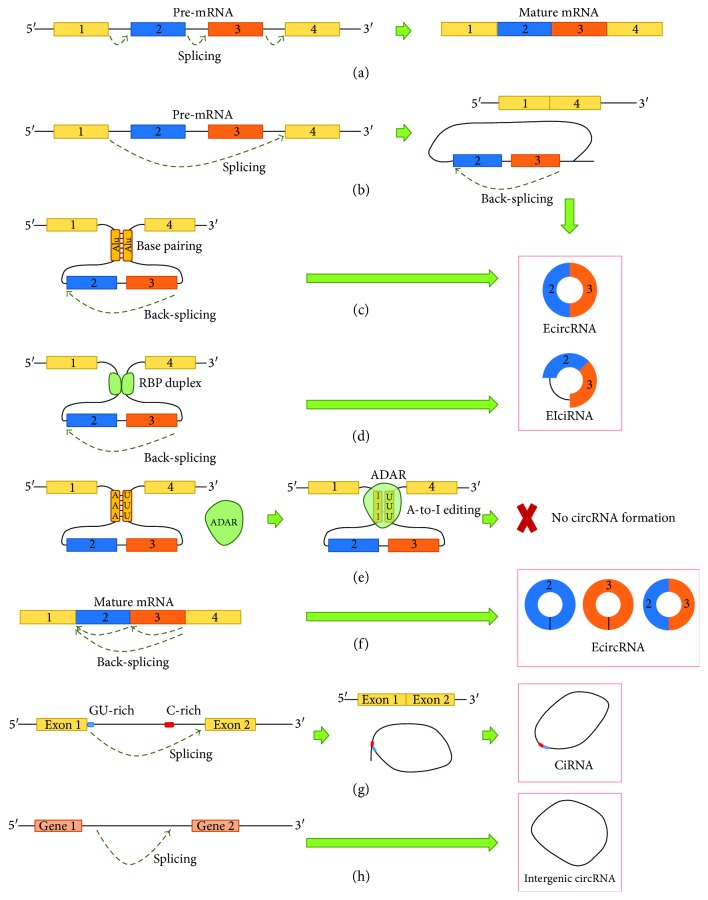
“CircRNA biogenesis generates three principal structural classes: exonic circRNAs (ecircRNAs), intronic circRNAs (ciRNAs), and exon–intron circRNAs (EIciRNAs) (Bolha et al., 2017).”
Metadata
- Authors
- Bolha, L., Ravnik-Glavač, M., & Glavač, D.
- Affiliations
- University of Ljubljana (SI)
- Department of Molecular Genetics, Institute of Pathology, Faculty of Medicine, University of Ljubljana, Ljubljana, Slovenia
- Corresponding author
- Glavač, Damjan
- Venue
- International Journal of Genomics
- Publisher
- Wiley
- Published
- 2017
- Volume
- 2017
- Pages
- 1-19
- ISSN
- 2314-436X (ISSN-L)
- 2314-4378
- PMC
- PMC5733622
- OpenAlex
- W2771561127
- Cited by
- 166
- References
- 150
- Citations by year
- 2026: 2 · 2025: 10 · 2024: 22 · 2023: 17 · 2022: 21 · 2021: 21 · 2020: 38 · 2019: 20 · 2018: 15
- FWCI
- 1.89
- Type
- journal article
- Language
- en
- Open access
- gold
- doi.org
- Locations
- International Journal of Genomics (publishedVersion, cc-by)
- PubMed Central (publishedVersion, cc-by)
- PubMed (publishedVersion)
- DOAJ (DOAJ: Directory of Open Access Journals) (submittedVersion, cc-by-sa)
- Topics
- Life Sciences › Biochemistry, Genetics and Molecular Biology › Molecular Biology › Circular RNAs in diseases
- Life Sciences › Biochemistry, Genetics and Molecular Biology › Cancer Research › Cancer-related molecular mechanisms research
- Life Sciences › Biochemistry, Genetics and Molecular Biology › Molecular Biology › RNA Research and Splicing
- Keywords
- circular RNA, circRNA biogenesis, back-splicing, non-coding RNA, microRNA sponge, cap-independent translation, circRNA stability, tumor markers, cancer diagnosis, cancer prognosis
About these checks
Registry, retraction, Cites and statistics results are computed, not judged, with one exception: a printed reference that no index lists is read once by a model before it counts as a citation error. Claims are extracted by a model and kept only when their quote appears verbatim in the text; each cited source is then checked, with a model’s help, for whether it says what the claim relies on. Those verdicts can be wrong — read the claim’s quote and the cited source before relying on one.
Statistics and arithmetic are recomputed, not judged.
Confidence bands are shown only for fields calibrated on our annotated test set. None is calibrated yet, so no band is shown.
What counts as a claim ›How we measure confidence ›How we check this ›
Are you an author, or do you see a problem with this page? Request a review
