

Picroside II Shows Protective Functions for Severe Acute Pancreatitis in Rats by Preventing NF‐κ B‐Dependent Autophagy
Open accessThe DOI matches its Crossref record; 47 of the 47 references it cites were found in a registry or an index.
Abstract
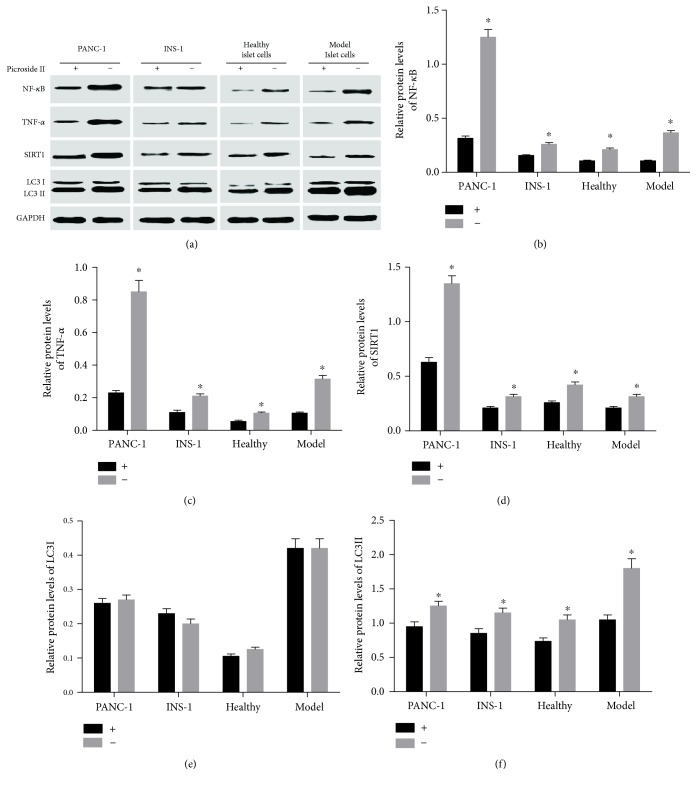
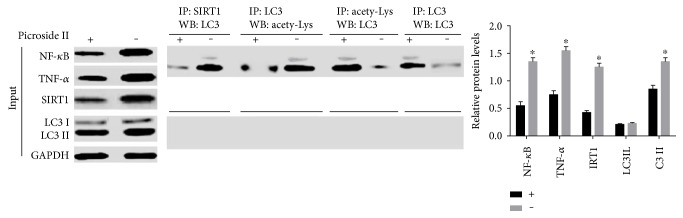
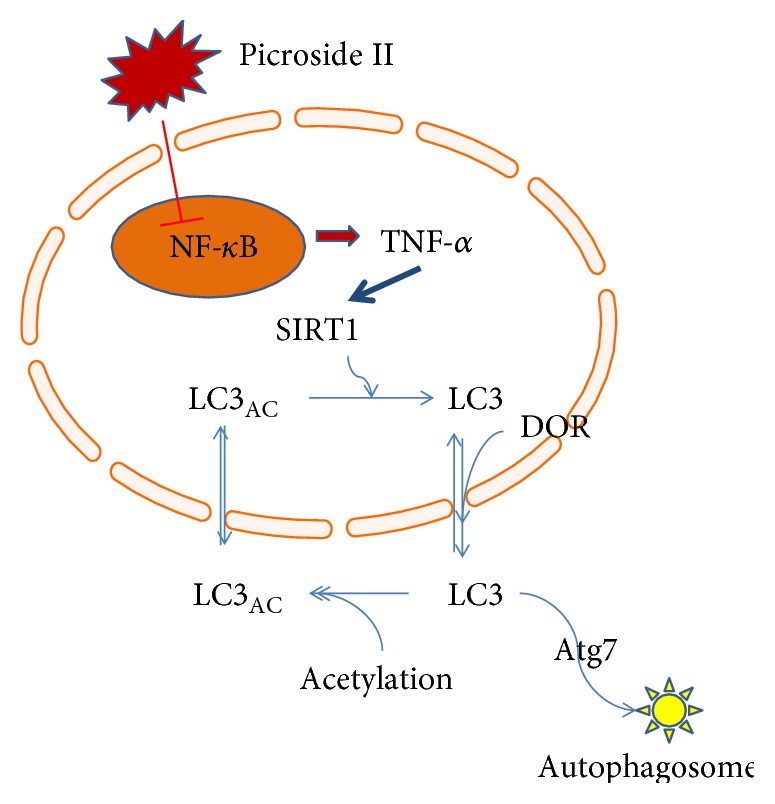
Picroside II, from the herb Picrorhiza scrophulariiflora Pennell, has antioxidant and anti‐inflammatory activities. However, its function on severe acute pancreatitis (SAP) and molecular mechanism remains unknown. The effects of picroside II on the SAP induced by cerulean were investigated. SAP rats were treated with picroside II (25 mg/kg). The severity of SAP was evaluated by using biochemical and histological analyses. Pancreatic cancer cell PANC‐1 was transfected with ptfLC3 (an indicator of autophagic activity), pcDNA3.1‐NF‐κ B (nuclear factor kappa B), and pTZU6+1‐NF‐κ B‐shRNA and then treated with picroside II. Relative molecules related with NF‐κ B‐dependent autophagy were detected by using Western blot. Autophagic activities were observed by phase‐contrast and fluorescent microscopes. Acetylated LC3 was detected by immunoprecipitation. The results showed that picroside II treatment reduced the level of ALT, AST, NF‐κ B, IL‐1 β, IL‐6, TNF‐α, and SIRT1 (NAD+‐dependent deacetylase) and increased the level of SOD and GSH. The autophagic activity was reduced when NF‐κ B was silenced, and the levels of TNF‐α and SIRT1 were reduced. In contrast, the overexpression of NF‐κ B increased autophagic activity and the level of TNF‐α, which activated SIRT1. SIRT1 deacetylated LC3 and increased autophagic activities. Picroside II ameliorates SAP by improving antioxidant and anti‐inflammtory activities of SAP models via NF‐κ B‐dependent autophagy.
Overview
The claims and statistics of this paper haven’t been checked yet.
Free: it reads the open-access text and checks the first 5 claims that cite a source we can check. Create a free account to check every claim.
Integrity signals
Registry
Cites
Statistics
Figures
Verification
Claims the paper makes
The claims and statistics of this paper haven’t been checked yet.
Free: it reads the open-access text and checks the first 5 claims that cite a source we can check. Create a free account to check every claim.
Self-check
Percentages, sums and reported differences re-computed from the paper’s own numbers.
The self-check needs the paper’s full text.
Citations
Cites
1 retracted
Zhang, H., Zhai, L., Wang, T., Li, S., & Guo, Y. (2017) · Journal of Molecular Neuroscience · doi:10.1007/s12031-016-0870-0 · Cited by 23
RetractedAssay of glutathione reductase in crude tissue homogenates using 5,5′-dithiobis(2-nitrobenzoic acid)
Smith, I. K., Vierheller, T. L., & Thorne, C. A. (1988) · Analytical Biochemistry · doi:10.1016/0003-2697(88)90564-7 · Cited by 1,335
Meyer, M., Schreck, R., & Baeuerle, P. A. (1993) · The EMBO Journal · doi:10.1002/j.1460-2075.1993.tb05850.x · Cited by 1,313 · cited 1×
“According to an earlier report, antioxidants have opposite effects on the activation of NF-κB [46].”
BackgroundA Better Model of Acute Pancreatitis for Evaluating Therapy
SCHMIDT, J., RATTNER, D. W., LEWANDROWSKI, K., COMPTON, C. C., MANDAVILLI, U., KNOEFEL, W. T., & WARSHAW, A. L. (1992) · Annals of Surgery · doi:10.1097/00000658-199201000-00007 · Cited by 870
Inflammatory bowel disease in Asia: A systematic review
Prideaux, L., Kamm, M. A., De Cruz, P. P., Chan, F. K. L., & Ng, S. C. (2012) · Journal of Gastroenterology and Hepatology · doi:10.1111/j.1440-1746.2012.07150.x · Cited by 345
Tan, A. S., & Berridge, M. V. (2000) · Journal of Immunological Methods · doi:10.1016/s0022-1759(00)00156-3 · Cited by 330
Reversible changes in pancreatic islet structure and function produced by elevated blood glucose
Brereton, M. F., Iberl, M., Shimomura, K., Zhang, Q., Adriaenssens, A. E., Proks, P., Spiliotis, I. I., Dace, W., Mattis, K. K., Ramracheya, R., et al. (2014) · Nature Communications · doi:10.1038/ncomms5639 · Cited by 259
SIRT1 protects the heart from ER stress-induced cell death through eIF2α deacetylation
Prola, A., Pires Da Silva, J., Guilbert, A., Lecru, L., Piquereau, J., Ribeiro, M., Mateo, P., Gressette, M., Fortin, D., Boursier, C., et al. (2017) · Cell Death & Differentiation · doi:10.1038/cdd.2016.138 · Cited by 214
Rau, B., Bothe, A., Kron, M., & Beger, H. G. (2006) · Clinical Gastroenterology and Hepatology · doi:10.1016/j.cgh.2006.05.030 · Cited by 133
Satoh, A., Shimosegawa, T., Fujita, M., Kimura, K., Masamune, A., Koizumi, M., & Toyota, T. (1999) · Gut · doi:10.1136/gut.44.2.253 · Cited by 132
Lewińska, A., Adamczyk‐Grochala, J., Kwasniewicz, E., Deręgowska, A., & Wnuk, M. (2016) · Toxicology Letters · doi:10.1016/j.toxlet.2016.11.018 · Cited by 95
Kuebler, U., Zuccarella-Hackl, C., Arpagaus, A., Wolf, J. M., Farahmand, F., von Känel, R., Ehlert, U., & Wirtz, P. H. (2015) · Brain, Behavior, and Immunity · doi:10.1016/j.bbi.2014.12.024 · Cited by 91
Ramudo, L., Manso, M. A., Sevillano, S., & DIOS, I. D. (2005) · The Journal of Pathology · doi:10.1002/path.1747 · Cited by 73
Galangin Induces Autophagy via Deacetylation of LC3 by SIRT1 in HepG2 Cells
Li, X., Wang, Y., Xiong, Y., Wu, J., Ding, H., Chen, X., Lan, L., & Zhang, H. (2016) · Scientific Reports · doi:10.1038/srep30496 · Cited by 71
Inhibitory effect of picroside II on hepatocyte apoptosis
Hua, G. A. O., & Zhou, Y. (2005) · Acta Pharmacologica Sinica · doi:10.1111/j.1745-7254.2005.00729.x · Cited by 60 · cited 1×
“Also, many previous studies have shown that picroside II has a wide range of pharmacological effects, including neuroprotective [7], hepatoprotective [8], antioxidation [9], and anti-inflammatory activities [10].”
BackgroundWang, X., Zhou, G., Liu, C., Wei, R., Zhu, S., Xu, Y., Wu, M., & Miao, Q. (2016) · Mediators of Inflammation · doi:10.1155/2016/8369704 · Cited by 59
Potentiation of nerve growth factor-action by picrosides I and II, natural iridoids, in PC12D cells
Li, P., Matsunaga, K., Yamakuni, T., & Ohizumi, Y. (2000) · European Journal of Pharmacology · doi:10.1016/s0014-2999(00)00662-2 · Cited by 57 · cited 1×
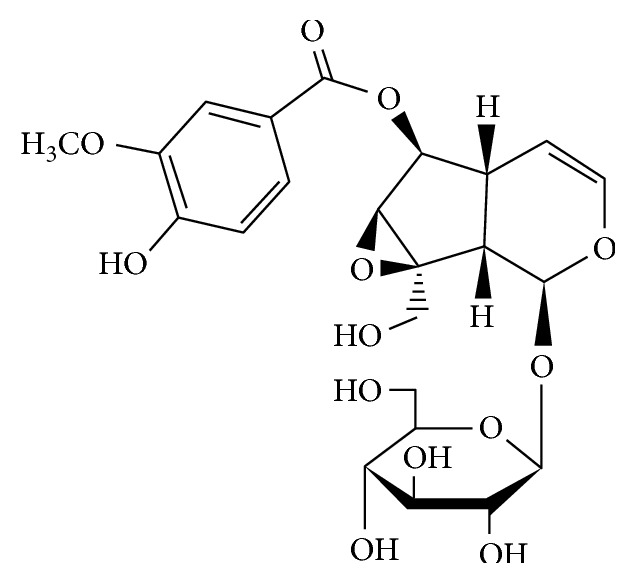
“Picroside II (h-D-glucopyranoside,1a, 1b,2,5a,6,6a-hexahydro-6-[(4-hydroxy-3-methoxybenzoyl)oxy]-1a(hydroxymethyl)oxirenocyclopenta[1,2-c]pyran2-yl) is one of the most effective components extracted from Picrorhiza scrophulariiflora (Figure 1) [4].”
BackgroundZhang, H., Li, L., Gao, P., Chen, H., Zhang, R., Wei, Y.-S., Liu, D., & Liang, C. (2010) · Biochemical and Biophysical Research Communications · doi:10.1016/j.bbrc.2010.05.160 · Cited by 53 · cited 2×
“TNF-α may induce SIRT1 expression, which was accordant with the report of TNF-alpha-induced SIRT1 expression [23].”
BackgroundResultAnti-lipid peroxidation and protection of liver mitochondria against injuries by picroside II
Gao, H. (2005) · World Journal of Gastroenterology · doi:10.3748/wjg.v11.i24.3671 · Cited by 50 · cited 1×
“Picroside II is known to have various beneficial effects on human health, including neuroprotective [40], hepatoprotective [41], antioxidation [42], and anti-inflammatory effects [11].”
BackgroundGregorić, P., Gregorić, P., Šijački, A., Ana, Š., Stankovic, S. D., Stankovic, S. D., Radenkovic, D. V., Dejan, R., Ivančević, N., Ivančević, N., et al. (2010) · PubMed · Cited by 49
Luan, Z.-G., Zhang, J., Yin, X.-H., Ma, X.-C., & Guo, R.-X. (2013) · Clinical and Experimental Immunology · doi:10.1111/cei.12062 · Cited by 46 · cited 1×
“TNF-α is thought to induce a cascade of other inflammatory cytokines and activate various immune cells, thus inducing the proinflammatory response [17, 18].”
BackgroundChen, G.-D., Yu, W.-D., & Chen, X.-P. (2016) · Molecular Medicine Reports · doi:10.3892/mmr.2016.5942 · Cited by 44
Šurbatović, M., & Radakovic, S. (2013) · Journal of Clinical Gastroenterology · doi:10.1097/mcg.0b013e31828a6cfc · Cited by 42
Tiwari, S. S., Pandey, M. M., Srivastava, S. K., & Rawat, A. (2011) · Biomedical Chromatography · doi:10.1002/bmc.1626 · Cited by 39
(2007) · PubMed · Cited by 38
EFFECTS OF THALIDOMIDE IN A MOUSE MODEL OF CERULEIN-INDUCED ACUTE PANCREATITIS
Malleo, G., Mazzon, E., Genovese, T., Paola, R. D., Muià, C., Crisafulli, C., Siriwardena, A. K., & Cuzzocrea, S. (2007) · Shock · doi:10.1097/shk.0b013e318067df68 · Cited by 35
Bierma, M. J., Coffey, M. J., Nightingale, S. L., van Rheenen, P. F., & Ooi, C. Y. (2016) · Pancreatology · doi:10.1016/j.pan.2016.04.005 · Cited by 35
LC3, an autophagosome marker, is expressed on oligodendrocytes in Nasu-Hakola disease brains
Satoh, J.-I., Motohashi, N., Kino, Y., Ishida, T., Yagishita, S., Jinnai, K., Arai, N., Nakamagoe, K., Tamaoka, A., Saito, Y., et al. (2014) · Orphanet Journal of Rare Diseases · doi:10.1186/1750-1172-9-68 · Cited by 34
Evilsizor, M. N., Ray-Jones, H. F., Lifshitz, J., & Ziebell, J. M. (2015) · Journal of Visualized Experiments · doi:10.3791/52293 · Cited by 32
Picroside II Protects Rat Lung and A549 Cell Against LPS-Induced Inflammation by the NF-κB Pathway
Shen, B., Zhao, C., Chen, C., Li, Z., Li, Y., Tian, Y., & Feng, H. (2017) · Inflammation · doi:10.1007/s10753-017-0519-3 · Cited by 31
MENG, F.-J., JIAO, S.-M., & YU, B. (2012) · International Journal of Molecular Medicine · doi:10.3892/ijmm.2012.987 · Cited by 28
Self-citationMeng, F.-J., Hou, Z.-W., Li, Y., Yang, Y., & Yu, B. (2012) · Pharmaceutical Biology · doi:10.3109/13880209.2012.664555 · Cited by 23
Self-citationWang, X.-Y., Tang, Q.-Q., Zhang, J., Fang, M. Y., & Li, Y.-X. (2014) · PubMed · Cited by 22
Zhang, F., Zhang, M., Wang, A., Xu, M., Wang, C., Xu, G., Zhang, B., Zou, X., & Zhuge, Y. (2016) · Cell Biology International · doi:10.1002/cbin.10706 · Cited by 22
Yang, Z., Meng, X., Zhang, C., & Xu, P. (2016) · Journal of Cellular and Molecular Medicine · doi:10.1111/jcmm.13040 · Cited by 21 · cited 1×
“Blocking the activation of NF-κB appears to reduce the inflammatory response in SAP [21].”
BackgroundPicroside II protects against sepsis via suppressing inflammation in mice.
(2016) · PubMed Central · Cited by 19
Lee, J. H., An, C. S., Yun, B. S., Kang, K. S., Lee, Y. A., Won, S. M., Gwag, B. J., Cho, S. I., & Hahm, K. (2012) · European Journal of Pharmacology · doi:10.1016/j.ejphar.2012.04.048 · Cited by 18
Ni, Q., Zhang, W., SUN, K., Yin, C., AN, J., & Shang, D. (2013) · Biomedical Reports · doi:10.3892/br.2013.178 · Cited by 17
Zhang, X., Yan, P., Xinmei, H., Guanghua, F., Ma, M., Ni, J., & Fangjie, Z. (2010) · Inflammation · doi:10.1007/s10753-010-9180-9 · Cited by 17
Secretagogue (Caerulein) induced pancreatitis in rodents
Mayerle, J. V. (2013) · doi:10.3998/panc.2013.2 · Cited by 16
Campanholo, V. M. D. L. P., Silva, R. M., Silva, T. D., Neto, R. A., PAIOTTI, A. P. R., Ribeiro, D. A., & Forones, N. M. (2015) · Asian Pacific Journal of Cancer Prevention · doi:10.7314/apjcp.2015.16.3.947 · Cited by 15
Feng, C., LI, B., WANG, L.-L., Chen, L., Zhou, X., Lv, F., & Li, T. (2015) · Experimental and Therapeutic Medicine · doi:10.3892/etm.2015.2802 · Cited by 14 · cited 1×
“Inflammatory cytokines include interleukin 1 (IL-1) β [13], IL-6 [14], and tumor necrosis factor- (TNF-) α [15] are considered to be required for SAP development.”
BackgroundHigh, not low, amylase and lipase levels indicate severe acute pancreatitis!
Lankisch, P. G., Petersen, M., & Gottesleben, F. (1994) · PubMed · Cited by 11
Gao, T., Sheng, T., Zhang, T., & Han, H. (2016) · Journal of Pharmaceutical and Biomedical Analysis · doi:10.1016/j.jpba.2016.06.005 · Cited by 9
Hu, S., Guang, Y., & Wang, W. (2018) · Digestive Diseases and Sciences · doi:10.1007/s10620-018-5345-4 · Cited by 8
Goto, Y., Nishimura, R., Nohara, A., Mase, S., Fujiki, T., Irabu, H., Kuroda, R., Araki, R., Ikawa, Y., Maeba, H., et al. (2016) · PubMed · doi:10.11406/rinketsu.57.994 · Cited by 3
Severe acute pancreatitis and normal serum amylase activity due to pancreatic isoamylase deficiency
Borgstr�m, A., & Bohe, M. (1989) · Digestive Diseases and Sciences · doi:10.1007/bf01536346 · Cited by 2
Cited by
Progress in the treatment of drug-induced liver injury with natural products
Sun, Y., Zhang, Y., Xie, L., Rong, F., Zhu, X.-Y., Xie, J., Zhou, H., & Xu, T. (2022) · Pharmacological Research · doi:10.1016/j.phrs.2022.106361 · Cited by 114
Liu, S., Shen, H., Li, J., Gong, Y., Bao, H., Zhang, J., Hu, L., Wang, Z., & Gong, J. (2020) · Bioengineered · doi:10.1080/21655979.2020.1774992 · Cited by 81
“In addition, it has been reported that iridoid glycosides could inhibit inflammation through Sirt1-mediated NF-κB signaling pathway [13,14].”
BackgroundMa, D., Jiang, P., Jiang, Y., Li, H., & Zhang, D. (2021) · Oxidative Medicine and Cellular Longevity · doi:10.1155/2021/6644576 · Cited by 68
“Apoptosis [34], autophagy [35], and necroptosis [36] have been confirmed to be associated with SAP-induced intestinal barrier injury, but ferroptosis has yet to be reported.”
BackgroundPiao, X., Liu, B., Sui, X., Li, S., Niu, W., Zhang, Q., Shi, X., Cai, S., & Fan, Y. (2020) · Oxidative Medicine and Cellular Longevity · doi:10.1155/2020/3589497 · Cited by 53
“Our previous work showed that picroside II ameliorated SAP progression by increasing antioxidant and anti-inflammatory activities of SAP-induced intestinal barrier injuries via nuclear factor kappaB- (NFκB-) dependent autophagy [10].”
BackgroundSelf-citationMa, S., Wang, X., Lai, F., & Lou, C. (2020) · Biomedicine & Pharmacotherapy · doi:10.1016/j.biopha.2020.110421 · Cited by 32
Metadata
- Authors
- Piao, X., Liu, B., Guo, L., Meng, F., & Gao, L.
- Affiliations
- Jinzhou Medical University (CN)
- Harbin Medical University (CN)
- Corresponding author
- Liu, Baohai
- Venue
- Oxidative Medicine and Cellular Longevity
- Publisher
- Wiley
- Published
- 2017-01
- Volume
- 2017
- Issue
- 1
- Pages
- 7085709-7085709
- ISSN
- 1942-0994 (ISSN-L)
- 1942-0900
- PMC
- PMC5497659
- OpenAlex
- W2684008099
- Cited by
- 32
- References
- 47
- Citations by year
- 2026: 2 · 2025: 6 · 2024: 4 · 2023: 1 · 2022: 5 · 2021: 4 · 2020: 7 · 2019: 2 · 2018: 1
- FWCI
- 2.80
- Type
- journal article
- Language
- en
- Open access
- hybrid
- doi.org
- Locations
- Oxidative Medicine and Cellular Longevity (publishedVersion, cc-by)
- Europe PMC (PubMed Central) (publishedVersion, cc-by)
- PubMed Central (publishedVersion, cc-by)
- PubMed (publishedVersion)
- DOAJ (DOAJ: Directory of Open Access Journals) (submittedVersion)
- Topics
- Health Sciences › Medicine › Surgery › Pancreatitis Pathology and Treatment
- Health Sciences › Medicine › Complementary and alternative medicine › Natural Compounds in Disease Treatment
- Life Sciences › Biochemistry, Genetics and Molecular Biology › Cell Biology › Autophagy in Disease and Therapy
- Keywords
- picroside II, severe acute pancreatitis, NF-κB, autophagy, SIRT1, anti-inflammatory activity, antioxidant activity, TNF-α, PANC-1 cells, Picrorhiza scrophulariiflora, herbal medicine
- MeSH terms
- Acute Disease, Animals, Autophagy, Biological Products, Cinnamates, Pancreatitis, Transfection, NF-kappa B, Rats, Sprague-Dawley, Rats, Iridoid Glucosides
About these checks
Registry, retraction, Cites and statistics results are computed, not judged, with one exception: a printed reference that no index lists is read once by a model before it counts as a citation error. Claims are extracted by a model and kept only when their quote appears verbatim in the text; each cited source is then checked, with a model’s help, for whether it says what the claim relies on. Those verdicts can be wrong — read the claim’s quote and the cited source before relying on one.
Statistics and arithmetic are recomputed, not judged.
Confidence bands are shown only for fields calibrated on our annotated test set. None is calibrated yet, so no band is shown.
What counts as a claim ›How we measure confidence ›How we check this ›
Are you an author, or do you see a problem with this page? Request a review
Data sources
Bibliographic data: Semantic Scholar, OpenAlex, Crossref.
Contains information from the Semantic Scholar Academic Graph Datasets, made available under the ODC Attribution License (ODC-BY 1.0).
Semantic Scholar’s data is described in: Kinney, R., et al. (2023). The Semantic Scholar Open Data Platform. arXiv:2301.10140.
