

The DOI matches its Crossref record; 5 of the 5 references it cites were found in a registry or an index.
Anticancer Activity of Chitosan, Chitosan Derivatives, and Their Mechanism of Action
Abstract
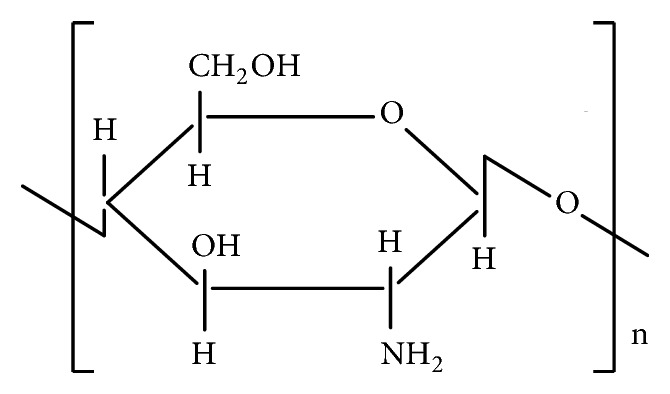
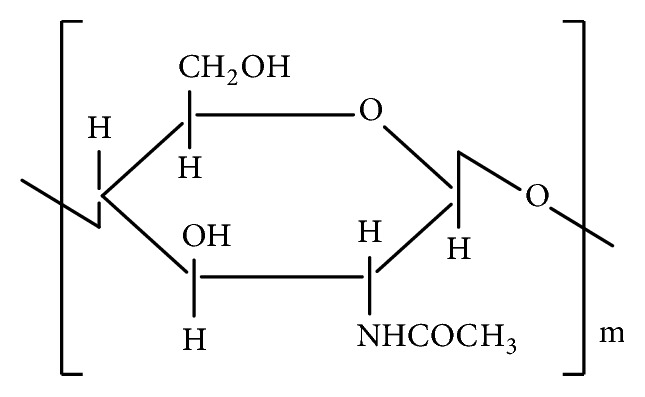
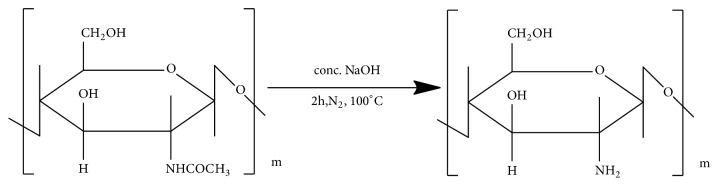
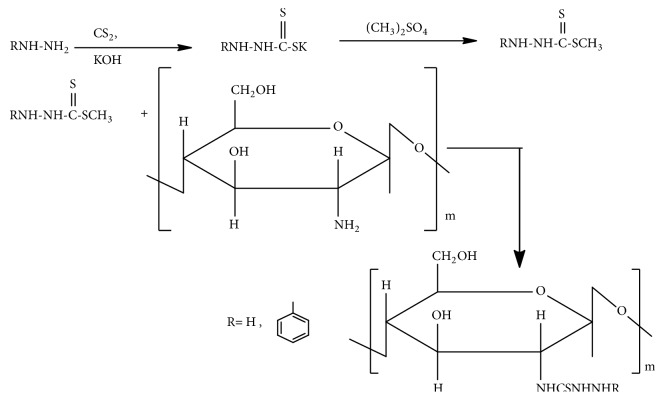
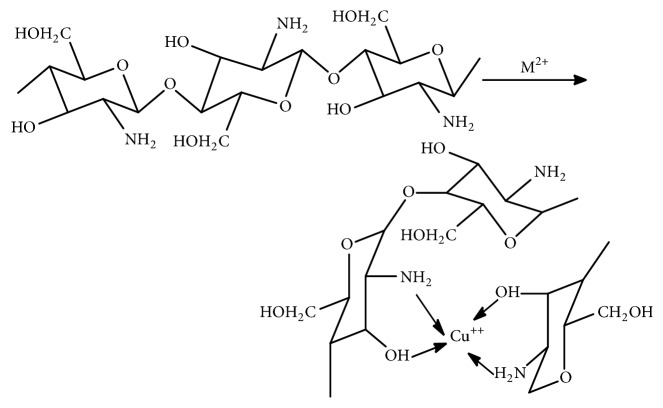
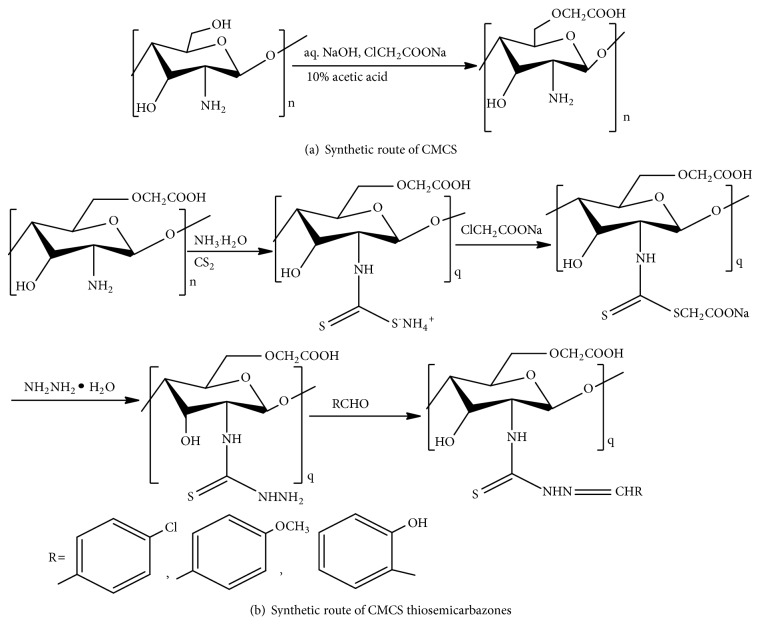
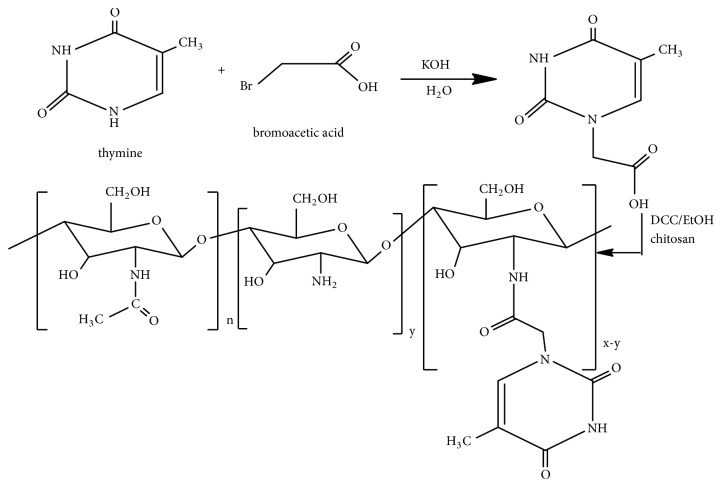
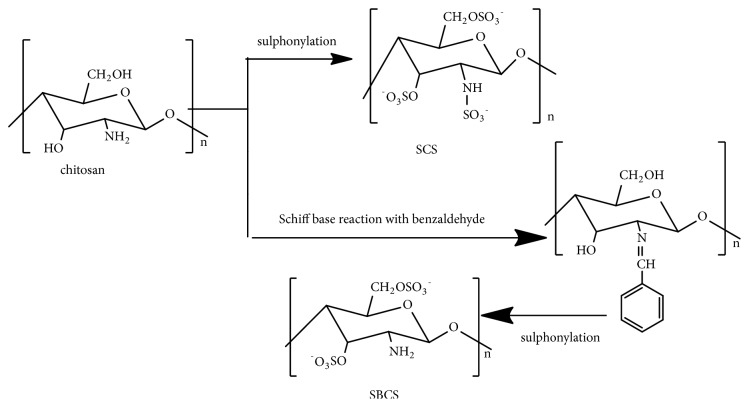
Tailoring of chitosan through the involvement of its amino, acetamido, and hydroxy groups can give derivatives of enhanced solubility and remarkable anticancer activity. The general mechanism of such activity is associated with the disturbances in normal functioning of cell cycle, interference to the central dogma of biological system from DNA to RNA to protein or enzymatic synthesis, and the disruption of hormonal path to biosynthesis to inhibit the growth of cancer cells. Both chitosan and its various derivatives have been reported to selectively permeate through the cancer cell membranes and show anticancer activity through the cellular enzymatic, antiangiogenic, immunoenhancing, antioxidant defense mechanism, and apoptotic pathways. They get sequestered from noncancer cells and provide their enhanced bioavailability in cancer cells in a sustained release manner. This review presents the putative mechanisms of anticancer activity of chitosan and mechanistic approaches of structure activity relation upon the modification of chitosan through functionalization, complex formation, and graft copolymerization to give different derivatives.
Overview
The claims and statistics of this paper haven’t been checked yet.
Run the check — free, no account needed. It reads the open-access text and checks the sources it cites.
Integrity signals
Registry
Cites
Statistics
Figures

Verification
Claims the paper makes
The claims and statistics of this paper haven’t been checked yet.
Run the check — free, no account needed. It reads the open-access text and checks the sources it cites.
Claims other papers make about this one
Each is checked against this paper’s own text: does it say what the citing paper says it does?
In the citing paper
“Modified chitosan derivatives have shown enhanced properties like bioactivity, biocompatibility and non-toxicity.39,40”
From Current Advances in Chitosan Nanoparticles Based Oral Drug Delivery for Colorectal Cancer Treatment (2022) · cites this paper as [40]
In the citing paper
“It has been reported that chitosan demonstrates an anticancer activity through antioxidant defence mechanism, cellular enzymatic, immunoenhancing, cellular enzymatic, antiangiogenic and apoptotic pathways.40”
From Current Advances in Chitosan Nanoparticles Based Oral Drug Delivery for Colorectal Cancer Treatment (2022) · cites this paper as [40]
In the citing paper
“Furthermore, CSNPs permeate through cancer cell membranes selectively, enhance the drug potency and bioavailability in the cancer cells while being non-toxic to normal cells.40”
From Current Advances in Chitosan Nanoparticles Based Oral Drug Delivery for Colorectal Cancer Treatment (2022) · cites this paper as [40]
Self-check
Percentages, sums and reported differences re-computed from the paper’s own numbers.
The self-check needs the paper’s full text.
Citations
Cites
How mitochondria produce reactive oxygen species
Murphy, M. P. (2009) · Biochemical Journal · doi:10.1042/bj20081386 · Cited by 8,207
pl5INK4B is a potentia| effector of TGF-β-induced cell cycle arrest
Hannon, G. J., & Beach, D. (1994) · Nature · doi:10.1038/371257a0 · Cited by 1,950
The ATM-Chk2-Cdc25A checkpoint pathway guards against radioresistant DNA synthesis
Falck, J., Mailand, N., Syljuåsen, R. G., Bartek, J., & Lukas, J. (2001) · Nature · doi:10.1038/35071124 · Cited by 1,085
Chang, L., Kamata, H., Solinas, G., Luo, J.-L., Maeda, S., Venuprasad, K., Liu, Y.-C., & Karin, M. (2006) · Cell · doi:10.1016/j.cell.2006.01.021 · Cited by 706
Anitha, A., Chennazhi, K. P., Nair, S. V., & Jayakumar, R. (2012) · Journal of Biomedical Nanotechnology · doi:10.1166/jbn.2012.1365 · Cited by 79
Research works printed but not linked: 221
- 2012, International Journal of Scientific and Research Publications, 2, 1
- 10.3390/ma4081399 · DOI
- 2002, Journal of Dong Hua University (English Edition), 19, 36
- 2013, International journal of research in pharmaceutical and biomedical sciences, 4, 312
- 2011, Acta Poloniae Pharmaceutica, 68, 619
- 10.1016/j.ejpb.2008.03.004 · DOI
- 10.1016/j.biomaterials.2009.10.023 · DOI
- 10.1016/j.biomaterials.2006.03.028 · DOI
- 10.1016/j.addr.2009.10.003 · DOI
- 10.3390/ijms12010266 · DOI
- 10.1016/j.ejps.2010.08.011 · DOI
- 2012, International Journal of Oral Research, 3, e1
- 10.2334/josnusd.56.119 · DOI
- 10.1016/j.biortech.2008.01.011 · DOI
- 10.1021/bm060753z · DOI
- 10.1023/b:pham.0000016249.52831.a5 · DOI
- 2009, Anticancer Research, 29, 5103
- 10.1016/j.bbagen.2004.11.009 · DOI
- 10.1093/jn/134.4.945 · DOI
- 10.1016/s0141-8130(02)00064-8 · DOI
- 10.1016/j.biortech.2007.08.035 · DOI
- 10.1002/jbm.a.31234 · DOI
- 10.1016/j.ijbiomac.2009.08.002 · DOI
- 10.1016/j.matchemphys.2009.11.018 · DOI
- 2010, Carbohydrate Polymers, 80, 564
- 10.1080/10601325.2011.603623 · DOI
- 10.1016/j.ijbiomac.2008.09.007 · DOI
- 10.1016/j.carbpol.2009.08.026 · DOI
- 10.1016/j.ijbiomac.2006.06.021 · DOI
- 10.1016/j.biotechadv.2009.11.001 · DOI
- 10.1016/j.carbpol.2005.11.040 · DOI
- 10.1016/j.reactfunctpolym.2008.03.002 · DOI · Paper page
- 10.1021/bm9005535 · DOI
- 10.1016/j.carbpol.2005.07.017 · DOI
- 10.1016/j.ijbiomac.2007.12.011 · DOI
- 10.1016/j.ijbiomac.2007.09.003 · DOI
- 10.1016/j.biotechadv.2011.01.005 · DOI
- 10.1016/j.carbpol.2010.08.052 · DOI
- 10.1016/j.ijbiomac.2010.05.016 · DOI
- 10.1016/s0002-9343(00)00412-5 · DOI
- 2006, Advances in Pharmacology And Toxicology, 7, 29
- 10.1016/j.bmcl.2006.04.077 · DOI
- 10.1351/PAC-CON-08-11-15 · DOI
- 2004, Arkivoc, 2004, 66, 10.3998/ark.5550190.0005.910 · DOI
- 10.1016/j.carbpol.2015.04.040 · DOI
- 10.1016/j.ijbiomac.2012.01.015 · DOI
- 2011, Anticancer Research, 31, 1321
- 2005, In Vivo, 19, 301
- 10.4172/2161-0444.1000401 · DOI
- 2017, Nano, 12
- 10.1007/s00289-016-1804-2 · DOI
- 10.3390/molecules21030330 · DOI
- 10.1016/S0141-3910(02)00016-2 · DOI
- 10.1016/j.ijbiomac.2013.10.044 · DOI
- 10.1016/s0144-8617(03)00051-1 · DOI
- 10.1021/acs.bioconjchem.6b00251 · DOI
- 10.1080/10426500108055099 · DOI
- 10.1016/S0960-894X(98)00727-6 · DOI
- 10.1016/j.jorganchem.2015.07.012 · DOI
- 10.1211/0022357011776441 · DOI
- 10.1016/j.progpolymsci.2009.04.001 · DOI
- 10.1016/0142-9612(95)98126-Y · DOI
- 10.1016/S0378-5173(96)04847-8 · DOI
- 10.1248/cpb.40.2822 · DOI
- 10.1016/0378-5173(93)90048-K · DOI
- 1993, Yakuzaigaku, 53, 141
- 10.1248/bpb.22.179 · DOI
- 10.1016/s0142-9612(00)00044-2 · DOI
- 10.1248/bpb.18.1234 · DOI
- 10.1016/S0168-3659(01)00341-8 · DOI
- 10.1248/yakushi.126.789 · DOI
- 10.1248/bpb.16.48 · DOI
- 10.1016/S0144-8617(00)00331-3 · DOI
- 2011, International Journal of Nanomedicine, 6, 2697
- 10.1021/jm501678w · DOI
- 10.1016/j.carbpol.2014.05.098 · DOI
- 10.1016/s0169-409x(01)00180-6 · DOI
- 10.4014/jmb.0811.603 · DOI
- 10.3762/bjnano.7.178 · DOI
- 2013, Austrl-Asian Journal of Cancer, 12, 145
- 10.2147/IJN.S26365 · DOI
- 10.1016/j.fct.2009.04.044 · DOI
- 10.1016/s0308-8146(03)00181-x · DOI
- 10.1111/j.1348-0421.1988.tb01398.x · DOI
- 10.1016/S0304-3835(00)00551-6 · DOI
- 10.1016/S0008-6215(00)90359-8 · DOI
- 10.1111/j.1349-7006.1990.tb02559.x · DOI
- 10.1111/j.1348-0421.1989.tb01983.x · DOI
- 2001, Journal of Clinical Biochemistry Drug, 22, 21
- 10.3390/md10122661 · DOI
- 10.1093/ajcn/33.4.787 · DOI
- 10.2133/dmpk.19.76 · DOI
- 10.3390/md8071962 · DOI
- 10.1111/j.1349-7006.2001.tb01116.x · DOI
- 10.1016/j.ejca.2006.08.029 · DOI
- 10.1039/C6RA21648J · DOI
- 10.1016/j.actbio.2016.10.034 · DOI
- 10.1046/j.1365-2184.2003.00266.x · DOI
- 10.1002/hep.23769 · DOI
- 10.1016/S0955-0674(00)00280-5 · DOI
- 10.1101/gad.9.15.1831 · DOI · Paper page
- 10.1097/00006676-200405000-00009 · DOI
- 2007, Journal of Microbiology and Biotechnology, 17, 1546
- 2007, Journal of Microbiology and Biotechnology, 17, 2042
- 10.1016/j.mehy.2009.02.018 · DOI
- 10.1074/jbc.274.31.21491 · DOI
- 10.1136/gut.43.2.161 · DOI
- 2001, The American Surgeon, 67, 709, 10.1177/000313480106700726 · DOI · Paper page
- 10.1007/PL00008208 · DOI
- 1997, EXS, 79, 1
- 10.1038/aps.2011.10 · DOI
- 2008, Journal of Food and Drug Analysis, 16, 1
- 10.1016/j.carbpol.2011.03.008 · DOI
- 10.1006/bbrc.2000.2602 · DOI
- 10.1016/j.carbpol.2004.06.045 · DOI
- 10.1038/419790a · DOI
- 1956, Cancer Research, 16, 167
- 10.1021/jm00322a032 · DOI
- 10.1021/jm00305a011 · DOI
- 1971, Cancer Chemotherapy Reports Part 2, 2, 199
- 10.1021/jm00193a020 · DOI
- 10.1146/annurev.bi.48.070179.001025 · DOI
- 10.1007/BF00225258 · DOI
- 1989, The inhibition of ribonucleotide reductase by alpha-(N)-heterocyclic carboxaldehyde thiosemicarbazones, 203
- 10.1016/S0960-894X(01)00285-2 · DOI
- 10.3892/or.2013.2279 · DOI
- 10.1021/cr020010d · DOI
- 10.1016/j.mpmed.2007.10.007 · DOI
- 10.1351/pac200880122715 · DOI
- 10.1351/pac200779122243 · DOI
- 10.1021/cr9903050 · DOI
- 10.1016/j.ccr.2007.07.015 · DOI
- 10.1016/j.carbpol.2003.08.005 · DOI
- 10.1016/j.carbpol.2017.09.095 · DOI
- 10.1016/j.carres.2004.09.007 · DOI
- 10.1016/s0092-8674(00)81684-0 · DOI
- 10.1007/978-1-4020-9674-7 · DOI
- 10.1007/s00204-013-1079-4 · DOI
- 10.11113/mjfas.v10n4.277 · DOI
- 10.1002/app.36556 · DOI
- 10.1163/092050611X581534 · DOI
- 10.1016/j.colsurfb.2012.01.032 · DOI
- 10.1016/j.carbpol.2011.06.080 · DOI
- 10.1016/j.carbpol.2011.04.038 · DOI
- 10.1016/S0959-8049(96)00423-6 · DOI
- 10.1016/S0047-6374(02)00171-9 · DOI
- 10.1200/JCO.1989.7.12.1875 · DOI
- 10.1200/JCO.1996.14.10.2653 · DOI
- 10.4049/jimmunol.176.7.4331 · DOI
- 10.1101/gad.1062403 · DOI
- 10.1006/excr.1994.1309 · DOI
- 10.1002/ijc.10516 · DOI
- 10.1016/j.tet.2010.01.063 · DOI
- 10.1002/1521-3765(20020703)8:13<2891::AID-CHEM2891>3.0.CO;2-B · DOI
- 10.3762/bjoc.6.34 · DOI
- 10.1021/ja809023n · DOI
- 10.1007/s10904-004-2380-8 · DOI
- 10.1093/nar/gnf058 · DOI
- 10.1016/j.tet.2009.04.084 · DOI
- 2003, Nucleic Acids Research, 179
- 10.1007/s00726-010-0567-6 · DOI
- 2005, DNA Replication, in: Lehninger Principles of Biochemistry, 950
- 10.1016/j.cell.2011.02.013 · DOI · Paper page
- 10.1016/0955-2235(94)00007-8 · DOI
- 10.1074/jbc.M211259200 · DOI
- 10.1016/S0002-9440(10)64362-3 · DOI
- 10.1038/bjc.1996.204 · DOI
- 10.1016/j.amjsurg.2004.07.007 · DOI
- 1997, Clinical Cancer Research, 3, 2347
- 2001, Oncology Reports, 8, 161
- 2005, Anticancer Reseach, 25, 2129
- 10.1038/sj.bjc.6600985 · DOI
- 10.1006/bbrc.1997.7866 · DOI
- 10.1097/00001813-199212000-00011 · DOI
- 10.1016/S0008-6215(99)00200-1 · DOI
- 1997, Anticancer Reseach, 17, 253
- 10.1038/sj.bjp.0704645 · DOI
- 10.1097/00001813-200411000-00007 · DOI
- 10.1097/00001813-200201000-00004 · DOI
- 10.1054/bjoc.2001.1993 · DOI
- 10.1016/S0006-2952(99)00051-9 · DOI
- 10.1016/j.bbagen.2008.01.015 · DOI
- 10.1002/(SICI)1097-4636(1999)48:4<578::AID-JBM26>3.0.CO;2-8 · DOI
- 10.1016/0168-3659(96)01372-7 · DOI
- 1994, International Journal of Clinical Pharmacology and Therapeutics, 32, 429
- 10.1038/clpt.1993.161 · DOI
- 10.2174/156800912801784893 · DOI
- 10.4155/fmc.12.217 · DOI
- 10.1007/s10549-011-1875-6 · DOI
- 10.2174/138161212800626193 · DOI
- 1975, Journal of Polymer Science: Polymer Symposia, 51, 135
- 10.1002/poc.3702 · DOI
- 10.1016/j.nantod.2008.10.014 · DOI
- 10.1073/pnas.91.8.3201 · DOI
- 10.1002/jbm.a.30286 · DOI
- 2013, Journal of Chemical and Pharmaceutical Research, 5, 140
- 2014, Iranian Journal of Pharmaceutical Research, 13, 819
- 10.1016/S0378-5173(99)00447-0 · DOI
- 10.1021/jm800767c · DOI
- 10.1016/j.carbpol.2008.12.034 · DOI
200 of 221 shown
Cited by
Sorted by citations
Current Advances in Chitosan Nanoparticles Based Oral Drug Delivery for Colorectal Cancer Treatment
Choukaife, H., Seyam, S., Alallam, B., Doolaanea, A. A., & Alfatama, M. (2022) · International Journal of Nanomedicine · doi:10.2147/ijn.s375229 · Cited by 127
Metadata
- Authors
- Adhikari, H. S., & Yadav, P. N.
- Venue
- International Journal of Biomaterials
- Publisher
- Wiley
- Published
- 2018-12-30
- Volume
- 2018
- Pages
- 1-29
- ISSN
- 1687-8787
- 1687-8795
- PMC
- PMC6332982
- Cited by
- 313
- References
- 5
- Language
- en
- Funders
- Nepal Academy of Science and Technology
About these checks
Registry, retraction, Cites and statistics results are computed, not judged, with one exception: a printed reference that no index lists is read once by a model before it counts as a citation error. Claims are extracted by a model and kept only when their quote appears verbatim in the text; each cited source is then checked, with a model’s help, for whether it says what the claim relies on. Those verdicts can be wrong — read the claim’s quote and the cited source before relying on one.
Statistics and arithmetic are recomputed, not judged.
Confidence bands are shown only for fields calibrated on our annotated test set. None is calibrated yet, so no band is shown.
What counts as a claim ›How we measure confidence ›How we check this ›
Are you an author, or do you see a problem with this page? Request a review
How to cite
Cite CoChat for the checks on this page, and the paper for its own findings.
- This page
- CoChat. (2026). Citation check: Anticancer Activity of Chitosan, Chitosan Derivatives, and Their Mechanism of Action. https://app.cochat.ai/papers/10.1155/2018/2952085
- The paper
- Adhikari, H. S., & Yadav, P. N. (2018). Anticancer Activity of Chitosan, Chitosan Derivatives, and Their Mechanism of Action. International Journal of Biomaterials. https://doi.org/10.1155/2018/2952085
