

The DOI matches its Crossref record; 126 of the 126 references it cites were found in a registry or an index.
The Role of Immunosenescence in Neurodegenerative Diseases
Open accessAbstract
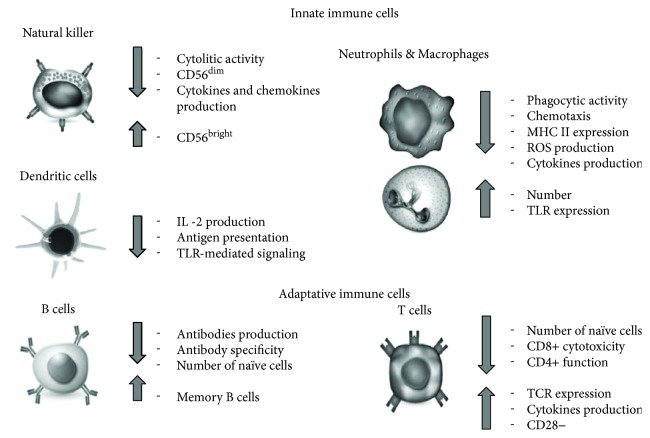
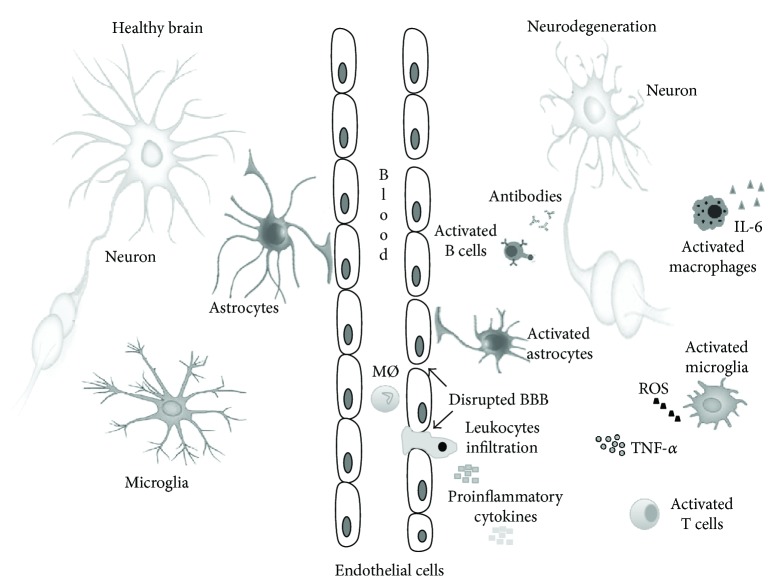
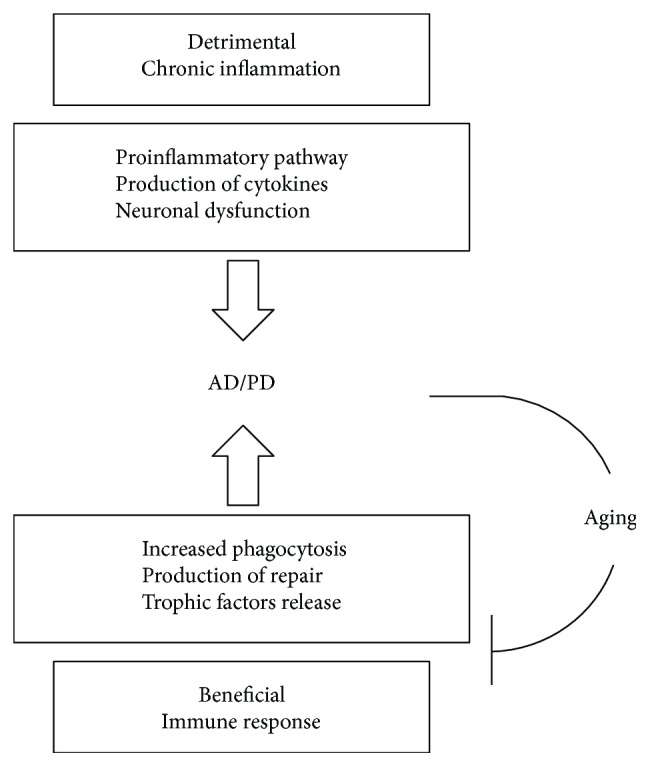
Aging is characterized by the progressive decline of physiological function and tissue homeostasis leading to increased vulnerability, degeneration, and death. Aging-related changes of the innate and adaptive immune system include decline in the preservation and enhancement of many immune functions, such as changes in the number of circulating monocytic and dendritic cells, thymic involution, T cell polyfunctionality, or production of proinflammatory cytokines, and are defined as immunosenescence. Inflammatory functions are increased with age, causing the chronic low-grade inflammation, referred to as inflamm-aging, that contribute, together with immunosenescence, to neurodegenerative diseases. In this review, we discuss the link between the immune and nervous systems and how the immunosenescence and inflamm-aging can contribute to neurodegenerative diseases.
Overview
The claims and statistics of this paper haven’t been checked yet.
Run the check — free, no account needed. It reads the open-access text and checks the sources it cites.
Integrity signals
Registry
Cites
Statistics
Figures
Verification
Claims the paper makes
The claims and statistics of this paper haven’t been checked yet.
Run the check — free, no account needed. It reads the open-access text and checks the sources it cites.
Claims other papers make about this one
Each is checked against this paper’s own text: does it say what the citing paper says it does?
The source backs part of the claim, not all of it — or backs it for a different population, condition or comparison.
In the citing paper
“At the systemic level, peripheral inflammaging leads to low-level production of inflammatory mediators in the circulation, including IL-6, TNF-α, and C-reactive protein (CRP), which also contribute to the inflammatory environment in the CNS.36,49,116”
From Role of neuroinflammation in neurodegeneration development (2023) · cites this paper as [36]
Experimental — accuracy not yet measured
Self-check
Percentages, sums and reported differences re-computed from the paper’s own numbers.
The self-check needs the paper’s full text.
Citations
Cites
Inflamm‐aging: An Evolutionary Perspective on Immunosenescence
FRANCESCHI, C., BONAFÈ, M., VALENSIN, S., OLIVIERI, F., DE LUCA, M., OTTAVIANI, E., & DE BENEDICTIS, G. (2000) · Annals of the New York Academy of Sciences · doi:10.1111/j.1749-6632.2000.tb06651.x · Cited by 5,358
Protective and pathogenic functions of macrophage subsets
Murray, P. J., & Wynn, T. A. (2011) · Nature Reviews Immunology · doi:10.1038/nri3073 · Cited by 5,269
Phases of Aβ-deposition in the human brain and its relevance for the development of AD
Thal, D. R., Rüb, U., Orantes, M., & Braak, H. (2002) · Neurology · doi:10.1212/wnl.58.12.1791 · Cited by 3,490
Scheltens, P., Blennow, K., Breteler, M. M. B., de Strooper, B., Frisoni, G. B., Salloway, S., & Van der Flier, W. M. (2016) · The Lancet · doi:10.1016/s0140-6736(15)01124-1 · Cited by 3,125
Development of Monocytes, Macrophages, and Dendritic Cells
Geissmann, F., Manz, M. G., Jung, S., Sieweke, M. H., Merad, M., & Ley, K. (2010) · Science · doi:10.1126/science.1178331 · Cited by 3,049
NLRP3 is activated in Alzheimer’s disease and contributes to pathology in APP/PS1 mice
Heneka, M. T., Kummer, M. P., Stutz, A., Delekate, A., Schwartz, S., Vieira-Saecker, A., Griep, A., Axt, D., Remus, A., Tzeng, T.-C., et al. (2013) · Nature · doi:10.1038/nature11729 · Cited by 2,898
Lane, C. A., Hardy, J., & Schott, J. M. (2018) · European Journal of Neurology · doi:10.1111/ene.13439 · Cited by 2,616
Overview of the immune response
Chaplin, D. D. (2010) · Journal of Allergy and Clinical Immunology · doi:10.1016/j.jaci.2009.12.980 · Cited by 2,235
Non-motor features of Parkinson disease
Schapira, A. H. V., Chaudhuri, K. R., & Jenner, P. (2017) · Nature Reviews Neuroscience · doi:10.1038/nrn.2017.62 · Cited by 2,053
Evolution of the immune system in humans from infancy to old age
Simon, A. K., Hollander, G. A., & McMichael, A. (2015) · Proceedings of the Royal Society B: Biological Sciences · doi:10.1098/rspb.2014.3085 · Cited by 1,796
Research works printed but not linked: 3
- 2017, European Journal of Neurology, 25, 59
- 2001, Archives of Neurology Journal, 86, 83
- 2016, Archives of Medical Science, 8, 2
Cited by
Sorted by citations
Items 101–133 of 133
De Masi, R., Orlando, S., & De Donno, A. (2021) · Pharmaceuticals · doi:10.3390/ph14020081 · Cited by 5
Immunosenescence and Alzheimer’s Disease
Fülöp, T., Larbi, A., Khalil, A., Plotka, A., Laurent, B., Ramassamy, C., Bosco, N., Hirokawa, K., Frost, E. H., & Witkowski, J. M. (2021) · Healthy ageing and longevity · doi:10.1007/978-3-030-87532-9_9 · Cited by 4
Pashaei, S., Shabani, S., Mohammadi, S., Morozova‐Roche, L. A., Salari, N., Rahimi, Z., & Khodarahmi, R. (2024) · Neurochemical Research · doi:10.1007/s11064-024-04253-2 · Cited by 4
Farina, G., & Crescioli, C. (2025) · Molecules · doi:10.3390/molecules30183823 · Cited by 5
Хилажева, Е. Д., Belozor, О. S., Panina, Y. A., Gorina, Y. V., Mosiagina, A. I., Vasiliev, A. V., Malinovskaya, N. A., & Komleva, Y. K. (2022) · Journal of Evolutionary Biochemistry and Physiology · doi:10.1134/s0022093022050222 · Cited by 4
Cellular senescence: mechanisms and clinical implications
Михайловна, М. А., Pashenkov, M. V., & Pinegin, B. V. (2024) · Immunologiya · doi:10.33029/1816-2134-2024-45-2-221-234 · Cited by 10
Zapalenie starcze - mechanizmy i szlaki sygnałowe
Grabowska, K., Nowacka-Chmielewska, M. M., Barski, J. J., & Liśkiewicz, D. (2021) · Postępy Biochemii · doi:10.18388/pb.2021_375 · Cited by 4
Düsedau, H. P., Cangalaya, C., Stoyanov, S., Dityatev, A. E., & Dunay, I. R. (2025) · Frontiers in Aging Neuroscience · doi:10.3389/fnagi.2025.1616390 · Cited by 3
Potential connections between senescence and chemobrain: An early overview of literature
Melhem, N. Y., Qutifan, S., Alsalem, M., & Saleh, T. (2025) · Ageing Research Reviews · doi:10.1016/j.arr.2025.102896 · Cited by 4
Liu, C., Lin, L., Yao, G., Fan, Y., & Guo, Y. (2026) · Frontiers in Immunology · doi:10.3389/fimmu.2026.1725917 · Cited by 3
Krankheitsmodifizierende Therapie der sekundär progredienten Multiplen Sklerose
Hoffmann, O. M., & Gold, R. (2021) · Der Nervenarzt · doi:10.1007/s00115-021-01080-6 · Cited by 3
Perlikowska, R., Silva, J., Alves, C., Susano, P., Zakłos‐Szyda, M., Skibska, A., Adamska‐Bartłomiejczyk, A., Wtorek, K., do-Rego, J.-C., do Rego, J. L., et al. (2023) · Neurochemical Research · doi:10.1007/s11064-023-04070-z · Cited by 3
T lymphocytes linking autoimmunity and cardiovascular disease in aging
Ortega‐Sollero, E., Ruiz‐Fernández, I., & Martı́n, P. (2025) · The Journal of Cardiovascular Aging · doi:10.20517/jca.2024.40 · Cited by 2
Peripheral Leukocyte Syndecan-3 Is Elevated in Alzheimer’s Disease: Evidence from a Human Study
Hudák, A., Letoha, A., & Letoha, T. (2025) · International Journal of Molecular Sciences · doi:10.3390/ijms26146587 · Cited by 2
Li, N., Li, Y., Yu, T. Y., Chen, W., Gou, M., Zheng, W., Liu, Z., Wang, X., Fang, J., Tong, J., et al. (2025) · Schizophrenia · doi:10.1038/s41537-025-00650-w · Cited by 4
Qin, M., Jin, X., Yang, Y., Gong, F., Wan, J., Wei, J., Sun, B., Li, X., & Hao, Y. (2025) · Journal of Translational Medicine · doi:10.1186/s12967-025-07171-1 · Cited by 2
Xu, X., Li, J., Song, J., Zhou, G., Cai, J., & Zhang, X. (2025) · Frontiers in Surgery · doi:10.3389/fsurg.2025.1598799 · Cited by 1
The sweet gatekeeper: Mucin-type O-glycans in brain endothelial glycocalyx and aging
Hou, D. L., Wu, Y., Tan, E., & Zhou, Z. D. (2026) · Ageing Research Reviews · doi:10.1016/j.arr.2026.103068 · Cited by 1
Brain Aging and Cellular Senescence Trigger Neuroimmunological Dysregulation and Neurodegeneration
Vega-García, A., Apolinar, L. M., Feria-Romero, I. A., Campos‐Bedolla, P., Alberto, G.-G. C., Luna‐Munguía, H., Sofía, R.-H., & Orozco-Suárez, S. A. (2026) · Brain Sciences · doi:10.3390/brainsci16101019 · Cited by 1
Neurological perspectives on aging
Yemişçi, M., & Karataş, H. (2022) · Elsevier eBooks · doi:10.1016/b978-0-323-98804-9.00011-6 · Cited by 1
Physiopathologie et classification des neuropathies inflammatoires
Créange, A. (2021) · Bulletin de l Académie Nationale de Médecine · doi:10.1016/j.banm.2021.05.018 · Cited by 1
Pratama, M. Z., Wahono, C. S., Krisna, P. A., Handono, K., & Kalim, H. (2021) · Clinical and Research Journal in Internal Medicine · doi:10.21776/ub.crjim.2021.002.02.5 · Cited by 1
Effects of Aging and Associated Conditions on Humoral Responses to Respiratory Tract Infections
Frasca, D. (2021) · Healthy ageing and longevity · doi:10.1007/978-3-030-87532-9_5
XIII Reunión Post-ECTRIMS: revisión de las novedades presentadas en el Congreso ECTRIMS 2020 (II)
Fernández, Ó., Montalbán, X., Aladro, Y., Alonso, A., González, R. V. A., Hernández, M. C. C., Castillo‐Triviño, T., Comabella, M., Costa‐Frossard, L., Forero, L., et al. (2021) · Revista de Neurología · doi:10.33588/rn.7212.2021173
Lower lymphocyte count is associated with increased risk of Parkinson’s disease
Jensen, M. P., Jacobs, B. M., Dobson, R., Bandrés‐Ciga, S., Blauwendraat, C., Schrag, A. E., & Noyce, A. J. (2022) · Journal of Neurology Neurosurgery & Psychiatry · doi:10.1136/jnnp-2022-abn.306
Immune dysregulation and neurodegenerative diseases
Cipollini, V., Troili, F., & Giubilei, F. (2023) · Elsevier eBooks · doi:10.1016/b978-0-323-85841-0.00015-8
Bewegungsmangel, Folgen und Psychologie
Laube, W. (2023) · Springer eBooks · doi:10.1007/978-3-662-67753-7_14
Interaktionen Inaktivität, Krankheitsentwicklungen und Alterungsprozess
Laube, W. (2023) · Springer eBooks · doi:10.1007/978-3-662-67753-7_4
Regulated cell death and inflammaging in neurodegenerative disorders
Liu, H., Wen, S., Gao, X., Wu, C., Lai, B., Zhu, J., & Kong, E. (2025) · Elsevier eBooks · doi:10.1016/b978-0-443-32852-7.00009-7
Interactions between heavy metals and neuroinflammatory processes
Choudhury, D. R., & Kumar, P. (2025) · Elsevier eBooks · doi:10.1016/b978-0-443-36575-1.00007-8
Xu, Z., & Deng, Y. (2026) · Elsevier eBooks · doi:10.1016/b978-0-443-27340-7.00012-7
Rôle de la protéine NEDL1, candidate dans la physiopathologie de la Sclérose Latérale Amyotrophique
Haouari, S. (2022) · theses.fr (ABES) · doi:10.70675/164dc935z4a7ez4257z84e0zdc1cb89f94c1
Thilagavathy, R., Pandiselvam, R., & Govindarajan, N. (2026) · International Reviews of Immunology · doi:10.1080/08830185.2026.2729156
Metadata
- Authors
- Costantini, E., D’Angelo, C., & Reale, M.
- Affiliations
- University of Chieti-Pescara (IT)
- Corresponding author
- Reale, Marcella
- Venue
- Mediators of Inflammation
- Publisher
- Wiley
- Published
- 2018
- Volume
- 2018
- Pages
- 1-12
- ISSN
- 0962-9351 (ISSN-L)
- 1466-1861
- PMC
- PMC5863336
- OpenAlex
- W2792949361
- Cited by
- 133
- References
- 126
- Citations by year
- 2026: 9 · 2025: 20 · 2024: 9 · 2023: 16 · 2022: 15 · 2021: 28 · 2020: 19 · 2019: 13 · 2018: 4
- FWCI
- 1.51
- Type
- journal article
- Language
- en
- Open access
- gold
- doi.org
- Locations
- Mediators of Inflammation (publishedVersion, cc-by)
- Europe PMC (PubMed Central) (publishedVersion, cc-by)
- PubMed Central (publishedVersion, cc-by)
- PubMed (publishedVersion)
- DOAJ (DOAJ: Directory of Open Access Journals) (submittedVersion, cc-by-sa)
- Topics
- Life Sciences › Neuroscience › Neurology › Neuroinflammation and Neurodegeneration Mechanisms
- Life Sciences › Biochemistry, Genetics and Molecular Biology › Aging › Genetics, Aging, and Longevity in Model Organisms
- Life Sciences › Neuroscience › Biological Psychiatry › Tryptophan and brain disorders
- Keywords
- immunosenescence, neurodegenerative diseases, inflammaging, aging, low-grade inflammation, innate immune system, adaptive immunity, thymic involution, T cell polyfunctionality, inflammatory cytokines, dendritic cells, monocytic cells, neuroinflammation
- MeSH terms
- Immunosenescence, Animals, Dendritic Cells, Humans, Immunity, Innate, Neurodegenerative Diseases
About these checks
Registry, retraction, Cites and statistics results are computed, not judged, with one exception: a printed reference that no index lists is read once by a model before it counts as a citation error. Claims are extracted by a model and kept only when their quote appears verbatim in the text; each cited source is then checked, with a model’s help, for whether it says what the claim relies on. Those verdicts can be wrong — read the claim’s quote and the cited source before relying on one.
Statistics and arithmetic are recomputed, not judged.
Confidence bands are shown only for fields calibrated on our annotated test set. None is calibrated yet, so no band is shown.
What counts as a claim ›How we measure confidence ›How we check this ›
Are you an author, or do you see a problem with this page? Request a review
