

Deep Learning for Computer Vision: A Brief Review
Open accessThe DOI matches its Crossref record; 91 of the 93 references it cites were found in a registry or an index, and 2 are not checked yet.
Abstract
Over the last years deep learning methods have been shown to outperform previous state-of-the-art machine learning techniques in several fields, with computer vision being one of the most prominent cases. This review paper provides a brief overview of some of the most significant deep learning schemes used in computer vision problems, that is, Convolutional Neural Networks, Deep Boltzmann Machines and Deep Belief Networks, and Stacked Denoising Autoencoders. A brief account of their history, structure, advantages, and limitations is given, followed by a description of their applications in various computer vision tasks, such as object detection, face recognition, action and activity recognition, and human pose estimation. Finally, a brief overview is given of future directions in designing deep learning schemes for computer vision problems and the challenges involved therein.
Overview
The claims and statistics of this paper haven’t been checked yet.
Free: it reads the open-access text and checks the first 5 claims that cite a source we can check. Create a free account to check every claim.
Integrity signals
Registry
Cites
Statistics
Figures
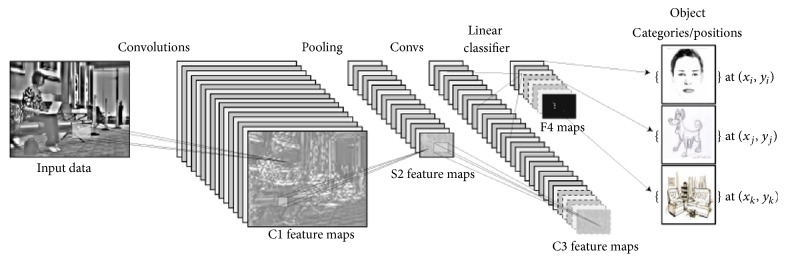
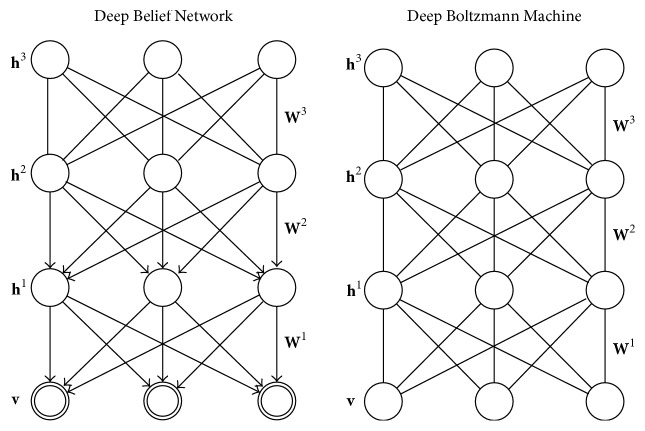
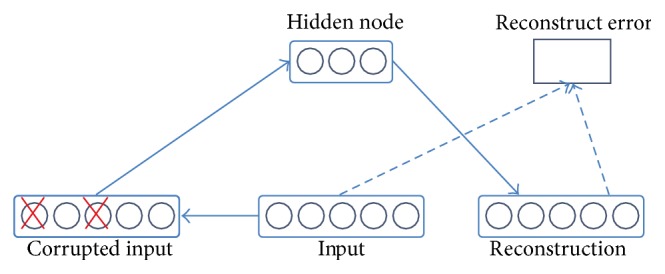
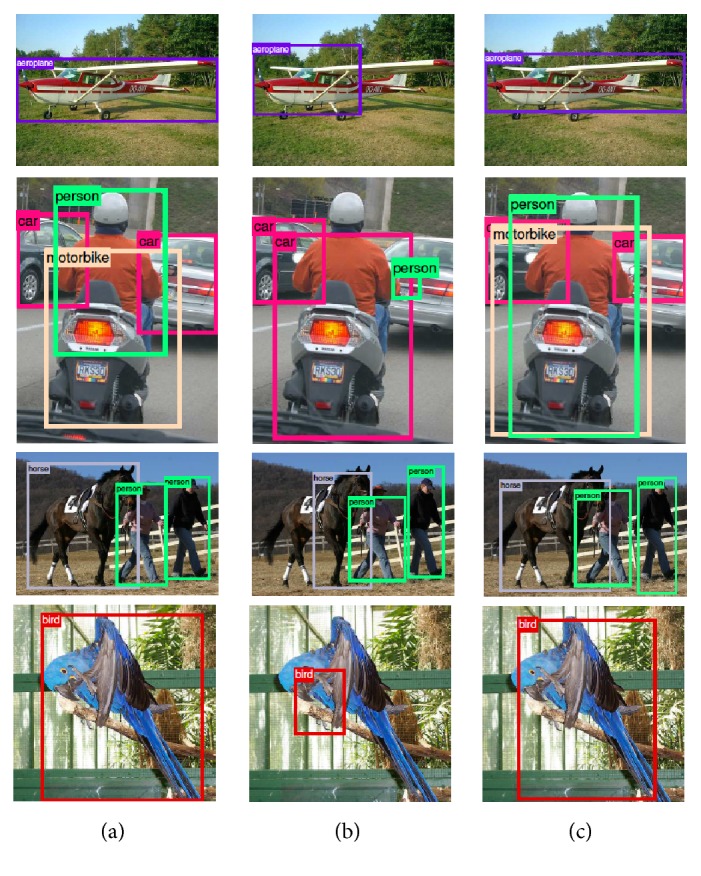
Verification
Claims the paper makes
The claims and statistics of this paper haven’t been checked yet.
Free: it reads the open-access text and checks the first 5 claims that cite a source we can check. Create a free account to check every claim.
Claims other papers make about this one
Each is checked against this paper’s own text: does it say what the citing paper says it does?
The cited source says what the claim attributes to it.
In the citing paper
“Additionally, HAR with image/video processing has been extensively studied in the computer vision community [79,80], and the methodologies commonly used differ significantly from techniques used for IMUs, EEG, PPG, etc.”
From Deep Learning in Human Activity Recognition with Wearable Sensors: A Review on Advances (2022) · cites this paper as [79]
Self-check
Percentages, sums and reported differences re-computed from the paper’s own numbers.
The self-check needs the paper’s full text.
Citations
Cites
Hochreiter, S., & Schmidhuber, J. (1997) · Neural Computation · doi:10.1162/neco.1997.9.8.1735 · Cited by 102,318 · cited 4×
“In [95], the authors propose a multimodal multistream deep learning framework to tackle the egocentric activity recognition problem, using both the video and sensor data and employing a dual CNNs and Long Short-Term Memory architecture.”
BackgroundInfluentialFaster R-CNN: Towards Real-Time Object Detection with Region Proposal Networks
Ren, S., He, K., Girshick, R., & Sun, J. (2017) · IEEE Transactions on Pattern Analysis and Machine Intelligence · doi:10.1109/tpami.2016.2577031 · Cited by 73,472
Faster R-CNN: Towards Real-Time Object Detection with Region Proposal Networks
Ren, S., He, K., Girshick, R., & Sun, J. (2015) · arXiv · doi:10.48550/arxiv.1506.01497 · Cited by 70,812
Gradient-based learning applied to document recognition
Lecun, Y., Bottou, L., Bengio, Y., & Haffner, P. (1998) · Proceedings of the IEEE · doi:10.1109/5.726791 · Cited by 58,805 · cited 2×
“In an attempt to compare these models (for a summary see Table 2), we can say that CNNs have generally performed better than DBNs in current literature on benchmark computer vision datasets such as MNIST.”
MethodGoing deeper with convolutions
Szegedy, C., Liu, W., Jia, Y., Sermanet, P., Reed, S., Anguelov, D., Erhan, D., Vanhoucke, V., & Rabinovich, A. (2015) · 2015 IEEE Conference on Computer Vision and Pattern Recognition (CVPR) · doi:10.1109/cvpr.2015.7298594 · Cited by 48,562
Fully convolutional networks for semantic segmentation
Long, J., Shelhamer, E., & Darrell, T. (2015) · 2015 IEEE Conference on Computer Vision and Pattern Recognition (CVPR) · doi:10.1109/cvpr.2015.7298965 · Cited by 38,834
Rich Feature Hierarchies for Accurate Object Detection and Semantic Segmentation
Girshick, R., Donahue, J., Darrell, T., & Malik, J. (2014) · 2014 IEEE Conference on Computer Vision and Pattern Recognition · doi:10.1109/cvpr.2014.81 · Cited by 32,684
Girshick, R. (2015) · 2015 IEEE International Conference on Computer Vision (ICCV) · doi:10.1109/iccv.2015.169 · Cited by 28,105
Reducing the dimensionality of data with neural networks
Hinton, G. E., & Salakhutdinov, R. R. (2006) · Science · doi:10.1126/science.1127647 · Cited by 20,928
A logical calculus of the ideas immanent in nervous activity
McCulloch, W. S., & Pitts, W. (1943) · The Bulletin of Mathematical Biophysics · doi:10.1007/bf02478259 · Cited by 18,566
Research works printed but not linked: 8
- 1990, Handwritten digit recognition with a back-propagation network
- 2012, Theano: new features and speed improvements
- 1986, Information processing in dynamical systems: Foundations of harmony theory, 1, 194
- 1986, Learning and Relearning in Boltzmann Machines, 1, 4.2
- 2010, Momentum, 9, 926
- 2014, Journal of Machine Learning Research, 15, 2949
- 2007, Greedy layer-wise training of deep networks, 19, 153
- 2017, IEEE Transactions on Image Processing
Cited by
Object detection using YOLO: challenges, architectural successors, datasets and applications
Diwan, T., Anirudh, G., & Tembhurne, J. V. (2023) · Multimedia Tools and Applications · doi:10.1007/s11042-022-13644-y · Cited by 1,549
“The common deep learning models can be utilized for any computer vision task includes Convolution Neural Network (CNN), Deep Belief Networks (DBN), Deep Boltzmann Machines (DBM), Restricted Boltzmann Machines (RBM), and Stacked Autoencoders [71].”
MethodSarker, I. H. (2022) · SN Computer Science · doi:10.1007/s42979-022-01043-x · Cited by 1,208
Deep Learning vs. Traditional Computer Vision
O’Mahony, N., Campbell, S., Carvalho, A., Harapanahalli, S., Hernandez, G. V., Krpalkova, L., Riordan, D., & Walsh, J. (2020) · Advances in Intelligent Systems and Computing · doi:10.1007/978-3-030-17795-9_10 · Cited by 1,025
TabTransformer: Tabular Data Modeling Using Contextual Embeddings
Huang, X., Khetan, A., Cvitkovic, M. W., & Karnin, Z. S. (2020) · arXiv (Cornell University) · doi:10.48550/arxiv.2012.06678 · Cited by 200
“Unfortunately, the state-of-art SSL models developed in computer vision (Voulodimos et al. 2018; Kendall and Gal 2017) and NLP (Vaswani et al.”
BackgroundDeep Long-Tailed Learning: A Survey
Zhang, Y., Kang, B., Hooi, B., Yan, S., & Feng, J. (2023) · IEEE Transactions on Pattern Analysis and Machine Intelligence · doi:10.1109/tpami.2023.3268118 · Cited by 769
Metadata
- Authors
- Voulodimos, A., Doulamis, N., Doulamis, A., & Protopapadakis, E.
- Affiliations
- National Technical University of Athens (GR)
- Corresponding author
- Voulodimos, Athanasios
- Venue
- Computational Intelligence and Neuroscience
- Publisher
- Wiley
- Published
- 2018
- Volume
- 2018
- Pages
- 1-13
- ISSN
- 1687-5265 (ISSN-L)
- 1687-5273
- PMC
- PMC5816885
- OpenAlex
- W2794284562
- Cited by
- 3,403
- References
- 56
- Citations by year
- 2026: 202 · 2025: 447 · 2024: 586 · 2023: 541 · 2022: 570 · 2021: 496 · 2020: 375 · 2019: 153 · 2018: 32
- FWCI
- 30.98
- Type
- journal article
- Language
- en
- Open access
- hybrid
- doi.org
- Locations
- Computational Intelligence and Neuroscience (publishedVersion, cc-by)
- Europe PMC (PubMed Central) (publishedVersion, cc-by)
- PubMed Central (publishedVersion, cc-by)
- PubMed (publishedVersion)
- Funders
- State Scholarships Foundation
- European Social Fund
- Greek national funds
- Topics
- Physical Sciences › Computer Science › Computer Vision and Pattern Recognition › Advanced Neural Network Applications
- Physical Sciences › Computer Science › Computer Vision and Pattern Recognition › Advanced Image and Video Retrieval Techniques
- Physical Sciences › Computer Science › Artificial Intelligence › Domain Adaptation and Few-Shot Learning
- Keywords
- deep learning, computer vision, convolutional neural networks, deep Boltzmann machine, deep belief network, stacked denoising autoencoder, object detection, face recognition, human action recognition, activity recognition, human pose estimation
- MeSH terms
- Machine Learning, Algorithms, Humans, Neural Networks, Computer
About these checks
Registry, retraction, Cites and statistics results are computed, not judged, with one exception: a printed reference that no index lists is read once by a model before it counts as a citation error. Claims are extracted by a model and kept only when their quote appears verbatim in the text; each cited source is then checked, with a model’s help, for whether it says what the claim relies on. Those verdicts can be wrong — read the claim’s quote and the cited source before relying on one.
Statistics and arithmetic are recomputed, not judged.
Confidence bands are shown only for fields calibrated on our annotated test set. None is calibrated yet, so no band is shown.
What counts as a claim ›How we measure confidence ›How we check this ›
Are you an author, or do you see a problem with this page? Request a review
How to cite
Cite CoChat for the checks on this page, and the paper for its own findings.
- This page
- CoChat. (2026). Citation check: Deep Learning for Computer Vision: A Brief Review. https://app.cochat.ai/papers/10.1155/2018/7068349
- The paper
- Voulodimos, A., Doulamis, N., Doulamis, A., & Protopapadakis, E. (2018). Deep Learning for Computer Vision: A Brief Review. Computational Intelligence and Neuroscience. https://doi.org/10.1155/2018/7068349
Data sources
Bibliographic data: Semantic Scholar, OpenAlex, Crossref.
Contains information from the Semantic Scholar Academic Graph Datasets, made available under the ODC Attribution License (ODC-BY 1.0).
Semantic Scholar’s data is described in: Kinney, R., et al. (2023). The Semantic Scholar Open Data Platform. arXiv:2301.10140.
