

Deep Learning for Computer Vision: A Brief Review
Open accessThe DOI matches its Crossref record; 91 of the 93 references it cites were found in a registry or an index, and 2 are not checked yet.
Abstract
Over the last years deep learning methods have been shown to outperform previous state-of-the-art machine learning techniques in several fields, with computer vision being one of the most prominent cases. This review paper provides a brief overview of some of the most significant deep learning schemes used in computer vision problems, that is, Convolutional Neural Networks, Deep Boltzmann Machines and Deep Belief Networks, and Stacked Denoising Autoencoders. A brief account of their history, structure, advantages, and limitations is given, followed by a description of their applications in various computer vision tasks, such as object detection, face recognition, action and activity recognition, and human pose estimation. Finally, a brief overview is given of future directions in designing deep learning schemes for computer vision problems and the challenges involved therein.
Overview
The claims and statistics of this paper haven’t been checked yet.
Free: it reads the open-access text and checks the first 5 claims that cite a source we can check. Create a free account to check every claim.
Integrity signals
Registry
Cites
Statistics
Figures
Verification
Claims the paper makes
The claims and statistics of this paper haven’t been checked yet.
Free: it reads the open-access text and checks the first 5 claims that cite a source we can check. Create a free account to check every claim.
Claims other papers make about this one
Each is checked against this paper’s own text: does it say what the citing paper says it does?
The cited source says what the claim attributes to it.
In the citing paper
“Additionally, HAR with image/video processing has been extensively studied in the computer vision community [79,80], and the methodologies commonly used differ significantly from techniques used for IMUs, EEG, PPG, etc.”
From Deep Learning in Human Activity Recognition with Wearable Sensors: A Review on Advances (2022) · cites this paper as [79]
Self-check
Percentages, sums and reported differences re-computed from the paper’s own numbers.
The self-check needs the paper’s full text.
Citations
Cites
Hochreiter, S., & Schmidhuber, J. (1997) · Neural Computation · doi:10.1162/neco.1997.9.8.1735 · Cited by 102,318 · cited 4×
“In [95], the authors propose a multimodal multistream deep learning framework to tackle the egocentric activity recognition problem, using both the video and sensor data and employing a dual CNNs and Long Short-Term Memory architecture.”
BackgroundInfluentialFaster R-CNN: Towards Real-Time Object Detection with Region Proposal Networks
Ren, S., He, K., Girshick, R., & Sun, J. (2017) · IEEE Transactions on Pattern Analysis and Machine Intelligence · doi:10.1109/tpami.2016.2577031 · Cited by 73,472
Faster R-CNN: Towards Real-Time Object Detection with Region Proposal Networks
Ren, S., He, K., Girshick, R., & Sun, J. (2015) · arXiv · doi:10.48550/arxiv.1506.01497 · Cited by 70,812
Gradient-based learning applied to document recognition
Lecun, Y., Bottou, L., Bengio, Y., & Haffner, P. (1998) · Proceedings of the IEEE · doi:10.1109/5.726791 · Cited by 58,805 · cited 2×
“In an attempt to compare these models (for a summary see Table 2), we can say that CNNs have generally performed better than DBNs in current literature on benchmark computer vision datasets such as MNIST.”
MethodGoing deeper with convolutions
Szegedy, C., Liu, W., Jia, Y., Sermanet, P., Reed, S., Anguelov, D., Erhan, D., Vanhoucke, V., & Rabinovich, A. (2015) · 2015 IEEE Conference on Computer Vision and Pattern Recognition (CVPR) · doi:10.1109/cvpr.2015.7298594 · Cited by 48,562
Fully convolutional networks for semantic segmentation
Long, J., Shelhamer, E., & Darrell, T. (2015) · 2015 IEEE Conference on Computer Vision and Pattern Recognition (CVPR) · doi:10.1109/cvpr.2015.7298965 · Cited by 38,834
Rich Feature Hierarchies for Accurate Object Detection and Semantic Segmentation
Girshick, R., Donahue, J., Darrell, T., & Malik, J. (2014) · 2014 IEEE Conference on Computer Vision and Pattern Recognition · doi:10.1109/cvpr.2014.81 · Cited by 32,684
Girshick, R. (2015) · 2015 IEEE International Conference on Computer Vision (ICCV) · doi:10.1109/iccv.2015.169 · Cited by 28,105
Reducing the dimensionality of data with neural networks
Hinton, G. E., & Salakhutdinov, R. R. (2006) · Science · doi:10.1126/science.1127647 · Cited by 20,928
A logical calculus of the ideas immanent in nervous activity
McCulloch, W. S., & Pitts, W. (1943) · The Bulletin of Mathematical Biophysics · doi:10.1007/bf02478259 · Cited by 18,566
A fast learning algorithm for deep belief nets
Hinton, G. E., Osindero, S., & Teh, Y.-W. (2006) · Neural Computation · doi:10.1162/neco.2006.18.7.1527 · Cited by 16,336
FaceNet: A unified embedding for face recognition and clustering
Schroff, F., Kalenichenko, D., & Philbin, J. (2015) · 2015 IEEE Conference on Computer Vision and Pattern Recognition (CVPR) · doi:10.1109/cvpr.2015.7298682 · Cited by 15,267 · cited 2×
“Moreover, Google’s FaceNet [83] and Facebook’s DeepFace [84] are both based on CNNs. DeepFace [84] models a face in 3D and aligns it to appear as a frontal face.”
BackgroundReceptive fields, binocular interaction and functional architecture in the cat’s visual cortex
Hubel, D. H., & Wiesel, T. N. (1962) · The Journal of Physiology · doi:10.1113/jphysiol.1962.sp006837 · Cited by 13,680 · cited 1×
“Convolutional Neural Networks (CNNs) were inspired by the visual system’s structure, and in particular by the models of it proposed in [18].”
MethodRepresentation Learning: A Review and New Perspectives
Bengio, Y., Courville, A., & Vincent, P. (2013) · IEEE Transactions on Pattern Analysis and Machine Intelligence · doi:10.1109/tpami.2013.50 · Cited by 13,001 · cited 1×
“Nevertheless, DBNs are also plagued by a number of shortcomings, such as the computational cost associated with training a DBN and the fact that the steps towards further optimization of the network based on maximum likelihood training approximation are unclear [41].”
BackgroundSpatial Pyramid Pooling in Deep Convolutional Networks for Visual Recognition
He, K., Zhang, X., Ren, S., & Sun, J. (2015) · IEEE Transactions on Pattern Analysis and Machine Intelligence · doi:10.1109/tpami.2015.2389824 · Cited by 11,971
Fully convolutional networks for semantic segmentation
Shelhamer, E., Long, J., & Darrell, T. (2017) · IEEE Transactions on Pattern Analysis and Machine Intelligence · doi:10.1109/tpami.2016.2572683 · Cited by 11,898
Backpropagation Applied to Handwritten Zip Code Recognition
LeCun, Y., Boser, B., Denker, J. S., Henderson, D., Howard, R. E., Hubbard, W., & Jackel, L. D. (1989) · Neural Computation · doi:10.1162/neco.1989.1.4.541 · Cited by 11,891
Learning Deep Architectures for AI
Bengio, Y. (2009) · Foundations and Trends® in Machine Learning · doi:10.1561/2200000006 · Cited by 9,239 · cited 3×
“An autoencoder is trained to encode the input x into a representation r(x) in a way that input can be reconstructed from r(x) [33].”
BackgroundMethodDeepFace: Closing the Gap to Human-Level Performance in Face Verification
Taigman, Y., Yang, M., Ranzato, M., & Wolf, L. (2014) · 2014 IEEE Conference on Computer Vision and Pattern Recognition · doi:10.1109/cvpr.2014.220 · Cited by 6,542 · cited 3×
“Moreover, Google’s FaceNet [83] and Facebook’s DeepFace [84] are both based on CNNs. DeepFace [84] models a face in 3D and aligns it to appear as a frontal face.”
BackgroundLarge-Scale Video Classification with Convolutional Neural Networks
Karpathy, A., Toderici, G., Shetty, S., Leung, T., Sukthankar, R., & Fei-Fei, L. (2014) · 2014 IEEE Conference on Computer Vision and Pattern Recognition · doi:10.1109/cvpr.2014.223 · Cited by 6,354 · cited 1×
“In [90] the authors successfully employ a CNN-based approach for activity recognition in beach volleyball, similarly to the approach of [91] for event classification from large-scale video datasets; in [92], a CNN model is used for activity recognition based on smartphone sensor data.”
MethodSelective Search for Object Recognition
Uijlings, J. R. R., van de Sande, K. E. A., Gevers, T., & Smeulders, A. W. M. (2013) · International Journal of Computer Vision · doi:10.1007/s11263-013-0620-5 · Cited by 5,980
Fukushima, K. (1980) · Biological Cybernetics · doi:10.1007/bf00344251 · Cited by 5,759 · cited 1×
“The first computational models based on these local connectivities between neurons and on hierarchically organized transformations of the image are found in Neocognitron [19], which describes that when neurons with the same parameters are applied on patches of the previous layer at different locations, a form of trans…”
BackgroundParkhi, O. M., Vedaldi, A., & Zisserman, A. (2015) · Procedings of the British Machine Vision Conference 2015 · doi:10.5244/c.29.41 · Cited by 5,479 · cited 2×
“The first work employing CNNs for face recognitionwas [80]; today light CNNs [81] and VGG Face Descriptor [82] are among the state of the art.”
BackgroundWang, X., Peng, Y., Lu, L., Lu, Z., Bagheri, M., & Summers, R. M. (2017) · 2017 IEEE Conference on Computer Vision and Pattern Recognition (CVPR) · doi:10.1109/cvpr.2017.369 · Cited by 4,616
Learning Deconvolution Network for Semantic Segmentation
Noh, H., Hong, S., & Han, B. (2015) · 2015 IEEE International Conference on Computer Vision (ICCV) · doi:10.1109/iccv.2015.178 · Cited by 4,422
DeepPose: Human Pose Estimation via Deep Neural Networks
Toshev, A., & Szegedy, C. (2014) · 2014 IEEE Conference on Computer Vision and Pattern Recognition · doi:10.1109/cvpr.2014.214 · Cited by 3,185 · cited 1×
“DeepPose [14] is a holistic model that formulates the human pose estimation method as a joint regression problem and does not explicitly define the graphical model or part detectors for the human pose estimation.”
MethodFace recognition: a convolutional neural-network approach
Lawrence, S., Giles, C. L., Tsoi, A. C., & Back, A. D. (1997) · IEEE Transactions on Neural Networks · doi:10.1109/72.554195 · Cited by 3,092 · cited 1×
“The first work employing CNNs for face recognitionwas [80]; today light CNNs [81] and VGG Face Descriptor [82] are among the state of the art.”
BackgroundSpatial Pyramid Pooling in Deep Convolutional Networks for Visual Recognition
He, K., Zhang, X., Ren, S., & Sun, J. (2014) · Lecture Notes in Computer Science · doi:10.1007/978-3-319-10578-9_23 · Cited by 3,034 · cited 1×
“Also there are a number of other variations of the pooling layer in the literature, each inspired by different motivations and serving distinct needs, for example, stochastic pooling [27], spatial pyramid pooling [28, 29], and def-pooling [30].”
BackgroundOne-shot learning of object categories
Fei-Fei, L., Fergus, R., & Perona, P. (2006) · IEEE Transactions on Pattern Analysis and Machine Intelligence · doi:10.1109/tpami.2006.79 · Cited by 3,029 · cited 1×
“Caltech RGB image datasets [102], for example, Caltech 101/Caltech 256 and the Caltech Silhouettes, contain pictures of objects belonging to 101/256 categories.”
BackgroundLee, H., Grosse, R., Ranganath, R., & Ng, A. Y. (2009) · Proceedings of the 26th Annual International Conference on Machine Learning · doi:10.1145/1553374.1553453 · Cited by 2,412 · cited 1×
“However, a later variation of the DBN, the Convolutional Deep Belief Network (CDBN) ([42, 43]), uses the spatial information of neighboring pixels by introducing convolutional RBMs, thus producing a translation invariant generative model that successfully scales when it comes to high dimensional images, as is evidence…”
BackgroundPictorial Structures for Object Recognition
Felzenszwalb, P. F., & Huttenlocher, D. P. (2005) · International Journal of Computer Vision · doi:10.1023/b:visi.0000042934.15159.49 · Cited by 2,180 · cited 1×
“Before the era of deep learning, pose estimation was based on detection of body parts, for example, through pictorial structures [99].”
MethodMultimodal Learning with Deep Boltzmann Machines
Srivastava, N., & Salakhutdinov, R. (2012) · Journal of Machine Learning Research · doi:10.5555/2627435.2697059 · Cited by 1,807 · cited 1×
“Furthermore, in DBMs, by following the approximate gradient of a variational lower bound on the likelihood objective, one can jointly optimize the parameters of all layers, which is very beneficial especially in cases of learning models from heterogeneous data originating from different modalities [48].”
BackgroundEvaluation of Pooling Operations in Convolutional Architectures for Object Recognition
Scherer, D., Müller, A., & Behnke, S. (2010) · Lecture Notes in Computer Science · doi:10.1007/978-3-642-15825-4_10 · Cited by 1,503 · cited 1×
“In [25] a detailed theoretical analysis of max pooling and average pooling performances is given, whereas in [26] it was shown that max pooling can lead to faster convergence, select superior invariant features, and improve generalization.”
BackgroundAuto-association by multilayer perceptrons and singular value decomposition
Bourlard, H., & Kamp, Y. (1988) · Biological Cybernetics · doi:10.1007/bf00332918 · Cited by 1,345
Human activity recognition with smartphone sensors using deep learning neural networks
Ronao, C. A., & Cho, S.-B. (2016) · Expert Systems with Applications · doi:10.1016/j.eswa.2016.04.032 · Cited by 1,215 · cited 1×
“In [90] the authors successfully employ a CNN-based approach for activity recognition in beach volleyball, similarly to the approach of [91] for event classification from large-scale video datasets; in [92], a CNN model is used for activity recognition based on smartphone sensor data.”
MethodDeep Machine Learning - A New Frontier in Artificial Intelligence Research [Research Frontier]
Arel, I., Rose, D. C., & Karnowski, T. P. (2010) · IEEE Computational Intelligence Magazine · doi:10.1109/mci.2010.938364 · Cited by 1,121 · cited 1×
“There are twomain advantages in the above-described greedy learning process of theDBNs[40].”
BackgroundSimultaneous Detection and Segmentation
Hariharan, B., Arbeláez, P., Girshick, R., & Malik, J. (2014) · Lecture Notes in Computer Science · doi:10.1007/978-3-319-10584-0_20 · Cited by 1,085
An empirical evaluation of deep architectures on problems with many factors of variation
Larochelle, H., Erhan, D., Courville, A., Bergstra, J., & Bengio, Y. (2007) · Proceedings of the 24th international conference on Machine learning · doi:10.1145/1273496.1273556 · Cited by 992 · cited 1×
“A number of comparative experimental studies show that Deep Belief Networks tend to outperform stacked autoencoders ([58, 59]), but this is not always the case, especially when DBNs are compared to Stacked Denoising Autoencoders [56].”
BackgroundIs object localization for free? - Weakly-supervised learning with convolutional neural networks
Oquab, M., Bottou, L., Laptev, I., & Sivic, J. (2015) · 2015 IEEE Conference on Computer Vision and Pattern Recognition (CVPR) · doi:10.1109/cvpr.2015.7298668 · Cited by 886 · cited 1×
“, [23, 24]) have proposed it as a substitute for fully connected layers with a view to attaining faster learning times.”
BackgroundYouTube-8M: A Large-Scale Video Classification Benchmark
Abu-El-Haija, S., Kothari, N., Lee, J., Natsev, P., Toderici, G. D., Varadarajan, B., & Vijayanarasimhan, S. (2016) · arXiv (Cornell University) · doi:10.48550/arxiv.1609.08675 · Cited by 848 · cited 1×
“YouTube-8M [114] is a dataset of 8 million YouTube video URLs, along with video-level labels from a diverse set of 4800 Knowledge Graph entities.”
Age and Gender Estimation of Unfiltered Faces
Eidinger, E., Enbar, R., & Hassner, T. (2014) · IEEE Transactions on Information Forensics and Security · doi:10.1109/tifs.2014.2359646 · Cited by 809 · cited 1×
“Adience benchmark dataset [107] can be used for facial attributes identification, that is, age and gender, from images of faces.”
BackgroundChen, D., Cao, X., Wen, F., & Sun, J. (2013) · 2013 IEEE Conference on Computer Vision and Pattern Recognition · doi:10.1109/cvpr.2013.389 · Cited by 615
Shin, H.-C., Orton, M. R., Collins, D. J., Doran, S. J., & Leach, M. O. (2013) · IEEE Transactions on Pattern Analysis and Machine Intelligence · doi:10.1109/tpami.2012.277 · Cited by 488 · cited 1×
“Finally, [74] leverages stacked autoencoders for multiple organ detection in medical images, while [75] exploits saliency-guided stacked autoencoders for videobased salient object detection.”
BackgroundAn Efficient Learning Procedure for Deep Boltzmann Machines
Salakhutdinov, R., & Hinton, G. (2012) · Neural Computation · doi:10.1162/neco_a_00311 · Cited by 484 · cited 1×
“These include accelerating inference by using separate models to initialize the values of the hidden units in all layers [47, 49], or other improvements at the pretraining stage [50, 51] or at the training stage [52, 53].”
MethodDeepID-Net: Deformable deep convolutional neural networks for object detection
Ouyang, W., Wang, X., Zeng, X., Qiu, S., Luo, P., Tian, Y., Li, H., Yang, S., Wang, Z., Loy, C.-C., et al. (2015) · 2015 IEEE Conference on Computer Vision and Pattern Recognition (CVPR) · doi:10.1109/cvpr.2015.7298854 · Cited by 430 · cited 1×
“Also there are a number of other variations of the pooling layer in the literature, each inspired by different motivations and serving distinct needs, for example, stochastic pooling [27], spatial pyramid pooling [28, 29], and def-pooling [30].”
BackgroundBayesian Face Revisited: A Joint Formulation
Chen, D., Cao, X., Wang, L., Wen, F., & Sun, J. (2012) · Lecture Notes in Computer Science · doi:10.1007/978-3-642-33712-3_41 · Cited by 427
Learning hierarchical representations for face verification with convolutional deep belief networks
Huang, G. B., Lee, H., & Learned-Miller, E. (2012) · 2012 IEEE Conference on Computer Vision and Pattern Recognition · doi:10.1109/cvpr.2012.6247968 · Cited by 407 · cited 2×
“However, a later variation of the DBN, the Convolutional Deep Belief Network (CDBN) ([42, 43]), uses the spatial information of neighboring pixels by introducing convolutional RBMs, thus producing a translation invariant generative model that successfully scales when it comes to high dimensional images, as is evidence…”
BackgroundUnsupervised learning of hierarchical representations with convolutional deep belief networks
Lee, H., Grosse, R., Ranganath, R., & Ng, A. Y. (2011) · Communications of the ACM · doi:10.1145/2001269.2001295 · Cited by 388 · cited 1×
“However, a later variation of the DBN, the Convolutional Deep Belief Network (CDBN) ([42, 43]), uses the spatial information of neighboring pixels by introducing convolutional RBMs, thus producing a translation invariant generative model that successfully scales when it comes to high dimensional images, as is evidence…”
BackgroundDevNet: A Deep Event Network for multimedia event detection and evidence recounting
Gan, C., Wang, N., Yang, Y., Yeung, D.-Y., & Hauptmann, A. G. (2015) · 2015 IEEE Conference on Computer Vision and Pattern Recognition (CVPR) · doi:10.1109/cvpr.2015.7298872 · Cited by 312 · cited 1×
“In [89] deep learning was used for complex event detection and recognition in video sequences: first, saliencymapswere used”
Method220 Band AVIRIS Hyperspectral Image Data Set: June 12, 1992 Indian Pine Test Site 3
Baumgardner, M. F., Biehl, L. L., & Landgrebe, D. A. (2015) · doi:10.4231/r7rx991c · Cited by 311 · cited 1×
“SCIEN hyperspectral image data [105] and AVIRIS sensor based datasets [106], for example, contain hyperspectral images.”
BackgroundWeakly Supervised Cascaded Convolutional Networks
Diba, A., Sharma, V., Pazandeh, A., Pirsiavash, H., & Van Gool, L. (2017) · 2017 IEEE Conference on Computer Vision and Pattern Recognition (CVPR) · doi:10.1109/cvpr.2017.545 · Cited by 287 · cited 1×
“(in which a new def-pooling layer and new learning strategy are proposed), [9] (weakly supervised cascaded CNNs), and [69] (subcategory-aware CNNs).”
BackgroundA Practical Transfer Learning Algorithm for Face Verification
Cao, X., Wipf, D., Wen, F., Duan, G., & Sun, J. (2013) · 2013 IEEE International Conference on Computer Vision · doi:10.1109/iccv.2013.398 · Cited by 194
Efficient Saliency-Based Object Detection in Remote Sensing Images Using Deep Belief Networks
Diao, W., Sun, X., Zheng, X., Dou, F., Wang, H., & Fu, K. (2016) · IEEE Geoscience and Remote Sensing Letters · doi:10.1109/lgrs.2015.2498644 · Cited by 182 · cited 1×
“For example, [70] proposes a coarse object locating method based on a saliency mechanism in conjunction with a DBN for object detection in remote sensing images; [71] presents a newDBN for 3D object recognition, in which the top-level model is a third-order Boltzmann machine, trained using a hybrid algorithm that comb…”
MethodMax-Pooling Dropout for Regularization of Convolutional Neural Networks
Wu, H., & Gu, X. (2015) · Lecture Notes in Computer Science · doi:10.1007/978-3-319-26532-2_6 · Cited by 181 · cited 1×
“Also there are a number of other variations of the pooling layer in the literature, each inspired by different motivations and serving distinct needs, for example, stochastic pooling [27], spatial pyramid pooling [28, 29], and def-pooling [30].”
BackgroundDeepID-Net: Object Detection with Deformable Part Based Convolutional Neural Networks
Ouyang, W., Zeng, X., Wang, X., Qiu, S., Luo, P., Tian, Y., Li, H., Yang, S., Wang, Z., Li, H., et al. (2017) · IEEE Transactions on Pattern Analysis and Machine Intelligence · doi:10.1109/tpami.2016.2587642 · Cited by 177 · cited 1×
“A vast majority of works on object detection using deep learning apply a variation of CNNs, for example, [8, 67, 68]”
BackgroundNonlinear Autoassociation Is Not Equivalent to PCA
Japkowicz, N., Hanson, S. J., & Gluck, M. A. (2000) · Neural Computation · doi:10.1162/089976600300015691 · Cited by 164
Kautz, T., Groh, B. H., Hannink, J., Jensen, U., Strubberg, H., & Eskofier, B. M. (2017) · Data Mining and Knowledge Discovery · doi:10.1007/s10618-017-0495-0 · Cited by 159 · cited 1×
“In [90] the authors successfully employ a CNN-based approach for activity recognition in beach volleyball, similarly to the approach of [91] for event classification from large-scale video datasets; in [92], a CNN model is used for activity recognition based on smartphone sensor data.”
MethodsegDeepM: Exploiting segmentation and context in deep neural networks for object detection
Zhu, Y., Urtasun, R., Salakhutdinov, R., & Fidler, S. (2015) · IEEE Computer Society Conference on Computer Vision and Pattern Recognition/Proceedings - IEEE Computer Society Conference on Computer Vision and Pattern Recognition/Proceedings · doi:10.1109/cvpr.2015.7299102 · Cited by 157 · cited 2×
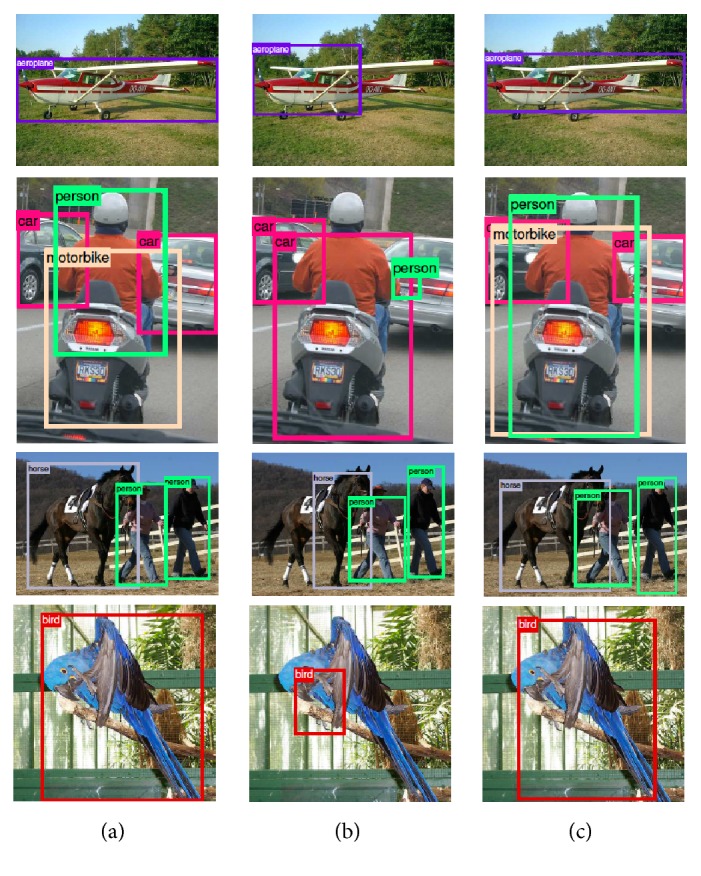
“Figure 4: Object detection results comparison from [66].”
BackgroundResultLi, J., Xia, C.-Q., & Chen, X.-W. (2016) · IEEE Transactions on Image Processing · doi:10.1109/tip.2017.2762594 · Cited by 154 · cited 1×
“Finally, [74] leverages stacked autoencoders for multiple organ detection in medical images, while [75] exploits saliency-guided stacked autoencoders for videobased salient object detection.”
BackgroundA Light CNN for Deep Face Representation with Noisy LabelsPreprint
Wu, X., He, R., Sun, Z., et al. (2015) · arXiv (Cornell University) · doi:10.48550/arxiv.1511.02683 · Cited by 151
Tom-vs-Pete Classifiers and Identity-Preserving Alignment for Face Verification
Berg, T., & Belhumeur, P. N. (2012) · British Machine Vision Conference (BMVC) · doi:10.5244/c.26.129 · Cited by 140
On the convergence of markovian stochastic algorithms with rapidly decreasing ergodicity rates
Laurent Younes, B. (1999) · Stochastics and stochastics reports · doi:10.1080/17442509908834179 · Cited by 134 · cited 2×
“During network training, a DBM jointly trains all layers of a specific unsupervised model, and instead of maximizing the likelihood directly, the DBM uses a stochastic maximum likelihood (SML) [46] based algorithm tomaximize the lower bound on the likelihood.”
MethodA Deep Structured Model with Radius–Margin Bound for 3D Human Activity Recognition
Lin, L., Wang, K., Zuo, W., Wang, M., Luo, J., & Zhang, L. (2016) · International Journal of Computer Vision · doi:10.1007/s11263-015-0876-z · Cited by 104 · cited 1×
“The authors of [12] incorporate a radius–margin bound as a regularization term into the deep CNNmodel, which effectively improves the generalization performance of the CNN for activity classification.”
Multimodal Multi-Stream Deep Learning for Egocentric Activity Recognition
Song, S., Chandrasekhar, V., Mandal, B., Li, L., Lim, J., Babu, G. S. D., San, P. P., & Cheung, N. M. (2016) · IEEE/CVF Conference on Computer Vision and Pattern Recognition Workshops (CVPRW) · doi:10.1109/cvprw.2016.54 · Cited by 92 · cited 1×
“In [95], the authors propose a multimodal multistream deep learning framework to tackle the egocentric activity recognition problem, using both the video and sensor data and employing a dual CNNs and Long Short-Term Memory architecture.”
MethodCombining the Right Features for Complex Event Recognition
Tang, K., Yao, B., Fei-Fei, L., & Koller, D. (2013) · IEEE/CVF International Conference on Computer Vision (ICCV) · doi:10.1109/iccv.2013.335 · Cited by 90 · cited 1×
“The work of [94] explores combination of heterogeneous features for complex event recognition.”
BackgroundA mathematical motivation for complex-valued convolutional networks
Tygert, M., Bruna, J., Chintala, S., LeCun, Y., Piantino, S., & Szlam, A. (2016) · Neural Computation · doi:10.1162/neco_a_00824 · Cited by 88
DeepID-Net: Deformable Deep Convolutional Neural Networks for Object DetectionPreprint
Ouyang, W., Wang, X., Zeng, X., Qiu, S., Luo, P., Tian, Y., Li, H., Yang, S., Wang, Z., Loy, C. C., et al. (2014) · arXiv (Cornell University) · doi:10.48550/arxiv.1412.5661 · Cited by 85 · cited 1×
“Also there are a number of other variations of the pooling layer in the literature, each inspired by different motivations and serving distinct needs, for example, stochastic pooling [27], spatial pyramid pooling [28, 29], and def-pooling [30].”
BackgroundEnhanced Gradient for Training Restricted Boltzmann Machines
Cho, K., Raiko, T., & Ilin, A. (2012) · Neural Computation · doi:10.1162/neco_a_00397 · Cited by 73 · cited 1×
“A detailed explanation along with the description of a practical way to train RBMs was given in [37], whereas [38] discusses the main difficulties of training RBMs and their underlying reasons and proposes a new algorithm with an adaptive learning rate and an enhanced gradient, so as to address the aforementioned diff…”
BackgroundTowards Unified Object Detection and Semantic Segmentation
Dong, J., Chen, Q., Yan, S., & Yuille, A. (2014) · Lecture Notes in Computer Science · doi:10.1007/978-3-319-10602-1_20 · Cited by 70
A Deep Learning Network for Right Ventricle Segmentation in Short:Axis MRI
Luo, G., An, R., Wang, K., Dong, S., & Zhang, H. (2016) · Computing in cardiology · doi:10.22489/cinc.2016.139-406 · Cited by 68
Deep Boltzmann Machines and the Centering Trick
Montavon, G., & Müller, K.-R. (2012) · Lecture Notes in Computer Science · doi:10.1007/978-3-642-35289-8_33 · Cited by 67 · cited 1×
“These include accelerating inference by using separate models to initialize the values of the hidden units in all layers [47, 49], or other improvements at the pretraining stage [50, 51] or at the training stage [52, 53].”
MethodSemi-supervised deep learning for object tracking and classification
Doulamis, N. D., & Doulamis, A. D. (2014) · Proceedings - International Conference on Image Processing · doi:10.1109/icip.2014.7025170 · Cited by 66 · cited 1×
“For example, [70] proposes a coarse object locating method based on a saliency mechanism in conjunction with a DBN for object detection in remote sensing images; [71] presents a newDBN for 3D object recognition, in which the top-level model is a third-order Boltzmann machine, trained using a hybrid algorithm that comb…”
MethodSelf-citationA collection of hyperspectral images for imaging systems research
Skauli, T., & Farrell, J. (2013) · Proceedings of SPIE, the International Society for Optical Engineering/Proceedings of SPIE · doi:10.1117/12.2007097 · Cited by 53 · cited 1×
“SCIEN hyperspectral image data [105] and AVIRIS sensor based datasets [106], for example, contain hyperspectral images.”
BackgroundS-CNN: Subcategory-Aware Convolutional Networks for Object Detection
Chen, T., Lu, S., & Fan, J. (2017) · IEEE Transactions on Pattern Analysis and Machine Intelligence · doi:10.1109/tpami.2017.2756936 · Cited by 43
Doulamis, N. D., & Voulodimos, A. S. (2016) · IEEE International Conference on Imaging Systems and Techniques (IST) · doi:10.1109/ist.2016.7738244 · Cited by 43
Self-citationDeep learning based human behavior recognition in industrial workflows
Makantasis, K., Doulamis, A. D., Doulamis, N. D., & Psychas, K. (2016) · Proceedings - International Conference on Image Processing · doi:10.1109/icip.2016.7532630 · Cited by 41 · cited 1×
“Many works on human activity recognition based on deep learning techniques have been proposed in the literature in the last few years [88].”
BackgroundSelf-citationCrowded Scene Understanding by Deeply Learned Volumetric Slices
Shao, J., Loy, C. C., Kang, K., & Wang, X. (2016) · IEEE Transactions on Circuits and Systems for Video Technology · doi:10.1109/tcsvt.2016.2593647 · Cited by 40 · cited 1×
“In [93], the authors mixed appearance andmotion features for recognizing group activities in crowded scenes collected from the web.”
BackgroundA Threefold Dataset for Activity and Workflow Recognition in Complex Industrial Environments
Voulodimos, A. S., Kosmopoulos, D., Vasileiou, G., Sardis, E., Anagnostopoulos, V., Lalos, C., Doulamis, A. D., & Varvarigou, T. A. (2012) · IEEE Multimedia · doi:10.1109/mmul.2012.31 · Cited by 37
Self-citationMultiview fusion for activity recognition using deep neural networks
Kavi, R. R., Kulathumani, V. K., Rohit, F., & Kecojevic, V. J. (2016) · Journal of Electronic Imaging · doi:10.1117/1.jei.25.4.043010 · Cited by 37 · cited 1×
“Multimodal fusion with a combined CNN and LSTM architecture is also proposed in [96].”
BackgroundLeveraging Mid-Level Semantic Boundary Cues for Automated Lymph Node Detection
Seff, A., Lu, L., Barbu, A., Roth, H., Shin, H.-C., & Summers, R. M. (2015) · Lecture Notes in Computer Science · doi:10.1007/978-3-319-24571-3_7 · Cited by 36 · cited 1×
“LymphNodeDetection and Segmentation datasets [110] consist of Computed Tomography images of the mediastinum and abdomen.”
IMPROVING MULTI-CAMERA ACTIVITY RECOGNITION BY EMPLOYING NEURAL NETWORK BASED READJUSTMENT
Voulodimos, A. S., Doulamis, N. D., Kosmopoulos, D., & Varvarigou, T. A. (2012) · Applied Artificial Intelligence · doi:10.1080/08839514.2012.629540 · Cited by 34 · cited 1×
“Human action and activity recognition is a research issue that has received a lot of attention from researchers [86, 87].”
BackgroundSelf-citationA dataset for workflow recognition in industrial scenes
Voulodimos, A. S., Kosmopoulos, D., Vasileiou, G., Sardis, E., Doulamis, A. D., Anagnostopoulos, V., Lalos, C., & Varvarigou, T. A. (2011) · Proceedings - International Conference on Image Processing · doi:10.1109/icip.2011.6116362 · Cited by 34 · cited 1×
“The WR datasets [111, 112] can be used for video-based activity recognition in assembly lines [113], containing sequences of 7 categories of industrial tasks.”
MethodSelf-citationA System for Multicamera Task Recognition and Summarization for Structured Environments
Kosmopoulos, D., Voulodimos, A. S., & Doulamis, A. D. (2012) · IEEE Transactions on Industrial Informatics · doi:10.1109/tii.2012.2212712 · Cited by 33 · cited 1×
“The WR datasets [111, 112] can be used for video-based activity recognition in assembly lines [113], containing sequences of 7 categories of industrial tasks.”
MethodSelf-citationA top-down event-driven approach for concurrent activity recognition
Voulodimos, A. S., Kosmopoulos, D., Doulamis, N. D., & Varvarigou, T. A. (2012) · Multimedia Tools and Applications · doi:10.1007/s11042-012-0993-4 · Cited by 32
Self-citationAdaptable deep learning structures for object labeling/tracking under dynamic visual environments
Doulamis, N. D. (2017) · Multimedia Tools and Applications · doi:10.1007/s11042-017-5349-7 · Cited by 31
Self-citationExploring deep learning based solutions in fine grained activity recognition in the wild
Cao, S., & Nevatia, R. (2016) · Proceedings - International Conference on Pattern Recognition/Proceedings/International Conference on Pattern Recognition · doi:10.1109/icpr.2016.7899664 · Cited by 27 · cited 1×
“In [13], the authors scrutinize the applicability of CNN as joint feature extraction and classification model for fine-grained activities; they find that due to the challenges of large intraclass variances, small interclass variances, and limited training samples per activity, an approach that directly uses deep featu…”
BackgroundLearning Feature Hierarchies with Centered Deep Boltzmann MachinesPreprint
Montavon, G., & Müller, K. (2012) · arXiv (Cornell University) · doi:10.48550/arxiv.1203.3783 · Cited by 26 · cited 1×
“These include accelerating inference by using separate models to initialize the values of the hidden units in all layers [47, 49], or other improvements at the pretraining stage [50, 51] or at the training stage [52, 53].”
MethodA Two-Stage Pretraining Algorithm for Deep Boltzmann Machines
Cho, K., Raiko, T., Ilin, A., & Karhunen, J. (2013) · Lecture notes in computer science · doi:10.1007/978-3-642-40728-4_14 · Cited by 24 · cited 1×
“These include accelerating inference by using separate models to initialize the values of the hidden units in all layers [47, 49], or other improvements at the pretraining stage [50, 51] or at the training stage [52, 53].”
MethodFast and Adaptive Deep Fusion Learning for Detecting Visual Objects
Doulamis, N. D., & Doulamis, A. D. (2012) · Lecture notes in computer science · doi:10.1007/978-3-642-33885-4_35 · Cited by 19 · cited 1×
“For example, [70] proposes a coarse object locating method based on a saliency mechanism in conjunction with a DBN for object detection in remote sensing images; [71] presents a newDBN for 3D object recognition, in which the top-level model is a third-order Boltzmann machine, trained using a hybrid algorithm that comb…”
MethodSelf-citationHuman activity recognition using deep belief networks
Yalçın, H. (2016) · Signal Processing and Communications Applications Conference (SIU) · doi:10.1109/siu.2016.7496073 · Cited by 15 · cited 1×
“Finally, [97] uses DBNs for activity recognition using input video sequences that also include depth information.”
MethodColitis detection on abdominal CT scans by rich feature hierarchies
Liu, J., Lay, N. S., Wei, Z., Lü, L., Kim, L., Turkbey, E. B., & Summers, R. M. (2016) · Proceedings of SPIE, the International Society for Optical Engineering/Proceedings of SPIE · doi:10.1117/12.2217681 · Cited by 11 · cited 1×
“A vast majority of works on object detection using deep learning apply a variation of CNNs, for example, [8, 67, 68]”
BackgroundA Mathematical Motivation for Complex-valued Convolutional NetworksPreprint
Bruna, J., Chintala, S., LeCun, Y., et al. (2015) · arXiv (Cornell University) · doi:10.48550/arxiv.1503.03438 · Cited by 8
Li, J., Xia, C., & Chen, X. (2016) · arXiv (Cornell University) · doi:10.48550/arxiv.1611.00135 · Cited by 3 · cited 1×
“Finally, [74] leverages stacked autoencoders for multiple organ detection in medical images, while [75] exploits saliency-guided stacked autoencoders for videobased salient object detection.”
Background
Research works printed but not linked: 8
- 1990, Handwritten digit recognition with a back-propagation network
- 2012, Theano: new features and speed improvements
- 1986, Information processing in dynamical systems: Foundations of harmony theory, 1, 194
- 1986, Learning and Relearning in Boltzmann Machines, 1, 4.2
- 2010, Momentum, 9, 926
- 2014, Journal of Machine Learning Research, 15, 2949
- 2007, Greedy layer-wise training of deep networks, 19, 153
- 2017, IEEE Transactions on Image Processing
Cited by
Object detection using YOLO: challenges, architectural successors, datasets and applications
Diwan, T., Anirudh, G., & Tembhurne, J. V. (2023) · Multimedia Tools and Applications · doi:10.1007/s11042-022-13644-y · Cited by 1,549
“The common deep learning models can be utilized for any computer vision task includes Convolution Neural Network (CNN), Deep Belief Networks (DBN), Deep Boltzmann Machines (DBM), Restricted Boltzmann Machines (RBM), and Stacked Autoencoders [71].”
MethodSarker, I. H. (2022) · SN Computer Science · doi:10.1007/s42979-022-01043-x · Cited by 1,208
Deep Learning vs. Traditional Computer Vision
O’Mahony, N., Campbell, S., Carvalho, A., Harapanahalli, S., Hernandez, G. V., Krpalkova, L., Riordan, D., & Walsh, J. (2020) · Advances in Intelligent Systems and Computing · doi:10.1007/978-3-030-17795-9_10 · Cited by 1,025
TabTransformer: Tabular Data Modeling Using Contextual Embeddings
Huang, X., Khetan, A., Cvitkovic, M. W., & Karnin, Z. S. (2020) · arXiv (Cornell University) · doi:10.48550/arxiv.2012.06678 · Cited by 200
“Unfortunately, the state-of-art SSL models developed in computer vision (Voulodimos et al. 2018; Kendall and Gal 2017) and NLP (Vaswani et al.”
BackgroundDeep Long-Tailed Learning: A Survey
Zhang, Y., Kang, B., Hooi, B., Yan, S., & Feng, J. (2023) · IEEE Transactions on Pattern Analysis and Machine Intelligence · doi:10.1109/tpami.2023.3268118 · Cited by 769
Metadata
- Authors
- Voulodimos, A., Doulamis, N., Doulamis, A., & Protopapadakis, E.
- Affiliations
- National Technical University of Athens (GR)
- Corresponding author
- Voulodimos, Athanasios
- Venue
- Computational Intelligence and Neuroscience
- Publisher
- Wiley
- Published
- 2018
- Volume
- 2018
- Pages
- 1-13
- ISSN
- 1687-5265 (ISSN-L)
- 1687-5273
- PMC
- PMC5816885
- OpenAlex
- W2794284562
- Cited by
- 3,403
- References
- 56
- Citations by year
- 2026: 202 · 2025: 447 · 2024: 586 · 2023: 541 · 2022: 570 · 2021: 496 · 2020: 375 · 2019: 153 · 2018: 32
- FWCI
- 30.98
- Type
- journal article
- Language
- en
- Open access
- hybrid
- doi.org
- Locations
- Computational Intelligence and Neuroscience (publishedVersion, cc-by)
- Europe PMC (PubMed Central) (publishedVersion, cc-by)
- PubMed Central (publishedVersion, cc-by)
- PubMed (publishedVersion)
- Funders
- State Scholarships Foundation
- European Social Fund
- Greek national funds
- Topics
- Physical Sciences › Computer Science › Computer Vision and Pattern Recognition › Advanced Neural Network Applications
- Physical Sciences › Computer Science › Computer Vision and Pattern Recognition › Advanced Image and Video Retrieval Techniques
- Physical Sciences › Computer Science › Artificial Intelligence › Domain Adaptation and Few-Shot Learning
- Keywords
- deep learning, computer vision, convolutional neural networks, deep Boltzmann machine, deep belief network, stacked denoising autoencoder, object detection, face recognition, human action recognition, activity recognition, human pose estimation
- MeSH terms
- Machine Learning, Algorithms, Humans, Neural Networks, Computer
About these checks
Registry, retraction, Cites and statistics results are computed, not judged, with one exception: a printed reference that no index lists is read once by a model before it counts as a citation error. Claims are extracted by a model and kept only when their quote appears verbatim in the text; each cited source is then checked, with a model’s help, for whether it says what the claim relies on. Those verdicts can be wrong — read the claim’s quote and the cited source before relying on one.
Statistics and arithmetic are recomputed, not judged.
Confidence bands are shown only for fields calibrated on our annotated test set. None is calibrated yet, so no band is shown.
What counts as a claim ›How we measure confidence ›How we check this ›
Are you an author, or do you see a problem with this page? Request a review
Data sources
Bibliographic data: Semantic Scholar, OpenAlex, Crossref.
Contains information from the Semantic Scholar Academic Graph Datasets, made available under the ODC Attribution License (ODC-BY 1.0).
Semantic Scholar’s data is described in: Kinney, R., et al. (2023). The Semantic Scholar Open Data Platform. arXiv:2301.10140.
