

Deep Learning for Computer Vision: A Brief Review
Open accessThe DOI matches its Crossref record; 91 of the 93 references it cites were found in a registry or an index, and 2 are not checked yet.
Abstract
Over the last years deep learning methods have been shown to outperform previous state-of-the-art machine learning techniques in several fields, with computer vision being one of the most prominent cases. This review paper provides a brief overview of some of the most significant deep learning schemes used in computer vision problems, that is, Convolutional Neural Networks, Deep Boltzmann Machines and Deep Belief Networks, and Stacked Denoising Autoencoders. A brief account of their history, structure, advantages, and limitations is given, followed by a description of their applications in various computer vision tasks, such as object detection, face recognition, action and activity recognition, and human pose estimation. Finally, a brief overview is given of future directions in designing deep learning schemes for computer vision problems and the challenges involved therein.
Overview
The claims and statistics of this paper haven’t been checked yet.
Free: it reads the open-access text and checks the first 5 claims that cite a source we can check. Create a free account to check every claim.
Integrity signals
Registry
Cites
Statistics
Figures
Verification
Claims the paper makes
The claims and statistics of this paper haven’t been checked yet.
Free: it reads the open-access text and checks the first 5 claims that cite a source we can check. Create a free account to check every claim.
Claims other papers make about this one
Each is checked against this paper’s own text: does it say what the citing paper says it does?
The cited source says what the claim attributes to it.
In the citing paper
“Additionally, HAR with image/video processing has been extensively studied in the computer vision community [79,80], and the methodologies commonly used differ significantly from techniques used for IMUs, EEG, PPG, etc.”
From Deep Learning in Human Activity Recognition with Wearable Sensors: A Review on Advances (2022) · cites this paper as [79]
Self-check
Percentages, sums and reported differences re-computed from the paper’s own numbers.
The self-check needs the paper’s full text.
Citations
Cites
Hochreiter, S., & Schmidhuber, J. (1997) · Neural Computation · doi:10.1162/neco.1997.9.8.1735 · Cited by 102,318 · cited 4×
“In [95], the authors propose a multimodal multistream deep learning framework to tackle the egocentric activity recognition problem, using both the video and sensor data and employing a dual CNNs and Long Short-Term Memory architecture.”
BackgroundInfluentialFaster R-CNN: Towards Real-Time Object Detection with Region Proposal Networks
Ren, S., He, K., Girshick, R., & Sun, J. (2017) · IEEE Transactions on Pattern Analysis and Machine Intelligence · doi:10.1109/tpami.2016.2577031 · Cited by 73,472
Faster R-CNN: Towards Real-Time Object Detection with Region Proposal Networks
Ren, S., He, K., Girshick, R., & Sun, J. (2015) · arXiv · doi:10.48550/arxiv.1506.01497 · Cited by 70,812
Gradient-based learning applied to document recognition
Lecun, Y., Bottou, L., Bengio, Y., & Haffner, P. (1998) · Proceedings of the IEEE · doi:10.1109/5.726791 · Cited by 58,805 · cited 2×
“In an attempt to compare these models (for a summary see Table 2), we can say that CNNs have generally performed better than DBNs in current literature on benchmark computer vision datasets such as MNIST.”
MethodGoing deeper with convolutions
Szegedy, C., Liu, W., Jia, Y., Sermanet, P., Reed, S., Anguelov, D., Erhan, D., Vanhoucke, V., & Rabinovich, A. (2015) · 2015 IEEE Conference on Computer Vision and Pattern Recognition (CVPR) · doi:10.1109/cvpr.2015.7298594 · Cited by 48,562
Fully convolutional networks for semantic segmentation
Long, J., Shelhamer, E., & Darrell, T. (2015) · 2015 IEEE Conference on Computer Vision and Pattern Recognition (CVPR) · doi:10.1109/cvpr.2015.7298965 · Cited by 38,834
Rich Feature Hierarchies for Accurate Object Detection and Semantic Segmentation
Girshick, R., Donahue, J., Darrell, T., & Malik, J. (2014) · 2014 IEEE Conference on Computer Vision and Pattern Recognition · doi:10.1109/cvpr.2014.81 · Cited by 32,684
Girshick, R. (2015) · 2015 IEEE International Conference on Computer Vision (ICCV) · doi:10.1109/iccv.2015.169 · Cited by 28,105
Reducing the dimensionality of data with neural networks
Hinton, G. E., & Salakhutdinov, R. R. (2006) · Science · doi:10.1126/science.1127647 · Cited by 20,928
A logical calculus of the ideas immanent in nervous activity
McCulloch, W. S., & Pitts, W. (1943) · The Bulletin of Mathematical Biophysics · doi:10.1007/bf02478259 · Cited by 18,566
Research works printed but not linked: 21
- LeCun Y. Boser B. Denker J. Touretzky D. Handwritten digit recognition with a back-propagation network Advances in Neural Information Processing Systems 2 (NIPS∗89) 1990 Denver, CO, USA
- Frederic B. Lamblin P. Pascanu R. Theano: new features and speed improvements Deep Learning and Unsupervised Feature Learning NIPS 2012 Workshop 2012 http://deeplearning.net/software/theano/
- Chen X. Yuille A. L. Articulated pose estimation by a graphical model with image dependent pairwise relations Proceedings of the NIPS 2014
- Boureau Y. L. Ponce J. LeCun Y. A theoretical analysis of feature pooling in visual recognition Proceedings of the ICML 2010
- Krizhevsky A. Sutskever I. Hinton G. E. Imagenet classification with deep convolutional neural networks Proceedings of the 26th Annual Conference on Neural Information Processing Systems (NIPS '12) December 2012 Lake Tahoe, Nev, USA 1097 1105 2-s2.0-84876231242
- Smolensky P. Information processing in dynamical systems: Foundations of harmony theory In Parallel Distributed Processing: Explorations in the Microstructure of Cognition 1986 1 Cambridge, MA, USA MIT Press 194 281
- Hinton G. E. Sejnowski T. J. Learning and Relearning in Boltzmann Machines 1986 1 Cambridge, MA MIT Press p. 4.2
- Carreira-Perpinan M. A. Hinton G. E. On contrastive divergence learning Proceedings of the tenth international workshop on artificial intelligence and statistics., NP: Society for Artificial Intelligence and Statistics 2005 33 40
- Hinton G. A practical guide to training restricted Boltzmann machines Momentum 2010 9 p. 926
- Salakhutdinov R. Larochelle H. Efficient learning of deep Boltzmann machines Proceedings of the AISTATS 2010
- Salakhutdinov R. Hinton G. An efficient learning procedure for deep Boltzmann machines Neural Computation 2012 24 8 1967 2006 MR2978160 10.1162/NECO_a_00311 Zbl1247.68223 2-s2.0-84874125782 22509963 · DOI · Paper page
- Salakhutdinov R. Hinton G. A better way to pretrain Deep Boltzmann Machines Proceedings of the 26th Annual Conference on Neural Information Processing Systems 2012, NIPS 2012 December 2012 usa 2447 2455 2-s2.0-84877755914
- Goodfellow I. Mirza M. Courville A. Multi-prediction deep Boltzmann machines Proceedings of the NIPS 2013
- Vincent P. Larochelle H. Bengio Y. Manzagol P.-A. Cohen W. W. McCallum A. Roweis S. T. Extracting and composing robust features with denoising autoencoders in Proceedings of the Twenty-fifth International Conference on Machine Learning (ICML'08) 2008 ACM 1096 1103
- Gallinari P. LeCun Y. Thiria S. Fogelman-Soulie F. Memoires associatives distribuees Proceedings of the in Proceedings of COGNITIVA 87 1987 Paris, La Villette
- Bengio Y. Lamblin P. Popovici D. Larochelle H. Sch B. Platt J. and. Hoffman T. Schölkopf B. Greedy layer-wise training of deep networks Advances in Neural Information Processing Systems (NIPS06) 2007 19 MIT Press 153 160
- Hosang J. Benenson R. Schiele B. How good are detection proposals, really? Proceedings of the 25th British Machine Vision Conference, BMVC 2014 September 2014 gbr 2-s2.0-84919779754
- Nair V. Hinton G. E. 3D object recognition with deep belief nets Proceedings of the NIPS 2009
- Kitsikidis A. Dimitropoulos K. Douka S. Grammalidis N. Dance analysis using multiple kinect sensors Proceedings of the 9th International Conference on Computer Vision Theory and Applications, VISAPP 2014 January 2014 prt 789 795 2-s2.0-84906896563
- Jain A. Tompson J. Andriluka M. Learning human pose estimation features with convolutional networks Proceedings of the ICLR 2014
- Tompson J. J. Jain A. LeCun Y. Joint training of a convolutional network and a graphical model for human pose estimation Proceedings of the NIPS 2014
Cited by
Object detection using YOLO: challenges, architectural successors, datasets and applications
Diwan, T., Anirudh, G., & Tembhurne, J. V. (2023) · Multimedia Tools and Applications · doi:10.1007/s11042-022-13644-y · Cited by 1,549
“The common deep learning models can be utilized for any computer vision task includes Convolution Neural Network (CNN), Deep Belief Networks (DBN), Deep Boltzmann Machines (DBM), Restricted Boltzmann Machines (RBM), and Stacked Autoencoders [71].”
MethodSarker, I. H. (2022) · SN Computer Science · doi:10.1007/s42979-022-01043-x · Cited by 1,208
Deep Learning vs. Traditional Computer Vision
O’Mahony, N., Campbell, S., Carvalho, A., Harapanahalli, S., Hernandez, G. V., Krpalkova, L., Riordan, D., & Walsh, J. (2020) · Advances in Intelligent Systems and Computing · doi:10.1007/978-3-030-17795-9_10 · Cited by 1,025
TabTransformer: Tabular Data Modeling Using Contextual Embeddings
Huang, X., Khetan, A., Cvitkovic, M. W., & Karnin, Z. S. (2020) · arXiv (Cornell University) · doi:10.48550/arxiv.2012.06678 · Cited by 200
“Unfortunately, the state-of-art SSL models developed in computer vision (Voulodimos et al. 2018; Kendall and Gal 2017) and NLP (Vaswani et al.”
BackgroundDeep Long-Tailed Learning: A Survey
Zhang, Y., Kang, B., Hooi, B., Yan, S., & Feng, J. (2023) · IEEE Transactions on Pattern Analysis and Machine Intelligence · doi:10.1109/tpami.2023.3268118 · Cited by 769
State of the Art in Defect Detection Based on Machine Vision
Ren, Z., Fang, F., Yan, N., & Wu, Y. (2022) · International Journal of Precision Engineering and Manufacturing-Green Technology · doi:10.1007/s40684-021-00343-6 · Cited by 799
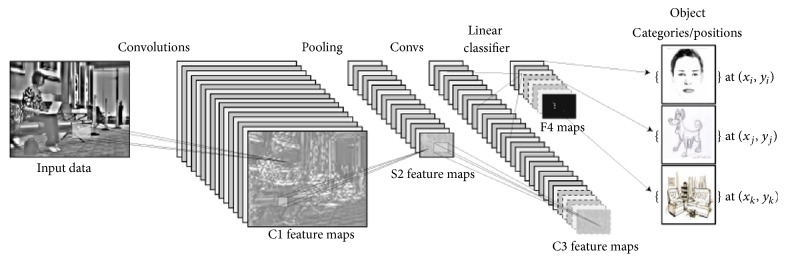
“There are three main types of neural layers that play different roles in a CNN: convolutional layers, pooling layers, and fully connected layers [172, 173].”
BackgroundABCDM: An Attention-based Bidirectional CNN-RNN Deep Model for sentiment analysis
Basiri, M. E., Nemati, S., Abdar, M., Cambria, E., & Acharya, U. R. (2021) · Future Generation Computer Systems · doi:10.1016/j.future.2020.08.005 · Cited by 745
Sensor-based and vision-based human activity recognition: A comprehensive survey
Minh Dang, L., Min, K., Wang, H., Jalil Piran, M., Hee Lee, C., & Moon, H. (2020) · Pattern Recognition · doi:10.1016/j.patcog.2020.107561 · Cited by 730
“Through the backpropagation process, it automatically extracts abstract features from input data [216] .”
BackgroundMethodData-centric Artificial Intelligence: A Survey
Zha, D., Bhat, Z. P., Lai, K.-H., Yang, F., Jiang, Z., Zhong, S., & Hu, X. (2025) · ACM Computing Surveys · doi:10.1145/3711118 · Cited by 334
“…witnessed dramatic progress in Artificial Intelligence (AI) across various directions, such as natural language processing [45] and computer vision [224], which has also made a profound impact on nearly every other domain, spanning recommender system [267], healthcare [150], biology [237], finance…”
AlphaFold2 and its applications in the fields of biology and medicine
Yang, Z., Zeng, X., Zhao, Y., & Chen, R. (2023) · Signal Transduction and Targeted Therapy · doi:10.1038/s41392-023-01381-z · Cited by 577
Performance Analysis of Google Colaboratory as a Tool for Accelerating Deep Learning Applications
Carneiro, T., Medeiros Da Nobrega, R. V., Nepomuceno, T., Bian, G.-B., De Albuquerque, V. H. C., & Filho, P. P. R. (2018) · IEEE Access · doi:10.1109/access.2018.2874767 · Cited by 589
Deep Learning for LiDAR Point Clouds in Autonomous Driving: A Review
Li, Y., Ma, L., Zhong, Z., Liu, F., Chapman, M. A., Cao, D., & Li, J. (2021) · IEEE Transactions on Neural Networks and Learning Systems · doi:10.1109/tnnls.2020.3015992 · Cited by 611
Sign Language Recognition: A Deep Survey
Rastgoo, R., Kiani, K., & Escalera, S. (2021) · Expert Systems with Applications · doi:10.1016/j.eswa.2020.113794 · Cited by 575
Deep Learning in Human Activity Recognition with Wearable Sensors: A Review on Advances
Zhang, S., Li, Y., Zhang, S., Shahabi, F., Xia, S., Deng, Y., & Alshurafa, N. (2022) · Sensors · doi:10.3390/s22041476 · Cited by 625
“Additionally, HAR with image/video processing has been extensively studied in the computer vision community [286, 310], and the methodologies commonly used differ significantly from techniques used for IMUs, EEG, PPG, etc.”
MethodNeupane, D., & Seok, J. (2020) · IEEE Access · doi:10.1109/access.2020.2990528 · Cited by 568
“Again, the steps towards further optimization of the network based on maximum likelihood training approximation are unclear in DBN [155].”
BackgroundGupta, A., Anpalagan, A., Guan, L., & Khwaja, A. S. (2021) · Array · doi:10.1016/j.array.2021.100057 · Cited by 565
Artificial intelligence in recommender systems
Zhang, Q., Lu, J., & Jin, Y. (2021) · Complex & Intelligent Systems · doi:10.1007/s40747-020-00212-w · Cited by 450
“Recent developments in deep learning have revolutionized the computer vision research area, given the ability of deep learning methods to extract features [79].”
BackgroundVariational Quantum Circuits for Deep Reinforcement Learning
Chen, S. Y.-C., Yang, C.-H. H., Qi, J., Chen, P.-Y., Ma, X., & Goan, H.-S. (2020) · IEEE Access · doi:10.1109/access.2020.3010470 · Cited by 452
“Deep Learning (DL) [1] has been widely used in many machine learning domains, such as computer vision [2, 3, 4], natural language processing [5], communication network congestion control [6], and mastering the game of Go [7].”
BackgroundA review of deep learning with special emphasis on architectures, applications and recent trends
Sengupta, S., Basak, S., Saikia, P., Paul, S., Tsalavoutis, V., Atiah, F., Ravi, V., & Peters, A. (2020) · Knowledge-Based Systems · doi:10.1016/j.knosys.2020.105596 · Cited by 454
Deep Learning for Change Detection in Remote Sensing Images: Comprehensive Review and Meta-Analysis
Khelifi, L., & Mignotte, M. (2020) · IEEE Access · doi:10.1109/access.2020.3008036 · Cited by 441
“On the basis of its state-of-the-art performance, deep learning has been consequently applied to various domains, such as computer vision [10], speech recognition [11], and information retrieval [12].”
BackgroundHyperspectral Image Classification—Traditional to Deep Models: A Survey for Future Prospects
Ahmad, M., Shabbir, S., Roy, S. K., Hong, D., Wu, X., Yao, J., Khan, A. M., Mazzara, M., Distefano, S., & Chanussot, J. (2022) · IEEE Journal of Selected Topics in Applied Earth Observations and Remote Sensing · doi:10.1109/jstars.2021.3133021 · Cited by 438
“for pattern recognition [166] which can be considered as the predecessor of CNN [167].”
BackgroundNatural language processing applied to mental illness detection: a narrative review
Zhang, T., Schoene, A. M., Ji, S., & Ananiadou, S. (2022) · npj Digital Medicine · doi:10.1038/s41746-022-00589-7 · Cited by 476
“Advances in deep learning methods have brought breakthroughs in many fi elds including computer vision 113 , NLP 114 , and signal processing 115 .”
BackgroundWade, L., Needham, L., McGuigan, P., & Bilzon, J. (2022) · PeerJ · doi:10.7717/peerj.12995 · Cited by 384
Federated Learning for intrusion detection system: Concepts, challenges and future directions
Agrawal, S., Sarkar, S., Aouedi, O., Yenduri, G., Piamrat, K., Alazab, M., Bhattacharya, S., Maddikunta, P. K. R., & Gadekallu, T. R. (2022) · Computer Communications · doi:10.1016/j.comcom.2022.09.012 · Cited by 457
Transformer Network for Remaining Useful Life Prediction of Lithium-Ion Batteries
Chen, D., Hong, W., & Zhou, X. (2022) · IEEE Access · doi:10.1109/access.2022.3151975 · Cited by 408
“Recently, remarkable success has been achieved by deep learning in various fields, such as recommender systems [16]–[18], Computer Vision (CV) [19]–[21], and Natural Language Processing (NLP) [22]–[24].”
Deep Learning Approach for Early Detection of Alzheimer’s Disease
Helaly, H. A., Badawy, M., & Haikal, A. Y. (2022) · Cognitive Computation · doi:10.1007/s12559-021-09946-2 · Cited by 395
“CNN can boost efficiency further, has shown great success in AD diagnosis, and it does not need to do handcrafted features extraction as it extracts the features automatically [17, 18].”
BackgroundTien Bui, D., Hoang, N.-D., Martínez-Álvarez, F., Ngo, P.-T. T., Hoa, P. V., Pham, T. D., Samui, P., & Costache, R. (2020) · Science of The Total Environment · doi:10.1016/j.scitotenv.2019.134413 · Cited by 398
Natural Language Processing Advancements By Deep Learning: A Survey
Torfi, A., Shirvani, R. A., Keneshloo, Y., Tavaf, N., & Fox, E. A. (2020) · arXiv (Cornell University) · doi:10.48550/arxiv.2003.01200 · Cited by 190
She, C., Sun, C., Gu, Z., Li, Y., Yang, C., Poor, H. V., & Vucetic, B. (2021) · Proceedings of the IEEE · doi:10.1109/jproc.2021.3053601 · Cited by 405
“Supervised deep learning has been applied in different fields in computer science, including computer vision [202], speech recognition [203], and natural language processing [204].”
MethodHoeser, T., & Kuenzer, C. (2020) · Remote Sensing · doi:10.3390/rs12101667 · Cited by 366
Machine learning in aerodynamic shape optimization
Li, J., Du, X., & Martins, J. R. R. A. (2022) · Progress in Aerospace Sciences · doi:10.1016/j.paerosci.2022.100849 · Cited by 354
Communication-efficient federated learning
Chen, M., Shlezinger, N., Poor, H. V., Eldar, Y. C., & Cui, S. (2021) · Proceedings of the National Academy of Sciences · doi:10.1073/pnas.2024789118 · Cited by 397
Learning Task-Oriented Communication for Edge Inference: An Information Bottleneck Approach
Shao, J., Mao, Y., & Zhang, J. (2022) · IEEE Journal on Selected Areas in Communications · doi:10.1109/jsac.2021.3126087 · Cited by 338
Zhou, Z., Sodha, V., Pang, J., Gotway, M. B., & Liang, J. (2021) · Medical Image Analysis · doi:10.1016/j.media.2020.101840 · Cited by 328
Evaluation of Sentiment Analysis in Finance: From Lexicons to Transformers
Mishev, K., Gjorgjevikj, A., Vodenska, I., Chitkushev, L. T., & Trajanov, D. (2020) · IEEE Access · doi:10.1109/access.2020.3009626 · Cited by 345
“Deep-learning methods [75] are achieving outstanding results in many fields, including: signal processing [76], computer vision [77], speech processing [78]–[80] and text classification [81].”
A review of deep learning used in the hyperspectral image analysis for agriculture
Wang, C., Liu, B., Liu, L., Zhu, Y., Hou, J., Liu, P., & Li, X. (2021) · Artificial Intelligence Review · doi:10.1007/s10462-021-10018-y · Cited by 362
“…of deep learning, deep learning models have recently been successfully adopted in various areas such as computer vision (Dan et al. 2011; Athanasios et al. 2018; Voulodimos et al. 2018), speech recognition (Hinton et al. 2012), and other similarly complex data processing (Garcia-Garcia…”
MethodA review on modern defect detection models using DCNNs – Deep convolutional neural networks
Tulbure, A.-A., Tulbure, A.-A., & Dulf, E.-H. (2022) · Journal of Advanced Research · doi:10.1016/j.jare.2021.03.015 · Cited by 372
“For a further summary please refer to [3,1], where applications such as: Face recognition, pedestrian detection, activity recognition, human pose estimation and others are described.”
BackgroundMethodA survey on deep learning in medicine: Why, how and when?
Piccialli, F., Somma, V. D., Giampaolo, F., Cuomo, S., & Fortino, G. (2021) · Information Fusion · doi:10.1016/j.inffus.2020.09.006 · Cited by 348
Demrozi, F., Pravadelli, G., Bihorac, A., & Rashidi, P. (2020) · IEEE Access · doi:10.1109/access.2020.3037715 · Cited by 368
“Interested readers are encouraged to read references on vision-based HAR models [57, 101, 185, 193].”
BackgroundCalibration of fringe projection profilometry: A comparative review
Feng, S., Zuo, C., Zhang, L., Tao, T., Hu, Y., Yin, W., Qian, J., & Chen, Q. (2021) · Optics and Lasers in Engineering · doi:10.1016/j.optlaseng.2021.106622 · Cited by 347
Manakitsa, N., Maraslidis, G. S., Moysis, L., & Fragulis, G. F. (2024) · Technologies · doi:10.3390/technologies12020015 · Cited by 286
Cheng, S., Quilodrán-Casas, C., Ouala, S., Farchi, A., Liu, C., Tandeo, P., Fablet, R., Lucor, D., Iooss, B., Brajard, J., et al. (2023) · IEEE/CAA Journal of Automatica Sinica · doi:10.1109/jas.2023.123537 · Cited by 303
“The rapid growth of Machine Learning (ML) has been witnessed in a wide range of research fields, including computer vision [1], natural language processing [2] and AI for science [3].”
BackgroundDeep Learning for Whole Slide Image Analysis: An Overview
Dimitriou, N., Arandjelović, O., & Caie, P. D. (2019) · Frontiers in Medicine · doi:10.3389/fmed.2019.00264 · Cited by 332
“In the past decade most areas of computer vision have seen remarkable progress, much of it effected by advances in neural network based learning algorithms (50, 51).”
BackgroundInfrared machine vision and infrared thermography with deep learning: A review
He, Y., Deng, B., Wang, H., Cheng, L., Zhou, K., Cai, S., & Ciampa, F. (2021) · Infrared Physics & Technology · doi:10.1016/j.infrared.2021.103754 · Cited by 319
Remaining useful life estimation via transformer encoder enhanced by a gated convolutional unit
Mo, Y., Wu, Q., Li, X., & Huang, B. (2021) · Journal of Intelligent Manufacturing · doi:10.1007/s10845-021-01750-x · Cited by 328
“With the increase of data volume and computing power, deep learning has become a research hotspot, and has brought great success to the field of computer vision (Voulodimos et al. 2018) and natural language processing (Fahad and Yahya 2018).”
BackgroundYadav, S. K., Tiwari, K., Pandey, H. M., & Akbar, S. A. (2021) · Knowledge-Based Systems · doi:10.1016/j.knosys.2021.106970 · Cited by 311
Machine learning for metabolic engineering: A review
Lawson, C. E., Martí, J. M., Radivojevic, T., Jonnalagadda, S. V. R., Gentz, R., Hillson, N. J., Peisert, S., Kim, J., Simmons, B. A., Petzold, C. J., et al. (2021) · Metabolic Engineering · doi:10.1016/j.ymben.2020.10.005 · Cited by 313
A Review on Machine Learning Styles in Computer Vision—Techniques and Future Directions
Mahadevkar, S. V., Khemani, B., Patil, S., Kotecha, K., Vora, D. R., Abraham, A., & Gabralla, L. A. (2022) · IEEE Access · doi:10.1109/access.2022.3209825 · Cited by 287
Roy, A. M., & Bhaduri, J. (2023) · Advanced Engineering Informatics · doi:10.1016/j.aei.2023.102007 · Cited by 269
Multimodal medical image fusion review: Theoretical background and recent advances
Hermessi, H., Mourali, O., & Zagrouba, E. (2021) · Signal Processing · doi:10.1016/j.sigpro.2021.108036 · Cited by 301
Utilizing graph machine learning within drug discovery and development
Gaudelet, T., Day, B., Jamasb, A. R., Soman, J., Regep, C., Liu, G., Hayter, J. B. R., Vickers, R., Roberts, C., Tang, J., et al. (2021) · Briefings in Bioinformatics · doi:10.1093/bib/bbab159 · Cited by 313
Towards neural Earth system modelling by integrating artificial intelligence in Earth system science
Irrgang, C., Boers, N., Sonnewald, M., Barnes, E. A., Kadow, C., Staneva, J., & Saynisch-Wagner, J. (2021) · Nature Machine Intelligence · doi:10.1038/s42256-021-00374-3 · Cited by 308
“ML and other AI techniques have achieved stunning results in computer vision 35 , speech and language models 36 , medical science 37,38 , economical and societal analytics 39 , and other disciplines 40,41 .”
BackgroundKhanam, R., Hussain, M., Hill, R., & Allen, P. (2024) · IEEE Access · doi:10.1109/access.2024.3425166 · Cited by 237
(2022) · Iraqi Journal for Computer Science and Mathematics · doi:10.52866/ijcsm.2022.01.01.013 · Cited by 271
Medical deep learning—A systematic meta-review
Egger, J., Gsaxner, C., Pepe, A., Pomykala, K. L., Jonske, F., Kurz, M., Li, J., & Kleesiek, J. (2022) · Computer Methods and Programs in Biomedicine · doi:10.1016/j.cmpb.2022.106874 · Cited by 251
“Based on the itles and abstracts, all records which were not actually review or urvey contributions in the medical field, like [ 16 , 17 ] and [18] , or ere not written in English, like [ 19 , 20 ], or are veterinarian reiews [21] , or are about a human learning strategy called Deep earning [22] , were excluded (while…”
Breast cancer histology images classification: Training from scratch or transfer learning?
Shallu, & Mehra, R. (2018) · ICT Express · doi:10.1016/j.icte.2018.10.007 · Cited by 277
Deep learning techniques for estimation of the yield and size of citrus fruits using a UAV
Apolo-Apolo, O. E., Martínez-Guanter, J., Egea, G., Raja, P., & Pérez-Ruiz, M. (2020) · European Journal of Agronomy · doi:10.1016/j.eja.2020.126030 · Cited by 276
Artificial intelligence in medical imaging of the liver
Zhou, L.-Q., Wang, J.-Y., Yu, S.-Y., Wu, G.-G., Wei, Q., Deng, Y.-B., Wu, X.-L., Cui, X.-W., & Dietrich, C. F. (2019) · World Journal of Gastroenterology · doi:10.3748/wjg.v25.i6.672 · Cited by 262
Wang, P., Sun, X., Diao, W., & Fu, K. (2020) · IEEE Transactions on Geoscience and Remote Sensing · doi:10.1109/tgrs.2019.2954328 · Cited by 283
“Benefitting from the development of deep convolutional neural networks, many methods based on deep learning have been proposed to enhance the accuracy and speed of detection in the field of computer vision [1].”
MethodIbrahim, A., Primakov, S., Beuque, M., Woodruff, H. C., Halilaj, I., Wu, G., Refaee, T., Granzier, R., Widaatalla, Y., Hustinx, R., et al. (2021) · Methods · doi:10.1016/j.ymeth.2020.05.022 · Cited by 265
Quantum Long Short-Term Memory
Chen, S. Y.-C., Yoo, S., & Fang, Y.-L. L. (2022) · ICASSP 2022 - 2022 IEEE International Conference on Acoustics, Speech and Signal Processing (ICASSP) · doi:10.1109/icassp43922.2022.9747369 · Cited by 233
Roy, A. M., Bhaduri, J., Kumar, T., & Raj, K. (2023) · Ecological Informatics · doi:10.1016/j.ecoinf.2022.101919 · Cited by 257
Deep learning for biomedical photoacoustic imaging: A review
Gröhl, J., Schellenberg, M., Dreher, K., & Maier-Hein, L. (2021) · Photoacoustics · doi:10.1016/j.pacs.2021.100241 · Cited by 248
Lin, L. L., Alvarez-Puebla, R., Liz-Marzán, L. M., Trau, M., Wang, J., Fabris, L., Wang, X., Liu, G., Xu, S., Han, X. X., et al. (2025) · ACS Applied Materials & Interfaces · doi:10.1021/acsami.4c17502 · Cited by 247
Salloum, S., Gaber, T., Vadera, S., & Shaalan, K. (2022) · IEEE Access · doi:10.1109/access.2022.3183083 · Cited by 210
Yamada, M., Saito, Y., Imaoka, H., Saiko, M., Yamada, S., Kondo, H., Takamaru, H., Sakamoto, T., Sese, J., Kuchiba, A., et al. (2019) · Scientific Reports · doi:10.1038/s41598-019-50567-5 · Cited by 265
The Current Development of Structural Health Monitoring for Bridges: A Review
Deng, Z., Huang, M., Wan, N., & Zhang, J. (2023) · Buildings · doi:10.3390/buildings13061360 · Cited by 232
Dhal, S. B., & Kar, D. (2025) · Discover Applied Sciences · doi:10.1007/s42452-025-06472-w · Cited by 207
“CV [54–59] automates the visual inspection of food products and by-products, leveraging advanced imaging technologies to detect foreign objects, quality defects, or irregularities in shape, texture, and color.”
Data-driven machinery fault diagnosis: A comprehensive review
Neupane, D., Bouadjenek, M. R., Dazeley, R., & Aryal, S. (2025) · Neurocomputing · doi:10.1016/j.neucom.2025.129588 · Cited by 178
Markoulidakis, I., Rallis, I., Georgoulas, I., Kopsiaftis, G., Doulamis, A., & Doulamis, N. (2021) · Technologies · doi:10.3390/technologies9040081 · Cited by 195
Self-citationA review on 2D instance segmentation based on deep neural networks
Gu, W., Bai, S., & Kong, L. (2022) · Image and Vision Computing · doi:10.1016/j.imavis.2022.104401 · Cited by 237
SenseFi: A library and benchmark on deep-learning-empowered WiFi human sensing
Yang, J., Chen, X., Zou, H., Lu, C. X., Wang, D., Sun, S., & Xie, L. (2023) · Patterns · doi:10.1016/j.patter.2023.100703 · Cited by 209
“Most state-of-the-art deep learning models are developed for computer vision [26], such as human activity recognition [27], [28], and natural language processing tasks [29], such as sentiment classification [30].”
BackgroundSozzi, M., Cantalamessa, S., Cogato, A., Kayad, A., & Marinello, F. (2022) · Agronomy · doi:10.3390/agronomy12020319 · Cited by 246
“…three types of neural layers: (i) convolutional layers, which convolve the whole image; (ii) pooling layers, which reduce the spatial dimensions of the input data for the next convolutional layer; and (iii) fully connected layers, which are the high-level reasoning layers of the neural network [8].”
BackgroundFrom machine learning to deep learning: Advances in scoring functions for protein–ligand docking
Shen, C., Ding, J., Wang, Z., Cao, D., Ding, X., & Hou, T. (2020) · WIREs Computational Molecular Science · doi:10.1002/wcms.1429 · Cited by 244
“…a more data-hungry ML algorithm, deep learning (DL), which has gained great success in a wide variety of applications, such as computer vision, 21,22 speech recognition, 23 computer games, 24 and natural language processing, 25 has also attracted considerable interest from computational chemists…”
BackgroundMachine learning for quantum matter
Carrasquilla, J. (2020) · Advances in Physics X · doi:10.1080/23746149.2020.1797528 · Cited by 308
“Deep learning has accelerated the adoption of artificial intelligence with notable advances in areas ranging from computer vision [4] and natural language processing [5], to scientific applications such as drug discovery[6] and protein folding [7].”
Temenos, A., Temenos, N., Kaselimi, M., Doulamis, A., & Doulamis, N. (2023) · IEEE Geoscience and Remote Sensing Letters · doi:10.1109/lgrs.2023.3251652 · Cited by 219
“To improve their annotation, deep neural networks (DNNs) with an emphasis on convolutional neural networks (CNNs) for image classification are considered [4].”
BackgroundSelf-citationExploring the computational methods for protein-ligand binding site prediction
Zhao, J., Cao, Y., & Zhang, L. (2020) · Computational and Structural Biotechnology Journal · doi:10.1016/j.csbj.2020.02.008 · Cited by 236
Mirzaei, K., Arashpour, M., Asadi, E., Masoumi, H., Bai, Y., & Behnood, A. (2022) · Advanced Engineering Informatics · doi:10.1016/j.aei.2021.101501 · Cited by 231
You, Z., & Feng, L. (2020) · IEEE Access · doi:10.1109/access.2020.3007206 · Cited by 224
“Deep learning is a new research direction in the field of machine learning, which is the development of artificial neural networks [38].”
BackgroundMultiscale Diff-Changed Feature Fusion Network for Hyperspectral Image Change Detection
Luo, F., Zhou, T., Liu, J., Guo, T., Gong, X., & Ren, J. (2023) · IEEE Transactions on Geoscience and Remote Sensing · doi:10.1109/tgrs.2023.3241097 · Cited by 236
“Recently, convolutional neural network (CNN) has become a research focus in CD [19] because of its stronger adaptive feature extraction ability.”
Deep Learning on Point Clouds and Its Application: A Survey
Liu, W., Sun, J., Li, W., Hu, T., & Wang, P. (2019) · Sensors · doi:10.3390/s19194188 · Cited by 230
A Survey on Deep Learning for Neuroimaging-Based Brain Disorder Analysis
Zhang, L., Wang, M., Liu, M., & Zhang, D. (2020) · Frontiers in Neuroscience · doi:10.3389/fnins.2020.00779 · Cited by 220
Multi-Agent Systems for Search and Rescue Applications
Drew, D. S. (2021) · Current Robotics Reports · doi:10.1007/s43154-021-00048-3 · Cited by 195
“The current trend is toward the use of machine learning (ML) algorithms for the majority of tasks related to vision and detection [97], and increasingly learning algorithms feed in to the ability of robots to manipulate and reason about task feasibility [98].”
BackgroundMahdavifar, S., Alhadidi, D., & Ghorbani, A. A. (2022) · Journal of Network and Systems Management · doi:10.1007/s10922-021-09634-4 · Cited by 207
Random vector functional link network: Recent developments, applications, and future directions
Malik, A. K., Gao, R., Ganaie, M. A., Tanveer, M., & Suganthan, P. N. (2023) · Applied Soft Computing · doi:10.1016/j.asoc.2023.110377 · Cited by 211
“, computer vision [54], bioinformatics [55], and visual tracking [56], and speech recognition task [57] etc.”
BackgroundVaish, R., Dwivedi, U. D., Tewari, S., & Tripathi, S. M. (2021) · Engineering Applications of Artificial Intelligence · doi:10.1016/j.engappai.2021.104504 · Cited by 198
Bhandari, M., Shahi, T. B., Siku, B., & Neupane, A. (2022) · Computers in Biology and Medicine · doi:10.1016/j.compbiomed.2022.106156 · Cited by 193
Generalizable deep learning model for early Alzheimer’s disease detection from structural MRIs
Liu, S., Masurkar, A. V., Rusinek, H., Chen, J., Zhang, B., Zhu, W., Fernandez-Granda, C., & Razavian, N. (2022) · Scientific Reports · doi:10.1038/s41598-022-20674-x · Cited by 195
Dentronics: Towards robotics and artificial intelligence in dentistry
Grischke, J., Johannsmeier, L., Eich, L., Griga, L., & Haddadin, S. (2020) · Dental Materials · doi:10.1016/j.dental.2020.03.021 · Cited by 221
Robinson, N. L., Cottier, T. V., & Kavanagh, D. J. (2019) · Journal of Medical Internet Research · doi:10.2196/13203 · Cited by 215
“For instance, the use of natural language processing can capture and interpret key elements of human speech [78], and computer vision can recognize faces and activities and detect changes in physiological arousal and emotions [79,80].”
Li, G., Huang, Y., Chen, Z., Chesser, G. D., Purswell, J. L., Linhoss, J., & Zhao, Y. (2021) · Sensors · doi:10.3390/s21041492 · Cited by 197
“Tracking is to track objects in continuous frames based on changes of geometric features of these objects, and typically object activity trajectories are extracted (Figure 3f) [15].”
BackgroundInfluentialCompact optical convolution processing unit based on multimode interference
Meng, X., Zhang, G., Shi, N., Li, G., Azaña, J., Capmany, J., Yao, J., Shen, Y., Li, W., Zhu, N., et al. (2023) · Nature Communications · doi:10.1038/s41467-023-38786-x · Cited by 202
“(1) and (3), the dynamically reconfigurable kernelmatrix is implemented by tuning the PSs using the thermo-optic effect.”
BackgroundMethodAdegun, A. A., & Viriri, S. (2020) · IEEE Access · doi:10.1109/access.2020.3016651 · Cited by 210
“These methods generally rely on techniques such as iterative or statistical region merging, thresh-olding, and energy functions application [31], [34], [35].”
MethodPhotovoltaic system fault detection techniques: a review
El-Banby, G. M., Moawad, N. M., Abouzalm, B. A., Abouzaid, W. F., & Ramadan, E. A. (2023) · Neural Computing and Applications · doi:10.1007/s00521-023-09041-7 · Cited by 172
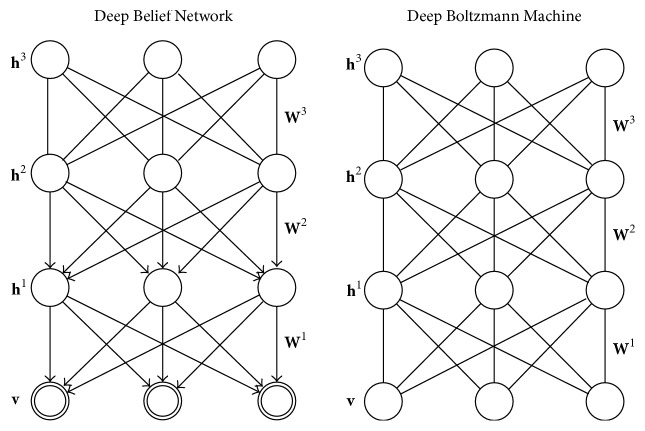
“Deep belief network (DBN) is a special kind of BM [51].”
BackgroundFederated Quantum Machine Learning
Chen, S. Y.-C., & Yoo, S. (2021) · Entropy · doi:10.3390/e23040460 · Cited by 268
“Recently advances in machine learning (ML), in particular deep learning (DL), has found significant success in a wide variety of challenging tasks such as computer vision [1–3], natural language processing [4], and even playing the game of Go with superhuman performance [5].”
BackgroundHütten, N., Gomes, M. A., Hölken, F., Andricevic, K., Meyes, R., & Meisen, T. (2024) · Applied System Innovation · doi:10.3390/asi7010011 · Cited by 248
“…of choice in CV since 2010, showing better generalization and less sensitivity to application conditions than traditional CV methods, new models have reached performance levels that even surpass those of humans in complex tasks like image classification, object detection, or segmentation [8–10].”
Rice Crop Detection Using LSTM, Bi-LSTM, and Machine Learning Models from Sentinel-1 Time Series
Crisóstomo de Castro Filho, H., Abílio de Carvalho Júnior, O., Ferreira de Carvalho, O. L., Pozzobon de Bem, P., dos Santos de Moura, R., Olino de Albuquerque, A., Rosa Silva, C., Guimarães Ferreira, P. H., Fontes Guimarães, R., & Trancoso Gomes, R. A. (2020) · Remote Sensing · doi:10.3390/rs12162655 · Cited by 199
“Recently, Deep Learning has reached the state-of-the-art in the field of computer vision, obtaining a significant advantage in the classification of natural images [69–71] and remote sensing data [72–74].”
BackgroundCross-Domain Fault Diagnosis Using Knowledge Transfer Strategy: A Review
Zheng, H., Wang, R., Yang, Y., Yin, J., Li, Y., Li, Y., & Xu, M. (2019) · IEEE Access · doi:10.1109/access.2019.2939876 · Cited by 209
“Traditional machine learning methods have made tremendous contributions to classification, regression, and clustering tasks in computer vision [23], natural language processing [24], as well as fault diagnosis [5]–[7].”
BackgroundApplications of Deep Learning for Dense Scenes Analysis in Agriculture: A Review
Zhang, Q., Liu, Y., Gong, C., Chen, Y., & Yu, H. (2020) · Sensors · doi:10.3390/s20051520 · Cited by 199
“One is to label the object into di ff erent categories according to the occlusion situation, and then recognize and classify it [64].”
BackgroundJiao, Z., Hu, P., Xu, H., & Wang, Q. (2020) · ACS Chemical Health & Safety · doi:10.1021/acs.chas.0c00075 · Cited by 198
Metadata
- Authors
- Voulodimos, A., Doulamis, N., Doulamis, A., & Protopapadakis, E.
- Affiliations
- National Technical University of Athens (GR)
- Corresponding author
- Voulodimos, Athanasios
- Venue
- Computational Intelligence and Neuroscience
- Publisher
- Wiley
- Published
- 2018
- Volume
- 2018
- Pages
- 1-13
- ISSN
- 1687-5265 (ISSN-L)
- 1687-5273
- PMC
- PMC5816885
- OpenAlex
- W2794284562
- Cited by
- 3,403
- References
- 56
- Citations by year
- 2026: 202 · 2025: 447 · 2024: 586 · 2023: 541 · 2022: 570 · 2021: 496 · 2020: 375 · 2019: 153 · 2018: 32
- FWCI
- 30.98
- Type
- journal article
- Language
- en
- Open access
- hybrid
- doi.org
- Locations
- Computational Intelligence and Neuroscience (publishedVersion, cc-by)
- Europe PMC (PubMed Central) (publishedVersion, cc-by)
- PubMed Central (publishedVersion, cc-by)
- PubMed (publishedVersion)
- Funders
- State Scholarships Foundation
- European Social Fund
- Greek national funds
- Topics
- Physical Sciences › Computer Science › Computer Vision and Pattern Recognition › Advanced Neural Network Applications
- Physical Sciences › Computer Science › Computer Vision and Pattern Recognition › Advanced Image and Video Retrieval Techniques
- Physical Sciences › Computer Science › Artificial Intelligence › Domain Adaptation and Few-Shot Learning
- Keywords
- deep learning, computer vision, convolutional neural networks, deep Boltzmann machine, deep belief network, stacked denoising autoencoder, object detection, face recognition, human action recognition, activity recognition, human pose estimation
- MeSH terms
- Machine Learning, Algorithms, Humans, Neural Networks, Computer
About these checks
Registry, retraction, Cites and statistics results are computed, not judged, with one exception: a printed reference that no index lists is read once by a model before it counts as a citation error. Claims are extracted by a model and kept only when their quote appears verbatim in the text; each cited source is then checked, with a model’s help, for whether it says what the claim relies on. Those verdicts can be wrong — read the claim’s quote and the cited source before relying on one.
Statistics and arithmetic are recomputed, not judged.
Confidence bands are shown only for fields calibrated on our annotated test set. None is calibrated yet, so no band is shown.
What counts as a claim ›How we measure confidence ›How we check this ›
Are you an author, or do you see a problem with this page? Request a review
Data sources
Bibliographic data: Semantic Scholar, OpenAlex, Crossref.
Contains information from the Semantic Scholar Academic Graph Datasets, made available under the ODC Attribution License (ODC-BY 1.0).
Semantic Scholar’s data is described in: Kinney, R., et al. (2023). The Semantic Scholar Open Data Platform. arXiv:2301.10140.
