

The DOI matches its Crossref record; 1 of the 1 references it cites were found in a registry or an index.
Effect of Stains on LDL Reduction and Liver Safety: A Systematic Review and Meta-Analysis
Abstract
Background and Aim . Statin is a class of medications used to decrease low-density lipoprotein cholesterol level to prevent cardiovascular disease. However, the risk of hepatic damage caused by statin therapy is still controversial. We conducted a systematic review and meta-analysis summarizing the existing evidence of the effect of statin therapy on incidence of liver injury to clarify whether statin therapy could lead to liver function test abnormalities. Methods . We searched the Cochrane Library, PubMed, and Embase database for the relevant studies update till Jan. 2017 regarding statin therapy and liver injury. Two researchers screened the literature independently by the selection and exclusion criteria. Odds ratios (ORs) and 95% confidence intervals (CIs) were pooled using random effects models, and subgroup analyses were performed by study characteristics. This meta-analysis was performed by STATA 13.1 software. Results . Analyses were based on 74,078 individuals from 16 studies. The summary OR of statin therapy was 1.18 (95% CI: 1.01–1.39, p = 0.04 ; I 2 = 0.0 % ) for liver injury. Subgroup analysis indicated that fluvastatin increased the risk of liver injury significantly (OR, 3.50; 95% CI: 1.07–11.53, p = 0.039 ; I 2 = 0.0 % ) and dose over 40 mg/daily had an unfavorable effect on the liver damage (OR, 3.62; 95% CI: 1.52–8.65, p = 0.004 ; I 2 = 0.0 % ). The sensitivity analysis indicated that the results were robust. Conclusion . Our findings confirm that statin therapy substantially increases the risk of liver injury, especially using fluvastatin over 40 mg/d.
Overview
The claims and statistics of this paper haven’t been checked yet.
Run the check — free, no account needed. It reads the open-access text and checks the sources it cites.
Integrity signals
Registry
Cites
Statistics
Figures
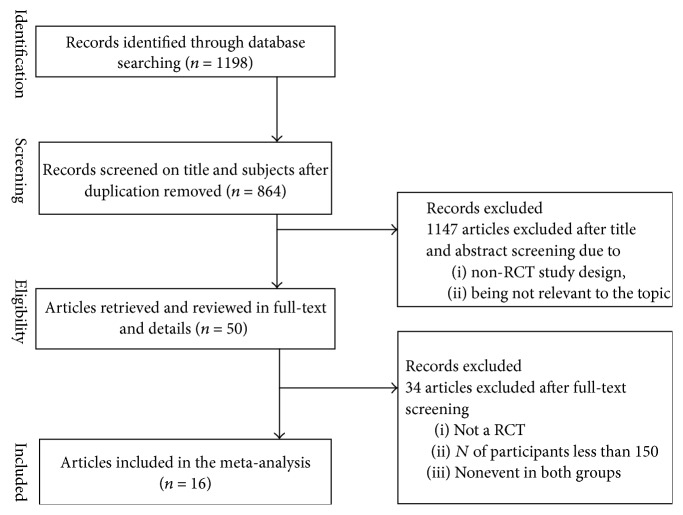
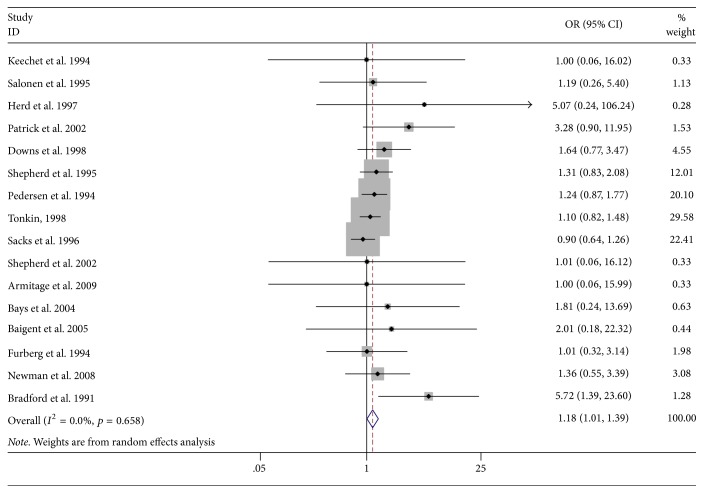
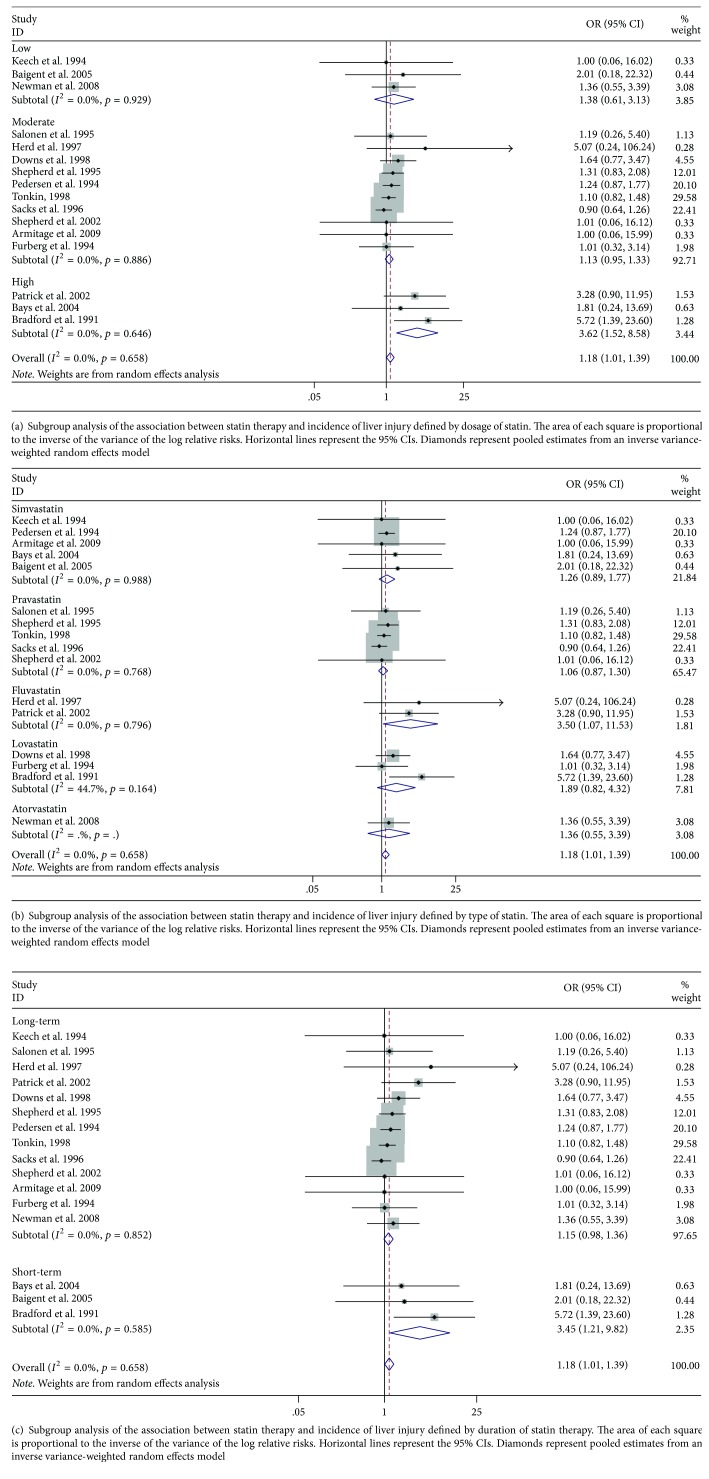
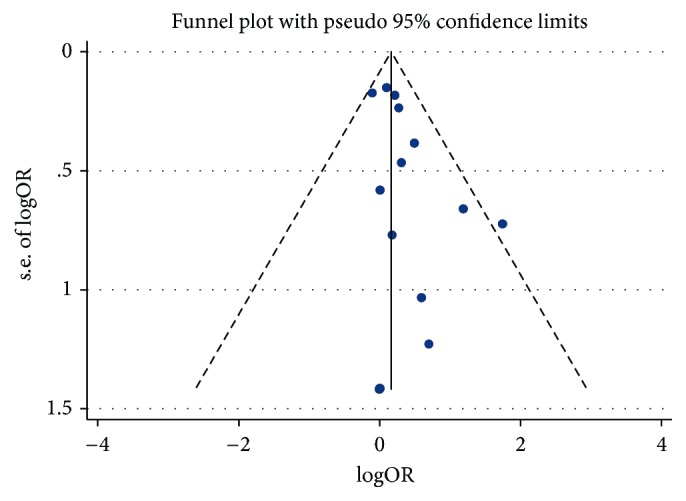
Verification
Claims the paper makes
The claims and statistics of this paper haven’t been checked yet.
Run the check — free, no account needed. It reads the open-access text and checks the sources it cites.
Claims other papers make about this one
Each is checked against this paper’s own text: does it say what the citing paper says it does?
The source backs part of the claim, not all of it — or backs it for a different population, condition or comparison.
In the citing paper
“Besides PCSK9 antibodies, current clinical therapies including statins13,14 and NPC1L1 (NPC1 like intracellular cholesterol transporter 1) inhibitors15enhance LDLR expression in hepatocytes, thereby promoting serum LDL-C clearance.”
From ABCC4 impairs the clearance of plasma LDL cholesterol through suppressing LDLR expression in the liver (2025) · cites this paper as [13]
Experimental — accuracy not yet measured
Self-check
Percentages, sums and reported differences re-computed from the paper’s own numbers.
The self-check needs the paper’s full text.
Citations
Cites
KEECH, A., COLLINS, R., MACMAHON, S., ARMITAGE, J., LAWSON, A., WALLENDSZUS, K., FATEMIAN, M., KEARNEY, E., LYON, V., MINDELL, J., et al. (1994) · European Heart Journal · doi:10.1093/oxfordjournals.eurheartj.a060485 · Cited by 90
Research works printed but not linked: 43
- 10.1016/s0140-6736(05)67394-1 · DOI · Paper page
- 10.1016/j.jacc.2011.10.824 · DOI
- 10.2174/0929867023369024 · DOI
- 10.1002/hep.20671 · DOI
- 10.1016/j.dld.2006.04.013 · DOI
- 2002, Annals of Hepatology, 1, 162, 10.1016/S1665-2681(19)32160-X · DOI
- 10.1001/archinte.1991.00400010067008 · DOI
- 10.3132/dvdr.2008.029 · DOI
- 10.1016/S0140-6736(02)11600-X · DOI · Paper page
- 10.1592/phco.24.6.584.34738 · DOI
- 10.1371/journal.pmed.1000097 · DOI · Paper page
- 10.1136/bmj.d5928 · DOI · Paper page
- 10.1111/j.1532-5415.2010.02949.x · DOI · Paper page
- 10.1002/sim.2380 · DOI · Paper page
- 10.1161/01.cir.92.7.1758 · DOI
- 10.1016/S0002-9149(97)00346-9 · DOI
- 10.1001/jama.287.24.3215 · DOI
- 10.1001/jama.279.20.1615 · DOI · Paper page
- 10.1056/NEJM199511163332001 · DOI · Paper page
- 10.1016/j.atherosclerosissup.2004.08.027 · DOI
- 10.1056/nejm199811053391902 · DOI · Paper page
- 10.1056/nejm199610033351401 · DOI · Paper page
- 10.1186/1472-6904-9-6 · DOI · Paper page
- 10.1016/j.clinthera.2004.11.016 · DOI
- 10.1053/j.ajkd.2004.11.015 · DOI
- 10.1161/01.CIR.90.4.1679 · DOI
- 10.1001/jama.1990.03450020093033 · DOI
- 10.1016/0002-9149(94)90629-7 · DOI
- 10.1016/S1062-1458(01)00368-3 · DOI
- 10.2147/IBPC.S34814 · DOI
- 10.1002/pds.3646 · DOI
- 10.1161/01.CIR.0000037520.89770.5E · DOI
- 10.1161/01.ATV.0000032033.39301.6A · DOI
- 2003, Fundamental & Clinical Pharmacology, 17, 491, 10.1046/j.1472-8206.2003.00176.x · DOI
- 10.1002/hep.27157 · DOI
- 10.1055/s-0029-1240010 · DOI
- 10.1126/science.1059108 · DOI · Paper page
- 10.1055/s-2002-30100 · DOI
- 10.1007/s002280000225 · DOI
- 10.1002/hep.21848 · DOI · Paper page
- 10.1007/s40261-015-0335-1 · DOI
- 10.1371/journal.pone.0159512 · DOI
- 10.2337/diacare.7.3.248 · DOI
Cited by
Sorted by citations
Endoplasmic reticulum stress and unfolded protein response in cardiovascular diseases
Ren, J., Bi, Y., Sowers, J. R., Hetz, C., & Zhang, Y. (2021) · Nature Reviews Cardiology · doi:10.1038/s41569-021-00511-w · Cited by 708
Insights on the anticandidal activity of non-antifungal drugs
Moraes, D. C., & Ferreira-Pereira, A. (2019) · Journal de Mycologie Médicale · doi:10.1016/j.mycmed.2019.07.004 · Cited by 37
Chen, J., Huang, H., Chen, C., Xia, G., Huang, H., Xiong, Y., Luo, P., Chen, Y., Li, J., Wen, L., et al. (2025) · Communications Biology · doi:10.1038/s42003-025-08818-x · Cited by 1
Metadata
- Authors
- Liang, X., He, Q., & Zhao, Q.
- Venue
- BioMed Research International
- Publisher
- Wiley
- Published
- 2018
- Volume
- 2018
- Pages
- 1-10
- ISSN
- 2314-6133
- 2314-6141
- PMC
- PMC5859851
- Cited by
- 16
- References
- 1
- Language
- en
About these checks
Registry, retraction, Cites and statistics results are computed, not judged, with one exception: a printed reference that no index lists is read once by a model before it counts as a citation error. Claims are extracted by a model and kept only when their quote appears verbatim in the text; each cited source is then checked, with a model’s help, for whether it says what the claim relies on. Those verdicts can be wrong — read the claim’s quote and the cited source before relying on one.
Statistics and arithmetic are recomputed, not judged.
Confidence bands are shown only for fields calibrated on our annotated test set. None is calibrated yet, so no band is shown.
What counts as a claim ›How we measure confidence ›How we check this ›
Are you an author, or do you see a problem with this page? Request a review
