

Diagnostic Value of CA 19-9 and Carcinoembryonic Antigen for Pancreatic Cancer: A Meta-Analysis
Open accessThe DOI matches its Crossref record; 41 of the 41 references it cites were found in a registry or an index.
Abstract
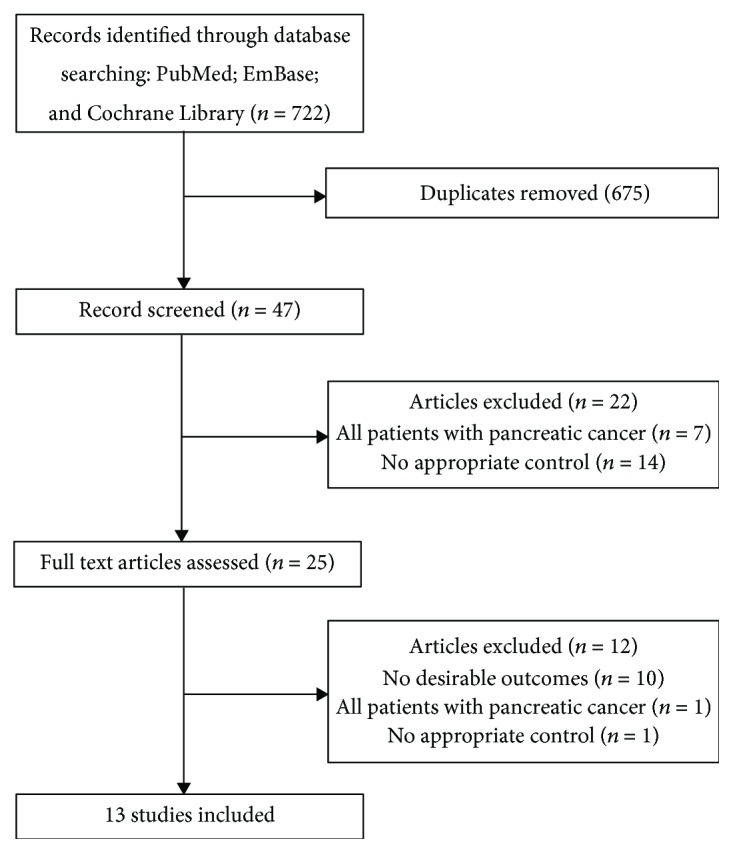
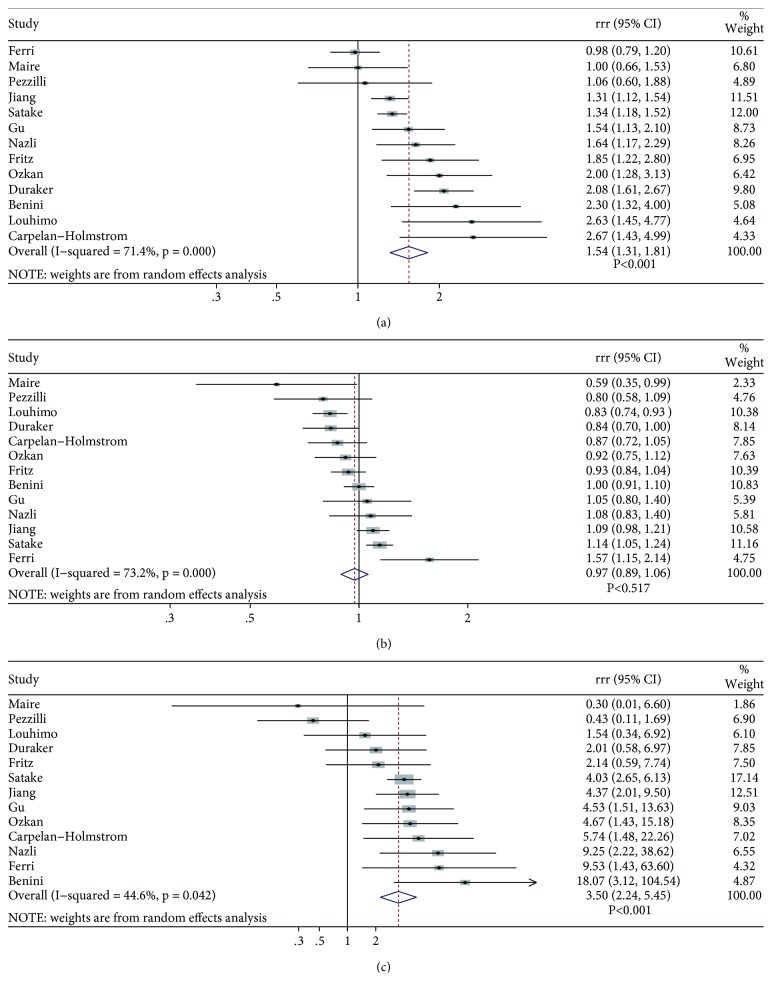
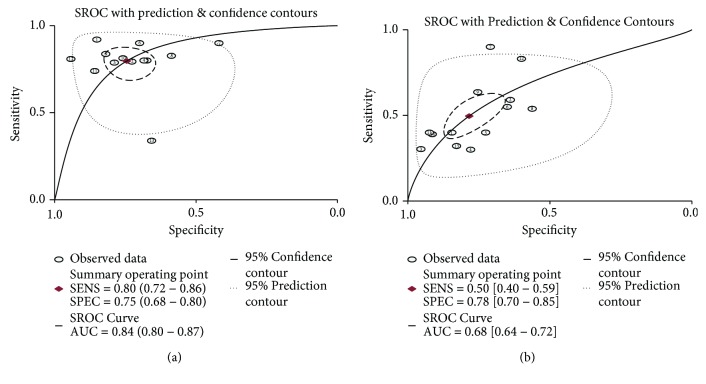
Background. CA 19-9 and carcinoembryonic antigen (CEA) are widely used for the diagnosis of pancreatic cancer. The purpose of the present study was to compare the diagnostic value of CA 19-9 with CEA for pancreatic cancer. Methods. The studies were obtained from electronic searches conducted in PubMed, Embase, and Cochrane Library databases until December 2017. The keywords included diagnosis of pancreatic cancer, CA 19-9, and CEA. The ratio of sensitivity, the specificity, the diagnostic odds ratio (DOR), and the summary of the receiver operating characteristic (SROC) with regard to CA 19-9 and CEA were measured using the random effects model. The current study included 13 studies that comprised 4,537 participants and 1,277 patients with pancreatic cancer. Results. The levels of CA 19-9 for use for the detection of pancreatic cancer were associated with higher sensitivity (ratio of sensitivity: 1.54; 1.31–1.81; P<0.001 ), DOR (DOR: 3.50; 95% CI: 2.24–5.45; P<0.001 ), and AUC (ratio of AUC: 1.24; 95% CI: 1.15–1.33; P<0.001 ) compared with the variable CEA, while no significant difference between CA 19-9 and CEA was noted with regard to specificity (ratio of specificity: 0.97; 95% CI: 0.89–1.06; P=0.517 ). The findings of the subgroup analyses suggested that different cutoff values of CA 19-9 and CEA might affect the diagnostic value. Conclusions. The findings of the present study indicated that CA 19-9 levels were associated with higher sensitivity, DOR, and AUC compared with the corresponding levels of CEA with regard to the diagnosis of pancreatic cancer.
Overview
The claims and statistics of this paper haven’t been checked yet.
Free: it reads the open-access text and checks the first 5 claims that cite a source we can check. Create a free account to check every claim.
Integrity signals
Registry
Cites
Statistics
Figures
Verification
Claims the paper makes
The claims and statistics of this paper haven’t been checked yet.
Free: it reads the open-access text and checks the first 5 claims that cite a source we can check. Create a free account to check every claim.
Claims other papers make about this one
Each is checked against this paper’s own text: does it say what the citing paper says it does?
The source backs part of the claim, not all of it — or backs it for a different population, condition or comparison.
In the citing paper
“Carbohydrate Antigen 19-9 (CA19-9), the best-validated biomarker in PC, does not have enough accuracy and specificity in screening early PC 23,24.”
From Artificial intelligence in pancreatic cancer (2022) · cites this paper as [24]
Experimental — accuracy not yet measured
Self-check
Percentages, sums and reported differences re-computed from the paper’s own numbers.
The self-check needs the paper’s full text.
Citations
Cites
Preferred Reporting Items for Systematic Reviews and Meta-Analyses: the PRISMA statement
Moher, D., Liberati, A., Tetzlaff, J., Altman, D. G., & for the PRISMA Group (2009) · BMJ · doi:10.1136/bmj.b2535 · Cited by 83,823
Preferred Reporting Items for Systematic Reviews and Meta-Analyses: The PRISMA Statement
Moher, D., Liberati, A., Tetzlaff, J., Altman, D. G., & The PRISMA Group (2009) · PLoS Medicine · doi:10.1371/journal.pmed.1000097 · Cited by 64,042 · cited 1×
“The present study was conducted in accordance with the guidelines for the Preferred Reporting Items for Systematic Reviews and Meta-Analyses (PRISMA) [15].”
Measuring inconsistency in meta-analyses
Higgins, J. P. T., Thompson, S. G., Deeks, J. J., & Altman, D. G. (2003) · BMJ · doi:10.1136/bmj.327.7414.557 · Cited by 63,139 · cited 1×
“1 (P ≤ 0 10) indicated significant heterogeneity for the Q statistical analysis [21, 22].”
Meta-analysis in clinical trials
DerSimonian, R., & Laird, N. (1986) · Controlled Clinical Trials · doi:10.1016/0197-2456(86)90046-2 · Cited by 39,552 · cited 1×
“The bivariate random effects [18] were applied in order to analyze sensitivity, specificity, and DOR, and the hierarchical regression model was used to analyze receiver operating characteristic (SROC) curve and the AUC [19].”
Wang, G., Ma, R., Qiao, G., Wada, K., Aizawa, Y., & Satoh, T. (2015) · Integrative Medicine International · doi:10.1159/000368408 · Cited by 18,657
Spencer, P. M., Cameron, J. L., & Lin, L. (2000) · Cited by 7,202
Whiting, P., Rutjes, A. W., Reitsma, J. B., Bossuyt, P. M., & Kleijnen, J. (2003) · BMC Medical Research Methodology · doi:10.1186/1471-2288-3-25 · Cited by 3,592
Deeks, J. J., Macaskill, P., & Irwig, L. (2005) · Journal of Clinical Epidemiology · doi:10.1016/j.jclinepi.2005.01.016 · Cited by 2,910 · cited 1×
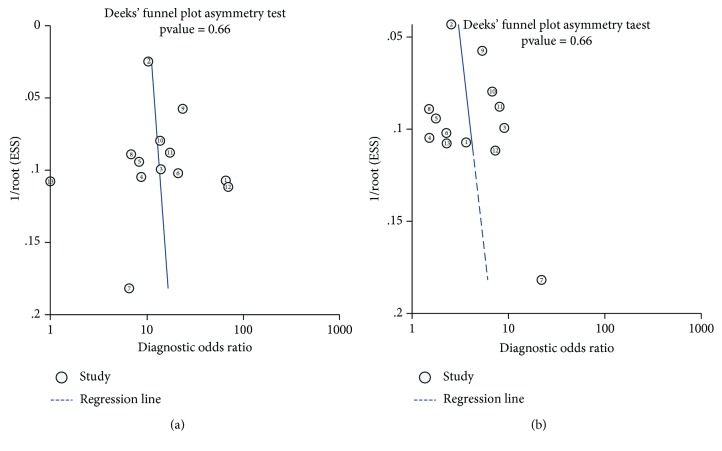
“The visual inspections of the funnel plots were constructed by Deeks ’ asymmetry test for CA 19-9 and CEA [23].”
Analysing Data and Undertaking Meta‐Analyses
Deeks, J. J., Higgins, J. P., & Altman, D. G. (2008) · Cochrane Handbook for Systematic Reviews of Interventions · doi:10.1002/9780470712184.ch9 · Cited by 1,800
Li, D., Xie, K., Wolff, R., & Abbruzzese, J. L. (2004) · The Lancet · doi:10.1016/s0140-6736(04)15841-8 · Cited by 1,719
Self-citation
Cited by
Early screening and diagnosis strategies of pancreatic cancer: a comprehensive review
Yang, J., Xu, R., Wang, C., Qiu, J., Ren, B., & You, L. (2021) · Cancer Communications · doi:10.1002/cac2.12204 · Cited by 379
“As mentioned above, due to its low sensitivity of 80% and specificity of 75%, CA19-9 possesses limited diagnostic utility [14].”
BackgroundA faecal microbiota signature with high specificity for pancreatic cancer
Kartal, E., Schmidt, T. S. B., Molina-Montes, E., Rodríguez-Perales, S., Wirbel, J., Maistrenko, O. M., Akanni, W. A., Alashkar Alhamwe, B., Alves, R. J., Carrato, A., et al. (2022) · Gut · doi:10.1136/gutjnl-2021-324755 · Cited by 290
Biomarkers in the diagnosis of pancreatic cancer: Are we closer to finding the golden ticket?
O'Neill, R. S., & Stoita, A. (2021) · World Journal of Gastroenterology · doi:10.3748/wjg.v27.i26.4045 · Cited by 160
Artificial intelligence in pancreatic cancer
Huang, B., Huang, H., Zhang, S., Zhang, D., Shi, Q., Liu, J., & Guo, J. (2022) · Theranostics · doi:10.7150/thno.77949 · Cited by 142
“Carbohydrate Antigen 19-9 (CA19-9), the bestvalidated biomarker in PC, does not have enough accuracy and specificity in screening early PC [23,24].”
BackgroundPhyo, J. B., Woo, A., Yu, H. J., Lim, K., Cho, B. H., Jung, H. S., & Lee, M. (2021) · Analytical Chemistry · doi:10.1021/acs.analchem.0c04200 · Cited by 107
Chronic Pancreatitis or Pancreatic Tumor? A Problem-solving Approach
Wolske, K. M., Ponnatapura, J., Kolokythas, O., Burke, L. M. B., Tappouni, R. F. R., & Lalwani, N. (2019) · Radiographics · doi:10.1148/rg.2019190011 · Cited by 106
Tenchov, R., Sapra, A. K., Sasso, J. M., Ralhan, K., Tummala, A., Azoulay, N., & Zhou, Q. A. (2024) · ACS Pharmacology & Translational Science · doi:10.1021/acsptsci.3c00346 · Cited by 87
The Impact of Biomarkers in Pancreatic Ductal Adenocarcinoma on Diagnosis, Surveillance and Therapy
Sturm, N., Ettrich, T. J., & Perkhofer, L. (2022) · Cancers · doi:10.3390/cancers14010217 · Cited by 75
“Similarly, CEA elevation has lower sensitivity and specificity than CA19-9 in early diagnosis of PDAC [23,34].”
BackgroundSaftien, A., Puschhof, J., & Elinav, E. (2023) · Gut · doi:10.1136/gutjnl-2022-327952 · Cited by 70
Ghafar, M. T. A., Gharib, F., Abd-Elsalam, S. M., Elkhouly, R. A., Elshora, A. A., Shalaby, K. H., El-Guindy, D. M., El-Rashidy, M. A., Soliman, N. A., Abu-Elenin, M. M., et al. (2020) · Molecular Biology Reports · doi:10.1007/s11033-020-05334-5 · Cited by 66
An elevated CA 19-9 is associated with invasive cancer and worse survival in IPMN
Ciprani, D., Morales‐Oyarvide, V., Qadan, M., Hank, T. P., Weniger, M., Harrison, J. M., Rodrigues, C., Horick, N., Mino-Kenudson, M. A., Ferrone, C. R., et al. (2020) · Pancreatology · doi:10.1016/j.pan.2020.04.002 · Cited by 70
Kane, L. E., Mellotte, G. S., Mylod, E., O'Brien, R. M., O’Connell, F., Buckley, C. E., Arlow, J., Nguyen, K., Mockler, D., Meade, A. D., et al. (2022) · Cancer Research Communications · doi:10.1158/2767-9764.crc-22-0190 · Cited by 70
“While CEA levels are currently measured for PDAC diagnosis in some clinical settings, it is not FDA approved for PDAC diagnosis and its utility and accuracy remains limited, with a 2018 systematic review and meta-analysis reporting CEA to be inferior to CA19-9 (63).”
BackgroundNon-coding RNA biomarkers in pancreatic ductal adenocarcinoma
Sharma, G. G., Okada, Y., Hoff, D. D. V., & Goel, A. (2020) · Seminars in Cancer Biology · doi:10.1016/j.semcancer.2020.10.001 · Cited by 62
Dumonceau, J., Delhaye, M., Charette, N., & Farina, A. (2020) · Therapeutic Advances in Gastroenterology · doi:10.1177/1756284820927292 · Cited by 54
Bugazia, D., Al-Najjar, E., Esmail, A., Abdelrahim, S., Abboud, K., Abdelrahim, A., Umoru, G., Rayyan, H. A., Abudayyeh, A., Moustafa, A. A., et al. (2024) · Frontiers in Oncology · doi:10.3389/fonc.2024.1386699 · Cited by 56
Zhao, B., Zhao, B., & Chen, F. (2022) · European Journal of Gastroenterology & Hepatology · doi:10.1097/meg.0000000000002415 · Cited by 54
Humoral Predictors of Malignancy in IPMN: A Review of the Literature
Nista, E. C., Schepis, T., Candelli, M., Giuli, L., Pignataro, G., Franceschi, F., Gasbarrini, A., & Ojetti, V. (2021) · International Journal of Molecular Sciences · doi:10.3390/ijms222312839 · Cited by 37
“CEA is also used as a diagnostic value in pancreatic adenocarcinoma [33,34].”
MethodPu, X., Zhang, C., Ding, G., Gu, H., Lv, Y., Shen, T., Pang, T., Cao, L., & Jia, S. (2023) · Translational Oncology · doi:10.1016/j.tranon.2023.101847 · Cited by 32
“However, CA19-9 has been reported to distinguish PDAC from non-PDAC with a limited sensitivity of 0.80 (0.72 – 0.8) and specificity of 0.75 (0.68 – 0.80) [3].”
BackgroundInfluentialKashiro, A., Kobayashi, M., Oh, T., Miyamoto, M., Atsumi, J., Nagashima, K., Takeuchi, K., Nara, S., Hijioka, S., Morizane, C., et al. (2024) · Journal of Gastroenterology · doi:10.1007/s00535-023-02072-w · Cited by 34
“In a previous meta-analysis using CA19-9 to identify patients with pancreatic cancer, the AUC for detecting pancreatic cancer was 0.84 [18].”
MethodInfluentialHanna-Sawires, R. G., Schiphuis, J. H., Wuhrer, M., Vasen, H. F. A., van Leerdam, M. E., Bonsing, B. A., Mesker, W. E., van der Burgt, Y. E. M., & Tollenaar, R. A. �. �. (2021) · International Journal of Molecular Sciences · doi:10.3390/ijms22052655 · Cited by 30
“A total of 13 studies were included and a poor specificity (68–80%) and a sensitivity of 80% was reported [60].”
BackgroundCao, L., Zhang, W., Lu, S., Guo, C., Wang, P., Zhang, D., & Ma, W. (2021) · Frontiers in Bioengineering and Biotechnology · doi:10.3389/fbioe.2021.767717 · Cited by 25
Reviews on Current Liquid Biopsy for Detection and Management of Pancreatic Cancers
Kaczor‐Urbanowicz, K. E., Cheng, J. C., King, J. C., Sedarat, A., Pandol, S. J., Farrell, J. J., Wong, D. T., & Kim, Y. H. (2020) · Pancreas · doi:10.1097/mpa.0000000000001662 · Cited by 26
Zhao, G., Jiang, R., Shi, Y., Gao, S., Wang, D., Li, Z., Zhou, Y., Sun, J., Wu, W., Peng, J., et al. (2024) · Molecular Oncology · doi:10.1002/1878-0261.13643 · Cited by 25
“1 [18], achieved an overall sensitivity of 76.6% for PDAC patients ( n = 142), a sensitivity of 77.3% in stage I patients ( n = 41) and a specificity of 95.5% for healthy controls in the testing set.”
BackgroundInfluentialSelf-citationKang, J. S., Hong, S. Y., Han, Y., Sohn, H. J., Lee, M., Kang, Y. H., Kim, H. S., Kim, H., Kwon, W., & Jang, J. (2021) · Annals of Surgical Treatment and Research · doi:10.4174/astr.2021.101.5.266 · Cited by 24
“The sensitivity of CEA for diagnosis was reported to be low, with a sensitivity of 50% in pancreatic cancer [25], and 33% in BTC [6].”
BackgroundCurrent Methods for Identifying Plasma Membrane Proteins as Cancer Biomarkers
de Jong, E., & Koçer, A. (2023) · Membranes · doi:10.3390/membranes13040409 · Cited by 22
“antigen 15-3 (CA 15-3) [133,134], cancer antigen 19-9 (CA 19-9) [127,131,135,136], and cancer antigen”
BackgroundFederated learning for rare disease detection: a survey
Wang, J., & Ma, F. (2023) · Rare Disease and Orphan Drugs Journal · doi:10.20517/rdodj.2023.16 · Cited by 29
Self-citationPancreatic Tumorigenesis: Precursors, Genetic Risk Factors and Screening
Badheeb, M. A., Abdelrahim, A., Esmail, A., Umoru, G., Abboud, K., Al-Najjar, E., Rasheed, G. O., Alkhulaifawi, M., Abudayyeh, A., & Abdelrahim, M. (2022) · Current Oncology · doi:10.3390/curroncol29110686 · Cited by 23
Králová, K., Vrtělka, O., Fousková, M., Hříbek, P., Bunganič, B., Miškovičová, M., Urbánek, P., Zavoral, M., Petruzelka, L. B., Habartová, L., et al. (2023) · Spectrochimica Acta Part A Molecular and Biomolecular Spectroscopy · doi:10.1016/j.saa.2023.123430 · Cited by 23
Tips and tricks for the diagnosis and management of biliary stenosis-state of the art review
Blanco, G. D. V., Mossa, M., Troncone, E., Argirò, R., Anderloni, A. A., Repici, A., Paoluzi, O. A., & Monteleone, G. (2021) · World Journal of Gastrointestinal Endoscopy · doi:10.4253/wjge.v13.i10.473 · Cited by 20
Corzana, F., Asín, A., Eguskiza, A., Tomi, E. D., Carnicero, A. M., Martínez‐Moral, M. P., Mangini, V., Papi, F., Bretón, C., Oroz, P., et al. (2024) · Angewandte Chemie International Edition · doi:10.1002/anie.202407131 · Cited by 23
Oral mycobiota and pancreatic ductal adenocarcinoma
Wei, A., Zhao, H., Cong, X., Wang, L., Chen, Y., Gou, J., Hu, Z., Hu, X., Tian, Y., Li, K., et al. (2022) · BMC Cancer · doi:10.1186/s12885-022-10329-5 · Cited by 19
Clinical Applications of Classical and Novel Biological Markers of Pancreatic Cancer
Pekarek, L., Fraile‐Μartinez, O., Montero, C. G., Sáez, M. A., Barquero-Pozanco, I., del Hierro-Marlasca, L., Castro-Martinez, P. D., Romero-Bazán, A., Álvarez-Mon, M. Á., Monserrat, J., et al. (2022) · Cancers · doi:10.3390/cancers14081866 · Cited by 21
Feng, Z., Li, K., Shi, M., Peng, C., Chen, H., Wu, Y., & Peng, C. (2021) · Frontiers in Molecular Biosciences · doi:10.3389/fmolb.2021.659168 · Cited by 20
Yan, Q., Zhao, G., Wang, B., Wang, N., Duolihong, B., & Xia, X. (2023) · Journal of Electroanalytical Chemistry · doi:10.1016/j.jelechem.2023.117327 · Cited by 16
Pancreatic Cancer and Detection Methods
Ungkulpasvich, U., Hatakeyama, H., Hirotsu, T., & di Luccio, E. (2023) · Biomedicines · doi:10.3390/biomedicines11092557 · Cited by 19
“The sensitivity and specificity of CA19-9 are acceptable, with values of 75% and 85%, respectively, and an area under the curve (AUC) of 0.84 [111].”
BackgroundInfluentialYamada, R., Tsuboi, J., Murashima, Y., Tanaka, T., Nose, K., & Nakagawa, H. (2023) · Biomedicines · doi:10.3390/biomedicines11061687 · Cited by 18
Coppola, A., Vaccara, V. L., Farolfi, T., Asbun, H. J., Boggi, U., Conlon, K. C., Edwin, B., Ferrone, C. R., Jonas, E., Kokudo, N., et al. (2023) · International Journal of Surgery · doi:10.1097/js9.0000000000000773 · Cited by 15
“The cut-off value of CA 19.9 to differentiate between high-and low-value patients corresponded to the internationally recognised normal value of 37 U/ml [14] .”
BackgroundMethodInfluentialElango, A., Nesam, V. D., Sukumar, P., Lawrence, I., & Radhakrishnan, A. (2024) · Archives of Microbiology · doi:10.1007/s00203-024-03914-8 · Cited by 15
“Carcinoembryonic antigen (CEA) has been reported as an efficient biomarker similar to CA19-9 (Xing et al. 2018), but still it lacks specificity as it is elevated in other types of cancers such as cancers of the ovary, breast, lung and cervix (Hall et al. 2019).”
InfluentialLi, P., Zhang, H., & Dai, M. (2024) · Cancer Letters · doi:10.1016/j.canlet.2024.217274 · Cited by 16
An, J., Park, H., Ju, M., Woo, Y., Seo, Y., Min, J., & Lee, T. (2024) · Talanta · doi:10.1016/j.talanta.2024.126604 · Cited by 14
Juthani, R., & Manne, A. (2025) · Frontiers in Oncology · doi:10.3389/fonc.2025.1555963 · Cited by 12
Manzanares, J., Sala, F., García‐Gutiérrez, M. S., & Rueda, F. N. (2021) · Elsevier eBooks · doi:10.1016/b978-0-12-820472-6.00060-8 · Cited by 14
Rahmani, H., Majd, S. M., & Salimi, A. (2023) · Ionics · doi:10.1007/s11581-023-05136-2 · Cited by 11
Blood-based protein biomarkers and red blood cell aggregation in pancreatic cancer
Wiewióra, M., Jopek, J., Świętochowska, E., Grzegorczyn, S. M., Piecuch, J., Gąska, M., & Piecuch, J. (2023) · Clinical Hemorheology and Microcirculation · doi:10.3233/ch-231814 · Cited by 11
“%) of this analysis are low [4].”
Highly sensitive serum volatolomic biomarkers for pancreatic cancer diagnosis
Martínez, M. P. S., Tena, M. T., Carnicero, A. M., & Martínez, A. (2024) · Clinica Chimica Acta · doi:10.1016/j.cca.2024.117895 · Cited by 10
Systematic review and meta-analysis: diagnostic accuracy of exosomes in pancreatic cancer
Xu, X., Long, C., Li, M., Shen, C., Ye, Q., Li, Y., Li, H., Cao, X., & Ma, J. (2025) · World Journal of Surgical Oncology · doi:10.1186/s12957-025-03666-9 · Cited by 12
Contrast-enhanced ultrasound of solid pancreatic head lesions: a prospective study
Gupta, P. C., Rana, P., Marodia, Y., Samanta, J., Sharma, V., Sinha, S. K., Singh, H., Gupta, V., Yadav, T. D., Sreenivasan, R., et al. (2022) · European Radiology · doi:10.1007/s00330-022-08854-9 · Cited by 9
“Inflammatory masses commonly arise in the head of the pancreas in the setting of chronic pancreatitis or autoimmune pancreatitis [3].”
BackgroundUsing microRNAs Networks to Understand Pancreatic Cancer—A Literature Review
Przybyszewski, O., Mik, M., Nowicki, M. P., Kusiński, M., Mikołajczyk-Solińska, M., & Śliwińska, A. (2024) · Biomedicines · doi:10.3390/biomedicines12081713 · Cited by 9
“In blood, increased expression has been observed for miRNAs: 21, 196a, 155, 185, 191 [171,172].”
BackgroundZhang, Y., Zhang, H., Liu, B., & Ning, K. (2024) · iScience · doi:10.1016/j.isci.2024.109294 · Cited by 9
Su, J., Wang, Y., Shao, H., You, X., & Li, S. (2022) · World Journal of Surgical Oncology · doi:10.1186/s12957-022-02785-x · Cited by 8
Self-citationMayer, P., Giannakis, A., Klauß, M., Gaida, M. M., Bergmann, F., Kauczor, H., Feißt, M., Hackert, T., & Loos, M. (2021) · European Journal of Radiology · doi:10.1016/j.ejrad.2021.109603 · Cited by 8
Prognostic Relevance of PDL1 and CA19-9 Expression in Gallbladder Cancer vs. Inflammatory Lesions
Rawal, N., Awasthi, S., Dash, N. R., Kumar, S., Das, P., Ranjan, A., Chopra, A., Khan, M. A., Saluja, S. S., Hussain, S., et al. (2023) · Current Oncology · doi:10.3390/curroncol30020121 · Cited by 8
“In our study, we used a validated optimum CA19‐9 cut‐off value of 37 U/mL (used in routine examination) [19] for the clinico‐pathological correlation with CA19‐9 concentration.”
MethodBlood-Based Surveillance Biomarkers for Gastroesophageal Cancers
Dadgar, N., Anees, M., Sherry, C., Park, H. Y., Grayhack, E. E., Goel, A., Khan, A. F., Omstead, A. N., Bartlett, D. L., Wagner, P. L., et al. (2025) · Cancers · doi:10.3390/cancers17213552 · Cited by 7
Tan, S., Tang, H., Zhang, Z., Wang, Y., Li, H., Shi, W., Ye, H., Xie, P., & Zhou, J. (2024) · Clinical Medicine Insights Oncology · doi:10.1177/11795549241239042 · Cited by 7
Self-citationApproach to Pancreatic Head Mass in the Background of Chronic Pancreatitis
Harindranath, S., & Sundaram, S. (2023) · Diagnostics · doi:10.3390/diagnostics13101797 · Cited by 9
“The diagnostic usefulness of CA-19-9, which has a low sensitivity of 80% and a specificity of 75%, is still limited [80].”
BackgroundKhakoo, S. S., Petrillo, A., Salati, M., Muhith, A., Evangelista, J., Seghezzi, S., Petrelli, F., Tomasello, G., & Ghidini, M. (2021) · Cancers · doi:10.3390/cancers13174396 · Cited by 8
“9 harbor poor specificity (68–80%) and sensitivity (80%) [36].”
BackgroundSerum Nardilysin as a Prognostic Biomarker in Pancreatic Ductal Adenocarcinoma
Xu, Y., Xiong, Q., Yang, Y., Weng, N., Li, J., Liu, J., Yang, X., Zeng, Z., Zhang, Z., & Zhu, Q. (2022) · Journal of Clinical Medicine · doi:10.3390/jcm11113101 · Cited by 7
Hesami, Z., Pazienza, V., Olfatifar, M., Sadeghi, A., Mohammadi‐Yeganeh, S., Trivieri, N., Eghlimi, H., Hakemi-Vala, M., Binda, E., & Houri, H. (2025) · Frontiers in Cellular and Infection Microbiology · doi:10.3389/fcimb.2025.1678114 · Cited by 6
Esen, E., Aslan, M., Morkavuk, Ş. B., Azılı, C., Ersöz, Ş., Bahçecioğlu, İ. B., & Ünal, A. E. (2023) · Medicine · doi:10.1097/md.0000000000033325 · Cited by 6
“Some studies showed that in the early diagnosis of PDAC, the CEA rise has lower sensitivity and specificity than CA19-9.”
BackgroundEmerging horizons on molecular and circulating biomarkers in pancreatic adenocarcinoma
Moretti, M., Farina, A., Angeloni, A., & Anastasi, E. (2024) · Frontiers in Oncology · doi:10.3389/fonc.2024.1483306 · Cited by 7
Li, P., Zhang, H., Gao, X., Chen, L., Chen, H., Yuan, S., Chen, W., & Dai, M. (2024) · BMC Microbiology · doi:10.1186/s12866-024-03687-6 · Cited by 8
Mass spectrometry–based proteomics technology in pancreatic cancer research
Sun, X. J., Wang, S., & Wong, C. C. L. (2023) · Journal of Pancreatology · doi:10.1097/jp9.0000000000000152 · Cited by 5
Point-of-Care Testing and Biomarkers in Biliary Diseases: Current Evidence and Future Directions
Jung, J. H., Lee, K. J., Park, S. W., Koh, D. H., & Lee, J. (2025) · Journal of Clinical Medicine · doi:10.3390/jcm14196724 · Cited by 6
“CEA is sometimes measured in combination with CA19-9, but its low sensitivity and specificity, and its elevation in multiple benign and malignant conditions, restrict its value as a standalone test in biliary tract cancers [53].”
Dielectrophoresis-Based Biosensor for Detection of the Cancer Biomarkers CEA and CA 242 in Serum
Gudagunti, F. D., Gundlakunta, S. G., & Lima, I. T. (2022) · Chemosensors · doi:10.3390/chemosensors10030104 · Cited by 5
Liu, Z., Jia, S., & Cao, L. (2025) · Digestive Diseases and Sciences · doi:10.1007/s10620-025-08867-6 · Cited by 4
“…antigen 19-9 (CA19-9) has been employed in clinical diagnosis and prognostic assessment of PDAC patients, its ability to differentiate PDAC from non-PDAC is constrained by reported limitations in a sensitivity of 0.80 (95% CI: 0.72–0.80) and a specificity of 0.75 (95% CI: 0.68–0.80) [ 3].”
InfluentialPancreatic Tumorigenesis: Precursors, Genetic Risk Factors and Screening
Esmail, A., Badheeb, M. A., & Abdelrahim, M. (2023) · IntechOpen eBooks · doi:10.5772/intechopen.110887 · Cited by 4
Evaluations of the combined use of blood- and tissue-based protein biomarkers for pancreatic cancer
Wiewióra, M., Jopek, J., Świętochowska, E., Grynkiewicz, M., & Piecuch, J. (2023) · Clinical Hemorheology and Microcirculation · doi:10.3233/ch-231987 · Cited by 4
“[8].”
Ding, Y., Li, Z., Wang, H., Wang, Q., Jiang, H., Yu, Z., & Xu, M. (2023) · International Journal of Genomics · doi:10.1155/2023/3914687 · Cited by 6
“Although carbohydrate antigen 19-9 has been FDA-approved as a serum biomarker, its limited speci fi city precludes its use for early detection of pancreatic cancer [16].”
BackgroundJakimów, K., Tekiela, N., Kozak, K., Peterek, R., Kwaśniewska, A., Pająk, J., & Chudek, J. T. (2024) · Medicina · doi:10.3390/medicina60071109 · Cited by 4
“Among them, alpha-fetoprotein (AFP) and carbohydrate antigen 19-9 ( CA 19-9 19-9 On the other hand, CA 19-9 is frequently utilized in the diagnosis of cholangiocarcinoma [6].”
BackgroundPancreatic Cancer Insights: Optimization of the Diagnostic Capacity of Tumor Biomarkers
Delgado, J. A., Vizoso, M. A. B., Parera, M. M., & Bauçà, J. M. (2021) · Laboratory Medicine · doi:10.1093/labmed/lmab016 · Cited by 4
An integrated computational biology approach defines the crucial role of TRIP13 in pancreatic cancer
Dhasmana, S., Dhasmana, A., Rios, S., Enriquez, I., Khan, S., Afaq, F., Haque, S., Manne, U., Yallapu, M. M., & Chauhan, S. C. (2023) · Computational and Structural Biotechnology Journal · doi:10.1016/j.csbj.2023.11.029 · Cited by 4
Microbial variations in the multibody sites of the pancreatic ductal adenocarcinoma patients
Zhu, Y., Zhi, M., Liang, X., Li, L., Dong, M., Zhang, G., Wang, L., Wang, P., Zhong, N., Feng, Q., et al. (2025) · International Journal of Surgery · doi:10.1097/js9.0000000000003799 · Cited by 3
Development of a metabolite calculator for diagnosis of pancreatic cancer
Choi, M., Park, M., Lee, S. H., Lee, M. J., Paik, Y., Jang, S. I., Lee, D. K., Lee, S., & Kang, C. M. (2023) · Cancer Medicine · doi:10.1002/cam4.6233 · Cited by 3
Harne, P. S., Harne, V., Wray, C. J., & Thosani, N. C. (2024) · Therapeutic Advances in Gastroenterology · doi:10.1177/17562848241297434 · Cited by 6
“45 Many other biomarkers are described in the literature.”
Cheng, Z., Luo, X., Liu, W., Lu, X., Chang, H., Wang, Y., Zheng, W., Yan, X., & Huang, Y. (2025) · Cell & Bioscience · doi:10.1186/s13578-025-01361-6 · Cited by 3
Self-citationYu, S., Sun, Y., Zhou, J. J., Sun, C., & Wu, Z. (2025) · BMC Cancer · doi:10.1186/s12885-025-15215-4 · Cited by 2
Ma, H., Qammar, S., Wang, J.-M., Zhai, A., Li, F., & Hu, H. (2026) · Journal of Gastroenterology and Hepatology · doi:10.1111/jgh.70281 · Cited by 3
Self-citationA Rare Cause of Obstructive Jaundice
Wu, R., Zou, X., & Zhang, B. (2022) · Gastroenterology · doi:10.1053/j.gastro.2022.10.035 · Cited by 2
Gupta, A., Rajput, D., Krishnasamy, S. K., Sharma, O., Mishra, R. K., Tandon, A., & Gupta, S. (2023) · Cancer Research Statistics and Treatment · doi:10.4103/crst.crst_201_22 · Cited by 3
Corzana, F., Asín, A., Eguskiza, A., Tomi, E. D., Carnicero, A. M., Martínez‐Moral, M. P., Mangini, V., Papi, F., Bretón, C., Oroz, P., et al. (2024) · Angewandte Chemie · doi:10.1002/ange.202407131 · Cited by 2
Oza, V. M., Mittal, N., Antony, A., Mukherjee, S., & Goenka, A. H. (2024) · AI in Precision Oncology · doi:10.1089/aipo.2024.0032 · Cited by 2
Liang, Y., Sui, X., Li, S., Peng, H., Jiang, W., Jia, M., Jiang, S., Wang, W., & Teng, H. (2025) · Biomarker Research · doi:10.1186/s40364-025-00770-6 · Cited by 2
“[3, 11].”
Sarkopenie als unabhängiger Prognosefaktor bei Pankreaskarzinom
Mandl, J., Baumer, S., Holtzem, B., Theurer, R., Zorger, N., & Pech, O. (2022) · Zeitschrift für Gastroenterologie · doi:10.1055/a-1959-2894 · Cited by 2
Early screening of Pancreatic Cancer: A Bibliometric Study Over the Past Two Decades
Ma, G.-X., Wang, Y., Liu, Y., Mao, X., Mao, S.-H., Xiong, S.-H., Li, Z., Hou, L., & Zou, W. (2023) · Cancer Screening and Prevention · doi:10.14218/csp.2023.00022 · Cited by 4
Self-citationMoyana, T. N., & Merz, V. (2025) · Frontiers in Oncology · doi:10.3389/fonc.2025.1651566 · Cited by 3
Honcharova, N. М., Кryvoruchko, І. А., Нoncharov, A. S., & Nessonova, M. (2023) · Український радіологічний та онкологічний журнал · doi:10.46879/ukroj.3.2023.271-284 · Cited by 1
“[19].”
CA19-9 and CEA carbon nanotube-based biosensors: a key for gastrointestinal cancers diagnosis
Goudarzi, N., Taebi, K., Alaei, M., Abdollahi, M., Foroughi, F., & Shahbaz, S. K. (2025) · Pure and Applied Chemistry · doi:10.1515/pac-2025-0494 · Cited by 1
Cystic lesions and their role in pancreatic cancer risk stratification
Lyons, R. G., Maher, S. G., & Lysaght, J. (2026) · Translational Oncology · doi:10.1016/j.tranon.2026.102704 · Cited by 1
“[155].”
Wang, J., Xu, K., Xu, L., Geng, J., Liu, C., Gu, X., & Li, X. (2026) · Cancer Management and Research · doi:10.2147/cmar.s573143 · Cited by 1
“19,20 However, the utility of CA19-9 in predicting baseline therapeutic efficacy is suboptimal due to its moderate specificity and susceptibility to false elevations in benign biliary conditions.”
Self-citationMolecular biomarkers in pancreatic ductal adenocarcinoma
Tsuboi, J., Yamada, R., & HIROKAWA, Y. S. (2024) · Elsevier eBooks · doi:10.1016/b978-0-323-95114-2.00016-9 · Cited by 1
Cancer du pancréas : épidémiologie, dépistage, diagnostic et bilan d'extension
Morgant, S., Munoz, L. A., Védié, A., Oumrani, S., Dermine, S., Hentic, O., Maire, F., Müller, N., Laurent, L., Cros, J. F., et al. (2021)
Value of serological markers for early diagnosis and prognosis prediction of pancreatic cancer
Wang, Y., Guo, Y.-M., Wang, L., & Wu, S. (2022) · World Chinese Journal of Digestology · doi:10.11569/wcjd.v30.i22.978
Self-citationA decade’s experience of managing suspected pancreatic adenocarcinoma at a tertiary cancer center
Emelogu, I. K. (2022) · Annals of Gastroenterology · doi:10.20524/aog.2022.0763
Kane, L. E., Mellotte, G. S., Mylod, E., O'Brien, R. M., O’Connell, F., Buckley, C. E., Arlow, J., Nguyen, K., Mockler, D., Meade, A. D., et al. (2023) · doi:10.1158/2767-9764.c.6550895.v1
Kurt, İ., Albayrak, D., Kula, O., & Soylu, A. R. (2023) · Kastamonu Medical Journal · doi:10.51271/kmj-0118
Sarkopenie als unabhängiger Prognosefaktor bei Pankreaskarzinom
Mandl, J., Baumer, S., Holtzem, B., Theurer, R., Zorger, N., & Pech, O. (2023) · TumorDiagnostik & Therapie · doi:10.1055/a-2197-2773
Immunosensors for Cancer Biomarker Diagnosis: Promises and Challenges
Mohd‐Naim, N. F. (2024) · Royal Society of Chemistry eBooks · doi:10.1039/9781837673216-00335
A Transcriptomics Analysis for Potential Biomarker in Pancreatic Cancer
Mostofa, S. M. J. (2025) · SVOA Medical Research · doi:10.58624/svoamr.2025.03.004
“…U.S. Food and Drug Administration (FDA) only granted approval to the carbohydrate antigen 19 - 9 (CA19 - 9) as a serum biomarker (Yang et al., 2021); however, because of its poor sensitivity as well as poor specificity, it cannot be used in clinical practice to make a diagnosis (Xing et al., 2018).”
Pancreatic cancer: Current and new drug delivery systems
Singh, M., Gogoi, N. R., Jana, B. K., Sarkar, T., Nath, V., & Mazumder, B. (2025) · Elsevier eBooks · doi:10.1016/b978-0-443-29168-5.00002-7
Pankreas Kanserinin Değiştirilebilir Risk Faktörleri: Karsinomun Kralından Kaçınılabilir mi
Aydoğan, Ç., & Yılmaz, H. (2025) · Istanbul Yeni Yuzyil Universitesi Yeni Yuzyil Journal of Medical Sciences · doi:10.46629/jms.2025.174
Metadata
- Authors
- Xing, H., Wang, J., Wang, Y., Tong, M., Hu, H., Huang, C., & Li, D.
- Affiliations
- Sir Run Run Shaw Hospital (CN)
- Affiliated Hospital of Hangzhou Normal University (CN)
- Corresponding author
- Li, Da
- Venue
- Gastroenterology Research and Practice
- Publisher
- Wiley
- Published
- 2018-11-21
- Volume
- 2018
- Pages
- 1-9
- ISSN
- 1687-6121 (ISSN-L)
- 1687-630X
- PMC
- PMC6280291
- OpenAlex
- W2900549965
- Semantic Scholar
- 45658a24408f93a5bd33fb57b075ef3596529d14
- Cited by
- 109
- References
- 40
- Citations by year
- 2026: 9 · 2025: 18 · 2024: 20 · 2023: 26 · 2022: 16 · 2021: 14 · 2020: 5 · 2019: 1
- FWCI
- 0.52
- Type
- journal article
- Language
- en
- Open access
- gold
- doi.org
- Locations
- Gastroenterology Research and Practice (publishedVersion, cc-by)
- Europe PMC (PubMed Central) (publishedVersion, cc-by)
- PubMed Central (publishedVersion, cc-by)
- PubMed (publishedVersion)
- DOAJ (DOAJ: Directory of Open Access Journals) (submittedVersion, cc-by-sa)
- Funders
- Medicine and Health Technology Plan of Zhejiang Province (2015KYB217)
- Topics
- Health Sciences › Medicine › Oncology › Pancreatic and Hepatic Oncology Research
- Health Sciences › Medicine › Surgery › Pancreatitis Pathology and Treatment
- Health Sciences › Medicine › Surgery › Cholangiocarcinoma and Gallbladder Cancer Studies
- Keywords
- CA19-9, carcinoembryonic antigen, pancreatic cancer, tumor markers, diagnostic accuracy, sensitivity and specificity, diagnostic odds ratio, cut-off values
About these checks
Registry, retraction, Cites and statistics results are computed, not judged, with one exception: a printed reference that no index lists is read once by a model before it counts as a citation error. Claims are extracted by a model and kept only when their quote appears verbatim in the text; each cited source is then checked, with a model’s help, for whether it says what the claim relies on. Those verdicts can be wrong — read the claim’s quote and the cited source before relying on one.
Statistics and arithmetic are recomputed, not judged.
Confidence bands are shown only for fields calibrated on our annotated test set. None is calibrated yet, so no band is shown.
What counts as a claim ›How we measure confidence ›How we check this ›
Are you an author, or do you see a problem with this page? Request a review
Data sources
Bibliographic data: Semantic Scholar, OpenAlex, Crossref.
Contains information from the Semantic Scholar Academic Graph Datasets, made available under the ODC Attribution License (ODC-BY 1.0).
Semantic Scholar’s data is described in: Kinney, R., et al. (2023). The Semantic Scholar Open Data Platform. arXiv:2301.10140.
