

Diagnostic Value of CA 19-9 and Carcinoembryonic Antigen for Pancreatic Cancer: A Meta-Analysis
Open accessThe DOI matches its Crossref record; 41 of the 41 references it cites were found in a registry or an index.
Abstract
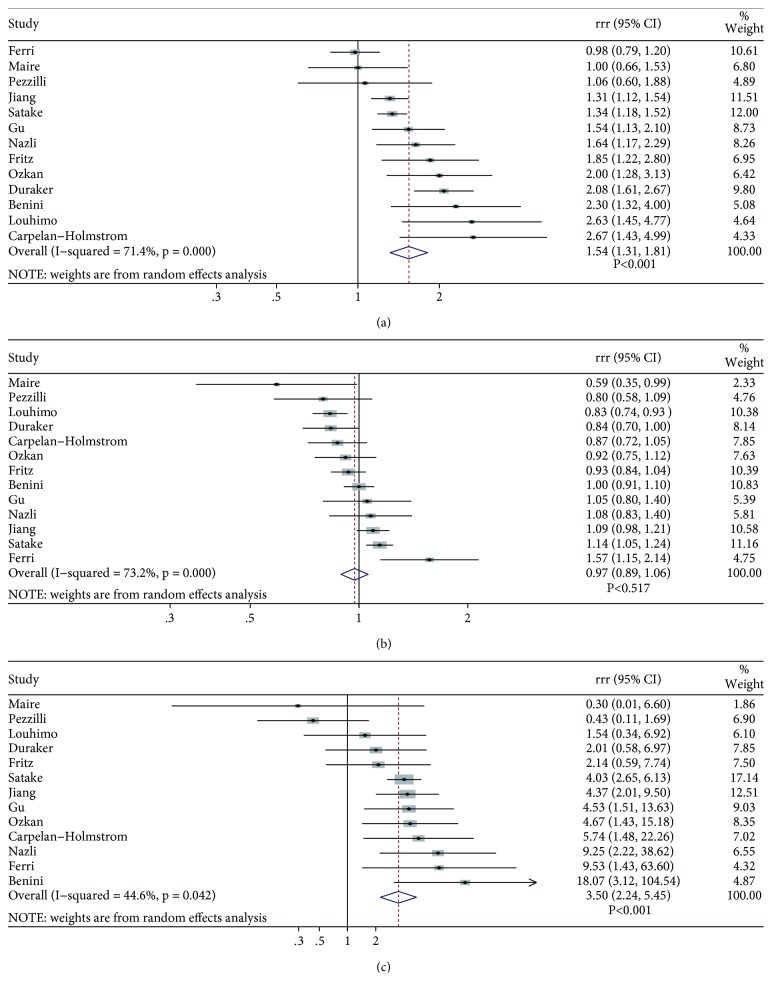
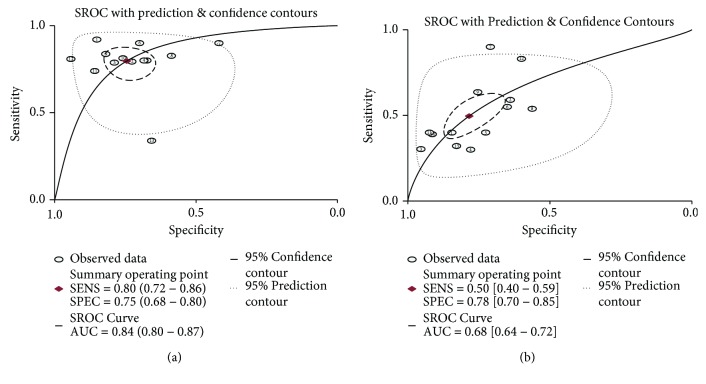
Background. CA 19-9 and carcinoembryonic antigen (CEA) are widely used for the diagnosis of pancreatic cancer. The purpose of the present study was to compare the diagnostic value of CA 19-9 with CEA for pancreatic cancer. Methods. The studies were obtained from electronic searches conducted in PubMed, Embase, and Cochrane Library databases until December 2017. The keywords included diagnosis of pancreatic cancer, CA 19-9, and CEA. The ratio of sensitivity, the specificity, the diagnostic odds ratio (DOR), and the summary of the receiver operating characteristic (SROC) with regard to CA 19-9 and CEA were measured using the random effects model. The current study included 13 studies that comprised 4,537 participants and 1,277 patients with pancreatic cancer. Results. The levels of CA 19-9 for use for the detection of pancreatic cancer were associated with higher sensitivity (ratio of sensitivity: 1.54; 1.31–1.81; P<0.001 ), DOR (DOR: 3.50; 95% CI: 2.24–5.45; P<0.001 ), and AUC (ratio of AUC: 1.24; 95% CI: 1.15–1.33; P<0.001 ) compared with the variable CEA, while no significant difference between CA 19-9 and CEA was noted with regard to specificity (ratio of specificity: 0.97; 95% CI: 0.89–1.06; P=0.517 ). The findings of the subgroup analyses suggested that different cutoff values of CA 19-9 and CEA might affect the diagnostic value. Conclusions. The findings of the present study indicated that CA 19-9 levels were associated with higher sensitivity, DOR, and AUC compared with the corresponding levels of CEA with regard to the diagnosis of pancreatic cancer.
Overview
The claims and statistics of this paper haven’t been checked yet.
Free: it reads the open-access text and checks the first 5 claims that cite a source we can check. Create a free account to check every claim.
Integrity signals
Registry
Cites
Statistics
Figures
Verification
Claims the paper makes
The claims and statistics of this paper haven’t been checked yet.
Free: it reads the open-access text and checks the first 5 claims that cite a source we can check. Create a free account to check every claim.
Claims other papers make about this one
Each is checked against this paper’s own text: does it say what the citing paper says it does?
The source backs part of the claim, not all of it — or backs it for a different population, condition or comparison.
In the citing paper
“Carbohydrate Antigen 19-9 (CA19-9), the best-validated biomarker in PC, does not have enough accuracy and specificity in screening early PC 23,24.”
From Artificial intelligence in pancreatic cancer (2022) · cites this paper as [24]
Experimental — accuracy not yet measured
Self-check
Percentages, sums and reported differences re-computed from the paper’s own numbers.
The self-check needs the paper’s full text.
Citations
Cites
Preferred Reporting Items for Systematic Reviews and Meta-Analyses: the PRISMA statement
Moher, D., Liberati, A., Tetzlaff, J., Altman, D. G., & for the PRISMA Group (2009) · BMJ · doi:10.1136/bmj.b2535 · Cited by 83,823
Preferred Reporting Items for Systematic Reviews and Meta-Analyses: The PRISMA Statement
Moher, D., Liberati, A., Tetzlaff, J., Altman, D. G., & The PRISMA Group (2009) · PLoS Medicine · doi:10.1371/journal.pmed.1000097 · Cited by 64,042 · cited 1×
“The present study was conducted in accordance with the guidelines for the Preferred Reporting Items for Systematic Reviews and Meta-Analyses (PRISMA) [15].”
Measuring inconsistency in meta-analyses
Higgins, J. P. T., Thompson, S. G., Deeks, J. J., & Altman, D. G. (2003) · BMJ · doi:10.1136/bmj.327.7414.557 · Cited by 63,139 · cited 1×
“1 (P ≤ 0 10) indicated significant heterogeneity for the Q statistical analysis [21, 22].”
Meta-analysis in clinical trials
DerSimonian, R., & Laird, N. (1986) · Controlled Clinical Trials · doi:10.1016/0197-2456(86)90046-2 · Cited by 39,552 · cited 1×
“The bivariate random effects [18] were applied in order to analyze sensitivity, specificity, and DOR, and the hierarchical regression model was used to analyze receiver operating characteristic (SROC) curve and the AUC [19].”
Wang, G., Ma, R., Qiao, G., Wada, K., Aizawa, Y., & Satoh, T. (2015) · Integrative Medicine International · doi:10.1159/000368408 · Cited by 18,657
Spencer, P. M., Cameron, J. L., & Lin, L. (2000) · Cited by 7,202
Whiting, P., Rutjes, A. W., Reitsma, J. B., Bossuyt, P. M., & Kleijnen, J. (2003) · BMC Medical Research Methodology · doi:10.1186/1471-2288-3-25 · Cited by 3,592
Deeks, J. J., Macaskill, P., & Irwig, L. (2005) · Journal of Clinical Epidemiology · doi:10.1016/j.jclinepi.2005.01.016 · Cited by 2,910 · cited 1×
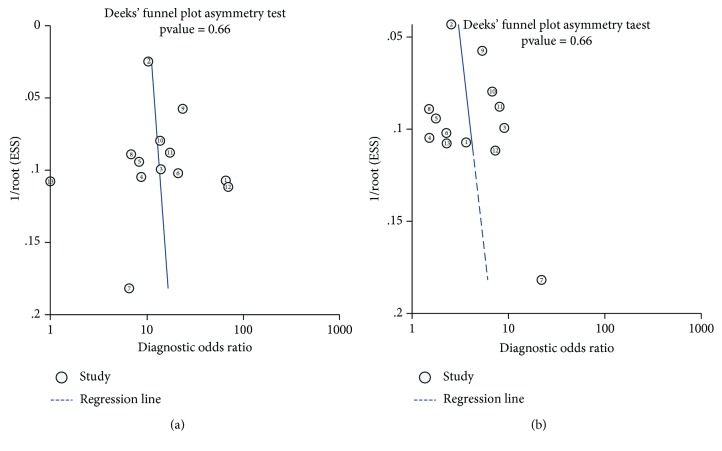
“The visual inspections of the funnel plots were constructed by Deeks ’ asymmetry test for CA 19-9 and CEA [23].”
Analysing Data and Undertaking Meta‐Analyses
Deeks, J. J., Higgins, J. P., & Altman, D. G. (2008) · Cochrane Handbook for Systematic Reviews of Interventions · doi:10.1002/9780470712184.ch9 · Cited by 1,800
Li, D., Xie, K., Wolff, R., & Abbruzzese, J. L. (2004) · The Lancet · doi:10.1016/s0140-6736(04)15841-8 · Cited by 1,719
Self-citationThe Interpretation of Random-Effects Meta-Analysis in Decision Models
Ades, A. E., Lu, G., & Higgins, J. P. T. (2005) · Medical Decision Making · doi:10.1177/0272989x05282643 · Cited by 859 · cited 1×
“The ratio of sensitivity, speci fi city, DOR, and AUC were calculated by the random e ff ects model [20].”
Evaluation of QUADAS, a tool for the quality assessment of diagnostic accuracy studies
Whiting, P. F., Weswood, M. E., Rutjes, A. W., Reitsma, J. B., Bossuyt, P. N., & Kleijnen, J. (2006) · BMC Medical Research Methodology · doi:10.1186/1471-2288-6-9 · Cited by 769
Properties of the summary receiver operating characteristic (SROC) curve for diagnostic test data
Walter, S. D. (2002) · Statistics in Medicine · doi:10.1002/sim.1099 · Cited by 672 · cited 1×
“The bivariate random effects [18] were applied in order to analyze sensitivity, specificity, and DOR, and the hierarchical regression model was used to analyze receiver operating characteristic (SROC) curve and the AUC [19].”
The national cancer data base report on pancreatic cancer
Niederhuber, J. E., Brennan, M. F., & Menck, H. R. (1995) · Cancer · doi:10.1002/1097-0142(19951101)76:9<1671::aid-cncr2820760926>3.0.co;2-r · Cited by 426
Bedikian, A. Y., Legha, S. S., Mavligit, G., Carrasco, C. H., Khorana, S., Plager, C., Papadopoulos, N., & Benjamin, R. S. (1995) · Cancer · doi:10.1002/1097-0142(19951101)76:9<1665::aid-cncr2820760925>3.0.co;2-j · Cited by 335
CEA, CA 19-9 and CA 72-4 improve the diagnostic accuracy in gastrointestinal cancers.
Carpelan-Holmström, M. A., Louhimo, J. M., Stenman, U., Alfthan, H. V., & Haglund, C. (2002) · PubMed · Cited by 216
Gudjonsson, B. (1995) · PubMed · Cited by 182
Fritz, S., Hackert, T., Hinz, U., Hartwig, W., Büchler, M. W., & Werner, J. (2011) · Journal of British Surgery · doi:10.1002/bjs.7280 · Cited by 168 · cited 1×
“Furthermore, 3 of the included studies suggested that CA 19-9 exhibited higher DOR, although it was not associated with a statistically significant difference compared with CEA [26, 33, 34].”
Duraker, N., Hot, S., Polat, Y., Höbek, A., Gençler, N., & Urhan, N. (2007) · Journal of Surgical Oncology · doi:10.1002/jso.20604 · Cited by 156
Diagnostic value of serum carbohydrate antigen 19-9 in pancreatic cancer: a meta-analysis
Huang, Z., & Liu, F. (2014) · Tumor Biology · doi:10.1007/s13277-014-1995-9 · Cited by 139 · cited 2×
“Huang and Liu conducted a meta-analysis and concluded that serum CA 19-9 plays an important role in the diagnosis of pancreatic cancer [9].”
Maire, F., Voitot, H., Aubert, A., Palazzo, L., O'Toole, D., Couvelard, A., Levy, P., Vidaud, M., Sauvanet, A., Ruszniewski, P., et al. (2008) · The American Journal of Gastroenterology · doi:10.1111/j.1572-0241.2008.02114.x · Cited by 125 · cited 3×
“A total of 2 studies suggested no signi fi cant di ff erence between CA 19-9 and CEA and revealed that the DOR of CA 19-9 was lower than that of CEA for the diagnosis of pancreatic cancer [30, 36].”
InfluentialDeng, K., Yang, L., Hu, B., Wu, H., Zhu, H., & Tang, C. (2015) · PLoS ONE · doi:10.1371/journal.pone.0124151 · Cited by 106 · cited 1×
“Furthermore, the tumor marker, carcinoembryonic antigen (CEA), has been investigated for the diagnosis of several cancers and it was proposed as a promising biomarker [10 – 14].”
Su, S.-B., Qin, S.-Y., Chen, W., Luo, W., & Jiang, H.-X. (2015) · World Journal of Gastroenterology · doi:10.3748/wjg.v21.i14.4323 · Cited by 88
Tsai, P.-L., Su, W., Leung, W.-H., Lai, C.-T., & Liu, C. (2016) · Journal of Cancer Research and Therapeutics · doi:10.4103/0973-1482.144356 · Cited by 85
Gu, Y.-L., Lan, C., Pei, H., Yang, S.-N., Liu, Y.-F., & Xiao, L.-L. (2015) · Asian Pacific Journal of Cancer Prevention · doi:10.7314/apjcp.2015.16.15.6569 · Cited by 84
Diagnostic value of tumor antigens in malignant pleural effusion: a meta-analysis
Nguyen, A. H., Miller, E., Wichman, C., Berim, I. G., & Agrawal, D. K. (2015) · Translational research · doi:10.1016/j.trsl.2015.04.006 · Cited by 78
The diagnostic importance of CEA and CA 19-9 for the early diagnosis of pancreatic carcinoma.
Nazlı, O., Bozdağ, A. D., Tansuğ, T., Kir, R., & Kaymak, E. (2000) · PubMed · Cited by 72
Ozkan, H., Kaya, M., & Cengiz, A. (2003) · PubMed · Cited by 71
Detection of serum tumor markers in the diagnosis and treatment of patients with pancreatic cancer.
Jiang, X., Tao, H., & Zou, S.-C. (2004) · PubMed · Cited by 68
Benini, L., Cavallini, G., Zordan, D., Rizzotti, P., Rigo, L., Brocco, G., Perobelli, L., Zanchetta, M., Pederzoli, P., & Scuro, L. A. (1988) · Pancreas · doi:10.1097/00006676-198802000-00011 · Cited by 61 · cited 1×
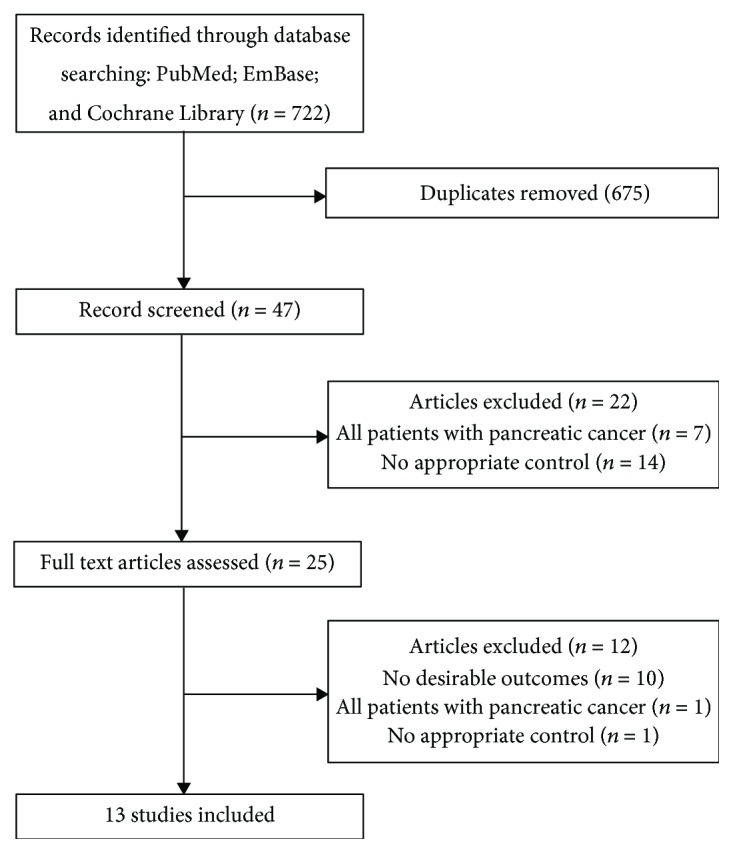
“Following a detailed evaluation of 47 potentially eligible studies, 13 studies were included comprising 4,537 participants and 1,277 patients diagnosed with pancreatic cancer [24 – 36].”
Tang, S., Zhou, F., Sun, Y., Wei, L. S., Zhu, S., Yang, R., Huang, Y., & Yang, J. (2016) · Breast Cancer · doi:10.1007/s12282-016-0680-9 · Cited by 58 · cited 1×
“Furthermore, the tumor marker, carcinoembryonic antigen (CEA), has been investigated for the diagnosis of several cancers and it was proposed as a promising biomarker [10 – 14].”
Prognostic value of serum CYFRA 21‐1 and CEA for non‐small‐cell lung cancer
Zhang, Z., Han, Y., Liang, H., & Wang, L. (2015) · Cancer Medicine · doi:10.1002/cam4.493 · Cited by 57
FDG-PET is not useful in early pancreatic cancer diagnosis
Strobel, O., & Büchler, M. W. (2013) · Nature Reviews Gastroenterology & Hepatology · doi:10.1038/nrgastro.2013.42 · Cited by 52 · cited 1×
“Despite advanced imaging and invasive endoscopic approaches that are widely used to differentiate pancreatic carcinoma from benign pancreatic disease, the early diagnosis of pancreatic cancer remains a significant challenge [7, 8].”
Comparison of CA19-9 with Other Tumor Markers in the Diagnosis of Cancer of the Pancreas
Satake, K., & Takeuchi, T. (1994) · Pancreas · doi:10.1097/00006676-199411000-00008 · Cited by 50 · cited 2×
“Conversely, Satake and Takeuchi [25] suggested that the specificity of CA 19-9 was 0.”
InfluentialLouhimo, J. M., Finne, P., Alfthan, H. V., Stenman, U.-H., & Haglund, C. (2002) · PubMed · Cited by 43
Biomarkers for early diagnosis of pancreatic cancer
Jenkinson, C., Earl, J., Ghaneh, P., Halloran, C., Carrato, A., Greenhalf, W., Neoptolemos, J., & Costello, E. (2015) · Expert Review of Gastroenterology & Hepatology · doi:10.1586/17474124.2015.965145 · Cited by 42 · cited 1×
“Despite advanced imaging and invasive endoscopic approaches that are widely used to differentiate pancreatic carcinoma from benign pancreatic disease, the early diagnosis of pancreatic cancer remains a significant challenge [7, 8].”
Ferri, M. J., Saez, M., Figueras, J., Fort, E., Sabat, M., López-Ben, S., de Llorens, R., Aleixandre, R. N., & Peracaula, R. (2016) · PLOS ONE · doi:10.1371/journal.pone.0147214 · Cited by 38 · cited 2×
“[35] reported a similar conclusion for the differentiation of pancreatic cancer from chronic pancreatitis, whereas the disease status of the participants may affect the specificity when CEA is used to diagnose pancreatic cancer.”
Cao, S., Hu, Y., Gao, X., Liao, Q., & Zhao, Y. (2016) · PLoS ONE · doi:10.1371/journal.pone.0166406 · Cited by 36
The challenge of pancreatic cancer
Postier, R. G. (2003) · The American Journal of Surgery · doi:10.1016/j.amjsurg.2003.08.018 · Cited by 32 · cited 1×
“Pancreatic cancer is a highly lethal disease, which is characterized by a difficult diagnosis and an aggressive progression [2].”
Kato, K., Kamada, H., Fujimori, T., Aritomo, Y., Ono, M., & Masaki, T. (2012) · Gastroenterology Research and Practice · doi:10.1155/2012/243524 · Cited by 31
Pezzilli, R., Calculli, L., d’Eril, G. M., & Barassi, A. (2016) · Hepatobiliary & pancreatic diseases international · doi:10.1016/s1499-3872(16)60076-0 · Cited by 11 · cited 2×
“A total of 2 studies suggested no significant difference between CA 19-9 and CEA and revealed that the DOR of CA 19-9 was lower than that of CEA for the diagnosis of pancreatic cancer [30, 36].”
Cited by
Early screening and diagnosis strategies of pancreatic cancer: a comprehensive review
Yang, J., Xu, R., Wang, C., Qiu, J., Ren, B., & You, L. (2021) · Cancer Communications · doi:10.1002/cac2.12204 · Cited by 379
“As mentioned above, due to its low sensitivity of 80% and specificity of 75%, CA19-9 possesses limited diagnostic utility [14].”
BackgroundA faecal microbiota signature with high specificity for pancreatic cancer
Kartal, E., Schmidt, T. S. B., Molina-Montes, E., Rodríguez-Perales, S., Wirbel, J., Maistrenko, O. M., Akanni, W. A., Alashkar Alhamwe, B., Alves, R. J., Carrato, A., et al. (2022) · Gut · doi:10.1136/gutjnl-2021-324755 · Cited by 290
Biomarkers in the diagnosis of pancreatic cancer: Are we closer to finding the golden ticket?
O'Neill, R. S., & Stoita, A. (2021) · World Journal of Gastroenterology · doi:10.3748/wjg.v27.i26.4045 · Cited by 160
Artificial intelligence in pancreatic cancer
Huang, B., Huang, H., Zhang, S., Zhang, D., Shi, Q., Liu, J., & Guo, J. (2022) · Theranostics · doi:10.7150/thno.77949 · Cited by 142
“Carbohydrate Antigen 19-9 (CA19-9), the bestvalidated biomarker in PC, does not have enough accuracy and specificity in screening early PC [23,24].”
BackgroundPhyo, J. B., Woo, A., Yu, H. J., Lim, K., Cho, B. H., Jung, H. S., & Lee, M. (2021) · Analytical Chemistry · doi:10.1021/acs.analchem.0c04200 · Cited by 107
Metadata
- Authors
- Xing, H., Wang, J., Wang, Y., Tong, M., Hu, H., Huang, C., & Li, D.
- Affiliations
- Sir Run Run Shaw Hospital (CN)
- Affiliated Hospital of Hangzhou Normal University (CN)
- Corresponding author
- Li, Da
- Venue
- Gastroenterology Research and Practice
- Publisher
- Wiley
- Published
- 2018-11-21
- Volume
- 2018
- Pages
- 1-9
- ISSN
- 1687-6121 (ISSN-L)
- 1687-630X
- PMC
- PMC6280291
- OpenAlex
- W2900549965
- Semantic Scholar
- 45658a24408f93a5bd33fb57b075ef3596529d14
- Cited by
- 109
- References
- 40
- Citations by year
- 2026: 9 · 2025: 18 · 2024: 20 · 2023: 26 · 2022: 16 · 2021: 14 · 2020: 5 · 2019: 1
- FWCI
- 0.52
- Type
- journal article
- Language
- en
- Open access
- gold
- doi.org
- Locations
- Gastroenterology Research and Practice (publishedVersion, cc-by)
- Europe PMC (PubMed Central) (publishedVersion, cc-by)
- PubMed Central (publishedVersion, cc-by)
- PubMed (publishedVersion)
- DOAJ (DOAJ: Directory of Open Access Journals) (submittedVersion, cc-by-sa)
- Funders
- Medicine and Health Technology Plan of Zhejiang Province (2015KYB217)
- Topics
- Health Sciences › Medicine › Oncology › Pancreatic and Hepatic Oncology Research
- Health Sciences › Medicine › Surgery › Pancreatitis Pathology and Treatment
- Health Sciences › Medicine › Surgery › Cholangiocarcinoma and Gallbladder Cancer Studies
- Keywords
- CA19-9, carcinoembryonic antigen, pancreatic cancer, tumor markers, diagnostic accuracy, sensitivity and specificity, diagnostic odds ratio, cut-off values
About these checks
Registry, retraction, Cites and statistics results are computed, not judged, with one exception: a printed reference that no index lists is read once by a model before it counts as a citation error. Claims are extracted by a model and kept only when their quote appears verbatim in the text; each cited source is then checked, with a model’s help, for whether it says what the claim relies on. Those verdicts can be wrong — read the claim’s quote and the cited source before relying on one.
Statistics and arithmetic are recomputed, not judged.
Confidence bands are shown only for fields calibrated on our annotated test set. None is calibrated yet, so no band is shown.
What counts as a claim ›How we measure confidence ›How we check this ›
Are you an author, or do you see a problem with this page? Request a review
Data sources
Bibliographic data: Semantic Scholar, OpenAlex, Crossref.
Contains information from the Semantic Scholar Academic Graph Datasets, made available under the ODC Attribution License (ODC-BY 1.0).
Semantic Scholar’s data is described in: Kinney, R., et al. (2023). The Semantic Scholar Open Data Platform. arXiv:2301.10140.
