

Shared Autonomous Vehicles Effect on Vehicle-Km Traveled and Average Trip Duration
Open accessThe DOI matches its Crossref record; 18 of the 18 references it cites were found in a registry or an index.
Abstract
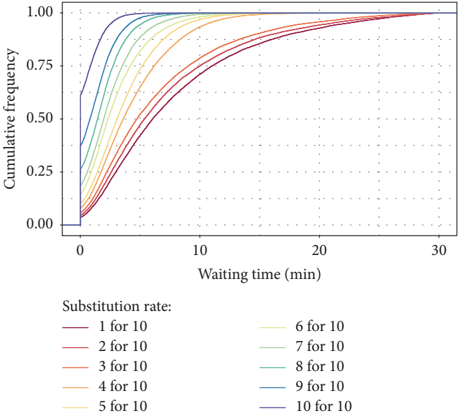
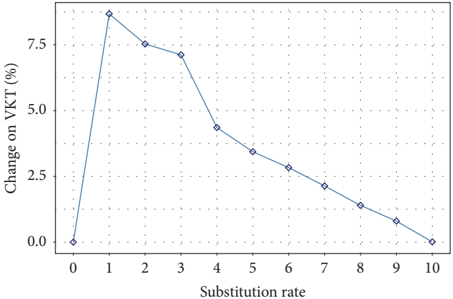
Intermediate modes of transport, such as shared vehicles or ride sharing, are starting to increase their market share at the expense of traditional modes of car, public transport, and taxi. In the advent of autonomous vehicles, single occupancy shared vehicles are expected to substitute at least in part private conventional vehicle trips. The objective of this paper is to estimate the impact of shared autonomous vehicles on average trip duration and vehicle-km traveled in a large metropolitan area. A stated preference online survey was designed to gather data on the willingness to use shared autonomous vehicles. Then, commute trips and home-based other trips were generated microscopically for a synthetic population in the greater Munich metropolitan area. Individuals who traveled by auto were selected to switch from a conventional vehicle to a shared autonomous vehicle subject to their willingness to use them. The effect of shared autonomous vehicles on urban mobility was assessed through traffic simulations in MATSim with a varying autonomous taxi fleet size. The results indicated that the total traveled distance increased by up to 8% after autonomous fleets were introduced. Current travel demand can still be satisfied with an acceptable waiting time when 10 conventional vehicles are replaced with 4 shared autonomous vehicles.
Overview
The claims and statistics of this paper haven’t been checked yet.
Free: it reads the open-access text and checks the first 5 claims that cite a source we can check. Create a free account to check every claim.
Integrity signals
Registry
Cites
Statistics
Figures

Verification
Claims the paper makes
The claims and statistics of this paper haven’t been checked yet.
Free: it reads the open-access text and checks the first 5 claims that cite a source we can check. Create a free account to check every claim.
Claims other papers make about this one
Each is checked against this paper’s own text: does it say what the citing paper says it does?
The source backs part of the claim, not all of it — or backs it for a different population, condition or comparison.
In the citing paper
“In 2018, Moreno et al. survey in German showed that 42% of the respondents are willing to share their trips while using AVs [217].”
From Public acceptance and perception of autonomous vehicles: a comprehensive review (2021) · cites this paper as [217]
Experimental — accuracy not yet measured
Self-check
Percentages, sums and reported differences re-computed from the paper’s own numbers.
The self-check needs the paper’s full text.
Citations
Cites
On-demand high-capacity ride-sharing via dynamic trip-vehicle assignment
Alonso-Mora, J., Samaranayake, S., Wallar, A., Frazzoli, E., & Rus, D. (2017) · Proceedings of the National Academy of Sciences · doi:10.1073/pnas.1611675114 · Cited by 1,186
Assessing public opinions of and interest in new vehicle technologies: An Austin perspective
Bansal, P., Kockelman, K. M., & Singh, A. (2016) · Transportation Research Part C: Emerging Technologies · doi:10.1016/j.trc.2016.01.019 · Cited by 1,025
User preferences regarding autonomous vehicles
Haboucha, C. J., Ishaq, R., & Shiftan, Y. (2017) · Transportation Research Part C: Emerging Technologies · doi:10.1016/j.trc.2017.01.010 · Cited by 996
Preferences for shared autonomous vehicles
Krueger, R., Rashidi, T. H., & Rose, J. M. (2016) · Transportation Research Part C: Emerging Technologies · doi:10.1016/j.trc.2016.06.015 · Cited by 861
Dynamic ride-sharing and fleet sizing for a system of shared autonomous vehicles in Austin, Texas
Fagnant, D. J., & Kockelman, K. M. (2018) · Transportation · doi:10.1007/s11116-016-9729-z · Cited by 616
Martinez, L. M., & Viegas, J. M. (2017) · International Journal of Transportation Science and Technology · doi:10.1016/j.ijtst.2017.05.005 · Cited by 310
Towards an Understanding of the Travel Behavior Impact of Autonomous Vehicles
Zmud, J. P., & Sener, I. N. (2017) · Transportation Research Procedia · doi:10.1016/j.trpro.2017.05.281 · Cited by 198 · cited 3×
“Zmud and Sener [15] concluded that personality and psychology of the individual, specially self-perception of risk and usage of new technologies, are currently much more important than the demographic characteristics.”
BackgroundMilakis, D., Snelder, M., Arem, B. V., Wee, B. V., & Homem de Almeida Correia, G. (2017) · European Journal of Transport and Infrastructure Research · doi:10.18757/ejtir.2017.17.1.3180 · Cited by 194
Kitamura, R., Fujii, S., & Pas, E. I. (1997) · Transport Policy · doi:10.1016/s0967-070x(97)00018-8 · Cited by 193
Autonomous Taxicabs in Berlin – A Spatiotemporal Analysis of Service Performance
Bischoff, J., & Maciejewski, M. (2016) · Transportation Research Procedia · doi:10.1016/j.trpro.2016.12.078 · Cited by 88 · cited 6×
“The simulation of a fleet of shared autonomous vehicles was based on the MATSim extensions DVRP (Dynamic Vehicle Routing Problem) [25] and RoboTaxi [4].”
MethodInfluential
Research works printed but not linked: 11
- 1. D. Milakis, M. B. Snelder, B. Van Arem, G. Van Wee, Homem., and D. A. Correia, "Exploring Plausible Futures of Automated Vehicles in the Netherlands: Results from a Scenario Analysis, " in Proceedings of the Automated Vehicles Symposium, San Francisco, 2015.
- 2. A. T. Moreno, "Autonomous Vehicles: Implications on an Inte- grated Land-Use and Transport Modelling Suite, " in Proceedings of the 11th AESOP Young Academics Conference, Munich, 2017.
- 6. OECD, "Urban Mobility System Upgrade: How Shared Self- Driving Cars Could Change City Traffic, " in Corporate Partner- ship Board Report, 2015.
- 7. C. Llorca, A. T. Moreno, and R. Moeckel, "Effects of Shared Autonomous Vehicles on the Level of Service in the Greater Munich Metropolitan Area, " in Proceedings of the mobil.TUM 2017, Munich, 2017.
- 10. H. Billhardt, A. M. Fernandez, S. Lujak et al., "Multi-Agent Systems and Agreement Technologies, " in Proceedings of 13th European Conference, EUMAS, 2015, and Third International Conference, Athens , Greece, 2015.
- 19. F. Becker and K. Axhausen, "Literature review on behavioral experiments for autonomous vehicles, " in Proceedings of the Annual Meeting of the Transportation Research Board, Washing- ton, D.C., USA, 2017.
- 23. R. Follmer, B. Lenz, P. Loecker, and M. Sigismund, in Proceed- ings of the Annual Meeting of the Transportation Research Board, Washington, D.C., USA, 2012.
- 24. A. Horni, K. Nagel, and K. W. Axhausen, "The Multi-Agent Transport Simulation, " in MATSim, Ubiquity Press, London, UK, 2016.
- 26. Y. Croissant, "Estimation of Multinomial Logit Models in R: The Mlogit Packages: an Introductory Example, " in Data Management, p. 73, 2003.
- 28. A. Moreno and R. Moeckel, "A Framework to Respect Travel Time Budgets as Constraint for Microscopic Destination Choice Modeling, " in Proceedings of the the Annual Meeting of the Transportation Research Board, Washington, D.C., USA, 2017.
- 29. A. Moreno, A. Michalski, C. Llorca, and R. Moeckel, "Au- tonomous Taxis Effect on Vehicle-Km Traveled and Average Trip Duration in the Greater Munich Metropolitan Area, " in Proceedings of the the Annual Meeting of the Transportation Research Board, Washington, D.C., USA, 2018.
Cited by
Shared autonomous vehicle services: A comprehensive review
Narayanan, S., Chaniotakis, E., & Antoniou, C. (2020) · Transportation Research Part C: Emerging Technologies · doi:10.1016/j.trc.2019.12.008 · Cited by 691
“…al., 2017; Kondor et al., 2018; Liu et al., 2017; Loeb et al., 2018; Lokhandwala & Cai, 2018; Ma et al., 2017; Martinez & Viegas, 2017; Mendes et al., 2017; Moreno et al., 2018; Zhang et al., 2015; Zhang & Guhathakurta, 2018; Zhao & Kockelman, 2018), while the other category is a fractionally…”
BackgroundMethodInfluentialPublic acceptance and perception of autonomous vehicles: a comprehensive review
Othman, K. (2021) · AI and Ethics · doi:10.1007/s43681-021-00041-8 · Cited by 347
Golbabaei, F., Yigitcanlar, T., & Bunker, J. (2021) · International Journal of Sustainable Transportation · doi:10.1080/15568318.2020.1798571 · Cited by 220
“Moreno et al. (2018) Shared Autonomous Vehicles Effect on Vehicle-Km Traveled and Average Trip Duration Munich Being male, younger than 35 years, owning a conventional car and engaging in more trips per day may increase the likelihood of using SAVs.”
BackgroundInfluentialJing, P., Huang, H., Ran, B., Zhan, F., & Shi, Y. (2019) · Sustainability · doi:10.3390/su11041155 · Cited by 220
“Existing research on AV mainly focuses on macro-level analysis, including policy issues [7,16], legislative supervision [17], SAV dispatch optimization [5,18,19] and the impact on traditional transportation system [5,20,21].”
MethodExploring the implications of autonomous vehicles: A comprehensive review
Othman, K. (2022) · Innovative Infrastructure Solutions · doi:10.1007/s41062-022-00763-6 · Cited by 180
“(2018) [22] The simulation model for greater Munich metropolitan area, Germany shows an average waiting time of 5 min with 95% of the waiting time is lower than 10 min”
MethodResultInfluentialCharging infrastructure demands of shared-use autonomous electric vehicles in urban areas
Zhang, H., Sheppard, C., Lipman, T. E., Zeng, T., & Moura, S. J. (2020) · Transportation Research Part D Transport and Environment · doi:10.1016/j.trd.2019.102210 · Cited by 118
Enhanced Mobility With Connectivity and Automation: A Review of Shared Autonomous Vehicle Systems
Zhao, L., & Malikopoulos, A. A. (2022) · IEEE Intelligent Transportation Systems Magazine · doi:10.1109/mits.2019.2953526 · Cited by 93
Impact of Autonomous Vehicles on the Physical Infrastructure: Changes and Challenges
Othman, K. (2021) · Designs · doi:10.3390/designs5030040 · Cited by 112
Joint Fleet Sizing and Charging System Planning for Autonomous Electric Vehicles
Zhang, H., Sheppard, C., Lipman, T. E., & Moura, S. J. (2019) · IEEE Transactions on Intelligent Transportation Systems · doi:10.1109/tits.2019.2946152 · Cited by 93
“Autonomous vehicles (AVs) that transport passengers or goods without human intervention will not only free human drivers from burdensome driving labor, but also promote transportation accessibility [1], cut down mobility costs [2]–[4], enhance energy efficiency, and reduce greenhouse gas emission [5]–[8].”
BackgroundBala, H., Anowar, S., Chng, S., & Cheah, L. W. (2023) · Transport Reviews · doi:10.1080/01441647.2023.2188619 · Cited by 90
“…studies, it was either captured as a binary response (yes/no) about whether or not the respondents would be willing to use SAMS (Barbour et al., 2019; Wang, Jiang, et al., 2020) or a multinomial choice variable representing interest in the future adoption or use of SAMS as (Moreno et al., 2018).”
BackgroundXiao, G., Lee, J. J., Jiang, Q., Huang, H., Abdel-Aty, M. A., & Wang, L. E. (2021) · Accident Analysis & Prevention · doi:10.1016/j.aap.2021.106234 · Cited by 74
Modeling Users’ Adoption of Shared Autonomous Vehicles Employing Actual Ridership Experiences
Etminani-Ghasrodashti, R., Patel, R. K., Kermanshachi, S., Rosenberger, J. M., & Foss, A. W. (2022) · Transportation Research Record Journal of the Transportation Research Board · doi:10.1177/03611981221093632 · Cited by 71
A holistic analysis of passenger travel energy and greenhouse gas intensities
Schäfer, A. W., & Yeh, S. (2020) · Nature Sustainability · doi:10.1038/s41893-020-0514-9 · Cited by 71
Evolution of Traffic Microsimulation and Its Use for Modeling Connected and Automated Vehicles
Raju, N., & Farah, H. (2021) · Journal of Advanced Transportation · doi:10.1155/2021/2444363 · Cited by 81
“Researchers of various backgrounds are predicting the use of AVs for private transport [63], public transport [64], and freight transport such as autonomous trucks [65], as well as for ridesharing [66] such as autonomous shuttles [67].”
BackgroundWho Is Willing to Share Their AV? Insights about Gender Differences among Seven Countries
Polydoropoulou, A., Tsouros, I., Thomopoulos, N., Pronello, C., Elvarsson, A. B., Sigþórsson, H., Dadashzadeh, N., Stojmenova, K., Sodnik, J., Neophytou, S., et al. (2021) · Sustainability · doi:10.3390/su13094769 · Cited by 68
“As previously mentioned, there are several studies on the impact of PAVs and SAVs on travel behaviour.”
InfluentialNarayanan, S., Chaniotakis, E. M., & Antoniou, C. (2020) · Advances in transport policy and planning · doi:10.1016/bs.atpp.2020.02.004 · Cited by 72
New mobility services: Taxonomy, innovation and the role of ICTs
Shibayama, T., & Emberger, G. (2020) · Transport Policy · doi:10.1016/j.tranpol.2020.05.024 · Cited by 65
Maeng, K., & Cho, Y. (2021) · Travel Behaviour and Society · doi:10.1016/j.tbs.2021.08.001 · Cited by 62
Liu, Z., Li, R., & Dai, J. (2022) · Transportation Research Part A Policy and Practice · doi:10.1016/j.tra.2022.01.001 · Cited by 56
Wadud, Z., & Mattioli, G. (2021) · Transportation Research Part A Policy and Practice · doi:10.1016/j.tra.2021.06.024 · Cited by 64
Evaluation Methods for the Impacts of Shared Mobility: Classification and Critical Review
Roukouni, A., & Correia, G. H. D. A. (2020) · Sustainability · doi:10.3390/su122410504 · Cited by 59
“, see [80]) as well as the modal shift patterns between shared modes and private cars, public transport, and/or cycling (e.”
BackgroundMilitão, A. M., & Tirachini, A. (2021) · Transportation Research Part A Policy and Practice · doi:10.1016/j.tra.2021.07.004 · Cited by 62
What we know and do not know about connected and autonomous vehicles
Rashidi, T. H., Najmi, A., Haider, A., Wang, C. I., & Hosseinzadeh, F. (2020) · Transportmetrica A Transport Science · doi:10.1080/23249935.2020.1720860 · Cited by 56
Kim, S., Lee, U., Lee, I., & Kang, N. (2021) · Journal of Cleaner Production · doi:10.1016/j.jclepro.2021.130055 · Cited by 48
“, 2017), and reducing mobility costs (Moreno et al., 2018).”
Consumers’ expectations and attitudes towards owning, sharing, and riding autonomous vehicles
Silvestri, F., Fabiis, F. D., & Coppola, P. (2023) · Case Studies on Transport Policy · doi:10.1016/j.cstp.2023.101112 · Cited by 48
Demand Responsive Transit Simulation of Wayne County, Michigan
Kagho, G. O., Hensle, D., Balać, M., Freedman, J., Twumasi-Boakye, R., Broaddus, A., Fishelson, J., & Axhausen, K. W. (2021) · Transportation Research Record Journal of the Transportation Research Board · doi:10.1177/03611981211031221 · Cited by 42
“(29), examines how the shift to DRT could affect overall number of trips and distance traveled.”
BackgroundThe Influence of Introducing Autonomous Vehicles on Conventional Transport Modes and Travel Time
Hamadneh, J., & Esztergár‐Kiss, D. (2021) · Energies · doi:10.3390/en14144163 · Cited by 42
“The pick-up time for a traveler is 120 s, and the drop-off time is 60 s, as derived from the literature [82].”
MethodFu, X., Nie, Q., Liu, J., Zhang, Z., & Jones, S. (2021) · International Journal of Transportation Science and Technology · doi:10.1016/j.ijtst.2021.11.006 · Cited by 38
All work and no play? Autonomous vehicles and non-commuting journeys
Thomopoulos, N., Cohen, S., Hopkins, D., Siegel, L. A., & Kimber, S. (2020) · Transport Reviews · doi:10.1080/01441647.2020.1857460 · Cited by 38
“For example, Moreno et al. (2018) observe that pick-up waiting time for SAV journeys are important if users are going to a doctor appointment or running errands.”
BackgroundGruyer, D., Orfila, O., Glaser, S., Hedhli, A., Hautière, N., & Rakotonirainy, A. (2021) · Frontiers in Sustainable Cities · doi:10.3389/frsc.2020.607054 · Cited by 37
Modelling reservation-based shared autonomous vehicle services: A dynamic user equilibrium approach
Narayanan, S., Chaniotakis, E. M., & Antoniou, C. (2022) · Transportation Research Part C Emerging Technologies · doi:10.1016/j.trc.2022.103651 · Cited by 34
Potentials of digital twin system for analyzing travel behavior decisions
Aghaabbasi, M., & Sabri, S. (2024) · Travel Behaviour and Society · doi:10.1016/j.tbs.2024.100902 · Cited by 42
Traditional taxis vs automated taxis – Does the driver matter for Millennials?
Pakusch, C., Meurer, J., Tolmie, P., & Stevens, G. (2020) · Travel Behaviour and Society · doi:10.1016/j.tbs.2020.06.009 · Cited by 36
“In a recent study by Moreno et al. (2018), 41.5% of the respondents stated they were willing to use an AV as an SAV when asked how they would consider using automated vehicles.”
MethodInfluentialCarbonate Lithology Identification with Machine Learning
Nanjo, T., & Tanaka, S. (2019) · Abu Dhabi International Petroleum Exhibition & Conference (ADIPEC) · doi:10.2118/197255-ms · Cited by 40
Optimum Location of Autonomous Vehicle Lanes: A Model Considering Capacity Variation
Movaghar, S., Mesbah, M., & Habibian, M. (2020) · Mathematical Problems in Engineering · doi:10.1155/2020/5782072 · Cited by 34
Multidimension Analysis of Autonomous Vehicles: The Future of Mobility
Othman, K. (2022) · Civil Engineering Journal · doi:10.28991/cej-sp2021-07-06 · Cited by 31
“(2018) [22] study who built their simulation model based on the results of a stated preference survey that shows that 24% of the respondents are willing to share their trips in AVs.”
BackgroundPeer, S., Müller, J., Naqvi, A., & Straub, M. (2023) · Transport Policy · doi:10.1016/j.tranpol.2023.12.002 · Cited by 26
“To which extent a possible increase in travel times may be dampened by ride-sharing (e.g. Moreno et al., 2018; Tirachini, 2020; Zhang et al., 2015) as well as more by a efficient use of road space by automated vehicles (e.g. Am-bühl et al., 2016), is still fairly disputed.”
BackgroundWali, B., Santi, P., & Ratti, C. (2023) · Technological Forecasting and Social Change · doi:10.1016/j.techfore.2023.122757 · Cited by 27
Dai, R., Ding, C., Gao, J., Wu, X., & Yu, B. (2021) · Applied Energy · doi:10.1016/j.apenergy.2021.118388 · Cited by 26
Critical success factors for the adoption of AVs in sustainable urban transportation
Zarbakhshnia, N., & Ma, Z. (2024) · Transport Policy · doi:10.1016/j.tranpol.2024.07.002 · Cited by 25
Guan, J., Zhang, S., D’Ambrosio, L. A., Zhang, K., & Coughlin, J. F. (2021) · Sustainability · doi:10.3390/su13147632 · Cited by 27
Integrated design framework for on-demand transit system based on spatiotemporal mobility patterns
Kim, J., Tak, S., Lee, J., & Yeo, H. (2023) · Transportation Research Part C Emerging Technologies · doi:10.1016/j.trc.2023.104087 · Cited by 25
Levin, M. W. (2022) · Transportation Research Part B Methodological · doi:10.1016/j.trb.2022.07.003 · Cited by 22
Knowledge for policy-making in times of uncertainty: the case of autonomous vehicle model results
Curtis, C., McLeod, S., Hultén, J., Pettersson, F., Paulsson, A., & Sørensen, C. H. (2020) · Transport Reviews · doi:10.1080/01441647.2020.1857885 · Cited by 20
Sun, H., Jing, P., Zhao, M., Chen, Y., Zhan, F., & Shi, Y. (2020) · Sustainability · doi:10.3390/su122410661 · Cited by 22
Fernandes, P., Bandeira, J. M., & Coelho, M. C. (2021) · Journal of Intelligent Transportation Systems · doi:10.1080/15472450.2021.1945453 · Cited by 24
“In the long run, it is intended to account for improved speed flow of automated highways, modal shifts between existing and new transportation modes and induced travel demand (Moreno et al., 2018).”
Does ride-sourcing absorb the demand for car and public transport in Amsterdam?
Narayan, J., Cats, O., van Oort, N., & Hoogendoorn, S. P. (2019) · International Conference on Models and Technologies for Intelligent Transportation Systems (MT-ITS) · doi:10.1109/mtits.2019.8883371 · Cited by 23
“A more recent study, for the city of Munich, suggests a replacement ratio of 10 to 4 indicating that the demand of ten privately owned cars could be served with 4 shared autonomous vehicles [6].”
BackgroundΖιακόπουλος, Α., Oikonomou, M. G., Vlahogianni, E. I., & Yannis, G. (2021) · Transport Policy · doi:10.1016/j.tranpol.2021.10.006 · Cited by 18
A Scientometric Review of Mobility-on-Demand Car-Sharing Systems
Guo, G., & Li, X. (2022) · IEEE Intelligent Transportation Systems Magazine · doi:10.1109/mits.2021.3137224 · Cited by 17
“Car-sharing is deployed on a large scale and backed by abundant research, whereas ride-sharing (multiple passengers share a car at the same time) is relatively less popular but has potential for future development [22], [23].”
BackgroundZannat, K. E., Laudan, J., Choudhury, C. F., & Hess, S. (2023) · Transport Policy · doi:10.1016/j.tranpol.2023.12.014 · Cited by 21
Modal Choice for the Driverless City: Scenario Simulation Based on a Stated Preference Survey
Cordera, R., González-González, E., Nogués, S., Arellana, J., & Moura, J. L. (2022) · Journal of Advanced Transportation · doi:10.1155/2022/1108272 · Cited by 23
On the scalability of private and pooled on-demand services for urban mobility in Amsterdam
Narayan, J., Cats, O., van Oort, N., & Hoogendoorn, S. P. (2021) · Transportation Planning and Technology · doi:10.1080/03081060.2021.2017214 · Cited by 18
“The Munich study suggests that four shared autonomous vehicles could serve the demand offered by 10 privately owned cars.”
MethodAn analytical framework for modeling ride pooling efficiency and minimum fleet size
Mühle, S. (2023) · Multimodal Transportation · doi:10.1016/j.multra.2023.100080 · Cited by 20
Snelder, M., Wilmink, I. R., van der Gun, J. P. T., Bergveld, H. J., Hoseini, P., & van Arem, B. (2019) · European journal of transport and infrastructure research · doi:10.18757/ejtir.2019.19.4.4282 · Cited by 24
“(9) use stated-preference data to calibrate and apply a mode choice 5 model to choose between private car and shared autonomous car, that is dependent on the 6 number of daily trips, but again not on the level-of-service provided by these modes.”
MethodOthman, K. (2022) · Advances in Science, Technology & Innovation/Advances in science, technology & innovation · doi:10.1007/978-3-030-98423-6_8 · Cited by 13
Using behavioral data to understand shared mobility choices of electric and hybrid vehicles
Khattak, Z. H., & Khattak, A. J. (2021) · International Journal of Sustainable Transportation · doi:10.1080/15568318.2021.2004627 · Cited by 13
“This may be reflecting gender bias and align with past study (Moreno et al., 2018).”
ResultAnnema, J. A. (2020) · Advances in transport policy and planning · doi:10.1016/bs.atpp.2020.03.001 · Cited by 16
Modeling the long-term regional impacts of autonomous vehicles: A case study of Victoria, Australia
Tajaddini, A., & Vu, H. L. (2022) · Journal of Intelligent Transportation Systems · doi:10.1080/15472450.2022.2053528 · Cited by 14
“…which has been used in many studies to either capture the dynamic interplay between demand and supply of SAVs (Bischoff et al., 2017, Liu et al., 2017), or as a tool to investigate the impacts of different policies for AVs and SAVs (Loeb et al., 2018, Moreno et al., 2018, Simoni et al., 2019).”
MethodYu, Z., Jiang, K., Huang, Z., Zhang, P., & Feng, Z. (2022) · Cognition Technology & Work · doi:10.1007/s10111-022-00706-2 · Cited by 13
Potential effects of automated driving on vehicle travel demand: A comparison of three case cities
Dai, J., Li, R., & Liu, Z. (2024) · Journal of Traffic and Transportation Engineering (English Edition) · doi:10.1016/j.jtte.2022.03.003 · Cited by 12
Tak, S., Woo, S., Park, S., & Kim, S. (2021) · Sustainability · doi:10.3390/su13126725 · Cited by 13
“These studies related to EVs for shared mobility services show that EVs may increase the VKT because of empty trips required for battery charging, but they can still reduce operational costs [32] and increase sustainability [33].”
BackgroundInfluentialShared Autonomous Vehicles as Last-Mile Public Transport of Metro Trips
Liu, Z., & Liu, J. (2023) · Sustainability · doi:10.3390/su151914594 · Cited by 12
“Although there is much in the literature regarding the impact of shared AVs on travel behavior, most studies mainly focus on the impacts of vehicle travel mileage [21–24], travel mode choice [25–28], and vehicle travel time [29,30].”
BackgroundFleet size determination for a mixed private and pooled on-demand system with elastic demand
Narayan, J., Cats, O., van Oort, N., & Hoogendoorn, S. P. (2020) · Transportmetrica A Transport Science · doi:10.1080/23249935.2020.1819910 · Cited by 16
“Notable recent works that used agent-based simulation methods to model the operations of on-demand systems include Neumann and Nagel (2013), Maciejewski et al.”
MethodResultComparing Inequality in Future Urban Transport Modes by Doughnut Economy Concept
Moghaddam, A. A., Mirzahossein, H., & Guzik, R. (2022) · Sustainability · doi:10.3390/su142114462 · Cited by 12
Understanding individuals’ choice-making mechanism in trip chains of shared autonomous vehicles
Zhou, C., Zhao, X., Xie, D., & Bi, J. (2023) · Travel Behaviour and Society · doi:10.1016/j.tbs.2023.100619 · Cited by 14
Zhou, Y., Sato, H., & Yamamoto, T. (2023) · Transport Policy · doi:10.1016/j.tranpol.2023.09.002 · Cited by 9
A Long-Term Shared Autonomous Vehicle System Design Problem considering Relocation and Pricing
Tian, J., Jia, H., Wang, G., Lin, Y., Wu, R., & Lv, A. (2022) · Journal of Advanced Transportation · doi:10.1155/2022/1905526 · Cited by 9
“On the other hand, existing research demonstrates that relocation is beneficial for reducing fleet size and improving vehicle utilization [14, 15].”
SMART PARKING MANAGEMENT FOR ELECTRICAL VEHICLES: SOLAR PARKING LOTS
Bokhari, A. (2022) · ISPRS annals of the photogrammetry, remote sensing and spatial information sciences · doi:10.5194/isprs-annals-x-4-w3-2022-27-2022 · Cited by 8
“In the case of an increase in the number of operators of electric vehicles, the range of cars working operating a particular area and allowing the occasional crossing of the vehicles at a medium speed which is generally about 300km must be ensured (Eisenmann et al., 2019; Moreno et al., 2018).”
BackgroundImpact of Self-driving Cars for Urban Development
Zomarev, A., & Rozhenko, M. (2020) · Foresight-Russia · doi:10.17323/2500-2597.2020.1.70.84 · Cited by 16
Trip generation dynamics under the introduction of shared mobility
Kalliga, V., Narayanan, S., & Antoniou, C. (2025) · Journal of Transport Geography · doi:10.1016/j.jtrangeo.2025.104135 · Cited by 7
Zhang, C., Ma, H., Xing, X., Huang, M., Lin, N., & Yao, D. (2025) · Transportation · doi:10.1007/s11116-025-10663-0 · Cited by 8
“Hohenberger et al. (2016) and Moreno et al. (2018) conducted a study on the willingness and preferences of the German public towards the use of AVs.”
The LEVITATE Policy Support Tool of Connected and Automated Transport Systems
Ζιακόπουλος, Α., Roussou, J., Chaudhry, A., Hu, B., Zach, M., Oikonomou, M. G., Veisten, K., Hartveit, K. J. L., Brackstone, M., Vlahogianni, E. I., et al. (2023) · Transportation research procedia · doi:10.1016/j.trpro.2023.11.566 · Cited by 6
The wider use of autonomous vehicles in non-commuting journeys
Kimber, S., Siegel, L. A., Cohen, S., & Thomopoulos, N. (2020) · Advances in transport policy and planning · doi:10.1016/bs.atpp.2020.02.003 · Cited by 8
A critical overview of four-stage model under the background of the rise of ride-sharing
Xintong, M. (2021) · E3S Web of Conferences · doi:10.1051/e3sconf/202125303020 · Cited by 6
Shao, L., & Song, L. (2022) · Journal of Advanced Transportation · doi:10.1155/2022/2113311 · Cited by 6
“Moreno et al. discovered that four shared autonomous vehicles could provide the demand equivalence of ten conventional vehicles [43].”
Public Transportation on the Era of Autonomous Vehicles: Exploring Different Scenarios
Othman, K. (2020) · Civil Engineering Research Journal · doi:10.19080/cerj.2020.10.555800 · Cited by 7
Design of Non Stop Solar Electric Vehicle Charging System Using Inductive Charging System-A Review
Raipure, D., Padole, D. V., Joshi, S., Patil, W., Patil, S., & Dodke, A. M. (2024) · International Conference on IoT Based Control Networks and Intelligent Systems (ICICNIS) · doi:10.1109/icicnis64247.2024.10823283 · Cited by 6
Triebke, H., Kromer, M., & Vortisch, P. (2022) · SUMO Conference Proceedings · doi:10.52825/scp.v1i.103 · Cited by 8
“For one thing, AV fleets are expected to improve network capacity due to connected driving and improved safety [34].”
BackgroundMotowidlak, U. (2022) · Prace Komisji Geografii Komunikacji PTG · doi:10.4467/2543859xpkg.22.018.17142 · Cited by 14
“…reduce CO 2 emissions (Woo et al., 2017; Yu et al., 2018) in pursuit of the goals of the Paris Agreement and European climate and transport policy goals, there are economic (Milakis et al., 2017) and social (Moreno et al., 2018) in favor of increasing the use of electricity to power passenger cars.”
Manout, O., & Diallo, A. O. (2023) · International Conference on Models and Technologies for Intelligent Transportation Systems (MT-ITS) · doi:10.1109/mt-its56129.2023.10241708 · Cited by 6
Shared Low-Speed Autonomous Vehicle System for Suburban Residential Areas
Zhou, Y., Sato, H., & Yamamoto, T. (2021) · Sustainability · doi:10.3390/su13158638 · Cited by 5
“Previously, it has been reported that vehicle sharing [15,24,25] and ridesharing [21,26] profoundly affect AVs.”
BackgroundLi, K., & Li, D. (2025) · Sustainability · doi:10.3390/su17062589 · Cited by 6
Implementation of Photovoltaic Based EV Charging System Using Inductive Charging System
Raipure, D., Patil, W., Padole, D. V., Joshi, S., Thakre, L., & Ghutke, P. (2025) · International Conference on Data Intelligence and Cognitive Informatics (ICDICI) · doi:10.1109/icdici66477.2025.11135118 · Cited by 4
Yang, Y., Cui, H., Ma, X., Fan, W. D., Zhu, M., & Yao, S. (2022) · Journal of Advanced Transportation · doi:10.1155/2022/7304148 · Cited by 6
How Millennials Will Use Autonomous Vehicles: An Interview Study
Pakusch, C., Stevens, G., & Schreiber, D. (2020) · EAI/Springer Innovations in Communication and Computing · doi:10.1007/978-3-030-30911-4_33 · Cited by 4
Predicting Electric Vehicle Consumption: A Hybrid Physical-Empirical Model
Deschênes, A., Gaudreault, J., Rioux-Paradis, K., & Redmont, C. (2019) · World Electric Vehicle Journal · doi:10.3390/wevj11010002 · Cited by 5
“Taxi rides have an average duration of 20 min [17] and it was established with the company that rides of more than one hour were more likely related to the company bringing the car to a garage or similar.”
BackgroundMcLeod, S., Curtis, C., & Stone, J. (2020) · Emerald Group Publishing Limited eBooks · doi:10.1108/978-1-83982-650-420201005 · Cited by 4
Impacts of Holding Area Policies on Shared Autonomous Vehicle Operations
Twumasi-Boakye, R., Cai, X., Joshi, C., Fishelson, J., & Broaddus, A. (2021) · Transportation Research Record Journal of the Transportation Research Board · doi:10.1177/03611981211028620 · Cited by 3
Price Regulation Mechanism of Travelers’ Travel Mode Choice in the Driverless Transportation Network
Wu, J., Ji, Y., Sun, X., & Xu, Y. (2020) · Journal of Advanced Transportation · doi:10.1155/2020/9191834 · Cited by 4
“[7] believed that ride sharing can more effectively reduce extra vehicle kilometers, while the same amount of trips by shared autonomous vehicles will require longer empty trips.”
BackgroundImpact of Automated Mobility-On-Demand on Weekly Activity Patterns: A Study of Singapore
Hermawan, K., Seshadri, R., Sakai, T., Zegras, P. C., & Ben-Akiva, M. E. (2022) · Transportation Research Record Journal of the Transportation Research Board · doi:10.1177/03611981221074376 · Cited by 2
Autonomous vehicles impacts on quality of urban life: A review
Ulu, İ. M. (2023) · MEGARON / Yıldız Technical University Faculty of Architecture E-Journal · doi:10.14744/megaron.2023.80217 · Cited by 2
“Moreover, it is expected that AVs will cause less air pollution with low greenhouse gas emissions, and they will be able to find parking spaces in smart cities in a shorter time (Medina-Tapia and Robusté, 2019; Moreno et al., 2018).”
Bala, H., & Filipovska, M. (2024) · International Journal of Transportation Science and Technology · doi:10.1016/j.ijtst.2024.10.004 · Cited by 1
Levin, M. W., & Rey, D. (2025) · Networks and Spatial Economics · doi:10.1007/s11067-025-09680-4 · Cited by 2
“Dispatching SAVs in the presence of dynamic traffic congestion creates new problems (Moreno et al. 2018 ; Gurumurthy et al. 2020 ), espe - cially when SAVs themselves contribute to traffic congestion (Levin 2017 ).”
Bidirectional Authentication for Safe Ridesharing Empowered by Permissioned Blockchain
Li, W., Meese, C., Nejad, M., Guo, H., & Zhang, J. (2025) · doi:10.1109/gbc60041.2025.11134467 · Cited by 1
“In conjunction with emerging connected and autonomous vehicle technologies, ridesharing systems can provide additional societal benefits, including reduced energy use, fewer emissions [2], lower parking demand and decreased traffic congestion [3].”
Dou, Y., Wang, X., & Moeckel, R. (2025) · Journal of Transport Geography · doi:10.1016/j.jtrangeo.2025.104537 · Cited by 1
Self-citationAlteration in modal share due to autonomous vehicle-based mobility services
Földes, D., & Csiszár, C. (2021) · Road and rail infrastructure · doi:10.5592/co/cetra.2020.1298 · Cited by 2
“The willingness-to-shift to shared AV-based service was estimated to Munich, too [12].”
BackgroundEnvironmental Impact Assessment: Externalities of Automated Electric Vehicles for Public Transport
Jaroudi, I., Boos, A., Viere, T., & Fournier, G. (2024) · Contributions to management science · doi:10.1007/978-3-031-61681-5_14 · Cited by 1
The impact of autonomous vehicles on highway tunnel work zones
Jeong, Y. (2021) · Spectrum Research Repository (Concordia University) · Cited by 2
Estimating the Perceived Value of Time (Vot) for Autonomous Vehicles (Avs) in a Large-Scale NetworkPreprint
Nguyen, K. T., Vu, H. L., & Lo, H. K. (2022) · SSRN Electronic Journal · doi:10.2139/ssrn.4017138 · Cited by 1
Digitalisierung im Personenverkehr
Schlüter, J. (2020) · eDiss (Georg-August-Universität Göttingen) · doi:10.53846/goediss-8005
Metadata
- Authors
- Moreno, A. T., Michalski, A., Llorca, C., & Moeckel, R.
- Affiliations
- Technical University of Munich (DE)
- Corresponding author
- Moreno, Ana T.
- Venue
- Journal of Advanced Transportation
- Publisher
- Wiley
- Published
- 2018
- Volume
- 2018
- Pages
- 1-10
- ISSN
- 0197-6729 (ISSN-L)
- 2042-3195
- OpenAlex
- W2804442660
- Cited by
- 116
- References
- 18
- Citations by year
- 2026: 3 · 2025: 12 · 2024: 8 · 2023: 14 · 2022: 23 · 2021: 26 · 2020: 24 · 2019: 6
- FWCI
- 7.44
- Type
- journal article
- Language
- en
- Open access
- gold
- doi.org
- Locations
- Journal of Advanced Transportation (publishedVersion, cc-by)
- DOAJ (DOAJ: Directory of Open Access Journals) (submittedVersion, cc-by-sa)
- mediaTUM (Technical University of Munich) (submittedVersion, other-oa)
- mediaTUM – the media and publications repository of the Technical University Munich (Technical University Munich) (submittedVersion, other-oa)
- mediaTUM (Technical University of Munich) (submittedVersion)
- Funders
- German Excellence Initiative (291763)
- European Union Seventh Framework Programme (291763)
- Deutsche Forschungsgemeinschaft (291763)
- Technische Universität München (291763)
- Topics
- Social Sciences › Transportation › Transportation and Mobility Innovations
- Social Sciences › Transportation › Transportation Planning and Optimization
- Physical Sciences › Engineering › Electrical and Electronic Engineering › Electric Vehicles and Infrastructure
- Keywords
- shared autonomous vehicles, ride-sharing, autonomous taxis, travel demand, mode choice, stated preference, synthetic population, traffic simulation, urban mobility, waiting time, Munich metropolitan area
About these checks
Registry, retraction, Cites and statistics results are computed, not judged, with one exception: a printed reference that no index lists is read once by a model before it counts as a citation error. Claims are extracted by a model and kept only when their quote appears verbatim in the text; each cited source is then checked, with a model’s help, for whether it says what the claim relies on. Those verdicts can be wrong — read the claim’s quote and the cited source before relying on one.
Statistics and arithmetic are recomputed, not judged.
Confidence bands are shown only for fields calibrated on our annotated test set. None is calibrated yet, so no band is shown.
What counts as a claim ›How we measure confidence ›How we check this ›
Are you an author, or do you see a problem with this page? Request a review
Data sources
Bibliographic data: Semantic Scholar, OpenAlex, Crossref.
Contains information from the Semantic Scholar Academic Graph Datasets, made available under the ODC Attribution License (ODC-BY 1.0).
Semantic Scholar’s data is described in: Kinney, R., et al. (2023). The Semantic Scholar Open Data Platform. arXiv:2301.10140.
