

Dual Inhibition of KRASG12D and Pan-ERBB Is Synergistic in Pancreatic Ductal Adenocarcinoma
Open accessPublished version of a preprint
The DOI matches its Crossref record; 29 of the 29 references it cites were found in a registry or an index.
Abstract
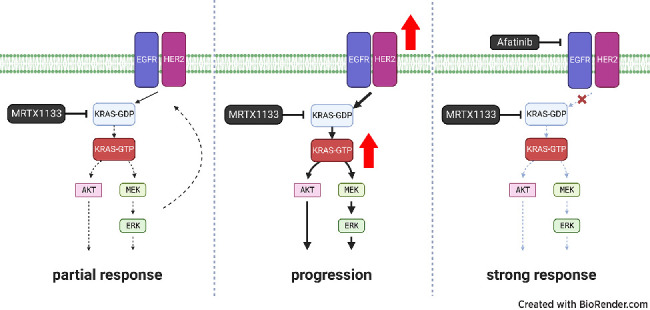
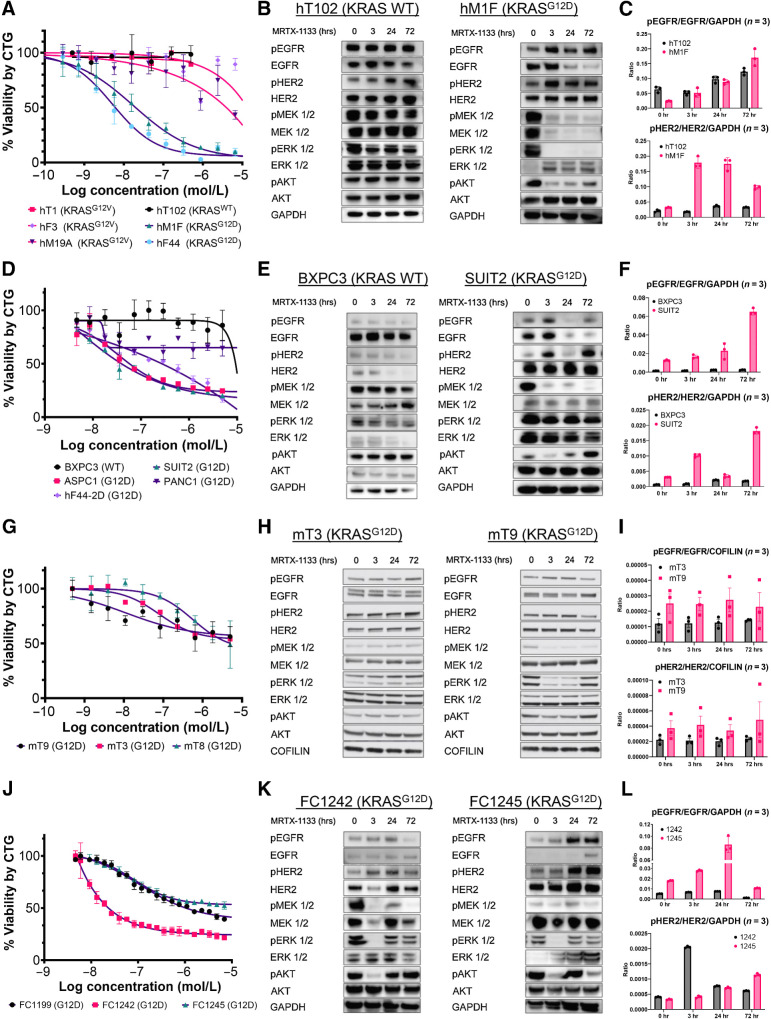
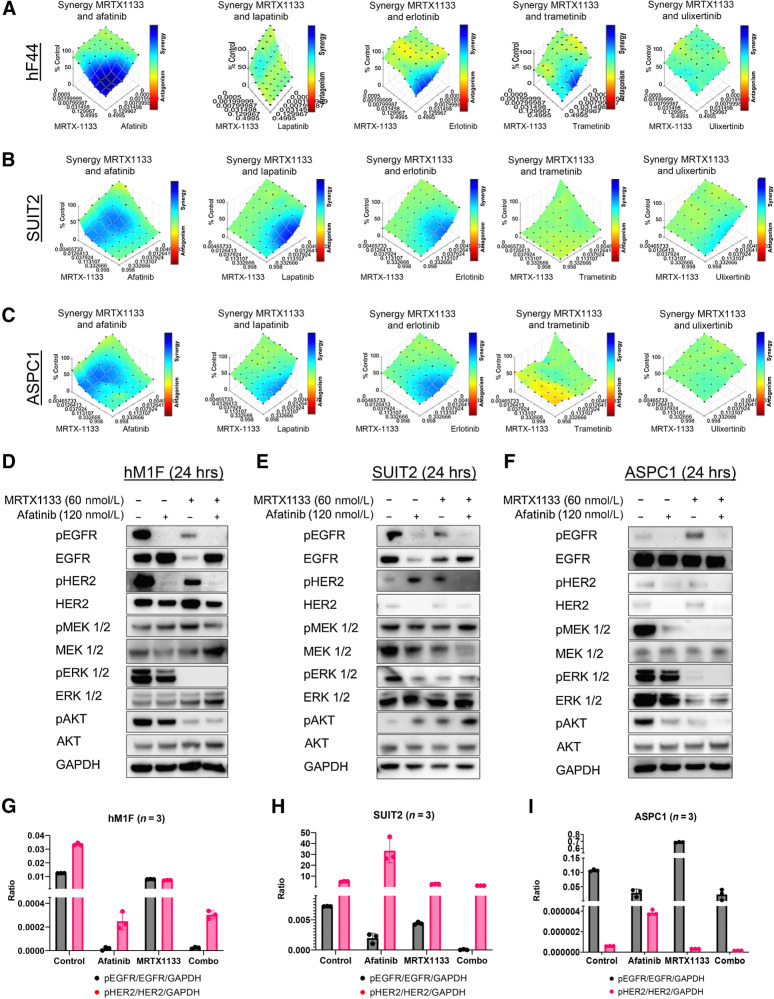
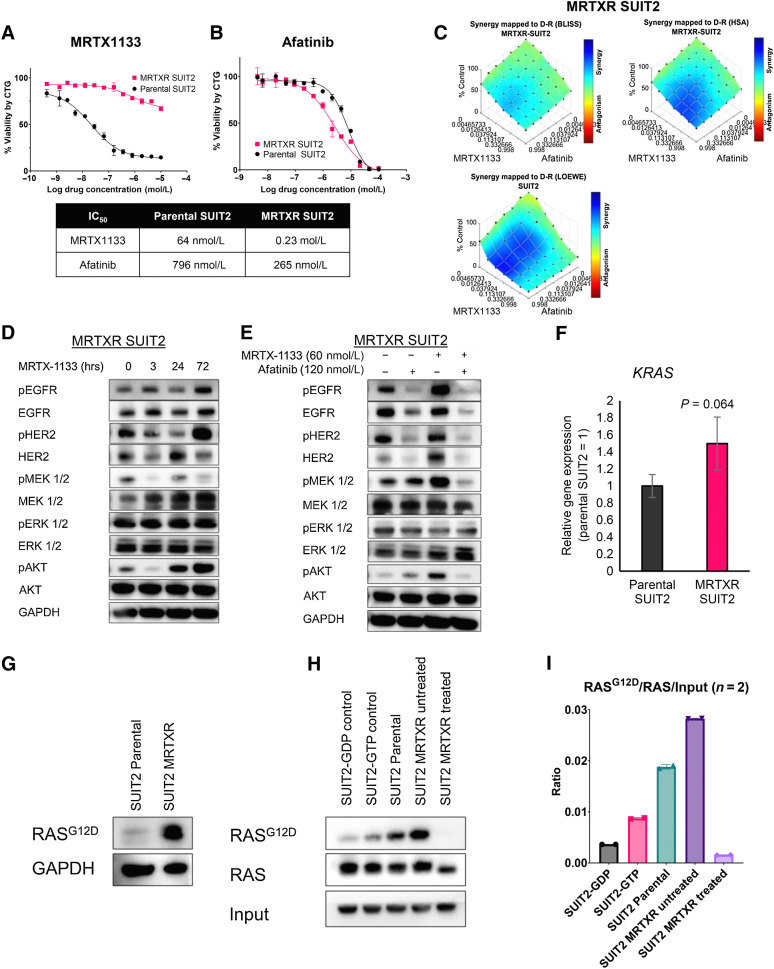
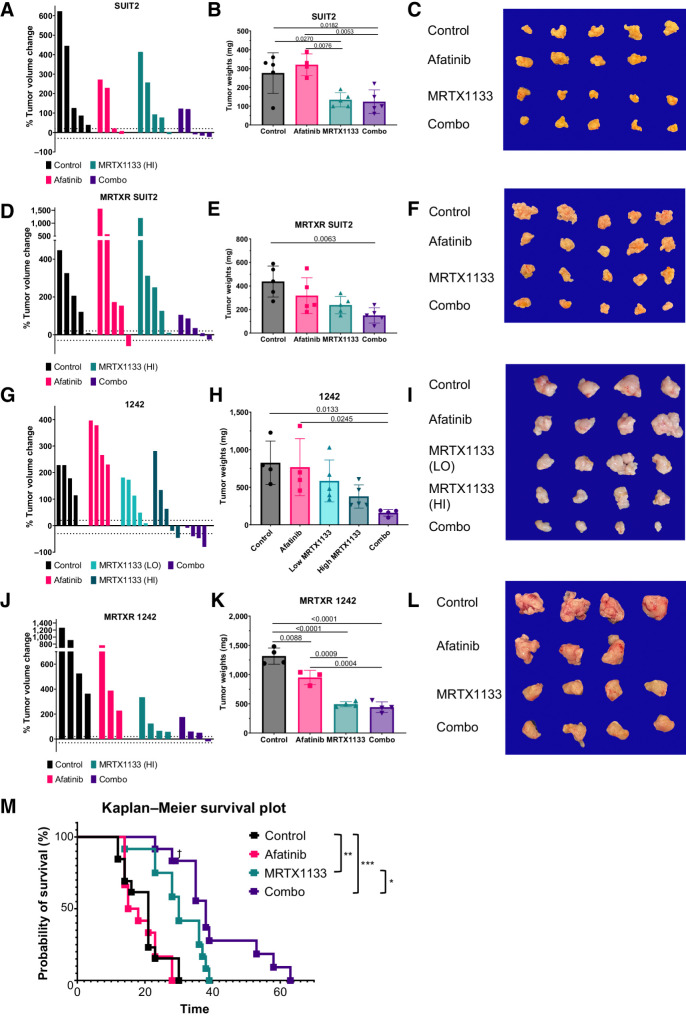
Pancreatic ductal adenocarcinoma (PDAC) is a lethal cancer with a low survival rate. Recently, new drugs that target KRASG12D, a common mutation in PDAC, have been developed. We studied one of these compounds, MRTX1133, and found it was specific and effective at low nanomolar concentrations in patient-derived organoid models and cell lines harboring KRASG12D mutations. Treatment with MRTX1133 upregulated the expression and phosphorylation of EGFR and HER2, indicating that inhibition of ERBB signaling may potentiate MRTX1133 antitumor activity. Indeed, the irreversible pan-ERBB inhibitor, afatinib, potently synergized with MRTX1133 in vitro, and cancer cells with acquired resistance to MRTX1133 in vitro remained sensitive to this combination therapy. Finally, the combination of MRTX1133 and afatinib led to tumor regression and longer survival in orthotopic PDAC mouse models. These results suggest that dual inhibition of ERBB and KRAS signaling may be synergistic and circumvent the rapid development of acquired resistance in patients with KRAS mutant pancreatic cancer. Significance: KRAS-mutant pancreatic cancer models, including KRAS inhibitor–resistant models, show exquisite sensitivity to combined pan-ERBB and KRAS targeting, which provides the rationale for testing this drug combination in clinical trials.
Overview
The claims and statistics of this paper haven’t been checked yet.
Free: it reads the open-access text and checks the first 5 claims that cite a source we can check. Create a free account to check every claim.
Integrity signals
Registry
Cites
Statistics
Figures
Verification
Claims the paper makes
The claims and statistics of this paper haven’t been checked yet.
Free: it reads the open-access text and checks the first 5 claims that cite a source we can check. Create a free account to check every claim.
Claims other papers make about this one
Each is checked against this paper’s own text: does it say what the citing paper says it does?
The source backs part of the claim, not all of it — or backs it for a different population, condition or comparison.
In the citing paper
“Recent work has also highlighted the importance of activation of EGFR and other ERBB family members as an adaptive response and resistance mechanism to KRAS inhibition across cancer types (30, 34, 63).”
From Mechanisms of Resistance to Oncogenic KRAS Inhibition in Pancreatic Cancer (2024) · cites this paper as [34]
Experimental — accuracy not yet measuredThe cited source says what the claim attributes to it.
In the citing paper
“Additional investigations of combination therapy strategies with MRTX1133 in preclinical models of PDAC have suggested that co-targeting of EGFR may have enhanced efficacy over monotherapy (30, 34).”
From Mechanisms of Resistance to Oncogenic KRAS Inhibition in Pancreatic Cancer (2024) · cites this paper as [34]
In the citing paper
“Finally, the combination of MRTX1133 and afatinib resulted in tumor regression and longer survival in murine orthotopic PDAC models [41].”
From KRAS, a New Target for Precision Medicine in Colorectal Cancer? (2024) · cites this paper as [41]
In the citing paper
“The use of an irreversible pan-ERBB inhibitor, afatinib, strongly synergized with MRTX1133 in vitro, and cancer cells with acquired resistance to MRTX1133 in vitro became sensitive again under this therapeutic combination.”
From KRAS, a New Target for Precision Medicine in Colorectal Cancer? (2024) · cites this paper as [41]
In the citing paper
“Another study shows that MRTX1133 increased the expression and phosphorylation of EGFR (ERBB1) and HER2 (ERBB2) [41].”
From KRAS, a New Target for Precision Medicine in Colorectal Cancer? (2024) · cites this paper as [41]
Self-check
Percentages, sums and reported differences re-computed from the paper’s own numbers.
The self-check needs the paper’s full text.
Citations
Cites
NIH Image to ImageJ: 25 years of image analysis
Schneider, C. A., Rasband, W. S., & Eliceiri, K. W. (2012) · Nature Methods · doi:10.1038/nmeth.2089 · Cited by 64,638
Subramanian, A., Tamayo, P., Mootha, V. K., Mukherjee, S., Ebert, B. L., Gillette, M. A., Paulovich, A., Pomeroy, S. L., Golub, T. R., Lander, E. S., et al. (2005) · Proceedings of the National Academy of Sciences · doi:10.1073/pnas.0506580102 · Cited by 53,625
Robinson, M. D., McCarthy, D. J., & Smyth, G. K. (2010) · Bioinformatics · doi:10.1093/bioinformatics/btp616 · Cited by 41,364
limma powers differential expression analyses for RNA-sequencing and microarray studies
Ritchie, M. E., Phipson, B., Wu, D., Hu, Y., Law, C. W., Shi, W., & Smyth, G. K. (2015) · Nucleic Acids Research · doi:10.1093/nar/gkv007 · Cited by 40,458
Siegel, R. L., Miller, K. D., Fuchs, H. E., & Jemal, A. (2022) · CA: A Cancer Journal for Clinicians · doi:10.3322/caac.21708 · Cited by 17,196
voom: precision weights unlock linear model analysis tools for RNA-seq read counts
Law, C. W., Chen, Y., Shi, W., & Smyth, G. K. (2014) · Genome Biology · doi:10.1186/gb-2014-15-2-r29 · Cited by 6,155
THE TOXICITY OF POISONS APPLIED JOINTLY1
BLISS, C. I. (1939) · Annals of Applied Biology · doi:10.1111/j.1744-7348.1939.tb06990.x · Cited by 2,419 · cited 1×
“Bliss independence models the effects of individual drugs in a combination as independent competing events (14).”
Organoid models of human and mouse ductal pancreatic cancer
Boj, S. F., Hwang, C.-I., Baker, L. A., Chio, I. I. C., Engle, D. D., Corbo, V., Jager, M., Ponz-Sarvise, M., Tiriac, H., Spector, M. S., et al. (2015) · Cell · doi:10.1016/j.cell.2014.12.021 · Cited by 2,150
Self-citationA Comprehensive Survey of Ras Mutations in Cancer
Prior, I. A., Lewis, P. D., & Mattos, C. (2012) · Cancer Research · doi:10.1158/0008-5472.can-11-2612 · Cited by 2,063 · cited 1×
“%) mutations are most common in PDAC (4).”
Berenbaum, M. C. (1989) · Pharmacological Reviews · doi:10.1016/s0031-6997(25)00026-2 · Cited by 1,414
Cited by
Singhal, A., Li, B. T., & O’Reilly, E. M. (2024) · Nature Medicine · doi:10.1038/s41591-024-02903-0 · Cited by 332
Mechanisms of Resistance to Oncogenic KRAS Inhibition in Pancreatic Cancer
Dilly, J., Hoffman, M. T., Abbassi, L., Li, Z., Paradiso, F., Parent, B. D., Hennessey, C. J., Jordan, A. C., Morgado, M., Dasgupta, S., et al. (2024) · Cancer Discovery · doi:10.1158/2159-8290.cd-24-0177 · Cited by 308
“Additional investigations of combination therapy strategies with MRTX1133 in preclinical models of PDAC have suggested that co-targeting of EGFR may have enhanced efficacy over monotherapy (30, 34).”
BackgroundA Small Molecule with Big Impact: MRTX1133 Targets the KRASG12D Mutation in Pancreatic Cancer
Wei, D., Wang, L., Zuo, X., Maitra, A., & Bresalier, R. S. (2023) · Clinical Cancer Research · doi:10.1158/1078-0432.ccr-23-2098 · Cited by 193
RAS signaling in carcinogenesis, cancer therapy and resistance mechanisms
Yang, X., & Wu, H. K. (2024) · Journal of Hematology & Oncology · doi:10.1186/s13045-024-01631-9 · Cited by 146
Targeting KRAS in pancreatic cancer
Stickler, S., RATH, B., & Hamilton, G. (2024) · Oncology Research Featuring Preclinical and Clinical Cancer Therapeutics · doi:10.32604/or.2024.045356 · Cited by 119
Consensus, debate, and prospective on pancreatic cancer treatments
Wang, J., Yang, J., Narang, A. K., He, J., Wolfgang, C. L., Li, K., & Zheng, L. (2024) · Journal of Hematology & Oncology · doi:10.1186/s13045-024-01613-x · Cited by 109
Targeting KRAS: from metabolic regulation to cancer treatment
Shi, Y., Zheng, H., Wang, T., Zhou, S., Zhao, S., Li, M., & Cao, B. (2025) · Molecular Cancer · doi:10.1186/s12943-024-02216-3 · Cited by 89
“However, acquired resistance has been observed in vitro [204].”
Improving outcomes of patients with pancreatic cancer
Dreyer, S. B., Beer, P. A., Hingorani, S. R., & Biankin, A. V. (2025) · Nature Reviews Clinical Oncology · doi:10.1038/s41571-025-01019-9 · Cited by 81
Chen, M., Tong, X., Sun, Y., Dong, C., Li, C., Wang, C., Zhang, M., Wen, Y., Ye, P., Li, R., et al. (2024) · Biomaterials · doi:10.1016/j.biomaterials.2024.122574 · Cited by 57
Yang, D., Sun, X., Moniruzzaman, R., Wang, H., Citu, C., Zhao, Z., Wistuba, I. I., Wang, H., Maitra, A., & Chen, Y. (2024) · Gastroenterology · doi:10.1053/j.gastro.2024.03.007 · Cited by 46
Pancreatic cancer: molecular pathogenesis and emerging therapeutic strategies
Rozengurt, E., & Eibl, G. (2026) · Signal Transduction and Targeted Therapy · doi:10.1038/s41392-025-02499-y · Cited by 66
“444 For example, MRTX1133 increases the expression and phosphorylation of EGFR and HER2, 445 and MRTX1133 acts synergistically with anti-EGFR drugs (e.g., erlotinib and lapatinib) in patient-derived organoids.”
Li, C., Liu, Y., Liu, C., Chen, F., Xie, Y., Zeh, H. J., Yu, C., Liu, J., Tang, D., & Kang, R. (2025) · Science Translational Medicine · doi:10.1126/scitranslmed.adp4986 · Cited by 41
Evaluation of KRAS inhibitor-directed therapies for pancreatic cancer treatment
Long, S.-A., Amparo, A. M., Goodhart, G., Ahmad, S. A., & Waters, A. M. (2024) · Frontiers in Oncology · doi:10.3389/fonc.2024.1402128 · Cited by 31
Han, L., Meng, L., Liu, J., Xie, Y., Kang, R., Klionsky, D. J., Tang, D., Jia, Y., & Dai, E. (2024) · Cancer Letters · doi:10.1016/j.canlet.2024.217258 · Cited by 38
Stromal-derived NRG1 enables oncogenic KRAS bypass in pancreas cancer
Han, J., Xu, J., Liu, Y., Liang, S., LaBella, K. A., Chakravarti, D., Spring, D. J., Xia, Y., & DePinho, R. A. (2023) · Genes & Development · doi:10.1101/gad.351037.123 · Cited by 30
Liaki, V., Barrambana, S., Kostopoulou, M., Lechuga, C. G., Zamorano-Domínguez, E., Acosta, D., Morales-Cacho, L., Álvarez, R., Sun, P., Rosas-Pérez, B., et al. (2025) · Proceedings of the National Academy of Sciences · doi:10.1073/pnas.2523039122 · Cited by 37
RetractedXu, J., Pham, M. D., Corbo, V., Ponz‐Sarvisé, M., Oni, T. E., Öhlund, D., & Hwang, C. (2025) · Experimental & Molecular Medicine · doi:10.1038/s12276-024-01378-w · Cited by 34
“MRTX1333-treated patients 43 .”
Jiang, X., Wang, T., Zhao, B. X., Sun, H., Dong, Y., Ma, Y., Li, Z., Wu, Y., Wang, K., Guan, X., et al. (2025) · Cell Reports Medicine · doi:10.1016/j.xcrm.2025.101966 · Cited by 35
Bandi, D. S. R., Nagaraju, G. P., Sarvesh, S., Carstens, J. L., Foote, J. B., Graff, E. C., Fang, Y.-H. D., Keeton, A. B., Chen, X., Valiyaveettil, J., et al. (2025) · Molecular Cancer · doi:10.1186/s12943-025-02288-9 · Cited by 32
“Similar observations have been reported by the KRAS G12D -specific inhibitor, MRTX1133, in PDAC [34].”
Evolution of direct RAS inhibitors: from undruggable target to clinical breakthroughs
Wang, X., Wu, J., Xiao, A., Wang, J., & Tian, J. (2025) · Molecular Cancer · doi:10.1186/s12943-025-02364-0 · Cited by 29
“…mediators, drug resistance often happens through reactivation of the RAS pathway through genetic and non-genetic events, thus targeting upstream factors, such as receptor tyrosine kinases, and downstream factors of RAS signaling pathway becomes reasonable and attractive strategy [118–120].”
Marasco, M., Kumar, D., Borrego, S. G., Seale, T. S., Maddalena, G., Mezzadra, R., Belanger, K., Cole, S., Perez, B., Luan, W., et al. (2025) · Cancer Discovery · doi:10.1158/2159-8290.cd-24-0614 · Cited by 21
Aguirre, A. J., Stanger, B. Z., & Maitra, A. (2024) · Cancer Research · doi:10.1158/0008-5472.can-24-1926 · Cited by 18
Sevrin, T., Imoto, H., Robertson, S. A., Rauch, N., Dyn'ko, U., Koubova, K., Wynne, K. J., Kölch, W., Rukhlenko, O. S., & Kholodenko, B. Ν. (2024) · Cell Reports · doi:10.1016/j.celrep.2024.114710 · Cited by 17
Targeting KRAS ‐mutant pancreatic cancer through simultaneous inhibition of KRAS , MEK, and JAK2
Miyazaki, S., Kitazawa, M., Nakamura, S., Koyama, M., Yamamoto, Y., Hondo, N., Kataoka, M., Tanaka, H., Takeoka, M., Komatsu, D. D., et al. (2024) · Molecular Oncology · doi:10.1002/1878-0261.13751 · Cited by 19
Molnár, E., Baranyi, M., Szigeti, K. A., Hegedüs, L., Bordás, F., Gábriel, Z., Petényi, G., Tóvári, J., Hegedűs, B., & Tímár, J. (2024) · Pathology & Oncology Research · doi:10.3389/pore.2024.1611948 · Cited by 18
Genetic Signature of Human Pancreatic Cancer and Personalized Targeting
Reshkin, S. J., Cardone, R. A., & Koltai, T. (2024) · Cells · doi:10.3390/cells13070602 · Cited by 14
“MRTX1133 showed synthetic lethality with EGFR inhibition in colorectal cancer [152] and synergistic anti-tumor effects in PDAC [153].”
BackgroundExperimental models of pancreas cancer: what has been the impact for precision medicine?
Pantazopoulou, V., Kubota, C. S., Ogawa, S., Gulay, K. C. M., Lin, X., Song, H., Weitz, J., Tiriac, H., Lowy, A. M., & Engle, D. D. (2025) · Journal of Clinical Investigation · doi:10.1172/jci191945 · Cited by 18
“Mouse models of pancreas cancer have been extensively used to study the efficacy of standard-of-care and novel therapies (30, 114).”
Self-citationXu, C., Lin, W., Zhang, Q., Ma, Y., Wang, X., Guo, A., Zhou, Z., Zhou, Z., Song, W., Zhao, Z., et al. (2024) · Molecular Medicine · doi:10.1186/s10020-024-00972-y · Cited by 15
Advances in Novel Targeted Therapies for Pancreatic Adenocarcinoma
Hoang, T. A., & Tsang, E. S. (2025) · Journal of Gastrointestinal Cancer · doi:10.1007/s12029-024-01149-w · Cited by 18
“There were promising preclinical results for the combination of MRTX1133 and RTK inhibitor in KRAS G12D-mutant PDAC [41].”
KRAS, a New Target for Precision Medicine in Colorectal Cancer?
Boilève, A., Smolenschi, C., Lambert, A., Boige, V., Delaye, M., Camilleri, G. M., Tarabay, A., Valéry, M., Fuerea, A., Pudlarz, T., et al. (2024) · Cancers · doi:10.3390/cancers16203455 · Cited by 11
Gluing GAP to RAS Mutants: A New Approach to an Old Problem in Cancer Drug Development
Ranđelović, I., Nyíri, K., Koppány, G., Baranyi, M., Tóvári, J., Kigyós, A., Tímár, J., Vértessy, B. G., & Grolmusz, V. (2024) · International Journal of Molecular Sciences · doi:10.3390/ijms25052572 · Cited by 10
“…the KRAS G12D mutant has also been addressed, and the effects of the promising MRTX-1133 compound in targeting G12D KRAS have been described [15–17], expanding the potential for the treatment of KRAS mutant tumors. the KRAS G12D mutant has also been addressed, and the promising MRTX-1133…”
BackgroundKale, R. R., Samant, C., Nandakumar, K., Pai, K. S. R., & Bhonde, M. (2025) · Biochemical and Biophysical Research Communications · doi:10.1016/j.bbrc.2025.151688 · Cited by 12
Precision immune regulation in KRAS-mutated cancers: the final piece of the puzzle?
Fu, S., Ma, J., Cai, C., Tan, J., Deng, X., Shen, H., Zeng, S., Chen, Y., & Han, Y. (2025) · Journal of Experimental & Clinical Cancer Research · doi:10.1186/s13046-025-03444-1 · Cited by 14
ZBTB11 depletion targets metabolic vulnerabilities in KRAS inhibitor-resistant PDAC
Tran, N. L., Jiang, J., Ma, M., Gadbois, G. E., Gulay, K. C. M., Verano, A. L., Schiavon, C. R., Rebollo, E., Zhou, H., Huang, C., et al. (2025) · Nature Chemical Biology · doi:10.1038/s41589-025-01978-1 · Cited by 17
Self-citationCRISPR-Cas9 Screening Identifies Resistance Mechanisms to KRAS Inhibition in Pancreatic Cancer
Lim, S.-A., Todd, H., Goodhart, G., Chang, W.-H., Amparo, A. M., Bridgens, R., Dilly, J., Park, S. J., Beal, R. M., Shehadeh, S. M., et al. (2025) · Cancer Research · doi:10.1158/0008-5472.can-25-1835 · Cited by 13
“These data mimic what was recently published (49).”
Inhibition of GTPase KRAS G12D : a review of patent literature
Li, Y., Yang, L., Li, X., & Zhang, X. (2024) · Expert Opinion on Therapeutic Patents · doi:10.1080/13543776.2024.2369630 · Cited by 9
Self-citationEnhancing KRAS G12D inhibitor sensitivity in pancreatic cancer through SHP2/PI3K pathway
Hao, M.-W., Zhang, T., Dong, D. F., Xin Min, Z. H. O. U., & Gao, H. (2025) · Medical Oncology · doi:10.1007/s12032-025-02683-8 · Cited by 7
“Studies have implicated KRAS allele amplification and increased GTP-bound KRAS in resistance mechanisms, and while MRTX1133 holds promise, it has shown signs of resistance in preclinical pancreatic cancer models [37–41].”
Abuelafia, A. M., Santofimia‐Castaño, P., Estarás, M., Grasso, D., Chuluyán, E., Lomberk, G. A., Urrutia, R. A., Dusetti, N., Fraunhoffer, N. A., & Iovanna, J. (2025) · Translational Oncology · doi:10.1016/j.tranon.2025.102421 · Cited by 7
“The study by Gulay et al. [36] and the study conducted by Dr. Schneider ’ s group [37]. report no synergic effect between the KRAS inhibitor MRTX1133 and gemcitabine.”
Chen, T., Yu, H., Wang, K., Qin, G., Zhao, Y., Liang, X., Li, Y., Zou, T., Liu, J., Zhao, J., et al. (2025) · Journal of Clinical Investigation · doi:10.1172/jci195814 · Cited by 7
“Studies have demonstrated that combining MRTX1133 with the ERBB inhibitor afa-tinib or the PI3K α inhibitor BYL-719 enhances antitumor effects and reverses acquired resistance (5, 8).”
Chang, H., Chen, H., Ma, T., Ma, K., Li, Y., Suo, L., Liang, X., Jia, K., Ma, J., Li, J., et al. (2024) · Scientific Reports · doi:10.1038/s41598-024-60780-6 · Cited by 6
“Another important finding was that SPTBN2 expression correlated with sensitivity to multiple drugs, including Vorinostat (HDAC inhibitor), Afatinib (tyrosine kinase inhibitor), Belinostat (HDAC inhibitor), and Lapatinib (tyrosinase inhibitor) 59–61 .”
Synthetic approaches and clinical application of KRAS inhibitors for cancer therapy
Jiang, M., Ma, S., Xuan, Y., & Chen, K. (2025) · European Journal of Medicinal Chemistry · doi:10.1016/j.ejmech.2025.117626 · Cited by 6
Ghanwatkar, Y., Mahto, S., Chittipolu, A., Ramanathan, R., Shrestha, P., & Mahato, R. I. (2025) · Acta Biomaterialia · doi:10.1016/j.actbio.2025.12.049 · Cited by 8
Organoids in translation: a bench-to-bedside framework for pancreatic cancer precision medicine
Malik, D. A., Schmieder, E., Genova, G., Gaskins, J., & Martin, R. C. G. (2026) · Journal of Translational Medicine · doi:10.1186/s12967-025-07596-8 · Cited by 10
“While muta-tion-specific inhibitors, such as sotorasib ( KRAS G12C) and MRTX1133 ( KRAS G12D ), show promise, their benefits are frequently transient due to adaptive resistance [4, 40, 54, 94].”
Bonsor, D. A., Finci, L. I., Potter, J. R., Young, L. C., Wall, V. E., de Salazar, R. G., Geis, K. R., Stephens, T., Finney, J., Nissley, D. V., et al. (2026) · Nature Communications · doi:10.1038/s41467-026-68319-1 · Cited by 8
Xu, X., Chen, X., Xu, R., Huo, Z., Li, C., Nowsheen, S., Aziz, K., Yao, F., Lou, Z., & Deng, M. (2026) · Nature Communications · doi:10.1038/s41467-026-69695-4 · Cited by 9
“While selective KRAS G12D inhibitors like MRTX1133 have shown potent preclinical activity 20,21,32,33 , rapid resistance limits their durability 34 – 36 , underscoring the need for mechanistically informed combination strategies.”
RetractedLin, Q., Morales-Giron, A. A., Sander, C., Curtis, J. M., Barnes, H., Patel, P. S., de la Cruz, F. F., Riedl, J. M., Matsubara, H., Nakamura, H., et al. (2026) · Clinical Cancer Research · doi:10.1158/1078-0432.ccr-25-1788 · Cited by 12
“EGFR signaling has been reported to drive MAPK feedback reactivation in colorectal cancer models (18, 37, 45), and inhibition of EGFR signaling with an anti-EGFR antibody in combination with BRAF or KRASi G12C has led to improved outcomes in patients with colorectal cancer and is now FDA-approved…”
McAndrews, K. M., Mahadevan, K. K., Li, B., Comptdaer, A. M., Sockwell, A. M., Morse, S. J., Kelly, P. J., Patel, S. I., Kirtley, M. L., Diaz, B. A. M., et al. (2026) · The EMBO Journal · doi:10.1038/s44318-026-00854-5 · Cited by 12
Emerging pathways yielding opportunities for future treatments in pancreatic ductal adenocarcinoma
Shah, A., Johnson, E., Ponnusamy, M. P., & Batra, S. K. (2025) · Expert Opinion on Therapeutic Targets · doi:10.1080/14728222.2025.2507035 · Cited by 4
“Moreover, the KRAS inhibitor has shown synergistic efficacy when combined with immune checkpoint blockade molecules and EGFR-specific inhibitors [123,124].”
Szigeti, K. A., Baranyi, M., Surguta, S. E., Hegedűs, B., Piurkó, V., Tóvári, J., & Tímár, J. (2026) · Scientific Reports · doi:10.1038/s41598-025-34204-y · Cited by 4
“Previous studies demonstrated that MRTX1133 can interfere with KRAS-G12D function 28,29,36–38 .”
B7 homolog 3 in pancreatic cancer
Perović, D., Pjević, M. D., Perović, V., Grk, M., Rasic, M., Miličković, M., Mijović, T., & Rašić, P. (2024) · World Journal of Gastroenterology · doi:10.3748/wjg.v30.i31.3654 · Cited by 5
“This quest has led to the emergence of novel anticancer agents with various mechanisms of action[10].”
McAndrews, K. M., Mahadevan, K. K., Li, B., Sockwell, A. M., Morse, S. J., Kelly, P. J., Patel, S. I., Kirtley, M. L., Diaz, B. A. M., Lyu, H., et al. (2025) · bioRxiv (Cold Spring Harbor Laboratory) · doi:10.1101/2025.01.29.635543 · Cited by 4
Gene mutation, clinical characteristics and pathology in resectable lung adenocarcinoma
Zou, J. P., Han, W., Hu, Y. T., Zeng, C., Li, J., Lei, W., Cao, J., Fei, Q., Shao, M., Yi, J., et al. (2025) · World Journal of Surgical Oncology · doi:10.1186/s12957-025-03680-x · Cited by 4
Organoids in the research of pancreatic neoplasms: cultivation, applications, and limitations
Du, C., Liu, Y., Lu, X., Zhang, M., Jiang, S., Cao, Z., Yang, G., Qiu, J., Zhang, T., & Zhao, Y. (2025) · Cancer Letters · doi:10.1016/j.canlet.2025.217968 · Cited by 6
ZBTB11 Depletion Targets Metabolic Vulnerabilities in K-Ras Inhibitor Resistant PDACPreprint
Tran, N. L., Jiang, J., Ma, M., Gadbois, G. E., Gulay, K. C. M., Verano, A. L., Zhou, H., Huang, C., Scott, D. A., Bang, A. G., et al. (2024) · bioRxiv (Cold Spring Harbor Laboratory) · doi:10.1101/2024.05.19.594824 · Cited by 3
Self-citationMRTX1133’s promise for treating KRASG12D-mutant pancreatic cancer
Haidar, M., & Jacquemin, P. (2024) · Journal of Gastrointestinal Oncology · doi:10.21037/jgo-24-255 · Cited by 2
“These findings highlight the potential synergistic effect of addressing both the ERBB and KRAS signaling pathways to overcome acquired resistance in patients with KRAS-mutant pancreatic cancer (19).”
Chang, K.-T., Chen, Y.-C., Lien, Y., Huang, Y., & Huang, C.-Y. (2025) · Plants · doi:10.3390/plants14101426 · Cited by 2
“Protein purity was confirmed via electrophoresis on 12% SDS-PAGE gel.”
Emerging Systemic Therapy Considerations for Pancreatic Cancer
Liang, K.-L., Guo, M. Z., & Zaidi, N. (2025) · Seminars in Radiation Oncology · doi:10.1016/j.semradonc.2025.07.006 · Cited by 2
Shi, Y., Qin, R., & Li, Y. (2025) · Biomedicines · doi:10.3390/biomedicines13123013 · Cited by 3
“…with the RAF/MEK dual inhibitor avutometinib [76], be-daquiline [77], the novel selective G9a degrader G9D-4 [78], or the ERBB inhibitor afa-tinib [79]—has also shown therapeutic potential, highlighting the significance of combining KRAS targeting with inhibition of multiple signalling pathways.”
The evolving landscape of KRAS-targeted therapy: mechanisms of resistance and emerging strategies
Pilco‐Janeta, D. F., & Puebla, M. D. L. C. (2025) · Anti-Cancer Drugs · doi:10.1097/cad.0000000000001801 · Cited by 2
Miyan, J., Vudatha, V., Cao, L., Zhang, P., Zheng, G., Zheng, L., Trevino, J., Zhou, D., & Khan, S. (2026) · Cancers · doi:10.3390/cancers18060920 · Cited by 3
Zuo, W., Luo, S., Qin, H., Wong, K. H., Siu, S. W. I., Tashima, A. K., Assaraf, Y. G., & Kwok, H. F. (2026) · Cell Communication and Signaling · doi:10.1186/s12964-026-02856-6 · Cited by 2
“However, drug resistance remains a significant hurdle, often necessitating combination therapies that target multiple ErbB receptors or their downstream signaling pathways to enhance treatment efficacy in pancreatic cancer [33, 35, 46, 47].”
Osorio-Vasquez, V., Zhu, J., Lumibao, J. C., Lande, K., Peck, K. L., Stamp, M., Okhovat, S. R., Song, H., Ogawa, S., Kubota, C. S., et al. (2026) · Cell stem cell · doi:10.1016/j.stem.2026.06.002 · Cited by 4
Self-citationTargeting KRAS for cancer therapy
Jia, J., Liu, R., Adamide, T. A., Fernandez, I. E., & Stathopoulos, G. T. (2026) · British Journal of Pharmacology · doi:10.1111/bph.70546 · Cited by 4
Ray, P., Shukla, S., Zhang, Y., Donahue, K. L., Nancarrow, D. J., Kasturirangan, S., Shankar, S., Cuneo, K. C., Thomas, D. G., Gadgeel, S. M., et al. (2025) · Molecular Cancer Research · doi:10.1158/1541-7786.mcr-24-0701 · Cited by 5
Co-targeting KRASG12D and the HER family is efficacious in colorectal cancer
Kilroy, M. K., Wischmeier, C., Park, B. S., Choi, D., Feroz, W., Mishra, R., & Garrett, J. T. (2025) · Carcinogenesis · doi:10.1093/carcin/bgaf036 · Cited by 3
Zhou, J., Fang, Z., Zhang, W., Rao, G.-W., & Zheng, Q. (2025) · Mini-Reviews in Organic Chemistry · doi:10.2174/0118756298391640250731025705 · Cited by 1
Development of targeted therapy for pancreatic ductal adenocarcinoma: a 5-year review
Zhou, Z., Zhang, J., Guo, B., & Jin, H. (2025) · Journal of Pancreatology · doi:10.1097/jp9.0000000000000244 · Cited by 2
Ghosh, D., Kazi, A., Vasiyani, H. K. K., Vudatha, V., Lecomte, N., Iacobuzio–Donahue, C. A., Trevino, J., & Sebti, S. M. (2026) · European Journal of Cancer · doi:10.1016/j.ejca.2026.116255 · Cited by 2
Liu, H., Yuan, M., Shang, Y., Chen, J., Hou, F., Wang, L., & Jiang, W. (2026) · Advanced Science · doi:10.1002/advs.202513246 · Cited by 1
Research progress on the etiology and pathogenesis of pancreatic cancer: a narrative review
Guo, M., Han, Q., Wang, Z., Ya, D., & Wang, X. (2026) · Frontiers in Oncology · doi:10.3389/fonc.2026.1781024 · Cited by 2
“Gulay and other scholars (134) showed that low-concentration MRTX1133 exerted highly selective antitumor activity in cell lines and patient-derived organoid models carrying the KRAS G12D mutation.”
Pancreatic Cancer: Translating Tumor Biology into Actionability
Balogun, F. O., Sherman, M. H., Park, W., Soares, K. C., Reyngold, M., Schoenfeld, J. D., Singhal, A., Iacobuzio–Donahue, C. A., & O'Reilly, E. M. (2026) · Cancer Discovery · doi:10.1158/2159-8290.cd-25-2014 · Cited by 3
Development of Highly Sensitive Anti-Mouse HER2 Monoclonal Antibodies for Flow Cytometry
Ouchida, T., Suzuki, H., Tanaka, T., Kaneko, M. K., & Kato, Y. (2023) · International Journal of Translational Medicine · doi:10.3390/ijtm3030022 · Cited by 1
“One of the drugs, MRTX1133, exhibited specific efficacy in tumor cells harboring KRASG12D mutations [36,37].”
BackgroundMolecular underpinnings of pancreatic cancer: Innovations in treatment and future perspectives
Tez, M., Şahingöz, E., & Martlı, H. F. (2023) · Gastrointestinal Tract · doi:10.54844/git.2023.496 · Cited by 1
Targeted Therapy for Pancreatic Cancer: Focus on KRAS
Keum, J., & Lee, S. H. (2025) · Journal of Digestive Cancer Research · doi:10.52927/jdcr.2025.13.1.52
Thielen, N., Wei, N., Nagai, E., Chu, E., Kitamura, S., & Kuang, C. (2025) · bioRxiv (Cold Spring Harbor Laboratory) · doi:10.1101/2025.06.27.662039
Torgunrud, A., Lund-Andersen, C., Davidson, B., Marcussen, I. K. N., Larsen, S. G., Dagenborg, V., & Flatmark, K. (2025) · Pleura and Peritoneum · doi:10.1515/pp-2025-0034 · Cited by 1
“…or indirectly targeting these aberrations becoming increasingly available to cancer patients, it is becoming important to know how frequently these mutations occur in PMP, and to have reliable analytical strategies to identify individual cases that might bene fi t from such treatment [10 – 12].”
Pharmaco-genomic characterization of pancreatic and biliary tract cancer tumoroids for drug response
Fang, K., Zhang, W., Zhao, Q., Hong, Y., Wang, R., Yang, B., Zhao, Y., Shi, Y., Zhou, B., Ding, J., et al. (2026) · iScience · doi:10.1016/j.isci.2026.115062
Lu, J., Liang, W., Liang, Y., Ren, J., Guo, C., Li, X., Pan, J., Zhang, W., & Tian, S. (2026) · Chinese Herbal Medicines · doi:10.1016/j.chmed.2026.03.006
Thielen, N., Wei, N., Nagai, E., Houston, M. A., Augenlicht, L. H., Shin, A. E., Gabre, J. T., Rustgi, A. K., Ha, G., LaFave, L. M., et al. (2026) · npj Precision Oncology · doi:10.1038/s41698-026-01384-3 · Cited by 1
“MRTX1133isarelativelynewinhibitorwithlimitedstudieson resistancemechanisms 25,37,46 .”
Inhibition of Pax6 sumoylation suppresses the tumorigenicity of pancreatic cancer cells
Xiao, Y., Wang, J., Shan, Y.-Y., Fu, J., Deng, M., Wang, Y., Zhang, J.-P., Zheng, S.-Y., Zou, M., Gan, Y., et al. (2026) · Cell Death and Differentiation · doi:10.1038/s41418-026-01789-4
Yang, X., Tao, X., Qi, W., Luo, R., Lan, T., Xie, K., Cai, Y., Gao, F., Lv, Y., Liu, C., et al. (2026) · Journal of Pharmaceutical Analysis · doi:10.1016/j.jpha.2026.101718
Patient-derived organoids in pancreatic cancer: Advances and applications in precision oncology
Lee, H. S., & Koo, B. (2026) · Cancer Biome and Targeted Therapy · doi:10.66505/cbtt.v1i3.46
Discovery of a Potent and Selective KRAS G12D Degrader based on PROTAC Degradation
Jiang, L., Yang, W., Liu, Y., Li, G., Luo, X., Zhou, Y., Qin, J., Pan, Y., & Huang, W. (2026) · European Journal of Pharmaceutical Sciences · doi:10.1016/j.ejps.2026.107633
Jeon, E., Song, J., & Sim, T. (2026) · Future Medicinal Chemistry · doi:10.1080/17568919.2026.2719780
Mariano, M. P., Sgarilli, E., Mijnlieff, D., Visuvasam, B., Blesio, A., Digiacomo, G., Cavazzoni, A., Ferracin, M., & Giovannetti, E. (2026) · Cancer Drug Resistance · doi:10.20517/cdr.2026.52 · Cited by 1
Wan, L., Wang, M., Ishigami, Y., Kral, A. J., Lin, K.-T., Merrill, J. R., Lyons, S. K., & Krainer, A. R. (2026) · bioRxiv (Cold Spring Harbor Laboratory) · doi:10.64898/2026.10.06.757127
Beyond Tumor Recapitulation: A Multidimensional Framework for Cancer Organoid Fidelity
Bılır, A., Yıldırım, B., & Karalök, M. H. (2026) · Organoids · doi:10.3390/organoids5040036
Zheng, H., Liu, Z., Nie, S., Sun, J., Li, Z., Zhang, S., Zhang, S., Ma, S., Wang, X., & Qin, C. (2026) · Marine Life Science & Technology · doi:10.1007/s42995-026-00424-y
BindingDB (2026) · UC San Diego · doi:10.7270/q27p94b7
Metadata
- Authors
- Gulay, K. C. M., Zhang, X., Pantazopoulou, V., Patel, J., Esparza, E., Pran Babu, D. S., Ogawa, S., Weitz, J., Ng, I., Mose, E. S., Pu, M., Engle, D. D., Lowy, A. M., & Tiriac, H.
- Affiliations
- University of California San Diego (US)
- Salk Institute for Biological Studies (US)
- 1Department of Surgery, Division of Surgical Oncology, Moores Cancer Center, University of California San Diego, San Diego, California.
- Corresponding author
- Tiriac, Hervé
- ORCID
- Venue
- Cancer Research
- Published
- 2023-06-28
- Volume
- 83
- Issue
- 18
- Pages
- 3001-3012
- ISSN
- 0008-5472 (ISSN-L)
- 1538-7445
- PMC
- PMC10502451
- OpenAlex
- W4382344153
- Semantic Scholar
- d42dedf92cded88027ed72229241a09dbac55650
- Cited by
- 89
- References
- 29
- Citations by year
- 2026: 28 · 2025: 35 · 2024: 22 · 2023: 4
- FWCI
- 10.81
- Type
- journal article
- Language
- en
- Open access
- hybrid
- doi.org
- Licence
- Locations
- Cancer Research (publishedVersion, cc-by-nc-nd)
- PubMed Central (publishedVersion, cc-by-nc-nd)
- PubMed (publishedVersion)
- eScholarship (California Digital Library) (submittedVersion, cc-by-nc-nd)
- Funders
- Lustgarten Foundation
- Alexandrina M. McAfee Trust Foundation
- Research for a Cure of Pancreatic Cancer Fund
- Kakenhi (JP21J01035)
- Swedish Research Council
- Topics
- Health Sciences › Medicine › Oncology › Pancreatic and Hepatic Oncology Research
- Life Sciences › Biochemistry, Genetics and Molecular Biology › Molecular Biology › Protein Kinase Regulation and GTPase Signaling
- Health Sciences › Medicine › Surgery › Pancreatitis Pathology and Treatment
- Keywords
- pancreatic ductal adenocarcinoma, KRAS G12D mutation, MRTX1133, afatinib, EGFR, HER2, combination therapy, drug synergy, acquired drug resistance, patient-derived organoids, orthotopic mouse model
- MeSH terms
- Afatinib, Animals, Heterocyclic Compounds, 2-Ring, Mutation, Naphthalenes, Pancreatic Neoplasms, Proto-Oncogene Proteins p21(ras), Carcinoma, Pancreatic Ductal, Cell Line, Tumor, Mice, ErbB Receptors
About these checks
Registry, retraction, Cites and statistics results are computed, not judged, with one exception: a printed reference that no index lists is read once by a model before it counts as a citation error. Claims are extracted by a model and kept only when their quote appears verbatim in the text; each cited source is then checked, with a model’s help, for whether it says what the claim relies on. Those verdicts can be wrong — read the claim’s quote and the cited source before relying on one.
Statistics and arithmetic are recomputed, not judged.
Confidence bands are shown only for fields calibrated on our annotated test set. None is calibrated yet, so no band is shown.
What counts as a claim ›How we measure confidence ›How we check this ›
Are you an author, or do you see a problem with this page? Request a review
Data sources
Bibliographic data: Semantic Scholar, OpenAlex, Crossref.
Contains information from the Semantic Scholar Academic Graph Datasets, made available under the ODC Attribution License (ODC-BY 1.0).
Semantic Scholar’s data is described in: Kinney, R., et al. (2023). The Semantic Scholar Open Data Platform. arXiv:2301.10140.
