

Dual Inhibition of KRASG12D and Pan-ERBB Is Synergistic in Pancreatic Ductal Adenocarcinoma
Open accessPublished version of a preprint
The DOI matches its Crossref record; 29 of the 29 references it cites were found in a registry or an index.
Abstract
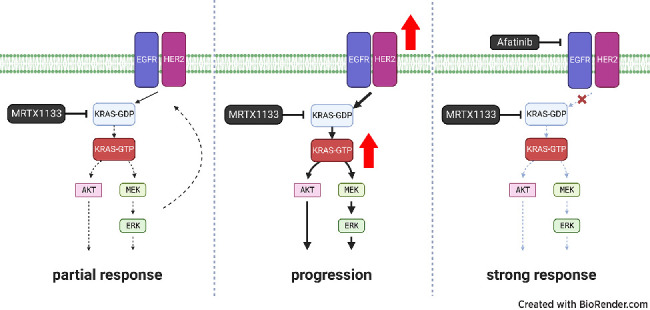
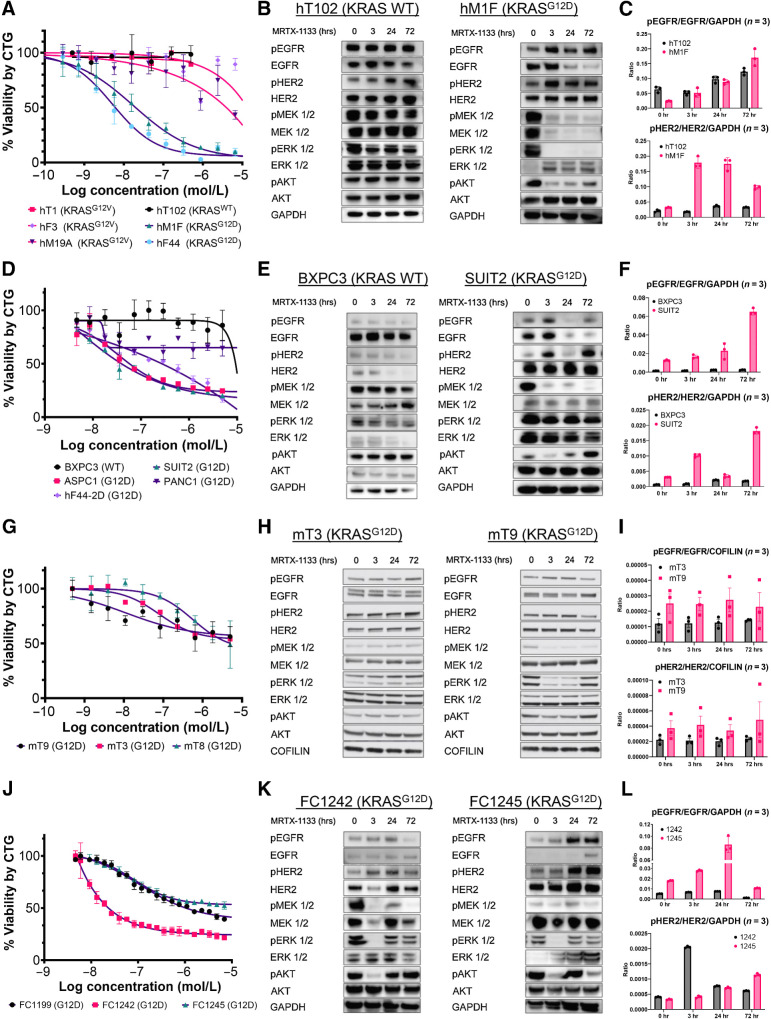
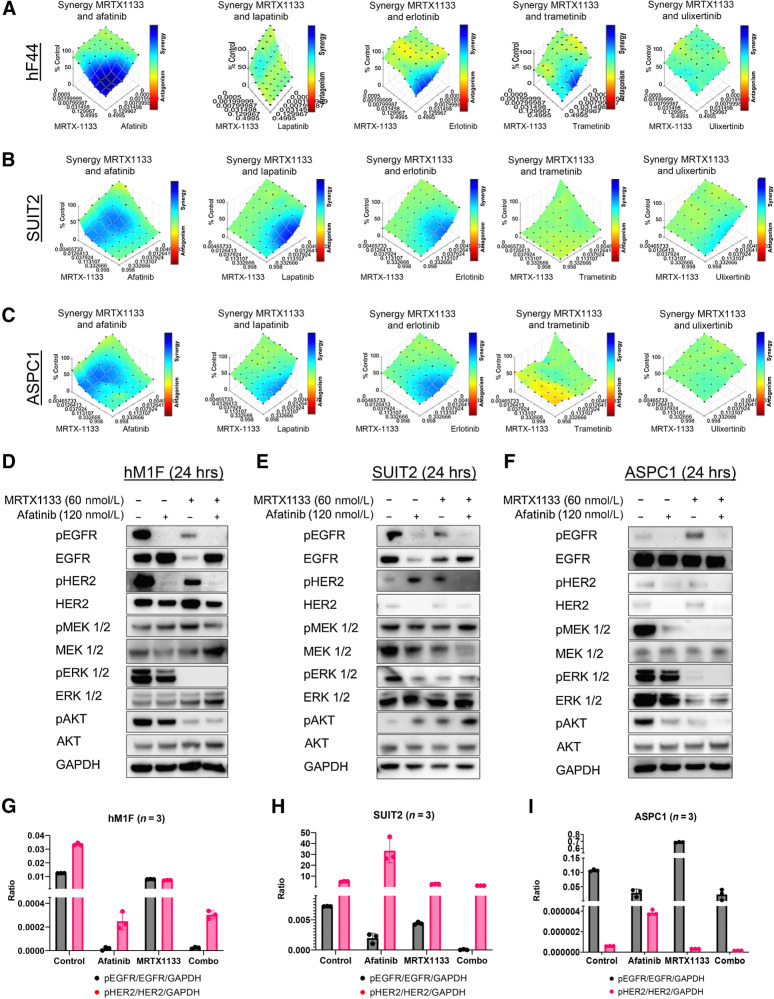
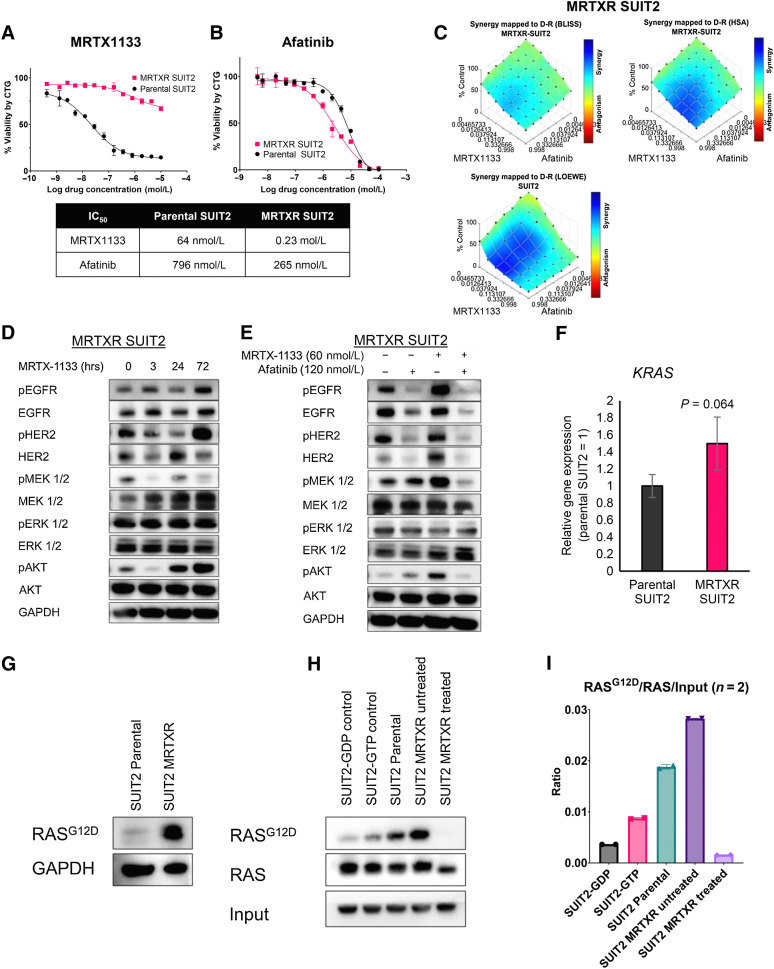
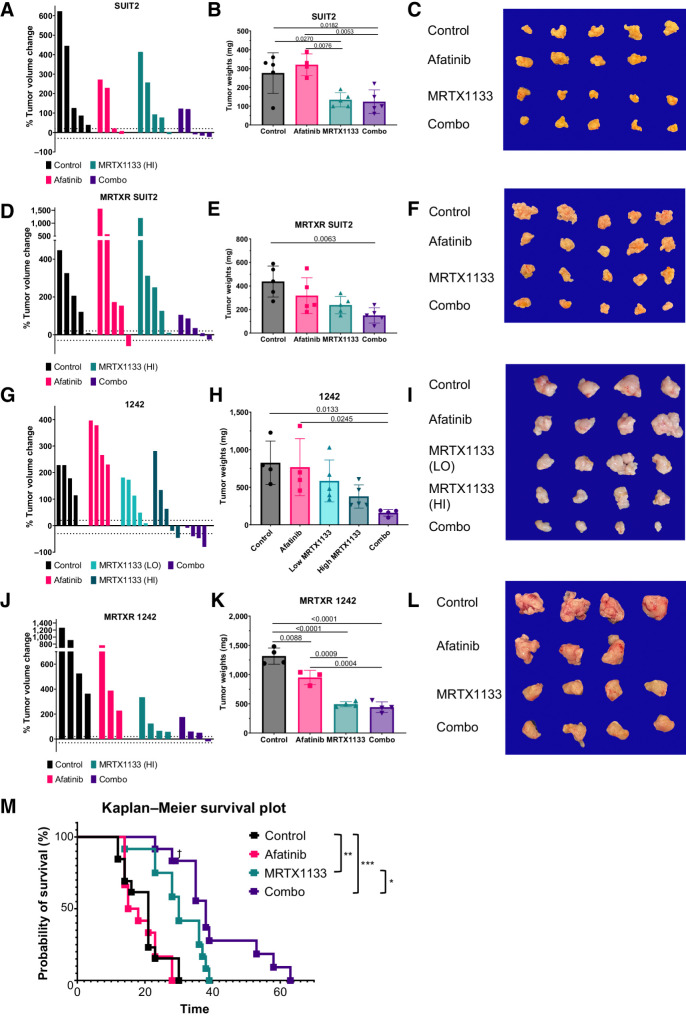
Pancreatic ductal adenocarcinoma (PDAC) is a lethal cancer with a low survival rate. Recently, new drugs that target KRASG12D, a common mutation in PDAC, have been developed. We studied one of these compounds, MRTX1133, and found it was specific and effective at low nanomolar concentrations in patient-derived organoid models and cell lines harboring KRASG12D mutations. Treatment with MRTX1133 upregulated the expression and phosphorylation of EGFR and HER2, indicating that inhibition of ERBB signaling may potentiate MRTX1133 antitumor activity. Indeed, the irreversible pan-ERBB inhibitor, afatinib, potently synergized with MRTX1133 in vitro, and cancer cells with acquired resistance to MRTX1133 in vitro remained sensitive to this combination therapy. Finally, the combination of MRTX1133 and afatinib led to tumor regression and longer survival in orthotopic PDAC mouse models. These results suggest that dual inhibition of ERBB and KRAS signaling may be synergistic and circumvent the rapid development of acquired resistance in patients with KRAS mutant pancreatic cancer. Significance: KRAS-mutant pancreatic cancer models, including KRAS inhibitor–resistant models, show exquisite sensitivity to combined pan-ERBB and KRAS targeting, which provides the rationale for testing this drug combination in clinical trials.
Overview
The claims and statistics of this paper haven’t been checked yet.
Free: it reads the open-access text and checks the first 5 claims that cite a source we can check. Create a free account to check every claim.
Integrity signals
Registry
Cites
Statistics
Figures
Verification
Claims the paper makes
The claims and statistics of this paper haven’t been checked yet.
Free: it reads the open-access text and checks the first 5 claims that cite a source we can check. Create a free account to check every claim.
Claims other papers make about this one
Each is checked against this paper’s own text: does it say what the citing paper says it does?
The source backs part of the claim, not all of it — or backs it for a different population, condition or comparison.
In the citing paper
“Recent work has also highlighted the importance of activation of EGFR and other ERBB family members as an adaptive response and resistance mechanism to KRAS inhibition across cancer types (30, 34, 63).”
From Mechanisms of Resistance to Oncogenic KRAS Inhibition in Pancreatic Cancer (2024) · cites this paper as [34]
Experimental — accuracy not yet measuredThe cited source says what the claim attributes to it.
In the citing paper
“Additional investigations of combination therapy strategies with MRTX1133 in preclinical models of PDAC have suggested that co-targeting of EGFR may have enhanced efficacy over monotherapy (30, 34).”
From Mechanisms of Resistance to Oncogenic KRAS Inhibition in Pancreatic Cancer (2024) · cites this paper as [34]
In the citing paper
“Finally, the combination of MRTX1133 and afatinib resulted in tumor regression and longer survival in murine orthotopic PDAC models [41].”
From KRAS, a New Target for Precision Medicine in Colorectal Cancer? (2024) · cites this paper as [41]
In the citing paper
“The use of an irreversible pan-ERBB inhibitor, afatinib, strongly synergized with MRTX1133 in vitro, and cancer cells with acquired resistance to MRTX1133 in vitro became sensitive again under this therapeutic combination.”
From KRAS, a New Target for Precision Medicine in Colorectal Cancer? (2024) · cites this paper as [41]
In the citing paper
“Another study shows that MRTX1133 increased the expression and phosphorylation of EGFR (ERBB1) and HER2 (ERBB2) [41].”
From KRAS, a New Target for Precision Medicine in Colorectal Cancer? (2024) · cites this paper as [41]
Self-check
Percentages, sums and reported differences re-computed from the paper’s own numbers.
The self-check needs the paper’s full text.
Citations
Cites
NIH Image to ImageJ: 25 years of image analysis
Schneider, C. A., Rasband, W. S., & Eliceiri, K. W. (2012) · Nature Methods · doi:10.1038/nmeth.2089 · Cited by 64,638
Subramanian, A., Tamayo, P., Mootha, V. K., Mukherjee, S., Ebert, B. L., Gillette, M. A., Paulovich, A., Pomeroy, S. L., Golub, T. R., Lander, E. S., et al. (2005) · Proceedings of the National Academy of Sciences · doi:10.1073/pnas.0506580102 · Cited by 53,625
Robinson, M. D., McCarthy, D. J., & Smyth, G. K. (2010) · Bioinformatics · doi:10.1093/bioinformatics/btp616 · Cited by 41,364
limma powers differential expression analyses for RNA-sequencing and microarray studies
Ritchie, M. E., Phipson, B., Wu, D., Hu, Y., Law, C. W., Shi, W., & Smyth, G. K. (2015) · Nucleic Acids Research · doi:10.1093/nar/gkv007 · Cited by 40,458
Siegel, R. L., Miller, K. D., Fuchs, H. E., & Jemal, A. (2022) · CA: A Cancer Journal for Clinicians · doi:10.3322/caac.21708 · Cited by 17,196
voom: precision weights unlock linear model analysis tools for RNA-seq read counts
Law, C. W., Chen, Y., Shi, W., & Smyth, G. K. (2014) · Genome Biology · doi:10.1186/gb-2014-15-2-r29 · Cited by 6,155
THE TOXICITY OF POISONS APPLIED JOINTLY1
BLISS, C. I. (1939) · Annals of Applied Biology · doi:10.1111/j.1744-7348.1939.tb06990.x · Cited by 2,419 · cited 1×
“Bliss independence models the effects of individual drugs in a combination as independent competing events (14).”
Organoid models of human and mouse ductal pancreatic cancer
Boj, S. F., Hwang, C.-I., Baker, L. A., Chio, I. I. C., Engle, D. D., Corbo, V., Jager, M., Ponz-Sarvise, M., Tiriac, H., Spector, M. S., et al. (2015) · Cell · doi:10.1016/j.cell.2014.12.021 · Cited by 2,150
Self-citationA Comprehensive Survey of Ras Mutations in Cancer
Prior, I. A., Lewis, P. D., & Mattos, C. (2012) · Cancer Research · doi:10.1158/0008-5472.can-11-2612 · Cited by 2,063 · cited 1×
“%) mutations are most common in PDAC (4).”
Berenbaum, M. C. (1989) · Pharmacological Reviews · doi:10.1016/s0031-6997(25)00026-2 · Cited by 1,414
Acquired Resistance to KRAS G12C Inhibition in Cancer
Awad, M. M., Liu, S., Rybkin, I. I., Arbour, K. C., Dilly, J., Zhu, V. W., Johnson, M. L., Heist, R. S., Patil, T., Riely, G. J., et al. (2021) · New England Journal of Medicine · doi:10.1056/nejmoa2105281 · Cited by 1,247
KRAS Mutation: From Undruggable to Druggable in Cancer
Huang, L., Guo, Z., Wang, F., & Fu, L. (2021) · Signal Transduction and Targeted Therapy · doi:10.1038/s41392-021-00780-4 · Cited by 1,127
Organoid Profiling Identifies Common Responders to Chemotherapy in Pancreatic Cancer
Tiriac, H., Belleau, P., Engle, D. D., Plenker, D., Deschênes, A., Somerville, T. D. D., Froeling, F. E. M., Burkhart, R. A., Denroche, R. E., Jang, G.-H., et al. (2018) · Cancer Discovery · doi:10.1158/2159-8290.cd-18-0349 · Cited by 1,092
Self-citation(1953) · PubMed · Cited by 942
Identification of MRTX1133, a Noncovalent, Potent, and Selective KRAS G12D Inhibitor
Wang, X., Allen, S., Blake, J. F., Bowcut, V., Briere, D. M., Calinisan, A., Dahlke, J. R., Fell, J. B., Fischer, J. P., Gunn, R. J., et al. (2022) · Journal of Medicinal Chemistry · doi:10.1021/acs.jmedchem.1c01688 · Cited by 769
Combenefit: an interactive platform for the analysis and visualization of drug combinations
Di Veroli, G. Y., Fornari, C., Wang, D., Mollard, S., Bramhall, J. L., Richards, F. M., & Jodrell, D. I. (2016) · Bioinformatics · doi:10.1093/bioinformatics/btw230 · Cited by 736 · cited 1×
“The Combene fi t software was used to determine synergy and calculate the Bliss, Loewe, and highest single agent (HSA) synergy scores (13).”
Yap1 Activation Enables Bypass of Oncogenic Kras Addiction in Pancreatic Cancer
Kapoor, A., Yao, W., Ying, H., Hua, S., Liewen, A., Wang, Q., Zhong, Y., Wu, C.-J., Sadanandam, A., Hu, B., et al. (2014) · Cell · doi:10.1016/j.cell.2014.06.003 · Cited by 716 · cited 1×
“Interestingly, both YAP protein and pYAP were increased after treatment, which recapitulated a known resistance mechanism to targeting oncogenic KRAS signaling (25).”
Anti-tumor efficacy of a potent and selective non-covalent KRASG12D inhibitor
Hallin, J., Bowcut, V., Calinisan, A., Briere, D. M., Hargis, L., Engstrom, L. D., Laguer, J., Medwid, J., Vanderpool, D., Lifset, E., et al. (2022) · Nature Medicine · doi:10.1038/s41591-022-02007-7 · Cited by 553 · cited 3×
“MRTX1133 monotherapy resulted in some inhibition of tumor growth, consistent with prior reports (6, 7), while the combination of afatinib and MRTX1133 resulted in a greater degree of growth inhibition and increased the survival of treated animals.”
EGFR Blockade Reverts Resistance to KRASG12C Inhibition in Colorectal Cancer.
Amodio, V., Yaeger, R., Arcella, P., Cancelliere, C., Lamba, S., Lorenzato, A., Arena, S., Montone, M., Mussolin, B., Bian, Y., et al. (2020) · Cancer Discovery · doi:10.1158/2159-8290.cd-20-0187 · Cited by 504
Diverse alterations associated with resistance to KRAS(G12C) inhibition
Zhao, Y., Murciano-Goroff, Y. R., Xue, J. Y., Ang, A., Lucas, J., Mai, T. T., Da Cruz Paula, A. F., Saiki, A. Y., Mohn, D., Achanta, P., et al. (2021) · Nature · doi:10.1038/s41586-021-04065-2 · Cited by 479 · cited 1×
“Acquired resistance to KRAS G12C inhibitors has been well documented (8, 9, 26).”
Efficacy of a small-molecule inhibitor of KrasG12D in immunocompetent models of pancreatic cancer
Kemp, S. B., Cheng, N., Markosyan, N., Sor, R., Kim, I.-K., Hallin, J., Shoush, J., Quinones, L., Brown, N. V., Bassett, J. B., et al. (2023) · Cancer Discovery · doi:10.1158/2159-8290.cd-22-1066 · Cited by 370
Ou, S.-H. I., Jänne, P. A., Leal, T. A., Rybkin, I. I., Sabari, J. K., Barve, M. A., Bazhenova, L., Johnson, M. L., Velastegui, K. L., Cilliers, C., et al. (2022) · Journal of Clinical Oncology · doi:10.1200/jco.21.02752 · Cited by 322
Allele-Specific Mechanisms of Activation of MEK1 Mutants Determine Their Properties
Gao, Y., Chang, M. T., McKay, D., Na, N., Zhou, B., Yaeger, R., Torres, N. M., Muniz, K., Drosten, M., Barbacid, M., et al. (2018) · Cancer Discovery · doi:10.1158/2159-8290.cd-17-1452 · Cited by 143 · cited 1×
“Furthermore, we found that MRTX1133 treatment promotes increased expression and phosphorylation of multiple ERBB receptors, which is reminiscent of feedback signaling observed using MEK inhibitors (29).”
Brown, W. S., McDonald, P. C., Nemirovsky, O., Awrey, S., Chafe, S. C., Schaeffer, D. F., Li, J., Renouf, D. J., Stanger, B. Z., & Dedhar, S. (2020) · Cell Reports Medicine · doi:10.1016/j.xcrm.2020.100131 · Cited by 111 · cited 1×
“Further, inhibition of mutant KRAS leads to increased priming of ERBB receptors, potentially leading to adaptive resistance similar to what has been observed with MEK inhibitors (24).”
Angelis, C. D., Fu, X., Cataldo, M. L., Nardone, A., Pereira, R., Veeraraghavan, J., Nanda, S., Qin, L., Sethunath, V., Wang, T., et al. (2021) · Clinical Cancer Research · doi:10.1158/1078-0432.ccr-19-4191 · Cited by 109
Roy, I., McAllister, D. M., Gorse, E., Dixon, K., Piper, C. T., Zimmerman, N. P., Getschman, A. E., Tsai, S., Engle, D. D., Evans, D. B., et al. (2015) · Cancer Research · doi:10.1158/0008-5472.can-14-2645 · Cited by 74 · cited 1×
“We also tested MRTX1133 ef fi cacy in three mouse KRAS LSL-G12D/ þ ; P53 LSL-R172H/ þ ; PDX-Cre (KPC) cell lines (23).”
Self-citationPonz‐Sarvisé, M., Corbo, V., Tiriac, H., Engle, D. D., Frese, K. K., Oni, T. E., Hwang, C., Öhlund, D., Chio, I. I. C., Baker, L. A., et al. (2019) · Clinical Cancer Research · doi:10.1158/1078-0432.ccr-19-1398 · Cited by 70
Self-citationHong, S.-K., Lee, H., Kwon, O., Song, N., Lee, H.-J., Kang, S., Kim, J., Kim, S., Kim, W., & Cha, H. (2018) · Molecular Cancer · doi:10.1186/s12943-018-0924-8 · Cited by 46 · cited 1×
“These pathways have been previously associated with increased drug resistance and cancer stem cell phenotypes (27, 28).”
Reverse-Phase Protein Array Analysis to Identify Biomarker Proteins in Human Pancreatic Cancer
Huang, Y.-J., Frazier, M. L., Zhang, N., Liu, Q., & Wei, C. (2013) · Digestive Diseases and Sciences · doi:10.1007/s10620-013-2938-9 · Cited by 27
Cited by
Singhal, A., Li, B. T., & O’Reilly, E. M. (2024) · Nature Medicine · doi:10.1038/s41591-024-02903-0 · Cited by 332
Mechanisms of Resistance to Oncogenic KRAS Inhibition in Pancreatic Cancer
Dilly, J., Hoffman, M. T., Abbassi, L., Li, Z., Paradiso, F., Parent, B. D., Hennessey, C. J., Jordan, A. C., Morgado, M., Dasgupta, S., et al. (2024) · Cancer Discovery · doi:10.1158/2159-8290.cd-24-0177 · Cited by 308
“Additional investigations of combination therapy strategies with MRTX1133 in preclinical models of PDAC have suggested that co-targeting of EGFR may have enhanced efficacy over monotherapy (30, 34).”
BackgroundA Small Molecule with Big Impact: MRTX1133 Targets the KRASG12D Mutation in Pancreatic Cancer
Wei, D., Wang, L., Zuo, X., Maitra, A., & Bresalier, R. S. (2023) · Clinical Cancer Research · doi:10.1158/1078-0432.ccr-23-2098 · Cited by 193
RAS signaling in carcinogenesis, cancer therapy and resistance mechanisms
Yang, X., & Wu, H. K. (2024) · Journal of Hematology & Oncology · doi:10.1186/s13045-024-01631-9 · Cited by 146
Targeting KRAS in pancreatic cancer
Stickler, S., RATH, B., & Hamilton, G. (2024) · Oncology Research Featuring Preclinical and Clinical Cancer Therapeutics · doi:10.32604/or.2024.045356 · Cited by 119
Metadata
- Authors
- Gulay, K. C. M., Zhang, X., Pantazopoulou, V., Patel, J., Esparza, E., Pran Babu, D. S., Ogawa, S., Weitz, J., Ng, I., Mose, E. S., Pu, M., Engle, D. D., Lowy, A. M., & Tiriac, H.
- Affiliations
- University of California San Diego (US)
- Salk Institute for Biological Studies (US)
- 1Department of Surgery, Division of Surgical Oncology, Moores Cancer Center, University of California San Diego, San Diego, California.
- Corresponding author
- Tiriac, Hervé
- ORCID
- Venue
- Cancer Research
- Published
- 2023-06-28
- Volume
- 83
- Issue
- 18
- Pages
- 3001-3012
- ISSN
- 0008-5472 (ISSN-L)
- 1538-7445
- PMC
- PMC10502451
- OpenAlex
- W4382344153
- Semantic Scholar
- d42dedf92cded88027ed72229241a09dbac55650
- Cited by
- 89
- References
- 29
- Citations by year
- 2026: 28 · 2025: 35 · 2024: 22 · 2023: 4
- FWCI
- 10.81
- Type
- journal article
- Language
- en
- Open access
- hybrid
- doi.org
- Licence
- Locations
- Cancer Research (publishedVersion, cc-by-nc-nd)
- PubMed Central (publishedVersion, cc-by-nc-nd)
- PubMed (publishedVersion)
- eScholarship (California Digital Library) (submittedVersion, cc-by-nc-nd)
- Funders
- Lustgarten Foundation
- Alexandrina M. McAfee Trust Foundation
- Research for a Cure of Pancreatic Cancer Fund
- Kakenhi (JP21J01035)
- Swedish Research Council
- Topics
- Health Sciences › Medicine › Oncology › Pancreatic and Hepatic Oncology Research
- Life Sciences › Biochemistry, Genetics and Molecular Biology › Molecular Biology › Protein Kinase Regulation and GTPase Signaling
- Health Sciences › Medicine › Surgery › Pancreatitis Pathology and Treatment
- Keywords
- pancreatic ductal adenocarcinoma, KRAS G12D mutation, MRTX1133, afatinib, EGFR, HER2, combination therapy, drug synergy, acquired drug resistance, patient-derived organoids, orthotopic mouse model
- MeSH terms
- Afatinib, Animals, Heterocyclic Compounds, 2-Ring, Mutation, Naphthalenes, Pancreatic Neoplasms, Proto-Oncogene Proteins p21(ras), Carcinoma, Pancreatic Ductal, Cell Line, Tumor, Mice, ErbB Receptors
About these checks
Registry, retraction, Cites and statistics results are computed, not judged, with one exception: a printed reference that no index lists is read once by a model before it counts as a citation error. Claims are extracted by a model and kept only when their quote appears verbatim in the text; each cited source is then checked, with a model’s help, for whether it says what the claim relies on. Those verdicts can be wrong — read the claim’s quote and the cited source before relying on one.
Statistics and arithmetic are recomputed, not judged.
Confidence bands are shown only for fields calibrated on our annotated test set. None is calibrated yet, so no band is shown.
What counts as a claim ›How we measure confidence ›How we check this ›
Are you an author, or do you see a problem with this page? Request a review
Data sources
Bibliographic data: Semantic Scholar, OpenAlex, Crossref.
Contains information from the Semantic Scholar Academic Graph Datasets, made available under the ODC Attribution License (ODC-BY 1.0).
Semantic Scholar’s data is described in: Kinney, R., et al. (2023). The Semantic Scholar Open Data Platform. arXiv:2301.10140.
