

Facts and Hopes for Gut Microbiota Interventions in Cancer Immunotherapy
Open accessThe DOI matches its Crossref record; 148 of the 151 references it cites were found in a registry or an index.
Abstract
Immune checkpoint inhibitors (ICI) targeting cytotoxic T-lymphocyte–associated antigen 4 (CTLA-4) and programmed death 1 (PD-1) proteins transformed the management of advanced cancers. Many tumor-intrinsic factors modulate immunological and clinical responses to such therapies, but ample evidence also implicates the gut microbiome in responses. The gut microbiome, comprising the bacteria, archaea, fungi, and viruses that live in the human digestive tract, is an established determinant of host immunity, but its impact on response to ICI therapy in mice and humans with cancer has only recently been appreciated. Therapeutic interventions to optimize microbiota composition to improve immunotherapy outcomes show promise in mice and humans with cancer. In this review, we discuss the rationale for gut microbiome–based cancer therapies, the results from early-phase clinical trials, and possible future developments.
Overview
The claims and statistics of this paper haven’t been checked yet.
Free: it reads the open-access text and checks the first 5 claims that cite a source we can check. Create a free account to check every claim.
Integrity signals
Registry
Cites
Statistics
Figures
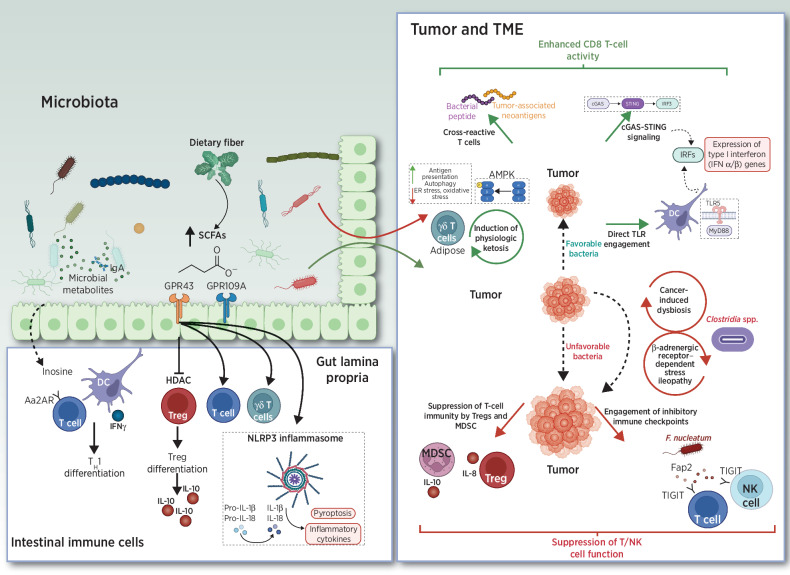
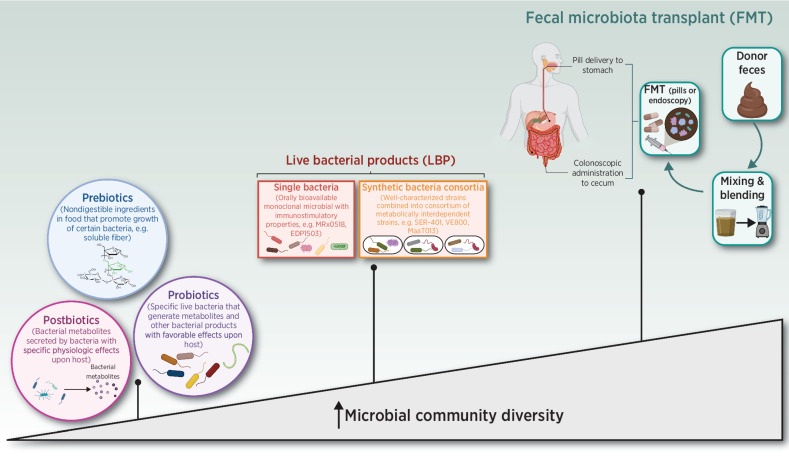
Verification
Claims the paper makes
The claims and statistics of this paper haven’t been checked yet.
Free: it reads the open-access text and checks the first 5 claims that cite a source we can check. Create a free account to check every claim.
Self-check
Percentages, sums and reported differences re-computed from the paper’s own numbers.
The self-check needs the paper’s full text.
Citations
Cites
PD-1 and PD-L1 Immune Checkpoint Blockade to Treat Breast Cancer
Hartkopf, A. D., Taran, F.-A., Wallwiener, M., Walter, C. B., Krämer, B., Grischke, E.-M., & Brucker, S. Y. (2016) · Breast Care · doi:10.1159/000453569 · Cited by 30,845
Diet rapidly and reproducibly alters the human gut microbiome
David, L. A., Maurice, C. F., Carmody, R. N., Gootenberg, D. B., Button, J. E., Wolfe, B. E., Ling, A. V., Devlin, A. S., Varma, Y., Fischbach, M. A., et al. (2014) · Nature · doi:10.1038/nature12820 · Cited by 10,100 · cited 1×
“, Eubacterium rectale, and Ruminococcus bromii) in humans (93, 94).”
BackgroundEnterotypes of the human gut microbiome
MetaHIT Consortium (additional members), Arumugam, M., Raes, J., Pelletier, E., Le Paslier, D., Yamada, T., Mende, D. R., Fernandes, G. R., Tap, J., Bruls, T., et al. (2011) · Nature · doi:10.1038/nature09944 · Cited by 7,548
PD-1 blockade induces responses by inhibiting adaptive immune resistance
Tumeh, P. C., Harview, C. L., Yearley, J. H., Shintaku, I. P., Taylor, E. J. M., Robert, L., Chmielowski, B., Spasic, M., Henry, G., Ciobanu, V., et al. (2014) · Nature · doi:10.1038/nature13954 · Cited by 6,609
Gut microbiome influences efficacy of PD-1-based immunotherapy against epithelial tumors
Routy, B., Le Chatelier, E., Derosa, L., Duong, C. P. M., Alou, M. T., Daillère, R., Fluckiger, A., Messaoudene, M., Rauber, C., Roberti, M. P., et al. (2018) · Science · doi:10.1126/science.aan3706 · Cited by 5,671 · cited 6×
“Others are needed to generate preliminary data for additional cancers where ICI efficacy has been linked to gut microbiota (NSCLC, RCC, etc.).”
BackgroundInfluentialCommensal microbe-derived butyrate induces the differentiation of colonic regulatory T cells
Furusawa, Y., Obata, Y., Fukuda, S., Endo, T. A., Nakato, G., Takahashi, D., Nakanishi, Y., Uetake, C., Kato, K., Kato, T., et al. (2013) · Nature · doi:10.1038/nature12721 · Cited by 5,549
The Microbial Metabolites, Short-Chain Fatty Acids, Regulate Colonic T reg Cell Homeostasis
Smith, P. M., Howitt, M. R., Panikov, N., Michaud, M., Gallini, C. A., Bohlooly-Y, M., Glickman, J. N., & Garrett, W. S. (2013) · Science · doi:10.1126/science.1241165 · Cited by 5,413
Predictive correlates of response to the anti-PD-L1 antibody MPDL3280A in cancer patients
Herbst, R. S., Soria, J.-C., Kowanetz, M., Fine, G. D., Hamid, O., Gordon, M. S., Sosman, J. A., McDermott, D. F., Powderly, J. D., Gettinger, S. N., et al. (2014) · Nature · doi:10.1038/nature14011 · Cited by 5,231 · cited 1×
“10–12), or PD-L1 expression on tumor or T cells (5, 13).”
BackgroundMetabolites produced by commensal bacteria promote peripheral regulatory T-cell generation
Arpaia, N., Campbell, C., Fan, X., Dikiy, S., van der Veeken, J., deRoos, P., Liu, H., Cross, J. R., Pfeffer, K., Coffer, P. J., et al. (2013) · Nature · doi:10.1038/nature12726 · Cited by 4,838
Gut microbiome modulates response to anti-PD-1 immunotherapy in melanoma patients
Gopalakrishnan, V., Spencer, C. N., Nezi, L., Reuben, A., Andrews, M. C., Karpinets, T. V., Prieto, P. A., Vicente, D., Hoffman, K., Wei, S. C., et al. (2018) · Science · doi:10.1126/science.aan4236 · Cited by 4,812 · cited 1×
“Notably, while increased alpha diversity was correlated with improved outcome in early studies (26), evidence for an association with ICI benefit is lacking.”
Background
Cited by
Gut microbiota shapes cancer immunotherapy responses
Lei, W., Zhou, K., Lei, Y., Li, Q., & Zhu, H. (2025) · npj Biofilms and Microbiomes · doi:10.1038/s41522-025-00786-8 · Cited by 196
Role of gut microbiome in cancer immunotherapy: from predictive biomarker to therapeutic target
Zhang, M., Liu, J., & Xia, Q. (2023) · Experimental Hematology and Oncology · doi:10.1186/s40164-023-00442-x · Cited by 167
“Manipulation of the gut microbiota to enhance immunotherapy Compared with other response markers for immunotherapy, the gut microbiome not only serves as a fascinating biomarker but also as an intervention target [80].”
BackgroundGut microbiome homeostasis and the future of probiotics in cancer immunotherapy
Singh, A., Alexander, S., & Martin, S. (2023) · Frontiers in Immunology · doi:10.3389/fimmu.2023.1114499 · Cited by 73
“Probiotics and/or bacteria consortia containing l i v e bac t e r i a such as Bifidobac t e r ia , Lac tobac i l l u s , Propionibacterium, and Streptococcus thermophilus combined with monoclonal antibodies (anti-PD-1 and anti-CTLA-4 antibodies) can significantly improve the outcomes of patients with refractory cancer…”
BackgroundDóra, D., Bokhari, S. M. Z., Aloss, K., Takacs, P., Desnoix, J. Z., Szklenárik, G., Hurley, P. D., & Lohinai, Z. (2023) · International Journal of Molecular Sciences · doi:10.3390/ijms24032769 · Cited by 51
Gut microbiota as a biomarker and modulator of anti-tumor immunotherapy outcomes
Yan, J., Yang, L., Ren, Q., Zhu, C., Du, H., Wang, Z., Qi, Y., Xian, X., & Chen, D. (2024) · Frontiers in Immunology · doi:10.3389/fimmu.2024.1471273 · Cited by 56
Distinct alterations of gut microbiota between viral- and non-viral-related hepatocellular carcinoma
Jinato, T., Anuntakarun, S., Satthawiwat, N., Chuaypen, N., & Tangkijvanich, P. (2024) · Applied Microbiology and Biotechnology · doi:10.1007/s00253-023-12845-1 · Cited by 47
“Interestingly, increasing data have also revealed unique fecal microbial features in various cancers that might attribute to antitumor immunity (Davar and Zarour 2022).”
Macandog, A. D. G., Catozzi, C., Capone, M., Nabinejad, A., Nanaware, P. P., Liu, S., Vinjamuri, S., Stunnenberg, J. A., Galiè, S., Jodice, M. G., et al. (2024) · Cell Host & Microbe · doi:10.1016/j.chom.2024.10.006 · Cited by 40
“12,13,25 In this regard, gut-residing Lachnospiraceae can be a rich source of tu-mor-mimicking epitopes 26 ; thus, we searched our shortlist of CR-associated flagellin-related Lachnospiraceae ( FLach ) proteins for peptides predicted to bind to HLA class I receptors (HLA-I), then matched them…”
Gut Microbiome-Based Therapeutics in Critically Ill Adult Patients—A Narrative Review
He, S., Lin, F., Hu, X., & Pan, P. (2023) · Nutrients · doi:10.3390/nu15224734 · Cited by 37
“More importantly, DF-fermented SCFAs increase the production of CD103 + DCs, promote the differentiation of activated CD8 + T cells to effector cells with a memory phenotype, and improve the outcomes of anti-PD-1 immune checkpoint inhibitor therapy in patients with melanoma [89,90].”
BackgroundXie, N., Wang, Z., Shu, Q., Liang, X., Wang, J., Wu, K., Nie, Y., Shi, Y., Fan, D., fan, D., et al. (2023) · Nutrients · doi:10.3390/nu15132937 · Cited by 40
“Fusobacterium nucleatum could suppress anti-tumor immunity by directly interacting with the inhibitory T-cell receptor TIGIT via FAP2 and inhibiting natural killer (NK) cell-mediated tumor killing [22,23].”
BackgroundThe role of the sex hormone-gut microbiome axis in tumor immunotherapy
Wang, L., Tang, L., Zhai, D., Song, M., Li, W., Xu, S., Jiang, S., Meng, H., Liang, J., Wang, Y., et al. (2023) · Gut Microbes · doi:10.1080/19490976.2023.2185035 · Cited by 34
Roy, S., Bahmani, A. H. A., Davids, M., Herrema, H., & Nieuwdorp, M. (2025) · Microorganisms · doi:10.3390/microorganisms13061356 · Cited by 29
“In contrast, a “high-fiber diet” clinical trial (in melanoma patients) suggested that patients consuming >20 g fiber/day had better responses to immunotherapy, potentially linked to a more diverse microbiome [140].”
Microbiome meets immunotherapy: unlocking the hidden predictors of immune checkpoint inhibitors
Huang, L., Li, Y., Zhang, C., Jiang, A., Zhu, L., Mou, W., Li, K., Zhang, J., Cui, C., Cui, X., et al. (2025) · npj Biofilms and Microbiomes · doi:10.1038/s41522-025-00819-2 · Cited by 28
“This may involve mechanisms such as microbiota-induced T cell responses, molecular mimicry between microbial and tumor antigens, and microbial metabolite regulation of immune homeostasis 28 .”
The solid tumor microenvironment and related targeting strategies: a concise review
Wang, Y., Zhou, H., Ju, S., Dong, X., & Zheng, C. (2025) · Frontiers in Immunology · doi:10.3389/fimmu.2025.1563858 · Cited by 220
Analysis of gut microbiota in patients with acute myocardial infarction by 16S rRNA sequencing
Qian, X., Liu, A., Chen, L., He, L., Xu, Z., & Tang, S. (2022) · Annals of Translational Medicine · doi:10.21037/atm-22-5671 · Cited by 22
Huang, Y., Zhang, W.-M., Wei, Z.-S., Huang, H., Mo, Q., Shi, D.-L., Han, L., Han, Y.-Y., Nong, S.-K., & Lin, G. (2023) · Frontiers in Immunology · doi:10.3389/fimmu.2023.1136169 · Cited by 24
“In clinical practice, however, ICB has limited efficacy in many patients; thus, there is an urgent need to find an auxiliary treatment to promote the effect of ICB.”
BackgroundInfluentialFecal Microbiota Transplantation as a Cancer Therapeutic
Stoff, R., Wolf, Y., & Boursi, B. (2023) · The Cancer Journal · doi:10.1097/ppo.0000000000000651 · Cited by 23
Biomarkers navigate drug development: Pharmacology, effectiveness and safety
Chen, D. (2023) · Medicine in Drug Discovery · doi:10.1016/j.medidd.2023.100174 · Cited by 19
Microbiome and Diet in Colon Cancer Development and Treatment
Kato, I., & Sun, J. (2023) · The Cancer Journal · doi:10.1097/ppo.0000000000000649 · Cited by 16
“Accordingly, a number of RCTs using various formulations of single or multiple strain probiotics, prebiotics/diet, or fecal microbiota transplantation (FMT) have been initiated, although most of the FMT trials are still in phase I, and many others are in phase II, not reporting trial results concerning efficacy and ad…”
BackgroundLazăr, D. C., Chiriac, S. D., Drăghici, G. A., Moacă, E.-A., Faur, A. C., Avram, M. F., Turi, V., Nicolin, M.-R., Goldiș, A., Salehi, M. A., et al. (2025) · Life · doi:10.3390/life15070999 · Cited by 16
“…bacterial species and their metabolic products have been implicated in enhancing the anti-tumor effects of ICI; for example, alterations in the gut microbiome can modulate the balance between regulatory and effector T cells, ultimately affecting T cell activation and proliferation [196,205].”
Vogrig, A., Dentoni, M., Florean, I., Cellante, G., Domenis, R., Iacono, D., Pelizzari, G., Rossi, S., Damato, V., Fabris, M., et al. (2025) · Frontiers in Immunology · doi:10.3389/fimmu.2025.1548897 · Cited by 23
Vargas, E., & Rincón‐Riveros, A. (2025) · Cancer Medicine · doi:10.1002/cam4.70603 · Cited by 15
“Moreover, the administration of prebiotics, probiotics, and postbiotics is under investigation for their potential to support gut microbial diversity, maintain intestinal barrier integrity, and optimize immune responses, although challenges in bioavailability and targeted delivery persist [83, 84].”
Chen, M., & Bie, L. (2025) · Cancer Cell International · doi:10.1186/s12935-025-03745-7 · Cited by 10
“Furthermore, probiotics improved the prognosis of immunotherapy in patients with cancer [109].”
Dayhimi, A., Jazi, K., Bigdeli, Y., Farhoudi, F., Erfanimanesh, M., Esmaeili, M., Gorjipour, F., Ajami, M., & Pazoki–Toroudi, H. (2025) · Technology in Cancer Research & Treatment · doi:10.1177/15330338251365700 · Cited by 14
“210 Ongoing trials are evaluating various microbial ecosystems with anti-PD-1 therapy.”
Saadh, M. J., Allela, O. Q. B., Kareem, R. A., Sanghvi, G. V., Ballal, S., Naidu, K. S., Bareja, L., Chahar, M., Gupta, S., Sameer, H. N., et al. (2025) · Gene · doi:10.1016/j.gene.2025.149380 · Cited by 9
Cao, Y., Zhang, L., Xiong, F., Guo, X., Kan, X., Song, S., Liang, B., Liang, B., Li, Y., & Zheng, C. (2023) · Future Microbiology · doi:10.2217/fmb-2022-0234 · Cited by 10
Baldi, S., Alnaggar, M., AL-Mogahed, M., Khalil, K., & Zhan, X. (2025) · The EPMA Journal · doi:10.1007/s13167-025-00403-w · Cited by 8
Minohara, K., Matoba, T., Sawabe, M., Kawakita, D., Takano, G., Oguri, K., Murashima, A., Iwaki, S., Tsuge, H., Imaizumi, S., et al. (2025) · International Journal of Clinical Oncology · doi:10.1007/s10147-025-02797-z · Cited by 11
“The effects of probiotics on gut microbiota and immune responses have been widely discussed [17, 18].”
The Urogenital System’s Role in Diseases: A Synopsis
Zerdan, M. B., Moukarzel, R., Naji, N. S., Bilen, Y., & Nagarajan, A. (2022) · Cancers · doi:10.3390/cancers14143328 · Cited by 8
“The mechanism by which gut microbiota affects cancer immunotherapy is still not well established; however, studies have proposed three processes: stimulation of anti-tumor T cells directly by bacterial components, molecular mimicry between bacterial and tumoral epitopes, and anti-tumor immunity by bacterial metabolite…”
BackgroundLeveraging gut microbiota for enhanced immune checkpoint blockade in solid tumor therapy
Hu, J., Feng, T., Zhang, L., Zhou, Q., & Zhu, L. (2025) · Chinese Medical Journal · doi:10.1097/cm9.0000000000003687 · Cited by 8
“[88] To determine the outcomes of microbe-based biomarkers and improve the efficacy of ICB in cancer immunotherapy, it is crucial to specifically modulate the intestinal micro-biome.”
Mahooti, M., Safaei, F., Firuzpour, F., Abdolalipour, E., Zare, D., Sanami, S., Safavi, M., & Mirdamadi, S. (2025) · Inflammopharmacology · doi:10.1007/s10787-025-01855-2 · Cited by 8
“…therapeutics, were receiving a mixture of different probiotic species including Bifidobacteria , Lactobacillus, Propionibacterium , and Streptococcus thermophiles while treated with monoclonal antibodies that implicated a more efficient outcome to overcome their cancer (Davar and Zarour 2022).”
Zheng, F., Zhang, Y., & Zhong-xin, L. (2026) · Frontiers in Medicine · doi:10.3389/fmed.2026.1890287 · Cited by 2
“Higher-risk strategies, especially FMT and engineered microorganisms, require donor or strain control, pathogen screening, regulatory oversight, ecological endpoints, safety monitoring, and long-term follow-up (24, 33, 34, 68, 73, 74, 80).”
InfluentialZhang, G., Huang, X., Li, R., Hong, S., Zheng, X., Huang, K., Wang, J., Tao, Q., & Shi, X. (2024) · International Journal of Biological Macromolecules · doi:10.1016/j.ijbiomac.2024.139078 · Cited by 4
RetractedMedina-Rivero, A. S., Ratkovich-González, S., Ruiz-Briseño, M. D. R., & Rosas‐González, V. C. (2025) · ACS Infectious Diseases · doi:10.1021/acsinfecdis.5c00385 · Cited by 5
He, J.-J., Hu, C.-J., & Yang, S. (2023) · 四川大学学报:医学版 · doi:10.12182/20230560107 · Cited by 2
Microbiome as a therapeutic target
Moiseenko, F. V. (2022) · Practical oncology · doi:10.31917/2303160
Hua, X., Lin, X., Guo, X., Zhou, X., Chen, P., Xie, R., Yao, W., Huang, Y., Liu, H., Zheng, F., et al. (2024) · Research Square · doi:10.21203/rs.3.rs-4182640/v1
Microbial therapeutic agents as a new frontier in tumor-targeted drug delivery
Islam, T., Ali, S., Almalki, M., & Rabbee, M. F. (2026) · Journal of Drug Delivery Science and Technology · doi:10.1016/j.jddst.2026.108366
Das, P., Dey, T., Peterson, C. B., & Chakraborty, S. (2026) · Bioinformatics · doi:10.1093/bioinformatics/btag500
“Davar and Zarour (2022) reported CAG.196 and Choladocola (ranks 1–2) as key contributors to microbiome-host metabolism, particularly involving bile acids and short-chain fatty acids (SCFAs).”
Chan, Y.-T., Lu, P., Zou, J., Jiang, Z., Xu, L., & Wang, N. (2026) · Cancer Biome and Targeted Therapy · doi:10.66505/cbtt.v1i3.42
Understanding the microbiome: Microbiome and immune system interactions
Goel, K., Chawla, I., Sharma, S., Siddiqui, N. A., & Gupta, S. (2026) · Elsevier eBooks · doi:10.1016/b978-0-443-33206-7.00010-8
Metadata
- Authors
- Davar, D., & Zarour, H. M.
- Affiliations
- University of Pittsburgh (US)
- Corresponding author
- Davar, Diwakar
- Venue
- Clinical Cancer Research
- Published
- 2022-06-24
- Volume
- 28
- Issue
- 20
- Pages
- 4370-4384
- ISSN
- 1078-0432 (ISSN-L)
- 1557-3265
- PMC
- PMC9561605
- OpenAlex
- W4283464614
- Cited by
- 40
- References
- 151
- Citations by year
- 2026: 5 · 2025: 15 · 2024: 5 · 2023: 12 · 2022: 3
- FWCI
- 1.07
- Type
- journal article
- Language
- en
- Open access
- hybrid
- doi.org
- Licence
- Locations
- Clinical Cancer Research (publishedVersion, cc-by-nc-nd)
- PubMed Central (publishedVersion, cc-by-nc-nd)
- PubMed (publishedVersion)
- Funders
- National Cancer Institute (R01CA222203, R01CA257265, P50CA257265)
- Topics
- Health Sciences › Medicine › Oncology › Cancer Immunotherapy and Biomarkers
- Life Sciences › Biochemistry, Genetics and Molecular Biology › Molecular Biology › Gut microbiota and health
- Life Sciences › Biochemistry, Genetics and Molecular Biology › Biotechnology › Bacterial Cancer Therapy
- Keywords
- gut microbiota, cancer immunotherapy, immune checkpoint inhibitors, CTLA-4, PD-1, microbiota-based therapy, immunotherapy response, clinical trials, host immunity
- MeSH terms
- Gastrointestinal Microbiome, Immune Checkpoint Inhibitors, Animals, Humans, Immunotherapy, Neoplasms, Mice, CTLA-4 Antigen, Programmed Cell Death 1 Receptor
About these checks
Registry, retraction, Cites and statistics results are computed, not judged, with one exception: a printed reference that no index lists is read once by a model before it counts as a citation error. Claims are extracted by a model and kept only when their quote appears verbatim in the text; each cited source is then checked, with a model’s help, for whether it says what the claim relies on. Those verdicts can be wrong — read the claim’s quote and the cited source before relying on one.
Statistics and arithmetic are recomputed, not judged.
Confidence bands are shown only for fields calibrated on our annotated test set. None is calibrated yet, so no band is shown.
What counts as a claim ›How we measure confidence ›How we check this ›
Are you an author, or do you see a problem with this page? Request a review
Data sources
Bibliographic data: Semantic Scholar, OpenAlex, Crossref.
Contains information from the Semantic Scholar Academic Graph Datasets, made available under the ODC Attribution License (ODC-BY 1.0).
Semantic Scholar’s data is described in: Kinney, R., et al. (2023). The Semantic Scholar Open Data Platform. arXiv:2301.10140.
