

NASH and Hepatocellular Carcinoma: Immunology and Immunotherapy
Open accessThe DOI matches its Crossref record; 88 of the 90 references it cites were found in a registry or an index.
Abstract
The last 10 years have revolutionized our basic understanding of nonalcoholic fatty liver disease and consequent liver cancer. It has become clear that several innate and adaptive immune cells play an important role in initiating, maintaining, or exacerbating nonalcoholic steatohepatitis (NASH)—a disease that has been recently defined as autoaggressive. Despite improved disease management aimed at reducing the progression of fibrosis, NASH is set to become a leading cause for hepatocellular carcinoma (HCC). Preliminary data from preclinical studies suggest that immunotherapy efficacy may be reduced in NASH-related HCC compared with viral HCC; however, conclusive evidence supporting clinical translation of these findings is lacking. Comprehensive clinical and immunologic phenotyping of mechanisms linking NASH progression with carcinogenesis and therapeutic resistance is key to prevent progression to cirrhosis, improve monitoring and stratification of NASH according to predicted cancer risk, and ultimately increase survival of patients with NASH-HCC. In this review, we summarize the state of the art in the field of NASH and NASH-HCC with focus on immunobiology. We discuss preclinical and clinical findings underpinning NASH as an immunologically distinct pro-tumorigenic disease entity, and explore areas of potential therapeutic vulnerabilities in NASH-associated HCC.
Overview
The claims and statistics of this paper haven’t been checked yet.
Free: it reads the open-access text and checks the first 5 claims that cite a source we can check. Create a free account to check every claim.
Integrity signals
Registry
Cites
Statistics
Figures
Verification
Claims the paper makes
The claims and statistics of this paper haven’t been checked yet.
Free: it reads the open-access text and checks the first 5 claims that cite a source we can check. Create a free account to check every claim.
Claims other papers make about this one
Each is checked against this paper’s own text: does it say what the citing paper says it does?
The cited source says what the claim attributes to it.
In the citing paper
“Collectively, in the context of inflammation and tumorigenesis, immune cells have been implicated in orchestrating an immunosuppressive and pro-tumorigenic microenvironment that exacerbates the transition from MASH to HCC [21].”
From Single-cell transcriptome reveals the reprogramming of immune microenvironment during the transition from MASH to HCC (2025) · cites this paper as [21]
Self-check
Percentages, sums and reported differences re-computed from the paper’s own numbers.
The self-check needs the paper’s full text.
Citations
Cites
Atezolizumab plus bevacizumab in unresectable hepatocellular carcinoma
Finn, R. S., Qin, S., Ikeda, M., Galle, P. R., Ducreux, M., Kim, T.-Y., Kudo, M., Breder, V., Merle, P., Kaseb, A. O., et al. (2020) · New England Journal of Medicine · doi:10.1056/nejmoa1915745 · Cited by 7,470 · cited 2×
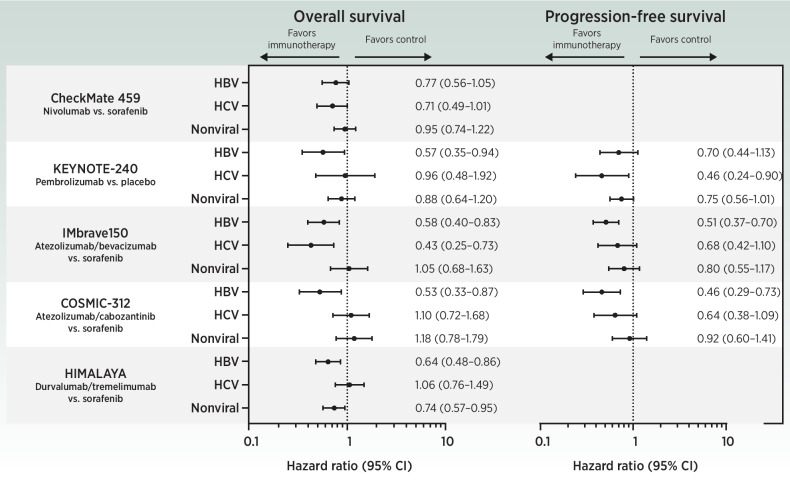
“Notably, even though median OS of patients treated with atezolizumab/bevacizumab was shorter in nonviral-related HCC (17.0 months) compared with HBV- (19.0 months) and HCVrelated HCC (24.6 months) in the IMbrave150 trial, the lack of an OS benefit in the nonviral group was driven by the favorable median OS in the sora…”
InfluentialLlovet, J. M., Kelley, R. K., Villanueva, A., Singal, A. G., Pikarsky, E., Roayaie, S., Lencioni, R., Koike, K., Zucman-Rossi, J., & Finn, R. S. (2021) · Nature Reviews Disease Primers · doi:10.1038/s41572-020-00240-3 · Cited by 7,055
Gut microbiome influences efficacy of PD-1-based immunotherapy against epithelial tumors
Routy, B., Le Chatelier, E., Derosa, L., Duong, C. P. M., Alou, M. T., Daillère, R., Fluckiger, A., Messaoudene, M., Rauber, C., Roberti, M. P., et al. (2018) · Science · doi:10.1126/science.aan3706 · Cited by 5,671 · cited 2×
“Enrichment in certain gut bacterial strains such as Faecalibacterium and Akkermansia (83, 84) have been linked with increased responsiveness to ICI, suggesting that the process of gut dysbiosis that is often seen in NAFLD/NASH may independently precondition responsiveness to ICI.”
BackgroundGlobal burden of NAFLD and NASH: trends, predictions, risk factors and prevention
Younossi, Z., Anstee, Q. M., Marietti, M., Hardy, T., Henry, L., Eslam, M., George, J., & Bugianesi, E. (2018) · Nature Reviews Gastroenterology & Hepatology · doi:10.1038/nrgastro.2017.109 · Cited by 5,249 · cited 2×
“Nonalcoholic fatty liver diseases (NAFLD) and in particular its specific disease stage, nonalcoholic steatohepatitis (NASH), represent an increasingly prevalent global healthcare problem tightly associated with metabolic syndrome, including type 2 diabetes and obesity (1).”
BackgroundVillanueva, A. (2019) · New England Journal of Medicine · doi:10.1056/nejmra1713263 · Cited by 4,508
BCLC strategy for prognosis prediction and treatment recommendation: the 2022 update
Reig, M., Forner, A., Rimola, J., Ferrer-Fàbrega, J., Burrel, M., Garcia-Criado, Á., Kelley, R. K., Galle, P. R., Mazzaferro, V., Salem, R., et al. (2022) · Journal of Hepatology · doi:10.1016/j.jhep.2021.11.018 · Cited by 4,319
Neuschwander-Tetri, B. A., Loomba, R., Sanyal, A. J., Lavine, J. E., Van Natta, M. L., Abdelmalek, M. F., Chalasani, N., Dasarathy, S., Diehl, A. M., Hameed, B., et al. (2015) · The Lancet · doi:10.1016/s0140-6736(14)61933-4 · Cited by 2,237 · cited 1×
“Targeting of altered lipid metabolism, inflammation and fibrogenesis is at the focus of experimental pharmacotherapy of NASH, with some evidence of activity for certain approaches such as farnesoid X receptor targeting (77).”
BackgroundGlobal epidemiology of NAFLD-related HCC: trends, predictions, risk factors and prevention
Huang, D. Q., El-Serag, H. B., & Loomba, R. (2021) · Nature Reviews Gastroenterology & Hepatology · doi:10.1038/s41575-020-00381-6 · Cited by 1,855 · cited 2×
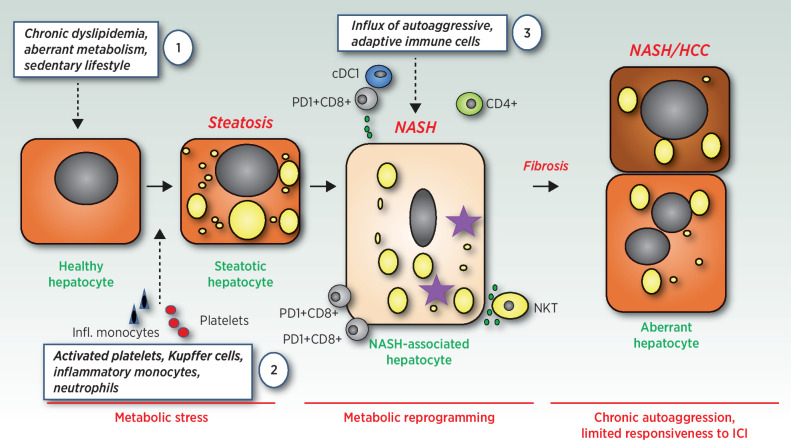
“This over time leads to a metabolic catastrophe in hepatocytes – (2) driving first local inflammation by Kupffer cells; hepatocyte damage; and influx of platelets, neutrophils, and inflammatory monocytes.”
BackgroundImmunotherapies for hepatocellular carcinoma
Llovet, J. M., Castet, F., Heikenwalder, M., Maini, M. K., Mazzaferro, V., Pinato, D. J., Pikarsky, E., Zhu, A. X., & Finn, R. S. (2022) · Nature Reviews Clinical Oncology · doi:10.1038/s41571-021-00573-2 · Cited by 1,843 · cited 1×
“Systemic treatment has profoundly changed over the last decade, particularly with the addition of ICIs to the treatment armamentarium of HCC (47, 48).”
BackgroundSelf-citationFinn, R. S., Ryoo, B.-Y., Merle, P., Kudo, M., Bouattour, M., Lim, H. Y., Breder, V., Edeline, J., Chao, Y., Ogasawara, S., et al. (2020) · Journal of Clinical Oncology · doi:10.1200/jco.19.01307 · Cited by 1,789 · cited 2×
“SECOND-LINE KEYNOTE-240 (49) Pembrolizumab (278) 13.”
Background
Cited by
Qin, S., Chan, S. L., Gu, S., Bai, Y., Ren, Z., Lin, X., Chen, Z., Jia, W., Jin, Y., Guo, Y., et al. (2023) · The Lancet · doi:10.1016/s0140-6736(23)00961-3 · Cited by 746
Breakthroughs in Hepatocellular Carcinoma Therapies
Singal, A. G., Kudo, M., & Bruix, J. (2023) · Clinical Gastroenterology and Hepatology · doi:10.1016/j.cgh.2023.01.039 · Cited by 162
Immune checkpoint inhibitors in hepatocellular carcinoma: emerging challenges in clinical practice
Pinter, M., Scheiner, B., & Pinato, D. J. (2023) · The Lancet. Gastroenterology & hepatology · doi:10.1016/s2468-1253(23)00147-4 · Cited by 155
Self-citationPοlyzos, S. A., Chrysavgis, L., Vachliotis, I. D., Chartampilas, E., & Cholongitas, Ε. (2023) · Seminars in Cancer Biology · doi:10.1016/j.semcancer.2023.04.010 · Cited by 100
Salié, H., Wischer, L., D’Alessio, A., Godbole, I., Suo, Y., Otto-Mora, P., Beck, J., Neumann, O., Stenzinger, A., Schirmacher, P., et al. (2024) · Gut · doi:10.1136/gutjnl-2024-332837 · Cited by 91
“Despite the potential connection of tumour aetiology with specific immune reactions in HCC, in particular, between metabolic liver disease-associated HCC and viral hepatitis-associated HCC, 15 29 30 we did not find a strong correlation of the identified immunotypes with aetiology.”
Self-citation
Metadata
- Authors
- Pinter, M., Pinato, D. J., Ramadori, P., & Heikenwalder, M.
- Affiliations
- Medical University of Vienna (AT)
- Università degli Studi del Piemonte Orientale “Amedeo Avogadro” (IT)
- German Cancer Research Center (DE)
- 5Division of Chronic Inflammation and Cancer, German Cancer Research Center, Heidelberg, Germany.
- Corresponding author
- Pinter, Matthias
- Ramadori, Pierluigi
- Venue
- Clinical Cancer Research
- Published
- 2022-09-27
- Volume
- 29
- Issue
- 3
- Pages
- 513-520
- ISSN
- 1078-0432 (ISSN-L)
- 1557-3265
- PMC
- PMC9890137
- OpenAlex
- W4297338588
- Cited by
- 103
- References
- 90
- Citations by year
- 2026: 19 · 2025: 28 · 2024: 31 · 2023: 24 · 2022: 1
- FWCI
- 3.38
- Type
- journal article
- Language
- en
- Open access
- hybrid
- doi.org
- Licence
- Locations
- Clinical Cancer Research (publishedVersion, cc-by-nc-nd)
- PubMed Central (publishedVersion, cc-by-nc-nd)
- PubMed (publishedVersion)
- Funders
- Associazione Italiana per la Ricerca sul Cancro (25697)
- Deutsche Krebshilfe (70113166, 70113167)
- Horizon 2020 Framework Programme
- NIHR Imperial Biomedical Research Centre
- Wellcome Trust (PS3416)
- Wilhelm Sander-Stiftung
- Topics
- Health Sciences › Medicine › Hepatology › Liver Disease Diagnosis and Treatment
- Health Sciences › Medicine › Hepatology › Hepatocellular Carcinoma Treatment and Prognosis
- Health Sciences › Medicine › Oncology › Cancer Immunotherapy and Biomarkers
- Keywords
- nonalcoholic steatohepatitis, non-alcoholic fatty liver disease, hepatocellular carcinoma, tumor immunology, immunotherapy, innate and adaptive immune cells, liver fibrosis, liver cirrhosis, cancer risk stratification, treatment resistance
- MeSH terms
- Fibrosis, Carcinoma, Hepatocellular, Humans, Immunotherapy, Liver Cirrhosis, Liver Neoplasms, Carcinogenesis, Non-alcoholic Fatty Liver Disease
About these checks
Registry, retraction, Cites and statistics results are computed, not judged, with one exception: a printed reference that no index lists is read once by a model before it counts as a citation error. Claims are extracted by a model and kept only when their quote appears verbatim in the text; each cited source is then checked, with a model’s help, for whether it says what the claim relies on. Those verdicts can be wrong — read the claim’s quote and the cited source before relying on one.
Statistics and arithmetic are recomputed, not judged.
Confidence bands are shown only for fields calibrated on our annotated test set. None is calibrated yet, so no band is shown.
What counts as a claim ›How we measure confidence ›How we check this ›
Are you an author, or do you see a problem with this page? Request a review
How to cite
Cite CoChat for the checks on this page, and the paper for its own findings.
- This page
- CoChat. (2026). Citation check: NASH and Hepatocellular Carcinoma: Immunology and Immunotherapy. https://app.cochat.ai/papers/10.1158/1078-0432.ccr-21-1258
- The paper
- Pinter, M., Pinato, D. J., Ramadori, P., & Heikenwalder, M. (2023). NASH and Hepatocellular Carcinoma: Immunology and Immunotherapy. Clinical Cancer Research. https://doi.org/10.1158/1078-0432.ccr-21-1258
Data sources
Bibliographic data: Semantic Scholar, OpenAlex, Crossref.
Contains information from the Semantic Scholar Academic Graph Datasets, made available under the ODC Attribution License (ODC-BY 1.0).
Semantic Scholar’s data is described in: Kinney, R., et al. (2023). The Semantic Scholar Open Data Platform. arXiv:2301.10140.
