

NASH and Hepatocellular Carcinoma: Immunology and Immunotherapy
Open accessThe DOI matches its Crossref record; 88 of the 90 references it cites were found in a registry or an index.
Abstract
The last 10 years have revolutionized our basic understanding of nonalcoholic fatty liver disease and consequent liver cancer. It has become clear that several innate and adaptive immune cells play an important role in initiating, maintaining, or exacerbating nonalcoholic steatohepatitis (NASH)—a disease that has been recently defined as autoaggressive. Despite improved disease management aimed at reducing the progression of fibrosis, NASH is set to become a leading cause for hepatocellular carcinoma (HCC). Preliminary data from preclinical studies suggest that immunotherapy efficacy may be reduced in NASH-related HCC compared with viral HCC; however, conclusive evidence supporting clinical translation of these findings is lacking. Comprehensive clinical and immunologic phenotyping of mechanisms linking NASH progression with carcinogenesis and therapeutic resistance is key to prevent progression to cirrhosis, improve monitoring and stratification of NASH according to predicted cancer risk, and ultimately increase survival of patients with NASH-HCC. In this review, we summarize the state of the art in the field of NASH and NASH-HCC with focus on immunobiology. We discuss preclinical and clinical findings underpinning NASH as an immunologically distinct pro-tumorigenic disease entity, and explore areas of potential therapeutic vulnerabilities in NASH-associated HCC.
Overview
The claims and statistics of this paper haven’t been checked yet.
Free: it reads the open-access text and checks the first 5 claims that cite a source we can check. Create a free account to check every claim.
Integrity signals
Registry
Cites
Statistics
Figures
Verification
Claims the paper makes
The claims and statistics of this paper haven’t been checked yet.
Free: it reads the open-access text and checks the first 5 claims that cite a source we can check. Create a free account to check every claim.
Claims other papers make about this one
Each is checked against this paper’s own text: does it say what the citing paper says it does?
The cited source says what the claim attributes to it.
In the citing paper
“Collectively, in the context of inflammation and tumorigenesis, immune cells have been implicated in orchestrating an immunosuppressive and pro-tumorigenic microenvironment that exacerbates the transition from MASH to HCC [21].”
From Single-cell transcriptome reveals the reprogramming of immune microenvironment during the transition from MASH to HCC (2025) · cites this paper as [21]
Self-check
Percentages, sums and reported differences re-computed from the paper’s own numbers.
The self-check needs the paper’s full text.
Citations
Cites
Atezolizumab plus bevacizumab in unresectable hepatocellular carcinoma
Finn, R. S., Qin, S., Ikeda, M., Galle, P. R., Ducreux, M., Kim, T.-Y., Kudo, M., Breder, V., Merle, P., Kaseb, A. O., et al. (2020) · New England Journal of Medicine · doi:10.1056/nejmoa1915745 · Cited by 7,470 · cited 2×
“Notably, even though median OS of patients treated with atezolizumab/bevacizumab was shorter in nonviral-related HCC (17.0 months) compared with HBV- (19.0 months) and HCVrelated HCC (24.6 months) in the IMbrave150 trial, the lack of an OS benefit in the nonviral group was driven by the favorable median OS in the sora…”
InfluentialLlovet, J. M., Kelley, R. K., Villanueva, A., Singal, A. G., Pikarsky, E., Roayaie, S., Lencioni, R., Koike, K., Zucman-Rossi, J., & Finn, R. S. (2021) · Nature Reviews Disease Primers · doi:10.1038/s41572-020-00240-3 · Cited by 7,055
Gut microbiome influences efficacy of PD-1-based immunotherapy against epithelial tumors
Routy, B., Le Chatelier, E., Derosa, L., Duong, C. P. M., Alou, M. T., Daillère, R., Fluckiger, A., Messaoudene, M., Rauber, C., Roberti, M. P., et al. (2018) · Science · doi:10.1126/science.aan3706 · Cited by 5,671 · cited 2×
“Enrichment in certain gut bacterial strains such as Faecalibacterium and Akkermansia (83, 84) have been linked with increased responsiveness to ICI, suggesting that the process of gut dysbiosis that is often seen in NAFLD/NASH may independently precondition responsiveness to ICI.”
BackgroundGlobal burden of NAFLD and NASH: trends, predictions, risk factors and prevention
Younossi, Z., Anstee, Q. M., Marietti, M., Hardy, T., Henry, L., Eslam, M., George, J., & Bugianesi, E. (2018) · Nature Reviews Gastroenterology & Hepatology · doi:10.1038/nrgastro.2017.109 · Cited by 5,249 · cited 2×
“Nonalcoholic fatty liver diseases (NAFLD) and in particular its specific disease stage, nonalcoholic steatohepatitis (NASH), represent an increasingly prevalent global healthcare problem tightly associated with metabolic syndrome, including type 2 diabetes and obesity (1).”
BackgroundVillanueva, A. (2019) · New England Journal of Medicine · doi:10.1056/nejmra1713263 · Cited by 4,508
BCLC strategy for prognosis prediction and treatment recommendation: the 2022 update
Reig, M., Forner, A., Rimola, J., Ferrer-Fàbrega, J., Burrel, M., Garcia-Criado, Á., Kelley, R. K., Galle, P. R., Mazzaferro, V., Salem, R., et al. (2022) · Journal of Hepatology · doi:10.1016/j.jhep.2021.11.018 · Cited by 4,319
Neuschwander-Tetri, B. A., Loomba, R., Sanyal, A. J., Lavine, J. E., Van Natta, M. L., Abdelmalek, M. F., Chalasani, N., Dasarathy, S., Diehl, A. M., Hameed, B., et al. (2015) · The Lancet · doi:10.1016/s0140-6736(14)61933-4 · Cited by 2,237 · cited 1×
“Targeting of altered lipid metabolism, inflammation and fibrogenesis is at the focus of experimental pharmacotherapy of NASH, with some evidence of activity for certain approaches such as farnesoid X receptor targeting (77).”
BackgroundGlobal epidemiology of NAFLD-related HCC: trends, predictions, risk factors and prevention
Huang, D. Q., El-Serag, H. B., & Loomba, R. (2021) · Nature Reviews Gastroenterology & Hepatology · doi:10.1038/s41575-020-00381-6 · Cited by 1,855 · cited 2×
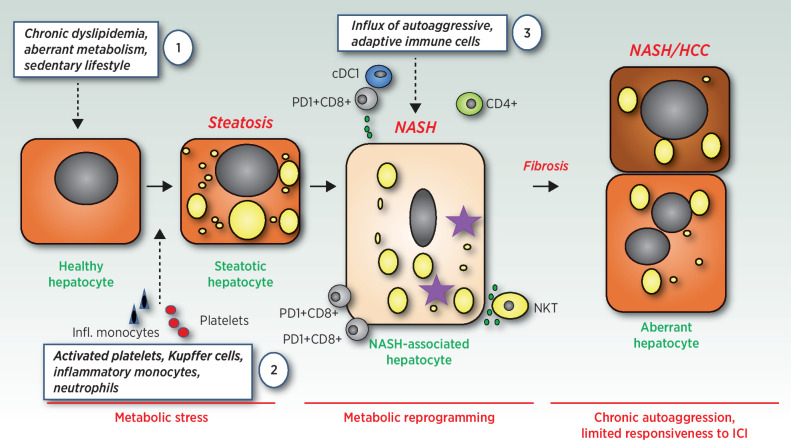
“This over time leads to a metabolic catastrophe in hepatocytes – (2) driving first local inflammation by Kupffer cells; hepatocyte damage; and influx of platelets, neutrophils, and inflammatory monocytes.”
BackgroundImmunotherapies for hepatocellular carcinoma
Llovet, J. M., Castet, F., Heikenwalder, M., Maini, M. K., Mazzaferro, V., Pinato, D. J., Pikarsky, E., Zhu, A. X., & Finn, R. S. (2022) · Nature Reviews Clinical Oncology · doi:10.1038/s41571-021-00573-2 · Cited by 1,843 · cited 1×
“Systemic treatment has profoundly changed over the last decade, particularly with the addition of ICIs to the treatment armamentarium of HCC (47, 48).”
BackgroundSelf-citationFinn, R. S., Ryoo, B.-Y., Merle, P., Kudo, M., Bouattour, M., Lim, H. Y., Breder, V., Edeline, J., Chao, Y., Ogasawara, S., et al. (2020) · Journal of Clinical Oncology · doi:10.1200/jco.19.01307 · Cited by 1,789 · cited 2×
“SECOND-LINE KEYNOTE-240 (49) Pembrolizumab (278) 13.”
BackgroundFecal microbiota transplant overcomes resistance to anti–PD-1 therapy in melanoma patients
Davar, D., Dzutsev, A. K., McCulloch, J. A., Rodrigues, R. R., Chauvin, J.-M., Morrison, R. M., Deblasio, R. N., Menna, C., Ding, Q., Pagliano, O., et al. (2021) · Science · doi:10.1126/science.abf3363 · Cited by 1,781 · cited 1×
“Strategies to influence gut dysbiosis, such as fecal microbiota transplant, may make tumors more susceptible to immunotherapy, but these approaches are still in their infancy (73, 74).”
BackgroundFecal microbiota transplant promotes response in immunotherapy-refractory melanoma patients
Baruch, E. N., Youngster, I., Ben-Betzalel, G., Ortenberg, R., Lahat, A., Katz, L., Adler, K., Dick-Necula, D., Raskin, S., Bloch, N., et al. (2021) · Science · doi:10.1126/science.abb5920 · Cited by 1,757 · cited 1×
“Strategies to influence gut dysbiosis, such as fecal microbiota transplant, may make tumors more susceptible to immunotherapy, but these approaches are still in their infancy (73, 74).”
BackgroundCheng, A.-L., Qin, S., Ikeda, M., Galle, P. R., Ducreux, M., Kim, T.-Y., Lim, H. Y., Kudo, M., Breder, V., Merle, P., et al. (2022) · Journal of Hepatology · doi:10.1016/j.jhep.2021.11.030 · Cited by 1,743 · cited 3×
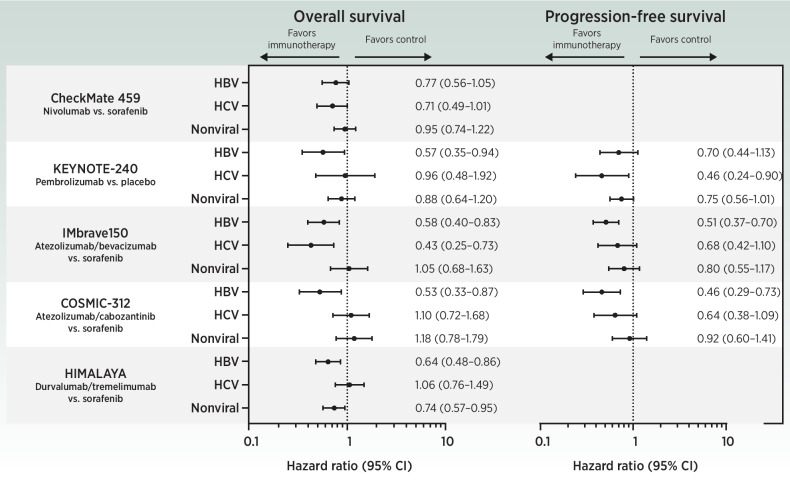
“The objective response rate (ORR) of 27% with atezolizumab/bevacizumab and 12% with nivolumab in patients with nonviral diseases (compared with 32% and 19% for HBV, and 30% and 17% for HCV) suggests that immunotherapy is also effective in patients of this etiologic subgroup (50, 53).”
BackgroundInfluentialTremelimumab plus durvalumab in unresectable hepatocellular carcinoma
Abou-Alfa, G. K., Lau, G., Kudo, M., Chan, S. L., Kelley, R. K., Furuse, J., Sukeepaisarnjaroen, W., Kang, Y.-K., Van Dao, T., De Toni, E. N., et al. (2022) · NEJM Evidence · doi:10.1056/evidoa2100070 · Cited by 1,576 · cited 3×
“In addition, post hoc subgroup analysis from the HIMALAYA trial demonstrated improved OS for durvalumab plus tremelimumab versus sorafenib in patients with nonviral liver disease and HBV, but not in HCV-related HCC (55).”
MethodInfluentialFrom NASH to HCC: current concepts and future challenges
Anstee, Q. M., Reeves, H. L., Kotsiliti, E., Govaere, O., & Heikenwalder, M. (2019) · Nature Reviews Gastroenterology & Hepatology · doi:10.1038/s41575-019-0145-7 · Cited by 1,392
Advances in immunotherapy for hepatocellular carcinoma
Sangro, B., Sarobe, P., Hervás-Stubbs, S., & Melero, I. (2021) · Nature Reviews Gastroenterology & Hepatology · doi:10.1038/s41575-021-00438-0 · Cited by 1,306
NASH limits anti-tumour surveillance in immunotherapy-treated HCC
Pfister, D., Núñez, N. G., Pinyol, R., Govaere, O., Pinter, M., Szydlowska, M., Gupta, R., Qiu, M., Deczkowska, A., Weiner, A., et al. (2021) · Nature · doi:10.1038/s41586-021-03362-0 · Cited by 1,294
Self-citationTzartzeva, K., Obi, J., Rich, N. E., Parikh, N. D., Marrero, J. A., Yopp, A., Waljee, A. K., & Singal, A. G. (2018) · Gastroenterology · doi:10.1053/j.gastro.2018.01.064 · Cited by 1,207 · cited 1×
“The combination of classical biomarker detection like a-fetoprotein (AFP) with ultrasound has recently shown increased sensitivity as compared with the use of this noninvasive test alone (21).”
Finn, R. S., Ikeda, M., Zhu, A. X., Sung, M. W., Baron, A. D., Kudo, M., Okusaka, T., Kobayashi, M., Kumada, H., Kaneko, S., et al. (2020) · Journal of Clinical Oncology · doi:10.1200/jco.20.00808 · Cited by 1,167 · cited 1×
“Indeed, based on encouraging response data from a phase Ib study (59), the combination of pembrolizumab plus lenvatinib is currently evaluated in a phase III trial (NCT03713593).”
BackgroundRen, Z., Xu, J., Bai, Y., Xu, A., Cang, S., Du, C., Li, Q., Lu, Y., Chen, Y., Guo, Y., et al. (2021) · The Lancet Oncology · doi:10.1016/s1470-2045(21)00252-7 · Cited by 1,124 · cited 2×
“6) 11 ORIENT-32 (54) Sintilimab, bevacizumab biosimilar (380) NR (NR-NR) 0.”
Yau, T., Park, J.-W., Finn, R. S., Cheng, A.-L., Mathurin, P., Edeline, J., Kudo, M., Harding, J. J., Merle, P., Rosmorduc, O., et al. (2022) · The Lancet Oncology · doi:10.1016/s1470-2045(21)00604-5 · Cited by 1,106 · cited 2×
“The objective response rate (ORR) of 27% with atezolizumab/bevacizumab and 12% with nivolumab in patients with nonviral diseases (compared with 32% and 19% for HBV, and 30% and 17% for HCV) suggests that immunotherapy is also effective in patients of this etiologic subgroup (50, 53).”
BackgroundYau, T. (., Park, J. W. (.-W., Finn, R. S. (. S. )., Cheng, A. L. (.-L., Mathurin, P., Edeline, J., Kudo, M. (., Harding, J. J., Merle, P., Rosmorduc, O., et al. (2022) · Deposito Adademico Digital Universidad De Navarra (University of Navarra) · Cited by 934
Ruiz de Galarreta, M., Bresnahan, E., Molina-Sánchez, P., Lindblad, K. E., Maier, B., Sia, D., Puigvehi, M., Miguela, V., Casanova-Acebes, M., Dhainaut, M., et al. (2019) · Cancer Discovery · doi:10.1158/2159-8290.cd-19-0074 · Cited by 912
NAFLD causes selective CD4+ T lymphocyte loss and promotes hepatocarcinogenesis
Ma, C., Kesarwala, A. H., Eggert, T., Medina-Echeverz, J., Kleiner, D. E., Jin, P., Stroncek, D. F., Terabe, M., Kapoor, V., ElGindi, M., et al. (2016) · Nature · doi:10.1038/nature16969 · Cited by 766 · cited 1×
“Conversely, na€ ve CD4þ T cells were shown to be more vulnerable to the NAFLDmicroenvironment where they display higher mortality rate due to the oxidative stress–related cytotoxic effects exerted by free fatty acids (42).”
BackgroundLi, X., Yao, W., Yuan, Y., Chen, P., Li, B., Li, J., Chu, R., Song, H., Xie, D., Jiang, X., et al. (2017) · Gut · doi:10.1136/gutjnl-2015-310514 · Cited by 737
Mittal, S., El-Serag, H. B., Sada, Y. H., Kanwal, F., Duan, Z., Temple, S., May, S. B., Kramer, J. R., Richardson, P. A., & Davila, J. A. (2016) · Clinical Gastroenterology and Hepatology · doi:10.1016/j.cgh.2015.07.019 · Cited by 648
Piscaglia, F., Svegliati‐Baroni, G., Barchetti, A., Pecorelli, A., Marinelli, S., Tiribelli, C., Bellentani, S., & on behalf of the HCC‐NAFLD Italian Study Group (2016) · Hepatology · doi:10.1002/hep.28368 · Cited by 604
Bruix, J., Cheng, A.-L., Meinhardt, G., Nakajima, K., De Sanctis, Y., & Llovet, J. (2017) · Journal of Hepatology · doi:10.1016/j.jhep.2017.06.026 · Cited by 562 · cited 1×
“This is somewhat surprising, as previous studies reported better outcomes with sorafenib in HCV-positive patients (66, 67).”
ResultKrenkel, O., Puengel, T., Govaere, O., Abdallah, A. T., Mossanen, J. C., Kohlhepp, M., Liepelt, A., Lefebvre, E., Luedde, T., Hellerbrand, C., et al. (2018) · Hepatology · doi:10.1002/hep.29544 · Cited by 557 · cited 1×
“Therapeutically, CCR2 inhibition has revealed beneficial effects in NASH and NASH-induced fibrosis in experimental murine models and in distinct phase II clinical trials (29, 30).”
BackgroundKelley, R. K., Rimassa, L., Cheng, A.-L., Kaseb, A., Qin, S., Zhu, A. X., Chan, S. L., Melkadze, T., Sukeepaisarnjaroen, W., Breder, V., et al. (2022) · The Lancet Oncology · doi:10.1016/s1470-2045(22)00326-6 · Cited by 535 · cited 1×
“2) 4 COSMIC-312 (57) Atezolizumab, cabozantinib (432) 15.”
Petrelli, F., Cortellini, A., Indini, A., Tomasello, G., Ghidini, M., Nigro, O., Salati, M., Dottorini, L., Iaculli, A., Varricchio, A., et al. (2021) · JAMA Network Open · doi:10.1001/jamanetworkopen.2021.3520 · Cited by 530 · cited 1×
“An elevated body mass index, for instance, predicts for adverse outcome from immunotherapy in unselected cancer types (79), although a paradoxically favorable role has been seen in patients with lung, renal cancer, and melanoma (80).”
BackgroundThe role of the microbiome in NAFLD and NASH
Kolodziejczyk, A. A., Zheng, D., Shibolet, O., & Elinav, E. (2019) · EMBO Molecular Medicine · doi:10.15252/emmm.201809302 · Cited by 523 · cited 1×
“In this setting, an important contribution is also given by the adipose tissue and the gut microbiota, which fuel the inflammatory milieu in response to changes of tissue homeostasis (25, 26).”
BackgroundAuto-aggressive CXCR6+ CD8 T cells cause liver immune pathology in NASH
Dudek, M., Pfister, D., Donakonda, S., Filpe, P., Schneider, A., Laschinger, M., Hartmann, D., Hüser, N., Meiser, P., Bayerl, F., et al. (2021) · Nature · doi:10.1038/s41586-021-03233-8 · Cited by 518 · cited 1×
“In addition, the presence of acetate shapes the autoaggressive phenotype characterized by production of proinflammatory cytokines in a MHC-I dependent manner (39).”
BackgroundSelf-citationErtle, J., Dechêne, A., Sowa, J., Penndorf, V., Herzer, K., Kaiser, G., Schlaak, J. F., Gerken, G., Syn, W., & Canbay, A. (2011) · International Journal of Cancer · doi:10.1002/ijc.25797 · Cited by 518
Hepatic recruitment of macrophages promotes nonalcoholic steatohepatitis through CCR2
Miura, K., Yang, L., van Rooijen, N., Ohnishi, H., & Seki, E. (2012) · American Journal of Physiology-Gastrointestinal and Liver Physiology · doi:10.1152/ajpgi.00365.2011 · Cited by 503 · cited 4×
“Genetic and pharmacologic targeting of CCR2 in murine HCC models inhibited tumor growth and metastatic spreading by reducing infiltration of tumorassociated macrophages and re-boosting CD8þ T-cell antitumor activity (31).”
BackgroundInfluentialBehary, J., Amorim, N., Jiang, X.-T., Raposo, A., Gong, L., McGovern, E., Ibrahim, R., Chu, F., Stephens, C., Jebeili, H., et al. (2021) · Nature Communications · doi:10.1038/s41467-020-20422-7 · Cited by 470 · cited 10×
“Numerous other clinical studies are currently testing ICIs alone or in combination with other agents in the systemic front- and second-line setting (60).”
BackgroundInfluentialVogel, A., Martinelli, E., Vogel, A., Cervantes, A., Chau, I., Daniele, B., Llovet, J. M., Meyer, T., Nault, J.-C., Neumann, U., et al. (2021) · Annals of Oncology · doi:10.1016/j.annonc.2021.02.014 · Cited by 458
Metabolomics and lipidomics in NAFLD: biomarkers and non-invasive diagnostic tests
Masoodi, M., Gastaldelli, A., Hyötyläinen, T., Arretxe, E., Alonso, C., Gaggini, M., Brosnan, J., Anstee, Q. M., Millet, O., Ortiz, P., et al. (2021) · Nature Reviews Gastroenterology & Hepatology · doi:10.1038/s41575-021-00502-9 · Cited by 451 · cited 1×
“However, it has also become apparent that potentially different qualitative states of steatosis might exist, triggered by different metabolite–lipid combinations (6).”
BackgroundCortellini, A., Bersanelli, M., Buti, S., Cannita, K., Santini, D., Perrone, F., Giusti, R., Tiseo, M., Michiara, M., Di Marino, P., et al. (2019) · Journal for ImmunoTherapy of Cancer · doi:10.1186/s40425-019-0527-y · Cited by 413 · cited 1×
“An elevated body mass index, for instance, predicts for adverse outcome from immunotherapy in unselected cancer types (79), although a paradoxically favorable role has been seen in patients with lung, renal cancer, and melanoma (80).”
BackgroundTran, S., Baba, I., Poupel, L., Dussaud, S., Moreau, M., Gélineau, A., Marcelin, G., Magréau-Davy, E., Ouhachi, M., Lesnik, P., et al. (2020) · Immunity · doi:10.1016/j.immuni.2020.06.003 · Cited by 400 · cited 4×
“Genetic and pharmacologic targeting of CCR2 in murine HCC models inhibited tumor growth and metastatic spreading by reducing infiltration of tumorassociated macrophages and re-boosting CD8þ T-cell antitumor activity (31).”
BackgroundInfluentialMalehmir, M., Pfister, D., Gallage, S., Szydlowska, M., Inverso, D., Kotsiliti, E., Leone, V., Peiseler, M., Surewaard, B. G. J., Rath, D., et al. (2019) · Nature Medicine · doi:10.1038/s41591-019-0379-5 · Cited by 398 · cited 1×
“The interaction of Kupffer cells with infiltrating platelets via Gp1ba receptor was recently shown to initiate the inflammatory process responsible for CD8þ T-cell recruitment in the steatotic liver (32).”
BackgroundWang, H., Zhang, H., Wang, Y., Brown, Z. J., Xia, Y., Huang, Z., Shen, C., Hu, Z., Beane, J., Ansa-Addo, E. A., et al. (2021) · Journal of Hepatology · doi:10.1016/j.jhep.2021.07.032 · Cited by 398
The Current Landscape of Immune Checkpoint Blockade in Hepatocellular Carcinoma: A Review
Pinter, M., Jain, R. K., & Duda, D. G. (2021) · JAMA Oncology · doi:10.1001/jamaoncol.2020.3381 · Cited by 339 · cited 2×
“Indicators of response used in other tumors, including PD-L1 expression or tumor mutational burden, have not proven their value in HCC yet (47).”
BackgroundSelf-citationStine, J. G., Wentworth, B. J., Zimmet, A., Rinella, M. E., Loomba, R., Caldwell, S. H., & Argo, C. K. (2018) · Alimentary Pharmacology & Therapeutics · doi:10.1111/apt.14937 · Cited by 336
Tan, D. J. H., Ng, C. H., Lin, S. Y., Pan, X. H., Tay, P., Lim, W. H., Teng, M., Syn, N., Lim, G., Yong, J. N., et al. (2022) · The Lancet Oncology · doi:10.1016/s1470-2045(22)00078-x · Cited by 307
Association of Aspirin with Hepatocellular Carcinoma and Liver-Related Mortality
Simon, T. G., Duberg, A.-S., Aleman, S., Chung, R. T., Chan, A. T., & Ludvigsson, J. F. (2020) · New England Journal of Medicine · doi:10.1056/nejmoa1912035 · Cited by 304 · cited 1×
“Interestingly, preliminary clinical evidence exists suggests improved liver damage as well as reduced fibrosis and HCC incidence in patients receiving aspirin (33, 34).”
BackgroundScheiner, B., Pomej, K., Kirstein, M. M., Hucke, F., Finkelmeier, F., Waidmann, O., Himmelsbach, V., Schulze, K., von Felden, J., Fründt, T. W., et al. (2022) · Journal of Hepatology · doi:10.1016/j.jhep.2021.09.035 · Cited by 303 · cited 1×
“Novel scores like the recently published CRAFITY score, which is based on the twoserum parameters alpha-fetoprotein and C-reactive protein and predicts survival and radiologic outcome, require prospective validation before being implemented into clinical routine (61).”
Self-citationPharmacotherapy for NASH: Current and emerging
Konerman, M. A., Jones, J. C., & Harrison, S. A. (2018) · Journal of Hepatology · doi:10.1016/j.jhep.2017.10.015 · Cited by 292 · cited 1×
“These include metabolic dysfunction hallmarked by insulin resistance and increased liver lipogenesis, inflammation, characterized by Kupffer cell activation, gut dysbiosis and immune cell recruitment, as well as fibrosis, where hepatic stellate cell activation ultimately leads to collagen deposition and altered hepati…”
BackgroundBest, J., Bechmann, L. P., Sowa, J.-P., Sydor, S., Dechêne, A., Pflanz, K., Bedreli, S., Schotten, C., Geier, A., Berg, T., et al. (2020) · Clinical Gastroenterology and Hepatology · doi:10.1016/j.cgh.2019.11.012 · Cited by 288
Haber, P. K., Puigvehí, M., Castet, F., Lourdusamy, V., Montal, R., Tabrizian, P., Buckstein, M., Kim, E., Villanueva, A., Schwartz, M., et al. (2021) · Gastroenterology · doi:10.1053/j.gastro.2021.06.008 · Cited by 248
CXCR2 inhibition enables NASH-HCC immunotherapy
Leslie, J., Mackey, J. B. G., Jamieson, T., Ramon-Gil, E., Drake, T. M., Fercoq, F., Clark, W., Gilroy, K., Hedley, A., Nixon, C., et al. (2022) · Gut · doi:10.1136/gutjnl-2021-326259 · Cited by 220 · cited 2×
“Qualification of CXCR2 as a putative therapeutic target in this subset of patients stands as an important paradigmatic example (38).”
BackgroundOrci, L. A., Sanduzzi-Zamparelli, M., Caballol, B., Sapena, V., Colucci, N., Torres, F., Bruix, J., Reig, M., & Toso, C. (2022) · Clinical Gastroenterology and Hepatology · doi:10.1016/j.cgh.2021.05.002 · Cited by 218 · cited 1×
“78 per 100 person-years in patients with cirrhosis (12).”
BackgroundGehrke, N., & Schattenberg, J. M. (2020) · Gastroenterology · doi:10.1053/j.gastro.2020.02.020 · Cited by 209
XCR1+ type 1 conventional dendritic cells drive liver pathology in non-alcoholic steatohepatitis
Deczkowska, A., David, E., Ramadori, P., Pfister, D., Safran, M., Li, B., Giladi, A., Jaitin, D. A., Barboy, O., Cohen, M., et al. (2021) · Nature Medicine · doi:10.1038/s41591-021-01344-3 · Cited by 197 · cited 2×
“Moreover, pharmacologic depletion of this cell population turned out to improveNAS score and liver injury in this model (36).”
BackgroundSelf-citationSimon, T. G., Henson, J., Osganian, S., Masia, R., Chan, A. T., Chung, R. T., & Corey, K. E. (2019) · Clinical Gastroenterology and Hepatology · doi:10.1016/j.cgh.2019.04.061 · Cited by 180 · cited 1×
“Interestingly, preliminary clinical evidence exists suggests improved liver damage as well as reduced fibrosis and HCC incidence in patients receiving aspirin (33, 34).”
BackgroundThe eMERGE Network, Namjou, B., Lingren, T., Huang, Y., Parameswaran, S., Cobb, B. L., Stanaway, I. B., Connolly, J. J., Mentch, F. D., Benoit, B., et al. (2019) · BMC Medicine · doi:10.1186/s12916-019-1364-z · Cited by 179
Risks of light and moderate alcohol use in fatty liver disease: follow-up of population cohorts
Åberg, F., Puukka, P., Salomaa, V., Männistö, S., Lundqvist, A., Valsta, L., Perola, M., Färkkilä, M., & Jula, A. (2020) · Hepatology · doi:10.1002/hep.30864 · Cited by 176
Nonalcoholic Fatty Liver Disease and Recent Guideline Updates
Ando, Y., & Jou, J. H. (2021) · Clinical Liver Disease · doi:10.1002/cld.1045 · Cited by 170 · cited 1×
“In the clinic, NASH remains a diagnosis of exclusion, requiring evidence of histological steatohepatitis as opposed to simple steatosis and no coexisting causes of chronic liver disease (75).”
BackgroundRehermann, B., & Bertoletti, A. (2015) · Hepatology · doi:10.1002/hep.27323 · Cited by 168
De Vincentis, A., Tavaglione, F., Jamialahmadi, O., Picardi, A., Antonelli Incalzi, R., Valenti, L., Romeo, S., & Vespasiani-Gentilucci, U. (2022) · Clinical Gastroenterology and Hepatology · doi:10.1016/j.cgh.2021.05.056 · Cited by 158
Ajmera, V., Belt, P., Wilson, L. A., Gill, R. M., Loomba, R., Kleiner, D. E., Neuschwander-Tetri, B. A., & Terrault, N. (2018) · Clinical Gastroenterology and Hepatology · doi:10.1016/j.cgh.2018.01.026 · Cited by 154 · cited 1×
“Clinical studies showed that alcohol consumption aggravates liver histology and fibrosis progression in patients with NAFLD (13, 14).”
BackgroundAltered Microbiota Diversity and Bile Acid Signaling in Cirrhotic and Noncirrhotic NASH-HCC
Sydor, S., Best, J., Messerschmidt, I., Manka, P., Vilchez-Vargas, R., Brodesser, S., Lucas, C., Wegehaupt, A., Wenning, C., Aßmuth, S., et al. (2020) · Clinical and Translational Gastroenterology · doi:10.14309/ctg.0000000000000131 · Cited by 127 · cited 1×
“A novel intriguing diagnostic potential also emerged by the analysis of microbioma composition (22), serum lipidomic (23) as well as by the adoption of liquid biopsies (e.”
BackgroundCharacterization and Proteome of Circulating Extracellular Vesicles as Potential Biomarkers for NASH
Povero, D., Yamashita, H., Ren, W., Subramanian, M. G., Myers, R. P., Eguchi, A., Simonetto, D. A., Goodman, Z. D., Harrison, S. A., Sanyal, A. J., et al. (2020) · Hepatology Communications · doi:10.1002/hep4.1556 · Cited by 118
Buti, S., Bersanelli, M., Perrone, F., Tiseo, M., Tucci, M., Adamo, V., Stucci, L. S., Russo, A., Tanda, E. T., Spagnolo, F., et al. (2021) · European Journal of Cancer · doi:10.1016/j.ejca.2020.09.033 · Cited by 115 · cited 1×
“Polypharmacy (85), a problem often encountered in patients with underlying metabolic syndrome, may lead to worse outcomes from ICI, although the precise mechanistic foundations of this association are not fully understood (86).”
BackgroundSelf-citationPedrosa, M., Seyedkazemi, S., Francque, S., Sanyal, A., Rinella, M., Charlton, M., Loomba, R., Ratziu, V., Kochuparampil, J., Fischer, L., et al. (2020) · Contemporary Clinical Trials · doi:10.1016/j.cct.2019.105889 · Cited by 114 · cited 1×
“Therapeutically, CCR2 inhibition has revealed beneficial effects in NASH and NASH-induced fibrosis in experimental murine models and in distinct phase II clinical trials (29, 30).”
BackgroundQin, S., Chen, Z., Fang, W., Ren, Z., Xu, R., Ryoo, B.-Y., Meng, Z., Bai, Y., Chen, X., Liu, X., et al. (2022) · Journal of Clinical Oncology · doi:10.1200/jco.2022.40.4_suppl.383 · Cited by 108
Li, L., Xu, L., Yan, J., Zhen, Z.-J., Ji, Y., Liu, C.-Q., Lau, W. Y., Zheng, L., & Xu, J. (2015) · Journal of Experimental & Clinical Cancer Research · doi:10.1186/s13046-015-0247-1 · Cited by 101 · cited 6×
“CXR2þ neutrophils were found in tumors of human and mouse models of NASH-related HCC (37).”
BackgroundInfluentialLewińska, M., Santos‐Laso, Á., Arretxe, E., Alonso, C., Zhuravleva, E., Jiménez-Agüero, R., Eizaguirre, E., Pareja, M. J., Romero‐Gómez, M., Arrese, M. A., et al. (2021) · EBioMedicine · doi:10.1016/j.ebiom.2021.103661 · Cited by 99 · cited 1×
“A novel intriguing diagnostic potential also emerged by the analysis of microbioma composition (22), serum lipidomic (23) as well as by the adoption of liquid biopsies (e.”
BackgroundLiver Cancer Emergence Associated with Antiviral Treatment: An Immune Surveillance Failure?
Boix, L., Mariñó, Z., Torres, F., Forns, X., Bruix, J., & Reig, M. (2017) · Seminars in Liver Disease · doi:10.1055/s-0037-1601349 · Cited by 89
Steatohepatitis Impairs T-cell–Directed Immunotherapies Against Liver Tumors in Mice
Heinrich, B., Brown, Z. J., Diggs, L. P., Vormehr, M., Ma, C., Subramanyam, V., Rosato, U., Ruf, B., Walz, J. S., McVey, J. C., et al. (2021) · Gastroenterology · doi:10.1053/j.gastro.2020.09.031 · Cited by 82 · cited 1×
“These results were in line with a study showing that colon cancer cell metastasis in the liver was responsive to immunotherapy in a metabolically “normal” liver but not in a liver with NASH (41).”
ResultLoosen, S. H., Kostev, K., Keitel, V., Tacke, F., Roderburg, C., & Luedde, T. (2021) · Journal of Hepatology · doi:10.1016/j.jhep.2021.08.030 · Cited by 74
Perspectives on the Neoadjuvant Use of Immunotherapy in Hepatocellular Carcinoma
Pinato, D. J., Fessas, P., Sapisochin, G., & Marron, T. U. (2021) · Hepatology · doi:10.1002/hep.31697 · Cited by 74 · cited 1×
“Innate and adaptive immune dysfunction has been increasingly recognized as a mechanism of NASH progression and overlaps with the mechanism of action of ICIs, a therapeutic modality that has now become the new standard of care for advancedHCC andwhich is likely to expand to earlier stages of the disease as a “chemoprev…”
BackgroundSelf-citationJarvis, H., O'Keefe, H., Craig, D., Stow, D., Hanratty, B., & Anstee, Q. M. (2022) · BMJ Open · doi:10.1136/bmjopen-2021-049767 · Cited by 71 · cited 1×
“Clinical studies showed that alcohol consumption aggravates liver histology and fibrosis progression in patients with NAFLD (13, 14).”
BackgroundHussain, N., Naeem, M., & Pinato, D. J. (2021) · Human Vaccines & Immunotherapeutics · doi:10.1080/21645515.2020.1769398 · Cited by 69 · cited 1×
“Polypharmacy (85), a problem often encountered in patients with underlying metabolic syndrome, may lead to worse outcomes from ICI, although the precise mechanistic foundations of this association are not fully understood (86).”
BackgroundSelf-citationHo, W. J., Danilova, L., Lim, S. J., Verma, R., Xavier, S., Leatherman, J. M., Sztein, M. B., Fertig, E. J., Wang, H., Jaffee, E., et al. (2020) · Journal for ImmunoTherapy of Cancer · doi:10.1136/jitc-2019-000394 · Cited by 66 · cited 1×
“This is supported by two meta-analyses that found no meaningful difference in ORR between patients with viral and nonviral etiology, and viral etiology had no relevant effect on the tumor immune microenvironment in HCC (68, 69).”
ResultThe role of gut microbiome in modulating response to immune checkpoint inhibitor therapy in cancer
Naqash, A. R., Kihn-Alarcón, A. J., Stavraka, C., Kerrigan, K. C., Vareki, S. M., Pinato, D. J., & Puri, S. (2021) · Annals of Translational Medicine · doi:10.21037/atm-20-6427 · Cited by 54 · cited 2×
“Enrichment in certain gut bacterial strains such as Faecalibacterium and Akkermansia (83, 84) have been linked with increased responsiveness to ICI, suggesting that the process of gut dysbiosis that is often seen in NAFLD/NASH may independently precondition responsiveness to ICI.”
BackgroundSelf-citationDing, Z., Dong, Z., Chen, Z., Hong, J., Yan, L., Li, H., Yao, S., Yan, Y., Yang, Y., Yang, C., et al. (2021) · Frontiers in Immunology · doi:10.3389/fimmu.2021.733530 · Cited by 47 · cited 1×
“This is supported by two meta-analyses that found no meaningful difference in ORR between patients with viral and nonviral etiology, and viral etiology had no relevant effect on the tumor immune microenvironment in HCC (68, 69).”
ResultNAFLD indirectly impairs antigen-specific CD8+ T cell immunity against liver cancer in mice
McVey, J. C., Green, B. L., Ruf, B., McCallen, J., Wabitsch, S., Subramanyam, V., Diggs, L. P., Heinrich, B., Greten, T. F., & Ma, C. (2022) · iScience · doi:10.1016/j.isci.2022.103847 · Cited by 28
Kolamunnage‐Dona, R., Berhane, S., Potts, H., Williams, E. H., Tanner, J., Janowitz, T., Hoare, M., & Johnson, P. J. (2021) · Journal of Hepatology · doi:10.1016/j.jhep.2021.05.015 · Cited by 24 · cited 1×
“This is somewhat surprising, as previous studies reported better outcomes with sorafenib in HCV-positive patients (66, 67).”
ResultTargeting adipose tissue to tackle NASH: SPARCL1 as an emerging player
Rodrigues, R. M., Guan, Y., & Gao, B. (2021) · Journal of Clinical Investigation · doi:10.1172/jci153640 · Cited by 23 · cited 1×
“In this setting, an important contribution is also given by the adipose tissue and the gut microbiota, which fuel the inflammatory milieu in response to changes of tissue homeostasis (25, 26).”
BackgroundCombined PD-1/VEGFR Blockade: A New Era of Treatment for Hepatocellular Cancer
Pinato, D. J., Fessas, P., Cortellini, A., & Rimassa, L. (2021) · Clinical Cancer Research · doi:10.1158/1078-0432.ccr-20-4069 · Cited by 19 · cited 1×
“, risk of immunotoxicity, bleeding) alongside general patients’ fitness and individual preference dominate therapeutic decision-making in absence of solid molecular predictors of benefit to either therapeutic modality (46).”
BackgroundSelf-citationHepatitis C treatment and liver cancer recurrence: cause for concern?
Debes, J. D., Janssen, H. L. A., & Boonstra, A. (2017) · The Lancet. Gastroenterology & hepatology · doi:10.1016/s2468-1253(16)30204-7 · Cited by 15
Emerging therapeutic targets for NASH: key innovations at the preclinical level
Horn, P., & Newsome, P. N. (2020) · Expert Opinion on Therapeutic Targets · doi:10.1080/14728222.2020.1728742 · Cited by 13 · cited 1×
“Whether reversal of the NASHassociated immune-suppressive microenvironment may lead to augmented antitumor immunity in patients with NASH-HCC needs to be proven prospectively in clinical studies (78).”
BackgroundNew Frontiers in the Medical Therapy of Hepatocellular Carcinoma
Fulgenzi, C. A. M., D’Alessio, A., Talbot, T., Gennari, A., Openshaw, M. R., Demirtaş, C. Ö., Cortellini, A., & Pinato, D. J. (2022) · Chemotherapy · doi:10.1159/000521837 · Cited by 13 · cited 1×
“Except for ramucirumab, whose efficacy is demonstrated in sorafenibexperienced patients with AFP ≥ 400 ng/mL, no systemic therapy is approved in the context of a biomarker-defined subgroup of patients (44).”
BackgroundSelf-citationMallardo, D., Cortellini, A., Capone, M., Madonna, G., Pinato, D. J., Warren, S. E., Simeone, E., & Ascierto, P. A. (2022) · Annals of Oncology · doi:10.1016/j.annonc.2022.01.007 · Cited by 12 · cited 1×
“Amongst other host factors, diabetes may also impair responsiveness to ICI (81), as a likely consequence of T-cell exhaustion (82).”
BackgroundSelf-citationCatenacci, D. V. T., Liao, C.-Y. A., Maron, S. B., Solomon, B., Mahipal, A., Johnson, M. L., Carbone, D. P., Henick, B. S., Johnson, B., Roychowdhury, S., et al. (2021) · Annals of Oncology · doi:10.1016/j.annonc.2021.08.1345 · Cited by 8 · cited 1×
“Amongst other host factors, diabetes may also impair responsiveness to ICI (81), as a likely consequence of T-cell exhaustion (82).”
BackgroundChang, J., Ryan, J. S., Ajmera, V. H., Ting, S., Tamayo, P., & Burgoyne, A. M. (2022) · Journal of Clinical Oncology · doi:10.1200/jco.2022.40.4_suppl.389 · Cited by 7
Reduced Hepatocellular Carcinoma Risk vs Bleeding Risk Associated With Aspirin
Chien, N., Yeo, Y. H., & Nguyen, M. H. (2019) · JAMA Oncology · doi:10.1001/jamaoncol.2019.0614 · Cited by 1 · cited 1×
“However, given the associational nature of these studies and the widely debated use of anticoagulants for chronic liver disease (35), further preclinical investigations may throw light on specific platelets–immune cells interaction mechanisms that might allow targeting key cross-talk molecules preserving platelet func…”
Background
Cited by
Qin, S., Chan, S. L., Gu, S., Bai, Y., Ren, Z., Lin, X., Chen, Z., Jia, W., Jin, Y., Guo, Y., et al. (2023) · The Lancet · doi:10.1016/s0140-6736(23)00961-3 · Cited by 746
Breakthroughs in Hepatocellular Carcinoma Therapies
Singal, A. G., Kudo, M., & Bruix, J. (2023) · Clinical Gastroenterology and Hepatology · doi:10.1016/j.cgh.2023.01.039 · Cited by 162
Immune checkpoint inhibitors in hepatocellular carcinoma: emerging challenges in clinical practice
Pinter, M., Scheiner, B., & Pinato, D. J. (2023) · The Lancet. Gastroenterology & hepatology · doi:10.1016/s2468-1253(23)00147-4 · Cited by 155
Self-citationPοlyzos, S. A., Chrysavgis, L., Vachliotis, I. D., Chartampilas, E., & Cholongitas, Ε. (2023) · Seminars in Cancer Biology · doi:10.1016/j.semcancer.2023.04.010 · Cited by 100
Salié, H., Wischer, L., D’Alessio, A., Godbole, I., Suo, Y., Otto-Mora, P., Beck, J., Neumann, O., Stenzinger, A., Schirmacher, P., et al. (2024) · Gut · doi:10.1136/gutjnl-2024-332837 · Cited by 91
“Despite the potential connection of tumour aetiology with specific immune reactions in HCC, in particular, between metabolic liver disease-associated HCC and viral hepatitis-associated HCC, 15 29 30 we did not find a strong correlation of the identified immunotypes with aetiology.”
Self-citation
Metadata
- Authors
- Pinter, M., Pinato, D. J., Ramadori, P., & Heikenwalder, M.
- Affiliations
- Medical University of Vienna (AT)
- Università degli Studi del Piemonte Orientale “Amedeo Avogadro” (IT)
- German Cancer Research Center (DE)
- 5Division of Chronic Inflammation and Cancer, German Cancer Research Center, Heidelberg, Germany.
- Corresponding author
- Pinter, Matthias
- Ramadori, Pierluigi
- Venue
- Clinical Cancer Research
- Published
- 2022-09-27
- Volume
- 29
- Issue
- 3
- Pages
- 513-520
- ISSN
- 1078-0432 (ISSN-L)
- 1557-3265
- PMC
- PMC9890137
- OpenAlex
- W4297338588
- Semantic Scholar
- b83b5bb79de3238c6ef159032d7b5510960590c9
- Cited by
- 103
- References
- 90
- Citations by year
- 2026: 19 · 2025: 28 · 2024: 31 · 2023: 24 · 2022: 1
- FWCI
- 3.38
- Type
- journal article
- Language
- en
- Open access
- hybrid
- doi.org
- Licence
- Locations
- Clinical Cancer Research (publishedVersion, cc-by-nc-nd)
- PubMed Central (publishedVersion, cc-by-nc-nd)
- PubMed (publishedVersion)
- Funders
- Associazione Italiana per la Ricerca sul Cancro (25697)
- Deutsche Krebshilfe (70113166, 70113167)
- Horizon 2020 Framework Programme
- NIHR Imperial Biomedical Research Centre
- Wellcome Trust (PS3416)
- Wilhelm Sander-Stiftung
- Topics
- Health Sciences › Medicine › Hepatology › Liver Disease Diagnosis and Treatment
- Health Sciences › Medicine › Hepatology › Hepatocellular Carcinoma Treatment and Prognosis
- Health Sciences › Medicine › Oncology › Cancer Immunotherapy and Biomarkers
- Keywords
- nonalcoholic steatohepatitis, non-alcoholic fatty liver disease, hepatocellular carcinoma, tumor immunology, immunotherapy, innate and adaptive immune cells, liver fibrosis, liver cirrhosis, cancer risk stratification, treatment resistance
- MeSH terms
- Fibrosis, Carcinoma, Hepatocellular, Humans, Immunotherapy, Liver Cirrhosis, Liver Neoplasms, Carcinogenesis, Non-alcoholic Fatty Liver Disease
About these checks
Registry, retraction, Cites and statistics results are computed, not judged, with one exception: a printed reference that no index lists is read once by a model before it counts as a citation error. Claims are extracted by a model and kept only when their quote appears verbatim in the text; each cited source is then checked, with a model’s help, for whether it says what the claim relies on. Those verdicts can be wrong — read the claim’s quote and the cited source before relying on one.
Statistics and arithmetic are recomputed, not judged.
Confidence bands are shown only for fields calibrated on our annotated test set. None is calibrated yet, so no band is shown.
What counts as a claim ›How we measure confidence ›How we check this ›
Are you an author, or do you see a problem with this page? Request a review
Data sources
Bibliographic data: Semantic Scholar, OpenAlex, Crossref.
Contains information from the Semantic Scholar Academic Graph Datasets, made available under the ODC Attribution License (ODC-BY 1.0).
Semantic Scholar’s data is described in: Kinney, R., et al. (2023). The Semantic Scholar Open Data Platform. arXiv:2301.10140.
