

Synthetic Lethal Interaction with BCL-XL Blockade Deepens Response to Cetuximab in Patient-Derived Models of Metastatic Colorectal Cancer
Open accessPublished version of a preprint
The DOI matches its Crossref record; 50 of the 50 references it cites were found in a registry or an index; 5 of the 34 sources its claims cite were checked for support.
Abstract
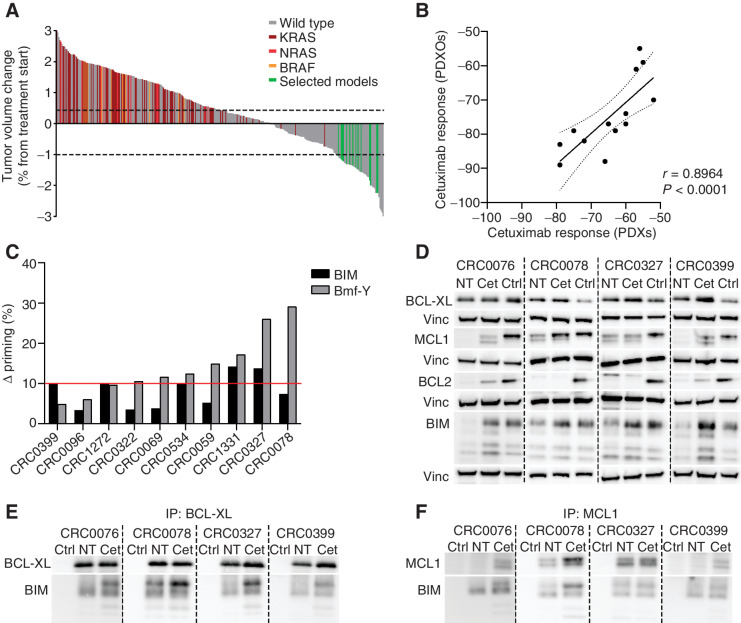
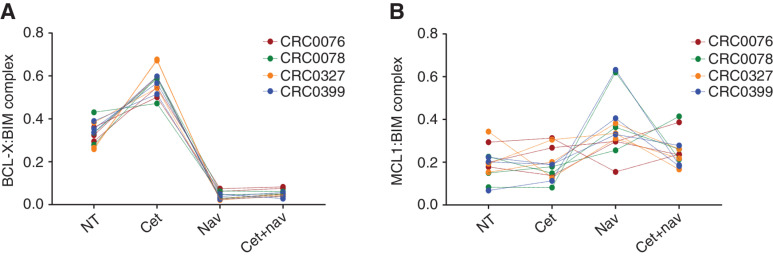
Purpose: Approximately 20% of patients with RAS wild-type metastatic colorectal cancer (mCRC) experience objective responses to the anti-EGFR antibody cetuximab, but disease eradication is seldom achieved. The extent of tumor shrinkage correlates with long-term outcome. We aimed to find rational combinations that potentiate cetuximab efficacy by disrupting adaptive dependencies on antiapoptotic molecules (BCL2, BCL-XL, MCL1). Experimental Design: Experiments were conducted in patient-derived xenografts (PDX) and organoids (PDXO). Apoptotic priming was analyzed by BH3 profiling. Proapoptotic and antiapoptotic protein complexes were evaluated by co-immunoprecipitation and electroluminescence sandwich assays. The effect of combination therapies was assessed by caspase activation in PDXOs and by monitoring PDX growth. Results: A population trial in 314 PDX cohorts, established from as many patients, identified 46 models (14.6%) with appreciable (>50% tumor shrinkage) but incomplete response to cetuximab. From these models, 14 PDXOs were derived. Cetuximab primed cells for apoptosis, but only concomitant blockade of BCL-XL precipitated cell death. Mechanistically, exposure to cetuximab induced upregulation of the proapoptotic protein BIM and its sequestration by BCL-XL. Inhibition of BCL-XL resulted in displacement of BIM, which was not buffered by MCL1 and thereby became competent to induce apoptosis. In five PDX models, combination of cetuximab and a selective BCL-XL inhibitor triggered apoptosis and led to more pronounced tumor regressions and longer time to relapse after treatment discontinuation than cetuximab alone. Conclusions: In mCRC tumors that respond to cetuximab, antibody treatment confers a synthetic-lethal dependency on BCL-XL. Targeting this dependency unleashes apoptosis and increases the depth of response to cetuximab.
Overview
CoChat Summary
TL;DR
In patient-derived models of metastatic colorectal cancer, cetuximab primes cells for apoptosis and upregulates BIM, but BCL-XL sequesters BIM and prevents cell death. Adding BCL-XL blockade unleashes apoptosis, deepens cetuximab response, and delays relapse in PDX models.
Key findings
- In a population trial of 314 mCRC PDXs, only 46 models (14.6%) showed >50% mean tumor volume reduction after 3 weeks of cetuximab; all cetuximab-sensitive models lacked KRAS, NRAS, and BRAF resistance-driving mutations.
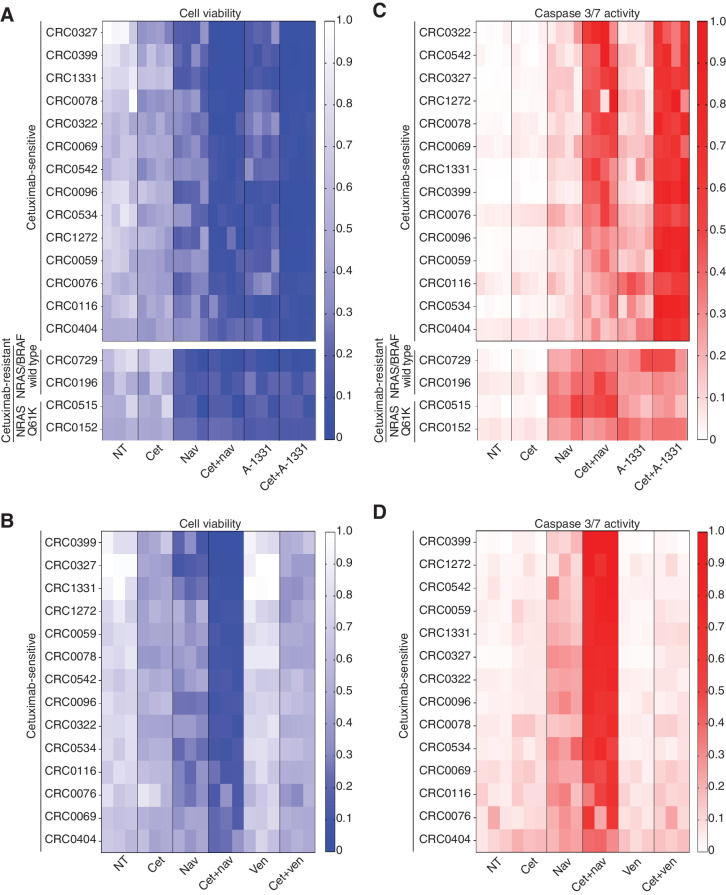
- Cetuximab increased apoptotic priming in PDXOs and upregulated BIM, which was preferentially sequestered by BCL-XL; selective BCL-XL inhibition with A-1331852 or navitoclax plus cetuximab triggered massive caspase 3/7 activation in 14 cetuximab-sensitive PDXOs, whereas the BCL2 inhibitor venetoclax did not enhance cetuximab.
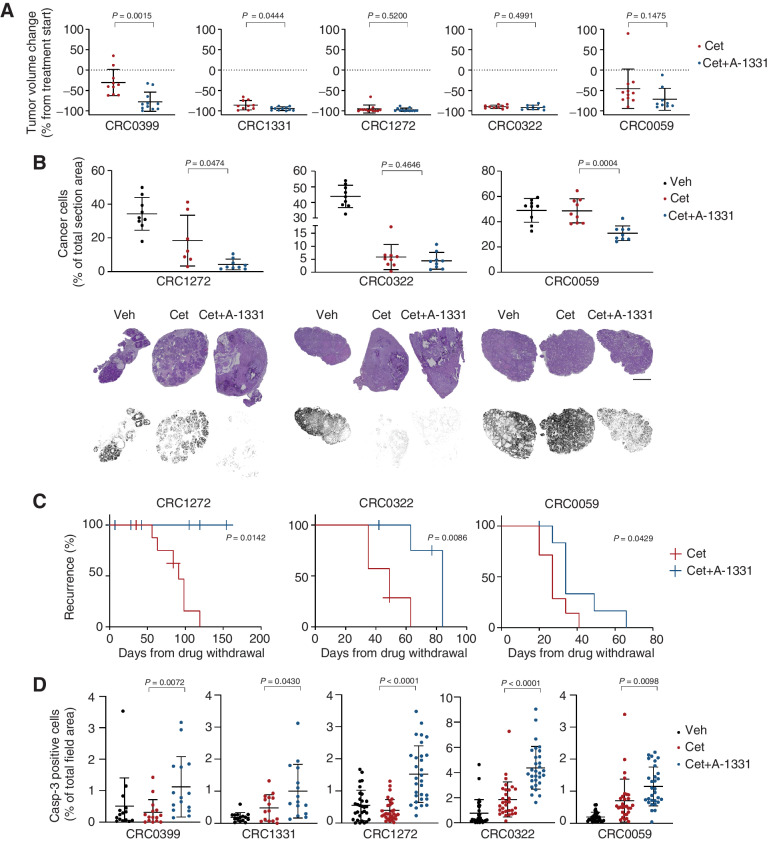
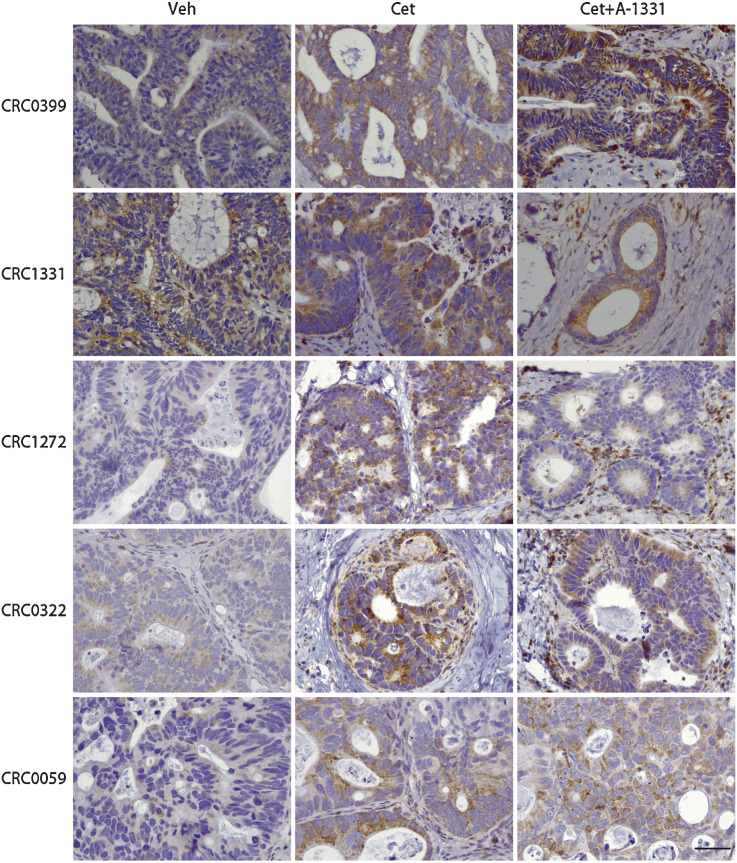
- In five cetuximab-sensitive PDXs, cetuximab plus A-1331852 produced deeper tumor shrinkage in two models, reduced cancer cell density in others, and led to longer time to relapse after treatment discontinuation than cetuximab alone.
- In cetuximab-resistant PDXOs, cetuximab did not induce BIM upregulation, and adding cetuximab to BCL-XL inhibition was inconsequential.
Methods
- Patient-derived xenografts (PDX) and organoids (PDXO) from mCRC; a 314-PDX population trial identified cetuximab-responsive models, 14 PDXOs were derived, and five PDX models were used for in vivo combination testing.
- Dynamic BH3 profiling measured apoptotic priming; co-immunoprecipitation and Meso Scale Discovery assays quantified BIM:BCL-XL and BIM:MCL1 complexes; viability, caspase 3/7, qRT-PCR, IHC, and morphometric analyses were used.
- Statistical analyses included two-tailed Welch t test, one-way ANOVA with Šidák correction, Spearman correlation, and log-rank (Mantel–Cox) test, with significance set at P < 0.05.
Limitations
- The paper states it did not explore the reasons underlying modulation of MCL1:BIM stoichiometry by navitoclax and cetuximab.
- The paper notes that caliper-based tumor measurements are not precise with very small masses.
- The paper states that navitoclax development faces obstacles due to high incidence of on-target thrombocytopenia from BCL-XL inhibition in platelets; evident from the text, the in vivo combination efficacy was assessed in five PDX models and remains preclinical.
Model-written summary. Check it against the paper before relying on it.
Integrity signals
Registry
Cites
Statistics
Figures
Verification
Claims the paper makes
2 Valid · 0 Not valid · 18 Not checked · 87 Own results and interpretations
The cited sources support only part of this claim — read each source’s verdict below.
In the paper
“This is supported by our observation, consolidated after monitoring hundreds of mCRC PDXs exposed to cetuximab (10, 25, 27, 29, 30), that complete responses are exceptional events.”
§ Synthetic Lethal Interaction with BCL-XL Blockade Deepens Response to Cetuximab in Patient-Derived Models of Metastatic Colorectal Cancer > Discussion
What the sources say
- Supportedcites [10] Lupo B, Sassi F, Pinnelli M, Galimi F, Zanella ER, Vurchio V,. Colorectal cancer residual disease at maximal response to EGFR blockade displays a druggable paneth cell-like phenotype. Sci Transl Med 2020; 12: eaax8313. 32759276 PMC7617202 source
The Materials and Methods 'Study design' section states that cohorts of mice bearing tumors expanded from 279 independent mCRC PDXs were treated with cetuximab monotherapy 'to identify cases with objective but incomplete response', and the Results ('Residual colorectal tumors after EGFR blockade...') report that only 40/279 cases (14.3%) regressed by ≥50% and that all retained residual disease, with long-term stop-and-go cetuximab giving ~80% regression that 'failed to achieve tumor eradication'. Together these support the attributed point that complete responses are exceptional in cetuximab-exposed mCRC PDXs; the paper does not tabulate an explicit complete-response count, but its design and readouts consistently frame the response as incomplete. (LLM, conf=0.80)
- Supportedcites [25] Zanella ER, Galimi F, Sassi F, Migliardi G, Cottino F, Leto SM,. IGF2 is an actionable target that identifies a distinct subpopulation of colorectal cancer patients with marginal response to anti-EGFR therapies. Sci Transl Med 2015; 7: 272ra12. 25632036 source
In the section 'Response to cetuximab in "quadruple negative" mCRC xenopatients: A population study in 125 cases', our copy reports that among 125 cetuximab-exposed xenopatient cases only 9 (7.2%) showed overt shrinkage (>75% mass reduction, a cutoff set midway between borderline 50% regression and 'complete mass obliteration (100%)'), and that refined genetic selection 'may not be sufficient to enrich for full responders' — i.e. the deepest responses to cetuximab monotherapy were rare, with complete regression not reported at all (only 'almost complete eradication' under cetuximab plus lapatinib, Combination therapies section). The Abstract likewise frames SD as far more frequent than massive regressions. This supports the attributed paraphrase that complete responses are exceptional in mCRC PDXs exposed to cetuximab, though the paper phrases it in terms of >75% 'massive regression' rather than literal complete response and its cetuximab cohort is 125 quadruple-negative cases. (LLM, conf=0.82)
- Partly supportedcites [27] Bertotti A, Migliardi G, Galimi F, Sassi F, Torti D, Isella C,. A molecularly annotated platform of patient-derived xenografts ("xenopatients") identifies HER2 as an effective therapeutic target in cetuximab-resistant colorectal cancer. Cancer Discov 2011; 1: 508– 23. 22586653 sourceExperimental — accuracy not yet measured
Our copy documents cetuximab activity in mCRC xenografts at the case level: in an unselected population of 47 cases, tumor shrinkage (defined as ≥50% volume decrease) occurred in 5 cases (10.6%), stabilization in 14 (29.8%) and progression in 28 (59.6%) (Effect of Cetuximab Treatment..., Results), rising to 16.7% regression among 66 KRAS codon 12/13 wild-type tumors (Research Article section), from a trial on 85 engrafted samples. Nothing in it, however, addresses 'complete responses': the response taxonomy it adopts (regression/shrinkage, stabilization, progression) has no complete-regression category and no complete disappearance is reported or discussed, so the specific characterisation that complete responses are 'exceptional events' is not made by this source; only the underlying rarity of even partial shrinkage is. The scale 'hundreds of mCRC PDXs' is also the citing authors' aggregate, not this paper's cohort. (LLM, conf=0.72)
- Could not verifycites [29] Bertotti A, Papp E, Jones S, Adleff V, Anagnostou V, Lupo B,. The genomic landscape of response to EGFR blockade in colorectal cancer. Nature 2015; 526: 263– 7. 26416732 PMC4878148 sourceExperimental — accuracy not yet measured
Our copy of Bertotti et al. reports cetuximab tumourgraft (PDX) response for 116 of 129 KRAS wild-type CRCs, classified only as tumour regression ≥35% volume decrease (39 cases, 34%), disease progression (36 cases, 31%) or disease stabilization (41 cases, 35%) (Methods, 'Tumorgraft models and in vivo treatments'; Abstract), and never uses or discusses 'complete response' in PDX models. Searches for 'complete response', 'exceptional/rare events' and response-rate wording returned no passage making the claim's point; the only rarity-type statements concern patients (12–17% durable responses to anti-EGFR monotherapy, credited to refs 4 and 6; 'virtually all CRC patients develop disease recurrence'). Since our copy neither states nor contradicts that complete responses are exceptional in mCRC PDXs, the attribution cannot be verified here. (LLM, conf=0.60)
- Not checked yetcites [30] Isella C, Brundu F, Bellomo SE, Galimi F, Zanella E, Porporato R,. Selective analysis of cancer-cell intrinsic transcriptional traits defines novel clinically relevant subtypes of colorectal cancer. Nat Commun 2017; 8: 15107. 28561063 PMC5499209 source
boosted- Asserted: passes — The authors put it forward as true.
- Checkable: passes — It can be checked against evidence.
- Load-bearing: passes — The paper’s conclusions depend on it.
- Based: passes — The paper gives a reason why it holds.
- Supported
Every source the paper cites for this claim was checked and supports it.
In the paper
“As previously shown in colorectal cancer cell lines (10), cetuximab alone was unable to increase caspase 3/7 activity when compared to untreated controls (Fig. 2C and D; Supplementary Fig. S2).”
§ Synthetic Lethal Interaction with BCL-XL Blockade Deepens Response to Cetuximab in Patient-Derived Models of Metastatic Colorectal Cancer > Results > Selective BCL-XL inhibition potentiates the therapeutic effect of EGFR blockade by unleashing apoptosis in cetuximab-sensitive organoids
What the sources say
- Supportedcites [10] Lupo B, Sassi F, Pinnelli M, Galimi F, Zanella ER, Vurchio V,. Colorectal cancer residual disease at maximal response to EGFR blockade displays a druggable paneth cell-like phenotype. Sci Transl Med 2020; 12: eaax8313. 32759276 PMC7617202 source
The Results section 'Combined EGFR/PI3K inhibition reduces residual disease in vitro but has little impact on tumor control in vivo' (p. ~5 of our copy) states directly that cetuximab did not trigger considerable apoptosis, as assessed by caspase-3/7 activation, in the colorectal cancer cell lines DiFi and HCA46 (fig. S16A). The adjacent passage adds that monotherapy with the tested pathway inhibitors likewise did not induce apoptosis (fig. S16A), and that apoptosis was unleashed only upon concomitant EGFR and PI3K inhibition, consistent with the citing sentence's attribution to this source. (LLM, conf=0.90)
plain- Asserted: passes — The authors put it forward as true.
- Checkable: passes — It can be checked against evidence.
- Load-bearing: passes — The paper’s conclusions depend on it.
- Based: passes — The paper gives a reason why it holds.
- Supported
A result the paper reports from its own data — it cites no other source for it, so there is none to check. The quote shows it is in the paper.
In the paper
“Cetuximab-induced apoptotic priming prompted a specific dependency on BCL-XL, but not on BCL2, which proved to be poorly expressed in mCRC organoids both basally and after cetuximab treatment.”
§ Synthetic Lethal Interaction with BCL-XL Blockade Deepens Response to Cetuximab in Patient-Derived Models of Metastatic Colorectal Cancer > Discussion
plain- Asserted: passes — The authors put it forward as true.
- Checkable: passes — It can be checked against evidence.
- Load-bearing: passes — The paper’s conclusions depend on it.
- Based: passes — The paper gives a reason why it holds.
A result the paper reports from its own data — it cites no other source for it, so there is none to check. The quote shows it is in the paper.
In the paper
“However, the addition of cetuximab was inconsequential (Fig. 2A and C, bottom; Supplementary Fig. S2).”
§ Synthetic Lethal Interaction with BCL-XL Blockade Deepens Response to Cetuximab in Patient-Derived Models of Metastatic Colorectal Cancer > Results > Selective BCL-XL inhibition potentiates the therapeutic effect of EGFR blockade by unleashing apoptosis in cetuximab-sensitive organoids
plain- Asserted: passes — The authors put it forward as true.
- Checkable: passes — It can be checked against evidence.
- Load-bearing: passes — The paper’s conclusions depend on it.
- Based: passes — The paper gives a reason why it holds.
A result the paper reports from its own data — it cites no other source for it, so there is none to check. The quote shows it is in the paper.
In the paper
“we observed a modest but significant correlation between the extent of response to A-1331852 plus cetuximab combination therapy and the ratio of BCL-XL to BIM mRNA expression (Supplementary Fig. S3).”
§ Synthetic Lethal Interaction with BCL-XL Blockade Deepens Response to Cetuximab in Patient-Derived Models of Metastatic Colorectal Cancer > Results > Selective BCL-XL inhibition potentiates the therapeutic effect of EGFR blockade by unleashing apoptosis in cetuximab-sensitive organoids
plainstates an association- Asserted: passes — The authors put it forward as true.
- Checkable: passes — It can be checked against evidence.
- Load-bearing: passes — The paper’s conclusions depend on it.
- Based: passes — The paper gives a reason why it holds.
58 more claims
Create a free account to see all 107 claims and to verify the 27 references still open.
- It may state two separate claims as one. 35
- Probably not a substantial claim. 13
Self-check
Percentages, sums and reported differences re-computed from the paper’s own numbers.
Each contradiction between two passages listed here was confirmed by an independent check.
Rated minor: it would not touch a result — a value no result rests on, a p-value that stays on the same side of the significance level, or a conflict that is clerical, resolved elsewhere in the paper, or outside its own findings.
In the paper
§ Synthetic Lethal Interaction with BCL-XL Blockade Deepens Response to Cetuximab in Patient-Derived Models of Metastatic Colorectal Cancer > Abstract > Results:
“In five PDX models, combination of cetuximab and a selective BCL-XL inhibitor triggered apoptosis and led to more pronounced tumor regressions and longer time to relapse after treatment discontinuation than cetuximab alone.”
§ Synthetic Lethal Interaction with BCL-XL Blockade Deepens Response to Cetuximab in Patient-Derived Models of Metastatic Colorectal Cancer > Results > Combined EGFR/BCL-XL blockade reduces residual disease in vivo
“Of note, the two models in which combination therapy did not further regress palpable masses (CRC1272 and CRC0322) were both extremely sensitive to cetuximab alone (mean tumor volume changes of −95.28% and −89.92%, respectively).”
Citations
Cites
Sung, H., Ferlay, J., Siegel, R. L., Laversanne, M., Soerjomataram, I., Jemal, A., & Bray, F. (2021) · CA: A Cancer Journal for Clinicians · doi:10.3322/caac.21660 · Cited by 108,699
Azacitidine and Venetoclax in Previously Untreated Acute Myeloid Leukemia
DiNardo, C. D., Jonas, B. A., Pullarkat, V., Thirman, M. J., Garcia, J. S., Wei, A. H., Konopleva, M., Döhner, H., Letai, A., Fenaux, P., et al. (2020) · New England Journal of Medicine · doi:10.1056/nejmoa2012971 · Cited by 2,900 · cited 1×
“For example, the selective BCL2-inhibitor venetoclax (ABT-199) has been approved for use in chronic lymphocytic leukemia and acute myeloid leukemia on the basis of its excellent clinical activity (15, 16).”
Diagnosis and Treatment of Metastatic Colorectal Cancer: A Review
Biller, L. H., & Schrag, D. (2021) · JAMA · doi:10.1001/jama.2021.0106 · Cited by 2,604
Targeting apoptosis in cancer therapy
Carneiro, B. A., & El-Deiry, W. S. (2020) · Nature Reviews Clinical Oncology · doi:10.1038/s41571-020-0341-y · Cited by 2,542
Panitumumab–FOLFOX4 Treatment and RAS Mutations in Colorectal Cancer
Douillard, J.-Y., Oliner, K. S., Siena, S., Tabernero, J., Burkes, R., Barugel, M., Humblet, Y., Bodoky, G., Cunningham, D., Jassem, J., et al. (2013) · New England Journal of Medicine · doi:10.1056/nejmoa1305275 · Cited by 2,263 · cited 1×
“However, although response rates are clinically meaningful, anti-EGFR therapy only exceptionally leads todisease eradication, and patients ultimately recur (5).”
Regulation of apoptosis in health and disease: the balancing act of BCL-2 family proteins
Singh, R., Letai, A., & Sarosiek, K. (2019) · Nature Reviews Molecular Cell Biology · doi:10.1038/s41580-018-0089-8 · Cited by 2,111 · cited 1×
“…activators induce the oligomerization of pore-forming effectors (namely, BAX and BAK), resulting in mitochondrial outer membrane permeabilization (MOMP) and mitochondrial release of apoptogenic molecules like cytochrome c, with subsequent caspase activation and cell death (12).”
Patient-derived organoids model treatment response of metastatic gastrointestinal cancers
Vlachogiannis, G., Hedayat, S., Vatsiou, A., Jamin, Y., Fernández-Mateos, J., Khan, K., Lampis, A., Eason, K., Huntingford, I., Burke, R., et al. (2018) · Science · doi:10.1126/science.aao2774 · Cited by 2,096
Targeting BCL2 with Venetoclax in Relapsed Chronic Lymphocytic Leukemia
Roberts, A. W., Davids, M. S., Pagel, J. M., Kahl, B. S., Puvvada, S. D., Gerecitano, J. F., Kipps, T. J., Anderson, M. A., Brown, J. R., Gressick, L., et al. (2016) · New England Journal of Medicine · doi:10.1056/nejmoa1513257 · Cited by 1,900
Hata, A. N., Niederst, M. J., Archibald, H. L., Gomez-Caraballo, M., Siddiqui, F. M., Mulvey, H. E., Maruvka, Y. E., Ji, F., Bhang, H.-E. C., Krishnamurthy Radhakrishna, V., et al. (2016) · Nature Medicine · doi:10.1038/nm.4040 · Cited by 985 · cited 2×
“However, several preclinical studies have encouraged their use to exacerbate apoptosis in combination with oncogenic kinase small-molecule inhibitors in contexts where the effect of single-agent therapy with kinase inhibitors is limited to proliferation arrest (11, 18 – 24).”
Bertotti, A., Migliardi, G., Galimi, F., Sassi, F., Torti, D., Isella, C., Corà, D., Di Nicolantonio, F., Buscarino, M., Petti, C., et al. (2011) · Cancer Discovery · doi:10.1158/2159-8290.cd-11-0109 · Cited by 939 · cited 3×
“…therapies aimed to increase the depth of response to EGFR inhibition, we evaluated the population-level distribution of tumor response to single-agent cetuximab in a collection of 314mCRC PDXs, established from as many patients, part of which had been used in previous studies(10,25,27,29,30).”
Self-citationRoberts, A. W., Seymour, J. F., Brown, J. R., Wierda, W. G., Kipps, T. J., Khaw, S. L., Carney, D. A., He, S. Z., Huang, D. C. S., Xiong, H., et al. (2012) · Journal of Clinical Oncology · doi:10.1200/jco.2011.34.7898 · Cited by 830
Van Cutsem, E., Lenz, H.-J., Köhne, C.-H., Heinemann, V., Tejpar, S., Melezínek, I., Beier, F., Stroh, C., Rougier, P., van Krieken, J. H., et al. (2015) · Journal of Clinical Oncology · doi:10.1200/jco.2014.59.4812 · Cited by 789 · cited 1×
“3, 4).”
A selective BCL-XL PROTAC degrader achieves safe and potent antitumor activity
Khan, S., Zhang, X., Lv, D., Zhang, Q., He, Y., Zhang, P., Liu, X., Thummuri, D., Yuan, Y., Wiegand, J. S., et al. (2019) · Nature Medicine · doi:10.1038/s41591-019-0668-z · Cited by 688
The BCL2 Family: Key Mediators of the Apoptotic Response to Targeted Anticancer Therapeutics
Hata, A. N., Engelman, J. A., & Faber, A. C. (2015) · Cancer Discovery · doi:10.1158/2159-8290.cd-15-0011 · Cited by 619 · cited 1×
“While antiapoptotic proteins contain many BCL2 homology (BH) domains, proapoptotic activators are called “ BH3 only ” because of their shared homology solely in the BH3 domain, throughwhichtheyselectivelybindto(andarekeptatbayby)different antiapoptoticproteins(13).”
Leverson, J. D., Phillips, D. C., Mitten, M. J., Boghaert, E. R., Diaz, D., Tahir, S. K., Belmont, L. D., Nimmer, P., Xiao, Y., Ma, X. M., et al. (2015) · Science Translational Medicine · doi:10.1126/scitranslmed.aaa4642 · Cited by 541
The Genomic Landscape of Response to EGFR Blockade in Colorectal Cancer
Bertotti, A., Papp, E., Jones, S., Adleff, V., Anagnostou, V., Lupo, B., Sausen, M., Phallen, J., Hruban, C. A., Tokheim, C., et al. (2015) · Nature · doi:10.1038/nature14969 · Cited by 479 · cited 2×
“…therapies aimed to increase the depth of response to EGFR inhibition, we evaluated the population-level distribution of tumor response to single-agent cetuximab in a collection of 314mCRC PDXs, established from as many patients, part of which had been used in previous studies(10,25,27,29,30).”
Self-citationLuciano, F., Jacquel, A., Colosetti, P., Herrant, M., Cagnol, S., Pages, G., & Auberger, P. (2003) · Oncogene · doi:10.1038/sj.onc.1206792 · Cited by 477 · cited 2×
“This is consistent with prior studies showing that BIM protein turnover is affected by EGFR downstream signals (22, 37, 38).”
Effective drug combinations in breast, colon and pancreatic cancer cells
Jaaks, P., Coker, E. A., Vis, D. J., Edwards, O., Carpenter, E. F., Leto, S. M., Dwane, L., Sassi, F., Lightfoot, H., Barthorpe, S., et al. (2022) · Nature · doi:10.1038/s41586-022-04437-2 · Cited by 469
Self-citationGuillen, K. P., Fujita, M., Butterfield, A. J., Scherer, S. D., Bailey, M. H., Chu, Z., DeRose, Y. S., Zhao, L., Cortes-Sanchez, E., Yang, C.-H., et al. (2022) · Nature Cancer · doi:10.1038/s43018-022-00337-6 · Cited by 416 · cited 1×
“Several studies have demonstrated the biological fi delity of PDOs in preserving the fundamental characteristics of parental tumors, including concordance in drug responses (31 – 33).”
Drug-Induced Death Signaling Strategy Rapidly Predicts Cancer Response to Chemotherapy
Montero, J., Sarosiek, K. A., DeAngelo, J. D., Maertens, O., Ryan, J., Ercan, D., Piao, H., Horowitz, N. S., Berkowitz, R. S., Matulonis, U., et al. (2015) · Cell · doi:10.1016/j.cell.2015.01.042 · Cited by 378 · cited 1×
“Toexplore whether cetuximab treatment in fl uences the propensity of mCRC cells to undergo apoptosis (a property named “ apoptotic priming ” ), we deployed a functional assay called dynamic BH3 pro fi ling (26, 34).”
Corcoran, R. B., Cheng, K. A., Hata, A. N., Faber, A. C., Ebi, H., Coffee, E. M., Greninger, P., Brown, R. D., Godfrey, J. T., Cohoon, T. J., et al. (2013) · Cancer Cell · doi:10.1016/j.ccr.2012.11.007 · Cited by 377
The manipulation of apoptosis for cancer therapy using BH3-mimetic drugs
Diepstraten, S. T., Anderson, M. A., Czabotar, P. E., Lessene, G., Strasser, A., & Kelly, G. L. (2022) · Nature Reviews Cancer · doi:10.1038/s41568-021-00407-4 · Cited by 346
Cragg, M. S., Kuroda, J., Puthalakath, H., Huang, D. C. S., & Strasser, A. (2007) · PLoS Medicine · doi:10.1371/journal.pmed.0040316 · Cited by 343
Schütte, M., Risch, T., Abdavi-Azar, N., Boehnke, K., Schumacher, D., Keil, M., Yildiriman, R., Jandrasits, C., Borodina, T., Amstislavskiy, V., et al. (2017) · Nature Communications · doi:10.1038/ncomms14262 · Cited by 339
Differential induction of apoptosis in HER2 and EGFR addicted cancers following PI3K inhibition
Faber, A. C., Li, D., Song, Y., Liang, M.-C., Yeap, B. Y., Bronson, R. T., Lifshits, E., Chen, Z., Maira, S.-M., García-Echeverría, C., et al. (2009) · Proceedings of the National Academy of Sciences · doi:10.1073/pnas.0905056106 · Cited by 319
Isella, C., Brundu, F., Bellomo, S. E., Galimi, F., Zanella, E., Porporato, R., Petti, C., Fiori, A., Orzan, F., Senetta, R., et al. (2017) · Nature Communications · doi:10.1038/ncomms15107 · Cited by 302
Self-citationPiessevaux, H., Buyse, M., Schlichting, M., Van Cutsem, E., Bokemeyer, C., Heeger, S., & Tejpar, S. (2013) · Journal of Clinical Oncology · doi:10.1200/jco.2012.42.8532 · Cited by 222
Cragg, M. S., Jansen, E. S., Cook, M., Harris, C., Strasser, A., & Scott, C. L. (2008) · Journal of Clinical Investigation · doi:10.1172/jci35437 · Cited by 207
Emerging Insights into Targeted Therapy-Tolerant Persister Cells in Cancer
Cabanos, H. F., & Hata, A. N. (2021) · Cancers · doi:10.3390/cancers13112666 · Cited by 189
Merino, D., Whittle, J. R., Vaillant, F., Serrano, A., Gong, J.-N., Giner, G., Maragno, A. L., Chanrion, M., Schneider, E., Pal, B., et al. (2017) · Science Translational Medicine · doi:10.1126/scitranslmed.aam7049 · Cited by 185
A framework for understanding and targeting residual disease in oncogene-driven solid cancers
Bivona, T. G., & Doebele, R. C. (2016) · Nature Medicine · doi:10.1038/nm.4091 · Cited by 181
Saga of Mcl-1: regulation from transcription to degradation
Senichkin, V. V., Streletskaia, A. Y., Gorbunova, A. S., Zhivotovsky, B., & Kopeina, G. S. (2020) · Cell Death & Differentiation · doi:10.1038/s41418-019-0486-3 · Cited by 155
Discovery of A-1331852, a First-in-Class, Potent, and Orally-Bioavailable BCL-XL Inhibitor
Wang, L., Doherty, G. A., Judd, A. S., Tao, Z.-F., Hansen, T. M., Frey, R. R., Song, X., Bruncko, M., Kunzer, A. R., Wang, X., et al. (2020) · ACS Medicinal Chemistry Letters · doi:10.1021/acsmedchemlett.9b00568 · Cited by 142
An Update of Efficacy and Safety of Cetuximab in Metastatic Colorectal Cancer: A Narrative Review
Fornasier, G., Francescon, S., & Baldo, P. (2018) · Advances in Therapy · doi:10.1007/s12325-018-0791-0 · Cited by 134
Ryan, J., Montero, J., Rocco, J., & Letai, A. (2016) · Biological Chemistry · doi:10.1515/hsz-2016-0107 · Cited by 133
Harrison, C. N., Garcia, J. S., Somervaille, T. C. P., Foran, J. M., Verstovsek, S., Jamieson, C., Mesa, R., Ritchie, E. K., Tantravahi, S. K., Vachhani, P., et al. (2022) · Journal of Clinical Oncology · doi:10.1200/jco.21.02188 · Cited by 132
Faber, A. C., Farago, A. F., Costa, C., Dastur, A., Gomez-Caraballo, M., Robbins, R., Wagner, B. L., Rideout, W. M., Jakubik, C. T., Ham, J., et al. (2015) · Proceedings of the National Academy of Sciences · doi:10.1073/pnas.1411848112 · Cited by 127 · cited 1×
“This is consistent with prior studies showing that BIM protein turnover is affected by EGFR downstream signals (22, 37, 38).”
Zanella, E. R., Galimi, F., Sassi, F., Migliardi, G., Cottino, F., Leto, S. M., Lupo, B., Erriquez, J., Isella, C., Comoglio, P. M., et al. (2015) · Science Translational Medicine · doi:10.1126/scitranslmed.3010445 · Cited by 117
Self-citationNangia, V., Siddiqui, F. M., Caenepeel, S., Timonina, D., Bilton, S. J., Phan, N., Gomez-Caraballo, M., Archibald, H. L., Li, C., Fraser, C., et al. (2018) · Cancer Discovery · doi:10.1158/2159-8290.cd-18-0277 · Cited by 94
Lupo, B., Sassi, F., Pinnelli, M., Galimi, F., Zanella, E. R., Vurchio, V., Migliardi, G., Gagliardi, P. A., Puliafito, A., Manganaro, D., et al. (2020) · Science Translational Medicine · doi:10.1126/scitranslmed.aax8313 · Cited by 83 · cited 5×
“Preclinical evidence has shown that mCRC PDXs captured at the moment of maximum shrinkage during cetuximab administration have massive reduction of cancer cell proliferation but do not display signs of apoptosis (10, 25).”
InfluentialSelf-citationSale, M. J., Minihane, E., Monks, N. R., Gilley, R., Richards, F. M., Schifferli, K. P., Andersen, C. L., Davies, E. J., Vicente, M. A., Ozono, E., et al. (2019) · Nature Communications · doi:10.1038/s41467-019-12409-w · Cited by 80
Apoptosis Induction by MEK Inhibition in Human Lung Cancer Cells Is Mediated by Bim
Meng, J., Fang, B., Liao, Y., Chresta, C. M., Smith, P. D., & Roth, J. A. (2010) · PLoS ONE · doi:10.1371/journal.pone.0013026 · Cited by 78
Bcl-2 is a critical mediator of intestinal transformation
van der Heijden, M., Zimberlin, C. D., Nicholson, A. M., Colak, S., Kemp, R., Meijer, S. L., Medema, J. P., Greten, F. R., Jansen, M., Winton, D. J., et al. (2016) · Nature Communications · doi:10.1038/ncomms10916 · Cited by 71
Douillard, J.-Y., Siena, S., Peeters, M., Koukakis, R., Terwey, J.-H., & Tabernero, J. (2015) · European Journal of Cancer · doi:10.1016/j.ejca.2015.03.026 · Cited by 67
Sale, M. J., & Cook, S. J. (2013) · Biochemical Journal · doi:10.1042/bj20121212 · Cited by 58 · cited 1×
“However, several preclinical studies have encouraged their use to exacerbate apoptosis in combination with oncogenic kinase small-molecule inhibitors in contexts where the effect of single-agent therapy with kinase inhibitors is limited to proliferation arrest (11, 18 – 24).”
Pemmaraju, N., Garcia, J. S., Potluri, J., Harb, J. G., Sun, Y., Jung, P., Qin, Q. Q., Tantravahi, S. K., Verstovsek, S., & Harrison, C. (2022) · The Lancet Haematology · doi:10.1016/s2352-3026(22)00116-8 · Cited by 54
BCL-XL is crucial for progression through the adenoma-to-carcinoma sequence of colorectal cancer
Ramesh, P., Lannagan, T. R. M., Jackstadt, R., Atencia Taboada, L., Lansu, N., Wirapati, P., van Hooff, S. R., Dekker, D., Pritchard, J., Kirov, A. B., et al. (2021) · Cell Death & Differentiation · doi:10.1038/s41418-021-00816-w · Cited by 52
LAS: A Software Platform to Support Oncological Data Management
Baralis, E., Bertotti, A., Fiori, A., & Grand, A. (2012) · Journal of Medical Systems · doi:10.1007/s10916-012-9891-6 · Cited by 35
Self-citationDaniëls, V. W., Zoeller, J. J., van Gastel, N., McQueeney, K. E., Parvin, S., Potter, D. S., Fell, G. G., Ferreira, V. G., Yilma, B., Gupta, R., et al. (2021) · Science Signaling · doi:10.1126/scisignal.abc7405 · Cited by 35
Dual drug targeting to kill colon cancers
Corona, S. P., Walker, F., Weinstock, J., Lessene, G., Faux, M., & Burgess, A. W. (2022) · Cancer Medicine · doi:10.1002/cam4.4641 · Cited by 8
Cited by
PDX models for functional precision oncology and discovery science
Blanchard, Z., Brown, E. A., Ghazaryan, A., & Welm, A. L. (2024) · Nature reviews. Cancer · doi:10.1038/s41568-024-00779-3 · Cited by 72
Patient‐derived xenograft models in pan‐cancer: From bench to clinic
Li, J., Gu, A., Tang, N., Zengin, G., Li, M., & Liu, Y. (2025) · Interdisciplinary medicine · doi:10.1002/inmd.20250016 · Cited by 69
Kwon, J., Oh, J.-S., Seok, S. H., An, H., Lee, Y. J., Lee, N. Y., Ha, T., Kim, H. A., Yoon, G. M., Kim, S. E., et al. (2023) · Molecular Cancer · doi:10.1186/s12943-023-01857-0 · Cited by 34
Abd-Rouf, M. S. K., Adigun, P. O., Faniyi, A. J., Oladapo, B. G., Abd-Rouf, A. B., Alalade, E. O., Awopejo, T. E., Adegoke, O. S., Oyekanmi, T. T., Jamiu, A. B., et al. (2024) · International Journal of Science Research and Technology · doi:10.15662/ijsrat.2024.0703003 · Cited by 31
Sogari, A., Rovera, E., Grasso, G., Mariella, E., Reilly, N. M., Lamba, S., Mauri, G., Durinikova, E., Vitiello, P. P., Lorenzato, A., et al. (2024) · Cell Reports Medicine · doi:10.1016/j.xcrm.2023.101376 · Cited by 17
Self-citation
Metadata
- Authors
- Leto, S. M., Ferri, M., Sassi, F., Zanella, E. R., Cottino, F., Vurchio, V., Catalano, I., Ferrero, A., Zingaretti, C. C., Marchiò, C., Grassi, E., Trusolino, L., & Bertotti, A.
- Affiliations
- Candiolo Cancer Institute (IT)
- 3Mauriziano Umberto I Hospital, Torino, Italy.
- Corresponding author
- Trusolino, Livio
- ORCID
- Venue
- Clinical Cancer Research
- Published
- 2023-01-09
- Volume
- 29
- Issue
- 6
- Pages
- 1102-1113
- ISSN
- 1078-0432 (ISSN-L)
- 1557-3265
- PMC
- PMC10011886
- OpenAlex
- W4313830048
- Semantic Scholar
- b848a564c36380c81197e5812d02ae0c36a36a47
- Cited by
- 30
- References
- 50
- Citations by year
- 2026: 3 · 2025: 2 · 2024: 4 · 2023: 21
- FWCI
- 2.08
- Type
- journal article
- Language
- en
- Open access
- hybrid
- doi.org
- Licence
- Locations
- Clinical Cancer Research (publishedVersion, cc-by-nc-nd)
- PubMed Central (publishedVersion, cc-by-nc-nd)
- PubMed (publishedVersion)
- Institutional Research Information System University of Turin (University of Turin) (submittedVersion, cc-by-nc-nd)
- Zenodo (CERN European Organization for Nuclear Research) (submittedVersion, cc-by)
- Funders
- Associazione Italiana per la Ricerca sul Cancro (Investigator Grant 22802, 5x1000 grant 21091, AIRC/CRUK/FC AECC Accelerator Award 22795, Investigator Grants 20697)
- HORIZON EUROPE European Research Council (Consolidator Grant 724748 BEAT)
- Horizon 2020 Framework Programme (754923 COLOSSUS, 731105 EDIReX)
- Topics
- Life Sciences › Biochemistry, Genetics and Molecular Biology › Molecular Biology › Cell death mechanisms and regulation
- Health Sciences › Medicine › Oncology › Colorectal Cancer Treatments and Studies
- Health Sciences › Medicine › Oncology › Cancer-related Molecular Pathways
- Keywords
- synthetic lethality, BCL-XL inhibition, cetuximab, metastatic colorectal cancer, EGFR inhibition, building information modeling, Mcl-1, apoptosis, patient-derived xenografts, colorectal cancer organoids, combination therapy, depth of response, RAS wild-type
- MeSH terms
- Cetuximab, Colonic Neoplasms, Humans, Neoplasm Recurrence, Local, Apoptosis, Proto-Oncogene Proteins c-bcl-2, Cell Line, Tumor, Apoptosis Regulatory Proteins, bcl-X Protein, Myeloid Cell Leukemia Sequence 1 Protein
About these checks
Registry, retraction, Cites and statistics results are computed, not judged, with one exception: a printed reference that no index lists is read once by a model before it counts as a citation error. Claims are extracted by a model and kept only when their quote appears verbatim in the text; each cited source is then checked, with a model’s help, for whether it says what the claim relies on. Those verdicts can be wrong — read the claim’s quote and the cited source before relying on one.
The claim verdicts this report counts are experimental: their accuracy is not yet measured.
A language model drew the claims from the paper on 2026-11-20, under version 3 of the claim definition (model deepseek-v4.1-flash, prompt extract-v3).
A second model labelled each claim on 2026-11-20 (model jev-1.13-20260917, definition revision gold-guideline-v0.2).
Cited sources are checked with a language model’s help (qwen3.8-omni-flash).
Statistics and arithmetic are recomputed, not judged.
Confidence bands are shown only for fields calibrated on our annotated test set. None is calibrated yet, so no band is shown.
What counts as a claim ›How we measure confidence ›How we check this ›
Are you an author, or do you see a problem with this page? Request a review
Data sources
Bibliographic data: Semantic Scholar, OpenAlex, Crossref.
Contains information from the Semantic Scholar Academic Graph Datasets, made available under the ODC Attribution License (ODC-BY 1.0).
Semantic Scholar’s data is described in: Kinney, R., et al. (2023). The Semantic Scholar Open Data Platform. arXiv:2301.10140.
