

Measurement of ctDNA Tumor Fraction Identifies Informative Negative Liquid Biopsy Results and Informs Value of Tissue Confirmation
Open accessPublished version of a preprint
The DOI matches its Crossref record; 30 of the 30 references it cites were found in a registry or an index.
Abstract
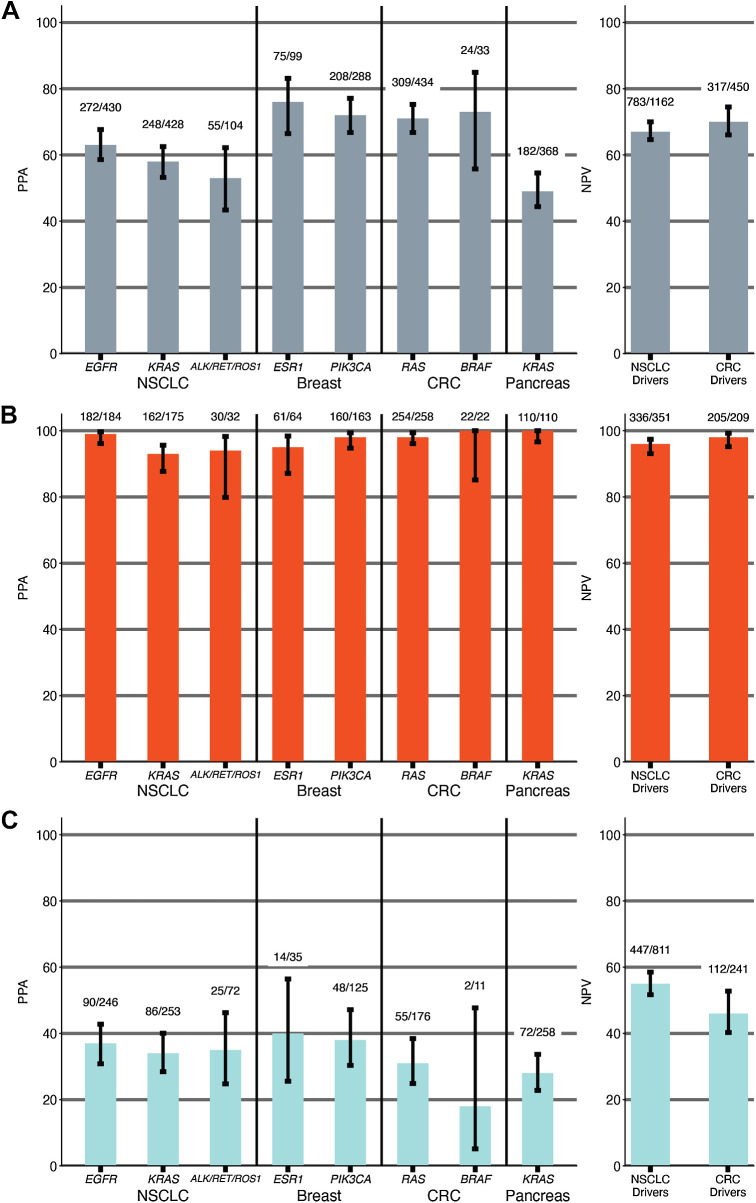
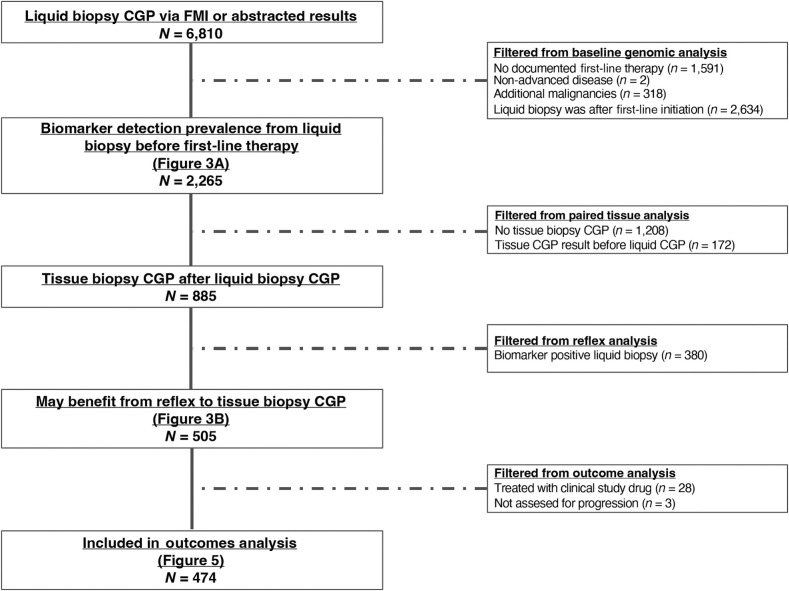
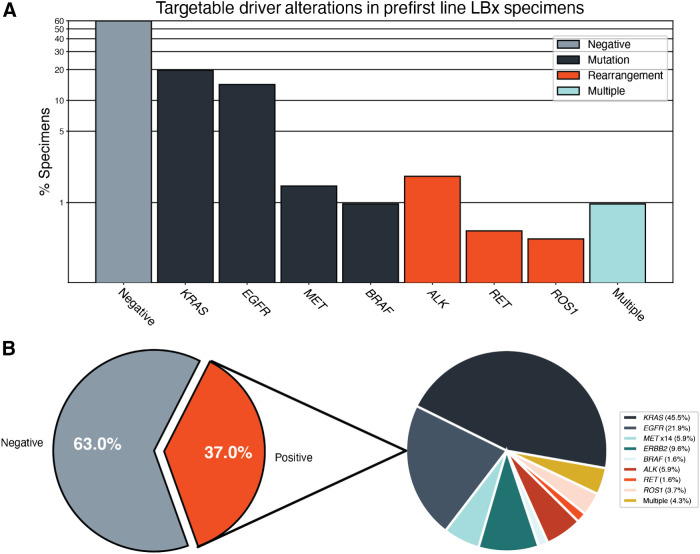
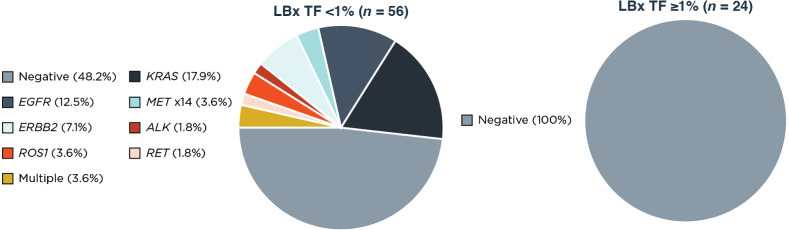
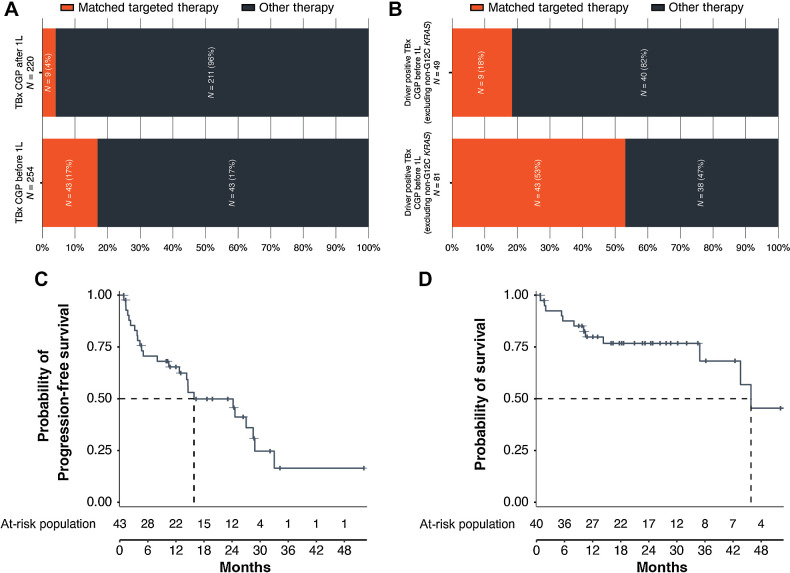
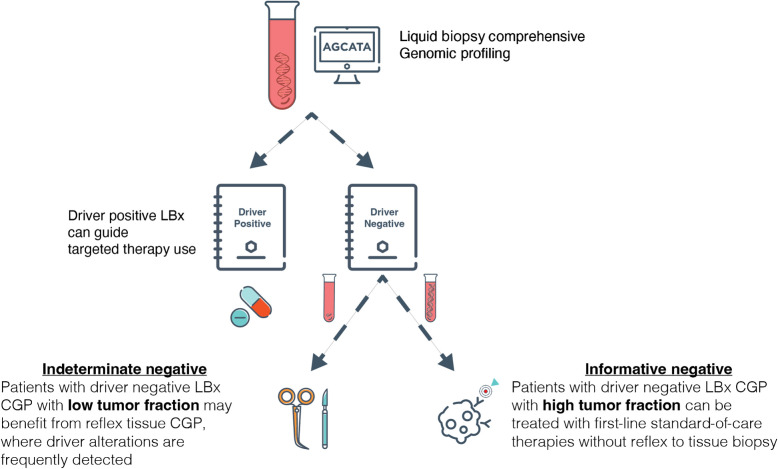
Purpose: Liquid biopsy (LBx) for tumor profiling is increasingly used, but concerns remain regarding negative results. A lack of results may truly reflect tumor genomics, or it may be a false negative that would be clarified by tissue testing. A method of distinguishing between these scenarios could help clarify when follow-on tissue testing is valuable. Experimental Design: Here we evaluate circulating tumor DNA (ctDNA) tumor fraction (TF), a quantification of ctDNA in LBx samples, for utility in identifying true negative results. We assessed concordance between LBx and tissue-based results, stratified by ctDNA TF, in a real-world genomic dataset of paired samples across multiple disease types. We also evaluated the frequency of tissue results identifying driver alterations in patients with lung cancer after negative LBx in a real-world clinicogenomic database. Results: The positive percent agreement and negative predictive value between liquid and tissue samples for driver alterations increased from 63% and 66% for all samples to 98% and 97% in samples with ctDNA TF ≥1%. Among 505 patients with lung cancer with no targetable driver alterations found by LBx who had subsequent tissue-based profiling, 37% had a driver, all of which had ctDNA TF <1%. Conclusions: Patients with lung cancer with negative LBx and ctDNA TF ≥1% are unlikely to have a driver detected on confirmatory tissue testing; such informative negative results may benefit instead from prompt treatment initiation. Conversely, negative LBx with ctDNA TF <1% will commonly have a driver identified by follow-up tissue testing and should be prioritized for reflex testing.
Overview
The claims and statistics of this paper haven’t been checked yet.
Free: it reads the open-access text and checks the first 5 claims that cite a source we can check. Create a free account to check every claim.
Integrity signals
Registry
Cites
Statistics
Figures
Verification
Claims the paper makes
The claims and statistics of this paper haven’t been checked yet.
Free: it reads the open-access text and checks the first 5 claims that cite a source we can check. Create a free account to check every claim.
Claims other papers make about this one
Each is checked against this paper’s own text: does it say what the citing paper says it does?
In the citing paper
“Similar to cohorts of adult patients, we find that when ctDNA TF ≥ 1%, ctDNA sequencing is more sensitive for detection of alterations compared with samples with TF<1%, a key factor when interpreting ctDNA results.25”
From Clinical Liquid Biopsy Testing for Detection of Actionable Genomic Alterations in Children and Young Adults With Advanced Solid Tumors on the GAIN Study (2026) · cites this paper as [25]
Self-check
Percentages, sums and reported differences re-computed from the paper’s own numbers.
The self-check needs the paper’s full text.
Citations
Cites
Frampton, G. M., Fichtenholtz, A., Otto, G. A., Wang, K., Downing, S. R., He, J., Schnall-Levin, M., White, J., Sanford, E. M., An, P., et al. (2013) · Nature Biotechnology · doi:10.1038/nbt.2696 · Cited by 2,157 · cited 1×
“F1LCDx also reports genomic signatures including ctDNA TF. TBx were analyzed using F1CDx as described previously (16, 17).”
MethodEncorafenib, Binimetinib, and Cetuximab in BRAF V600E–Mutated Colorectal Cancer
Kopetz, S., Grothey, A., Yaeger, R., Van Cutsem, E., Desai, J., Yoshino, T., Wasan, H., Ciardiello, F., Loupakis, F., Hong, Y. S., et al. (2019) · New England Journal of Medicine · doi:10.1056/nejmoa1908075 · Cited by 1,491
ESR1 ligand-binding domain mutations in hormone-resistant breast cancer
Toy, W., Shen, Y., Won, H., Green, B., Sakr, R. A., Will, M., Li, Z., Gala, K., Fanning, S., King, T. A., et al. (2013) · Nature Genetics · doi:10.1038/ng.2822 · Cited by 1,248
Activating ESR1 mutations in hormone-resistant metastatic breast cancer
Robinson, D. R., Wu, Y.-M., Vats, P., Su, F., Lonigro, R. J., Cao, X., Kalyana-Sundaram, S., Wang, R., Ning, Y., Hodges, L., et al. (2013) · Nature Genetics · doi:10.1038/ng.2823 · Cited by 1,145
Co-occurring genomic alterations in non-small-cell lung cancer biology and therapy
Skoulidis, F., & Heymach, J. V. (2019) · Nature Reviews Cancer · doi:10.1038/s41568-019-0179-8 · Cited by 1,019 · cited 1×
“Targetable alterations are well de fi ned and mutually exclusive (3).”
BackgroundDouillard, J. Y., Siena, S., Cassidy, J., Tabernero, J., Burkes, R., Barugel, M., Humblet, Y., Bodoky, G., Cunningham, D., Jassem, J., et al. (2014) · Annals of Oncology · doi:10.1093/annonc/mdu141 · Cited by 606
Singal, G., Miller, P. G., Agarwala, V., Li, G., Kaushik, G., Backenroth, D., Gossai, A., Frampton, G. M., Torres, A. Z., Lehnert, E. M., et al. (2019) · JAMA · doi:10.1001/jama.2019.3241 · Cited by 549
Woodhouse, R., Li, M., Hughes, J., Delfosse, D., Skoletsky, J., Ma, P., Meng, W., Dewal, N., Milbury, C., Clark, T., et al. (2020) · PLOS ONE · doi:10.1371/journal.pone.0237802 · Cited by 516
Self-citationPersonalized genomic analyses for cancer mutation discovery and interpretation
Jones, S., Anagnostou, V., Lytle, K., Parpart-Li, S., Nesselbush, M., Riley, D. R., Shukla, M., Chesnick, B., Kadan, M., Papp, E., et al. (2015) · Science Translational Medicine · doi:10.1126/scitranslmed.aaa7161 · Cited by 415
Concordance of Circulating Tumor DNA and Matched Metastatic Tissue Biopsy in Prostate Cancer
Wyatt, A. W., Annala, M., Aggarwal, R., Beja, K., Feng, F., Youngren, J., Foye, A., Lloyd, P., Nykter, M., Beer, T. M., et al. (2017) · JNCI: Journal of the National Cancer Institute · doi:10.1093/jnci/djx118 · Cited by 412
Cited by
Fusco, N., Venetis, K., Pepe, F., Shetty, O. A., Fariñas, S. C., Heeke, S., Burnier, J. V., Patton, S. J., Heitzer, E., Nigita, G., et al. (2025) · The Journal of Liquid Biopsy · doi:10.1016/j.jlb.2025.100301 · Cited by 80
“In this regard, the assessment of tumor fraction (TF) is gaining interest, particularly when reporting negative results [26].”
Self-citationBhave, M. A., Quintanilha, J. C. F., Tukachinsky, H., Li, G., Scott, T. A., Ross, J. S., Pasquina, L. W., Huang, R. S. P., McArthur, H. L., Levy, M. A., et al. (2024) · Breast Cancer Research and Treatment · doi:10.1007/s10549-024-07376-w · Cited by 73
“…driver alterations found in > 2000 real-world tissue/liquid pairs across multiple tumor types across ctDNA TF cut-offs [9] as well as the prevalence of fusion alterations found in tissue and liquid samples, respectively, across a database of real-world genomic results by ctDNA TF cut-offs [9–11].”
BackgroundSelf-citationLiquid biopsies across the cancer care continuum
Landon, B. V., Annapragada, A. V., Niknafs, N., Velculescu, V. E., & Anagnostou, V. (2025) · Nature Medicine · doi:10.1038/s41591-025-04093-9 · Cited by 71
“In addition to mutation levels, ctDNA hybrid capture NGS can be leveraged to derive copy number profiles and estimate plasma aneuploidy, which can be combined with mutation levels in a composite measurement of cfDNA tumor fraction 124,134 .”
Sweeney, C. J., Petry, R., Xu, C., Childress, M. A., He, J., Fabrizio, D. A., Gjoerup, O. V., Morley, S., Catlett, T. S., Assaf, Z. J. F., et al. (2024) · Clinical Cancer Research · doi:10.1158/1078-0432.ccr-24-1096 · Cited by 53
“The assay detects and quantifies the fraction of ctDNA of the total cell-free DNA present in a liquid biopsy sample as ctDNA TF, recently described elsewhere (26).”
MethodSelf-citationBorgeaud, M., Olivier, T., Bar, J., Saw, S. P. L., Parikh, K., Banna, G. L., Vito, C. D., Feldman, J., Le, X., & Addeo, A. (2025) · CA A Cancer Journal for Clinicians · doi:10.3322/caac.70024 · Cited by 67
“112 Some methods using epigenomic ctDNA profiling might also allow for the detection of small cell transformation from liquid biopsy.”
Advances in CTC and ctDNA detection techniques: opportunities for improving breast cancer care
Zhong, H., Zhen, Y., Chen, S., Shi, W., Liang, X., & Yang, G. (2025) · Breast Cancer Research · doi:10.1186/s13058-025-02024-7 · Cited by 46
“Patients with negative liquid biopsy results and a TF ≥ 1% may be candidates for immediate treatment initiation, while those with TF 1% should undergo tissue testing, as they are more likely to have actionable mutations [77].”
Cell-Free DNA: Features and Attributes Shaping the Next Frontier in Liquid Biopsy
Swarup, N., Leung, H. Y., Choi, I. F., Aziz, M. A., Cheng, J. C., & Wong, D. T. (2025) · Molecular Diagnosis & Therapy · doi:10.1007/s40291-025-00773-x · Cited by 34
“Moreover, TFs can differentiate false-negative from true-negative patients with low levels of ctDNA shedding, especially in ambiguous cases [118, 119].”
Ciardiello, D., Bielo, L. B., Napolitano, S., Martinelli, E., Troiani, T., Nicastro, A., Latiano, T., Parente, P., Maiello, E., Avallone, A., et al. (2024) · Annals of Oncology · doi:10.1016/j.annonc.2024.08.2334 · Cited by 33
Zeng, Z., Yi, Z., & Xu, B. (2025) · Cancer Letters · doi:10.1016/j.canlet.2025.217574 · Cited by 22
Ernst, S. M., Aldea, M. D., von der Thüsen, J. H., de Langen, A. J., Smit, E. F., Paats, M. S., Aerts, J. G. J. V., Mezquita, L., Popat, S., Besse, B., et al. (2025) · Nature Reviews Clinical Oncology · doi:10.1038/s41571-025-01011-3 · Cited by 24
“39).”
Self-citationSposito, M., Belluomini, L., Nocini, R., Insolda, J., Scaglione, I. M., Menis, J., Simbolo, M., Lugini, A., Buzzacchino, F., Verderame, F., et al. (2024) · Frontiers in Oncology · doi:10.3389/fonc.2024.1436588 · Cited by 17
Lu, Y., Ma, Y., Liu, Q., & Luo, D. (2025) · TrAC Trends in Analytical Chemistry · doi:10.1016/j.trac.2025.118291 · Cited by 16
Chaki, M., Benrashid, M., Puri, S., Sivakumar, S., Sokol, E. S., Briceño, J. M., & Vasan, N. (2025) · Breast Cancer Research · doi:10.1186/s13058-025-02055-0 · Cited by 17
“Our results are in agreement with previous studies demonstrating that increased ctDNA TF improves concordance in the detection of tumor alterations between liquid and tissue biopsies [26, 27, 30–33].”
InfluentialAldea, M. D., Rotow, J. K., Arcila, M. E., Hatton, M. Q. F., Sholl, L. M., Rolfo, C., Tagliamento, M., Radonic, T., Schalper, K. A., Subbiah, V., et al. (2025) · Journal of Thoracic Oncology · doi:10.1016/j.jtho.2025.07.009 · Cited by 19
Self-citationChiang, A. C., Madison, R. W., Assaf, Z. J. F., Fine, A. D., Cao, Y., Gjoerup, O. V., Huang, Y., Jin, D. X., Hughes, J. D., Antic, V., et al. (2025) · JTO Clinical and Research Reports · doi:10.1016/j.jtocrr.2025.100829 · Cited by 16
“35,36 In brief, ctDNA TF was quanti fi ed by conducting a comprehensive evaluation of genomic alterations, including aneuploidy, short-variants, and certain rearrangements, while excluding mutations and aneuploidy derived from clonal hemato-poiesis (CH) using patterns related to the sizes of…”
Self-citationBotticelli, A., Cremolini, C., Scagnoli, S., Biffoni, M., Lonardi, S., Fornaro, L., Guarneri, V., Giorgi, U. D., Ascierto, P. A., Blandino, G., et al. (2025) · Clinical Cancer Research · doi:10.1158/1078-0432.ccr-25-0430 · Cited by 14
“Under these conditions—and when considering specific genomic alterations rather than broad biomarkers like TMB or MSI—our concordance rates approach the values reported in the literature (23), although they remain slightly lower.”
Rolfo, C. D., Khushman, M. M., Russo, A., Borea, R., Herrman, B., Wang, J., Liao, J., Espenschied, C. R., Gordon, S., Quinn, K., et al. (2025) · The Journal of Liquid Biopsy · doi:10.1016/j.jlb.2025.100442 · Cited by 13
“Recently, it has been studied in solid tumors, demonstrating that high TF correlates with poor prognosis and might potentially identify informative negative liquid biopsy results [32,33].”
Self-citationLiquid and Tissue Biopsies for Lung Cancer: Algorithms and Perspectives
Hofman, P. M. (2024) · Cancers · doi:10.3390/cancers16193340 · Cited by 13
“Therefore, the challenge is to be able to distinguish between a true and false negative result [71].”
BackgroundCiardiello, D., Bielo, L. B., Pietrantonio, F., Martini, G., Troiani, T., Martinelli, E., Natangelo, S., Bosco, M. F., Pisconti, S., Nisi, C., et al. (2025) · ESMO Open · doi:10.1016/j.esmoop.2025.105491 · Cited by 16
“39 Nevertheless, a liquid biopsy-based CGP approach is the most sensitive technique to identify these cases since PCR and NGS panels evaluating a limited number of genes could not allow an estimation of ctDNA TF.”
Martella, S., Cusumano, G., Senevirathne, T. H., Stylianakis, D., Palmas, E., Denaro, N., Tommasi, C., Scartozzi, M., Gerratana, L., & Solinas, C. (2025) · Molecular Diagnosis & Therapy · doi:10.1007/s40291-025-00811-8 · Cited by 13
The prospects and limitations of liquid biopsy utilization for clinical practice in Taiwan
Li, H.-Y., Chang, C.-C., Yang, Y.-H. S., Yao, C., Hsieh, C., & Chang, S.-H. (2025) · The Journal of Liquid Biopsy · doi:10.1016/j.jlb.2025.100290 · Cited by 11
“This approach can assist clinicians in deciding whether to act based on negative liquid biopsy results, initiate non-targeted treatments, or prioritize tissue acquisition for confirmatory comprehensive genomic analysis [55].”
Ciardiello, D., Bielo, L. B., Napolitano, S., Cioli, E., Latiano, T. P., Stefano, A. D., Tamburini, E., Ramundo, M., Bordonaro, R., RUSSO, A. E., et al. (2025) · European Journal of Cancer · doi:10.1016/j.ejca.2025.115642 · Cited by 11
Paolis, E. D., Perrucci, A., Petroni, G. A., Conca, A., Corsi, M., Urbani, A., & Minucci, A. (2025) · International Journal of Molecular Sciences · doi:10.3390/ijms262210982 · Cited by 11
“In LBx, the absence of tumor-specific alterations may genuinely reflect the tumor genotype (i.e., true negative) or may be a result of insufficient ctDNA shedding, low content, or inadequate detection sensitivity (i.e., false negative) [6].”
Clinical Use of Liquid-Based Comprehensive Genomic Profiling in Gastrointestinal Stromal Tumors
Mechahougui, H., Hildebrand, L. A., Haberberger, J., Sivakumar, S., Saïji, E., Tukachinsky, H., Madison, R., Killian, J. K., Huang, R. S. P., Elvin, J. A., et al. (2025) · Laboratory Investigation · doi:10.1016/j.labinv.2025.104116 · Cited by 11
Self-citationLiquid biopsy: An innovative tool in oncology. Where do we stand?
Martella, S., Wekking, D., Lai, E., Lambertini, M., Pettinato, A., Parrino, A., Semonella, F., Sanna, G., Maccioni, A., Scartozzi, M., et al. (2025) · Seminars in Oncology · doi:10.1016/j.seminoncol.2025.152343 · Cited by 11
Molecular tumor board in patients with metastatic breast cancer
Bielo, L. B., Guerini‐Rocco, E., Crimini, E., Repetto, M., Lombardi, M., Zanzottera, C., Aurilio, G., Barberis, M. C. P., Belli, C., Zhan, Y., et al. (2024) · Breast Cancer Research and Treatment · doi:10.1007/s10549-024-07535-z · Cited by 10
“Indeed, factors such as low tumor cellularity and tumor fraction for solid and tissue biopsies, respectively, can influence the analytical performance of sequencing panels due to the intrinsic limit of detection of sequencing tools [22–25].”
Bote, H., Siringo, M., Conde, E., Hernández, S., López‐Ríos, F., Castelo-Loureiro, A., García-Lorenzo, E., Baena, J., Herrera, M., Enguita, A. B., et al. (2024) · JTO Clinical and Research Reports · doi:10.1016/j.jtocrr.2024.100778 · Cited by 12
Passiglia, F., Pepe, F., Russo, G., Garbo, E., Listì, A., Benso, F., Scimone, C., Palumbo, L., Pluchino, M., Minari, R., et al. (2025) · Cancer · doi:10.1002/cncr.35917 · Cited by 9
Lewintre, E. J., Fariñas, S. C., Gandara, D. R., Raez, L. E., Leighl, N. B., Fusco, N., Khorshid, O., Casas, C. M. D. L., Reduzzi, C., Urum, Y., et al. (2026) · The Journal of Liquid Biopsy · doi:10.1016/j.jlb.2026.100462 · Cited by 9
“…leveraging advanced bioinformatic tools able that analyze several cfDNA features: i) aneuploidy based approach, ii) identification of tumor specific epigenetic marks or iii) measuring allele frequencies of tumor derived genomic hallmarks, like somatic variants and genomic rearrangements [16,17].”
Self-citationRolfo, C. D., O’Brate, A., Menzel, C. L., Bruns, R., Juraeva, D., Stroh, C., Johne, A., & Paik, P. K. (2025) · Clinical Cancer Research · doi:10.1158/1078-0432.ccr-24-4097 · Cited by 9
“4, 8, 26).”
Self-citationEmerging Role of Blood-based Biomarkers in Sarcomas
Shulman, D. S., & Crompton, B. D. (2025) · Hematology/Oncology Clinics of North America · doi:10.1016/j.hoc.2025.04.002 · Cited by 9
Swanton, C., Madison, R. W., Tambaoan, C. F. B., Meric‐Bernstam, F., Sweeney, C. J., Kurzrock, R., Burris, H. A., Spigel, D. R., Tukachinsky, H., Hughes, J. D., et al. (2025) · Molecular Oncology · doi:10.1002/1878-0261.70054 · Cited by 9
“The assay detects and quantifies the fraction of ctDNA of the total cell-free DNA (cfDNA) present in a liquid biopsy sample as ctDNA TF, calculated as previously described [21,22].”
Self-citationLapin, M., Tjensvoll, K., Edland, K. H., Oltedal, S., Garresori, H., Gilje, B., Ekedal, S., Eftestøl, T. C., Kvaløy, J. T., Janku, F., et al. (2025) · Molecular Oncology · doi:10.1002/1878-0261.70116 · Cited by 9
“Obstacles include a low rate of somatic mutations in many cancers, confounding factors such as clonal hematopoiesis of indeterminate potential (CHIP), and potential false negative results due to the limited shedding of cell-free DNA (cfDNA) in early-stage and some advanced-stage cancers [4 – 7].”
Martelli, V., Vidal, J., Gibert, J., Fernández‐Rodríguez, C., Linares, J., Alfonso, P. G., Páez, D., Alonso, V., Gómez‐España, A., Guix, M., et al. (2025) · ESMO Open · doi:10.1016/j.esmoop.2025.105760 · Cited by 9
“34 Furthermore, a subset of patients classified as CCR or CND underwent surgical resection after week 8 and discontinued systemic treatment.”
Liquid Biopsy in Lung Cancer: Tracking Resistance to Targeted Therapies
Urtecho, S. B., Munárriz, B., Rabey, M. R., & Leighl, N. B. (2025) · Cancers · doi:10.3390/cancers17213474 · Cited by 9
“In contrast, negative ctDNA results with TF 1% should prompt reflex tissue testing, particularly in gene amplifications [10].”
Gariazzo, E., Colamartini, F., Ubaldi, M., Santo, V., Brunetti, L., Tomarelli, C., Ognissanti, D., Nassar, J., Costabile, S., Romano, L., et al. (2026) · ImmunoTargets and Therapy · doi:10.2147/itt.s567238 · Cited by 8
Martini, G., Napolitano, S., Ciardiello, D., Bielo, L. B., Martinelli, E., Troiani, T., Zampino, M. G., Fazio, N., Curigliano, G., & Ciardiello, F. (2026) · Nature Reviews Clinical Oncology · doi:10.1038/s41571-026-01126-1 · Cited by 9
Clinical characteristics of EGFR-ctDNA shedders in EGFR-mutant NSCLC patients
Ruglioni, M., Petrini, I., Crucitta, S., Sbrana, A., Luculli, G. I., Gol, L. S., Forte, C., Chella, A., Rolfo, C. D., Danesi, R., et al. (2024) · Translational Oncology · doi:10.1016/j.tranon.2024.102228 · Cited by 8
Self-citationMack, P. C., Redman, M. W., Tukachinsky, H., Kozono, D., Minichiello, K., Dragnev, K. H., Tolba, K. A., Neal, J. W., Madison, R. W., Waqar, S. N., et al. (2025) · Clinical Cancer Research · doi:10.1158/1078-0432.ccr-24-3658 · Cited by 8
Self-citationCirculating DNA tumor fraction as a biomarker for advanced breast cancer
Cybulla, E., & Stover, D. G. (2025) · Frontiers in Oncology · doi:10.3389/fonc.2025.1655415 · Cited by 8
Plasma cell-free DNA methylation-based prognosis in metastatic castrate-resistant prostate cancer
Wong, J., Tian, Y., Patel, M. S., Avasthi, K. K., Hanson, C., Larsen, M., Ampaw, E., Gutowski, R., Fadlullah, M. Z. H., Finkelstein, J., et al. (2025) · npj Precision Oncology · doi:10.1038/s41698-025-01232-w · Cited by 7
“…well reported using copy number variations (CNVs) 46 – 48 and speci fi c mutations 49 – 51 but have limitations as they may lack sensitivity (CNV-based) or require high sequencing depth to capture rare mutant alleles 52 because of variability of mutations across tumor types and disease states 53 .”
Werner, R., Crosbie, R., Dorney, M., Connolly, A., Collins, D. C., Hand, C. K., & Burke, L. M. (2024) · Journal of Clinical Pathology · doi:10.1136/jcp-2024-209514 · Cited by 6
“55 Despite the discordant cases, the sensitivity and specificity of this assay remain comparable to those reported in other studies.”
Güijosa, A., Rios-Garcia, E., Davila-Dupont, D., Cruz‐Rico, G., Russo, A., Miranda, L. A. C., Cardona, A. F., Rolfo, C. D., & Arrieta, O. G. (2025) · Lung Cancer · doi:10.1016/j.lungcan.2025.108722 · Cited by 7
Self-citationIdentification of Driver Mutations and Risk Stratification in Lung Adenocarcinoma via Liquid Biopsy
Pathak, G. P., Shah, R., Reiman, T., Wallace, A., Carter, M. D., Snow, S. L., Fris, J., & Xu, Z. (2025) · Cancers · doi:10.3390/cancers17081340 · Cited by 5
“Reflexive tissue testing is recommended when a liquid biopsy fails to identify a driver mutation [46].”
Pasello, G., Pigato, G., Scattolin, D., Lando, S., Potente, S., Romualdi, C., Roma, A., Resi, M. V., Frega, S., Ferro, A., et al. (2025) · Journal of Experimental & Clinical Cancer Research · doi:10.1186/s13046-025-03434-3 · Cited by 5
“Low or undetectable TF has been attributed to insufficient ctDNA shedding or limitations in assay sensitivity [30, 38].”
Clinical Application of Peripheral Blood Biomarkers for Solid Tumors
Tu, X., Tu, M., & Xu, J. (2026) · MedComm · doi:10.1002/mco2.70654 · Cited by 6
“The level of ctDNA can be used to assess the need for follow-up tissue diagnosis before starting therapy [ 73 ].”
Harlé, A., Payen, L. F., Lespagnol, A., Goardon, N., Albuisson, J., Étienne-Grimaldi, M.-C., Pradines, A., ATKINSON, A., Cabello‐Aguilar, S., Morel, A., et al. (2026) · European Journal of Cancer · doi:10.1016/j.ejca.2026.116791 · Cited by 5
Lin, D. I., Pasquina, L. W., Mavares, E., Elvin, J. A., & Huang, R. S. P. (2024) · The Oncologist · doi:10.1093/oncolo/oyae258 · Cited by 5
Self-citationApplications of ctDNA testing to monitor and detect residual disease in breast cancer
Chen, J. H., Geng, Y., & Lucci, A. (2025) · Expert Review of Molecular Diagnostics · doi:10.1080/14737159.2025.2498545 · Cited by 5
Concordance between Tumor Tissue and Plasma DNA Genotyping in the NCI-MATCH Trial (EAY131)
Gouda, M. A., Jankú, F., Yuan, Y., Drusbosky, L. M., Chen, A. P., Zheng, X., Patel, K. P., Hamilton, S. R., Routbort, M. J., Tricoli, J. V., et al. (2025) · Clinical Cancer Research · doi:10.1158/1078-0432.ccr-24-3531 · Cited by 5
Mata, D. A., Kou, A. A., Heilmann, A. M. F., Honecker, J., Kroger, B. R., Wieland, T., Williams, E. A., Yang, S., Benhamida, J. K., Vanderbilt, C., et al. (2025) · Journal of Molecular Diagnostics · doi:10.1016/j.jmoldx.2025.07.004 · Cited by 4
Self-citationCheung, B. M. F., Ko, E. Y.-L., Shih, D. J. H., Wong, J. W. H., Chiu, M. K.-L., Kwok, G. W., Ho, I., Leung, D. K., Lee, A. W. M., Lee, V. H.-F., et al. (2025) · JCO Precision Oncology · doi:10.1200/po-25-00376 · Cited by 4
Ma, N., Xu, Y., Zhang, D., Zhang, H., Luo, W., Cao, Y., & Wong, V. K. W. (2025) · Autoimmunity Reviews · doi:10.1016/j.autrev.2025.103961 · Cited by 6
Ciampi, R., Casalini, R., Ramone, T., Mori, S., Romei, C., Matrone, A., Prete, A., Gambale, C., Piaggi, P., Torregrossa, L., et al. (2026) · Thyroid · doi:10.1177/10507256261416836 · Cited by 4
Tosello, V., Grassi, A., Rose, D., Bao, L. C., Zulato, E., Fratte, C. D., Polano, M., Bianco, P. D., Pasello, G., Guarneri, V., et al. (2024) · Scientific Reports · doi:10.1038/s41598-024-68229-6 · Cited by 4
“Therefore, using GCP analysis, that allows integration of CNAs with variant allele fraction and canonical alteration, it is possible to lower the threshold, down to 1% 29 .”
Real‐world genomic landscape of colon and rectal cancer
Schulze, M., Wang, X., Hamad, J., Quintanilha, J. C. F., Pasquina, L. W., Hopkins, J. F., Scheuenpflug, J., & Feng, Z. (2025) · FEBS Open Bio · doi:10.1002/2211-5463.13957 · Cited by 4
Self-citationInnovation in next-generation sequencing in non-small cell lung cancer diagnostics
Scimone, C., Palumbo, L., Borea, R., Sarracino, C., Tomaiuolo, I., Giovanni, D. D., Alfano, S., Nacchio, M., Russo, G., Russo, A., et al. (2025) · Expert Review of Anticancer Therapy · doi:10.1080/14737140.2025.2549538 · Cited by 3
“A retrospective study based on comparison between CGP approach both in liquid biopsy and in tissue showed how tumor fraction is fundamental for determining real true negative results on liquid biopsy and for the stratification of patients undergoing reflex tissue test [160].”
Beyond Tissue in the Era of Liquid Biopsy: Pathologists' Perspectives and Insights
Urso, M., Seminati, D., Pilla, D., Casati, G., & Pagni, F. (2025) · Cytopathology · doi:10.1111/cyt.70031 · Cited by 3
“Aligning with these findings, Rolfo et al. [25] investigated whether ctDNA TF could improve the interpretation of negative liquid biopsy results in a real-world cohort of 3854 paired LB and tissue biopsy samples across multiple tumour types.”
Tao, W., Sabel, A. R., & Bonfil, R. D. (2025) · Current Oncology · doi:10.3390/curroncol32120692 · Cited by 3
“%) can indicate an “indeterminate negative” result, as subsequent confirmatory tissue biopsy may still uncover a driver alteration [74].”
Andersen, M. E., Nyhus, C. H., Szejniuk, W. M., Wahlstrøm, S., Timm, S., Pallisgaard, N., Madsen, M. G., Mikkelsen, M. D., Ahlborn, L. B., Gehl, J., et al. (2026) · BMJ Open · doi:10.1136/bmjopen-2025-100311 · Cited by 3
“It is anticipated that tracking truncal or clonal mutations, that can persist during therapy and are commonly shared between primary tumours and metastases, 47–50 will provide sufficient insight for evaluation—even in the presence of emerging resistance mutations.”
Ranghiero, A., Rinaldi, L. M., Netti, S., Gaeta, A., Attili, I., Spitaleri, G., Funicelli, G., Mora, S., Fodor, C. I., Origgi, D., et al. (2026) · The Journal of Liquid Biopsy · doi:10.1016/j.jlb.2026.100470 · Cited by 3
“Bio-logically, low ctDNA abundance from reduced tumor shedding or low tumor burden can decrease the informativeness of liquid biopsy testing [14].”
Muto, M., Sunakawa, Y., Sandhir, N., Liang, Y., Dawood, S. S., Rohatgi, N., Bahl, A., & Olsen, S. (2025) · Oncology Research and Treatment · doi:10.1159/000545560 · Cited by 4
“However, the disparity in detection rates between tissue and plasma-based analyses in pancreatic cancer has been observed in other studies [26, 29], with one study reporting a KRAS mutation detection rate in ctDNA below 50% [30].”
Clinical Validity of FoundationOne Liquid CDx for Detection of BRAF V600E in Colorectal Cancer
Yaeger, R. D., Martini, J.-F., Pasquina, L. W., Tunquist, B. J., Zhang, X., Kaiser, F., Galicia, N. P., Deng, S., Gong, S., Guo, C., et al. (2025) · Cancer Research Communications · doi:10.1158/2767-9764.crc-25-0002 · Cited by 4
“% (16, 29, 30).”
Self-citationHu, H., Chen, C., Zheng, Z., Meng, F., Zhang, S., & Li, P. (2025) · Journal of Investigative Surgery · doi:10.1080/08941939.2025.2528340 · Cited by 2
“Recent studies highlight the utility of circulating tumor DNA (ctDNA) for identifying DAXX/ATRX loss and ALT status in NF-PanNETs [36], with high concordance reported between ctDNA and tissue biopsies for these markers [37].”
Klocker, E. V., Dobrić, N., Graf, R., Beichler, C., Hlauschek, D., Suppan, C., Pancheri, L., Egle, D., Albertini, C., Bartsch, R., et al. (2025) · npj Breast Cancer · doi:10.1038/s41523-025-00805-z · Cited by 2
“Our approach aligns with recent fi ndings 33 , where samples with a ctDNA tumor fraction ≥ 1% were shown to have signi fi cantly improved concordance between liquid and tissue-based pro-fi ling, reducing the likelihood of false negatives.”
Self-citationShimizu, H., Suzuki, R., Asama, H., Sato, K., Osawa, K., Ohira, R., Kudo, K., Sugimoto, M., & Ohira, H. (2025) · Cancers · doi:10.3390/cancers17183071 · Cited by 2
“To reduce the risk of false negatives, various approaches, including machine learning algorithms and advanced analytical techniques measuring the ctDNA tumor fraction, have been proposed to improve the accuracy of liquid CGP interpretation [18,23].”
Chibaudel, B., Carola, É., Mekranter, H., Goyer, P., Saget, A., Oberlin, O., Marijon, H., Richa, H., Iurisci, I., Gervais, H., et al. (2025) · International Journal of Molecular Sciences · doi:10.3390/ijms27010008 · Cited by 2
“The ctDNA fraction (TF), the blood tumor mutational burden (bTMB) and microsatellite instability (MSI) were also evaluated (Appendix A.1) [22,23].”
Gristina, V., Malapelle, U., Daniele, G., Iannantuono, G. M., Russo, T. D. B., Berardi, R., Beretta, G., Capoluongo, E. D., Ciaccio, M., Danesi, R., et al. (2025) · The Journal of Liquid Biopsy · doi:10.1016/j.jlb.2025.100453 · Cited by 4
“For samples with TF 1 %, the reduced concordance between liquid and tissue samples should imply confirmatory tissue testing [53].”
Self-citationChang, S.-C., Huang, C.-Y., Lai, Y.-C., Hsieh, M.-S., Ho, C.-C., Yang, C.-Y., Shih, J.-Y., Wu, S., Hu, P., Hsu, C.-L., et al. (2025) · ESMO Open · doi:10.1016/j.esmoop.2025.106023 · Cited by 2
Florou-Chatzigiannidou, C., Papadopoulou, E., Metaxa-Mariatou, V., Tsantikidi, A., Maxouri, S., Tsaousis, G., Grigoriadis, D., Touroutoglou, N., Ziogas, D. I., Zairi, E., et al. (2026) · Scientific Reports · doi:10.1038/s41598-026-40923-7 · Cited by 2
Lee, J. K., Quintanilha, J. C. F., Chen, K., Fendler, B. J., Tambaoan, C. F. B., Graf, R. P., Odzer, N. B., Pusztai, L., Lustberg, M. B., Singh, H., et al. (2026) · Clinical Cancer Research · doi:10.1158/1078-0432.ccr-25-4018 · Cited by 2
“…offered as a laboratory professional service, was calculated using a composite algorithm that incorporates aneuploidy, variant allele frequency, fragment length information, clonal hematopoiesis predictions, and known tumor-associated alterations detected on FoundationOne ® Liquid CDx (42, 43).”
Self-citationVisa, L., Badia-Ramentol, J., Fernández‐Rodríguez, C., Saurí, T., Macías, I., Zhang, N., Adeva, J., Zumstein, L., Peinado, P., Ponz‐Sarvisé, M., et al. (2026) · Clinical Cancer Research · doi:10.1158/1078-0432.ccr-26-0096 · Cited by 2
Wander, S. A., Weipert, C. M., Cabel, L., Liao, J., Zhang, N., Safonov, A., Bardia, A., & Razavi, P. (2026) · npj Breast Cancer · doi:10.1038/s41523-026-00986-1 · Cited by 3
Werner helicase inhibitor for advanced microsatellite instability solid tumors: a phase 1 trial
Yap, T. A., Fontana, E., Cook, N., Fakih, M., Bechter, O. E., Tsang, E. S., Calvo, E., Rohrberg, K. S., Ros, J., Matos, I. G., et al. (2026) · Nature Medicine · doi:10.1038/s41591-026-04657-3 · Cited by 3
The diagnostic accuracy of next-generation sequencing in advanced NSCLC
Ko, E. Y.-L., Wong, J. W. H., Shih, D. J. H., Ho, I., Cheung, B. M. F., Chiu, M. K. L., Leung, D. K., Lee, A. W. M., Lee, V. H.-F., & Helali, A. E. (2025) · The Journal of Liquid Biopsy · doi:10.1016/j.jlb.2025.100325 · Cited by 3
“TMB high (TMB-H) was defined as ≥ 10 muts/Mb. ctDNA shed in plasma was estimated using tumor fraction (TF) as previously described [18].”
InfluentialPaoli, M., Galardi, F., Nardone, A., Biagioni, C., Romagnoli, D., Donato, S. D., Franceschini, G. M., Livraghi, L., Pestrin, M., Sanna, G., et al. (2026) · Genome Medicine · doi:10.1186/s13073-026-01603-3 · Cited by 2
Validation of a rapid biomarker assay for lung cancer using the IntelliPlex panel
Koide, S. S., Araújo, B. J., Massaro, J. D., Silva, R. D. G. E., Dienstmann, R., & Ribeiro, F. C. K. (2025) · Scientific Reports · doi:10.1038/s41598-025-10585-y · Cited by 1
“common in scenarios with low tumor burden, or suboptimal timing of sample collection relative to therapy initiation, all of which can significantly impact test sensitivity 12 .”
Game-Set-MATCH: Liquid Biopsy Advances to the Next Round
Russo, A., Muscolino, P., & Rolfo, C. D. (2025) · Clinical Cancer Research · doi:10.1158/1078-0432.ccr-25-1927 · Cited by 1
Self-citationRusso, A., Rolfo, C. D., & Santos, E. S. (2025) · Translational Lung Cancer Research · doi:10.21037/tlcr-2025-443 · Cited by 1
“…further assist in the treatment decision process, as liquid biopsy negative cases with high TF might start first line treatment after pathological results and PD-L1 immunohistochemical (IHC) expression without waiting for tissue testing, especially when systemic therapy is urgently needed (25).”
Self-citationShaya, S., Uche–Ikonne, O., Kilerci, B., Stevenson, J., Greystoke, A., Cook, N., Thistlethwaite, F. C., Carter, L., Graham, D. M., & Krebs, M. (2025) · Journal of Immunotherapy and Precision Oncology · doi:10.36401/jipo-25-11 · Cited by 1
“[45,46] This creates the opportunity to prospectively explore and validate optimal threshold values of TF and conduct future comparative studies of maxVAF and TF to optimize prognostication with ctDNA test results.”
On the Road to ROME: Defining Tissue–Liquid Concordance in Precision Oncology
Saldanha, E. F., & Siu, L. L. (2025) · Clinical Cancer Research · doi:10.1158/1078-0432.ccr-25-3143 · Cited by 1
Nacchio, M., Giovanni, D. D., Iaccarino, A. G., Pepe, F., Gragnano, G., Russo, G., Scimone, C., Sarracino, C., Salatiello, M. P., Alfano, S., et al. (2026) · Journal of the American Society of Cytopathology · doi:10.1016/j.jasc.2026.02.001 · Cited by 1
Chen, M., Copley, S. J., Linton‐Reid, K., Viola, P., Han, Y., Cortellini, A., Lu, H., Mani, A., Bahket, M., Pinato, D. J., et al. (2026) · Scientific Reports · doi:10.1038/s41598-026-42948-4 · Cited by 1
Invisible signals, visible dilemmas: The ethical frontiers of liquid biopsy in precision oncology
Aryal, B., Yamakuchi, M., & Hashiguchi, T. (2026) · Critical Reviews in Oncology/Hematology · doi:10.1016/j.critrevonc.2026.105351 · Cited by 1
Serrano‐Serrano, M. L., Sie, C. G., Bechter, O. E., Pretelli, G., Vieito, M., Fontana, E., Han, C. H., Álvarez, E. C., Matos, I. G., Pinato, D. J., et al. (2026) · Cancer Research Communications · doi:10.1158/2767-9764.crc-26-0196 · Cited by 1
“Genomic signatures, including bTMB, MSI, and cTF are also evaluated using proprietary algorithms. cTF is estimated based on aneuploidy or, when undetectable, from somatic alterations (19).”
Garitaonaindía, Y., Witteveen, S. J., Dionisio, E., Weiss, A. M., Ellebæk, E., Rolfo, C. D., Provencio, M., Blank, C., & Donia, M. (2026) · JNCI Journal of the National Cancer Institute · doi:10.1093/jnci/djag197 · Cited by 1
Self-citationCRISPR-Cas12a-based liquid biopsy technology: challenges in large-scale clinical application
Zhang, Y., Lin, X., Shi, H., Chen, Z., Luo, Q., Wu, H., & Zeng, T. (2026) · Clinica Chimica Acta · doi:10.1016/j.cca.2026.121210 · Cited by 4
Dall’Olio, F. G., Zrafi, W., Vasseur, D., Garcia, C., Beshiri, K., Marinello, A., Tagliamento, M., Planchard, D., Lassau, N., Drubay, D., et al. (2026) · Clinical Cancer Research · doi:10.1158/1078-0432.ccr-25-3917 · Cited by 1
“Hybrid capture–based next-generation sequencing (NGS) of plasma ctDNA was performed as previously described to assess base substitutions, short insertions/deletions, rearrangements/fusions, and copy-number variations (25). ctDNA TF was calculated as previously described (18, 26).”
Self-citationNiknafs, N., Sivapalan, L., Balan, A., Wehr, J., Pereira, G., Hosseini-Nami, S., Rao, N., Jolly, S., Velliangiri, K., Beadles, I., et al. (2026) · Clinical Cancer Research · doi:10.1158/1078-0432.ccr-26-0656 · Cited by 1
Circulating tumor DNA in neoadjuvant therapy for solid tumors
Huang, X., Deng, Y., & Shen, Y. (2026) · Frontiers in Oncology · doi:10.3389/fonc.2026.1909934 · Cited by 2
Liquid biopsy in solid tumours: expert opinion paper of the European society of pathology
Fusco, N., Matías‐Guiu, X., Esposito, I., Dieri, R. A., Ryška, A., & Hofman, P. M. (2026) · Archiv für Pathologische Anatomie und Physiologie und für Klinische Medicin · doi:10.1007/s00428-026-04690-0 · Cited by 1
“The interpretation of different pathogenic variants must consider their variant allelic frequency (VAF) [56].”
Gu, Y., Luo, X., Zhang, Y., Tang, J., & Wang, Z. (2026) · Frontiers in Oncology · doi:10.3389/fonc.2026.1920559 · Cited by 1
“It does not exclude low-shedding residual disease, sampling below the assay limit of detection, or later multicentric tumor formation (17).”
InfluentialLiquid biopsy in oncology: navigating technical hurdles and future transition for precision medicine
Xie, M., Pan, S., & Plebani, M. (2025) · Clinical Chemistry and Laboratory Medicine (CCLM) · doi:10.1515/cclm-2025-0271 · Cited by 1
Tumor Genomics and Liquid Biopsy in Cancer Biology: From Static Snapshots to Dynamic Measurements
Urbini, M. (2026) · Biomolecules · doi:10.3390/biom16030384 · Cited by 1
“Examples of widely used clinical comprehensive genomic profiling tests include Guardant360 CDx (https://www.guardantcomplete.com, accessed on 20 February 2026) and FoundationOne Liquid CDx (https://www.foundationmedicine.com, accessed on 20 February 2026) [11].”
Roberts, H. J., Comeau, H., Klega, K., DuBois, S. G., Lazo de la Vega, L., Ceca, E., Mullen, E. A., Smith, G. A., Tukachinsky, H., Huang, R. S. P., et al. (2026) · JCO Precision Oncology · doi:10.1200/po-25-01125
Biopsie liquide et/ou biopsie tissulaire en oncologie thoracique : algorithmes et perspectives
Hofman, P. M. (2024) · Revue Francophone des Laboratoires · doi:10.1016/s1773-035x(24)00397-6
Unveiling targets and resistance in FGFR-altered cancers
Westphalen, C. B. (2025) · Annals of Oncology · doi:10.1016/j.annonc.2025.01.002 · Cited by 1
Prediction model for mutation detection via circulating tumor DNA analysis in pancreatic cancer
Suzuki, R., Asama, H., Shimizu, H., Sato, K., Osawa, K., Ohira, R., Kudo, K., Sugimoto, M., & Ohira, H. (2025) · Pancreatology · doi:10.1016/j.pan.2025.09.003
The value of ctDNA tumor fraction in interpreting negative liquid biopsy results
Cardoso, G. C., & Ramos, E. A. D. S. (2026) · Journal of Translational Genetics and Genomics · doi:10.20517/jtgg.2025.116
Metadata
- Authors
- Rolfo, C. D., Madison, R. W., Pasquina, L. W., Brown, D. W., Huang, Y., Hughes, J. D., Graf, R. P., Oxnard, G. R., & Husain, H.
- Affiliations
- Tisch Cancer Institute (US)
- Foundation Medicine (United States) (US)
- Boston Medical Center (US)
- Moores Cancer Center (US)
- Corresponding author
- Rolfo, Christian D.
- ORCID
- Venue
- Clinical Cancer Research
- Published
- 2024-03-25
- Volume
- 30
- Issue
- 11
- Pages
- 2452-2460
- ISSN
- 1078-0432 (ISSN-L)
- 1557-3265
- PMC
- PMC11145175
- OpenAlex
- W4393144776
- Semantic Scholar
- 04c3b998a3eba7fdd1ea561cbc30d9853f052a4e
- Cited by
- 104
- References
- 30
- Citations by year
- 2026: 37 · 2025: 55 · 2024: 12
- FWCI
- 20.86
- Type
- journal article
- Language
- en
- Open access
- hybrid
- doi.org
- Licence
- Locations
- Clinical Cancer Research (publishedVersion, cc-by-nc-nd)
- PubMed Central (publishedVersion, cc-by-nc-nd)
- PubMed (publishedVersion)
- Funders
- Amgen
- Bristol-Myers Squibb
- Eli Lilly and Company
- Pfizer
- AstraZeneca
- Sanofi
- International Association for the Study of Lung Cancer
- Lung Cancer Research Foundation
- Regeneron Pharmaceuticals
- Boston Pharmaceuticals
- Invitae
- EMD Serono
- Foundation Medicine
- Topics
- Life Sciences › Biochemistry, Genetics and Molecular Biology › Cancer Research › Cancer Genomics and Diagnostics
- Health Sciences › Medicine › Pulmonary and Respiratory Medicine › Lung Cancer Treatments and Mutations
- Life Sciences › Biochemistry, Genetics and Molecular Biology › Genetics › BRCA gene mutations in cancer
- Keywords
- circulating tumor DNA, tumor fraction, liquid biopsy, false-negative results, driver alterations, lung cancer, reflex testing, cancer genomics
- MeSH terms
- Liquid Biopsy, Circulating Tumor DNA, Female, Humans, Lung Neoplasms, Mutation, Neoplasms, Biomarkers, Tumor, Genomics
About these checks
Registry, retraction, Cites and statistics results are computed, not judged, with one exception: a printed reference that no index lists is read once by a model before it counts as a citation error. Claims are extracted by a model and kept only when their quote appears verbatim in the text; each cited source is then checked, with a model’s help, for whether it says what the claim relies on. Those verdicts can be wrong — read the claim’s quote and the cited source before relying on one.
Statistics and arithmetic are recomputed, not judged.
Confidence bands are shown only for fields calibrated on our annotated test set. None is calibrated yet, so no band is shown.
What counts as a claim ›How we measure confidence ›How we check this ›
Are you an author, or do you see a problem with this page? Request a review
Data sources
Bibliographic data: Semantic Scholar, OpenAlex, Crossref.
Contains information from the Semantic Scholar Academic Graph Datasets, made available under the ODC Attribution License (ODC-BY 1.0).
Semantic Scholar’s data is described in: Kinney, R., et al. (2023). The Semantic Scholar Open Data Platform. arXiv:2301.10140.
