

Measurement of ctDNA Tumor Fraction Identifies Informative Negative Liquid Biopsy Results and Informs Value of Tissue Confirmation
Open accessPublished version of a preprint
The DOI matches its Crossref record; 30 of the 30 references it cites were found in a registry or an index.
Abstract
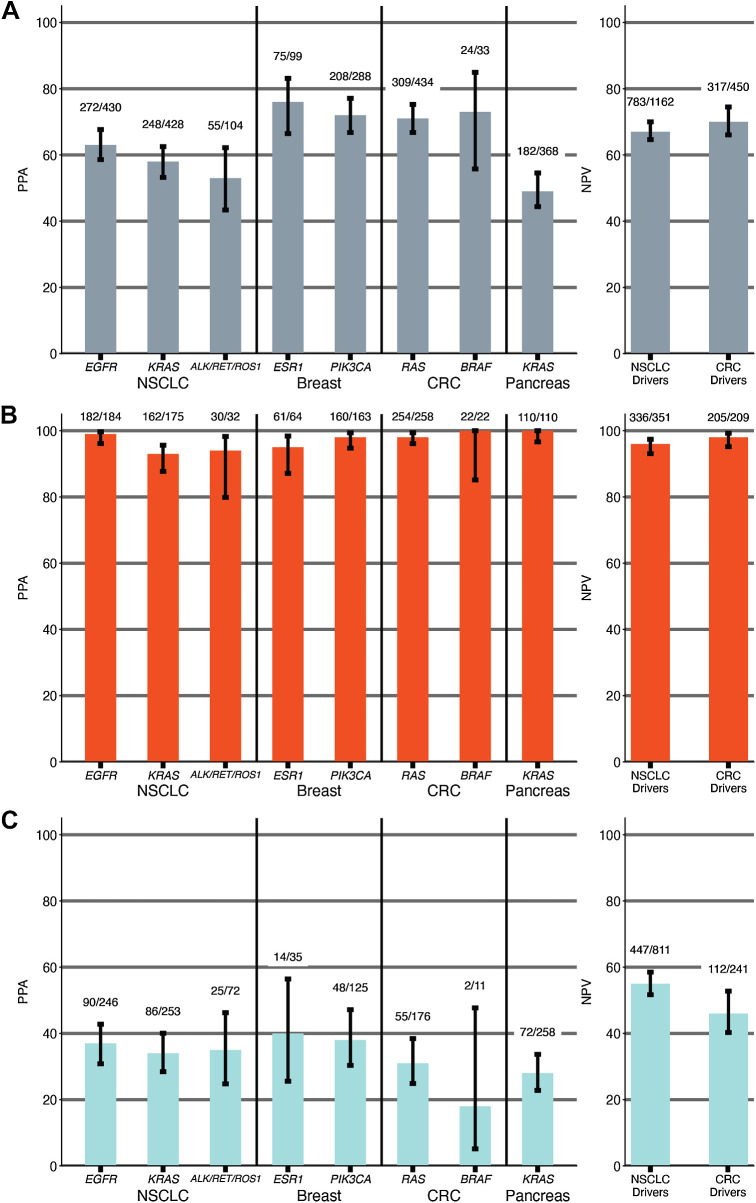
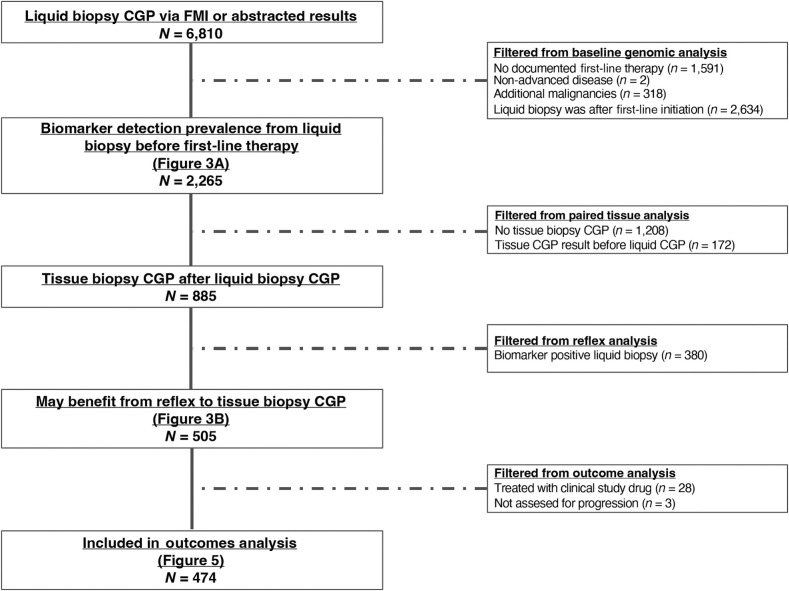
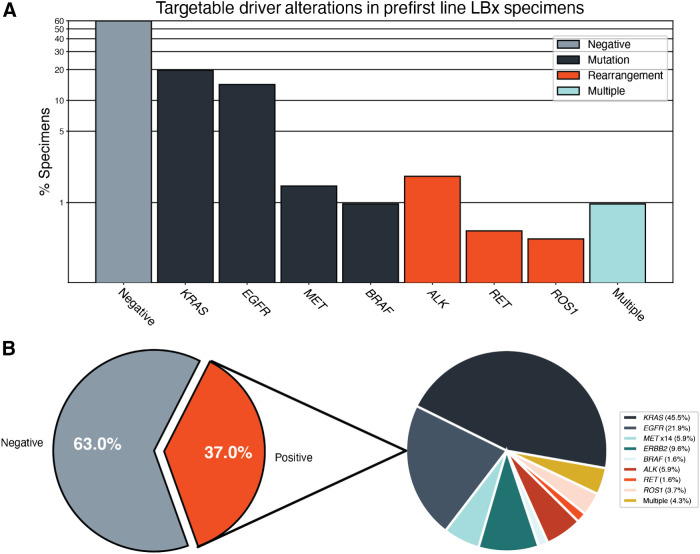
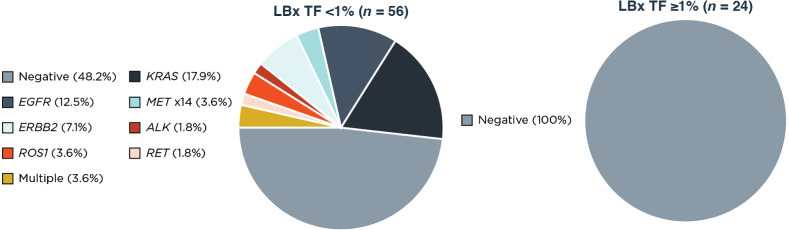
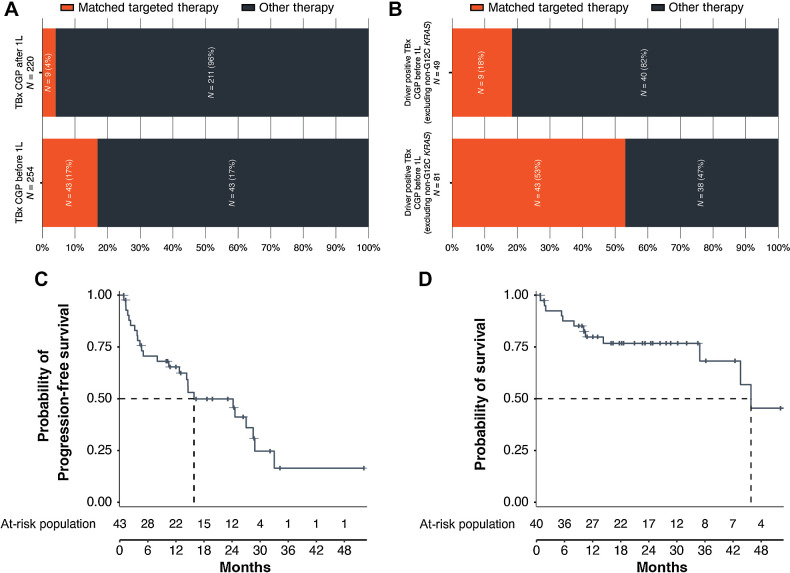
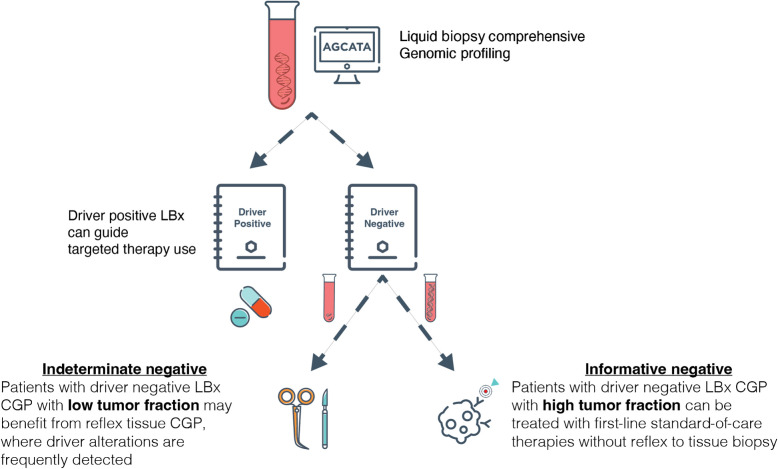
Purpose: Liquid biopsy (LBx) for tumor profiling is increasingly used, but concerns remain regarding negative results. A lack of results may truly reflect tumor genomics, or it may be a false negative that would be clarified by tissue testing. A method of distinguishing between these scenarios could help clarify when follow-on tissue testing is valuable. Experimental Design: Here we evaluate circulating tumor DNA (ctDNA) tumor fraction (TF), a quantification of ctDNA in LBx samples, for utility in identifying true negative results. We assessed concordance between LBx and tissue-based results, stratified by ctDNA TF, in a real-world genomic dataset of paired samples across multiple disease types. We also evaluated the frequency of tissue results identifying driver alterations in patients with lung cancer after negative LBx in a real-world clinicogenomic database. Results: The positive percent agreement and negative predictive value between liquid and tissue samples for driver alterations increased from 63% and 66% for all samples to 98% and 97% in samples with ctDNA TF ≥1%. Among 505 patients with lung cancer with no targetable driver alterations found by LBx who had subsequent tissue-based profiling, 37% had a driver, all of which had ctDNA TF <1%. Conclusions: Patients with lung cancer with negative LBx and ctDNA TF ≥1% are unlikely to have a driver detected on confirmatory tissue testing; such informative negative results may benefit instead from prompt treatment initiation. Conversely, negative LBx with ctDNA TF <1% will commonly have a driver identified by follow-up tissue testing and should be prioritized for reflex testing.
Overview
The claims and statistics of this paper haven’t been checked yet.
Free: it reads the open-access text and checks the first 5 claims that cite a source we can check. Create a free account to check every claim.
Integrity signals
Registry
Cites
Statistics
Figures
Verification
Claims the paper makes
The claims and statistics of this paper haven’t been checked yet.
Free: it reads the open-access text and checks the first 5 claims that cite a source we can check. Create a free account to check every claim.
Claims other papers make about this one
Each is checked against this paper’s own text: does it say what the citing paper says it does?
In the citing paper
“Similar to cohorts of adult patients, we find that when ctDNA TF ≥ 1%, ctDNA sequencing is more sensitive for detection of alterations compared with samples with TF<1%, a key factor when interpreting ctDNA results.25”
From Clinical Liquid Biopsy Testing for Detection of Actionable Genomic Alterations in Children and Young Adults With Advanced Solid Tumors on the GAIN Study (2026) · cites this paper as [25]
Self-check
Percentages, sums and reported differences re-computed from the paper’s own numbers.
The self-check needs the paper’s full text.
Citations
Cites
Frampton, G. M., Fichtenholtz, A., Otto, G. A., Wang, K., Downing, S. R., He, J., Schnall-Levin, M., White, J., Sanford, E. M., An, P., et al. (2013) · Nature Biotechnology · doi:10.1038/nbt.2696 · Cited by 2,157 · cited 1×
“F1LCDx also reports genomic signatures including ctDNA TF. TBx were analyzed using F1CDx as described previously (16, 17).”
MethodEncorafenib, Binimetinib, and Cetuximab in BRAF V600E–Mutated Colorectal Cancer
Kopetz, S., Grothey, A., Yaeger, R., Van Cutsem, E., Desai, J., Yoshino, T., Wasan, H., Ciardiello, F., Loupakis, F., Hong, Y. S., et al. (2019) · New England Journal of Medicine · doi:10.1056/nejmoa1908075 · Cited by 1,491
ESR1 ligand-binding domain mutations in hormone-resistant breast cancer
Toy, W., Shen, Y., Won, H., Green, B., Sakr, R. A., Will, M., Li, Z., Gala, K., Fanning, S., King, T. A., et al. (2013) · Nature Genetics · doi:10.1038/ng.2822 · Cited by 1,248
Activating ESR1 mutations in hormone-resistant metastatic breast cancer
Robinson, D. R., Wu, Y.-M., Vats, P., Su, F., Lonigro, R. J., Cao, X., Kalyana-Sundaram, S., Wang, R., Ning, Y., Hodges, L., et al. (2013) · Nature Genetics · doi:10.1038/ng.2823 · Cited by 1,145
Co-occurring genomic alterations in non-small-cell lung cancer biology and therapy
Skoulidis, F., & Heymach, J. V. (2019) · Nature Reviews Cancer · doi:10.1038/s41568-019-0179-8 · Cited by 1,019 · cited 1×
“Targetable alterations are well de fi ned and mutually exclusive (3).”
BackgroundDouillard, J. Y., Siena, S., Cassidy, J., Tabernero, J., Burkes, R., Barugel, M., Humblet, Y., Bodoky, G., Cunningham, D., Jassem, J., et al. (2014) · Annals of Oncology · doi:10.1093/annonc/mdu141 · Cited by 606
Singal, G., Miller, P. G., Agarwala, V., Li, G., Kaushik, G., Backenroth, D., Gossai, A., Frampton, G. M., Torres, A. Z., Lehnert, E. M., et al. (2019) · JAMA · doi:10.1001/jama.2019.3241 · Cited by 549
Woodhouse, R., Li, M., Hughes, J., Delfosse, D., Skoletsky, J., Ma, P., Meng, W., Dewal, N., Milbury, C., Clark, T., et al. (2020) · PLOS ONE · doi:10.1371/journal.pone.0237802 · Cited by 516
Self-citationPersonalized genomic analyses for cancer mutation discovery and interpretation
Jones, S., Anagnostou, V., Lytle, K., Parpart-Li, S., Nesselbush, M., Riley, D. R., Shukla, M., Chesnick, B., Kadan, M., Papp, E., et al. (2015) · Science Translational Medicine · doi:10.1126/scitranslmed.aaa7161 · Cited by 415
Concordance of Circulating Tumor DNA and Matched Metastatic Tissue Biopsy in Prostate Cancer
Wyatt, A. W., Annala, M., Aggarwal, R., Beja, K., Feng, F., Youngren, J., Foye, A., Lloyd, P., Nykter, M., Beer, T. M., et al. (2017) · JNCI: Journal of the National Cancer Institute · doi:10.1093/jnci/djx118 · Cited by 412
Milbury, C. A., Creeden, J., Yip, W.-K., Smith, D. L., Pattani, V., Maxwell, K., Sawchyn, B., Gjoerup, O., Meng, W., Skoletsky, J., et al. (2022) · PLOS ONE · doi:10.1371/journal.pone.0264138 · Cited by 376 · cited 1×
“F1LCDx also reports genomic signatures including ctDNA TF. TBx were analyzed using F1CDx as described previously (16, 17).”
MethodLiquid biopsy in breast cancer: A comprehensive review
Alimirzaie, S., Bagherzadeh, M., & Akbari, M. R. (2019) · Clinical Genetics · doi:10.1111/cge.13514 · Cited by 332 · cited 1×
“Therapy selection in colorectal cancer similarly requires con fi dence in negative results in RAS genes, as well as BRAF, as do various other tumor types such as breast and prostate (5 – 8).”
BackgroundStover, D. G., Parsons, H. A., Ha, G., Freeman, S. S., Barry, W. T., Guo, H., Choudhury, A. D., Gydush, G., Reed, S. C., Rhoades, J., et al. (2018) · Journal of Clinical Oncology · doi:10.1200/jco.2017.76.0033 · Cited by 231 · cited 1×
“A potential marker of the presence of genuine tumor signal is ctDNA tumor fraction (TF), a biomarker which has been studied across a range of LBx assays (12).”
BackgroundClinical cancer genomic profiling
Chakravarty, D., & Solit, D. B. (2021) · Nature Reviews Genetics · doi:10.1038/s41576-021-00338-8 · Cited by 226
Tukachinsky, H., Madison, R. W., Chung, J. H., Gjoerup, O. V., Severson, E. A., Dennis, L., Fendler, B. J., Morley, S., Zhong, L., Graf, R. P., et al. (2021) · Clinical Cancer Research · doi:10.1158/1078-0432.ccr-20-4805 · Cited by 202 · cited 1×
“Even still, the data presented here ful fi ll most of the Bradford Hill Criteria for causation from epidemiologic data, speci fi cally strength (patient n ), consistency (27 – 29), temporality ( Fig.”
MethodSelf-citationReichert, Z. R., Morgan, T. M., Li, G., Castellanos, E., Snow, T., Dall’Olio, F. G., Madison, R. W., Fine, A. D., Oxnard, G. R., Graf, R. P., et al. (2023) · Annals of Oncology · doi:10.1016/j.annonc.2022.09.163 · Cited by 186
Self-citationPietrantonio, F., Vernieri, C., Siravegna, G., Mennitto, A., Berenato, R., Perrone, F., Gloghini, A., Tamborini, E., Lonardi, S., Morano, F., et al. (2017) · Clinical Cancer Research · doi:10.1158/1078-0432.ccr-16-1863 · Cited by 182
Griffith, S. D., Tucker, M., Bowser, B., Calkins, G., Chang, C.-H. (., Guardino, E., Khozin, S., Kraut, J., You, P., Schrag, D., et al. (2019) · Advances in Therapy · doi:10.1007/s12325-019-00970-1 · Cited by 158 · cited 1×
“18, 19). rwPFS was de fi ned as time from start of systemic therapy to either the date of fi rst rwP 14 days following start of therapy or death.”
MethodHusain, H., Pavlick, D. C., Fendler, B. J., Madison, R. W., Decker, B. J., Gjoerup, O. V., Parachoniak, C. A., McLaughlin-Drubin, M., Erlich, R., Schrock, A. B., et al. (2022) · JCO Precision Oncology · doi:10.1200/po.22.00261 · Cited by 139 · cited 4×
“For samples with signi fi cant aneuploidy, the purity assessment from a robust copy-number model that accounts for both the observed coverage variation and allele frequencies of genome-wide SNP allele frequencies is used to determine the ctDNA TF estimate (2).”
BackgroundMethodInfluentialSelf-citationSlavin, T. P., Banks, K. C., Chudova, D., Oxnard, G. R., Odegaard, J. I., Nagy, R. J., Tsang, K. W. K., Neuhausen, S. L., Gray, S. W., Cristofanilli, M., et al. (2018) · Journal of Clinical Oncology · doi:10.1200/jco.18.00328 · Cited by 115 · cited 1×
“One key challenge is that detection of germline and clonal hematopoiesis (CH) alterations in LBx pro fi ling can appear to represent tumor alterations but may obscure an otherwise non-shedding tumor (9 – 11).”
BackgroundSelf-citationGriffith, S. D., Miksad, R. A., Calkins, G., You, P., Lipitz, N. G., Bourla, A. B., Williams, E., George, D. J., Schrag, D., Khozin, S., et al. (2019) · JCO Clinical Cancer Informatics · doi:10.1200/cci.19.00013 · Cited by 110 · cited 1×
“18, 19). rwPFS was de fi ned as time from start of systemic therapy to either the date of fi rst rwP 14 days following start of therapy or death.”
MethodHu, Y., Alden, R. S., Odegaard, J. I., Fairclough, S. R., Chen, R., Heng, J., Feeney, N., Nagy, R. J., Shah, J., Ulrich, B., et al. (2017) · Clinical Cancer Research · doi:10.1158/1078-0432.ccr-17-1745 · Cited by 86 · cited 1×
“One key challenge is that detection of germline and clonal hematopoiesis (CH) alterations in LBx pro fi ling can appear to represent tumor alterations but may obscure an otherwise non-shedding tumor (9 – 11).”
BackgroundSelf-citationTechnical and biological constraints on ctDNA-based genotyping
Herberts, C., & Wyatt, A. W. (2021) · Trends in Cancer · doi:10.1016/j.trecan.2021.06.001 · Cited by 75 · cited 2×
“Even still, the data presented here ful fi ll most of the Bradford Hill Criteria for causation from epidemiologic data, speci fi cally strength (patient n ), consistency (27 – 29), temporality ( Fig.”
MethodAggarwal, C., Marmarelis, M. E., Hwang, W., Scholes, D. G., McWilliams, T. L., Singh, A. P., Sun, L., Kosteva, J. A., Costello, M. R., Cohen, R. B., et al. (2023) · JCO Precision Oncology · doi:10.1200/po.23.00191 · Cited by 73 · cited 1×
“Availability of molecular genotyping results before fi rst-line (1L) therapy has been found to be associated with signi fi cantly better survival (4).”
BackgroundVan Cutsem, E., Lang, I., Folprecht, G., Nowacki, M., Barone, C., Shchepotin, I., Maurel, J., Cunningham, D., Celik, I., & Kohne, C. (2010) · Journal of Clinical Oncology · doi:10.1200/jco.2010.28.15_suppl.3570 · Cited by 61
Sivakumar, S., Jin, D. X., Tukachinsky, H., Murugesan, K., McGregor, K., Danziger, N. A., Pavlick, D. C., Gjoerup, O. V., Ross, J. S., Harmon, R., et al. (2022) · Nature Communications · doi:10.1038/s41467-022-35245-x · Cited by 51 · cited 1×
“30), biological gradient (Supplementary Fig.”
Self-citationYaung, S. J., Fuhlbrück, F., Peterson, M., Zou, W., Palma, J. F., Patil, N. S., & Jiang, Y. (2020) · JCO Precision Oncology · doi:10.1200/po.20.00046 · Cited by 50
Schwartzberg, L. S., Li, G., Tolba, K. A., Bourla, A. B., Schulze, K., Gadgil, R. Y., Fine, A. D., Lofgren, K. T., Graf, R. P., Oxnard, G. R., et al. (2022) · JTO Clinical and Research Reports · doi:10.1016/j.jtocrr.2022.100386 · Cited by 30 · cited 1×
“Consistent with previous fi ndings (23), we fi nd that 37% of patients with negative CGP results on LBx have on-guideline biomarkers identi fi able by tissue testing.”
BackgroundSelf-citationAntonarakis, E. S., Tierno, M. B., Fisher, V. A., Tukachinsky, H., Alexander, S., Hamdani, O., Hiemenz, M., Huang, R. S. P., Oxnard, G. R., & Graf, R. P. (2022) · The Prostate · doi:10.1002/pros.24331 · Cited by 26
Self-citationMiron, B., Li, G., Quintanilha, J. C. F., Clark, A. S., Scott, T., Ross, J. S., Oxnard, G. R., Pasquina, L. W., Graf, R. P., & Gupta, S. (2024) · ESMO Real World Data and Digital Oncology · doi:10.1016/j.esmorw.2023.100004 · Cited by 8 · cited 1×
“At this time, the authors are unaware of any clinical factors that are predictive of ctDNA TF other than known markers of disease burden such as Eastern Cooperative Oncology Group performance status, disease grade, and various lab values (25, 26).”
BackgroundSelf-citation
Cited by
Fusco, N., Venetis, K., Pepe, F., Shetty, O. A., Fariñas, S. C., Heeke, S., Burnier, J. V., Patton, S. J., Heitzer, E., Nigita, G., et al. (2025) · The Journal of Liquid Biopsy · doi:10.1016/j.jlb.2025.100301 · Cited by 80
“In this regard, the assessment of tumor fraction (TF) is gaining interest, particularly when reporting negative results [26].”
Self-citationBhave, M. A., Quintanilha, J. C. F., Tukachinsky, H., Li, G., Scott, T. A., Ross, J. S., Pasquina, L. W., Huang, R. S. P., McArthur, H. L., Levy, M. A., et al. (2024) · Breast Cancer Research and Treatment · doi:10.1007/s10549-024-07376-w · Cited by 73
“…driver alterations found in > 2000 real-world tissue/liquid pairs across multiple tumor types across ctDNA TF cut-offs [9] as well as the prevalence of fusion alterations found in tissue and liquid samples, respectively, across a database of real-world genomic results by ctDNA TF cut-offs [9–11].”
BackgroundSelf-citationLiquid biopsies across the cancer care continuum
Landon, B. V., Annapragada, A. V., Niknafs, N., Velculescu, V. E., & Anagnostou, V. (2025) · Nature Medicine · doi:10.1038/s41591-025-04093-9 · Cited by 71
“In addition to mutation levels, ctDNA hybrid capture NGS can be leveraged to derive copy number profiles and estimate plasma aneuploidy, which can be combined with mutation levels in a composite measurement of cfDNA tumor fraction 124,134 .”
Sweeney, C. J., Petry, R., Xu, C., Childress, M. A., He, J., Fabrizio, D. A., Gjoerup, O. V., Morley, S., Catlett, T. S., Assaf, Z. J. F., et al. (2024) · Clinical Cancer Research · doi:10.1158/1078-0432.ccr-24-1096 · Cited by 53
“The assay detects and quantifies the fraction of ctDNA of the total cell-free DNA present in a liquid biopsy sample as ctDNA TF, recently described elsewhere (26).”
MethodSelf-citationBorgeaud, M., Olivier, T., Bar, J., Saw, S. P. L., Parikh, K., Banna, G. L., Vito, C. D., Feldman, J., Le, X., & Addeo, A. (2025) · CA A Cancer Journal for Clinicians · doi:10.3322/caac.70024 · Cited by 67
“112 Some methods using epigenomic ctDNA profiling might also allow for the detection of small cell transformation from liquid biopsy.”
Metadata
- Authors
- Rolfo, C. D., Madison, R. W., Pasquina, L. W., Brown, D. W., Huang, Y., Hughes, J. D., Graf, R. P., Oxnard, G. R., & Husain, H.
- Affiliations
- Tisch Cancer Institute (US)
- Foundation Medicine (United States) (US)
- Boston Medical Center (US)
- Moores Cancer Center (US)
- Corresponding author
- Rolfo, Christian D.
- ORCID
- Venue
- Clinical Cancer Research
- Published
- 2024-03-25
- Volume
- 30
- Issue
- 11
- Pages
- 2452-2460
- ISSN
- 1078-0432 (ISSN-L)
- 1557-3265
- PMC
- PMC11145175
- OpenAlex
- W4393144776
- Semantic Scholar
- 04c3b998a3eba7fdd1ea561cbc30d9853f052a4e
- Cited by
- 104
- References
- 30
- Citations by year
- 2026: 37 · 2025: 55 · 2024: 12
- FWCI
- 20.86
- Type
- journal article
- Language
- en
- Open access
- hybrid
- doi.org
- Licence
- Locations
- Clinical Cancer Research (publishedVersion, cc-by-nc-nd)
- PubMed Central (publishedVersion, cc-by-nc-nd)
- PubMed (publishedVersion)
- Funders
- Amgen
- Bristol-Myers Squibb
- Eli Lilly and Company
- Pfizer
- AstraZeneca
- Sanofi
- International Association for the Study of Lung Cancer
- Lung Cancer Research Foundation
- Regeneron Pharmaceuticals
- Boston Pharmaceuticals
- Invitae
- EMD Serono
- Foundation Medicine
- Topics
- Life Sciences › Biochemistry, Genetics and Molecular Biology › Cancer Research › Cancer Genomics and Diagnostics
- Health Sciences › Medicine › Pulmonary and Respiratory Medicine › Lung Cancer Treatments and Mutations
- Life Sciences › Biochemistry, Genetics and Molecular Biology › Genetics › BRCA gene mutations in cancer
- Keywords
- circulating tumor DNA, tumor fraction, liquid biopsy, false-negative results, driver alterations, lung cancer, reflex testing, cancer genomics
- MeSH terms
- Liquid Biopsy, Circulating Tumor DNA, Female, Humans, Lung Neoplasms, Mutation, Neoplasms, Biomarkers, Tumor, Genomics
About these checks
Registry, retraction, Cites and statistics results are computed, not judged, with one exception: a printed reference that no index lists is read once by a model before it counts as a citation error. Claims are extracted by a model and kept only when their quote appears verbatim in the text; each cited source is then checked, with a model’s help, for whether it says what the claim relies on. Those verdicts can be wrong — read the claim’s quote and the cited source before relying on one.
Statistics and arithmetic are recomputed, not judged.
Confidence bands are shown only for fields calibrated on our annotated test set. None is calibrated yet, so no band is shown.
What counts as a claim ›How we measure confidence ›How we check this ›
Are you an author, or do you see a problem with this page? Request a review
Data sources
Bibliographic data: Semantic Scholar, OpenAlex, Crossref.
Contains information from the Semantic Scholar Academic Graph Datasets, made available under the ODC Attribution License (ODC-BY 1.0).
Semantic Scholar’s data is described in: Kinney, R., et al. (2023). The Semantic Scholar Open Data Platform. arXiv:2301.10140.
