

Fasting-Mimicking Diet Is Safe and Reshapes Metabolism and Antitumor Immunity in Patients with Cancer
Open accessPublished version of a preprint
The DOI matches its Crossref record; 50 of the 50 references it cites were found in a registry or an index.
Abstract
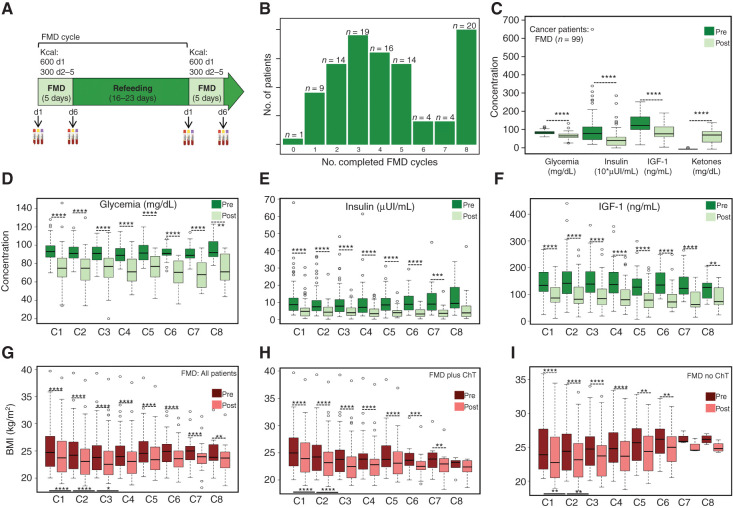
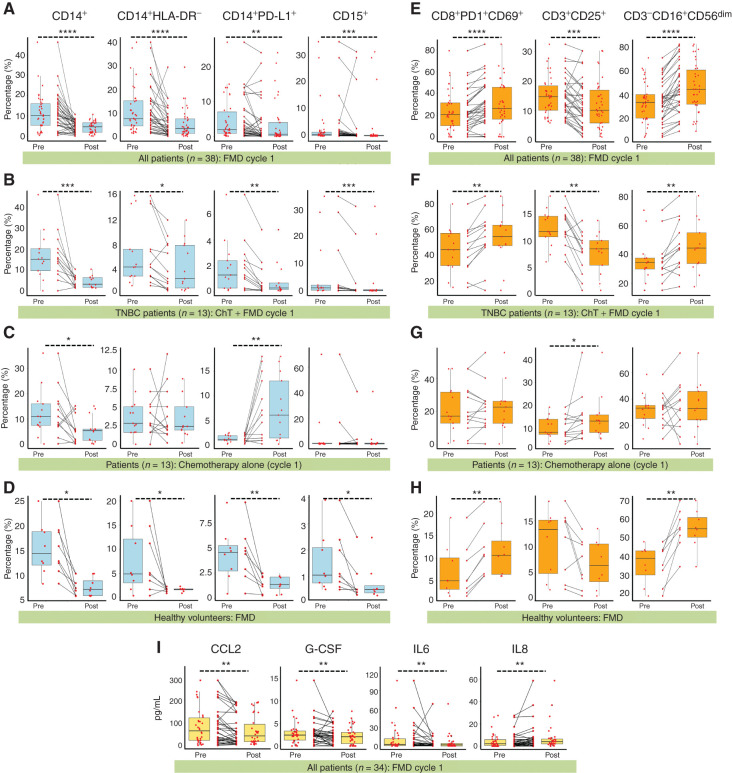
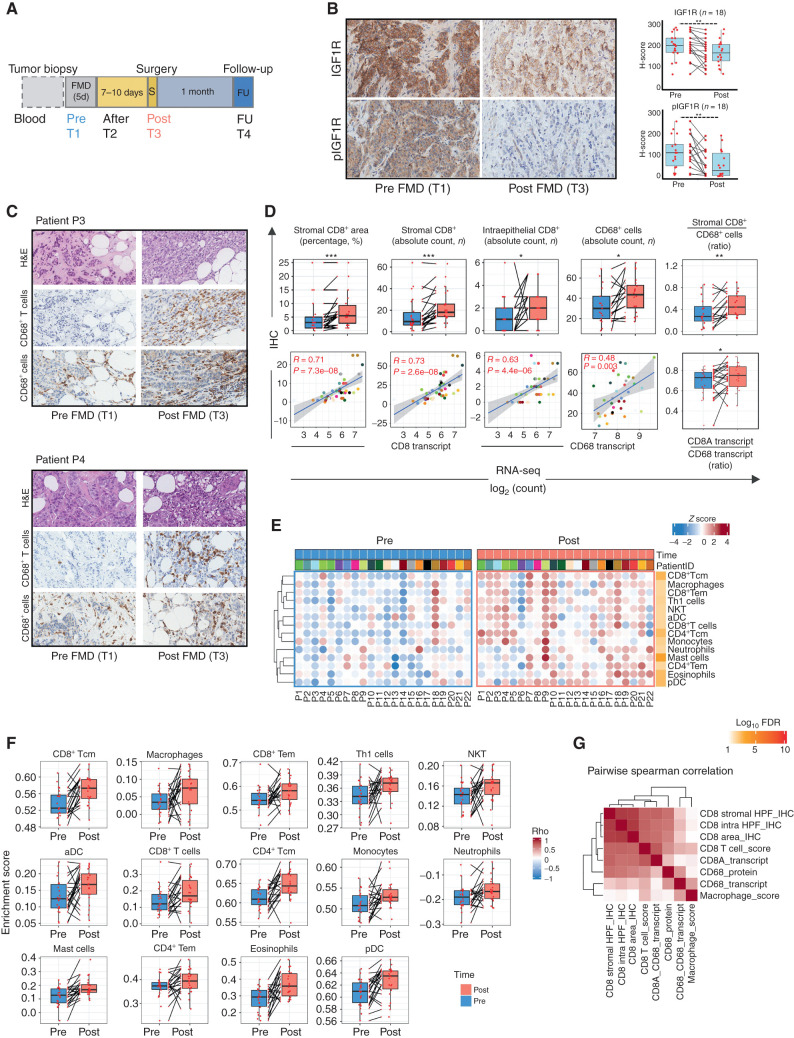
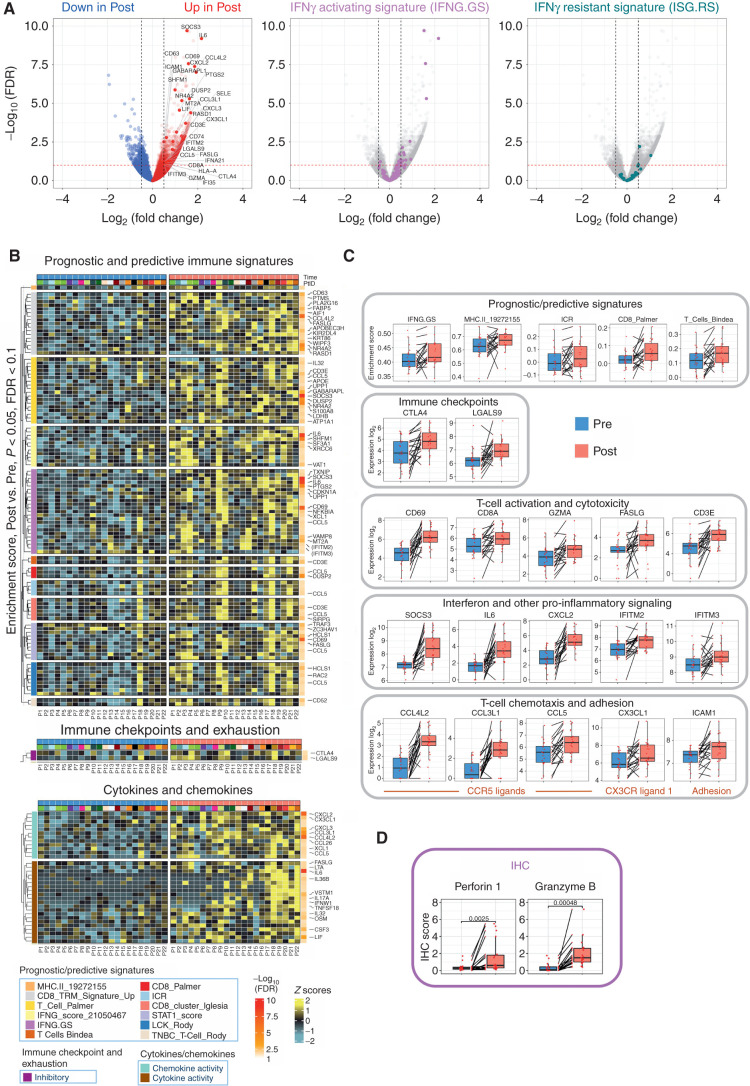
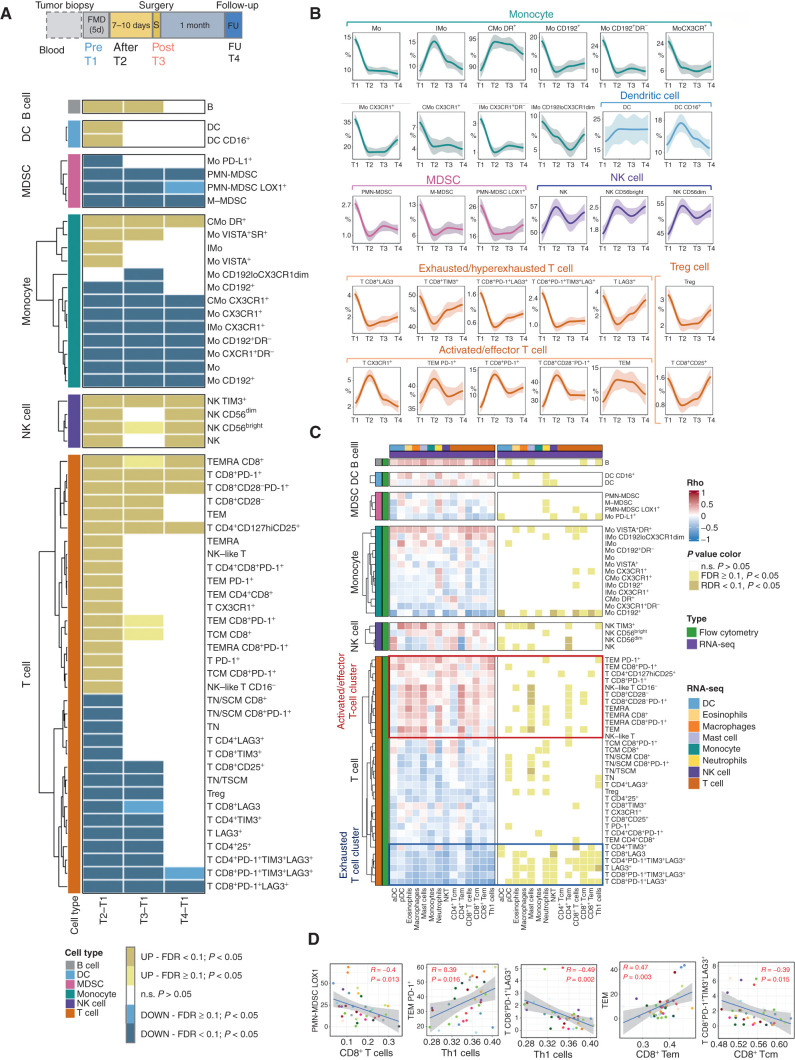
In tumor-bearing mice, cyclic fasting or fasting-mimicking diets (FMD) enhance the activity of antineoplastic treatments by modulating systemic metabolism and boosting antitumor immunity. Here we conducted a clinical trial to investigate the safety and biological effects of cyclic, five-day FMD in combination with standard antitumor therapies. In 101 patients, the FMD was safe, feasible, and resulted in a consistent decrease of blood glucose and growth factor concentration, thus recapitulating metabolic changes that mediate fasting/FMD anticancer effects in preclinical experiments. Integrated transcriptomic and deep-phenotyping analyses revealed that FMD profoundly reshapes anticancer immunity by inducing the contraction of peripheral blood immunosuppressive myeloid and regulatory T-cell compartments, paralleled by enhanced intratumor Th1/cytotoxic responses and an enrichment of IFNγ and other immune signatures associated with better clinical outcomes in patients with cancer. Our findings lay the foundations for phase II/III clinical trials aimed at investigating FMD antitumor efficacy in combination with standard antineoplastic treatments. Significance: Cyclic FMD is well tolerated and causes remarkable systemic metabolic changes in patients with different tumor types and treated with concomitant antitumor therapies. In addition, the FMD reshapes systemic and intratumor immunity, finally activating several antitumor immune programs. Phase II/III clinical trials are needed to investigate FMD antitumor activity/efficacy. This article is highlighted in the In This Issue feature, p. 1
Overview
The claims and statistics of this paper haven’t been checked yet.
Free: it reads the open-access text and checks the first 5 claims that cite a source we can check. Create a free account to check every claim.
Integrity signals
Registry
Cites
Statistics
Figures
Verification
Claims the paper makes
The claims and statistics of this paper haven’t been checked yet.
Free: it reads the open-access text and checks the first 5 claims that cite a source we can check. Create a free account to check every claim.
Claims other papers make about this one
Each is checked against this paper’s own text: does it say what the citing paper says it does?
The cited source says what the claim attributes to it.
In the citing paper
“In humans, a fasting-mimicking diet decreases immunosuppressive myeloid cells while increasing CD8+ T cells and NK cells.141”
From Melanoma and microbiota: Current understanding and future directions (2024) · cites this paper as [141]
In the citing paper
“Pharmacological treatments aimed at mimicking states of nutrient scarcity, as well as different dietary regimens based on continuous CR, intermittent fasting, ketogenesis (through the elimination of carbohydrates), or depletion of specific nutrients (such as methionine) are being actively explored in this regard with encouraging results.[238][239][240][241][242][243][244]”
From Meta-hallmarks of aging and cancer (2023) · cites this paper as [240]
Self-check
Percentages, sums and reported differences re-computed from the paper’s own numbers.
The self-check needs the paper’s full text.
Citations
Cites
Pembrolizumab plus chemotherapy in metastatic non–small-cell lung cancer
Gandhi, L., Rodríguez-Abreu, D., Gadgeel, S., Esteban, E., Felip, E., De Angelis, F., Domine, M., Clingan, P., Hochmair, M. J., Powell, S. F., et al. (2018) · New England Journal of Medicine · doi:10.1056/nejmoa1801005 · Cited by 6,607
Self-citationCharoentong, P., Finotello, F., Angelova, M., Mayer, C., Efremova, M., Rieder, D., Hackl, H., & Trajanoski, Z. (2017) · Cell Reports · doi:10.1016/j.celrep.2016.12.019 · Cited by 5,041
xCell: digitally portraying the tissue cellular heterogeneity landscape
Aran, D., Hu, Z., & Butte, A. J. (2017) · Genome Biology · doi:10.1186/s13059-017-1349-1 · Cited by 4,397 · cited 1×
“Finally, when macrophages were stratified into M1-like and M2-like subtypes (15), we detected an increase of M1-like macrophages after the FMD, while M2-like macrophages did not significantly change (Supplementary Fig.”
BackgroundRecommendations for myeloid-derived suppressor cell nomenclature and characterization standards
Bronte, V., Brandau, S., Chen, S.-H., Colombo, M. P., Frey, A. B., Greten, T. F., Mandruzzato, S., Murray, P. J., Ochoa, A., Ostrand-Rosenberg, S., et al. (2016) · Nature Communications · doi:10.1038/ncomms12150 · Cited by 2,751
Self-citationAlpelisib for PIK3CA -Mutated, Hormone Receptor–Positive Advanced Breast Cancer
André, F., Ciruelos, E., Rubovszky, G., Campone, M., Loibl, S., Rugo, H. S., Iwata, H., Conte, P., Mayer, I. A., Kaufman, B., et al. (2019) · New England Journal of Medicine · doi:10.1056/nejmoa1813904 · Cited by 2,622
Lag-3, Tim-3, and TIGIT: co-inhibitory receptors with specialized functions in immune regulation
Anderson, A. C., Joller, N., & Kuchroo, V. K. (2016) · Immunity · doi:10.1016/j.immuni.2016.05.001 · Cited by 2,096 · cited 1×
“S5H), which suggests the acquisition of an effector-memory phenotype (12).”
BackgroundLDHA-Associated Lactic Acid Production Blunts Tumor Immunosurveillance by T and NK Cells
Brand, A., Singer, K., Koehl, G. E., Kolitzus, M., Schoenhammer, G., Thiel, A., Matos, C., Bruss, C., Klobuch, S., Peter, K., et al. (2016) · Cell Metabolism · doi:10.1016/j.cmet.2016.08.011 · Cited by 2,039
DeNardo, D. G., Brennan, D. J., Rexhepaj, E., Ruffell, B., Shiao, S. L., Madden, S. F., Gallagher, W. M., Wadhwani, N., Keil, S. D., Junaid, S. A., et al. (2011) · Cancer Discovery · doi:10.1158/2159-8274.cd-10-0028 · Cited by 1,715 · cited 1×
“3C and D), the CD8/CD68 (protein) and CD8A/CD68 (gene transcript) ratios, which were previously associated with better prognosis in patients with cancer (13), were increased in post-FMD tumor specimens (Fig.”
BackgroundCancer cachexia: understanding the molecular basis
Argilés, J. M., Busquets, S., Stemmler, B., & López-Soriano, F. J. (2014) · Nature Reviews Cancer · doi:10.1038/nrc3829 · Cited by 1,517 · cited 2×
“Because IL6 plays an important role in the pathogenesis of cachexia (28), FMD-induced upregulation of the IL6/ SOCS3/LIF signature at the tumor level may raise concerns about a potential cachexia-inducing effect of the FMD.”
BackgroundPhosphoenolpyruvate Is a Metabolic Checkpoint of Anti-tumor T Cell Responses
Ho, P.-C., Bihuniak, J. D., Macintyre, A. N., Staron, M., Liu, X., Amezquita, R., Tsui, Y.-C., Cui, G., Micevic, G., Perales, J. C., et al. (2015) · Cell · doi:10.1016/j.cell.2015.08.012 · Cited by 1,462
Cited by
Items 101–200 of 351
Buono, R., Tucci, J., Cutri, R. M., Guidi, N., Mangul, S., Raucci, F., Pellegrini, M. A., Mittelman, S. D., & Longo, V. D. (2023) · Cancers · doi:10.3390/cancers15245870 · Cited by 21
“Fasting/FMD has been shown to reduce chemotherapy-associated toxicity in pre-clinical and clinical studies [47,49,50] and thus represents a safe and potentially effective treatment adjunct for leukemia patients which should be tested clinically.”
BackgroundSelf-citationWu, F., Guo, Y., Wang, Y., Sui, X., Wang, H., Zhang, H., Xin, B., Yang, C., Zhang, C., Jiang, S., et al. (2024) · Nutrients · doi:10.3390/nu17010035 · Cited by 20
“Therefore, fasting has been a feasible and popular diet strategy for preventing and treating chronic metabolic disorders [1], cancer [2], and even as protection from the toxicity of chemotherapy [3].”
Boosting the immunotherapy response by nutritional interventions
Zitvogel, L., & Kroemer, G. (2022) · Journal of Clinical Investigation · doi:10.1172/jci161483 · Cited by 20
Fasting boosts breast cancer therapy efficacy via glucocorticoid activation
Padrão, N., Severson, T., Gregoricchio, S., Guijarro, A. I., Lutz, C., Taranto, D., Hutten, S. J., Ligorio, F., Persia, A., Roest, M., et al. (2025) · Nature · doi:10.1038/s41586-025-09869-0 · Cited by 19
“We previously reported that fasting and FMDs lower insulin, IGF1 and leptin plasma concentrations in mice and humans with breast cancer 3,6,21,22 .”
Self-citationReshaping immunometabolism in the tumour microenvironment to improve cancer immunotherapy
Chen, S., Duan, H., & Sun, G. (2023) · Biomedicine & Pharmacotherapy · doi:10.1016/j.biopha.2023.114963 · Cited by 19
Tumor lipid metabolism: a mechanistic link between diet and cancer progression
Jeong, Y., Rogers, T. J., Anderson, C. E., & Lien, E. C. (2023) · Current Opinion in Biotechnology · doi:10.1016/j.copbio.2023.102993 · Cited by 19
Lifestyle and host determinants of antitumor immunity and cancer health disparities
Swaby, A. M., Atallah, A., Varol, O., Cristea, A., & Quail, D. F. (2023) · Trends in cancer · doi:10.1016/j.trecan.2023.08.007 · Cited by 19
Fasting and calorie restriction modulate age‐associated immunosenescence and inflammaging
Tizazu, A. M. (2024) · Aging Medicine · doi:10.1002/agm2.12342 · Cited by 19
Cancer knocks you out by fasting: Cachexia as a consequence of metabolic alterations in cancer
Cortellino, S., D’Angelo, M., Quintiliani, M., & Giordano, A. (2024) · Journal of Cellular Physiology · doi:10.1002/jcp.31417 · Cited by 20
“…‐ term fasting has demonstrated immunosuppressive effects and improved antitumor therapy efficacy (Cortellino et al., 2023; Cortellino et al., 2022; Longo & Cortellino, 2020; Vernieri et al., 2022), starvation does not have any benefits on the health and prognosis of cachectic cancer patients.”
Self-citationAge- and diet-instructed metabolic rewiring of the tumor–immune microenvironment
Plata-Gómez, A. B., & Ho, P. (2025) · The Journal of Experimental Medicine · doi:10.1084/jem.20241102 · Cited by 20
Non-pharmaceutical interventions to optimize cancer immunotherapy
Boesch, M., Baty, F., Rassouli, F., Kowatsch, T., Joerger, M., Früh, M., & Brutsche, M. H. (2023) · OncoImmunology · doi:10.1080/2162402x.2023.2255459 · Cited by 20
“25 In addition, this dietary intervention substantially reshaped anticancer immunity, including the contraction of suppressive myeloid-and T cell subsets in peripheral blood and an augmented cytotoxic T cell response in the tumor bed.”
BackgroundTargeting systemic and gut microbial metabolism in ER+ breast cancer
Heath, H., Mogol, A. N., Casiano, A. S., Zuo, Q., & Madak‐Erdogan, Z. (2024) · Trends in Endocrinology and Metabolism · doi:10.1016/j.tem.2023.12.008 · Cited by 18
Daveri, E., Vergani, B., Lalli, L., Ferrero, G., Casiraghi, E., Cova, A., Zorza, M., Huber, V., Gariboldi, M., Pasanisi, P., et al. (2024) · Journal for ImmunoTherapy of Cancer · doi:10.1136/jitc-2024-009720 · Cited by 18
Self-citationLu, W., Wang, J., Wang, C., Wang, H., Gao, W., Ye, S., & Shen, R. (2024) · Cancer Control · doi:10.1177/10732748241302957 · Cited by 18
Cazzoli, R., Romeo, F., Pallavicini, I., Peri, S., Romanenghi, M., Pérez-Valencia, J. A., Hagag, E., Ferrucci, F., Elgendy, M., Vittorio, O., et al. (2023) · Cell Reports · doi:10.1016/j.celrep.2023.112616 · Cited by 18
Self-citationMackieh, R., Al-Bakkar, N., Kfoury, M., Okdeh, N., Pietra, H., Roufayel, R., Legros, C., Fajloun, Z., & Sabatier, J. (2023) · Current Medicinal Chemistry · doi:10.2174/0109298673275492231121062033 · Cited by 19
Metabolic heterogeneity in tumor microenvironment – A novel landmark for immunotherapy
Chen, C., Han, P., & Qing, Y. (2024) · Autoimmunity Reviews · doi:10.1016/j.autrev.2024.103579 · Cited by 17
Dong, H., Kong, X., Wang, X., Liu, Q., Fang, Y., & Wang, J. (2023) · Nutrients · doi:10.3390/nu15112586 · Cited by 17
“Claudio et al. revealed that an FMD could lead to a consistent decrease in blood glucose and growth factor concentration, remodeling anticancer immunity via changes to peripheral and intratumor cellular components [56].”
BackgroundBecker, S., Momoh, J., Biancacci, I., Möckel, D., Wang, Q., May, J., Su, H., Candels, L. S., Berres, M., Kiessling, F. M., et al. (2023) · Small · doi:10.1002/smll.202208042 · Cited by 17
Raucci, F., Vernieri, C., Tano, M. D., Ligorio, F., Blaževitš, O., Lazzeri, S., Shmahala, A., Fragale, G., Salvadori, G., Varano, G., et al. (2024) · Cancer Research · doi:10.1158/0008-5472.can-23-0295 · Cited by 16
“…well tolerated, and not associated with progressive weight loss in patients with different tumor types, including advanced and deadly malignancies that often cause sarcopenia or cachexia, such as metastatic pancreatic carcinoma, small-cell lung carcinoma (SCLC), and colorectal carcinoma (7, 8, 10).”
BackgroundInfluentialSelf-citationMuniz, T. P., Araújo, D. V., Savage, K. J. J., Cheng, T., Saha, M., Song, X., Gill, S., Monzon, J. G., Grenier, D., Genta, S., et al. (2021) · Cancers · doi:10.3390/cancers14010089 · Cited by 16
“While this correlation is not absolute and may be influenced by environmental factors [21,22,46], the survival benefit is usually maintained despite the discontinuation of ICIs in a proportion of patients [20].”
Backgroundvan der Velden, A. I. M., IJpelaar, D. H. T., Shaw, P. K. C., Pijl, H., Vink, H., van der Vlag, J., Rabelink, T. J., & van den Berg, B. M. (2024) · Nutrition and Diabetes · doi:10.1038/s41387-024-00275-5 · Cited by 16
Santo, V., Brunetti, L., Pecci, F., Peroni, M., Barnini, G., Paoloni, F., Buti, S., Tiseo, M., Ricciuti, B., Pinato, D. J., et al. (2025) · Current Oncology Reports · doi:10.1007/s11912-025-01718-7 · Cited by 16
“Where appropriate and under clinical supervision, short periodic fasting mimicking diet cycles, as explored by Vernieri and colleagues, can be evaluated within structured programmes given their reproducible effects on glucose, insulin, IGF-1 and immune signatures [149].”
Wang, L., Wang, Y., Wang, R., Gong, F., Shi, Y., Li, S., Chen, P., & Yuan, Y. (2023) · Journal of Translational Medicine · doi:10.1186/s12967-023-04577-7 · Cited by 15
“Preclinical and clinical trials showed that fasting or FMD can reduce the glucose level in tumor tissue [6, 20].”
BackgroundMetabolic programming of organ‐specific natural killer cell responses
Delconte, R. B., & Sun, J. C.-Y. (2024) · Immunological Reviews · doi:10.1111/imr.13333 · Cited by 15
“82 It is clear that NK cells and other lymphocytes function optimally when they have access to a variety of nutrients and oxygen, such as when they are found in the blood or nutrient-rich tissues, and the positioning of cells relative to blood, oxygen, and nutrients varies dependent on tumor type.”
BackgroundTargeting the Gut Microbiome to Improve Immunotherapy Outcomes: A Review
David, A., & Ari, S. L. (2024) · Integrative Cancer Therapies · doi:10.1177/15347354241269870 · Cited by 16
“43 Additionally, these TME changes increase the expression of MHC class II molecules in antigen-presenting cells (APCs).”
BackgroundInfluentialLi, N., Sun, Y.-J., Huang, L.-Y., Li, R.-R., Zhang, J.-S., Qiu, A.-H., Wang, J., & Yang, L. (2024) · Drug Resistance Updates · doi:10.1016/j.drup.2024.101161 · Cited by 15
Bahrami, A., Haghighi, S., Malekzadeh, M., Khodakarim, N., & Hejazi, E. (2024) · Frontiers in Nutrition · doi:10.3389/fnut.2024.1483707 · Cited by 17
Li, Z., Guo, Y., Xiong, J., Bai, L., Tang, H., Wang, B., Guo, B., Yi, Q., Li, G., Gong, M., et al. (2025) · JACC Basic to Translational Science · doi:10.1016/j.jacbts.2024.11.004 · Cited by 15
From microbes to medicine: harnessing the power of the microbiome in esophageal cancer
Liu, X., Li, B., Liang, L., Han, J., Mai, S., & Liu, L. (2024) · Frontiers in Immunology · doi:10.3389/fimmu.2024.1450927 · Cited by 14
De-Leon-Covarrubias, U. E., Perez‐Trujillo, J. J., Villa‐Cedillo, S. A., Martínez-Pérez, A. G., Montes-de-Oca-Saucedo, C. R., Loera‐Arias, M. D. J., García‐García, A., Cárdenas, O. S., & Montes‐de‐Oca‐Luna, R. (2024) · Metabolites · doi:10.3390/metabo14080418 · Cited by 13
“[80] Phase 1, randomized, not blind Dietetic intervention reduced serum TNF-a and insulin levels.”
BackgroundKetogenic diet and cancer: multidimensional exploration and research
Wan, S., Zhou, X., Xie, F., Zhou, F., & Zhang, L. (2025) · Science China Life Sciences · doi:10.1007/s11427-023-2637-2 · Cited by 13
“The mechanism of nutritional therapy involves targeting metabolic pathways of tumor cells and their TME, thereby suppressing cancer progression (Mentella et al., 2019; Muscar-itoli et al., 2021; Vernieri et al., 2022).”
Chang, Y., Long, M., Shan, H., Liu, L., Zhong, S., & Luo, J. (2025) · Critical Reviews in Oncology/Hematology · doi:10.1016/j.critrevonc.2025.104629 · Cited by 14
Autophagy modulation in cancer
Guilbaud, E., Ryan, K. M., Green, D. R., & Galluzzi, L. (2026) · Nature Reviews Drug Discovery · doi:10.1038/s41573-026-01449-9 · Cited by 15
“Of note, similar immunological changes were documented in a cohort of 101 patients with cancer subjected to FMDs, demonstrating the safety of this dietary intervention and providing mechanistic ground for beneficial interactions with immunotherapy 362 .”
Mall, R., & Kanneganti, T. (2023) · Scientific Reports · doi:10.1038/s41598-023-48098-1 · Cited by 13
“This methodology has previously been shown to be successful in identifying optimal prognostic clusters for pancancer immunologic constant of rejection 23,31–34 , pancancer PANoptosis 19 and gastric cancer pyroptosis-related signatures 35 .”
MethodSelf-citationFasting and fasting-mimicking conditions in the cancer immunotherapy era
Pío, R., Senent, Y., Tavira, B., & Ajona, D. (2024) · Journal of Physiology and Biochemistry · doi:10.1007/s13105-024-01020-3 · Cited by 13
“Likewise, there was an increase of monocytes expressing HLA-DR as well as of intermediate monocytes [49] which have been associated with clinical benefit in patients with melanoma treated with anti-PD-1 immuno-therapy [26] and good prognosis in patients with breast cancer [51], respectively.”
Anticancer restrictive diets and the risk of psychological distress: Review and perspectives
PRAT, V. D., Pravettoni, G., Casirati, A., Marzorati, C., Pedrazzoli, P., & Caccialanza, R. (2024) · Cancer Medicine · doi:10.1002/cam4.7329 · Cited by 13
“Therefore, even though nutritional therapy has lower rates of adverse effects when compared to standard anticancer treatment, 34 the potential psychological risks of restrictive diets should not be underestimated.”
BackgroundA bibliometric analysis of Mediterranean diet on cancer from 2012 to 2021
Liu, Y., & Lu, J. (2023) · Frontiers in Nutrition · doi:10.3389/fnut.2023.1128432 · Cited by 13
Fasting-Mimicking Diet Prevents Pancreatic Carcinogenesis via Gut Microbiota and Metabolites
Li, H., Li, C., Ren, M., Zhang, F., Cao, L., Ren, K., & Ren, H. (2024) · Journal of Agricultural and Food Chemistry · doi:10.1021/acs.jafc.4c06475 · Cited by 12
Wolska, W., Gutowska, I., Wszołek, A., & Żwierełło, W. (2025) · International Journal of Molecular Sciences · doi:10.3390/ijms26104742 · Cited by 13
The crosstalk between probiotics and T cell immunity
Liu, Y., Cao, X., Liu, H., & Zhang, W. (2025) · Frontiers in Immunology · doi:10.3389/fimmu.2025.1695840 · Cited by 12
Locasale, J. W., Goncalves, M. D., Tano, M. D., & Burgos-Barragan, G. (2024) · Cold Spring Harbor Perspectives in Medicine · doi:10.1101/cshperspect.a041549 · Cited by 12
Fasting as an Adjuvant Therapy for Cancer: Mechanism of Action and Clinical Practice
Xie, Y., Ye, H., Liu, Z., Liang, Z., Zhu, J., Zhang, R., & Li, Y. (2024) · Biomolecules · doi:10.3390/biom14111437 · Cited by 12
Abene, J., & Deng, J. F. (2025) · Journal of Cancer Survivorship · doi:10.1007/s11764-025-01777-6 · Cited by 11
“The suppression can trigger systemic metabolic changes that may improve treatment outcomes [33].”
"Time" for obesity-related cancers: The role of chrononutrition in cancer prevention and treatment
Verde, L., Galasso, M., Savastano, S., Colao, A. A. L., Barrea, L., & Muscogiuri, G. (2025) · Seminars in Cancer Biology · doi:10.1016/j.semcancer.2025.06.002 · Cited by 11
Greco, G., Petrelli, A. C., Fischetti, F., & Cataldi, S. (2025) · Pathophysiology · doi:10.3390/pathophysiology32040070 · Cited by 11
“These metabolic shifts resemble those seen in preclinical studies and are believed to contribute to the tumor-suppressive properties of fasting and FMD. Additionally, the FMD alters systemic and tumor-specific immune responses, activating multiple immune mechanisms with antitumor effects [51].”
16-h fasting optimizes cancer immunotherapy in mice and humans
Chen, S., Hu, T., Zhu, K., Liu, Y., Yang, Y., Li, X., He, J., Cui, W., Chi, Z., Yu, W., et al. (2026) · Cell Metabolism · doi:10.1016/j.cmet.2026.01.015 · Cited by 12
Biology of Stress Responses in Aging
Maragkakis, M., Ferrucci, L., Gorospe, M., Malla, S., Hatzoglou, M., Trifunović, A., Glick, A. B., Finkel, T., Longo, V. D., Kaushik, S., et al. (2023) · doi:10.59368/agingbio.20230001 · Cited by 11
“…fasting/FMD cycles appear to ameliorate the chemotherapy-induced decrease in the quality of life, improve the clinical and corresponding pathological response of HER2-negative stage II/III breast cancer patients, and have no e ff ect (or sometimes a bene fi cial e ff ect) on muscle mass/strength 45 .”
Self-citationCyclic fasting bolsters cholesterol biosynthesis inhibitors’ anticancer activity
Khalifa, A., Guijarro, A. I., Ravera, S., Bertola, N., Adorni, M. P., Papotti, B., Raffaghello, L., Benelli, R., Becherini, P., Namatalla, A., et al. (2023) · Nature Communications · doi:10.1038/s41467-023-42652-1 · Cited by 11
“Afterwards, the cholesterol acceptors apolipoprotein A-I [10 µ g/ml] or HDL [12.5 µ g/ml] were added for 4 h before the medium was collected and the radioactivity was quanti fi ed.”
InfluentialGligorov, J., Benderra, M., Barthere, X., Forceville, L. D., Antoine, É.-C., Cottu, P. H., Delaloge, S., Pierga, J., Belkacémi, Y., Houvenaegel, G., et al. (2023) · Bulletin du Cancer · doi:10.1016/s0007-4551(23)00473-3 · Cited by 11
Zeng, X., Ji, Q., Jiang, Z., & Xu, Y. (2024) · Diabetology & Metabolic Syndrome · doi:10.1186/s13098-024-01492-9 · Cited by 12
“Most adverse reactions experienced by subjects undergoing FMD intervention, including dizziness, nausea, and weakness, were mild and generally tolerable and did not impede the continuation of the intervention [67, 68].”
BackgroundImaging glucose metabolism to reveal tumor progression
Meng, Y., Sun, J., Zhang, G., Yu, T., & Piao, H. (2023) · Frontiers in Physiology · doi:10.3389/fphys.2023.1103354 · Cited by 10
“Immunotherapy replaces traditional radiotherapies and chemotherapies with immune checkpoint inhibitors, which use the patient’s immune system to identify and target cancer cells (Vernieri et al., 2022).”
BackgroundPancancer network analysis reveals key master regulators for cancer invasiveness
Jethalia, M., Jani, S. P., Ceccarelli, M., & Mall, R. (2023) · Journal of Translational Medicine · doi:10.1186/s12967-023-04435-6 · Cited by 10
“This method has previously successfully identified optimal prognostic clusters for the pancancer immunologic constant of rejection [42–45] and pancancer panoptosis phenotype [2].”
MethodSelf-citationHerman, R., Tršan, J., Lipar, L., Jensterle, M., & Janež, A. (2025) · Nutrients · doi:10.3390/nu17243949 · Cited by 11
“However, effects on disease control and survival remain inconclusive, with heterogeneity in protocols and endpoints limiting firm recommendations [24].”
The effect of diet and nutrition on T cell function in cancer
Zhou, X., Wang, Z., & Yuan, K. (2023) · International Journal of Cancer · doi:10.1002/ijc.34668 · Cited by 10
“foundly reshape anticancer immunity, and an enrichment of intratumor Th1/cytotoxic responses, IFNγ and other immune signals that may benefit cancer patients.(135) Fasting and calorie restriction mimetics improved the efficacy of chemotherapy in an immune system-dependent and autophagy-dependent fashion.”
Nutritional modulation of antitumor immunity
Jeong, M., & Collins, N. (2024) · Current Opinion in Immunology · doi:10.1016/j.coi.2024.102422 · Cited by 10
Molecular mechanisms of non-genetic aberrant peptide production in cancer
Wernaart, D., Fumagalli, A., & Agami, R. (2024) · Oncogene · doi:10.1038/s41388-024-03069-2 · Cited by 10
“In addition to W > F substitutants, a recent study characterized a new type of substitutants by interrogating clinical proteomes of cancer patients [61].”
Combination strategies to target metabolic flexibility in cancer
Krstić, J., Schindlmaier, K., & Prokesch, A. (2022) · International review of cytology · doi:10.1016/bs.ircmb.2022.03.001 · Cited by 10
Autophagy-inducing nutritional interventions in experimental and clinical oncology
Hofer, S. J., Kroemer, G., & Kepp, O. (2022) · International review of cytology · doi:10.1016/bs.ircmb.2022.08.003 · Cited by 10
Sucholeiki, R. L., Propst, C. L., Hong, D. S., & George, G. C. (2024) · Cancer Treatment Reviews · doi:10.1016/j.ctrv.2024.102725 · Cited by 11
Obesity as a Systems‐Level Driver of Cancer: Mechanisms and Nutritional Reprogramming
Munteanu, C., & Dhanasekaran, D. N. (2025) · Obesity Reviews · doi:10.1111/obr.70075 · Cited by 9
“It has been shown that FMDs can influence immunity in ways that are often associated with improved clinical results [292].”
Chang, Y., Su, M., Lv, F., Ren, L. M., Yang, Y., & Chen, L. (2023) · Medical Oncology · doi:10.1007/s12032-023-02155-x · Cited by 9
Routine perioperative blood tests predict survival of resectable lung cancer
Morelli, D., Cantarutti, A., Valsecchi, C., Sabia, F., Rolli, L., Leuzzi, G., Bogani, G., & Pastorino, U. (2023) · Scientific Reports · doi:10.1038/s41598-023-44308-y · Cited by 9
“Third, there is growing evidence that metabolic and inflammatory status have a significant impact on the outcome of patients with metastatic disease 35 .”
BackgroundSystem Xc − exacerbates metabolic stress under glucose depletion in oral squamous cell carcinoma
Wang, M., Li, B., Meng, W., Chen, Y., Liu, H., Zhang, Z., & Li, L. (2023) · Oral Diseases · doi:10.1111/odi.14774 · Cited by 9
Systemic and transcriptional response to intermittent fasting and fasting-mimicking diet in mice
Michenthaler, H., Duszka, K., Reinisch, I., Galhuber, M., Moyschewitz, E., Stryeck, S., Madl, T., Prokesch, A., & Krstić, J. (2024) · BMC Biology · doi:10.1186/s12915-024-02061-2 · Cited by 9
Ernährung und Nahrungsergänzungsmittel
Arends, J. (2023) · Die Innere Medizin · doi:10.1007/s00108-022-01456-z · Cited by 9
“InteressanteBefundezeigten für kurze Fastenperioden Veränderungen immunologischer Marker und Zellprofile, die auf eine Aktivierung des Immunsystems hinweisen [28].”
A bibliometric analysis of the Fasting-Mimicking Diet
Lin, X., & Gao, Y. (2024) · Frontiers in Nutrition · doi:10.3389/fnut.2024.1328450 · Cited by 9
McKenzie, N. D., Ahmad, S., Awada, A., Kuhn, T. M., Recio, F. O., & Holloway, R. W. (2023) · Life Sciences · doi:10.1016/j.lfs.2023.122178 · Cited by 8
Clinical implications of nutritional interventions reducing calories, a systematic scoping review
Oudmaijer, C. A. J., Komninos, D. S. J., Hoeijmakers, J. H. J., IJzermans, J. N. M., & Vermeij, W. P. (2024) · Clinical Nutrition ESPEN · doi:10.1016/j.clnesp.2024.06.046 · Cited by 8
Fasting mimicking diet extends lifespan and improves intestinal and cognitive health
Wang, Q., Xu, J., Luo, M., Jiang, Y., Gu, Y., Wang, Q., He, J., Sun, Y., Lin, Y., Feng, L., et al. (2024) · Food & Function · doi:10.1039/d4fo00483c · Cited by 8
Calorie restriction in cancer patients undergoing chemotherapy: Facts, phantasy or misunderstanding
Bozzetti, F. (2022) · Clinical Nutrition · doi:10.1016/j.clnu.2022.04.020 · Cited by 8
Schmidt, M. W., Brenner, W., Gebhard, S., Schmidt, M., Singer, S., Weidenbach, L., Hahn, H., Puzankova, D., Blau-Schneider, B., Lehnert, A., et al. (2023) · Frontiers in Oncology · doi:10.3389/fonc.2023.1222573 · Cited by 8
Perry, N. J. S., Jhanji, S., & Poulogiannis, G. (2024) · Anesthesia & Analgesia · doi:10.1213/ane.0000000000007328 · Cited by 7
Cordova, R. A., Elbanna, M., Rupert, C. B., Orsi, S. A., Sommers, N. R., Klunk, A. J., Shen, L., Misra, J., Hanquier, J. N., Tsompana, M., et al. (2025) · Cancer Research · doi:10.1158/0008-5472.can-24-1986 · Cited by 7
Spontaneous Tumor Regression and Reversion: Insights and Associations with Reduced Dietary Phosphate
Brown, R. B. (2024) · Cancers · doi:10.3390/cancers16112126 · Cited by 7
“Fasting-mimicking diets have also improved clinical outcomes in cancer patients in combination with conventional antineoplastic treatments [50,51].”
BackgroundDiet predisposes to pancreatic cancer through cellular nutrient sensing pathways
Noè, R., & Carrer, A. (2024) · FEBS Letters · doi:10.1002/1873-3468.14959 · Cited by 7
Call for a holistic framework for cancer immunotherapy
Boesch, M., Baty, F., Kowatsch, T., Wolf, D. G. F., Früh, M., & Brutsche, M. H. (2022) · Cancer · doi:10.1002/cncr.34467 · Cited by 7
“More specifically, FMD reduced blood glucose, insulin, and IGF1 levels, contracted circulating suppressive myeloid- and T- cell compartments, and enhanced intratumoral Tcell activation and cytotoxicity.(9) Notably, many of these effects were independent from the underlying tumor type and the particular cancer therapy…”
BackgroundInfluentialHilakivi-Clarke, L. A., Verma, V., McDermott, M., Koak, P., & Andrade, F. D. O. (2022) · Frontiers in Microbiomes · doi:10.3389/frmbi.2022.1049688 · Cited by 7
“with standard anti tumor therapies , downregulated immunosuppressive myeloid cell subsets, while at the same time increased activated CD8+ T cells (Vernieri et al., 2022).”
BackgroundSITC strategic vision: prevention, premalignant immunity, host and environmental factors
Stanton, S. E., Anderson, K. G., Bruno, T. C., Capitini, C. M., Disis, M. L., McQuade, J. L., Radvanyi, L. G., Vanpouille‐Box, C., Wargo, J. A., Baines, K. J., et al. (2025) · Journal for ImmunoTherapy of Cancer · doi:10.1136/jitc-2024-010419 · Cited by 6
“69 One large clinical trial utilizing a fasting-mimicking diet among various cancer types found decreased levels of immunosuppressive immune cells and an increase in CD8 + T cells, indicating diet content could be used to alter the TME.”
Faris, M. E., Alkawamleh, D. H., & Madkour, M. I. (2025) · journal of nutritional oncology · doi:10.1097/jn9.0000000000000049 · Cited by 6
Poddar, S., Yan, J., Tiwari, G., Rinchai, D., Budka, J. A., Zhang, W., Peng, W., Salunkhe, S., Davis, M. J., Song, Q., et al. (2025) · Journal of Clinical Investigation · doi:10.1172/jci181893 · Cited by 6
“Specifically, the analysis included 34 immune trait signatures (12), 4 immune exhaustion signatures (57), the 14 cell-specific immune signatures from Bindea et al. (58), and IFNG-RS and IFNG-GS (10).”
Self-citationRieth, K. K. S., Campbell, E., Peppone, L. J., Netherby-Winslow, C., Culakova, E., McGuire, J., Sun, H., & Campbell, T. M. (2025) · The Oncologist · doi:10.1093/oncolo/oyaf294 · Cited by 6
Alkawamleh, D. H., Madkour, M. I., Kalam, F., Abdelrahim, D. N., Abdallah, H. W., & Faris, M. E. (2026) · Frontiers in Nutrition · doi:10.3389/fnut.2026.1736969 · Cited by 6
Pfefferkorn, R., Mortzfeld, B. M., Fink, C., von Frieling, J., Bossen, J., Esser, D., Kaleta, C., Rosenstiel, P. C., Heine, H., & Roeder, T. (2023) · Aging and Disease · doi:10.14336/ad.2023.0517 · Cited by 6
“The first clinical trial to determine the effect of FMD in cancer patients showed promising preliminary results (23).”
BackgroundRelevance of Phytochemical Taste for Anti-Cancer Activity: A Statistical Inquiry
Grădinaru, T.-C., Gîlcă, M., Vlad, A., & Dragoș, D. (2023) · International Journal of Molecular Sciences · doi:10.3390/ijms242216227 · Cited by 6
“Moreover, there is mounting evidence that caloric restriction and fasting, mimicking a low-carbohydrate, low-protein diet, are bene-ficial in cancer prevention by reshaping metabolism and anti-cancer immunity [127,128].”
BackgroundThe oncobiome; what, so what, now what?
Abbas, M., & Tangney, M. (2025) · Microbiome Research Reports · doi:10.20517/mrr.2024.89 · Cited by 7
Fasting and cancer responses to therapy
Pedro, J. M. B., & Pietrocola, F. (2022) · International review of cytology · doi:10.1016/bs.ircmb.2022.08.002 · Cited by 6
Brandhorst, S., & Longo, V. D. (2024) · Drug Resistance Updates · doi:10.1016/j.drup.2024.101182 · Cited by 6
Self-citationWang, X., Wang, Z., Liu, Z., Huang, F., Pan, Z., Zhang, Z., & Liu, T. (2025) · Biochimica et Biophysica Acta (BBA) - Reviews on Cancer · doi:10.1016/j.bbcan.2025.189322 · Cited by 5
Sen, M. K., Liao, E., Ni, D., Ge, A., & Piccio, L. M. (2025) · Pharmacological Reviews · doi:10.1016/j.pharmr.2025.100063 · Cited by 5
Caloric restriction protects from acute and chronic kidney injury by inhibiting monocyte recruitment
Molinari, P., Verlato, A., Noble, J., Alibrandi, S., Bin, S., Ferrari, K. L., Malvezzi, P., Alfieri, C., Castellano, G., Perin, L., et al. (2025) · iScience · doi:10.1016/j.isci.2025.113094 · Cited by 5
“18,24,26,27,30 Herein, we tested the hypothesis that FMD cycles reduce AKI severity and progression from AKI to CKD by inhibiting the recruitment of pathogenic monocytes into the kidney.”
Self-citationIntegrative Oncology Approaches Beneficial to Patients in Radiation Therapy
Frenkel, M. A., & Mathis, S. E. (2025) · Current Oncology Reports · doi:10.1007/s11912-025-01722-x · Cited by 5
Impact of ketogenic and fast-mimicking diet in gastrointestinal cancer treatment
Colombo, E. M., Righini, M., Balendra, V., Rustamli, K., Garrone, O., Ratti, M., & Ghidini, M. (2025) · Frontiers in Oncology · doi:10.3389/fonc.2025.1677509 · Cited by 5
“Similarly, FMD involves periodic cycles of low-calorie, low-protein, and low-carbohydrate intake, mimicking the effects of fasting while providing essential nutrients (11).”
InfluentialMigration of immune cells in tumors and inflammation: molecular mechanisms and therapeutic targets
Lu, Y., Shao, D., Xiao, Y., Jiang, Y., & Shao, Z. (2026) · Signal Transduction and Targeted Therapy · doi:10.1038/s41392-026-02851-w · Cited by 5
“456 A recent phase II clinical trial (NCT04248998) demonstrated that the combination of FMD with chemotherapy achieved a pathologic complete response (pCR) rate of 56.6% in patients with early-stage triple-negative breast cancer, with a favorable safety pro fi le.”
InfluentialCaloric restriction and fasting-mimicking diets in the treatment of cancer patients
Arends, J. (2023) · Current Opinion in Clinical Nutrition & Metabolic Care · doi:10.1097/mco.0000000000000959 · Cited by 5
Anil, A., Raheja, R., Gibu, D., Raj, A. S., & Spurthi, S. (2024) · Cureus · doi:10.7759/cureus.67434 · Cited by 6
“Moreover, the practice of fasting enhances the generation and functionality of immune cells, heightening their capacity to identify and eliminate proliferating cancer cells [66].”
BackgroundDivé, I., Hahnefeld, L., Wenger, K. J., Kögel, D., Steinbach, J. P., Geißlinger, G., Ronellenfitsch, M. W., & Tegeder, I. (2025) · Molecular Oncology · doi:10.1002/1878-0261.70003 · Cited by 5
“Apart from direct effects on the nutrient landscape of the brain, fasting-mediated changes in peripheral lipids and metabolites may also indirectly affect brain tumors via stimulation of immune cells [19,20] and modulation of the microbiome [21].”
Dietary sugar intervention: A promising approach for cancer therapy
Zhou, X., Song, Y., Wang, Z., Fu, L., Xu, L., Feng, X., Zhang, Z., & Yuan, K. (2025) · Biochimica et Biophysica Acta (BBA) - Reviews on Cancer · doi:10.1016/j.bbcan.2025.189402 · Cited by 5
The emerging role of fasting-mimicking diets in cancer treatment
Zhai, Y., Si, P., Liu, M., & Huang, L. J. (2023) · journal of nutritional oncology · doi:10.1097/jn9.0000000000000015 · Cited by 5
Cancer and microbiome-targeted therapies
Meena, A. S., Singh, P., & Shukla, P. K. (2025) · International review of cytology · doi:10.1016/bs.ircmb.2024.12.006 · Cited by 5
Metadata
- Authors
- Vernieri, C., Fucà, G., Ligorio, F., Huber, V., Vingiani, A., Iannelli, F., Raimondi, A., Rinchai, D., Frigè, G., Belfiore, A., Lalli, L., Chiodoni, C., Cancila, V., Zanardi, F., Ajazi, A., Cortellino, S., Vallacchi, V., Squarcina, P., Cova, A., Pesce, S., Frati, P., Mall, R., Corsetto, P. A., Rizzo, A. M., Ferraris, C., Folli, S., Garassino, M. C., Capri, G., Bianchi, G., Colombo, M. P., Minucci, S., Foiani, M., Longo, V. D., Apolone, G., Torri, V., Pruneri, G., Bedognetti, D., Rivoltini, L., & de Braud, F.
- Affiliations
- IFOM (IT)
- Fondazione IRCCS Istituto Nazionale dei Tumori (IT)
- University of Milan (IT)
- Sidra Medical and Research Center (QA)
- European Institute of Oncology (IT)
- University of Palermo (IT)
- Hamad bin Khalifa University (QA)
- University of Southern California (US)
- Mario Negri Institute for Pharmacological Research (IT)
- 1Medical Oncology Department, Fondazione IRCCS Istituto Nazionale dei Tumori, Milan, Italy.
- Corresponding author
- Vernieri, Claudio
- Rivoltini, Licia
- ORCID
- Vernieri, Claudio
- Fucà, Giovanni
- Ligorio, Francesca
- Huber, Veronica
- Vingiani, Andrea
- Rinchai, Darawan
- Frigè, Gianmaria
- Belfiore, Antonino
- Lalli, Luca
- Chiodoni, Claudia
- Cancila, Valeria
- Zanardi, Federica
- Ajazi, Arta
- Cortellino, Salvatore
- Vallacchi, Viviana
- Mall, Raghvendra
- Ferraris, Cristina
- Garassino, Marina Chiara
- Colombo, Mario Paolo
- Minucci, Saverio
- Foiani, Marco
- Longo, Valter Daniel
- Apolone, Giovanni
- Venue
- Cancer Discovery
- Published
- 2021-11-17
- Volume
- 12
- Issue
- 1
- Pages
- 90-107
- ISSN
- 2159-8274 (ISSN-L)
- 2159-8290
- PMC
- PMC9762338
- OpenAlex
- W3212242980
- Cited by
- 319
- References
- 50
- Citations by year
- 2026: 43 · 2025: 73 · 2024: 82 · 2023: 78 · 2022: 42 · 2021: 1
- FWCI
- 31.84
- Type
- journal article
- Language
- en
- Open access
- hybrid
- doi.org
- Licence
- Locations
- Cancer Discovery (publishedVersion, cc-by-nc-nd)
- PubMed Central (publishedVersion, cc-by-nc-nd)
- PubMed (publishedVersion)
- Archivio Istituzionale della Ricerca (Universita Degli Studi Di Milano) (submittedVersion, other-oa)
- Figshare (submittedVersion, cc-by-nc-nd)
- IRIS UniPA (University of Palermo) (submittedVersion, other-oa)
- Funders
- Associazione Italiana per la Ricerca sul Cancro (MFAG-2019 n. 22977, IG-2017 n.20752)
- Agenzia Italiana del Farmaco, Ministero della Salute (TRANSCAN-2, code n. TRS-2016-00000393)
- Topics
- Health Sciences › Medicine › Physiology (medical) › Dietary Effects on Health
- Health Sciences › Medicine › Oncology › Cancer Immunotherapy and Biomarkers
- Health Sciences › Medicine › Surgery › Enhanced Recovery After Surgery
- Keywords
- fasting-mimicking diet, antitumor immunity, cancer metabolism, regulatory T cells, myeloid cells, Th1/Treg balance, interferon-gamma, immune checkpoint blockade, blood glucose, safety and tolerability, transcriptomics, deep phenotyping
- MeSH terms
- Antineoplastic Agents, Breast Neoplasms, Fasting, Female, Humans, Male, Middle Aged, Prospective Studies, Colorectal Neoplasms, Treatment Outcome
About these checks
Registry, retraction, Cites and statistics results are computed, not judged, with one exception: a printed reference that no index lists is read once by a model before it counts as a citation error. Claims are extracted by a model and kept only when their quote appears verbatim in the text; each cited source is then checked, with a model’s help, for whether it says what the claim relies on. Those verdicts can be wrong — read the claim’s quote and the cited source before relying on one.
Statistics and arithmetic are recomputed, not judged.
Confidence bands are shown only for fields calibrated on our annotated test set. None is calibrated yet, so no band is shown.
What counts as a claim ›How we measure confidence ›How we check this ›
Are you an author, or do you see a problem with this page? Request a review
Data sources
Bibliographic data: Semantic Scholar, OpenAlex, Crossref.
Contains information from the Semantic Scholar Academic Graph Datasets, made available under the ODC Attribution License (ODC-BY 1.0).
Semantic Scholar’s data is described in: Kinney, R., et al. (2023). The Semantic Scholar Open Data Platform. arXiv:2301.10140.
