

Fasting-Mimicking Diet Is Safe and Reshapes Metabolism and Antitumor Immunity in Patients with Cancer
Open accessPublished version of a preprint
The DOI matches its Crossref record; 50 of the 50 references it cites were found in a registry or an index.
Abstract
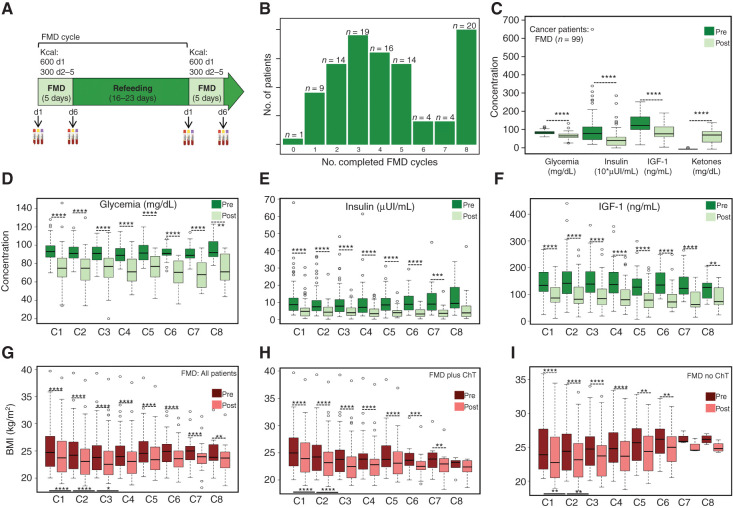
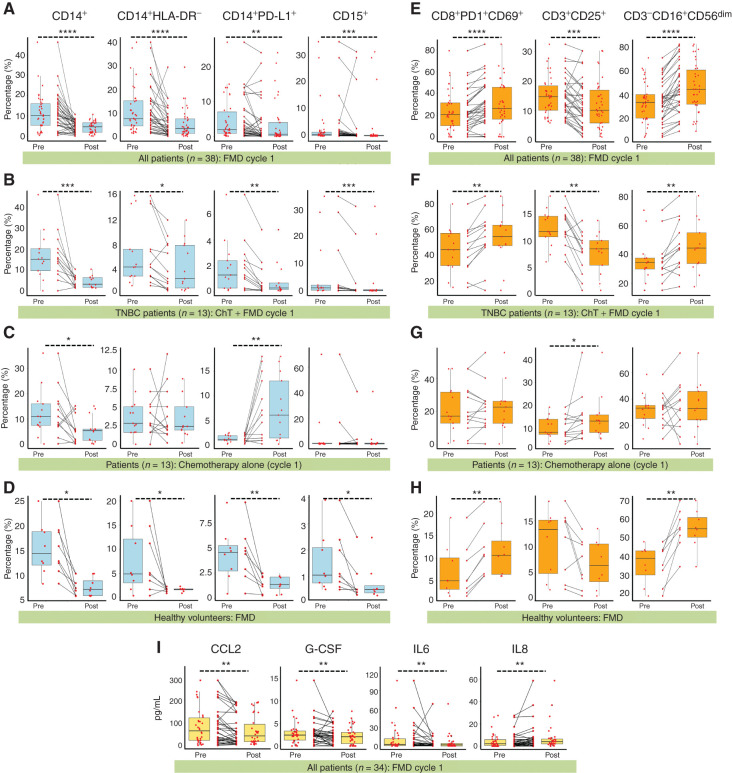
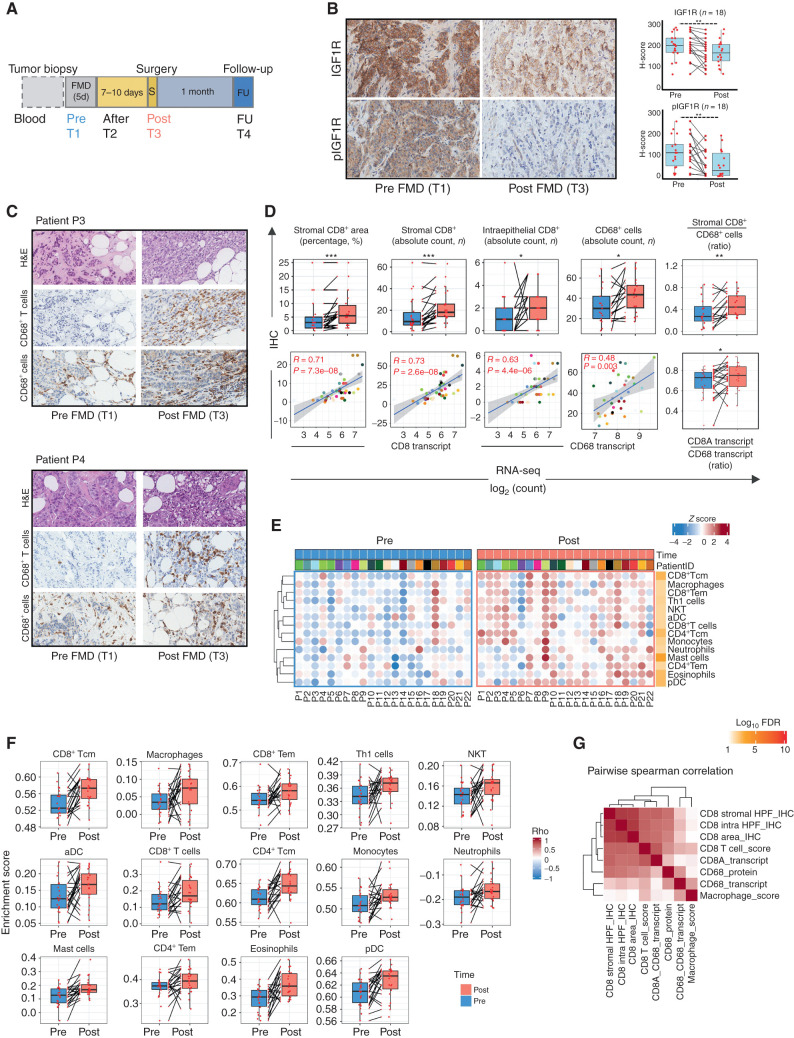
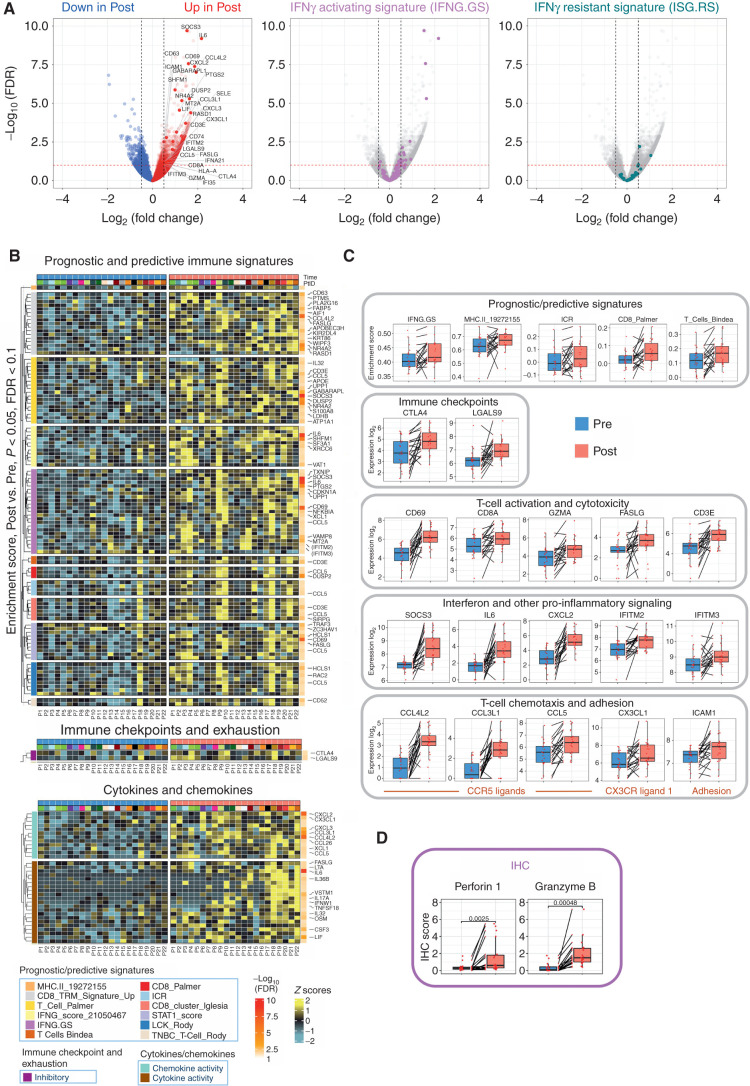
In tumor-bearing mice, cyclic fasting or fasting-mimicking diets (FMD) enhance the activity of antineoplastic treatments by modulating systemic metabolism and boosting antitumor immunity. Here we conducted a clinical trial to investigate the safety and biological effects of cyclic, five-day FMD in combination with standard antitumor therapies. In 101 patients, the FMD was safe, feasible, and resulted in a consistent decrease of blood glucose and growth factor concentration, thus recapitulating metabolic changes that mediate fasting/FMD anticancer effects in preclinical experiments. Integrated transcriptomic and deep-phenotyping analyses revealed that FMD profoundly reshapes anticancer immunity by inducing the contraction of peripheral blood immunosuppressive myeloid and regulatory T-cell compartments, paralleled by enhanced intratumor Th1/cytotoxic responses and an enrichment of IFNγ and other immune signatures associated with better clinical outcomes in patients with cancer. Our findings lay the foundations for phase II/III clinical trials aimed at investigating FMD antitumor efficacy in combination with standard antineoplastic treatments. Significance: Cyclic FMD is well tolerated and causes remarkable systemic metabolic changes in patients with different tumor types and treated with concomitant antitumor therapies. In addition, the FMD reshapes systemic and intratumor immunity, finally activating several antitumor immune programs. Phase II/III clinical trials are needed to investigate FMD antitumor activity/efficacy. This article is highlighted in the In This Issue feature, p. 1
Overview
The claims and statistics of this paper haven’t been checked yet.
Free: it reads the open-access text and checks the first 5 claims that cite a source we can check. Create a free account to check every claim.
Integrity signals
Registry
Cites
Statistics
Figures
Verification
Claims the paper makes
The claims and statistics of this paper haven’t been checked yet.
Free: it reads the open-access text and checks the first 5 claims that cite a source we can check. Create a free account to check every claim.
Claims other papers make about this one
Each is checked against this paper’s own text: does it say what the citing paper says it does?
The cited source says what the claim attributes to it.
In the citing paper
“In humans, a fasting-mimicking diet decreases immunosuppressive myeloid cells while increasing CD8+ T cells and NK cells.141”
From Melanoma and microbiota: Current understanding and future directions (2024) · cites this paper as [141]
In the citing paper
“Pharmacological treatments aimed at mimicking states of nutrient scarcity, as well as different dietary regimens based on continuous CR, intermittent fasting, ketogenesis (through the elimination of carbohydrates), or depletion of specific nutrients (such as methionine) are being actively explored in this regard with encouraging results.[238][239][240][241][242][243][244]”
From Meta-hallmarks of aging and cancer (2023) · cites this paper as [240]
Self-check
Percentages, sums and reported differences re-computed from the paper’s own numbers.
The self-check needs the paper’s full text.
Citations
Cites
Pembrolizumab plus chemotherapy in metastatic non–small-cell lung cancer
Gandhi, L., Rodríguez-Abreu, D., Gadgeel, S., Esteban, E., Felip, E., De Angelis, F., Domine, M., Clingan, P., Hochmair, M. J., Powell, S. F., et al. (2018) · New England Journal of Medicine · doi:10.1056/nejmoa1801005 · Cited by 6,607
Self-citationCharoentong, P., Finotello, F., Angelova, M., Mayer, C., Efremova, M., Rieder, D., Hackl, H., & Trajanoski, Z. (2017) · Cell Reports · doi:10.1016/j.celrep.2016.12.019 · Cited by 5,041
xCell: digitally portraying the tissue cellular heterogeneity landscape
Aran, D., Hu, Z., & Butte, A. J. (2017) · Genome Biology · doi:10.1186/s13059-017-1349-1 · Cited by 4,397 · cited 1×
“Finally, when macrophages were stratified into M1-like and M2-like subtypes (15), we detected an increase of M1-like macrophages after the FMD, while M2-like macrophages did not significantly change (Supplementary Fig.”
BackgroundRecommendations for myeloid-derived suppressor cell nomenclature and characterization standards
Bronte, V., Brandau, S., Chen, S.-H., Colombo, M. P., Frey, A. B., Greten, T. F., Mandruzzato, S., Murray, P. J., Ochoa, A., Ostrand-Rosenberg, S., et al. (2016) · Nature Communications · doi:10.1038/ncomms12150 · Cited by 2,751
Self-citationAlpelisib for PIK3CA -Mutated, Hormone Receptor–Positive Advanced Breast Cancer
André, F., Ciruelos, E., Rubovszky, G., Campone, M., Loibl, S., Rugo, H. S., Iwata, H., Conte, P., Mayer, I. A., Kaufman, B., et al. (2019) · New England Journal of Medicine · doi:10.1056/nejmoa1813904 · Cited by 2,622
Lag-3, Tim-3, and TIGIT: co-inhibitory receptors with specialized functions in immune regulation
Anderson, A. C., Joller, N., & Kuchroo, V. K. (2016) · Immunity · doi:10.1016/j.immuni.2016.05.001 · Cited by 2,096 · cited 1×
“S5H), which suggests the acquisition of an effector-memory phenotype (12).”
BackgroundLDHA-Associated Lactic Acid Production Blunts Tumor Immunosurveillance by T and NK Cells
Brand, A., Singer, K., Koehl, G. E., Kolitzus, M., Schoenhammer, G., Thiel, A., Matos, C., Bruss, C., Klobuch, S., Peter, K., et al. (2016) · Cell Metabolism · doi:10.1016/j.cmet.2016.08.011 · Cited by 2,039
DeNardo, D. G., Brennan, D. J., Rexhepaj, E., Ruffell, B., Shiao, S. L., Madden, S. F., Gallagher, W. M., Wadhwani, N., Keil, S. D., Junaid, S. A., et al. (2011) · Cancer Discovery · doi:10.1158/2159-8274.cd-10-0028 · Cited by 1,715 · cited 1×
“3C and D), the CD8/CD68 (protein) and CD8A/CD68 (gene transcript) ratios, which were previously associated with better prognosis in patients with cancer (13), were increased in post-FMD tumor specimens (Fig.”
BackgroundCancer cachexia: understanding the molecular basis
Argilés, J. M., Busquets, S., Stemmler, B., & López-Soriano, F. J. (2014) · Nature Reviews Cancer · doi:10.1038/nrc3829 · Cited by 1,517 · cited 2×
“Because IL6 plays an important role in the pathogenesis of cachexia (28), FMD-induced upregulation of the IL6/ SOCS3/LIF signature at the tumor level may raise concerns about a potential cachexia-inducing effect of the FMD.”
BackgroundPhosphoenolpyruvate Is a Metabolic Checkpoint of Anti-tumor T Cell Responses
Ho, P.-C., Bihuniak, J. D., Macintyre, A. N., Staron, M., Liu, X., Amezquita, R., Tsui, Y.-C., Cui, G., Micevic, G., Perales, J. C., et al. (2015) · Cell · doi:10.1016/j.cell.2015.08.012 · Cited by 1,462
Cited by
Items 301–351 of 351
Energiehaushalt von malignen Melanomen: Tumorstoffwechsel erklärt Wachstum und Therapieresistenz
Leven, A., & Tasdogan, A. (2025) · Deutsches Ärzteblatt · doi:10.3238/persderma.2025.03.21.03
Intermittent fasting reverses T cell lymphopenia via inosine to mitigate brain tumorsPreprint
Wang, Y., Ye, C., Liu, Y., Zhu, Q., Li, F., Wang, Q., Chaoshi, N., & Zhou, W. (2025) · Research Square · doi:10.21203/rs.3.rs-6080923/v1
Microbiota targets in immune checkpoint therapy: How far are we from clinical application?
Zou, T., Tan, J., Chen, Y., & Jingyuan, F. (2025) · Chinese Medical Journal · doi:10.1097/cm9.0000000000003668
“[11] Among these, five patients with advanced solid neoplasms and a poor prognosis achieved excellent responses using a combination regimen of cyclic FMD and standard systemic treatments.”
Shelechi, M., Fanti, M., Guiliani, G., & Longo, V. D. (2025) · bioRxiv (Cold Spring Harbor Laboratory) · doi:10.1101/2025.08.27.672470
“Salvadori et al. has shown that FMD cycles reduce the hyperglycemic side effect of PI3K inhibitors 14 while causing breast cancer tumor regression in combination with various kinase inhibitors 14,24 .”
Self-citationLiu, Y., Zhou, L., & Xue, J. (2025) · PubMed Central · doi:10.12182/20250560301
Artamonova, N., & Heidegger, I. M. (2025) · European Urology · doi:10.1016/j.eururo.2025.09.4147
Recent Advancements in Targeted Breast Cancer Treatments: A Review of Clinical Trials
Hsieh, A. (2025) · American journal of student research. · doi:10.70251/hyjr2348.35597606
Zhao, W., Tokumasu, M., Nishida, M., Imano, N., Yamashita, N., & Udono, H. (2025) · International Immunology · doi:10.1093/intimm/dxaf068
Li, Q., Wang, Z., Long, J., Xu, Z., & Zhang, J. (2025) · Translational Cancer Research · doi:10.21037/tcr-2025-1329
“Dietary interventions themselves—such as intermittent fasting—are being tested clinically and may help restore immune competence by reducing myeloid-derived suppressor cells and enhancing effector T cell responses (39,45).”
Li, T., Yue, Y., Ma, Y., Zhong, Z., Guo, M., Zhang, J., Wang, Z., & Miao, C. (2023) · Figshare · doi:10.6084/m9.figshare.24181062
Li, T., Yue, Y., Ma, Y., Zhong, Z., Guo, M., Zhang, J., Wang, Z., & Miao, C. (2023) · Figshare · doi:10.6084/m9.figshare.24181065
Caloric Restriction Enhances Chemotherapy Efficacy and Reshapes Stress Responses in Sarcoma
Martins, J. A., Pereira, I. C., REINALDO, T. S., de Sousa, D. J. M., Rodrigues, I. V., Rêgo, B. D. M. P., Oliveira, A. M. D., Nobre, T. A., de Sousa, A. A., do Lago, J. P. A. D., et al. (2025) · Cancers · doi:10.3390/cancers18010110
“Malignant cells depend on fatty acid synthesis and renewal for energy production, proliferation, and signaling [27,53,66].”
Zürcher, G., & Arends, J. (2025) · Springer eBooks · doi:10.1007/978-3-662-68881-6_25
Ribeiro, F. D. F. M. Q. (2024) · LA Referencia (Red Federada de Repositorios Institucionales de Publicaciones Científicas)
The anti-tumoral effects of a low protein diet and of the IRE1α signaling
Turtos, A. M. (2022) · theses.fr (ABES) · doi:10.70675/fd90a3e8ze35az42fdzbd0ez966f12ddad22
Lacroix-Malgras, V. (2023) · theses.fr (ABES) · doi:10.70675/51ba4d5cz55f9z49cdzbfaaz3296f0c62a6d
Precision nutrition in breast cancer: Towards patient- and tumour-informed dietary strategies
Crespo-Garcia, C., Taaffe, D. R., Peddle‐McIntyre, C. J., Jeffery, E., Campbell, J. P., Thomas, R., Galvao, D. A., & Newton, R. U. (2026) · Clinical Nutrition · doi:10.1016/j.clnu.2026.106670
Reduction of IGF-1/PKA to promote hematopoietic-stem cell-based reverse aging
Mishra, D. K., Mishra, S. K., Tiwari, K., Dubey, R., Gopenath, T. S., Leri, M., Vallés, S. L., Jorda, A., Kar, K., Pöeggeler, B., et al. (2026) · Elsevier eBooks · doi:10.1016/b978-0-443-33159-6.00017-5
Salvy, S., Figueiredo, J. C., Atkins, K. M., Hollis, R. H., Jahan, N., Gunnells, D. J., Sleight, A. G., Gresham, G. K., Diniz, M. A., Richman, J. S., et al. (2026) · Nutrition Research · doi:10.1016/j.nutres.2026.04.016
“Other preliminary studies report that intermittent fasting improves antitumor immunity, decreases DNA damage, and reduces the number of chemotherapy dose reductions or delays [66–69], while findings on toxicities [5,40,67,68,70,71] and quality of life are mixed [63,64,66,68,72].”
Brzechffa, C., & Fleischman, A. G. (2026) · Nutrients · doi:10.3390/nu18101562
“Though it is unknown whether calorie-restricted dietary interventions may benefit patients with hematologic neoplasms, it is thought that calorie-restricted diets offer a dual advantage of helping induce weight loss as well as inhibiting the IGF-I signaling [1,39,59].”
Tseng, Y., Lin, L., Ji, F., Song, H., Chen, L., Ye, M., Zhao, S., Zhou, Q., Mo, S., Ye, X., et al. (2026) · Frontiers in Nutrition · doi:10.3389/fnut.2026.1841890
Metabolic Crosstalk Between Host and Tumor as a Circuit of Resilience in Cancer Therapy
Wang, J., Wu, H., Wang, T., & Nie, M. (2026) · Cells · doi:10.3390/cells15111008
“In a 101-patient clinical trial, FMD was well tolerated and was associated with reduced circulating glucose and growth factor levels together with systemic immune remodeling [152].”
Improving immunity in patients with cancer through diet: mechanisms and gaps
MacPherson, S., Dhaliwal, E., & Lum, J. J. (2026) · Trends Open · doi:10.1016/j.treopn.2026.05.008
How dietary interventions impact oral conditions: a systematic review
Poilvet, M., Quemeneur, A., Fouillen, K. J., Jali, S., Orliaguet, M., & Boisramé, S. (2026) · BMC Oral Health · doi:10.1186/s12903-026-09090-z
“CR, IF, and KD have attracted particular attention due to their ability to reduce insulin and insulin-like growth factor-1 (IGF-1) signaling, enhance autophagy, and decrease the production of pro-inflammatory cytokines [2, 4, 10, 11, 13–15, 17, 18, 20–27].”
InfluentialZimmermann, M., Denzer, C., Möricke, A., Alten, J., Blank, A., Attarbaschi, A., Bodmer, N., Cario, G., Schrappe, M., Debatin, K., et al. (2026) · Blood Neoplasia · doi:10.1016/j.bneo.2026.100273
Chattopadhyay, D., Saha, A., Tendulkar, D., Banerjee, T., Roy, S., Choudhury, L., Rajendran, R. L., Gangadaran, P., & Ahn, B. (2026) · World Journal of Clinical Oncology · doi:10.5306/wjco.124767
Metabolic Reprogramming in Cancer and Therapeutic Implications
Singh, S., Desai, U., Goswami, D., Barnwal, A., Domadia, D., Thakur, S., & Premi, S. (2026) · Springer eBooks · doi:10.1007/978-981-92-0477-9_5
Habibzadeh, P., Hurd, D. E., & Davar, D. (2026) · Immunotherapy · doi:10.1080/1750743x.2026.2717073
Targeting metabolic reprogramming in cancer: Past, present, and future
Kumari, N., Shukla, S. K., & Thakur, R. (2026) · Pharmacology & Therapeutics · doi:10.1016/j.pharmthera.2026.109109
Al-Samarraie, Q. H. M. (2026) · NIU Journal of Health Sciences · doi:10.58709/niujhs.v12i1.2619
Starvation improves epithelial fitness by selectively extruding DNA damaged cellsPreprint
Gates, L., Bagley, D., Kalyviotis, K., Fadul, J., Auchynnikava, T., Voronkov, M., & Rosenblatt, J. (2026) · bioRxiv (Cold Spring Harbor Laboratory) · doi:10.64898/2026.09.01.748489
“Interestingly, fasting-mimicking diets or short-term fasting can improve chemotherapy outcomes and reduce their side-effects 46–48 .”
Fasting-Mimicking Diet Remodels Neural Responses Associated with Colorectal Cancer Progression
Shen, Y., Zhong, Z., Nan, K., Long, Y., Zeng, F., & Miao, C. (2026) · Nutrition and Cancer · doi:10.1080/01635581.2026.2725975
“FMD has emerged as a promising dietary strategy for cancer prevention and treatment (9,10, 13–15).”
Mantecón, J. A. D. (2025) · MLS Health & Nutrition Research · doi:10.60134/qdrqst41
“En conjunto, los hallazgos sugieren que las dietas similares al ayuno pueden representar una intervención nutricional prometedora para pacientes con cáncer de mama sometidas a quimioterapia, mejorando tanto su tolerancia al tratamiento como su calidad de vida (20,23,35,36,38,39).”
InfluentialDantas, E., Shi, Y., Kim, J., Murthy, A., Emmanuelli, A., Li, S., Perrier, T., Ahmed, T., Nathoo, I., Echeverría, C. E., et al. (2026) · Cell Press Blue · doi:10.1016/j.cpblue.2026.100122
“4,5,7,13 Thus, the strategic manipulation of diet holds potential as a therapeutic tool to harness immune function.”
The Epigenetic Aging–Cancer Continuum: Biomarkers, Metabolism, and Therapy
Papaneophytou, C. P., Pieri, M., Maria-Eleni, M., Charidemou, E., & Andreou, E. P. (2026) · Genes · doi:10.3390/genes17091130
“Early clinical studies indicate that cyclic fasting-mimicking interventions can be feasible in carefully selected patients and can produce measurable metabolic and immunological changes [203,204].”
Metastatic niche shaped by host factors influences disseminated cancer cell fate
Ward, G., Ruiz‐Tabas, Á., & Altea‐Manzano, P. (2026) · FEBS Letters · doi:10.1002/1873-3468.70471
Effect of foods on prostate cancer development
Mustafin, R. N. (2026) · Cancer Urology · doi:10.17650/1726-9776-2026-22-1-128-136
Bhatt, P., Chaudhari, H., Prajapati, P., Dhote, H. S. A., & Rani, S. (2026) · Elsevier eBooks · doi:10.1016/b978-0-443-33206-7.00001-7
Gui, Z., Yuan, X., Chen, X., Huang, Q., Zhang, B., & Liang, J. (2026) · International Journal of Biological Sciences · doi:10.7150/ijbs.137618
“…diet was feasible in nutritionally selected patients with cancer, reduced circulating glucose and growth-factor concentrations, altered peripheral immune populations, and was associated with changes in intratumoral immune-cell composition in a translational breast-cancer cohort [214].”
Rare-Earth-Coordinated Glutamine Nanostructure-Induced “Pseudo-Overnutrition” Metabolic Therapy
Wang, J., Xu, M., Zhu, G., Zhang, S., Li, Y., Ma, P., Lin, J., & Li, C. (2026) · Journal of the American Chemical Society · doi:10.1021/jacs.6c13842
Alsumali, S. A. (2024) · Review of Contemporary Philosophy
Intermittent Fasting and Its Relationship with Body Health-An Updated Review
Almundrig, A. I. (2024) · Review of Contemporary Philosophy
INNOVATIVE NUTRITIONAL STRATEGIES TO COUNTERACT CANCER CACHEXIA
CASTILLO, L. G. (n.d.) · Institutional Research Information System University of Turin (University of Turin)
22 327Ernährung bei Tumorerkrankung
Arends, J. (2026) · De Gruyter eBooks · doi:10.1515/9783112213056-022
Boosting CAR T cell efficacy in cancer with metabolic insights from design to diet
Morgan, J., MacPherson, S., & Lum, J. J. (2026) · Nature reviews. Cancer · doi:10.1038/s41568-026-00984-2
Zhong, D., Li, C., & Xiao, Z. (2026) · Frontiers in Immunology · doi:10.3389/fimmu.2026.1938564
“” Nursing research could also contribute to microbiome and dietary studies by improving the accuracy of real-world dietary data (15, 17, 216).”
InfluentialCancer Cell Metabolic Reprogramming: Dietary, Pharmacological Strategies and Clinical Perspectives
Xydas, N., Panagiotou, Ε., Kassos, V., Gkirmpa, A. M., Kassou, P., Voyiatzis, I., Prenti, P., Manias, G., Vakrakou, A. G., & Anagnostopoulos, A. K. (2026) · Cancers · doi:10.3390/cancers18203372
“In a proof-of-concept study, Vernieri et al. reported that cyclic FMD was safe and feasible in 101 patients with cancer receiving standard antitumor therapies [106].”
Bone metastases at the nutrition–bone–immune interface: implications for immune checkpoint blockade
Liu, W., Shui, T., Zhao, J., & Li, L. (2026) · Frontiers in Immunology · doi:10.3389/fimmu.2026.1982392
Dietary Regulation of the Tumor Immune Microenvironment in Cancer Immunotherapy
Zhong, X., Wu, H., & Na, H. (2026) · Journal of Cancer Prevention · doi:10.15430/jcp.26.050
Cancer Metabolism Snapshot: Therapeutic Challenges and Dietary Opportunities
Baskaran, S. G., Manoj, H., & Dang, C. V. (2026) · Cellular and Molecular Bioengineering · doi:10.1007/s12195-026-00960-8
Cheng, T., Li, X., Yang, M., Gao, X., Li, H., & Liu, C. (2026) · Biomarker Research · doi:10.1186/s40364-026-01040-9
Metadata
- Authors
- Vernieri, C., Fucà, G., Ligorio, F., Huber, V., Vingiani, A., Iannelli, F., Raimondi, A., Rinchai, D., Frigè, G., Belfiore, A., Lalli, L., Chiodoni, C., Cancila, V., Zanardi, F., Ajazi, A., Cortellino, S., Vallacchi, V., Squarcina, P., Cova, A., Pesce, S., Frati, P., Mall, R., Corsetto, P. A., Rizzo, A. M., Ferraris, C., Folli, S., Garassino, M. C., Capri, G., Bianchi, G., Colombo, M. P., Minucci, S., Foiani, M., Longo, V. D., Apolone, G., Torri, V., Pruneri, G., Bedognetti, D., Rivoltini, L., & de Braud, F.
- Affiliations
- IFOM (IT)
- Fondazione IRCCS Istituto Nazionale dei Tumori (IT)
- University of Milan (IT)
- Sidra Medical and Research Center (QA)
- European Institute of Oncology (IT)
- University of Palermo (IT)
- Hamad bin Khalifa University (QA)
- University of Southern California (US)
- Mario Negri Institute for Pharmacological Research (IT)
- 1Medical Oncology Department, Fondazione IRCCS Istituto Nazionale dei Tumori, Milan, Italy.
- Corresponding author
- Vernieri, Claudio
- Rivoltini, Licia
- ORCID
- Vernieri, Claudio
- Fucà, Giovanni
- Ligorio, Francesca
- Huber, Veronica
- Vingiani, Andrea
- Rinchai, Darawan
- Frigè, Gianmaria
- Belfiore, Antonino
- Lalli, Luca
- Chiodoni, Claudia
- Cancila, Valeria
- Zanardi, Federica
- Ajazi, Arta
- Cortellino, Salvatore
- Vallacchi, Viviana
- Mall, Raghvendra
- Ferraris, Cristina
- Garassino, Marina Chiara
- Colombo, Mario Paolo
- Minucci, Saverio
- Foiani, Marco
- Longo, Valter Daniel
- Apolone, Giovanni
- Venue
- Cancer Discovery
- Published
- 2021-11-17
- Volume
- 12
- Issue
- 1
- Pages
- 90-107
- ISSN
- 2159-8274 (ISSN-L)
- 2159-8290
- PMC
- PMC9762338
- OpenAlex
- W3212242980
- Cited by
- 319
- References
- 50
- Citations by year
- 2026: 43 · 2025: 73 · 2024: 82 · 2023: 78 · 2022: 42 · 2021: 1
- FWCI
- 31.84
- Type
- journal article
- Language
- en
- Open access
- hybrid
- doi.org
- Licence
- Locations
- Cancer Discovery (publishedVersion, cc-by-nc-nd)
- PubMed Central (publishedVersion, cc-by-nc-nd)
- PubMed (publishedVersion)
- Archivio Istituzionale della Ricerca (Universita Degli Studi Di Milano) (submittedVersion, other-oa)
- Figshare (submittedVersion, cc-by-nc-nd)
- IRIS UniPA (University of Palermo) (submittedVersion, other-oa)
- Funders
- Associazione Italiana per la Ricerca sul Cancro (MFAG-2019 n. 22977, IG-2017 n.20752)
- Agenzia Italiana del Farmaco, Ministero della Salute (TRANSCAN-2, code n. TRS-2016-00000393)
- Topics
- Health Sciences › Medicine › Physiology (medical) › Dietary Effects on Health
- Health Sciences › Medicine › Oncology › Cancer Immunotherapy and Biomarkers
- Health Sciences › Medicine › Surgery › Enhanced Recovery After Surgery
- Keywords
- fasting-mimicking diet, antitumor immunity, cancer metabolism, regulatory T cells, myeloid cells, Th1/Treg balance, interferon-gamma, immune checkpoint blockade, blood glucose, safety and tolerability, transcriptomics, deep phenotyping
- MeSH terms
- Antineoplastic Agents, Breast Neoplasms, Fasting, Female, Humans, Male, Middle Aged, Prospective Studies, Colorectal Neoplasms, Treatment Outcome
About these checks
Registry, retraction, Cites and statistics results are computed, not judged, with one exception: a printed reference that no index lists is read once by a model before it counts as a citation error. Claims are extracted by a model and kept only when their quote appears verbatim in the text; each cited source is then checked, with a model’s help, for whether it says what the claim relies on. Those verdicts can be wrong — read the claim’s quote and the cited source before relying on one.
Statistics and arithmetic are recomputed, not judged.
Confidence bands are shown only for fields calibrated on our annotated test set. None is calibrated yet, so no band is shown.
What counts as a claim ›How we measure confidence ›How we check this ›
Are you an author, or do you see a problem with this page? Request a review
Data sources
Bibliographic data: Semantic Scholar, OpenAlex, Crossref.
Contains information from the Semantic Scholar Academic Graph Datasets, made available under the ODC Attribution License (ODC-BY 1.0).
Semantic Scholar’s data is described in: Kinney, R., et al. (2023). The Semantic Scholar Open Data Platform. arXiv:2301.10140.
