

Fasting-Mimicking Diet Is Safe and Reshapes Metabolism and Antitumor Immunity in Patients with Cancer
Open accessPublished version of a preprint
The DOI matches its Crossref record; 50 of the 50 references it cites were found in a registry or an index.
Abstract
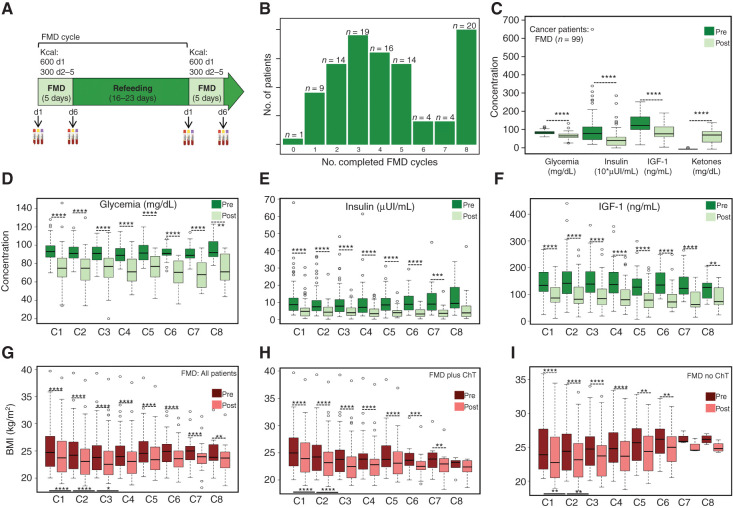
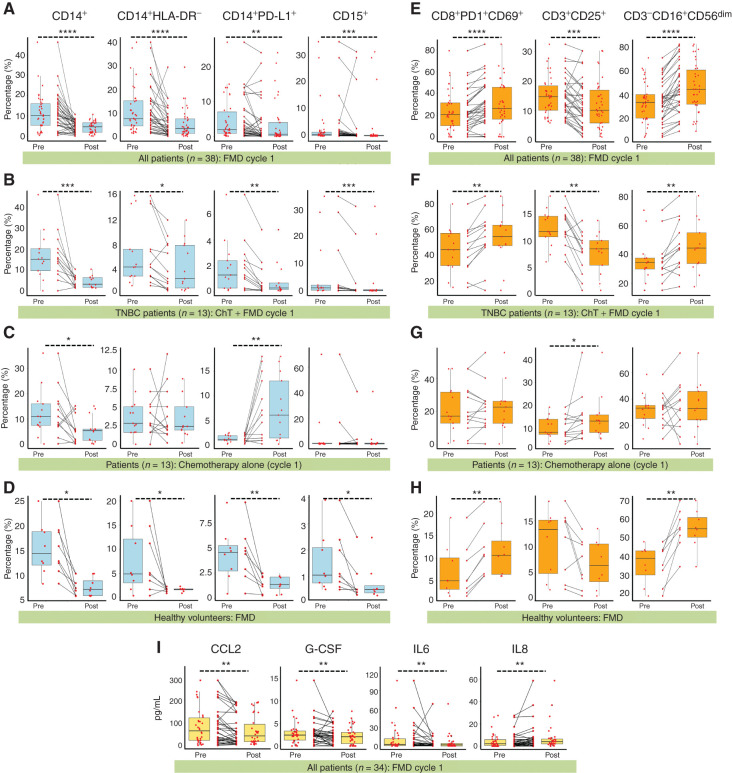
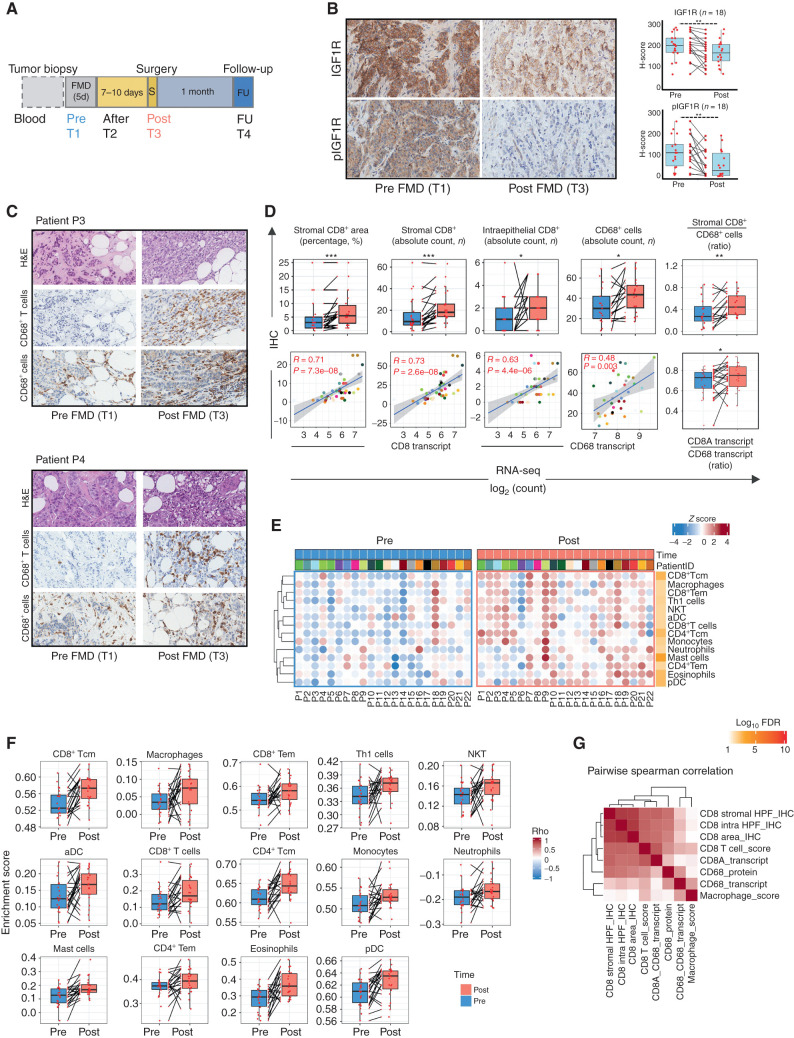
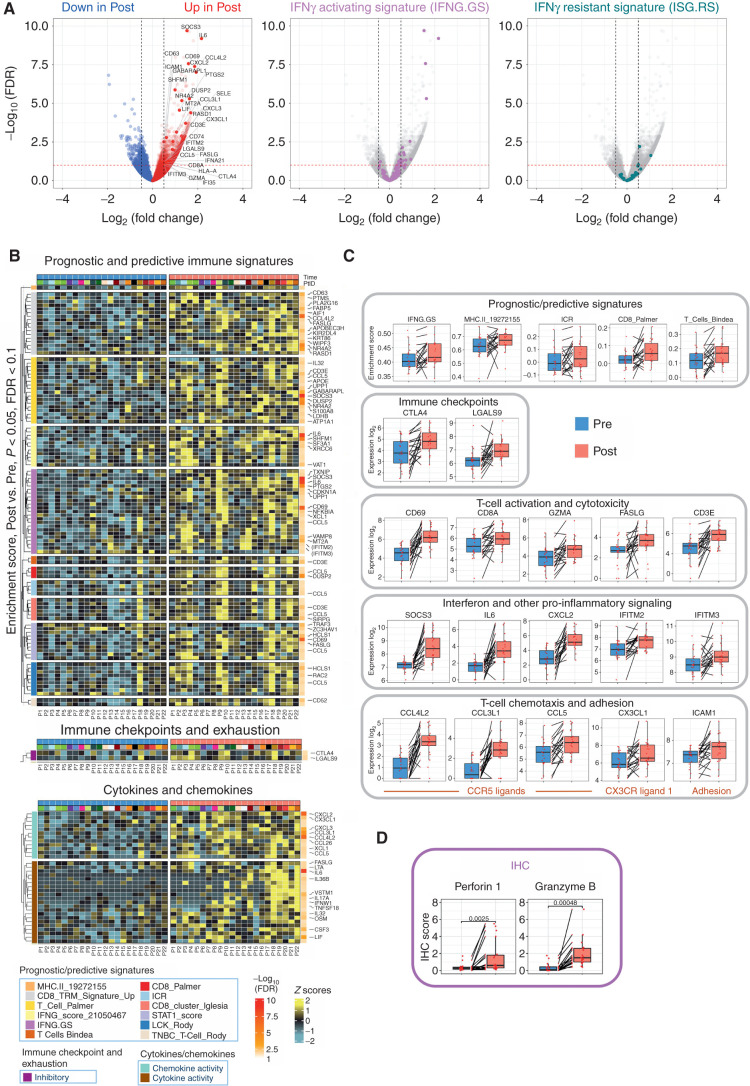
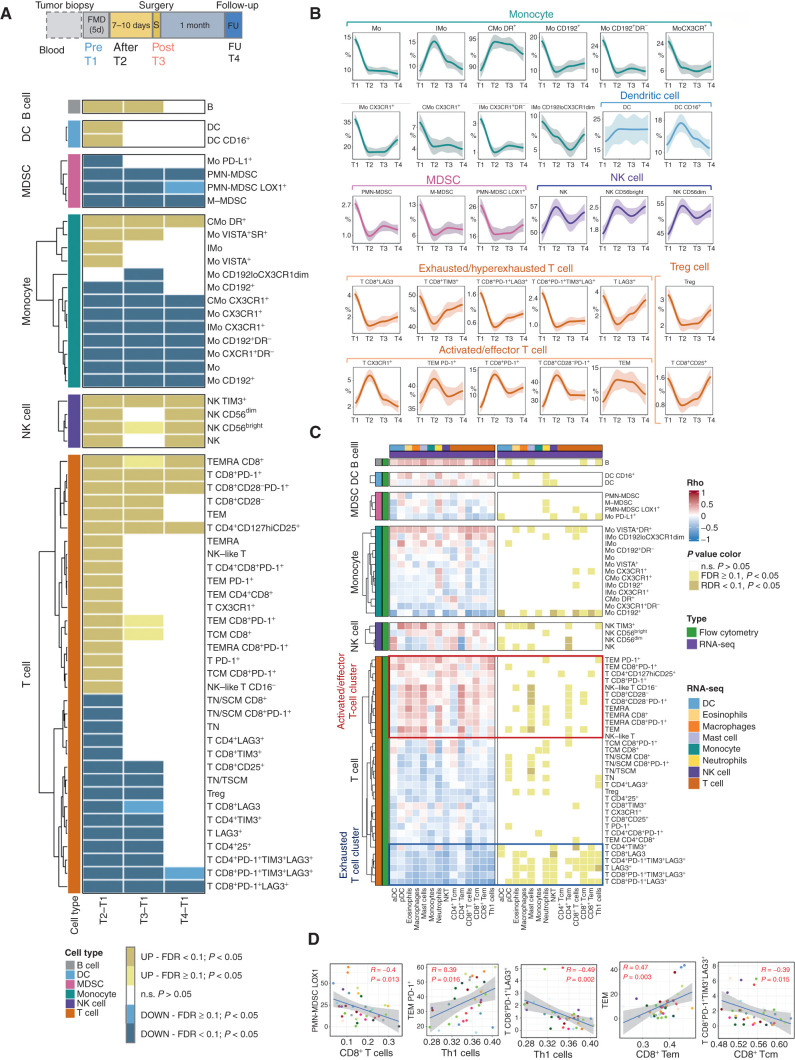
In tumor-bearing mice, cyclic fasting or fasting-mimicking diets (FMD) enhance the activity of antineoplastic treatments by modulating systemic metabolism and boosting antitumor immunity. Here we conducted a clinical trial to investigate the safety and biological effects of cyclic, five-day FMD in combination with standard antitumor therapies. In 101 patients, the FMD was safe, feasible, and resulted in a consistent decrease of blood glucose and growth factor concentration, thus recapitulating metabolic changes that mediate fasting/FMD anticancer effects in preclinical experiments. Integrated transcriptomic and deep-phenotyping analyses revealed that FMD profoundly reshapes anticancer immunity by inducing the contraction of peripheral blood immunosuppressive myeloid and regulatory T-cell compartments, paralleled by enhanced intratumor Th1/cytotoxic responses and an enrichment of IFNγ and other immune signatures associated with better clinical outcomes in patients with cancer. Our findings lay the foundations for phase II/III clinical trials aimed at investigating FMD antitumor efficacy in combination with standard antineoplastic treatments. Significance: Cyclic FMD is well tolerated and causes remarkable systemic metabolic changes in patients with different tumor types and treated with concomitant antitumor therapies. In addition, the FMD reshapes systemic and intratumor immunity, finally activating several antitumor immune programs. Phase II/III clinical trials are needed to investigate FMD antitumor activity/efficacy. This article is highlighted in the In This Issue feature, p. 1
Overview
The claims and statistics of this paper haven’t been checked yet.
Free: it reads the open-access text and checks the first 5 claims that cite a source we can check. Create a free account to check every claim.
Integrity signals
Registry
Cites
Statistics
Figures
Verification
Claims the paper makes
The claims and statistics of this paper haven’t been checked yet.
Free: it reads the open-access text and checks the first 5 claims that cite a source we can check. Create a free account to check every claim.
Claims other papers make about this one
Each is checked against this paper’s own text: does it say what the citing paper says it does?
The cited source says what the claim attributes to it.
In the citing paper
“In humans, a fasting-mimicking diet decreases immunosuppressive myeloid cells while increasing CD8+ T cells and NK cells.141”
From Melanoma and microbiota: Current understanding and future directions (2024) · cites this paper as [141]
In the citing paper
“Pharmacological treatments aimed at mimicking states of nutrient scarcity, as well as different dietary regimens based on continuous CR, intermittent fasting, ketogenesis (through the elimination of carbohydrates), or depletion of specific nutrients (such as methionine) are being actively explored in this regard with encouraging results.[238][239][240][241][242][243][244]”
From Meta-hallmarks of aging and cancer (2023) · cites this paper as [240]
Self-check
Percentages, sums and reported differences re-computed from the paper’s own numbers.
The self-check needs the paper’s full text.
Citations
Cites
Pembrolizumab plus chemotherapy in metastatic non–small-cell lung cancer
Gandhi, L., Rodríguez-Abreu, D., Gadgeel, S., Esteban, E., Felip, E., De Angelis, F., Domine, M., Clingan, P., Hochmair, M. J., Powell, S. F., et al. (2018) · New England Journal of Medicine · doi:10.1056/nejmoa1801005 · Cited by 6,607
Self-citationCharoentong, P., Finotello, F., Angelova, M., Mayer, C., Efremova, M., Rieder, D., Hackl, H., & Trajanoski, Z. (2017) · Cell Reports · doi:10.1016/j.celrep.2016.12.019 · Cited by 5,041
xCell: digitally portraying the tissue cellular heterogeneity landscape
Aran, D., Hu, Z., & Butte, A. J. (2017) · Genome Biology · doi:10.1186/s13059-017-1349-1 · Cited by 4,397 · cited 1×
“Finally, when macrophages were stratified into M1-like and M2-like subtypes (15), we detected an increase of M1-like macrophages after the FMD, while M2-like macrophages did not significantly change (Supplementary Fig.”
BackgroundRecommendations for myeloid-derived suppressor cell nomenclature and characterization standards
Bronte, V., Brandau, S., Chen, S.-H., Colombo, M. P., Frey, A. B., Greten, T. F., Mandruzzato, S., Murray, P. J., Ochoa, A., Ostrand-Rosenberg, S., et al. (2016) · Nature Communications · doi:10.1038/ncomms12150 · Cited by 2,751
Self-citationAlpelisib for PIK3CA -Mutated, Hormone Receptor–Positive Advanced Breast Cancer
André, F., Ciruelos, E., Rubovszky, G., Campone, M., Loibl, S., Rugo, H. S., Iwata, H., Conte, P., Mayer, I. A., Kaufman, B., et al. (2019) · New England Journal of Medicine · doi:10.1056/nejmoa1813904 · Cited by 2,622
Lag-3, Tim-3, and TIGIT: co-inhibitory receptors with specialized functions in immune regulation
Anderson, A. C., Joller, N., & Kuchroo, V. K. (2016) · Immunity · doi:10.1016/j.immuni.2016.05.001 · Cited by 2,096 · cited 1×
“S5H), which suggests the acquisition of an effector-memory phenotype (12).”
BackgroundLDHA-Associated Lactic Acid Production Blunts Tumor Immunosurveillance by T and NK Cells
Brand, A., Singer, K., Koehl, G. E., Kolitzus, M., Schoenhammer, G., Thiel, A., Matos, C., Bruss, C., Klobuch, S., Peter, K., et al. (2016) · Cell Metabolism · doi:10.1016/j.cmet.2016.08.011 · Cited by 2,039
DeNardo, D. G., Brennan, D. J., Rexhepaj, E., Ruffell, B., Shiao, S. L., Madden, S. F., Gallagher, W. M., Wadhwani, N., Keil, S. D., Junaid, S. A., et al. (2011) · Cancer Discovery · doi:10.1158/2159-8274.cd-10-0028 · Cited by 1,715 · cited 1×
“3C and D), the CD8/CD68 (protein) and CD8A/CD68 (gene transcript) ratios, which were previously associated with better prognosis in patients with cancer (13), were increased in post-FMD tumor specimens (Fig.”
BackgroundCancer cachexia: understanding the molecular basis
Argilés, J. M., Busquets, S., Stemmler, B., & López-Soriano, F. J. (2014) · Nature Reviews Cancer · doi:10.1038/nrc3829 · Cited by 1,517 · cited 2×
“Because IL6 plays an important role in the pathogenesis of cachexia (28), FMD-induced upregulation of the IL6/ SOCS3/LIF signature at the tumor level may raise concerns about a potential cachexia-inducing effect of the FMD.”
BackgroundPhosphoenolpyruvate Is a Metabolic Checkpoint of Anti-tumor T Cell Responses
Ho, P.-C., Bihuniak, J. D., Macintyre, A. N., Staron, M., Liu, X., Amezquita, R., Tsui, Y.-C., Cui, G., Micevic, G., Perales, J. C., et al. (2015) · Cell · doi:10.1016/j.cell.2015.08.012 · Cited by 1,462
Cited by
Items 201–300 of 351
Liu, J.-Y., Zhang, R., Ma, L., Yang, P., Wu, Z., Chen, Y., Peng, J., Yang, X., Huang, C., & Yan, J. (2025) · Scientific Reports · doi:10.1038/s41598-025-90844-0 · Cited by 5
Novel pharmacological and dietary approaches to target mTOR in B-cell acute lymphoblastic leukemia
Buono, R., Al-Haddad, M., & Fruman, D. A. (2023) · Frontiers in Oncology · doi:10.3389/fonc.2023.1162694 · Cited by 5
“8%, much higher of any other nutritional interventions (73).”
BackgroundXue, M., Zhang, N., Dong, X., Tian, Q., Shen, K., & Wu, B. (2025) · Breast Cancer Research and Treatment · doi:10.1007/s10549-025-07756-w · Cited by 4
“In reference to the recipes in the two clinical trials NCT3340935 and NCT03454282 [23], combining the recipes and meal replacements (as L-Nutra Inc or Prolon) in many studies [25, 26], we finally formulated the dietary recipes composed of dishes and meal replacement products.”
InfluentialCacciabaudo, F., Accardi, G., Carta, F., Tarantino, S., Annunziata, G., Russo, T. D. B., Silva, P., Candore, G., Russo, A. D., & Ciaccio, M. (2025) · Current Nutrition Reports · doi:10.1007/s13668-025-00713-5 · Cited by 4
“FMD is intended to reduce glucose, insulin, and IGF-1 (which can promote tumour growth) levels but induce ketosis and fasting-like metabolic effects [ 87].”
Fueling metabolic disruption via FMD to boost chemotherapy in TNBC
Goncalves, M. D., & Iyengar, N. M. (2025) · Cell Metabolism · doi:10.1016/j.cmet.2024.12.015 · Cited by 4
Placido, P. D., Rienzo, R. D., Pietroluongo, E., Martinelli, C., Tafuro, M., Formisano, P., D’Esposito, V., Poggio, F. B., Ruelle, T., Cardinali, B., et al. (2025) · European Journal of Cancer · doi:10.1016/j.ejca.2025.115409 · Cited by 4
Self-citationWang, L., Wang, Y., Wang, R., Gong, F., Chen, J., Yu, Y., Qiu, Z.-R., & Yuan, Y. (2025) · Frontiers in Pharmacology · doi:10.3389/fphar.2025.1641024 · Cited by 4
Bendykowska, M., & Gromadzka, G. (2025) · Diagnostics · doi:10.3390/diagnostics15182369 · Cited by 4
“…diet trials in cancer patients (e.g., breast and prostate cancer, phase I–II) report decreased circulating levels of MDSC-related cytokines (IL-6, chemokine (C-C motif) ligand 2 [CCL2], granulocyte colony-stimulating factor [G-CSF]), suggesting indirect modulation of MDSC expansion [17].”
InfluentialFang, Y., Xu, Y., Zhang, Y., Ren, F., & Baker, J. S. (2022) · Metabolites · doi:10.3390/metabo12090868 · Cited by 4
“Moreover, a previous study has found that, in tumor-bearing mice, cyclic fasting or fasting-mimicking diets (FMDs) could enhance the activity of antineoplastic treatments by modulating systemic metabolism and boosting antitumor immunity and be safe, feasible, and resulting in a consistent decrease of blood glucose and…”
BackgroundNi, C. S., & Li, J. (2023) · Heliyon · doi:10.1016/j.heliyon.2023.e22814 · Cited by 5
“Animal and preliminary clinical studies have shown that FMD recreates the efficacy of C. Ni and J. Li water-only fasting [33].”
BackgroundResultde Gruil, N., Böhringer, S., de Groot, S., Pijl, H., Kroep, J. R., & Swen, J. J. (2023) · Cancers · doi:10.3390/cancers15245872 · Cited by 4
“…that a decrease in the blood concentration of glucose, insulin and IGF1 causes IGF1R-protein kinase B(Akt)-mammalian target of rapamycin (mTOR) pathway downregulation [10,11], which leads to gene expression profile alterations that ultimately promote autophagy and cell death in cancer cells [12].”
BackgroundExploring the Interplay of Diet, Obesity, Immune Function, and Cancer
Fu, Y., Guo, X., Sun, L., Cui, T., Wang, J., Liu, Y., & Liu, L. (2024) · Cancer Discovery · doi:10.1158/2159-8290.cd-24-0834 · Cited by 4
Mohammadzadeh, M., Amirpour, M., Ahmadirad, H., Abdi, F., Khalesi, S., Naghshi, N., Bahrami, A., & Hejazi, E. (2025) · Diabetology & Metabolic Syndrome · doi:10.1186/s13098-025-01709-5 · Cited by 4
“During the fasting phase, the diet is designed to provide an adequate quantity of calories and specific nutrients to prevent the perception of starvation while simultaneously reducing calorie intake to a level that induces a fasting-like state [3, 4].”
InfluentialVitamins and dietary supplements in cancer treatment: is there a need for increased usage?
Esposito, T., Pentimalli, F., Giordano, A., & Cortellino, S. (2025) · Expert Review of Anticancer Therapy · doi:10.1080/14737140.2025.2501077 · Cited by 5
“To date, few clinical studies testing fasting on cancer patients have been inconclusive and underpowered [349– 351].”
Self-citationBush, C. O., & Perry, R. J. (2023) · Cancer Research · doi:10.1158/0008-5472.can-23-2257 · Cited by 4
Mechanisms driving fasting-induced protection from genotoxic injury in the small intestine
Deans-Fielder, K., Wu, T., Nguyen, T., To, S., Huang, Y., Bark, S. J., Mills, J. C., & Shroyer, N. F. (2024) · American Journal of Physiology-Gastrointestinal and Liver Physiology · doi:10.1152/ajpgi.00126.2023 · Cited by 4
Ketogenic diets: Dietary therapeutic potential on breast cancer
Annunziata, G., Caprio, M., Frías-Toral, E., Colao, A., & Barrea, L. (2025) · Seminars in Cancer Biology · doi:10.1016/j.semcancer.2025.09.001 · Cited by 3
Koçak, T., Özbek, Y. D., Bodur, M., Yeşil, S., & Ağagündüz, D. (2026) · Journal of Clinical Medicine · doi:10.3390/jcm15031247 · Cited by 3
He, S., Liu, X., & Lv, Q. (2026) · Frontiers in Immunology · doi:10.3389/fimmu.2026.1748257 · Cited by 3
“Clinical trials have con fi rmed that FMD can safely reduce peripheral immunosuppressive cells while enhancing Th1 responses within tumors (70).”
Fasting-Based Dietary Interventions in Cancer Patients and Survivors: A Scoping Review
Wen, K., Freedman, J., Tafese, A. M., Kelly, W. K., & Simone, N. L. (2026) · Nutrients · doi:10.3390/nu18071035 · Cited by 3
“FMD and STF protocols demonstrated more consistent effects on metabolic biomarkers and treatment-related outcomes, including reductions in IGF-1 and improvements in chemotherapy tolerance, although these findings were largely derived from small pilot or feasibility studies [17,24,25,27,32,34,35,39].”
InfluentialColorectal cancer therapy and nutrition: From ultra-processed consumption to metabolic reprogramming
LIMA, R. S. P., Sousa, J. D. S., Neres, M. S. D. O., de Sousa, D. J. M., Martins, J. A., Pereira, I. C., da Silva, A. C. A., Severo, J. S., Torres‐Leal, F. L., & da Silva, M. T. B. (2026) · World Journal of Gastrointestinal Oncology · doi:10.4251/wjgo.v18.i4.115511 · Cited by 3
Garrido, A., Tamayo-Torres, E., Abdo, S., Durham, E., Hirschenson, J., Tanaka, H., Duregon, E., GÜRGEN, H. Ö., Kovour, M., Bodogai, M., et al. (2026) · Proceedings of the National Academy of Sciences · doi:10.1073/pnas.2524488123 · Cited by 3
The Influence of Diet on Cancer Progression and Treatment
Barbeau, A. M., Kincaid, J. W. R., Hillis, A. L., Rashan, E. H., Zhang, Y., Oaks, G. E., & Heiden, M. G. V. (2026) · Annual Review of Nutrition · doi:10.1146/annurev-nutr-062122-021518 · Cited by 3
Fasting-mimicking diet: a metabolic approach for the treatment of breast cancer
Ligorio, F., Provenzano, L., & Vernieri, C. (2023) · Current Opinion in Oncology · doi:10.1097/cco.0000000000000986 · Cited by 3
Self-citationXiao, D., Liu, T., & Pan, Y. (2024) · Journal of Biochemical and Molecular Toxicology · doi:10.1002/jbt.23803 · Cited by 3
Silvestris, N., Aprile, G., Tessitore, D., Mentrasti, G., Petrella, M. C., Speranza, D., Casirati, A., Caccialanza, R., Cinieri, S., & Pedrazzoli, P. (2024) · Critical Reviews in Oncology/Hematology · doi:10.1016/j.critrevonc.2024.104571 · Cited by 3
Interplay between the gut microbiota, its metabolites and carcinogens
Sun, H., Zhai, Q., Liu, J., Shi, K., & Fan, W. (2025) · Clinical & Translational Oncology · doi:10.1007/s12094-025-03920-2 · Cited by 3
“For example, cyclic fasting or fasting-mimicking diets have been associated with a significant increase in tumor-infiltrating CD8 + T cells, thereby improving the metabolism and anti-tumor immunity of cancer patients [96].”
Fasting inhibits glycolysis and migration/invasion in gallbladder cancer via PCBP2/ANGPTL4 signaling
Tao, Y., Shen, S., Gong, Z., Zan, R., Zheng, B., Ma, C., Wang, J., Liu, H., Ni, X., Liu, H., et al. (2025) · Cell Cycle · doi:10.1080/15384101.2025.2540137 · Cited by 3
“Nutrient deprivation leads to alterations in growth factors and metabolites and reduces the proliferation of cancer cells [15].”
Akasheh, R. T., Fantuzzi, G., Varady, K. A., Cheng, T. D., & Kalam, F. (2025) · Current Developments in Nutrition · doi:10.1016/j.cdnut.2025.104566 · Cited by 3
“For example, a cyclic fasting mimicking diet reduces immunosuppressive leukocytes and enhances antitumor Th1/cytotoxic responses and IFN γ signaling in tumor leukocytes [24].”
Breinlinger, C., Meiß, S., Hanslian, E., Jordan, S., Boschmann, M., Khokhar, A. R., Michalsen, A., & Koppold, D. A. (2024) · Complementary Medicine Research · doi:10.1159/000540668 · Cited by 3
“Among others, they reduce blood insulin and blood glucose concentration [21] and can reduce immunosuppressive cell subsets, while boosting systemic and intratumor immunity [22].”
Fasting: A Complex, Double-Edged Blade in the Battle Against Doxorubicin-Induced Cardiotoxicity
Meng, Y., Sun, J., Zhang, G., Yu, T., & Piao, H. (2024) · Cardiovascular Toxicology · doi:10.1007/s12012-024-09925-7 · Cited by 3
“Phase II/III clinical studies are necessary to examine the anticancer activity and effectiveness of FMD [63].”
Intermittent Fasting and Fasting-mimicking Diet: Promising Strategies in Cancer Management
Zhang, C., Fu, F., Zhu, X., Ni, X., Yue, S., Wu, H., & Shi, T. (2024) · Current Medicinal Chemistry · doi:10.2174/0109298673332052241008060857 · Cited by 3
Resilience and restoration from fasting-refeeding mediated by a nutrient-regulated linker histonePreprint
Kawamura, K., Diederich, A. R., Gerisch, B., Ripa, R., Latza, C., Steiner, J. D., Fernandes, S., Artoni, F., Meyer, D. H., Sant, D., et al. (2025) · bioRxiv (Cold Spring Harbor Laboratory) · doi:10.1101/2025.04.14.648802 · Cited by 3
“Accordingly, available transcriptomics data indicated H1-0 was significantly induced in human PBMCs of one-day fasted healthy individuals, calorically restricted participants of the CALERIE study and cancer patients on a fasting-mimicking diet 50–52 (Extended Data Fig.”
Habka, D., Hsu, W. C., & Antoun, J. (2024) · Value in Health · doi:10.1016/j.jval.2024.08.003 · Cited by 2
Dietary impacts on prostate cancer immunotherapy
Duong, L., & Lü, X. (2025) · Immunotherapy · doi:10.1080/1750743x.2025.2511472 · Cited by 2
Crespo-Garcia, C., Bettariga, F., Taaffe, D. R., Peddle‐McIntyre, C. J., Campbell, J. P., Jeffery, E., Markarian, A. M., Borsati, A., Avancini, A., Pilotto, S., et al. (2025) · Current Nutrition Reports · doi:10.1007/s13668-025-00702-8 · Cited by 2
“Fasting regimens have been less studied, but have shown to be feasible, safe, and to reduce some chemotherapy-induced side effects such as nausea, fatigue and DNA damage in blood cells [35–41], and to enhance the antitumoral immune response [41].”
Intermittent fasting enhances cisplatin-metformin efficacy in therapy-resistant ovarian cancer PDXs
Capellini, E., Perotti, L., Guffanti, F., Simone, G. D., Morabito, A., Ronchi, A. M., Sala, L., Scanziani, E., Corna, D., Cerullo, D., et al. (2025) · iScience · doi:10.1016/j.isci.2025.114300 · Cited by 2
Li, J., Jiang, W., Tu, G., Zhong, Z., Luo, Z., Horng, T., & Miao, C. (2026) · British Journal of Cancer · doi:10.1038/s41416-025-03319-4 · Cited by 3
Fasting-mimicking diets as a strategy to reprogram tumor metabolism: a systematic review
Pereira, I. C., Martins, J. A., de Sousa, D. J. M., Neres, M. S. D. O., LIMA, R. S. P., Sousa, J. D. S., Monteiro, R. L., da Silva, F. C. C., Severo, J. S., & Torres‐Leal, F. L. (2026) · European Journal of Nutrition · doi:10.1007/s00394-026-03891-2 · Cited by 2
Razghonova, Y., Abacjew-Chmyłko, A., Czapiewska, M., Wydra, D. G., Świerczyński, J., Mika, A., & Śledziński, T. (2026) · Frontiers in Physiology · doi:10.3389/fphys.2026.1741759 · Cited by 2
Huang, P., Zeng, B., Li, S., Zhang, K., Li, F., Liang, Y., Liuzhang, B., Wu, X., Xie, S., Li, Y., et al. (2026) · Nutrients · doi:10.3390/nu18050861 · Cited by 2
“China experienced a sharp increase in CRC incidence from 1990 to 2019, with the age-standardized incidence rate rising from 12.52 per 100,000 to 30.55 per 100,000 [3], which parallels the ongoing rapid socioeconomic transition.”
InfluentialThe lethal symbiont: exploring the pathophysiology of cancer
Nolan, E., Li, L., Giampazolias, E., Ombrato, L., & Malanchi, I. (2026) · Physiological Reviews · doi:10.1152/physrev.00019.2025 · Cited by 2
Fueling the fatal voyage: How metabolic plasticity empowers every step of cancer metastasis
Liao, J., & Ji, Q. (2026) · Cancer Letters · doi:10.1016/j.canlet.2026.218444 · Cited by 2
Fraile‐Μartinez, O., Boaru, D. L., Castro-Martinez, P. D., Ortega, M. A., & García-Montero, C. (2026) · Nutrients · doi:10.3390/nu18101502 · Cited by 2
Dantas, E., Hootman, K. C., Moyer, J. E., Tomberlin, M., Curran, K., Ramesh, B., Price, H., Kim, J., McPherson, A. C., Hurd, M. A., et al. (2026) · Nature Communications · doi:10.1038/s41467-026-73519-w · Cited by 2
“The suppression of insulin and IGF1 following intervals of fasting has been shown to reshape intratumor immunity in subjects with breast cancer 29 .”
Lysosomal metabolism in pancreatic cancer and its crosstalk with host physiology
Cheng, C., Pakkan, R., Chinnaiyan, A. M., & Lyssiotis, C. A. (2026) · Genes & Development · doi:10.1101/gad.353702.126 · Cited by 2
“Early trials have promisingly demonstrated that fasting-mimicking diet is tolerable, changes the tumor metabolic and immunologic landscape, and enhances chemotherapy in 101 patients with different tumor types (Ligorio et al. 2022; Vernieri et al. 2022).”
Keles, N. A., Doğan, S., Dogan, A., Sudağıdan, M., Balcı, T. N., Çetiner, Ö., Kavruk, M., Özalp, V. C., & Tuna, B. G. (2024) · Nutrition · doi:10.1016/j.nut.2024.112525 · Cited by 2
MZT1 protects gastric cancer against glucose starvation through targeting NEDD1
Zhao, R., Cao, B., Li, H., Gao, J., Xu, Q., Cui, H., Yuan, Z., Ren, H., & Wei, B. (2025) · Life Sciences · doi:10.1016/j.lfs.2025.123622 · Cited by 2
The advent of precision nutrigeroscience in cancer: from clinic towards molecular biology
Gao, Z., Liu, Y., Cui, Y., Han, Y., Cao, K., & Wu, Q. (2025) · Journal of Advanced Research · doi:10.1016/j.jare.2025.08.034 · Cited by 2
“In clinical trial, FMD is capable to decrease the peripheral level of myeloid-derived immunosuppressive cells and the intratumoral infiltration of regulatory T cell (Treg), leading to enhanced intratumor T cells cytotoxicity and IFN c enrichment to restore a nticancer immunological surveillance [12].”
Fasten – ein potentes Therapeutikum der Moderne
Hanslian, E., Koppold, D. A., & Michalsen, A. (2023) · DMW - Deutsche Medizinische Wochenschrift · doi:10.1055/a-2119-3516 · Cited by 2
“Allerdings ist derzeit noch unklar, inwieweit dies auch klinisch relevant werden kann [21].”
BackgroundRegulation of Trimethylamine N-oxide in Treatment of Cardiometabolic Diseases. Doctoral Thesis
Ozola, M. (2023) · doi:10.25143/prom-rsu_2023-16_dt · Cited by 2
Defining Prolonged and Intermittent Fasting: International Consensus on Fasting TerminologyPreprint
Koppold, D. A., Breinlinger, C., Hanslian, E., Keßler, C. S., Cramer, H., Khokhar, A. R., Peterson, C. M., Tinsley, G. M., Vernieri, C., Bloomer, R. J., et al. (2023) · SSRN Electronic Journal · doi:10.2139/ssrn.4665168 · Cited by 2
Self-citationPastor‐Fernández, A., Heras, M. M. G. D. L., Escrig-Larena, J. I., Barradas, M., Pantoja, C., Plaza, A., López-Aceituno, J. L., Durán, E., Efeyan, A., Mittelbrunn, M., et al. (2024) · 癌症:英文版 · doi:10.1002/cac2.12535 · Cited by 1
Tal, O., Zahavi, T., Sinberger, L. A., & Salmon‐Divon, M. (2025) · PLoS ONE · doi:10.1371/journal.pone.0317502 · Cited by 1
Short-term fasting before living kidney donation has an immune-modulatory effect
Oudmaijer, C. A. J., Komninos, D. S. J., Ozinga, R. A., Smit, K., Rozendaal, N. E. M., Hoeijmakers, J. H. J., Vermeij, W. P., Aerts, J. G. J. V., IJzermans, J. N. M., & Willemsen, M. (2025) · Frontiers in Immunology · doi:10.3389/fimmu.2025.1488324 · Cited by 1
Pastora-Sesín, C., Ruiz, D., Solano, K., Villabona, V., Izaguirre, A., Instituto de Medicina Tropical Alexander von Humboldt, U. P. C. H., Gerritzmann, F., Souza, F., Instituto D’Or de Pesquisa e Ensino, R. D. J., Mellado, F., et al. (2025) · Principles and Practice of Clinical Research Journal · doi:10.21801/ppcrj.2024.104.5 · Cited by 1
Comprehensive Cancer Care and Lifestyle Medicine
Okamoto, D., & Anantharaman, A. (2025) · Springer eBooks · doi:10.1007/978-3-031-82888-1_14 · Cited by 1
Targeting Metabolic Reprogramming: A New Frontier in Cancer Therapy
Thakur, R. K., & Kumari, N. (2025) · Springer eBooks · doi:10.1007/978-981-96-7336-0_9 · Cited by 1
Ruffolo, B., Vicente-Muñoz, S., Mehta, K. Y., Rivera‐Cruz, C. M., Zhao, X., Romick‐Rosendale, L. E., Setchell, K. D. R., Lane, A., & Wells, S. I. (2025) · Cancers · doi:10.3390/cancers17152583 · Cited by 1
“…growth, we propose that chemical or dietary amino acid/nutrient restriction could be explored as a potential adjuvant strategy to enhance the therapeutic efficacy of rapamycin in FA − deficient HNSCCs, an approach supported by the promise of dietary interventions in other cancer contexts [75,76].”
Collignon, T. E., & Bishayee, A. (2025) · MedComm · doi:10.1002/mco2.70417 · Cited by 1
Andena, P., Tine, G., Nichetti, F., Pretta, A., Bartalini, L., Ljevar, S., Michelotti, A., Salvatore, L., Prisciandaro, M., Franza, A., et al. (2025) · ESMO Gastrointestinal Oncology · doi:10.1016/j.esmogo.2025.100276 · Cited by 1
“21,22 A clinical trial investigating the combination of cisplatin, gemcitabine, and nab-paclitaxel with a ketogenic diet is also currently ongoing.”
A CRITICAL ANALYSIS OF THE ROLE OF FASTING IN CLINICAL ONCOLOGY AND AGEING: DISPELLING A MYTH
Shani, S., D’Angelo, M., Mazzarotti, G., Lorenzo, A. D., Martinelli, C., Esposito, T., & Cortellino, S. (2025) · Annals of Research in Oncology · doi:10.48286/aro.2025.116 · Cited by 1
Self-citationGromadzka, G., & Bendykowska, M. (2026) · International Journal of Molecular Sciences · doi:10.3390/ijms27062652 · Cited by 1
Ghaddar, F., Ahmed, S. S., Kirsch, B., Jennewein, L., Uhrich, M., Althouse, S. K., Longo, V. D., & Jalal, S. I. (2026) · Clinical Lung Cancer · doi:10.1016/j.cllc.2026.03.017 · Cited by 1
Self-citationWali, S. S. (2026) · International Journal of General Medicine · doi:10.2147/ijgm.s604182 · Cited by 1
Cai, Y., Jin, J., Wang, Y., Han, D., Yu, X., Jin, F., Li, M. D., Li, Y., & Li, X. (2026) · BMC Medicine · doi:10.1186/s12916-026-04898-6 · Cited by 2
“Moreover, FMD-induced ketosis is transient and reversible on refeeding, distinguishing it from the chronic ketosis of sustained KD, which may engender persistent metabolic adaptations that, in some contexts, support tumor growth [159–161].”
Dietary protein as a regulator of colitis and colorectal cancer
Thaker, S. D., Gogokhia, L., & Montrose, D. C. (2026) · Current Opinion in Gastroenterology · doi:10.1097/mog.0000000000001178 · Cited by 1
Gu, M., Wang, Z., 黄负雪, Li, Y., Liu, Z., Huang, Z., & Chang, P. (2026) · Life Sciences · doi:10.1016/j.lfs.2026.124581 · Cited by 1
de Gruil, N., Welters, M. J. P., Santegoets, S. J. A. M., Boekestijn, S., Kaart, S., Pijl, H., Kroep, J. R., & van der Burg, S. H. (2026) · Nutrients · doi:10.3390/nu18152514 · Cited by 1
“A subgroup analysis, comprising a few healthy volunteers, suggested a similar effect on immune cells in the blood [10], although these data are limited.”
InfluentialZhang, J., Li, N., Li, R., Chen, Y., Ashby, C. R., Tang, Y., Sun, Y., Xie, X., Chen, Z., & Yang, L. (2026) · Cancer Research · doi:10.1158/0008-5472.can-25-5945 · Cited by 1
Ylikomi, T. J., & Nees, M. (2026) · Cancers · doi:10.3390/cancers18162600 · Cited by 1
Alimentation et cancer du sein
Lecerf, J. (2024) · Pratiques en nutrition · doi:10.1016/j.pranut.2024.03.005 · Cited by 1
Le point sur les régimes intermittents
Lecerf, J. (2022) · Pratiques en nutrition · doi:10.1016/j.pranut.2022.05.008 · Cited by 1
p21 is necessary for the beneficial effects of fasting during chemotherapy
Plaza, A., Pastor‐Fernández, A., López-Aceituno, J. L., Barradas, M., Pantoja, C., & Fernández-Marcos, P. J. (2022) · 癌症:英文版 · doi:10.1002/cac2.12384 · Cited by 1
“Studies with mice [4, 5] and human patients [6] have shown the beneficial effects of short-term fasting during anti-cancer chemotherapy treatments.”
BackgroundKanserin Önlenmesi ve Tedavisinde Aralıklı Açlığın Etkisi
Şeref, B., & Akbulut, G. (2023) · Adnan Menderes Üniversitesi Sağlık Bilimleri Fakültesi Dergisi · doi:10.46237/amusbfd.1167351 · Cited by 1
Fasten – ein potentes Therapeutikum der Moderne
Hanslian, E., Koppold, D. A., & Michalsen, A. (2023) · Aktuelle Ernährungsmedizin · doi:10.1055/a-1835-5612 · Cited by 1
“Allerdings ist derzeit noch unklar, inwieweit dies auch klinisch relevant werden kann [21].”
BackgroundGiugliano, F., Boldrini, L., Uliano, J., Crimini, E., Minchella, I., & Curigliano, G. (2023) · Cancer treatment and research · doi:10.1007/978-3-031-33602-7_8 · Cited by 1
Cancer Prevention and Treatment Based on Lifestyles
Amraiz, D., Kiani, A. K., Awan, U. A., Amraiz, T., Awan, B., & Irfan, M. (2024) · Cancer treatment and research · doi:10.1007/978-3-031-55622-7_10 · Cited by 1
Regalado, J. A. R., García, J., Ramirez, I., Hermosilla, P., Rascon, J., & Girón, S. J. F. (2024) · Cureus · doi:10.7759/cureus.70332 · Cited by 1
“Moreover, fasting is linked to increased insulin sensitivity and reduced low-density lipoprotein (LDL) cholesterol, accompanied by favorable neuroendocrine shifts [7,8].”
BackgroundDietary alterations to induce antitumor immunity
Saha, S., & Montrose, D. C. (2024) · Elsevier eBooks · doi:10.1016/b978-0-443-14064-8.00028-x · Cited by 1
Diet-Modifiable Redox Alterations in Ageing and Cancer
Hine, C., Patel, A. K., & Ponti, A. K. (2024) · Sub-cellular biochemistry/Subcellular biochemistry · doi:10.1007/978-3-031-66768-8_7 · Cited by 1
Modulating Factors in Cancer: Dietary Phosphorus
Brown, R. B., & Mielke, J. G. (2025) · Springer eBooks · doi:10.1007/978-3-031-32047-7_76-1 · Cited by 1
Diet and Colorectal Cancer: Updates for the Practicing Clinician
Yosief, S., & Kieber‐Emmons, A. (2025) · Current Treatment Options in Gastroenterology · doi:10.1007/s11938-025-00474-8 · Cited by 1
“…diet has also been shown to be a potential adjunct to standard cancer treatments by boosting CD8 + T cell activity which are critical for anti-tumor immune response, and through inducing fatty acid metabolism to inhibit IgA production, alleviating its suppression on CD8 + T cells [100].”
Laviano, A. (2024) · Precision Nutrition · doi:10.1097/pn9.0000000000000077 · Cited by 1
“[21] In 101 patients with mixed tumors, the FMD was safe, feasible, and resulted in a consistent decrease of blood glucose and growth factor concentration.”
Prävention und Gesundheitsförderung
(2023) · Elsevier eBooks · doi:10.1016/b978-3-437-23571-9.00009-2
Ernährungsmedizin: Fasten und faserreiche Kost verbessern die Prognose
Meyer, R. (2022) · Deutsches Ärzteblatt · doi:10.3238/personko.2022.02.18.04
Frauengesundheit – Frauenmedizin
(2023) · Elsevier eBooks · doi:10.1016/b978-3-437-23571-9.09981-8
Systemic Onco-sphere: An Overview from the Host’s Perspective
Saw, P. E., & Song, E. (2023) · Springer eBooks · doi:10.1007/978-981-99-1183-7_18
Daschner, P. J., Ross, S. A., Seifried, H. E., Kumar, A., & Flores, R. (2023) · Journal of the Academy of Nutrition and Dietetics · doi:10.1016/j.jand.2023.08.129
Fasten: Ein potentes Therapeutikum der Moderne
Hanslian, E., Koppold, D. A., & Michalsen, A. (2023) · Diabetes aktuell · doi:10.1055/a-2206-5859
Diätetische Ansätze in der Tumortherapie
Leven, A., Eisenburger, R. T., Espelage, L., & Tasdogan, A. (2023) · Aktuelle Dermatologie · doi:10.1055/a-2189-5714
Diätetische Ansätze in der Tumortherapie
Leven, A., Eisenburger, R. T., Espelage, L., & Tasdogan, A. (2024) · TumorDiagnostik & Therapie · doi:10.1055/a-2267-3965
Adherence to the Mediterranean Diet: Microbiota and Non-Communicable Diseases
Julien, S. G., & Serhan, M. (2024) · Frontiers research topics · doi:10.3389/978-2-8325-4762-5
Energiehaushalt von malignen Tumoren: Tumorstoffwechsel erklärt Wachstum und Resistenz
Leven, A., & Tasdogan, A. (2024) · Deutsches Ärzteblatt · doi:10.3238/personko.2024.09.06.03
Traditional, Complementary, and Integrative Medicine and Cancer Care in the UAE
Kussmann, H. (2024) · Springer eBooks · doi:10.1007/978-981-99-6794-0_19
Insights into the Therapeutic Applications of Fasting
Drăgoi, C. M., Dumitrescu, I.-B., Ungurianu, A., & Nicolae, A. C. (2024) · Food science and nutrition · doi:10.5772/intechopen.1004993
Myths and Facts in the Debates on the Effects of Long-Term Fasting
Mesnage, R. (2024) · Food science and nutrition · doi:10.5772/intechopen.1007577
Leonardi, L. (2023) · theses.fr (ABES) · doi:10.70675/3af71f99z635bz42b6zb564z40236ed96f3c
Song, W., Tang, Z., Zeng, D., Huang, K., Xu, L., Liu, W., & Guo, W. (2025) · SSRN Electronic Journal · doi:10.2139/ssrn.5101384
The Future of Antiaging Medicine
Tsubota, K. (2024) · Springer eBooks · doi:10.1007/978-981-97-8514-8_11
Metadata
- Authors
- Vernieri, C., Fucà, G., Ligorio, F., Huber, V., Vingiani, A., Iannelli, F., Raimondi, A., Rinchai, D., Frigè, G., Belfiore, A., Lalli, L., Chiodoni, C., Cancila, V., Zanardi, F., Ajazi, A., Cortellino, S., Vallacchi, V., Squarcina, P., Cova, A., Pesce, S., Frati, P., Mall, R., Corsetto, P. A., Rizzo, A. M., Ferraris, C., Folli, S., Garassino, M. C., Capri, G., Bianchi, G., Colombo, M. P., Minucci, S., Foiani, M., Longo, V. D., Apolone, G., Torri, V., Pruneri, G., Bedognetti, D., Rivoltini, L., & de Braud, F.
- Affiliations
- IFOM (IT)
- Fondazione IRCCS Istituto Nazionale dei Tumori (IT)
- University of Milan (IT)
- Sidra Medical and Research Center (QA)
- European Institute of Oncology (IT)
- University of Palermo (IT)
- Hamad bin Khalifa University (QA)
- University of Southern California (US)
- Mario Negri Institute for Pharmacological Research (IT)
- 1Medical Oncology Department, Fondazione IRCCS Istituto Nazionale dei Tumori, Milan, Italy.
- Corresponding author
- Vernieri, Claudio
- Rivoltini, Licia
- ORCID
- Vernieri, Claudio
- Fucà, Giovanni
- Ligorio, Francesca
- Huber, Veronica
- Vingiani, Andrea
- Rinchai, Darawan
- Frigè, Gianmaria
- Belfiore, Antonino
- Lalli, Luca
- Chiodoni, Claudia
- Cancila, Valeria
- Zanardi, Federica
- Ajazi, Arta
- Cortellino, Salvatore
- Vallacchi, Viviana
- Mall, Raghvendra
- Ferraris, Cristina
- Garassino, Marina Chiara
- Colombo, Mario Paolo
- Minucci, Saverio
- Foiani, Marco
- Longo, Valter Daniel
- Apolone, Giovanni
- Venue
- Cancer Discovery
- Published
- 2021-11-17
- Volume
- 12
- Issue
- 1
- Pages
- 90-107
- ISSN
- 2159-8274 (ISSN-L)
- 2159-8290
- PMC
- PMC9762338
- OpenAlex
- W3212242980
- Cited by
- 319
- References
- 50
- Citations by year
- 2026: 43 · 2025: 73 · 2024: 82 · 2023: 78 · 2022: 42 · 2021: 1
- FWCI
- 31.84
- Type
- journal article
- Language
- en
- Open access
- hybrid
- doi.org
- Licence
- Locations
- Cancer Discovery (publishedVersion, cc-by-nc-nd)
- PubMed Central (publishedVersion, cc-by-nc-nd)
- PubMed (publishedVersion)
- Archivio Istituzionale della Ricerca (Universita Degli Studi Di Milano) (submittedVersion, other-oa)
- Figshare (submittedVersion, cc-by-nc-nd)
- IRIS UniPA (University of Palermo) (submittedVersion, other-oa)
- Funders
- Associazione Italiana per la Ricerca sul Cancro (MFAG-2019 n. 22977, IG-2017 n.20752)
- Agenzia Italiana del Farmaco, Ministero della Salute (TRANSCAN-2, code n. TRS-2016-00000393)
- Topics
- Health Sciences › Medicine › Physiology (medical) › Dietary Effects on Health
- Health Sciences › Medicine › Oncology › Cancer Immunotherapy and Biomarkers
- Health Sciences › Medicine › Surgery › Enhanced Recovery After Surgery
- Keywords
- fasting-mimicking diet, antitumor immunity, cancer metabolism, regulatory T cells, myeloid cells, Th1/Treg balance, interferon-gamma, immune checkpoint blockade, blood glucose, safety and tolerability, transcriptomics, deep phenotyping
- MeSH terms
- Antineoplastic Agents, Breast Neoplasms, Fasting, Female, Humans, Male, Middle Aged, Prospective Studies, Colorectal Neoplasms, Treatment Outcome
About these checks
Registry, retraction, Cites and statistics results are computed, not judged, with one exception: a printed reference that no index lists is read once by a model before it counts as a citation error. Claims are extracted by a model and kept only when their quote appears verbatim in the text; each cited source is then checked, with a model’s help, for whether it says what the claim relies on. Those verdicts can be wrong — read the claim’s quote and the cited source before relying on one.
Statistics and arithmetic are recomputed, not judged.
Confidence bands are shown only for fields calibrated on our annotated test set. None is calibrated yet, so no band is shown.
What counts as a claim ›How we measure confidence ›How we check this ›
Are you an author, or do you see a problem with this page? Request a review
Data sources
Bibliographic data: Semantic Scholar, OpenAlex, Crossref.
Contains information from the Semantic Scholar Academic Graph Datasets, made available under the ODC Attribution License (ODC-BY 1.0).
Semantic Scholar’s data is described in: Kinney, R., et al. (2023). The Semantic Scholar Open Data Platform. arXiv:2301.10140.
