

Fasting-Mimicking Diet Is Safe and Reshapes Metabolism and Antitumor Immunity in Patients with Cancer
Open accessPublished version of a preprint
The DOI matches its Crossref record; 50 of the 50 references it cites were found in a registry or an index.
Abstract
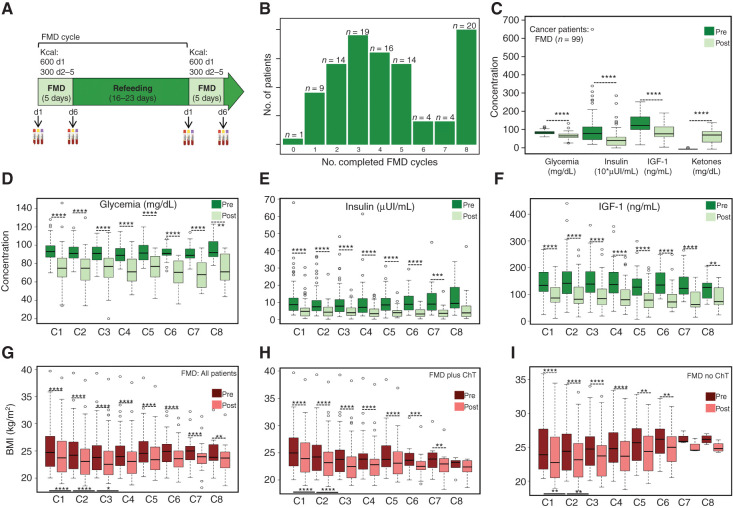
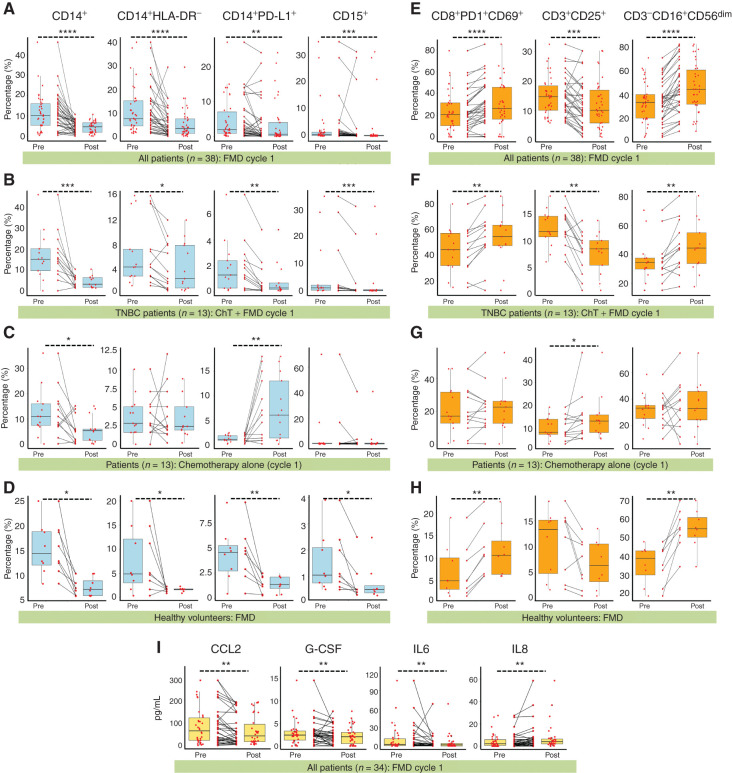
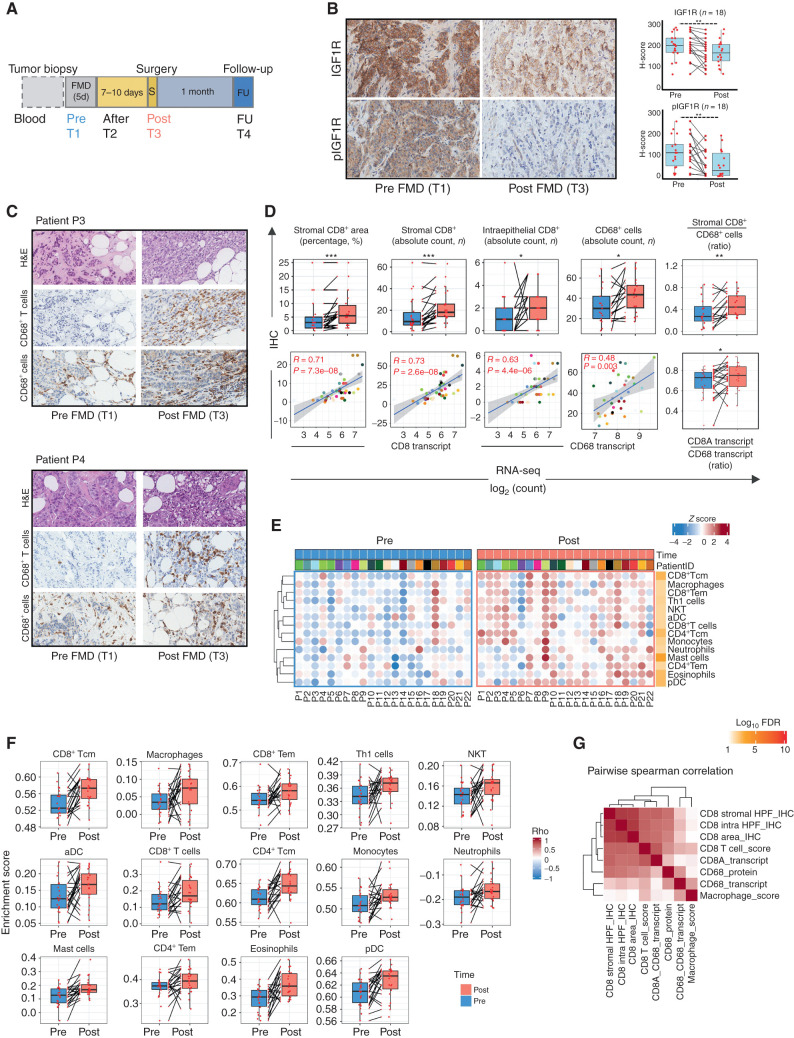
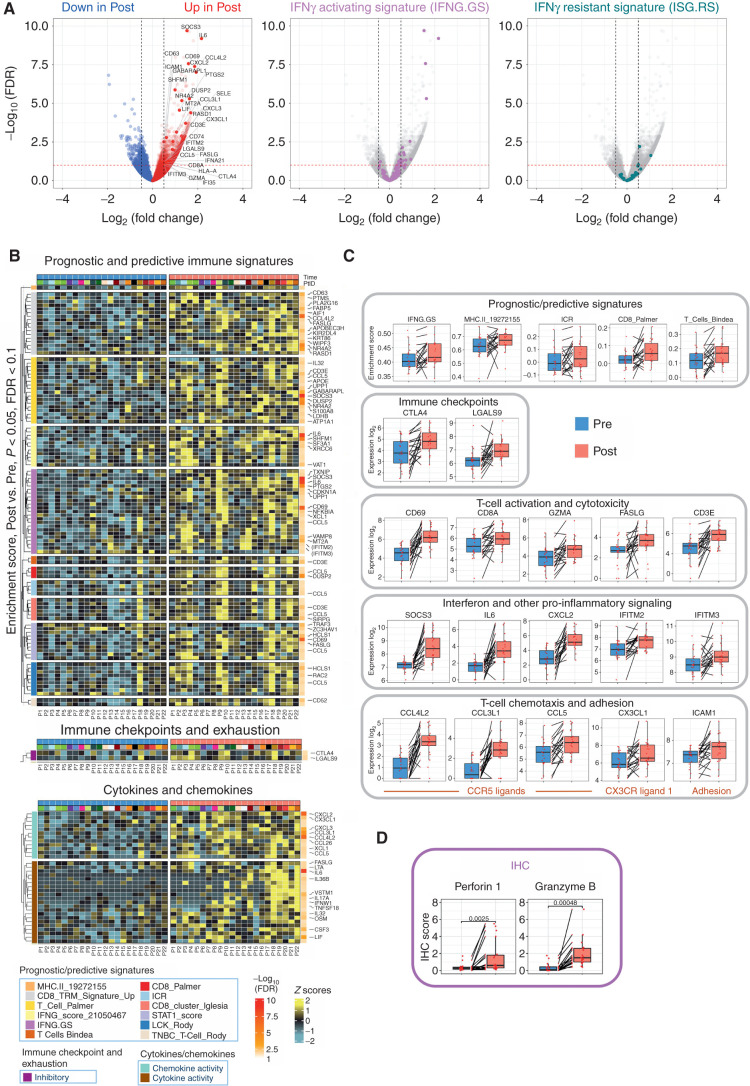
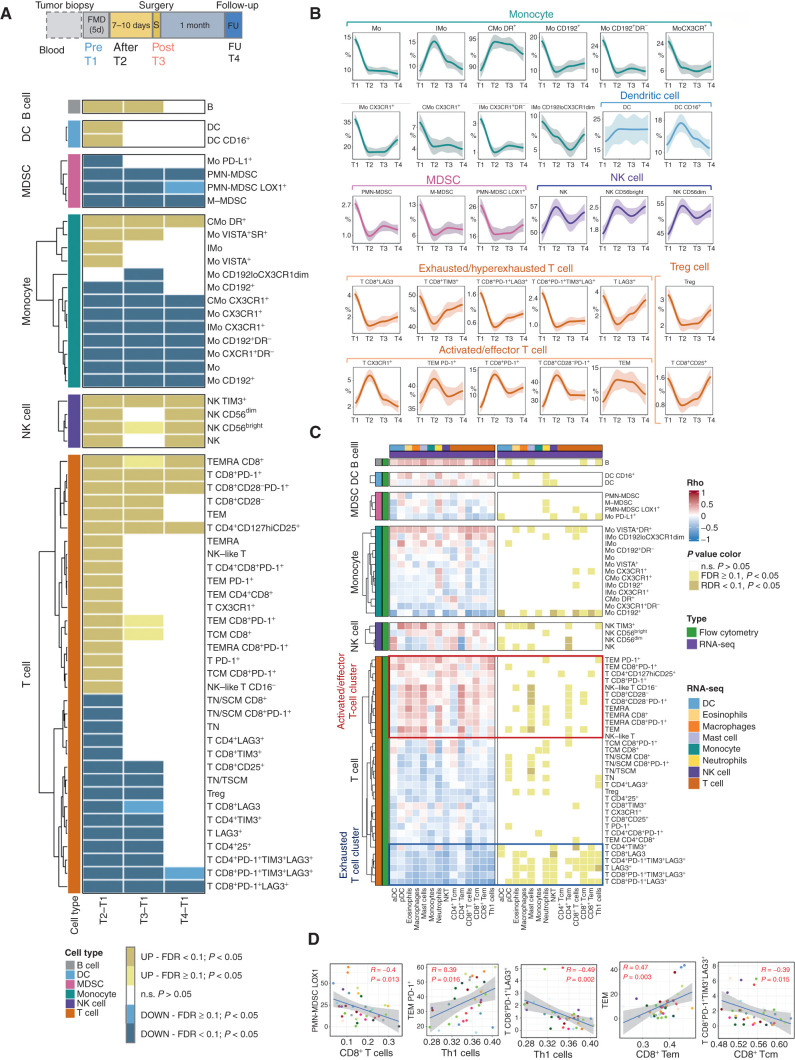
In tumor-bearing mice, cyclic fasting or fasting-mimicking diets (FMD) enhance the activity of antineoplastic treatments by modulating systemic metabolism and boosting antitumor immunity. Here we conducted a clinical trial to investigate the safety and biological effects of cyclic, five-day FMD in combination with standard antitumor therapies. In 101 patients, the FMD was safe, feasible, and resulted in a consistent decrease of blood glucose and growth factor concentration, thus recapitulating metabolic changes that mediate fasting/FMD anticancer effects in preclinical experiments. Integrated transcriptomic and deep-phenotyping analyses revealed that FMD profoundly reshapes anticancer immunity by inducing the contraction of peripheral blood immunosuppressive myeloid and regulatory T-cell compartments, paralleled by enhanced intratumor Th1/cytotoxic responses and an enrichment of IFNγ and other immune signatures associated with better clinical outcomes in patients with cancer. Our findings lay the foundations for phase II/III clinical trials aimed at investigating FMD antitumor efficacy in combination with standard antineoplastic treatments. Significance: Cyclic FMD is well tolerated and causes remarkable systemic metabolic changes in patients with different tumor types and treated with concomitant antitumor therapies. In addition, the FMD reshapes systemic and intratumor immunity, finally activating several antitumor immune programs. Phase II/III clinical trials are needed to investigate FMD antitumor activity/efficacy. This article is highlighted in the In This Issue feature, p. 1
Overview
The claims and statistics of this paper haven’t been checked yet.
Free: it reads the open-access text and checks the first 5 claims that cite a source we can check. Create a free account to check every claim.
Integrity signals
Registry
Cites
Statistics
Figures
Verification
Claims the paper makes
The claims and statistics of this paper haven’t been checked yet.
Free: it reads the open-access text and checks the first 5 claims that cite a source we can check. Create a free account to check every claim.
Claims other papers make about this one
Each is checked against this paper’s own text: does it say what the citing paper says it does?
The cited source says what the claim attributes to it.
In the citing paper
“In humans, a fasting-mimicking diet decreases immunosuppressive myeloid cells while increasing CD8+ T cells and NK cells.141”
From Melanoma and microbiota: Current understanding and future directions (2024) · cites this paper as [141]
In the citing paper
“Pharmacological treatments aimed at mimicking states of nutrient scarcity, as well as different dietary regimens based on continuous CR, intermittent fasting, ketogenesis (through the elimination of carbohydrates), or depletion of specific nutrients (such as methionine) are being actively explored in this regard with encouraging results.[238][239][240][241][242][243][244]”
From Meta-hallmarks of aging and cancer (2023) · cites this paper as [240]
Self-check
Percentages, sums and reported differences re-computed from the paper’s own numbers.
The self-check needs the paper’s full text.
Citations
Cites
Pembrolizumab plus chemotherapy in metastatic non–small-cell lung cancer
Gandhi, L., Rodríguez-Abreu, D., Gadgeel, S., Esteban, E., Felip, E., De Angelis, F., Domine, M., Clingan, P., Hochmair, M. J., Powell, S. F., et al. (2018) · New England Journal of Medicine · doi:10.1056/nejmoa1801005 · Cited by 6,607
Self-citationCharoentong, P., Finotello, F., Angelova, M., Mayer, C., Efremova, M., Rieder, D., Hackl, H., & Trajanoski, Z. (2017) · Cell Reports · doi:10.1016/j.celrep.2016.12.019 · Cited by 5,041
xCell: digitally portraying the tissue cellular heterogeneity landscape
Aran, D., Hu, Z., & Butte, A. J. (2017) · Genome Biology · doi:10.1186/s13059-017-1349-1 · Cited by 4,397 · cited 1×
“Finally, when macrophages were stratified into M1-like and M2-like subtypes (15), we detected an increase of M1-like macrophages after the FMD, while M2-like macrophages did not significantly change (Supplementary Fig.”
BackgroundRecommendations for myeloid-derived suppressor cell nomenclature and characterization standards
Bronte, V., Brandau, S., Chen, S.-H., Colombo, M. P., Frey, A. B., Greten, T. F., Mandruzzato, S., Murray, P. J., Ochoa, A., Ostrand-Rosenberg, S., et al. (2016) · Nature Communications · doi:10.1038/ncomms12150 · Cited by 2,751
Self-citationAlpelisib for PIK3CA -Mutated, Hormone Receptor–Positive Advanced Breast Cancer
André, F., Ciruelos, E., Rubovszky, G., Campone, M., Loibl, S., Rugo, H. S., Iwata, H., Conte, P., Mayer, I. A., Kaufman, B., et al. (2019) · New England Journal of Medicine · doi:10.1056/nejmoa1813904 · Cited by 2,622
Lag-3, Tim-3, and TIGIT: co-inhibitory receptors with specialized functions in immune regulation
Anderson, A. C., Joller, N., & Kuchroo, V. K. (2016) · Immunity · doi:10.1016/j.immuni.2016.05.001 · Cited by 2,096 · cited 1×
“S5H), which suggests the acquisition of an effector-memory phenotype (12).”
BackgroundLDHA-Associated Lactic Acid Production Blunts Tumor Immunosurveillance by T and NK Cells
Brand, A., Singer, K., Koehl, G. E., Kolitzus, M., Schoenhammer, G., Thiel, A., Matos, C., Bruss, C., Klobuch, S., Peter, K., et al. (2016) · Cell Metabolism · doi:10.1016/j.cmet.2016.08.011 · Cited by 2,039
DeNardo, D. G., Brennan, D. J., Rexhepaj, E., Ruffell, B., Shiao, S. L., Madden, S. F., Gallagher, W. M., Wadhwani, N., Keil, S. D., Junaid, S. A., et al. (2011) · Cancer Discovery · doi:10.1158/2159-8274.cd-10-0028 · Cited by 1,715 · cited 1×
“3C and D), the CD8/CD68 (protein) and CD8A/CD68 (gene transcript) ratios, which were previously associated with better prognosis in patients with cancer (13), were increased in post-FMD tumor specimens (Fig.”
BackgroundCancer cachexia: understanding the molecular basis
Argilés, J. M., Busquets, S., Stemmler, B., & López-Soriano, F. J. (2014) · Nature Reviews Cancer · doi:10.1038/nrc3829 · Cited by 1,517 · cited 2×
“Because IL6 plays an important role in the pathogenesis of cachexia (28), FMD-induced upregulation of the IL6/ SOCS3/LIF signature at the tumor level may raise concerns about a potential cachexia-inducing effect of the FMD.”
BackgroundPhosphoenolpyruvate Is a Metabolic Checkpoint of Anti-tumor T Cell Responses
Ho, P.-C., Bihuniak, J. D., Macintyre, A. N., Staron, M., Liu, X., Amezquita, R., Tsui, Y.-C., Cui, G., Micevic, G., Perales, J. C., et al. (2015) · Cell · doi:10.1016/j.cell.2015.08.012 · Cited by 1,462
Cited by
Turning cold tumors hot: from molecular mechanisms to clinical applications
Zhang, J., Huang, D., Saw, P. E., & Song, E. (2022) · Trends in Immunology · doi:10.1016/j.it.2022.04.010 · Cited by 534
Meta-hallmarks of aging and cancer
López-Otín, C., Pietrocola, F., Roiz-Valle, D., Galluzzi, L., & Kroemer, G. (2023) · Cell Metabolism · doi:10.1016/j.cmet.2022.11.001 · Cited by 529
Role of the gut microbiota in anticancer therapy: from molecular mechanisms to clinical applications
Zhao, L.-Y., Mei, J.-X., Yu, G., Lei, L., Zhang, W.-H., Liu, K., Chen, X.-L., Kołat, D., Yang, K., & Hu, J.-K. (2023) · Signal Transduction and Targeted Therapy · doi:10.1038/s41392-023-01406-7 · Cited by 359
“FMDs such as cyclic fasting, low-carbohydrate diets and calorie restriction could reshape anticancer immunity in cancer patients by enriching IFN-γ, enhancing intratumoral Th1/cytotoxic responses, and inducing the contraction of regulatory T-cell compartments, and stimulating other immune signatures related to favorab…”
BackgroundZhong, X., He, X., Wang, Y., Hu, Z., Huang, H., Zhao, S., Wei, P., & Li, D. (2022) · Journal of Hematology & Oncology · doi:10.1186/s13045-022-01358-5 · Cited by 329
Targeting the gut microbiota for cancer therapy
Fernandes, M. R., Aggarwal, P., Costa, R. G. F., Cole, A. M., & Trinchieri, G. (2022) · Nature Reviews Cancer · doi:10.1038/s41568-022-00513-x · Cited by 290
Gut Microbiota Modulation of Efficacy and Toxicity of Cancer Chemotherapy and Immunotherapy
Chrysostomou, D., Roberts, L. A., Marchesi, J. R., & Kinross, J. M. (2023) · Gastroenterology · doi:10.1053/j.gastro.2022.10.018 · Cited by 283
Metabolic reprogramming and therapeutic resistance in primary and metastatic breast cancer
Liu, S., Zhang, X., Wang, W., Li, X., Sun, X., Zhao, Y., Wang, Q., Li, Y., Hu, F., & Ren, H. (2024) · Molecular Cancer · doi:10.1186/s12943-024-02165-x · Cited by 246
Effects of dietary intervention on human diseases: molecular mechanisms and therapeutic potential
Xiao, Y.-L., Gong, Y., Qi, Y.-J., Shao, Z.-M., & Jiang, Y.-Z. (2024) · Signal Transduction and Targeted Therapy · doi:10.1038/s41392-024-01771-x · Cited by 202
“138 Ketogenic diet A KD comprises a high-fat component, very low carbohydrate levels, and low to moderate protein levels, as explained in a recent study.”
BackgroundAdvances in molecular pathology and therapy of non-small cell lung cancer
Huang, Q., Li, Y., Huang, Y., Wu, J., Bao, W., Xue, C., Li, X., Dong, S., Dong, Z., & Hu, S. (2025) · Signal Transduction and Targeted Therapy · doi:10.1038/s41392-025-02243-6 · Cited by 197
Modulating gut microbiome in cancer immunotherapy: Harnessing microbes to enhance treatment efficacy
Kang, X., Lau, H. C.-H., & Yu, J. Q. (2024) · Cell Reports Medicine · doi:10.1016/j.xcrm.2024.101478 · Cited by 197
Developing dietary interventions as therapy for cancer
Taylor, S. R., Falcone, J. N., Cantley, L. C., & Goncalves, M. D. (2022) · Nature reviews. Cancer · doi:10.1038/s41568-022-00485-y · Cited by 186
Dietary regulation in health and disease
Wu, Q., Gao, Z.-J., Yu, X., & Wang, P. (2022) · Signal Transduction and Targeted Therapy · doi:10.1038/s41392-022-01104-w · Cited by 176
“Mechanistically, FMD decreases the ratio of Tregs to immunosuppressive myeloid cells in peripheral areas and strengthens intratumoral cytotoxic effectors to profoundly remodel antitumor immunity.(344) Considering the nutrient proportions, a low-protein diet reduces tumour growth through expansion of antigen-presenting…”
BackgroundVasan, N., & Cantley, L. C. (2022) · Nature Reviews Clinical Oncology · doi:10.1038/s41571-022-00633-1 · Cited by 163
The obesity-breast cancer link: a multidisciplinary perspective
Devericks, E. N., Carson, M. S., McCullough, L. E., Coleman, M. F., & Hursting, S. D. (2022) · Cancer and Metastasis Reviews · doi:10.1007/s10555-022-10043-5 · Cited by 139
Immunometabolic rewiring in tumorigenesis and anti-tumor immunotherapy
Lian, X., Yang, K., Li, R., Li, M., Zuo, J., Zheng, B., Wang, W., Wang, P., & Zhou, S. (2022) · Molecular Cancer · doi:10.1186/s12943-021-01486-5 · Cited by 134
“Carbohydrate restriction induced low levels of GM-CSF, CCL2, and G-CSF, impairing migration of immunosuppressive monocytes [101, 102].”
BackgroundMethodInfluentialInternational consensus on fasting terminology
Koppold, D. A., Breinlinger, C., Hanslian, E., Kessler, C., Cramer, H., Khokhar, A. R., Peterson, C. M., Tinsley, G., Vernieri, C., Bloomer, R. J., et al. (2024) · Cell Metabolism · doi:10.1016/j.cmet.2024.06.013 · Cited by 107
“3,4 11–14 Recently, the impact of fasting on neurodegenerative diseases via neurogenesis, brain-derived neurotrophic factor (BDNF) signaling, and synaptic plasticity has become another focus of active research in the field.”
Self-citationDormancy, stemness, and therapy resistance: interconnected players in cancer evolution
Francescangeli, F., Angelis, M. L. D., Rossi, R., Cuccu, A., Giuliani, A., Maria, R. D., & Zeuner, A. (2023) · Cancer and Metastasis Reviews · doi:10.1007/s10555-023-10092-4 · Cited by 114
“A comprehensive strategy to reshape both systemic and intratumor immunity consists in fasting-mimicking diet (FMD), which has been reported to induce important metabolic changes and to activate antitumor immune programs in patients with different tumors and treated with different antitumor therapies [186].”
BackgroundPan, R.-Y., Zhang, J., Wang, J., Wang, Y., Li, Z., Liao, Y., Liao, Y., Zhang, C., Liu, Z., Song, L., et al. (2022) · Nature Aging · doi:10.1038/s43587-022-00311-y · Cited by 107
Melanoma and microbiota: Current understanding and future directions
Routy, B., Jackson, T., Mählmann, L., Baumgartner, C. K., Blaser, M., Byrd, A., Corvaia, N., Couts, K., Davar, D., Derosa, L., et al. (2024) · Cancer Cell · doi:10.1016/j.ccell.2023.12.003 · Cited by 89
Dietary interventions and precision nutrition in cancer therapy
Martínez-Garay, C., & Djouder, N. (2023) · Trends in Molecular Medicine · doi:10.1016/j.molmed.2023.04.004 · Cited by 85
Macrophages and T cells in metabolic disorder-associated cancers
Taranto, D., Kloosterman, D. J., & Akkari, L. (2024) · Nature reviews. Cancer · doi:10.1038/s41568-024-00743-1 · Cited by 87
“…on days 2–5), followed by a refeeding period of 16 or 23 days, a reduction in the number of systemic immunosuppressive PD-L1 + monocytes and CD15 + granulocytes was reported, together with an increased abundance of cytolytic natural killer (NK) cells and intratumoural, activated CD8 + T cells 186 .”
Fasting: From Physiology to Pathology
Tang, D., Tang, Q., Huang, W., Zhang, Y., Tian, Y., & Fu, X. (2023) · Advanced Science · doi:10.1002/advs.202204487 · Cited by 87
Short-term post-fast refeeding enhances intestinal stemness via polyamines
Imada, S., Khawaled, S., Shin, H., Meckelmann, S. W., Whittaker, C. A., Corrêa, R. O., Alquati, C., Lu, Y., Tie, G., Pradhan, D., et al. (2024) · Nature · doi:10.1038/s41586-024-07840-z · Cited by 84
Soliman, G. A. (2022) · Frontiers in Public Health · doi:10.3389/fpubh.2022.1017254 · Cited by 83
“Moreover, recent findings using IF, TRE and FMD suggest that dietary interventions may be utilized as adjuvants to cancer therapy (19, 90, 92, 95, 96).”
BackgroundLigorio, F., Fucà, G., Provenzano, L., Lobefaro, R., Zanenga, L., Vingiani, A., Belfiore, A., Lorenzoni, A., Alessi, A., Pruneri, G., et al. (2022) · European Journal of Cancer · doi:10.1016/j.ejca.2022.05.046 · Cited by 80
Self-citationFasting reshapes tissue-specific niches to improve NK cell-mediated anti-tumor immunity
Delconte, R. B., Owyong, M., Santosa, E. K., Srpan, K., Sheppard, S., McGuire, T. J., Abbasi, A. J., Díaz-Salazar, C., Chun, J. J. M., Rogatsky, I., et al. (2024) · Immunity · doi:10.1016/j.immuni.2024.05.021 · Cited by 81
Fasting and fasting mimicking diets in cancer prevention and therapy
Blaževitš, O., Tano, M. D., & Longo, V. D. (2023) · Trends in cancer · doi:10.1016/j.trecan.2022.12.006 · Cited by 77
Self-citationPlant-Based and Ketogenic Diets As Diverging Paths to Address Cancer: A Review
Shah, U. A., & Iyengar, N. M. (2022) · JAMA Oncology · doi:10.1001/jamaoncol.2022.1769 · Cited by 74
Greathouse, K. L., Wyatt, M., Johnson, A. J., Toy, E. P., Khan, J., Dunn, K., Clegg, D. J., & Reddy, S. (2022) · Neoplasia · doi:10.1016/j.neo.2022.100800 · Cited by 73
Cortellino, S., Quagliariello, V., Delfanti, G., Blaževitš, O., Chiodoni, C., Maurea, N., Mauro, A. D., Tatangelo, F., Pisati, F., Shmahala, A., et al. (2023) · Nature Communications · doi:10.1038/s41467-023-41066-3 · Cited by 73
Self-citationClinical research framework proposal for ketogenic metabolic therapy in glioblastoma
Duraj, T., Kalamian, M., Zuccoli, G., Maroon, J. C., D’Agostino, D. P., Scheck, A. C., Poff, A. M., Winter, S. F., Hu, J. L., Klement, R. J., et al. (2024) · BMC Medicine · doi:10.1186/s12916-024-03775-4 · Cited by 73
Engelhardt, M. M., Kortüm, K. M., Goldschmidt, H., & Merz, M. (2024) · Haematologica · doi:10.3324/haematol.2023.283058 · Cited by 70
“Therefore, the emerging concept of spatial genomic heterogeneity needs to be addressed, 84-87 especially when aiming to eradicate MRD and potentially cure patients with MM. 88 As personalized approaches continue to evolve, the ability to translate clinical trial findings into real-world practice is likely to improve.”
InfluentialNan, K., Zhong, Z., Yue, Y., Shen, Y., Zhang, H., Wang, Z., Zhuma, K., Yu, B., Fu, Y., Wang, L., et al. (2025) · Gut · doi:10.1136/gutjnl-2024-333020 · Cited by 69
“1 30 Consistent with the previous study results, we found that the FMD decreased tumour growth by reducing the tumour-infiltrating IgA + B cell number in CRC. 25 In addition, the metabolic or neuron-immune changes of fasting may cause some unexpected damage to physiological health.”
Alpelisib Monotherapy for PI3K-Altered, Pretreated Advanced Breast Cancer: A Phase II Study
Savas, P. S., Lo, L. L., Luen, S. J., Blackley, E. F., Callahan, J., Moodie, K., van Geelen, C. T., Ko, Y.-A., Weng, C.-F., Wein, L., et al. (2022) · Cancer Discovery · doi:10.1158/2159-8290.cd-21-1696 · Cited by 67
Common and divergent molecular mechanisms of fasting and ketogenic diets
Paoli, A., Tinsley, G. M., Mattson, M. P., Vivo, I. D., Dhawan, R., & Moro, T. (2023) · Trends in Endocrinology and Metabolism · doi:10.1016/j.tem.2023.10.001 · Cited by 67
Boufaied, N., Chetta, P., Hallal, T., Cacciatore, S., Lalli, D., Luthold, C., Homsy, K., Imada, E. L., Syamala, S., Photopoulos, C., et al. (2024) · Cancer Research · doi:10.1158/0008-5472.can-23-0519 · Cited by 62
“Because caloric restriction regimens may not be sustainable in the long run, intermittent fasting – mimicking diets are currentlyunderinvestigationwithpromisingresultsintheclinic(6,7).”
Mall, R., Bynigeri, R. R., Karki, R., Malireddi, R. K. S., Sharma, B. R., & Kanneganti, T. (2022) · NAR Cancer · doi:10.1093/narcan/zcac033 · Cited by 60
Self-citationCyclic fasting-mimicking diet in cancer treatment: Preclinical and clinical evidence
Vernieri, C., Ligorio, F., Tripathy, D., & Longo, V. D. (2024) · Cell Metabolism · doi:10.1016/j.cmet.2024.06.014 · Cited by 60
Self-citationThe gut dysbiosis-cancer axis: illuminating novel insights and implications for clinical practice
Asseri, A. H., Bakhsh, T., Abuzahrah, S. S., Ali, S., & Rather, I. A. (2023) · Frontiers in Pharmacology · doi:10.3389/fphar.2023.1208044 · Cited by 61
“, fasting-mimicking, ketogenic, and high-fiber diets) (Lam et al., 2021; Maeyama et al., 2021; Vernieri et al., 2022).”
Bodywide ecological interventions on cancer
Kroemer, G., McQuade, J. L., Mérad, M., André, F., & Zitvogel, L. (2023) · Nature Medicine · doi:10.1038/s41591-022-02193-4 · Cited by 57
Zhong, Z., Zhang, H., Nan, K., Zhong, J., Wu, Q., Lu, L., Yue, Y., Zhang, Z., Guo, M., Wang, Z., et al. (2023) · Cancer Research · doi:10.1158/0008-5472.can-23-0323 · Cited by 56
“Apart from controlling tumor cell growth by regulating metabolism of tumor cells, FMD is also regarded as a promising and powerful antitumor tool with its potential capability to remodel intratumor immune responses of colorectal cancer (2, 3, 8, 9).”
BackgroundMethodInfluentialToward personalized cancer management: Role of precision nutrition–diet interventions
Guo, H., Liu, Y., Wan, T., Da, S., Palanisamy, C. P., Geng, J., Pei, J., Özmen, S., & El‐Aty, A. M. A. (2024) · Journal of Functional Foods · doi:10.1016/j.jff.2024.106584 · Cited by 55
Remodelling of the intestinal ecosystem during caloric restriction and fasting
Ducarmon, Q. R., Grundler, F., Maho, Y. L., de Toledo, F. W., Zeller, G., Habold, C., & Mesnage, R. (2023) · Trends in Microbiology · doi:10.1016/j.tim.2023.02.009 · Cited by 55
Amino Acids in Cancer and Cachexia: An Integrated View
Ragni, M., Fornelli, C., Nisoli, E., & Penna, F. (2022) · Cancers · doi:10.3390/cancers14225691 · Cited by 45
“Consistently, Fasting Mimicking Diets (FMD) were proven effective in maximizing the chemotherapy response [120].”
BackgroundFasting-mimicking diet synergizes with ferroptosis against quiescent, chemotherapy-resistant cells
Liu, X., Peng, S., Tang, G., Xu, G., Xie, Y., Shen, D., Zhu, M., Huang, Y., Wang, X., Yu, H., et al. (2023) · EBioMedicine · doi:10.1016/j.ebiom.2023.104496 · Cited by 53
The cyclic metabolic switching theory of intermittent fasting
Mattson, M. P. (2025) · Nature Metabolism · doi:10.1038/s42255-025-01254-5 · Cited by 55
Lactate as Key Metabolite in Prostate Cancer Progression: What Are the Clinical Implications?
Chetta, P., Sriram, R., & Zadra, G. (2023) · Cancers · doi:10.3390/cancers15133473 · Cited by 51
“In PCa patients, this diet can improve the anti-tumor immune response [100].”
BackgroundKalam, F., James, D. L., Li, Y. R., Coleman, M. F., Kiesel, V. A., Feliciano, E. M. C., Hursting, S. D., Sears, D. D., & Kleckner, A. S. (2023) · JNCI Monographs · doi:10.1093/jncimonographs/lgad008 · Cited by 51
Influence of the gut microbiota on immune cell interactions and cancer treatment
Liu, C., Fu, L., Wang, Y., & Yang, W. (2024) · Journal of Translational Medicine · doi:10.1186/s12967-024-05709-3 · Cited by 50
“Researchers have tested various dietary strategies, such as high-fibre diets [85, 86], ketogenic diets [87], caloric restriction [88, 89], intermittent fasting, fasting-mim-icking diets [90], and fermented foods [84], in both mice and patients to improve cancer treatment [91].”
BackgroundUdumula, M. P., Singh, H., Rashid, F., Poisson, L., Tiwari, N., Dimitrova, I. K., Hijaz, M., Gogoi, R. P., Swenor, M., Munkarah, A. R., et al. (2023) · iScience · doi:10.1016/j.isci.2023.107839 · Cited by 49
“Recent cancer studies have eloquently demonstrated the ability of ketogenic and other restrictive diets to stimulate an efficient anti-tumor immune response.(11,19,20) None of these investigations, however, have been conducted in EOC.”
BackgroundLehmann, B. D., Abramson, V. G., Dees, E. C., Shah, P. D., Ballinger, T. J., Isaacs, C. J., Santa-Maria, C. A., An, H., Ericsson, P. I. G., Sanders, M. E., et al. (2023) · JAMA Oncology · doi:10.1001/jamaoncol.2023.5424 · Cited by 48
Su, X., Li, J., Xu, X., Ye, Y., Wang, C., Pang, G., Liu, W., Liu, A., Zhao, C., & Hao, X. (2024) · Journal of Translational Medicine · doi:10.1186/s12967-024-05552-6 · Cited by 49
“Caloric restriction intervention is safe to use in combination with standard treatment and leads to a decrease in blood glucose levels, growth factor concentrations, immunosuppressive cells in peripheral blood, and enhanced T cell infiltration in tumors [360].”
BackgroundBoesch, M., Horvath, L., Baty, F., Pircher, A., Wolf, D., Spahn, S., Straussman, R., Tilg, H., & Brutsche, M. H. (2022) · Journal for ImmunoTherapy of Cancer · doi:10.1136/jitc-2022-005401 · Cited by 38
Targeting of the Lipid Metabolism Impairs Resistance to BRAF Kinase Inhibitor in Melanoma
Vergani, E., Beretta, G. L., Aloisi, M., Costantino, M., Corno, C., Frigerio, S., Tinelli, S., Dugo, M., Accattatis, F. M., Granata, A., et al. (2022) · Frontiers in Cell and Developmental Biology · doi:10.3389/fcell.2022.927118 · Cited by 46
“Since systemic metabolism in cancer patients can be modulated by dietary interventions (Vernieri et al., 2022), this information may become exploitable in patients to improve the clinical efficacy of treatment with BRAFi.”
BackgroundDiet, nutrient supply, and tumor immune responses
McIntyre, C., Temesgen, A., & Lynch, L. (2023) · Trends in cancer · doi:10.1016/j.trecan.2023.06.003 · Cited by 47
Metabolites and Immune Response in Tumor Microenvironments
Cortellino, S., & Longo, V. D. (2023) · Cancers · doi:10.3390/cancers15153898 · Cited by 45
“More recently, fasting/FMD cycles were shown to promote the immune cell-dependent attack of different types of cancer cells (melanoma, breast, gastric cancers) [256,257,269,272,273].”
BackgroundSelf-citationFasting-mimicking diet remodels gut microbiota and suppresses colorectal cancer progression
Luo, M., Wang, Q., Sun, Y., Jiang, Y., Wang, Q., Gu, Y., Hu, Z., Chen, Q., Xu, J., Chen, S., et al. (2024) · npj Biofilms and Microbiomes · doi:10.1038/s41522-024-00520-w · Cited by 43
“Clinical researchhasalsocon fi rmed this fi nding,a study involving 101patientswith different cancer types who received FMD treatment, showed that FMD reshapes systemic and tumor-associated anti-tumor immune responses including recruiting activated CD8 + T cells 8 .”
BackgroundHealth Benefits of Intermittent Fasting
Reddy, B. L., Reddy, V. S., & Saier, M. H. (2024) · Microbial Physiology · doi:10.1159/000540068 · Cited by 42
“Based on studies in animal models and human controlled trials, there is no denying that fasting can alter the gut microbiome, autophagy, and mitochondrial functions [8 – 14].”
Greathouse, K. L., & Choudhury, A. (2025) · Cell Host & Microbe · doi:10.1016/j.chom.2025.05.011 · Cited by 43
Abdulla, A., Sadida, H. Q., Jerobin, J., Elfaki, I., Mir, R., Mirza, S., Singh, M. K., Macha, M. A., Shahab Uddin, M. S., Fakhro, K. A., et al. (2024) · Journal of the National Cancer Center · doi:10.1016/j.jncc.2024.11.001 · Cited by 40
“Notably, this approach also triggered a substantial increase in the infiltration of CD8 + T cells and macrophages into the tumor, enhancing the immune system’s ability to combat the disease.”
Science-Driven Nutritional Interventions for the Prevention and Treatment of Cancer
Montégut, L., de Cabo, R., Zitvogel, L., & Kroemer, G. (2022) · Cancer Discovery · doi:10.1158/2159-8290.cd-22-0504 · Cited by 38
Dietary and microbiome evidence in multiple myeloma and other plasma cell disorders
Shah, U. A., Parikh, R., Castro, F., Bellone, M., & Lesokhin, A. M. (2023) · Leukemia · doi:10.1038/s41375-023-01874-4 · Cited by 38
Fatty acids homeostasis during fasting predicts protection from chemotherapy toxicity
Barradas, M., Plaza, A., Colmenarejo, G., Lázaro, I., Costa‐Machado, L. F., Martín‐Hernández, R., Micó, V., López-Aceituno, J. L., Herránz, J., Pantoja, C., et al. (2022) · Nature Communications · doi:10.1038/s41467-022-33352-3 · Cited by 38
Diet-microbiome interactions in cancer
Abdeen, S. K., Mastandrea, I., Stinchcombe, N., Puschhof, J., & Elinav, E. (2025) · Cancer Cell · doi:10.1016/j.ccell.2025.03.013 · Cited by 36
Ligorio, F., Vingiani, A., Torelli, T., Sposetti, C., Drufuca, L., Iannelli, F., Zanenga, L., Depretto, C., Folli, S., Scaperrotta, G. P., et al. (2024) · Cell Metabolism · doi:10.1016/j.cmet.2024.11.004 · Cited by 37
Self-citationGut–lung axis: role of the gut microbiota in non-small cell lung cancer immunotherapy
Zhang, H., & Xu, Z. (2023) · Frontiers in Oncology · doi:10.3389/fonc.2023.1257515 · Cited by 34
Overcoming immunosuppression in cancer: how ketogenic diets boost immune checkpoint blockade
Stefan, V. E., Weber, D. D., Lang, R., & Kofler, B. (2024) · Cancer Immunology Immunotherapy · doi:10.1007/s00262-024-03867-3 · Cited by 32
Videja, M., Sevostjanovs, E., Upmale-Engela, S., Liepinsh, E., Konrāde, I., & Dambrova, M. (2022) · Nutrients · doi:10.3390/nu14051093 · Cited by 33
“FMD, on the other hand, due to its cyclic nature, is associated with high compliance [53], which we also observed in our study.”
ResultShort-Term Fasting Synergizes with Solid Cancer Therapy by Boosting Antitumor Immunity
de Gruil, N., Pijl, H., van der Burg, S. H., & Kroep, J. R. (2022) · Cancers · doi:10.3390/cancers14061390 · Cited by 32
“, 2022, University of Milan, Italy (NCT03340935, NCT03454282) [11] n = 101, with different malignancies 5-day FMD every 3–4 weeks Reduction peripheral MDSCs (n = 38); boost CD4 and CD8 T cell peripheral; increased NK cytotoxic activity; intratumoral: ↑CD8 TIL, ↑DCs, ↑NKs; systemic increased IFNγ”
BackgroundYin, Y., Yan, Y., Fan, B., Huang, W., Zhang, J., Hu, H., Li, X., Xiong, D., Chou, S., Xiao, Y., et al. (2023) · Research · doi:10.34133/research.0098 · Cited by 32
Diet and Exercise in Cancer Metabolism
Locasale, J. W. (2022) · Cancer Discovery · doi:10.1158/2159-8290.cd-22-0096 · Cited by 31
“In some settings such as a cyclic fasting regimen during the course of standard cancer therapy, there are substantial effects on tumor metabolism and even antitumor immunity in patients (13).”
BackgroundResultThe role of microbiota in the development and treatment of gastric cancer
Wang, Y., Han, W., Wang, N., Han, M., Ban, M., Dai, J., Dong, Y., Sun, T., & Xu, J. (2023) · Frontiers in Oncology · doi:10.3389/fonc.2023.1224669 · Cited by 30
Nanoparticles for inducing Gaucher disease-like damage in cancer cells
Yue, C., Lu, W., Fan, S., Huang, Z., Yang, J., Dong, H. Y., Zhang, X., Shang, Y., Lai, W., Li, D., et al. (2024) · Nature Nanotechnology · doi:10.1038/s41565-024-01668-4 · Cited by 29
“For several decades, nutrient starvation has been considered as a crucial therapeutic strategy for combating cancers, for example, by lowering circulating glucose and lipid, or shutting down nutrient supply through anti-angiogenesis 4–6 .”
Emerging insights into the impact of systemic metabolic changes on tumor-immune interactions
Cote, A. L., Munger, C. J., & Ringel, A. E. (2025) · Cell Reports · doi:10.1016/j.celrep.2025.115234 · Cited by 30
Cheng, K., Cai, N., Yang, X., Li, D., Zhu, J., Yang, H., Liu, S., Deng, N., Liang, H., Zhao, J., et al. (2025) · Hepatology · doi:10.1097/hep.0000000000001244 · Cited by 29
“[8] Most studies on dietary regulation in cancer have focused on lymphocytes.”
Metabolic adaptations in cancer progression
Peng‐Winkler, Y., & Fendt, S. (2025) · Physiological Reviews · doi:10.1152/physrev.00037.2024 · Cited by 30
Tini, S., Baima, J., Pigni, S., Antoniotti, V., Caputo, M., Palma, E. D., Cerbone, L., Grosso, F., Vecchia, M. L., Bona, E., et al. (2025) · Nutrients · doi:10.3390/nu17172898 · Cited by 30
“…with increased levels of the SCFA propionate in stool, and higher frequency of activated T cells in the tumors, suggesting that gut microbial-mediated fermentation of fiber and formation of SCFA may contribute to the effects of fiber on antitumor immunity, thereby improving cancer outcomes [209].”
Liver Metastatic Breast Cancer: Epidemiology, Dietary Interventions, and Related Metabolism
Zuo, Q., Park, N. H., Lee, J. K., & Madak‐Erdogan, Z. (2022) · Nutrients · doi:10.3390/nu14122376 · Cited by 29
“The FMD favorably modulates systemic and intratumor immunity and activates several antitumor immune programs by significantly reducing plasma glucose concentration, serum insulin, and serum IGF1 [123].”
BackgroundMicrobiota–Gastric Cancer Interactions and the Potential Influence of Nutritional Therapies
Raoul, P. C., Maccauro, V., Cintoni, M., Scarpellini, E., Ianiro, G., Gasbarrini, A., Mele, M. C., & Rinninella, E. (2024) · International Journal of Molecular Sciences · doi:10.3390/ijms25031679 · Cited by 29
“However, the role of such dietary habits with respect to gastric and intestinal microbiota composition still needs to be elucidated [97,98].”
BackgroundThe Killer’s Web: Interconnection between Inflammation, Epigenetics and Nutrition in Cancer
Mecca, M., Picerno, S., & Cortellino, S. (2024) · International Journal of Molecular Sciences · doi:10.3390/ijms25052750 · Cited by 31
“…response against various cancer cell types by increasing the percentage of CD8 + cytotoxic T cells, memory T cells, and stem-like memory T cells, while reducing IGF1 levels and repressing Tregs by modulating IGF1 levels, epigenetic re-programming, and the production of ketone bodies [196,197,199].”
BackgroundSelf-citationGrowth Hormone Action as a Target in Cancer: Significance, Mechanisms, and Possible Therapies
Basu, R., Boguszewski, C. L., & Kopchick, J. J. (2024) · Endocrine Reviews · doi:10.1210/endrev/bnae030 · Cited by 28
Regulation of feeding and energy homeostasis by clock-mediated Gart in Drosophila
He, L., Wu, B., Shi, J., Du, J., & Zhao, Z. (2023) · Cell Reports · doi:10.1016/j.celrep.2023.112912 · Cited by 27
Dietary restriction in aging and longevity
Schmauck‐Medina, T., Lautrup, S., Francesco, A. D., Mitchell, S. J., Clemmensen, C., Partridge, L., Roth, G. S., Anderson, R. M., Mattison, J. A., de Cabo, R., et al. (2026) · Nature Aging · doi:10.1038/s43587-026-01091-5 · Cited by 28
Boosting Antitumor Immunity with an Expanded Neoepitope Landscape
Nagel, R., Pataskar, A., Champagne, J., & Agami, R. (2022) · Cancer Research · doi:10.1158/0008-5472.can-22-1525 · Cited by 26
“Encouragingly, a fasting-mimicking diet was shown to enhance antitumor immunity (179), which opens up new possibilities for diet-induced expression of neoepitopes.”
BackgroundMetabolic switch in cancer – Survival of the fittest
Raskov, H., Gaggar, S., Tajik, A., Orhan, A., & Gögenür, I. (2022) · European Journal of Cancer · doi:10.1016/j.ejca.2022.11.025 · Cited by 26
Duan, S., Wu, M., Zhang, Z., & Chang, S. (2023) · Journal of Translational Medicine · doi:10.1186/s12967-023-04617-2 · Cited by 26
“Also, caloric restriction promotes antineoplastic immune responses and suppresses tumor cell proliferation [234, 235].”
BackgroundDietary approaches for exploiting metabolic vulnerabilities in cancer
Menyhárt, O., & Győrffy, B. (2023) · Biochimica et Biophysica Acta (BBA) - Reviews on Cancer · doi:10.1016/j.bbcan.2023.189062 · Cited by 26
Cesano, A., Augustin, R. C., Barrea, L., Bedognetti, D., Bruno, T. C., Carturan, A., Hammer, C., Ho, W. S., Kather, J. N., Kirchhoff, T., et al. (2025) · Journal for ImmunoTherapy of Cancer · doi:10.1136/jitc-2024-008876 · Cited by 25
“122 Obesity Obesity is considered an established risk factor for 13 different malignancies and has also been associated with increased cancer mortality.”
Self-citationQuan, Y., Shao, H., Wang, N., Gao, Z., & Jin, M. (2025) · Materials Today Bio · doi:10.1016/j.mtbio.2025.101711 · Cited by 25
“This metabolic-epigenetic crosstalk mirrors host-modulation therapies (e.g., SIRT1 activators like resveratrol) and fasting-mimicking diets (FMDs), where ketogenesis epigenetically primes anti-inflammatory pathways [23,31,32,51].”
Ligorio, F., Lobefaro, R., Fucà, G., Provenzano, L., Zanenga, L., Nasca, V., Sposetti, C., Salvadori, G., Ficchì, A., Franza, A., et al. (2023) · International Journal of Cancer · doi:10.1002/ijc.34701 · Cited by 26
“12 Based on these preclinical and clinical data, the observed OS advantage in aTNBC patients receiving chemotherapy plus FMD could result from FMD-induced boost of systemic antitumor immunity which, in turn, may produce long-lasting activation of the immune system and long-term tumor control also…”
BackgroundResultInfluentialSelf-citationChen, L., Li, B., Zu, M., Reis, R. L., Kundu, S. C., & Xiao, B. (2025) · Seminars in Cancer Biology · doi:10.1016/j.semcancer.2025.06.012 · Cited by 24
Targeting mTOR in the Context of Diet and Whole-body Metabolism
Koundouros, N., & Blenis, J. (2022) · Endocrinology · doi:10.1210/endocr/bqac041 · Cited by 26
The influence of extended fasting on thyroid hormone: local and differentiated regulatory mechanisms
Sui, X., Jiang, S., Zhang, H., Wu, F., Wang, H., Yang, C., Guo, Y., Wang, L., Li, Y., & Dai, Z. (2024) · Frontiers in Endocrinology · doi:10.3389/fendo.2024.1443051 · Cited by 24
Short-term fasting and fasting mimicking diets combined with chemotherapy: a narrative review
Kikomeko, J., Schutte, T., van Velzen, M. J. M., Seefat, R. L., & van Laarhoven, H. W. M. (2023) · Therapeutic Advances in Medical Oncology · doi:10.1177/17588359231161418 · Cited by 23
Li, T., Yue, Y., Ma, Y., Zhong, Z., Guo, M., Zhang, J., Wang, Z., & Miao, C. (2023) · Cell Communication and Signaling · doi:10.1186/s12964-023-01258-2 · Cited by 22
“The safety of FMD has also been evaluated in other models, showing no significant adverse effects, thus suggesting its potential clinical utility in the treatment of inflammatory pain [14, 45].”
BackgroundWang, R., Lv, X., Xu, W., Li, X., Tang, X., Huang, H., Yang, M., Ma, S., Wang, N., & Niu, Y. (2024) · Nutrition Reviews · doi:10.1093/nutrit/nuae003 · Cited by 24
Eating away cancer: the potential of diet and the microbiome for shaping immunotherapy outcome
Nguyen, N.-T. A., Jiang, Y., & McQuade, J. L. (2024) · Frontiers in Immunology · doi:10.3389/fimmu.2024.1409414 · Cited by 23
Rethinking corticosteroids use in oncology
Martinez, P., & Sabatier, J. (2025) · Frontiers in Pharmacology · doi:10.3389/fphar.2025.1551111 · Cited by 21
“A 5-day cyclic fasting-mimicking diet, when combined with standard cancer therapies, has been demonstrated to enhance systemic metabolism and bolster antitumor immunity (Vernieri et al., 2022).”
Kim, A. J., Hong, D. S., & George, G. C. (2022) · Cancer Treatment Reviews · doi:10.1016/j.ctrv.2022.102408 · Cited by 21
IFN-I signaling in cancer: the connection with dysregulated Insulin/IGF axis
Vella, V., Francesco, E. M. D., Bonavita, E., Lappano, R., & Belfiore, A. (2022) · Trends in Endocrinology and Metabolism · doi:10.1016/j.tem.2022.04.009 · Cited by 20
Self-citation
Metadata
- Authors
- Vernieri, C., Fucà, G., Ligorio, F., Huber, V., Vingiani, A., Iannelli, F., Raimondi, A., Rinchai, D., Frigè, G., Belfiore, A., Lalli, L., Chiodoni, C., Cancila, V., Zanardi, F., Ajazi, A., Cortellino, S., Vallacchi, V., Squarcina, P., Cova, A., Pesce, S., Frati, P., Mall, R., Corsetto, P. A., Rizzo, A. M., Ferraris, C., Folli, S., Garassino, M. C., Capri, G., Bianchi, G., Colombo, M. P., Minucci, S., Foiani, M., Longo, V. D., Apolone, G., Torri, V., Pruneri, G., Bedognetti, D., Rivoltini, L., & de Braud, F.
- Affiliations
- IFOM (IT)
- Fondazione IRCCS Istituto Nazionale dei Tumori (IT)
- University of Milan (IT)
- Sidra Medical and Research Center (QA)
- European Institute of Oncology (IT)
- University of Palermo (IT)
- Hamad bin Khalifa University (QA)
- University of Southern California (US)
- Mario Negri Institute for Pharmacological Research (IT)
- 1Medical Oncology Department, Fondazione IRCCS Istituto Nazionale dei Tumori, Milan, Italy.
- Corresponding author
- Vernieri, Claudio
- Rivoltini, Licia
- ORCID
- Vernieri, Claudio
- Fucà, Giovanni
- Ligorio, Francesca
- Huber, Veronica
- Vingiani, Andrea
- Rinchai, Darawan
- Frigè, Gianmaria
- Belfiore, Antonino
- Lalli, Luca
- Chiodoni, Claudia
- Cancila, Valeria
- Zanardi, Federica
- Ajazi, Arta
- Cortellino, Salvatore
- Vallacchi, Viviana
- Mall, Raghvendra
- Ferraris, Cristina
- Garassino, Marina Chiara
- Colombo, Mario Paolo
- Minucci, Saverio
- Foiani, Marco
- Longo, Valter Daniel
- Apolone, Giovanni
- Venue
- Cancer Discovery
- Published
- 2021-11-17
- Volume
- 12
- Issue
- 1
- Pages
- 90-107
- ISSN
- 2159-8274 (ISSN-L)
- 2159-8290
- PMC
- PMC9762338
- OpenAlex
- W3212242980
- Cited by
- 319
- References
- 50
- Citations by year
- 2026: 43 · 2025: 73 · 2024: 82 · 2023: 78 · 2022: 42 · 2021: 1
- FWCI
- 31.84
- Type
- journal article
- Language
- en
- Open access
- hybrid
- doi.org
- Licence
- Locations
- Cancer Discovery (publishedVersion, cc-by-nc-nd)
- PubMed Central (publishedVersion, cc-by-nc-nd)
- PubMed (publishedVersion)
- Archivio Istituzionale della Ricerca (Universita Degli Studi Di Milano) (submittedVersion, other-oa)
- Figshare (submittedVersion, cc-by-nc-nd)
- IRIS UniPA (University of Palermo) (submittedVersion, other-oa)
- Funders
- Associazione Italiana per la Ricerca sul Cancro (MFAG-2019 n. 22977, IG-2017 n.20752)
- Agenzia Italiana del Farmaco, Ministero della Salute (TRANSCAN-2, code n. TRS-2016-00000393)
- Topics
- Health Sciences › Medicine › Physiology (medical) › Dietary Effects on Health
- Health Sciences › Medicine › Oncology › Cancer Immunotherapy and Biomarkers
- Health Sciences › Medicine › Surgery › Enhanced Recovery After Surgery
- Keywords
- fasting-mimicking diet, antitumor immunity, cancer metabolism, regulatory T cells, myeloid cells, Th1/Treg balance, interferon-gamma, immune checkpoint blockade, blood glucose, safety and tolerability, transcriptomics, deep phenotyping
- MeSH terms
- Antineoplastic Agents, Breast Neoplasms, Fasting, Female, Humans, Male, Middle Aged, Prospective Studies, Colorectal Neoplasms, Treatment Outcome
About these checks
Registry, retraction, Cites and statistics results are computed, not judged, with one exception: a printed reference that no index lists is read once by a model before it counts as a citation error. Claims are extracted by a model and kept only when their quote appears verbatim in the text; each cited source is then checked, with a model’s help, for whether it says what the claim relies on. Those verdicts can be wrong — read the claim’s quote and the cited source before relying on one.
Statistics and arithmetic are recomputed, not judged.
Confidence bands are shown only for fields calibrated on our annotated test set. None is calibrated yet, so no band is shown.
What counts as a claim ›How we measure confidence ›How we check this ›
Are you an author, or do you see a problem with this page? Request a review
Data sources
Bibliographic data: Semantic Scholar, OpenAlex, Crossref.
Contains information from the Semantic Scholar Academic Graph Datasets, made available under the ODC Attribution License (ODC-BY 1.0).
Semantic Scholar’s data is described in: Kinney, R., et al. (2023). The Semantic Scholar Open Data Platform. arXiv:2301.10140.
