

A Natural Polyphenol Exerts Antitumor Activity and Circumvents Anti–PD-1 Resistance through Effects on the Gut Microbiota
Open accessPublished version of a preprint
The DOI matches its Crossref record; 36 of the 36 references it cites were found in a registry or an index.
Abstract
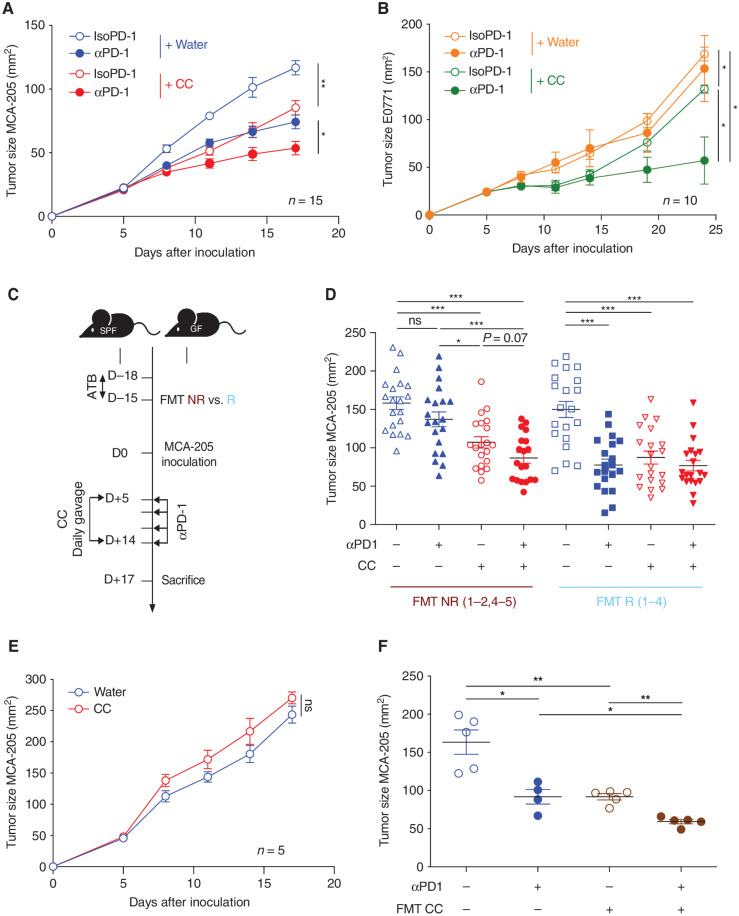
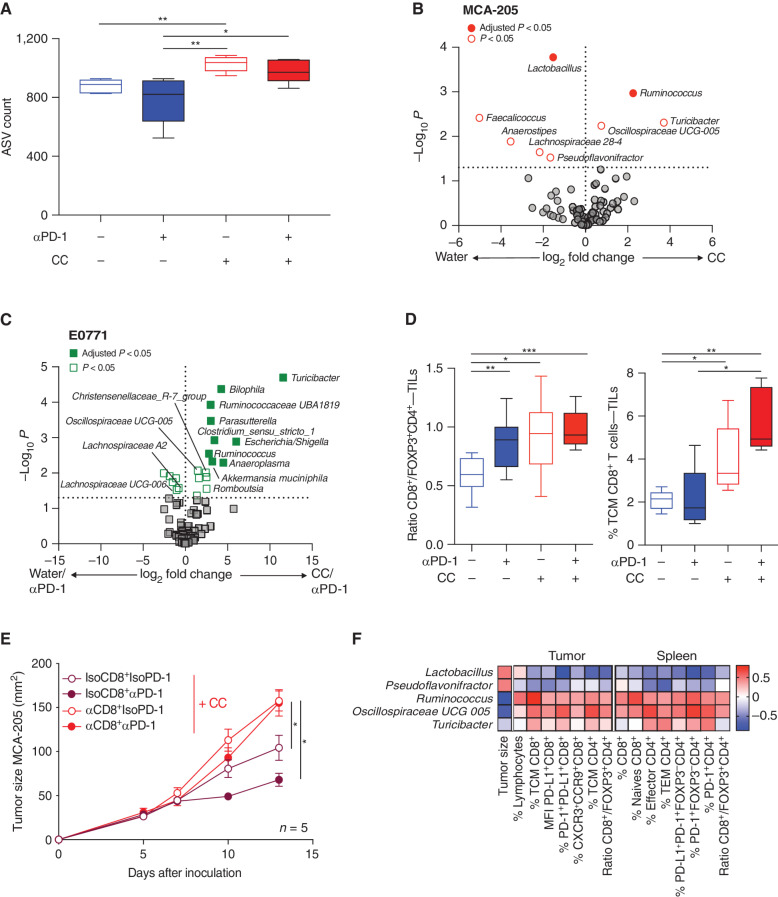
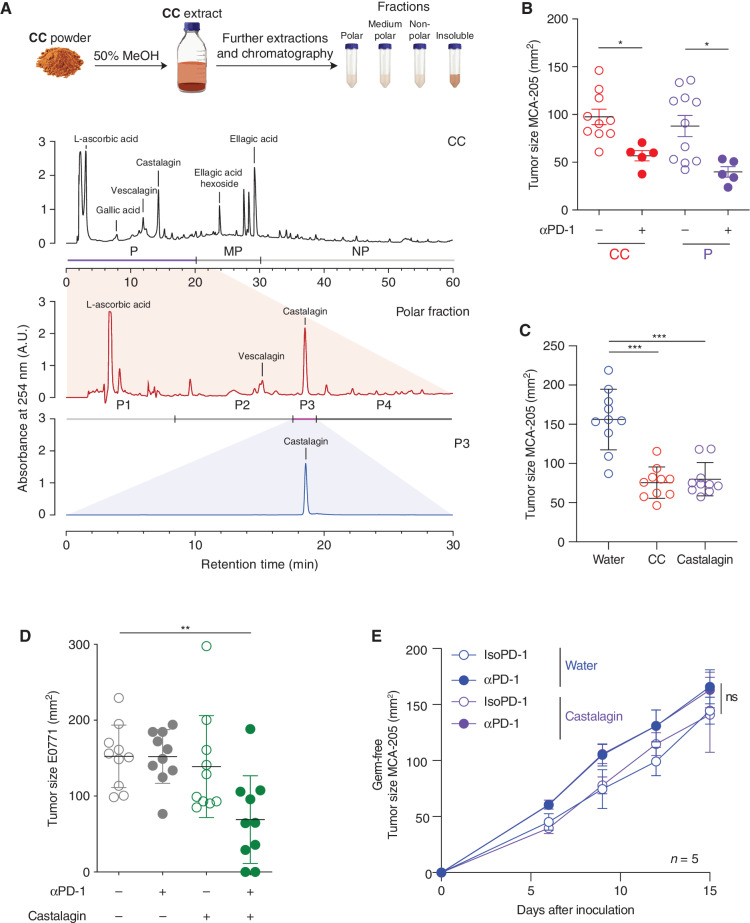
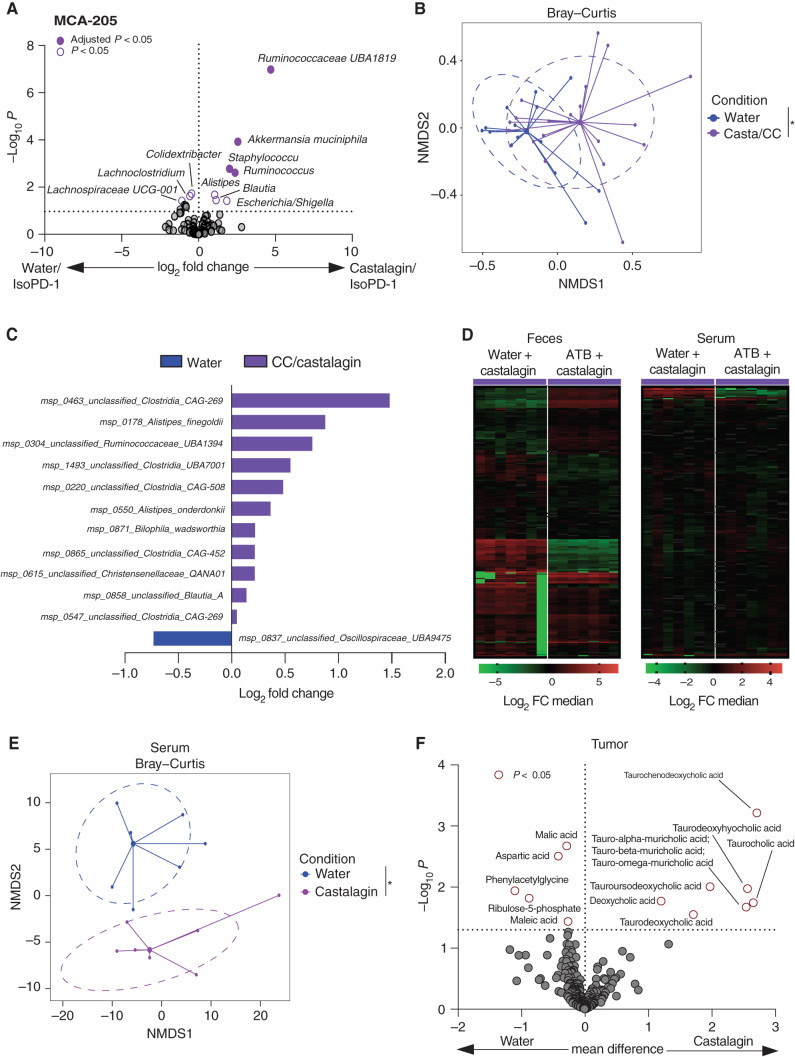
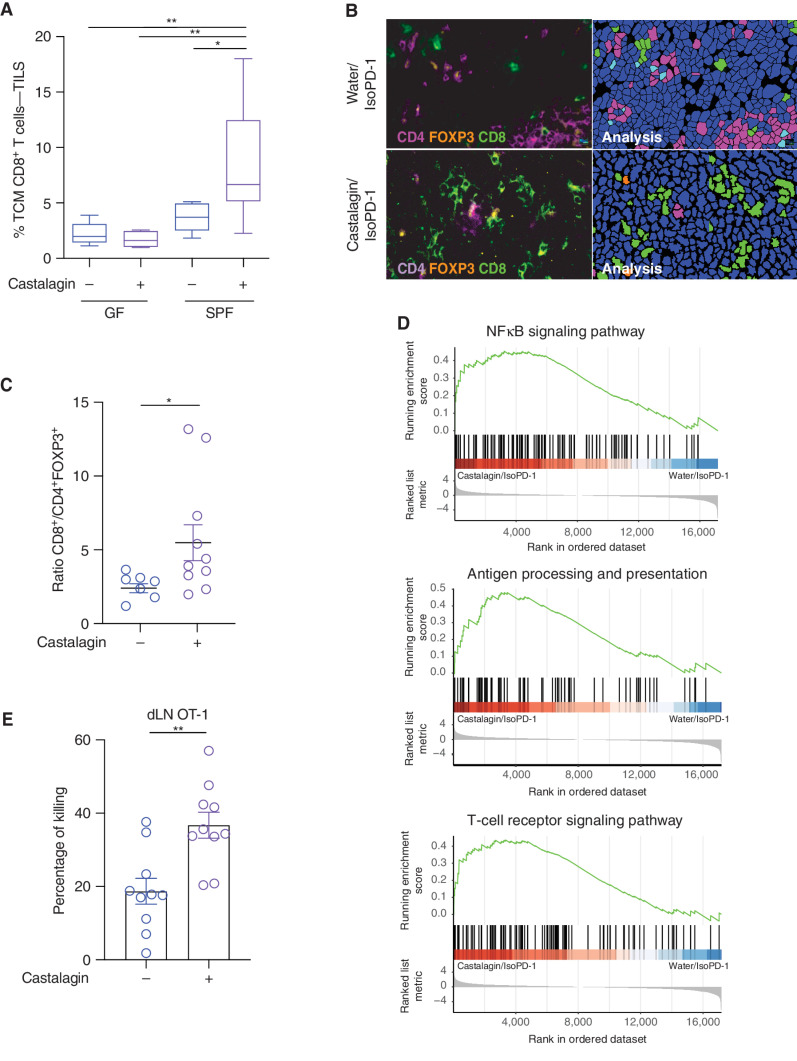
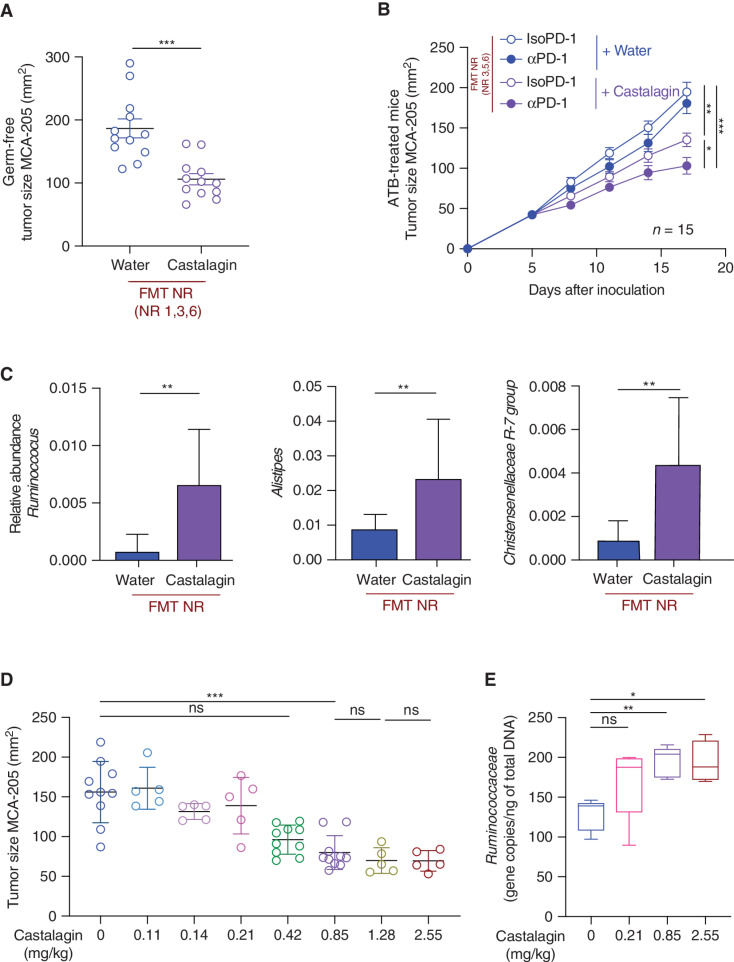
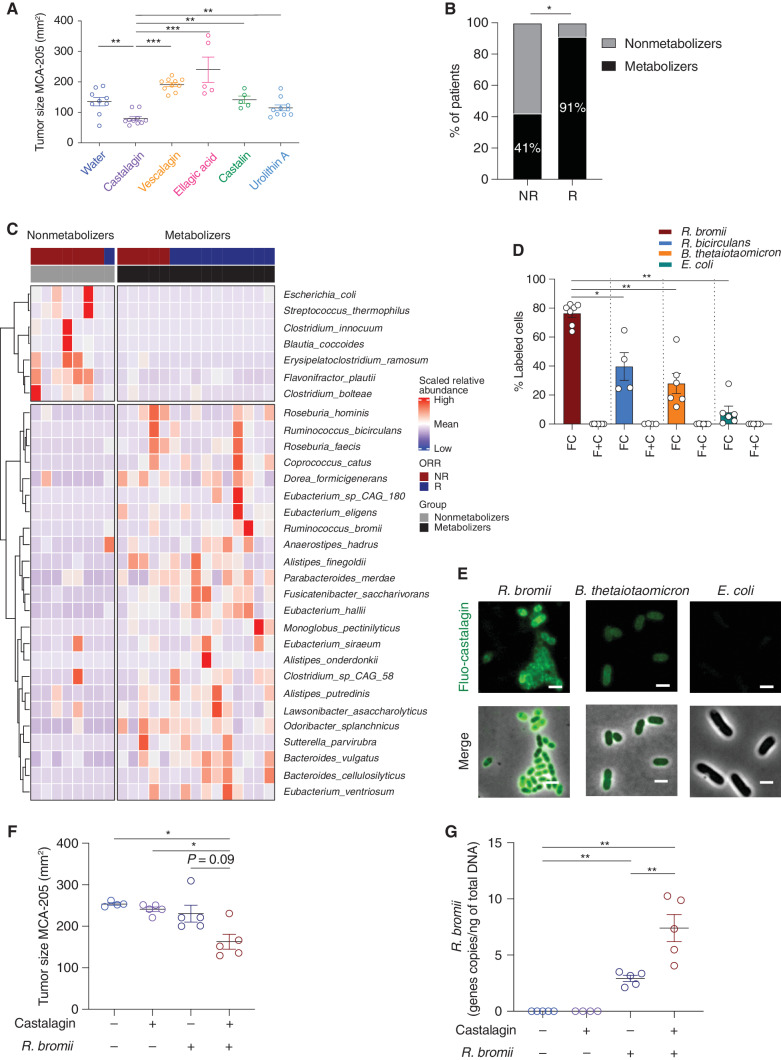
Several approaches to manipulate the gut microbiome for improving the activity of cancer immune-checkpoint inhibitors (ICI) are currently under evaluation. Here, we show that oral supplementation with the polyphenol-rich berry camu-camu (CC; Myrciaria dubia) in mice shifted gut microbial composition, which translated into antitumor activity and a stronger anti–PD-1 response. We identified castalagin, an ellagitannin, as the active compound in CC. Oral administration of castalagin enriched for bacteria associated with efficient immunotherapeutic responses (Ruminococcaceae and Alistipes) and improved the CD8+/FOXP3+CD4+ ratio within the tumor microenvironment. Moreover, castalagin induced metabolic changes, resulting in an increase in taurine-conjugated bile acids. Oral supplementation of castalagin following fecal microbiota transplantation from ICI-refractory patients into mice supported anti–PD-1 activity. Finally, we found that castalagin binds to Ruminococcus bromii and promoted an anticancer response. Altogether, our results identify castalagin as a polyphenol that acts as a prebiotic to circumvent anti–PD-1 resistance. Significance: The polyphenol castalagin isolated from a berry has an antitumor effect through direct interactions with commensal bacteria, thus reprogramming the tumor microenvironment. In addition, in preclinical ICI-resistant models, castalagin reestablishes the efficacy of anti–PD-1. Together, these results provide a strong biological rationale to test castalagin as part of a clinical trial. This article is highlighted in the In This Issue feature, p. 873
Overview
The claims and statistics of this paper haven’t been checked yet.
Free: it reads the open-access text and checks the first 5 claims that cite a source we can check. Create a free account to check every claim.
Integrity signals
Registry
Cites
Statistics
Figures
Verification
Claims the paper makes
The claims and statistics of this paper haven’t been checked yet.
Free: it reads the open-access text and checks the first 5 claims that cite a source we can check. Create a free account to check every claim.
Claims other papers make about this one
Each is checked against this paper’s own text: does it say what the citing paper says it does?
The source backs part of the claim, not all of it — or backs it for a different population, condition or comparison.
In the citing paper
“SIG2 contained Lachnospiraceae (species from the genus Blautia, Roseburia, Dorea, and Eubacterium) and Oscillospiraceae family members (Faecalibacterium prausnitzii, Ruminococcus bicirculans, and R. lactaris), which were previously associated with general health and favorable clinical responses to ICIs.”
From Custom scoring based on ecological topology of gut microbiota associated with cancer immunotherapy outcome (2024) · cites this paper as Messaoudene et al., 2022
Experimental — accuracy not yet measuredThe cited source says what the claim attributes to it.
In the citing paper
“These trials have been inspired by the observation that castalagin selectively binds to a Ruminococcus species with immunostimulatory properties and propagates its expansion in preclinical models 51”
From Impact of the ONCOBIOME network in cancer microbiome research (2025) · cites this paper as [51]
The cited source says what the claim attributes to it.
In the citing paper
“Castalagin was also found to enrich Ruminococcaceae and A. muciniphila in the gut microbiota.”
From Microbiota-centered interventions to boost immune checkpoint blockade therapies (2025) · cites this paper as Messaoudene et al., 2022
In the citing paper
“For example, supplementation with castalagin, a polyphenol and the active compound in the camu-camu berry (Myrciaria dubia), enhanced antitumor immune responses and improved anti-PD-1 efficacy in preclinical models (Messaoudene et al., 2022).”
From Microbiota-centered interventions to boost immune checkpoint blockade therapies (2025) · cites this paper as Messaoudene et al., 2022
Self-check
Percentages, sums and reported differences re-computed from the paper’s own numbers.
The self-check needs the paper’s full text.
Citations
Cites
Moderated estimation of fold change and dispersion for RNA-seq data with DESeq2
Love, M. I., Huber, W., & Anders, S. (2014) · Genome Biology · doi:10.1186/s13059-014-0550-8 · Cited by 95,106 · cited 1×
“DESeq2 (35) was used to perform differential abundance analysis at the genus level.”
Pembrolizumab plus chemotherapy in metastatic non–small-cell lung cancer
Gandhi, L., Rodríguez-Abreu, D., Gadgeel, S., Esteban, E., Felip, E., De Angelis, F., Domine, M., Clingan, P., Hochmair, M. J., Powell, S. F., et al. (2018) · New England Journal of Medicine · doi:10.1056/nejmoa1801005 · Cited by 6,607
Gut microbiome influences efficacy of PD-1-based immunotherapy against epithelial tumors
Routy, B., Le Chatelier, E., Derosa, L., Duong, C. P. M., Alou, M. T., Daillère, R., Fluckiger, A., Messaoudene, M., Rauber, C., Roberti, M. P., et al. (2018) · Science · doi:10.1126/science.aan3706 · Cited by 5,671 · cited 10×
“muciniphila, which predicted the response in 153 patients with advanced NSCLC and renal cell cancer amenable to ICI (10).”
BackgroundMethodInfluentialSelf-citationElements of cancer immunity and the cancer–immune set point
Chen, D. S., & Mellman, I. (2017) · Nature · doi:10.1038/nature21349 · Cited by 5,352 · cited 2×
“Recent metagenomic sequencing studies coupled with experiments in germ-free (GF) mice have revealed that the gut microbiome serves as another key mediator of this cancer-immune set point (5, 6).”
BackgroundGut microbiome modulates response to anti-PD-1 immunotherapy in melanoma patients
Gopalakrishnan, V., Spencer, C. N., Nezi, L., Reuben, A., Andrews, M. C., Karpinets, T. V., Prieto, P. A., Vicente, D., Hoffman, K., Wei, S. C., et al. (2018) · Science · doi:10.1126/science.aan4236 · Cited by 4,812 · cited 1×
“bromii were associated with an increased proportion of CD8+ T cells in the tumor and peripheral blood and correlated with a beneficial response (12).”
BackgroundNivolumab plus Ipilimumab versus Sunitinib in Advanced Renal-Cell Carcinoma
Motzer, R. J., Tannir, N. M., McDermott, D. F., Arén Frontera, O., Melichar, B., Choueiri, T. K., Plimack, E. R., Barthélémy, P., Porta, C., George, S., et al. (2018) · New England Journal of Medicine · doi:10.1056/nejmoa1712126 · Cited by 4,656
Anticancer immunotherapy by CTLA-4 blockade relies on the gut microbiota
Vétizou, M., Pitt, J. M., Daillère, R., Lepage, P., Waldschmitt, N., Flament, C., Rusakiewicz, S., Routy, B., Roberti, M. P., Duong, C. P. M., et al. (2015) · Science · doi:10.1126/science.aad1329 · Cited by 3,488 · cited 1×
“Third, we used fecal samples from mice treated with or without CC to perform daily FMT in SPF mice over the course of 14 days after MCA-205 inoculation (10, 21).”
MethodSelf-citationThe commensal microbiome is associated with anti-PD-1 efficacy in metastatic melanoma patients
Matson, V., Fessler, J., Bao, R., Chongsuwat, T., Zha, Y., Alegre, M.-L., Luke, J. J., & Gajewski, T. F. (2018) · Science · doi:10.1126/science.aao3290 · Cited by 3,107
Fecal microbiota transplant overcomes resistance to anti–PD-1 therapy in melanoma patients
Davar, D., Dzutsev, A. K., McCulloch, J. A., Rodrigues, R. R., Chauvin, J.-M., Morrison, R. M., Deblasio, R. N., Menna, C., Ding, Q., Pagliano, O., et al. (2021) · Science · doi:10.1126/science.abf3363 · Cited by 1,781 · cited 1×
“muciniphila were both enriched post-FMT in R patients with melanoma refractory to ICI (18, 34).”
BackgroundFecal microbiota transplant promotes response in immunotherapy-refractory melanoma patients
Baruch, E. N., Youngster, I., Ben-Betzalel, G., Ortenberg, R., Lahat, A., Katz, L., Adler, K., Dick-Necula, D., Raskin, S., Bloch, N., et al. (2021) · Science · doi:10.1126/science.abb5920 · Cited by 1,757 · cited 2×
“muciniphila were both enriched post-FMT in R patients with melanoma refractory to ICI (18, 34).”
Background
Cited by
Items 101–200 of 248
Microbiota-centered interventions to boost immune checkpoint blockade therapies
Almonte, A. A., Thomas, S., & Zitvogel, L. (2025) · Journal of Experimental Medicine · doi:10.1084/jem.20250378 · Cited by 19
Chen, H., Wu, Q., Zhang, T., & Zhao, Y. (2023) · Frontiers in Microbiology · doi:10.3389/fmicb.2023.1165360 · Cited by 22
Microbiota: A key factor affecting and regulating the efficacy of immunotherapy
Jiang, Y., Jia, D., Sun, Y., Ding, N., & Wang, L. (2023) · Clinical and Translational Medicine · doi:10.1002/ctm2.1508 · Cited by 22
“104,112”
Hakozaki, T., Tanaka, K., Shiraishi, Y., Sekino, Y., Mitome, N., Okuma, Y., Aiba, T., Utsumi, T., Tanizaki, J., Azuma, K., et al. (2025) · Journal of Thoracic Oncology · doi:10.1016/j.jtho.2025.02.026 · Cited by 26
Promotion of ICD via Nanotechnology
Qin, Y., Zhang, H., Li, Y., Xie, T., Yan, S., Wang, J., Qu, J., Ouyang, F., Lv, S., Guo, Z., et al. (2023) · Macromolecular Bioscience · doi:10.1002/mabi.202300093 · Cited by 18
The gut microbiome modulate response to immunotherapy in cancer
Jiang, S., Kang, Z., Chen, Y., & Fang, J. (2024) · Science China Life Sciences · doi:10.1007/s11427-023-2634-7 · Cited by 22
Boosting the immunotherapy response by nutritional interventions
Zitvogel, L., & Kroemer, G. (2022) · Journal of Clinical Investigation · doi:10.1172/jci161483 · Cited by 20
Self-citationA Current Review on the Role of Prebiotics in Colorectal Cancer
Shrifteylik, A., Maiolini, M., Dufault, M. E., Austin, D. L., Subhadra, B. G., Lamichhane, P., & Deshmukh, R. R. (2023) · Biologics · doi:10.3390/biologics3030012 · Cited by 22
“Furthermore, castalagin treatment increased the concentration of taurine-conjugated bile acids in the colon which are known to prevent adenoma of the colon [64].”
Metabolic heterogeneity in tumor microenvironment – A novel landmark for immunotherapy
Chen, C., Han, P., & Qing, Y. (2024) · Autoimmunity Reviews · doi:10.1016/j.autrev.2024.103579 · Cited by 17
Agrinier, A.-L., Morissette, A., Daoust, L., Gignac, T., Marois, J., Varin, T. V., Pilon, G., Larose, É., Gagnon, C., Desjardins, Y., et al. (2024) · Cell Reports Medicine · doi:10.1016/j.xcrm.2024.101682 · Cited by 27
Self-citationPang, S. A., Elkrief, A., Capella, M. P., & Miller, W. H. (2023) · Current Oncology · doi:10.3390/curroncol30090570 · Cited by 16
“In mouse models, CC supplementation is associated with antitumour activity that is microbiome-dependent and circumvents the anti-PD-1 resistance found in mice that received fecal matter transplant (FMT) from non-responsive patients with non-small cell lung cancer (NSCLC) [6].”
BackgroundInfluentialSelf-citationLiang, J., Liu, G., Wang, W., & Xue, H. (2024) · Frontiers in Cellular and Infection Microbiology · doi:10.3389/fcimb.2024.1374775 · Cited by 16
Beneficial microbiome and diet interplay in early-onset colorectal cancer
Zhou, Z., Kleis, L., Depetris-Chauvin, A., Jaskulski, S., Damerell, V., Michels, K. B., Gigic, B., Nöthlings, U., & Panagiotou, G. (2024) · EMBO Molecular Medicine · doi:10.1038/s44321-024-00177-0 · Cited by 24
Diop, K., Mbaye, B., Nili, S., Filin, A., Benlaïfaoui, M., Malo, J., Renaud, A. S., Belkaïd, W., Hunter, S., Messaoudene, M., et al. (2025) · Gut Pathogens · doi:10.1186/s13099-025-00694-4 · Cited by 17
Self-citationWang, H., & Wang, Y. (2024) · Canadian Journal of Infectious Diseases and Medical Microbiology · doi:10.1155/2024/8640014 · Cited by 20
“A study revealed that berries contain a polyphenol called castalagin, which improves antitumor activity, as well as anti-PD-1 activity, by altering the gut microbiota [146].”
BackgroundGonzález-Brito, A., & Uribe‐Herranz, M. (2023) · Frontiers in Immunology · doi:10.3389/fimmu.2023.1083303 · Cited by 14
“Frontiers in Immunology 03 families (58).”
Phenolic compounds in dietary target the regulation of gut microbiota: Role in health and disease
Zhang, Q., Xu, Y., Bukvički, D., Peng, Y., Li, F., Zhang, Q., Yan, J., Lin, S., Liu, S., & Qin, W. (2024) · Food Bioscience · doi:10.1016/j.fbio.2024.105107 · Cited by 22
Training the microbiota to increase immune checkpoint blockade and to reduce toxicity
Rescigno, M. (2023) · European Journal of Immunology · doi:10.1002/eji.202250183 · Cited by 16
“For instance, oral supplementation with the berry camu-camu (CC; Myrciaria dubia ), which is rich in polyphenols in mice, potentiated the activity of PD-1 via a microbiota-driven effect [27].”
Backgroundda Silva-Maia, J. K., Nagalingam, A., Cazarin, C. B. B., Maróstica, M. R., & Sharma, D. (2023) · Food Chemistry Molecular Sciences · doi:10.1016/j.fochms.2023.100167 · Cited by 18
Microbial influence on triggering and treatment of host cancer: An intestinal barrier perspective
Zhang, H., Wu, J., Li, N., Wu, R., & Chen, W. (2023) · Biochimica et Biophysica Acta (BBA) - Reviews on Cancer · doi:10.1016/j.bbcan.2023.188989 · Cited by 15
Overview on biotics development
Roux, A.-E., Langella, P., & Martín, R. (2024) · Current Opinion in Biotechnology · doi:10.1016/j.copbio.2024.103073 · Cited by 18
He, Y., Qi, A., Gu, Y., Zhang, C., Wang, Y., Yang, W., Bi, L., Gong, Y., Jiao, L., & Xu, L. (2024) · Integrative Cancer Therapies · doi:10.1177/15347354241237973 · Cited by 16
“66 The presence of Subdoligranulum in humans is positively associated with microbial diversity, but has a negative correlation with levels of C-reactive protein (CRP) and IL-6.”
BackgroundReview: Gut microbiota: Therapeutic targets of ginseng polysaccharides against multiple disorders
Wang, N., & Xin, Y. (2024) · International Journal of Biological Macromolecules · doi:10.1016/j.ijbiomac.2024.138527 · Cited by 15
Pandrea, I., Brooks, K., Desai, R. P., Tare, M., Brenchley, J. M., & Apetrei, C. (2022) · Frontiers in Immunology · doi:10.3389/fimmu.2022.899559 · Cited by 12
Circadian lifestyle determinants of immune checkpoint inhibitor efficacy
Hughes, B. R., Shanaz, S., Ismail-Sutton, S., Wreglesworth, N. I., Subbe, C. P., & Innominato, P. F. (2023) · Frontiers in Oncology · doi:10.3389/fonc.2023.1284089 · Cited by 15
The role of intestinal flora on tumor immunotherapy: recent progress and treatment implications
Zhou, Y., Liu, X., Gao, W., Luo, X., Lv, J., Wang, Y., & Liu, D. (2023) · Heliyon · doi:10.1016/j.heliyon.2023.e23919 · Cited by 13
“Myrciaria dubia contains a significant amount of Castalagin, which has been identified as the primary bioactive compound responsible for its antitumor properties [22].”
BackgroundYing, H., Xie, W., Wang, M., He, J., Zhang, H., & Yu, C.-H. (2022) · Frontiers in Cellular and Infection Microbiology · doi:10.3389/fcimb.2022.969526 · Cited by 17
Microbial metabolites for cancer immunotherapy: Current evidence and future directions
Wang, X., Liang, J.-J., Duan, X., & Chen, G. (2025) · Seminars in Cancer Biology · doi:10.1016/j.semcancer.2025.10.005 · Cited by 12
The mRNA-Based Innovative Strategy: Progress and Challenges
Zhou, H., Wei, D., Chen, Z., Chen, H., Dong, C., Cai, W., Wang, J., Liu, X., Li, Y., Yang, Y., et al. (2026) · Nano-Micro Letters · doi:10.1007/s40820-025-01906-x · Cited by 25
“Polyphe-nols, abundant in plants, not only show remarkable effects in the treatment of bacteria [195], tumor [196, 197], virus [198] and inflammatory [199–201], but also demonstrating potential for mRNA delivery due to their excellent biocompatibility.”
Bioinspired cytomembrane coating besieges tumor for blocking metabolite transportation
Jia, Q., Yue, Z., Li, Y., Zhang, Y., Zhang, J., Nie, R., & Li, P. (2024) · 中国科学通报:英文版 · doi:10.1016/j.scib.2024.01.040 · Cited by 10
Site-specific impact of polyphenols on the gastrointestinal microbiome
Ebrahimi, F., Subbiah, V., Ağar, O. T., Legione, A. R., & Suleria, H. A. R. (2024) · Critical Reviews in Food Science and Nutrition · doi:10.1080/10408398.2024.2434961 · Cited by 11
Xin, J., Xiang, Y., Jiang, J., Jiang, Z., & Yi, B. (2025) · Biochimica et Biophysica Acta (BBA) - Molecular Basis of Disease · doi:10.1016/j.bbadis.2025.167891 · Cited by 13
Yan, K., Wang, S., Wang, M., Yao, Y., Liu, X., Song, J., Chen, Y., Chen, Y. A., Qi, R.-Q., Zhou, X., et al. (2025) · Ecotoxicology and Environmental Safety · doi:10.1016/j.ecoenv.2025.118696 · Cited by 11
Leardini, D., Venturelli, F., Baccelli, F., Cerasi, S., Muratore, E., Brigidi, P., Pession, A., Prete, A., & Masetti, R. (2022) · International Journal of Molecular Sciences · doi:10.3390/ijms232315387 · Cited by 12
Gao, X., & Jiang, J. (2024) · Frontiers in Immunology · doi:10.3389/fimmu.2024.1359029 · Cited by 12
Duarte-Silva, L., Bustamante, A., Orellana, J. F., Valenzuela, R., Magne, F., Fuentes, J., Speisky, H., & Echeverría, F. (2024) · Food Bioscience · doi:10.1016/j.fbio.2024.104663 · Cited by 10
Zhao, L., Ren, H., Su, J., Zhang, Q., He, D., Wu, T.-Y., Zhang, Y.-H., Wang, Z., & Fan, Y. (2024) · Phytomedicine · doi:10.1016/j.phymed.2024.156091 · Cited by 9
Amazonian fruits: A systematic review of the literature and critical analysis of its trends
Cruz, J. M. D. A., Corrêa, R. F., Sanches, E. A., Campelo, P. H., & Bezerra, J. D. A. (2024) · Food Bioscience · doi:10.1016/j.fbio.2024.105563 · Cited by 9
Liu, S., Pan, Y., Zheng, C., Zheng, Q., Du, Y., Zheng, Y., Tang, H., Liu, X., Mou, J., Zeng, X. Y., et al. (2025) · mBio · doi:10.1128/mbio.03873-24 · Cited by 8
Jia, R. F., Xiao, C., Zhang, Y., Hu, L.-Y., Jun-jun, Y., Zuo, R., Hu, Y., Xie, Y.-H., Ma, X., Li, Q., et al. (2025) · Drug Resistance Updates · doi:10.1016/j.drup.2025.101311 · Cited by 11
Genetic heterogeneity of colorectal cancer and the microbiome
Senchukova, M. A. (2023) · World Journal of Gastrointestinal Oncology · doi:10.4251/wjgo.v15.i3.443 · Cited by 9
Topical antibiotics limit depigmentation in a mouse model of vitiligo
Touni, A. A., Sohn, R., Cosgrove, C., Shivde, R. S., Dellacecca, E. R., Abdel-Aziz, R. T. A., Cedercreutz, K., Green, S. J., Abdel‐Wahab, H., & Poole, I. C. L. (2024) · Pigment Cell & Melanoma Research · doi:10.1111/pcmr.13164 · Cited by 9
“Indeed, the abundance of Alistipes is associated with a greater CD8/Treg ratio (Messaoudene et al., 2022).”
Immunotherapy efficacy and toxicity: Reviewing the evidence behind patient implementable strategies
Verhaert, M., & Aspeslagh, S. (2024) · European Journal of Cancer · doi:10.1016/j.ejca.2024.114235 · Cited by 11
Zhang, H., Zuo, H., Xiang, Y., Cai, J., Zhang, N., Yang, F., Huang, S., Zhang, Y., Chen, H., Li, S., et al. (2024) · British Journal Of Nutrition · doi:10.1017/s0007114524002733 · Cited by 10
Holistic immunomodulation for small cell lung cancer
Leung, E. L., Fan, X., Huang, J., Huang, C., Lin, H., & Cao, Y. (2022) · Seminars in Cancer Biology · doi:10.1016/j.semcancer.2022.11.012 · Cited by 8
Microbiome‐driven anticancer therapy: A step forward from natural products
Guan, Y., Wu, D., Wang, H., & Liu, N. (2024) · mLife · doi:10.1002/mlf2.12118 · Cited by 8
“Castalagin, an active compound of polyphenol ‐ enriched Camu camu , could increase Alistipes and Ruminococca-ceae as well as enhance the CD8 + /FoxP3 + CD4 + ratio to increase the response when combined with anti ‐ PD ‐ 1 mAbs 130 .”
BackgroundRafie, E., Zugman, M., Pal, S. K., Routy, B., & Elkrief, A. (2024) · European Urology Focus · doi:10.1016/j.euf.2024.12.009 · Cited by 8
Self-citationMei, Z., Li, H., Li, T., Taoli, H., & Pan, L. (2025) · Molecules · doi:10.3390/molecules30071478 · Cited by 8
Inhibitory effect of natural polyphenols on recombinant and endogenous dentinal proteases
Liu, Y., Yang, H., Qiu, K., Li, K., Yu, J. L., Yao, C., & Huang, C. (2025) · Journal of Dentistry · doi:10.1016/j.jdent.2025.105895 · Cited by 10
Wang, L., Qiao, W., Zhen, X., Zhang, Y., & Dong, Z. (2025) · Frontiers in Oncology · doi:10.3389/fonc.2025.1646897 · Cited by 12
The Microbiome and Genitourinary Cancers: A New Frontier
Winslow, T. B., Gupta, S., Vaddaraju, V., Guercio, B. J., & Sahasrabudhe, D. M. (2025) · Cancers · doi:10.3390/cancers17223606 · Cited by 7
“…a polyphenol-rich berry which, in pre-clinical models, enriched the abundance of the gut bacteria associated with ICI response ( Ruminococcaceae and Alistipes ) and in two patients with ICI-refractory melanoma, camu-camu plus anti-PD-1 rechallenge resulted in deep clinical responses [119,120].”
Microbiota and cancer immunotherapy: Mechanisms, clinical implications, and precision therapeutics
Wei, D., Sun, Y., Han, J., & Liu, J. (2025) · Seminars in Cancer Biology · doi:10.1016/j.semcancer.2025.12.002 · Cited by 9
Microbiota-derived metabolites as modulators of cancer immunotherapy response
Toner-Bartelds, C., Mimpen, I. L., Parra-Martinez, M., Burgering, B. M. T., & Voest, E. E. (2026) · Nature Communications · doi:10.1038/s41467-026-72178-1 · Cited by 10
“Prebioticssuch as ellagitannin 92 , inulin 93 , and mannose 94 , have shown promise in murine studies, yet larger clinical trials are required to determine the effectinahumanpopulation.”
Jiang, Y., Jiang, Y., Li, L., Liu, X., Hou, X., & Wang, W. (2024) · Biology · doi:10.3390/biology13050319 · Cited by 9
Hilakivi-Clarke, L. A., Verma, V., McDermott, M., Koak, P., & Andrade, F. D. O. (2022) · Frontiers in Microbiomes · doi:10.3389/frmbi.2022.1049688 · Cited by 7
Hadjigeorgiou, A. G., Harkos, C., Mishra, A. K., Morad, G., Johnson, S. B., Ajami, N. J., Wargo, J. A., Munn, L. L., Stylianopoulos, T., & Jain, R. K. (2025) · Cancer Research · doi:10.1158/0008-5472.can-24-2232 · Cited by 17
“…on immunotherapy outcome has been studied across several types of cancers (12–21), and an increasing number of clinical and preclinical studies have shown that the diversity, composition, and structure of the gut microbiome are associated with response and resistance to ICBs (11, 18, 22–25).”
Leveraging gut microbiota for enhanced immune checkpoint blockade in solid tumor therapy
Hu, J., Feng, T., Zhang, L., Zhou, Q., & Zhu, L. (2025) · Chinese Medical Journal · doi:10.1097/cm9.0000000000003687 · Cited by 8
“[78] Future studies should pinpoint microbiomes with a prominent impact on the treatment of cancer and develop an optimized approach for microbiota modulation [Table 2 and Figure 2].”
Microbial Metabolic Pathways Guide Response to Immune Checkpoint Blockade Therapy
Mimpen, I. L., Battaglia, T., Parra-Martinez, M., Toner-Bartelds, C., Zeverijn, L. J., Geurts, B. S., Verkerk, K., Hoes, L. R., van Renterghem, A. W. J., Noë, M., et al. (2025) · Cancer Discovery · doi:10.1158/2159-8290.cd-24-1669 · Cited by 11
Fuller-Shavel, N., Davies, E. J., & Hasson, S. P. (2025) · Frontiers in Nutrition · doi:10.3389/fnut.2025.1670598 · Cited by 7
Silva, C. A. C., Almonte, A. A., & Zitvogel, L. (2025) · Biomolecules · doi:10.3390/biom15040504 · Cited by 6
“…et al. demonstrated that the prebiotic camu-camu berry ( Myrciaria dubia ), a reddish purple, cherry-like fruit from the Amazon rainforest in South America, exhibits antitumor activity and can overcome resistance to ICI in murine models through effects mediated via the polyphenol castalagin [150].”
Strategic modulation of the gastrointestinal microbiome to enhance pancreatic cancer immunotherapy
Jagwani, S., Musumeci, L., Flores, L., Mackenzie, G. G., & Amiji, M. M. (2025) · Drug Discovery Today · doi:10.1016/j.drudis.2025.104528 · Cited by 6
Katayama, Y., Fukuda, A., Inoue, R., Kawachi, H., Sawada, R., Harada, T., Yoshimura, A., Okada, A., Shiotsu, S., Chihara, Y., et al. (2026) · ESMO Open · doi:10.1016/j.esmoop.2026.106077 · Cited by 5
“8,11 However, dysbiosis caused by the use of antibiotics or proton pump inhibitors (PPIs) may disrupt immune homeostasis and ultimately lower antitumor immunity, thereby potentially reducing the efficacy of ICIs.”
Wang, M., Guo, H., Sun, B.-B., Jie, X., Shi, X., Liu, Y., Shi, X.-L., Ding, L., Xue, P.-H., Qiu, F., et al. (2024) · Phytomedicine · doi:10.1016/j.phymed.2024.155825 · Cited by 9
Zhao, Z., Xu, K., Hu, B., Jiang, Y., Xu, X., & Liu, Y. (2025) · Frontiers in Immunology · doi:10.3389/fimmu.2024.1519498 · Cited by 7
Johnson, S. D., Pino, M., Acharya, A., Clain, J. A., Bose, D., Nguyen, K., Harper, J. L., Villinger, F. J., Paiardini, M., & Byrareddy, S. N. (2025) · JCI Insight · doi:10.1172/jci.insight.184491 · Cited by 6
“For example, polyphenol-rich berry camu-camu improves antitumor response during anti–PD-1 therapy in mice by modulating microbiome composition (69, 70).”
Li, J., Jia, J., Teng, Y., Wang, X., Xia, X., Song, S., Zhu, B., & Xia, X. (2025) · Food & Function · doi:10.1039/d4fo05449k · Cited by 5
Yamamoto, M., Tanaka, Y., Takeda, R., Nakamoto, A., Nakamoto, M., Yagita∥, H., & Sakai, T. (2023) · Journal of Clinical Biochemistry and Nutrition · doi:10.3164/jcbn.23-76 · Cited by 5
Roy, N. K., Tewari, D., & Esposito, M. T. (2022) · Frontiers in Pharmacology · doi:10.3389/fphar.2022.988226 · Cited by 7
“Recent research by Messaoudene et al., 2022 have indicated the great potential of natural product in improving cancer immunotherapy and more research should be warranted in this field.”
BackgroundYuniarto, A., Junaidin, Setiawan, A. A., Juanda, D., Ardiansyah, A., & Saraswaty, V. (2025) · Talanta Open · doi:10.1016/j.talo.2025.100569 · Cited by 9
Microbiome-modulated immunotherapy in oncology: Current applications and future prospects
Liu, Y., Miao, K., & Yang, X. (2026) · Seminars in Cancer Biology · doi:10.1016/j.semcancer.2026.01.001 · Cited by 4
Disease-driven restructuring of the gut microbiome underlies inflammatory bowel disease dysbiosis
Ding, Z., Ren, K., Xu, Y., Feng, T., Cui, K., Liu, Q., & Liao, C. (2026) · Frontiers in Microbiology · doi:10.3389/fmicb.2025.1744574 · Cited by 5
The role of the microbiota in cancer drug resistance and emerging therapeutic strategies
Che, C., Zhou, Y., Chen, L., Li, S., fan, D., Lu, Y., & Zhao, X. (2026) · Cancer Letters · doi:10.1016/j.canlet.2026.218305 · Cited by 6
Yang, Q., Shi, X., Yang, K., Gao, Q., Cao, Y., Huang, Y., Chen, L., Bao, S., Xu, L., Reis, R. L., et al. (2026) · Biomaterials · doi:10.1016/j.biomaterials.2026.124085 · Cited by 5
Lin, Z., Mu, S., Zhang, W., Guo, Y., Dong, C., Song, L., Zhang, H., Wu, R., Luo, P., & Liang, L. (2026) · Genes & Diseases · doi:10.1016/j.gendis.2026.102428 · Cited by 4
Wang, C., Liu, H., Li, X., Kong, W., Wu, H., & Huang, C. (2025) · Frontiers in Allergy · doi:10.3389/falgy.2025.1562832 · Cited by 4
Fu, K., Dai, S., Zhang, Y., Gong, J., Wang, C., Yao, C., Zhang, S., Peng, C., & Li, Y. (2024) · Food Science and Human Wellness · doi:10.26599/fshw.2024.9250153 · Cited by 4
Berries: Health Effects via Modulation of the Gut Microbiota
Xu, M., Xu, Y., Wu, L., Niu, H., Gao, B., Sun, K., Li, X., Xing, M., Mo, Z., Chen, Z., et al. (2025) · Food Frontiers · doi:10.1002/fft2.542 · Cited by 5
New insight into immune checkpoint inhibitors in the treatment of advanced renal cell carcinoma
Wang, H., Zhu, Z., Zhang, Y., Jiang, T., Zhang, M., Wang, Z., Zhang, Y., Zhao, A., & Su, B. (2022) · Science China Life Sciences · doi:10.1007/s11427-022-2197-7 · Cited by 4
“This effect is dependent on CD8+ T cells and the gut microbiome (Messaoudene et al., 2022).”
BackgroundRevellat, E., & Bazinet, L. (2024) · Membranes · doi:10.3390/membranes14050111 · Cited by 4
Chen, L., Ruan, G., Zhao, X., Yi, A., Xiao, Z., Tian, Y., Cheng, Y., Chen, D., & Wei, Y. (2025) · Frontiers in Immunology · doi:10.3389/fimmu.2025.1553757 · Cited by 5
Huan, Y., Zhang, W., Xue, L., Tang, Q., Wang, Y., Xu, J., & Xue, C. (2025) · Food Bioscience · doi:10.1016/j.fbio.2025.107547 · Cited by 4
The Mediating Role of the Gut Microbiome in the Nutritional Prevention of Cancer
Chambial, P., Thakur, N., Kumar, U., & Gupta, S. (2025) · Journal of Nutrition · doi:10.1016/j.tjnut.2025.101301 · Cited by 4
D‘Alessandro, A. G., Salem, A. Z. M., & Martemucci, G. (2026) · Animals · doi:10.3390/ani16030500 · Cited by 5
“In goats, the transfer of dietary polyphenols into milk has been demonstrated [145,146], and this can enhance the nutraceutical properties of milk through the potential antioxidant, anti-inflammatory [147], anticancer [148], and antimicrobial [149] activities of polyphenols.”
Wen, S.-H., Zhang, Y., Shen, J.-T., Guo, Y., Chang, Z.-N., Zhang, H.-F., Liu, Z., & Zhang, X.-Y. (2026) · Gut Microbes · doi:10.1080/19490976.2026.2638008 · Cited by 4
“41,42 Our work revealed that PD-1 blockade itself alters the composition of the gut microbiota and microbiota-derived SCFAs.”
Fan, G., Jin, J., Wang, J., Xu, J., Ge, W., Liu, S., Tang, L., Reziya, W., Yang, X., Li, J., et al. (2026) · Cancer Cell · doi:10.1016/j.ccell.2026.04.004 · Cited by 6
Ebrahimi, H., Battle, D. J., Salgia, N., Zengin, Z. B., Dizman, N., Meza, L. A., Bergerot, C. D., Barragán-Carrillo, R., Hsu, J., Castro, D. V., et al. (2024) · Nutrients · doi:10.3390/nu16111630 · Cited by 3
“…changes, all of which associated with a biological program sufficient to bypass resistance to anti-PD1 immunotherapies in human xenograft models [20] Clinically, a recent report has also identified two patients with immunotherapy-refractive metastatic melanoma who went on to achieve durable…”
BackgroundSun, J.-N., Li, Y., Luan, M., Wu, L., Liu, F.-H., Li, Y.-Z., Xu, H.-L., Wei, Y., Xiao, Q., Li, X.-Y., et al. (2024) · European Journal of Nutrition · doi:10.1007/s00394-024-03516-6 · Cited by 3
“Moreover, the anti-tumor effects and protection against chronic pathologies of (poly)phenols have been corroborated by experimental evidence [16, 17].”
Interactions between traditional chinese medicine and gut microbiota in chronic diseases
Chen, L., Liu, M., Chen, X., Lü, A., Cheung, K. C.-P., & Xiong, Y. (2025) · Pharmacological Research - Modern Chinese Medicine · doi:10.1016/j.prmcm.2025.100659 · Cited by 3
Bacteroides fragilis and propionate synergize with low-dose methimazole to treat Graves’ disease
Zhang, X., Pan, Q., Yao, G., Kong, D., Chen, H., Zhang, Q., & Wang, Z. (2025) · Microbiology Spectrum · doi:10.1128/spectrum.03186-24 · Cited by 7
Pidgeon, R., Mitchell, S., Shamash, M., Suleiman, L., Dridi, L., Maurice, C. F., & Castagner, B. (2024) · bioRxiv (Cold Spring Harbor Laboratory) · doi:10.1101/2024.02.08.579493 · Cited by 3
Self-citationPrebiotics and Probiotics Food
Sankarganesh, P., Adeyeye, S. A. O., Chakka, A. K., & Babu, A. S. (2024) · Wiley eBooks · doi:10.1002/9781394237623.ch16 · Cited by 6
Immune–microbiota interactions affect the prognosis of patients with colon cancer
(2023) · Nature Medicine · doi:10.1038/s41591-023-02384-7 · Cited by 2
Invisible influencers: the tumor microbiome’s impact on immunotherapy in colorectal cancer (CRC)
Omar, T. M., Al-Hussainy, A. F., Jyothi, S. R., Nayak, P. P., Janney, J. B., Singh, G., Polatova, D., Sameer, H. N., Salih, R. M., Adil, M., et al. (2025) · Expert Review of Anticancer Therapy · doi:10.1080/14737140.2025.2579656 · Cited by 3
“Additionally, a recent study highlighted how a natural polyphenol extracted from Myrciaria dubia berries could overcome ICB resistance by remodeling the intestinal microbiome [115].”
Zheng, H., Wang, T., Xue, H., Zhang, Z., Zhang, H., Cao, Y., & Tang, L. (2025) · Nutrients · doi:10.3390/nu17213425 · Cited by 2
Gut microbiota and metabolites: emerging prospects in the treatment of non-small cell lung cancer
Jiao, J.-M., Liu, C., Zang, D., & Chen, J. (2025) · Frontiers in Immunology · doi:10.3389/fimmu.2025.1638942 · Cited by 3
Biomaterials Based on Bacteria for Cancer Clinical Therapy
Liang, C., Sun, X., Xin, L., Yi, M., Ma, K., Li, Z., Ran, H., Zhu, W., Wang, Z., & Zhang, J. (2026) · Biomaterials Research · doi:10.34133/bmr.0350 · Cited by 2
“The mechanisms through which bacteria counteract ICI resistance are multifaceted [ 111 ]: (a) Enhanced tumor antigenicity: Bacteria induce tumor cell lysis and ICD, thereby exposing concealed tumor antigens and augmenting immune-mediated recognition of cancer cells [ 85 ].”
Qian, Z., Han, J., Lyu, B., Ainiwaer, A., Zhao, Q., Wang, S., Cheng, J., Li, Y., Sun, Y., Zhang, X., et al. (2026) · Gut · doi:10.1136/gutjnl-2026-339115 · Cited by 3
The role of polyphenols in the prevention and treatment of cancer
Szypuła, A., Michalik, B., Galasińska, I., Hajduk-Maślak, K., Skóra, A., & Sęk, M. (2024) · Journal of Education Health and Sport · doi:10.12775/jehs.2024.59.008 · Cited by 2
Gut Biotransformation of Phytometabolites
Singh, B., Mal, G., Kalra, R. S., & Marotta, F. (2024) · Springer eBooks · doi:10.1007/978-3-031-65455-8_10 · Cited by 1
Microbial Allies: How Gut Microbiota Influence the Effectiveness of Immune Checkpoint Inhibitors
Tehrani, H. A., Yousefi, A., Salari, S., & Bashash, D. (2024) · Iranian Journal of Blood and Cancer · doi:10.61186/ijbc.16.3.70 · Cited by 2
Metadata
- Authors
- Messaoudene, M., Pidgeon, R., Richard, C., Ponce, M., Diop, K., Benlaifaoui, M., Nolin-Lapalme, A., Cauchois, F., Malo, J., Belkaid, W., Isnard, S., Fradet, Y., Dridi, L., Velin, D., Oster, P., Raoult, D., Ghiringhelli, F., Boidot, R., Chevrier, S., Kysela, D. T., Brun, Y. V., Falcone, E. L., Pilon, G., Oñate, F. P., Gitton-Quent, O., Le Chatelier, E., Durand, S., Kroemer, G., Elkrief, A., Marette, A., Castagner, B., & Routy, B.
- Affiliations
- Université de Montréal (CA)
- McGill University (CA)
- 1University of Montreal Hospital Research Centre (CRCHUM), Montreal, Quebec, Canada.
- 3Research Institute, McGill University Health Centre, Montreal, Quebec, Canada.
- Centre de recherche du CHU de Québec-Université Laval (CA)
- Centre Hospitalier Universitaire Vaudois (CH)
- Aix-Marseille Université (FR)
- Centre Georges François Leclerc (FR)
- Centre National de la Recherche Scientifique (FR)
- Montreal Clinical Research Institute (CA)
- Institut universitaire de cardiologie et de pneumologie de Québec (CA)
- Université Paris-Saclay (FR)
- 14Université Paris-Saclay, INRAE, MGP, Jouy-en-Josas, France.
- 15Metabolomics and Cell Biology Platforms, Gustave Roussy Cancer Campus, Villejuif, France.
- Inserm (FR)
- Centre Hospitalier de l’Université de Montréal (CA)
- Corresponding author
- Routy, Bertrand
- ORCID
- Messaoudene, Meriem
- Pidgeon, Reilly
- Richard, Corentin
- Ponce, Mayra
- Diop, Khoudia
- Nolin-Lapalme, Alexis
- Malo, Julie
- Fradet, Yves
- Dridi, Lharbi
- Velin, Dominique
- Oster, Paul
- Raoult, Didier
- Ghiringhelli, François
- Boidot, Romain
- Chevrier, Sandy
- Kysela, David T.
- Brun, Yves V.
- Falcone, Emilia Liana
- Pilon, Geneviève
- Oñate, Florian Plaza
- Gitton-Quent, Oscar
- Le Chatelier, Emmanuelle
- Kroemer, Guido
- Elkrief, Arielle
- Marette, André
- Castagner, Bastien
- Routy, Bertrand
- Venue
- Cancer Discovery
- Published
- 2022-01-14
- Volume
- 12
- Issue
- 4
- Pages
- 1070-1087
- ISSN
- 2159-8274 (ISSN-L)
- 2159-8290
- PMC
- PMC9394387
- OpenAlex
- W4206012887
- Cited by
- 250
- References
- 36
- Citations by year
- 2026: 49 · 2025: 67 · 2024: 55 · 2023: 52 · 2022: 27
- FWCI
- 20.98
- Type
- journal article
- Language
- en
- Open access
- hybrid
- doi.org
- Licence
- Locations
- Cancer Discovery (publishedVersion, cc-by-nc-nd)
- PubMed Central (publishedVersion, cc-by-nc-nd)
- PubMed (publishedVersion)
- SERVAL (Université de Lausanne) (publishedVersion, cc-by-nc-nd)
- HAL (submittedVersion)
- IRIS (submittedVersion, cc-by-nc-nd)
- Funders
- Vaccines and Immunotherapies Core of the CIHR Canadian HIV Trials Network (CTN 247)
- Topics
- Health Sciences › Medicine › Oncology › Cancer Immunotherapy and Biomarkers
- Life Sciences › Biochemistry, Genetics and Molecular Biology › Molecular Biology › Gut microbiota and health
- Health Sciences › Nursing › Nutrition and Dietetics › Pomegranate: compositions and health benefits
- Keywords
- castalagin, ellagitannins, Myrciaria dubia, gut microbiota, anti-PD-1 resistance, cancer immunotherapy, prebiotics, Ruminococcus bromii, taurine-conjugated bile acids, tumor microenvironment, fecal microbiota transplantation, anticancer activity, berry polyphenols
- MeSH terms
- Gastrointestinal Microbiome, Fecal Microbiota Transplantation, Animals, Bacteria, Humans, Mice, Polyphenols
About these checks
Registry, retraction, Cites and statistics results are computed, not judged, with one exception: a printed reference that no index lists is read once by a model before it counts as a citation error. Claims are extracted by a model and kept only when their quote appears verbatim in the text; each cited source is then checked, with a model’s help, for whether it says what the claim relies on. Those verdicts can be wrong — read the claim’s quote and the cited source before relying on one.
Statistics and arithmetic are recomputed, not judged.
Confidence bands are shown only for fields calibrated on our annotated test set. None is calibrated yet, so no band is shown.
What counts as a claim ›How we measure confidence ›How we check this ›
Are you an author, or do you see a problem with this page? Request a review
Data sources
Bibliographic data: Semantic Scholar, OpenAlex, Crossref.
Contains information from the Semantic Scholar Academic Graph Datasets, made available under the ODC Attribution License (ODC-BY 1.0).
Semantic Scholar’s data is described in: Kinney, R., et al. (2023). The Semantic Scholar Open Data Platform. arXiv:2301.10140.
