

A Natural Polyphenol Exerts Antitumor Activity and Circumvents Anti–PD-1 Resistance through Effects on the Gut Microbiota
Open accessPublished version of a preprint
The DOI matches its Crossref record; 36 of the 36 references it cites were found in a registry or an index.
Abstract
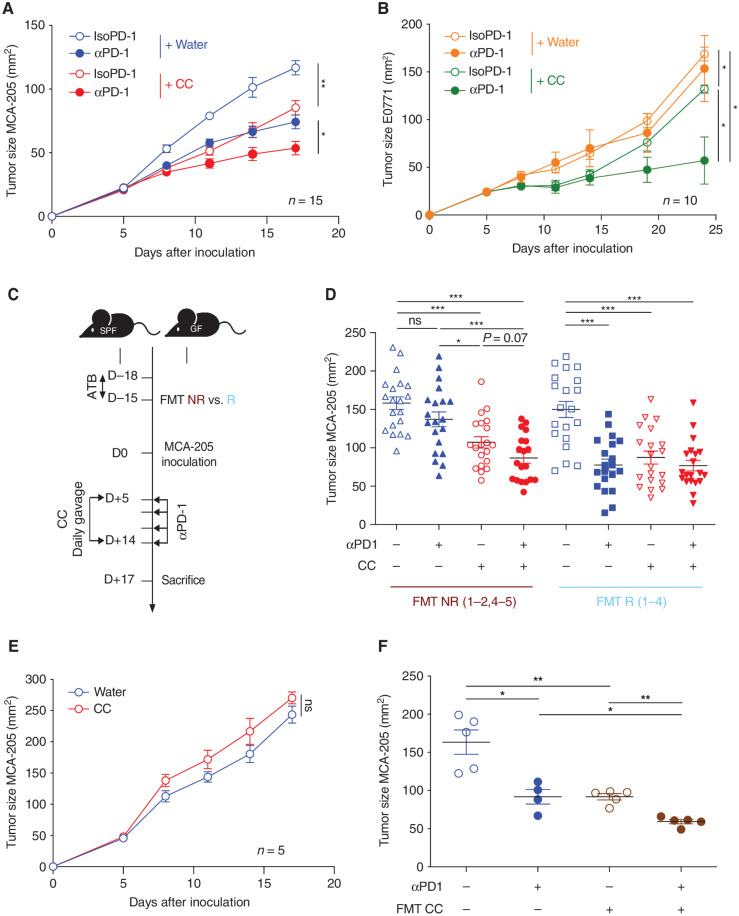
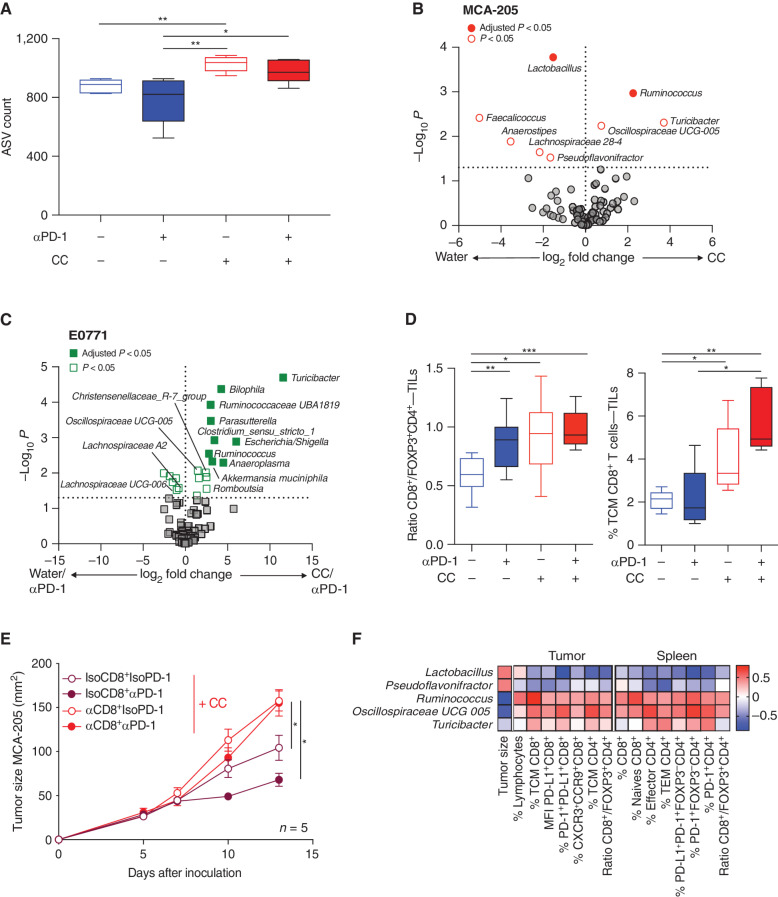
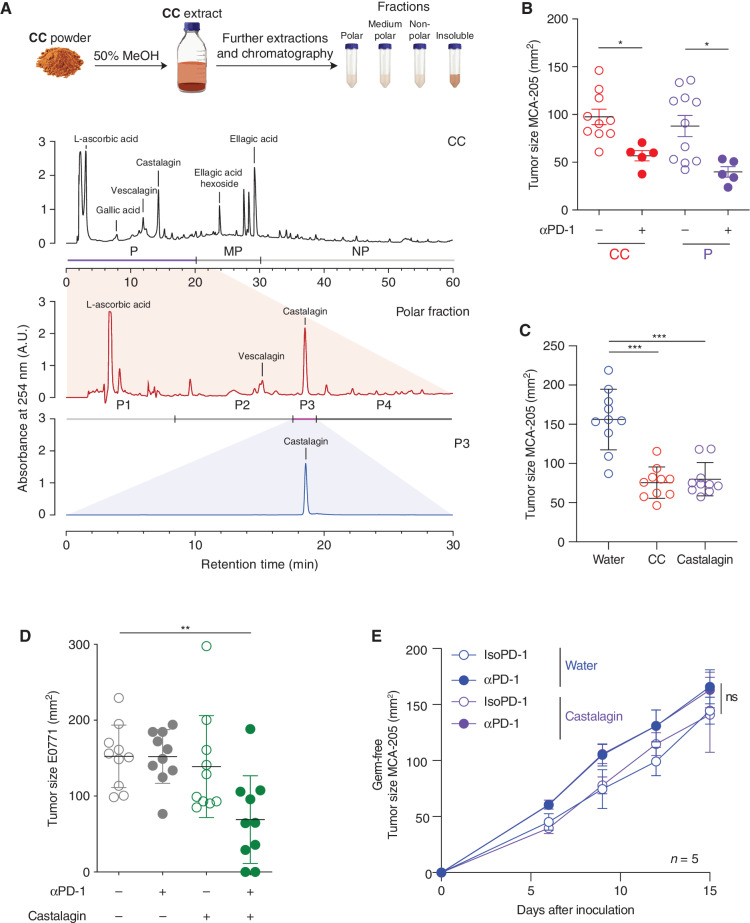
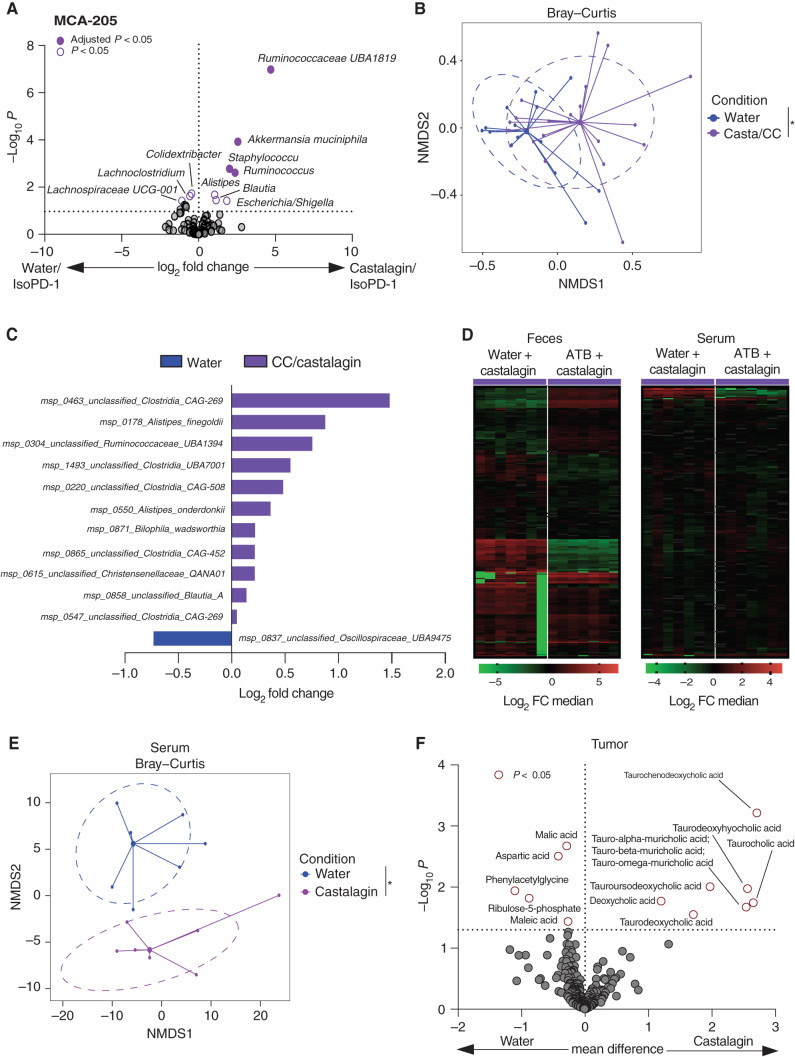
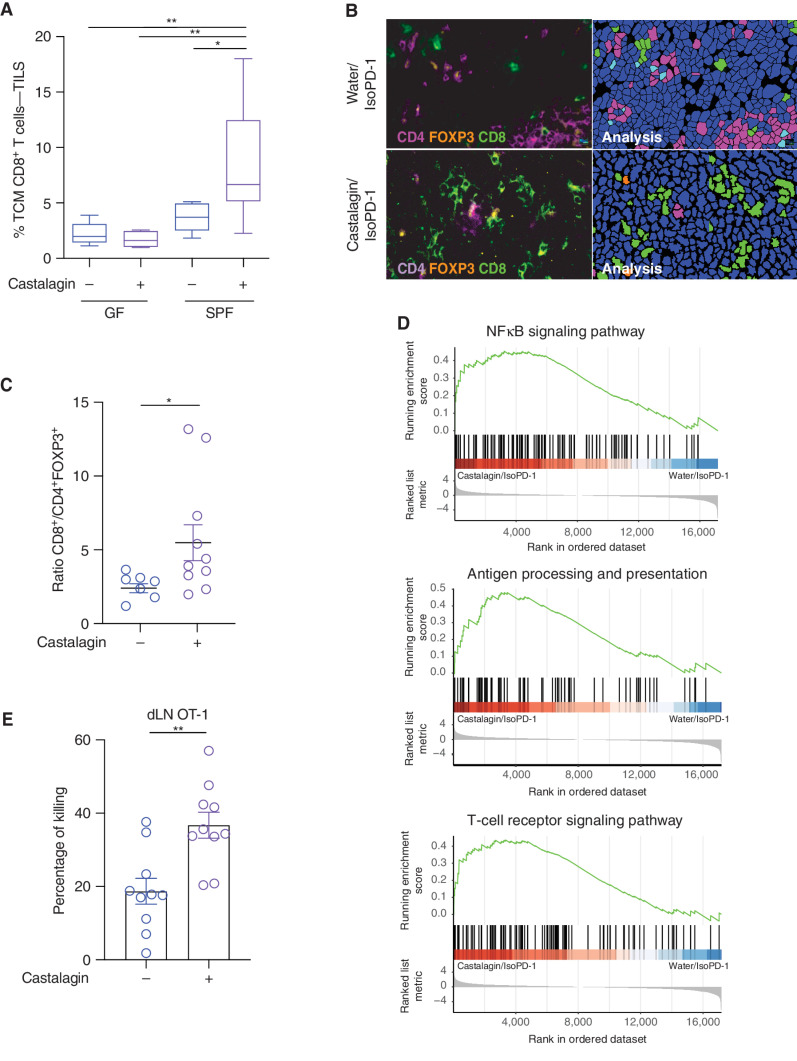
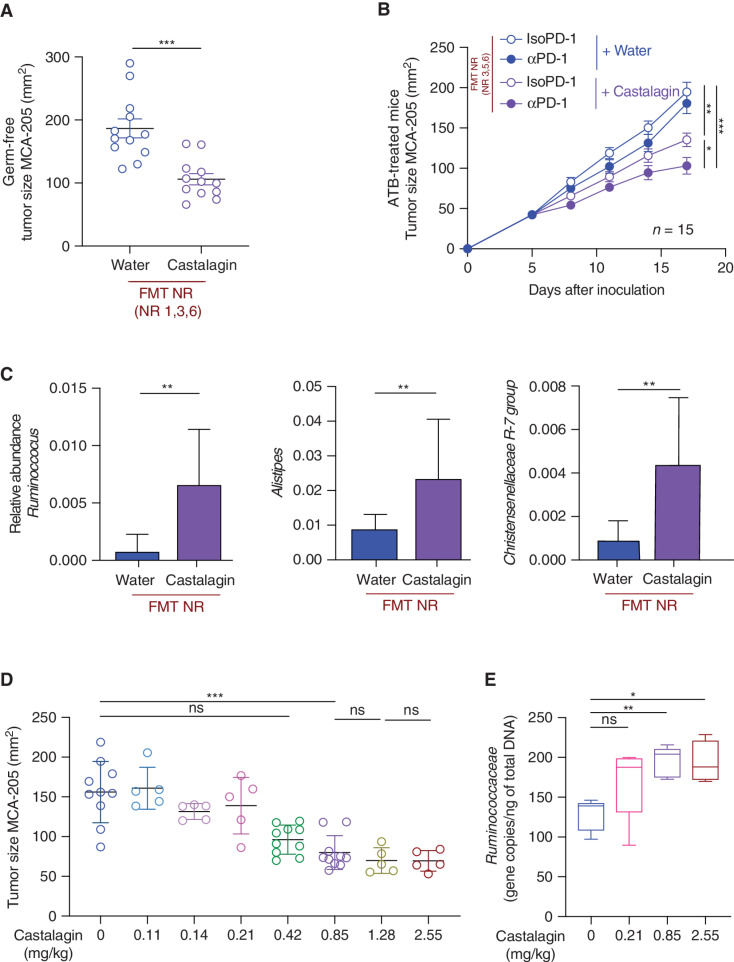
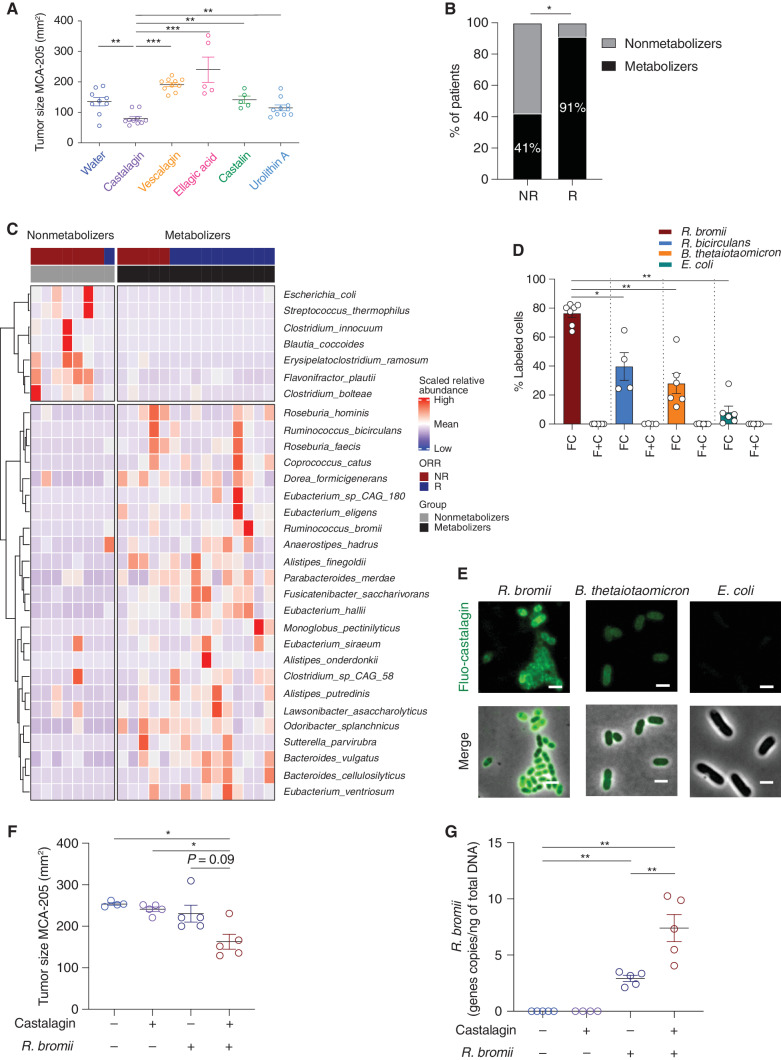
Several approaches to manipulate the gut microbiome for improving the activity of cancer immune-checkpoint inhibitors (ICI) are currently under evaluation. Here, we show that oral supplementation with the polyphenol-rich berry camu-camu (CC; Myrciaria dubia) in mice shifted gut microbial composition, which translated into antitumor activity and a stronger anti–PD-1 response. We identified castalagin, an ellagitannin, as the active compound in CC. Oral administration of castalagin enriched for bacteria associated with efficient immunotherapeutic responses (Ruminococcaceae and Alistipes) and improved the CD8+/FOXP3+CD4+ ratio within the tumor microenvironment. Moreover, castalagin induced metabolic changes, resulting in an increase in taurine-conjugated bile acids. Oral supplementation of castalagin following fecal microbiota transplantation from ICI-refractory patients into mice supported anti–PD-1 activity. Finally, we found that castalagin binds to Ruminococcus bromii and promoted an anticancer response. Altogether, our results identify castalagin as a polyphenol that acts as a prebiotic to circumvent anti–PD-1 resistance. Significance: The polyphenol castalagin isolated from a berry has an antitumor effect through direct interactions with commensal bacteria, thus reprogramming the tumor microenvironment. In addition, in preclinical ICI-resistant models, castalagin reestablishes the efficacy of anti–PD-1. Together, these results provide a strong biological rationale to test castalagin as part of a clinical trial. This article is highlighted in the In This Issue feature, p. 873
Overview
The claims and statistics of this paper haven’t been checked yet.
Free: it reads the open-access text and checks the first 5 claims that cite a source we can check. Create a free account to check every claim.
Integrity signals
Registry
Cites
Statistics
Figures
Verification
Claims the paper makes
The claims and statistics of this paper haven’t been checked yet.
Free: it reads the open-access text and checks the first 5 claims that cite a source we can check. Create a free account to check every claim.
Claims other papers make about this one
Each is checked against this paper’s own text: does it say what the citing paper says it does?
The source backs part of the claim, not all of it — or backs it for a different population, condition or comparison.
In the citing paper
“SIG2 contained Lachnospiraceae (species from the genus Blautia, Roseburia, Dorea, and Eubacterium) and Oscillospiraceae family members (Faecalibacterium prausnitzii, Ruminococcus bicirculans, and R. lactaris), which were previously associated with general health and favorable clinical responses to ICIs.”
From Custom scoring based on ecological topology of gut microbiota associated with cancer immunotherapy outcome (2024) · cites this paper as Messaoudene et al., 2022
Experimental — accuracy not yet measuredThe cited source says what the claim attributes to it.
In the citing paper
“These trials have been inspired by the observation that castalagin selectively binds to a Ruminococcus species with immunostimulatory properties and propagates its expansion in preclinical models 51”
From Impact of the ONCOBIOME network in cancer microbiome research (2025) · cites this paper as [51]
The cited source says what the claim attributes to it.
In the citing paper
“Castalagin was also found to enrich Ruminococcaceae and A. muciniphila in the gut microbiota.”
From Microbiota-centered interventions to boost immune checkpoint blockade therapies (2025) · cites this paper as Messaoudene et al., 2022
In the citing paper
“For example, supplementation with castalagin, a polyphenol and the active compound in the camu-camu berry (Myrciaria dubia), enhanced antitumor immune responses and improved anti-PD-1 efficacy in preclinical models (Messaoudene et al., 2022).”
From Microbiota-centered interventions to boost immune checkpoint blockade therapies (2025) · cites this paper as Messaoudene et al., 2022
Self-check
Percentages, sums and reported differences re-computed from the paper’s own numbers.
The self-check needs the paper’s full text.
Citations
Cites
Moderated estimation of fold change and dispersion for RNA-seq data with DESeq2
Love, M. I., Huber, W., & Anders, S. (2014) · Genome Biology · doi:10.1186/s13059-014-0550-8 · Cited by 95,106 · cited 1×
“DESeq2 (35) was used to perform differential abundance analysis at the genus level.”
Pembrolizumab plus chemotherapy in metastatic non–small-cell lung cancer
Gandhi, L., Rodríguez-Abreu, D., Gadgeel, S., Esteban, E., Felip, E., De Angelis, F., Domine, M., Clingan, P., Hochmair, M. J., Powell, S. F., et al. (2018) · New England Journal of Medicine · doi:10.1056/nejmoa1801005 · Cited by 6,607
Gut microbiome influences efficacy of PD-1-based immunotherapy against epithelial tumors
Routy, B., Le Chatelier, E., Derosa, L., Duong, C. P. M., Alou, M. T., Daillère, R., Fluckiger, A., Messaoudene, M., Rauber, C., Roberti, M. P., et al. (2018) · Science · doi:10.1126/science.aan3706 · Cited by 5,671 · cited 10×
“muciniphila, which predicted the response in 153 patients with advanced NSCLC and renal cell cancer amenable to ICI (10).”
BackgroundMethodInfluentialSelf-citationElements of cancer immunity and the cancer–immune set point
Chen, D. S., & Mellman, I. (2017) · Nature · doi:10.1038/nature21349 · Cited by 5,352 · cited 2×
“Recent metagenomic sequencing studies coupled with experiments in germ-free (GF) mice have revealed that the gut microbiome serves as another key mediator of this cancer-immune set point (5, 6).”
BackgroundGut microbiome modulates response to anti-PD-1 immunotherapy in melanoma patients
Gopalakrishnan, V., Spencer, C. N., Nezi, L., Reuben, A., Andrews, M. C., Karpinets, T. V., Prieto, P. A., Vicente, D., Hoffman, K., Wei, S. C., et al. (2018) · Science · doi:10.1126/science.aan4236 · Cited by 4,812 · cited 1×
“bromii were associated with an increased proportion of CD8+ T cells in the tumor and peripheral blood and correlated with a beneficial response (12).”
BackgroundNivolumab plus Ipilimumab versus Sunitinib in Advanced Renal-Cell Carcinoma
Motzer, R. J., Tannir, N. M., McDermott, D. F., Arén Frontera, O., Melichar, B., Choueiri, T. K., Plimack, E. R., Barthélémy, P., Porta, C., George, S., et al. (2018) · New England Journal of Medicine · doi:10.1056/nejmoa1712126 · Cited by 4,656
Anticancer immunotherapy by CTLA-4 blockade relies on the gut microbiota
Vétizou, M., Pitt, J. M., Daillère, R., Lepage, P., Waldschmitt, N., Flament, C., Rusakiewicz, S., Routy, B., Roberti, M. P., Duong, C. P. M., et al. (2015) · Science · doi:10.1126/science.aad1329 · Cited by 3,488 · cited 1×
“Third, we used fecal samples from mice treated with or without CC to perform daily FMT in SPF mice over the course of 14 days after MCA-205 inoculation (10, 21).”
MethodSelf-citationThe commensal microbiome is associated with anti-PD-1 efficacy in metastatic melanoma patients
Matson, V., Fessler, J., Bao, R., Chongsuwat, T., Zha, Y., Alegre, M.-L., Luke, J. J., & Gajewski, T. F. (2018) · Science · doi:10.1126/science.aao3290 · Cited by 3,107
Fecal microbiota transplant overcomes resistance to anti–PD-1 therapy in melanoma patients
Davar, D., Dzutsev, A. K., McCulloch, J. A., Rodrigues, R. R., Chauvin, J.-M., Morrison, R. M., Deblasio, R. N., Menna, C., Ding, Q., Pagliano, O., et al. (2021) · Science · doi:10.1126/science.abf3363 · Cited by 1,781 · cited 1×
“muciniphila were both enriched post-FMT in R patients with melanoma refractory to ICI (18, 34).”
BackgroundFecal microbiota transplant promotes response in immunotherapy-refractory melanoma patients
Baruch, E. N., Youngster, I., Ben-Betzalel, G., Ortenberg, R., Lahat, A., Katz, L., Adler, K., Dick-Necula, D., Raskin, S., Bloch, N., et al. (2021) · Science · doi:10.1126/science.abb5920 · Cited by 1,757 · cited 2×
“muciniphila were both enriched post-FMT in R patients with melanoma refractory to ICI (18, 34).”
Background
Cited by
Items 201–248 of 248
Wang, X., Yu, Y., Liao, C., Liu, X., Yu, R., & Wang, Y. (2025) · The EPMA Journal · doi:10.1007/s13167-025-00402-x · Cited by 3
“…of ICI patients showed that high intestinal bacterial diversity and immunogenic bacteria (e.g. Ruminococcus , the presence of Akkermansia muciniphila , and Bifidobacterium were associated with a stronger CD8 + T-cell and CD4 + Th1-dependent antitumor response and enhanced anti-tumor effects [14].”
Wang, X., Liu, J., Huoshen, W., Liu, J., Qiao, X., Zhang, H., & Zhou, S. (2025) · Renal Failure · doi:10.1080/0886022x.2025.2522979 · Cited by 3
“…in ways potentially beneficial to systemic homeostasis [25]. alterations in the Alistipes genus have been reported in various diseases, sometimes exerting beneficial roles by regulating host urate excretion or controlling local immune responses to limit chronic inflammatory cascades [26,27].”
Alteration of gut microbiota and their metabolites by dietary phytochemicals
Mehrotra, N., Sharma, S., & Tripathi, P. (2025) · Elsevier eBooks · doi:10.1016/b978-0-443-36372-6.00008-2 · Cited by 2
Hussein, D. K., Okba, M. M., Abou-Hussein, D., El‐Shiekh, R. A., & El-Kashoury, E.-S. A. (2026) · Revista Brasileira de Farmacognosia · doi:10.1007/s43450-025-00726-9 · Cited by 1
“Some polyphenolics reported prebiotic activities such as catechin ( 1 ), epicatechin ( 2 ) (Tzounis et al. 2008), epigallocatechin gallate ( 3 ) (Dey et al. 2020), castalagin ( 4 ) (Messaoudene et al. 2022), ferulic acid ( 5 ) (Liu et al. 2019), and procyanidin B2 ( 6 ) (Xing et al. 2019).”
Yu, S., Shu, W., Zhang, J., Cheng, S., Shen, X., Chen, G., Zhang, T., Dong, K., Zhang, J., Laudański, P., et al. (2026) · International Journal of Women s Health · doi:10.2147/ijwh.s583327 · Cited by 1
“122 132 In mismatch repair-deficient EC, a large infiltration of CD8+ and NKT cells is a marker for better survival prognosis, indicating a favorable immune microenvironment.”
Su, X., Jin, J., Huang, Y., Hou, H., Li, Z., Cao, C., Wang, X., Li, F., Deng, Z., & Zhang, M. (2026) · Scientific Reports · doi:10.1038/s41598-026-44494-5 · Cited by 3
Dietary red sorghum shifts colonic microbial fermentation and metabolic profiles in growing pigs
Ren, Y., Liang, X., Su, Y., Zhu, W., & Pan, L. (2026) · Animal Feed Science and Technology · doi:10.1016/j.anifeedsci.2026.116762 · Cited by 1
The role of gut microbiota in obesity-related cancers
Shi, W., Song, B., Xia, S., & Jia, D. (2026) · Seminars in Cancer Biology · doi:10.1016/j.semcancer.2026.04.002 · Cited by 1
Diop, K., Benlaïfaoui, M., Hunter, S., Méndez-Salazar, E. O., Hakozaki, T., Richard, C., Prifti, D. K., Kourtian, S., Proulx-Rocray, F., Naimi, S., et al. (2026) · Microbiome · doi:10.1186/s40168-026-02419-4 · Cited by 4
Self-citationGut microbial metabolites for potentiating cancer therapy
Kamrad, S., Gagliani, N., Lawley, T. D., Patil, K. R., & Tintelnot, J. (2026) · Trends in cancer · doi:10.1016/j.trecan.2026.04.005 · Cited by 3
Fang, X., Yuan, S., & Mai, W. (2026) · Immunity Inflammation and Disease · doi:10.1002/iid3.70492 · Cited by 2
Liu, M., Hu, Y., Xu, M.-D., Chen, Y., & Meng, Q.-B. (2026) · Food & medicine homology. · doi:10.26599/fmh.2027.9420146 · Cited by 8
Zhang, J., Fang, L., Ma, C., Hu, Z., Chen, C., Zhu, T., Ying, J., Zhu, W., Huang, G., Ni, J., et al. (2026) · Microbiology Spectrum · doi:10.1128/spectrum.00994-26 · Cited by 1
Ação de compostos bioativos do camu-camu (Myrciaria dubia) em células tumorais
Quadros, S. X. N., Chagas, E. A., Nogueira‐de‐Almeida, C. A., Santos, W. D. C. S., & Quadros, E. J. D. S. (2023) · Cuadernos de Educación y Desarrollo · doi:10.55905/cuadv15n12-087 · Cited by 1
Li, J., Gao, M., Wang, P., Li, H., Liu, J., Yuan, F., Zhang, X., & Zhang, S. (2024) · Journal of Investigative Medicine · doi:10.1177/10815589241235657 · Cited by 1
Microbiome as a therapeutic target
Moiseenko, F. V. (2022) · Practical oncology · doi:10.31917/2303160
Adjuvant Therapeutic Effect of Cinnamon on Diabetes Mellitus
Ju, J., de Oliveira, M. S., & Qiao, Y. (2023) · Food bioactive ingredients · doi:10.1007/978-3-031-33505-1_13 · Cited by 1
Research Progress on Gut Microbiota and Immunotherapy of Lung Cancer
谢, 欣. (2023) · Advances in Clinical Medicine · doi:10.12677/acm.2023.1381754
Phytochemicals for Preventing and Treating Chronic Diseases
Guerrero-Flores, G. N., Carlino, B., Gili, R. V., Leeson, S., & Mayta, M. L. (2024) · Springer eBooks · doi:10.1007/978-3-031-63677-6_4 · Cited by 1
Emerging therapeutics in the treatment of chronic respiratory disorders
Gupta, D., Shingte, R. D., & Suares, D. (2024) · Elsevier eBooks · doi:10.1016/b978-0-443-27345-2.00003-5
Cancer and microbiome-targeted therapies
Meena, A. S., Singh, P., & Shukla, P. K. (2025) · International review of cytology · doi:10.1016/bs.ircmb.2024.12.006 · Cited by 5
Berry Supplement-Modified Human Microbiome Improves Immunotherapy Response in Mouse ModelsPreprint
Jahanbahkshi, S., Bibi, A., Hoyd, R., Dravillas, C. E., Williams, N. F., Zhang, S., Pallerla, A., Suman, S., Amann, J. M., Goruganthu, M., et al. (2025) · medRxiv · doi:10.1101/2025.01.16.25320666
Yu, S., Shu, W., Zhang, J., Cheng, S., Shen, X., Chen, G., Zhang, T., Dong, K., Zhang, J., Laudański, P., et al. (2025) · Research Square · doi:10.21203/rs.3.rs-6189084/v1
Bioactive compounds in integrative oncology and cancer therapeutics: A comprehensive review
Morjaria, S., Kapoor, N., & Kumar, R. (2023) · Biotech Today · doi:10.5958/2322-0996.2023.00015.7
Alejolowo, O. O., Oluba, O. M., & Adeyemı, O. S. (2025) · Journal of Taibah University Medical Sciences · doi:10.1016/j.jtumed.2025.07.003
“49,50 Evidence from preclinical and clinical studies shows that oxidative stress is the basis of chronic liver injuries, which then triggers hepatocellular death and the inflammatory cascade.”
Liu, J., Hu, X., Wang, Q., Hu, Q., Yu, G., Zhao, Y., Gu, L., Shen, J., Zhao, Q., Sui, F., et al. (2025) · Nanomedicine Nanotechnology Biology and Medicine · doi:10.1016/j.nano.2025.102886
Nutritional and Phytochemical Profile and Potential Anticancer Benefits of Amazonian Exotic Fruits
Lima, T. P. B., de Almeida, C. D. O. R. P., Lemos, I. D. M. L., de Souza, V. R., & Teodoro, A. J. (2025) · Nutrition Reviews · doi:10.1093/nutrit/nuaf307
Evaluation of the Pharmacological Potential of Psidium guajava (Guava) and Its Anticancer Effect
Toma, M., Pop, L., Berindan‐Neagoe, I., Jurj, A. M., Ráduly, L., Hoza, D., Luchian, V., Ion, L., Burlacu, R., & Ranga, F. (2026) · Pharmaceuticals · doi:10.3390/ph19040561
Precision nutrition in breast cancer: Towards patient- and tumour-informed dietary strategies
Crespo-Garcia, C., Taaffe, D. R., Peddle‐McIntyre, C. J., Jeffery, E., Campbell, J. P., Thomas, R., Galvao, D. A., & Newton, R. U. (2026) · Clinical Nutrition · doi:10.1016/j.clnu.2026.106670
Gao, R., Wang, J., Song, J., Zhang, W., & Quan, L. (2026) · Frontiers in Microbiology · doi:10.3389/fmicb.2026.1790697 · Cited by 1
The impact of gut microbiota and metabolite-driven immune cell spatiotemporal dynamics on tumors
Ding, J., Lin, M., Zang, D., & Chen, J. (2026) · Gut Microbes · doi:10.1080/19490976.2026.2681842 · Cited by 1
“110 Ganoderma lucidum polysaccharides (GLP) can regulate gut dysbiosis and reshape the TME by increasing intratumoral cytotoxic CD8 + T cells and Th1 helper cells while reducing immunosuppressive Tregs, thereby enhancing the efficacy of anti-PD-1 immunotherapy.”
The Supporting Role of Natural Products as Effective Adjuvants in Cancer Immunotherapy
Liu, B., Huang, Y., Deng, J., Mao, Z., Bai, X., Ma, L., & Wang, J. (2026) · eFood · doi:10.1002/efd2.70171
The role of microbiome–mucosal barrier interactions in neoplastic diseases
Toth, E., Sipos, A., Mikó, E., Nyerges, P., & Bai, P. (2026) · Elsevier eBooks · doi:10.1016/b978-0-443-40306-4.00007-7
Qin, X., Huang, G., Han, Y., Zhou, M., Xu, M., Xiong, C., Liu, Y., Li, X., Chen, R., & Liang, F. (2026) · Medical Oncology · doi:10.1007/s12032-026-03332-4
“Recent studies suggest that phytochemicals modulating the gut microbiota-metabolite-receptor axis may exert a synergistic sensitizing effect when used in parallel with ICI monotherapy [ 124, 129 ].”
Gouveia, L., Serpa, J., & Mendes, C. (2026) · Advances in experimental medicine and biology · doi:10.1007/978-3-032-12166-0_3
Nanocarrier-Based Phyto-pharmaceuticals to Combat Challenges in Cancer Treatment
Hathout, R. M., Maged, A., & Mahmoud, A. A. K. (2026) · Reference series in phytochemistry · doi:10.1007/978-3-031-69044-0_29-1
Fan, D., Wang, J., Li, S., Ji, X., Sun, Y., Zhang, B., Liu, J., & Wang, S. (2026) · Food Bioscience · doi:10.1016/j.fbio.2026.109509
Benlaïfaoui, M., Richard, C., Hunter, S., Méndez-Salazar, E. O., Kourtian, S., Malo, J., Prifti, D. K., Ponce, M., Khalfi, S., Belkaïd, W., et al. (2026) · Gut Microbes · doi:10.1080/19490976.2026.2699457 · Cited by 4
Self-citationLuo, M., Lin, Z., Deng, J., Zhong, Y., Wang, H., Liu, Q., & Yang, K. (2026) · Microorganisms · doi:10.3390/microorganisms14081649
“High-fiber diets and prebiotics can increase fermentable-substrate availability and support the production of short-chain fatty acids (SCFAs), while bacterial cyclic diadenosine monophosphate (c-di-AMP) can activate STING–type I interferon signaling [128–130 ,132, 143, 144].”
Fan, F., Xu, B., Zhang, L., 刘, 跃., Li, Z., Liu, Y., He, R., Zheng, L., & Yu, H. (2026) · Journal of Agricultural and Food Chemistry · doi:10.1021/acs.jafc.5c17436
Cheng, H., Chen, M., Xiao, M., Zhang, H., Zhang, Z., Jiang, D., Wan, A. H., Wang, Q., & Wan, G. (2026) · Biomedicines · doi:10.3390/biomedicines14091955
Interplay of gut microbiota, immune cells and natural products in reshaping cancer immunotherapy
Wu, X., Lu, L., Li, T., Zhao, L., Wang, L., Yao, Y., Chen, J., Liu, T., Li, X., Zhu, X., et al. (2026) · Frontiers in Microbiology · doi:10.3389/fmicb.2026.1898063
“Pectin increases the abundance of Bifidobacteriaceae, Lactobacillaceae, and Ruminococcaceae, thereby promoting intestinal barrier integrity and facilitating CD8 T-cell infiltration into the TME (Zhang et al., 2021).”
InfluentialGut microbiota alterations in patients with non‐small‐cell lung cancer undergoing chemoradiotherapy
Nymoen, H. M., Zhao, Z., Horndalsveen, H., Bjaanæs, M. M., Grønberg, B. H., Halvorsen, T. O., Madebo, T., Aanerud, M., Koivunen, J. P., Oselin, K., et al. (2026) · Molecular Oncology · doi:10.1002/1878-0261.70326
“Similarly, Ruminococcus bromii , a key species in resistant starch degradation and anti-inflammatory properties, has been proposed to support improved immunotherapy response [48,49].”
Molecular pathways linking the gut microbiome to antitumor immunity
Olea, X. D., Ramer‐Tait, A. E., Cohen, J. E., Osterman, A., & Ronai, Z. A. (2026) · Trends in Microbiology · doi:10.1016/j.tim.2026.08.013
Gut microbiome in immuno-oncology: potential for clinical exploitation
Margarita, E., Saito, K., Bisegna, P., Ferrari, M., Valeriani, E., Guerrieri, M., Funaro, B., Feliciani, D., Gasbarrini, A., Porcari, S., et al. (2026) · Best Practice & Research Clinical Gastroenterology · doi:10.1016/j.bpg.2026.102143
Bhatt, P., Chaudhari, H., Prajapati, P., Dhote, H. S. A., & Rani, S. (2026) · Elsevier eBooks · doi:10.1016/b978-0-443-33206-7.00001-7
ying, S., Zin, M. H. M., & Amrit, M. F. (2026) · F1000Research · doi:10.12688/f1000research.179354.1
Microbiome interactions in renal cell carcinoma: evidence, challenges and opportunities
Lindgaard, C., Hvidt, A. K., Keller, A. K., Thingholm, L., Kristensen, S. S., & Lyskjær, I. (2026) · Nature Reviews Urology · doi:10.1038/s41585-026-01198-9
Metadata
- Authors
- Messaoudene, M., Pidgeon, R., Richard, C., Ponce, M., Diop, K., Benlaifaoui, M., Nolin-Lapalme, A., Cauchois, F., Malo, J., Belkaid, W., Isnard, S., Fradet, Y., Dridi, L., Velin, D., Oster, P., Raoult, D., Ghiringhelli, F., Boidot, R., Chevrier, S., Kysela, D. T., Brun, Y. V., Falcone, E. L., Pilon, G., Oñate, F. P., Gitton-Quent, O., Le Chatelier, E., Durand, S., Kroemer, G., Elkrief, A., Marette, A., Castagner, B., & Routy, B.
- Affiliations
- Université de Montréal (CA)
- McGill University (CA)
- 1University of Montreal Hospital Research Centre (CRCHUM), Montreal, Quebec, Canada.
- 3Research Institute, McGill University Health Centre, Montreal, Quebec, Canada.
- Centre de recherche du CHU de Québec-Université Laval (CA)
- Centre Hospitalier Universitaire Vaudois (CH)
- Aix-Marseille Université (FR)
- Centre Georges François Leclerc (FR)
- Centre National de la Recherche Scientifique (FR)
- Montreal Clinical Research Institute (CA)
- Institut universitaire de cardiologie et de pneumologie de Québec (CA)
- Université Paris-Saclay (FR)
- 14Université Paris-Saclay, INRAE, MGP, Jouy-en-Josas, France.
- 15Metabolomics and Cell Biology Platforms, Gustave Roussy Cancer Campus, Villejuif, France.
- Inserm (FR)
- Centre Hospitalier de l’Université de Montréal (CA)
- Corresponding author
- Routy, Bertrand
- ORCID
- Messaoudene, Meriem
- Pidgeon, Reilly
- Richard, Corentin
- Ponce, Mayra
- Diop, Khoudia
- Nolin-Lapalme, Alexis
- Malo, Julie
- Fradet, Yves
- Dridi, Lharbi
- Velin, Dominique
- Oster, Paul
- Raoult, Didier
- Ghiringhelli, François
- Boidot, Romain
- Chevrier, Sandy
- Kysela, David T.
- Brun, Yves V.
- Falcone, Emilia Liana
- Pilon, Geneviève
- Oñate, Florian Plaza
- Gitton-Quent, Oscar
- Le Chatelier, Emmanuelle
- Kroemer, Guido
- Elkrief, Arielle
- Marette, André
- Castagner, Bastien
- Routy, Bertrand
- Venue
- Cancer Discovery
- Published
- 2022-01-14
- Volume
- 12
- Issue
- 4
- Pages
- 1070-1087
- ISSN
- 2159-8274 (ISSN-L)
- 2159-8290
- PMC
- PMC9394387
- OpenAlex
- W4206012887
- Cited by
- 250
- References
- 36
- Citations by year
- 2026: 49 · 2025: 67 · 2024: 55 · 2023: 52 · 2022: 27
- FWCI
- 20.98
- Type
- journal article
- Language
- en
- Open access
- hybrid
- doi.org
- Licence
- Locations
- Cancer Discovery (publishedVersion, cc-by-nc-nd)
- PubMed Central (publishedVersion, cc-by-nc-nd)
- PubMed (publishedVersion)
- SERVAL (Université de Lausanne) (publishedVersion, cc-by-nc-nd)
- HAL (submittedVersion)
- IRIS (submittedVersion, cc-by-nc-nd)
- Funders
- Vaccines and Immunotherapies Core of the CIHR Canadian HIV Trials Network (CTN 247)
- Topics
- Health Sciences › Medicine › Oncology › Cancer Immunotherapy and Biomarkers
- Life Sciences › Biochemistry, Genetics and Molecular Biology › Molecular Biology › Gut microbiota and health
- Health Sciences › Nursing › Nutrition and Dietetics › Pomegranate: compositions and health benefits
- Keywords
- castalagin, ellagitannins, Myrciaria dubia, gut microbiota, anti-PD-1 resistance, cancer immunotherapy, prebiotics, Ruminococcus bromii, taurine-conjugated bile acids, tumor microenvironment, fecal microbiota transplantation, anticancer activity, berry polyphenols
- MeSH terms
- Gastrointestinal Microbiome, Fecal Microbiota Transplantation, Animals, Bacteria, Humans, Mice, Polyphenols
About these checks
Registry, retraction, Cites and statistics results are computed, not judged, with one exception: a printed reference that no index lists is read once by a model before it counts as a citation error. Claims are extracted by a model and kept only when their quote appears verbatim in the text; each cited source is then checked, with a model’s help, for whether it says what the claim relies on. Those verdicts can be wrong — read the claim’s quote and the cited source before relying on one.
Statistics and arithmetic are recomputed, not judged.
Confidence bands are shown only for fields calibrated on our annotated test set. None is calibrated yet, so no band is shown.
What counts as a claim ›How we measure confidence ›How we check this ›
Are you an author, or do you see a problem with this page? Request a review
Data sources
Bibliographic data: Semantic Scholar, OpenAlex, Crossref.
Contains information from the Semantic Scholar Academic Graph Datasets, made available under the ODC Attribution License (ODC-BY 1.0).
Semantic Scholar’s data is described in: Kinney, R., et al. (2023). The Semantic Scholar Open Data Platform. arXiv:2301.10140.
