

A Natural Polyphenol Exerts Antitumor Activity and Circumvents Anti–PD-1 Resistance through Effects on the Gut Microbiota
Open accessPublished version of a preprint
The DOI matches its Crossref record; 36 of the 36 references it cites were found in a registry or an index.
Abstract
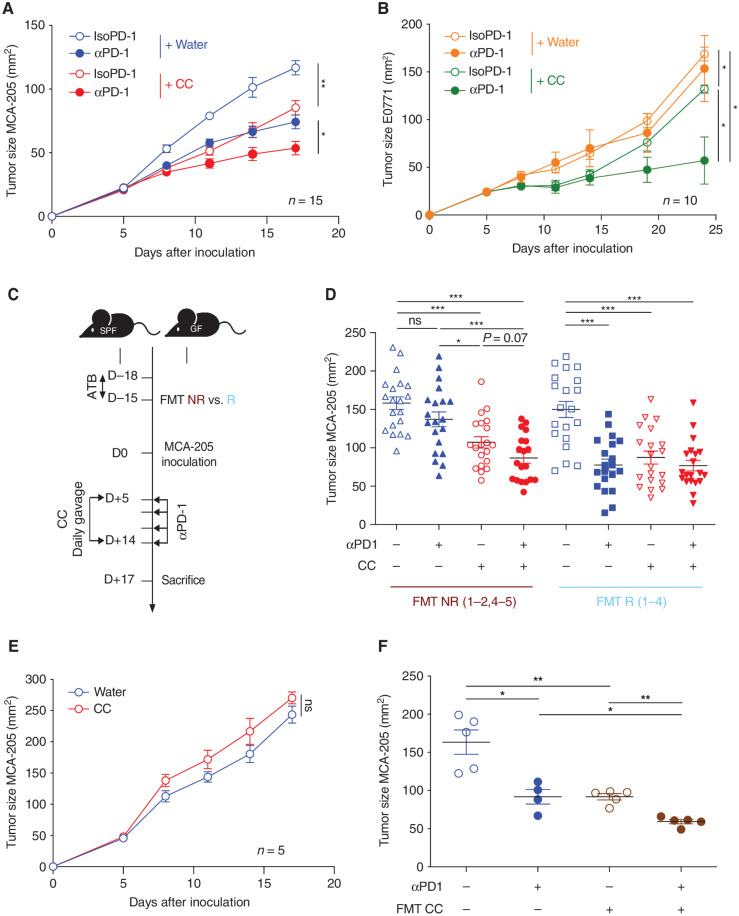
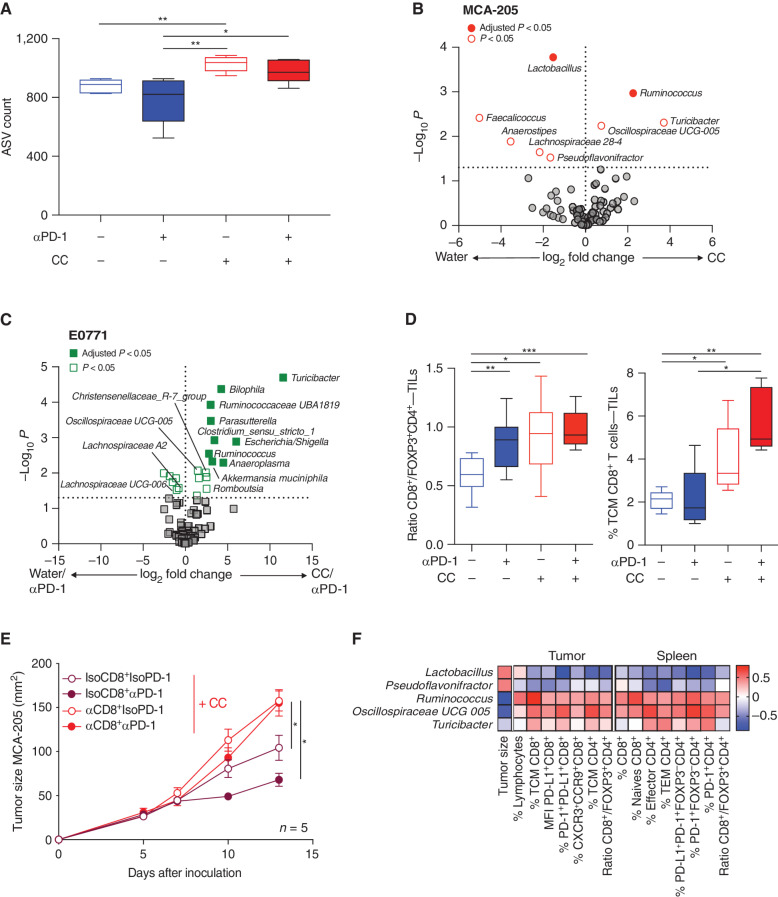
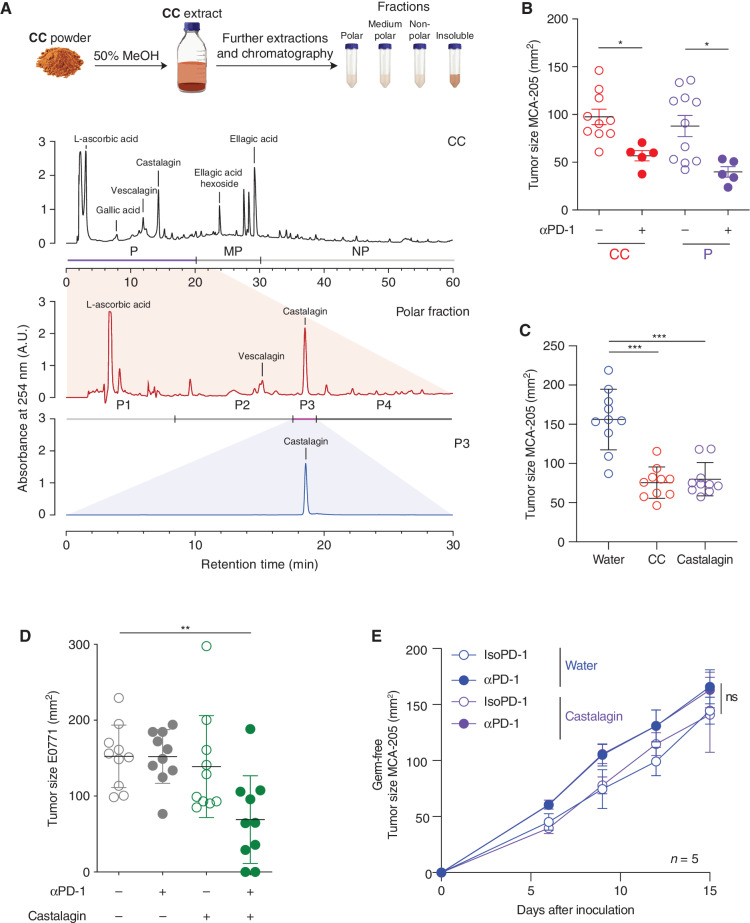
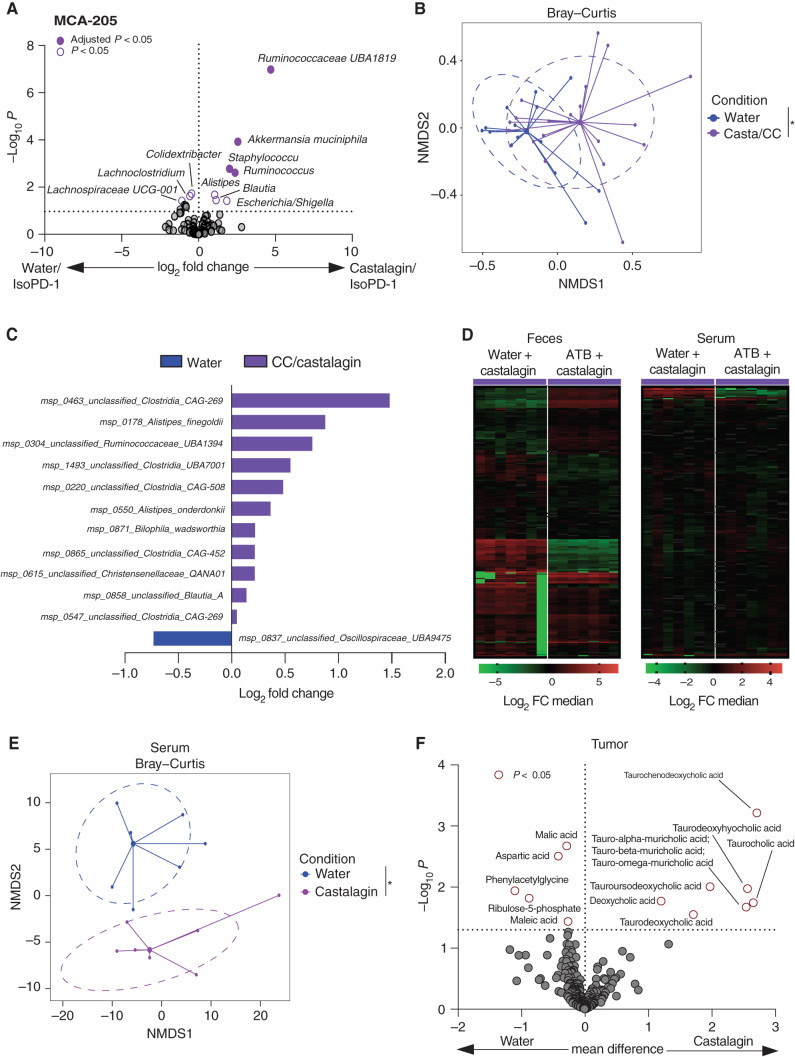
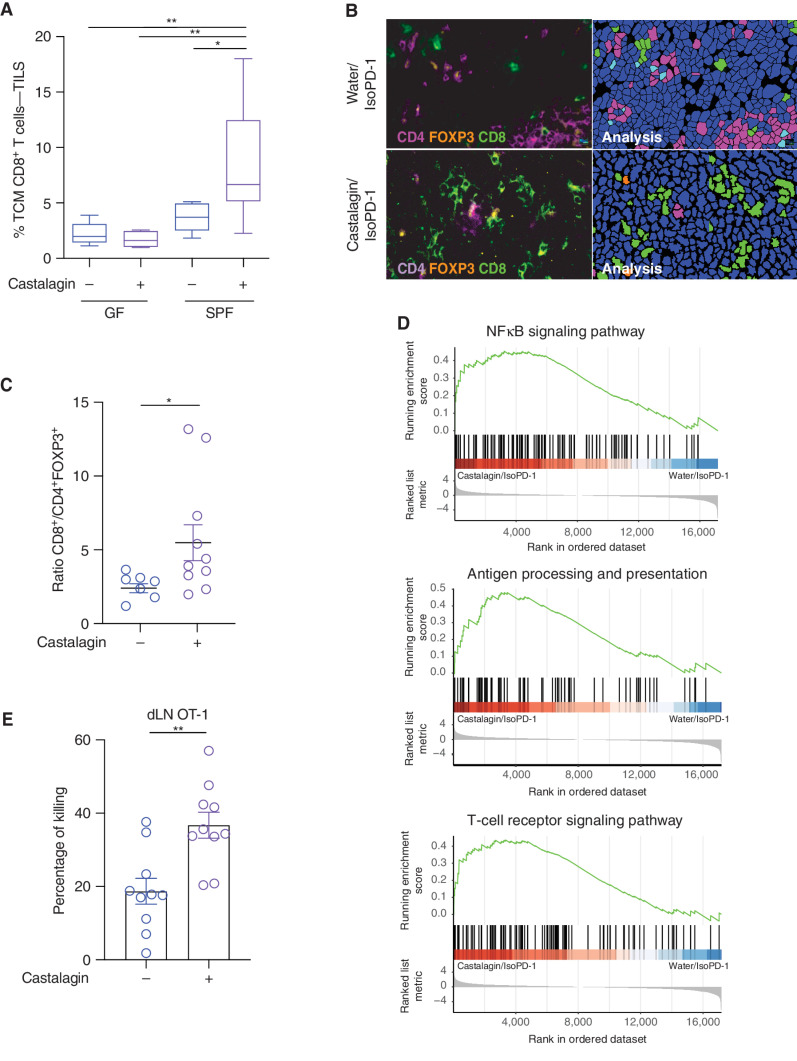
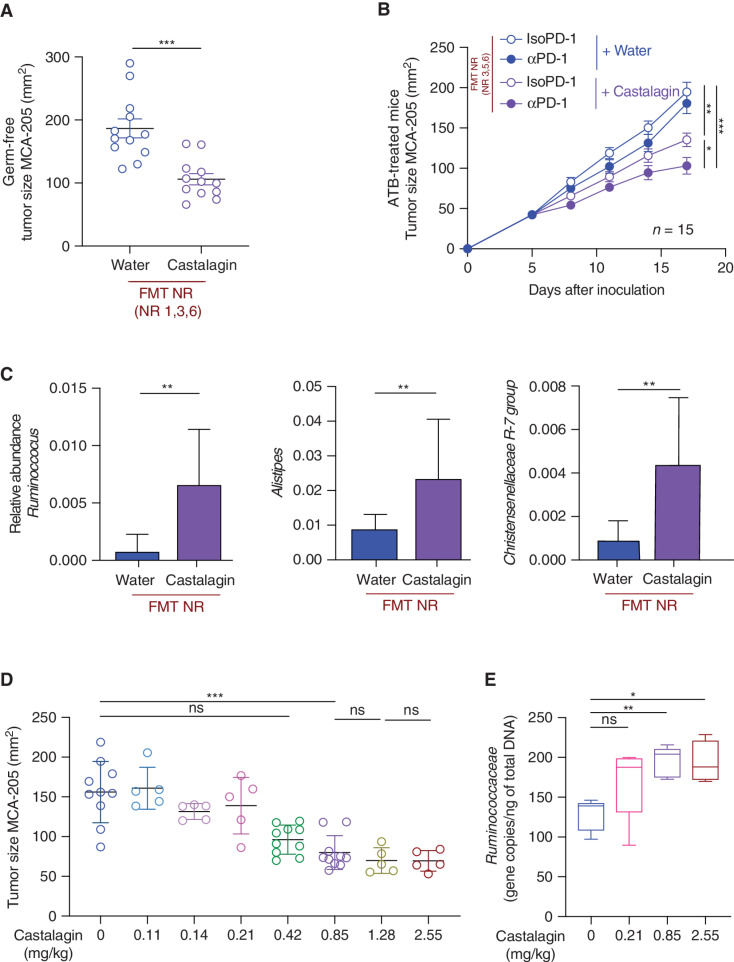
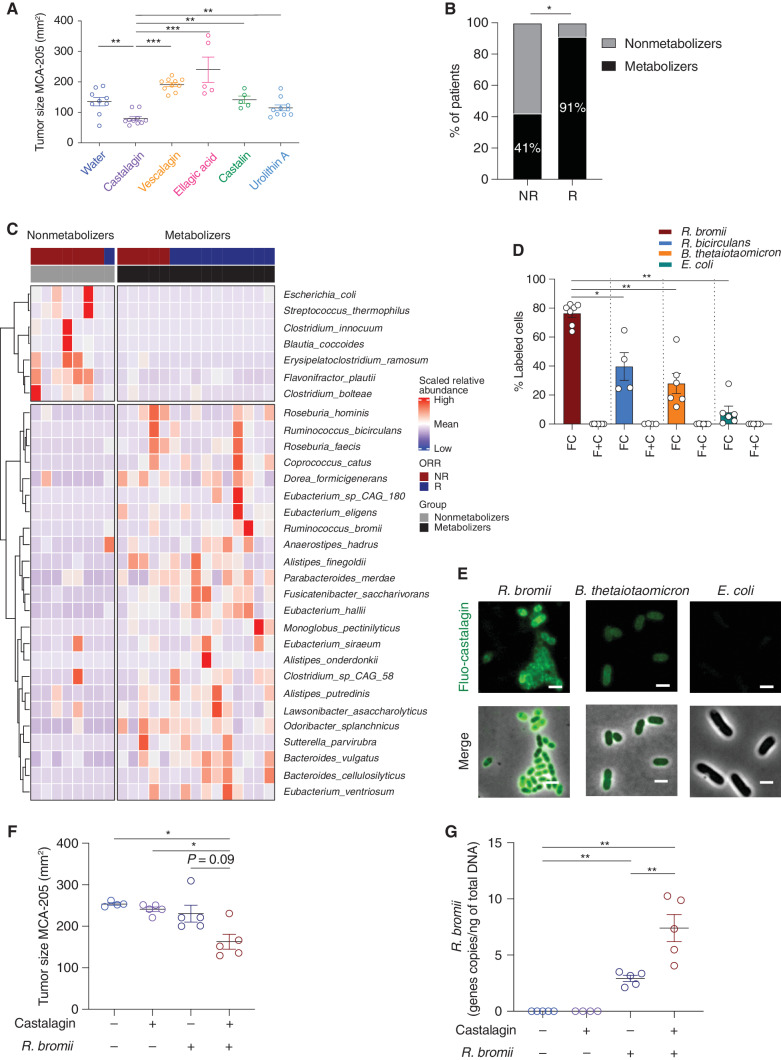
Several approaches to manipulate the gut microbiome for improving the activity of cancer immune-checkpoint inhibitors (ICI) are currently under evaluation. Here, we show that oral supplementation with the polyphenol-rich berry camu-camu (CC; Myrciaria dubia) in mice shifted gut microbial composition, which translated into antitumor activity and a stronger anti–PD-1 response. We identified castalagin, an ellagitannin, as the active compound in CC. Oral administration of castalagin enriched for bacteria associated with efficient immunotherapeutic responses (Ruminococcaceae and Alistipes) and improved the CD8+/FOXP3+CD4+ ratio within the tumor microenvironment. Moreover, castalagin induced metabolic changes, resulting in an increase in taurine-conjugated bile acids. Oral supplementation of castalagin following fecal microbiota transplantation from ICI-refractory patients into mice supported anti–PD-1 activity. Finally, we found that castalagin binds to Ruminococcus bromii and promoted an anticancer response. Altogether, our results identify castalagin as a polyphenol that acts as a prebiotic to circumvent anti–PD-1 resistance. Significance: The polyphenol castalagin isolated from a berry has an antitumor effect through direct interactions with commensal bacteria, thus reprogramming the tumor microenvironment. In addition, in preclinical ICI-resistant models, castalagin reestablishes the efficacy of anti–PD-1. Together, these results provide a strong biological rationale to test castalagin as part of a clinical trial. This article is highlighted in the In This Issue feature, p. 873
Overview
The claims and statistics of this paper haven’t been checked yet.
Free: it reads the open-access text and checks the first 5 claims that cite a source we can check. Create a free account to check every claim.
Integrity signals
Registry
Cites
Statistics
Figures
Verification
Claims the paper makes
The claims and statistics of this paper haven’t been checked yet.
Free: it reads the open-access text and checks the first 5 claims that cite a source we can check. Create a free account to check every claim.
Claims other papers make about this one
Each is checked against this paper’s own text: does it say what the citing paper says it does?
The source backs part of the claim, not all of it — or backs it for a different population, condition or comparison.
In the citing paper
“SIG2 contained Lachnospiraceae (species from the genus Blautia, Roseburia, Dorea, and Eubacterium) and Oscillospiraceae family members (Faecalibacterium prausnitzii, Ruminococcus bicirculans, and R. lactaris), which were previously associated with general health and favorable clinical responses to ICIs.”
From Custom scoring based on ecological topology of gut microbiota associated with cancer immunotherapy outcome (2024) · cites this paper as Messaoudene et al., 2022
Experimental — accuracy not yet measuredThe cited source says what the claim attributes to it.
In the citing paper
“These trials have been inspired by the observation that castalagin selectively binds to a Ruminococcus species with immunostimulatory properties and propagates its expansion in preclinical models 51”
From Impact of the ONCOBIOME network in cancer microbiome research (2025) · cites this paper as [51]
The cited source says what the claim attributes to it.
In the citing paper
“Castalagin was also found to enrich Ruminococcaceae and A. muciniphila in the gut microbiota.”
From Microbiota-centered interventions to boost immune checkpoint blockade therapies (2025) · cites this paper as Messaoudene et al., 2022
In the citing paper
“For example, supplementation with castalagin, a polyphenol and the active compound in the camu-camu berry (Myrciaria dubia), enhanced antitumor immune responses and improved anti-PD-1 efficacy in preclinical models (Messaoudene et al., 2022).”
From Microbiota-centered interventions to boost immune checkpoint blockade therapies (2025) · cites this paper as Messaoudene et al., 2022
Self-check
Percentages, sums and reported differences re-computed from the paper’s own numbers.
The self-check needs the paper’s full text.
Citations
Cites
Moderated estimation of fold change and dispersion for RNA-seq data with DESeq2
Love, M. I., Huber, W., & Anders, S. (2014) · Genome Biology · doi:10.1186/s13059-014-0550-8 · Cited by 95,106 · cited 1×
“DESeq2 (35) was used to perform differential abundance analysis at the genus level.”
Pembrolizumab plus chemotherapy in metastatic non–small-cell lung cancer
Gandhi, L., Rodríguez-Abreu, D., Gadgeel, S., Esteban, E., Felip, E., De Angelis, F., Domine, M., Clingan, P., Hochmair, M. J., Powell, S. F., et al. (2018) · New England Journal of Medicine · doi:10.1056/nejmoa1801005 · Cited by 6,607
Gut microbiome influences efficacy of PD-1-based immunotherapy against epithelial tumors
Routy, B., Le Chatelier, E., Derosa, L., Duong, C. P. M., Alou, M. T., Daillère, R., Fluckiger, A., Messaoudene, M., Rauber, C., Roberti, M. P., et al. (2018) · Science · doi:10.1126/science.aan3706 · Cited by 5,671 · cited 10×
“muciniphila, which predicted the response in 153 patients with advanced NSCLC and renal cell cancer amenable to ICI (10).”
BackgroundMethodInfluentialSelf-citationElements of cancer immunity and the cancer–immune set point
Chen, D. S., & Mellman, I. (2017) · Nature · doi:10.1038/nature21349 · Cited by 5,352 · cited 2×
“Recent metagenomic sequencing studies coupled with experiments in germ-free (GF) mice have revealed that the gut microbiome serves as another key mediator of this cancer-immune set point (5, 6).”
BackgroundGut microbiome modulates response to anti-PD-1 immunotherapy in melanoma patients
Gopalakrishnan, V., Spencer, C. N., Nezi, L., Reuben, A., Andrews, M. C., Karpinets, T. V., Prieto, P. A., Vicente, D., Hoffman, K., Wei, S. C., et al. (2018) · Science · doi:10.1126/science.aan4236 · Cited by 4,812 · cited 1×
“bromii were associated with an increased proportion of CD8+ T cells in the tumor and peripheral blood and correlated with a beneficial response (12).”
BackgroundNivolumab plus Ipilimumab versus Sunitinib in Advanced Renal-Cell Carcinoma
Motzer, R. J., Tannir, N. M., McDermott, D. F., Arén Frontera, O., Melichar, B., Choueiri, T. K., Plimack, E. R., Barthélémy, P., Porta, C., George, S., et al. (2018) · New England Journal of Medicine · doi:10.1056/nejmoa1712126 · Cited by 4,656
Anticancer immunotherapy by CTLA-4 blockade relies on the gut microbiota
Vétizou, M., Pitt, J. M., Daillère, R., Lepage, P., Waldschmitt, N., Flament, C., Rusakiewicz, S., Routy, B., Roberti, M. P., Duong, C. P. M., et al. (2015) · Science · doi:10.1126/science.aad1329 · Cited by 3,488 · cited 1×
“Third, we used fecal samples from mice treated with or without CC to perform daily FMT in SPF mice over the course of 14 days after MCA-205 inoculation (10, 21).”
MethodSelf-citationThe commensal microbiome is associated with anti-PD-1 efficacy in metastatic melanoma patients
Matson, V., Fessler, J., Bao, R., Chongsuwat, T., Zha, Y., Alegre, M.-L., Luke, J. J., & Gajewski, T. F. (2018) · Science · doi:10.1126/science.aao3290 · Cited by 3,107
Fecal microbiota transplant overcomes resistance to anti–PD-1 therapy in melanoma patients
Davar, D., Dzutsev, A. K., McCulloch, J. A., Rodrigues, R. R., Chauvin, J.-M., Morrison, R. M., Deblasio, R. N., Menna, C., Ding, Q., Pagliano, O., et al. (2021) · Science · doi:10.1126/science.abf3363 · Cited by 1,781 · cited 1×
“muciniphila were both enriched post-FMT in R patients with melanoma refractory to ICI (18, 34).”
BackgroundFecal microbiota transplant promotes response in immunotherapy-refractory melanoma patients
Baruch, E. N., Youngster, I., Ben-Betzalel, G., Ortenberg, R., Lahat, A., Katz, L., Adler, K., Dick-Necula, D., Raskin, S., Bloch, N., et al. (2021) · Science · doi:10.1126/science.abb5920 · Cited by 1,757 · cited 2×
“muciniphila were both enriched post-FMT in R patients with melanoma refractory to ICI (18, 34).”
Background
Cited by
Fecal microbiota transplantation plus anti-PD-1 immunotherapy in advanced melanoma: a phase I trial
Routy, B., Lenehan, J. G., Miller, W. H., Jamal, R., Messaoudene, M., Daisley, B. A., Hes, C., Al, K. F., Martinez-Gili, L., Punčochář, M., et al. (2023) · Nature Medicine · doi:10.1038/s41591-023-02453-x · Cited by 526
Self-citationTargeting the gut microbiota for cancer therapy
Fernandes, M. R., Aggarwal, P., Costa, R. G. F., Cole, A. M., & Trinchieri, G. (2022) · Nature Reviews Cancer · doi:10.1038/s41568-022-00513-x · Cited by 290
An integrated tumor, immune and microbiome atlas of colon cancer
Roelands, J., Kuppen, P. J. K., Ahmed, E. I., Mall, R., Masoodi, T., Singh, P., Monaco, G., Raynaud, C., de Miranda, N. F. C. C., Ferraro, L., et al. (2023) · Nature Medicine · doi:10.1038/s41591-023-02324-5 · Cited by 213
Advances in molecular pathology and therapy of non-small cell lung cancer
Huang, Q., Li, Y., Huang, Y., Wu, J., Bao, W., Xue, C., Li, X., Dong, S., Dong, Z., & Hu, S. (2025) · Signal Transduction and Targeted Therapy · doi:10.1038/s41392-025-02243-6 · Cited by 197
Derosa, L., Iebba, V., Silva, C. A. C., Piccinno, G., Wu, G., Lordello, L., Routy, B., Zhao, N., Thelemaque, C., Birebent, R., et al. (2024) · Cell · doi:10.1016/j.cell.2024.05.029 · Cited by 198
Self-citationCritical role of the gut microbiota in immune responses and cancer immunotherapy
Li, Z., Xiong, W., Liang, Z., Wang, J., Zeng, Z., Kołat, D., Li, X., Zhou, D., Xu, X., & Zhao, L. (2024) · Journal of Hematology & Oncology · doi:10.1186/s13045-024-01541-w · Cited by 176
“Alternatively, artificial prebiotics such as AHCC ® (a standardized extract of cultured Lentinula edodes mycelia) and castalagin also enhanced ICI efficacy by altering the gut microbiota composition and enhancing T-cell functions within the TME [378, 379].”
BackgroundHu, B., Ouyang, Y., Zhao, T., Wang, Z., Yan, Q., Qian, Q., Wang, W., & Wang, S. (2024) · Advanced Healthcare Materials · doi:10.1002/adhm.202303817 · Cited by 169
Gut microbiota shapes cancer immunotherapy responses
Lei, W., Zhou, K., Lei, Y., Li, Q., & Zhu, H. (2025) · npj Biofilms and Microbiomes · doi:10.1038/s41522-025-00786-8 · Cited by 196
“Similarly, polyphenol-rich Kamagra supplementation inmiceincreased gut microbial diversity and boosted bene fi cial bacteria such as Ruminococca-ceae, Oscillospiraceae, and Akkermansia muciniphila 352 .”
Wu, H., Leng, X., Liu, Q., Mao, T., Jiang, T., Liu, Y., Li, F., Cao, C., Fan, J., Chen, L., et al. (2023) · Cancer Research · doi:10.1158/0008-5472.can-22-2593 · Cited by 144
Gut OncoMicrobiome Signatures (GOMS) as next-generation biomarkers for cancer immunotherapy
Thomas, A. M., Fidelle, M., Routy, B., Kroemer, G., Wargo, J. A., Segata, N., & Zitvogel, L. (2023) · Nature Reviews Clinical Oncology · doi:10.1038/s41571-023-00785-8 · Cited by 141
Self-citationRole of the microbiota in response to and recovery from cancer therapy
Blake, S. J., Wolf, Y., Boursi, B., & Lynn, D. J. (2023) · Nature reviews. Immunology · doi:10.1038/s41577-023-00951-0 · Cited by 158
“Castalagin directly binds the outer membrane of Ruminococcaceae spp., particularly Ruminococcus bromii , and promotes their growth, which has been shown to increase CD8 + T cell activity and anti-PD1 efficacy 142 .”
The gut microbiome and cancer: from tumorigenesis to therapy
Nobels, A., van Marcke, C., Jordan, B. F., Hul, M. V., & Cani, P. D. (2025) · Nature Metabolism · doi:10.1038/s42255-025-01287-w · Cited by 137
“Given the large variety of potential prebiotics tested (that is, non-digestible polysaccharides or oligosaccharides 240 , polyphenols 241 and omega-3 (ref.”
The gut microbiota in cancer immunity and immunotherapy
Xie, M., Li, X., Lau, H. C.-H., & Yu, J. (2025) · Cellular and Molecular Immunology · doi:10.1038/s41423-025-01326-2 · Cited by 139
“Following FMT from patients unresponsive to ICI therapy into mice, castalagin supplementation enhances the ef fi cacy of anti-PD-1 treatment [180].”
Zhou, X., Ni, Y., Liang, X., Lin, Y., An, B., He, X., & Zhao, X. (2022) · Frontiers in Immunology · doi:10.3389/fimmu.2022.915094 · Cited by 145
Turning cold tumors into hot tumors to ignite immunotherapy
Liu, Y., Wang, Y., Wang, S., Li, J., He, W. A., Fan, X.-J., & Wan, X. (2025) · Molecular Cancer · doi:10.1186/s12943-025-02477-6 · Cited by 136
Duttagupta, S., Messaoudene, M., Hunter, S., Desîlets, A., Jamal, R., Mihalcioiu, C. L. D., Belkaïd, W., Marcoux, N., Fidelle, M., Suissa, D., et al. (2026) · Nature Medicine · doi:10.1038/s41591-025-04186-5 · Cited by 126
“Finally, to validate the relevance of lost bacterial species observed in patients, we performed FMT in antibiotic-treated specific pathogen-free (SPF) conditions 8,39 (Fig.”
Self-citationMelanoma and microbiota: Current understanding and future directions
Routy, B., Jackson, T., Mählmann, L., Baumgartner, C. K., Blaser, M., Byrd, A., Corvaia, N., Couts, K., Davar, D., Derosa, L., et al. (2024) · Cancer Cell · doi:10.1016/j.ccell.2023.12.003 · Cited by 89
Self-citationElkrief, A., Pidgeon, R., Vareki, S. M., Messaoudene, M., Castagner, B., & Routy, B. (2025) · Nature Reviews Drug Discovery · doi:10.1038/s41573-025-01211-7 · Cited by 109
“Importantly, the increased response to ICIs with fibre was reproduced in a conventional mouse melanoma model fed a fibre-rich versus fibre-poor diet, with an associated increase in Ruminococcaceae.”
InfluentialSelf-citationMethyl gallate: Review of pharmacological activity
Liang, H., Huang, Q., Zou, L., Wei, P., Lu, J., & Zhang, Y. (2023) · Pharmacological Research · doi:10.1016/j.phrs.2023.106849 · Cited by 98
Microbial metabolites in colorectal tumorigenesis and cancer therapy
Liu, Y., Lau, H. C.-H., & Yu, J. Q. (2023) · Gut Microbes · doi:10.1080/19490976.2023.2203968 · Cited by 89
Lu, L., Dong, J., Liu, Y., Qian, Y., Zhang, G., Zhou, W., Zhao, A., Ji, G., & Xu, H. (2022) · Frontiers in Pharmacology · doi:10.3389/fphar.2022.964793 · Cited by 76
“In addition, oral administration of castalagin, which is an active compound of CC, can enrich bacterial species associated with efficient immunotherapeutic responses (Ruminococcaceae and Alistipes) and enhance the CD8/FoxP3CD4 ratio in the TME; additionally, it can act as a prebiotic to circumvent anti-PD1 resistance…”
BackgroundGut microbiota as a new target for anticancer therapy: from mechanism to means of regulation
Sun, J., Song, S., Liu, J., Chen, F., Li, X., & Wu, G. (2025) · npj Biofilms and Microbiomes · doi:10.1038/s41522-025-00678-x · Cited by 89
“Studieshaveshownthatoralellagitannincan regulate Rumenmicrococcus inthegut,increaseitsabundance,andimprove the CD8 + /FOXP3 + CD4 + ratio inthe tumormicroenvironment, thereby improvingtheresistanceof α PD-1inamousemodelofE0771breastcancer tumor 174 .”
The gut microbiome affects response of treatments in HER2‐negative advanced gastric cancer
Han, Z., Cheng, S., Dai, D., Kou, Y., Zhang, X., Li, F., Yin, X., Ji, J., Zhang, Z., Wang, X., et al. (2023) · Clinical and Translational Medicine · doi:10.1002/ctm2.1312 · Cited by 82
“Gastroesophageal junction 9 (33) 7 (23) .”
Wei, J., Zheng, Z., Hou, X., Jia, F., Yuan, Y., Yuan, F., He, F., Hu, L., & Zhao, L. (2023) · Journal of Ethnopharmacology · doi:10.1016/j.jep.2023.116866 · Cited by 73
Wei, X., Wang, F., Tan, P., Huang, H., Wang, Z., Xie, J., Wang, L., Liu, D., & Hu, Z. (2024) · Pharmacological Research · doi:10.1016/j.phrs.2024.107148 · Cited by 77
The Impact of Gut Microbiota-Derived Metabolites on the Tumor Immune Microenvironment
Luu, M., Schütz, B., Lauth, M., & Visekruna, A. (2023) · Cancers · doi:10.3390/cancers15051588 · Cited by 70
“It was shown that castalagin, an ellagitannin derived from the polyphenol-rich berry camucamu (Myrciaria dubia), supported the anti-PD-1 activity by expanding the commensal bacteria associated with strong immunotherapy responses, such as Ruminococcaceae and Alistipes [83].”
BackgroundInfluentialJia, W., Zhou, L., Li, L., Zhou, P., & Shen, Z. (2023) · Pharmaceuticals · doi:10.3390/ph16010101 · Cited by 69
“Some researchers discovered that oral administration of castalagin can improve the level of functional CD8+ T cells in the TME through the recruitment of gut bacteria related to efficient immune response (Ruminococcaceae and Alistipes), which enhanced the efficacy of anti-programmed death-1 (PD-1) therapy in cancer tr…”
BackgroundNovel strategies for modulating the gut microbiome for cancer therapy
Cho, Y. S., Han, K., Xu, J., & Moon, J. J. (2024) · Advanced Drug Delivery Reviews · doi:10.1016/j.addr.2024.115332 · Cited by 65
“[53].”
Polyphenol-Based Nanoparticles: A Promising Frontier for Enhanced Colorectal Cancer Treatment
Wahnou, H., Liagre, B., Sol, V., Attar, H. E., Attar, R., Oudghiri, M., Duval, R. E., & Limami, Y. (2023) · Cancers · doi:10.3390/cancers15153826 · Cited by 60
Liu, K., Sun, Q., Liu, Q., Li, H., Zhang, W., & Sun, C. (2022) · Biomedicine & Pharmacotherapy · doi:10.1016/j.biopha.2022.113618 · Cited by 59
Wu, Y., Pei, C., Wang, X., Wang, Y., Huang, D., Shi, S., Shen, Z., Li, S., He, Y., Wang, Z., et al. (2022) · Ecotoxicology and Environmental Safety · doi:10.1016/j.ecoenv.2022.114060 · Cited by 59
Interactions between diet and gut microbiota in cancer
Nakatsu, G., Andreeva, N., MacDonald, M. H., & Garrett, W. S. (2024) · Nature Microbiology · doi:10.1038/s41564-024-01736-4 · Cited by 67
“…taxa enriched in ICB responders, such as members of the Ruminococcus genus, can bind the berry-derived polyphenolic compound casta-lagin to their membranes, which in preclinical models appears to be an important step in promoting anti-tumour immune responses in anti-PD-1-resistant tumours 94 .”
Tong, Y., & Lou, X. (2025) · Frontiers in Immunology · doi:10.3389/fimmu.2025.1638352 · Cited by 68
Zhang, Y., Liu, X., Wei, Z., Zhang, J., Aiting, W., Wang, J., Lin, Y., Bangwei, C., & Yan, D. (2023) · Pharmacological Research · doi:10.1016/j.phrs.2023.107033 · Cited by 62
The impact of the gut microbiome on tumor immunotherapy: from mechanism to application strategies
Guo, C., Kong, L., Xiao, L., Liu, K., Cui, H., Xin, Q., Gu, X., Jiang, C., & Wu, J. (2023) · Cell & Bioscience · doi:10.1186/s13578-023-01135-y · Cited by 48
“Furthermore, a recent study showed that a natural polyphenol from the berry of Myrciaria dubia could reverse ICB resistance by altering the intestinal microbiome composition [215].”
BackgroundLi, H., Cheng, S., Huo, J., Dong, K., Ding, Y., Man, C., Zhang, Y., & Jiang, Y. (2022) · Nutrients · doi:10.3390/nu15010190 · Cited by 52
García-Chacón, J. M., Marín-Loaiza, J. C., & Osorio, C. (2023) · ACS Omega · doi:10.1021/acsomega.2c07245 · Cited by 60
Xia, L., Zhu, X., Wang, Y., & Lü, S. (2024) · Cancer Letters · doi:10.1016/j.canlet.2024.217123 · Cited by 56
Design and advances in antioxidant hydrogels for ROS-induced oxidative disease
Xia, Y., Li, X., Huang, F., Wu, Y., Liu, J., & Liu, J. (2025) · Acta Biomaterialia · doi:10.1016/j.actbio.2025.01.057 · Cited by 52
Gao, Y., Tan, Y.-J., & Fang, J. (2025) · Nature Reviews Clinical Oncology · doi:10.1038/s41571-025-01026-w · Cited by 55
“Single-cell profiling of tumour samples from patients with ICI-treated or ICI-naive NSCLC revealed multiple subsets of T reg cells associated with immunosuppressive or immune-promoting activity 146 .”
InfluentialHakozaki, T., Nolin-Lapalme, A., Kogawa, M., Okuma, Y., Nakamura, S., Moreau-Amaru, D., Tamura, T., Hosomi, Y., Takeyama, H., Richard, C., et al. (2022) · Cancers · doi:10.3390/cancers14215405 · Cited by 53
“Moreover, several strategies to shift the GM composition to increase the response to ICIs are currently being evaluated in the clinical setting [10,11], and fecal microbiota transplantation has been shown to overcome secondary resistance to ICIs.”
BackgroundSelf-citationInhibition of Cancer Development by Natural Plant Polyphenols: Molecular Mechanisms
Lyubitelev, A. V., & Studitsky, V. M. (2023) · International Journal of Molecular Sciences · doi:10.3390/ijms241310663 · Cited by 56
“Dietary supplementation of mice xenograft with MCA-205 and E0771 murine cancer cells with castalagin-rich Myrciaria dubia berries led to sensibilization of MCA-205 to PD-1 inhibitor therapy, and circumvention of resistance of E0771 to these inhibitors [315].”
BackgroundLi, X., Xie, E., Sun, S., Shen, J., Ding, Y., Wang, J., Peng, X., Zheng, R., Farag, M. A. F., & Xiao, J. (2025) · Journal of Advanced Research · doi:10.1016/j.jare.2025.01.014 · Cited by 53
“While several cell research, animal studies, and preclinical evidence indicate considerable anticancer properties of flavonoids, the clinical results have not been definitive [261,262].”
Diet-derived urolithin A is produced by a dehydroxylase encoded by human gut Enterocloster species
Pidgeon, R., Mitchell, S., Shamash, M., Suleiman, L., Dridi, L., Maurice, C. F., & Castagner, B. (2025) · Nature Communications · doi:10.1038/s41467-025-56266-2 · Cited by 63
Self-citationGut microbiota as a biomarker and modulator of anti-tumor immunotherapy outcomes
Yan, J., Yang, L., Ren, Q., Zhu, C., Du, H., Wang, Z., Qi, Y., Xian, X., & Chen, D. (2024) · Frontiers in Immunology · doi:10.3389/fimmu.2024.1471273 · Cited by 56
Metabolites as agents and targets for cancer immunotherapy
Trefny, M. P., Kroemer, G., Zitvogel, L., & Kobold, S. (2025) · Nature Reviews Drug Discovery · doi:10.1038/s41573-025-01227-z · Cited by 67
“Furthermore, a urolithin A precursor castalagin, from the camu-camu berry ( Myrciaria dubia ), was shown to improve the outcome of immuno-therapy in preclinical models, correlating with the expansion of intestinal Ruminococcus species 229 (Fig.”
Self-citationZhao, W., Duan, C.-C., Liu, Y., Lu, G., Lyu, Q., Liu, X., Zheng, J., Zhao, X., Wang, S., & Zhao, H. (2023) · Journal of Zhejiang University SCIENCE B · doi:10.1631/jzus.b2200491 · Cited by 46
Facts and Hopes for Gut Microbiota Interventions in Cancer Immunotherapy
Davar, D., & Zarour, H. M. (2022) · Clinical Cancer Research · doi:10.1158/1078-0432.ccr-21-1129 · Cited by 40
“Interestingly, one preclinical study has recently shown that natural polyphenol castalgin exerts antitumor activity in multiple mouse tumor models to overcome resistance to anti–PD-1 by modulating gut microbiota (134).”
BackgroundCorreddu, F., Caratzu, M. F., Lunesu, M. F., Carta, S., Pulina, G., & Nudda, A. (2023) · Foods · doi:10.3390/foods12040865 · Cited by 53
“The health-promoting effects of polyphenols have been largely evidenced in laboratory animal and human studies as antioxidant [25], anti-inflammatory [48], neuroprotective [49], antithrombotic [48], anticarcinogenic [23], and control of glycemia [50] and obesity [51].”
BackgroundBai, X., Fu, R., Liu, Y., Deng, J., Fei, Q., Duan, Z., Zhu, C., & Fan, D. (2023) · Journal of Pharmaceutical Analysis · doi:10.1016/j.jpha.2023.09.010 · Cited by 41
“Myrciaria dubia exhibits anti-tumor activity and overcomes anti-programmed cell death protein 1 (anti-PD-1) resistance by modulating the gut microbiota [20].”
BackgroundScience-Driven Nutritional Interventions for the Prevention and Treatment of Cancer
Montégut, L., de Cabo, R., Zitvogel, L., & Kroemer, G. (2022) · Cancer Discovery · doi:10.1158/2159-8290.cd-22-0504 · Cited by 38
Self-citationPlant-Based Diets and Cancer Risk: What is the Evidence?
DeClercq, V., Nearing, J. T., & Sweeney, E. (2022) · Current Nutrition Reports · doi:10.1007/s13668-022-00409-0 · Cited by 47
“Despite this, multiple studies on immunotherapies in the past 2 years have shown the potential benefit of using various oral supplements [85, 87, 88].”
BackgroundInterplay between Phytochemicals and the Colonic Microbiota
Kwon, C., Ediriweera, M. K., & Cho, S. K. (2023) · Nutrients · doi:10.3390/nu15081989 · Cited by 48
Chen, C., Su, Q., Zi, M., Hua, X., & Zhang, Z. (2025) · npj Biofilms and Microbiomes · doi:10.1038/s41522-025-00818-3 · Cited by 51
“Additionally, prebiotics and soluble fi bers like inulin 153 , pectin 154 , polyphenols 155 , and polysaccharides 156 have been found to boost the effectiveness of anti-PD-1 antibodies in several mouse models.”
Highly Adhesive Amyloid–Polyphenol Hydrogels for Cell Scaffolding
Wu, D., Zhou, J., Shen, Y., Lupo, C., Sun, Q., Jin, T., Sturla, S. J., Liang, H., & Mezzenga, R. (2022) · Biomacromolecules · doi:10.1021/acs.biomac.2c01311 · Cited by 39
Microbiota-mediated mechanisms of mucosal immunity across the lifespan
Iliev, I. D., Blander, J. M., Collins, N., Guo, C., Longman, R., Sonnenberg, G. F., Zeng, M. Y., & Artis, D. (2025) · Nature Immunology · doi:10.1038/s41590-025-02281-w · Cited by 66
“Prebiotics can enhance antitumor immunity and ICI responses in mice, including the polyphenol castalagin and ginseng extracts 257,258 .”
Molecular crosstalk between polyphenols and gut microbiota in cancer prevention
Zeb, F., Naqeeb, H., Osaili, T. M. I., Faris, M. E., Ismail, L. C., Obaid, R. S., Naja, F., Radwan, H. M., Hasan, H. A., Hashim, M. S., et al. (2024) · Nutrition Research · doi:10.1016/j.nutres.2024.01.012 · Cited by 40
Wang, W., Lu, G., Wu, X., Wen, Q., & Zhang, F. (2023) · Journal of Clinical Medicine · doi:10.3390/jcm12030780 · Cited by 38
“Polyphenol Mice Cancer Oral administration Oral administration of castalagin enriched for bacteria associated with efficient immunotherapeutic responses (Ruminococcaceae and Alistipes) and improved the CD8+/Foxp3+CD4+ ratio within the tumor microenvironment [75].”
BackgroundGuan, Y., Li, L., Yang, R., Lü, Y., & Tang, J. (2025) · Journal of Translational Medicine · doi:10.1186/s12967-025-06605-0 · Cited by 46
“…studies suggest that diets rich in poly-phenols contribute to reducing the incidence of chronic inflammatory diseases, including but not limited to cardiovascular diseases [52, 53], type 2 diabetes [54, 55], neurodegenerative diseases [56, 57], osteoporosis [58, 59], and cancer [60, 61].”
Tonneau, M., Nolin-Lapalme, A., Kazandjian, S., Auclin, E., Panasci, J., Benlaifaoui, M., Ponce, M., Al-Saleh, A., Belkaid, W., Naimi, S., et al. (2022) · OncoImmunology · doi:10.1080/2162402x.2022.2096535 · Cited by 34
Self-citationMS-20 enhances the gut microbiota-associated antitumor effects of anti-PD1 antibody
Lee, P.-J., Hung, C.-M., Yang, A.-J., Hou, C.-Y., Chou, H.-W., Chang, Y.-C., Chu, W.-C., Huang, W.-Y., Kuo, W.-C., Yang, C.-C., et al. (2024) · Gut Microbes · doi:10.1080/19490976.2024.2380061 · Cited by 33
“54 In a proof-of-principle experiment analyzed the feces of two noncancer patients enrolled in a clinical trial (NCT04058392) to determine the safety of oral administration of M. dubia .”
BackgroundInfluentialZhao, H., Wang, D., Zhang, Z., Xian, J., & Bai, X. (2022) · Molecules · doi:10.3390/molecules27154799 · Cited by 38
“Oral administration of either Ruminococcus or castalagin alone had no apparent effect in germ free mice, which suggested that the effect of castalagin was gut microbiota-dependent [58] (Table 1).”
BackgroundInfluentialGut microbiota: A double-edged sword in immune checkpoint blockade immunotherapy against tumors
Wang, J., Zhu, N., Su, L., & Yang, R. (2023) · Cancer Letters · doi:10.1016/j.canlet.2023.216582 · Cited by 37
Elkrief, A., Routy, B., Derosa, L., Bolte, L. A., Wargo, J. A., McQuade, J. L., & Zitvogel, L. (2025) · American Society of Clinical Oncology Educational Book · doi:10.1200/edbk-25-472902 · Cited by 43
Self-citationGut microbiota resilience and recovery after anticancer chemotherapy
Roggiani, S., Mengoli, M., Conti, G., Fabbrini, M., Brigidi, P., Barone, M., D'Amico, F., & Turroni, S. (2023) · Microbiome Research Reports · doi:10.20517/mrr.2022.23 · Cited by 31
Overcoming Resistance to Checkpoint Inhibitors: Natural Killer Cells in Non-Small Cell Lung Cancer
Gemelli, M. T., Noonan, D. M., Carlini, V., Pelosi, G., Barberis, M. C. P., Ricotta, R., & Albini, A. (2022) · Frontiers in Oncology · doi:10.3389/fonc.2022.886440 · Cited by 39
“Natural Polyphenols can exerts antitumor activity and circumvent antiPD-1 resistance (98).”
BackgroundJamal, R., Messaoudene, M., de Figuieredo, M., & Routy, B. (2023) · Seminars in Immunology · doi:10.1016/j.smim.2023.101754 · Cited by 31
Self-citationXin, Y., Liu, C., Zang, D., & Chen, J. (2024) · Frontiers in Immunology · doi:10.3389/fimmu.2024.1343450 · Cited by 40
Gut–lung axis: role of the gut microbiota in non-small cell lung cancer immunotherapy
Zhang, H., & Xu, Z. (2023) · Frontiers in Oncology · doi:10.3389/fonc.2023.1257515 · Cited by 34
Al‐Shuhaib, M. B. S., & Al‐Shuhaib, J. M. B. (2024) · Chemistry & Biodiversity · doi:10.1002/cbdv.202401754 · Cited by 32
Nayak, S. K., Shah, S., Narang, R., Singh, V. J., & Govindaiah, P. (2023) · Current Drug Research Reviews · doi:10.2174/2589977515666230120144852 · Cited by 33
Zeng, Y., Huang, Y., Tan, Q., Peng, L., Wang, J., Tong, F., & Dong, X. (2024) · Molecular Medicine Reports · doi:10.3892/mmr.2024.13413 · Cited by 34
“In addition to the aforementioned mechanisms, there are numerous studies on other aspects of resistance such as genetic mutations (28), gut microbiota (29) and metabo‑ lism (17).”
Harnessing phytochemicals: Innovative strategies to enhance cancer immunotherapy
Zhu, Q., Zhang, R., Zhao, Z., Xie, T., & Sui, X. (2025) · Drug Resistance Updates · doi:10.1016/j.drup.2025.101206 · Cited by 37
Takada, K., Buti, S., Bersanelli, M., Shimokawa, M., Takamori, S., Matsubara, T., Takenaka, T., Okamoto, T., Hamatake, M., Tsuchiya‐Kawano, Y., et al. (2022) · European Journal of Cancer · doi:10.1016/j.ejca.2022.06.002 · Cited by 32
Microbiome in cancer: An exploration of carcinogenesis, immune responses and immunotherapy
Zhou, P., Hu, Y., Wang, X., Shen, L., Liao, X., Zhu, Y., Yu, J., Zhao, F., Zhou, Y., Shen, H., et al. (2022) · Frontiers in Immunology · doi:10.3389/fimmu.2022.877939 · Cited by 31
The impact of the microbiome in cancer: Targeting metabolism of cancer cells and host
Huang, J., & Mao, Y. (2022) · Frontiers in Oncology · doi:10.3389/fonc.2022.1029033 · Cited by 28
“Recent studies have revealed that Camu-Camu, a berry rich in polyphenols, contains ellagitannin, which can enrich the abundance of Ruminococcaceae and Alistipes, increases the infiltration of CD8T cells in the tumor microenvironment, and enhances the efficacy of tumor immunotherapy (69).”
BackgroundDuttagupta, S., Hakozaki, T., Routy, B., & Messaoudene, M. (2023) · Current Oncology · doi:10.3390/curroncol30110681 · Cited by 31
“FMT from non-responders that developed a gut microbiome aligned to non-anti-PD-L-1 efficacy also underwent a shift in the taxonomic composition with increased abundance of Bifidobacterium and Ruminococcaceae after administration of Camu-Camu [84].”
BackgroundSelf-citationKnisely, A. T., Seo, Y. D., Wargo, J. A., & Chelvanambi, M. (2023) · Cancers · doi:10.3390/cancers15030777 · Cited by 32
“In these studies, the polyphenol castalagin was identified as the active anti-tumor ingredient in the berry [54].”
BackgroundWang, S., Xu, B., Zhang, Y., Chen, G., Zhao, P., Gao, Q., & Yuan, L. (2023) · Cancer Biology and Medicine · doi:10.20892/j.issn.2095-3941.2023.0376 · Cited by 32
“Castalagin interacts with commensal flora to edit the TME, improved the CD8 + :FOXP3 + CD4 + ratio in the TME, and support anti-PD-1 antibody activity in preclinical ICI resistance models 123 .”
BackgroundMessaoudene, M., Ferreira, S., Saint-Lu, N., Ponce, M., Truntzer, C., Boidot, R., Le Bescop, C., Loppinet, T., Corbel, T., Féger, C., et al. (2024) · Nature Communications · doi:10.1038/s41467-024-52373-8 · Cited by 24
“5A) 9,15 .”
Self-citationDong, S., Li, X., Huang, Q., Li, Y., Li, J., Zhu, X., Xue, C., Chen, R., Zeng, Y., Wu, J., et al. (2025) · Drug Resistance Updates · doi:10.1016/j.drup.2025.101215 · Cited by 29
Microbiome Modulation for the Treatment of Solid Neoplasms
Barragán-Carrillo, R., Zengin, Z. B., & Pal, S. K. (2025) · Journal of Clinical Oncology · doi:10.1200/jco-25-00374 · Cited by 34
“9,30,31 In a series by Pang et al, 32 two patients with advanced melanoma refractory to anti-PD1 exhibited deep clinical responses following the addition of camu camu extract to anti-PD1 rechallenge.”
Effects of Perfluorooctanoic Acid on Gut Microbiota and Microbial Metabolites in C57BL/6J Mice
Gao, B., Chen, L., Xu, W., Shan, J., Shen, W., & Gao, N. (2023) · Metabolites · doi:10.3390/metabo13060707 · Cited by 28
“The enrichment of Alistipes was also induced by the dietary supplementation of castalagin, which is an active compound in the polyphenol-rich berry camu-camu [54].”
BackgroundEnhancing personalized immune checkpoint therapy by immune archetyping and pharmacological targeting
Cerella, C., Dicato, M. A., & Diederich, M. F. (2023) · Pharmacological Research · doi:10.1016/j.phrs.2023.106914 · Cited by 25
Impact of the ONCOBIOME network in cancer microbiome research
Zitvogel, L., Derosa, L., Routy, B., Loibl, S., Heinzerling, L., de Vries, I. J. M., Engstrand, L., ONCOBIOME Network, Silva, C. A. C., Barbieri, D., et al. (2025) · Nature Medicine · doi:10.1038/s41591-025-03608-8 · Cited by 23
“Transfer of feces from patients before and after FMT 50 into avatar mice as well as dietary interventions 51,52 , administration of immunogenic live biotherapeutics 22,30,48,49,53 , specific metabolites 52 or vaccination with ileal enteroids admixed with tolerogenic or immunogenic commensals 30…”
Self-citationPotential of natural products and gut microbiome in tumor immunotherapy
Cao, L., Wang, X., Ma, X., Xu, M., & Li, J. (2024) · Chinese Medicine · doi:10.1186/s13020-024-01032-7 · Cited by 25
New insights into gut microbiota–prostate cancer crosstalk
Laaraj, J., Lachance, G., Bergeron, A., Fradet, Y., Robitaille, K., & Fradet, V. (2025) · Trends in Molecular Medicine · doi:10.1016/j.molmed.2025.03.015 · Cited by 27
Self-citationGut dysbiosis in cancer immunotherapy: microbiota-mediated resistance and emerging treatments
Eiman, L., Moazzam, K., Anjum, S., Kausar, H., Sharif, E. A. M., & Ibrahim, W. N. (2025) · Frontiers in Immunology · doi:10.3389/fimmu.2025.1575452 · Cited by 32
Pharmacomicrobiomics in Anticancer Therapies: Why the Gut Microbiota Should Be Pointed Out
Conti, G., D’Amico, F., Fabbrini, M., Brigidi, P., Barone, M., & Turroni, S. (2022) · Genes · doi:10.3390/genes14010055 · Cited by 28
“muciniphila, a bacterium associated with favorable clinical outcome in melanoma patients undergoing PD-1 immunotherapy [66], and the improvement of ICB efficacy in preclinical models [82,83].”
BackgroundHuang, J., Gong, C., & Zhou, A. (2023) · Therapeutic Advances in Medical Oncology · doi:10.1177/17588359231204854 · Cited by 33
“35,59,69,70,74,91,104,112,115,116”
BackgroundWang, W., Fan, J., Zhang, C., Huang, Y., Chen, Y., Fu, S., & Wu, J. (2024) · Microbiological Research · doi:10.1016/j.micres.2024.127668 · Cited by 25
Ren, P., Yue, H., Tang, Q., Wang, Y., & Xue, C. (2024) · International Immunopharmacology · doi:10.1016/j.intimp.2024.111553 · Cited by 25
Modulating the gut microbiota: A novel perspective in colorectal cancer treatment
Bai, X., Liu, B., Fan, D., Lu, Y., & Zhao, X. (2025) · Cancer Letters · doi:10.1016/j.canlet.2025.217459 · Cited by 25
Chen, L., Li, B., Zu, M., Reis, R. L., Kundu, S. C., & Xiao, B. (2025) · Seminars in Cancer Biology · doi:10.1016/j.semcancer.2025.06.012 · Cited by 24
Gut microbiota and immunosenescence in cancer
Xu, Y., He, C., Xi, Y., Zhang, Y., & Bai, Y. (2024) · Seminars in Cancer Biology · doi:10.1016/j.semcancer.2024.07.004 · Cited by 24
Xia, L., Li, C., Zhao, J., Sun, Q., & Mao, X. (2024) · Phytomedicine · doi:10.1016/j.phymed.2024.156150 · Cited by 24
Harnessing the microbiome for cancer therapy
Hajjar, R., Mars, R. A. T., & Kashyap, P. (2026) · Nature Reviews Microbiology · doi:10.1038/s41579-025-01268-6 · Cited by 34
“In mice, oral administration of polyphenol extract was found to increase cytotoxic CD8 + T cells, which was recapitulated by a single polyphenol, castalagin 170 .”
Hes, C., Desîlets, A., Tonneau, M., Ouarzadi, O. E., Sousa, M. D. F., Bahig, H., Filion, É., Nguyen‐Tan, P. F., Christopoulos, A., Benlaïfaoui, M., et al. (2023) · Oral Oncology · doi:10.1016/j.oraloncology.2023.106623 · Cited by 22
Self-citationTang, S., Wang, M., Peng, Y., Liang, Y., Lei, J., Tao, Q., Ming, T., Shen, Y., Zhang, C., Guo, J., et al. (2024) · Frontiers in Pharmacology · doi:10.3389/fphar.2024.1290888 · Cited by 32
Cancer ecosystems: A dynamic interplay across scales
Quail, D. F., & Joyce, J. A. (2026) · Cell · doi:10.1016/j.cell.2026.03.003 · Cited by 30
Metadata
- Authors
- Messaoudene, M., Pidgeon, R., Richard, C., Ponce, M., Diop, K., Benlaifaoui, M., Nolin-Lapalme, A., Cauchois, F., Malo, J., Belkaid, W., Isnard, S., Fradet, Y., Dridi, L., Velin, D., Oster, P., Raoult, D., Ghiringhelli, F., Boidot, R., Chevrier, S., Kysela, D. T., Brun, Y. V., Falcone, E. L., Pilon, G., Oñate, F. P., Gitton-Quent, O., Le Chatelier, E., Durand, S., Kroemer, G., Elkrief, A., Marette, A., Castagner, B., & Routy, B.
- Affiliations
- Université de Montréal (CA)
- McGill University (CA)
- 1University of Montreal Hospital Research Centre (CRCHUM), Montreal, Quebec, Canada.
- 3Research Institute, McGill University Health Centre, Montreal, Quebec, Canada.
- Centre de recherche du CHU de Québec-Université Laval (CA)
- Centre Hospitalier Universitaire Vaudois (CH)
- Aix-Marseille Université (FR)
- Centre Georges François Leclerc (FR)
- Centre National de la Recherche Scientifique (FR)
- Montreal Clinical Research Institute (CA)
- Institut universitaire de cardiologie et de pneumologie de Québec (CA)
- Université Paris-Saclay (FR)
- 14Université Paris-Saclay, INRAE, MGP, Jouy-en-Josas, France.
- 15Metabolomics and Cell Biology Platforms, Gustave Roussy Cancer Campus, Villejuif, France.
- Inserm (FR)
- Centre Hospitalier de l’Université de Montréal (CA)
- Corresponding author
- Routy, Bertrand
- ORCID
- Messaoudene, Meriem
- Pidgeon, Reilly
- Richard, Corentin
- Ponce, Mayra
- Diop, Khoudia
- Nolin-Lapalme, Alexis
- Malo, Julie
- Fradet, Yves
- Dridi, Lharbi
- Velin, Dominique
- Oster, Paul
- Raoult, Didier
- Ghiringhelli, François
- Boidot, Romain
- Chevrier, Sandy
- Kysela, David T.
- Brun, Yves V.
- Falcone, Emilia Liana
- Pilon, Geneviève
- Oñate, Florian Plaza
- Gitton-Quent, Oscar
- Le Chatelier, Emmanuelle
- Kroemer, Guido
- Elkrief, Arielle
- Marette, André
- Castagner, Bastien
- Routy, Bertrand
- Venue
- Cancer Discovery
- Published
- 2022-01-14
- Volume
- 12
- Issue
- 4
- Pages
- 1070-1087
- ISSN
- 2159-8274 (ISSN-L)
- 2159-8290
- PMC
- PMC9394387
- OpenAlex
- W4206012887
- Cited by
- 250
- References
- 36
- Citations by year
- 2026: 49 · 2025: 67 · 2024: 55 · 2023: 52 · 2022: 27
- FWCI
- 20.98
- Type
- journal article
- Language
- en
- Open access
- hybrid
- doi.org
- Licence
- Locations
- Cancer Discovery (publishedVersion, cc-by-nc-nd)
- PubMed Central (publishedVersion, cc-by-nc-nd)
- PubMed (publishedVersion)
- SERVAL (Université de Lausanne) (publishedVersion, cc-by-nc-nd)
- HAL (submittedVersion)
- IRIS (submittedVersion, cc-by-nc-nd)
- Funders
- Vaccines and Immunotherapies Core of the CIHR Canadian HIV Trials Network (CTN 247)
- Topics
- Health Sciences › Medicine › Oncology › Cancer Immunotherapy and Biomarkers
- Life Sciences › Biochemistry, Genetics and Molecular Biology › Molecular Biology › Gut microbiota and health
- Health Sciences › Nursing › Nutrition and Dietetics › Pomegranate: compositions and health benefits
- Keywords
- castalagin, ellagitannins, Myrciaria dubia, gut microbiota, anti-PD-1 resistance, cancer immunotherapy, prebiotics, Ruminococcus bromii, taurine-conjugated bile acids, tumor microenvironment, fecal microbiota transplantation, anticancer activity, berry polyphenols
- MeSH terms
- Gastrointestinal Microbiome, Fecal Microbiota Transplantation, Animals, Bacteria, Humans, Mice, Polyphenols
About these checks
Registry, retraction, Cites and statistics results are computed, not judged, with one exception: a printed reference that no index lists is read once by a model before it counts as a citation error. Claims are extracted by a model and kept only when their quote appears verbatim in the text; each cited source is then checked, with a model’s help, for whether it says what the claim relies on. Those verdicts can be wrong — read the claim’s quote and the cited source before relying on one.
Statistics and arithmetic are recomputed, not judged.
Confidence bands are shown only for fields calibrated on our annotated test set. None is calibrated yet, so no band is shown.
What counts as a claim ›How we measure confidence ›How we check this ›
Are you an author, or do you see a problem with this page? Request a review
Data sources
Bibliographic data: Semantic Scholar, OpenAlex, Crossref.
Contains information from the Semantic Scholar Academic Graph Datasets, made available under the ODC Attribution License (ODC-BY 1.0).
Semantic Scholar’s data is described in: Kinney, R., et al. (2023). The Semantic Scholar Open Data Platform. arXiv:2301.10140.
