

The DOI matches its Crossref record; 14 of the 14 references it cites were found in a registry or an index.
Clinical Implications of the New York Heart Association Classification
Open accessAbstract
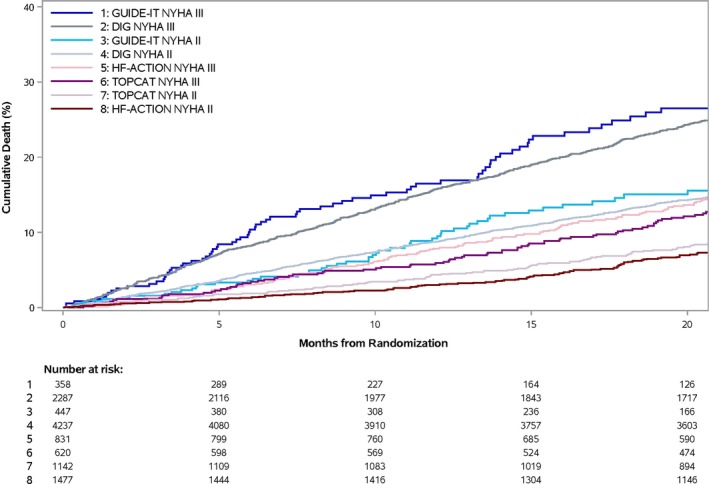
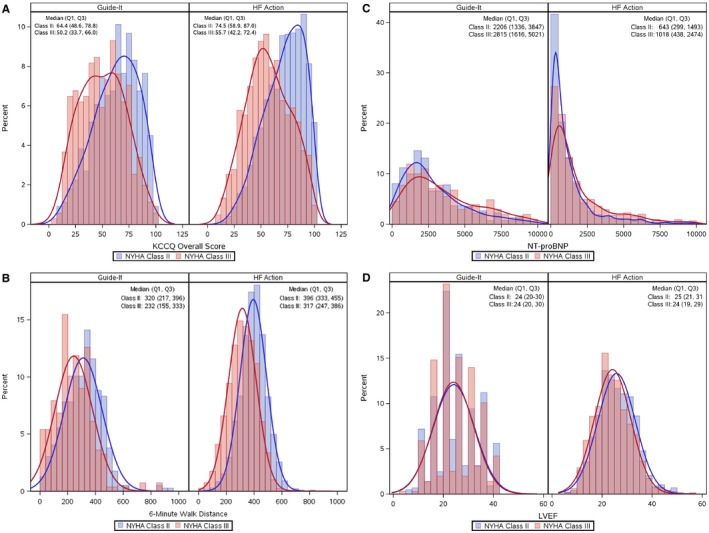
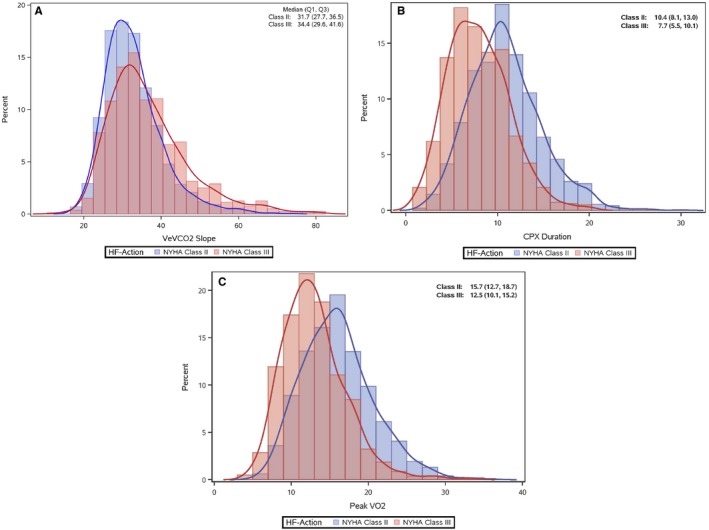
Background The New York Heart Association ( NYHA ) classification has served as a fundamental tool for risk stratification of heart failure ( HF ) and determines clinical trial eligibility and candidacy for drugs and devices. However, its ability to adequately stratify risk is unclear. Methods and Results To compare NYHA class with objective assessments and survival in patients with HF , we performed secondary analyses of 4 multicenter National Institutes of Health–funded HF clinical trials that included patients classified as NYHA class II or III: TOPCAT (Treatment of Preserved Cardiac Function Heart Failure with an Aldosterone Antagonist), DIG (The Effect of Digoxin on Mortality and Morbidity in Patients With Heart Failure), HF‐ACTION (Efficacy and Safety of Exercise Training in Patients With Chronic Heart Failure), and GUIDE‐IT (Guiding Evidence‐Based Therapy Using Biomarker Intensified Treatment in Heart Failure). Twenty‐month cumulative survival was compared between classes using Kaplan–Meier curves and the log rank test. NT ‐proBNP (N‐terminal pro–B‐type natriuretic peptide), Kansas City Cardiomyopathy Questionnaire ( KCCQ ) scores, 6‐minute walk distances, left ventricular ejection fraction, and cardiopulmonary test parameters were compared using Wilcoxon rank sum tests and percentage overlap using kernel density estimations. Cumulative mortality varied significantly across NYHA classes and HF clinical trials (likelihood ratio, P <0.001). Mortality at 20 months for NYHA class II ranged from 7% for patients in HF ‐ ACTION to 15% in GUIDE ‐ IT , whereas mortality for NYHA class III ranged from 12% in TOPCAT to 26% in GUIDE ‐ IT . There was substantial percentage overlap in values for NT ‐pro BNP levels (79% and 69%), KCCQ scores (63% and 54%), 6‐minute walk distances (63% and 54%), and left ventricular ejection fraction (88% and 83%). Similarly, there was substantial overall in values for minute ventilation–carbon dioxide production relationship (71%), maximal oxygen uptake (54%), and exercise duration (53%). Conclusions The NYHA system poorly discriminates HF patients across the spectrum of functional impairment. These findings raise important questions about the need for improved phenotyping of these patients to facilitate risk stratification and response to interventions.
Overview
The claims and statistics of this paper haven’t been checked yet.
Run the check — free, no account needed. It reads the open-access text and checks the sources it cites.
Integrity signals
Registry
Cites
Statistics
Figures
Verification
Claims the paper makes
The claims and statistics of this paper haven’t been checked yet.
Run the check — free, no account needed. It reads the open-access text and checks the sources it cites.
Claims other papers make about this one
Each is checked against this paper’s own text: does it say what the citing paper says it does?
The source backs part of the claim, not all of it — or backs it for a different population, condition or comparison.
In the citing paper
“The commonly utilized NYHA class has variable sensitivity in gauging dyspnoea and classifying patients. 54”
From Prioritizing symptom management in the treatment of chronic heart failure (2020) · cites this paper as [54]
Experimental — accuracy not yet measured
Self-check
Percentages, sums and reported differences re-computed from the paper’s own numbers.
The self-check needs the paper’s full text.
Citations
Cites
Yancy, C. W., Jessup, M., Bozkurt, B., Butler, J., Casey, D. E., Drazner, M. H., Fonarow, G. C., Geraci, S. A., Horwich, T., Januzzi, J. L., et al. (2013) · Circulation · doi:10.1161/cir.0b013e31829e8807 · Cited by 3,304
Self-citationThe effect of digoxin on mortality and morbidity in patients with heart failure
(1997) · New England Journal of Medicine · doi:10.1056/nejm199702203360801 · Cited by 3,016
Spironolactone for heart failure with preserved ejection fraction
Pitt, B., Pfeffer, M. A., Assmann, S. F., Boineau, R., Anand, I. S., Claggett, B., Clausell, N., Desai, A. S., Diaz, R., Fleg, J. L., et al. (2014) · New England Journal of Medicine · doi:10.1056/nejmoa1313731 · Cited by 2,809
O'Connor (2009) · doi:10.1001/jama.2009.454 · Cited by 2,173
Self-citationAbraham, W. T., Adamson, P. B., Bourge, R. C., Aaron, M. F., Costanzo, M. R., Stevenson, L. W., Strickland, W., Neelagaru, S., Raval, N., Krueger, S., et al. (2011) · The Lancet · doi:10.1016/s0140-6736(11)60101-3 · Cited by 1,744
Pfeffer, M. A., Claggett, B. L., Assmann, S. F., Boineau, R., Anand, I. S., Clausell, N., Desai, A. S., Díaz, R., Fleg, J. L., Gordeev, I. G., et al. (2014) · Circulation · doi:10.1161/circulationaha.114.013255 · Cited by 1,083
Goldman, L., Hashimoto, B. E., Cook, E. F., & Loscalzo, A. (1981) · Circulation · doi:10.1161/01.cir.64.6.1227 · Cited by 974
Rogers, J. G., Aaronson, K. D., Boyle, A. J., Russell, S. D., Milano, C. A., Pagani, F. D., Edwards, B. S., Park, S., John, R., Conte, J. V., et al. (2010) · Journal of the American College of Cardiology · doi:10.1016/j.jacc.2009.12.052 · Cited by 591
Felker, G. M., Anstrom, K. J., Adams, K. F., Ezekowitz, J. A., Fiuzat, M., Miller, N. H., Januzzi, J. L., Mark, D. B., Piña, I. L., Passmore, G., et al. (2017) · JAMA · doi:10.1001/jama.2017.10565 · Cited by 554
Self-citationRaphael, C., Briscoe, C., Davies, J. E., Whinnett, Z. I., Manisty, C., Sutton, R., Mayet, J., & Francis, D. P. (2006) · Heart · doi:10.1136/hrt.2006.089656 · Cited by 479
Cited by
Sorted by citations
Items 301–350 of 350
Alizadehasl, A. (2025) · American Journal of Stem Cells · doi:10.62347/ykps8756
García, C. B. A., Eng, I. L. F., Bertoméu, V., Figueredo, E. L., Hernandez, J. E. S., & Dominguez, M. (2025) · Cureus · doi:10.7759/cureus.92714
Güler, A., Türkmen, I., Tülüce, S. Y., Aydın, S., Atmaca, S., Şahin, H., Suna, M., Gündogdu, M. C., Demirci, G., Tekin, M., et al. (2025) · Europe PMC (PubMed Central) · doi:10.6515/acs.202509_41(5).20250531b
Wang, J., Chang, J., Yu, Q., Liu, J., Zheng, Z., & Bao, J. (2025) · International Journal of Nephrology and Renovascular Disease · doi:10.2147/ijnrd.s544378
Huma, L., Suciu, H., Moldovan, D.-A., Suteu, R.-A., Morosanu, S., Babă, D.-F., & Sin, A.-I. (2025) · Cureus · doi:10.7759/cureus.97730
Handgrip Strength in Heart Failure: Developing a Reference Equation
Parahiba, S. M., Ribeiro, É. C. T., Knobloch, I. D. S., Dapper, D., Perry, I. D. S., Clausell, N., Luft, V. C., Souza, G. C., & Rabelo, E. R. (2025) · Arquivos Brasileiros de Cardiologia · doi:10.36660/abc.20240777i
Cavero-Redondo, I., Saz‐Lara, A., Bizzozero‐Peroni, B., Núñez-Martínez, L., Goñi, V. D., Calero‐Paniagua, I., Martínez‐García, I., & Pascual‐Morena, C. (2024) · Figshare · doi:10.6084/m9.figshare.26054641
Hofer-Zeni, S., Leutner, M., Klimek, P., Bellach, L., Pavo, N., Prausmüller, S., Hülsmann, M., & Kautzky‐Willer, A. (2024) · Figshare · doi:10.6084/m9.figshare.26756944
Nguyen, T. V., Nguyen, T. T. T., Nguyen, Y. T. B., & Pham, H. K. T. (2026) · Clinical Epidemiology and Global Health · doi:10.1016/j.cegh.2026.102298
Prasun, M. A., Stamp, K. D., McCoy, T. P., & Rathman, L. D. (2026) · The Journal of Cardiovascular Nursing · doi:10.1097/jcn.0000000000001267
Lemański, T., Folkerts, K., McEwan, P. C., Mernagh, P., Zemojdzin, M., & Pochopień, M. (2026) · Journal of Market Access & Health Policy · doi:10.3390/jmahp14010016
Patient Selection, Referral Framework and Emerging Therapies in Severe Ischemic Heart Failure
Basit, J., Hanmandlu, A., Husainy, B., Awad, A., & Alraies, M. C. (2026) · Heart Failure Clinics · doi:10.1016/j.hfc.2025.12.002
Ezubeik, S. (2026) · Elsevier eBooks · doi:10.1016/b978-0-443-15734-9.00187-4
Profiling the Swallowing Safety and Efficiency of Patients Presenting With Congestive Heart Failure
Smaoui, S., Taran, A., Ganesan, S., Panes, V., Deveaux, G., Bruni, N., & Marzouqah, R. (2026) · Laryngoscope Investigative Otolaryngology · doi:10.1002/lio2.70402
Clinical and echocardiographic features in patients with different phenotypes of heart failure
Dassanayake, D. H. R., Fuward, M., & Kalatsei, L. V. (2026) · International Journal of Research in Medical Sciences · doi:10.18203/2320-6012.ijrms20261319
Sun, M., Fan, B., Lin, M., Yan, K., Yang, C., & Gao, Z. (2026) · Frontiers in Cardiovascular Medicine · doi:10.3389/fcvm.2026.1740664
Toshio, T., Keiko, Y., Ryo, I., & Taro, T. (2026) · Modern Rheumatology · doi:10.1093/mr/roag040
Awal, I., Kang, J., Biddle, M., Thapa, A., Cha, G., & Moser, D. K. (2026) · Heart & Lung · doi:10.1016/j.hrtlng.2026.102843
Dongmei, G., He, M., & Zhuo, J. (2026) · Frontiers in Medicine · doi:10.3389/fmed.2026.1836620
Arnold, M., Gscheidle, S., Klähn, A.-K., Rottenkolber, D., Bovy, L., Ludwig, M., Conrad, H.-J., Zehe, D., Müller, L., Griewing, B., et al. (2026) · Das Gesundheitswesen · doi:10.1055/a-2808-9797
HFpEF Diagnosis: A Challenge in CKD with Current Algorithms
Stefan, A.-E., Covic, M., Dodi, G., Avanu, A. E., Bîrgoan, S.-G., Moroșanu, C., Bazyani, A., Kanbay, M., Sascău, R. A., & Covic, A. C. (2026) · Life · doi:10.3390/life16060944
Durbesula, P. T., Gautham, A., Ramsankar, P., & Sai Chandran, B. V. (2026) · Cureus · doi:10.7759/cureus.110280
Switching from stimulant laxatives to macrogol-4000 in patients with chronic constipation
Аркадьевич, П. А., Cherdantsev, D. V., & Anufrieva, I. A. (2026) · Koloproktologia · doi:10.33878/2073-7556-2026-25-2-87-96
Joy, N., Soslow, J. H., Crum, K., Killian, M., & Sunthankar, S. D. (2026) · Cardiology in the Young · doi:10.1017/s1047951126113493
Iddrisu, M.-D., Rodriguez, E., Leyva, X. M., Obisesan, O. H., Molitch-Hou, E., Hui, S., & Nguyen, A. B. (2026) · Cureus · doi:10.7759/cureus.110663
Pharmakotherapie der chronischen Herzinsuffizienz
Oexner, R. R., & Frantz, S. (2026) · Kardiologie up2date · doi:10.1055/a-2701-0826
Demirel, C., Şahin, A., & Barmanpek, N. K. (2026) · İnönü Üniversitesi Sağlık Hizmetleri Meslek Yüksek Okulu Dergisi · doi:10.33715/inonusaglik.1790286
Sedation for the Patient with Significant Medical Comorbidities
Freburg-Hoffmeister, D. L., & Fields, K. (2026) · Dental Clinics of North America · doi:10.1016/j.cden.2026.05.004
Analysis of clinical characteristics of 38 patients with dextrocardia: An observational study
Li, Y., Wang, C., Li, X., Fan, Y., Zhang, B., Rong, C., Li, S., & Sun, Z. (2026) · Medicine · doi:10.1097/md.0000000000049458
Dysbiosis of oral bacteriome and mycobiome associated with the severity of heart failure
Li, H.-Y., Wu, Q.-Y., Wang, Z.-Y., Hu, X.-M., & Zhang, S.-Y. (2026) · BMC Oral Health · doi:10.1186/s12903-026-08977-1
Chesnikova, A. I., Сафроненко, В. А., & Kolomatskaya, O. E. (2026) · Кубанский научный медицинский вестник · doi:10.25207/1608-6228-2026-33-3-47-61
Jiang, X., Feng, X., Liu, W. T., Gong, S., Peng, X., & Wang, X. (2026) · Reviews in Cardiovascular Medicine · doi:10.31083/rcm49717
Abdelrahman, A. A., & Hamouda, M. R. A. (2026) · Cureus · doi:10.7759/cureus.112290
Ma, L., Li, H., Gou, M., Liu, X., & Zhang, T. (2026) · Frontiers in Endocrinology · doi:10.3389/fendo.2026.1857196
Santana, C., Katayama, A., Ballal, A., Sirish, P., Liem, D. A., Bidwell, J. T., Chen, C., Nuño, M., Ebong, I., Zhang, X.-D., et al. (2026) · medRxiv · doi:10.64898/2026.07.06.26357251
Blagojević, A., Tomašević, S., Pavić, O., Dašić, L., Geroski, T., Preveden, A., Velicki, L., & Filipović, N. (2026) · Lecture notes in networks and systems · doi:10.1007/978-3-032-23890-0_5
Dyspnea in heart failure: pathophysiology, clinical assessment, and evidence from clinical trials
Garus, M., Guzik, M., Tymków, R., Gajewski, P., Zymliński, R., & Biegus, J. (2026) · Heart Failure Reviews · doi:10.1007/s10741-026-10659-7
Schaarup, J. R., Bjerg, L., Hansen, C. S., Witte, D. R., Thomsen, H. H., Fleischer, J., Pop‐Busui, R., & Andersen, S. T. (2026) · Diabetes Obesity and Metabolism · doi:10.1111/dom.71100
HLM Staging and Treatment Benefit of SGLT2i Across Heart Failure Severity
D’Amato, A., Ferranti, F. F. F., Cestiè, C., Casasola, A., Prosperi, S., Myftari, V., Germanò, R., Segato, C., Manzi, G., Filomena, D., et al. (2026) · Journal of Cardiovascular Development and Disease · doi:10.3390/jcdd13080361
Deng, X.-J., Xu, H.-Q., Bian, Y.-P., Xu, Y.-T., Ao, G.-F., Yang, L.-Y., Ji, Y., Xu, J., & Xu, F. (2026) · Journal of preventive medicine and public health = Yebang Uihakhoe chi · doi:10.3961/jpmph.26.200
Ćićarić, N., Matic, S. D., Djordjević, N., Markovic, T., Stanojević-Pirković, M., Stevanović, Đ., Urakovic, N., Ivosevic, Z., Stojanović, L., Davidović, G., et al. (2026) · Biomedicines · doi:10.3390/biomedicines14081783
Nazir, F., Shabbir, T., Saleem, S., Khalid, B., Binliaquat, S., Yousaf, S., & Bibi, S. (2026) · Cureus · doi:10.7759/cureus.114248
Patient Selection, Referral Framework and Emerging Therapies in Severe Ischemic Heart Failure
Basit, J., Hanmandlu, A., Husainy, B., Awad, A., & Alraies, M. C. (2026) · Cardiac Electrophysiology Clinics · doi:10.1016/j.ccep.2026.06.012
Hu, Q., Yao, T., Li, M., Miao, Y., Xia, Z., & Wang, X. (2026) · Frontiers in Nutrition · doi:10.3389/fnut.2026.1861582
Socransky, O., Friedman, Z., Gutterman, D. D., Shinfeld, A., Koren, D., Rimon, J., Kumbhare, D. A., Clarke, H. A., Slepian, P. M., Lidor, R., et al. (2026) · Cardiology in Review · doi:10.1097/crd.0000000000001447
Nam, Y., & Sethares, K. A. (2026) · European Journal of Cardiovascular Nursing · doi:10.1093/eurjcn/zvag208
Al‐Rubai, A. H., Davidovski, F. S., Espersen, C., Stanchev, A., Adam, L. M., Khoraizat, A., Skaarup, K. G., Dons, M., Christensen, J., Durukan, E., et al. (2026) · Echocardiography · doi:10.1111/echo.70634
Yang, Q., Zhang, N., Zheng, M., Cheng, Y., & Zhou, J. (2026) · Geriatrics and gerontology international/Geriatrics & gerontology international · doi:10.1111/ggi.70849
Choosing Cardiovascular Assessment and Risk-Prediction Tools Across the Care Pathway
Perpétuo, L., Trindade, F., Bastos, M., Leite-Moreira, A. F., & Vitorino, R. (2026) · Cardiology in Review · doi:10.1097/crd.0000000000001502
Rawat, A., Omaruddin, L. E., Sayeed, N., Kandi, A., Behbehani, D., Sriram, R., Ashraf, L., Afridi, I. S., & Raja, H. G. (2026) · Cureus · doi:10.7759/cureus.118553
Metadata
- Authors
- Caraballo, C., Desai, N. R., Mulder, H., Alhanti, B., Wilson, F. P., Fiuzat, M., Felker, G. M., Piña, I. L., O'Connor, C. M., Lindenfeld, J., Januzzi, J. L., Cohen, L. S., & Ahmad, T.
- Affiliations
- Yale University (US)
- Duke Clinical Research Institute (US)
- Detroit Medical Center (US)
- Inova Heart and Vascular Institute Fairfax VA
- Vanderbilt University Medical Center (US)
- Massachusetts General Hospital (US)
- Corresponding author
- Ahmad, Tariq
- ORCID
- Venue
- Journal of the American Heart Association
- Published
- 2019-12-03
- Volume
- 8
- Issue
- 23
- Pages
- e014240-e014240
- ISSN
- 2047-9980 (ISSN-L)
- PMC
- PMC6912957
- OpenAlex
- W2991004728
- Cited by
- 351
- References
- 14
- Citations by year
- 2026: 48 · 2025: 76 · 2024: 65 · 2023: 74 · 2022: 43 · 2021: 34 · 2020: 10
- FWCI
- 15.73
- Type
- journal article
- Language
- en
- Open access
- gold
- doi.org
- Licence
- cc-by-nc
- Locations
- Journal of the American Heart Association (publishedVersion, cc-by-nc)
- Europe PMC (PubMed Central) (publishedVersion, cc-by-nc)
- PubMed Central (publishedVersion, cc-by-nc)
- PubMed (publishedVersion)
- DOAJ (DOAJ: Directory of Open Access Journals) (submittedVersion)
- Funders
- National Institutes of Health (UL1TR001863)
- National Institute of Diabetes and Digestive and Kidney Diseases (P30DK079310)
- National Center for Advancing Translational Sciences
- Topics
- Health Sciences › Medicine › Cardiology and Cardiovascular Medicine › Heart Failure Treatment and Management
- Health Sciences › Medicine › Cardiology and Cardiovascular Medicine › Heart rate and cardiovascular health
- Health Sciences › Medicine › Physiology (medical) › Cardiovascular and exercise physiology
- Keywords
- NYHA functional class, heart failure, risk stratification, mortality, NT-proBNP, Kansas City Cardiomyopathy Questionnaire, 6-minute walk distance, left ventricular ejection fraction, exercise capacity, patient phenotyping, TOPCAT, dig
- MeSH terms
- Heart Failure, Humans, New York, Societies, Medical, Risk Assessment
About these checks
Registry, retraction, Cites and statistics results are computed, not judged, with one exception: a printed reference that no index lists is read once by a model before it counts as a citation error. Claims are extracted by a model and kept only when their quote appears verbatim in the text; each cited source is then checked, with a model’s help, for whether it says what the claim relies on. Those verdicts can be wrong — read the claim’s quote and the cited source before relying on one.
Statistics and arithmetic are recomputed, not judged.
Confidence bands are shown only for fields calibrated on our annotated test set. None is calibrated yet, so no band is shown.
What counts as a claim ›How we measure confidence ›How we check this ›
Are you an author, or do you see a problem with this page? Request a review
