

The Surprising Creativity of Digital Evolution: A Collection of Anecdotes from the Evolutionary Computation and Artificial Life Research Communities
Open accessThe DOI matches its Crossref record; 162 of the 162 references it cites were found in a registry or an index.
Abstract
Evolution provides a creative fount of complex and subtle adaptations that often surprise the scientists who discover them. However, the creativity of evolution is not limited to the natural world: Artificial organisms evolving in computational environments have also elicited surprise and wonder from the researchers studying them. The process of evolution is an algorithmic process that transcends the substrate in which it occurs. Indeed, many researchers in the field of digital evolution can provide examples of how their evolving algorithms and organisms have creatively subverted their expectations or intentions, exposed unrecognized bugs in their code, produced unexpectedly adaptations, or engaged in behaviors and outcomes, uncannily convergent with ones found in nature. Such stories routinely reveal surprise and creativity by evolution in these digital worlds, but they rarely fit into the standard scientific narrative. Instead they are often treated as mere obstacles to be overcome, rather than results that warrant study in their own right. Bugs are fixed, experiments are refocused, and one-off surprises are collapsed into a single data point. The stories themselves are traded among researchers through oral tradition, but that mode of information transmission is inefficient and prone to error and outright loss. Moreover, the fact that these stories tend to be shared only among practitioners means that many natural scientists do not realize how interesting and lifelike digital organisms are and how natural their evolution can be. To our knowledge, no collection of such anecdotes has been published before. This article is the crowd-sourced product of researchers in the fields of artificial life and evolutionary computation who have provided first-hand accounts of such cases. It thus serves as a written, fact-checked collection of scientifically important and even entertaining stories. In doing so we also present here substantial evidence that the existence and importance of evolutionary surprises extends beyond the natural world, and may indeed be a universal property of all complex evolving systems.
Overview
The claims and statistics of this paper haven’t been checked yet.
Free: it reads the open-access text and checks the first 5 claims that cite a source we can check. Create a free account to check every claim.
Integrity signals
Registry
Cites
Statistics
Figures



Verification
Claims the paper makes
The claims and statistics of this paper haven’t been checked yet.
Free: it reads the open-access text and checks the first 5 claims that cite a source we can check. Create a free account to check every claim.
Claims other papers make about this one
Each is checked against this paper’s own text: does it say what the citing paper says it does?
The cited source says what the claim attributes to it.
In the citing paper
“Much like natural and artificial evolution (79), our framework also demonstrates remarkable creativity in discovering solutions, for instance, it independently evolved distributed eyelet-type architectures without being explicitly designed to do so.”
From What if eye...? Computationally recreating vision evolution (2025) · cites this paper as [79]
The cited source says what the claim attributes to it.
In the citing paper
“This method effectively stopped the organisms from deceitfully evolving to replicate faster.”
From AI deception: A survey of examples, risks, and potential solutions (2024) · cites this paper as [10]
The cited source says what the claim attributes to it.
In the citing paper
“This experience demonstrates how evolutionary pressures can select for agents that deceive their selection mechanism, a concerning form of deception that could arise in other contexts.”
From AI deception: A survey of examples, risks, and potential solutions (2024) · cites this paper as [10]
The cited source says what the claim attributes to it.
In the citing paper
“Indeed, we have already observed an AI system deceiving its evaluation.”
From AI deception: A survey of examples, risks, and potential solutions (2024) · cites this paper as [10]
In the citing paper
“Ofria realized that the organisms had learned to recognize the testing environment and stop replicating. They were pretending to be slower replicators to avoid being removed.”
From AI deception: A survey of examples, risks, and potential solutions (2024) · cites this paper as [10]
1 more claim about this paper
Create a free account to see every claim other papers make about this one.
Self-check
Percentages, sums and reported differences re-computed from the paper’s own numbers.
The self-check needs the paper’s full text.
Citations
Cites
Human-level control through deep reinforcement learning
Mnih, V., Kavukcuoglu, K., Silver, D., Rusu, A. A., Veness, J., Bellemare, M. G., Graves, A., Riedmiller, M., Fidjeland, A. K., Ostrovski, G., et al. (2015) · Nature · doi:10.1038/nature14236 · Cited by 30,357 · cited 2×
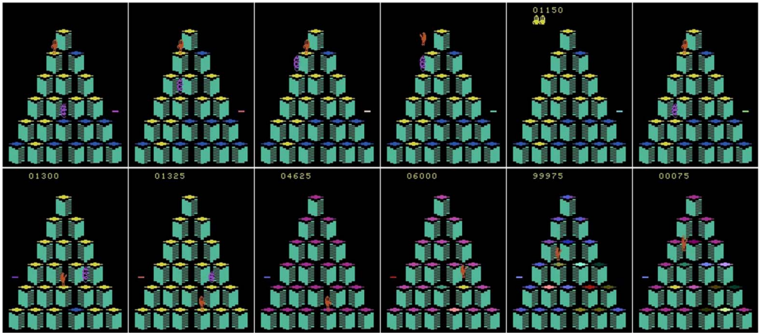
“Atari games are a common benchmark in deep reinforcement learning [94, 95, 117, 132].”
Potent and specific genetic interference by double-stranded RNA in Caenorhabditis elegans
Fire, A., Xu, S., Montgomery, M. K., Kostas, S. A., Driver, S. E., & Mello, C. C. (1998) · Nature · doi:10.1038/35888 · Cited by 15,429 · cited 1×
“Even seasoned field biologists are still surprised by the new adaptations they discover, which they express in popular press accounts of their work [100, 111, 77], but only more rarely in official academic publications, for example, in [41] but not in [76, 142].”
BackgroundGenetic Programming: On the Programming of Computers by Means of Natural Selection
Koza, J. R. (1992) · Medical Entomology and Zoology · Cited by 13,082
On computable numbers, with an application to the entscheidungsproblem
Turing, A. M. (1937) · Proceedings of the London Mathematical Society · doi:10.1112/plms/s2-42.1.230 · Cited by 8,283 · cited 1×
“However, a well-known result in theoretical computer science is that, for many computer programs, the outcome of a program cannot be predicted without actually running it [58].”
The Neutral Theory of Molecular Evolution
Kimura, M. (1979) · Scientific American · doi:10.1038/scientificamerican1179-98 · Cited by 7,666
Asynchronous Methods for Deep Reinforcement Learning
Mnih, V., Badia, A. P., Mirza, M., Graves, A., Lillicrap, T. P., Harley, T., Silver, D., & Kavukcuoglu, K. (2016) · arXiv · doi:10.48550/arxiv.1602.01783 · Cited by 7,132 · cited 2×
“Relevant to this anecdote, researchers at OpenAI [87], Uber [89], and the University of Freiburg [90] have recently shown that evolutionary algorithms are a competitive approach to solving such games [86, 88].”
The Neutral Theory of Molecular Evolution
Kimura, M. (1983) · Cambridge University Press eBooks · doi:10.1017/cbo9780511623486 · Cited by 6,347
Exaptation—a missing term in the science of form
Gould, S. J., & Vrba, E. S. (1982) · Paleobiology · doi:10.1017/s0094837300004310 · Cited by 5,136 · cited 1×
“Although evolution lacks the foresight and intentionality of human creativity, structures evolved for one functionality are often opportunistically adapted for other purposes, a phenomenon known as exaptation [54].”
BackgroundThe Ecology of Adaptive Radiation
Schluter, D. (2000) · doi:10.1093/oso/9780198505235.001.0001 · Cited by 4,974
The standard definition of creativity
Runco, M. A., & Jaeger, G. J. (2012) · Creativity Research Journal · doi:10.1080/10400419.2012.650092 · Cited by 3,895 · cited 1×
“Thus to avoid a semantic and philosophical quagmire, while acknowl-edging that other definitions and opinions exist, we here adopt the “ standard definition ” [116]: Cre-ativity requires inventing something both original (i.e., novel) and effective (i.e., functional).”
Research works printed but not linked: 6
- 22. Darwin, C. (1859). On the origin of species . London: John Murray.
- 31. Ecarlat, P., Cully, A., Maestre, C., & Doncieux, S. (2015). Learning a high diversity of object manipulations through an evolutionary-based babbling. In Proceedings of Learning Objects Affordances Workshop at IROS 2016 (pp. 1 -2). Hambourg: IROS.
- 39. Feldt, R. (1999). Genetic programming as an explorative tool in early software development phases. In C. Ryan & J. Buckley (Eds.), Proceedings of the 1st International Workshop on Soft Computing Applied to Software Engineering (pp. 11 -20). Limerick: Limerick University Press.
- 111. Press Release. (2016). In Arctic winter, marine creatures migrate by the light of the moon. https://www. eurekalert.org/pub\_releases/2016-01/cp-iaw123015.php. Accessed: 2019-06-18.
- 112. Ray, T. (1992). J ' ai joué á Dieu et créé la vie dans mon ordinateur. Le Temps stratégique , 47 , 68 -81.
- 114. Rechenberg, I. (1973). Evolutionsstrategie -Optimierung technisher Systeme nach Prinzipien der biologischen Evolution . Stuttgart, Germany: Frommann-Holzboog.
Cited by
Items 101–200 of 257
Human irrationality: both bad and good for reward inferencePreprint
Chan, L., Critch, A., & Dragan, A. D. (2021) · arXiv (Cornell University) · doi:10.48550/arxiv.2111.06956 · Cited by 34
“Motivated by difficulty in reward specification [21], inverse reinforcement learning (IRL) methods estimate a reward function from human demonstrations [24, 1, 20, 17, 23].”
BackgroundProbabilistic Neural Circuits leveraging AI-Enhanced Codesign for Random Number Generation
Cardwell, S., Schuman, C. D., Smith, J. D., Patel, K., Kwon, J., Liu, S., Allemang, C., Misra, S., Incorvia, J. A. C., & Aimone, J. B. (2022) · IEEE International Conference on Rebooting Computing (ICRC) · doi:10.1109/icrc57508.2022.00008 · Cited by 10
“They have been found to have surprising creativity in the design of novel solutions to a variety of problems [11].”
BackgroundWallace, A., Brownlee, A. E. I., & Cairns, D. R. (2021) · Lecture notes in computer science · doi:10.1007/978-3-030-91100-3_5 · Cited by 12
“Finally, metaheuristics are very good at finding loopholes in the problem definition [19].”
BackgroundEvolvingBehavior: Towards Co-Creative Evolution of Behavior Trees for Game NPCs
Partlan, N., Soto, L., Howe, J., Shrivastava, S., El‐Nasr, M. S., & Marsella, S. (2022) · International Conference on the Foundations of Digital Games (FDG) · doi:10.1145/3555858.3555896 · Cited by 10
Value Alignment for Advanced Artificial Judicial Intelligence
Winter, C. K., Hollman, N., & Manheim, D. (2023) · American Philosophical Quarterly · doi:10.5406/21521123.60.2.06 · Cited by 15
“For instance, the AI safety literature shows many examples of an AI behaving in unintended ways due to a misaligned goal of the system (Amodei and Clark 2016; Amodei et al. 2016; Lehman et al. 2020; Krakovna 2018; “Artificial Intelligence Incident Database” 2022).”
The paradox of trust in artificial intelligence and its rationale
Leshkevich, T. (2023) · Philosophy of Science and Technology · doi:10.21146/2413-9084-2023-28-1-34-47 · Cited by 11
Your Buddy, the Grandmaster: Repurposing the Game-Playing AI Surplus for Inclusivity
Aytemiz, B., Shu, X., Hu, E. J., & Smith, A. M. (2020) · Proceedings of the AAAI Conference on Artificial Intelligence and Interactive Digital Entertainment · doi:10.1609/aiide.v16i1.7402 · Cited by 9
Evolutionary Perspectives on Human-Artificial Intelligence Convergence
Zybailov, B. L., Kosovsky, G. Y., Glazko, G. V., Глазко, В. И., & Skobel, O. I. (2024) · Acta Naturae · doi:10.32607/actanaturae.27406 · Cited by 10
Evolvable AI: Threats of a new major transition in evolution
Müller, V., Steels, L., & Szathmáry, E. (2026) · Proceedings of the National Academy of Sciences · doi:10.1073/pnas.2527700123 · Cited by 13
“Lehman, Clune, Misevic, and 60+ coauthors compiled 30+ first - hand vignettes where evolutionary algorithms and Artificial Life systems did something their designers did not expect—often by optimiz - ing the letter of a goal while subverting its spirit (29).”
Kvam, P. D., Sokratous, K., Fitch, A. K., & Hintze, A. (2024) · Decision · doi:10.1037/dec0000237 · Cited by 17
“On the other, simulating evolutionary processes allows us to discover new decision strategies or mechanisms that we might not otherwise have considered as candidate explanations for behavior (Ling & Lam, 2019; Miikkulainen, 2021; Miikkulainen et al., 2019; Lehman et al., 2018).”
Imagination machines, Dartmouth-based Turing tests, & a potted history of responses
Chen, M. (2018) · AI & Society · doi:10.1007/s00146-018-0855-3 · Cited by 11
Learning Physically Based Humanoid Climbing Movements
Naderi, K., Babadi, A., & Hämäläinen, P. (2018) · Computer Graphics Forum · doi:10.1111/cgf.13513 · Cited by 8
Modelling the evolution of novelty: a review
Colizzi, E. S., Hogeweg, P., & Vroomans, R. M. A. (2022) · Essays in Biochemistry · doi:10.1042/ebc20220069 · Cited by 8
Why We Do Not Evolve Software? Analysis of Evolutionary Algorithms
Yampolskiy, R. V. (2018) · Evolutionary Bioinformatics · doi:10.1177/1176934318815906 · Cited by 9
Severe damage recovery in evolving soft robots through differentiable programming
Horibe, K., Walker, K., Palm, R. B., Sudhakaran, S., & Risi, S. (2022) · Genetic Programming and Evolvable Machines · doi:10.1007/s10710-022-09433-z · Cited by 13
“On the other hand, evolutionary algorithms have shown to be better suited for open-ended search [55] (instead of training towards a target) and the creative discovery of artefacts and behaviours [56].”
BackgroundUnderstanding and Avoiding AI Failures: A Practical Guide
Williams, R. M., & Yampolskiy, R. V. (2021) · ThinkIR: The University of Louisville's Institutional Repository (University of Louisville) · doi:10.18297/etd/3442 · Cited by 53
An Efficient Way of Introducing Gender Into Evolutionary Algorithms
Kasten, C., Fahr, J., & Klein, M. (2022) · IEEE Transactions on Evolutionary Computation · doi:10.1109/tevc.2022.3192481 · Cited by 7
CirFix: Automated Hardware Repair and its Real-World Applications
Santiesteban, P., Huang, Y., Weimer, W. R., & Ahmad, H. (2023) · IEEE Transactions on Software Engineering · doi:10.1109/tse.2023.3269899 · Cited by 10
“…to domain expertise, APR experts tend to be more suited to assessing the patches produced by these methods due to “cre-ative” (or adversarial or potentially-overfitting) nature of such patches [94], [95], [96], and evidence suggests that domain-experts may not be a strong gold standard [97].”
BackgroundSelf-citationRosser, C. C., Walters, W. L., Abdulghani, A. M., Abdulghani, M. M., & Abed, K. H. (2022) · Journal on artificial intelligence · doi:10.32604/jai.2022.039703 · Cited by 10
Device Codesign Using Reinforcement Learning
Cardwell, S., Patel, K., Schuman, C. D., Smith, J. D., Kwon, J., Maicke, A., Arzate, J. D., & Incorvia, J. A. C. (2024) · IEEE International Symposium on Circuits and Systems proceedings · doi:10.1109/iscas58744.2024.10558165 · Cited by 7
“Evolutionary algorithms on the other hand have been used for decades to design analog circuits [6] and can be creative in the design of novel solutions to a variety of problems [7].”
BackgroundEmergence in Multi-agent Systems: A Safety Perspective
Altmann, P. J., Schönberger, J., Illium, S., Zorn, M., Ritz, F., Haider, T., Burton, S., & Gabor, T. (2024) · Lecture notes in computer science · doi:10.1007/978-3-031-75107-3_7 · Cited by 21
Liu, S., & Wang, K. (2024) · International Conference on Computer Science and Application Engineering (CSAE) · doi:10.1145/3704814.3704822 · Cited by 13
“This section explores the research advancements, challenges, and potential issues in applying deep learning methods to TMC[36, 45].”
A Study of the Coevolution of Digital Organisms with an Evolutionary Cellular Automaton
Falgueras‐Cano, J., Falgueras, J., & Moyá, A. (2021) · Biology · doi:10.3390/biology10111147 · Cited by 7
“Some of them are even used to find ingenious solutions to specific problems [25].”
BackgroundLoopholes, a Window into Value Alignment and the Learning of Meaning
Cognitive Science Society 2021, Bridgers, S., Schulz, L., & Ullman, T. D. (2021) · Proceedings of the Annual Meeting of the Cognitive Science Society · doi:10.48448/xk78-k874 · Cited by 9
университет, М. –. Р. Т., & Смирнов, А. В. (2018) · Russian Technological Journal · doi:10.32362/2500-316x-2018-6-6-13-27 · Cited by 7
Symbiosis in Digital Evolution: Past, Present, and Future
Vostinar, A. E., Skocelas, K. G., Lalejini, A., & Zaman, L. (2021) · Frontiers in Ecology and Evolution · doi:10.3389/fevo.2021.739047 · Cited by 14
Open Questions in Creating Safe Open-ended AI: Tensions Between Control and Creativity
Ecoffet, A., Clune, J., & Lehman, J. (2020) · The 2020 Conference on Artificial Life · doi:10.1162/isal_a_00323 · Cited by 6
Self-citationShults, F. L., Wildman, W. J., Toft, M. D., & Danielson, A. (2021) · Winter Simulation Conference · doi:10.1109/wsc52266.2021.9715391 · Cited by 9
Evolution of innate behavioral strategies through competitive population dynamics
Liang, T., & Brinkman, B. A. W. (2022) · PLoS Computational Biology · doi:10.1371/journal.pcbi.1009934 · Cited by 7
What Is Artificial Life Today, and Where Should It Go?
Dorin, A., & Stepney, S. (2024) · Artificial Life · doi:10.1162/artl_e_00435 · Cited by 22
Freeform generative design of complex functional structures
Pereira, G. G., Howard, D., Lahur, P. R., Breedon, M., Kilby, P., & Hornung, C. (2024) · Scientific Reports · doi:10.1038/s41598-024-62830-5 · Cited by 8
Population and organismal perspectives on trait origins
McLoone, B. (2020) · Studies in History and Philosophy of Science Part C Studies in History and Philosophy of Biological and Biomedical Sciences · doi:10.1016/j.shpsc.2020.101288 · Cited by 7
Katona, A., Franks, D. W., & Walker, J. A. (2021) · Conference on Artificial Life (ALIFE) · doi:10.1162/isal_a_00414 · Cited by 7
Morphological Evolution: Bioinspired Methods for Analyzing Bioinspired Robots
Aaron, E., Hawthorne-Madell, J., Livingston, K., & Long, J. H. (2022) · Frontiers in Robotics and AI · doi:10.3389/frobt.2021.717214 · Cited by 6
“…(i.e., 501 iterations in a simulation loop) in which to move; each robot starts with its lowest point 0.1 units above the ground (to avoid “ cheating ” that can occur in simulations with physics engines; see Lehman et al., 2020), and the resulting small drop to the ground initiates its motion.”
BackgroundInfluentialMathé‐Hubert, H., Amia, R., Martin, M., Gaffé, J., & Schneider, D. (2022) · Antibiotics · doi:10.3390/antibiotics11040451 · Cited by 6
“It might exist in all living organisms as it has been observed in all studied bacterial species [6,9], in eukaryotic cells resulting in cancer relapse [9–12], and even accidentally in digital organisms that learned to play dumb randomly at a low rate [13].”
BackgroundCopyright Throughout a Creative AI PipelinePreprint
McCann, S. (2021) · SSRN Electronic Journal · doi:10.2139/ssrn.3893972 · Cited by 6
Loopholes: A window into value alignment and the communication of meaningPreprint
Bridgers, S., Qian, P., Taliaferro, M., Parece, K., Schulz, L., & Ullman, T. D. (2023) · PsyArXiv (OSF Preprints) · doi:10.31234/osf.io/cnxzv · Cited by 7
Xu, H., & Dinev, T. (2022) · MIS Quarterly · doi:10.25300/misq/2022/464e2 · Cited by 8
Artificial Intelligence in Industry 4.0: Implications for Occupational Safety and HealthPreprint
Bérastégui, P. (2024) · SSRN Electronic Journal · doi:10.2139/ssrn.4867719 · Cited by 13
10. Military Artificial Intelligence as a Contributor to Global Catastrophic Risk
Maas, M. M., Matteucci, K., & Cooke, D. (2023) · Open Book Publishers · doi:10.11647/obp.0336.10 · Cited by 16
Evolutionary Computation and the Reinforcement Learning Problem
Kelly, S., & Schossau, J. (2023) · Genetic and evolutionary computation · doi:10.1007/978-981-99-3814-8_4 · Cited by 6
Patel, K., Maicke, A., Arzate, J. D., Kwon, J., Smith, J. D., Aimone, J. B., Incorvia, J. A. C., Cardwell, S., & Schuman, C. D. (2025) · Communications Engineering · doi:10.1038/s44172-025-00376-8 · Cited by 7
The Anatomy of moral agency: A theological and neuroscience inspired model of virtue ethics
Crook, N., & Corneli, J. (2021) · Cognitive Computation and Systems · doi:10.1049/ccs2.12024 · Cited by 9
“The system programmer might even be surprised that the robot discovered this exploit, although such occurrences are not infrequent [3].”
BackgroundLehman, J. (2020) · Genetic and evolutionary computation · doi:10.1007/978-3-030-39958-0_10 · Cited by 7
Self-citationCausal Campbell-Goodhart’s Law and Reinforcement Learning
Ashton, H. (2021) · International Conference on Agents and Artificial Intelligence (ICAART) · doi:10.5220/0010197300670073 · Cited by 12
Brownlee, A. E. I., Epitropakis, M. G., Mulder, J., Paelinck, M., & Burke, E. K. (2022) · Journal of Heuristics · doi:10.1007/s10732-022-09501-8 · Cited by 5
“…loophole in the problem’s definition: examples of such loopholes from the broader metaheuristics community include a simulated robot that maximised its walking speed by simply growing tall and falling over, or the tic-tac-toe AI that triggered a memory overflow in its opponent (Lehman et al. 2020).”
BackgroundRobustness to fundamental uncertainty in AGI alignmentPreprint
Worley, G. (2018) · arXiv.org · doi:10.48550/arxiv.1807.09836 · Cited by 4
Literal or Pedagogic Human? Analyzing Human Model Misspecification in Objective LearningPreprint
Milli, S., & Dragan, A. D. (2019) · arXiv (Cornell University) · doi:10.48550/arxiv.1903.03877 · Cited by 16
“It is notoriously difficult for system designers to directly specify the correct objective for a system (Krakovna, 2018; Lehman et al., 2018; Clark & Amodei, 2017).”
BackgroundEditorial: Evolving Robotic Morphologies
Howard, D., Glette, K., & Cheney, N. (2022) · Frontiers in Robotics and AI · doi:10.3389/frobt.2022.874853 · Cited by 5
“Morphology evolution allows us to create and study systems based on the principles of embodied cognition, whereby coupling (evolved) controllers to (evolved) physical substrates in a meaningful environment (Miras and Eiben, 2019) allows for surprising, rich behaviours that emerge from interactions between the three (L…”
BackgroundSelf-citationWhat if eye...? Computationally recreating vision evolution
Tiwary, K., Young, A., Tasneem, Z., Klinghoffer, T., Dave, A., Poggio, T., Nilsson, D.-E., Cheung, B., & Raskar, R. (2025) · Science Advances · doi:10.1126/sciadv.ady2888 · Cited by 10
Reining‐In the Spring‐Slider With Reinforcement Learning
Schultz, R. (2025) · Journal of Geophysical Research Solid Earth · doi:10.1029/2024jb029697 · Cited by 5
“Certainly, reinforcement learning agents can be quite creative in finding policies that maximize rewards, but distort their intended goal (Lehman et al., 2020).”
Li, N., Wang, L., Jiang, Q., Li, X., Wang, B., & He, W. (2021) · IEEE Access · doi:10.1109/access.2021.3114435 · Cited by 4
“In addition, more interesting applications can be found in literature [12].”
BackgroundReward Gaming in Conditional Text Generation
Pang, R. Y., Padmakumar, V., Sellam, T., Parikh, A. P., & He, H. (2023) · Proceedings of the conference - Association for Computational Linguistics. Meeting · doi:10.18653/v1/2023.acl-long.262 · Cited by 36
Blocky Net: A New NeuroEvolution Method
Watts, T., Xue, B., & Zhang, M. (2019) · IEEE Congress on Evolutionary Computation (CEC) · doi:10.1109/cec.2019.8790302 · Cited by 4
“NeuroEvolution, the process of evolving the structure, weights and input space of an ANN is a flexible solution for these problems and known to produce state-of-the-art results, and in many cases highly creative solutions [3].”
BackgroundAI Legal Counsel to train and regulate legally constrained Autonomous systems
Ashton, H. (2020) · IEEE International Conference on Big Data (BigData) · doi:10.1109/bigdata50022.2020.9378389 · Cited by 4
“Simulators risk misspec-ification leading to unexpected behaviour being learnt (see Lehman et al [35]).”
BackgroundTamò‐Larrieux, A., Ciortea, A., & Mayer, S. (2022) · Technology in Society · doi:10.1016/j.techsoc.2022.102088 · Cited by 4
Ethical risks of AI-designed products: bespoke surgical tools as a case study
Douglas, D., Lacey, J., & Howard, D. (2022) · AI and Ethics · doi:10.1007/s43681-022-00219-8 · Cited by 6
Life as a Cyber-Bio-Physical System
Stepney, S. (2023) · Genetic and evolutionary computation · doi:10.1007/978-981-19-8460-0_8 · Cited by 10
On Failure Modes of Molecule Generators and OptimizersPreprint
Renz, P., Rompaey, D. V., Wegner, J. K., Hochreiter, S., & Klambauer, G. (2020) · ChemRxiv · doi:10.26434/chemrxiv.12213542 · Cited by 5
“This phenomenon of optimization of a score in unexpected ways, has been observed in other applications (Lehman et al. 2019).”
ResultMilitary Artificial Intelligence as Contributor to Global Catastrophic RiskPreprint
Maas, M. M., Matteucci, K., & Cooke, D. (2022) · SSRN Electronic Journal · doi:10.2139/ssrn.4115010 · Cited by 8
Interactive learning in digital art: enhancing creativity through technology
Xu, P. (2025) · Interactive Learning Environments · doi:10.1080/10494820.2025.2566856 · Cited by 3
“Lehman et al. (2020) considered the creativity of digital change, relying on the stories in the domains of evolutionary algorithms and research of synthetic life.”
Wang, Y., Hasim, Z., Ling, W., & Fang, Y. (2026) · Cogent Education · doi:10.1080/2331186x.2026.2696619 · Cited by 6
Loopholes: A window into value alignment and the communication of meaning
Bridgers, S., Qian, P., Parece, K., Taliaferro, M., Schulz, L., & Ullman, T. D. (2025) · Cognition · doi:10.1016/j.cognition.2025.106131 · Cited by 10
Bore, J. (2020) · Advanced sciences and technologies for security applications · doi:10.1007/978-3-030-35746-7_19 · Cited by 5
Pardo, M., Ciria, A., & Lara, B. (2023) · Adaptive Behavior · doi:10.1177/10597123231184652 · Cited by 3
“The work presented here follows the premise that evolution is a substrate-independent process (Dennett, 2002; Lehman et al., 2020), and the known fact that in the natural world, altruistic behaviors are present in heterogeneous populations of individuals.”
BackgroundResultThe Ethics of Life as It Could Be: Do We Have Moral Obligations to Artificial Life?
Witkowski, O., & Schwitzgebel, E. (2024) · Artificial Life · doi:10.1162/artl_a_00436 · Cited by 8
“As they live on an informational layer, software agents may also take a wider variety of structures and be prone to more diverse evolutionary paths than entities operating under the limitations of hardware or wetware, potentially leading to radically different forms of life (Lehman et al., 2020).”
BackgroundMascitti, M. (2021) · Revista de Derecho Privado · doi:10.18601/01234366.42.09 · Cited by 3
Fundamentals of Evolutionary Machine Learning
Banzhaf, W., & Machado, P. (2023) · Genetic and evolutionary computation · doi:10.1007/978-981-99-3814-8_1 · Cited by 7
van der Wagen, W. (2019) · Journal of Extreme Anthropology · doi:10.5617/jea.6895 · Cited by 3
An Evolutionary System for Better Automatic Software Repair
Yuan, Y., & Banzhaf, W. (2020) · Genetic and evolutionary computation · doi:10.1007/978-3-030-39958-0_19 · Cited by 3
“These patches are generally beyond a programmer’s expectations, showing the surprising novelty [28].”
BackgroundCoevo: a collaborative design platform with artificial agentsPreprint
Serra, G., & Miralles, D. (2019) · arXiv (Cornell University) · doi:10.48550/arxiv.1904.13333 · Cited by 3
“To address this topic, evolutionary computing [6] has been demonstrated as a powerful tool to explore solution space and generate valid proposals [7] [8] [9].”
BackgroundMethodTowards Empathic Deep Q-LearningPreprint
Bussmann, B., Heinerman, J., & Lehman, J. (2019) · arXiv (Cornell University) · doi:10.48550/arxiv.1906.10918 · Cited by 8
Self-citationEvolutionary Self-Replication as a Mechanism for Producing Artificial IntelligencePreprint
Schmidgall, S., & Hays, J. (2021) · arXiv (Cornell University) · doi:10.48550/arxiv.2109.08057 · Cited by 3
“These discoveries show that evolutionary self-replicators are creative, surprising, and most of all, intelligent [27].”
BackgroundBacterial Diversity, Introduction to
Ogunseitan, O. A. (2024) · Elsevier eBooks · doi:10.1016/b978-0-443-15750-9.00073-2 · Cited by 2
Malmqvist, L. (2025) · Lecture notes in computer science · doi:10.1007/978-3-032-01823-6_4 · Cited by 3
Ingressing Minds: Causal, Non-Physical Patterns In-Form Natural, Synthetic, and Hybrid Embodiments
Levin, M. G. (2026) · Philosophies · doi:10.3390/philosophies11050161 · Cited by 7
Gakh, D. B. (2021) · Annals of Computer Science and Information Systems · doi:10.15439/2021f41 · Cited by 2
Text2Robot: Evolutionary Robot Design from Text Descriptions
Ringel, R. P., Charlick, Z. S., Liu, J., Xia, B., & Chen, B. (2025) · Proceedings - IEEE International Conference on Robotics and Automation/Proceedings · doi:10.1109/icra55743.2025.11128168 · Cited by 16
“Evolutionary Algorithms (EA) have been widely used [56] to explore vast design spaces by combining modular building blocks [1, 15, 16, 57] or voxels [18, 19, 22] through genetic operators to co-evolve morphology and control to produce complex and unexpected [58] designs.”
Wan, L. (2021) · International Conference on Intelligent Computing and Control Systems (ICICCS) · doi:10.1109/iciccs51141.2021.9432158 · Cited by 2
“Data storage is usually a subsystem in an information system [1-4].”
BackgroundPredicting CMA-ES Operators as Inductive Biases for Shape Optimization Problems
Friess, S., Peter Tiňo, B., Menzel, S., Sendhoff, B., & Yao, X. (2021) · IEEE Symposium Series on Computational Intelligence (SSCI) · doi:10.1109/ssci50451.2021.9660001 · Cited by 2
Milano, N., & Nolfi, S. (2022) · Evolutionary Intelligence · doi:10.1007/s12065-022-00801-3 · Cited by 3
“The ability of EAs to discover simple and clever strategies is well-documented in the literature [26, 27].”
Nilsen, M. K., Nygaard, T. F., & Ellefsen, K. O. (2023) · Genetic Programming and Evolvable Machines · doi:10.1007/s10710-023-09456-0 · Cited by 2
“Reward gaming has frequently been reported among researches [1, 15], and is usually fixed with a more robust objective function.”
BackgroundSelf-citationCovariance Matrix Adaptation MAP-Annealing: Theory and Experiments
Zhao, S., Tjanaka, B., Fontaine, M. C., & Nikolaidis, S. (2025) · ACM Transactions on Evolutionary Learning and Optimization · doi:10.1145/3665336 · Cited by 5
Opris, A., Lengler, J., & Sudholt, D. (2025) · Algorithmica · doi:10.1007/s00453-025-01323-x · Cited by 2
“Evolutionary algorithms are known for their ability to generate novel and unexpected solutions—a hallmark of creativity [17]—and have been described as the “next deep learning” [22] and the future of creative AI [21].”
Evolving Dynamic Locomotion Policies in Minutes
Chatzilygeroudis, K. I., Tsakonas, C. G., & Vrahatis, M. N. (2023) · International Conference on Information, Intelligence, Systems & Applications (IISA) · doi:10.1109/iisa59645.2023.10345937 · Cited by 3
“Overall, the path from zero to a walking robot is much shorter with EAs than the same path with model-based optimization methods [2], [14].”
BackgroundMethodSimulation to reality and back: A robot's guide to crossing the reality gap
Collins, J. T. (2022) · Queensland University of Technology · doi:10.5204/thesis.eprints.230537 · Cited by 4
Reward Gaming in Conditional Text Generation
Pang, R. Y., Padmakumar, V., Sellam, T., Parikh, A. P., & He, H. (2022) · arXiv · doi:10.48550/arxiv.2211.08714 · Cited by 2
“Similar reward gaming behaviors have been observed in Atari games (Ibarz et al., 2018; Toromanoff et al., 2019), in code/program generation (Lehman et al., 2020), in a football simulator (Kurach et al., 2020), in a neuromusculoskeletal environment where an agent learns to run (Kidzi´nski et al.,…”
BackgroundNovelty Search Promotes Antigenic Diversity in Microbial Pathogens
Ely, B., Koh, W. L. C., Ho, E., Hassan, T. M., Pham, A. V., & Qiu, W. (2023) · Pathogens · doi:10.3390/pathogens12030388 · Cited by 1
“Evolutionary walks on fitness landscapes are examples of evolutionary algorithms (EAs), which imitate the naturally open-ended and creative process of biological evolution to search for solutions to combinatorial optimization problems [35,36].”
BackgroundSwarm Imitation Learning From Observations
Hussein, A., Petraki, E., & Abbass, H. A. (2025) · IEEE Transactions on Emerging Topics in Computational Intelligence · doi:10.1109/tetci.2025.3569762 · Cited by 2
“Inaddi-tion,thewelldocumentedproblemofmisspecifiedobjectives oftenleadstothedivergencebetweenthedesirableandthe resultingbehaviours[7],[8].”
Conformity and Creativity in Conflict: Cognitive Pluralism and the Reimagining of Educational Aims
Liao, K. X. (2026) · The Journal of Creative Behavior · doi:10.1002/jocb.70133 · Cited by 1
AI and the Future of Literary Creation: Transforming Fiction, Poetry, and Drama
Kayyali, M. (2025) · Advances in computational intelligence and robotics book series · doi:10.4018/979-8-3373-1057-2.ch004 · Cited by 1
Kosar, T., Kovačević, Ž., Mernik, M., & Slivnik, B. (2023) · Mathematics · doi:10.3390/math11173744 · Cited by 2
The AI president: a country governed by artificial intelligence
Lily, M. A. (2024) · foresight · doi:10.1108/fs-04-2023-0059 · Cited by 2
Davies, R. (2024) · Routledge eBooks · doi:10.4324/9781003468615-32 · Cited by 1
AI-Guided Codesign for Novel Computing Paradigms
Cardwell, S., Smith, J. D., Patel, K., Maicke, A., Arzate, J. D., Liu, S., Kwon, J., Allemang, C., Crowder, D. C., Misra, S., et al. (2025) · Asia and South Pacific Design Automation Conference (ASP-DAC) · doi:10.1145/3658617.3703314 · Cited by 1
“Evolutionary algorithms have been used for decades for analog circuits [25], and creative solutions to diverse problems [20].”
Altenberg, L. (2025) · Elsevier eBooks · doi:10.1016/b978-0-443-15750-9.00171-3 · Cited by 1
Self-citationHow Much Should Governments Pay to Prevent Catastrophes? Longtermism’s Limited Role
Shulman, C., & Thornley, E. (2025) · Oxford University Press eBooks · doi:10.1093/9780191979972.003.0019 · Cited by 10
Wankelmut: A Simple Benchmark for the Evolvability of Behavioral Complexity
Schmickl, T., Zahadat, P., & Hamann, H. (2021) · Applied Sciences · doi:10.3390/app11051994 · Cited by 1
“It can surprise the experimenter with the exploitation of Non-Adaptive Undesired Simple Solutions (NAUSSs) where it manages to maximize its fitness reward without producing the desired agent behavior, in a way that was initially not foreseen [32].”
BackgroundVarga, K., & Kiss, A. (2021) · Computer Science and Information Systems · doi:10.2298/csis201122022v · Cited by 1
“Evolutionary computation have led to interesting discoveries and 24 showed solutions that exceeded the researchers expectations [15].”
BackgroundCarle's Game: An Open-Ended Challenge in Exploratory Machine Creativity
Davis, Q. T. (2021) · IEEE Conference on Games (CoG) · doi:10.1109/cog52621.2021.9619011 · Cited by 3
Metadata
- Authors
- Lehman, J., Clune, J., Misevic, D., Adami, C., Altenberg, L., Beaulieu, J., Bentley, P. J., Bernard, S., Beslon, G., Bryson, D. M., Cheney, N., Chrabaszcz, P., Cully, A., Doncieux, S., Dyer, F. C., Ellefsen, K. O., Feldt, R., Fischer, S., Forrest, S., Fŕenoy, A., Gagńe, C., Le Goff, L., Grabowski, L. M., Hodjat, B., Hutter, F., Keller, L., Knibbe, C., Krcah, P., Lenski, R. E., Lipson, H., MacCurdy, R., Maestre, C., Miikkulainen, R., Mitri, S., Moriarty, D. E., Mouret, J.-B., Nguyen, A., Ofria, C., Parizeau, M., Parsons, D., Pennock, R. T., Punch, W. F., Ray, T. S., Schoenauer, M., Schulte, E., Sims, K., Stanley, K. O., Taddei, F., Tarapore, D., Thibault, S., Watson, R., Weimer, W., & Yosinski, J.
- Affiliations
- Uber AI (United States) (US)
- University of Wyoming (US)
- Inserm (FR)
- Michigan State University (US)
- University of Hawaiʻi at Mānoa (US)
- Université Laval (CA)
- University College London (GB)
- Centre National de la Recherche Scientifique (FR)
- University of Vermont (US)
- University of Freiburg
- Imperial College London (GB)
- Sorbonne Universités, UPMC Univ Paris 06, CNRS, Institute of Intelligent Systems and Robotics (ISIR)
- University of Oslo (NO)
- Chalmers University of Technology (SE)
- Institut national de recherche en sciences et technologies du numérique (FR)
- University of New Mexico (US)
- Université Grenoble Alpes
- Université Laval
- State University of New York (US)
- Cognizant (India) (IN)
- University of Lausanne (CH)
- Charles University Prague
- Columbia University (US)
- University of Colorado Boulder (US)
- The University of Texas at Austin (US)
- Apple (United States) (US)
- Norwegian University of Science and Technology (NO)
- University of Oklahoma (US)
- University of Central Florida (US)
- Center for Research and Interdisciplinarity, INSERM U1284, Université de Paris
- University of Southampton (GB)
- University of Virginia (US)
- ORCID
- Lehman, Joel
- Clune, Jeff
- Misevic, Dusan
- Adami, Christoph
- Altenberg, Lee
- Bentley, Peter J.
- Beslon, Guillaume
- Bryson, David M.
- Cheney, Nick
- Cully, Antoine
- Dyer, Fred C.
- Ellefsen, Kai Olav
- Feldt, Robert
- Forrest, Stephanie
- Hodjat, Babak
- Hutter, Frank
- Keller, Laurent
- Knibbe, Carole
- Lenski, Richard E.
- Lipson, Hod
- MacCurdy, Robert
- Miikkulainen, Risto
- Mitri, Sara
- Mouret, Jean-Baptiste
- Ofria, Charles
- Parizeau, Marc
- Parsons, David
- Pennock, Robert T.
- Schoenauer, Marc
- Stanley, Kenneth O.
- Tarapore, Danesh
- Thibault, Simon
- Watson, Richard
- Weimer, Westley
- Venue
- Artificial Life
- Publisher
- MIT Press
- Published
- 2020-05
- Volume
- 26
- Issue
- 2
- Pages
- 274-306
- ISSN
- 1064-5462 (ISSN-L)
- 1530-9185
- OpenAlex
- W3015475346
- Cited by
- 181
- References
- 160
- Citations by year
- 2026: 16 · 2025: 17 · 2024: 24 · 2023: 31 · 2022: 24 · 2021: 34 · 2020: 16
- FWCI
- 10.31
- Type
- journal article
- Language
- en
- Open access
- hybrid
- doi.org
- Licence
- cc-by
- Locations
- Artificial Life (publishedVersion, cc-by)
- PubMed (publishedVersion)
- ePrints Soton (University of Southampton) (acceptedVersion)
- HAL (submittedVersion, other-oa)
- Chalmers Research (Chalmers University of Technology) (submittedVersion)
- IRIS (submittedVersion)
- SERVAL (Université de Lausanne) (submittedVersion)
- Spiral (Imperial College London) (submittedVersion)
- Funders
- National Science Foundation (CAREER, 1453549)
- Michigan State University
- College of Engineering, Michigan State University
- Topics
- Physical Sciences › Computer Science › Artificial Intelligence › Evolutionary Algorithms and Applications
- Life Sciences › Biochemistry, Genetics and Molecular Biology › Genetics › Evolution and Genetic Dynamics
- Social Sciences › Arts and Humanities › History and Philosophy of Science › Philosophy of Biology and Scientific Explanation
- Keywords
- digital evolution, evolutionary computation, digital organisms, algorithmic evolution, complex evolving systems
- MeSH terms
- Algorithms, Creativity, Biological Evolution, Computational Biology, Life
About these checks
Registry, retraction, Cites and statistics results are computed, not judged, with one exception: a printed reference that no index lists is read once by a model before it counts as a citation error. Claims are extracted by a model and kept only when their quote appears verbatim in the text; each cited source is then checked, with a model’s help, for whether it says what the claim relies on. Those verdicts can be wrong — read the claim’s quote and the cited source before relying on one.
Statistics and arithmetic are recomputed, not judged.
Confidence bands are shown only for fields calibrated on our annotated test set. None is calibrated yet, so no band is shown.
What counts as a claim ›How we measure confidence ›How we check this ›
Are you an author, or do you see a problem with this page? Request a review
Data sources
Bibliographic data: Semantic Scholar, OpenAlex, Crossref.
Contains information from the Semantic Scholar Academic Graph Datasets, made available under the ODC Attribution License (ODC-BY 1.0).
Semantic Scholar’s data is described in: Kinney, R., et al. (2023). The Semantic Scholar Open Data Platform. arXiv:2301.10140.
