

The Surprising Creativity of Digital Evolution: A Collection of Anecdotes from the Evolutionary Computation and Artificial Life Research Communities
Open accessThe DOI matches its Crossref record; 162 of the 162 references it cites were found in a registry or an index.
Abstract
Evolution provides a creative fount of complex and subtle adaptations that often surprise the scientists who discover them. However, the creativity of evolution is not limited to the natural world: Artificial organisms evolving in computational environments have also elicited surprise and wonder from the researchers studying them. The process of evolution is an algorithmic process that transcends the substrate in which it occurs. Indeed, many researchers in the field of digital evolution can provide examples of how their evolving algorithms and organisms have creatively subverted their expectations or intentions, exposed unrecognized bugs in their code, produced unexpectedly adaptations, or engaged in behaviors and outcomes, uncannily convergent with ones found in nature. Such stories routinely reveal surprise and creativity by evolution in these digital worlds, but they rarely fit into the standard scientific narrative. Instead they are often treated as mere obstacles to be overcome, rather than results that warrant study in their own right. Bugs are fixed, experiments are refocused, and one-off surprises are collapsed into a single data point. The stories themselves are traded among researchers through oral tradition, but that mode of information transmission is inefficient and prone to error and outright loss. Moreover, the fact that these stories tend to be shared only among practitioners means that many natural scientists do not realize how interesting and lifelike digital organisms are and how natural their evolution can be. To our knowledge, no collection of such anecdotes has been published before. This article is the crowd-sourced product of researchers in the fields of artificial life and evolutionary computation who have provided first-hand accounts of such cases. It thus serves as a written, fact-checked collection of scientifically important and even entertaining stories. In doing so we also present here substantial evidence that the existence and importance of evolutionary surprises extends beyond the natural world, and may indeed be a universal property of all complex evolving systems.
Overview
The claims and statistics of this paper haven’t been checked yet.
Free: it reads the open-access text and checks the first 5 claims that cite a source we can check. Create a free account to check every claim.
Integrity signals
Registry
Cites
Statistics
Figures



Verification
Claims the paper makes
The claims and statistics of this paper haven’t been checked yet.
Free: it reads the open-access text and checks the first 5 claims that cite a source we can check. Create a free account to check every claim.
Claims other papers make about this one
Each is checked against this paper’s own text: does it say what the citing paper says it does?
The cited source says what the claim attributes to it.
In the citing paper
“Much like natural and artificial evolution (79), our framework also demonstrates remarkable creativity in discovering solutions, for instance, it independently evolved distributed eyelet-type architectures without being explicitly designed to do so.”
From What if eye...? Computationally recreating vision evolution (2025) · cites this paper as [79]
The cited source says what the claim attributes to it.
In the citing paper
“This method effectively stopped the organisms from deceitfully evolving to replicate faster.”
From AI deception: A survey of examples, risks, and potential solutions (2024) · cites this paper as [10]
The cited source says what the claim attributes to it.
In the citing paper
“This experience demonstrates how evolutionary pressures can select for agents that deceive their selection mechanism, a concerning form of deception that could arise in other contexts.”
From AI deception: A survey of examples, risks, and potential solutions (2024) · cites this paper as [10]
The cited source says what the claim attributes to it.
In the citing paper
“Indeed, we have already observed an AI system deceiving its evaluation.”
From AI deception: A survey of examples, risks, and potential solutions (2024) · cites this paper as [10]
In the citing paper
“Ofria realized that the organisms had learned to recognize the testing environment and stop replicating. They were pretending to be slower replicators to avoid being removed.”
From AI deception: A survey of examples, risks, and potential solutions (2024) · cites this paper as [10]
1 more claim about this paper
Create a free account to see every claim other papers make about this one.
Self-check
Percentages, sums and reported differences re-computed from the paper’s own numbers.
The self-check needs the paper’s full text.
Citations
Cites
Human-level control through deep reinforcement learning
Mnih, V., Kavukcuoglu, K., Silver, D., Rusu, A. A., Veness, J., Bellemare, M. G., Graves, A., Riedmiller, M., Fidjeland, A. K., Ostrovski, G., et al. (2015) · Nature · doi:10.1038/nature14236 · Cited by 30,357 · cited 2×
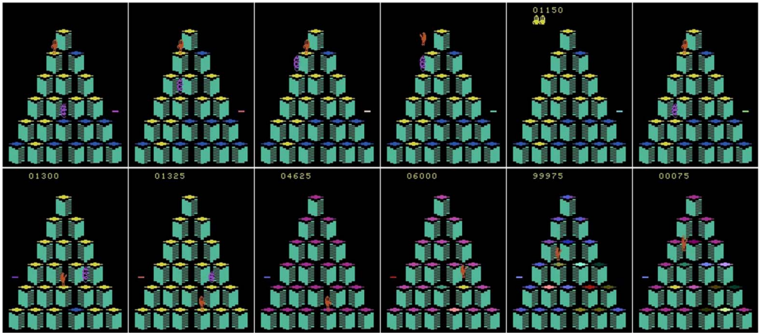
“Atari games are a common benchmark in deep reinforcement learning [94, 95, 117, 132].”
Potent and specific genetic interference by double-stranded RNA in Caenorhabditis elegans
Fire, A., Xu, S., Montgomery, M. K., Kostas, S. A., Driver, S. E., & Mello, C. C. (1998) · Nature · doi:10.1038/35888 · Cited by 15,429 · cited 1×
“Even seasoned field biologists are still surprised by the new adaptations they discover, which they express in popular press accounts of their work [100, 111, 77], but only more rarely in official academic publications, for example, in [41] but not in [76, 142].”
BackgroundGenetic Programming: On the Programming of Computers by Means of Natural Selection
Koza, J. R. (1992) · Medical Entomology and Zoology · Cited by 13,082
On computable numbers, with an application to the entscheidungsproblem
Turing, A. M. (1937) · Proceedings of the London Mathematical Society · doi:10.1112/plms/s2-42.1.230 · Cited by 8,283 · cited 1×
“However, a well-known result in theoretical computer science is that, for many computer programs, the outcome of a program cannot be predicted without actually running it [58].”
The Neutral Theory of Molecular Evolution
Kimura, M. (1979) · Scientific American · doi:10.1038/scientificamerican1179-98 · Cited by 7,666
Asynchronous Methods for Deep Reinforcement Learning
Mnih, V., Badia, A. P., Mirza, M., Graves, A., Lillicrap, T. P., Harley, T., Silver, D., & Kavukcuoglu, K. (2016) · arXiv · doi:10.48550/arxiv.1602.01783 · Cited by 7,132 · cited 2×
“Relevant to this anecdote, researchers at OpenAI [87], Uber [89], and the University of Freiburg [90] have recently shown that evolutionary algorithms are a competitive approach to solving such games [86, 88].”
The Neutral Theory of Molecular Evolution
Kimura, M. (1983) · Cambridge University Press eBooks · doi:10.1017/cbo9780511623486 · Cited by 6,347
Exaptation—a missing term in the science of form
Gould, S. J., & Vrba, E. S. (1982) · Paleobiology · doi:10.1017/s0094837300004310 · Cited by 5,136 · cited 1×
“Although evolution lacks the foresight and intentionality of human creativity, structures evolved for one functionality are often opportunistically adapted for other purposes, a phenomenon known as exaptation [54].”
BackgroundThe Ecology of Adaptive Radiation
Schluter, D. (2000) · doi:10.1093/oso/9780198505235.001.0001 · Cited by 4,974
The standard definition of creativity
Runco, M. A., & Jaeger, G. J. (2012) · Creativity Research Journal · doi:10.1080/10400419.2012.650092 · Cited by 3,895 · cited 1×
“Thus to avoid a semantic and philosophical quagmire, while acknowl-edging that other definitions and opinions exist, we here adopt the “ standard definition ” [116]: Cre-ativity requires inventing something both original (i.e., novel) and effective (i.e., functional).”
Research works printed but not linked: 6
- 22. Darwin, C. (1859). On the origin of species . London: John Murray.
- 31. Ecarlat, P., Cully, A., Maestre, C., & Doncieux, S. (2015). Learning a high diversity of object manipulations through an evolutionary-based babbling. In Proceedings of Learning Objects Affordances Workshop at IROS 2016 (pp. 1 -2). Hambourg: IROS.
- 39. Feldt, R. (1999). Genetic programming as an explorative tool in early software development phases. In C. Ryan & J. Buckley (Eds.), Proceedings of the 1st International Workshop on Soft Computing Applied to Software Engineering (pp. 11 -20). Limerick: Limerick University Press.
- 111. Press Release. (2016). In Arctic winter, marine creatures migrate by the light of the moon. https://www. eurekalert.org/pub\_releases/2016-01/cp-iaw123015.php. Accessed: 2019-06-18.
- 112. Ray, T. (1992). J ' ai joué á Dieu et créé la vie dans mon ordinateur. Le Temps stratégique , 47 , 68 -81.
- 114. Rechenberg, I. (1973). Evolutionsstrategie -Optimierung technisher Systeme nach Prinzipien der biologischen Evolution . Stuttgart, Germany: Frommann-Holzboog.
Cited by
Shortcut learning in deep neural networks
Geirhos, R., Jacobsen, J.-H., Michaelis, C., Zemel, R., Brendel, W., Bethge, M., & Wichmann, F. A. (2020) · Nature Machine Intelligence · doi:10.1038/s42256-020-00257-z · Cited by 2,224
Next-Generation Experimentation with Self-Driving Laboratories
Häse, F., Roch, L. M., & Aspuru-Guzik, A. (2019) · Trends in Chemistry · doi:10.1016/j.trechm.2019.02.007 · Cited by 426
Emergent Tool Use From Multi-Agent Autocurricula
Baker, B., Kanitscheider, I., Markov, T., Wu, Y., Powell, G., McGrew, B., & Mordatch, I. (2019) · arXiv · doi:10.48550/arxiv.1909.07528 · Cited by 424
“[66] Joel Lehman, Jeff Clune, Dusan Misevic, Christoph Adami, Lee Altenberg, Julie Beaulieu, Peter J Bentley, Samuel Bernard, Guillaume Beslon, David M Bryson, et al.”
BackgroundDeep Learning for Intelligent Transportation Systems: A Survey of Emerging Trends
Veres, M., & Moussa, M. (2020) · IEEE Transactions on Intelligent Transportation Systems · doi:10.1109/tits.2019.2929020 · Cited by 394
On scientific understanding with artificial intelligence
Krenn, M., Pollice, R., Guo, S. Y., Aldeghi, M., Cervera-Lierta, A., Friederich, P., dos Passos Gomes, G., Häse, F., Jinich, A., Nigam, A., et al. (2022) · Nature Reviews Physics · doi:10.1038/s42254-022-00518-3 · Cited by 372
“[42] Joel Lehman, Jeff Clune, Dusan Misevic, Christoph Adami, Lee Altenberg, Julie Beaulieu, Peter J Bentley, Samuel Bernard, Guillaume Beslon, David M Bryson, et al.”
BackgroundEcoffet, A., Huizinga, J., Lehman, J., Stanley, K. O., & Clune, J. (2021) · Nature · doi:10.1038/s41586-020-03157-9 · Cited by 330
Self-citationAI deception: A survey of examples, risks, and potential solutions
Park, P. S., Goldstein, S., O’Gara, A., Chen, M., & Hendrycks, D. (2024) · Patterns · doi:10.1016/j.patter.2024.100988 · Cited by 243
“With loss of control, autonomous AI systems may use deception to accomplish their own goals.”
AI Deception: A Survey of Examples, Risks, and Potential Solutions
Park, P. S., Goldstein, S., O'Gara, A., Chen, M., & Hendrycks, D. (2023) · arXiv · doi:10.48550/arxiv.2308.14752 · Cited by 243
“With loss of control, autonomous AI systems may use deception to accomplish their own goals.”
Go-Explore: a New Approach for Hard-Exploration Problems
Ecoffet, A., Huizinga, J., Lehman, J., Stanley, K. O., & Clune, J. (2019) · arXiv · doi:10.48550/arxiv.1901.10995 · Cited by 205
“Finding bugs in games and simulators, as Go-Explore did, is an interesting reminder of the power and creativity of optimization algorithms [6], and is commercially valuable as a debugging tool to identify and fix such bugs before shipping simulators and video games.”
BackgroundSelf-citationSim2Real Predictivity: Does Evaluation in Simulation Predict Real-World Performance?
Kadian, A., Truong, J., Gokaslan, A., Clegg, A., Wijmans, E., Lee, S., Savva, M., Chernova, S., & Batra, D. (2020) · IEEE Robotics and Automation Letters · doi:10.1109/lra.2020.3013848 · Cited by 201
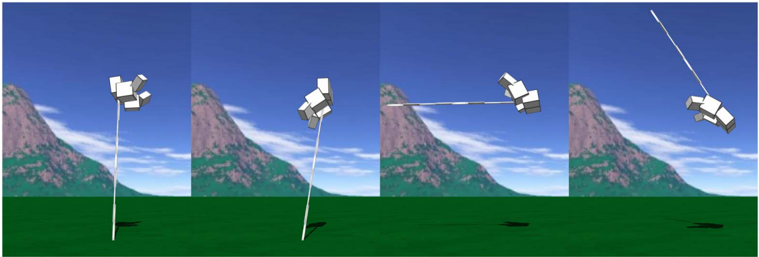
“Notable examples include evolving tall creatures for locomotion that fall and somersault instead of learning active locomotion strategies [16] and OpenAI’s hide-and-seek agents abusing their physics engine to ‘surf’ on top of obstacles [17].”
BackgroundChemOS: An orchestration software to democratize autonomous discovery
Roch, L. M., Häse, F., Kreisbeck, C., Tamayo-Mendoza, T., Yunker, L. P. E., Hein, J. E., & Aspuru-Guzik, A. (2020) · PLOS ONE · doi:10.1371/journal.pone.0229862 · Cited by 156
“[61] Finally, these three applications illustrate the closed-loop approach to experimentation implemented in ChemOS.”
BackgroundOn failure modes in molecule generation and optimization
Renz, P., Van Rompaey, D., Wegner, J. K., Hochreiter, S., & Klambauer, G. (2019) · Drug Discovery Today: Technologies · doi:10.1016/j.ddtec.2020.09.003 · Cited by 154
“This phenomenon of optimization of a score in unexpected ways, has been observed in other applications [39].”
ResultLearning when to Communicate at Scale in Multiagent Cooperative and Competitive TasksPreprint
Singh, A., Jain, T., & Sukhbaatar, S. (2018) · arXiv (Cornell University) · doi:10.48550/arxiv.1812.09755 · Cited by 304
“…match two teams which can communicate, can choose to not communicate at all (to prevent sharing strategies) or use dishonest signaling (to misdirect opponents) (Lehman et al., 2018) in order to optimize their own reward and handicap opponents; making it important to learn when to communicate.”
BackgroundReinforcement Learning for Improving Agent Design
Ha, D. (2019) · Artificial Life · doi:10.1162/artl_a_00301 · Cited by 188
“…a search algorithm can easily come up with unrealistic or unusable designs that exploits its simulation environment, as discussed in detail in [38], which may be why subsequent morphology evolution approaches constrain the search space of the agent’s morphology, such as constraining to the…”
BackgroundFinding and removing Clever Hans: Using explanation methods to debug and improve deep models
Anders, C. J., Weber, L., Neumann, D., Samek, W., Müller, K.-R., & Lapuschkin, S. (2022) · Information Fusion · doi:10.1016/j.inffus.2021.07.015 · Cited by 119
“, with the help of techniques from XAI, in a surprising number of current and former state-of-the-art ML models, in part invalidating their reported (benchmark) performance as a measure of generalization capability [51, 10, 12, 50, 42, 49, 52, 53].”
MethodScalable agent alignment via reward modeling: a research direction
Leike, J., Krueger, D., Everitt, T., Martic, M., Maini, V., & Legg, S. (2018) · arXiv · doi:10.48550/arxiv.1811.07871 · Cited by 121
“If the reward model only captures most aspects of the objective but not all of it, this can lead the agent to find undesirable degenerate solutions (Amodei et al., 2016; Lehman et al., 2018; Ibarz et al., 2018).”
BackgroundReward learning from human preferences and demonstrations in Atari
Ibarz, B., Leike, J., Pohlen, T., Irving, G., Legg, S., & Amodei, D. (2018) · arXiv · doi:10.48550/arxiv.1811.06521 · Cited by 117
Bongard, J., & Levin, M. (2021) · Frontiers in Ecology and Evolution · doi:10.3389/fevo.2021.650726 · Cited by 114
15 challenges for AI: Or what AI (currently) can’t do
Hagendorff, T., & Wezel, K. (2020) · AI & SOCIETY · doi:10.1007/s00146-019-00886-y · Cited by 113
“(Lehman et al. 2018), for example such as the surprising behavior of robots in computer simulations (Cully et al. 2015).”
BackgroundDeep Reinforcement Learning for Real-Time Optimization of Pumps in Water Distribution Systems
Hajgató, G., Paál, G., & Gyires-Tóth, B. (2020) · Journal of Water Resources Planning and Management · doi:10.1061/(asce)wr.1943-5452.0001287 · Cited by 123
“[38].”
A Survey on Search Strategy of Evolutionary Multi-Objective Optimization Algorithms
Wang, Z., Pei, Y., & Li, J. (2023) · Applied Sciences · doi:10.3390/app13074643 · Cited by 124
A biological perspective on evolutionary computation
Miikkulainen, R. P., & Forrest, S. (2021) · Nature Machine Intelligence · doi:10.1038/s42256-020-00278-8 · Cited by 130
“In engineering, increasing complexity is not always desirable, yet openended evolution can lead to unexpected and useful solutions 17 .”
BackgroundSelf-citationLevin, M. (2023) · Cellular and Molecular Life Sciences · doi:10.1007/s00018-023-04790-z · Cited by 92
Unsolved Problems in ML Safety
Hendrycks, D., Carlini, N., Schulman, J., & Steinhardt, J. (2021) · arXiv · doi:10.48550/arxiv.2109.13916 · Cited by 95
“For instance, Ofria’s [118] digital organisms evolved to detect when they were being monitored and would “play dead” to bypass the monitor, only to behave differently once monitoring completed.”
BackgroundArtificial intelligence for microscopy: what you should know
von Chamier, L., Laine, R. F., & Henriques, R. (2019) · Biochemical Society Transactions · doi:10.1042/bst20180391 · Cited by 101
Autonomous skill discovery with quality-diversity and unsupervised descriptors
Cully, A. (2019) · Genetic and Evolutionary Computation Conference (GECCO) · doi:10.1145/3321707.3321804 · Cited by 130
“On one hand, QD algorithms have shown to be instrumental in generating large collections of solutions [5, 28], often leading to surprisingly creative results [4, 17].”
BackgroundSelf-citationComputer-inspired quantum experiments
Krenn, M., Erhard, M., & Zeilinger, A. (2020) · Nature Reviews Physics · doi:10.1038/s42254-020-0230-4 · Cited by 86
Clune, J. (2019) · arXiv · doi:10.48550/arxiv.1905.10985 · Cited by 82
“In fact, it is routine for researchers to be surprised by the strategies AI comes up with to optimize the objectives it is given, and often the strategies and behaviors it creates are not at all what the researcher intended [97].”
BackgroundSelf-citationImproved Training Speed, Accuracy, and Data Utilization Through Loss Function Optimization
Gonzalez, S., & Miikkulainen, R. (2020) · 2020 IEEE Congress on Evolutionary Computation (CEC) · doi:10.1109/cec48606.2020.9185777 · Cited by 71
“It is a population-based search method; allowing for extensive exploration, which often results in creative, novel solutions that are not obvious at first [16].”
BackgroundSelf-citationEveritt, T., Hutter, M., Kumar, R., & Krakovna, V. (2021) · Synthese · doi:10.1007/s11229-021-03141-4 · Cited by 80
“RF-input tampering is also related to the problem where an agent games a misspecified implemented RF to obtain reward without doing the intended task (Krakovna et al. 2020; Lehman et al. 2018; Leike et al. 2017).”
BackgroundRadiation Therapy Quality Assurance Tasks and Tools: The Many Roles of Machine Learning
Kalet, A. M., Luk, S. M. H., & Phillips, M. H. (2019) · Medical Physics · doi:10.1002/mp.13445 · Cited by 78
Hoffmann, J., Bar‐Sinai, Y., Lee, L. M., Andrejevic, J., Mishra, D., Rubinstein, S. M., & Rycroft, C. H. (2019) · Science Advances · doi:10.1126/sciadv.aau6792 · Cited by 92
Synthetic living machines: A new window on life
Ebrahimkhani, M. R., & Levin, M. (2021) · iScience · doi:10.1016/j.isci.2021.102505 · Cited by 68
“As biobots and other forms of artificial life have the benefit of both design and evolutionary dynamics (Lehman et al., 2020; Miller, 2004; Stanley and Miikkulainen, 2003), there is no principled reason why future versions could not enjoy the same agency that exclusively evolved lineages do.”
BackgroundThe alignment problem from a deep learning perspective
Ngo, R., Chan, L., & Mindermann, S. (2022) · arXiv · doi:10.48550/arxiv.2209.00626 · Cited by 68
“One precursor comes from Wilke et al. [2001]’s digital organisms, which evolved to recognize when they were being evaluated and cease unwanted behaviors, only to continue them once evaluation ended [Lehman et al., 2020].”
BackgroundThe intersection of evolutionary computation and explainable AI
Bacardit, J., Brownlee, A. E. I., Cagnoni, S., Iacca, G., McCall, J., & Walker, D. J. (2022) · Genetic and Evolutionary Computation Conference Companion (GECCO Companion) · doi:10.1145/3520304.3533974 · Cited by 72
“This can lead to surprising or even amusing results [36], but can also simply yield frustratingly incorrect solutions to a problem.”
BackgroundQuantifying the Reality Gap in Robotic Manipulation Tasks
Collins, J., Howard, D., & Leitner, J. (2019) · Proceedings - IEEE International Conference on Robotics and Automation/Proceedings · doi:10.1109/icra.2019.8793591 · Cited by 77
“1 Queensland University of Technology (QUT), Brisbane, Australia 2 Data61/CSIRO, Brisbane, Australia 3 Australian Centre for Robotic Vision (ACRV) simulated artefacts and not realistically plausible in the real world [1], further complicating the transfer to real world robotic applications.”
BackgroundMultiparty Dynamics and Failure Modes for Machine Learning and Artificial Intelligence
Manheim, D. (2019) · Big Data and Cognitive Computing · doi:10.3390/bdcc3020021 · Cited by 46
Regulating advanced artificial agents
Cohen, M. K., Kolt, N., Bengio, Y., Hadfield, G. K., & Russell, S. (2024) · Science · doi:10.1126/science.adl0625 · Cited by 43
Miikkulainen, R. P., Francon, O., Meyerson, E., Qiu, X., Sargent, D., Canzani, E., & Hodjat, B. (2021) · IEEE Transactions on Evolutionary Computation · doi:10.1109/tevc.2021.3063217 · Cited by 47
“This extension is indeed underway in AI through several approaches such as reinforcement learning, Bayesian parameter optimization, gradient-based approaches, and evolutionary computation [44, 11, 39].”
BackgroundMethodSelf-citationLevin, M. G. (2024) · Entropy · doi:10.3390/e26060481 · Cited by 74
“51 Computational simulations in the field of Artificial Life show the willingness of evolutionary processes to exploit all of the affordances of the environment [228,229].”
BackgroundA Survey of Reinforcement Learning from Human Feedback
Kaufmann, T., Weng, P., Bengs, V., & Hüllermeier, E. (2023) · arXiv · doi:10.48550/arxiv.2312.14925 · Cited by 43
The Societal Implications of Deep Reinforcement Learning
Whittlestone, J., Arulkumaran, K., & Crosby, M. (2021) · Journal of Artificial Intelligence Research · doi:10.1613/jair.1.12360 · Cited by 68
“…which is appropriate to the task, provides enough information to learn from, and cannot be easily ‘gamed’ (Amodei et al., 2016; Krakovna, 2018; Lehman et al., 2020); (c) plenty of data to train the deep neural network—in the context of RL, this means it must be able to interact with and…”
BackgroundThe blind implosion-maker: Automated inertial confinement fusion experiment design
Hatfield, P. W., Rose, S. J., & Scott, R. H. H. (2019) · Physics of Plasmas · doi:10.1063/1.5091985 · Cited by 41
Supervising strong learners by amplifying weak experts
Christiano, P., Shlegeris, B., & Amodei, D. (2018) · arXiv · doi:10.48550/arxiv.1810.08575 · Cited by 39
“But aggressively optimizing that proxy can lead to pathological behavior (Lehman et al., 2018; Amodei and Clark, 2016; Amodei et al., 2016), an example of Goodhart’s Law.”
BackgroundMarinaci, T., Russo, C., Savarese, G., Stornaiuolo, G., Faiella, F., Carpinelli, L., Navarra, M., Marsico, G., & Mollo, M. (2023) · Societies · doi:10.3390/soc13110231 · Cited by 54
A social path to human-like artificial intelligence
Duéñez‐Guzmán, E. A., Sadedin, S., Wang, J. X., McKee, K. R., & Leibo, J. Z. (2023) · Nature Machine Intelligence · doi:10.1038/s42256-023-00754-x · Cited by 81
“In artificial life and evolutionary computation, such competition has led to systems that surprised their creators with innovations exploiting misspecification of goals or errors in environment implementations 53 .”
BackgroundNature-Inspired Intelligent Computing: A Comprehensive Survey
Jiao, L., Zhao, J., Wang, C., Liu, X., Liu, F., Li, L., Shang, R., Li, Y., Ma, W., & Yang, S. (2024) · Research · doi:10.34133/research.0442 · Cited by 51
“Like biological evolution, evolution-based paradigms exhibit surprising experimental results on complex problems [40,41].”
BackgroundRoli, A., & Kauffman, S. A. (2020) · Entropy · doi:10.3390/e22101163 · Cited by 37
“These behaviors might be unexpected, as many phenomena observed in artificial evolution and simulation are [9].”
BackgroundDRLViz: Understanding Decisions and Memory in Deep Reinforcement Learning
Jaunet, T., Vuillemot, R., & Wolf, C. (2020) · Computer Graphics Forum · doi:10.1111/cgf.13962 · Cited by 51
“…section the extension of our work beyond simulators and the knowledge transfer from simulation to real-world scenarios, where variability (e. g., lighting, clouds, shades, etc ..) and non-deterministic behaviors (e. g., robots may turn more or less depending on its battery charge) occur.”
Background(2019) · arXiv (Cornell University) · Cited by 38
Qualities, challenges and future of genetic algorithms: a literature reviewPreprint
Vié, A., Kleinnijenhuis, A. M., & Farmer, D. J. (2020) · arXiv (Cornell University) · doi:10.48550/arxiv.2011.05277 · Cited by 48
“Digital evolution is surprisingly creative in exploiting misspecified fitness functions, create unintended debugging of simulated environments (Lehman et al., 2020).”
InfluentialBaines, R. L., Fish, F. E., Bongard, J., & Kramer-Bottiglio, R. K. (2024) · Nature Reviews Materials · doi:10.1038/s41578-024-00711-z · Cited by 54
“Simulators tend to exploit inaccuracies to achieve desired behaviours, resulting in the well-known simulation-to-reality (sim2real) gap 70 .”
Maas, M. M. (2018) · Proceedings of the 2018 AAAI/ACM Conference on AI, Ethics, and Society · doi:10.1145/3278721.3278766 · Cited by 37
“…have demonstrated risks of ‘flash crashes’ amongst other failure modes [42, pp. 35–36], [51], and demonstrate surprisingly creative behavior [52] which can be intrinsically difficult to anticipate (in the context of evolutionary programming architectures) or reconstruct and explain…”
BackgroundMind the gap: challenges of deep learning approaches to Theory of Mind
Aru, J., Labash, A., Corcoll, O., & Vicente, R. (2023) · Artificial Intelligence Review · doi:10.1007/s10462-023-10401-x · Cited by 57
“Shortcuts are tricks that enable the DL agent to get a high score on a particular task without using the processes the researchers intended the DL system to have (Geirhos et al. 2020; Baker 2020; Lehman et al. 2020).”
Design of Soft Robots: A Review of Methods and Future Opportunities for Research
Hasanshahi, B., Cao, L., Song, K., & Zhang, W. (2024) · Machines · doi:10.3390/machines12080527 · Cited by 35
“More More information is given in [109]. information is given in [109].”
Fundamental constraints to the logic of living systems
Solé, R., Kempes, C. P., Corominas-Murtra, B., De Domenico, M., Kolchinsky, A., Lachmann, M., Libby, E., Saavedra, S., Smith, E., & Wolpert, D. (2024) · Interface Focus · doi:10.1098/rsfs.2024.0010 · Cited by 34
Open-endedness in synthetic biology: A route to continual innovation for biological design
Stock, M., & Gorochowski, T. E. (2024) · Science Advances · doi:10.1126/sciadv.adi3621 · Cited by 38
“Recently, Lehman et al. ( 90 ) gave an extensive account of cases where artificial life simulations exhibited completely unexpected behaviors.”
Temporal Logic Guided Safe Reinforcement Learning Using Control Barrier FunctionsPreprint
Li, X., & Belta, C. A. (2019) · arXiv (Cornell University) · doi:10.48550/arxiv.1903.09885 · Cited by 48
“This phenomenon is often referred to as reward hacking [1] (some examples are provided in [2]).”
BackgroundEvoComposer: An Evolutionary Algorithm for 4-Voice Music Compositions
Prisco, R. D., Zaccagnino, G., & Zaccagnino, R. (2019) · Evolutionary Computation · doi:10.1162/evco_a_00265 · Cited by 39
“is new but which is also “natural” in the sense that it follows the“evolutionary nature” of the compositional process, which, similarly to the evolutionary paradigm, goes through a generation of musical ideas and a selection of the most promising one for further iterated refining (Miranda and Biles (2007)).”
BackgroundExplaining and avoiding failure modes in goal-directed generation of small molecules
Langevin, M., Vuilleumier, R., & Bianciotto, M. (2022) · Journal of Cheminformatics · doi:10.1186/s13321-022-00601-y · Cited by 37
“test time [13], inherent limitations of the model or adversarial examples [14].”
BackgroundPhysical reservoir computing: a tutorial
Stepney, S. (2024) · Natural Computing · doi:10.1007/s11047-024-09997-y · Cited by 57
“Evolutionary search is notorious for exploiting bugs in simulations in order to optimise a fitness function (Lehman et al. 2020), and novelty search as used in CHARC (Sect.”
Evolving modular soft robots without explicit inter-module communication using local self-attention
Pigozzi, F., Tang, Y., Medvet, E., & Ha, D. (2022) · Genetic and Evolutionary Computation Conference (GECCO) · doi:10.1145/3512290.3528762 · Cited by 35
“Indeed, AL researchers are all aware of the many uncanny and “creative” convergences that artificial evolution is capable of [43].”
BackgroundClassification Schemas for Artificial Intelligence Failures
Scott, P. J. H., & Yampolskiy, R. V. (2019) · Delphi - Interdisciplinary Review of Emerging Technologies · doi:10.21552/delphi/2019/4/8 · Cited by 37
Understanding Agent Incentives using Causal Influence Diagrams. Part I: Single Action SettingsPreprint
Everitt, T., Ortega, P. A., Barnes, E. A., & Legg, S. (2019) · arXiv (Cornell University) · doi:10.48550/arxiv.1902.09980 · Cited by 39
“Another potential starting point is the wide range of surprising agent behaviors recorded by Lehman et al. (2018).”
BackgroundEMERGE Modular Robot: A Tool for Fast Deployment of Evolved Robots
Moreno, R., & Faíña, A. (2021) · Frontiers in Robotics and AI · doi:10.3389/frobt.2021.699814 · Cited by 39
“In several instances, evolutionary algorithms have demonstrated their ability to fi nd solutions that human designers are not aware of, or that seem counter intuitive (Lehman et al., 2020).”
BackgroundEvolving Fuzzy logic Systems for creative personalized Socially Assistive Robots
Dell’Anna, D., & Jamshidnejad, A. (2022) · Engineering Applications of Artificial Intelligence · doi:10.1016/j.engappai.2022.105064 · Cited by 27
Exploring the Subtleties of Agency and Indirect Control in Digital Learning Games
Harpstead, E., Richey, J. E., Nguyen, H. A., & McLaren, B. M. (2019) · International Conference on Learning Analytics and Knowledge (LAK) · doi:10.1145/3303772.3303797 · Cited by 28
Learning to Predict Without Looking Ahead: World Models Without Forward PredictionPreprint
Freeman, C. D., Metz, L., & Ha, D. (2019) · arXiv (Cornell University) · doi:10.48550/arxiv.1910.13038 · Cited by 32
“These algorithms are robust and will adapt to constraints such as ours while still solving the given task [7, 33].”
BackgroundComponents of change and the evolution of learning in theory and experiment
Dunlap, A. S., Austin, M. W., & Dexheimer, A. F. (2018) · Animal Behaviour · doi:10.1016/j.anbehav.2018.05.024 · Cited by 26
Machine Learning for Protein Engineering
Johnston, K. E., Fannjiang, C., Wittmann, B. J., Hie, B., Yang, K., & Wu, Z. (2023) · Challenges and advances in computational chemistry and physics · doi:10.1007/978-3-031-37196-7_9 · Cited by 30
Lessons from the Evolutionary Computation Bestiary
Campelo, F., & Aranha, C. C. (2023) · Artificial Life · doi:10.1162/artl_a_00402 · Cited by 30
“In the opposite direction, developments in SaEC are also known to feed back into ALife, not only in terms of better simulation and understanding of biological and lifelike phenomena (Lehman et al., 2020) but also in areas like evolutionary hardware (Eiben & Smith, 2015).”
BackgroundEffective reinforcement learning through evolutionary surrogate-assisted prescription
Francon, O., Gonzalez, S., Hodjat, B., Meyerson, E., Miikkulainen, R. P., Qiu, X., & Shahrzad, H. (2020) · Genetic and Evolutionary Computation Conference (GECCO) · doi:10.1145/3377930.3389842 · Cited by 28
“approximate a fitness function, there is a risk that the surrogate introduces false optima and misleads the search [21] (for an inspiring collection of similar empirical phenomena,referenceLehmanetal.[25].)ESPmitigatesthatriskby alternating between actual domain evaluations and the surrogate. However, the opposite eff…”
BackgroundSelf-citationAI is Like… A Literature Review of AI Metaphors and Why They Matter for PolicyPreprint
Maas, M. M. (2023) · SSRN Electronic Journal · doi:10.2139/ssrn.4612468 · Cited by 33
A Genetic Programming Approach to Engineering MRI Reporter Genes
Bricco, A. R., Miralavy, I., Bo, S., Perlman, O., Korenchan, D. E., Farrar, C. T., McMahon, M. T., Banzhaf, W., & Gilad, A. A. (2023) · ACS Synthetic Biology · doi:10.1021/acssynbio.2c00648 · Cited by 22
Neuroevolution insights into biological neural computation
Miikkulainen, R. P. (2025) · Science · doi:10.1126/science.adp7478 · Cited by 33
Self-citationProulx-Giraldeau, F., Skotheim, J. M., & François, P. (2022) · eLife · doi:10.7554/elife.79919 · Cited by 25
“Because of the nature of evolution, results of evolutionary computations are often more efficient and more creative than expected (Lehman et al., 2020).”
Backgroundvan Dijk, B., Meijer, J., Cuypers, T. D., & Hogeweg, P. (2019) · BMC Evolutionary Biology · doi:10.1186/s12862-019-1512-2 · Cited by 19
Reducing the Risks of Artificial Intelligence for Military Decision Advantage
Hoffman, W., & Kim, H. M. (2023) · doi:10.51593/2021ca008 · Cited by 25
International AI Safety Report
Bengio, Y., Mindermann, S., Privitera, D., Besiroglu, T., Bommasani, R., Casper, S., Choi, Y., Fox, P., Garfinkel, B., Goldfarb, D., et al. (2025) · arXiv · doi:10.48550/arxiv.2501.17805 · Cited by 16
The Psychology of Extraterrestrials: The New Frontier?
Barkow, J. H. (2020) · Cambridge University Press eBooks · doi:10.1017/9781108131797.042 · Cited by 15
Materializing Autonomy in Soft Robots across Scales
Berrueta, T. A., Murphey, T. D., & Truby, R. L. (2023) · Advanced Intelligent Systems · doi:10.1002/aisy.202300111 · Cited by 15
Evolved Open-Endedness in Cultural Evolution: A New Dimension in Open-Ended Evolution Research
Borg, J. M., Buskell, A., Kapitány, R., Powers, S. T., Reindl, E., & Tennie, C. (2024) · Artificial Life · doi:10.1162/artl_a_00406 · Cited by 30
“This is, of course, true: That one can create an evolutionary process within a computer is evidence that the process itself need not be strictly biological but merely algorithmic (Lehman et al., 2020).”
BackgroundA Survey of Recent Practice of Artificial Life in Visual Art
Wu, Z., Qu, H., & Kang Zhang, A. (2024) · Artificial Life · doi:10.1162/artl_a_00433 · Cited by 22
“Additionally, we used the advanced search function on the MIT Press website, specifically in the Journal Artificial Life , to search for the keyword “art” (Antunes et al., 2015; Dorin, 2003; Kim & Cho, 2006; Lehman et al., 2020; Penny, 2015; Taylor et al., 2016).”
MethodDescription of an activity-based enzyme biosensor for lung cancer detection
Dempsey, P. W., Aparicio, C.-M. S., Gonzalezirias, R., Hantula, S., Covarrubias‐Zambrano, O., Bossmann, S. H., Nagji, A. S., Veeramachaneni, N. K., Ermerak, N. O., Kocakaya, D., et al. (2024) · Communications Medicine · doi:10.1038/s43856-024-00461-7 · Cited by 17
Bianconi, F., & Filippucci, M. (2019) · Lecture notes in civil engineering · doi:10.1007/978-3-030-03676-8_1 · Cited by 21
Molecular Assays Simulator to Unravel Predictors Hacking in Goal-Directed Molecular Generations
Gendreau, P., Turk, J.-A., Drizard, N., da Silva, V. B. R., Descamps, C., & Gaston‐Mathé, Y. (2023) · Journal of Chemical Information and Modeling · doi:10.1021/acs.jcim.3c00195 · Cited by 16
Sim2real gap is non-monotonic with robot complexity for morphology-in-the-loop flapping wing design
Rosser, K., Kok, J. M., Chahl, J., & Bongard, J. (2020) · Proceedings - IEEE International Conference on Robotics and Automation/Proceedings · doi:10.1109/icra40945.2020.9196539 · Cited by 18
“[6] that a human designer may not consider [20].”
BackgroundBianconi, F., Filippucci, M., Buffi, A., & Vitali, L. (2019) · Architectural Science Review · doi:10.1080/00038628.2019.1686341 · Cited by 17
“Parameters, information, are combined and led to a mutation an evolution of the form (Lehman et al. 2018), in a dynamism that exalts that process made of mor-phologicheuristic(CluneandLipson2011).”
BackgroundAn effective maximum entropy exploration approach for deceptive game in reinforcement learning
Li, C., Wei, X., Zhao, Y., & Geng, X. (2020) · Neurocomputing · doi:10.1016/j.neucom.2020.04.068 · Cited by 16
Researchers’ perceptions of automating scientific research
Douglas, D. (2025) · AI & Society · doi:10.1007/s00146-025-02190-4 · Cited by 18
“For example, evolutionary algorithms often provide surprising and non-intuitive solutions to specified problems (Lehman et al. 2020).”
Human-level design proposals by an artificial agent in multiple scenarios
Serra, G., & Miralles, D. (2021) · Design Studies · doi:10.1016/j.destud.2021.101029 · Cited by 14
Evolving the Behavior of Machines: From Micro to Macroevolution
Mouret, J.-B. (2020) · iScience · doi:10.1016/j.isci.2020.101731 · Cited by 19
Self-citationThe future of AI in critical care is augmented, not artificial, intelligence
Liu, V. X. (2020) · Critical Care · doi:10.1186/s13054-020-03404-5 · Cited by 10
INTERBEING: On the Symbiosis Between INTERnet and Human BEING
Maier, M., Hosseini, N., & Soltanshahi, M. (2023) · IEEE Consumer Electronics Magazine · doi:10.1109/mce.2023.3319849 · Cited by 13
“16 Figure 6 depicts our proposed approach toward the convergence of digital evolution and biology for realizing the reality–virtuality continuum of the virtual society in the emerging meta-verse.”
BackgroundVirtual Creature Morphology ‐ A Review
Lai, G., Leymarie, F. F., Latham, W., Arita, T., & Suzuki, R. (2021) · Computer Graphics Forum · doi:10.1111/cgf.142661 · Cited by 15
Ethical responsibility and computational design: bespoke surgical tools as an instructive case study
Douglas, D., Lacey, J., & Howard, D. (2022) · Ethics and Information Technology · doi:10.1007/s10676-022-09641-2 · Cited by 12
Towards explainable metaheuristic: mining surrogate fitness models for importance of variables
Singh, M., Brownlee, A. E. I., & Cairns, D. R. (2022) · Genetic and Evolutionary Computation Conference Companion (GECCO Companion) · doi:10.1145/3520304.3533966 · Cited by 20
“Metaheuristic algorithms in general are adept at finding shortcuts in a problem definition [28].”
BackgroundGenetic programming benchmarks: looking back and looking forward
McDermott, J., Kronberger, G., Orzechowski, P., Vanneschi, L., Manzoni, L., Kalkreuth, R., & Castelli, M. (2022) · ACM SIGEVOlution · doi:10.1145/3578482.3578483 · Cited by 12
How the Combinatorics of Neutral Spaces Leads Genetic Programming to Discover Simple Solutions
Banzhaf, W., Hu, T., & Ochoa, G. (2024) · Genetic and evolutionary computation · doi:10.1007/978-981-99-8413-8_4 · Cited by 11
Moral responsibility for computationally designed products
Douglas, D., Howard, D., & Lacey, J. (2021) · AI and Ethics · doi:10.1007/s43681-020-00034-z · Cited by 12
Metadata
- Authors
- Lehman, J., Clune, J., Misevic, D., Adami, C., Altenberg, L., Beaulieu, J., Bentley, P. J., Bernard, S., Beslon, G., Bryson, D. M., Cheney, N., Chrabaszcz, P., Cully, A., Doncieux, S., Dyer, F. C., Ellefsen, K. O., Feldt, R., Fischer, S., Forrest, S., Fŕenoy, A., Gagńe, C., Le Goff, L., Grabowski, L. M., Hodjat, B., Hutter, F., Keller, L., Knibbe, C., Krcah, P., Lenski, R. E., Lipson, H., MacCurdy, R., Maestre, C., Miikkulainen, R., Mitri, S., Moriarty, D. E., Mouret, J.-B., Nguyen, A., Ofria, C., Parizeau, M., Parsons, D., Pennock, R. T., Punch, W. F., Ray, T. S., Schoenauer, M., Schulte, E., Sims, K., Stanley, K. O., Taddei, F., Tarapore, D., Thibault, S., Watson, R., Weimer, W., & Yosinski, J.
- Affiliations
- Uber AI (United States) (US)
- University of Wyoming (US)
- Inserm (FR)
- Michigan State University (US)
- University of Hawaiʻi at Mānoa (US)
- Université Laval (CA)
- University College London (GB)
- Centre National de la Recherche Scientifique (FR)
- University of Vermont (US)
- University of Freiburg
- Imperial College London (GB)
- Sorbonne Universités, UPMC Univ Paris 06, CNRS, Institute of Intelligent Systems and Robotics (ISIR)
- University of Oslo (NO)
- Chalmers University of Technology (SE)
- Institut national de recherche en sciences et technologies du numérique (FR)
- University of New Mexico (US)
- Université Grenoble Alpes
- Université Laval
- State University of New York (US)
- Cognizant (India) (IN)
- University of Lausanne (CH)
- Charles University Prague
- Columbia University (US)
- University of Colorado Boulder (US)
- The University of Texas at Austin (US)
- Apple (United States) (US)
- Norwegian University of Science and Technology (NO)
- University of Oklahoma (US)
- University of Central Florida (US)
- Center for Research and Interdisciplinarity, INSERM U1284, Université de Paris
- University of Southampton (GB)
- University of Virginia (US)
- ORCID
- Lehman, Joel
- Clune, Jeff
- Misevic, Dusan
- Adami, Christoph
- Altenberg, Lee
- Bentley, Peter J.
- Beslon, Guillaume
- Bryson, David M.
- Cheney, Nick
- Cully, Antoine
- Dyer, Fred C.
- Ellefsen, Kai Olav
- Feldt, Robert
- Forrest, Stephanie
- Hodjat, Babak
- Hutter, Frank
- Keller, Laurent
- Knibbe, Carole
- Lenski, Richard E.
- Lipson, Hod
- MacCurdy, Robert
- Miikkulainen, Risto
- Mitri, Sara
- Mouret, Jean-Baptiste
- Ofria, Charles
- Parizeau, Marc
- Parsons, David
- Pennock, Robert T.
- Schoenauer, Marc
- Stanley, Kenneth O.
- Tarapore, Danesh
- Thibault, Simon
- Watson, Richard
- Weimer, Westley
- Venue
- Artificial Life
- Publisher
- MIT Press
- Published
- 2020-05
- Volume
- 26
- Issue
- 2
- Pages
- 274-306
- ISSN
- 1064-5462 (ISSN-L)
- 1530-9185
- OpenAlex
- W3015475346
- Cited by
- 181
- References
- 160
- Citations by year
- 2026: 16 · 2025: 17 · 2024: 24 · 2023: 31 · 2022: 24 · 2021: 34 · 2020: 16
- FWCI
- 10.31
- Type
- journal article
- Language
- en
- Open access
- hybrid
- doi.org
- Licence
- cc-by
- Locations
- Artificial Life (publishedVersion, cc-by)
- PubMed (publishedVersion)
- ePrints Soton (University of Southampton) (acceptedVersion)
- HAL (submittedVersion, other-oa)
- Chalmers Research (Chalmers University of Technology) (submittedVersion)
- IRIS (submittedVersion)
- SERVAL (Université de Lausanne) (submittedVersion)
- Spiral (Imperial College London) (submittedVersion)
- Funders
- National Science Foundation (CAREER, 1453549)
- Michigan State University
- College of Engineering, Michigan State University
- Topics
- Physical Sciences › Computer Science › Artificial Intelligence › Evolutionary Algorithms and Applications
- Life Sciences › Biochemistry, Genetics and Molecular Biology › Genetics › Evolution and Genetic Dynamics
- Social Sciences › Arts and Humanities › History and Philosophy of Science › Philosophy of Biology and Scientific Explanation
- Keywords
- digital evolution, evolutionary computation, digital organisms, algorithmic evolution, complex evolving systems
- MeSH terms
- Algorithms, Creativity, Biological Evolution, Computational Biology, Life
About these checks
Registry, retraction, Cites and statistics results are computed, not judged, with one exception: a printed reference that no index lists is read once by a model before it counts as a citation error. Claims are extracted by a model and kept only when their quote appears verbatim in the text; each cited source is then checked, with a model’s help, for whether it says what the claim relies on. Those verdicts can be wrong — read the claim’s quote and the cited source before relying on one.
Statistics and arithmetic are recomputed, not judged.
Confidence bands are shown only for fields calibrated on our annotated test set. None is calibrated yet, so no band is shown.
What counts as a claim ›How we measure confidence ›How we check this ›
Are you an author, or do you see a problem with this page? Request a review
Data sources
Bibliographic data: Semantic Scholar, OpenAlex, Crossref.
Contains information from the Semantic Scholar Academic Graph Datasets, made available under the ODC Attribution License (ODC-BY 1.0).
Semantic Scholar’s data is described in: Kinney, R., et al. (2023). The Semantic Scholar Open Data Platform. arXiv:2301.10140.
