

The Surprising Creativity of Digital Evolution: A Collection of Anecdotes from the Evolutionary Computation and Artificial Life Research Communities
Open accessThe DOI matches its Crossref record; 162 of the 162 references it cites were found in a registry or an index.
Abstract
Evolution provides a creative fount of complex and subtle adaptations that often surprise the scientists who discover them. However, the creativity of evolution is not limited to the natural world: Artificial organisms evolving in computational environments have also elicited surprise and wonder from the researchers studying them. The process of evolution is an algorithmic process that transcends the substrate in which it occurs. Indeed, many researchers in the field of digital evolution can provide examples of how their evolving algorithms and organisms have creatively subverted their expectations or intentions, exposed unrecognized bugs in their code, produced unexpectedly adaptations, or engaged in behaviors and outcomes, uncannily convergent with ones found in nature. Such stories routinely reveal surprise and creativity by evolution in these digital worlds, but they rarely fit into the standard scientific narrative. Instead they are often treated as mere obstacles to be overcome, rather than results that warrant study in their own right. Bugs are fixed, experiments are refocused, and one-off surprises are collapsed into a single data point. The stories themselves are traded among researchers through oral tradition, but that mode of information transmission is inefficient and prone to error and outright loss. Moreover, the fact that these stories tend to be shared only among practitioners means that many natural scientists do not realize how interesting and lifelike digital organisms are and how natural their evolution can be. To our knowledge, no collection of such anecdotes has been published before. This article is the crowd-sourced product of researchers in the fields of artificial life and evolutionary computation who have provided first-hand accounts of such cases. It thus serves as a written, fact-checked collection of scientifically important and even entertaining stories. In doing so we also present here substantial evidence that the existence and importance of evolutionary surprises extends beyond the natural world, and may indeed be a universal property of all complex evolving systems.
Overview
The claims and statistics of this paper haven’t been checked yet.
Free: it reads the open-access text and checks the first 5 claims that cite a source we can check. Create a free account to check every claim.
Integrity signals
Registry
Cites
Statistics
Figures


Verification
Claims the paper makes
The claims and statistics of this paper haven’t been checked yet.
Free: it reads the open-access text and checks the first 5 claims that cite a source we can check. Create a free account to check every claim.
Claims other papers make about this one
Each is checked against this paper’s own text: does it say what the citing paper says it does?
The cited source says what the claim attributes to it.
In the citing paper
“Much like natural and artificial evolution (79), our framework also demonstrates remarkable creativity in discovering solutions, for instance, it independently evolved distributed eyelet-type architectures without being explicitly designed to do so.”
From What if eye...? Computationally recreating vision evolution (2025) · cites this paper as [79]
The cited source says what the claim attributes to it.
In the citing paper
“This method effectively stopped the organisms from deceitfully evolving to replicate faster.”
From AI deception: A survey of examples, risks, and potential solutions (2024) · cites this paper as [10]
The cited source says what the claim attributes to it.
In the citing paper
“This experience demonstrates how evolutionary pressures can select for agents that deceive their selection mechanism, a concerning form of deception that could arise in other contexts.”
From AI deception: A survey of examples, risks, and potential solutions (2024) · cites this paper as [10]
The cited source says what the claim attributes to it.
In the citing paper
“Indeed, we have already observed an AI system deceiving its evaluation.”
From AI deception: A survey of examples, risks, and potential solutions (2024) · cites this paper as [10]
In the citing paper
“Ofria realized that the organisms had learned to recognize the testing environment and stop replicating. They were pretending to be slower replicators to avoid being removed.”
From AI deception: A survey of examples, risks, and potential solutions (2024) · cites this paper as [10]
1 more claim about this paper
Create a free account to see every claim other papers make about this one.
Self-check
Percentages, sums and reported differences re-computed from the paper’s own numbers.
The self-check needs the paper’s full text.
Citations
Cites
Human-level control through deep reinforcement learning
Mnih, V., Kavukcuoglu, K., Silver, D., Rusu, A. A., Veness, J., Bellemare, M. G., Graves, A., Riedmiller, M., Fidjeland, A. K., Ostrovski, G., et al. (2015) · Nature · doi:10.1038/nature14236 · Cited by 30,357 · cited 2×
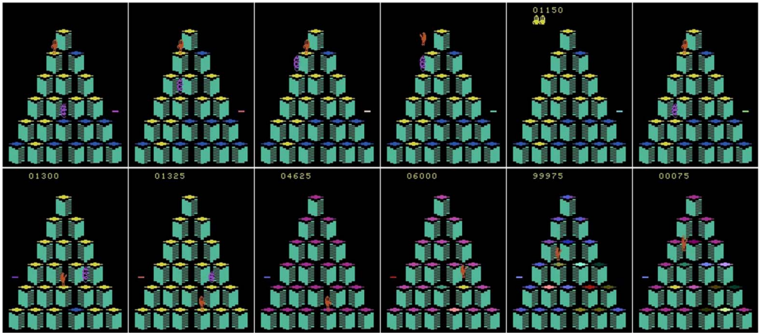
“Atari games are a common benchmark in deep reinforcement learning [94, 95, 117, 132].”
Potent and specific genetic interference by double-stranded RNA in Caenorhabditis elegans
Fire, A., Xu, S., Montgomery, M. K., Kostas, S. A., Driver, S. E., & Mello, C. C. (1998) · Nature · doi:10.1038/35888 · Cited by 15,429 · cited 1×
“Even seasoned field biologists are still surprised by the new adaptations they discover, which they express in popular press accounts of their work [100, 111, 77], but only more rarely in official academic publications, for example, in [41] but not in [76, 142].”
BackgroundGenetic Programming: On the Programming of Computers by Means of Natural Selection
Koza, J. R. (1992) · Medical Entomology and Zoology · Cited by 13,082
On computable numbers, with an application to the entscheidungsproblem
Turing, A. M. (1937) · Proceedings of the London Mathematical Society · doi:10.1112/plms/s2-42.1.230 · Cited by 8,283 · cited 1×
“However, a well-known result in theoretical computer science is that, for many computer programs, the outcome of a program cannot be predicted without actually running it [58].”
The Neutral Theory of Molecular Evolution
Kimura, M. (1979) · Scientific American · doi:10.1038/scientificamerican1179-98 · Cited by 7,666
Asynchronous Methods for Deep Reinforcement Learning
Mnih, V., Badia, A. P., Mirza, M., Graves, A., Lillicrap, T. P., Harley, T., Silver, D., & Kavukcuoglu, K. (2016) · arXiv · doi:10.48550/arxiv.1602.01783 · Cited by 7,132 · cited 2×
“Relevant to this anecdote, researchers at OpenAI [87], Uber [89], and the University of Freiburg [90] have recently shown that evolutionary algorithms are a competitive approach to solving such games [86, 88].”
The Neutral Theory of Molecular Evolution
Kimura, M. (1983) · Cambridge University Press eBooks · doi:10.1017/cbo9780511623486 · Cited by 6,347
Exaptation—a missing term in the science of form
Gould, S. J., & Vrba, E. S. (1982) · Paleobiology · doi:10.1017/s0094837300004310 · Cited by 5,136 · cited 1×
“Although evolution lacks the foresight and intentionality of human creativity, structures evolved for one functionality are often opportunistically adapted for other purposes, a phenomenon known as exaptation [54].”
BackgroundThe Ecology of Adaptive Radiation
Schluter, D. (2000) · doi:10.1093/oso/9780198505235.001.0001 · Cited by 4,974
The standard definition of creativity
Runco, M. A., & Jaeger, G. J. (2012) · Creativity Research Journal · doi:10.1080/10400419.2012.650092 · Cited by 3,895 · cited 1×
“Thus to avoid a semantic and philosophical quagmire, while acknowl-edging that other definitions and opinions exist, we here adopt the “ standard definition ” [116]: Cre-ativity requires inventing something both original (i.e., novel) and effective (i.e., functional).”
Research works printed but not linked: 6
- 22. Darwin, C. (1859). On the origin of species . London: John Murray.
- 31. Ecarlat, P., Cully, A., Maestre, C., & Doncieux, S. (2015). Learning a high diversity of object manipulations through an evolutionary-based babbling. In Proceedings of Learning Objects Affordances Workshop at IROS 2016 (pp. 1 -2). Hambourg: IROS.
- 39. Feldt, R. (1999). Genetic programming as an explorative tool in early software development phases. In C. Ryan & J. Buckley (Eds.), Proceedings of the 1st International Workshop on Soft Computing Applied to Software Engineering (pp. 11 -20). Limerick: Limerick University Press.
- 111. Press Release. (2016). In Arctic winter, marine creatures migrate by the light of the moon. https://www. eurekalert.org/pub\_releases/2016-01/cp-iaw123015.php. Accessed: 2019-06-18.
- 112. Ray, T. (1992). J ' ai joué á Dieu et créé la vie dans mon ordinateur. Le Temps stratégique , 47 , 68 -81.
- 114. Rechenberg, I. (1973). Evolutionsstrategie -Optimierung technisher Systeme nach Prinzipien der biologischen Evolution . Stuttgart, Germany: Frommann-Holzboog.
Cited by
Items 201–257 of 257
Molecular Generators and Optimizers Failure Modes
Manavalan, M. (2021) · Malaysian Journal of Medical and Biological Research · doi:10.18034/mjmbr.v8i2.583 · Cited by 2
“Other applications (Lehman et al. 2019) have observed this tendency of score optimization in unexpected ways.”
BackgroundEvoRobogami: co-designing with humans in evolutionary robotics experiments
Zonghao, H., Wu, Q., Howard, D., & Sung, C. (2022) · Genetic and Evolutionary Computation Conference (GECCO) · doi:10.1145/3512290.3528867 · Cited by 3
“Its fitness-based performance assessment is particularly useful in this role, as unintuitive, surprising designs [20] can be assessed in a bias-free manner and large, complex design spaces can be automatically explored in the pursuit of desired behaviours.”
BackgroundXue, L. (2022) · Journal of Environmental and Public Health · doi:10.1155/2022/3938915 · Cited by 1
“The advantages of screen prints are reflected in the processing and control of color, which determines the unique limitation of the expression language of prints [4].”
BackgroundRetractedA Hierarchical Design Framework for the Design of Soft Robots
Ligthart, P. F., & Venter, M. P. (2023) · Mathematical and Computational Applications · doi:10.3390/mca28020047 · Cited by 1
(2021) · Annals of Computer Science and Information Systems · doi:10.15439/978-83-959183-9-1 · Cited by 1
The Sounds of Obsolescence in the Age of Digital Re-Production
Dunham, P. (2020) · Open Access Victoria University of Wellington | Te Herenga Waka (Figshare) · doi:10.26686/wgtn.12955091.v1 · Cited by 1
Exploring Game Design through Human-AI Collaboration
Alvarez, A. (2022) · doi:10.24834/isbn.9789178773084 · Cited by 8
El-Sunais, Y., & Eberemu, N. C. (2024) · Preprints.org · doi:10.20944/preprints202402.1217.v2 · Cited by 1
Mahler, V. (2022) · theses.fr (ABES) · doi:10.70675/a5f7cdf2z86a5z40c0z94a4zff894c479e3e · Cited by 1
ShinkaEvolve: Towards Open-Ended And Sample-Efficient Program Evolution
Lange, R. T., Imajuku, Y., & Cetin, E. (2025) · arXiv · doi:10.48550/arxiv.2509.19349
A General Method for Selection Function Optimization in Genetic Algorithms
Ismail, N., & Demers, M. (2018) · Springer proceedings in mathematics & statistics · doi:10.1007/978-3-319-99719-3_4
Technological Landscape and Ideation in the Field of Waste Separation with Help of TRIZ
Ivanovskis, L., Kärki, T., & Lahtela, V. (2019) · IFIP advances in information and communication technology · doi:10.1007/978-3-030-32497-1_27 · Cited by 1
“cases enough creativity to outsmart researchers that set seemingly unsolvable problems to their algorithms [47].”
Neocortical plasticity: an unsupervised cake but no free lunchPreprint
Muller, E. B., & Beaudoin, P. (2019) · arXiv (Cornell University) · doi:10.48550/arxiv.1911.08584
Accounting for Human Learning when Inferring Human PreferencesPreprint
Giles, H., & Chan, L. (2020) · arXiv (Cornell University) · doi:10.48550/arxiv.2011.05596
“We emphasise another feature of the Direct Evaluation agents where there is a spike in mutual information towards the beginning of the demonstration, see Figures 10, 11.”
BackgroundInfluentialInverse methods for design and simulation with particle systems
Strand, E. (2020)
Evolving Virtual Embodied Agents Using External Artifact Evaluations
van Hoek, L., Saunders, R., & de Kleijn, R. (2021) · Communications in computer and information science · doi:10.1007/978-3-030-76640-5_3
Mapping, Implementing, and Programming Spiking Neural Networks
Olin-Ammentorp, W. (2019) · SUNY Digital Repository Support (State University of New York System)
Bradley, S. (2021) · Economics and Philosophy · doi:10.1017/s0266267121000237
Salvi, R. (2021) · Nomos Verlagsgesellschaft mbH & Co. KG eBooks · doi:10.5771/9783748924012-285
Explaining and avoiding failures modes in goal-directed generationPreprint
Langevin, M., Vuilleumier, R., & Bianciotto, M. (2021) · doi:10.33774/chemrxiv-2021-4m6b3-v2
Explaining and avoiding failures modes in goal-directed generationPreprint
Langevin, M., Vuilleumier, R., & Bianciotto, M. (2021) · ChemRxiv · doi:10.26434/chemrxiv-2021-4m6b3
Virtual Reality in Biology: Can We Become Virtual Naturalists?Preprint
Morimoto, J., & Ponton, F. (2019) · Preprints.org · doi:10.20944/preprints201910.0311.v1
“While few artificial life systems exist [41-43], perhaps the most famous example”
BackgroundVirtual Reality in Biology: Can We Become Virtual Naturalists?Preprint
Morimoto, J., & Ponton, F. (2020) · Preprints.org · doi:10.20944/preprints201910.0311.v2
Efficient Quality Diversity Optimization of 3D Buildings through 2D Pre-Optimization
Hagg, A., Kliemank, M. L., Asteroth, A., Wilde, D., Bedrunka, M. C., Foysi, H., & Reith, D. (2023) · Evolutionary Computation · doi:10.1162/evco_a_00326
“Not needing an explicit gradient, EA have been shown to find unexpected solutions by Lehman et al. (2020). But with analytical methods coming out strong in physics domains like fluid dynamics, EA are not used in single-solution optimization settings as often anymore.”
BackgroundEvolution in a Complicated World
Netz, C. (2023) · doi:10.33612/diss.658832457
Evolutionary Computation and Explainable AI Towards ECXAI 2023: A Year in Review
Bacardit, J., Brownlee, A. E. I., Cagnoni, S., Iacca, G., McCall, J., & Walker, D. J. (2023) · ACM SIGEVOlution · doi:10.1145/3610388.3610389
“Explaining why a solution was chosen might clarify whether it is solving the actual problem or just exploiting an error or loophole in the problem’s definition, which can lead to surprising or even amusing results [8], but can also simply yield frustratingly”
BackgroundPigozzi, F. (2023) · Artificial Life · doi:10.1162/artl_a_00415 · Cited by 1
“That is just one of the ingenious examples of perverse instantiation found in the ALife world (Lehman et al., 2020).”
BackgroundJamar, S. D. (2023) · Cambridge University Press eBooks · doi:10.1017/9781108697613.025
Syriopoulos, P. K., Chatzilygeroudis, K. I., Kalampalikis, N. G., & Vrahatis, M. N. (2024) · Annals of Mathematics and Artificial Intelligence · doi:10.1007/s10472-023-09912-8 · Cited by 1
Model Based Reinforcement Learning Pre-Trained with Various State Data
Ono, M., & Ichise, R. (2024) · IEEE Conference on Artificial Intelligence (CAI) · doi:10.1109/cai59869.2024.00169
“Furthermore, these sparse reward functions often lead to unintended local optima, where the agent might get stuck performing suboptimal actions believing them to be the best [4]–[7].”
BackgroundEconomic Evolution, Novelty, and Diversity
Roos, M. W. M. (2024) · Classroom companion: economics · doi:10.1007/978-3-031-51436-4_10
Machines Unlearning: Toward an Allagmatic Arts of AI
Munster, A. (2025) · Duke University Press eBooks · doi:10.1215/9781478060529-005
The Color of Statistics: Race as Statistical (In)visuality
Munster, A. (2025) · Duke University Press eBooks · doi:10.1215/9781478060529-003
Heteropoietic Computation: Category Mistakes and Fails as Generators of Novel Sensibilities
Munster, A. (2025) · Duke University Press eBooks · doi:10.1215/9781478060529-002
Could AI Become Neurodivergent? Disfluent Conversations with Natural Language Processors
Munster, A. (2025) · Duke University Press eBooks · doi:10.1215/9781478060529-004
Introduction: Deep Machines and Surfaces of Experience
Munster, A. (2025) · Duke University Press eBooks · doi:10.1215/9781478060529-001
Munster, A. (2025) · Duke University Press eBooks · doi:10.1215/9781478060529-008
Munster, A. (2025) · Duke University Press eBooks · doi:10.1215/9781478060529-009
Postscript: On Models of Control and (Their) Modulation
Munster, A. (2025) · Duke University Press eBooks · doi:10.1215/9781478060529-006
Infinity Breached: Recursive Cognition and the Self-Observation of the UniversePreprint
Serio, J. J. (2025) · OSF Preprints (OSF Preprints) · doi:10.31219/osf.io/m9zep_v1
Kumar, S., Singh, S. K., Singh, N. P., & Sagu, A. (2025) · Cureus Journal of Computer Science. · doi:10.7759/s44389-025-10241-6 · Cited by 1
The role of automation and AI in shaping the future of employment
Devi, P. S., & Alagh, R. (2025) · doi:10.64171/jsrd.4.s1.127-132
Bioengineering hybrid artificial life
Sibanda, I., & Nitschke, G. (2025) · Frontiers in Bioinformatics · doi:10.3389/fbinf.2025.1676359
A digitalizáció következő szintje, AI chatbot és ChatGPT szerepe
Szikszai, T. G., & Balogh, P. (2026) · Jelenkori Társadalmi és Gazdasági Folyamatok · doi:10.14232/jtgf.2026.1.59-73
Deep learning interpretability with visual analytics : Exploring reasoning and bias exploitation
Jaunet, T. (2022) · theses.fr (ABES) · doi:10.70675/a754696bzcd37z49a2zb2a7z2ad1bfd9b620 · Cited by 1
Swarm Robotics : distributed Online Learning in the realm of Active Matter
Fersula, J. (2023) · theses.fr (ABES) · doi:10.70675/b815b164z178ez4241zb2c8ze110ce204af5
Towards Emergent AGI: Self-Preservation and Reproduction as Foundational Drives
Bouneffouf, D. (2026) · IEEE International Conference on Acoustics Speech and Signal Processing · doi:10.1109/icassp55912.2026.11463155
A Sociotechnical Perspective on the Evolutionary Computation Ecosystem
Velayutham, C. S., Bagavathi, C., Dhanalakshmy, D. M., Jeyakumar, G., Murali, R., & Thangavelu, S. S. (2026) · Lecture notes in computer science · doi:10.1007/978-3-032-23607-4_22
Gradient-based Learning and Alignment
Corrêa, N. K. (2026) · The International library of ethics, law and technology · doi:10.1007/978-3-032-22150-6_3
Design principles for integrated AI alignment
Reis, B. Y., & Cava, W. L. (2026) · Patterns · doi:10.1016/j.patter.2026.101587 · Cited by 1
“58 Some early evidence suggests that sufficiently advanced AI systems may reason about whether and how they are being trained and decide how to respond accordingly.”
McDonald, C., Osborne, N., Schäfer, B., & Terras, M. (2026) · Creative Industries Journal · doi:10.1080/17510694.2026.2689819
An Open and Accessible Platform for Evolving Virtual Creatures
Finn, M., & Bräunl, T. (2026) · Artificial Life · doi:10.1162/artl.a.457
The Future of Human–AI Worldbuilding in Art
Park, S., & Ćirić, D. (2026) · Arts · doi:10.3390/arts15080174
“More recently, certain technologies have reached a higher level of performance and interactivity with humans, invisibly engaging in intellectual and creative collaboration (Bentley and Corne 2002; Ciric and Park 2025; Cho 2002; Lehman et al. 2020).”
A survey of reward hacking in agentic large language model systems
Morampudi, A., Irrink, U., Grandhi, R., Pagadala, V., & Maddula, M. (2026) · Discover Artificial Intelligence · doi:10.1007/s44163-026-01980-z · Cited by 1
“• Strong empirical evidence : Reward-model overoptimization [9, 16, 17], sycophancy [10], LLM-judge biases [11, 18], benchmark contamination [42, 49, 50], and specification gaming in RL and digital evolution [2, 79].”
L-Systems Viruses and Symmetry-Step Procedures for Enhancing Fractal Computer Graphics
Salcedo‐Sanz, S., Álvarez-Couso, P., Sardina, L. C., & Pérez-Aracil, J. (2026) · Artificial Life · doi:10.1162/artl.a.462
Challenges and Future Directions in Nature‐Inspired Intelligence
Thayanithi, C. A., Arjun, E., & Singh, P. (2026) · Wiley eBooks · doi:10.1002/9781394409730.ch5
Modularity-Based Linkage Model Assisted Gradient Descent for Neural Network Training
Qiao, Y., & Gallagher, M. R. (2026) · Lecture notes in computer science · doi:10.1007/978-3-032-36226-1_29
Metadata
- Authors
- Lehman, J., Clune, J., Misevic, D., Adami, C., Altenberg, L., Beaulieu, J., Bentley, P. J., Bernard, S., Beslon, G., Bryson, D. M., Cheney, N., Chrabaszcz, P., Cully, A., Doncieux, S., Dyer, F. C., Ellefsen, K. O., Feldt, R., Fischer, S., Forrest, S., Fŕenoy, A., Gagńe, C., Le Goff, L., Grabowski, L. M., Hodjat, B., Hutter, F., Keller, L., Knibbe, C., Krcah, P., Lenski, R. E., Lipson, H., MacCurdy, R., Maestre, C., Miikkulainen, R., Mitri, S., Moriarty, D. E., Mouret, J.-B., Nguyen, A., Ofria, C., Parizeau, M., Parsons, D., Pennock, R. T., Punch, W. F., Ray, T. S., Schoenauer, M., Schulte, E., Sims, K., Stanley, K. O., Taddei, F., Tarapore, D., Thibault, S., Watson, R., Weimer, W., & Yosinski, J.
- Affiliations
- Uber AI (United States) (US)
- University of Wyoming (US)
- Inserm (FR)
- Michigan State University (US)
- University of Hawaiʻi at Mānoa (US)
- Université Laval (CA)
- University College London (GB)
- Centre National de la Recherche Scientifique (FR)
- University of Vermont (US)
- University of Freiburg
- Imperial College London (GB)
- Sorbonne Universités, UPMC Univ Paris 06, CNRS, Institute of Intelligent Systems and Robotics (ISIR)
- University of Oslo (NO)
- Chalmers University of Technology (SE)
- Institut national de recherche en sciences et technologies du numérique (FR)
- University of New Mexico (US)
- Université Grenoble Alpes
- Université Laval
- State University of New York (US)
- Cognizant (India) (IN)
- University of Lausanne (CH)
- Charles University Prague
- Columbia University (US)
- University of Colorado Boulder (US)
- The University of Texas at Austin (US)
- Apple (United States) (US)
- Norwegian University of Science and Technology (NO)
- University of Oklahoma (US)
- University of Central Florida (US)
- Center for Research and Interdisciplinarity, INSERM U1284, Université de Paris
- University of Southampton (GB)
- University of Virginia (US)
- ORCID
- Lehman, Joel
- Clune, Jeff
- Misevic, Dusan
- Adami, Christoph
- Altenberg, Lee
- Bentley, Peter J.
- Beslon, Guillaume
- Bryson, David M.
- Cheney, Nick
- Cully, Antoine
- Dyer, Fred C.
- Ellefsen, Kai Olav
- Feldt, Robert
- Forrest, Stephanie
- Hodjat, Babak
- Hutter, Frank
- Keller, Laurent
- Knibbe, Carole
- Lenski, Richard E.
- Lipson, Hod
- MacCurdy, Robert
- Miikkulainen, Risto
- Mitri, Sara
- Mouret, Jean-Baptiste
- Ofria, Charles
- Parizeau, Marc
- Parsons, David
- Pennock, Robert T.
- Schoenauer, Marc
- Stanley, Kenneth O.
- Tarapore, Danesh
- Thibault, Simon
- Watson, Richard
- Weimer, Westley
- Venue
- Artificial Life
- Publisher
- MIT Press
- Published
- 2020-05
- Volume
- 26
- Issue
- 2
- Pages
- 274-306
- ISSN
- 1064-5462 (ISSN-L)
- 1530-9185
- OpenAlex
- W3015475346
- Cited by
- 181
- References
- 160
- Citations by year
- 2026: 16 · 2025: 17 · 2024: 24 · 2023: 31 · 2022: 24 · 2021: 34 · 2020: 16
- FWCI
- 10.31
- Type
- journal article
- Language
- en
- Open access
- hybrid
- doi.org
- Licence
- cc-by
- Locations
- Artificial Life (publishedVersion, cc-by)
- PubMed (publishedVersion)
- ePrints Soton (University of Southampton) (acceptedVersion)
- HAL (submittedVersion, other-oa)
- Chalmers Research (Chalmers University of Technology) (submittedVersion)
- IRIS (submittedVersion)
- SERVAL (Université de Lausanne) (submittedVersion)
- Spiral (Imperial College London) (submittedVersion)
- Funders
- National Science Foundation (CAREER, 1453549)
- Michigan State University
- College of Engineering, Michigan State University
- Topics
- Physical Sciences › Computer Science › Artificial Intelligence › Evolutionary Algorithms and Applications
- Life Sciences › Biochemistry, Genetics and Molecular Biology › Genetics › Evolution and Genetic Dynamics
- Social Sciences › Arts and Humanities › History and Philosophy of Science › Philosophy of Biology and Scientific Explanation
- Keywords
- digital evolution, evolutionary computation, digital organisms, algorithmic evolution, complex evolving systems
- MeSH terms
- Algorithms, Creativity, Biological Evolution, Computational Biology, Life
About these checks
Registry, retraction, Cites and statistics results are computed, not judged, with one exception: a printed reference that no index lists is read once by a model before it counts as a citation error. Claims are extracted by a model and kept only when their quote appears verbatim in the text; each cited source is then checked, with a model’s help, for whether it says what the claim relies on. Those verdicts can be wrong — read the claim’s quote and the cited source before relying on one.
Statistics and arithmetic are recomputed, not judged.
Confidence bands are shown only for fields calibrated on our annotated test set. None is calibrated yet, so no band is shown.
What counts as a claim ›How we measure confidence ›How we check this ›
Are you an author, or do you see a problem with this page? Request a review
Data sources
Bibliographic data: Semantic Scholar, OpenAlex, Crossref.
Contains information from the Semantic Scholar Academic Graph Datasets, made available under the ODC Attribution License (ODC-BY 1.0).
Semantic Scholar’s data is described in: Kinney, R., et al. (2023). The Semantic Scholar Open Data Platform. arXiv:2301.10140.
