

Early Inspiratory Effort Assessment by Esophageal Manometry Predicts Noninvasive Ventilation Outcome in De Novo Respiratory Failure. A Pilot Study
Open accessThe DOI matches its Crossref record; 30 of the 30 references it cites were found in a registry or an index.
Abstract
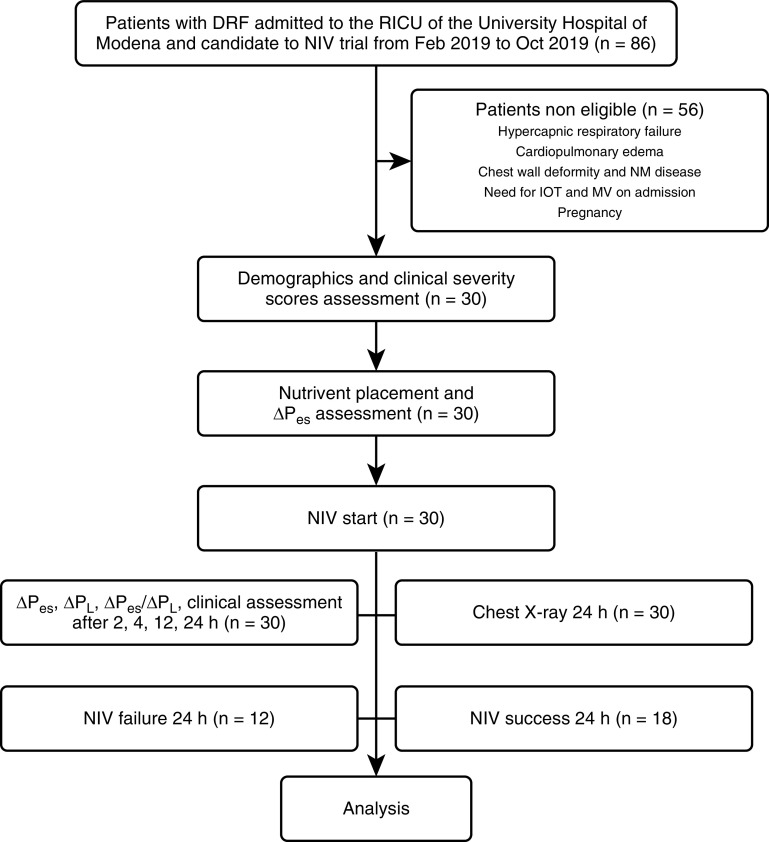
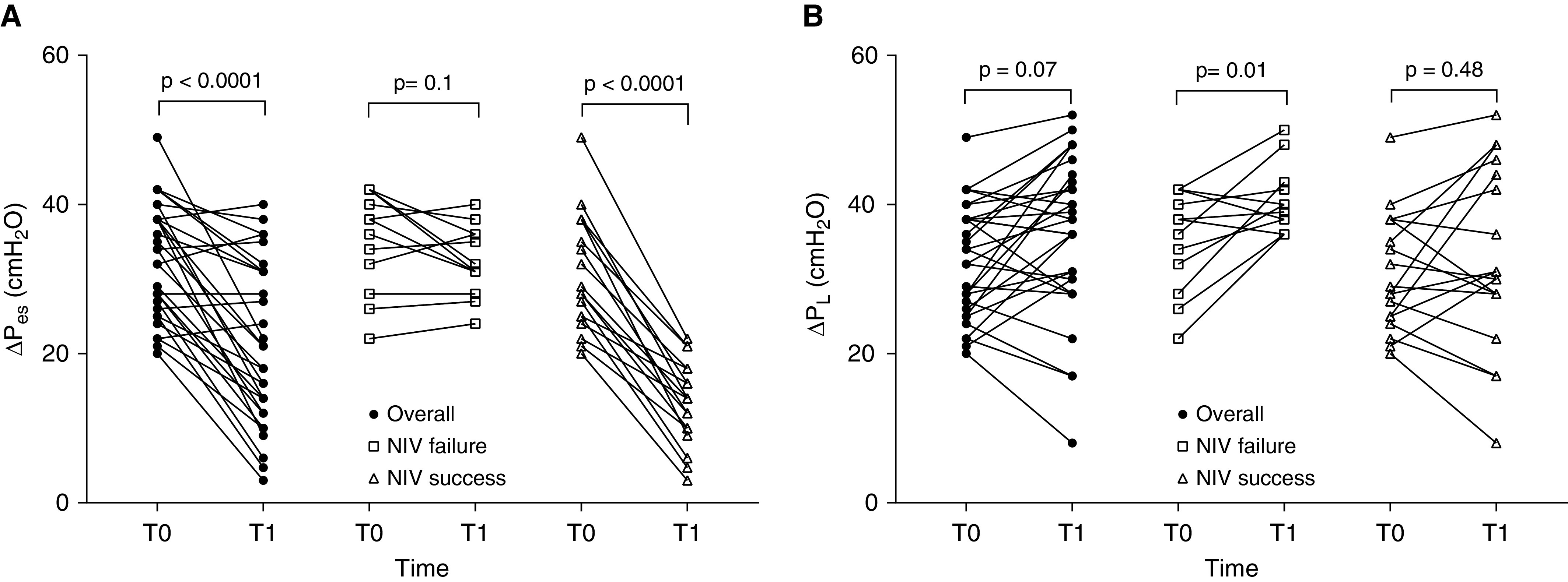
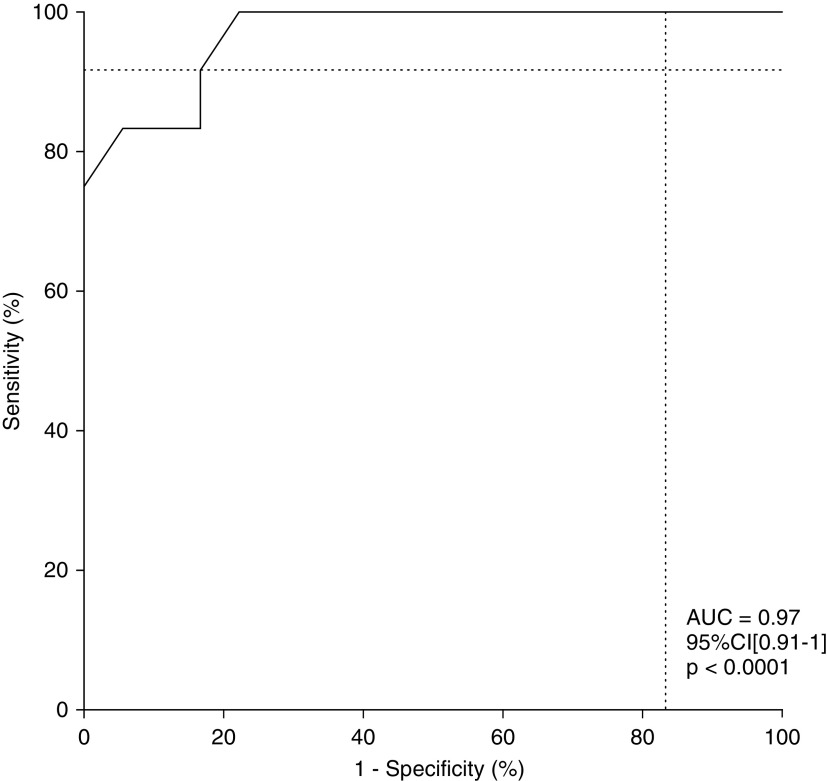
Rationale: The role of inspiratory effort still has to be determined as a potential predictor of noninvasive mechanical ventilation (NIV) failure in acute hypoxic de novo respiratory failure. Objectives: To explore the hypothesis that inspiratory effort might be a major determinant of NIV failure in these patients. Methods: Thirty consecutive patients with acute hypoxic de novo respiratory failure admitted to a single center and candidates for a 24-hour NIV trial were enrolled. Clinical features, tidal change in esophageal pressure (ΔPes), tidal change in dynamic transpulmonary pressure (ΔPl), expiratory Vt, and respiratory rate were recorded on admission and 2–4 to 12–24 hours after NIV start and were tested for correlation with outcomes. Measurements and Main Results: ΔPes and ΔPes/ΔPl ratio were significantly lower 2 hours after NIV start in patients who successfully completed the NIV trial (n = 18) compared with those who needed endotracheal intubation (n = 12) (median [interquartile range], 11 [8–15] cm H2O vs. 31.5 [30–36] cm H2O; P < 0.0001), whereas other variables differed later. ΔPes was not related to other predictors of NIV failure at baseline. NIV-induced reduction in ΔPes of 10 cm H2O or more after 2 hours of treatment was strongly associated with avoidance of intubation and represented the most accurate predictor of treatment success (odds ratio, 15; 95% confidence interval, 2.8–110; P = 0.001 and area under the curve, 0.97; 95% confidence interval, 0.91–1; P < 0.0001). Conclusions: The magnitude of inspiratory effort relief as assessed by ΔPes variation within the first 2 hours of NIV was an early and accurate predictor of NIV outcome at 24 hours. Clinical trial registered with www.clinicaltrials.gov (NCT 03826797).
Overview
The claims and statistics of this paper haven’t been checked yet.
Free: it reads the open-access text and checks the first 5 claims that cite a source we can check. Create a free account to check every claim.
Integrity signals
Registry
Cites
Statistics
Figures
Verification
Claims the paper makes
The claims and statistics of this paper haven’t been checked yet.
Free: it reads the open-access text and checks the first 5 claims that cite a source we can check. Create a free account to check every claim.
Claims other papers make about this one
Each is checked against this paper’s own text: does it say what the citing paper says it does?
The check wasn’t confident either way, so it gives no verdict — never disputed.
In the citing paper
“A previous metaanalysis of RCTs in septic patients showed a higher risk of RRT with the use of HES 130/0.38-0.45(RR, 1.36; 95% CI, 1.08-1.72)and a higher risk of death in a predefined analysis of low risk of bias trials (RR, 1.11; 95% CI, 1.0-1.2) (343).”
From Surviving Sepsis Campaign: International Guidelines for Management of Sepsis and Septic Shock 2021. (2021) · cites this paper as [343]
Experimental — accuracy not yet measured
Self-check
Percentages, sums and reported differences re-computed from the paper’s own numbers.
The self-check needs the paper’s full text.
Citations
Cites
Bellani, G., Laffey, J. G., Pham, T., Fan, E., Brochard, L., Esteban, A., Gattinoni, L., van Haren, F., Larsson, A., McAuley, D. F., et al. (2016) · JAMA · doi:10.1001/jama.2016.0291 · Cited by 5,766 · cited 1×
“Two recent studies have demonstrated that moderate-to-severe hypoxemia significantly affects NIV outcome in patients with ARDS-induced AHRF (19, 20).”
BackgroundGirard, T. D., Kress, J. P., Fuchs, B. D., Thomason, J. W., Schweickert, W. D., Pun, B. T., Taichman, D. B., Dunn, J. G., Pohlman, A. S., Kinniry, P. A., et al. (2008) · The Lancet · doi:10.1016/s0140-6736(08)60105-1 · Cited by 2,055
The Berlin definition of ARDS: an expanded rationale, justification, and supplementary material
Ferguson, N. D., Fan, E., Camporota, L., Antonelli, M., Anzueto, A., Beale, R., Brochard, L., Brower, R., Esteban, A., Gattinoni, L., et al. (2012) · Intensive Care Medicine · doi:10.1007/s00134-012-2682-1 · Cited by 1,443 · cited 7×
“Two recent studies have demonstrated that moderate-to-severe hypoxemia significantly affects NIV outcome in patients with ARDS-induced AHRF (19, 20).”
MethodInfluentialAntonelli, M., Conti, G., Rocco, M., Bufi, M., De Blasi, R. A., Vivino, G., Gasparetto, A., & Meduri, G. U. (1998) · New England Journal of Medicine · doi:10.1056/nejm199808133390703 · Cited by 1,014
Early Neuromuscular Blockade in the Acute Respiratory Distress Syndrome
The National Heart, L. (2019) · New England Journal of Medicine · doi:10.1056/nejmoa1901686 · Cited by 886
Antonelli, M., Conti, G., Moro, M., Esquinas, A., Gonzalez-Diaz, G., Confalonieri, M., Pelaia, P., Principi, T., Gregoretti, C., Beltrame, F., et al. (2001) · Intensive Care Medicine · doi:10.1007/s00134-001-1114-4 · Cited by 757 · cited 1×
“exchange within 1 h of treatment) are associated with NIV failure in patients with AHRF, although these were insufficient to influence ETI timing (17).”
BackgroundBellani, G., Laffey, J. G., Pham, T., Madotto, F., Fan, E., Brochard, L., Esteban, A., Gattinoni, L., Bumbasirevic, V., Piquilloud, L., et al. (2017) · American Journal of Respiratory and Critical Care Medicine · doi:10.1164/rccm.201606-1306oc · Cited by 667 · cited 2×
“failure, and it seems to be associated with higher mortality when the PaO2/FIO2 ratio is ,150 mm Hg (4).”
BackgroundThe Application of Esophageal Pressure Measurement in Patients with Respiratory Failure
Akoumianaki, E., Maggiore, S. M., Valenza, F., Bellani, G., Jubran, A., Loring, S. H., Pelosi, P., Talmor, D., Grasso, S., Chiumello, D., et al. (2014) · American Journal of Respiratory and Critical Care Medicine · doi:10.1164/rccm.201312-2193ci · Cited by 635
Self-citationNoninvasive Pressure Support Ventilation in Patients With Acute Respiratory Failure
Wysocki, M., Tric, L., Wolff, M. A., Millet, H., & Herman, B. (1995) · Chest · doi:10.1378/chest.107.3.761 · Cited by 491
Carteaux, G., Millán-Guilarte, T., De Prost, N., Razazi, K., Abid, S., Thille, A. W., Schortgen, F., Brochard, L., Brun-Buisson, C., & Mekontso Dessap, A. (2016) · Critical Care Medicine · doi:10.1097/ccm.0000000000001379 · Cited by 491 · cited 1×
“In a recent trial, Carteaux and coworkers (22) showed that a VTe value.”
Background
Cited by
Items 201–275 of 275
Rationale of Noninvasive Ventilation
Michi, T., Rosà, T., Sklar, M. C., & Grieco, D. L. (2023) · Springer eBooks · doi:10.1007/978-3-031-28963-7_1 · Cited by 1
Petitjeans, F., Longrois, D., GHIGNONE, M., & Quintin, L. (2024) · The Journal of Critical Care Medicine · doi:10.2478/jccm-2024-0035 · Cited by 1
“Poor oxygenation (P/F 150) is unassociated with the increased inspiratory activity [2] but with inflammation [86].”
InfluentialLari, F., Giostra, F., & Guerrini, S. (2020) · Emergency Care Journal · doi:10.4081/ecj.2020.9127 · Cited by 1
Lanza, A., Sommariva, M., Mariani, S., Ferreyra, G., Stagni, G., Tombini, V., Oppizzi, A., Pontiggia, C., & Bellone, A. (2021) · Monaldi Archives for Chest Disease · doi:10.4081/monaldi.2021.1783 · Cited by 2
Tonelli, R., Castaniere, I., Fantini, R., Tabbì, L., Busani, S., Pisani, L., Nava, S., Clini, E. M., & Marchioni, A. (2020) · American Journal of Respiratory and Critical Care Medicine · doi:10.1164/rccm.202008-3049le · Cited by 1
Self-citationLung-Protective Concept and Noninvasive Respiratory Support
Sakuraya, M. (2023) · CHEST Journal · doi:10.1016/j.chest.2023.05.014 · Cited by 1
Wendel‐Garcia, P. D., & Bos, L. D. J. (2023) · CHEST Journal · doi:10.1016/j.chest.2023.06.016 · Cited by 1
Wu, L. Y., Wang, X., Hu, P., Pan, Y., Zhao, N., Lu, Y., Liu, F., & Qian, K. (2024) · Research Square · doi:10.21203/rs.3.rs-4315149/v1 · Cited by 1
ARDS in COVID-19 and beyond: Let’s keep our eyes on the goal instead of the straw man
Mosier, J. M., Natt, B., & Malo, J. (2020) · Journal of the Intensive Care Society · doi:10.1177/1751143720973527
“of detrimental injury from further spontaneous breathing driven injury.(18,19) This progression of”
BackgroundMechanical Ventilation in the COVID-19 Patient
Morrissette, K. M., Lentz, S. A., & Mosier, J. M. (2021) · Springer eBooks · doi:10.1007/978-3-030-85636-6_6
Dyspnea in Patients Receiving Mechanical Ventilation
Decavèle, M., Similowski, T., & Demoule, A. (2021) · Elsevier eBooks · doi:10.1016/b978-0-08-102723-3.00220-1 · Cited by 1
Busani, S., Coloretti, I., Baciarello, M., Bellini, V., Sarti, M., Biagioni, E., Tonelli, R., Marchioni, A., Clini, E. M., Guaraldi, G., et al. (2022) · Pulmonology · doi:10.1016/j.pulmoe.2022.03.004
“Comorbidities (n; %) 88 (51,5) 33 (57,9) 27 (47,4) 28 (49,1) 0,484”
InfluentialSelf-citationNon-Invasive Ventilation: Indications and Caveats
Roca, O., Grieco, D. L., & Munshi, L. (2022) · Springer eBooks · doi:10.1007/978-3-030-93401-9_9
Odena, M. P., & Guitart, C. (2021) · Faculty Opinions – Post-Publication Peer Review of the Biomedical Literature · doi:10.3410/f.740440886.793588139
Yaroshetskiy, A. I., Мержоева, З. М., Tsareva, N. A., Трушенко, Н. В., Nuralieva, G. S., Konanykhin, V. D., Krasnoshchekova, A. P., & Avdeev, S. N. (2022) · Research Square · doi:10.21203/rs.3.rs-1684574/v1
Weaver, L., Saffaran, S., Chikhani, M., Laffey, J. G., Scott, T. E., Camporota, L., Hardman, J. G., & Bates, D. G. (2022) · Annual International Conference of the IEEE Engineering in Medicine and Biology Society (EMBC) · doi:10.1109/embc48229.2022.9871901
“To investigate the physiological factors which could determine NIV success and failure, we created three virtual patients with characteristics that are representative of the patient cohort described in [5] before application of NIV, i.”
InfluentialEditorial: Lung monitoring in respiratory failure
Rezoagli, E., Chen, L., & Bellani, G. (2023) · Frontiers in Medicine · doi:10.3389/fmed.2023.1155898
“The assessment of the inspiratory effort in patients undergoing non-invasive respiratory support or mechanical ventilation has a broad interest for multiple reasons, such as the prediction of the failure of non-invasive ventilation (12), the optimization of the patient-ventilator interaction (13) and the prevention of…”
BackgroundPhysiological Adaptations During Weaning from Venovenous ECMO
Collins, P. D., Giosa, L., & Camporota, L. (2023) · Annual update in intensive care and emergency medicine · doi:10.1007/978-3-031-23005-9_20
Viola, L., Bolondi, G., Bergamini, C., Bissoni, L., Benni, M., Santonastaso, D. P., Vitali, S., Piccinno, M., Mezzatesta, L., Scognamiglio, G., et al. (2023) · Advances in Anesthesia and Pain Medicine · doi:10.4081/amsa.2023.8
“…failure not related to COVID-19, a reduction in Pes swing < 10 cmH 2 O after 2 h of NIV is an early and accurate predictor of NIV failure at 24 h. 42 In addition to that, the use of Pes should be scientifically validated and implemented as an evaluation parameter for the need to establish…”
Wang, X., Wang, Z., Wu, B., Yan, J., Ren, X., & Xu, W. (2023) · Research Square · doi:10.21203/rs.3.rs-3101160/v1
Liu, X., Chen, L., Liu, H., Duan, J., Ran, H., Chen, L., Zhou, R., & Zheng, X. (2024) · Research Square · doi:10.21203/rs.3.rs-3791407/v1
El-Deeb, H. A. A. E.-M., Hafeez, N. A. A. A. E., RASHWAN, M. D. A. M. A. H., El‐Sayed, M. M., Khedr, M. A., & Dawood, R. F. A. (2024) · Clinical Nursing Research · doi:10.1177/10547738241298030
“Similarly, the findings of Tonelli et al. (2020) and Tonelli et al. (2022) provide valuable insights into the physiological mechanisms underlying the beneficial effects of PP on respiratory function.”
Efficacy of prone positioning in awake ventilation for COVID-19: Umbrella review
Guo, D.-Y., Zhang, Q., Wang, L., Pu, Z., & Jia, P. (2025) · Medicine · doi:10.1097/md.0000000000041477 · Cited by 1
Decades Under the Influence in ARDS: Shifting to PEEP or Shifting to Early Spontaneous Breathing?
Petitjeans, F., Longrois, D., Constantin, J., GHIGNONE, M., & Quintin, L. (2025) · Respiratory Care · doi:10.4187/respcare.12642
Kuhkani, S., Zarghami, F., Gilani, N., Rashidi, F., Shojaan, H., & Namvar, L. (2025) · Modern Care Journal · doi:10.5812/mcj-157983
Pisani, L., Heili-Frades, S. B., Ergan, B., Murphy, P. B., Giancotti, G., & Winck, J. C. (2025) · Expert Review of Respiratory Medicine · doi:10.1080/17476348.2025.2518282
“Currently, the only parameter that has proven to be an accurate predictor of NIV outcome in patients with AHRF at 24 h was the magnitude of inspiratory effort relief as assessed by tidal change in esophageal pressure (Pes) [65].”
Self-citationBellone, A., & Bersten, A. D. (2025) · Intensive Care Medicine · doi:10.1007/s00134-025-08042-5
“Tonelli and coworkers [9] reported an inverse relationship between lung volume and inspiratory effort in patients with AHRF, and that an early reduction in inspiratory effort during NIV was associated with avoidance of intubation, consistent with less P-SILI.”
Invasive vs Noninvasive Ventilation in Acute Hypoxemic Respiratory Failure
Sarada, P. P. (2025) · Journal of Acute Care · doi:10.5005/jp-journals-10089-0127
Rosà, T., Menga, L. S., Ferreyro, B. L., Grieco, D. L., & Antonelli, M. M. (2025) · Current Opinion in Critical Care · doi:10.1097/mcc.0000000000001345 · Cited by 1
“…be given to the type of expiratory valves used, as they together with set washout flow and HEPA filters – affect pressure & addition, the pressurization time (i.e. the ramp) should be set as short as possible, to the lowest value permitted by the ventilator, as this is also crucial to improve…”
Viola, L., Bolondi, G., Bergamini, C., Bissoni, L., Benni, M., Santonastaso, D. P., Vitali, S., Piccinno, M., Mezzatesta, L., Scognamiglio, G., et al. (2023) · Advances in Anesthesia and Pain Medicine · doi:10.4081/aapm.2023.8
Additional file 4 of Influence of different noninvasive oxygenation support devices on tidal volume
Haudebourg, A.-F., Maraffi, T., Tuffet, S., Corvoisier, P. L., Dessap, A. M., & Carteaux, G. (2024) · Figshare · doi:10.6084/m9.figshare.26645206
Duan, J., Chen, L., Liu, X., Bozbay, S., Liu, Y., Wang, K., Esquinas, A. M., Shu, W., Yang, F., He, D., et al. (2022) · Figshare · doi:10.6084/m9.figshare.20222629
Docci, M., Rezoagli, E., Droghi, M. T., Coppadoro, A., Pozzi, M., Grassi, A., Bianchi, I. M., Foti, G., & Bellani, G. (2024) · Figshare · doi:10.6084/m9.figshare.26657116
da Cruz, A. P., Martins, G., Martins, C. M., Marques, V., Christovam, S., Battaglini, D., Robba, C., Pelosi, P. P., Rocco, P. R., Cruz, F. F., et al. (2024) · Figshare · doi:10.6084/m9.figshare.26710118
Additional file 2 of Influence of different noninvasive oxygenation support devices on tidal volume
Haudebourg, A.-F., Maraffi, T., Tuffet, S., Corvoisier, P. L., Dessap, A. M., & Carteaux, G. (2024) · Figshare · doi:10.6084/m9.figshare.26645200
Yarnell, C. J., Angriman, F., Ferreyro, B. L., Liu, K., de Grooth, H., Burry, L. D., Munshi, L., Mehta, S., Celi, L. A., Elbers, P., et al. (2024) · Figshare · doi:10.6084/m9.figshare.26570569
da Cruz, A. P., Martins, G., Martins, C. M., Marques, V., Christovam, S., Battaglini, D., Robba, C., Pelosi, P. P., Rocco, P. R., Cruz, F. F., et al. (2024) · Figshare · doi:10.6084/m9.figshare.26710115
Additional file 1 of Influence of different noninvasive oxygenation support devices on tidal volume
Haudebourg, A.-F., Maraffi, T., Tuffet, S., Corvoisier, P. L., Dessap, A. M., & Carteaux, G. (2024) · Figshare · doi:10.6084/m9.figshare.26645197
Yaroshetskiy, A. I., Merzhoeva, Z. M., Tsareva, N. A., Trushenko, N., Nuralieva, G. S., Дмитриевич, К. В., Krasnoshchekova, A. P., & Avdeev, S. N. (2022) · Figshare · doi:10.6084/m9.figshare.21258275
da Cruz, A. P., Martins, G., Martins, C. M., Marques, V., Christovam, S., Battaglini, D., Robba, C., Pelosi, P. P., Rocco, P. R., Cruz, F. F., et al. (2024) · Figshare · doi:10.6084/m9.figshare.26710121
Additional file 3 of Influence of different noninvasive oxygenation support devices on tidal volume
Haudebourg, A.-F., Maraffi, T., Tuffet, S., Corvoisier, P. L., Dessap, A. M., & Carteaux, G. (2024) · Figshare · doi:10.6084/m9.figshare.26645203
Tonelli, R., Cortegiani, A., Marchioni, A., Fantini, R., Tabbì, L., Castaniere, I., Biagioni, E., Busani, S., Nani, C., Cerbone, C., et al. (2022) · Figshare · doi:10.6084/m9.figshare.19418416
Self-citationda Cruz, A. P., Martins, G., Martins, C. M., Marques, V., Christovam, S., Battaglini, D., Robba, C., Pelosi, P. P., Rocco, P. R., Cruz, F. F., et al. (2024) · Figshare · doi:10.6084/m9.figshare.26710124
Chiumello, D., Chiodaroli, E., Coppola, S., Cappio Borlino, S., Granata, C., Pitimada, M., & Wendel‐Garcia, P. D. (2021) · Figshare · doi:10.6084/m9.figshare.17305332
Leasa, D. J., Cameron, P., Honarmand, K., Mele, T. S., & Bosma, K. J. (2021) · Figshare · doi:10.6084/m9.figshare.13549890
Weaver, L., Das, A., Saffaran, S., Yehya, N., Scott, T. E., Chikhani, M., Laffey, J. G., Hardman, J. G., Camporota, L., & Bates, D. G. (2021) · Figshare · doi:10.6084/m9.figshare.14978552
Deepa, M. J., Paul, D., Arun, N. A., & Krishnakumar, E. V. (2025) · International Journal of Advanced Medical and Health Research · doi:10.4103/ijamr.ijamr_134_25
Vallverdú, J., Barbeta, E., Artigas, R. M., Torres, A., & Ferrando, C. (2026) · Trials · doi:10.1186/s13063-025-09344-1
“A less invasive and validated alternative is nasal pressure swings which have shown an excellent concordance with intrathoracic pressures [14, 15].”
Fisser, C., Malfertheiner, M. V., Lepper, P. M., & Mang, S. (2026) · Pneumologie · doi:10.1055/a-2776-7023
“Dagegen wird bei hypoxämischer Insuffi-zienz”
Mauri, T., Spinelli, E., Marongiu, I., Damia, A., Leali, M., Maretti, A., Consalvo, L., Damarco, F., Lopez, G., Zanella, A., et al. (2026) · Respiratory Research · doi:10.1186/s12931-026-03546-0
Fazzini, B., Stephens, T. J., Pickles, F., Mathieson, G., Pattison, R., Kelly, E., Nazeer, S., Heunks, L. M. A., Doorduin, J., & Puthucheary, Z. (2026) · medRxiv · doi:10.64898/2026.02.05.26345575
ERS Congress 2025: highlights from the Respiratory Intensive Care Assembly
Jiménez-Gómez, M., Leo, G. D., João, M., Lam, L.-P., Padilla, D. E. L., Machado, T. M. S. C., Pais, M., Stamatopoulou, V., Vilde, R., Fisser, C., et al. (2026) · ERJ Open Research · doi:10.1183/23120541.01733-2025
“…tools, such as the ROX index (the ratio of oxygen saturation to F IO 2 to respiratory rate) [24], HACOR (heart rate, acidosis, level of consciousness, oxygenation, respiratory rate) score [25], and inspiratory effort measured using oesophageal manometry [26] can guide timely escalation [27].”
Coppola, S., Pelliccia, M., Pozzi, T., Catozzi, G., Rocco, C., Monte, A., Besana, G., & Chiumello, D. (2026) · Critical Care Medicine · doi:10.1097/ccm.0000000000007116
“Furthermore, the intensity of inspiratory effort within the first hours of noninvasive respiratory support has been demonstrated to accurately predict a patient’s outcome (24).”
Optimizing Non-invasive Ventilation in Acute Respiratory Failure
Vega, M. L., Nava, S., & Pisani, L. (2026) · Clinics in Chest Medicine · doi:10.1016/j.ccm.2026.04.002
Self-citationSong, F., Chen, Y., Ma, J., & Huang, D. (2026) · Critical Care · doi:10.1186/s13054-026-06122-6
“However, the VOX index, defined as (SpO₂/FiO₂)/tidal volume, may better reflect early increases in respiratory drive and has shown promising predictive performance for intubation [8, 9].”
Behmüller, F., Bastian, T. M., Selpien, H., Eimer, C., Weiler, N., Schädler, D., Bellani, G., & Becher, T. (2026) · Scientific Reports · doi:10.1038/s41598-026-61929-1
Nakayama, R., Bunya, N., Nishikimi, M., Ohshimo, S., Wada, K., Aoyagi, A., Uemura, S., Shime, N., Narimatsu, E., J-CARVE registry group, et al. (2026) · Journal of Intensive Care · doi:10.1186/s40560-026-00915-1
“…P-SILI contributes to the poor outcomes associated with prolonged ARS duration, our registry lacked granular physiological data during the pre-ECMO period, such as serial measurements of respiratory drive, esophageal pressure [32–34], dynamic changes in HFNC settings, or the ROX index [35, 36].”
Chidini, G., Grieco, D. L., Länger, T., Villa, C., Catenacci, S. S., Marchesi, T., Patria, M. F., Grasselli, G., Calderini, E., & Gregoretti, C. (2026) · Research Square · doi:10.21203/rs.3.rs-10527671/v1
Ramadan, M. A., Ali, L. M. E. S., Elamin, A. M. M., Ibrahim, E. M. M., Abaker, I. S. A., Osman, O. A. S., & Omer, E. O. E. (2026) · Cureus · doi:10.7759/cureus.114823
“Sample sizes ranged from 30 patients in a physiological pilot study [27] to 2,749 NIV episodes in 2,711 consecutive patients [26].”
InfluentialTidal Volume Threshold for Noninvasive Respiratory Support Failure in Hypoxemic Respiratory Failure
Despland, C., Lais, G., Renaud, Y., Cristiani, I., Chiche, J., & Piquilloud, L. (2026) · Respiratory Care · doi:10.1177/19433654261471319
Impact of CPAP and ventilator system resistance on respiratory effort in healthy volunteers
Lindner, S., Doerflinger, L., Drotleff, L. S. S., Link, B., Neetz, B., Michels-Zetsche, J. D., Herth, F. J. F., Duerschmied, D., & Britsch, S. (2026) · BMC Pulmonary Medicine · doi:10.1186/s12890-026-04649-6
“High minute ventilations ranging from 12 to up to 29 L/min have been reported in those patients [8, 18, 19], rendering ventilator system resistance an additional potentially important determinant of respiratory effort.”
Closed-loop non-invasive ventilation in critical care: current evidence and clinical perspectives
Guimarães, F. S., & Esquinas, A. M. (2026) · Frontiers in Anesthesiology · doi:10.3389/fanes.2026.1948602
Prediction of noninvasive ventilation failure: a narrative review
Guo, X., Xia, Y., Ma, M., Min, Y., & Duan, J. (2026) · Annals of Intensive Care · doi:10.1016/j.aicoj.2026.100156
“Esophageal pressure swing is a more accurate variable for reflecting the severity of respiratory distress [46].”
Fazzini, B., Kelly, E., Mathieson, G., Pearse, R., Puthucheary, Z., & Stephens, T. J. (2026) · Intensive and Critical Care Nursing · doi:10.1016/j.iccn.2026.104575
Regulski, L., Saffaran, S., Yu, H., Weaver, L., Simonini, M., Verduri, A., Henry, C., Ali, A., Scott, T. E., Mustfa, N., et al. (2026) · Research Square · doi:10.21203/rs.3.rs-10751751/v1
Self-citationPan, L., Zhong, X., Zhao, Q., Bai, L., Ma, M., Min, Y., Hong, Y., & Duan, J. (2026) · Nursing in Critical Care · doi:10.1111/nicc.70689
Non-invasive respiratory supports in ARDS: Physiology-guided use, pitfalls, and pathways to success
Munshi, L., Antonelli, M., & Frat, J.-P. (2026) · Intensive Care Medicine · doi:10.1007/s00134-026-08616-x
High-Flow Nasal Cannula Oxygen Therapy: How Has It Evolved Over the Past Decade?
Frat, J., Coudroy, R., & Thille, A. W. (2026) · Archivos de Bronconeumología · doi:10.1016/j.arbres.2026.09.021
Mechanical ventilation before and during veno-venous extracorporeal membrane oxygenation
Giani, M., Vatta, A., Manzillo, L. F., Riggio, C., Camporota, L., & Rezoagli, E. (2026) · Expert Review of Medical Devices · doi:10.1080/17434440.2026.2749360
Cruz, R. S., Matesa, A., Jara, M., Nadur, J., Loudet, C., Ricci‐Cabello, I., & Esquinas, A. (2026) · Critical Care Medicine · doi:10.1097/ccm.0000000000007387 · Cited by 1
Mavignier, N., & Mauri, T. (2026) · Critical Care Medicine · doi:10.1097/ccm.0000000000007410
Metadata
- Authors
- Tonelli, R., Fantini, R., Tabbì, L., Castaniere, I., Pisani, L., Pellegrino, M. R., Della Casa, G., D’Amico, R., Girardis, M., Nava, S., Clini, E. M., & Marchioni, A.
- Affiliations
- University of Modena and Reggio Emilia (IT)
- University of Bologna (IT)
- Radiology Unit and
- Corresponding author
- Clini, Enrico M.
- ORCID
- Venue
- American Journal of Respiratory and Critical Care Medicine
- Publisher
- Oxford University Press (OUP)
- Published
- 2020-08-01
- Volume
- 202
- Issue
- 4
- Pages
- 558-567
- ISSN
- 1073-449X (ISSN-L)
- 1535-4970
- PMC
- PMC7427381
- OpenAlex
- W3020183443
- Semantic Scholar
- c220f59b1885bbdd64703093ba5e5a31d56d7504
- Cited by
- 274
- References
- 30
- Citations by year
- 2026: 36 · 2025: 35 · 2024: 48 · 2023: 32 · 2022: 54 · 2021: 41 · 2020: 28
- FWCI
- 21.84
- Type
- journal article
- Language
- en
- Open access
- hybrid
- doi.org
- Licence
- Locations
- American Journal of Respiratory and Critical Care Medicine (publishedVersion, cc-by-nc-nd)
- PubMed Central (publishedVersion, cc-by-nc-nd)
- PubMed (publishedVersion)
- IRIS UNIMORE (University of Modena and Reggio Emilia) (submittedVersion, cc-by)
- Archivio istituzionale della ricerca (Alma Mater Studiorum Università di Bologna) (submittedVersion, cc-by-nc-nd)
- Topics
- Health Sciences › Medicine › Pulmonary and Respiratory Medicine › Respiratory Support and Mechanisms
- Health Sciences › Medicine › Physiology (medical) › Obstructive Sleep Apnea Research
- Health Sciences › Medicine › Pulmonary and Respiratory Medicine › Neonatal Respiratory Health Research
- Keywords
- inspiratory effort, esophageal manometry, non-invasive ventilation, acute hypoxemic respiratory failure, endotracheal intubation, transpulmonary pressure
- MeSH terms
- Aged, Aged, 80 and over, Inhalation, Esophagus, Female, Humans, Male, Manometry, Middle Aged, Pilot Projects, Predictive Value of Tests, Prospective Studies, Respiratory Insufficiency, Time Factors, Noninvasive Ventilation
About these checks
Registry, retraction, Cites and statistics results are computed, not judged, with one exception: a printed reference that no index lists is read once by a model before it counts as a citation error. Claims are extracted by a model and kept only when their quote appears verbatim in the text; each cited source is then checked, with a model’s help, for whether it says what the claim relies on. Those verdicts can be wrong — read the claim’s quote and the cited source before relying on one.
Statistics and arithmetic are recomputed, not judged.
Confidence bands are shown only for fields calibrated on our annotated test set. None is calibrated yet, so no band is shown.
What counts as a claim ›How we measure confidence ›How we check this ›
Are you an author, or do you see a problem with this page? Request a review
Data sources
Bibliographic data: Semantic Scholar, OpenAlex, Crossref.
Contains information from the Semantic Scholar Academic Graph Datasets, made available under the ODC Attribution License (ODC-BY 1.0).
Semantic Scholar’s data is described in: Kinney, R., et al. (2023). The Semantic Scholar Open Data Platform. arXiv:2301.10140.
