

Early Inspiratory Effort Assessment by Esophageal Manometry Predicts Noninvasive Ventilation Outcome in De Novo Respiratory Failure. A Pilot Study
Open accessThe DOI matches its Crossref record; 30 of the 30 references it cites were found in a registry or an index.
Abstract
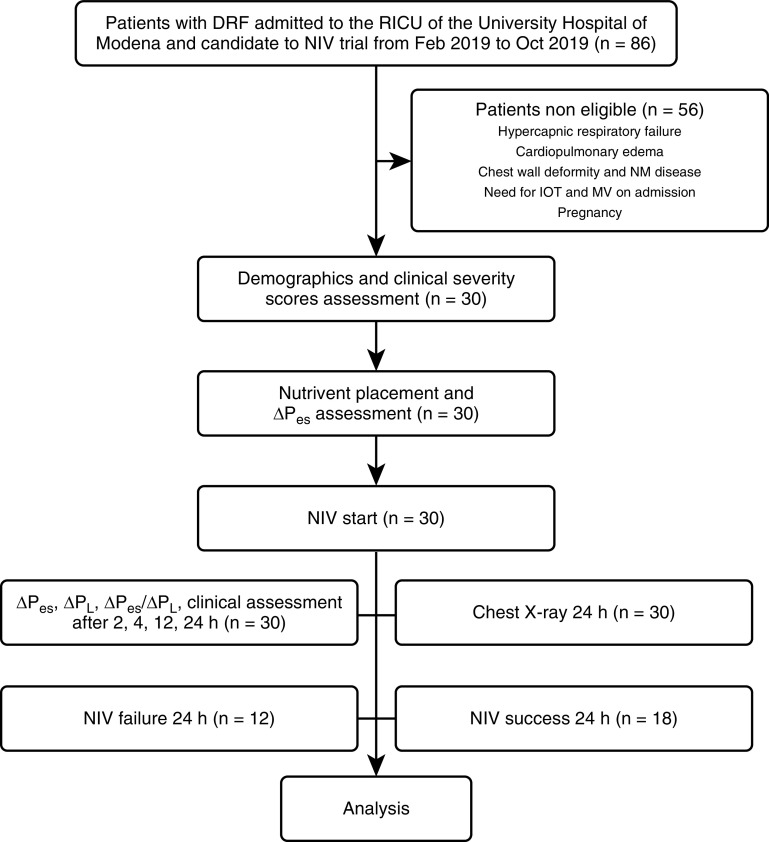
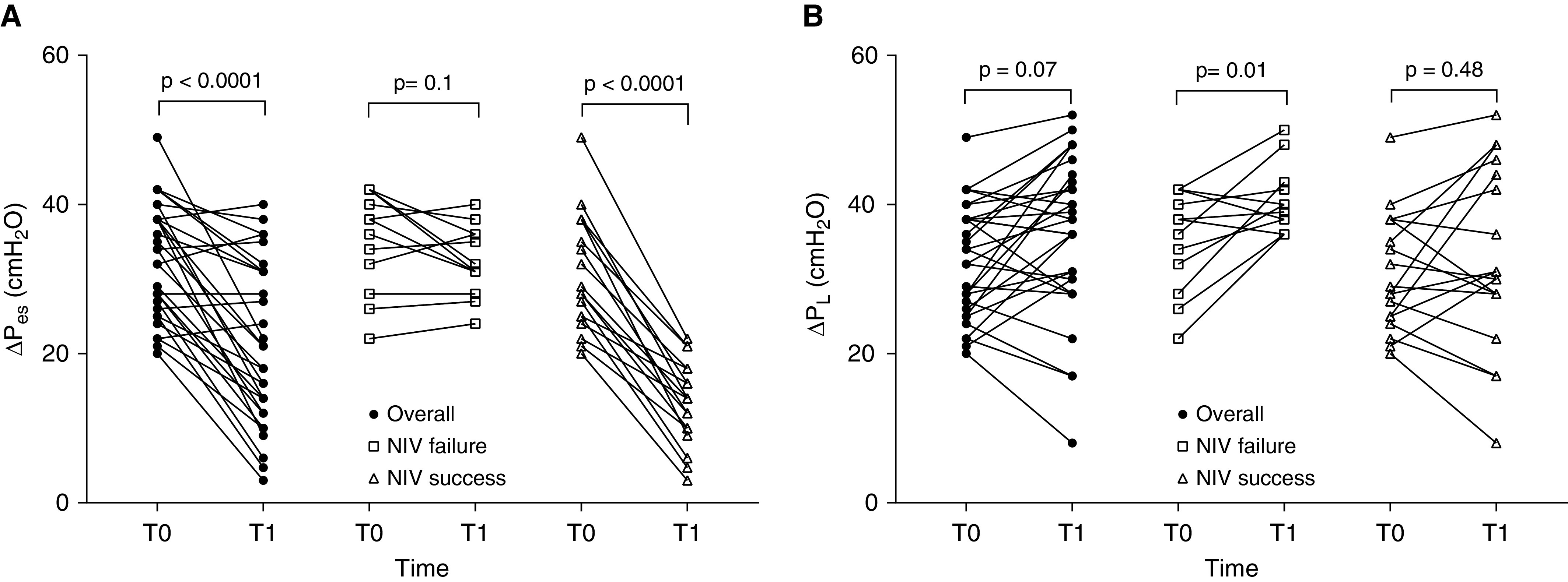
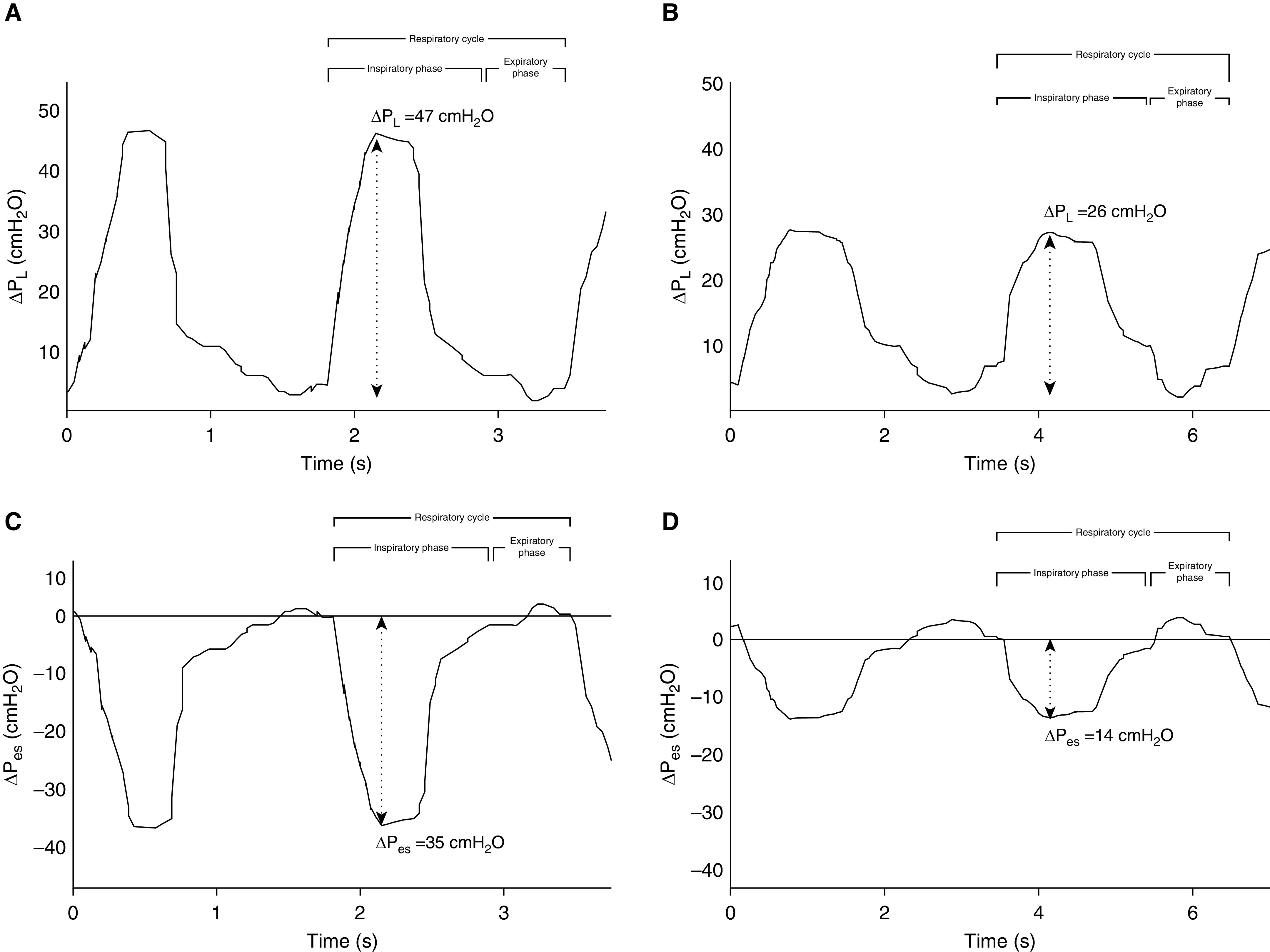
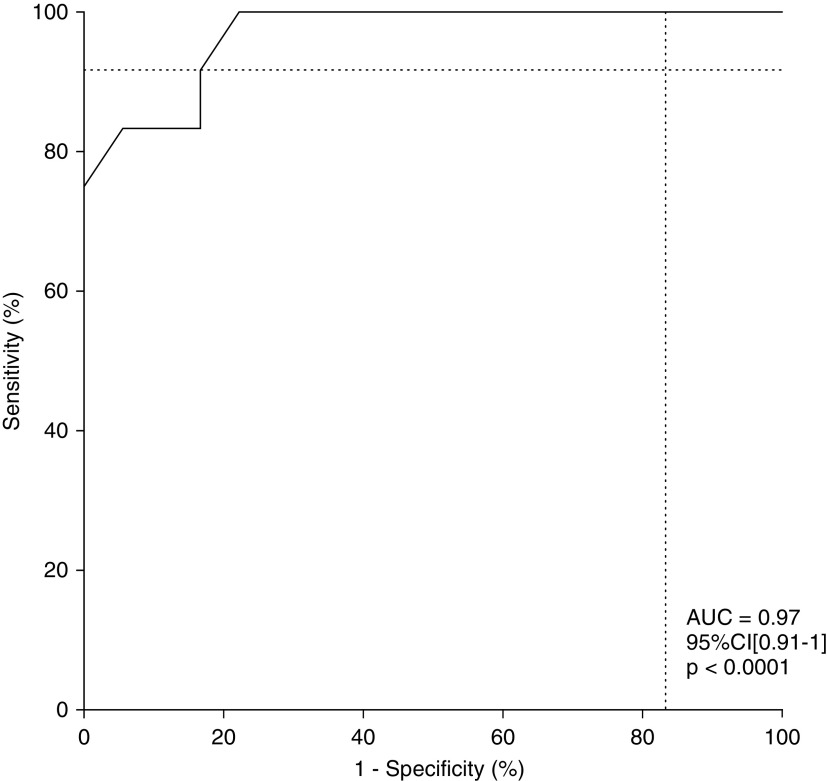
Rationale: The role of inspiratory effort still has to be determined as a potential predictor of noninvasive mechanical ventilation (NIV) failure in acute hypoxic de novo respiratory failure. Objectives: To explore the hypothesis that inspiratory effort might be a major determinant of NIV failure in these patients. Methods: Thirty consecutive patients with acute hypoxic de novo respiratory failure admitted to a single center and candidates for a 24-hour NIV trial were enrolled. Clinical features, tidal change in esophageal pressure (ΔPes), tidal change in dynamic transpulmonary pressure (ΔPl), expiratory Vt, and respiratory rate were recorded on admission and 2–4 to 12–24 hours after NIV start and were tested for correlation with outcomes. Measurements and Main Results: ΔPes and ΔPes/ΔPl ratio were significantly lower 2 hours after NIV start in patients who successfully completed the NIV trial (n = 18) compared with those who needed endotracheal intubation (n = 12) (median [interquartile range], 11 [8–15] cm H2O vs. 31.5 [30–36] cm H2O; P < 0.0001), whereas other variables differed later. ΔPes was not related to other predictors of NIV failure at baseline. NIV-induced reduction in ΔPes of 10 cm H2O or more after 2 hours of treatment was strongly associated with avoidance of intubation and represented the most accurate predictor of treatment success (odds ratio, 15; 95% confidence interval, 2.8–110; P = 0.001 and area under the curve, 0.97; 95% confidence interval, 0.91–1; P < 0.0001). Conclusions: The magnitude of inspiratory effort relief as assessed by ΔPes variation within the first 2 hours of NIV was an early and accurate predictor of NIV outcome at 24 hours. Clinical trial registered with www.clinicaltrials.gov (NCT 03826797).
Overview
The claims and statistics of this paper haven’t been checked yet.
Free: it reads the open-access text and checks the first 5 claims that cite a source we can check. Create a free account to check every claim.
Integrity signals
Registry
Cites
Statistics
Figures
Verification
Claims the paper makes
The claims and statistics of this paper haven’t been checked yet.
Free: it reads the open-access text and checks the first 5 claims that cite a source we can check. Create a free account to check every claim.
Claims other papers make about this one
Each is checked against this paper’s own text: does it say what the citing paper says it does?
The check wasn’t confident either way, so it gives no verdict — never disputed.
In the citing paper
“A previous metaanalysis of RCTs in septic patients showed a higher risk of RRT with the use of HES 130/0.38-0.45(RR, 1.36; 95% CI, 1.08-1.72)and a higher risk of death in a predefined analysis of low risk of bias trials (RR, 1.11; 95% CI, 1.0-1.2) (343).”
From Surviving Sepsis Campaign: International Guidelines for Management of Sepsis and Septic Shock 2021. (2021) · cites this paper as [343]
Experimental — accuracy not yet measured
Self-check
Percentages, sums and reported differences re-computed from the paper’s own numbers.
The self-check needs the paper’s full text.
Citations
Cites
Bellani, G., Laffey, J. G., Pham, T., Fan, E., Brochard, L., Esteban, A., Gattinoni, L., van Haren, F., Larsson, A., McAuley, D. F., et al. (2016) · JAMA · doi:10.1001/jama.2016.0291 · Cited by 5,766 · cited 1×
“Two recent studies have demonstrated that moderate-to-severe hypoxemia significantly affects NIV outcome in patients with ARDS-induced AHRF (19, 20).”
BackgroundGirard, T. D., Kress, J. P., Fuchs, B. D., Thomason, J. W., Schweickert, W. D., Pun, B. T., Taichman, D. B., Dunn, J. G., Pohlman, A. S., Kinniry, P. A., et al. (2008) · The Lancet · doi:10.1016/s0140-6736(08)60105-1 · Cited by 2,055
The Berlin definition of ARDS: an expanded rationale, justification, and supplementary material
Ferguson, N. D., Fan, E., Camporota, L., Antonelli, M., Anzueto, A., Beale, R., Brochard, L., Brower, R., Esteban, A., Gattinoni, L., et al. (2012) · Intensive Care Medicine · doi:10.1007/s00134-012-2682-1 · Cited by 1,443 · cited 7×
“Two recent studies have demonstrated that moderate-to-severe hypoxemia significantly affects NIV outcome in patients with ARDS-induced AHRF (19, 20).”
MethodInfluentialAntonelli, M., Conti, G., Rocco, M., Bufi, M., De Blasi, R. A., Vivino, G., Gasparetto, A., & Meduri, G. U. (1998) · New England Journal of Medicine · doi:10.1056/nejm199808133390703 · Cited by 1,014
Early Neuromuscular Blockade in the Acute Respiratory Distress Syndrome
The National Heart, L. (2019) · New England Journal of Medicine · doi:10.1056/nejmoa1901686 · Cited by 886
Antonelli, M., Conti, G., Moro, M., Esquinas, A., Gonzalez-Diaz, G., Confalonieri, M., Pelaia, P., Principi, T., Gregoretti, C., Beltrame, F., et al. (2001) · Intensive Care Medicine · doi:10.1007/s00134-001-1114-4 · Cited by 757 · cited 1×
“exchange within 1 h of treatment) are associated with NIV failure in patients with AHRF, although these were insufficient to influence ETI timing (17).”
BackgroundBellani, G., Laffey, J. G., Pham, T., Madotto, F., Fan, E., Brochard, L., Esteban, A., Gattinoni, L., Bumbasirevic, V., Piquilloud, L., et al. (2017) · American Journal of Respiratory and Critical Care Medicine · doi:10.1164/rccm.201606-1306oc · Cited by 667 · cited 2×
“failure, and it seems to be associated with higher mortality when the PaO2/FIO2 ratio is ,150 mm Hg (4).”
BackgroundThe Application of Esophageal Pressure Measurement in Patients with Respiratory Failure
Akoumianaki, E., Maggiore, S. M., Valenza, F., Bellani, G., Jubran, A., Loring, S. H., Pelosi, P., Talmor, D., Grasso, S., Chiumello, D., et al. (2014) · American Journal of Respiratory and Critical Care Medicine · doi:10.1164/rccm.201312-2193ci · Cited by 635
Self-citationNoninvasive Pressure Support Ventilation in Patients With Acute Respiratory Failure
Wysocki, M., Tric, L., Wolff, M. A., Millet, H., & Herman, B. (1995) · Chest · doi:10.1378/chest.107.3.761 · Cited by 491
Carteaux, G., Millán-Guilarte, T., De Prost, N., Razazi, K., Abid, S., Thille, A. W., Schortgen, F., Brochard, L., Brun-Buisson, C., & Mekontso Dessap, A. (2016) · Critical Care Medicine · doi:10.1097/ccm.0000000000001379 · Cited by 491 · cited 1×
“In a recent trial, Carteaux and coworkers (22) showed that a VTe value.”
BackgroundPUTENSEN, C., MUTZ, N. J., PUTENSEN-HIMMER, G., & ZINSERLING, J. (1999) · American Journal of Respiratory and Critical Care Medicine · doi:10.1164/ajrccm.159.4.9806077 · Cited by 435 · cited 1×
“and regional ventilation (1), and reduce”
Duan, J., Han, X., Bai, L., Zhou, L., & Huang, S. (2017) · Intensive Care Medicine · doi:10.1007/s00134-016-4601-3 · Cited by 360 · cited 1×
“In a recent single-center study, Duan and coworkers (18) developed and validated the HACOR score for prediction of NIV failure in patients with AHRF, showing that patients with a HACOR score.”
BackgroundGainnier, M., Roch, A., Forel, J.-M., Thirion, X., Arnal, J.-M., Donati, S., & Papazian, L. (2004) · Critical Care Medicine · doi:10.1097/01.ccm.0000104114.72614.bc · Cited by 349
Yoshida, T., Fujino, Y., Amato, M. B. P., & Kavanagh, B. P. (2017) · American Journal of Respiratory and Critical Care Medicine · doi:10.1164/rccm.201604-0748cp · Cited by 346 · cited 1×
“if acute respiratory distress is severe (3).”
Benefits and risks of success or failure of noninvasive ventilation
Demoule, A., Girou, E., Richard, J.-C., Taille, S., & Brochard, L. (2006) · Intensive Care Medicine · doi:10.1007/s00134-006-0324-1 · Cited by 337
Early Neuromuscular Blockade in the Acute Respiratory Distress Syndrome
(2019) · New England Journal of Medicine · doi:10.1056/nejmc1908874 · Cited by 334
Yoshida, T., Uchiyama, A., Matsuura, N., Mashimo, T., & Fujino, Y. (2012) · Critical Care Medicine · doi:10.1097/ccm.0b013e3182451c40 · Cited by 312
Acute respiratory distress syndrome and acute lung injury
Dushianthan, A., Grocott, M. P. W., Postle, A. D., & Cusack, R. (2011) · Postgraduate Medical Journal · doi:10.1136/pgmj.2011.118398 · Cited by 289 · cited 1×
“Despite being less accurate than a computed tomography scan, chest X-rays showed good sensitivity in detecting lung alteration in patients with ARDS (23) and might be considered reliable in the evaluation of the extent and distribution of lung opacities, once a diagnosis has already been made (24).”
MethodYoshida, T., Uchiyama, A., Matsuura, N., Mashimo, T., & Fujino, Y. (2013) · Critical Care Medicine · doi:10.1097/ccm.0b013e3182711972 · Cited by 262
Frat, J.-P., Ragot, S., Coudroy, R., Constantin, J.-M., Girault, C., Prat, G., Boulain, T., Demoule, A., Ricard, J.-D., Razazi, K., et al. (2018) · Critical Care Medicine · doi:10.1097/ccm.0000000000002818 · Cited by 253 · cited 2×
“Two recent studies have demonstrated that moderate-to-severe hypoxemia significantly affects NIV outcome in patients with ARDS-induced AHRF (19, 20).”
BackgroundRespiratory mechanics during exercise in endurance‐trained men and women
Guenette, J. A., Witt, J. D., McKenzie, D. C., Road, J. D., & Sheel, A. W. (2007) · The Journal of Physiology · doi:10.1113/jphysiol.2006.126466 · Cited by 247 · cited 1×
“to 52 cm H2O) did not translate into lung mechanical changes (25, 26).”
BackgroundHigh Positive End-Expiratory Pressure Renders Spontaneous Effort Noninjurious
Morais, C. C. A., Koyama, Y., Yoshida, T., Plens, G. M., Gomes, S., Lima, C. A. S., Ramos, O. P. S., Pereira, S. M., Kawaguchi, N., Yamamoto, H., et al. (2018) · American Journal of Respiratory and Critical Care Medicine · doi:10.1164/rccm.201706-1244oc · Cited by 239 · cited 10×
“In the hypothesis of SILI as a critical factor affecting NIV failure in patients with AHRF, we found that the magnitude of inspiratory effort as assessed by DPes variation within the first 2 hours of NIV treatment is an early and accurate predictor of outcome at 24 hours.”
BackgroundInfluentialDemoule, A., Chevret, S., Carlucci, A., Kouatchet, A., Jaber, S., Meziani, F., Schmidt, M., Schnell, D., Clergue, C., Aboab, J., et al. (2016) · Intensive Care Medicine · doi:10.1007/s00134-015-4087-4 · Cited by 194 · cited 1×
“Despite the initial promising results on the effectiveness of NIV in patients with hypoxic respiratory failure (13, 14), more recent studies focusing on patients with AHRF and excluding underlying chronic respiratory diseases or cardiogenic pulmonary edema warn of the increased mortality rates once ETI is delayed (5,…”
BackgroundGrieco, D. L., Menga, L. S., Raggi, V., Bongiovanni, F., Anzellotti, G. M., Tanzarella, E. S., Bocci, M. G., Mercurio, G., Dell’Anna, A. M., Eleuteri, D., et al. (2020) · American Journal of Respiratory and Critical Care Medicine · doi:10.1164/rccm.201904-0841oc · Cited by 192 · cited 1×
“These findings are in line with data reported in a recent physiological study by Grieco and colleagues (21), in which DPes was unrelated to oxygenation impairment during helmet NIV and high-flow oxygen treatment.”
ResultMojoli, F., Iotti, G. A., Torriglia, F., Pozzi, M., Volta, C. A., Bianzina, S., Braschi, A., & Brochard, L. J. (2016) · Critical Care · doi:10.1186/s13054-016-1278-5 · Cited by 154 · cited 4×
“Appropriate catheter position was confirmed by visualization of cardiac artifacts on Pes traces and radiopaque markers on chest Xrays, and validation of Pes measurements was obtained through dynamic occlusion tests (11, 12).”
MethodInfluentialVentilatory mechanics and expiratory flow limitation during exercise in normal subjects
Olafsson, S., & Hyatt, R. E. (1969) · Journal of Clinical Investigation · doi:10.1172/jci106015 · Cited by 136 · cited 2×
“to 52 cm H2O) did not translate into lung mechanical changes (25, 26).”
BackgroundBellani, G., Grasselli, G., Droghi, M. T., Mauri, T., Coppadoro, A., Brochard, L. J., & Pesenti, A. M. (2016) · Critical Care · doi:10.1186/s13054-016-1290-9 · Cited by 135 · cited 2×
“To avoid using absolute values for Pes and PL, we always refer to DPes and DPL from the end-expiratory amounts (10).”
Methodvan Haren, F., Pham, T. O., Brochard, L. J., Bellani, G., Laffey, J. G., Dres, M., Fan, E., Goligher, E. C., Heunks, L. M. A., Lynch, J. M., et al. (2018) · Critical Care Medicine · doi:10.1097/ccm.0000000000003519 · Cited by 128
Time to Intubation Is Associated with Outcome in Patients with Community-Acquired Pneumonia
Hraiech, S., Alingrin, J., Dizier, S., Brunet, J., Forel, J.-M., Scola, B. L., Roch, A., Papazian, L., & Pauly, V. (2013) · PLoS ONE · doi:10.1371/journal.pone.0074937 · Cited by 39 · cited 1×
“Despite the initial promising results on the effectiveness of NIV in patients with hypoxic respiratory failure (13, 14), more recent studies focusing on patients with AHRF and excluding underlying chronic respiratory diseases or cardiogenic pulmonary edema warn of the increased mortality rates once ETI is delayed (5,…”
BackgroundHenzler, D., Schmidt, A., Xu, Z., Ismaiel, N., Zhang, H., Slutsky, A. S., & Pelosi, P. P. (2019) · Intensive Care Medicine Experimental · doi:10.1186/s40635-019-0272-z · Cited by 8 · cited 1×
“coworkers (29) showed that DPL was more”
Cited by
Surviving sepsis campaign: international guidelines for management of sepsis and septic shock 2021
Evans, L., Rhodes, A., Alhazzani, W., Antonelli, M., Coopersmith, C. M., French, C., Machado, F. R., Mcintyre, L., Ostermann, M., Prescott, H. C., et al. (2021) · Intensive Care Medicine · doi:10.1007/s00134-021-06506-y · Cited by 5,082
Surviving Sepsis Campaign: International Guidelines for Management of Sepsis and Septic Shock 2021.
Evans, L., Rhodes, A., Alhazzani, W., Antonelli, M., Coopersmith, C. M., French, C., Machado, F. R., Mcintyre, L., Ostermann, M., Prescott, H. C., et al. (2021) · Critical Care Medicine · doi:10.1097/ccm.0000000000005337 · Cited by 2,935
Grieco, D. L., Menga, L. S., Cesarano, M., Rosà, T., Spadaro, S., Bitondo, M. M., Montomoli, J., Falò, G., Tonetti, T., Cutuli, S. L., et al. (2021) · JAMA · doi:10.1001/jama.2021.4682 · Cited by 473
“Ventilator-associated pneumonia 14 (26) 18 (33) −7 (−23 to 10) 0.”
BackgroundFan, E., Beitler, J. R., Brochard, L., Calfee, C. S., Ferguson, N. D., Slutsky, A. S., & Brodie, D. (2020) · The Lancet Respiratory Medicine · doi:10.1016/s2213-2600(20)30304-0 · Cited by 473
Grieco, D. L., Maggiore, S. M., Roca, O., Spinelli, E., Patel, B. K., Thille, A. W., Barbas, C. S. V., de Acilu, M. G., Cutuli, S. L., Bongiovanni, F., et al. (2021) · Intensive Care Medicine · doi:10.1007/s00134-021-06459-2 · Cited by 286
“Also, lack of ΔPES reduction over time has been shown to be an early and accurate predictor of NIV failure in a recent physiologic study [9].”
BackgroundInfluential
Metadata
- Authors
- Tonelli, R., Fantini, R., Tabbì, L., Castaniere, I., Pisani, L., Pellegrino, M. R., Della Casa, G., D’Amico, R., Girardis, M., Nava, S., Clini, E. M., & Marchioni, A.
- Affiliations
- University of Modena and Reggio Emilia (IT)
- University of Bologna (IT)
- Radiology Unit and
- Corresponding author
- Clini, Enrico M.
- ORCID
- Venue
- American Journal of Respiratory and Critical Care Medicine
- Publisher
- Oxford University Press (OUP)
- Published
- 2020-08-01
- Volume
- 202
- Issue
- 4
- Pages
- 558-567
- ISSN
- 1073-449X (ISSN-L)
- 1535-4970
- PMC
- PMC7427381
- OpenAlex
- W3020183443
- Semantic Scholar
- c220f59b1885bbdd64703093ba5e5a31d56d7504
- Cited by
- 274
- References
- 30
- Citations by year
- 2026: 36 · 2025: 35 · 2024: 48 · 2023: 32 · 2022: 54 · 2021: 41 · 2020: 28
- FWCI
- 21.84
- Type
- journal article
- Language
- en
- Open access
- hybrid
- doi.org
- Licence
- Locations
- American Journal of Respiratory and Critical Care Medicine (publishedVersion, cc-by-nc-nd)
- PubMed Central (publishedVersion, cc-by-nc-nd)
- PubMed (publishedVersion)
- IRIS UNIMORE (University of Modena and Reggio Emilia) (submittedVersion, cc-by)
- Archivio istituzionale della ricerca (Alma Mater Studiorum Università di Bologna) (submittedVersion, cc-by-nc-nd)
- Topics
- Health Sciences › Medicine › Pulmonary and Respiratory Medicine › Respiratory Support and Mechanisms
- Health Sciences › Medicine › Physiology (medical) › Obstructive Sleep Apnea Research
- Health Sciences › Medicine › Pulmonary and Respiratory Medicine › Neonatal Respiratory Health Research
- Keywords
- inspiratory effort, esophageal manometry, non-invasive ventilation, acute hypoxemic respiratory failure, endotracheal intubation, transpulmonary pressure
- MeSH terms
- Aged, Aged, 80 and over, Inhalation, Esophagus, Female, Humans, Male, Manometry, Middle Aged, Pilot Projects, Predictive Value of Tests, Prospective Studies, Respiratory Insufficiency, Time Factors, Noninvasive Ventilation
About these checks
Registry, retraction, Cites and statistics results are computed, not judged, with one exception: a printed reference that no index lists is read once by a model before it counts as a citation error. Claims are extracted by a model and kept only when their quote appears verbatim in the text; each cited source is then checked, with a model’s help, for whether it says what the claim relies on. Those verdicts can be wrong — read the claim’s quote and the cited source before relying on one.
Statistics and arithmetic are recomputed, not judged.
Confidence bands are shown only for fields calibrated on our annotated test set. None is calibrated yet, so no band is shown.
What counts as a claim ›How we measure confidence ›How we check this ›
Are you an author, or do you see a problem with this page? Request a review
Data sources
Bibliographic data: Semantic Scholar, OpenAlex, Crossref.
Contains information from the Semantic Scholar Academic Graph Datasets, made available under the ODC Attribution License (ODC-BY 1.0).
Semantic Scholar’s data is described in: Kinney, R., et al. (2023). The Semantic Scholar Open Data Platform. arXiv:2301.10140.
