

High Loading of Polygenic Risk for ADHD in Children With Comorbid Aggression
Open accessThe DOI matches its Crossref record; 45 of the 45 references it cites were found in a registry or an index.
Abstract
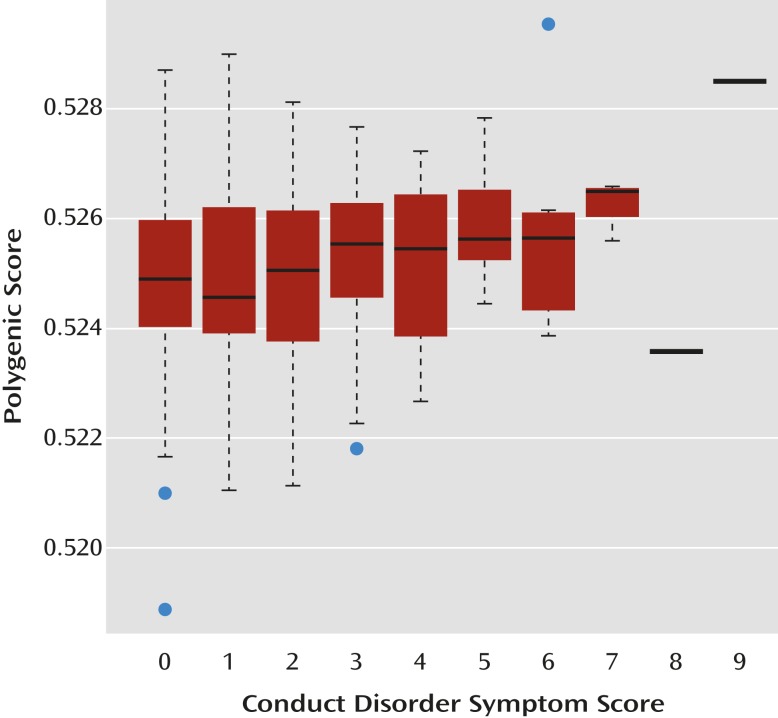
OBJECTIVE Although attention deficit hyperactivity disorder (ADHD) is highly heritable, genome-wide association studies (GWAS) have not yet identified any common genetic variants that contribute to risk. There is evidence that aggression or conduct disorder in children with ADHD indexes higher genetic loading and clinical severity. The authors examine whether common genetic variants considered en masse as polygenic scores for ADHD are especially enriched in children with comorbid conduct disorder. METHOD Polygenic scores derived from an ADHD GWAS meta-analysis were calculated in an independent ADHD sample (452 case subjects, 5,081 comparison subjects). Multivariate logistic regression analyses were employed to compare polygenic scores in the ADHD and comparison groups and test for higher scores in ADHD case subjects with comorbid conduct disorder relative to comparison subjects and relative to those without comorbid conduct disorder. Association with symptom scores was tested using linear regression. RESULTS Polygenic risk for ADHD, derived from the meta-analysis, was higher in the independent ADHD group than in the comparison group. Polygenic score was significantly higher in ADHD case subjects with conduct disorder relative to ADHD case subjects without conduct disorder. ADHD polygenic score showed significant association with comorbid conduct disorder symptoms. This relationship was explained by the aggression items. CONCLUSIONS Common genetic variation is relevant to ADHD, especially in individuals with comorbid aggression. The findings suggest that the previously published ADHD GWAS meta-analysis contains weak but true associations with common variants, support for which falls below genome-wide significance levels. The findings also highlight the fact that aggression in ADHD indexes genetic as well as clinical severity.
Overview
The claims and statistics of this paper haven’t been checked yet.
Free: it reads the open-access text and checks the first 5 claims that cite a source we can check. Create a free account to check every claim.
Integrity signals
Registry
Cites
Statistics
Figures
Verification
Claims the paper makes
The claims and statistics of this paper haven’t been checked yet.
Free: it reads the open-access text and checks the first 5 claims that cite a source we can check. Create a free account to check every claim.
Claims other papers make about this one
Each is checked against this paper’s own text: does it say what the citing paper says it does?
The cited source says what the claim attributes to it.
In the citing paper
“an approach that has proven fruitful in detecting the common variant signal for ADHD28–32 and other disorders.”
From Working Memory and Vigilance as Multivariate Endophenotypes Related to Common Genetic Risk for Attention-Deficit/Hyperactivity Disorder (2018) · cites this paper as [28]
The cited source says what the claim attributes to it.
In the citing paper
“ADHD polygenic risk score increased with total conduct disorder score (b = 0.118, t = 2.530, p = 0.006)”
From Genetics of child aggression, a systematic review (2024) · cites this paper as Hamshere [110]
The cited source says what the claim attributes to it.
In the citing paper
“polygenic risk score also increased with number of aggressive conduct disorder symptoms (b = 0.151, t = 3.152, p = 0.002)”
From Genetics of child aggression, a systematic review (2024) · cites this paper as Hamshere [110]
Self-check
Percentages, sums and reported differences re-computed from the paper’s own numbers.
The self-check needs the paper’s full text.
Citations
Cites
PLINK: a tool set for whole-genome association and population-based linkage analyses.
Purcell, S., Neale, B., Todd-Brown, K., Thomas, L., Ferreira, M. A. R., Bender, D., Maller, J., Sklar, P., de Bakker, P. I. W., Daly, M. J., et al. (2007) · The American Journal of Human Genetics · doi:10.1086/519795 · Cited by 34,089 · cited 1×
“5 for two-tailed p values are termed the “score” alleles (34).”
BackgroundSelf-citationPrincipal components analysis corrects for stratification in genome-wide association studies
Price, A. L., Patterson, N. J., Plenge, R. M., Weinblatt, M. E., Shadick, N. A., & Reich, D. (2006) · Nature Genetics · doi:10.1038/ng1847 · Cited by 10,248 · cited 2×
“To allow for population stratification in our data, we conditioned on two covariates (the first two principal components estimated from our GWAS data using the EIGENSTRAT software package, which was designed for this purpose (35, 36).”
MethodPopulation Structure and Eigenanalysis
Patterson, N., Price, A. L., & Reich, D. (2006) · PLoS Genetics · doi:10.1371/journal.pgen.0020190 · Cited by 5,280 · cited 2×
“To allow for population stratification in our data, we conditioned on two covariates (the first two principal components estimated from our GWAS data using the EIGENSTRAT software package, which was designed for this purpose (35, 36).”
MethodCommon polygenic variation contributes to risk of schizophrenia and bipolar disorder
The International Schizophrenia Consortium (2009) · Nature · doi:10.1038/nature08185 · Cited by 4,821
Sporadic autism exomes reveal a highly interconnected protein network of de novo mutations
O’Roak, B. J., Vives, L., Girirajan, S., Karakoc, E., Krumm, N., Coe, B. P., Levy, R., Ko, A., Lee, C., Smith, J. D., et al. (2012) · Nature · doi:10.1038/nature10989 · Cited by 2,165
De novo mutations revealed by whole-exome sequencing are strongly associated with autism
Sanders, S. J., Murtha, M. T., Gupta, A. R., Murdoch, J. D., Raubeson, M. J., Willsey, A. J., Ercan-Sencicek, A. G., DiLullo, N. M., Parikshak, N. N., Stein, J. L., et al. (2012) · Nature · doi:10.1038/nature10945 · Cited by 2,084
Genome-wide association study identifies five new schizophrenia loci
The Schizophrenia Psychiatric Genome-Wide Association Study (GWAS) Consortium (2011) · Nature Genetics · doi:10.1038/ng.940 · Cited by 1,919
A Teacher Rating Scale for Use in Drug Studies with Children
CONNERS, C. K. (1969) · American Journal of Psychiatry · doi:10.1176/ajp.126.6.884 · Cited by 1,759 · cited 1×
“Information on symptom pervasiveness and impairment in school was obtained using the Child ADHD Teacher Telephone Interview (29) or the DuPaul (30) or Conners teacher rating scales (31).”
MethodPatterns and rates of exonic de novo mutations in autism spectrum disorders
Neale, B. M., Kou, Y., Liu, L., Ma’ayan, A., Samocha, K. E., Sabo, A., Lin, C.-F., Stevens, C., Wang, L.-S., Makarov, V., et al. (2012) · Nature · doi:10.1038/nature11011 · Cited by 1,734
Self-citationPsychiatric GWAS Consortium Bipolar Disorder Working Group, Sklar, P., Ripke, S., Scott, L. J., Andreassen, O. A., Cichon, S., Craddock, N., Edenberg, H. J., Nurnberger, J. I., Rietschel, M., et al. (2011) · Nature Genetics · doi:10.1038/ng.943 · Cited by 1,344
Self-citation
Research works printed but not linked: 2
- Wechsler D: Wechsler Intelligence Scale for Children, 3rd ed. San Antonio, Tex, Psychological Corp, 1992
- Wechsler D: Wechsler Intelligence Scale for Children, 4th ed (WISC-IV): Administration and Scoring Manual. San Antonio, Tex, Psychological Corp, 2003
Cited by
Items 101–144 of 144
Ardıç, Ü. A., Küçükköse, M., İzmir, S. B. İ., & Ercan, E. S. (2018) · Clinical Psychopharmacology and Neuroscience · doi:10.9758/cpn.2018.16.1.57 · Cited by 11
Tzang, R., Chang, Y., & Chang, C. (2021) · International Journal of Environmental Research and Public Health · doi:10.3390/ijerph181910068 · Cited by 10
“Aggressive behavior increases the loading of polygenetic risk for ADHD and symptom severity [44].”
BackgroundDemontis, D., Walters, R., Rajagopal, V., Waldman, I., Grove, J., Als, T., Dalsgaard, S., Ribasés, M., Grauholm, J., Bækvad-Hansen, M., et al. (2019) · bioRxiv · doi:10.1101/791160 · Cited by 6
Self-citationApicella, M., Pisa, M. C., Averna, R., Labonia, M., Pontillo, M., & Vicari, S. (2023) · Frontiers in Psychiatry · doi:10.3389/fpsyt.2023.1253589 · Cited by 7
Wang, F. L., Chassin, L., Bates, J. E., Dick, D., Lansford, J. E., Pettit, G. S., & Dodge, K. A. (2018) · Development and Psychopathology · doi:10.1017/s095457941700058x · Cited by 6
“50 (Hamshere et al., 2013), this liberal threshold may increase the likelihood of spurious associations and Type I error (Evans et al.”
BackgroundGenetics of Attention-Deficit Hyperactivity Disorder
Langley, K., Martin, J., & Thapar, A. (2022) · Current topics in behavioral neurosciences · doi:10.1007/7854_2022_338 · Cited by 8
“Studies examining comorbid mental health problems have determined that a higher ADHD polygenic burden is associated with conduct disorder (Hamshere et al. 2013; Demontis et al. 2021), substance use disorders (such as cannabis and alcohol use: Wimberley et al. 2020), as well as irritability and…”
BackgroundResultInfluentialSelf-citationCOPY NUMBER VARIATION AND NEURODEVELOPMENTAL PROBLEMS IN FEMALES AND MALES IN THE GENERAL POPULATION
Martin, J., Tammimies, K., Karlsson, R., Lu, Y., Larsson, H., Lichtenstein, P., & Magnusson, P. K. E. (2019) · European Neuropsychopharmacology · doi:10.1016/j.euroneuro.2018.07.005 · Cited by 5
Self-citationNiarchou, M., Sealock, J., Straub, P., Sanchez‐Roige, S., Sutcliffe, J. S., & Davis, L. K. (2022) · American Journal of Medical Genetics Part B Neuropsychiatric Genetics · doi:10.1002/ajmg.b.32911 · Cited by 5
“The long term consequences of ADHD include risk for substance and tobacco use (Lee, Humphreys, Flory, Liu, & Glass, 2011), mood disorders (Chen et al., 2014) as well as obesity (Hodgkins et al., 2012; Kaisari, Dourish, & Higgs, 2017), all of which were associated with high ADHD-PGS in our study.”
BackgroundBehavior and Molecular Genetic Approaches to Comorbidity
Willcutt, E. G. (2019) · Current Developmental Disorders Reports · doi:10.1007/s40474-019-00162-0 · Cited by 6
Behavioral Genetics of Aggression and Intermittent Explosive Disorder
Tuvblad, C., Sild, M., Frogner, L., & Booij, L. (2019) · Elsevier eBooks · doi:10.1016/b978-0-12-813858-8.00002-4 · Cited by 8
Bouliane, M., Boivin, M., Kretschmer, T., Lafreniere, B., Paquin, S., Tremblay, R. E., Côté, S. M., Gouin, J., Andlauer, T. F. M., Petitclerc, A., et al. (2025) · European Child & Adolescent Psychiatry · doi:10.1007/s00787-025-02654-4 · Cited by 5
“These findings support the hypothesized shared genetic predisposition to ADHD and aggression [ 22, 38], as well as the connections between the preschool putative”
Gene-set Enrichment with Mathematical Biology (GEMB)
Cochran, A. L., Nieser, K. J., Forger, D. B., Zöllner, S. K., & McInnis, M. G. (2020) · GigaScience · doi:10.1093/gigascience/giaa091 · Cited by 2
“For this reason, genetic risk for an individual is commonly measured by aggregating information from mul-Received tiple genes into a polygenic risk score [5–9].”
Genetische Grundlagen der ADHS – ein Update
Hohmann, S., Häge, A., Millenet, S., & Banaschewski, T. (2022) · Zeitschrift für Kinder- und Jugendpsychiatrie und Psychotherapie · doi:10.1024/1422-4917/a000868 · Cited by 5
Self-citationRodríguez-López, M. L., Pol, H. E. H., Franke, B., & Klein, M. (2019) · bioRxiv (Cold Spring Harbor Laboratory) · doi:10.1101/750091 · Cited by 4
“Importantly, at the locus level, the strong positive correlations observed in the global analyses (ADHD+AGG rg = 0.7; ADHD+ASB rg = 0.51) (Hamshere et al., 2013; Zhang-James et al., 2019) were not seen.”
BackgroundInfluentialSelf-citationTaylor, A., Steinberg, J., & Webber, C. (2015) · American Journal of Medical Genetics Part B Neuropsychiatric Genetics · doi:10.1002/ajmg.b.32285 · Cited by 1
“These findings, combined with evidence for a significant polygenic component in the etiology of ADHD [Cross-Disorder Group of the Psychiatric Genomics Consortium, 2013; Hamshere et al., 2013; Yang et al., 2013], raise the hypothesis that rare variants inmany genesmay contribute to the disorder.”
BackgroundViolent Juvenile Offenders: A Psychiatric and Mental Health Perspective
Aebi, M., & Steinhausen, H. (2018) · Cambridge University Press eBooks · doi:10.1017/9781316847992.017 · Cited by 4
Self-citationBrikell, I. (2018) · Figshare · Cited by 2
The Positive End of the Polygenic Score Distribution for ADHD: A Low Risk or a Protective Factor?Preprint
Li, J. J. (2019) · bioRxiv (Cold Spring Harbor Laboratory) · doi:10.1101/611897 · Cited by 2
Oppositionelle, aggressive und dissoziale Verhaltensstörungen in Kindheit und Jugend
Görtz‐Dorten, A., Döpfner, M., & Banaschewski, T. (2023) · Springer Reference Medizin · doi:10.1007/978-3-662-49289-5_125-1 · Cited by 1
Self-citationNetwork-Based Disease Gene Prioritization by Hitting Time Analysis
Lima, L. D. A., Simões, S. N., Hashimoto, R. F., Martins, D., Brentani, H., & Mota, G. O. (2014) · IEEE International Conference on Bioinformatics and Bioengineering (BIBE) · doi:10.1109/bibe.2014.22 · Cited by 1
“The genetics of ADHD, like most of psychiatric disorders, is complex due to both a non-Mendelian inheritance pattern and a huge heterogeneity in phenotype, suggesting the relevant role of multiple genes in the etiology of these disorders [5].”
Background1 Polygenic methods and their application to psychiatric traits
Wray, N. R., Lee, S. H., Mehta, D., Vinkhuyzen, A. A. E., Dudbridge, F., & Middeldorp, M. (2016) · Cited by 1
Neurogenetics, Genome-Wide Association and Candidate Gene Studies
Haller, J. (2020) · Springer eBooks · doi:10.1007/978-3-030-46331-1_3 · Cited by 1
Ljungström, B.-M., Denk, T., Sarenmalm, E. K., & Axberg, U. (2025) · Children and Youth Services Review · doi:10.1016/j.childyouth.2025.108120 · Cited by 4
Genetics and pharmacogenetics of attention deficit hyperactivity disorder in childhood and adulthood
Bonvicini, C., Maj, C., & Scassellati, C. (2019) · Elsevier eBooks · doi:10.1016/b978-0-12-813176-3.00021-3 · Cited by 1
Emotional functioning in boys with ADHD: identifying risk factors for comorbid Conduct Disorder
Northover, C. (2015) · ORCA Online Research @Cardiff (Cardiff University) · Cited by 1
Somkuwar, S. S. (2013) · UKnowledge (University of Kentucky)
Martin, J. (2014) · ORCA Online Research @Cardiff (Cardiff University)
Self-citationVillemonteix, T. (2015) · theses.fr (ABES) · doi:10.70675/84304c2az6a4fz488czbda7z8935968796d4 · Cited by 1
Lima, L. D. A. (2015) · Digital Library of Theses and Dissertations (Universidade de São Paulo) · doi:10.11606/t.95.2015.tde-24082015-160400
Exploring the aetiology of ADHD : rater effects, co-occurring traits and polygenic scores
Merwood, A. (2013) · Research Portal (King's College London)
Self-citationReliability issues in imaging genetics
Eriksson, A. (2017) · doi:10.6083/m4cr5sf2
Developmental Considerations in Bipolar Disorder
Goetz, M., Mohaplová, M., Šebela, A., & Novák, T. (2018) · Elsevier eBooks · doi:10.1016/b978-0-12-815310-9.00002-2
Genetics of attention-deficit/hyperactivity disorder
Langley, K., & Thapar, A. (2020) · doi:10.1093/med/9780198713005.003.0034
Self-citationColonna, S. (2020) · ORCA Online Research @Cardiff (Cardiff University)
Introduction: A Young Science with a Long History
Tremblay, R. E. (2021) · Cambridge University Press eBooks · doi:10.1017/9781108877138.002
Neale, B. M. (2019) · Faculty Opinions – Post-Publication Peer Review of the Biomedical Literature · doi:10.3410/f.733499086.793567847
Self-citationSpychala, K. M. (2021) · MOspace Institutional Repository (University of Missouri) · doi:10.32469/10355/90969
“, 2019) and aggression (e.g., Barnes et al., 2019; Hamshere et al., 2013) individually, but only limited applications of this”
BackgroundMethodBilgiç, A., Akça, Ö. F., Işık, Ü., & Ercan, E. S. (2023) · Autism and child psychopathology series · doi:10.1007/978-3-031-41709-2_13
Haghshenas, S., Zarrindast, M., Nasehi, M., Khalifeh, S., & Hassani‐Abharian, P. (2023) · Global Journal of Intellectual & Developmental Disabilities · doi:10.19080/gjidd.2023.12.555841
Oppositionelle, aggressive und dissoziale Verhaltensstörungen in Kindheit und Jugend
Görtz‐Dorten, A., Döpfner, M., & Banaschewski, T. (2024) · Springer Reference Medizin · doi:10.1007/978-3-662-66744-6_125 · Cited by 1
Self-citationSum, K. K., Hughes, A., Havdahl, A., Smith, G. D., & Howe, L. D. (2026) · Translational Psychiatry · doi:10.1101/2025.10.17.25338214 · Cited by 1
Wang, Y., Ma, L., Wang, J., Ding, Y., Liu, N., Men, W., Tan, S., Gao, J., Qin, S., He, Y., et al. (2024) · Figshare · doi:10.6084/m9.figshare.25963081
Porteret, R. (2014) · theses.fr (ABES) · doi:10.70675/c78cc0a7z797bz4b09zb4faz07c22d95a764
Santangelo, A. M., Ohlei, O., Mareva, S., Brkić, D., CALM Team, Bertram, L., Holmes, J., Astle, D. E., & Baker, K. (2026) · European Child & Adolescent Psychiatry · doi:10.1007/s00787-026-03086-4 · Cited by 1
“A within-case analysis of individuals with comorbid ADHD and conduct disorders showed a positive linear relationship between ADHD-PGS and conduct problems, especially aggression [59].”
Metadata
- Authors
- Hamshere, M. L., Langley, K., Martin, J., Agha, S. S., Stergiakouli, E., Anney, R. J. L., Buitelaar, J., Faraone, S. V., Lesch, K.-P., Neale, B. M., Franke, B., Sonuga-Barke, E., Asherson, P., Merwood, A., Kuntsi, J., Medland, S. E., Ripke, S., Steinhausen, H.-C., Freitag, C., Reif, A., Renner, T. J., Romanos, M., Romanos, J., Warnke, A., Meyer, J., Palmason, H., Vasquez, A. A., Lambregts-Rommelse, N., Roeyers, H., Biederman, J., Doyle, A. E., Hakonarson, H., Rothenberger, A., Banaschewski, T., Oades, R. D., McGough, J. J., Kent, L., Williams, N., Owen, M. J., Holmans, P., O’Donovan, M. C., & Thapar, A.
- Affiliations
- Radboud University Nijmegen (NL)
- From the MRC Centre for Neuropsychiatric Genetics and Genomics, Cardiff University School of Medicine, Cardiff, U.K.; Department of Psychiatry, Trinity Centre for Health Sciences, Dublin, Ireland; Departments of Cognitive Neuroscience, Human Genetics, and Psychiatry, Donders Institute for Brain, Cognition, and Behavior, Radboud University Nijmegen Medical Center, Nijmegen, the Netherlands; Departments of Psychiatry and of Neuroscience and Physiology, State University of New York Upstate Medical...
- Corresponding author
- O’Donovan, Michael C.
- Thapar, Anita
- ORCID
- Hamshere, Marian L.
- Langley, Kate
- Martin, Joanna
- Agha, Sharifah Shameem
- Anney, Richard J.L.
- Buitelaar, Jan
- Faraone, Stephen V.
- Lesch, Klaus-Peter
- Neale, Benjamin M.
- Franke, Barbara
- Sonuga-Barke, Edmund
- Asherson, Philip
- Merwood, Andrew
- Kuntsi, Jonna
- Medland, Sarah E.
- Ripke, Stephan
- Freitag, Christine
- Reif, Andreas
- Romanos, Marcel
- Roeyers, Herbert
- Biederman, Joseph
- Doyle, Alysa E.
- Hakonarson, Hakon
- Rothenberger, Aribert
- Banaschewski, Tobias
- McGough, James J.
- Kent, Lindsey
- Williams, Nigel
- Owen, Michael J.
- Holmans, Peter
- O’Donovan, Michael C.
- Thapar, Anita
- Venue
- American Journal of Psychiatry
- Published
- 2013-08
- Volume
- 170
- Issue
- 8
- Pages
- 909-916
- ISSN
- 0002-953X (ISSN-L)
- 1535-7228
- PMC
- PMC3935265
- OpenAlex
- W2159468087
- Cited by
- 144
- References
- 45
- Citations by year
- 2026: 1 · 2025: 3 · 2024: 6 · 2023: 8 · 2022: 8 · 2021: 11 · 2020: 10 · 2019: 15 · 2018: 18 · 2017: 12 · 2016: 17 · 2015: 20 · 2014: 10 · 2013: 5
- FWCI
- 12.32
- Type
- journal article
- Language
- en
- Open access
- green
- europepmc.org
- Licence
- other-oa
- Locations
- American Journal of Psychiatry (publishedVersion)
- Europe PMC (PubMed Central) (publishedVersion, other-oa)
- PubMed Central (publishedVersion, cc-by-nc)
- PubMed (publishedVersion)
- Research Publications (Maastricht University) (publishedVersion, cc-by-nc)
- Zurich Open Repository and Archive (University of Zurich) (acceptedVersion)
- Ghent University Academic Bibliography (Ghent University) (submittedVersion, other-oa)
- Universitätsbibliographie, Universität Duisburg-Essen (submittedVersion)
- Digital Access to Scholarship at Harvard (DASH) (Harvard University) (submittedVersion, cc-by)
- DuEPublico (University of Duisburg-Essen) (submittedVersion)
- ePrints Soton (University of Southampton) (submittedVersion)
- eScholarship (California Digital Library) (submittedVersion)
- eScholarship (California Digital Library) (submittedVersion, cc-by-nc)
- ORCA Online Research @Cardiff (Cardiff University) (submittedVersion)
- Research Portal (King's College London) (submittedVersion)
- GRO (submittedVersion)
- VBN Forskningsportal (Aalborg Universitet) (submittedVersion)
- Radboud Repository (Radboud University) (submittedVersion)
- Bristol Research (University of Bristol) (submittedVersion)
- Hirsla (Landspítali University Hospital) (submittedVersion)
- Zurich Open Repository and Archive (University of Zurich) (submittedVersion)
- Research Publications (Maastricht University) (submittedVersion)
- Zurich Open Repository and Archive (University of Zurich)
- Funders
- Eli Lilly and Company
- Pfizer
- AstraZeneca
- Massachusetts General Hospital
- Wellcome Trust
- University of Cambridge
- King's College London
- Shire
- Shionogi
- Vifor Pharma
- National Institutes of Health
- Medical Research Council
- Menzies Centre for Australian Studies, King's College London, University of London
- National Human Genome Research Institute (U01HG006830)
- UCB Pharma
- Cilag
- Topics
- Health Sciences › Medicine › Psychiatry and Mental health › Attention Deficit Hyperactivity Disorder
- Life Sciences › Biochemistry, Genetics and Molecular Biology › Genetics › Genetic Associations and Epidemiology
- Life Sciences › Neuroscience › Cognitive Neuroscience › Autism Spectrum Disorder Research
- Keywords
- attention deficit hyperactivity disorder, polygenic risk score, conduct disorder, aggression, comorbidities, common genetic variants, heritability, clinical severity, children
- MeSH terms
- Aggression, Anxiety Disorders, Attention Deficit Disorder with Hyperactivity, Child, Child, Preschool, Depressive Disorder, Female, United Kingdom, Humans, Male, Genetic Variation, Comorbidity, Conduct Disorder, Genetic Predisposition to Disease, Multifactorial Inheritance
About these checks
Registry, retraction, Cites and statistics results are computed, not judged, with one exception: a printed reference that no index lists is read once by a model before it counts as a citation error. Claims are extracted by a model and kept only when their quote appears verbatim in the text; each cited source is then checked, with a model’s help, for whether it says what the claim relies on. Those verdicts can be wrong — read the claim’s quote and the cited source before relying on one.
Statistics and arithmetic are recomputed, not judged.
Confidence bands are shown only for fields calibrated on our annotated test set. None is calibrated yet, so no band is shown.
What counts as a claim ›How we measure confidence ›How we check this ›
Are you an author, or do you see a problem with this page? Request a review
Data sources
Bibliographic data: Semantic Scholar, OpenAlex, Crossref.
Contains information from the Semantic Scholar Academic Graph Datasets, made available under the ODC Attribution License (ODC-BY 1.0).
Semantic Scholar’s data is described in: Kinney, R., et al. (2023). The Semantic Scholar Open Data Platform. arXiv:2301.10140.
