

Association Between Social Networks and Subjective Well-Being in Adolescents: A Systematic Review
Open accessThe DOI matches its Crossref record; 83 of the 83 references it cites were found in a registry or an index.
Abstract
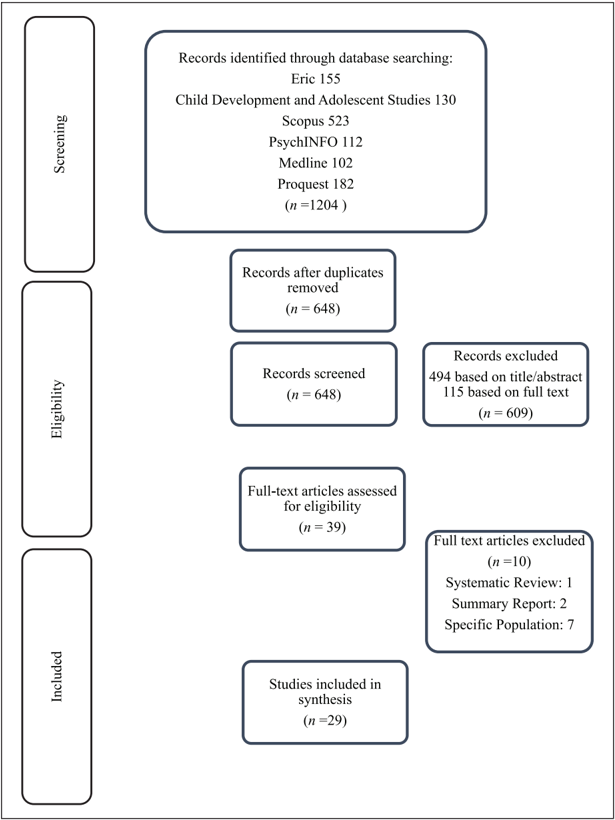
Social networks are ubiquitous in the lives of adolescents. This work systematically reviewed all studies which investigated the relationship between subjective well-being and the social networks of adolescents. Twenty-nine articles (out of 1,204 hits) were included within the review. Offline social networks have a positive association between the mood, self-esteem, and loneliness of adolescents but not body image. Nine of the studies investigating online social networks found a positive association on mood, life satisfaction, and loneliness through support seeking and receiving positive feedback. Fifteen of the studies found a negative association between online social networks and mood, self-esteem, life satisfaction, body image, and overall subjective well-being through high investment, passive use, receiving negative feedback, and social media ostracism. There is a need for intervention programs and education for young people, educators, and parents to address the risks to subjective well-being brought about by online social networks.
Overview
The claims and statistics of this paper haven’t been checked yet.
Free: it reads the open-access text and checks the first 5 claims that cite a source we can check. Create a free account to check every claim.
Integrity signals
Registry
Cites
Statistics
Figures
Verification
Claims the paper makes
The claims and statistics of this paper haven’t been checked yet.
Free: it reads the open-access text and checks the first 5 claims that cite a source we can check. Create a free account to check every claim.
Claims other papers make about this one
Each is checked against this paper’s own text: does it say what the citing paper says it does?
The cited source doesn’t support the claim as written.
In the citing paper
“and one did not find such an association (r = .02ns, 15).”
From Social media use and its impact on adolescent mental health: An umbrella review of the evidence. (2022) · cites this paper as [15]
Checked by a reasoning model — may be wrong.
Experimental — accuracy not yet measuredThe source backs part of the claim, not all of it — or backs it for a different population, condition or comparison.
In the citing paper
“Some of the mediators underlying the association between social media use and negative psychosocial outcomes in young individuals are insomnia and other sleep-related factors, perceived social support, rumination, social comparison, body image concerns, and social media ostracism (Keles et al., 2020;Nesi, 2020;Webster et al., 2021).”
From The relationship between social media use and psychosocial outcomes in older adults: A systematic review (2024) · cites this paper as Webster et al., 2021
Experimental — accuracy not yet measuredThe cited source says what the claim attributes to it.
In the citing paper
“For example, time spent on SNS is associated with higher levels of depression [17], whereas emotional connectedness to SNS ('intensity of use') [15] and the number of friends on SNS [16] are unrelated to depression.”
From Social media use and its impact on adolescent mental health: An umbrella review of the evidence. (2022) · cites this paper as [15]
The cited source says what the claim attributes to it.
In the citing paper
“Reviews exploring the effects of social media use on adolescents predominantly highlight negative psychosocial outcomes, particularly when usage patterns exhibit addictive or problematic tendencies (e.g.Webster et al., 2021).”
From The relationship between social media use and psychosocial outcomes in older adults: A systematic review (2024) · cites this paper as Webster et al., 2021
The cited source says what the claim attributes to it.
In the citing paper
“Emerging literature increasingly emphasises that social media experiences are shaped not only by frequency of use but also by howyoung people engage with these platforms and the meanings they derive from them [4, 17, 18].”
From The Complex and Multifaceted Nature of Social Media: Perspectives From Young Adolescents, Parents and Experts (2026) · cites this paper as [18]
Self-check
Percentages, sums and reported differences re-computed from the paper’s own numbers.
The self-check needs the paper’s full text.
Citations
Cites
The satisfaction with life scale
Diener, E., Emmons, R. A., Larsen, R. J., & Griffin, S. (1985) · Journal of Personality Assessment · doi:10.1207/s15327752jpa4901_13 · Cited by 31,768 · cited 2×
“Several elements make up subject well-being, according to Diener et al. It is “a broad category of phenomena that includes people’s emotional responses, domain satisfactions, and global judgements of life satisfaction” (Diener et al., 1985).”
BackgroundLiberati, A., Altman, D. G., Tetzlaff, J., Mulrow, C., Gøtzsche, P. C., Ioannidis, J. P. A., Clarke, M., Devereaux, P. J., Kleijnen, J., & Moher, D. (2009) · PLoS Medicine · doi:10.1371/journal.pmed.1000100 · Cited by 28,164 · cited 3×
“Figure 1, as recommended by PRISMA (Preferred Reporting Items for Systematic Reviews and MetaAnalyses) (Liberati et al., 2009), details how the studies were selected: The studies were predominantly of a quantitative nature, two were qualitative and one was a mixed-method study.”
MethodThe Presentation of Self in Everyday Life.
Naegele, K. D., & Goffman, E. (1956) · American Sociological Review · doi:10.2307/2089106 · Cited by 25,991
Social network sites: definition, history, and scholarship
boyd, D. M., & Ellison, N. B. (2007) · Journal of Computer-Mediated Communication · doi:10.1111/j.1083-6101.2007.00393.x · Cited by 16,251
Digital Natives, Digital Immigrants Part 1
Prensky, M. (2001) · On the Horizon · doi:10.1108/10748120110424816 · Cited by 11,104 · cited 1×
“Prenskey who is accredited with coining the phrase “digital natives” describes the arrival and dissemination of digital technologies as “discontinuity” from the previous generations (Prensky, 2001).”
BackgroundLiberati, A., Altman, D. G., Tetzlaff, J., Mulrow, C., Gøtzsche, P. C., Ioannidis, J. P. A., Clarke, M., Devereaux, P. J., Kleijnen, J., & Moher, D. (2009) · Journal of Clinical Epidemiology · doi:10.1016/j.jclinepi.2009.06.006 · Cited by 10,578
Ellison, N. B., Steinfield, C., & Lampe, C. (2007) · Journal of Computer-Mediated Communication · doi:10.1111/j.1083-6101.2007.00367.x · Cited by 9,939 · cited 1×
“Social networking sites allow users to “present themselves, articulate their social networks and establish or maintain connections with others” (Ellison et al., 2007, p. 1143).”
BackgroundSocial Network Analysis: A Handbook.
Pappi, F. U., & Scott, J. (1993) · Contemporary Sociology · doi:10.2307/2075047 · Cited by 5,969
The Spread of Obesity in a Large Social Network over 32 Years
Christakis, N. A., & Fowler, J. H. (2007) · New England Journal of Medicine · doi:10.1056/nejmsa066082 · Cited by 5,007
Social media? Get serious! Understanding the functional building blocks of social media
Kietzmann, J. H., Hermkens, K., McCarthy, I. P., & Silvestre, B. S. (2011) · Business Horizons · doi:10.1016/j.bushor.2011.01.005 · Cited by 4,970 · cited 1×
“Social media employ mobile and web-based technologies to create highly interactive platforms through which people create and share content (Kietzmann et al., 2011).”
Background
Research works printed but not linked: 5
- Bentley, H., Burrows, A., Clarke, L., Gillgan, A., Glen, J., Hafizi, M., Letendrie, F., Miller, P., O'Hagan, O., Patel, P., Peppiate, J., Stanley, K., Starr, E., Vasco, N., & Walker, J. (2018). How safe are our children? The most comprehensive overview of child protection in the UK 2018 . National Society for the Prevention of Cruelty to Children.
- Dogan, U. (2016). Effects of social network use on happiness, psychological wellbeing, and life satisfaction of high school students: Case of Facebook and Twitter. Egitim ve Bilim-education and Science , 41 (183), 217-231.
- Miller, H. (1995, June). The presentation of self in electronic life: Goffman on the Internet [Paper presented]. Embodied Knowledge and Virtual Space Conference, London.
- Oxford English Dictionary Online . (2010, July 2007). Oxford English Dictionary. http://dictionary.oed.com
- Putnam, R. D. (2000). Bowling alone: The collapse and revival of American community. 2001 Policy analysis . Simon and Schuster.
Cited by
Social media use and its impact on adolescent mental health: An umbrella review of the evidence.
Valkenburg, P. M., Meier, A., & Beyens, I. (2022) · Current opinion in psychology · doi:10.1016/j.copsyc.2021.08.017 · Cited by 767
Munasinghe, S., Sperandei, S., Freebairn, L., Conroy, E., Jani, H., Marjanovic, S., & Page, A. (2020) · Journal of Adolescent Health · doi:10.1016/j.jadohealth.2020.08.008 · Cited by 223
“, passive use, high investment, or support seeking) as well as the amount of time spent on screenbased activity [7,23,24].”
BackgroundSocial Media Use and adolescents' mental health and well-being: An umbrella review
Sala, A., Porcaro, L., & Gómez, E. (2024) · Computers in Human Behavior Reports · doi:10.1016/j.chbr.2024.100404 · Cited by 120
Alsarrani, A., Hunter, R. F., Dunne, L., & Garcia, L. (2022) · BMC Public Health · doi:10.1186/s12889-022-14776-4 · Cited by 124
Self-citationThe contribution of social media addiction to adolescent LIFE: Social appearance anxiety
Caner, N., Efe, Y. S., & Başdaş, Ö. (2022) · Current Psychology · doi:10.1007/s12144-022-03280-y · Cited by 104
Social media users’ online subjective well-being and fatigue: A network heterogeneity perspective
Kaur, P., Islam, N., Tandon, A., & Dhir, A. (2021) · Technological Forecasting and Social Change · doi:10.1016/j.techfore.2021.121039 · Cited by 114
“Self-disclosure (SD) (Dhir et al., 2019; 2021; Gibbs et al., 2006; Wheeless, 1978) I have a detailed profile on social media.”
BackgroundSkogen, J. C., Hjetland, G. J., Bøe, T., Hella, R. T., & Knudsen, A. K. (2021) · International Journal of Environmental Research and Public Health · doi:10.3390/ijerph18063319 · Cited by 73
“They also asserted the need for intervention programs and educational programs that could address potential risks of social media relation to subjective well-being [29].”
BackgroundInfluentialHjetland, G. J., Schønning, V., Hella, R. T., Veseth, M., & Skogen, J. C. (2021) · BMC Psychology · doi:10.1186/s40359-021-00582-x · Cited by 103
Irmer, A., & Schmiedek, F. (2023) · Communications Psychology · doi:10.1038/s44271-023-00013-0 · Cited by 58
“However, many researchers have questioned the practical signi fi cance of this small average effect and emphasize the heterogeneity of fi ndings 29 – 31 .”
Tuominen, M., & Haanpää, L. (2021) · Social Indicators Research · doi:10.1007/s11205-021-02762-z · Cited by 99
Lei, X., Matovic, D., Leung, W.-Y., Viju, A., & Wuthrich, V. M. (2024) · International Psychogeriatrics · doi:10.1017/s1041610223004519 · Cited by 48
“Reviews exploring the effects of social media use on adolescents predominantly highlight negative psychosocial outcomes, particularly when usage patterns exhibit addictive or problematic tendencies (e.g. Webster et al ., 2021).”
Zhang, J., Marino, C., Canale, N., Charrier, L., Lazzeri, G., Nardone, P., & Vieno, A. (2022) · International Journal of Environmental Research and Public Health · doi:10.3390/ijerph19052576 · Cited by 37
“The association between exposure to social media use and happiness was mixed depending on different feedback or affective experiences [13].”
BackgroundRoquet, C. D., Theofanopoulou, N., Freeman, J. L., Schleider, J. L., Gross, J. J., Davis, K. S., Townsend, E., & Slovák, P. (2022) · CHI Conference on Human Factors in Computing Systems · doi:10.1145/3491102.3502135 · Cited by 38
“In this regard, an emerging area of scholarship is investigating how to facilitate the teaching and practise of emotion regulation skills with digital technologies [84, 85, 111], with the goal of empowering youth to learn and practice constructive coping strategies outside of formal psychotherapy”
BackgroundYan, Y., Deng, Y., Perosanz, J. J. I., & Song, X. (2023) · International Journal of Environmental Research and Public Health · doi:10.3390/ijerph20042897 · Cited by 31
“Adolescents fear missing information, which may generate anxiety and thus harm their subjective well-being [44].”
Social Media Use and its Impact on Adolescent Mental Health: An Umbrella Review of the EvidencePreprint
Valkenburg, P. M., Meier, A., & Beyens, I. (2021) · PsyArXiv (OSF Preprints) · doi:10.31234/osf.io/y8zdg · Cited by 32
Yu, B., & Leung, Y. W. (2023) · Information Technology and People · doi:10.1108/itp-01-2022-0035 · Cited by 34
Dorris, C., Winter, K., O’Hare, L., & Lwoga, E. T. (2024) · Campbell Systematic Reviews · doi:10.1002/cl2.1417 · Cited by 76
Social Media and Subjective Well-Being: The Moderating Role of Personality Traits
Alphenaar, L. E. V., Shiner, R. L., Arana, C. C., & Prinzie, P. (2025) · Journal of Happiness Studies · doi:10.1007/s10902-025-00898-0 · Cited by 28
“Webster et al. ( 2021 ), suggest that while social media can positively impact subjective well-being, it also poses risks due to potential negative social interactions, such as ostracism and negative feedback.”
InfluentialGÜLER, Ş., ŞAHİN, Y., & Balcı, E. V. (2022) · Erciyes İletişim Dergisi · doi:10.17680/erciyesiletisim.993055 · Cited by 24
The Association Between Work-life Balance and Employee Mental Health: A systemic review
Liswandi, L., & Muhammad, R. (2023) · Asia Pacific Journal of Health Management · doi:10.24083/apjhm.v18i3.2565 · Cited by 53
“[56] Synthesizing evidence is based on mental health.”
BackgroundHow Many Likes Are Good Enough? An Evaluation of Social Media Performance
Ferreira, C. C., Robertson, J., & Reyneke, M. (2021) · Journal of Internet Commerce · doi:10.1080/15332861.2021.1966724 · Cited by 24
Jarman, H. K., McLean, S. A., Paxton, S. J., Sibley, C. G., & Marques, M. D. (2022) · Social Psychiatry and Psychiatric Epidemiology · doi:10.1007/s00127-022-02363-2 · Cited by 25
“Alternatively, social media use, especially use involving direct exchanges with others, may improve well-being by contributing to social capital and greater connectedness with friends [8, 9, 11].”
BackgroundJiang, Y., Xie, Y., & Shao, Q. (2024) · Socio-Economic Planning Sciences · doi:10.1016/j.seps.2024.102007 · Cited by 22
“…efforts to explore the determinants of life satisfaction, summarizing factors that influence it, including the external environment [10], social status [11], job satisfaction [12], work – life balance [13], and individual characteristics such as income, health status, and education [14].”
BackgroundFeng, Y., & Tong, Q. (2022) · Youth & Society · doi:10.1177/0044118x211067553 · Cited by 19
“Indeed, with more research focusing on the interpersonal impact of the internet, there is increasing evidence showing that online communication can contribute to positive subjective well-being by relieving stress or receiving positive feedback and support (e.g., Prestin & Nabi, 2020; Webster et al., 2021).”
BackgroundInfluentialMeaningful Peer Social Interactions and Momentary Well-Being in Context
Roshanaei, M., Vaid, S. S., Courtney, A. L., Soh, S. J., Zaki, J., & Harari, G. M. (2024) · Social Psychological and Personality Science · doi:10.1177/19485506241248271 · Cited by 21
“A rich social life with a strong support network and interactions with both strong and weak ties is associated with a variety of benefits to people’s well-being (e.g., Cohen & Wills, 1985; Sandstrom & Dunn, 2014; Siedlecki et al., 2014; Webster et al., 2021).”
Hussain, B., Aslam, S., & Imran, A. (2025) · Acta Psychologica · doi:10.1016/j.actpsy.2025.105734 · Cited by 50
Kysnes, B. B., Hjetland, G. J., Haug, E., Holsen, I., & Skogen, J. C. (2022) · Frontiers in Psychology · doi:10.3389/fpsyg.2022.1026973 · Cited by 20
“, 2021), and subsequently contribute as a positive factor to adolescents’ mental health and well-being (Best et al., 2014; Quinn, 2019; Webster et al., 2021).”
BackgroundScience behind social media discontinuance: An integrated model of stress and coping theory
Mahmud, I., Wen, L. H., Yeo, S. F., Ling, T. C., & Ramayah, T. (2023) · Information Development · doi:10.1177/02666669231213941 · Cited by 17
“Previously, researchers have paid attention to how SNS negatively and also positively affect people, but researchers are investigating the factors that can lead to discontinuation intention as there are also positive sides of SNS (Webster et al., 2021).”
Andersen, A. I. O., Finserås, T. R., Hjetland, G. J., Bøe, T., Sivertsen, B., Colman, I., Hella, R. T., & Skogen, J. C. (2024) · SAGE Open · doi:10.1177/21582440241249538 · Cited by 18
“Several publications have explicitly argued for the need for intervention programs to address and minimize potential risks and leverage potential benefits of social media (Fardouly & Vartanian, 2016; Keum et al., 2023; Kross et al., 2021; Marciano & Viswanath, 2023; Webster et al., 2021).”
Niu, X., Gou, L.-X., Han, Y., Zhou, X., & Wang, J. (2024) · British Journal of Developmental Psychology · doi:10.1111/bjdp.12538 · Cited by 11
Roshanaei, M., Rezapour, R., & El‐Nasr, M. S. (2025) · AI & Society · doi:10.1007/s00146-025-02715-x · Cited by 44
“Research consistently demonstrates that a rich social life with support networks and engaging in high-quality social interactions, in particular, face-to-face interactions, are associated with a variety of benefits to people’s well-being [1, 2, 3, 4].”
Leiter, D. L., Reilly, J. L., & Vonnahme, G. (2021) · Social Science Quarterly · doi:10.1111/ssqu.13060 · Cited by 11
Sjølie, H., Olsen, C. F., & Hempel, M. F. (2023) · Youth & Society · doi:10.1177/0044118x231171180 · Cited by 14
“SoMe seems to have contra-dictory effects on social connectedness, (Dredge & Schreurs, 2020; Hjetland et al., 2021; Ryan et al., 2017; Schønning et al., 2020; Webster et al., 2021).”
BackgroundData vulnerability: does privacy protection behaviour improve digital well-being?
Quach, S., Dang, S., Thaichon, P., Le, D., & Le, T. H. (2025) · European Journal of Marketing · doi:10.1108/ejm-12-2022-0953 · Cited by 13
Exploring the Role of Digital Social Pressure on Smartphone Addiction
Dula, A., & GÜLER, Ş. (2022) · Cyprus Turkish Journal of Psychiatry and Psychology · doi:10.35365/ctjpp.22.4.01 · Cited by 13
Subjective Well-Being of Thai Pre-Teen Children: Individual, Family, and School Determinants
Pongutta, S., & Vithayarungruangsri, J. (2022) · Heliyon · doi:10.1016/j.heliyon.2023.e15927 · Cited by 12
Review: Social media use and adolescent mental health - an umbrella review and power analysis.
Tølbøll, K. B. (2026) · Child and Adolescent Mental Health · doi:10.1111/camh.70071 · Cited by 8
Li, J., Guo, B., Lu, M., & Zhang, W. (2023) · Frontiers in Psychology · doi:10.3389/fpsyg.2023.1260754 · Cited by 10
“Social relations can promote SWB by providing people with emotional, instrumental, and other support (Diener, 2009; Putnam, 2015; Webster et al., 2021; Cheng et al., 2023).”
BackgroundCai, M., Li, S., & Bian, Y. (2025) · BMC Psychology · doi:10.1186/s40359-025-02465-x · Cited by 7
“” The social context in which individuals are embedded is an important factor affecting SWB [2].”
Ballesteros-Holmes, J., Teague, M. S., & Derouin, A. L. (2024) · Journal of Pediatric Health Care · doi:10.1016/j.pedhc.2024.05.006 · Cited by 7
Chen, Q., Guo, S., & Chan, K. L. (2025) · Frontiers in Psychiatry · doi:10.3389/fpsyt.2025.1427655 · Cited by 12
“Online interactions provide adolescents with opportunities to practice social skills and foster friendships, yet they also expose them to the growing risk of cyberbullying (1).”
Silchenko, K. (2025) · Journal of Macromarketing · doi:10.1177/02761467251356660 · Cited by 11
“…(Aagaard, 2020; Brooks, 2015; Huston et al., 2023; Kozinets, 2019; Kozinets et al., 2017; Vanden Abeele, 2021; Vanden Abeele et al., 2022; Webster et al., 2021), making concerns about mental health of some populations, such as adolescents, particularly critical and widespread (Haidt,…”
InfluentialThayuman, J., Whitehead, R. E., Borthwick, C., Argent, T., & Williams, J. S. (2025) · Appetite · doi:10.1016/j.appet.2025.108230 · Cited by 11
“Referred to as the ‘echo chamber effect ’ (Martinez et al., 2024; Turner et al., 2017; Webster et al., 2021), individuals ’ worldviews are reinforced by algorithms that saturate their social media feeds with content aligned to their beliefs (Turner et al., 2017).”
Hou, Q. (2022) · Revista Brasileira de Medicina do Esporte · doi:10.1590/1517-8692202329012022_0188 · Cited by 6
Healthy Social Network Use and Well-Being during Adolescence: A Biopsychosocial Approach
Gaspar, T., Carvalho, M., Noronha, C., Guedes, F. B., Cerqueira, A., & de Matos, M. G. (2023) · Children · doi:10.3390/children10101649 · Cited by 14
“…quantitative and qualitative studies on the relationship between social networks and subjective well-being in adolescents, Webster and colleagues [18] provided evidence of both a positive and negative association between social network use and adolescents’ well-being, with some of the studies…”
Result(Homo)masculinities: dating apps and body image among young gay users in Spain
Roig-Mora, A., Ventura, R., Larrea, O., & Blanco-Fernández, V. (2024) · International journal of LGBTQ+ youth studies. · doi:10.1080/19361653.2024.2310652 · Cited by 8
“…that the turn of the century has seen research emerge on depictions of gender and bodies, and their effects on body image, in channels like social media (Marques et al., 2022; Perloff, 2014; Webster et al., 2021) and dating apps (Filice et al., 2019; Rodgers et al., 2020; Tran et al., 2019).”
Kornfield, R., Popowski, S. A., Tack, E., Svoboda, J., Herrera, M. A., Nguyen, T., Knapp, A. A., Mohr, D. C., & Meyerhoff, J. (2025) · JMIR Formative Research · doi:10.2196/68950 · Cited by 9
“This is consistent with past work describing distinctions between passive use of social media (eg, browsing feeds), which may have negative effects on mental health, whereas more active and targeted use (eg, direct communication with close ties) may have benefits [78,79].”
Martínez-Iniesta, E., Montenegro-Espinosa, J. A., Bizzozero‐Peroni, B., Arancibia, J. E. O., Sepulveda, R. A. Y., Bastías, D. M. D., Royo, J. M. P., Mesas, A. E., López‐Gil, J. F., & Jiménez‐López, E. (2025) · Frontiers in Psychiatry · doi:10.3389/fpsyt.2025.1499679 · Cited by 9
Pessoa, K. L. E. D. C., Costa, C. L. A., Coelho, A. C., Bastos, A. M. D. M. F., & Rodrigues, I. (2023) · Societies · doi:10.3390/soc13020045 · Cited by 11
“The damage is detected as passive use, high investment (of time, frequency of use), and ostracism in SNs that have been identified as negative factors related to subjective well-being, causing depression, moodiness, body and life dissatisfaction, and low self-esteem [29].”
BackgroundInfluentialHow Children Draw, Write and Tell About Portraying Mixed Emotions in Themselves and Others Children
Burkitt, E., & Watling, D. (2025) · International Journal of Art & Design Education · doi:10.1111/jade.12556 · Cited by 7
Bechraki, E., Mavrikaki, E., Gialamas, V., & Galanaki, E. P. (2022) · Health Education · doi:10.1108/he-08-2021-0111 · Cited by 6
“Banten” The Balinese Sacred Ceremony Component and Their Implication in Science Learning
Suwindia, I. G., Mudana, I. W., & Kurniawan, M. F. (2023) · Journal of Namibian Studies History Politics Culture · doi:10.59670/jns.v34i.1279 · Cited by 7
Cornell, S., & Peden, A. E. (2025) · JMIR Public Health and Surveillance · doi:10.2196/73089 · Cited by 5
“In contrast, previous studies on social media impacts have primarily focused on subjective well-being, a construct that may be less dependent on external perceptions and more intrinsically determined [24,25].”
Ünlü, S., Uzun, K., & Arslan, G. (2025) · Children · doi:10.3390/children12070826 · Cited by 22
“In parallel, the concept of subjective well-being plays a critical role in understanding adolescents’ psychological responses to social media use at a conceptual level [27].”
Elias, C. L., & Gorey, K. M. (2021) · Journal of Technology in Human Services · doi:10.1080/15228835.2021.2010163 · Cited by 8
Development of subjective well-being in adolescents before and during the COVID-19 pandemic
Eckert, H., Paschke, P., Wirthwein, L., & Steinmayr, R. (2025) · Frontiers in Education · doi:10.3389/feduc.2025.1485289 · Cited by 5
Online Networks and Subjective Well‐Being: The Effect of “Big Five Personality Traits”
Santos, F. R., & Ayuso, L. (2021) · Social Inclusion · doi:10.17645/si.v9i4.4507 · Cited by 7
“However, these effects become more subtle when the model include personality variables, demographics, social position, and family situation; as the literature has shown, these factors are very important (Appel et al., 2019; Orben, 2020; Webster et al., 2021).”
BackgroundSocial networks, health, and well-being
Oleskiewicz, D., Brown, C. J., & Rook, K. S. (2022) · Elsevier eBooks · doi:10.1016/b978-0-323-91497-0.00010-2 · Cited by 5
Meal Duration and Obesity-Related Indicators among Adolescents: Insights from the EHDLA Study
Martínez-López, M. F., & López-Gil, J. F. (2024) · Nutrients · doi:10.3390/nu16162769 · Cited by 3
Offline Factors Influencing the Online Safety of Adolescents with Family Vulnerabilities
Katz, A., & Brett, H. M. (2025) · Social Sciences · doi:10.3390/socsci14060392 · Cited by 7
“Strong support networks—both online and offline—are beneficial for adolescents’ wellbeing and sense of belonging (Mertika et al. 2020; Webster et al. 2021), which can consequently influence social media use.”
Tie, B., Maheux, A. J., Xu, Y. V., Peng, Y., Wang, P., He, J., & Qiu, J. (2025) · Body Image · doi:10.1016/j.bodyim.2025.102006 · Cited by 3
Mosconi, G., DelFerro, J., Jin, A., Bertuccio, P., Odone, A., Albertin, I., Amerio, A., Bertuccio, P., Cecconami, L., Esposito, M., et al. (2024) · Addictive Behaviors Reports · doi:10.1016/j.abrep.2024.100560 · Cited by 4
“Amid the factors commonly recognized to play a central role in adolescents ’ well-being, enriching academic experience and satisfying social connections stand out prominently (Allen et al., 2024; Avedissian & Alayan, 2021; Webster et al., 2020).”
BackgroundBouchillon, B. C. (2024) · Telematics and Informatics · doi:10.1016/j.tele.2024.102212 · Cited by 7
Azzahrah, H., Rusmana, N., & Meliala, A. K. (2024) · G-Couns Jurnal Bimbingan dan Konseling · doi:10.31316/g-couns.v9i2.7230 · Cited by 3
Fanfan, D., D’Ingeo, D., Vacca, R., & Stacciarini, J. R. (2021) · Youth & Society · doi:10.1177/0044118x211059206 · Cited by 4
Impact of Privacy Behaviors on Relatedness and Well-Being in SNSs
Chae, H.-C., Kim, G., & Koh, C. E. (2022) · Journal of Computer Information Systems · doi:10.1080/08874417.2022.2052378 · Cited by 4
“Most studies examined subjective well-being from the perspective of active or passive SNS use, 16–18 but only a few have examined from that of privacy behaviors such as self-disclosure.”
BackgroundMuñoz-Parralo, M., & Bujedo, J. G. (2023) · Análisis y Modificación de Conducta · doi:10.33776/amc.v49i179.7577 · Cited by 4
Experiencia social de ciberacoso sexual en jóvenes escolarizados de Bogotá
Mojica-Bautista, L. D. (2025) · Revista Latinoamericana de Ciencias Sociales Niñez y Juventud · doi:10.11600/rlcsnj.21.2.5102 · Cited by 7
“Con internet y teléfonos inteligentes añadidos al 1 panorama, el control de padres y adultos en general se ve disminuido (Álvarez-Correa et al., 2007; Saucedo & Guzmán, 2018; Webster et al., 2020).”
BackgroundItalian Validation of the Social Media Engagement Questionnaire (SME-Q): A Preregistered Study
Duradoni, M., Innocenti, F., Mattiassi, A. D. A., & Guazzini, A. (2023) · Human Behavior and Emerging Technologies · doi:10.1155/2023/2363112 · Cited by 5
“2) [54, 62], in line with the theory that those who are most alone are more likely to use social media, possibly as a strategy to reduce loneliness through seeking social support [9, 26].”
BackgroundMeasuring Subjective Well-Being of High School Students: Between the Desired and the Real
Bruk, Z. Y., Ignatjeva, S., Fedina, L., & Volosnikova, L. M. (2024) · Child Indicators Research · doi:10.1007/s12187-024-10104-x · Cited by 5
“The studies attempt to capture the features of SWB in various contexts: social networks (Webster et al., 2021), self-esteem (Katsantonis et al., 2023), self-determination (Kuhterina et al., 2020), emotional intelligence (De la Barrera et al., 2023), and COVID-19 pandemic (ILO, 2020; Ermolova et…”
Beinomugisha, P., Bintliff, A. V., Lavine, R. S., Namanda, Z., Cheung, W. W., Norah, N. N., & Africa ELI Board (2024) · Journal of Research Innovation and Implications in Education · doi:10.59765/94hft8ag · Cited by 7
Social media performance in school: Youth practice of humor and resistance through TikTok trends
Berwick, C. (2024) · E-Learning and Digital Media · doi:10.1177/20427530241241766 · Cited by 3
“…at two prevalent trends in youth social media interactions: how social media acts on youth perception and self-perception (Salomon and Brown, 2019; Webster et al., 2021), perpetuating existing structures of marginalization (such as beauty culture or highly sexualized heteronormativity), and how…”
Social media uses amongst adolescents: motives, minority stress and eudaimonic well-being
López‐Sáez, M. Á., Pérez-Torres, V., Ruiz, Y. P., Lobato-Rincón, L. L., Currás, H. T., & Angulo-Brunet, A. (2024) · Anales de Psicología · doi:10.6018/analesps.556871 · Cited by 8
“…not only the negative effects of screen time on self-esteem, self-image, depression and/or social anxiety and stress, but also positive effects related to the perception of social support (Course-Choi & Hammond, 2021; Meier & Reinecke, 2020), mood and life satisfaction (Webster et al., 2021).”
BackgroundKaplan, V., Polat, B., & Ertuğrul, A. E. (2021) · İstanbul Aydın Üniversitesi Sosyal Bilimler Dergisi · doi:10.17932/iau.iausbd.2021.021/iausbd_v13i4007 · Cited by 5
Citerne, A., Roda, C., Rancière, F., & Momas, I. (2023) · Child and Adolescent Psychiatry and Mental Health · doi:10.1186/s13034-023-00609-8 · Cited by 4
“Unfortunately, as shown in several studies, the use of social networks did not seem to increase the feeling of well-being [40].”
BackgroundHjetland, G. J., Schønning, V., Hella, R. T., Veseth, M., & Skogen, J. C. (2020) · Research Square · doi:10.21203/rs.3.rs-133641/v1 · Cited by 3
Aslan, R., Yazıcı, H. G., & Karabulut, E. (2025) · Ordu Üniversitesi Hemşirelik Çalışmaları Dergisi · doi:10.38108/ouhcd.1359844 · Cited by 3
Guan, P., Xu, X., Huang, P., & Shen, M. (2025) · Humanities and Social Sciences Communications · doi:10.1057/s41599-025-05732-9 · Cited by 6
“However, overuse harms academic performance, mental health, and of fl ine relationships (Webster et al. 2021).”
Who Thrives Where? A Multilevel Latent Profile Analysis of Students’ Well-Being Across the Globe
Liang, S., Chai, C. S., & King, R. B. (2026) · Child Indicators Research · doi:10.1007/s12187-026-10359-6 · Cited by 3
“Although a substantial body of research has examined adolescent well-being, much of this literature has focused on hedonic or subjective indicators, such as life satisfaction, positive affect, and emotional distress (e.g., Llamas-Díaz et al., 2022; Webster et al., 2021 ).”
Impact of Adolescent Social Media Use on Body Image, Mental Health and Eating Disorders: A Review
Rajesh, S., & Draper, L. (2022) · Journal of Student Research · doi:10.47611/jsrhs.v11i4.3388 · Cited by 7
Lazaridis, A., Syrmpas, I., Tsatalas, T., Κrommidas, C., & Digelidis, N. M. (2023) · Journal of Functional Morphology and Kinesiology · doi:10.3390/jfmk8020055 · Cited by 2
“Additionally, compared to other measurement tools such as the IPAQ [92], which has been widely used in the existing literature to capture adolescents’ PA levels [90], the WHO’s HBSC survey [71], which uses a Likert scale to assess PA behaviour, might not be as accurate (hours instead of 10 min used as unity).”
BackgroundResultEnhanced Classification of Video-Evoked Stress Response Using Power Spectral Density Features
Anjum, M., Batool, W., Saher, R., & Saeed, S. M. U. (2024) · Applied Sciences · doi:10.3390/app14209527 · Cited by 2
Do You Want to BeReal? Usage Intention and Well-Being for the Social Network BeReal
Fortagne, M. A., Brand, B. M., & Lis, B. (2024) · International Journal of Innovation and Technology Management · doi:10.1142/s0219877024500561 · Cited by 2
Finserås, T. R., Hjetland, G. J., Andersen, A. I. O., Sivertsen, B., Colman, I., & Skogen, J. C. (2025) · Youth & Society · doi:10.1177/0044118x251321109 · Cited by 2
“Notably, revealing personal information about oneself to someone else and seeking support online have been shown to be associated with higher mental well-being (Best et al., 2014; Webster et al., 2021).”
Li, W. (2023) · Lecture Notes in Education Psychology and Public Media · doi:10.54254/2753-7048/3/2022553 · Cited by 2
Contribution of cultural interests to subjective well-being of youth in Serbia
Jokić, B. R., & Mrđa, S. (2022) · Socioloski pregled · doi:10.5937/socpreg56-39749 · Cited by 3
Boor, B. B., Khodabakhshi‐Koolaee, A., & Falsafinejad, M. R. (2021) · Journal of Research and Health · doi:10.32598/jrh.11.4.1804.1 · Cited by 3
Digital reality in Compulsary Secondary Education: uses, purposes and profiles in social networks
Oto, S. A., Toledo, S. V., & Cosculluela, C. L. (2023) · New Review of Information Networking · doi:10.1080/13614576.2023.2219244 · Cited by 4
Pessoa, K. L. E. D. C., Bastos, A. M. D. M. F., & Rodrigues, I. (2023) · Revista Brasileira de Ciências do Esporte · doi:10.1590/rbce.45.e20230046 · Cited by 1
‘Sharing’, Selfhood, and Community in an Age of Academic Twitter
Mahon, Á., & Bergin, S. D. (2024) · Journal of Interactive Media in Education · doi:10.5334/jime.861 · Cited by 1
Recognition and Social Worth: Community and Meaningful Work
Peucker, M. (2024) · Springer eBooks · doi:10.1007/978-981-97-8437-0_8 · Cited by 1
Török, I. A., Herold, R., Bandi, S. A., Varga, J. É., Rózsa, S., Somlai, E. H., & Kállai, J. (2025) · Computers in Human Behavior Reports · doi:10.1016/j.chbr.2025.100697 · Cited by 1
Zangger, C. (2025) · Social Science & Medicine · doi:10.1016/j.socscimed.2025.118213 · Cited by 4
Sexual Agency on Social Media During Adolescence: A Systematic Review
Anciones-Anguita, K., & Romero, M. C. (2025) · Sexuality Research and Social Policy · doi:10.1007/s13178-025-01169-6 · Cited by 5
A Latent Profile Analysis of TikTok Use Motives: Structure, Antecedents, and Consequences
Ling, B., Yao, Q., & Dong, B. (2025) · Journal of Pacific Rim Psychology · doi:10.1177/18344909251370778 · Cited by 5
“Accordingly, it has been proposed that user motivations — especially distinct combinations of motivations — may help explain divergent well-being outcomes (Masciantonio et al., 2021; Webster et al., 2021).”
Association Between Social Ostracism and Sleep Quality in Adolescents: A Cross‐Lagged Study
Liang, T., Luo, X., Huang, Y., Li, S., Deng, Z., Ru, T., & Zhou, G. (2025) · Journal of Adolescence · doi:10.1002/jad.70061 · Cited by 1
Canbulat, A. N. K., & Koparan, B. (2026) · Discover Education · doi:10.1007/s44217-026-01182-w · Cited by 1
“However, the relationship between feedback and well-being can vary depending on how useful the feedback is perceived, regardless of whether it is positive, negative, or incomplete [94, 113, 122].”
Öz, S., Yar, Z., Elibol, Z., Adıgüzel, D., & Koşar, Z. N. (2026) · Child Indicators Research · doi:10.1007/s12187-026-10402-6 · Cited by 1
“Second, most prior studies have used correlational or regression-based analyses (Webster et al., 2021).”
InfluentialBinfet, J.-T., & Dahlman, M. L. (2026) · Social and Emotional Learning Research Practice and Policy · doi:10.1016/j.sel.2026.100220 · Cited by 1
Subhan, N. S. M. H. N. M. (2021) · Inovasi Pendidikan · doi:10.31869/ip.v8i1a.2747 · Cited by 1
“Hasil meta-analisa terhadap 15 artikel ilmiah menunjukkan umpan balik negatif, merasa dikucilkan, sikap pasif dapat menurunkan mood, life satisfaction, subjective well-being dan selfesteem[13].”
Background
Metadata
- Authors
- Webster, D., Dunne, L., & Hunter, R.
- Affiliations
- Queen's University Belfast (GB)
- Corresponding author
- Webster, Deborah
- Venue
- Youth & Society
- Publisher
- SAGE Publications
- Published
- 2020-05-14
- Volume
- 53
- Issue
- 2
- Pages
- 175-210
- ISSN
- 0044-118X (ISSN-L)
- 1552-8499
- OpenAlex
- W3024025420
- Semantic Scholar
- 371a86ac6ca11c6b7b65ad339ed31c0a63bd86c9
- Cited by
- 148
- References
- 82
- Citations by year
- 2026: 22 · 2025: 36 · 2024: 29 · 2023: 22 · 2022: 17 · 2021: 19 · 2020: 3
- FWCI
- 2.66
- Type
- journal article
- Language
- en
- Open access
- hybrid
- doi.org
- Locations
- Youth & Society (publishedVersion, cc-by)
- Research Portal (Queen's University Belfast) (publishedVersion, cc-by)
- Funders
- Department of Economy (Student Scholarship)
- Topics
- Social Sciences › Sociology and Political Science › Impact of Technology on Adolescents
- Social Sciences › Psychology › Social Psychology › Psychological Well-being and Life Satisfaction
- Social Sciences › Psychology › Social Psychology › Mental Health via Writing
- Keywords
- social networks, subjective well-being, adolescents, social networking sites, social media, offline social networks, mood, self-esteem, loneliness, body image, life satisfaction, passive social media use, support seeking, positive feedback
About these checks
Registry, retraction, Cites and statistics results are computed, not judged, with one exception: a printed reference that no index lists is read once by a model before it counts as a citation error. Claims are extracted by a model and kept only when their quote appears verbatim in the text; each cited source is then checked, with a model’s help, for whether it says what the claim relies on. Those verdicts can be wrong — read the claim’s quote and the cited source before relying on one.
Statistics and arithmetic are recomputed, not judged.
Confidence bands are shown only for fields calibrated on our annotated test set. None is calibrated yet, so no band is shown.
What counts as a claim ›How we measure confidence ›How we check this ›
Are you an author, or do you see a problem with this page? Request a review
Data sources
Bibliographic data: Semantic Scholar, OpenAlex, Crossref.
Contains information from the Semantic Scholar Academic Graph Datasets, made available under the ODC Attribution License (ODC-BY 1.0).
Semantic Scholar’s data is described in: Kinney, R., et al. (2023). The Semantic Scholar Open Data Platform. arXiv:2301.10140.
