

Association Between Social Networks and Subjective Well-Being in Adolescents: A Systematic Review
Open accessThe DOI matches its Crossref record; 83 of the 83 references it cites were found in a registry or an index.
Abstract
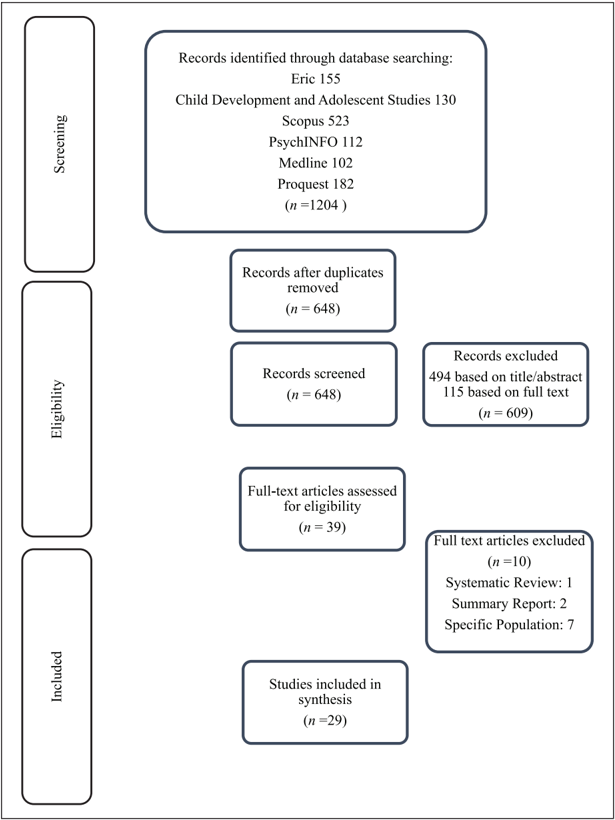
Social networks are ubiquitous in the lives of adolescents. This work systematically reviewed all studies which investigated the relationship between subjective well-being and the social networks of adolescents. Twenty-nine articles (out of 1,204 hits) were included within the review. Offline social networks have a positive association between the mood, self-esteem, and loneliness of adolescents but not body image. Nine of the studies investigating online social networks found a positive association on mood, life satisfaction, and loneliness through support seeking and receiving positive feedback. Fifteen of the studies found a negative association between online social networks and mood, self-esteem, life satisfaction, body image, and overall subjective well-being through high investment, passive use, receiving negative feedback, and social media ostracism. There is a need for intervention programs and education for young people, educators, and parents to address the risks to subjective well-being brought about by online social networks.
Overview
The claims and statistics of this paper haven’t been checked yet.
Free: it reads the open-access text and checks the first 5 claims that cite a source we can check. Create a free account to check every claim.
Integrity signals
Registry
Cites
Statistics
Figures
Verification
Claims the paper makes
The claims and statistics of this paper haven’t been checked yet.
Free: it reads the open-access text and checks the first 5 claims that cite a source we can check. Create a free account to check every claim.
Claims other papers make about this one
Each is checked against this paper’s own text: does it say what the citing paper says it does?
The cited source doesn’t support the claim as written.
In the citing paper
“and one did not find such an association (r = .02ns, 15).”
From Social media use and its impact on adolescent mental health: An umbrella review of the evidence. (2022) · cites this paper as [15]
Checked by a reasoning model — may be wrong.
Experimental — accuracy not yet measuredThe source backs part of the claim, not all of it — or backs it for a different population, condition or comparison.
In the citing paper
“Some of the mediators underlying the association between social media use and negative psychosocial outcomes in young individuals are insomnia and other sleep-related factors, perceived social support, rumination, social comparison, body image concerns, and social media ostracism (Keles et al., 2020;Nesi, 2020;Webster et al., 2021).”
From The relationship between social media use and psychosocial outcomes in older adults: A systematic review (2024) · cites this paper as Webster et al., 2021
Experimental — accuracy not yet measuredThe cited source says what the claim attributes to it.
In the citing paper
“For example, time spent on SNS is associated with higher levels of depression [17], whereas emotional connectedness to SNS ('intensity of use') [15] and the number of friends on SNS [16] are unrelated to depression.”
From Social media use and its impact on adolescent mental health: An umbrella review of the evidence. (2022) · cites this paper as [15]
The cited source says what the claim attributes to it.
In the citing paper
“Reviews exploring the effects of social media use on adolescents predominantly highlight negative psychosocial outcomes, particularly when usage patterns exhibit addictive or problematic tendencies (e.g.Webster et al., 2021).”
From The relationship between social media use and psychosocial outcomes in older adults: A systematic review (2024) · cites this paper as Webster et al., 2021
The cited source says what the claim attributes to it.
In the citing paper
“Emerging literature increasingly emphasises that social media experiences are shaped not only by frequency of use but also by howyoung people engage with these platforms and the meanings they derive from them [4, 17, 18].”
From The Complex and Multifaceted Nature of Social Media: Perspectives From Young Adolescents, Parents and Experts (2026) · cites this paper as [18]
Self-check
Percentages, sums and reported differences re-computed from the paper’s own numbers.
The self-check needs the paper’s full text.
Citations
Cites
The satisfaction with life scale
Diener, E., Emmons, R. A., Larsen, R. J., & Griffin, S. (1985) · Journal of Personality Assessment · doi:10.1207/s15327752jpa4901_13 · Cited by 31,768 · cited 2×
“Several elements make up subject well-being, according to Diener et al. It is “a broad category of phenomena that includes people’s emotional responses, domain satisfactions, and global judgements of life satisfaction” (Diener et al., 1985).”
BackgroundLiberati, A., Altman, D. G., Tetzlaff, J., Mulrow, C., Gøtzsche, P. C., Ioannidis, J. P. A., Clarke, M., Devereaux, P. J., Kleijnen, J., & Moher, D. (2009) · PLoS Medicine · doi:10.1371/journal.pmed.1000100 · Cited by 28,164 · cited 3×
“Figure 1, as recommended by PRISMA (Preferred Reporting Items for Systematic Reviews and MetaAnalyses) (Liberati et al., 2009), details how the studies were selected: The studies were predominantly of a quantitative nature, two were qualitative and one was a mixed-method study.”
MethodThe Presentation of Self in Everyday Life.
Naegele, K. D., & Goffman, E. (1956) · American Sociological Review · doi:10.2307/2089106 · Cited by 25,991
Social network sites: definition, history, and scholarship
boyd, D. M., & Ellison, N. B. (2007) · Journal of Computer-Mediated Communication · doi:10.1111/j.1083-6101.2007.00393.x · Cited by 16,251
Digital Natives, Digital Immigrants Part 1
Prensky, M. (2001) · On the Horizon · doi:10.1108/10748120110424816 · Cited by 11,104 · cited 1×
“Prenskey who is accredited with coining the phrase “digital natives” describes the arrival and dissemination of digital technologies as “discontinuity” from the previous generations (Prensky, 2001).”
BackgroundLiberati, A., Altman, D. G., Tetzlaff, J., Mulrow, C., Gøtzsche, P. C., Ioannidis, J. P. A., Clarke, M., Devereaux, P. J., Kleijnen, J., & Moher, D. (2009) · Journal of Clinical Epidemiology · doi:10.1016/j.jclinepi.2009.06.006 · Cited by 10,578
Ellison, N. B., Steinfield, C., & Lampe, C. (2007) · Journal of Computer-Mediated Communication · doi:10.1111/j.1083-6101.2007.00367.x · Cited by 9,939 · cited 1×
“Social networking sites allow users to “present themselves, articulate their social networks and establish or maintain connections with others” (Ellison et al., 2007, p. 1143).”
BackgroundSocial Network Analysis: A Handbook.
Pappi, F. U., & Scott, J. (1993) · Contemporary Sociology · doi:10.2307/2075047 · Cited by 5,969
The Spread of Obesity in a Large Social Network over 32 Years
Christakis, N. A., & Fowler, J. H. (2007) · New England Journal of Medicine · doi:10.1056/nejmsa066082 · Cited by 5,007
Social media? Get serious! Understanding the functional building blocks of social media
Kietzmann, J. H., Hermkens, K., McCarthy, I. P., & Silvestre, B. S. (2011) · Business Horizons · doi:10.1016/j.bushor.2011.01.005 · Cited by 4,970 · cited 1×
“Social media employ mobile and web-based technologies to create highly interactive platforms through which people create and share content (Kietzmann et al., 2011).”
BackgroundThe antecedents of self-esteem
Coopersmith, S. (1965) · Medical Entomology and Zoology · Cited by 4,649
Mechanisms Linking Social Ties and Support to Physical and Mental Health
Thoits, P. A. (2011) · Journal of Health and Social Behavior · doi:10.1177/0022146510395592 · Cited by 4,076
Introduction to Social Network Methods
Hanneman, R. A. (2001) · Cited by 3,971
Physical activity and mental health in children and adolescents: a review of reviews
Biddle, S. J. H., & Asare, M. (2011) · British Journal of Sports Medicine · doi:10.1136/bjsports-2011-090185 · Cited by 2,447 · cited 1×
“…(Reeves et al., 2013) consuming at least five portions of fruit and vegetables each day (Naska et al., 2000), partaking in physical activity (Biddle & Asare, 2011) and a good night’s sleep (Fuligni & Hardway, 2006) can play a major role in the well-being of children and adults, particularly…”
BackgroundThe collective dynamics of smoking in a large social network
Christakis, N. A., & Fowler, J. H. (2008) · New England Journal of Medicine · doi:10.1056/nejmsa0706154 · Cited by 2,390
Borgatti, S. P., Everett, M. G., Johnson, J. C., & Agneessens, F. (2024) · SAGE Publications Ltd eBooks · doi:10.4135/9781036236021 · Cited by 1,970
OECD Guidelines on Measuring Subjective Well-being
OECD (2013) · doi:10.1787/9789264191655-en · Cited by 1,434
Connected: The Surprising Power of Our Social Networks and How They Shape Our Lives
Fowler, I. N. A. C. I. J. H. (2009) · Medical Entomology and Zoology · Cited by 1,329
Woods, H. C., & Scott, H. (2016) · Journal of Adolescence · doi:10.1016/j.adolescence.2016.05.008 · Cited by 1,302 · cited 1×
“Adolescents who invested in social networking sites had higher levels of low self-esteem (Blomfield Neira & Barber, 2014) and depressed mood (Blomfield Neira & Barber, 2014; Lup et al., 2015; Vernon et al., 2017; Woods & Scott, 2016) when compared with those who did not invest highly.”
ResultDo social network sites enhance or undermine subjective well-being? A critical review
Verduyn, P., Ybarra, O., Résibois, M., Jonides, J., & Kross, E. (2017) · Social Issues and Policy Review · doi:10.1111/sipr.12033 · Cited by 1,209 · cited 1×
“They concluded that social networking sites can improve our subjective well-being if they are used actively to connect with others but at the same time can be a “significant stress” to our well-being if used passively because of the effects on life comparison and envy (Verduyn et al., 2017).”
BackgroundOnline communication, social media and adolescent wellbeing: A systematic narrative review
Best, P., Manktelow, R., & Taylor, B. (2014) · Children and Youth Services Review · doi:10.1016/j.childyouth.2014.03.001 · Cited by 1,067 · cited 1×
“Increased self-esteem, social support, and social capital were benefits and social isolation and depression were among the negatives (Best et al., 2014).”
BackgroundDhir, A., Yossatorn, Y., Kaur, P., & Chen, S. (2018) · International Journal of Information Management · doi:10.1016/j.ijinfomgt.2018.01.012 · Cited by 1,033 · cited 1×
“FoMo is related to anxiety and social media use (Dhir et al., 2018).”
BackgroundLemola, S., Perkinson-Gloor, N., Brand, S., Dewald-Kaufmann, J. F., & Grob, A. (2015) · Journal of Youth and Adolescence · doi:10.1007/s10964-014-0176-x · Cited by 940
Marsh, H. W., & Parker, J. W. (1984) · Journal of Personality and Social Psychology · doi:10.1037//0022-3514.47.1.213 · Cited by 815
Social media use and adolescent mental health: Findings from the UK Millennium Cohort Study
Kelly, Y., Zilanawala, A., Booker, C., & Sacker, A. (2018) · EClinicalMedicine · doi:10.1016/j.eclinm.2018.12.005 · Cited by 740 · cited 1×
“Their study went on to find out that greater times spent online related to online harassment, poor sleep, low self-esteem, and poor body image, all of which related to higher depressive scores (Kelly et al., 2018).”
BackgroundMarino, C., Gini, G., Vieno, A., & Spada, M. M. (2018) · Journal of Affective Disorders · doi:10.1016/j.jad.2017.10.007 · Cited by 658 · cited 1×
“Their study defined problematic Facebook as, “a problematic behaviour characterized by either addictive-like symptoms and/or scare self-regulation related to Facebook use reflecting in social and personal problems” (Marino et al., 2018, p. 3).”
BackgroundSocial support as a contingency in psychological well-being
Turner, R. J. (1981) · Journal of Health and Social Behavior · doi:10.2307/2136677 · Cited by 633 · cited 1×
“It is well known that social support and relationships are important to a person’s health and well-being (Turner, 1981).”
BackgroundBurke, M., & Kraut, R. E. (2016) · Journal of Computer-Mediated Communication · doi:10.1111/jcc4.12162 · Cited by 552 · cited 2×
“Offline social networks fulfill several needs such as the need to belong, social support, and social comparison which can be translated in an online space and fulfilled by social networking sites (Burke & Kraut, 2016).”
BackgroundMethodLup, K., Trub, L., & Rosenthal, L. (2015) · Cyberpsychology, Behavior, and Social Networking · doi:10.1089/cyber.2014.0560 · Cited by 520 · cited 11×
“There is a large and growing number of studies based on specific sites such as Facebook (Frost & Rickwood, 2017; Glassman, 2012; Hormes et al., 2014; Košir et al., 2016; Sarabia & Estévez, 2016), Instagram (de Vries et al., 2018; Lup et al., 2015), YouTube (Thelwall, 2018), and Snapchat (Utz et al., 2015).”
BackgroundResultInfluentialFrison, E., & Eggermont, S. (2016) · Social Science Computer Review · doi:10.1177/0894439314567449 · Cited by 519 · cited 1×
“Instagram browsing by 12 to 19 year olds in Belgium was associated with depressed mood (Frison & Eggermont, 2017), and in another study with adolescents in Belgium, passive use positively predicted depressed mood (b = .12), but private active use did not (Frison & Eggermont, 2016a).”
BackgroundPicture Perfect: The Direct Effect of Manipulated Instagram Photos on Body Image in Adolescent Girls
Kleemans, M., Daalmans, S., Carbaat, I., & Anschütz, D. (2018) · Media Psychology · doi:10.1080/15213269.2016.1257392 · Cited by 421 · cited 1×
“A study with adolescent girls and Instagram found that exposure to manipulated Instagram photos leads to lower body satisfaction (Kleemans et al., 2018).”
BackgroundHormes, J. M., Kearns, B., & Timko, C. A. (2014) · Addiction · doi:10.1111/add.12713 · Cited by 398 · cited 1×
“There is a large and growing number of studies based on specific sites such as Facebook (Frost & Rickwood, 2017; Glassman, 2012; Hormes et al., 2014; Košir et al., 2016; Sarabia & Estévez, 2016), Instagram (de Vries et al., 2018; Lup et al., 2015), YouTube (Thelwall, 2018), and Snapchat (Utz et…”
BackgroundBurrow, A. L., & Rainone, N. (2017) · Journal of Experimental Social Psychology · doi:10.1016/j.jesp.2016.09.005 · Cited by 385 · cited 1×
“In a study with 300 adults, it was found that the number of likes individuals received on their Facebook profile positively correlated with self-esteem (Burrow & Rainone, 2017).”
BackgroundMorgan, C., Webb, R. T., Carr, M. J., Kontopantelis, E., Green, J., Chew-Graham, C. A., Kapur, N., & Ashcroft, D. M. (2017) · BMJ · doi:10.1136/bmj.j4351 · Cited by 374 · cited 1×
“In a study among girls aged 13 to 16 years, there was an apparent increase of 68% of self-harm reported between 2011 and 2014 (Morgan et al., 2017).”
BackgroundEmoticons and Online Message Interpretation
Derks, D., Bos, A. E. R., & von Grumbkow, J. (2008) · Social Science Computer Review · doi:10.1177/0894439307311611 · Cited by 333 · cited 1×
“The use of emoticons and memes has made textbased online communication more emotionally similar to the experience of offline communications (Derks et al., 2008).”
BackgroundDynamic social networks and the implications for the spread of infectious disease
Read, J. M., Eames, K. T. D., & Edmunds, W. J. (2008) · Journal of The Royal Society Interface · doi:10.1098/rsif.2008.0013 · Cited by 329
de Vries, D. A., Peter, J., de Graaf, H., & Nikken, P. (2016) · Journal of Youth and Adolescence · doi:10.1007/s10964-015-0266-4 · Cited by 320 · cited 2×
“With the use of social networking sites ubiquitous in the lives of young people (de Vries et al., 2016), concerns have arisen over the negative impact this can be having on a person’s subjective well-being.”
BackgroundResultDaily Variation in Adolescents' Sleep, Activities, and Psychological Well‐Being
Fuligni, A. J., & Hardway, C. (2006) · Journal of Research on Adolescence · doi:10.1111/j.1532-7795.2006.00498.x · Cited by 302
A systematic review of the mental health outcomes associated with Facebook use
Frost, R. L., & Rickwood, D. J. (2017) · Computers in Human Behavior · doi:10.1016/j.chb.2017.08.001 · Cited by 285 · cited 17×
“They recommended that rather than investigating whether or not social networking sites are good or bad, the different factors that are either protective or lead to risk should be investigated (Frost & Rickwood, 2017).”
BackgroundInfluentialSnapchat Elicits More Jealousy than Facebook: A Comparison of Snapchat and Facebook Use
Utz, S., Muscanell, N., & Khalid, C. (2015) · Cyberpsychology, Behavior, and Social Networking · doi:10.1089/cyber.2014.0479 · Cited by 278 · cited 5×
“There is a large and growing number of studies based on specific sites such as Facebook (Frost & Rickwood, 2017; Glassman, 2012; Hormes et al., 2014; Košir et al., 2016; Sarabia & Estévez, 2016), Instagram (de Vries et al., 2018; Lup et al., 2015), YouTube (Thelwall, 2018), and Snapchat (Utz et al., 2015).”
BackgroundInfluentialSocial Comparison as the Thief of Joy: Emotional Consequences of Viewing Strangers’ Instagram Posts
de Vries, D. A., Möller, A. M., Wieringa, M. S., Eigenraam, A. W., & Hamelink, K. (2018) · Media Psychology · doi:10.1080/15213269.2016.1267647 · Cited by 274
Frison, E., & Eggermont, S. (2017) · Cyberpsychology, Behavior, and Social Networking · doi:10.1089/cyber.2017.0156 · Cited by 269 · cited 1×
“Instagram browsing by 12 to 19 year olds in Belgium was associated with depressed mood (Frison & Eggermont, 2017), and in another study with adolescents in Belgium, passive use positively predicted depressed mood (b = .12), but private active use did not (Frison & Eggermont, 2016a).”
BackgroundNew technologies and 21st century children: Recent trends and outcomes
Graafland, J. H. (2018) · OECD education working papers · doi:10.1787/e071a505-en · Cited by 265
Ferguson, C. J., Muñoz, M. E., Garza, A., & Galindo, M. (2014) · Journal of Youth and Adolescence · doi:10.1007/s10964-012-9898-9 · Cited by 252 · cited 2×
“systematic review entitled, “You are what your friends eat” showed that adolescents are influenced by their friends’ eating behaviors and body weight (Fletcher et al., 2011).”
BackgroundBlomfield neira, C. J., & Barber, B. L. (2014) · Australian Journal of Psychology · doi:10.1111/ajpy.12034 · Cited by 247 · cited 2×
“…and in a study with High school students in Australia, girls with a social networking site profile reported Webster et al. 197 significantly higher levels of depressed mood and lower self-esteem than those without a profile; however, this was not the case for boys (Blomfield Neira & Barber, 2014).”
ResultFrison, E., & Eggermont, S. (2015) · Computers in Human Behavior · doi:10.1016/j.chb.2014.11.070 · Cited by 244 · cited 1×
“Frison and Eggermont found that daily stress positively predicted seeking social support through Facebook and that this minimized depressed mood (b = − .12) (Frison & Eggermont, 2015) and one study found a null result (Ferguson et al., 2014).”
BackgroundSocial networks and social competence: Exploring the effects of early adolescent friendships
Cauce, A. M. (1986) · American Journal of Community Psychology · doi:10.1007/bf00931339 · Cited by 240 · cited 1×
“In a study of the social networks of 98 11 to 13 year olds, Cauce (1986) found that the number of reciprocated best friends contributed to self-esteem.”
BackgroundWell-being and problematic Facebook use
Satici, S. A., & Uysal, R. (2015) · Computers in Human Behavior · doi:10.1016/j.chb.2015.03.005 · Cited by 234 · cited 1×
“In a study among university students in Turkey, life satisfaction and subjective happiness were significantly negative predictors of problematic Facebook use (Satici & Uysal, 2015).”
BackgroundThe Impact of Social Media on the Sexual and Social Wellness of Adolescents
Cookingham, L. M., & Ryan, G. L. (2015) · Journal of Pediatric and Adolescent Gynecology · doi:10.1016/j.jpag.2014.03.001 · Cited by 233
Loneliness and Facebook motives in adolescence: A longitudinal inquiry into directionality of effect
Teppers, E., Luyckx, K., A. Klimstra, T., & Goossens, L. (2014) · Journal of Adolescence · doi:10.1016/j.adolescence.2013.11.003 · Cited by 217 · cited 2×
“Using Facebook for expanding one’s social network seems to improve well-being (Teppers et al., 2014), and in a study of 527 male adolescents in Northern Ireland, it was found that those who had more online friends had higher well-being scores (Best et al.”
BackgroundInternet Communication Versus Face-to-face Interaction in Quality of Life
Lee, P. S. N., Leung, L. W., Lo, V., Xiong, C., & Tingjun, W. (2010) · Social Indicators Research · doi:10.1007/s11205-010-9618-3 · Cited by 210 · cited 1×
“However, in their study, Lee et al. (2011) conclude that online interpersonal communication cannot replace face-to-face communication.”
BackgroundHutchinson, D. M., & Rapee, R. M. (2007) · Behaviour Research and Therapy · doi:10.1016/j.brat.2006.11.007 · Cited by 208
Social media analytics for YouTube comments: potential and limitations
Thelwall, M. A. (2017) · International Journal of Social Research Methodology · doi:10.1080/13645579.2017.1381821 · Cited by 191 · cited 5×
“There is a large and growing number of studies based on specific sites such as Facebook (Frost & Rickwood, 2017; Glassman, 2012; Hormes et al., 2014; Košir et al., 2016; Sarabia & Estévez, 2016), Instagram (de Vries et al., 2018; Lup et al., 2015), YouTube (Thelwall, 2018), and Snapchat (Utz et al., 2015).”
BackgroundInfluentialFletcher, A., Bonell, C., & Sorhaindo, A. (2011) · Journal of Epidemiology and Community Health · doi:10.1136/jech.2010.113936 · Cited by 186 · cited 1×
“A systematic review entitled, “You are what your friends eat” showed that adolescents are influenced by their friends’ eating behaviors and body weight (Fletcher et al., 2011).”
Backgroundde Vries, D. A., Peter, J., Nikken, P., & de Graaf, H. (2014) · Sex Roles · doi:10.1007/s11199-014-0412-6 · Cited by 131 · cited 1×
“…increased body dissatisfaction (b = .10) (de Vries et al., 2016), and in a study with 11 to 18 year olds in the Netherlands, social networking site use positively predicted adolescents’ desire to undergo cosmetic surgery indirectly through increased appearance investment (de Vries et al., 2014).”
BackgroundReeves, S., Halsey, L. G., McMeel, Y., & Huber, J. (2012) · Appetite · doi:10.1016/j.appet.2012.09.024 · Cited by 127 · cited 1×
“It is commonly known that seemingly insignificant daily habits such as eating a daily breakfast (Reeves et al., 2013) consuming at least five portions of fruit and vegetables each day (Naska et al., 2000), partaking in physical activity (Biddle & Asare, 2011) and a good night’s sleep (Fuligni &…”
BackgroundStudents' perceptions of the effect of social media ostracism on wellbeing
Smith, R., Morgan, J. R., & Monks, C. P. (2016) · Computers in Human Behavior · doi:10.1016/j.chb.2016.11.041 · Cited by 123 · cited 1×
“Finally, in a study with high school students, participants perceived social media ostracism as having a detrimental effect on their psychological well-being, specifically as a threat to their belonging, control, and a meaningful existence (Smith et al., 2017).”
BackgroundKim, H. H.-S. (2017) · International Journal of Adolescence and Youth · doi:10.1080/02673843.2016.1197135 · Cited by 118 · cited 1×
“In a study with 12 to 15 year olds in Korea (n = 2,099), Kim (2017) found a negative relationship between online social networks and self-reported well-being, and in a study with High school students in Australia, girls with a social networking site profile reported Webster et al. 197 significantly…”
BackgroundVernon, L., Modecki, K. L., & Barber, B. L. (2017) · Journal of Clinical Child & Adolescent Psychology · doi:10.1080/15374416.2016.1188702 · Cited by 108 · cited 1×
“Adolescents who invested in social networking sites had higher levels of low self-esteem (Blomfield Neira & Barber, 2014) and depressed mood (Blomfield Neira & Barber, 2014; Lup et al., 2015; Vernon et al., 2017; Woods & Scott, 2016) when compared with those who did not invest highly.”
ResultHummel, A. C., & Smith, A. R. (2015) · International Journal of Eating Disorders · doi:10.1002/eat.22336 · Cited by 105 · cited 1×
“Hummel and Smith (2015) found that students (mean age of 18.73 years) who received extremely negative comments on their Facebook profile were more likely to report disordered eating concerns 4 weeks later.”
BackgroundInfluentialBailey, K. A., Gammage, K. L., & van Ingen, C. (2017) · Body Image · doi:10.1016/j.bodyim.2017.08.003 · Cited by 99 · cited 1×
“Alysse explains that body image is not a single entity, but it includes attitudes, thoughts, beliefs, feelings, and behaviors that one has about their own body (Bailey et al., 2017).”
BackgroundNaska, A., Vasdekis, V. G. S., Trichopoulou, A., Friel, S., Leonhäuser, I. U., Moreiras, O., Nelson, M., Remaut, A. M., Schmitt, A., Sekula, W., et al. (2000) · British Journal of Nutrition · doi:10.1017/s0007114500001860 · Cited by 98
Social Work and Social Media: Online Help-Seeking and the Mental Well-Being of Adolescent Males
Best, P., Manktelow, R., & Taylor, B. J. (2016) · British Journal of Social Work · doi:10.1093/bjsw/bcu130 · Cited by 80 · cited 1×
“In another study, adolescents who reported online support seeking reported significantly higher levels of mental well-being (Best et al., 2016).”
BackgroundFrison, E., & Eggermont, S. (2016) · Cyberpsychology, Behavior, and Social Networking · doi:10.1089/cyber.2015.0296 · Cited by 77 · cited 1×
“Instagram browsing by 12 to 19 year olds in Belgium was associated with depressed mood (Frison & Eggermont, 2017), and in another study with adolescents in Belgium, passive use positively predicted depressed mood (b = .12), but private active use did not (Frison & Eggermont, 2016a).”
BackgroundFrison, E., Subrahmanyam, K., & Eggermont, S. (2016) · Journal of Youth and Adolescence · doi:10.1007/s10964-016-0436-z · Cited by 76 · cited 1×
“One of the studies specifically investigated peer victimization on Facebook among 910 adolescents in Belgium with a mean age of 15.4 years; results show how negative online feedback received marginally predicted decreases in life satisfaction (b = −.12) (Frison et al., 2016).”
BackgroundInfluentialApaolaza, V., He, J., & Hartmann, P. (2014) · Computers in Human Behavior · doi:10.1016/j.chb.2014.09.029 · Cited by 74 · cited 2×
“Apaolaza et al. (2014) found that support seeking through social networking sites minimizes depressed mood.”
BackgroundWhat do we mean by 'wellbeing'? and why might it matter?
Ereaut, G., & Whiting, R. (2008) · BIROn (Birkbeck, University of London) · Cited by 62
Sexualized behaviors on Facebook
Gonzalvo, I. S., & Estévez, A. (2016) · Computers in Human Behavior · doi:10.1016/j.chb.2016.03.037 · Cited by 61 · cited 1×
“…a large and growing number of studies based on specific sites such as Facebook (Frost & Rickwood, 2017; Glassman, 2012; Hormes et al., 2014; Košir et al., 2016; Sarabia & Estévez, 2016), Instagram (de Vries et al., 2018; Lup et al., 2015), YouTube (Thelwall, 2018), and Snapchat (Utz et al., 2015).”
BackgroundUse of social network sites among depressed adolescents
Akkın Gürbüz, H. G., Demir, T., Gökalp Özcan, B., Kadak, M. T., & Poyraz, B. Ç. (2017) · Behaviour & Information Technology · doi:10.1080/0144929x.2016.1262898 · Cited by 58 · cited 1×
“Children are going online more, at younger ages and in more diverse ways (Livingstone et al., 2014), with social networking being the most common online activity in the past 10 years (Akkın Gürbüz et al., 2017).”
BackgroundImplications for College Students Posting Pictures of Themselves Drinking Alcohol on Facebook
Glassman, T. (2012) · Journal of alcohol and drug education · Cited by 52
A systematic review of the studies measuring mood and emotion in response to music.
Garrido, S. (2014) · Psychomusicology Music Mind and Brain · doi:10.1037/pmu0000072 · Cited by 47 · cited 1×
“Moods are less intense than emotions and come and go without any apparent reason (Garrido, 2014).”
BackgroundChambers, D. A. (2006) · Palgrave Macmillan UK eBooks · doi:10.1057/9780230627284 · Cited by 47
Jong, S. T., & Drummond, M. J. N. (2016) · Asia-Pacific Journal of Health, Sport and Physical Education · doi:10.1080/18377122.2016.1222647 · Cited by 47 · cited 2×
“A study with girls aged between 12 and 14 years in Australia reported that immediate feedback on the images the girls posted was not only highly desirable, but directly influenced their emotional state (Jong & Drummond, 2016).”
BackgroundKošir, K., Horvat, M., Aram, U., Jurinec, N., & Tement, S. (2016) · Computers in Human Behavior · doi:10.1016/j.chb.2016.04.013 · Cited by 44 · cited 1×
“There is a large and growing number of studies based on specific sites such as Facebook (Frost & Rickwood, 2017; Glassman, 2012; Hormes et al., 2014; Košir et al., 2016; Sarabia & Estévez, 2016), Instagram (de Vries et al., 2018; Lup et al., 2015), YouTube (Thelwall, 2018), and Snapchat (Utz et…”
BackgroundSpreading of healthy mood in adolescent social networks
Hill, E. M., Griffiths, F. E., & House, T. (2015) · Proceedings of the Royal Society B: Biological Sciences · doi:10.1098/rspb.2015.1180 · Cited by 43
Pathfinding in the Research Forest: The Pearl Harvesting Method for Effective Information Retrieval
Sandieson, R. (2006) · Education and training in developmental disabilities · doi:10.1177/215416470604100409 · Cited by 39 · cited 1×
“The Pearl Harvesting method was used to collect the widest range of search terms as possible, which in turn helped to encompass as many relevant studies as possible (Sandieson, 2006).”
MethodNaeemi, S., & Tamam, E. (2016) · Child Indicators Research · doi:10.1007/s12187-016-9438-3 · Cited by 36 · cited 3×
“Emotional dependence on Facebook was found to negatively affect the overall psychological well-being of 13- to 16-year-old students in Malaysia (Naeemi & Tamam, 2017), and the frequency of adolescents in Australia checking Facebook was linked to levels of emotional difficulties (Bourgeois et al.,…”
BackgroundBest, P., Taylor, B., & Manktelow, R. (2015) · Journal of Public Mental Health · doi:10.1108/jpmh-05-2014-0022 · Cited by 30 · cited 2×
“, 2014), and in a study of 527 male adolescents in Northern Ireland, it was found that those who had more online friends had higher well-being scores (Best et al., 2015).”
BackgroundHamid, P. N., & Lok, D. P. P. (2000) · International Journal of Adolescence and Youth · doi:10.1080/02673843.2000.9747841 · Cited by 30 · cited 1×
“In a study in China of 542 adolescents, Hamid and Lok (2000) found that lonely adolescents tend to have smaller social networks than those who are not lonely and that lonely adolescents have fewer significant others whom they can look to for emotional support.”
BackgroundSocial Networking and the Social and Emotional Wellbeing of Adolescents in Australia
Bourgeois, A., Bower, J., & Carroll, A. (2014) · Australian Journal of Guidance and Counselling · doi:10.1017/jgc.2014.14 · Cited by 25 · cited 1×
“Networks can be explained as a way of thinking about social systems that focus on the relationships between the entities that make up the system (Borgatti et al., 2013).”
BackgroundSpreading of components of mood in adolescent social networks
Eyre, R. W., House, T., Hill, E. M., & Griffiths, F. E. (2017) · Royal Society Open Science · doi:10.1098/rsos.170336 · Cited by 25 · cited 1×
“Eyre et al. (2017) found that the greater number of worse mood friends one has, the more likely a worse mood is to increase.”
BackgroundA proposal for judging the trustworthiness of research findings
Gorard, S. (2014) · Durham Research Online (Durham University) · Cited by 14
Barbero (2014) · doi:10.1016/j · Cited by 1
Research works printed but not linked: 5
- Bentley, H., Burrows, A., Clarke, L., Gillgan, A., Glen, J., Hafizi, M., Letendrie, F., Miller, P., O'Hagan, O., Patel, P., Peppiate, J., Stanley, K., Starr, E., Vasco, N., & Walker, J. (2018). How safe are our children? The most comprehensive overview of child protection in the UK 2018 . National Society for the Prevention of Cruelty to Children.
- Dogan, U. (2016). Effects of social network use on happiness, psychological wellbeing, and life satisfaction of high school students: Case of Facebook and Twitter. Egitim ve Bilim-education and Science , 41 (183), 217-231.
- Miller, H. (1995, June). The presentation of self in electronic life: Goffman on the Internet [Paper presented]. Embodied Knowledge and Virtual Space Conference, London.
- Oxford English Dictionary Online . (2010, July 2007). Oxford English Dictionary. http://dictionary.oed.com
- Putnam, R. D. (2000). Bowling alone: The collapse and revival of American community. 2001 Policy analysis . Simon and Schuster.
Cited by
Social media use and its impact on adolescent mental health: An umbrella review of the evidence.
Valkenburg, P. M., Meier, A., & Beyens, I. (2022) · Current opinion in psychology · doi:10.1016/j.copsyc.2021.08.017 · Cited by 767
Munasinghe, S., Sperandei, S., Freebairn, L., Conroy, E., Jani, H., Marjanovic, S., & Page, A. (2020) · Journal of Adolescent Health · doi:10.1016/j.jadohealth.2020.08.008 · Cited by 223
“, passive use, high investment, or support seeking) as well as the amount of time spent on screenbased activity [7,23,24].”
BackgroundSocial Media Use and adolescents' mental health and well-being: An umbrella review
Sala, A., Porcaro, L., & Gómez, E. (2024) · Computers in Human Behavior Reports · doi:10.1016/j.chbr.2024.100404 · Cited by 120
Alsarrani, A., Hunter, R. F., Dunne, L., & Garcia, L. (2022) · BMC Public Health · doi:10.1186/s12889-022-14776-4 · Cited by 124
Self-citationThe contribution of social media addiction to adolescent LIFE: Social appearance anxiety
Caner, N., Efe, Y. S., & Başdaş, Ö. (2022) · Current Psychology · doi:10.1007/s12144-022-03280-y · Cited by 104
Metadata
- Authors
- Webster, D., Dunne, L., & Hunter, R.
- Affiliations
- Queen's University Belfast (GB)
- Corresponding author
- Webster, Deborah
- Venue
- Youth & Society
- Publisher
- SAGE Publications
- Published
- 2020-05-14
- Volume
- 53
- Issue
- 2
- Pages
- 175-210
- ISSN
- 0044-118X (ISSN-L)
- 1552-8499
- OpenAlex
- W3024025420
- Semantic Scholar
- 371a86ac6ca11c6b7b65ad339ed31c0a63bd86c9
- Cited by
- 148
- References
- 82
- Citations by year
- 2026: 22 · 2025: 36 · 2024: 29 · 2023: 22 · 2022: 17 · 2021: 19 · 2020: 3
- FWCI
- 2.66
- Type
- journal article
- Language
- en
- Open access
- hybrid
- doi.org
- Locations
- Youth & Society (publishedVersion, cc-by)
- Research Portal (Queen's University Belfast) (publishedVersion, cc-by)
- Funders
- Department of Economy (Student Scholarship)
- Topics
- Social Sciences › Sociology and Political Science › Impact of Technology on Adolescents
- Social Sciences › Psychology › Social Psychology › Psychological Well-being and Life Satisfaction
- Social Sciences › Psychology › Social Psychology › Mental Health via Writing
- Keywords
- social networks, subjective well-being, adolescents, social networking sites, social media, offline social networks, mood, self-esteem, loneliness, body image, life satisfaction, passive social media use, support seeking, positive feedback
About these checks
Registry, retraction, Cites and statistics results are computed, not judged, with one exception: a printed reference that no index lists is read once by a model before it counts as a citation error. Claims are extracted by a model and kept only when their quote appears verbatim in the text; each cited source is then checked, with a model’s help, for whether it says what the claim relies on. Those verdicts can be wrong — read the claim’s quote and the cited source before relying on one.
Statistics and arithmetic are recomputed, not judged.
Confidence bands are shown only for fields calibrated on our annotated test set. None is calibrated yet, so no band is shown.
What counts as a claim ›How we measure confidence ›How we check this ›
Are you an author, or do you see a problem with this page? Request a review
Data sources
Bibliographic data: Semantic Scholar, OpenAlex, Crossref.
Contains information from the Semantic Scholar Academic Graph Datasets, made available under the ODC Attribution License (ODC-BY 1.0).
Semantic Scholar’s data is described in: Kinney, R., et al. (2023). The Semantic Scholar Open Data Platform. arXiv:2301.10140.
